Loading...

Current Issue

    2026 Vol. 25 No. 8 Previous Issue   

    Review
    Crop Science
    Horticulture
    Plant Protection
    Animal Science · Veterinary Medicine
    Agro-ecosystem & Environment
    Letter


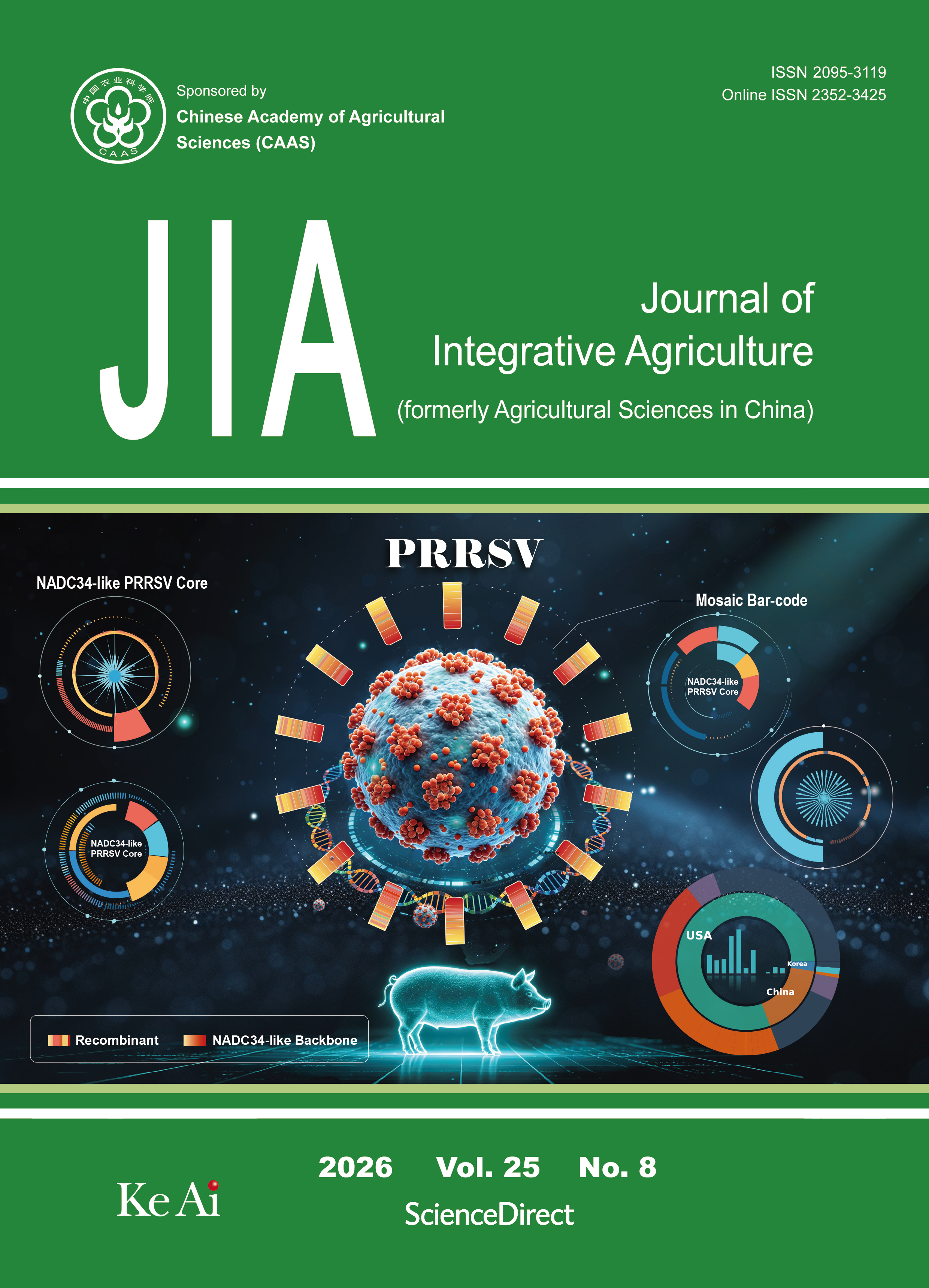
      Cover illustration

    For Selected: Toggle Thumbnails
    Review
    Towards a better understanding of auxin response factors for improving cereal crops
    Linyi Qiao, Huifang Li, Jun Zheng, Xueyong Zhang
    2026, 25(8): 3103-3117.  DOI: 10.1016/j.jia.2024.09.035
    Abstract ( )   PDF in ScienceDirect  

    The auxin response factor (ARF) is the key component of phytohormone auxin signal pathway and is crucial in regulating a plurality of functions throughout the plant life cycle.  Although ARFs’ structure and function have been well studied in Arabidopsis, such knowledge is far from being sufficient for cereal crops, especially wheat, rice, and maize.  This review is based on a comprehensive retrospection into the studies on ARFs in the three cereal crops, consisting of four parts: (1) characterization of the domains of 23, 25, and 33 ARF family members in wheat, rice, and maize, respectively; (2) revision of nomenclatures for previously reported ARFs to the family numbers based on sequence alignment, and summary of ARFs’ functions including the regulation of agronomic traits and response to biotic/abiotic stresses; (3) highlight of general regulatory models for fundamental physiological and reproductive traits from miRNA-ARFs, IAA-ARF-LBD, IAA-ARF-Auxin response gene, and IAA-ARF-ERF (4) prospects to promising future ARF research for anticipated agronomic traits.  This review is expected to enhance understanding of ARF functions in the three cereal crops and promote their application in molecular breeding to achieve optimal plant architecture, higher yield, and wider adaptability.

    Crop Science
    The genetic control of long sterile lemma during African rice domestication
    Liang Luo, Wenkai Luo, Bin Gao, Kaihong Wang, Sijing Ma, Marie-Noelle Ndjiondjop, Chuanqing Sun, Zuofeng Zhu, Leqin Chang
    2026, 25(8): 3118-3125.  DOI: 10.1016/j.jia.2024.11.031
    Abstract ( )   PDF in ScienceDirect  

    The inflorescence and spikelet structural units of rice significantly impact grain development.  Among the grasses, the sterile lemma represents a unique spikelet organ exclusive to rice.  As most studies on sterile lemma genes primarily focus on Asian cultivated rice (Oryza sativa L.), genes influencing the sterile lemma phenotype in African rice remain unreported.  This study identified lsl3, a gene located on the short arm of chromosome 7 that controls the sterile lemma length in African rice.  The key mutation of lsl3, leading to long sterile lemmas in African rice, was discovered and differed from that in Asian rice.  The investigation of lsl3 not only provides a reference for the molecular evolution of cultivated rice in Africa but also offers new evidence supporting the parallel domestication of rice and the independent origin of Oryza glaberrima.

    Identification and validation of two QTLs associated with Fusarium head blight resistance in spring wheat (Triticum aestivum L.)
    Cong Li, Lei Wu, Xinyao He, Yi He, Peng Jiang, Jian Ma, Pawan K. Singh, Xu Zhang
    2026, 25(8): 3126-3138.  DOI: 10.1016/j.jia.2024.12.021
    Abstract ( )   PDF in ScienceDirect  

    Fusarium head blight (FHB) is one of the most important and destructive wheat diseases worldwide, threatening both food security and safety.  In this study, a recombinant inbred line (RIL) population with 269 F6 lines developed from a cross between ‘Nanjing 8611’ and ‘Ocoroni’ was used to map quantitative trait loci (QTLs) for FHB resistance.  Field FHB trials were conducted for three years in Nanjing, China, using point inoculation, and two years in Mexico with spray inoculation.  A high-density genetic map was constructed for the RIL population using the wheat 55 K single nucleotide polymorphism (SNP) array.  A total of 13 QTLs were detected on chromosomes 1B, 2D, 3B, 5D, 6D, and 7A, among which two major QTLs, QFhb.CIM-2D.1 and QDon.CIM-3B.1, were stably expressed in this study.  Conditional QTL analysis suggested that QFhb.CIM-2D.1 contributes to reduced deoxynivalenol (DON) content via decreasing FHB severity, whereas QDon.CIM-3B.1 contributed to FHB resistance by directly controlling DON accumulation.  Stacking of QFhb.CIM-2D.1 and QDon.CIM-3B.1 exhibited a marked increase in resistance against both FHB and DON.  Furthermore, two Kompetitive Allele-Specific PCR (KASP) markers, KASP-1369 and KASP-8394, tightly linked to QFhb.CIM-2D.1 and QDon.CIM-3B.1, respectively, were developed and successfully validated in their respective genetic populations.  Altogether, these results broaden the understanding of the genetic basis of resistance to FHB, and the developed markers are valuable for marker-assisted wheat breeding.  

    A genome-wide association study revealed that GmRGD14 positively regulates the root dry weight in soybeans
    Kaili Ren, Jialuo Chen, Xuan Cui, Xiao Li, Dezhou Hu, Zhongyi Yang, Yu’e Zhang, Yuming Yang, Deyue Yu, Hui Wang
    2026, 25(8): 3139-3152.  DOI: 10.1016/j.jia.2025.03.007
    Abstract ( )   PDF in ScienceDirect  

    Roots are vital for crop growth, development, yield, and tolerance to various types of environmental stress.  Numerous genetic loci associated with soybean root morphological traits have been identified, but few genes associated with these traits have been reported.  This study identified seven quantitative trait loci (QTLs) containing stable SNPs significantly associated with the root dry weight in soybeans through a genome-wide association study.  Among these QTLs, qRDW14-2 presented the greatest significance.  In qRDW14-2, the gene GmRGD14, encoding the lysophosphatidic acid acyltransferase LPAT4, was identified as a candidate.  GmRGD14, in block63, which contained the significant SNP S14_6521715, had the highest expression level in soybean roots, and its Arabidopsis homologous mutant lpat4 presented more lateral roots than did the control Col-0.  GmRGD14 was localized primarily to the cell membrane and endoplasmic reticulum.  The heterologous overexpression of GmRGD14 in Arabidopsis significantly increased the lateral root number, which was similar to the phenotype of atlpat4.  Furthermore, overexpression of GmRGD14 resulted in a greater total root length, root tip number, root surface area, and root volume in the hairy roots of transgenic soybean plants than in those of control soybean plants, whereas knockdown of the gene via RNA interference in soybean hairy roots resulted in the opposite phenotype.  GmRGD14, which is highly genetically variable in wild soybean, has been gradually utilized during soybean domestication.  Overall, this study revealed that GmRGD14 is a new key gene involved in root growth, providing a promising genetic target for breeding elite soybean varieties with strong root systems.

    Two genes of cytochrome P450 regulate plant height via brassinosteroid biosynthesis in Brassica napus
    Qianqian Zheng, Xinhua Wang, Zhenzhen Wang, Yi Zhang, Hao Wang, Kangxi Du, Shaohong Fu, Wanzhuo Gong, Hua Yuan, Weilan Chen, Bin Tu, Jin Yang, Yun Li, Ting Li
    2026, 25(8): 3153-3168.  DOI: 10.1016/j.jia.2024.12.016
    Abstract ( )   PDF in ScienceDirect  

    Rapeseed (Brassica napus) is one of the most important oil crops worldwide and provides a major source of edible vegetable oil.  Currently, manipulating plant height with branching effectively balances biomass and yields.  However, the genetic mechanisms to control plant height remain largely unknown in rapeseed.  To address this gap, we isolated an extremely dwarf mutant (dm1) from ethyl-methanesulfonate (EMS) mutagenesis and revealed that the dwarfism results from a significant reduction in cell length.  Bulk segregant analysis (BSA) identified BnaA10.CYP90A1 and BnaC09.CYP90A1 as the causative genes of dm1.  Both genes encoded the proteins homologous to the Arabidopsis cytochrome P450 AtCPD/AtCYP90A1, which is crucial for brassinosteroid (BR) biosynthesis.  In this regard, we demonstrated reduced levels of bioactive BRs, castasterone (CS), and its precursor 6-deoxoCS in dm1, resulting in down-regulation of various genes involved in cell expansion.  The reduced BR levels also caused negative feedback, promoting the expression of BR biosynthetic genes in dm1.  Furthermore, we proved that the single mutation of BnaA10.CYP90A1 gene conferred semi-dwarfism, potentially beneficial for producing an ideal type of plant to improve cultivars with a balance of yield and machinery harvest through genetic modifications.  Collectively, these findings highlighted the critical role of BnaCYP90A1s in BR biosynthesis and validated their influence on plant height regulation in rapeseed.

    Moderate soil drying mitigates the impairment of high temperature-induced spikelet opening by enhancing jasmonate accumulation in the lodicules of photo-thermosensitive male-sterile rice
    Weiyang Zhang, Ying Liu, Wenqian Miao, Yujiao Zhou, Jun Miao, Kuanyu Zhu, Weilu Wang, Yunji Xu, Junfei Gu, Hao Zhang, Zhiqin Wang, Lijun Liu, Jianhua Zhang, Jianchang Yang
    2026, 25(8): 3169-3183.  DOI: 10.1016/j.jia.2025.07.026
    Abstract ( )   PDF in ScienceDirect  

    This study investigated the role of jasmonates (JAs) in mitigating the impairment of high temperature (HT) stress-induced spikelet opening in photo-thermosensitive genetic male-sterile (PTGMS) rice under controlled moderate soil drying (MD).  Two PTGMS rice varieties were grown under normal temperature (NT) and HT conditions, paired with either well-watered (WW) or MD strategies during anthesis, in both controlled-climate pot and open-air field conditions over multiple years.  The MD treatment demonstrated significant protective effects compared to the conventional WW regime under HT stress, which significantly reduced the levels of JAs in lodicules and worsened spikelet opening impairment and hybrid seed yield loss.  The MD regime enhanced the accumulation of JAs in lodicules, effectively alleviating HT-induced spikelet opening impairment and hybrid seed yield reduction.  This protective mechanism operates through multiple pathways: (1) promoting starch hydrolysis into soluble sugars, (2) upregulating the expression of aquaporin genes, and (3) enhancing antioxidant capacity, thereby maintaining cellular osmotic and redox homeostasis in the lodicules.  The crucial role of JAs in this mechanism was confirmed using JA-deficient mutants, transgenic rice lines with varying JA biosynthetic capacities, and exogenous applications of JAs.  These findings indicate that MD is a more effective cultivation strategy than traditional WW in protecting PTGMS rice from HT stress, which is achieved by modulating levels of JAs to maintain osmotic and redox homeostasis in the lodicules, thus improving spikelet opening and hybrid seed yield under HT stress during anthesis.

    Impact of tillage and straw management on cadmium bioavailability and uptake in rice: A long-term field study
    Shuai Yuan, Pingping Chen, Songyuan Guo, Wenxin Zhou, Kaikai Cheng, Hongmei Liu, Xiaoping Xiao, Haiming Tang, Zhenxie Yi
    2026, 25(8): 3184-3193.  DOI: 10.1016/j.jia.2025.04.011
    Abstract ( )   PDF in ScienceDirect  

    Tillage practices alter the interaction between soil and rice straw, impacting soil quality and cadmium (Cd) dynamics.  However, the effects of tillage and straw management strategies on soil Cd accumulation and rice uptake remain unclear.  This study investigated how tillage and straw practices influence rice Cd uptake by altering soil Cd mobility and bioavailability.  A long-term field experiment was conducted with four treatments: no-tillage with straw return on the soil surface (NTS), rotary tillage with straw incorporation (RTS), plow tillage with straw incorporation (PTS), and plow tillage with straw removed (PT).  Results showed that Cd concentrations in rice organs (root, stem, leaf, and rice grain) decreased in the order NTS>RTS>PTS, with only PTS maintaining grain Cd levels below 0.2 mg kg–1.  Compared with NTS and RTS, the average Cd concentrations in rice grain under PTS were significantly reduced by 56.76 and 25.88%, respectively.  A partial least squares path model indicated that reductions in available Cd (Avail-Cd) and acid-soluble Cd (Aci-Cd), combined with iron plaque (IP) formation on the roots, were key factors in lowering rice Cd levels.  PTS reduced Avail-Cd and Aci-Cd by decreasing soil bulk density, increasing soil organic matter, pH, and the abundances of Nitrospirota and Bacteroidota.  Moreover, PTS enhanced soil nutrient and Fe2+ levels, promoted IP formation on rice roots through improved root morphology and antioxidant activity, and limited Cd uptake.  Although PTS increased total and available soil Cd compared to PT, its promotion of IP formation mitigated rice Cd uptake, resulting in comparable grain Cd concentrations between the two.  Thus, long-term plow tillage with straw incorporation emerges as a sustainable practice to enhance soil quality and reduce Cd uptake in the rice cropping system.

    Micro-sprinkler irrigation induces synergistic source–sink regulation: A promising strategy for boosting wheat grain weight in the Huaibei Plain, China
    Siqi Wang, Mengyu Sun, Kaiyi Xing, Xin Cheng, Le Wang, Limeng Zhang, Chunsheng Yao, Yinghua Zhang, Zhimin Wang, He Song, Jinpeng Li
    2026, 25(8): 3194-3207.  DOI: 10.1016/j.jia.2026.01.024
    Abstract ( )   PDF in ScienceDirect  

    Enhancing wheat grain weight is a crucial strategy for improving yields in the Huaibei Plain (HP), China.  However, the impacts and regulatory mechanisms of different irrigation regimes on wheat grain formation in the HP remained poorly understood.  Therefore, a two-year field experiment was conducted to explore three treatments on wheat’s source–sink relationship and grain formation: rain-fed (RI, no irrigation, 202.5 kg ha–1 N applied at sowing), conventional flood irrigation (CI, 60 mm irrigation at jointing stage, 112.5 kg ha–1 N at sowing+90 kg ha–1 N with irrigation), and micro-sprinkler irrigation (MI, irrigation based on 0–40 cm soil layer water deficit at jointing, booting and anthesis stages, 112.5 kg ha–1 N at sowing+30 kg ha–1 N at each irrigation).  The results indicated that, compared with RI and CI, MI significantly increased chlorophyll content and enhanced sucrose phosphate synthase (SPS) activity in the flag leaf at 4 days after anthesis (DAA 4), and these parameters in CI were higher than those in RI.  The sucrose and soluble sugar content in the grain of MI were the highest at DAA 4.  Additionally, at DAA 4, compared with RI, both CI and MI significantly elevated the content of indole propionic acid+zeatin nucleoside (IPA+ZR) and gibberellin (GA) in grain, while reducing the content of auxin (IAA) and abscisic acid (ABA).  And the highest number of endosperm cells was observed in MI.  At the grain-filling stage, MI exhibited the slowest chlorophyll degradation rate and the highest activities of ribulose-1,5-bisphosphate carboxylase/oxygenase (Rubisco) and SPS in the flag leaf, resulting in more sugar accumulation in the leaf and grain.  Moreover, MI showed the highest IAA and lowest ABA levels in grain and maintained the highest starch synthase activity during the filling stage, thereby promoting starch accumulation.  Compared to CI and RI, MI significantly increased 1,000-grain weight by 4.99–5.55% and 7.33–11.51%, and grain yield by 4.99–11.60% and 15.60–39.14% over the two years, respectively.  Overall, micro-sprinkler irrigation can optimize the water and nitrogen supply for wheat, effectively enhancing the source capacity in the early stage and the sink capacity in the late stage of grain development, thereby increasing grain weight and achieving high yield in the HP.

    A study on the response of planting density to 3D plant shape plasticity and population light transmittance of maize
    Guangtao Wang, Guanmin Huang, Weiliang Wen, Sheng Wu, Xianju Lu, Bo Chen, Xinming Ma, Xinyu Guo, Chunjiang Zhao
    2026, 25(8): 3208-3217.  DOI: 10.1016/j.jia.2025.05.011
    Abstract ( )   PDF in ScienceDirect  

    Traditional two-dimensional (2D) analyses of maize (Zea mays L.) plant shape plasticity and canopy transmission under varying planting densities have limitations in capturing spatial heterogeneity.  This study used a three-dimensional (3D) phenotyping platform to investigate architectural plasticity across different maize varieties and planting densities.  Seven novel 3D architectural parameters were developed, and 3D canopy models were constructed for light distribution simulation.  At the vegetative stage 9 (V9) stage, medium planting density (67,500 plants ha–1, MD) increased plant side width and convex hull volume by 7.2 and 11.4%, respectively, compared to low planting density (37,500 plants ha–1, LD).  High planting density (97,500 plants ha–1, HD) increased the width and volume by 4.2 and 17.8%, respectively, compared with MD.  Similar changes were maintained at the V13 stage.  At the silking stage, the number of voxel volume plant (NVP) and projected area (PJA) decreased by 6.2 and 11.9%, respectively, under MD compared with LD, and by 4.9 and 3.6%, respectively, under HD compared with MD.  Across all densities, PJA and NVP in both MC812 and JNK728 were consistently lower than in ZD958.  A bottom light transmittance estimation model combining point cloud parameters with support vector regression achieved reliable predictions (R2=0.76, RMSE=2.89%).  The 3D canopy model effectively simulated population light distribution (R2=0.83, RMSE=8.53%).  NVP and PJA were identified as critical parameters affecting bottom canopy transmittance, suggesting their potential as 3D selection indices for maize density tolerance breeding.  These findings provide insights into stage-specific architectural plasticity and light interception, supporting molecular design breeding of density-tolerant maize.

    Differential effects of daytime and nighttime high temperatures at the grain formation stage on starch structure and properties in waxy maize
    Jing Li, Xiaotian Gu, Lingling Qu, Guanghao Li, Jian Guo, Dalei Lu
    2026, 25(8): 3218-3227.  DOI: 10.1016/j.jia.2025.03.008
    Abstract ( )   PDF in ScienceDirect  

    High temperature (HT) is a critical abiotic stress factor that negatively impacts yield and quality of maize worldwide.  Although the effects of HT during key growth stages are extensively documented, the distinct influences of daytime versus nighttime HT on the physicochemical properties of waxy maize starch remain largely unexplored.  This study investigated the effects of daytime and nighttime HT on the on the starch physicochemical properties in two waxy maize hybirds.  Temperature treatments included ambient temperature (NN), daytime HT (DH), nighttime HT (NH), and whole-day HT (DNH), which were applied from 1 to 15 days after pollination.  The three HT stresses significantly inhibited starch synthesis and accumulation, increased the number of pores on the starch granule surface, enlarged starch granule size, enhanced relative crystallinity, and shortened the chain length and reduced the branching degree of amylopectin.  The most severe effects were observed under DNH, followed by DH.  DH and DNH reduced starch pasting viscosity and gelatinization enthalpy while increasing starch retrogradation through mechanisms involving enlargement of granule size, increased relative crystallinity, and reduced branching and chain length of amylopectin.  NH increased gelatinization enthalpy and retrogradation and decreased starch pasting viscosity primarily by shortening the chain length of amylopectin.  By elucidating the mechanisms through which daytime and nighttime HT affect starch physicochemical properties, this study provides valuable insights into optimizing waxy maize production in response to climate change challenges.

    Horticulture
    EjRabF2b enhances cold resistance in loquat (Eriobotrya japonica) through antioxidant regulation
    Hao Fu, Qian Chen, Shunyuan Yong, Toru Fujiwara, Jiangbo Dang, Danlong Jing, Di Wu, Guolu Liang, Qigao Guo
    2026, 25(8): 3228-3239.  DOI: 10.1016/j.jia.2025.10.018
    Abstract ( )   PDF in ScienceDirect  

    Loquat (Eriobotrya japonica) is an evergreen fruit tree native to China, with a flowering period that typically occurs in winter (October to January), making it vulnerable to low-temperature stress during critical reproductive stages.  However, the molecular mechanisms underlying cold tolerance in loquat remain largely unclear.  In this study, transcriptome data from multiple loquat cultivars were analyzed using Weighted Gene Co-expression Network Analysis (WGCNA), identifying two gene modules (brown and turquoise modules) highly associated with cold treatment.  Among the cold-responsive candidates, the Rab5 family GTPase EjRabF2b was consistently upregulated under low-temperature conditions.  Functional validation revealed that overexpression of EjRabF2b in Arabidopsis thaliana and tomato significantly enhanced cold tolerance, while its silencing in loquat compromised stress resistance.  Mechanistically, EjRabF2b contributed to maintaining cell membrane integrity and enhancing antioxidant enzyme activity.  Promoter analysis and interaction assays further confirmed that the C2H2-type transcription factor EjZAT10 directly binds to the promoter of EjRabF2b and activates its transcription under cold stress.  Collectively, this study uncovers a regulatory module composed of EjZAT10 and EjRabF2b that participates in loquat cold adaptation through vesicle-mediated antioxidant defense and membrane protection, offering a theoretical foundation and potential targets for the molecular breeding of cold-tolerant cultivars.

    Root-specific upregulation of the Na+/K+ transport genes mitigates salt stress in blueberry
    Huifang Song, Bingshuai Du, Xinyan Zhao, Kaiyue Feng, Lingyun Zhang, Yibo Cao
    2026, 25(8): 3240-3253.  DOI: 10.1016/j.jia.2025.12.004
    Abstract ( )   PDF in ScienceDirect  

    Soil salinization is a growing challenge for highbush blueberry (Vaccinium corymbosum) production, but knowledge about its physiological and molecular responses to salt stress remains limited.  To address this, we performed Gene Ontology (GO) enrichment analysis and weighted gene co-expression network analysis (WGCNA) on differentially expressed genes from the roots and leaves of the salt-tolerant cultivar ‘Duke’ and the salt-sensitive cultivar ‘Sweetheart’.  GO analysis revealed significant enrichment of ion transport and cellular ion homeostasis in the roots under salt stress.  WGCNA identified a strong correlation between Na+ and K+ contents and the expression of hub genes VcHAK5, VcNHX1, and VcNHX2 under salt stress.  These genes were significantly upregulated in the roots of the salt-tolerant cultivar.  VcHAK5 encodes a K+-selective ion transporter in the plasma membrane, and VcNHX1 and VcNHX2 encode Na+/H+ and K+/H+ antiporters in the tonoplast.  Knockdown mutants of these genes in blueberry calli showed hypersensitivity to salt stress.  Furthermore, reciprocal grafting between salt-sensitive and salt-tolerant blueberry cultivars demonstrated that lower root Na+ content and Na+/K+ ratios are crucial for salt tolerance.  This study provides the first comprehensive insights into blueberry responses to salt stress, identifies target genes and highlights the critical role of salt-resistant roots.

    The heat shock transcription factor SlHSFA3 enhances heat tolerance in tomato by directly modulating both APX activity and SlAPX1 expression
    Chunrui Chen, Licheng Xiao, Yaling Wang, Rong Huang, Sunan Gao, Wenran Su, Jiajun Ran, Lei Song, Taotao Wang, Jie Ye, Yongen Lu, Zhibiao Ye, Jinhua Li, Junhong Zhang
    2026, 25(8): 3254-3268.  DOI: 10.1016/j.jia.2025.12.071
    Abstract ( )   PDF in ScienceDirect  
    Global climate warming and extreme high-temperature events significantly impact crop growth, development, and economic productivity.  Plants typically enhance heat tolerance by regulating heat shock transcription factors (HSFs) and antioxidant enzymes to reduce the detrimental impacts of heat stress.  However, the precise regulatory mechanisms by which HSFs confer heat tolerance in tomato remain to be elucidated.  In this study, we investigated the role of the heat-induced transcription factor SlHSFA3 in tomato heat tolerance.  We demonstrated that knockout of SlHSFA3 increases tomato plants’ sensitivity to heat stress, while enhanced expression of SlHSFA3 improves heat tolerance by promoting reactive oxygen species (ROS) scavenging through increased ascorbate peroxidase (APX) activity.  Similarly, overexpression of SlAPX1 enhances heat tolerance in tomato by reducing ROS accumulation, whereas its knockout increases heat stress sensitivity.  Furthermore, SlHSFA3 interacts with SlAPX1 to further augment APX activity.  Molecular analysis revealed that SlHSFA3 directly upregulates the expression of SlAPX1 by binding to its promoter region.  In summary, our findings elucidate the molecular mechanism of the SlHSFA3-SlAPX1 regulatory pathway in tomato heat tolerance, providing a theoretical foundation for developing advanced biotechnological and breeding strategies to improve crop adaptation under elevated temperature conditions.
    Functional analysis of tomato SlPP2C-A gene subfamily, highlighting SlPP2C7’s role in regulating saline-alkali stress tolerance
    Songshen Hu, Yixuan Shang, Ruoxi Ding, Junxiao Li, Xiaohui Hu
    2026, 25(8): 3269-3281.  DOI: 10.1016/j.jia.2025.11.003
    Abstract ( )   PDF in ScienceDirect  
    The type A protein phosphatase 2C (PP2C-A) gene family is vital for regulating the ABA signaling pathway and plant stress responses.  In this research, 14 SlPP2C-A genes were identified in the tomato genome, distributed across six chromosomes.  Most SlPP2C-A genes contain cis-acting elements associated with growth, development, light, hormones, and stress responses.  Collinearity analysis revealed high homology between the tomato and Arabidopsis PP2C-A gene families.  Tissue-specific expression analysis indicated that SlPP2C7 is highly expressed in flowers, leaves, and mature fruits, and is significantly induced by saline-alkali stress.  Gene-edited SlPP2C7 knockout mutants subjected to saline-alkali stress confirmed that SlPP2C7 negatively regulates saline-alkali tolerance in tomato.  Combined transcriptomic and metabolomic analyses showed that under saline-alkali stress, metabolic pathways such as flavonoid biosynthesis, isoflavonoid biosynthesis, flavone and flavonol biosynthesis, phenylpropanoid biosynthesis, and phenylalanine metabolism were significantly enriched.  These outcomes imply that SlPP2C7 may enhance tolerance to saline-alkali stress through modulating flavonoid biosynthesis pathways.  This research reveals comprehension of the physiological and molecular mechanism responsible for saline-alkali stress tolerance mediated by SlPP2C7 in tomato.
    Multi-omics analysis reveals dynamic metabolic and transcriptomic changes during potato tuber swelling
    Jiangyue Long, Wei Tan, Chunzhi Zhang, Guangtao Zhu, Zhong Zhang
    2026, 25(8): 3282-3294.  DOI: 10.1016/j.jia.2025.12.070
    Abstract ( )   PDF in ScienceDirect  

    Potato is a vital global food source, yet the metabolic and transcriptional regulation governing tuber development and quality remains poorly understood.  Here, we performed integrated metabolomic and transcriptomic analyses in wild and cultivated potato tubers, revealing dynamic and distinct metabolic accumulation patterns.  The 849 metabolites exhibited 10 distinct temporal accumulation patterns, including six shared patterns between accessions and four genotype-specific patterns.  The wild genotype exhibited an early decrease in lipids, followed by an increase in phenolic acids, whereas the cultivated genotype displayed an early increase in phenolic acids, accompanied by a decrease in some phenolic acids, amino acids, and flavonoids.  A comparative analysis highlighted the cultivated genotype exhibited significantly lower levels of bitter steroidal glycoalkaloids (SGAs) but higher levels of beneficial flavonoids compared with its wild relative.  Co-expression network analysis revealed 35 SGA-related and 57 phenylpropanoid-related genes that underlie metabolite dynamics.  Notably, we functionally validated that the transcription factor StMYB113 plays a previously unknown role in positively regulating phenolic acid biosynthesis in tuber flesh.  Our work provides a comprehensive map of tuber metabolism and a valuable resource for accelerating the genetic improvement of key potato quality traits.

    Multi-omics analysis reveals WRKY31 and MATE as key regulators of flavonoid-based waterlogging tolerance in Welsh onion (Allium fistulosum L.)
    Yueting Li, Pengtao Yang, Yu Yuan, Chao Yan, Yue Jia, Yongqin Wang, Yue Liu, Zhonghua Zhang, Bingsheng Lü
    2026, 25(8): 3295-3306.  DOI: 10.1016/j.jia.2025.12.068
    Abstract ( )   PDF in ScienceDirect  

    Waterlogging poses a major challenge to Welsh onion (Allium fistulosum L.) production, exacerbated by climate change-induced extreme weather.  Unraveling the molecular mechanisms of waterlogging tolerance is essential for breeding resilient cultivars.  Here, we compared two Welsh onion varieties: BJQC (tolerant) and YZDC (sensitive).  Waterlogging treatment revealed that YZDC exhibited higher accumulation of reactive oxygen species (ROS), including hydrogen peroxide (H2O2), superoxide ions (O2·), and malondialdehyde (MDA), leading to increased mortality.  In contrast, BJQC demonstrated enhanced waterlogging tolerance, which was attributed to its ability to upregulate flavonoid biosynthesis genes, resulting in higher flavonoid accumulation under waterlogging stress.  Transcriptomic analysis identified that the activation of flavonoid pathway-related genes in BJQC was central to this response.  In addition, genes associated with jasmonic acid and gibberellin signaling were activated.  Weighted gene co-expression network analysis (WGCNA) revealed that WRKY31 and MATE likely played critical roles in regulating flavonoid biosynthesis under waterlogging conditions.  Genome-wide association study (GWAS) results from natural populations further supported the significance of these genes in waterlogging tolerance.  Our comprehensive multi-omics analysis, including phenotypic, physiological, transcriptomic, and genomic approaches, provided new insights into the molecular mechanisms underlying Welsh onion responses to waterlogging.  These findings highlight WRKY31 and MATE as key candidates for improving waterlogging tolerance in crop breeding programs.  

    Plant Protection
    Genotypic and virulence dynamics of Phytophthora infestans populations in southwestern China
    Xinjie Zhang, Jinbin Wu, Xiao Wang, Fan Zhang, Lina Yang, Luyao Wang, Yaoyao Wu, Zhenzhen Wang, Weilin Chen, Guoyu Yin, Shengping Song, Mingqing Dang, Juan Zeng, Han Chen, Suomeng Dong
    2026, 25(8): 3307-3317.  DOI: 10.1016/j.jia.2025.02.021
    Abstract ( )   PDF in ScienceDirect  

    The oomycete pathogen Phytophthora infestans causes late blight disease that severely reduces potato production worldwide.  Monitoring the genotypic and virulence dynamics of Pinfestans populations is vital for management of late blight.  Phytophthora infestans populations in southwestern China diversify in genotypes and virulence, but the most recent status of these populations remains elusive.  In this study, 218 isolates collected from six locations in southwestern China from 2019 to 2022 were analyzed for genotypic and virulence dynamics as well as effective management strategies.  Phylogenetic analysis of simple sequence repeats-classified multi-locus genotypes (MLGs) revealed that these populations comprise three lineages, of which the EU lineage is dominant.  These populations had overcome the resistance mediated by R3a, R3b and Rpi-blb3 and had an increased trend in overcoming the resistance mediated by Rpi-blb2, R8, Rpi-blb1 and Rpi-vnt1.1.  The EU lineage consisted of 19 MLGs and the predominant genotype MLG24 significantly contributed to the pathotypic diversity of the EU lineage.  In addition, two independent MLG24 isolates, CQ-22-16-1 and CQ-22-20-1, overcame the resistance mediated by all seven resistance genes and were virulent on 30 potato cultivars.  Notably, two Solanum candolleanum relatives were highly resistant to these two highly virulent isolates.  Furthermore, these two isolates could be controlled by three fungicides.  In summary, this study elucidates the genotypic and virulence dynamics of Pinfestans populations in southwestern China and provides valuable insights into effective control measures.

    Identification of novel Bacillus velezensis zm026 in corn diseases control and fumonisin inhibition
    Shan Geng, Zhimeng Zhang, Yuwei Zhao, Ruixue Zhao, Jiaqi Li, Yingchao Liu, Zhiyan Cao, Bin Zhao, Jingao Dong
    2026, 25(8): 3318-3329.  DOI: 10.1016/j.jia.2025.02.029
    Abstract ( )   PDF in ScienceDirect  

    Fungal diseases affecting maize not only reduce maize yields but also generate fungal toxins that pose risks to both human and animal health, particularly when the straw is returned to the field.  Microbial in-situ control is considered an environmentally friendly method that effectively addresses the limitations of unstable effects.  In this study, we isolated Bacillus velezensis zm026 from rhizosphere soil for in-situ restoration, based on the soil community structure, which exhibits high antagonistic activity against Fusarium verticillioides and Exserohilum turcicum.  Zm026 effectively colonized the surface of maize roots within 5 days and activated the plant immune system, significantly increasing the expression of defense genes such as ZmGST, ZmZHD, ZmPR-1, ZmPR-2, and ZmPR-3.  The efficient anti-fungal substance of zm026 was identified by HPLC-MS and determined to be bacillomycin D.  Further observations using trypan blue staining, along with DAPI (4´,6-diamidino-2-phenylindole) and PI (propidium iodide) fluorescent staining, revealed that bacillomycin D could inhibit fungal spore germination, disrupt the integrity of fungal cell membranes, induce apoptosis, and cause spore tips to protrude, swell, or rupture.  Ultimately, indoor pot experiments demonstrated that the application of zm026 fermentation broth significantly promoted growth, inhibited the onset of fungal diseases in maize, and effectively reduced the abundance of Fusarium spp. in maize grains.  This research provides a beneficial in-situ restoration strain for the high-quality development of maize.

    CRISPR/Cas9-mediated knockout of serpin15 impacts reproduction and immunity in Plutella xylostella Linnaeus
    Yanbo Jia, Hongxin Wu, Yuting Huang, Yifan Liu, Shaojie Zhu, Zhantao Zhang, Junlin Huang, Junaid Zafar, Rui Pang, Xiaoxia Xu, Fengliang Jin
    2026, 25(8): 3330-3340.  DOI: 10.1016/j.jia.2025.09.004
    Abstract ( )   PDF in ScienceDirect  

    Plutella xylostella represents a significant agricultural pest affecting cruciferous crops globally.  The extensive use of synthetic insecticides has resulted in environmental contamination and resistance development, necessitating research into environmentally sustainable biopesticides.  Serine protease inhibitors (serpins) serve essential functions in melanization during innate immunity, reproduction, and metamorphic development.  Through proteomic analyses conducted across developmental stages of Pxylostella, serpin15 was identified as a crucial member of the typical inhibited serpin family, though its precise function remained undetermined.  RT-qPCR analyses of gene expression patterns across tissues and developmental stages demonstrated that the serpin15 gene exhibits high expression in male adult gonads and reaches maximum levels in hemolymph.  The serpin15 mRNA levels showed dynamic regulation in the midgut following Serratia marcescens (PS-1) infection, characterized by an initial decline followed by upregulation.  CRISPR/Cas9-mediated knockout of serpin15 in homozygous lines led to decreased oviposition and embryonic hatching rates in offspring.  Functional analyses confirmed that serpin15 inhibits phenoloxidase activity, while exogenous supplementation with recombinant serpin15 protein effectively suppressed hemolymph melanization, establishing its regulatory role in countering PS-1 through immune melanization.  These findings demonstrate serpin15’s dual functionality in regulating both fecundity and immunity against PS-1 in Pxylostella.  This research establishes a theoretical foundation for developing biocontrol strategies targeting insect immune and developmental systems.

    Discovery of N-phenyl-isoindole-1,3-dione derivatives as potent insect chitinase OfChi-h inhibitors through virtual screening
    Jiahao Zhang, Shenmeng Bai, Jiaxin Chu, Baokang Ding, Bohou Li, Yanzhu Li, Jingwen Guo, Fengyue Suo, Shujie Ma, Jingao Dong, Lihui Zhang, Shengqiang Shen, Lili Dong
    2026, 25(8): 3341-3351.  DOI: 10.1016/j.jia.2025.08.019
    Abstract ( )   PDF in ScienceDirect  

    Ostrinia furnacalis represents a destructive lepidopteran pest causing up to 30% yield losses in maize crops globally.  Its larvae penetrate plant tissues, disrupt nutrient transport, and transmit viral and microbial pathogens, exacerbating food security concerns.  Current management approaches for Ofurnacalis primarily rely on synthetic pesticides.  Targeting chitin metabolism presents a promising strategy for green insecticide development.  Specifically, OfChi-h, an essential chitinase for Ofurnacalis molting and survival, has emerged as a viable target.  This study identified a N-phenyl-isoindole-1,3-dione (PI) scaffold as a novel class of OfChi-h inhibitor through virtual screening strategy.  Notably, compound PI-17 demonstrated potent inhibitory activity against OfChi-h with a Ki value of 2.3 μmol L–1.  PI-17 exhibited significant insecticidal activity against lepidopteran pests Ofurnacalis, comparable to the control drug hexaflumuron.  Scanning electron microscopy (SEM) analysis revealed morphological alterations in the cuticles of Ofurnacalis larvae treated with PI-series compounds.  Electrostatic potential (ESP) and density functional theory (DFT) calculations explored the variations in biological activities of the PI-series compounds at atomic and electronic levels.  Additionally, comprehensive safety evaluations assessed the impact on the natural enemy Trichogramma ostriniae and nontarget organisms.  These findings introduce a novel class of lead compounds, PI derivatives, showing significant potential for developing eco-friendly insect growth regulators to control Ofurnacalis.

    Animal Science · Veterinary Medicine
    Integrating a genome-wide association and transcriptome analysis to provide molecular insights into growth rates in sheep
    Liming Zhao, Fadi Li, Xiaoxue Zhang, Lüfeng Yuan, Huibin Tian, Dan Xu, Deyin Zhang, Yukun Zhang, Yuan Zhao, Kai Huang, Xiaolong Li, Jiangbo Cheng, Zongwu Ma, Quanzhong Xu, Xiaobin Yang, Kunchao Han, Xiuxiu Weng, Weimin Wang
    2026, 25(8): 3352-3367.  DOI: 10.1016/j.jia.2024.08.011
    Abstract ( )   PDF in ScienceDirect  

    Investigating the genetic markers and key genes associated with sheep growth rate using integrated multi-omics approaches could provide valuable insights for the sheep industry.  Based on the average daily gain (ADG), fast-growing (Ncase=70) and slow-growing (Ncontrol=70) Hu sheep were selected for a genome-wide association study (GWAS).  A total of 10 Hu sheep (5 fast-growing and 5 slow-growing) and 10 Dorper sheep (5 fast-growing and 5 slow-growing) were selected for a comparative transcriptome analysis.  Hub genes and tissue-specific genes (TSGs) were identified using weighted gene co-expression network analysis (WGCNA) and RNA sequencing (RNA-Seq) data from ten tissues, respectively.  Ten genes were found within 50 kb distances of the significant single nucleotide polymorphisms (SNPs).  Based on a comparative transcriptomic analysis, totals of 501 and 441 differentially expressed genes (DEGs) were identified in the HF vs. HS and DF vs. DS comparisons, respectively.  Some important signaling pathways were found to be closely associated with fat metabolism and energy metabolism, such as “regulation of lipolysis in adipocytes”, “oxidative phosphorylation”, and “thermogenesis”.  Several DEGs play crucial roles in fat deposition (such as ADRB3, PDE3B, FABP4, SERPINE1, PLIN1, and FOXO6) and muscle development (MYL3).  Using the WGCNA analysis, 15 genes were considered to be hub genes associated with ADG.  The integration of GWAS and RNA-Seq data indicated that BRINP3 and PENK may further influence the growth rate by regulating feeding behavior in sheep.  An association analysis of 1,071 Hu sheep populations revealed that mutations in the BRINP3 (BRINP3 g.16903465 T>C) and PENK (PENK g.39289926 T>C) genes were significantly related to the growth traits (P<0.05).  This study provides novel insights into the molecular mechanisms underlying growth traits in sheep, and the BRINP3 and PENK genes may be potential key candidate genes related to sheep growth rate.

    Precise quantification of skeletal muscle fibers reveals the physiological basis for growth rate discrepancies in broilers
    Shuang Gu, Chaoyi Wang, Qiang Huang, Qiulian Wang, Junying Li, Congjiao Sun, Chaoliang Wen, Ning Yang
    2026, 25(8): 3368-3378.  DOI: 10.1016/j.jia.2024.08.008
    Abstract ( )   PDF in ScienceDirect  

    Skeletal muscle is composed of multinucleated muscle fibers, which play a crucial role in determining the quality of meat products in livestock.  Quantifying the total number of muscle fibers (TNM) is essential for understanding muscle composition, but this remains challenging in poultry, particularly since the considerable number of livestock complicates the preparation of tissue sections for analysis and makes the counting process laborious.  Our previous study developed an automatic muscle fiber quantification tool powered by deep learning, named MyoV, which has addressed this bottleneck.  This study employed the MyoV tool for accurately quantifying TNM in the pectoral muscles of slow-growing (SL), medium-growing (ML), and fast-growing (FL) broilers.  The results showed that FL group exhibited higher growth performance compared to ML and SL groups from the embryonic to rearing stages.  Processing of whole slide images of pectoral muscle revealed significantly higher TNM in FL and ML groups than in SL group (P<0.01).  The TNM values of FL, ML and SL groups were 693,568.00±54,169.80, 652,122.00±65,822.60, and 539,778.57±40,722.94 at 7 days of age (D7), respectively; and 663,014.93±58,801.11, 645,784.76±80,204.34 and 507,280.29±98,092.16 at D35 for FL, ML and SL groups, respectively.  Differences in the cross-sectional area (CSA) of muscle fibers among the three groups were consistent with the TNM results.  A correlation analysis showed correlation coefficients of 0.73–0.89 between body weight (BW) and TNM and 0.78–0.87 between BW and CSA.  These findings directly indicate that the number of muscle fibers in broilers is an important foundation for their rapid growth and development.  This study precisely quantified the muscle fiber number of an important skeletal muscle in poultry for the first time, which provides direct evidence for the physiological basis of rapid development in broilers and offers important data support for further in-depth studies on muscle fiber development.

    Maternal chromium supplementation improves oxidation resistance, immunity, and intestinal morphology of goat kids injected with lipopolysaccharide
    Yujuan Li, Chengcheng Dai, Fang Xiao, Jerry W Spears, Yanhua Gao, Fei Jiang, Haitao Shi, Yanling Huang
    2026, 25(8): 3379-3386.  DOI: 10.1016/j.jia.2024.08.025
    Abstract ( )   PDF in ScienceDirect  

    This study evaluated the effects of maternal chromium (Cr), supplemented with Cr propionate (CrPro) during perinatal period of does, on antioxidant capacity, immune response, and intestinal morphology of goat kids injected with lipopolysaccharide (LPS).  Forty Lezhi black does at 90 d of pregnancy were divided into 4 groups based on body weight (52.36±8.24) kg with 10 replicate pens for each treatment and one doe for each replicate pen.  Treatments consisted of 0, 0.4, 1.2, or 2.0 mg of supplemental Cr per head per day (per head d–1) from CrPro.  After birth, the goat kids were allowed to suckle until 21 d.  At 21-d-old, one male goat kid per replicate was sacrificed 2 h after LPS injection.  Individual weight and litter weight of goat kids at birth and 21 d were not affected by maternal Cr supplementation.  Chromium concentrations in umbilical cord, colostrum and liver of goat kids were linearly increased by maternal Cr supplementation (P<0.05).  Maternal Cr supplementation quadratically increased serum total superoxide dismutase (T-SOD) activity of goat kids (P<0.05).  Goat kids from maternal Cr supplementation groups had higher serum T-SOD activity than those from the control group (P<0.05).  Serum malondialdehyde (MDA) concentration of goat kids was linearly decreased, whereas serum glutathione peroxidase (GSH-Px) activity was linearly increased as maternal Cr increased (P<0.05).  Maternal Cr supplementation linearly increased colostrum immunoglobulin A (IgA), immunoglobulin G (IgG) and immunoglobulin M (IgM) concentrations (P<0.05), and quadratically increased serum IgG and IgM concentrations of goat kids with the greatest response detected at 0.4 mg
    per head d–1 maternal Cr supplementation group (P<0.05).  The villus height (VH) and the ratio of VH to crypt depth (CD) (V/C) in the duodenum of goat kids increased quadratically as maternal Cr increased, and both reached the highest values in the 1.2 mg per head d–1 maternal Cr supplementation group.  Maternal Cr supplementation linearly decreased ileal CD of goat kids.  The results indicate that 0.4–2.0 mg (0.47–2.41 mg by analysis) per head d–1 maternal Cr supplementation from CrPro could improve antioxidant capacity, immune response, and small intestinal morphology of goat kids injected with LPS.  

    Brucella effector protein BspF manipulates the host cell autophagy by acetylating SNAP29
    Ruitong Shen, Yuqi Wang, Qiao Dong, Jinying Zhu, Yukai Xing, Ang Li, Gen Lu, Sijiao Wu, Ze Yu, Fangyuan Du, Jingbo Gao, Qingqing Wei, Xiaoyue Chen, Jinling Liu , Huan Zhang, Zeliang Chen
    2026, 25(8): 3387-3399.  DOI: 10.1016/j.jia.2025.02.011
    Abstract ( )   PDF in ScienceDirect  

    Brucella spp., an intracellular bacterium, uses its type IV secretion system (T4SS) to regulate host signaling pathways and promote intracellular survival, but the molecular mechanism of this process remains largely unknown.  Here we found that increasing the abundance of acetylated protein in host cells promotes the intracellular survival of Brucella.  Moreover, our results demonstrated that the Brucella effector protein BspF can impact protein acetylation modification in host cells by interacting with other intracellular acetyltransferases.  We conducted liquid chromatography-tandem mass spectrometry (LC-MS/MS) to characterize the protein acetylation mediated by BspF.  We identified that synaptosome associated protein 29 (SNAP29) K103 was acetylated, and that acetylated SNAP29 inhibited its interaction with syntaxin 17 (STX17), thereby regulating the autophagy and providing an environment for the intracellular survival of Brucella.  Furthermore, our results provide the first report of a bacterial effector using acetylation to affect the SNAP29-STX17-VAMP8 complex, and inhibit the host’s defense system.  Our results suggest a vital role of SNAP29 acetylation in autophagy of host cells under intracellular infection, by specifically regulating the assembly of soluble N-ethylmaleimide-sensitive factor attachment protein receptor (SNARE).

    Isopropoxy benzene guanidine: A promising new weapon against enterococcal infections
    Jianxin Hu, Yongxiang Zhang, Jinyu Yang, Sujuan Wu, Weiqi Liu, Yixing Lu, Wenguang Xiong, Dongping Zeng, Zhenling Zeng
    2026, 25(8): 3400-3411.  DOI: 10.1016/j.jia.2024.12.026
    Abstract ( )   PDF in ScienceDirect  

    The emergence of antibiotic resistance represents a significant threat to human health.  Human activities have accelerated the development of antibiotic resistance, underscoring the urgent need to develop novel antibiotics in addressing the challenge of antibiotic-resistant bacteria.  Isopropoxy benzene guanidine (IBG) is a substituted benzyl guanidine derivative with good antibacterial activity against enterococci.  In this study, the antibacterial activity of IBG against enterococci derived from dogs, cats, and pigs was evaluated (with a minimal inhibitory concentration range of 1–16 μg mL–1) and the epidemiological cut-off values (ECOFFs) were determined using ECOFFinder.  The ECOFFs for Enterococcus faecalis and Enterococcus faecium were both 16 μg mL–1.  The drug resistance development results showed that IBG has a low bacterial resistance risk.  The antibacterial mechanism studies showed that IBG disrupts bacterial cell membranes by interacting with phosphatidylglycerol or cardiolipin.  IBG inhibits the formation of Efaecalis biofilms, but it cannot eradicate them.  The results of the Galleria mellonella larvae infection model and mouse dermal infection model suggested that IBG has therapeutic effects on enterococcal infections in vivo.  In conclusion, IBG appears to be a good candidate for the treatment of enterococcal infections.

    Agro-ecosystem & Environment
    Chemical fertilizer and liming-induced changes in aluminum, iron oxides and soil organic carbon fractions: Implications for carbon sequestration in an upland red soil
    Mahmoud Abdelaziz, Zhe Shen, Dongchu Li, Lu Zhang, Dong Ai, Jun Yan, Kiya Adare Tadesse, Imtiaz Ahmed, Chu Zhang, Chunhong Wu, Jiwen Li, Huimin Zhang
    2026, 25(8): 3412-3426.  DOI: 10.1016/j.jia.2025.10.005
    Abstract ( )   PDF in ScienceDirect  

    Lime application represents an established approach for ameliorating soil acidity, and understanding its effects on the interactions between aluminum (Al) and iron (Fe) oxides and soil organic carbon (SOC) fractions is essential for promoting sustainable agricultural practices that enhance carbon sequestration.  This investigation examined the interactions among Al and Fe oxides and SOC fractions under long-term fertilization and liming.  A long-term field experiment was implemented with five treatments: CK (no fertilizer), N (nitrogen fertilizer), NCa (N plus lime), NPK (nitrogen, phosphorus, and potassium fertilizer), and NPKCa (NPK plus lime).  Soil samples were obtained from three depths: 0–10, 10–20, and 20–30 cm.  The findings revealed that lime application increased SOC by 20.84% under the N treatment but decreased SOC by 9.97% under NPK.  At the 0–10 cm depth, dissolved organic carbon (DOC) was substantially higher under NCa (410.51 mg kg–1) and NPKCa (372.83 mg kg–1) compared with CK.  Particulate organic carbon (POC) and mineral-associated organic carbon (MAOC) demonstrated consistent enhancement under NPK and NPKCa across all soil depths compared with CK.  DOC exhibited significant positive correlations with both aluminum (Ald), reactive aluminum (Alo) and aluminum (Alp), indicating a key role of organically bound and reactive Al in carbon dynamics.  Compared to the CK treatment, SOC stock increased significantly by 43.49% under NPK and by 36.82% under NPKCa.  Structural equation modeling demonstrated that lime application mitigated the negative effects of free Al (Ald) on carbon sequestration, while Fe oxides (Fed) contributed positively to SOC stabilization.  DOC showed no significant impact on carbon sequestration rate (CSR), while easily oxidizable carbon (EOC) negatively affected CSR directly.  These results highlight the crucial role of lime in improving acidic soil conditions and enhancing the stability and sequestration of soil organic carbon.

    Crop rotation-induced soil aggregate restructuring enhances fertilizer nitrogen retention on the Loess Plateau of China
    Haidi Wang, Bin Yan, Xingkang Ma, Yuhong Gao, Zhengjun Cui, Bing Wu, Yifan Wang, Jing Han, Mingli Wan
    2026, 25(8): 3427-3439.  DOI: 10.1016/j.jia.2025.12.061
    Abstract ( )   PDF in ScienceDirect  

    Soil aggregates highly regulate nitrogen (N) turnover, yet their functions in regulating N retention under long-term crop rotation remain unclear.  This study used 15N-labeled fertilizer N to investigate how different-sized soil aggregates regulate fertilizer N retention and redistribution under long-term crop rotation systems.  The results revealed that large macroaggregates exhibited a more pronounced depletion of fertilizer N (enrichment factor, Ef: 0.73−0.95) than of total N (Ef: 0.93−1.00).  In contrast, macroaggregates and microaggregates enriched fertilizer N (Ef: 1.00−1.16).  Crucially, we found a temporal divergence: after harvest (with new 15N-labeled fertilizer application), macroaggregates preferentially sequestered new N (current-season fertilizer N), whereas microaggregates dominated the stabilization of old N (previous-year fertilizer N) in the absence of 15N-labeled fertilizer in 2024.  This functional specialization is driven by aggregate turnover, whereby disintegrating macroaggregates release old N for stabilization in microaggregates, while reforming macroaggregates encapsulate new N.  The accelerated release of fertilizer N from these macroaggregates during crop cultivation supplies N to crops, while their reformation concurrently enriches new N.  This process underscores the dual functions of macroaggregates in both supplying N to crops and enriching new N.  Ultimately, crop rotations reinforce this beneficial dynamic by restructuring soil aggregation, leading to a marked expansion of the soil N pool, with fertilizer N storage increasing by 27.11−111.68% and total N storage by 2.94−14.22% compared to continuous cropping.  Our findings establish the functional heterogeneity of soil aggregates as a key mechanism for long-term fertilizer N retention and stabilization.  This provides a mechanistic basis for optimizing N management under crop rotations.

    Modelling spatio-temporal dynamics of soil organic carbon in paddy soil by coupling digital soil mapping with a process model
    Zheng Wang, Songchao Chen, Ruiying Zhao, Jie Xue, Qiangyi Yu, Danqing Wei, Wei Chen, Qichun Zhang, Zhou Shi
    2026, 25(8): 3440-3452.  DOI: 10.1016/j.jia.2025.11.006
    Abstract ( )   PDF in ScienceDirect  

    Soil organic carbon (SOC) plays a crucial role as a nutrient trigger and directly impacts soil health and agricultural productivity.  In China, the Well-facilitated Farmland Construction (WFC) Project is a comprehensive agricultural management strategy, changing the soil environment and then influencing the SOC dynamics.  However, the long-term trajectory of SOC under the implementation of the WFC Project remains unclear.  To address this knowledge gap, this study focused on farmland in southeastern China that completed the WFC Project in 2022.  A total of 202 topsoil samples (0–20 cm) were collected from the regional paddy soil in 2023.  Using digital soil mapping (DSM) and the CENTURY model, we delineated key soil properties and simulated the spatio-temporal changes of SOC density (SOCD).  The results revealed that the SOCD ranged from 1.23 to 6.35 kg m–2, with an average value of 3.68 kg m–2 in 2023.  Soil pH, clay, and sand content were primary factors influencing SOCD distribution.  According to CENTURY model simulations, SOCD exhibited a declining trend from 2010 to 2021, while it was projected to increase from 2022 to 2030 following the WFC implementation, which could be attributed to enhancements in irrigation and straw incorporation.  Besides, the scenario without WFC results shows that SOCD would decline from 2022 to 2030, underscoring the project’s effectiveness in preventing SOC loss for paddy soil.  The spatial patterns of SOCD in 2021 and 2030 were similar, and the low-value areas showed faster increase rates than the areas with high SOCD levels, indicating that the specific field plots with lower SOCD levels could sequester more carbon with improved soil management.  In conclusion, the WFC Project can potentially increase SOC sequestration in the paddy soil and grain yield, ensuring food security and addressing climate change.

    A zoning-based machine learning framework for accurate soil organic matter prediction across Mollisol and non-Mollisol regions
    Xue Li, Bo Jiang, Depiao Kong, Deqiang Zang, Ya Chen, Changkun Wang, Huanjun Liu, Chong Luo
    2026, 25(8): 3453-3468.  DOI: 10.1016/j.jia.2026.01.016
    Abstract ( )   PDF in ScienceDirect  

    Soil organic matter (SOM) is a core indicator of soil fertility and ecosystem function.  However, in regions where Mollisol and non-Mollisol coexist, high-precision spatial mapping faces significant challenges due to pronounced terrain heterogeneity and redundancy in high-dimensional covariates.  This study proposes a “remote sensing zoning-feature selection optimization-random forest (RSZ-FSO-RF)” framework.  By integrating Landsat-8 multi-temporal imagery from 2014–2023 with topographic and climatic factors, and leveraging the Google Earth Engine (GEE) platform, it achieves high-precision remote sensing zoning of Mollisol and non-Mollisol areas (overall accuracy: 92.13%, Kappa coefficient: 0.70).  Subsequently, local Random Forest (RF) regression models were established within each zone for SOM prediction, with predictive variables optimized using recursive feature elimination (RFE).  Results demonstrate that compared to FAO-zone-based modeling, the RSZ-FSO-RF framework significantly enhances prediction accuracy (R2=0.619, RMSE=6.849 g kg–1).  And further feature optimization continued to enhance model performance (R2=0.627, RMSE=6.781 g kg–1).  Notably, optimal predictor combinations varied significantly across zones, with SOM spatial variability generally higher in non-Mollisol areas than in Mollisol regions.  By organically integrating remote sensing zoning with feature selection, this framework effectively mitigates covariate redundancy while accounting for local heterogeneity, significantly enhancing the accuracy and stability of high-resolution SOM mapping.  Furthermore, this study provides scientific basis and decision support for soil resource management and sustainable agricultural development under complex topographic conditions.

    Understanding cropland parcel change without producing cropland parcel maps: A novel structural change detection approach
    Shiyao Li, Qiangyi Yu, Yulin Duan, Huibin Li, Wenjuan Li, Zhanli Sun, Daniel Müller, Baofeng Su, Wenbin Wu
    2026, 25(8): 3469-3482.  DOI: 10.1016/j.jia.2025.10.014
    Abstract ( )   PDF in ScienceDirect  

    Cropland parcels are the basic unit for agricultural production, and their size and shape may change due to human activities, e.g., land consolidation.  Remote sensing has been increasingly used for mapping cropland parcel, yet detecting changes in cropland parcels by wall-to-wall mapping is time-consuming.  This paper proposes a new algorithm to identify whether and where cropland parcel changes have been undertaken without generating complete parcel maps.  We use the number of edge pixels derived from remote sensing imagery as a proxy indicator for cropland parcel changes.  First, we apply a Sobel operator to delineate the total edge pixels of parcels from dual-time images.  Second, we apply the connected-components labeling to remove pseudo-edges arising from non-cropland built structures and transmission towers.  We then perform topological optimization, including morphological dilation and skeleton extraction, to eliminate redundant edge pixels for parcel structure.  Finally, we detect whether parcel changes have been undertaken by counting and comparing the number of edge pixels derived from dual-time images.  We applied this innovative framework in five regions in East Asia where land consolidation has significantly changed cropland parcels.  Our method demonstrated robust detection results, with stable accuracy, precision, recall, and F1-score, all exceeding 0.85.  Screening redundant edge pixels reduced noise and permitted efficient detection of changes in cropland parcels.  Our method extends the traditional detection of semantic change to structural change and can quickly detect cropland parcel changes with high accuracy.  This capability offers the potential to identify hotspot areas of cropland changes on a larger scale without the need to produce full cropland maps, which is particularly useful for monitoring land consolidation programs.

    Asymbiotic biological nitrogen fixation makes a great contribution to nitrogen balance in unfertilized alpine grasslands across the Qinghai-Tibet Plateau
    Ke Zhang, Feng Zhang, Yaoming Li, Anna Du, Qingpu Wang, Zilong Liu, Fengcai He, Shengnan Wu, Shengmei Li, Chunhui Ma, Xianqi Zhou, Juejie Yang, Huaiying Yao, Richard D Bardgett, Shikui Dong
    2026, 25(8): 3483-3494.  DOI: 10.1016/j.jia.2025.09.031
    Abstract ( )   PDF in ScienceDirect  

    Nitrogen limitation has been well documented in grasslands on the Qinghai-Tibet Plateau (QTP), significantly affecting predictions of plant growth and carbon sequestration potential under future climate change scenario.  Beside atmospheric deposition, asymbiotic nitrogen fixation (ANF) may be crucial for nitrogen input in QTP grasslands, due to the lack of artificial fertilization and legume plants.  However, little is known about the ANF’s contribution to nitrogen input on the QTP.  To fill this knowledge gap, we studied the composition, diversity and activity of ANF diazotrophs across the QTP grasslands by using multiple methods of transect sampling, 15N-labeling and DNA stable isotope probing (SIP), amplicon sequencing, Random Forest algorithm modelling and digital mapping.  We found that Skermanella and Mesorhizobium were the most abundant diazotrophic genera.  Soil pH and total phosphorus concentration were the dominant driving factors for their composition and diversity.  DNA stable isotope probing with 15N2 revealed that Mesorhizobium were the most active nitrogen-fixing microorganisms.  The potential N-fixation rates of these diazotrophs ranged from 0 to 18.1 kg N ha–1 yr–1, resulting in an estimated annual input of approximately 0.50 Tg N across the entire QTP’s alpine grasslands (i.e., ~25% of annual nitrogen input).  The most important factor affecting the ANF rate was soil micronutrient molybdenum, a cofactor in the nitrogen-fixing nitrogenase, accounting for 24.64% of the variance.  These findings suggested that ANF diazotrophs play important roles in maintaining nitrogen balance in the QTP grasslands and expand our understanding of Mesorhizobium’s ecological roles beyond traditional symbiotic interactions.

    Letter
    CRISPR/Cas9-mediated SiYABBY1 mutagenesis enhances cleistogamy and seed number and size in foxtail millet (Setaria italica)
    Lingqian Zhang, Xuan Zhou, Jiaxuan Hu, Hejing Wu, Xiangyang Yuan, Xiaoqian Chu, Jiagang Wang
    2026, 25(8): 3495-3497.  DOI: 10.1016/j.jia.2026.03.007
    Abstract ( )   PDF in ScienceDirect  
    Engineered ferritin nanocages for efficient siRNA delivery and potent gene silencing in plants
    Han Zhang, Ziyan Hu, Xiangyu Bao, Kun Wang, Lijia Zheng, Changqing Zhang, Xueyong Yang, Jiachen Zang, Yuxuan Qin
    2026, 25(8): 3498-3502.  DOI: 10.1016/j.jia.2026.05.063
    Abstract ( )   PDF in ScienceDirect  
    Genetic diversity and recombination analysis of NADC34-like porcine reproductive and respiratory syndrome viruses
    Zhengqin Ye, Wenqiang Wang, Zhenbang Zhu, Wei Wen, Hu Suk Lee, Xiangdong Li
    2026, 25(8): 3503-3507.  DOI: 10.1016/j.jia.2026.01.006
    Abstract ( )   PDF in ScienceDirect  
    Coronavirus-like particles package the negative-strand genome of coronavirus
    Xinyu Yang, Wenzhen Qin, Ning Kong, Yuchang Liu, Guangzhi Tong, Tongling Shan
    2026, 25(8): 3508-3510.  DOI: 10.1016/j.jia.2025.12.042
    Abstract ( )   PDF in ScienceDirect