Scientia Agricultura Sinica ›› 2023, Vol. 56 ›› Issue (16): 3051-3061.doi: 10.3864/j.issn.0578-1752.2023.16.001

• CROP GENETICS & BREEDING·GERMPLASM RESOURCES·MOLECULAR GENETICS • Previous Articles     Next Articles

Function of Maize ZCN7 in Regulating Drought Resistance at Flowering Stage

LI Yan1(), TAO KeYu2(), HU Yue3, LI YongXiang3, ZHANG DengFeng3, LI ChunHui3, HE GuanHua3, SONG YanChun3, SHI YunSu3, LI Yu3, WANG TianYu3, ZOU HuaWen1(), LIU XuYang3()   

  1. 1 College of Agriculture, Yangtze University, Jingzhou 434000, Hubei
    2 College of Agriculture Resources & Environment, Heilongjiang University, Harbin 150080
    3 Institute of Crop Sciences, Chinese Academy of Agricultural Sciences, Beijing 100081
  • Received:2023-03-09 Accepted:2023-05-18 Online:2023-08-16 Published:2023-08-18

Abstract:

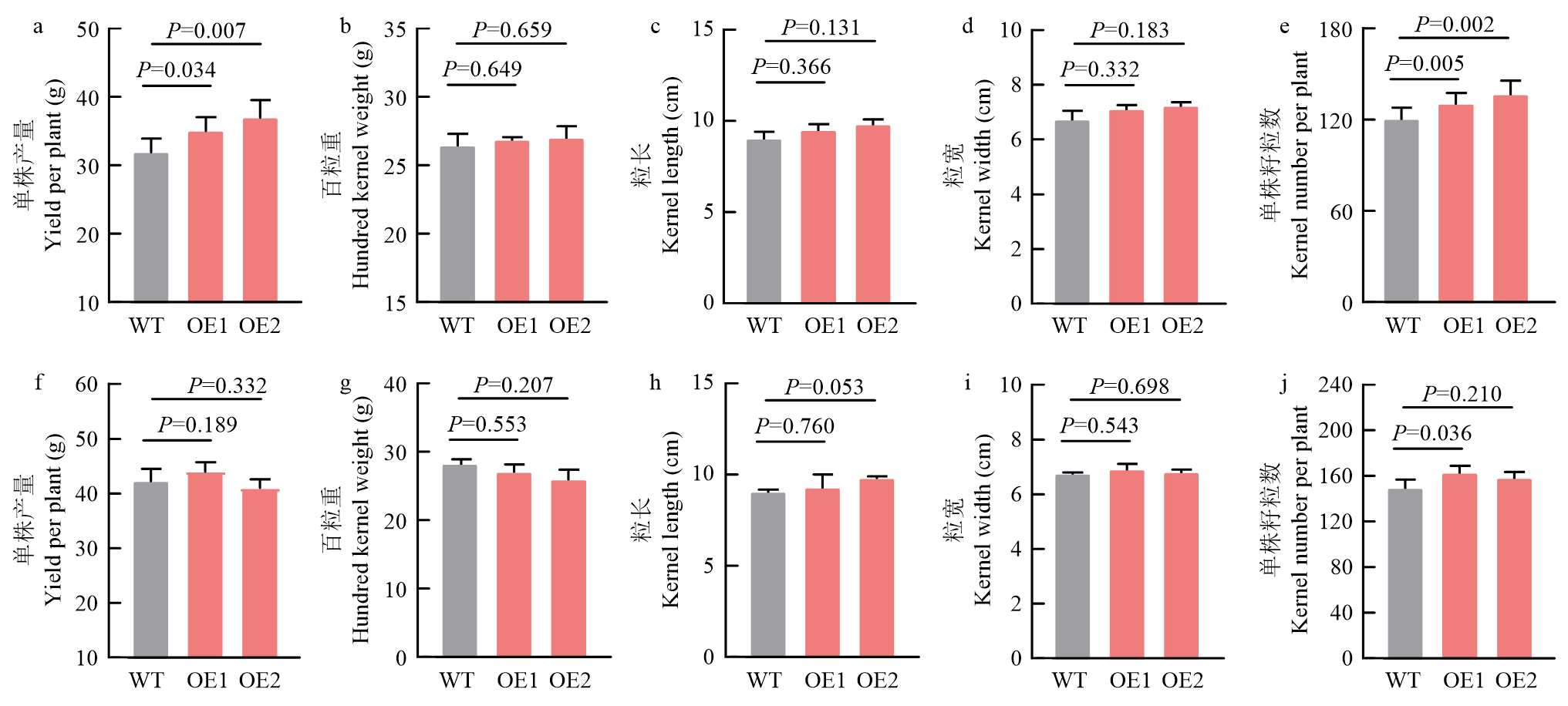
【Objective】The main producing areas of maize is mostly located on the arid or semi-arid region that relying on the rainfed farming in China. The maize production losses caused by drought is a great threaten to food security. As a cross-pollinating crop, maize is mostly sensitive to water stress during flowering time. Drought at flowering stage will lead to asynchronous development between the male and female flower and cause massive grain yield loss. Thus, mining drought resistance related genes at flowering stage is important for maize drought resistance improvement and breeding. 【Method】In the present study, the phylogenic tree of 24 ZCN genes in maize genome, which is homologs of Arabidopsis FT gene, was build. The gene expression patterns of ZCN7 were analysis using qRT-PCR and in vivo GFP fluorescence imaging. A maize natural population consisting of 118 diverse inbred lines were planted in three environments, Beijing in 2021 and 2022 and Urumqi in 2022, to identify the flowering time related traits under different water treatments. The genomic variants around ZCN7 were detected by PCR and Sanger sequencing. The candidate gene association analysis was performed based on mixed linear model and the significant associated variants with drought induced anthesis-silking interval was obtained. The gene expression level of ZCN7 in natural population at flowering time was also measured by qRT-PCR. The differences of drought resistance traits and ZCN7 expression were compared between different haplotypes of significant associated variant. The Ubi1:ZCN7 overexpression transgenic maize were obtained, and the phenotypic performance was identified under different water treatments. 【Result】The 24 ZCN genes in maize genome included 15 FT like genes, 6 TFL1 like genes and 3 MFT like genes. The protein sequence of ZCN genes varied from 111 nn to 193 nn. The ZCN7 showed close relationship with ZCN8 and the protein sequence identity was 83.3% between the two genes. ZCN7 showed highest gene expression in the leaf blade at V12 stage. And the ZCN7-promoter:GFP vector was transformed to Arabidopsis and the GFP showed enriched signal at the blade edge of mature leaf. The candidate gene association analysis revealed a SNP variant at 1001 bp upstream of ZCN7 start codon had highest association signal with drought induced anthesis-silking interval under drought. The A/A and G/G haplotypes of SNP-1001 included 78 and 27 inbred lines, respectively. The anthesis-silking interval of A/A haplotype lines were significantly lower than G/G lines. And the ZCN7 gene expression of A/A haplotype lines were significantly higher than G/G lines. In addition, the ZCN7 overexpression transgenic lines showed significantly decreased anthesis-silking interval than wild type lines. Under drought, the anthesis-silking intervals of OE1 and OE2 were 2.3 and 2.6 days shorter than wild type lines. And the grain yield per plant and kernel number per plant of transgenic lines were significantly higher than wild type lines under drought, while the hundred kernel weight, kernel length and kernel width showed no significant difference. 【Conclusion】The maize ZCN7 played positive role in drought resistance and its overexpression improved grain yield by reducing anthesis-silking interval under drought.

Key words: maize (Zea mays L.), drought resistance, flowering time, ZCN

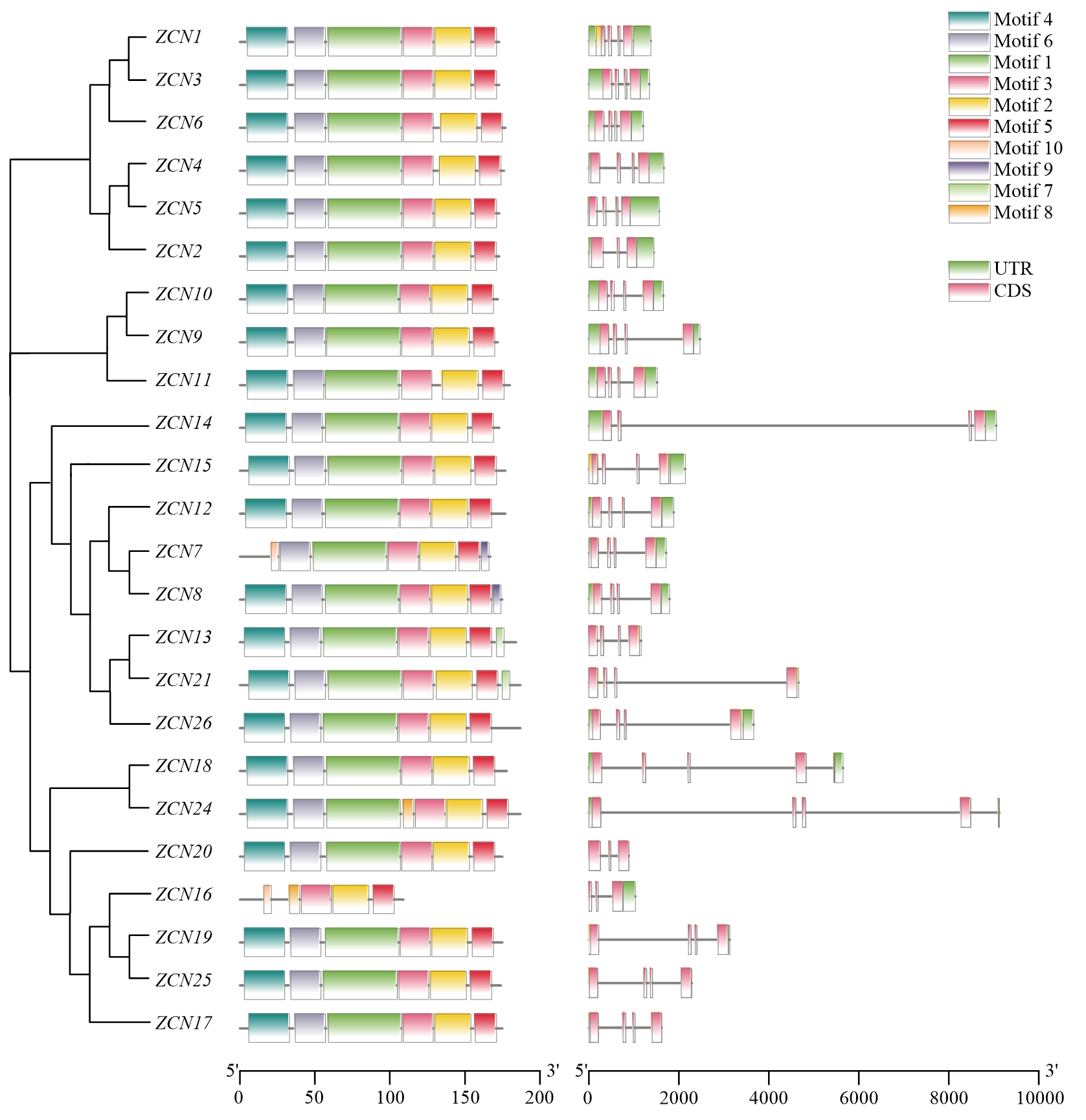
Fig. 1

The maize ZCN gene family The left panel is phylogenic tree of 24 ZCN genes in maize. The middle panel is the conserved motif of ZCN proteins. Boxes in different colors present conserved motifs. The right panel is gene structure of ZCN genes. The green boxes are UTR and red boxes are coding sequence"

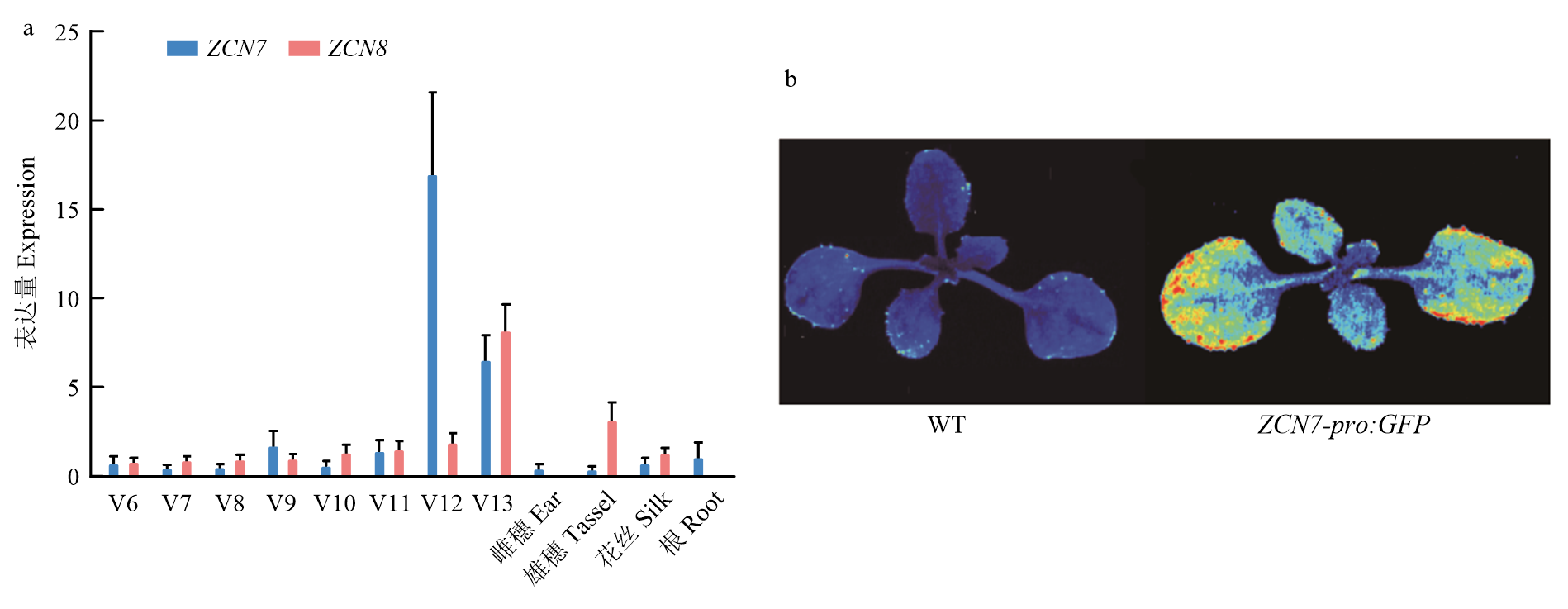
Fig. 2

The gene expression patterns of ZCN7 a: The gene expression level of ZCN7 and ZCN8 in different tissues; b: The in vivo GFP fluorescence image"

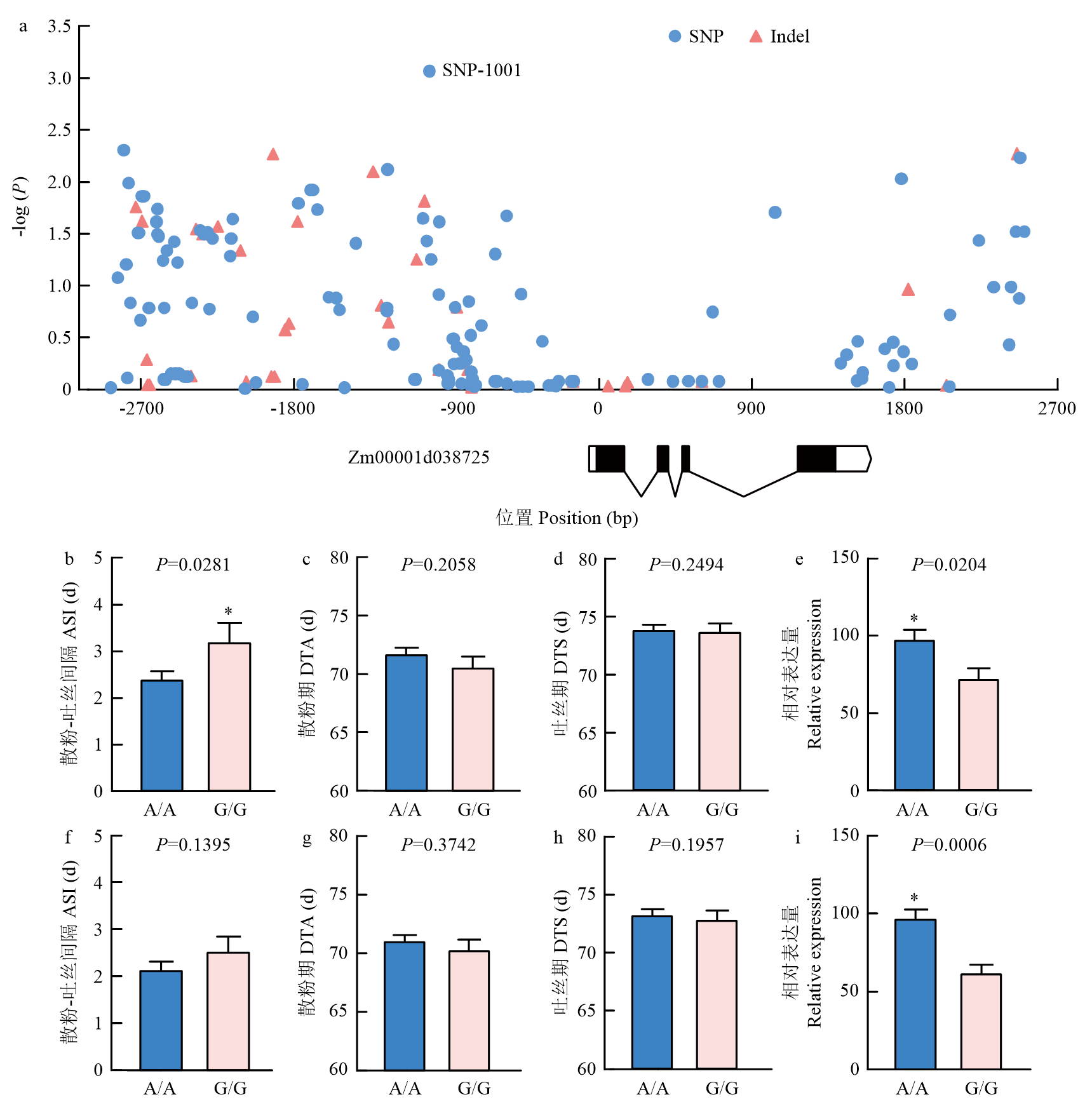
Fig. 3

The candidate gene association analysis of ZCN7 a: The candidate gene association analysis of ZCN7 with anthesis-silking interval based on mixed linear model. The zero point of X axis is the start codon (ATG) of ZCN7. The gene structure of ZCN7 is plotted. The white boxes, black boxes and lines are UTR, coding sequence and introns. b-e: The anthesis-silking interval (ASI), days to anthesis (DTA), days to silking (DTS), and ZCN7 gene expression between different haplotypes of SNP-1001 under drought. f-i: The anthesis-silking interval (ASI), days to anthesis (DTA), days to silking (DTS), and ZCN7 gene expression between different haplotypes of SNP-1001 under well-watered conditions. The statistical analysis is performed by Students’ t-tes"

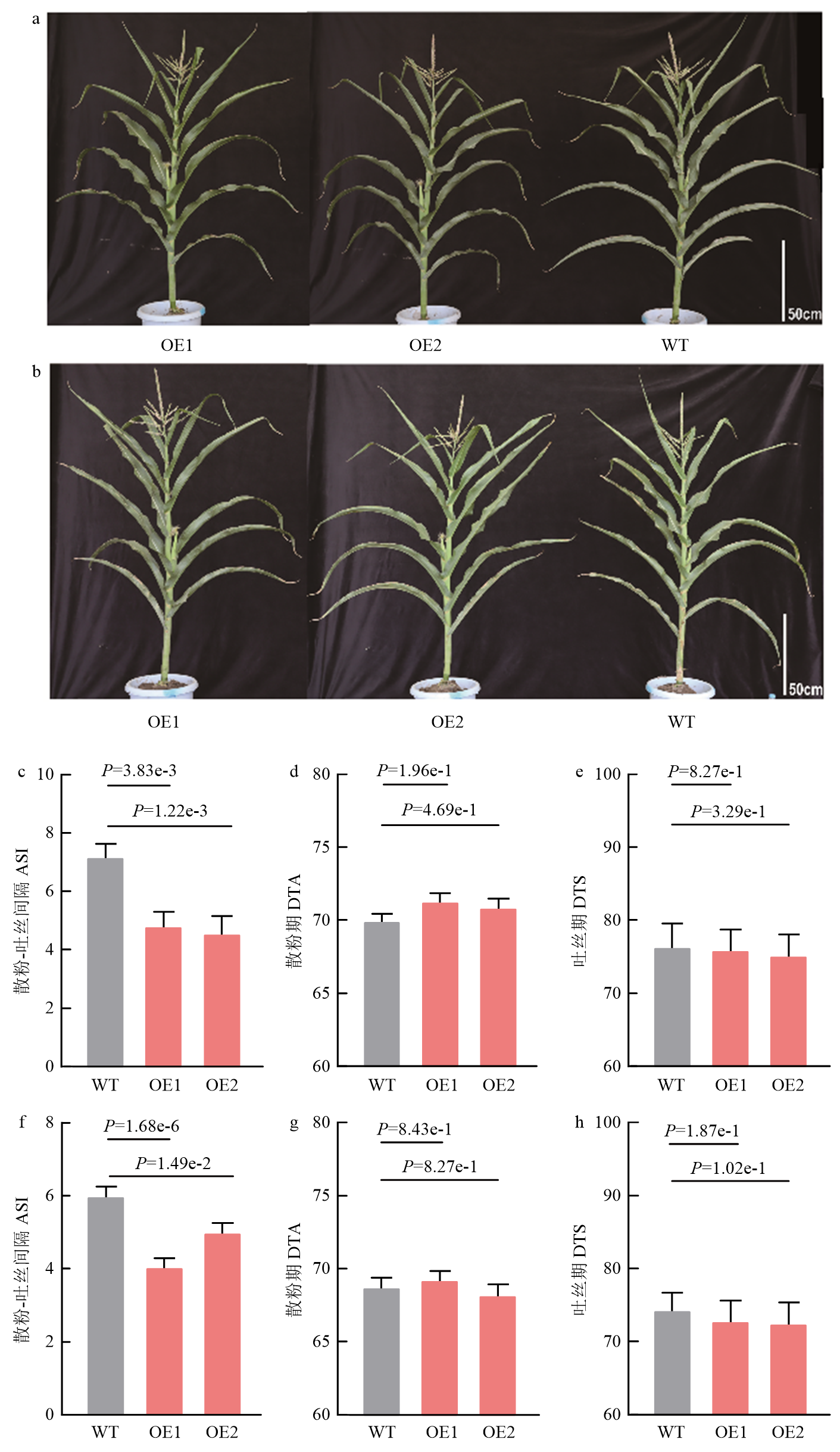
Fig. 4

The flowering time traits of ZCN7 overexpression transgenic maize The morphology of ZCN7 overexpression transgenic lines (OE1 and OE2) and wild type lines (WT) under drought (a) and well-watered (b) conditions. The ASI (c), DTA (d), and DTS (e) of transgenic and wild type lines under drought. The ASI (f), DTA (g), and DTS (h) of transgenic and wild type lines under well-watered conditions. The statistical analysis is performed by Students’ t-test"

Fig. 5

The grain yield traits of ZCN7 overexpression transgenic maize The grain yield per plant (a), hundred kernel weight (b), kernel length (c), kernel width (d) and kernel number per plant (e) of transgenic (OE1 and OE2) and wild type (WT) lines under drought. The grain yield per plant (f), hundred kernel weight (g), kernel length (h), kernel width (i), and kernel number per plant (j) of transgenic and wild type lines under drought. The statistical analysis is performed by Students’ t-test"

[1]
戴景瑞, 鄂立柱. 我国玉米育种科技创新问题的几点思考. 玉米科学, 2010, 18(1): 1-5.
DAI J R, E L Z. Scientific and technological innovation of maize breeding in China. Journal of Maize Sciences, 2010, 18(1): 1-5. (in Chinese)
[2]
LU Y L, ZHANG S H, SHAH T, XIE C X, HAO Z F, LI X H, FARKHARI M, RIBAUT J M, CAO M J, RONG T Z, XU Y B. Joint linkage-linkage disequilibrium mapping is a powerful approach to detecting quantitative trait loci underlying drought tolerance in maize. Proceedings of the National Academy of Sciences of the United States of America, 2010, 107(45): 19585-19590.
[3]
KARDAILSKY I, SHUKLA V K, AHN J H, DAGENAIS N, CHRISTENSEN S K, NGUYEN J T, CHORY J, HARRISON M J, WEIGEL D. Activation tagging of the floral inducer FT. Science, 1999, 286(5446): 1962-1965.

doi: 10.1126/science.286.5446.1962
[4]
KOBAYASHI Y, KAYA H, GOTO K, IWABUCHI M, ARAKI T. A pair of related genes with antagonistic roles in mediating flowering signals. Science, 1999, 286(5446): 1960-1962.

doi: 10.1126/science.286.5446.1960 pmid: 10583960
[5]
MORAES T S, DORNELAS M C, MARTINELLI A P. FT/TFL1: Calibrating plant architecture. Frontiers in Plant Science, 2019, 10: 97.

doi: 10.3389/fpls.2019.00097 pmid: 30815003
[6]
WICKLAND D P, HANZAWA Y. The FLOWERING LOCUS T/TERMINAL FLOWER 1 gene family: Functional evolution and molecular mechanisms. Molecular Plant, 2015, 8(7): 983-997.

doi: 10.1016/j.molp.2015.01.007
[7]
JAEGER K E, WIGGE P A. FT protein acts as a long-range signal in Arabidopsis. Current Biology, 2007, 17(12): 1050-1054.

doi: 10.1016/j.cub.2007.05.008
[8]
TAMAKI S, MATSUO S, WONG H L, YOKOI S, SHIMAMOTO K. Hd3a protein is a mobile flowering signal in rice. Science, 2007, 316(5827): 1033-1036.

doi: 10.1126/science.1141753 pmid: 17446351
[9]
TAOKA K, OHKI I, TSUJI H, FURUITA K, HAYASHI K, YANASE T, YAMAGUCHI M, NAKASHIMA C, PURWESTRI Y A, TAMAKI S, OGAKI Y, SHIMADA C, NAKAGAWA A, KOJIMA C, SHIMAMOTO K. 14-3-3 proteins act as intracellular receptors for rice Hd3a florigen. Nature, 2011, 476(7360): 332-335.

doi: 10.1038/nature10272
[10]
DANILEVSKAYA O N, MENG X, HOU Z L, ANANIEV E V, SIMMONS C R. A genomic and expression compendium of the expanded PEBP gene family from maize. Plant Physiology, 2008, 146(1): 250-264.

doi: 10.1104/pp.107.109538
[11]
MENG X, MUSZYNSKI M G, DANILEVSKAYA O N. The FT-like ZCN8 gene functions as a floral activator and is involved in photoperiod sensitivity in maize. The Plant Cell, 2011, 23(3): 942-960.

doi: 10.1105/tpc.110.081406
[12]
LAZAKIS C M, CONEVA V, COLASANTI J. ZCN8 encodes a potential orthologue of Arabidopsis FT florigen that integrates both endogenous and photoperiod flowering signals in maize. Journal of Experimental Botany, 2011, 62(14): 4833-4842.

doi: 10.1093/jxb/err129
[13]
GUO L, WANG X H, ZHAO M, HUANG C, LI C, LI D, YANG C J, YORK A M, XUE W, XU G H, LIANG Y, CHEN Q, DOEBLEY J F, TIAN F. Stepwise cis-regulatory changes in ZCN8 contribute to maize flowering-time adaptation. Current Biology, 2018, 28(18): 3005-3015.e4.

doi: 10.1016/j.cub.2018.07.029
[14]
MASCHERETTI I, TURNER K, BRIVIO R S, HAND A, COLASANTI J, ROSSI V. Florigen-encoding genes of day-neutral and photoperiod-sensitive maize are regulated by different chromatin modifications at the floral transition. Plant Physiology, 2015, 168(4): 1351-1363.

doi: 10.1104/pp.15.00535 pmid: 26084920
[15]
CHEN C J, CHEN H, ZHANG Y, THOMAS H R, FRANK M H, HE Y H, XIA R. TBtools: An integrative toolkit developed for interactive analyses of big biological data. Molecular Plant, 2020, 13(8): 1194-1202.

doi: S1674-2052(20)30187-8 pmid: 32585190
[16]
WANG X L, WANG H W, LIU S X, FERJANI A, LI J S, YAN J B, YANG X H, QIN F. Genetic variation in ZmVPP1 contributes to drought tolerance in maize seedlings. Nature Genetics, 2016, 48(10): 1233-1241.

doi: 10.1038/ng.3636
[17]
TIAN T A, WANG S H, YANG S P, YANG Z R, LIU S X, WANG Y J, GAO H J, ZHANG S S, YANG X H, JIANG C F, QIN F. Genome assembly and genetic dissection of a prominent drought-resistant maize germplasm. Nature Genetics, 2023, 55(3): 496-506.

doi: 10.1038/s41588-023-01297-y
[18]
XIANG Y L, SUN X P, GAO S, QIN F, DAI M Q. Deletion of an endoplasmic reticulum stress response element in a ZmPP2C-A gene facilitates drought tolerance of maize seedlings. Molecular Plant, 2017, 10(3): 456-469.

doi: 10.1016/j.molp.2016.10.003
[19]
MAO H D, WANG H W, LIU S X, LI Z, YANG X H, YAN J B, LI J S, TRAN L S P, QIN F. A transposable element in a NAC gene is associated with drought tolerance in maize seedlings. Nature Communications, 2015, 6: 8326.

doi: 10.1038/ncomms9326
[20]
GUO M, RUPE M A, WEI J, WINKLER C, GONCALVES- BUTRUILLE M, WEERS B P, CERWICK S F, DIETER J A, DUNCAN K E, HOWARD R J, HOU Z L, LOFFLER C M, COOPER M, SIMMONS C R. Maize ARGOS1 (ZAR1) transgenic alleles increase hybrid maize yield. Journal of Experimental Botany, 2014, 65(1): 249-260.

doi: 10.1093/jxb/ert370
[21]
SHI J R, GAO H R, WANG H Y, LAFITTE H R, ARCHIBALD R L, YANG M Z, HAKIMI S M, MO H, HABBEN J E. ARGOS8 variants generated by CRISPR-Cas9 improve maize grain yield under field drought stress conditions. Plant Biotechnology Journal, 2017, 15(2): 207-216.

doi: 10.1111/pbi.2017.15.issue-2
[22]
SHI J R, HABBEN J E, ARCHIBALD R L, DRUMMOND B J, CHAMBERLIN M A, WILLIAMS R W, LAFITTE H R, WEERS B P. Overexpression of ARGOS genes modifies plant sensitivity to ethylene, leading to improved drought tolerance in both Arabidopsis and maize. Plant Physiology, 2015, 169(1): 266-282.

doi: 10.1104/pp.15.00780
[23]
XIANG Y, SUN X J, BIAN X L, WEI T H, HAN T, YAN J W, ZHANG A Y. The transcription factor ZmNAC49 reduces stomatal density and improves drought tolerance in maize. Journal of Experimental Botany, 2021, 72(4): 1399-1410.

doi: 10.1093/jxb/eraa507
[24]
LIU B X, ZHANG B, YANG Z R, LIU Y, YANG S P, SHI Y L, JIANG C F, QIN F. Manipulating ZmEXPA4 expression ameliorates the drought-induced prolonged anthesis and silking interval in maize. The Plant Cell, 2021, 33(6): 2058-2071.

doi: 10.1093/plcell/koab083
[25]
WEI H A, WANG X L, HE Y Q, XU H, WANG L. Clock component OsPRR73 positively regulates rice salt tolerance by modulating OsHKT2;1-mediated sodium homeostasis. The EMBO Journal, 2021, 40: e105086.
[26]
FORD B, DENG W W, CLAUSEN J, OLIVER S, BODEN S, HEMMING M, TREVASKIS B. Barley (Hordeum vulgare) circadian clock genes can respond rapidly to temperature in an EARLY FLOWERING 3-dependent manner. Journal of Experimental Botany, 2016, 67(18): 5517-5528.

doi: 10.1093/jxb/erw317
[27]
WANG C, YANG Q, WANG W X, LI Y P, GUO Y L, ZHANG D F, MA X N, SONG W, ZHAO J R, XU M L. A transposon-directed epigenetic change in ZmCCT underlies quantitative resistance to Gibberella stalk rot in maize. The New Phytologist, 2017, 215(4): 1503-1515.

doi: 10.1111/nph.2017.215.issue-4
[28]
YAMAURA S, YAMAUCHI Y, MAKIHARA M, YAMASHINO T, ISHIKAWA A. CCA1 and LHY contribute to nonhost resistance to Pyricularia oryzae (syn. Magnaporthe oryzae) in Arabidopsis thaliana. Bioscience Biotechnology and Biochemistry, 2020, 84: 76-84.

doi: 10.1080/09168451.2019.1660612
[29]
LEI J X, JAYAPRAKASHA G K, SINGH J, UCKOO R, BORREGO E J, FINLAYSON S, KOLOMIETS M, PATIL B S, BRAAM J, ZHU-SALZMAN K. CIRCADIAN CLOCK-ASSOCIATED1 controls resistance to aphids by altering indole glucosinolate production. Plant Physiology, 2019, 181(3): 1344-1359.

doi: 10.1104/pp.19.00676 pmid: 31527087
[30]
WANG T, GUO J, PENG Y, LYU X, LIU B, SUN S, WANG X. Light-induced mobile factors from shoots regulate rhizobium- triggered soybean root nodulation. Science, 2021, 374(6563): 65-71.

doi: 10.1126/science.abh2890
[1] MU YingTong, LU JingShi, ZHANG YuTong, SHI FengLing. Identification of Key Drought-Responsive Genes in Upright Medicago ruthenica Sojak cv. Zhilixing Based on Transcriptome Sequencing and WGCNA [J]. Scientia Agricultura Sinica, 2025, 58(21): 4528-4543.
[2] CHEN CaiJin, MA Lin, BAO MingFang, ZHANG GuoHui, JIANG QingXue, YANG TianHui, WANG Chuan, WANG XiaoChun, GAO Ting, WANG XueMin, LIU WenHui. Identification and Evaluation of Drought Resistance for 111 Germplasm Resources of Alfalfa During Germination Stage [J]. Scientia Agricultura Sinica, 2025, 58(10): 1896-1907.
[3] ZHANG YuZhou, WANG YiZhao, GAO RuXi, LIU YiFan. Research Progress on Root System Architecture and Drought Resistance in Wheat [J]. Scientia Agricultura Sinica, 2024, 57(9): 1633-1645.
[4] ZHOU Quan, LU QiuMei, ZHAO ZhangChen, WU ChenRan, FU XiaoGe, ZHAO YuJiao, HAN Yong, LIN HuaiLong, CHEN WeiLin, MOU LiMing, LI XingMao, WANG ChangHai, HU YinGang, CHEN Liang. Identification of Drought Resistance of 244 Spring Wheat Varieties at Seedling Stage [J]. Scientia Agricultura Sinica, 2024, 57(9): 1646-1657.
[5] YAN Wen, JIN XiuLiang, LI Long, XU ZiHan, SU Yue, ZHANG YueQiang, JING RuiLian, MAO XinGuo, SUN DaiZhen. Drought Resistance Evaluation of Synthetic Wheat at Grain Filling Using UAV-Based Multi-Source Imagery Data [J]. Scientia Agricultura Sinica, 2024, 57(9): 1674-1686.
[6] NI ShuHui, SHI DongMei, PAN LiDong, YE Qing, WU JunHao. Response of Cultivated-Layer Water-Holding and Drought Resistance Performance and Productivity to Erosion Degree in Purple Soil Sloping Farmland [J]. Scientia Agricultura Sinica, 2024, 57(7): 1350-1362.
[7] GAO ChenXi, HAO LuYang, HU Yue, LI YongXiang, ZHANG DengFeng, LI ChunHui, SONG YanChun, SHI YunSu, WANG TianYu, LI Yu, LIU XuYang. Analysis of Transposable Element Associated Epigenetic Regulation under Drought in Maize [J]. Scientia Agricultura Sinica, 2024, 57(6): 1034-1048.
[8] ZHU JunJie, ZHANG XinYue, PAN MengYing, ZHANG JingWen, ZHENG Qi, LI YuLing, DONG YongBin. An EIN3/EIL Family Gene, ZmEIL9 Regulates Grain Development in Maize [J]. Scientia Agricultura Sinica, 2024, 57(18): 3522-3532.
[9] HU XueJie, LIU LuPing, WANG FengMin, HAN YuHua, SUN BinCheng, MA QiBin, HUANG ZhiPing, FENG Yan, CHEN Qiang, YANG ChunYan, ZHANG MengChen, ZHANG Kai, QIN Jun. Construction of ms1 Basic Recurrent Populations Adapted to Different Ecological Regions Using Maturity Genes E1 and E2 in Soybean [J]. Scientia Agricultura Sinica, 2024, 57(17): 3305-3317.
[10] CAO LiRu, YE FeiYu, KU LiXia, MA ChenChen, PANG YunYun, LIANG XiaoHan, ZHANG Xin, LU XiaoMin. Analysis of Maize Phenylalanine Ammonia-Lyase (PAL) Family Genes and Functional Study of ZmPAL5 [J]. Scientia Agricultura Sinica, 2024, 57(12): 2265-2281.
[11] LI ShengYou, WANG ChangLing, YAN ChunJuan, ZHANG LiJun, SUN XuGang, CAO YongQiang, WANG WenBin, SONG ShuHong. Evaluation of Drought Resistance in Soybean Germplasm and Identification of Candidate Drought-Resistant Genes [J]. Scientia Agricultura Sinica, 2024, 57(10): 1857-1869.
[12] LUO ZhengYing, HU Xin, LIU XinLong, WU CaiWen, WU ZhuanDi, LIU JiaYong, ZENG QianChun. Application of Trehalose Enhances Drought Resistance in Sugarcane Seedlings and Promotes Plant Growth [J]. Scientia Agricultura Sinica, 2023, 56(21): 4208-4218.
[13] MA YaMei,ZHANG ShaoHong,ZHAO JunLiang,LIU Bin. Function of FCS-Like Zinc-Finger Protein OsFLZ18 in Regulating Rice Flowering Time [J]. Scientia Agricultura Sinica, 2022, 55(20): 3875-3884.
[14] CHANG LiGuo,HE KunHui,LIU JianChao. Mining of Genetic Locus of Maize Stay-Green Related Traits Under Multi-Environments [J]. Scientia Agricultura Sinica, 2022, 55(16): 3071-3081.
[15] MENG Yu,WEN PengFei,DING ZhiQiang,TIAN WenZhong,ZHANG XuePin,HE Li,DUAN JianZhao,LIU WanDai,FENG Wei. Identification and Evaluation of Drought Resistance of Wheat Varieties Based on Thermal Infrared Image [J]. Scientia Agricultura Sinica, 2022, 55(13): 2538-2551.
Viewed
Full text


Abstract

Cited

  Shared   
  Discussed   
No Suggested Reading articles found!