Scientia Agricultura Sinica ›› 2026, Vol. 59 ›› Issue (17): 3890-3906.doi: 10.3864/j.issn.0578-1752.2026.17.013

• FOOD SCIENCE AND ENGINEERING • Previous Articles     Next Articles

Adsorptive Purification Behavior of Acylated Anthocyanins from Red Radish and Its Anti-Lipase Activity in vitro

LI WenFeng1,2,3(), HUANG ShiHan1,3, HE LiQun1, ZHANG LianNa1, ZHU ChunLin1, MING Jian2()   

  1. 1 School of Modern Agriculture and Bioengineering, Yangtze Normal University, Chongqing 408100
    2 College of Food Science, Southwest University, Chongqing 400715
    3 Chongqing Fuling Zhacai Croup Co. Ltd., Chongqing 408000
  • Received:2025-12-12 Accepted:2026-07-15 Online:2026-09-03 Published:2026-09-03
  • Contact: MING Jian

Abstract:

【Objective】Anthocyanins of red radish (ARR) are natural red pigments characterized by strong processing stability and diverse physiological activities. This study aimed to optimize the purification process of ARR and systematically elucidate its inhibitory mechanism against pancreatic lipase, thereby providing a theoretical foundation for the development of functional foods targeting hyperlipidemia.【Method】The adsorption and desorption properties of six macroporous resins with different polarities on ARR were evaluated to select the optimal resin. The kinetic and thermodynamic characteristics of resin adsorbing ARR, as well as dynamic desorption characteristics at different ethanol concentrations, were investigated. Individual anthocyanins were identified by ultra-high performance liquid chromatography coupled with triple quadrupole mass spectrometry, and the purification performance of dextran gel chromatography was also assessed. Furthermore, the inhibitory activity and inhibition type of ARR against pancreatic lipase were evaluated in vitro, while the molecular interaction mechanism was explored using Fourier transform infrared spectroscopy and molecular dynamics simulations.【Result】The non-polar macroporous resin X-5 exhibited the highest recovery rate of ARR (81.17%) following sequential adsorption and desorption. The adsorption process followed pseudo-first-order kinetics and the Temkin isotherm model, indicating a spontaneous endothermic reaction with a maximum equilibrium adsorption capacity of 10.55 mg·g-1 at 35 ℃. Ethanol (40%) was identified as the optimal desorption agent. Purification using X-5 resin alone yielded higher purity than the combined application of X-5 and dextran gel. A total of 22 anthocyanins were identified, including 15 polyacetylated, 4 monooacylated, and 3 common anthocyanins. The main components (58.14%) were pelargonidin-3-(feruloyl) diglucoside-5-(malonyl) glucoside, pelargonidin-3-(caffeoyl) diglucoside-5-(malonyl) glucoside, pelargonidin-3-(feruloyl) diglucoside-5-glucoside, and pelargonidin-3-(caffeoyl) diglucoside-5-glucoside. ARR functioned as a reversible and mixed-type inhibitor of pancreatic lipase with an IC50 of 3.01 mg·mL-1. ARR interacts with active site residues of pancreatic lipase (Phe77, His263, and Ser152) via hydrophobic, hydrogen bonding, and electrostatic interactions, inducing conformational changes in the secondary structure and inhibiting its activity.【Conclusion】High-purity ARR, efficiently prepared using X-5 macroporous resin, exerted a reversible mixed-type inhibitory effect on pancreatic lipase, mediated predominantly by hydrophobic and hydrogen- bonding interactions.

Key words: acylated anthocyanins, macroporous resin, adsorption, desorption, lipase inhibitory activity, red radish, molecular dynamics

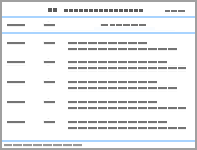
Table 1

Physical properties of six macroporous resins applied in current study"

大孔树脂
Macroporous resins
极性
Polarity
颗粒直径
Particle diameter (mm)
水分含量
Water content (%)
比表面积
Specific surface area (m2·g-1)
平均孔径
Average pore diameter (A°)
孔隙率
Porosity rate (%)
NKA-9 强极性 Strong polarity 0.3—1.25 65—75 500—550 100—120 55
DM301 半极性 Semi-polarity 0.3—1.25 65—75 500—550 100—120 55
DM130 弱极性 Weak polarity 0.3—1.25 65—75 500—550 90—100 55
AB-8 弱极性 Weak polarity 0.3—1.25 65—75 480—520 130—140 46
X-5 非极性 Non-polarity 0.3—1.25 65—75 500—550 55—75 55
D101 非极性 Non-polarity 0.3—1.25 70.5 550—600 90—100 44

Table 2

Parameters for the determination of monomeric anthocyanin by UHPLC-QQQ-MS/MS"

简写
Abbreviation
花色苷全名
Full name of anthocyanins
母离子
[M+H]+
碎片离子
MS/MS (m/z)
P3CCD5MG 天竺葵素-3-(咖啡酰)(咖啡酰)二葡萄糖苷-5-(丙二酰)葡萄糖苷
Pelargonidin-3-(caffeoyl)(caffeoyl) diglucoside-5-(malonyl) glucoside
1167 919; 519; 271
P3CCD5G 天竺葵素-3-(咖啡酰)(咖啡酰)二葡萄糖苷-5-葡萄糖苷
Pelargonidin-3-(caffeoyl)(caffeoyl) diglucoside-5-glucoside
1081 919; 433; 271
P3CFD5G 天竺葵素-3-(咖啡酰)(阿魏酰)二葡萄糖苷-5-葡萄糖苷
Pelargonidin-3-(caffeoyl)(feruloyl) diglucoside-5-glucoside
1095 933; 433; 271
P3CD5MG 天竺葵素-3-(咖啡酰)二葡萄糖苷-5-(丙二酰)葡萄糖苷
Pelargonidin-3-(caffeoyl) diglucoside-5-(malonyl) glucoside
1005 757; 519; 271
P3CD5G 天竺葵素-3-(咖啡酰)二葡萄糖苷-5-葡萄糖苷 Pelargonidin-3-(caffeoyl) diglucoside-5-glucoside 919 757; 595; 271
P3FCD5MG 天竺葵素-3-(阿魏酰)(阿魏酰)二葡萄糖苷-5-(丙二酰)葡萄糖苷
Pelargonidin-3-(feruloyl)(caffeoyl) diglucoside-5-(malonyl) glucoside
1181 933; 771; 519; 271
P3FFD5MG 天竺葵素-3-(阿魏酰)(阿魏酰)二葡萄糖苷-5-(丙二酰)葡萄糖苷
Pelargonidin-3-(feruloyl)(feruloyl)diglucoside-5-(malonyl) glucoside
1195 947; 519; 271
P3FFD5G 天竺葵素-3-(阿魏酰)(阿魏酰)二葡萄糖苷-5-葡萄糖苷
Pelargonidin-3-(feruloyl)(feruloyl) diglucoside-5-glucoside
1109 947; 433; 271
P3FD5MG 天竺葵素-3-(阿魏酰)二葡萄糖苷-5-(丙二酰)葡萄糖苷
Pelargonidin-3-(feruloyl) diglucoside-5-(malonyl) glucoside
1019 771; 519; 271
P3FD5G 天竺葵素-3-(咖啡酰)二葡萄糖苷-5-葡萄糖苷 Pelargonidin-3-(feruloyl)diglucoside-5-glucoside 933 771; 433; 271
P3PCD5MG 天竺葵素-3-(对香豆酰)(咖啡酰)二葡萄糖苷-5-(丙二酰)葡萄糖苷
Pelargonidin-3-(p-coumaroyl)(caffeoyl) diglucoside-5-(malonyl) glucoside
1151 903; 519; 271
P3PCD5G 天竺葵素-3-(对香豆酰)(咖啡酰)二葡萄糖苷-5-葡萄糖苷
Pelargonidin-3-(p-coumaroyl)(caffeoyl) diglucoside-5-glucoside
1065 903; 433; 271
P3PFD5MG 天竺葵素-3-(对香豆酰)( 阿魏酰)二葡萄糖苷-5-(丙二酰)葡萄糖苷Pelargonidin-3-(p-coumaroyl)(feruloyl) diglucoside-5-(malonyl) glucoside 1165 917; 519; 271
P3PFD5G 天竺葵素-3-(对香豆酰)(咖啡酰)二葡萄糖苷-5-葡萄糖苷
Pelargonidin-3-(p-coumaroyl)(feruloyl) diglucoside-5-glucoside
1079 917; 433; 271
P3PPD5MG 天竺葵素-3-(对香豆酰)(对香豆酰)二葡萄糖苷-5-(丙二酰)葡萄糖苷
Pelargonidin-3-(p-coumaroyl)(p-coumaroyl) diglucoside-5-(malonyl) glucoside
1135 887; 519; 271
P3PPD5G 天竺葵素-3-(对香豆酰)(对香豆酰)二葡萄糖苷-5-葡萄糖苷
Pelargonidin-3-(p-coumaroyl)(p-coumaroyl) diglucoside-5-glucoside
1049 877; 433; 271
P3PD5MG 天竺葵素-3-(对香豆酰)二葡萄糖苷-5-(丙二酰)葡萄糖苷
Pelargonidin-3-(p-coumaroyl) diglucoside-5-(malonyl) glucoside
989 741; 519; 271
P3PD5G 天竺葵素-3-(对香豆酰) 二葡萄糖苷-5-葡萄糖苷
Pelargonidin-3-(p-coumaroyl) diglucoside-5-glucoside
903 741; 433; 271
P3D5MG 天竺葵素-3-二葡萄糖苷-5-(丙二酰)葡萄糖苷Pelargonidin-3-diglucoside-5-(malonyl) glucoside 843 595; 519; 271
P3D5G 天竺葵素-3-二葡萄糖苷-5-葡萄糖苷 Pelargonidin-3-diglucoside-5-glucoside 757 595; 433; 271
P3G 天竺葵素-3-葡萄糖苷 Pelargonidin-3-glucoside 433 271
P3G5G 天竺葵素-3-葡萄糖苷-5-葡萄糖苷 Pelargonidin-3-glucoside-5-glucoside 595 433; 271

Table 3

Adsorption and desorption capacity and recovery for anthocyanins of red radish applying six macroporous resins"

大孔树脂
Macroporous resin
吸附能力
Adsorption capacity (mg·g-1)
吸附率
Adsorption ratio
(%)
解吸能力
Desorption capacity (mg·g-1)
解吸率
Desorption ratio
(%)
回收率
Recovery ratio
(%)
NKA-8 5.27±0.31b 85.28±0.23d 2.98±0.66b 71.59±18.43a 61.03±15.55b
DM301 5.73±0.37ab 90.91±0.51b 3.11±0.27b 69.67±7.72b 63.31±6.70b
DM130 5.53±0.32ab 88.50±1.24c 3.24±0.59ab 73.94±10.36a 65.40±8.72ab
AB-8 5.80±0.32ab 91.79±1.19ab 3.59±0.21ab 78.93±5.29a 72.49±5.60ab
X-5 5.88±0.35a 92.79±0.19a 4.05±0.19a 87.49±7.18a 81.17±6.51a
D101 5.90±0.29a 93.00±0.82a 3.83±0.79ab 82.11±13.24a 76.34±12.21ab

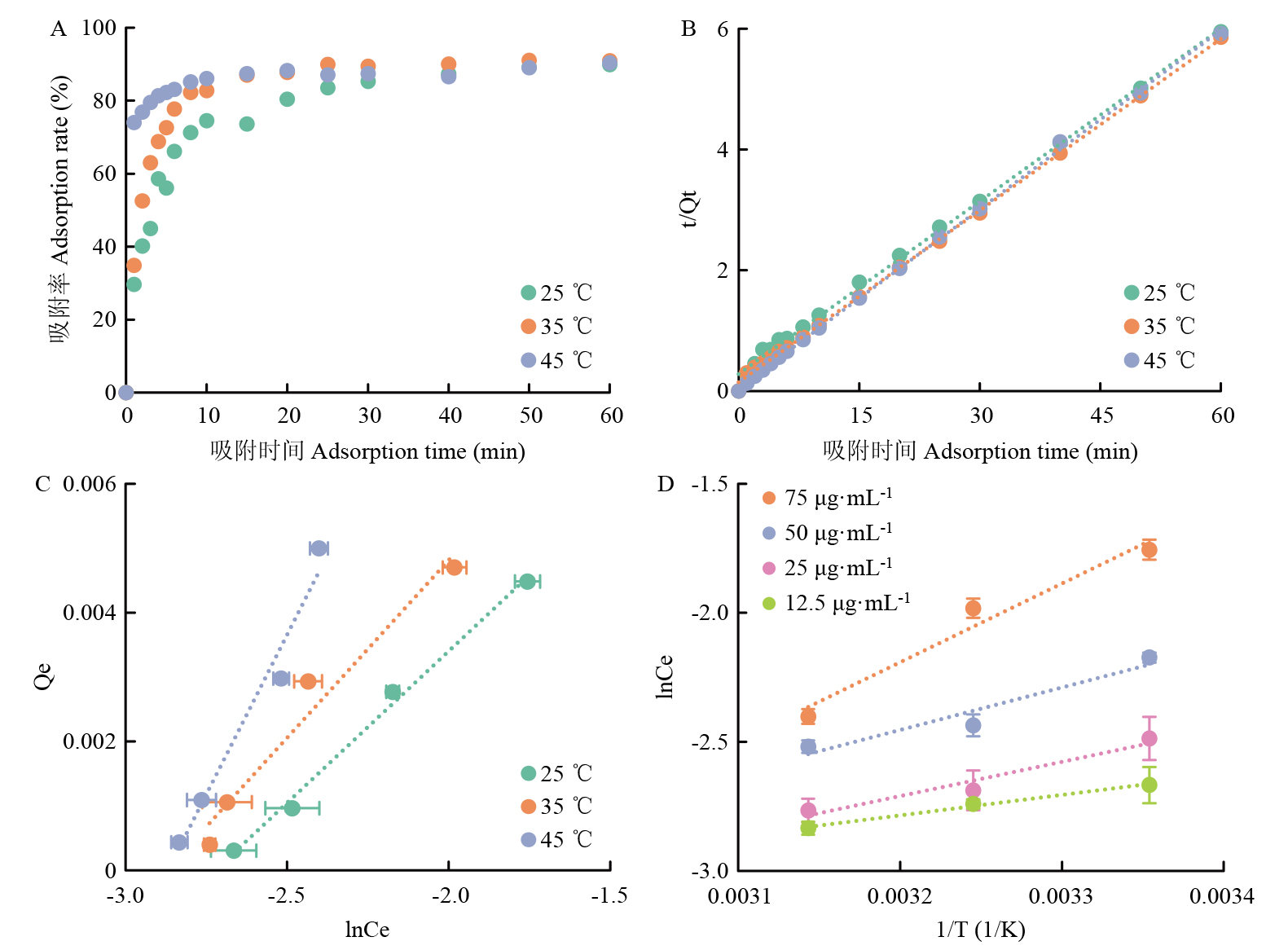
Fig. 1

The adsorption kinetics and adsorption isotherm models of the X-5 resin-adsorbing anthocyanins of red radish A: The adsorption kinetic curves; B: The pseudo- first-order kinetic fitting equation; C: The Langmuir model describing the X-5 adsorbing ARR; D: X-5 The thermodynamic curve of ARR with resin adsorption"

Table 4

Kinetic parameters of model fitting for the adsorption of anthocyanins from red radish by X-5 macroporous resin"

温度
Temperature (℃)
模型 Model
In-particle diffusion (IPD) Pseudo-second-order kinetic (PSOK) Pseudo-first-order kinetic (PFOK)
R2 R2 R2 方程 Equation K1 (g·mg-1·min-1) Qe (mg·g·resins-1)
25 0.8262 0.9737 0.9991 y=0.0954x+0.2832 0.032 10.48
35 0.6750 0.9452 0.9997 y=0.0948x+0.1467 0.061 10.55
45 0.3918 0.7546 0.9995 y=0.0987x+0.0544 0.179 10.13

Table 5

Fitting of adsorption isotherm models on X-5 macroporous resin adsorbing anthocyanins of red radish"

温度
Temperature (℃)
模型 Model
Freundlich Langmuir Temkin
R2 R2 R2 方程 Equation KT (L·mg-1) BT (J·mol-1)
25 0.8786 0.4421 0.9181 Qe=0.0047lnCe+0.0128 15.23 0.0047
35 0.7865 0.3200 0.9742 Qe=0.0055lnCe+0.0158 17.69 0.0055
45 0.7535 0.3427 0.9970 Qe=0.0099lnCe+0.0285 17.79 0.0099

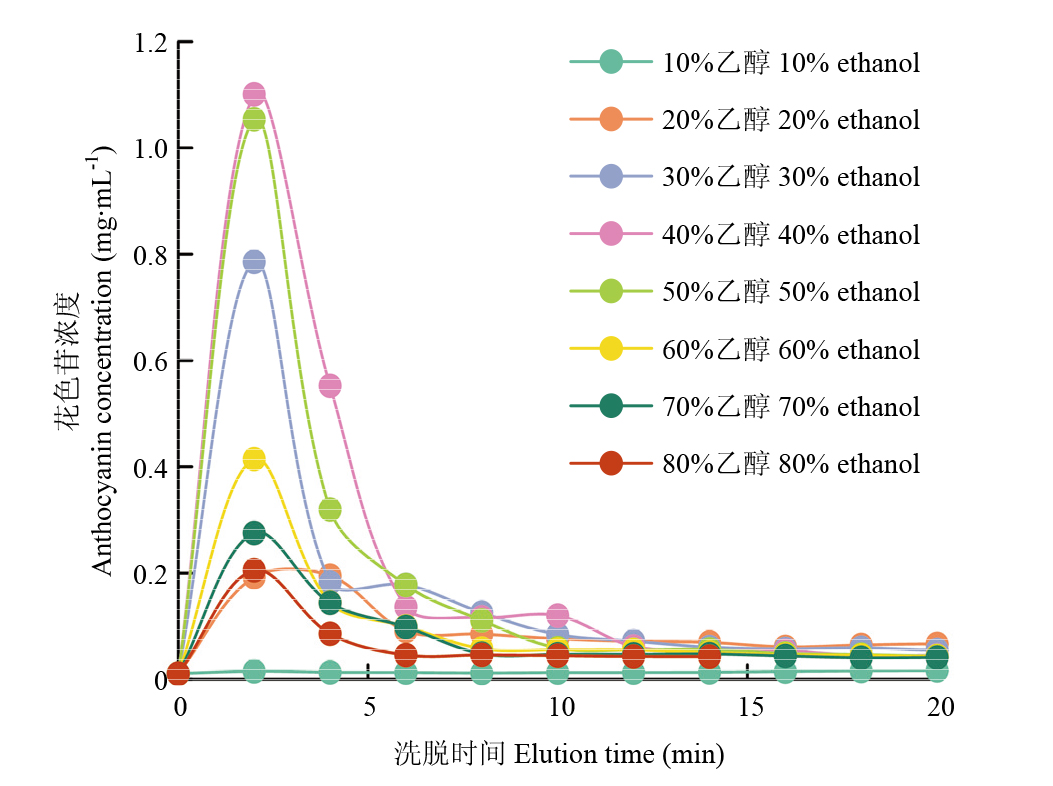
Fig. 2

Desorption of anthocyanins of red radish from X-5 macroporous resin by ethanol solutions at different concentrations"

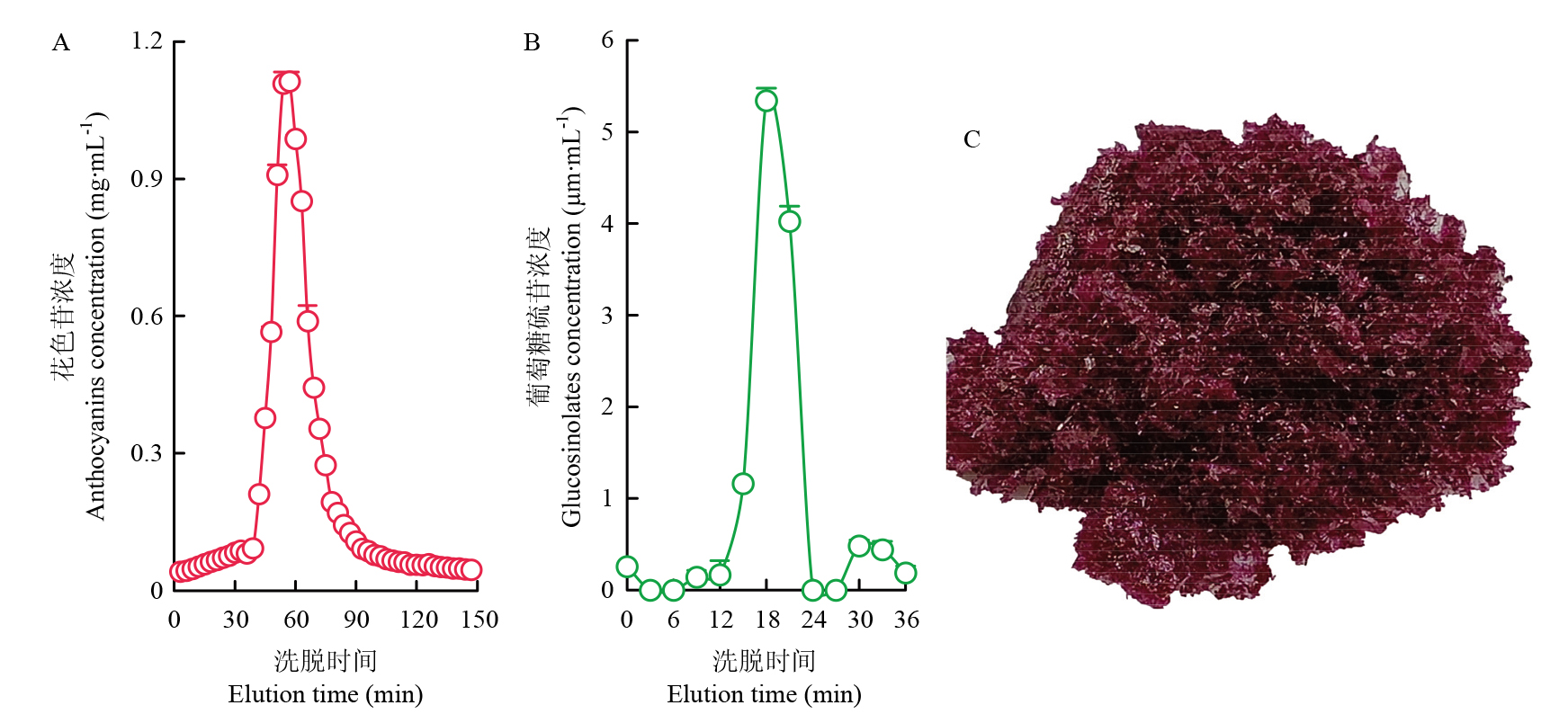
Fig. 3

Elution profiles of red radish anthocyanins purified using X-5 macroporous resin and dextran gel, along with the product A: Elution profile of anthocyanins eluted from dextran gel column; B: Elution profile of glucosinolates eluted from dextran gel column; C: Image of anthocyanin of red radish purified using X-5 macroporous resin and dextran gel"

Table 6

Individual anthocyanin content in extracts (mg·g-1)"

花色苷名称
Name of anthocyanins
粗提物
Crude extract
X-5纯化
Purified by X-5
X-5和葡聚糖凝胶纯化
Purified by X-5 and dextran gel
P3FD5MG 139.42±11.14 121.98±1.05 76.47±2.95**#
P3CD5MG 71.98±0.73 58.71±1.72** 21.28±1.29**#
P3FD5G 59.13±5.76 65.52±4.75 19.64±1.25**#
P3CD5G 45.81±2.68 56.32±1.67** 6.21±0.31**#
P3FFD5MG 37.62±0.71 30.50±1.31** 11.54±0.38**#
P3PD5MG 33.25±1.31 31.83±0.53 21.68±1.57**#
P3PD5G 26.51±0.43 37.08±2.49** 9.08±0.95**#
P3D5G 26.9±4.34 30.54±3.35 13.53±1.30**#
P3D5MG 12.6±0.55 12.15±0.10 3.92±0.23**#
P3CCD5MG 9.52±0.48 7.35±0.12** 3.08±0.17**#
P3PFD5MG 9.88±0.44 9.94±0.27 4.66±0.21**#
P3FCD5MG 9.49±0.10 9.50±0.83 4.51±0.31**#
P3CFD5G 5.47±0.63 16.44±0.8** 2.03±0.15**#
P3FFD5G 4.25±0.03 7.35±0.67** 1.81±0.14**#
P3PCD5MG 3.90±0.25 3.37±0.03* 2.18±0.06**#
P3CCD5G 2.09±0.21 10.77±0.35** 1.26±0.02**#
P3PFD5G 1.73±0.08 4.00±0.13** 0.95±0.03**#
P3PCD5G 1.07±0.11 3.18±0.09** 0.70±0.03**#
P3PPD5MG 1.11±0.04 1.02±0.04* 0.81±0.02**#
P3G5G 0.73±0.12 1.20±0.15* 0.44±0.04*#
P3G 0.62±0.04 0.71±0.06 0.42±0.00**#
P3PPD5G 0.58±0.03 0.90±0.09** 0.46±0.03**#
多酰化花色苷 Polyacylated anthocyanins 331.34±11.70 316.82±1.28 153.42±1.41**#
单酰化花色苷 Monoacylated anthocyanins 144.06±5.87 171.08±8.25** 38.85±2.08**#
非酰化花色苷 Non-acetylated anthocyanins 28.25±4.27 32.45±3.52 14.38±1.28**#
花色苷总量 Total anthocyanin content 503.65±10.58 520.35±6.73 206.65±2.22**#

Fig. 4

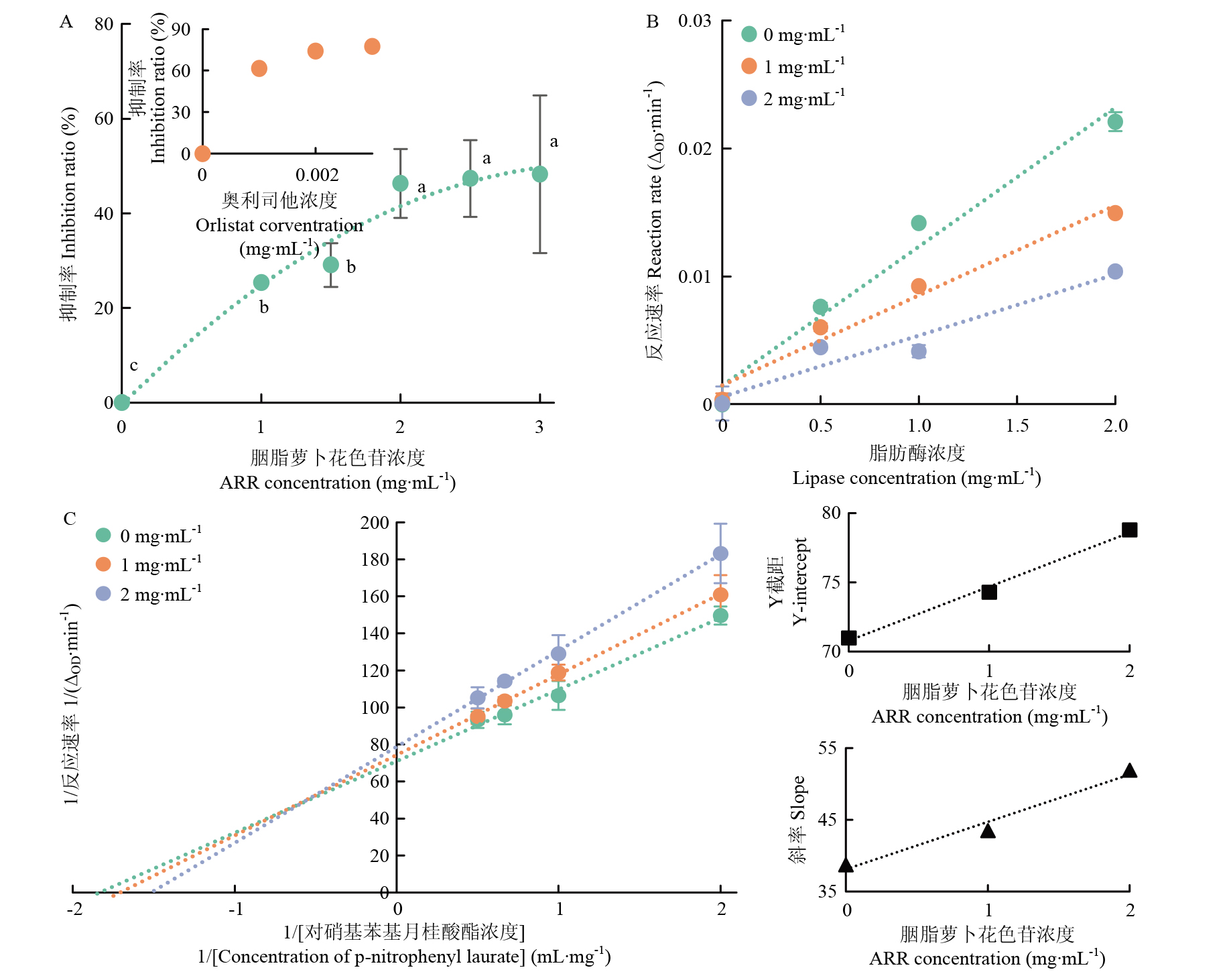
Inhibitory activity of acylated anthocyanins of red radish on lipase A: Inhibition rates of lipase by anthocyanins from red radish and orlistat at different concentrations; B: Effects of anthocyanins of red radish on lipase catalytic rate at different concentrations; C: Lineweaver-Burk plot of the inhibitory effects of anthocyanins from red radish on lipase"

Fig. 5

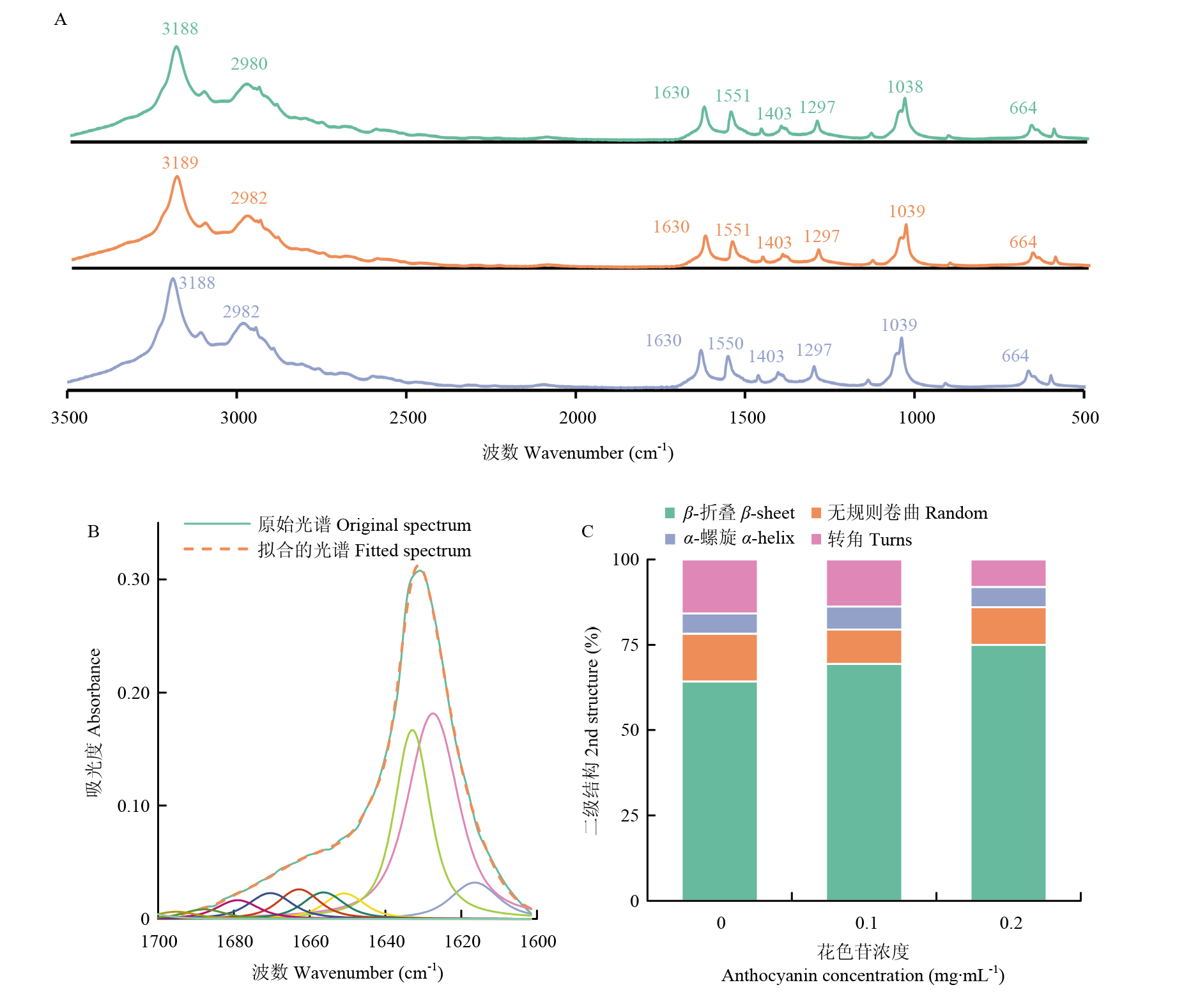
Anthocyanins of red radish changed the near-infrared spectra and secondary structure of lipase Anthocyanins of red radish altered the secondary structure of lipase A: Effects of anthocyanins from red radish on near-infrared of lipase; B: Near-infrared spectra of anthocyanins from red radish and lipase in the wavenumber range of 1600-1700 cm-1"

Fig. 6

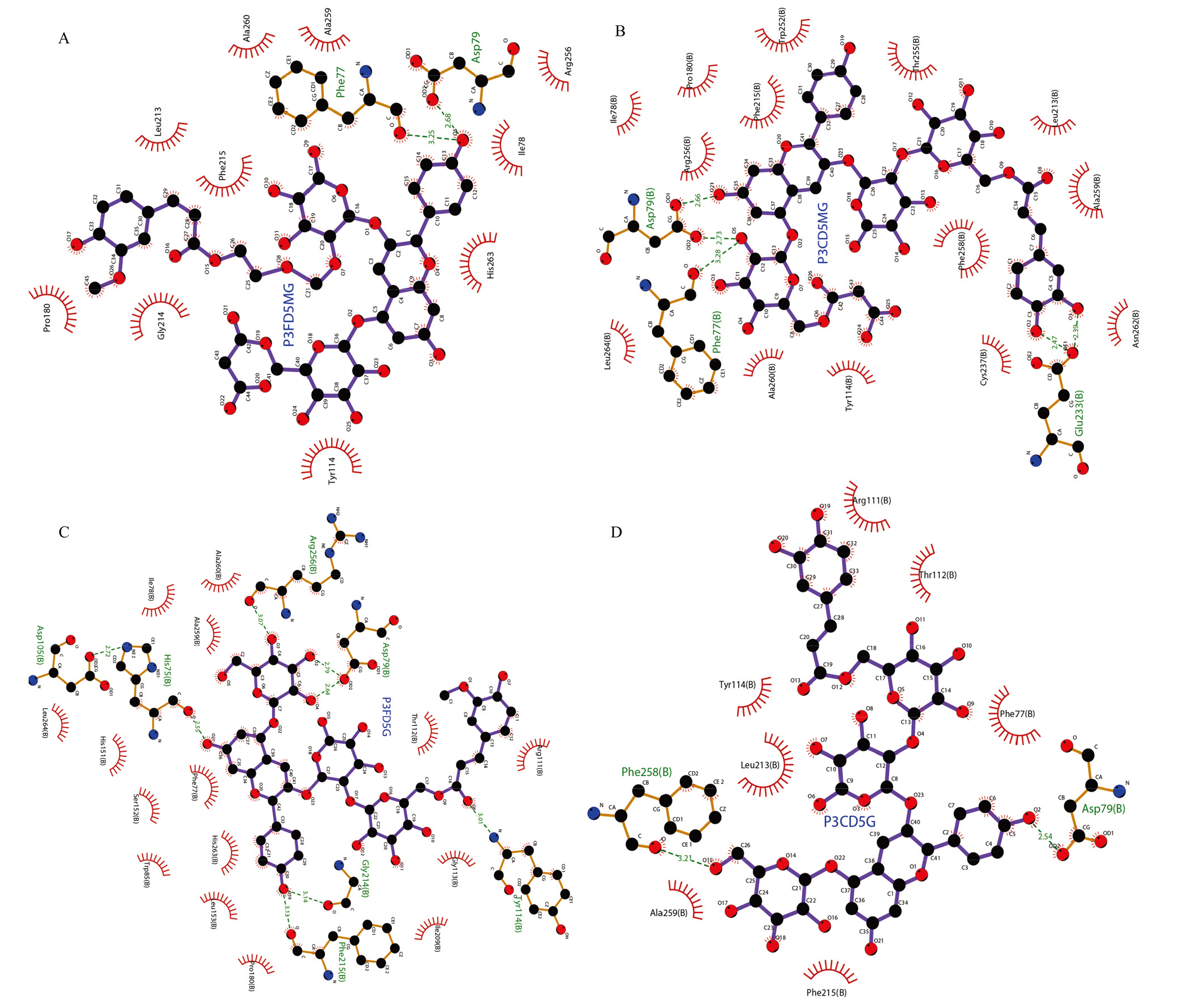
Computer simulation of the binding of four main anthocyanins in red radish to lipase A: P3FD5MG docking to lipase; B: P3CD5MG docking to lipase; C: P3FD5G docking to lipase; D: P3CD5G docking to lipase"

Table 7

Molecular dynamics simulation energy of lipase and the main anthocyanins in red radish"

能量
Energy (kJ·mol-1)
花色苷Anthocyanin
P3FD5MG P3FD5G P3CD5MG P3CD5G
范德华能 van der Waal energy 4327.38±101.75 -281.45±17.18 -276.44±29.15 -235.08±29.81
静电能 Electrostattic energy -269.99±33.29 -302.10±21.13 -332.55±32.62 -246.73±31.25
极性溶剂化能 Polar solvation energy 268.80±38.32 268.30±21.33 336.19±44.01 209.25±37.31
溶剂可及表面积能 Solvent-accessible surface area energy -32.57±1.98 -29.33±1.80 -32.22±2.39 -27.02±3.28
结合能 Binding energy 4293.61±99.79 -344.58±21.30 -305.03±29.25 -299.58±26.78
[1]
Wang L, Zheng W Y, Yang J X, Ali A, Qin H. Mechanism of Astragalus membranaceus alleviating acquired hyperlipidemia induced by high-fat diet through regulating lipid metabolism[J]. Nutrients, 2022, 14(5): 954.
[2]
郭子雨, 姚雨含, 刘涛, 赵军. 植物来源的胰脂肪酶抑制剂研究进展[J]. 食品研究与开发, 2021, 42(8): 212-217.
Guo Z Y, Yao Y H, Liu T, Zhao J. Research advances in pancreatic lipase inhibitors from plants[J]. Food Research and Development, 2021, 42(8): 212-217. (in Chinese)
[3]
Zhao Q Y, Fan Y M, Zhao L X, Zhu Y Q, Jiang Y R, Gu J, Xue Y, Hao Z H, Shen Q. Identification and molecular binding mechanism of novel pancreatic lipase and cholesterol esterase inhibitory peptides from heat-treated adzuki bean protein hydrolysates[J]. Food Chemistry, 2024, 439: 138129.
[4]
He X, Chen L Y, Pu Y J, Wang H X, Cao J K, Jiang W B. Fruit and vegetable polyphenols as natural bioactive inhibitors of pancreatic lipase and cholesterol esterase: Inhibition mechanisms, polyphenol influences, application challenges[J]. Food Bioscience, 2023, 55: 103054.
[5]
Toy J Y H, Lim Y Y, Shalash H, Huang D J. Characterisation of pancreatic lipase inhibitors from Brassica rapa L. ssp. chinensis[J]. Food & Function, 2024, 15(15): 7883-7895.
[6]
Fabroni S, Ballistreri G, Amenta M, Romeo F V, Rapisarda P. Screening of the anthocyanin profile and in vitro pancreatic lipase inhibition by anthocyanin-containing extracts of fruits, vegetables, legumes and cereals[J]. Journal of the Science of Food and Agriculture, 2016, 96(14): 4713-4723.

doi: 10.1002/jsfa.7708 pmid: 26970531
[7]
Li W F, Zhang G, Tan S, Gong C Q, Yang Y J, Gu M Y, Mi Z Z, Yang H Y. Polyacylated anthocyanins derived from red radishes protect vascular endothelial cells against palmitic acid-induced apoptosis via the p38 MAPK pathway[J]. Plant Foods for Human Nutrition, 2022, 77(3): 412-420.
[8]
Li W F, Gu M Y, Gong P L, Wang J X, Hu Y L, Hu Y H, Tan X Y, Wei J Q, Yang H Y. Glycosides changed the stability and antioxidant activity of pelargonidin[J]. LWT, 2021, 147: 111581.
[9]
董楠, 宋会歌, 刘嘉, 赵国华. 咖啡酸对胭脂萝卜红色素辅色作用及稳定性的影响[J]. 食品科学, 2011, 32(7): 61-64.

doi: 10.7506/spkx1002-6630-201107014
Dong N, Song H G, Liu J, Zhao G H. Effect of caffeic acid on co-pigmentation and stability of Kermes radish red pigment[J]. Food Science, 2011, 32(7): 61-64. (in Chinese)
[10]
Li W F, Zhang W J, Fan X, Xu H, Yuan H, Wang Y M, Yang R, Tian H, Wu Y M, Yang H Y. Fructo-oligosaccharide enhanced bioavailability of polyglycosylated anthocyanins from red radish via regulating gut microbiota in mice[J]. Food Chemistry: X, 2023, 19: 100765.
[11]
Shen M L, Liu K, Liang Y F, Liu G X, Sang J, Li C Q. Extraction optimization and purification of anthocyanins from Lycium ruthenicum Murr. And evaluation of tyrosinase inhibitory activity of the anthocyanins[J]. Journal of Food Science, 2020, 85(3): 696-706.
[12]
Gordillo B, Sigurdson G T, Lao F, González-Miret M L, Heredia F J, Giusti M M. Assessment of the color modulation and stability of naturally copigmented anthocyanin-grape colorants with different levels of purification[J]. Food Research International, 2018, 106: 791-799.
[13]
邓仕彬, 林国荣, 林授锴, 潘梦柔. 去异味萝卜红色素提取工艺[J]. 食品工业, 2021, 42(3): 88-93.
Deng S B, Lin G R, Lin S K, Pan M R. Extraction process of deodorized radish red pigment[J]. The Food Industry, 2021, 42(3): 88-93. (in Chinese)
[14]
Li W F, Gong P L, Xu M Y, Li D Y, Sun J T, Zhou D Y, Zhu B W. Isolation and characterization of the anthocyanins derived from red radishes (Raphanus sativus L.) and the protective ability of β-lactoglobulin against heat-induced oxidation[J]. Journal of Food Science, 2022, 87(4): 1586-1600.
[15]
Fan X, Wang Z D, Wu Y M, Li W F. Preparation of polyacylated anthocyanins of red radish and enhancing its stability and bioaccessibility through encapsulating within double-coated yeast glucan particles[J]. International Journal of Food Engineering, 2024, 20(11/12): 755-766.
[16]
Wang X Y, Su J Q, Chu X L, Zhang X Y, Kan Q B, Liu R X, Fu X. Adsorption and desorption characteristics of total flavonoids from Acanthopanax senticosus on macroporous adsorption resins[J]. Molecules, 2021, 26(14): 4162.
[17]
Shen D B, Labreche F, Wu C E, Fan G J, Li T T, Dou J F, Zhu J P. Ultrasound-assisted adsorption/desorption of jujube peel flavonoids using macroporous resins[J]. Food Chemistry, 2022, 368: 130800.
[18]
Liu Y, Zhang Y, Zhou Y, Feng X S. Anthocyanins in different food matrices: Recent updates on extraction, purification and analysis techniques[J]. Critical Reviews in Analytical Chemistry, 2024, 54(6): 1430-1461.
[19]
Li W F, Fan X, Wang Z D, Wu Y M. Replacing acetone with ethanol to dehydrate yeast glucan particles for microencapsulating anthocyanins from red radish (Raphanus sativus L.)[J]. LWT, 2023, 182: 114844.
[20]
Li W F, Yan S K, Fu X Q, Tang J R, Yang H Y. Adsorption and desorption behaviors on microporous resins of antioxidant and anti-proliferation polyphenols from European plum[J]. Food Research International, 2025, 199: 115348.
[21]
Gondoin A, Grussu D, Stewart D, McDougall G J. White and green tea polyphenols inhibit pancreatic lipase in vitro[J]. Food Research International, 2010, 43(5): 1537-1544.
[22]
Li W F, Tian H, Guo F T, Wu Y M. Inhibition characteristics and mechanism of tyrosinase using five Citrus flavonoids: A spectroscopic and molecular dynamics simulation study[J]. Journal of Food Biochemistry, 2022, 46(12): e14484.
[23]
Kumari R, Kumar R, Open Source Drug Discovery Consortium, Lynn A. G_mmpbsa: A GROMACS tool for high-throughput MM-PBSA calculations[J]. Journal of Chemical Information and Modeling, 2014, 54(7): 1951-1962.
[24]
Chen Y, Zhang W J, Zhao T, Li F, Zhang M, Li J, Zou Y, Wang W, Cobbina S J, Wu X Y, Yang L Q. Adsorption properties of macroporous adsorbent resins for separation of anthocyanins from mulberry[J]. Food Chemistry, 2016, 194: 712-722.

doi: 10.1016/j.foodchem.2015.08.084 pmid: 26471611
[25]
Jackson M, Haris P I, Chapman D. Fourier transform infrared spectroscopic studies of lipids, polypeptides and proteins[J]. Journal of Molecular Structure, 1989, 214: 329-355.
[26]
Yang Q Y, Zhao M M, Lin L Z. Adsorption and desorption characteristics of adlay bran free phenolics on macroporous resins[J]. Food Chemistry, 2016, 194: 900-907.

doi: 10.1016/j.foodchem.2015.08.070 pmid: 26471633
[27]
Beeler N, Hühn T, Rohn S, Colombi R. Purification of flavonoids from an aqueous cocoa (Theobroma cocoa L.) extract using macroporous adsorption resins[J]. Molecules, 2025, 30(11): 2336.
[28]
Ezzati R. A new insight into the pseudo-first-order model: Investigation of the adsorption mechanism of amoxicillin, diclofenac sodium, and methylene blue on various adsorbents based on the pseudo-first-order rate constant[J]. Chemical Engineering Communications, 2024, 211(8): 1129-1138.
[29]
Ali Khan A S. Evaluation of thermodynamic parameters of cadmium adsorption on sand from Temkin adsorption isotherm[J]. Turkish Journal of Chemistry, 2012, 36(3): 437-443.
[30]
杨同舟, 于殿宇. 食品工程原理[M]. 2版. 北京: 中国农业出版社, 2011: 321.
Yang T Z, Yu D Y. Principles of Food Engineering[M]. 2nd ed. Beijing: China Agriculture Press, 2011: 321. (in Chinese)
[31]
Dong Y, Zhao M M, Sun-Waterhouse D, Zhuang M Z, Chen H P, Feng M Y, Lin L Z. Absorption and desorption behaviour of the flavonoids from Glycyrrhiza glabra L. Leaf on macroporous adsorption resins[J]. Food Chemistry, 2015, 168: 538-545.

doi: 10.1016/j.foodchem.2014.07.109 pmid: 25172745
[32]
Xue H K, Shen L Y, Wang X R, Liu C H, Liu C, Liu H, Zheng X Z. Isolation and purification of anthocyanin from blueberry using macroporous resin combined sephadex LH-20 techniques[J]. Food Science and Technology Research, 2019, 25(1): 29-38.
[33]
Li W F, Zhang W J, Fan X. An improved spectrophotometric method for quantificationally measuring total glucosinolates content in tumorous stem mustard (Brassica juncea var. tumida)[J]. Food Analytical Methods, 2024, 17(3): 406-415.
[34]
Park N I, Xu H, Li X H, Jang I H, Park S, Ahn G H, Lim Y P, Kim S J, Park S U. Anthocyanin accumulation and expression of anthocyanin biosynthetic genes in radish (Raphanus sativus)[J]. Journal of Agricultural and Food Chemistry, 2011, 59(11): 6034-6039.

doi: 10.1021/jf200824c pmid: 21548630
[35]
Subaş T, Badem M, Kanbolat Ş, Özgen U, Şener S Ö, Yazıcı G, Şeker M İ. Lipid metabolism-related enzyme inhibition and antioxidant potential of the extracts and phytochemical compounds from Trachystemon orientalis (L.) D. Don[J]. Plant Foods for Human Nutrition, 2025, 80(2): 114.
[36]
Xie L H, Xie J H, Xu Y, Chen W. Discovery of anthocyanins from cranberry extract as pancreatic lipase inhibitors using a combined approach of ultrafiltration, molecular simulation and spectroscopy[J]. Food & Function, 2020, 11(10): 8527-8536.
[37]
You Q, Chen F, Wang X, Luo P G, Jiang Y M. Inhibitory effects of muscadine anthocyanins on α-glucosidase and pancreatic lipase activities[J]. Journal of Agricultural and Food Chemistry, 2011, 59(17): 9506-9511.

doi: 10.1021/jf201452v pmid: 21797278
[38]
张萌萌, 王婧, 曹文红, 周龙建, 谭明堂, 朱国萍, 高加龙, 林海生, 郑惠娜, 陈忠琴. 牡蛎肽和花色苷协同抑制胰脂肪酶的作用研究[J]. 食品与发酵工业, 2025, 51(5): 140-149.

doi: 10.13995/j.cnki.11-1802/ts.041162
Zhang M M, Wang J, Cao W H, Zhou L J, Tan M T, Zhu G P, Gao J L, Lin H S, Zheng H N, Chen Z Q. Study on synergistic inhibition of pancreatic lipase by oyster peptides and anthocyanins[J]. Food and Fermentation Industries, 2025, 51(5): 140-149. (in Chinese)
[39]
Saboury A A. Enzyme inhibition and activation: A general theory[J]. Journal of the Iranian Chemical Society, 2009, 6(2): 219-229.
[40]
张静, 米佳, 禄璐, 罗青, 闫亚美, 冉林武, 金波, 曹有龙. 黑果枸杞花色苷提取物对胰脂肪酶活性的影响[J]. 食品科学, 2020, 41(5): 8-14.

doi: 10.7506/spkx1002-6630-20190620-234
Zhang J, Mi J, Lu L, Luo Q, Yan Y M, Ran L W, Jin B, Cao Y L. Effect of anthocyanins extract from Lycium ruthenicum Murr.Fruit on pancreatic lipase activity[J]. Food Science, 2020, 41(5): 8-14. (in Chinese)
[41]
Egloff M P, Marguet F, Buono G, Verger R, Cambillau C, van Tilbeurgh H. The 2.46 A resolution structure of the pancreatic lipase-colipase complex inhibited by a C11 alkyl phosphonate[J]. Biochemistry, 1995, 34(9): 2751-2762.

pmid: 7893686
[1] CHEN LongYun, HU JunQiang, HE Can, SHI JianRong, XU JianHong, WANG Gang. Purification of Deoxynivalenol-3-Glucoside by Using Macroporous Adsorption Resin Combined with High-Speed Counter-Current Chromatography [J]. Scientia Agricultura Sinica, 2025, 58(8): 1627-1637.
[2] LI ShuaiBing, LI ChenXin, REN Li, YU XiaoNa, GENG SaiNan, SHENG Kai, ZHANG YinJie, WANG YiLun. Effects of Soybean Planting on Phosphorus Absorption of Wheat and Phosphorus Transformation in Soil [J]. Scientia Agricultura Sinica, 2025, 58(19): 3932-3945.
[3] GUO DouDou, ZHANG KeKe, HUANG ShaoMin, SONG Xiao, ZHANG ShuiQing, YUE Ke, DING ShiJie, GUO TengFei. Effects of Long-Term Fertilization on Phosphorus Adsorption and Desorption Characteristics of Fluvo-Aquic Soils [J]. Scientia Agricultura Sinica, 2025, 58(14): 2805-2820.
[4] LU LiRong, YAO XiaoLin, LI Dan, WEI XiangYing, YUE Juan, YI GaoYang. Research Progress on Adsorption Properties of Solid Particles with Different Morphologies at the Interface of Pickering Emulsions [J]. Scientia Agricultura Sinica, 2024, 57(17): 3469-3481.
[5] GUO YuChen, DONG Ming, ZENG XianMing, TIAN HuiXin, YIN JiaQi, HOU YuKe, BAI Yun, TANG ChangBo, HAN MinYi, XU XingLian. Effects of Pulsed Electric Field on Gelation Properties of PSE-Like Chicken Myosin: A Molecular Dynamics Simulation Analysis [J]. Scientia Agricultura Sinica, 2023, 56(4): 741-753.
[6] SHAO XiaoLong,XU Wen,WANG Xiao,YANG XiaoJing,SHEN Fei,LIU Qin. Fissure Development of Three Japonica Rice Grain during Water Desorption [J]. Scientia Agricultura Sinica, 2022, 55(2): 390-402.
[7] LI ZhenXi,LI WenTing,HUANG JiaQuan,ZHENG Zheng,XU MeiRong,DENG XiaoLing. Detection of ‘Candidatus Liberibacter asiaticus’ by Membrane Adsorption Method Combined with Visual Loop-Mediated Isothermal Amplification [J]. Scientia Agricultura Sinica, 2022, 55(1): 74-84.
[8] JING JianYuan,YUAN Liang,ZHANG ShuiQin,LI YanTing,ZHAO BingQiang. Effects and Mechanism of Humic Acid in Humic Acid Enhanced Phosphate Fertilizer on Fertilizer-Phosphorus Migration [J]. Scientia Agricultura Sinica, 2021, 54(23): 5032-5042.
[9] WANG Qiong,ZHAN XiaoYing,ZHANG ShuXiang,PENG Chang,GAO HongJun,ZHANG XiuZhi,ZHU Ping,GILLES Colinet. Phosphorus Adsorption and Desorption Characteristics and Its Response to Soil Properties of Black Soil Under Long-Term Different Fertilization [J]. Scientia Agricultura Sinica, 2019, 52(21): 3866-3877.
[10] LI Ping, Magzum Nurolla, LIANG ZhiJie, HUANG ZhongDong, QI XueBin. Effects of Canal Well Water Ratios on Root Layer Soil Desalination and Groundwater Hydrochemical Characteristics [J]. Scientia Agricultura Sinica, 2017, 50(3): 526-536.
[11] TONG Xin, ZHANG Rui-fen, DENG Yuan-yuan, XIAO Juan, LIU Lei, ZHANG Yan, WEI Zhen-cheng, ZHANG Ming-wei . Separation and Purification of Polyphenols in Rice Bran by Macroporous Resins [J]. Scientia Agricultura Sinica, 2016, 49(19): 3818-3830.
[12] SU Dong-Xiao-1, 2 , ZHANG Rui-Fen-1, ZHANG Ming-Wei-1, HUANG Fei-1, 2 , WEI Zhen-Cheng-1, ZHANG Yan-1, TI Hui-Hui-1, DENG Yuan-Yuan-1, TANG Xiao-Jun-1. Separation and Purification of Polyphenol in Litchi Pulp by Macroporous Resin [J]. Scientia Agricultura Sinica, 2014, 47(14): 2897-2906.
[13] LI Mei, YU Min- . Characteristics of Adsorption and Desorption of Aluminum in Pectin as Influenced by Boron [J]. Scientia Agricultura Sinica, 2013, 46(8): 1595-1602.
[14] YANG Ting, WU Yin-Liang, LI Cun, ZHAO Jian, CHEN Guo, LU Yan . Preparation and Characterization of Ractopamine-Imprinted Material Using Surface-Molecular Imprinting Method and Its Adsorption Characteristics [J]. Scientia Agricultura Sinica, 2013, 46(6): 1256-1262.
[15] GUAN Lian-Zhu, CHAN Zhong-Xiang, ZHANG Jin-Hai, ZHANG Guang-Cai, ZHANG Yun. Influence of Carbonized Maize Stalks on Fractions and Availability of Phosphorus in Brown Soil [J]. Scientia Agricultura Sinica, 2013, 46(10): 2050-2057.
Viewed
Full text


Abstract

Cited

  Shared   
  Discussed   
No Suggested Reading articles found!