Scientia Agricultura Sinica ›› 2026, Vol. 59 ›› Issue (15): 3252-3266.doi: 10.3864/j.issn.0578-1752.2026.15.002

• CROP GENETICS & BREEDING·GERMPLASM RESOURCES·MOLECULAR GENETICS • Previous Articles     Next Articles

Functional Identification and Breeding Evolution of the Key Flowering Gene GhSUVs in Upland Cotton

WEI JIAZHI1(), ZHANG WENJIAO1, ZHAO YAN1, LI YING1, JU JISHENG1, YANG JUNNING1, FENG YUYU1, MA XIONGFENG2, SU JUNJI1(), WANG CAIXIANG1()   

  1. 1 College of Life Science and Technology, Gansu Agricultural University/State Key Laboratory of Aridland Crop Science, Lanzhou 730070, Gansu
    2 Cotton Research Institute, Chinese Academy of Agricultural Sciences, Anyang 455000, Henan
  • Received:2025-12-30 Accepted:2026-02-26 Online:2026-08-01 Published:2026-08-03
  • Contact: SU JUNJI, WANG CAIXIANG

Abstract:

【Objective】Early maturity is an important target trait in cotton genetic improvement in China, and flowering time is a key indicator of earliness. H3K9 histone lysine methyltransferases (SUVs) are involved in plant development and flowering regulation in model plants such as Arabidopsis thaliana and rice. This study aimed to investigate the role of the SUV gene family in flowering regulation in upland cotton and to identify elite allelic variations of key members. The findings provide valuable genetic resources for breeding early-maturing cotton cultivars.【Method】Protein sequences of the SUV family from Arabidopsis were used as reference sequences. HMMER, MEME, and TBtools were employed to identify and analyze SUV family members in upland cotton at the whole-genome level. Candidate genes involved in flowering regulation were screened through integrated RNA-seq and RT-qPCR analyses. Virus-induced gene silencing (VIGS) was used to validate the functions of candidate genes in flowering regulation. Resequencing data from 419 upland cotton accessions were analyzed to identify SNPs within GhSUV1, which were further validated by Sanger sequencing. Allele frequencies and genetic differentiation were examined across different cotton ecological regions.【Result】A total of 200 SUV homologous proteins were identified in nine higher plant species, including rice. Phylogenetic analysis divided them into SUVH and SUVR clades, indicating a relatively conserved evolutionary pattern. In upland cotton, 28 GhSUV genes were identified. Their expansion was mainly driven by polyploidization events. Most collinear gene pairs showed Ka/Ks<1, suggesting strong purifying selection. Gene structure and motif analyses revealed high similarity among members within the same clade. Promoter analysis showed that GhSUV genes are enriched in light-responsive and hormone-responsive cis-elements, indicating their involvement in multiple developmental regulatory pathways. RNA-seq and RT-qPCR analyses showed that GhSUV1 and GhSUV13 were expressed at higher levels in early-maturing materials. They were also highly expressed in leaves and certain floral organs. Functional validation using VIGS demonstrated that silencing GhSUV1 delayed squaring and flowering by 5.6 and 6.0 days, respectively. Silencing GhSUV13 delayed these stages by 5.8 and 6.8 days compared with the control. Moreover, suppression of GhSUV1 and GhSUV13 significantly reduced the expression of flowering-related genes GhSOC1, GhAP1, GhFT, and GhCAL, while significantly increasing GhSVP expression. These results indicate that both genes participate in flowering regulation. Sequence analysis identified a SNP in the exon region of GhSUV1 that was significantly associated with flowering time. The early-flowering GG allele increased in frequency with latitude. Genetic differentiation index and nucleotide diversity analyses revealed significant differences in the GhSUV1 genomic region between early- and late-maturing cultivars, suggesting that this locus has undergone breeding selection.【Conclusion】GhSUV1 and GhSUV13 are involved in flowering regulation in upland cotton. The elite allele of GhSUV1 is closely associated with early flowering and has been subject to breeding selection. These findings provide important genetic resources for the improvement of early-maturing cotton varieties.

Key words: Upland cotton, early maturity, H3K9 histone lysine methyltransferase, flowering regulation, allelic variation

Table 1

Primer list"

引物 Primer 引物序列 Primer sequence (5′-3′) 备注 Remark
GhSUV1-F GTGCTCAACCGACTCCAGAA 克隆Clone
GhSUV1-R TAATGGCCAGTCAGCCCTTG
GhSUV13-F TTTAGAGCCGAACCACCACC
GhSUV13-R CCGTACCCCTTTCGTGAACA
MQGhSUV1-F cggaattcGTGCTCAACCGACTCCAGAA 带酶切位点引物
Primers with restriction sites
MQGhSUV1-R ggggtaccTAATGGCCAGTCAGCCCTTG
MQGhSUV13-F cggaattcTTTAGAGCCGAACCACCACC
MQGhSUV13-R ggggtaccCCGTACCCCTTTCGTGAACA
qGhSUV1-F AAGTTCGCCGTGCAGATACA 实时荧光定量PCR
RT-qPCR
qGhSUV1-R CAAAGTCGTGGTGTTAGCAG
qGhSUV13-F GTCCTTTCCCGACTGGGTTT
qGhSUV13-R GGTGGTGGTTCGGCTCTAAA
SNPGhSUV1-F TGATGCCTTGCACAGAGGAG SNP验证SNP verification
SNPGhSUV1-R GGCCAATGGCAATGGAACAG

Fig. 1

Phylogenetic tree analysis of SUV proteins A: Phylogenetic tree analysis; B: Intraspecific collinearity analysis; C: Interspecific collinearity analysis of cotton species; D: Ka/Ks analysis. At: Arabidopsis thaliana; Gh: Gossypium hirsutum; Gr: Gossypium raimondii; Gb: Gossypium barbadense; Ga: Gossypium arboreum; Tc: Theobroma cacao; Zm: Zea mays; Os: Oryza sativa; Ta: Triticum aestivum. The same as below"

Fig. 2

Gene structure, conserved motifs, domains, and cis-acting elements of GhSUVs A: Gene structure; B: Domains; C: Motif analysis; D: Cis-acting elements. Numbers represent the number of cis-acting elements, and the color-coded histogram depicts their distribution among different gene categories"

Fig. 3

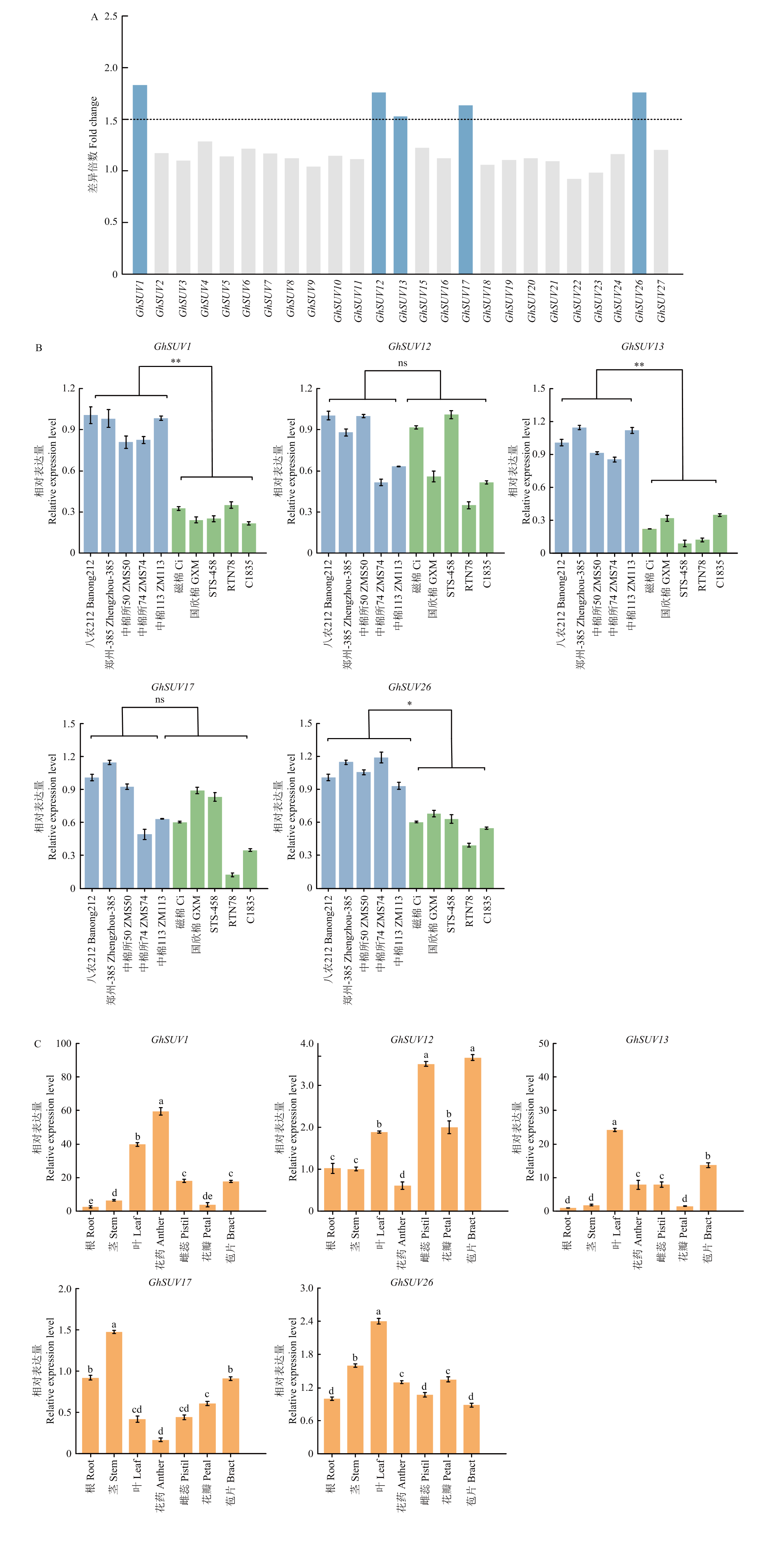
Expression pattern analysis of candidate genes A: Expression levels of GhSUVs determined by RNA-seq; B: Expression analysis of five candidate genes at the three-leaf stage in early- and late-maturing materials. *: P<0.05; **: P<0.01; ns: No significant difference; C: Tissue-specific expression analysis of the five candidate genes. Different letters indicate significant differences"

Fig. 4

Phenotypic and flowering time analysis of GhSUV1- and GhSUV13-silenced plants A: Positive control (TRV:GhCLA1); B: Expression analysis of GhSUV1 and GhSUV13 in silenced plants; C: Paraffin sections, squaring time, flowering time, and phenotypes of TRV:00 and TRV:GhSUV1 plants; D: Paraffin sections, squaring time, flowering time, and phenotypes of TRV:00 and TRV:GhSUV13 plants"

Fig. 5

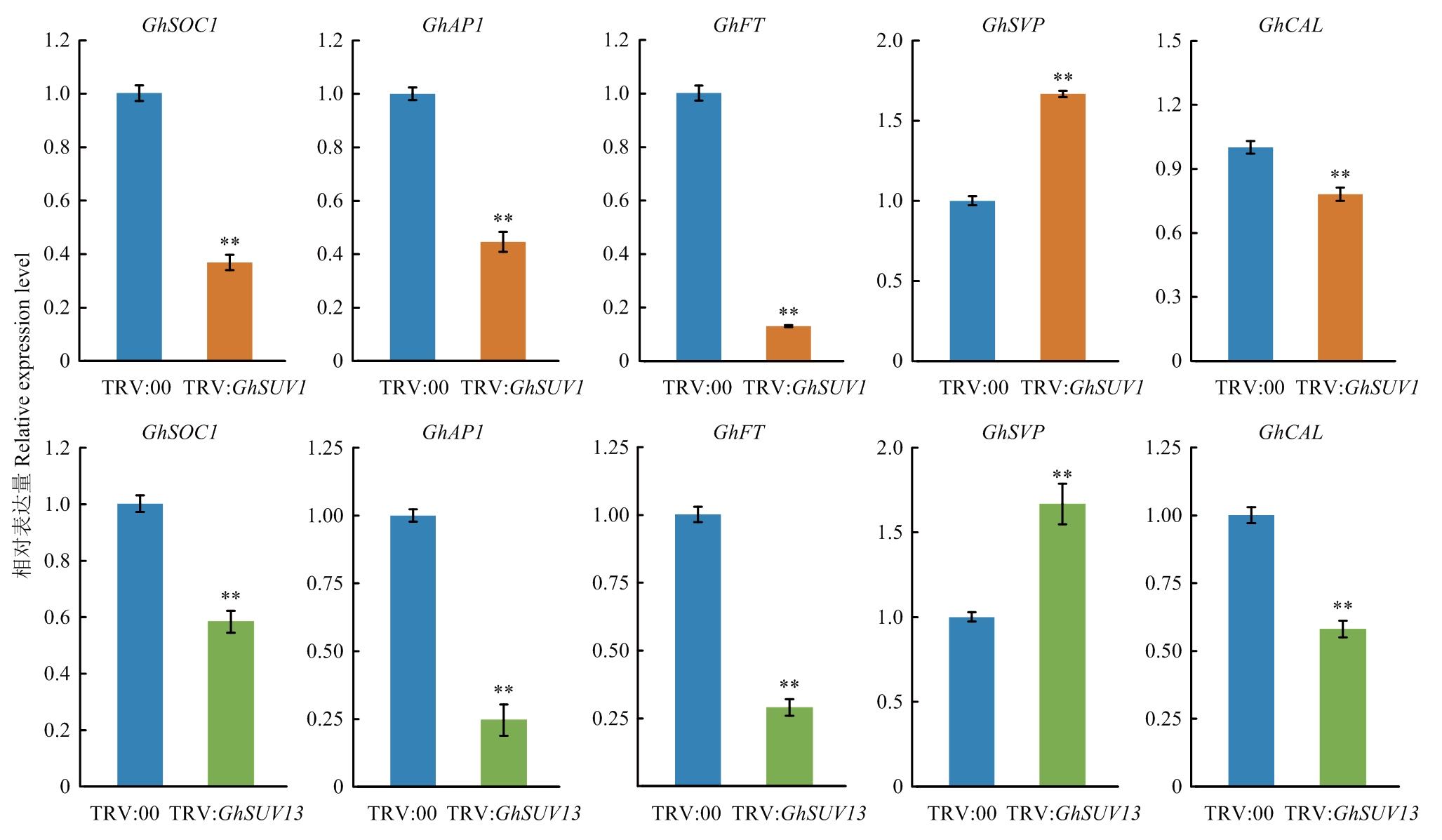
Expression analysis of key flowering genes in control and silenced plants"

Fig. 6

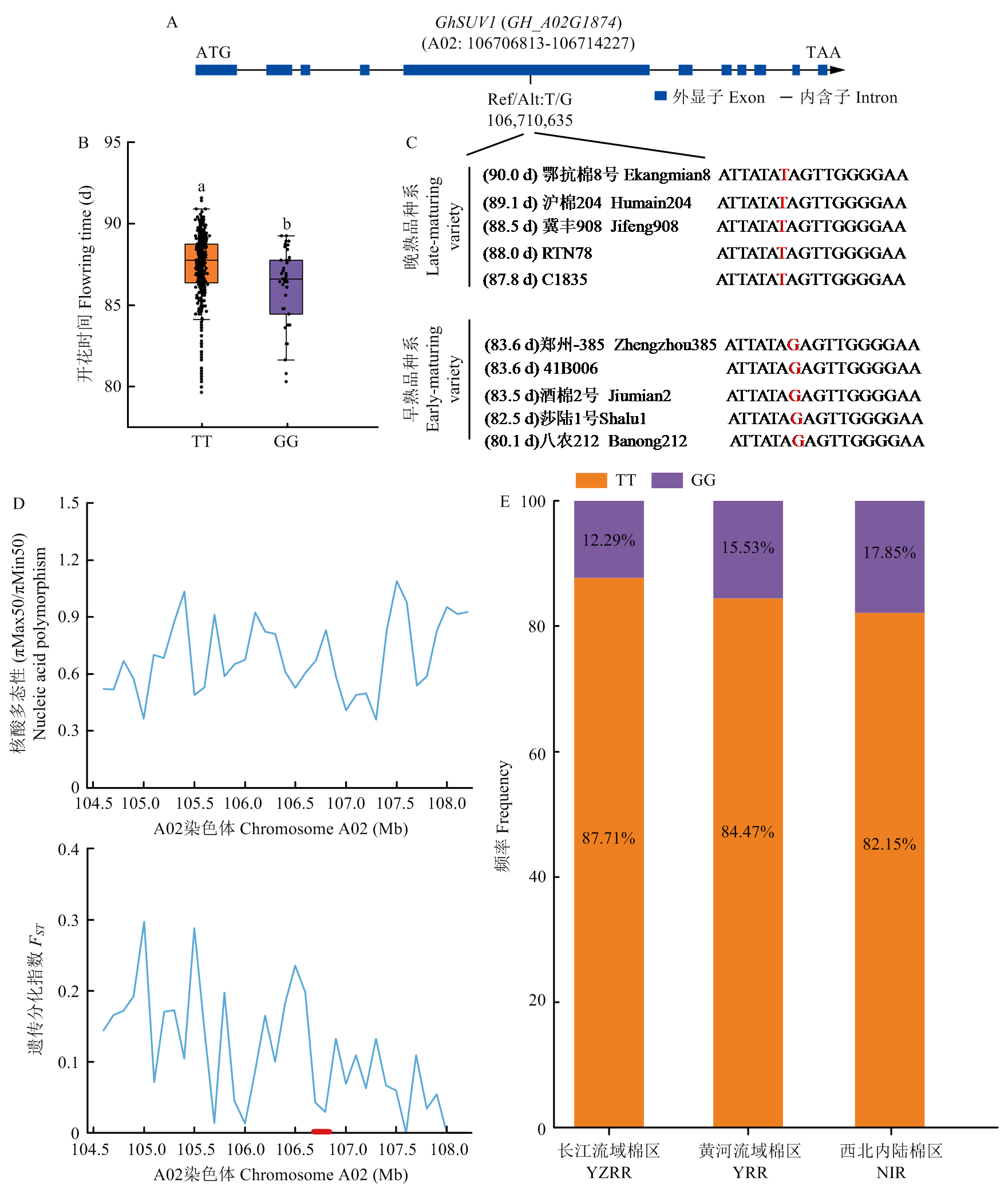
Identification of allelic variations in GhSUV1 A: Gene structure of GhSUV1; B: Flowering time statistics of different genotypes; C: Sanger sequencing results; D: Nucleotide polymorphism and genetic differentiation index; E: Geographic distribution frequency"

[1]
Guo S Y, Sun B, Looi L S, Xu Y F, Gan E S, Huang J B, Ito T. Co-ordination of flower development through epigenetic regulation in two model species: Rice and Arabidopsis[J]. Plant and Cell Physiology, 2015, 56(5): 830-842.
[2]
Kim J M, Sasaki T, Ueda M, Sako K, Seki M. Chromatin changes in response to drought, salinity, heat, and cold stresses in plants[J]. Frontiers in Plant Science, 2015, 6: 114.
[3]
Dorn R, Krauss V, Reuter G, Saumweber H. The enhancer of position-effect variegation of Drosophila, E(var)3-93D, codes for a chromatin protein containing a conserved domain common to several transcriptional regulators[J]. Proceedings of the National Academy of Sciences of the United States of America, 1993, 90(23): 11376-11380.
[4]
Xu L H, Jiang H. Writing and reading histone H3 lysine 9 methylation in Arabidopsis[J]. Frontiers in Plant Science, 2020, 11: 452.
[5]
Sims R J, Nishioka K, Reinberg D. Histone lysine methylation: A signature for chromatin function[J]. Trends in Genetics, 2003, 19(11): 629-639.
[6]
Jackson J P, Johnson L, Jasencakova Z, Zhang X, PerezBurgos L, Singh P B, Cheng X D, Schubert I, Jenuwein T, Jacobsen S E. Dimethylation of histone H 3 lysine 9 is a critical mark for DNA methylation and gene silencing in Arabidopsis thaliana[J]. Chromosoma, 2004, 112(6): 308-315.
[7]
Ebbs M L, Bender J. Locus-specific control of DNA methylation by the Arabidopsis SUVH5 histone methyltransferase[J]. The Plant Cell, 2006, 18(5): 1166-1176.
[8]
Yu C W, Tai R, Wang S C, Yang P, Luo M, Yang S G, Cheng K, Wang W C, Cheng Y S, Wu K Q. HISTONE DEACETYLASE6 acts in concert with histone methyltransferases SUVH4, SUVH5, and SUVH6 to regulate transposon silencing[J]. The Plant Cell, 2017, 29(8): 1970-1983.
[9]
Thorstensen T, Fischer A, Sandvik S V, Johnsen S S, Grini P E, Reuter G, Aalen R B. The Arabidopsis SUVR4 protein is a nucleolar histone methyltransferase with preference for monomethylated H3K9[J]. Nucleic Acids Research, 2006, 34(19): 5461-5470.
[10]
Caro E, Stroud H, Greenberg M V, Bernatavichute Y V, Feng S H, Groth M, Vashisht A A, Wohlschlegel J, Jacobsen S E. The SET-domain protein SUVR5 mediates H3K9me2 deposition and silencing at stimulus response genes in a DNA methylation- independent manner[J]. PLoS Genetics, 2012, 8(10): e1002995.
[11]
Zhang S J, Hao H J, Liu X N, Li Y Y, Ma X, Liu W Y, Zheng R, Liang S S, Luan W J. SDG712 a putative H3K9-specific methyltransferase encoding gene, delays flowering through repressing the expression of florigen genes in rice[J]. Rice, 2021, 14(1): 73.
[12]
Ding Y, Wang X, Su L, Zhai J X, Cao S Y, Zhang D F, Liu C Y, Bi Y P, Qian Q, Cheng Z K, Chu C C, Cao X F. SDG714, a histone H3K9 methyltransferase, is involved in Tos17 DNA methylation and transposition in rice[J]. The Plant Cell, 2007, 19(1): 9-22.
[13]
Qin F J, Sun Q W, Huang L M, Chen X S, Zhou D X. Rice SUVH histone methyltransferase genes display specific functions in chromatin modification and retrotransposon repression[J]. Molecular Plant, 2010, 3(4): 773-782.
[14]
Kumar S, Stecher G, Tamura K. MEGA7: Molecular evolutionary genetics analysis version 7.0 for bigger datasets[J]. Molecular Biology and Evolution, 2016, 33(7): 1870-1874.
[15]
Letunic I, Bork P. Interactive Tree Of Life (iTOL) v4: Recent updates and new developments[J]. Nucleic Acids Research, 2019, 47(W1): W256-W259.
[16]
Wang Y P, Li J P, Paterson A H. MCScanX-transposed: Detecting transposed gene duplications based on multiple colinearity scans[J]. Bioinformatics, 2013, 29(11): 1458-1460.
[17]
Bailey T L, Boden M, Buske F A, Frith M, Grant C E, Clementi L, Ren J Y, Li W W, Noble W S. MEME SUITE: Tools for motif discovery and searching[J]. Nucleic Acids Research, 2009, 37(Web Server issue): W202-W208.
[18]
Marchler-Bauer A, Derbyshire M K, Gonzales N R, Lu S N, Chitsaz F, Geer L Y, Geer R C, He J, Gwadz M, Hurwitz D I, Lanczycki C J, Lu F, Marchler G H, Song J S, Thanki N, Wang Z X, Yamashita R A, Zhang D C, Zheng C J, Bryant S H. CDD: NCBI’s conserved domain database[J]. Nucleic Acids Research, 2015, 43(D1): D222-D226.
[19]
Lescot M, Déhais P, Thijs G, Marchal K, Moreau Y, Van de Peer Y, Rouzé P, Rombauts S. PlantCARE, a database of plant cis-acting regulatory elements and a portal to tools for in silico analysis of promoter sequences[J]. Nucleic Acids Research, 2002, 30(1): 325-327.
[20]
Cheng S S, Chen P Y, Su Z Z, Ma L, Hao P B, Zhang J J, Ma Q, Liu G Y, Liu J, Wang H T, Wei H L, Yu S X. High-resolution temporal dynamic transcriptome landscape reveals a GhCAL-mediated flowering regulatory pathway in cotton (Gossypium hirsutum L.)[J]. Plant Biotechnology Journal, 2021, 19(1): 153-166.
[21]
Rao X Y, Huang X L, Zhou Z C, Lin X. An improvement of the 2ˆ (-delta delta CT) method for quantitative real-time polymerase chain reaction data analysis[J]. Biostatistics, Bioinformatics and Biomathematics, 2013, 3(3): 71-85.
[22]
Dai P H, Sun G F, Jia Y H, Pan Z E, Tian Y B, Peng Z, Li H G, He S P, Du X M. Extensive haplotypes are associated with population differentiation and environmental adaptability in Upland cotton (Gossypium hirsutum)[J]. Theoretical and Applied Genetics, 2020, 133(12): 3273-3285.
[23]
Geng X L, Sun G F, Qu Y J, Sarfraz Z, Jia Y H, He S P, Pan Z E, Sun J L, Iqbal M S, Wang Q L, Qin H D, Liu J H, Liu H, Yang J, Ma Z Y, Xu D Y, Yang J L, Zhang J B, Li Z K, Cai Z M, et al. Genome-wide dissection of hybridization for fiber quality- and yield-related traits in upland cotton[J]. The Plant Journal, 2020, 104(5): 1285-1300.
[24]
Danecek P, Auton A, Abecasis G, Albers C A, Banks E, DePristo M A, Handsaker R E, Lunter G, Marth G T, Sherry S T, McVean G, Durbin R, 1000 Genomes Project Analysis Group. The variant call format and VCFtools[J]. Bioinformatics, 2011, 27(15): 2156-2158.
[25]
Bannister A J, Kouzarides T. Regulation of chromatin by histone modifications[J]. Cell Research, 2011, 21(3): 381-395.
[26]
Sun R W, Gong J, Liu Y J, Chen Z B, Zhang F T, Gao J G, Cao J M, Chen X C, Zhang S Q, Zhao C P, Gao S Q. Comprehensive molecular evaluation of the histone methyltransferase gene family and their important roles in two-line hybrid wheat[J]. BMC Plant Biology, 2022, 22(1): 290.
[27]
Huang G, Huang J Q, Chen X Y, Zhu Y X. Recent advances and future perspectives in cotton research[J]. Annual Review of Plant Biology, 2021, 72: 437-462.
[28]
Baumbusch L O, Thorstensen T, Krauss V, Fischer A, Naumann K, Assalkhou R, Schulz I, Reuter G, Aalen R B. The Arabidopsis thaliana genome contains at least 29 active genes encoding SET domain proteins that can be assigned to four evolutionarily conserved classes[J]. Nucleic Acids Research, 2001, 29(21): 4319-4333.
[29]
Wang C X, Liu J J, Xie X Y, Wang J, Ma Q, Chen P Y, Yang D L, Ma X F, Hao F S, Su J J. GhAP1-D3 positively regulates flowering time and early maturity with no yield and fiber quality penalties in upland cotton[J]. Journal of Integrative Plant Biology, 2023, 65(4): 985-1002.
[30]
Guo X F, Yang J N, Li D D, Zhang X L, Yuan W M, Li Y, Wang F X, Ma Q, Wang C X, Su J J. Genome-wide association study reveals novel SNP loci and candidate genes linked to flowering time in upland cotton[J]. Theoretical and Applied Genetics, 2025, 138(9): 214.
[31]
Ma L M, Yan Y Y. GhSOC1s evolve to respond differently to the environmental cues and promote flowering in partially independent ways[J]. Frontiers in Plant Science, 2022, 13: 882946.
[32]
Lee S J, Kim Y, Kang K, Yoon H, Kang J K, Cho S H, Paek N C. Rice cryptochrome-interacting basic helix-loop-helix 1-like interacts with OsCRY2 and promotes flowering by upregulating Early heading date 1[J]. Plant, Cell & Environment, 2024, 47(12): 4498-4515.
[1] ZHANG WenJiao, WEI JiaZhi, ZHOU YaRong, YANG HaoRan, GUO RongXin, MA JunFeng, YANG JiaHui, WANG CaiXiang, SU JunJi. Functional Identification and Breeding Evolution Analysis of the Key Gene GhPDF1 for Fruit Branch Angle in Upland Cotton [J]. Scientia Agricultura Sinica, 2026, 59(9): 1836-1847.
[2] LUO ZhengYing, HU SiZhen, LIN XiuQin, HU Xin, ZHANG Min, XU ChaoHua, LIU XinLong, ZENG QianChun. Identification and Functional Characterization of the PEBP Gene Family in Regulating Flowering Time in Saccharum spontaneum and Saccharum officinarum [J]. Scientia Agricultura Sinica, 2026, 59(4): 734-749.
[3] WANG LiYuan, WANG Hui, WANG MuMu, WANG DongJian, LI RuYu, ZHENG YongSheng, ZHANG Han. Construction and Application of DNA Fingerprint Database for Known Varieties in Upland Cotton DUS Testing [J]. Scientia Agricultura Sinica, 2025, 58(22): 4570-4588.
[4] LI KaiLi, WEI YunXiao, CHONG ZhiLi, MENG ZhiGang, WANG Yuan, LIANG ChengZhen, CHEN QuanJia, ZHANG Rui. Red and Blue Light Promotes Cotton Callus Induction and Proliferation [J]. Scientia Agricultura Sinica, 2024, 57(4): 638-649.
[5] JIA XiaoYun, WANG ShiJie, ZHU JiJie, ZHAO HongXia, LI Miao, WANG GuoYin. Construction of A High-Density Genetic Map and QTL Mapping for Yield Related Traits in Upland Cotton [J]. Scientia Agricultura Sinica, 2023, 56(4): 587-598.
[6] WANG CaiXiang,YUAN WenMin,LIU JuanJuan,XIE XiaoYu,MA Qi,JU JiSheng,CHEN Da,WANG Ning,FENG KeYun,SU JunJi. Comprehensive Evaluation and Breeding Evolution of Early Maturing Upland Cotton Varieties in the Northwest Inland of China [J]. Scientia Agricultura Sinica, 2023, 56(1): 1-16.
[7] XIE XiaoYu, WANG KaiHong, QIN XiaoXiao, WANG CaiXiang, SHI ChunHui, NING XinZhu, YANG YongLin, QIN JiangHong, LI ChaoZhou, MA Qi, SU JunJi. Restricted Two-Stage Multi-Locus Genome-Wide Association Analysis and Candidate Gene Prediction of Boll Opening Rate in Upland Cotton [J]. Scientia Agricultura Sinica, 2022, 55(2): 248-264.
[8] ZHANG YunXiu,JIANG Xu,WEI ChunXue,JIANG XueQian,LU DongYu,LONG RuiCai,YANG QingChuan,WANG Zhen,KANG JunMei. The Functional Analysis of High Mobility Group MsHMG-Y Involved in Flowering Regulation in Medicago sativa L. [J]. Scientia Agricultura Sinica, 2022, 55(16): 3082-3092.
[9] WANG Juan, MA XiaoMei, ZHOU XiaoFeng, WANG Xin, TIAN Qin, LI ChengQi, DONG ChengGuang. Genome-Wide Association Study of Yield Component Traits in Upland Cotton (Gossypium hirsutum L.) [J]. Scientia Agricultura Sinica, 2022, 55(12): 2265-2277.
[10] QIN HongDe, FENG ChangHui, ZHANG YouChang, BIE Shu, ZHANG JiaoHai, XIA SongBo, WANG XiaoGang, WANG QiongShan, LAN JiaYang, CHEN QuanQiu, JIAO ChunHai. F1 Performance Prediction of Upland Cotton Based on Partial NCII Design [J]. Scientia Agricultura Sinica, 2021, 54(8): 1590-1598.
[11] WANG Na,ZHAO ZiBo,GAO Qiong,HE ShouPu,MA ChenHui,PENG Zhen,DU XiongMing. Cloning and Functional Analysis of Salt Stress Response Gene GhPEAMT1 in Upland Cotton [J]. Scientia Agricultura Sinica, 2021, 54(2): 248-260.
[12] WEI Xin, WANG HanTao, WEI HengLing, FU XiaoKang, MA Liang, LU JianHua, WANG XingFen, YU ShuXun. Cloning and Drought Resistance Analysis of GhWRKY33 in Upland Cotton [J]. Scientia Agricultura Sinica, 2020, 53(22): 4537-4549.
[13] DUAN YouHou,LU Feng. Genetic Analysis on Growth Period and Plant Height Traits of Early-maturing Dwarf Sorghum Male-Sterile Line P03A [J]. Scientia Agricultura Sinica, 2020, 53(14): 2828-2839.
[14] QU YuJie, SUN JunLing, GENG XiaoLi, WANG Xiao, Zareen Sarfraz, JIA YinHua, PAN ZhaoE, HE ShouPu, GONG WenFang, WANG LiRu, PANG BaoYin, DU XiongMing. Correlation Between Genetic Distance of Parents and Heterosis in Upland Cotton [J]. Scientia Agricultura Sinica, 2019, 52(9): 1488-1501.
[15] LIU YuFei,JIN JiQiang,YAO MingZhe,CHEN Liang. Screening, Cloning and Functional Research of the Rare Allelic Variation of Caffeine Synthase Gene (TCS1g) in Tea Plants [J]. Scientia Agricultura Sinica, 2019, 52(10): 1772-1783.
Viewed
Full text


Abstract

Cited

  Shared   
  Discussed   
No Suggested Reading articles found!