Scientia Agricultura Sinica ›› 2026, Vol. 59 ›› Issue (4): 734-749.doi: 10.3864/j.issn.0578-1752.2026.04.003

• CROP GENETICS & BREEDING·GERMPLASM RESOURCES·MOLECULAR GENETICS • Previous Articles     Next Articles

Identification and Functional Characterization of the PEBP Gene Family in Regulating Flowering Time in Saccharum spontaneum and Saccharum officinarum

LUO ZhengYing1,3(), HU SiZhen1(), LIN XiuQin2,3, HU Xin2,3, ZHANG Min3, XU ChaoHua2,3, LIU XinLong2,3(), ZENG QianChun1,4()   

  1. 1 College of Agronomy and Biotechnology, Yunnan Agricultural University/The Key Laboratory for Crop Production and Smart Agriculture of Yunnan Province, Kunming 650201
    2 State Key Laboratory of Tropical Crop Breeding, Yunnan Academy of Agricultural Sciences, Kunming, 650205
    3 Sugarcane Research Institute, Yunnan Academy of Agricultural Sciences/Yunnan Key Laboratory of Sugarcane Genetic Improvement/Key Laboratory of Sugarcane Biology and Genetic Breeding (Yunnan), Ministry of Agriculture and Rural Affairs Kaiyuan 661699, Yunnan
    4 College of Tropical Crops, Yunnan Agricultural University, Puer 665099, Yunnan
  • Received:2025-08-10 Online:2026-02-10 Published:2026-02-10
  • Contact: LIU XinLong, ZENG QianChun

Abstract:

【Objective】The phosphatidylethanolamine-binding protein (PEBP) family serves as pivotal regulators of plant flowering, orchestrating floral transition through the coordination of photoperiodic and hormonal signaling pathways. This study systematically characterized PEBP gene family members in the ancestral Saccharum species S. spontaneum and S. officinarum, elucidating their structural architecture, evolutionary trajectories, and expression profiles to unravel the molecular mechanisms governing flowering regulation and facilitate molecular breeding strategies.【Method】The PEBP gene family was identified by performing sequence alignment of Arabidopsis and rice PEBP protein sequences against the genomes of S. spontaneum and S. officinarum, supplemented with screening using the hidden Markov model profile PF01161. Phylogenetic reconstruction, gene structure analysis, conserved motif identification, and synteny evaluation were performed using MEGA-X and TBtools. Putative cis-regulatory elements within promoter regions were predicted via the PlantCARE database. Transcriptomic profiling coupled with qRT-PCR validation delineated expression dynamics, while functional characterization of FT3 and TFL1 genes was achieved through Arabidopsis transformation.【Result】Our analysis identified 23 and 20 PEBP genes in S. spontaneum and S. officinarum, respectively, classified into three subfamilies: FT-like, TFL1-like, and MFT-like. Protein characterization revealed greater variability in S. spontaneum PEBPs (151-364 aa; 17.1-40.4 kDa) compared to S. officinarum (170-191 aa; 19.2-20.8 kDa), though both predominantly encoded hydrophilic alkaline proteins. Conserved motif analysis demonstrated stringent conservation in TFL1-like subfamily members, while MFT-like proteins exhibited remarkable structural plasticity, exemplified by elongated PEBP domains in SspMFT1.1/1.2/1.3. Gene architecture analysis showed FT-like members possessed the highest exon variability (2-5), contrasting with TFL1-like (3-4) and MFT-like (fixed 4-exon) subfamilies. Evolutionary analysis revealed whole-genome and segmental duplications as primary expansion mechanisms, with tandem duplication frequency substantially higher in S. officinarum (8%) than S. spontaneum (1%). Syntenic analysis uncovered species-specific duplication events (e.g., SspFT5.1/SspFT5.2 and SoFT12.1/SoFT12.2) and stronger conservation between S. spontaneum and sorghum. Promoter analysis identified abundant light- and hormone-responsive elements, particularly jasmonic acid and abscisic acid response motifs. Expression profiling identified two key genes, FT3 and TFL1, with contrasting expression dynamics. FT3 displayed a sustained, photoperiod-sensitive upregulation, whereas TFL1 showed an initial decrease followed by an increase and was independent of photoperiod regulation. Transgenic validation confirmed FT3 orthologs consistently accelerated flowering (~19 days early), whereas TFL1 genes functioned as floral repressors.【Conclusion】Genomic analysis revealed 23 and 20 PEBP genes in S. spontaneum and S. officinarum, respectively, phylogenetically clustered into three well-defined subfamilies (FT-like, TFL1-like, and MFT-like) that exhibited substantial structural and functional divergence. FT3 and TFL1 demonstrated opposite expression patterns during floral induction, with FT3 showing marked photoperiod responsiveness and significantly elevated transcript abundance in S. spontaneum relative to S. officinarum. Transgenic functional analysis confirmed that FT3 typically promotes flowering, whereas the TFL1 gene suppresses it.

Key words: Saccharum spontaneum, Saccharum officinarum, PEBP gene family, flowering regulation, expression profiling, photoperiod

Fig. 1

Phylogenetic analysis of PEBP gene family in S. spontaneum, S. officinarum, Arabidopsis, Oryza sativa, and Sorghum bicolor"

Table 1

The physiochemical characteristics of PEBP family in S. spontaneum and S. officinarum"

物种
Species
蛋白
Protein
染色体
Chromosome
亚族分类
Subfamily classification
氨基酸数
No. of amino acids (aa)
分子量Molecular weight (kDa) 等电点
pI
不稳定系数Instability
index
脂肪族指数Aliphatic index 平均亲水指数Grand average of hydropathicity
割手密
S. spontaneum
SspFT1.1 Chr.6C FT-Like 173 19.365 7.94 34.57 76.01 -0.236
SspFT1.2 Chr.10A FT-Like 191 21.227 5.57 40.07 78.48 -0.206
SspFT2 Chr.3D FT-Like 191 21.040 8.47 49.68 75.45 -0.285
SspFT3 Chr.3D FT-Like 173 19.299 6.73 42.61 85.55 -0.131
SspFT4 Chr.10A FT-Like 179 19.978 7.73 30.58 75.53 -0.244
SspFT5.2 Chr.5B FT-Like 364 40.368 10.08 51.96 78.52 -0.163
SspFT5.1 Chr.9B FT-Like 180 20.355 8.76 41.91 64.39 -0.451
SspFT6 Chr.6C FT-Like 151 17.101 9.33 31.35 81.26 -0.307
SspFT7 Chr.4C FT-Like 185 20.517 6.90 40.35 69.51 -0.301
SspFT8 Chr.3D FT-Like 177 20.089 9.09 40.34 88.02 -0.132
SspFT9 Chr.4C FT-Like 174 19.676 8.56 42.54 77.18 -0.389
SspFT10 Chr.9B FT-Like 175 19.880 7.89 40.52 79.09 -0.264
SspFT11 Chr.8B FT-Like 176 19.249 6.89 40.75 74.83 -0.228
SspFT12 Chr.2D FT-Like 178 19.987 7.85 43.09 84.89 -0.303
SspFT13 Chr.6C FT-Like 185 20.625 6.41 42.94 68.54 -0.305
SspTFL1 Chr.5B TFL-Like 173 19.595 7.96 48.39 86.65 -0.150
SspTFL2 Chr.1D TFL-Like 197 22.540 9.77 52.12 73.15 -0.467
SspTFL3 Chr.4C TFL-Like 173 19.517 8.76 37.76 78.21 -0.294
SspTFL4 Chr.8B TFL-Like 173 19.532 8.82 44.44 83.24 -0.258
SspMFT1.1 Chr.10A MFT-Like 302 33.077 10.01 55.20 84.04 -0.064
SspMFT1.2 Chr.10B MFT-Like 268 29.412 10.35 48.32 88.84 -0.025
SspMFT1.3 Chr.10C MFT-Like 273 30.119 10.54 43.96 87.25 -0.094
SspMFT2 Chr.3D MFT-Like 171 18.718 8.62 35.35 85.50 -0.139
热带种
S. officinarum
SoFT1 Chr.10A FT-Like 175 19.651 6.91 38.87 74.00 -0.305
SoFT2 Chr.02H FT-Like 191 20.848 8.59 53.76 79.53 -0.242
SoFT3 Chr.03B FT-Like 173 19.341 6.73 42.61 87.23 -0.116
SoFT4 Chr.10A FT-Like 179 19.978 7.73 30.58 75.53 -0.244
SoFT5.1 Chr.05D FT-Like 177 20.061 8.64 44.88 69.32 -0.407
SoFT5.2 Chr.09G FT-Like 176 19.869 9.00 46.31 69.72 -0.404
SoFT6 Chr.06H FT-Like 174 19.627 7.72 33.87 77.76 -0.386
SoFT7 Chr.04C FT-Like 185 20.517 6.90 40.35 69.51 -0.301
SoFT8 Chr.03B FT-Like 177 20.005 9.38 39.33 85.25 -0.156
SoFT9 Chr.04C FT-Like 174 19.676 8.56 42.54 77.18 -0.389
SoFT10 Chr.09B FT-Like 175 19.876 7.89 40.52 79.09 -0.269
SoFT11 Chr.08E FT-Like 176 19.176 7.71 46.44 75.97 -0.186
SoFT12.2 Chr.02H FT-Like 178 19.979 7.87 42.45 82.70 -0.325
SoFT12.1 Chr.02C FT-Like 170 19.029 8.82 43.18 84.29 -0.279
SoFT13 Chr.06H FT-Like 185 20534 6.50 38.75 68.54 -0.282
SoTFL1 Chr.05D TFL-Like 173 19.556 7.94 50.38 86.07 -0.146
SoTFL2 Chr.06H TFL-Like 173 19.669 9.25 44.16 75.95 -0.299
SoTFL3 Chr.04C TFL-Like 173 19.517 8.76 37.76 78.21 -0.294
SoTFL4 Chr.08E TFL-Like 173 19.533 7.93 45.21 83.24 -0.258
SoMFT1 Chr.10A MFT-Like 181 19.630 6.96 42.23 87.29 0.024

Fig. 2

Motif composition, conserved domains, and gene structure of PEBP gene family in S. spontaneum and S. officinarum"

Fig. 3

Collinearity analysis of PEBP gene family in S. spontaneum, S. officinarum and Sorghum bicolor A: Syntenic relationships of PEBP genes in S. spontaneum; B: Syntenic relationships of PEBP genes in S. officinarum; C: Syntenic relationships of PEBP genes among S. spontaneum, S. officinarum and Sorghum bicolor"

Fig. 4

Cis-elements in the promoter regions of PEBP gene family in S. spontaneum and S. officinarum"

Table 2

Transcriptome analysis of PEBP genes during panicle development"

粤糖93-159基因编号
Yuetang 93-159 gene ID
热带种比对
Homology to S. officinarum
割手密比对
Homology to S. spontaneum
早期花穗vs
茎尖分生组织
Early panicle_vs_SAM
中期花穗vs
茎尖分生组织
Mid panicle_vs_SAM
晚期花穗vs
茎尖分生组织
Late panicle_vs_SAM
同源基因Ortholog 一致性
Identity (%)
同源基因Ortholog 一致性
Identity (%)
Log2FC P
P value
Log2FC P
P value
Log2FC P
P value
TRINITY_DN783_c1_g1 SoFT3 99.62 SspFT3 99.62 4.4855 0.0205 6.1656 0.0004 6.2672 0.0004
TRINITY_DN65785_c0_g1_orf1 SoTFL1 99.09 SspTFL1 98.63 -0.9004 0.0562 -0.6374 0.0688 1.0995 0.0233

Fig. 5

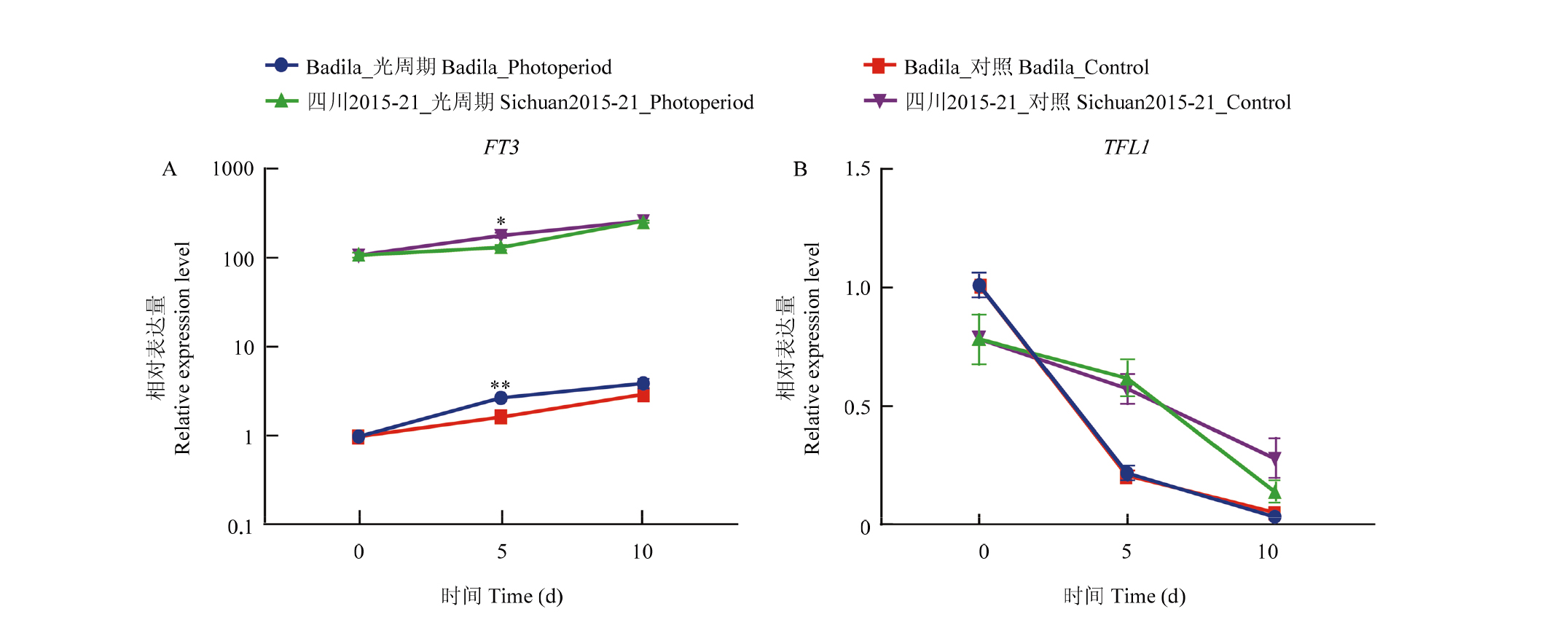
Expression pattern analysis of key PEBP family genes during the photoperiod-regulated flowering process *: Significance at P<0.05; **: Significance at P<0.01"

Fig. 6

Phenotypic and flowering trait analysis of Arabidopsis overexpressed with FT3 and TFL1 genes from S. spontaneum and S. officinarum A: Phenotypic characterization of transgenic Arabidopsis plants. Scar bar=1 cm; B: Flowering time trait analysis of transgenic plants. Different lowercase letter indicated significant differences (P<0.05)"

[1]
ZHANG J S, ZHANG X T, TANG H B, ZHANG Q, HUA X T, MA X K, ZHU F, JONES T, ZHU X G, BOWERS J, et al. Allele-defined genome of the autopolyploid sugarcane Saccharum spontaneum L.. Nature Genetics, 2018, 50(11): 1565-1573.

doi: 10.1038/s41588-018-0237-2
[2]
HU X, LUO Z Y, XU C H, WU Z D, WU C W, EBID M H M, ZAN F G, ZHAO L P, LIU X L, LIU J Y. A comprehensive analysis of transcriptomics and metabolomics revealed key pathways involved in Saccharum spontaneum defense against Sporisorium scitamineum. Journal of Agricultural and Food Chemistry, 2024, 72(8): 4476-4492.

doi: 10.1021/acs.jafc.3c07768
[3]
ABU-ELLAIL ABU-ELLAIL F F B, D MOHAMED B. Effect of photo initiation treatments on flowering, pollen viability and seed germinability of four sugarcane clones. Journal of Sugarcane Research, 2019, 9(2): 138.

doi: 10.37580/JSR.2019.2.9.138-149
[4]
常海龙, 胡后祥, 张伟, 陈俊吕, 邱永生, 周峰, 张垂明, 吴其卫, 吴建涛, 刘壮, 等. 甘蔗开花生物学特性及花粉活力研究. 热带农业科学, 2017, 37(4): 7-12.
CHANG H L, HU H X, ZHANG W, CHEN J L, QIU Y S, ZHOU F, ZHANG C M, WU Q W, WU J T, LIU Z, et al. Flowering phenology and pollen activity of sugarcane. Chinese Journal of Tropical Agriculture, 2017, 37(4): 7-12. (in Chinese)
[5]
唐仕云, 王伦旺, 李翔, 谭芳, 黄海荣, 经艳, 黄家雍, 黎焕光, 方锋学, 郑书斌. 不同甘蔗亲本组合开花特性的调查研究. 中国糖料, 2011, 33(4): 22-24.
TANG S Y, WANG L W, LI X, TAN F, HUANG H R, JING Y, HUANG J Y, LI H G, FANG F X, ZHENG S B. Flowering characteristics investigation of different parents and combinations of sugarcane. Sugar Crops of China, 2011, 33(4): 22-24. (in Chinese)
[6]
雷敬超, 周会, 杨荣仲, 高丽花, 李翔, 黄海荣, 段维兴, 经艳, 王伦旺, 张革民, 等. 桂糖系列甘蔗亲本开花习性及其遗传分析. 热带作物学报, 2019, 40(1): 11-17.

doi: 10.3969/j.issn.1000-2561.2019.01.002
LEI J C, ZHOU H, YANG R Z, GAO L H, LI X, HUANG H R, DUAN W X, JING Y, WANG L W, ZHANG G M, et al. Flowering habit and heritability for GT sugarcane parents. Chinese Journal of Tropical Crops, 2019, 40(1): 11-17. (in Chinese)

doi: 10.3969/j.issn.1000-2561.2019.01.002
[7]
KOJIMA S, TAKAHASHI Y, KOBAYASHI Y, MONNA L, SASAKI T, ARAKI T, YANO M. Hd3a, a rice ortholog of the Arabidopsis FT gene, promotes transition to flowering downstream of Hd1 under short-day conditions. Plant and Cell Physiology, 2002, 43(10): 1096-1105.

doi: 10.1093/pcp/pcf156
[8]
杨杰, 贺新兴, 陈蓉, 胡乐贞, 佟晓楠, 李兴涛. 甜橙PEBP基因家族的鉴定及在成花过程的表达分析. 分子植物育种, 2022, 20(4): 1127-1136.
YANG J, HE X X, CHEN R, HU L Z, TONG X N, LI X T. Genome-wide identification of PEBP gene family and expression analysis during flowering process in Citrus sinensis. Molecular Plant Breeding, 2022, 20(4): 1127-1136. (in Chinese)
[9]
刘合霞, 刘秦, 周兴文, 朱宇林, 李博. 茶树PEBP基因家族结构与功能特征分析. 分子植物育种, 2020, 18(20): 6657-6664.
LIU H X, LIU Q, ZHOU X W, ZHU Y L, LI B. Structure and function characteristics analysis of PEBP gene family in Camellia sinensis. Molecular Plant Breeding, 2020, 18(20): 6657-6664. (in Chinese)
[10]
WANG Z, ZHOU Z K, LIU Y F, LIU T F, LI Q, JI Y Y, LI C C, FANG C, WANG M, WU M, et al. Functional evolution of phosphatidylethanolamine binding proteins in soybean and Arabidopsis. The Plant Cell, 2015, 27(2): 323-336.

doi: 10.1105/tpc.114.135103
[11]
KARLGREN A, GYLLENSTRAND N, KÄLLMAN T, SUNDSTRÖM J F, MOORE D, LASCOUX M, LAGERCRANTZ U. Evolution of the PEBP gene family in plants: Functional diversification in seed plant evolution. Plant Physiology, 2011, 156(4): 1967-1977.

doi: 10.1104/pp.111.176206 pmid: 21642442
[12]
LEBEDEVA M A, DODUEVA I E, GANCHEVA M S, TVOROGOVA V E, KUZNETSOVA K A, LUTOVA L A. The evolutionary aspects of flowering control: florigens and anti-florigens. Russian Journal of Genetics, 2020, 56(11): 1323-1344.

doi: 10.1134/S102279542011006X
[13]
KOORNNEEF M, HANHART C J, VAN DER VEEN J H. A genetic and physiological analysis of late flowering mutants in Arabidopsis thaliana. Molecular and General Genetics, 1991, 229(1): 57-66.

doi: 10.1007/BF00264213
[14]
KARDAILSKY I, SHUKLA V K, AHN J H, DAGENAIS N, CHRISTENSEN S K, NGUYEN J T, CHORY J, HARRISON M J, WEIGEL D. Activation tagging of the floral inducer FT. Science, 1999, 286(5446): 1962-1965.

doi: 10.1126/science.286.5446.1962 pmid: 10583961
[15]
TAOKA K, OHKI I, TSUJI H, FURUITA K, HAYASHI K, YANASE T, YAMAGUCHI M, NAKASHIMA C, PURWESTRI Y A, TAMAKI S, et al. 14-3-3 proteins act as intracellular receptors for rice Hd3a florigen. Nature, 2011, 476(7360): 332-335.

doi: 10.1038/nature10272
[16]
CORBESIER L, VINCENT C, JANG S, FORNARA F, SEARLE I, GIAKOUNTIS A, FARRONA S, GISSOT L, TURNBULL C, et al. FT protein movement contributes to long- distance signaling in floral induction of Arabidopsis. Science, 2007, 316(5827): 1030-1033.

doi: 10.1126/science.1141752
[17]
KINOSHITA T, ONO N, HAYASHI Y, MORIMOTO S, NAKAMURA S, SODA M, KATO Y, OHNISHI M, NAKANO T, INOUE S I, et al. FLOWERING LOCUS T regulates stomatal opening. Current Biology, 2011, 21(14): 1232-1238.

doi: 10.1016/j.cub.2011.06.025
[18]
HIRAOKA K, YAMAGUCHI A, ABE M, ARAKI T. The florigen genes FT and TSF modulate lateral shoot outgrowth in Arabidopsis thaliana. Plant & Cell Physiology, 2013, 54(3): 352-368.
[19]
NAVARRO C, ABELENDA J A, CRUZ-ORÓ E, CUÉLLAR C A, TAMAKI S, SILVA J, SHIMAMOTO K, PRAT S. Control of flowering and storage organ formation in potato by FLOWERING LOCUS T. Nature, 2011, 478(7367): 119-122.

doi: 10.1038/nature10431
[20]
HANANO S, GOTO K. Arabidopsis TERMINAL FLOWER1 is involved in the regulation of flowering time and inflorescence development through transcriptional repression. The Plant Cell, 2011, 23(9): 3172-3184.

doi: 10.1105/tpc.111.088641
[21]
KANEKO-SUZUKI M, KURIHARA-ISHIKAWA R, OKUSHITA- TERAKAWA C, KOJIMA C, NAGANO-FUJIWARA M, OHKI I, TSUJI H, SHIMAMOTO K, TAOKA K I. TFL1-like proteins in rice antagonize rice FT-like protein in inflorescence development by competition for complex formation with 14-3-3 and FD. Plant and Cell Physiology, 2018, 59(3): 458-468.

doi: 10.1093/pcp/pcy021
[22]
ZHU Y, KLASFELD S, JEONG C W, JIN R, GOTO K, YAMAGUCHI N, WAGNER D. TERMINAL FLOWER 1-FD complex target genes and competition with FLOWERING LOCUS T. Nature Communications, 2020, 11: 5118.

doi: 10.1038/s41467-020-18782-1 pmid: 33046692
[23]
FABIÁN E VAISTIJ Y G. Differential control of seed primary dormancy in Arabidopsis ecotypes by the transcription factor SPATULA. Proceedings of the National Academy of Sciences of the United States of America, 2013, 110(26): 10866-10871.
[24]
JIN S, NASIM Z, SUSILA H, AHN J H. Evolution and functional diversification of FLOWERING LOCUS T/TERMINAL FLOWER 1 family genes in plants. Seminars in Cell & Developmental Biology, 2021, 109: 20-30.
[25]
ZHONG C, LI Z, CHENG Y L, ZHANG H N, LIU Y, WANG X G, JIANG C J, ZHAO X H, ZHAO S L, WANG J, et al. Comparative genomic and expression analysis insight into evolutionary characteristics of PEBP genes in cultivated peanuts and their roles in floral induction. International Journal of Molecular Sciences, 2022, 23(20): 12429.

doi: 10.3390/ijms232012429
[26]
HAYAMA R, AGASHE B, LULEY E, KING R, COUPLAND G. A circadian rhythm set by dusk determines the expression of FT homologs and the short-day photoperiodic flowering response in Pharbitis. The Plant Cell, 2007, 19(10): 2988-3000.

doi: 10.1105/tpc.107.052480
[27]
YUAN X, QUAN S W, LIU J M, GUO C H, ZHANG Z R, KANG C, NIU J X. Evolution of the PEBP gene family in Juglandaceae and their regulation of flowering pathway under the synergistic effect of JrCO and JrNF-Y proteins. International Journal of Biological Macromolecules, 2022, 223(Pt A): 202-212.

doi: 10.1016/j.ijbiomac.2022.11.004 pmid: 36347378
[28]
WANG Q, ZHOU Y W, WANG F, LI X Y, YU Y Y, YU R C, FAN Y P. Genome-wide identification of PEBP gene family in Hedychium coronarium. Frontiers in Plant Science, 2025, 16: 1482764.

doi: 10.3389/fpls.2025.1482764
[29]
SUN Y M, JIA X Y, YANG Z R, FU Q J, YANG H H, XU X Y. Genome-wide identification of PEBP gene family in Solanum lycopersicum. International Journal of Molecular Sciences, 2023, 24(11): 9185.

doi: 10.3390/ijms24119185
[30]
COELHO C P, MINOW M A A, CHALFUN-JÚNIOR A, COLASANTI J. Putative sugarcane FT/TFL1 genes delay flowering time and alter reproductive architecture in Arabidopsis. Frontiers in Plant Science, 2014, 5: 221.
[31]
VENAIL J, DA SILVA SANTOS P H, MANECHINI J R, ALVES L C, SCARPARI M, FALCÃO T, ROMANEL E, BRITO M, VICENTINI R, PINTO L, et al. Analysis of the PEBP gene family and identification of a novel FLOWERING LOCUS T orthologue in sugarcane. Journal of Experimental Botany, 2022, 73(7): 2035-2049.

doi: 10.1093/jxb/erab539
[32]
PAVANI G, MALHOTRA P K, VERMA S K. Flowering in sugarcane- insights from the grasses. 3 Biotech, 2023, 13(5): 154.

doi: 10.1007/s13205-023-03573-4
[33]
CHEN C J, WU Y, LI J W, WANG X, ZENG Z H, XU J, LIU Y L, FENG J T, CHEN H, HE Y H, et al. TBtools-Ⅱ: A “one for all, all for one” bioinformatics platform for biological big-data mining. Molecular Plant, 2023, 16(11): 1733-1742.

doi: 10.1016/j.molp.2023.09.010
[34]
阙友雄, 许莉萍, 徐景升, 张积森, 张木清, 陈如凯. 甘蔗基因表达定量PCR分析中内参基因的选择. 热带作物学报, 2009, 30(3): 274-278.
QUE Y X, XU L P, XU J S, ZHANG J S, ZHANG M Q, CHEN R K. Selection of control genes in real-time qPCR analysis of gene expression in sugarcane. Chinese Journal of Tropical Crops, 2009, 30(3): 274-278. (in Chinese)
[35]
LIVAK K J, SCHMITTGEN T D. Analysis of relative gene expression data using real-time quantitative PCR and the 2 (-Delta Delta C(T)) Method. Methods, 2001, 25(4): 402-408.

doi: 10.1006/meth.2001.1262
[36]
ZHAO C Y, ZHU M, GUO Y Y, SUN J, MA W H, WANG X X. Genomic survey of PEBP gene family in rice: Identification, phylogenetic analysis, and expression profiles in organs and under abiotic stresses. Plants, 2022, 11(12): 1576.

doi: 10.3390/plants11121576
[37]
WOLABU T W, ZHANG F, NIU L F, KALVE S, BHATNAGAR- MATHUR P, MUSZYNSKI M G, TADEGE M. Three FLOWERING LOCUS T-like genes function as potential florigens and mediate photoperiod response in sorghum. New Phytologist, 2016, 210(3): 946-959.

doi: 10.1111/nph.13834 pmid: 26765652
[38]
李贺, 郝立冬. 玉米PEBP基因家族鉴定与表达模式分析. 分子植物育种, 2023: 1-13. (2023-12-05). https://kns.cnki.net/KCMS/detail/detail.aspx filename=FZZW20231204004&dbname=CJFD&dbcode=CJFQ.
LI H, HAO L D. Identification and expression pattern analysis of PEBP gene family in maize. Molecular Plant Breeding, 2023: 1-13. (2023-12-05). https://kns.cnki.net/KCMS/detail/detail.aspx filename=FZZW20231204004&dbname=CJFD&dbcode=CJFQ. in Chinese)
[39]
李永光, 任辉, 张英杰, 李瑞宁, 艾昊, 黄先忠. 十字花科植物PEBP基因家族的分子进化. 生物多样性, 2022, 30(6): 164-174.
LI Y G, REN H, ZHANG Y J, LI R N, AI H, HUANG X Z. Analysis of the molecular evolution of the PEBP gene family in cruciferous plants. Biodiversity Science, 2022, 30(6): 164-174. (in Chinese)
[40]
ZHENG X M, WU F Q, ZHANG X, LIN Q B, WANG J, GUO X P, LEI C L, CHENG Z J, ZOU C, WAN J M. Evolution of the PEBP gene family and selective signature on FT-like clade. Journal of Systematics and Evolution, 2016, 54(5): 502-510.

doi: 10.1111/jse.v54.5
[41]
WICKLAND D P, HANZAWA Y. The FLOWERING LOCUS T/TERMINAL FLOWER 1 gene family: Functional evolution and molecular mechanisms. Molecular Plant, 2015, 8(7): 983-997.

doi: 10.1016/j.molp.2015.01.007
[42]
PANCHY N, LEHTI-SHIU M, SHIU S H. Evolution of gene duplication in plants. Plant Physiology, 2016, 171(4): 2294-2316.

doi: 10.1104/pp.16.00523 pmid: 27288366
[43]
LI Q, FANG C, DUAN Z B, LIU Y C, QIN H, ZHANG J X, SUN P, LI W B, WANG G D, TIAN Z X. Functional conservation and divergence of GmCHLI genes in polyploid soybean. The Plant Journal, 2016, 88(4): 584-596.

doi: 10.1111/tpj.13282 pmid: 27459730
[44]
ZHOU L N, ZHU C, FANG X J, LIU H Q, ZHONG S Y, LI Y, LIU J C, SONG Y, JIAN X, LIN Z W. Gene duplication drove the loss of awn in sorghum. Molecular Plant, 2021, 14(11): 1831-1845.

doi: 10.1016/j.molp.2021.07.005 pmid: 34271177
[45]
ENDO T, SHIMADA T, FUJII H, KOBAYASHI Y, ARAKI T, OMURA M. Ectopic expression of an FT homolog from Citrus confers an early flowering phenotype on trifoliate orange (Poncirus trifoliata L. Raf.). Transgenic Research, 2005, 14(5): 703-712.

doi: 10.1007/s11248-005-6632-3
[1] ZHANG YunXiu,JIANG Xu,WEI ChunXue,JIANG XueQian,LU DongYu,LONG RuiCai,YANG QingChuan,WANG Zhen,KANG JunMei. The Functional Analysis of High Mobility Group MsHMG-Y Involved in Flowering Regulation in Medicago sativa L. [J]. Scientia Agricultura Sinica, 2022, 55(16): 3082-3092.
[2] WANG JunJie,TIAN Xiang,QIN HuiBin,WANG HaiGang,CAO XiaoNing,CHEN Ling,LIU SiChen,QIAO ZhiJun. Regulation Effects of Photoperiod on Growth and Leaf Endogenous Hormones in Broomcorn Millet [J]. Scientia Agricultura Sinica, 2021, 54(2): 286-295.
[3] Ming DONG,YanMiao JIANG,HaiQuan LI,LingLing GENG,JianYe LIU,ZhiHong QIAO,GuoQing LIU. Effects of Photoperiod Changes on Morphological Characters and Young Panicle Development in Proso Millet (Panicum Miliaceum L.) [J]. Scientia Agricultura Sinica, 2020, 53(6): 1118-1125.
[4] WANG JunJie,WANG HaiGang,CAO XiaoNing,CHEN Ling,LIU SiChen,TIAN Xiang,QIN HuiBin,QIAO ZhiJun. Comprehensive Evaluation of Photoperiod Sensitivity Based on Different Traits of Broomcorn Millet [J]. Scientia Agricultura Sinica, 2020, 53(3): 474-485.
[5] XU Pan, ZHANG Zhen, ZHANG Feng, YANG Bin, DUAN Yan-yu. Identification of Candidate Genes for Hematological Traits by Integrating Gene Expression Profiling and Genome-Wide Association Study in a Porcine Model [J]. Scientia Agricultura Sinica, 2016, 49(2): 348-360.
[6] ZHAO Hui-ting, GAO Peng-fei, ZHANG Gui-xian, TIAN Song-hao, YANG Shan-shan, MENG Jiao, JIANG Yu-suo. Expression and Localization Analysis of the Odorant Receptor Gene Orco in Drones Antennae of Apis cerana cerana [J]. Scientia Agricultura Sinica, 2015, 48(4): 796-803.
[7] SUN Li-na, ZHANG Huai-jiang, YAN Wen-tao, MA Chun-sen, QIU Gui-sheng. Molecular Cloning and Expression Profiling of a Ryanodine Receptor Gene in the Peach Fruit Moth (Carposina sasakii) [J]. Scientia Agricultura Sinica, 2015, 48(10): 1971-1981.
[8] CHEN Zhen-Zhen, LI Ming-Gui, GUO Ya-Nan, YIN Xiang-Chu, ZHANG Fan, XU Yong-Yu. Effects of Photoperiod and Temperature on the Post-Diapause Biology of Chrysoperla sinica (Tjeder) Adults in Different Overwintering Periods [J]. Scientia Agricultura Sinica, 2013, 46(8): 1610-1618.
[9] XIE Ting-Ting, LIU Jun. Molecular Mechanism Underlying Photoperiodic-Induced Potato Tuber Formation [J]. Scientia Agricultura Sinica, 2013, 46(22): 4657-4664.
[10] WU Xu, YAN Mei-Jiao, LIU Li-Ping, FU Xing-Yuan, LIAN Sen-Yang, LI Ang. cDNA-AFLP Analysis on Transcripts Associated Gene with Broodiness in Muscovy Duck [J]. Scientia Agricultura Sinica, 2012, 45(2): 353-358.
[11] XIAO Guan-li,GUO Hua-chun. Sensitivity of Potato Cultivars (Solanum tuberosum L.) to Temperature and Photoperiod and the Relationship with Some Endogenous Hormone
[J]. Scientia Agricultura Sinica, 2010, 43(7): 1500-1507 .
[12] CAI Gao-lei,WANG Xiao-jie,LIU Dan,DENG Lin,LIU Xin-ying,TANG Chun-lei,ZHAO Jie,WEI Guo-rong,HUANG Li-li,KANG Zhen-sheng
. Isolation and Expression Analysis of a TaOZR Gene Induced by Stripe Rust Fungus in Wheat#br# [J]. Scientia Agricultura Sinica, 2010, 43(12): 2403-2409 .
[13] ZHANG Xin-jian,GAO Shi-qiang,WU Mao-sen,HE Chen-yang
. DNA Microarray Expression Analysis of Xanthomonas oryzae pv. oryzae in Rice Leaves at Early Infection Stages Using Selective Bacterial Transcript Labeling with Genome-Directed Primers
[J]. Scientia Agricultura Sinica, 2009, 42(10): 3501-3508 .
[14] Jin LI,Dong-sheng GAO,Qin YU,Chen-shan XU,Kai ZHAO. Effect of Photoperiod Treatments on Dormancy Induction and Changes of Correlated Respiratory Rate of Nectarine Peach Bud
[J]. Scientia Agricultura Sinica, 2009, 42(1): 210-215 .
[15] Shi-Qiangg GAO Chenyang He. Transcriptional profile of plant pathogenic bacteria revealed by DNA microarray analysis [J]. Scientia Agricultura Sinica, 2008, 41(5): 1341-1346 .
Viewed
Full text


Abstract

Cited

  Shared   
  Discussed   
No Suggested Reading articles found!