Scientia Agricultura Sinica ›› 2026, Vol. 59 ›› Issue (12): 2726-2739.doi: 10.3864/j.issn.0578-1752.2026.12.014

• FOOD SCIENCE AND ENGINEERING • Previous Articles     Next Articles

Effects of Differences in Fat Content and Distribution on Stewing Characteristics and Flavor Quality of Beef Brisket

ZHENG Jian1(), ZHANG ChangYan1(), XU Ying1, LIU LiBao1, PEI YiPing1, REN PeiFang2, DU JiaNuo1, ZHANG ChunHui1()   

  1. 1 Institute of Agro-Products Processing Science and Technology, Chinese Academy of Agricultural Sciences/Comprehensive Key Laboratory of Agro-Products Processing, Ministry of Agriculture and Rural Affairs of the People’s Republic of China, Beijing 100193
    2 Shandong Hanon Scientific Instrument Co., Ltd., Dezhou 251500, Shandong
  • Received:2025-12-12 Accepted:2026-02-24 Online:2026-06-16 Published:2026-06-16
  • Contact: ZHANG ChunHui

Abstract:

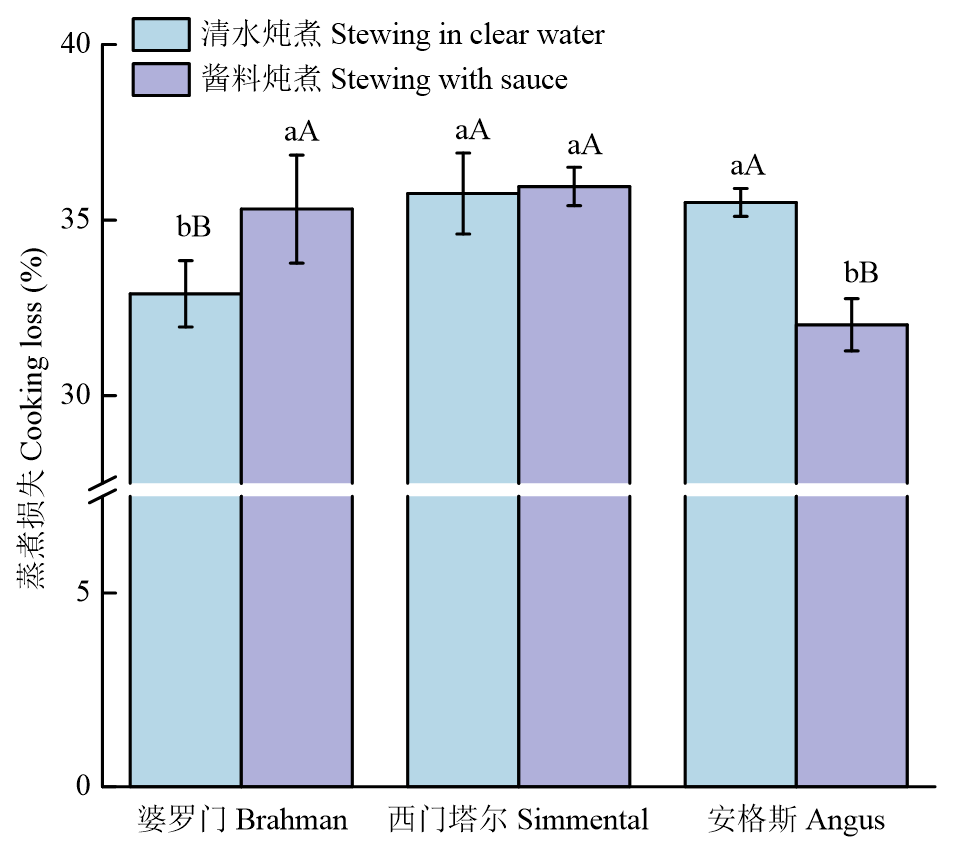
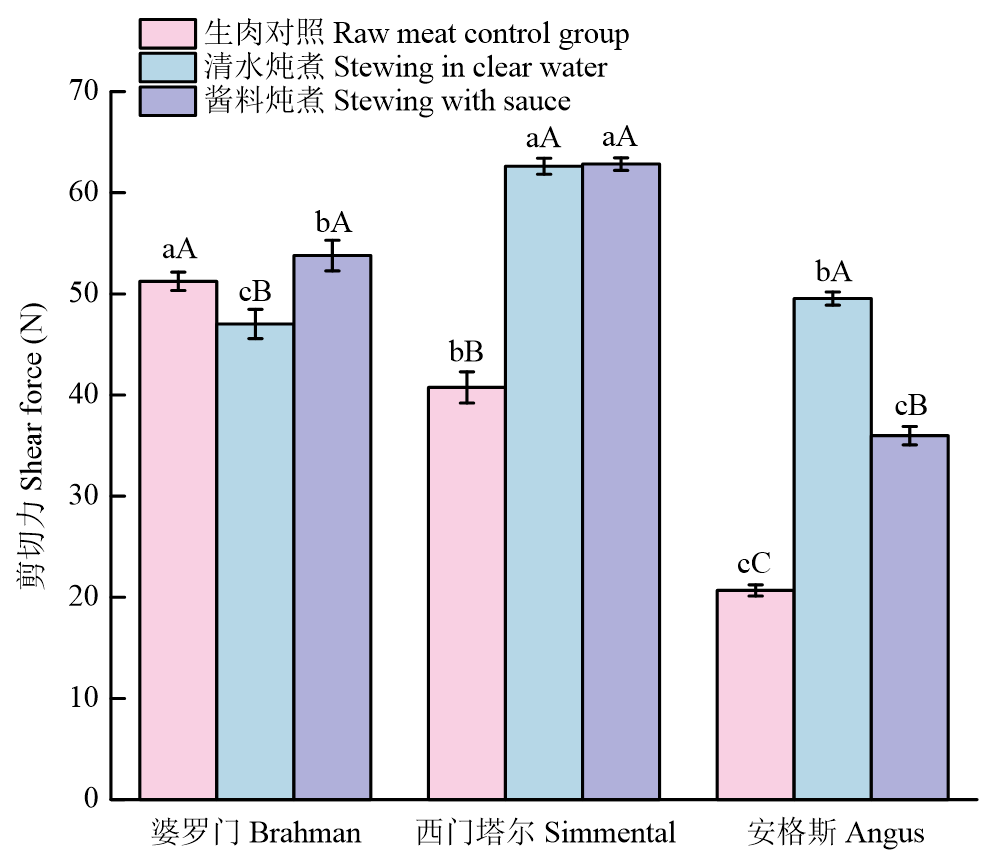
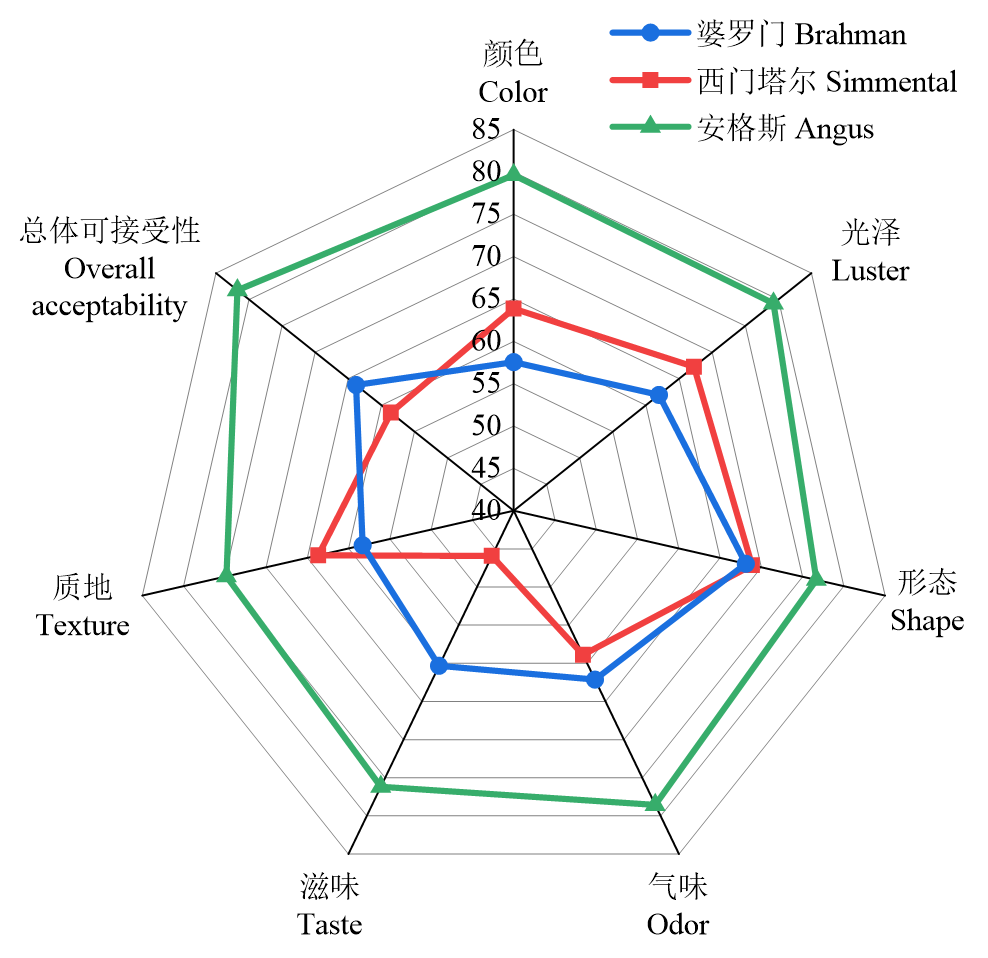
【Objective】This study aimed to investigate the changes in processing characteristics and flavor quality during stewing of Brahman, Simmental, and Angus beef brisket, which exhibited differences in fat content and distribution. The findings were intended to provide a theoretical basis for selecting raw materials and optimizing the processing of high-quality brisket dishes. 【Method】Using the industrialized dish “Small Pot Brisket” as a model, briskets from Brahman, Simmental, and Angus cattle, representing distinct fat content and distribution profiles, were selected as research subjects. Their basic composition was determined. After stewing in clear water and in sauce, respectively, pH, cooking loss, color, shear force, microstructure, thiobarbituric acid value, fatty acid composition, and volatile flavor compounds were measured, combined with sensory evaluation to analyze their processing characteristics and flavor quality. 【Result】Significant differences (P<0.05) were found in the fat content and distribution among the three brisket types. Simmental had the highest total fat content (21.97%), followed by Brahman, with Angus being the lowest. Compared with Brahman and Simmental, Angus had 5.83% and 8.13% lower intermuscular fat content, respectively, but its intramuscular fat content was the highest (11.83%), with the most uniform overall fat distribution. After sauce stewing, the cooking loss of Angus decreased significantly from 35.50% (plain water stewing) to 32.92% (P<0.05), and its shear force was the lowest among the three (35.98 N). Microstructural analysis revealed a looser muscle fiber network, indicating the best tenderness. GC-IMS analysis showed that Angus produced a greater variety and higher content of aldehydes, ketones, furans, and nitrogen/sulfur-containing heterocyclic compounds. In sensory evaluation, Angus also received a significantly higher overall acceptability score (8.18 points) than the other two groups. In contrast, Simmental and Brahman showed higher cooking loss and shear force under both stewing methods, resulting in poorer tenderness. Their fatty acid composition differed significantly from that of Angus, leading to weaker flavor intensity and complexity. Furthermore, sauce stewing improved product quality to some extent, with the degree of improvement varying depending on the raw material's fat distribution and post-stewing tissue structure. 【Conclusion】Uniform fat distribution was a key factor contributing to the significant advantages of Angus in processing adaptability, texture, and flavor quality. Considering all indicators, Angus was the most suitable for industrial production of seasoned sauce stewing dishes (such as pre-packaged “Small Pot Brisket”), as it effectively ensured standardized, high-quality product yield, tenderness, and flavor.

Key words: beef brisket, fat distribution, processing characteristics, microstructure, flavor formation

Fig. 1

Fat distribution diagrams of raw meat from three types of beef brisket"

Table 1

Significance analysis of the basic composition of three types of beef brisket"

牛腩种类
Types of beef brisket
水分含量
Moisture content
(%)
蛋白质含量
Protein content
(%)
总脂肪含量
Fat content
(%)
肌内脂肪含量
Intramuscular fat content (%)
肌间脂肪含量
Intermuscular fat content (%)
婆罗门 Brahman 66.59±0.87b 10.66±0.89a 20.67±0.49b 9.24±0.13b 12.15±0.22b
西门塔尔 Simmental 68.80±0.81a 9.51±0.21b 21.97±0.32a 7.46±0.25c 14.45±0.26a
安格斯 Angus 63.47±1.88c 10.30±0.19a 18.25±1.14c 11.83±0.28a 6.32±0.09c

Table 2

The pH value changes of three types of beef brisket after being stewed in clear water and sauce"

加工方式
Processing method
样品
Sample
牛腩种类 Types of beef brisket
婆罗门 Brahman 西门塔尔 Simmental 安格斯 Angus
清水炖煮
Stewing in clear water
汤汁 Soup
肉 Meat
6.53±0.01bA 6.49±0.01cA 6.54±0.01aA
6.19±0.01cB 6.57±0.04aA 6.52±0.02bA
酱料炖煮
Stewing with sauce
汤汁 Soup
肉 Meat
6.06±0.03cB 6.26±0.01aB 6.13±0.01bB
6.23±0.01cA 6.47±0.02aB 6.38±0.02bB

Fig. 2

The cooking loss of three types of beef brisket after being stewed in clear water and sauce The content results of each component are expressed as “Mean±SD”. Different capital letters represent significant differences in the same type of samples processed by different methods (P<0.05), while different lowercase letters indicate significant differences (P<0.05) among different sample types under the same processing method. The same as below"

Table 3

The color changes of three types of beef brisket after being stewed in clear water and sauce"

色泽
Color
加工方式
Processing method
牛腩种类 Types of beef brisket
婆罗门 Brahman 西门塔尔 Simmental 安格斯 Angus
L* 生肉对照 Raw meat control group 47.43±0.34bA 49.89±0.77aA 46.69±1.25bB
清水炖煮 Stewing in clear water 38.51±0.31cB 51.67±1.70aA 48.00±1.45bB
酱料炖煮 Stewing with sauce 45.80±2.26bA 41.87±1.45cB 51.20±1.14aA
a* 生肉对照 Raw meat control group 3.20±0.33aB 2.19±0.40bC 2.80±0.16aB
清水炖煮 Stewing in clear water 5.62±0.19aA 4.40±0.72abB 3.86±0.77bB
酱料炖煮 Stewing with sauce 5.41±0.84bA 6.77±0.88abA 7.37±0.54aA
b* 生肉对照 Raw meat control group 15.29±0.13aC 16.17±0.67aB 15.61±0.40aB
清水炖煮 Stewing in clear water 18.65±0.25cA 26.32±1.93aA 20.83±1.36bA
酱料炖煮 Stewing with sauce 16.96±1.07aB 14.61±0.57bC 17.19±0.90aB

Fig. 3

The shear force changes of three types of beef brisket after being stewed in clear water and sauce"

Fig. 4

Scanning electron microscope images of three types of beef brisket after being stewed in clear water and sauce A-C show Brahman, Simmental and Angus beef brisket in clear water, respectively. D-F show Brahman, Simmental and Angus beef brisket with sauce, respectively"

Fig. 5

Transmission electron microscope images of three types of beef brisket after being stewed in clear water and sauce A-C show Brahman, Simmental and Angus beef brisket in clear water, respectively. D-F show Brahman, Simmental and Angus beef brisket with sauce, respectively"

Fig. 6

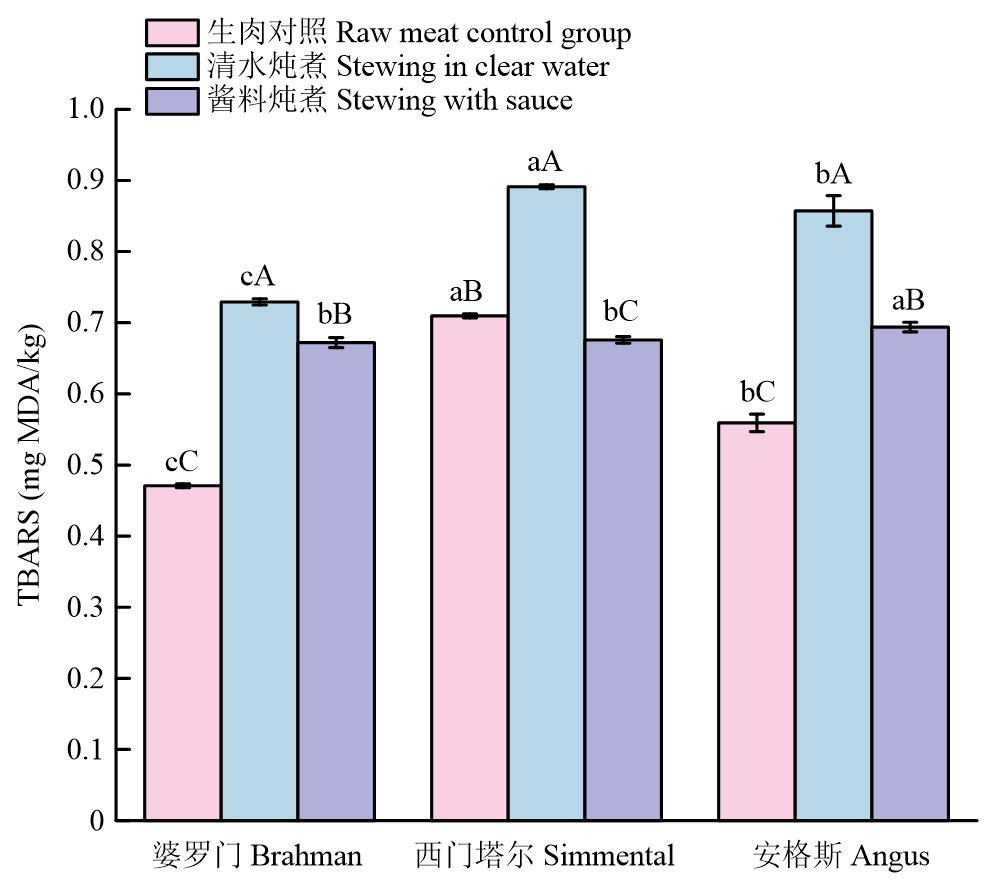
The malondialdehyde content of three types of beef brisket after being stewed in clear water and sauce"

Fig. 7

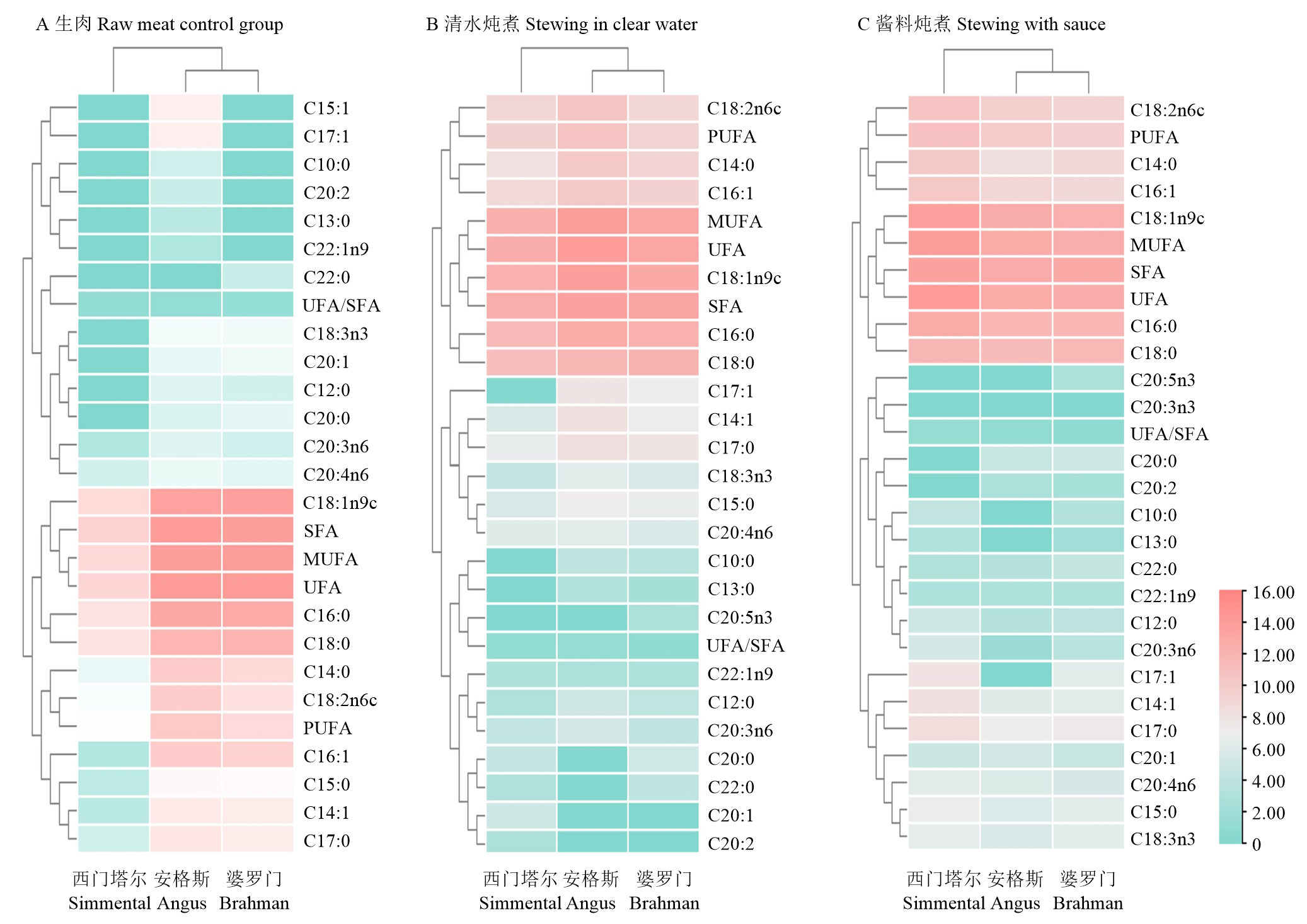
The free fatty acid composition of three types of beef brisket after being stewed in clear water and sauce"

Fig. 8

Fingerprint spectra of volatile compounds (A) and principal component analysis (B) of three types of beef brisket B1: Brahman raw meat; B2: Brahman stewing in clear water; B3: Brahman stewing with sauce; S1: Simmental raw meat; S2: Simmental stewing in clear water; S3: Simmental stewing with sauce; A1: Angus raw meat; A2: Angus stewing in clear water; A3: Angus stewing with sauce"

Fig. 9

The sensory evaluation results of three types of beef brisket after being stewed with the sauce"

[1]
LIU Y, YANG X Y, LIU Y G, DONG P C, LIANG R R, HOPKINS D L, HOLMAN B W B, LUO X, ZHU L X, YANG Z G, ZHANG Y M. Chinese consumer perception and purchasing behavior of beef-Mainly in North and East China. Meat Science, 2025, 220: 109696.

doi: 10.1016/j.meatsci.2024.109696
[2]
LI J G, SUN C H, MA W C, WEN K X, WANG Y, YUE X N, WANG Y T, BAI Y H. The effects of assisted freezing with different ultrasound power rates on the quality and flavor of braised beef. Foods, 2024, 13(10): 1566.

doi: 10.3390/foods13101566
[3]
高岩浩, 王婷婷, 白卫卫, 杜兴杰, 刘贤, 秦本源, 付彤, 孙宇, 高腾云, 张天留. 脂质组与转录组联合揭示南阳牛不同肌肉组织脂质特征的差异表达模式. 中国农业科学, 2025, 58(6): 1239-1258. doi: 10.3864/j.issn.0578-1752.2025.06.014.
GAO Y H, WANG T T, BAI W W, DU X J, LIU X, QIN B Y, FU T, SUN Y, GAO T Y, ZHANG T L. The combination of lipidome and transcriptome revealed the differential expression patterns of lipid characteristics in different muscle tissues for Nanyang cattle. Scientia Agricultura Sinica, 2025, 58(6): 1239-1258. doi: 10.3864/j.issn.0578-1752.2025.06.014. (in Chinese)
[4]
包玉龙, 徐万军, 贾世亮, 张雅琦, 高瑞昌. 肉类嫩度形成机理及嫩化调控研究进展. 肉类研究, 2023, 37(4): 34-40.
BAO Y L, XU W J, JIA S L, ZHANG Y Q, GAO R C. Theoretical aspects of meat tenderness and research progress on meat tenderization. Meat Research, 2023, 37(4): 34-40. (in Chinese)
[5]
ZHOU L Z, REN Y M, SHI Y J, FAN S J, ZHAO L Y, DONG M M, LI J, YANG Y Y, YU Y N, ZHAO Q Y, ZHANG J M, TANG C H. Comprehensive foodomics analysis reveals key lipids affect aroma generation in beef. Food Chemistry, 2024, 461: 140954.

doi: 10.1016/j.foodchem.2024.140954
[6]
ZHOU Y, CHEN Z, HE X F. Association between complex flavor development and changes in meat structure during cooking: Histological imaging analysis. ACS Food Science & Technology, 2024, 4(12): 2937-2945.
[7]
ONOGI A, OGINO A, KOMATSU T, SHOJI N, SHIMIZU K, KUROGI K, YASUMORI T, TOGASHI K, IWATA H. Whole-genome prediction of fatty acid composition in meat of Japanese Black cattle. Animal Genetics, 2015, 46(5): 557-559.

doi: 10.1111/age.12300 pmid: 25997367
[8]
HU J, FU X K, CAI Y J, WANG R L, XU R, ZHENG C R, CHEN X, YAN B W. Effects of representative Chinese cattle breeds on the eating quality and microstructure of braised beef. International Journal of Gastronomy and Food Science, 2025, 42: 101277.

doi: 10.1016/j.ijgfs.2025.101277
[9]
中华人民共和国国家卫生和计划生育委员会. 国家食品药品监督管理总局. 食品安全国家标准食品中水分的测定.GB/T GB/T 5009.3—2016. 北京: 中国标准出版社, 2016.
National Health and Family Planning Commission of the PRC. State Food and Drug Administration. National Standard for Food Safety Determination of water in food: GB/T5009.3-2016. Beijing: Standards Press of China, 2016. (in Chinese)
[10]
MONZIOLS M, BONNEAU M, DAVENEL A, KOUBA M. Comparison of the lipid content and fatty acid composition of intermuscular and subcutaneous adipose tissues in pig carcasses. Meat Science, 2007, 76(1): 54-60.

doi: 10.1016/j.meatsci.2006.10.013 pmid: 22064191
[11]
中华人民共和国国家卫生和计划生育委员会. 国家食品药品监督管理总局. 食品安全国家标准食品中脂肪的测定:GB/T5009.6-2025. 北京: 中国标准出版社, 2025.
National Health and Family Planning Commission of the PRC. State Food and Drug Administration. National Standard for Food Safety Determination of fat in food: GB/T5009.6-2025. Beijing: Standards Press of China, 2025. (in Chinese)
[12]
中华人民共和国国家卫生健康委员会. 国家市场监督管理总局.食品安全国家标准食品中蛋白质的测定:GB 5009.5-2025. 北京: 中国标准出版社, 2025.
National Health Commission of the PRC. State Administration for Market Regulation. National Standard for Food Safety Determination of Protein in Food: GB 5009.5-2025. Beijing: Standards Press of China, 2025. (in Chinese)
[13]
XU Y, WEI W S, LIN H X, HUANG F, YANG P, LIU J M, ZHAO L Y, ZHANG C H. Mechanism underlying the tenderness evolution of stir-fried pork slices with heating rate revealed by infrared thermal imaging assistance. Meat Science, 2024, 213: 109478.

doi: 10.1016/j.meatsci.2024.109478
[14]
XU B C, ZHANG Q W, ZHANG Y M, YANG X Y, MAO Y W, LUO X, HOPKINS D L, NIU L B, LIANG R R. Sous vide cooking improved the physicochemical parameters of hot-boned bovine semimembranosus muscles. Meat Science, 2023, 206: 109326.

doi: 10.1016/j.meatsci.2023.109326
[15]
XU K, LV A J, DONG R L, LI Y C, ZENG L T, WANG Y, LI H S, QI J, WANG H H, ZHANG C H, XIONG G Y, ZHANG Q Y. The research on the synergistic improvement of water retention capacity and eating quality of marinated pork meat by the combination of basic arginine and acidic aspartic acid. Food Chemistry, 2025, 470: 142649.

doi: 10.1016/j.foodchem.2024.142649
[16]
SUN Y X, DU F, HUANG Y Q, MIAO J J, LAI K Q. Effects of heat treatments, storage and reheating on volatile compounds in pork and screening for characteristic volatile compounds. Meat Science, 2025, 222: 109740.

doi: 10.1016/j.meatsci.2025.109740
[17]
中华人民共和国国家卫生和计划生育委员会. 国家食品药品监督管理总局.食品安全国家标准食品中脂肪酸的测定: GB 5009.168- 2016. 北京: 中国标准出版社, 2016.
National Health and Family Planning Commission of the PRC. State Food and Drug Administration. National Standard for Food Safety Determination of Fatty Acid in Food: GB 5009.168-2016. Beijing: Standards Press of China, 2016. (in Chinese)
[18]
CHEN X N, SUN S J, MI M M, DING L, ZHAO Y, ZHU M X, WANG Y, KHAN M Z, WANG C F, LI M M, MAN L M. Characterization and discrimination of quality and volatiles in beef hotpot based on GC-IMS and multivariate analysis. Food Chemistry: X, 2025, 29: 102682.

doi: 10.1016/j.fochx.2025.102682
[19]
WIJARNPRECHA K, GREGSON C, SILLICK M, FUHRMANN P, SONWAI S, ROUSSEAU D. Temperature-dependent properties of fat in adipose tissue from pork, beef and lamb. Part 1: Microstructural, thermal, and spectroscopic characterisation. Food & Function, 2022, 13(13): 7112-7122.
[20]
LIAN F L, CHENG J H, SUN D W. Insight into the effect of microwave treatment on fat loss, fatty acid composition and microstructure of pork subcutaneous back fat. LWT-Food Science and Technology, 2023, 187: 115297.

doi: 10.1016/j.lwt.2023.115297
[21]
孙栋, 胡婷, 冯耀文, 王钢, 余龙驹, 李璇, 郝刚. 不同pH值下蛋白氧化和NaCl浓度对牦牛肉肌原纤维蛋白结构的影响. 肉类研究, 2025, 39(6): 1-8.
SUN D, HU T, FENG Y W, WANG G, YU L J, LI X, HAO G. Effects of protein oxidation and NaCl concentration on the structure of yak myofibrillar protein under different pH values. Meat Research, 2025, 39(6): 1-8. (in Chinese)
[22]
ZHU C Z, ZHANG M J, CHEN H, ZHANG Q H, LI F Q, GU Y, WANG K, ZHAO G M. Effect of NaCl on the structure and digestive properties of heat-treated myofibrillar proteins. Food Chemistry, 2025, 463: 141521.

doi: 10.1016/j.foodchem.2024.141521
[23]
PURCHAS R W, AUNGSUPAKORN R. Further investigations into the relationship between ultimate pH and tenderness for beef samples from bulls and steers. Meat Science, 1993, 34(2): 163-178.

doi: 10.1016/0309-1740(93)90025-D pmid: 22060661
[24]
EL HOSRY L, ELIAS V, CHAMOUN V, HALAWI M, CAYOT P, NEHME A, BOU-MAROUN E. Maillard reaction: Mechanism, influencing parameters, advantages, disadvantages, and food industrial applications: A review. Foods, 2025, 14(11): 1881.

doi: 10.3390/foods14111881
[25]
SUN A, WU W, SOLADOYE O P, ALUKO R E, BAK K H, FU Y, ZHANG Y H. Maillard reaction of food-derived peptides as a potential route to generate meat flavor compounds: A review. Food Research International, 2022, 151: 110823.

doi: 10.1016/j.foodres.2021.110823
[26]
SONG S Q, ZHENG F T, TIAN X Y, FENG T, YAO L Y, SUN M, SHI L. Evolution analysis of free fatty acids and aroma-active compounds during tallow oxidation. Molecules, 2022, 27(2): 352.

doi: 10.3390/molecules27020352
[27]
LEE S, JO K, PARK M K, CHOI Y S, JUNG S. Role of lipids in beef flavor development: A review of research from the past 20 years. Food Chemistry, 2025, 475: 143310.

doi: 10.1016/j.foodchem.2025.143310
[28]
LIU Q Q, GU X J, WEN R X, SUN C F, YU Q Q. Changes in meat quality and volatile flavor compounds profile in beef loin during dry-aging. Lwt, 2024, 205: 116500.

doi: 10.1016/j.lwt.2024.116500
[29]
ZHU J F, LIN W F, SUN Y Y, PAN D D, XIA Q, ZHOU C Y, HE J. Relationship between flavor characteristics and lipid oxidation in air-dried beef at different roasting stages. International Journal of Gastronomy and Food Science, 2024, 37: 100988.

doi: 10.1016/j.ijgfs.2024.100988
[30]
PAN Q, SHAO X F, XIAO Q, GU Q H, CHEN C G, XU B C, LI P J. Revealing the flavor changes of spiced beef under different thermal treatment temperatures: A complementary approach with GC-IMS and GC-O-MS. Food Chemistry, 2025, 473: 143074.

doi: 10.1016/j.foodchem.2025.143074
[1] YAN SunHui, LUO Cheng, CHEN YinJi, ZHUANG XinBo. Effects of Bacterial Cellulose Combined pH Shifting Treatment on Gel Characteristics and Microstructure of Soy Protein Isolate [J]. Scientia Agricultura Sinica, 2025, 58(6): 1210-1222.
[2] ZHANG Tao, WANG Huan, XIE HongKai, CHEN YinJi. Formation and Structure of Wheat Bran Polysaccharide-Golden Threadfin Bream Surimi Blended Gel [J]. Scientia Agricultura Sinica, 2025, 58(5): 1004-1016.
[3] ZHANG YingXin, YANG Min, BAI XueBing, CHEN Chang, WU RuiZhi, YANG Ping, CHEN QiuSheng. Morphological Characteristics of Telocytes at Sheep Acupoints and Its Relationship with Surrounding Structures [J]. Scientia Agricultura Sinica, 2023, 56(7): 1417-1428.
[4] XIAO LuTing,LI XiuHong,LIU LiJun,YE FaYin,ZHAO GuoHua. Effects of Starch Granule Size on the Physical and Chemical Properties of Barley Starches [J]. Scientia Agricultura Sinica, 2022, 55(5): 1010-1024.
[5] CHEN ChunYu,CHEN SongLing,HAN YanYu,REN LiJun,ZOU HongTao,ZHANG YunLong. Preparation and Properties of Bionic Modified Water-Based Polymer Coated Urea [J]. Scientia Agricultura Sinica, 2022, 55(20): 3970-3982.
[6] SHAO JingYi,LI XiaoFan,YU WeiZhen,LIU Peng,ZHAO Bin,ZHANG JiWang,REN BaiZhao. Combined Effects of High Temperature and Drought on Yield and Stem Microstructure of Summer Maize [J]. Scientia Agricultura Sinica, 2021, 54(17): 3623-3631.
[7] ZHUANG XinBo,CHEN YinJi,ZHOU GuangHong. The Mechanism of Myofibrillar Protein Gel Functionality Influenced by Modified Sugarcane Dietary Fiber [J]. Scientia Agricultura Sinica, 2021, 54(15): 3320-3330.
[8] KE FuLai,ZHU Kai,LI ZhiHua,SHI YongShun,ZOU JianQiu,WANG YanQiu. Formation Regulating and Micro-Structure of Sorghum Starch with Different Types of Endosperm [J]. Scientia Agricultura Sinica, 2020, 53(14): 2774-2785.
[9] WenJian YANG,HaoLiang PU,LiuQing WANG,QiuHui HU,Fei PEI. Quality Change and Bacteria Succession of Dried Carrot Stored at Different Water Activities [J]. Scientia Agricultura Sinica, 2019, 52(20): 3661-3671.
[10] NING JiYing, GU FengYing, GAO PingPing, CAO JingJing, LUO QiQi, WANG Feng. Freeze-Thaw Stability of Waxy Corn Starch Gel [J]. Scientia Agricultura Sinica, 2017, 50(8): 1514-1524.
[11] ZHANG Xing, YANG YuLing, MA Yun, WANG JingYu. Effects of pH on the Non-Covalent Forces and Structure of Myofibrillar Protein and Heat Induced Gel [J]. Scientia Agricultura Sinica, 2017, 50(3): 564-573.
[12] WANG JingYu, YANG YuLing, KANG DaCheng, TANG XiaoZhi, ZHANG Xing, MA Yun, NI WenXi. Effects of Ultrasound on Chemical Forces and Water Holding Capacity Study of Heat-Induced Myofibrillar Protein Gel [J]. Scientia Agricultura Sinica, 2017, 50(12): 2349-2358.
[13] JIA Feng, GUO YuRong, YANG Xi, LIU Dong, LI Jie. Isolation and Purification of Polysaccharide from Fermented Apple Pomace and Its Relationship with Processing Characteristics [J]. Scientia Agricultura Sinica, 2017, 50(10): 1873-1884.
[14] JIA Feng,GUO Yu-rong, LIU Dong, YANG Xi, DENG Hong, MENG Yong-hong. Effect of Fermentation on the Polysaccharides Processing Characteristics in Apple Pomace [J]. Scientia Agricultura Sinica, 2016, 49(19): 3831-3844.
[15] Lü San-san, DU Guo-dong, LIU Zhi-kun, Lü De-guo, LI Shuang. Effects of Orchard Mulching Grass on the Microstructure and Function of Photosystem in Apple Leaves [J]. Scientia Agricultura Sinica, 2015, 48(1): 130-139.
Viewed
Full text


Abstract

Cited

  Shared   
  Discussed   
No Suggested Reading articles found!