Scientia Agricultura Sinica ›› 2026, Vol. 59 ›› Issue (16): 3640-3654.doi: 10.3864/j.issn.0578-1752.2026.16.012

• HORTICULTURE • Previous Articles     Next Articles

Differential Aroma Metabolism and Key Regulatory Genes Identification Between Melting and Stony Hard Peach Flesh Types

YAO ZhenYu1,2(), DUAN WenYi1,2,3(), MENG JunRen2, LI Ang2, CHEN Ming2, YUE ZongSheng2, SUN ShiHang1,2,3, PAN Lei1,2,3, NIU Liang1,3, CUI GuoChao1,3, ZENG WenFang1,2,3()   

  1. 1 The Shennong Laboratory, Zhengzhou 450002
    2 Zhengzhou Fruit Research Institute, Chinese Academy of Agricultural Sciences, Zhengzhou 450009
    3 Zhongyuan Research Center, Chinese Academy of Agricultural Sciences, Xinxiang 453000, Henan
  • Received:2026-02-21 Accepted:2026-07-01 Online:2026-08-16 Published:2026-08-17
  • Contact: ZENG WenFang

Abstract:

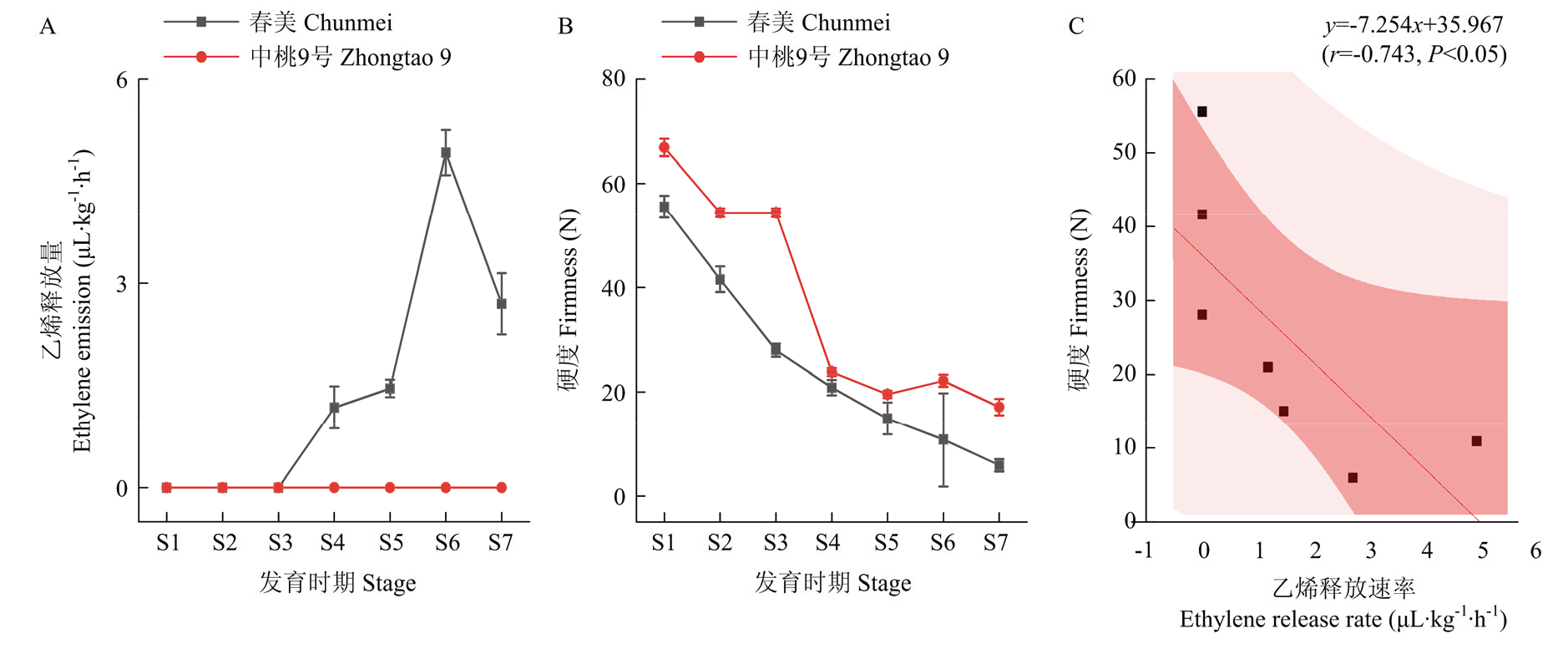
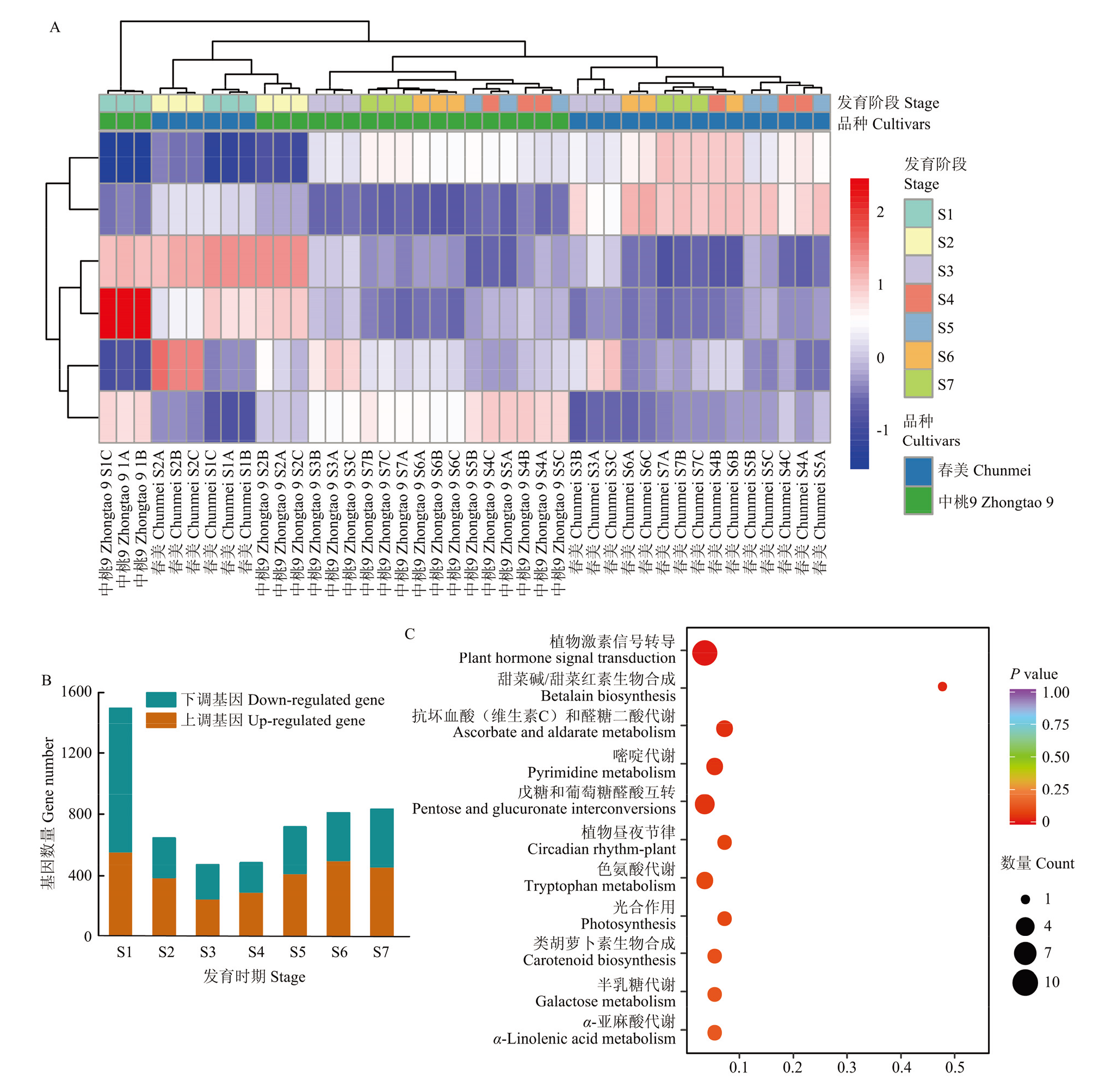
【Objective】 This study aimed to elucidate the differentiation patterns of aroma metabolism during fruit development across distinct peach flesh types, and identify key regulatory genes governing cultivar-specific aroma profiles, so as to provide a theoretical basis for flavor improvement in stony hard peaches. 【Method】 The melting-flesh cultivar Chunmei and the stony hard cultivar Zhongtao 9 were utilized as experimental materials. Seven critical sampling stages were established throughout the fruit development cycle. Volatile compounds were profiled using headspace solid-phase microextraction combined with gas chromatography- mass spectrometry (HS-SPME-GC-MS). Transcriptome sequencing was performed to identify differentially expressed genes (DEGs), and Pearson correlation analysis was employed to pinpoint core genes significantly associated with key aroma compounds.【Result】 A total of 57 volatile compounds were identified, with significant variation in composition and content across cultivars and developmental stages. The stony hard cultivar Zhongtao 9 exhibited no detectable ethylene production throughout development, maintained high levels of C6 aldehydes (e.g., 2-hexenal) at the mature stage, and showed almost no accumulation of esters and lactones. In contrast, the melting-flesh cultivar Chunmei exhibited a typical ethylene climacteric peak at the S3 to S4 transition, accompanied by a 3.1-3.8 fold increase in ester content and a marked decrease in C6 compounds. Transcriptome analysis identified 2 806 DEGs, with clear separation between the two cultivars at all developmental stages based on clustering analysis. KEGG enrichment analysis indicated that these DEGs were significantly involved in plant hormone signal transduction, α-linolenic acid metabolism, and carotenoid biosynthesis pathways. Correlation analysis identified 16 candidate genes associated with ester/lactone biosynthesis. Among them, BSK2 (Prupe.2G110200) and PpYUC11 (Prupe.6G157400/6G157500) showed strong positive correlations with hexyl acetate and γ-decalactone, respectively.【Conclusion】 Ethylene was a key regulatory factor underlying aroma quality divergence between the two peach flesh types. Impaired ethylene signaling in Zhongtao 9 likely restricted fatty acid metabolism at the C6 aldehyde stage, preventing downstream esterification and lactone biosynthesis. Candidate genes, such as BSK2 and PpYUC11, together with hormone signaling pathways, were identified as potential regulators of aroma formation.

Key words: peach, fruit aroma, flesh type, differentially expressed genes, ethylene

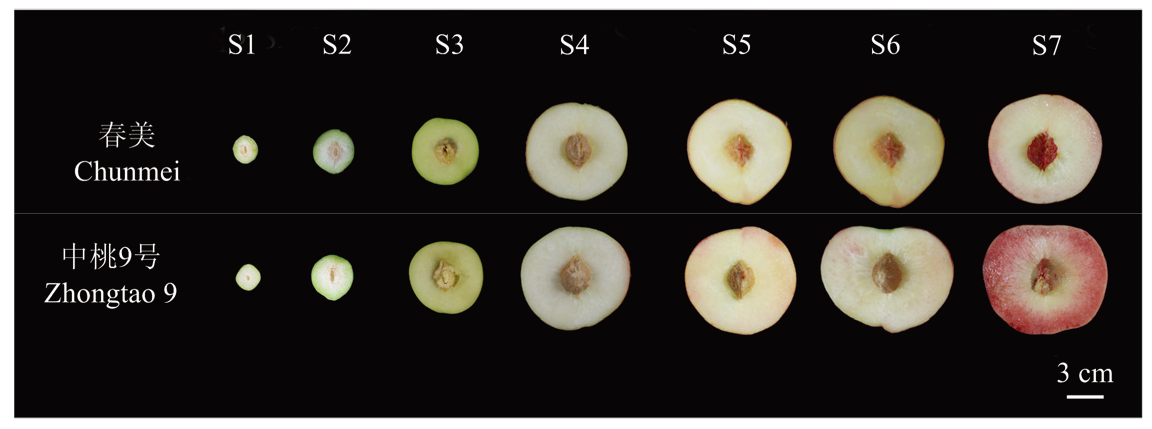
Fig. 1

Cross-section phenotypes of fruits from Chunmei and Zhongtao 9 at seven developmental stages S1-S7 represents 45, 60, 75, 84, 90, 96, and 102 days after flowering, respectively. The same as below"

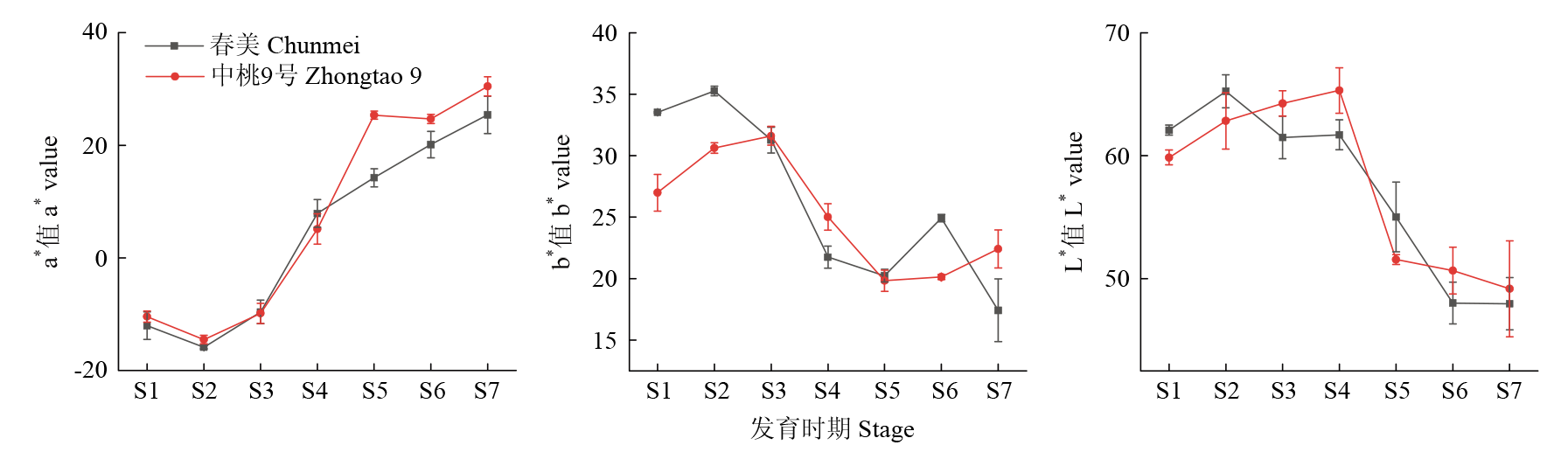
Fig. 2

Dynamic changes of fruit color parameters of Chunmei and Zhongtao 9 peach at different developmental stages"

Fig. 3

Dynamic changes of fruit firmness, ethylene release rate and their correlation analysis of Chunmei and Zhongtao 9 peach"

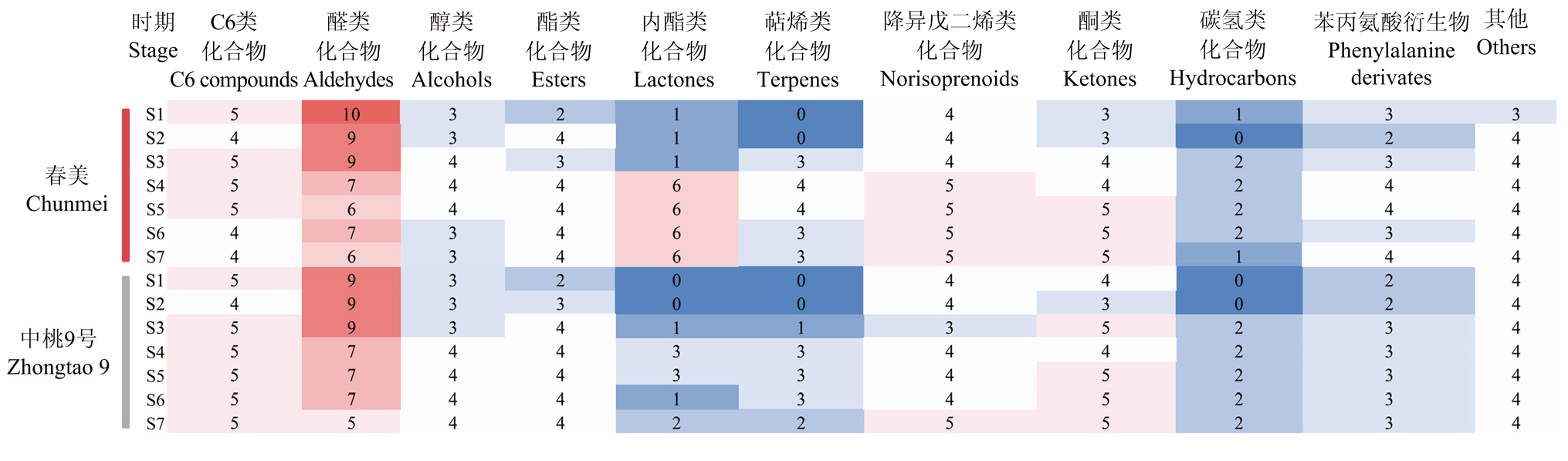
Fig. 4

Aroma compound types of Chunmei and Zhongtao 9 peach at different developmental stages"

Fig. 5

Composition analysis of aroma compound types of Chunmei and Zhongtao 9 peach"

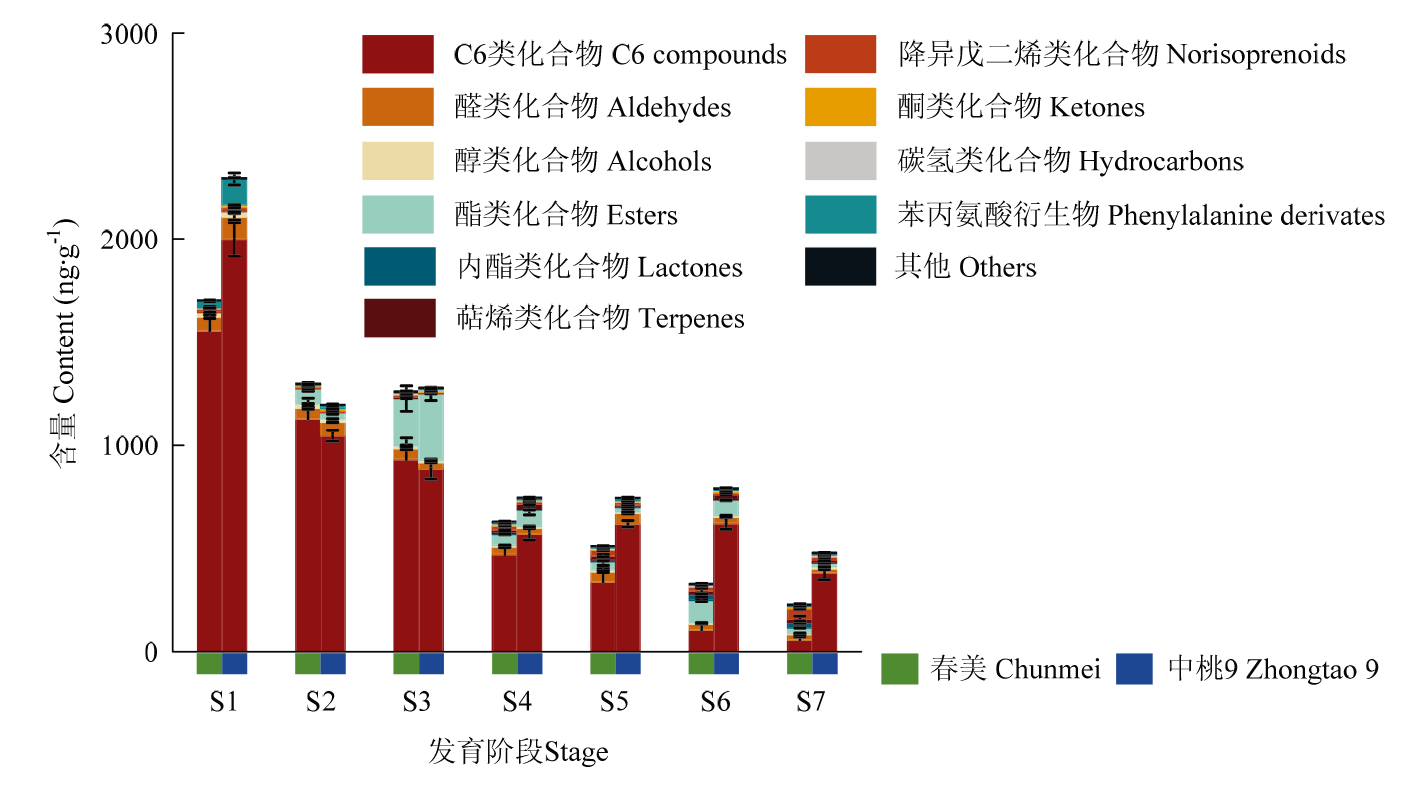
Fig. 6

Stacked column chart of total aroma compound contents of Chunmei and Zhongtao 9 peach at different developmental stages"

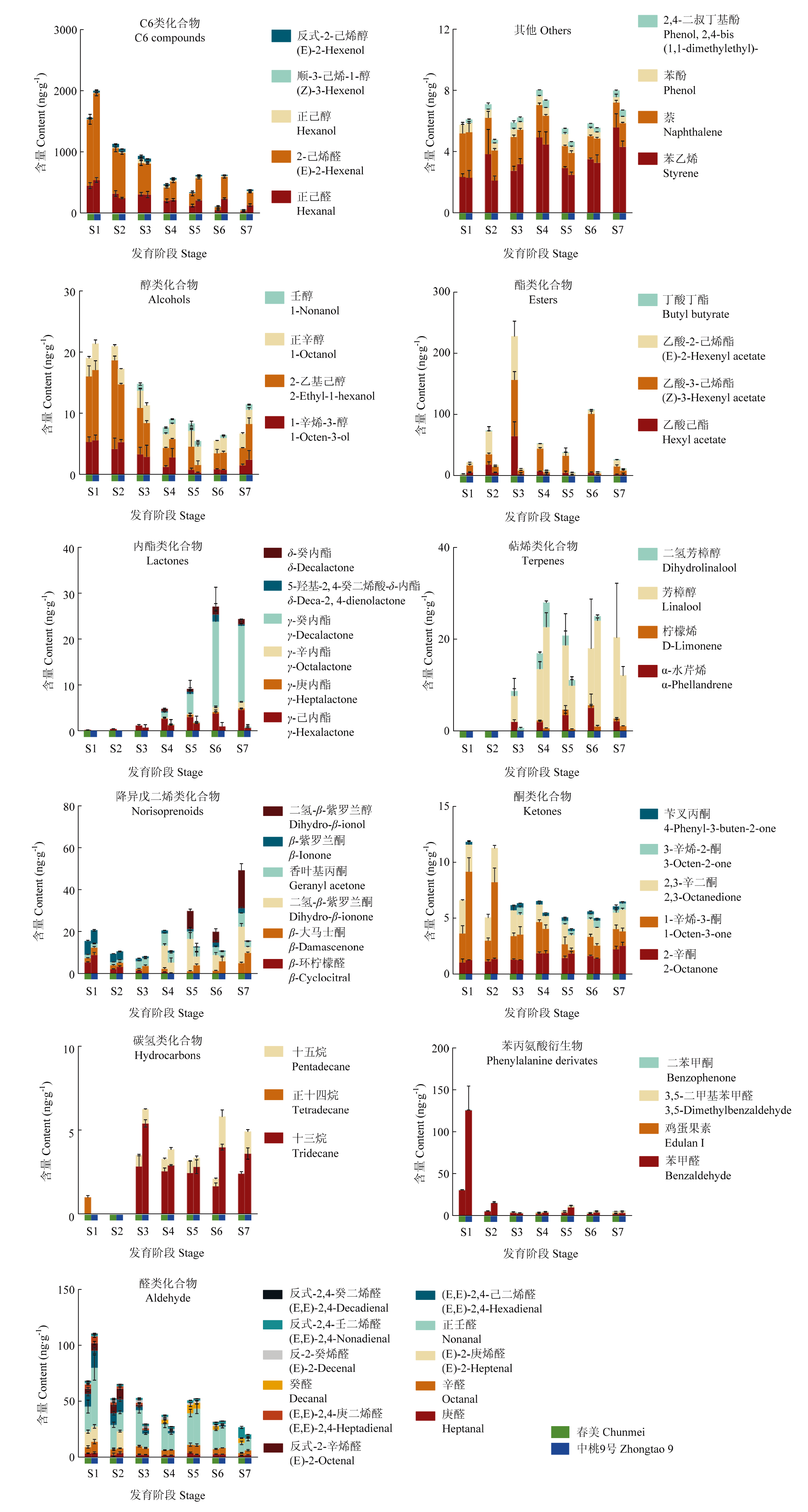
Fig. 7

Dynamic changes of different categories of aroma compounds in Chunmei and Zhongtao 9 peach during fruit development"

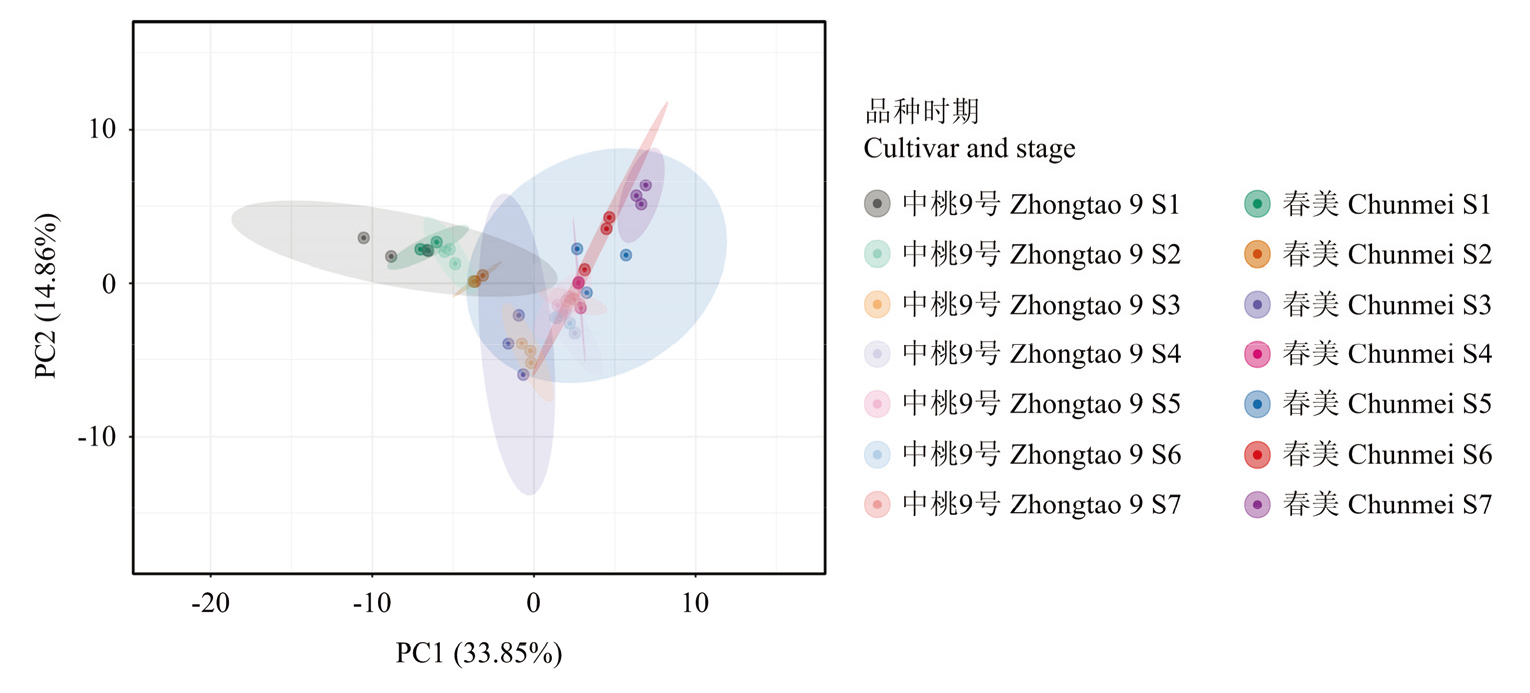
Fig. 8

PCA plot of fruit metabolome of Chunmei and Zhongtao 9 peach at different developmental stages"

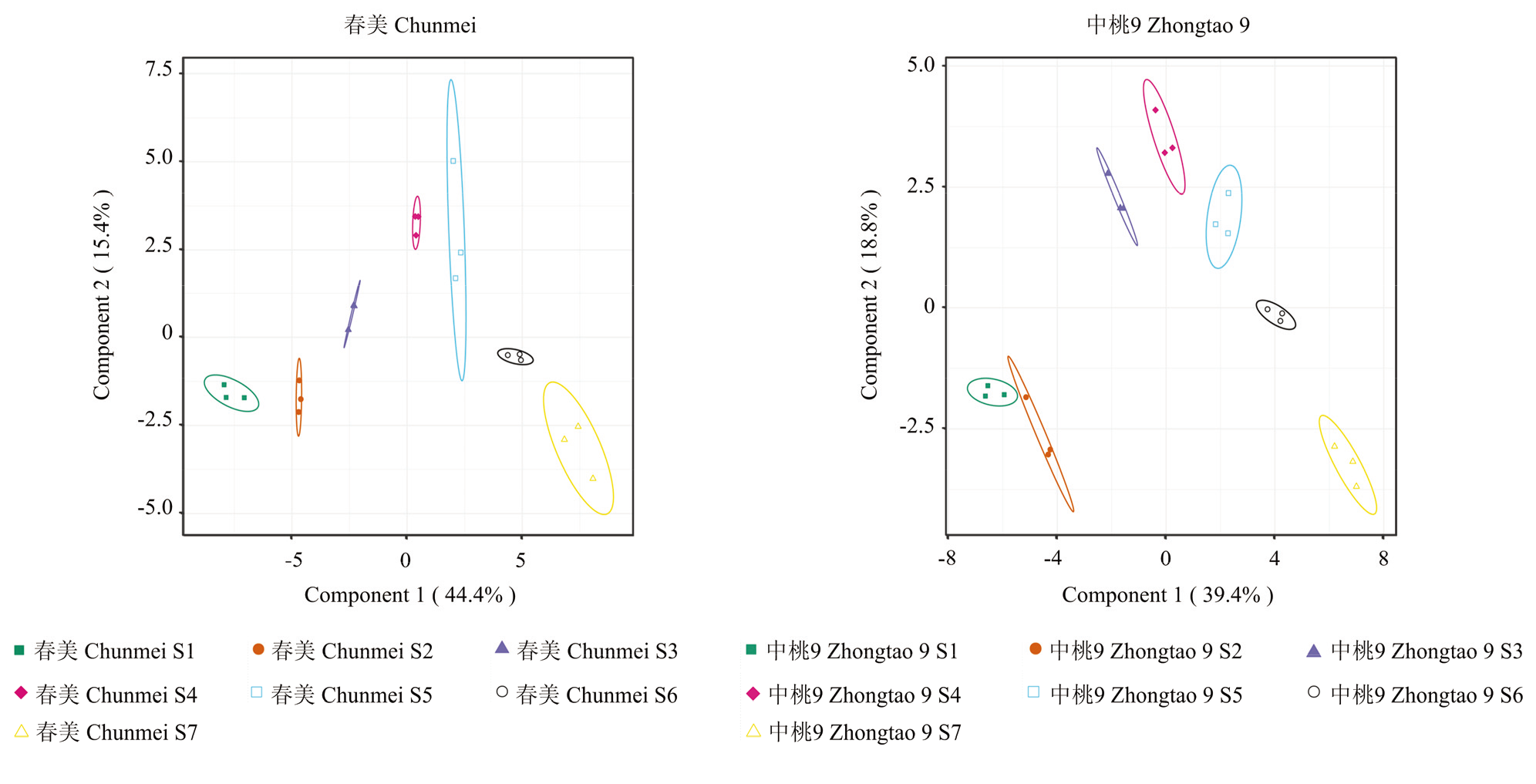
Fig. 9

OPLS-DA plots of fruit metabolome in each of Chunmei and Zhongtao 9 peach at different developmental stages"

Fig. 10

Differential gene expression patterns and KEGG enrichment analysis between Chunmei and Zhongtao 9"

Table 1

21 key aroma substances with OAV>1 and their odor thresholds"

香气物质 Aroma substance 气味阈值 Odor thresholds (μg·kg-1) 风味类型 Aroma type
辛醛 Octanal 0.587 醛香 Aldehydic fragrance
癸醛 Decanal 3 醛香 Aldehydic fragrance
1-辛烯-3-醇 1-Octen-3-ol 1.5 泥土香 Scent of soil
1-辛烯-3-酮 1-Octen-3-one 0.003 泥土香 Scent of soil
正壬醛 Nonanal 1.1 油脂香 Oily fragrance
反式-2-辛烯醛 (E)-2-Octenal 3 油脂香 Oily fragrance
反式-2, 4-癸二烯醛 (E, E)-2, 4-Decadienal 0.027 油脂香 Oily fragrance
反式-2, 4-壬二烯醛 (E, E)-2, 4-Nonadienal 0.1 油脂香 Oily fragrance
芳樟醇 Linalool 0.22 花香味 Fragrance of flowers
β-大马士酮 β-Damascenone 0.002 花香味 Fragrance of flowers
二氢-β-紫罗兰酮 Dihydro-β-ionone 1 花香味 Fragrance of flowers
β-紫罗兰酮 β-Ionone 3.5 花香味 Fragrance of flowers
乙酸己酯 Hexyl acetate 2 果香味 Fruity
乙酸-3-己烯酯 (Z)-3-Hexenyl acetate 13 果香味 Fruity
2, 3-辛二酮 2, 3-Octanedione 2.52 果香味 Fruity
正己醛 Hexanal 5 草香味 Grassy fragrance
2-己烯醛 (E)-2-Hexenal 110 草香味 Grassy fragrance
正己醇 Hexanol 5.6 草香味 Grassy fragrance
顺-3-己烯-1-醇 (Z)-3-Hexenol 3.9 草香味 Grassy fragrance
庚醛 Heptanal 2.8 草香味 Grassy fragrance
γ-癸内酯 γ-Decalactone 1.1 桃香 Peach fragrance

Table 2

Key candidate genes significantly associated with esters and lactones between two peach cultivars"

基因序号
Gene id
注释信息
Annotation
挥发物质
Volatiles
相关性
Correlation
P
P value
Prupe.1G007300 谷胱甘肽S-转移酶家族蛋白 Glutathione S-transferase family protein γ-癸内酯 γ-Decalactone 0.78977232 5.06302E-10
Prupe.8G081800 SAUR样生长素响应蛋白家族(Small Auxin-Upregulated RNA)
SAUR-like auxin-responsive protein family
γ-癸内酯 γ-Decalactone 0.781266115 1.02782E-09
Prupe.6G157500 黄素单加氧酶家族蛋白 Flavin-containing monooxygenase family protein γ-癸内酯 γ-Decalactone 0.77503427 1.69318E-09
Prupe.4G262200 果胶裂解酶样超家族蛋白 Pectin lyase-like superfamily protein γ-癸内酯 γ-Decalactone 0.773254369 1.947E-09
Prupe.7G192800 果胶裂解酶样超家族蛋白 Pectin lyase-like superfamily protein γ-癸内酯 γ-Decalactone 0.77149158 2.23311E-09
Prupe.6G157400 黄素单加氧酶家族蛋白 Flavin-containing monooxygenase family protein γ-癸内酯 γ-Decalactone 0.765521038 3.5216E-09
Prupe.7G247900 泛素样超家族蛋白 Ubiquitin-like superfamily protein γ-癸内酯 γ-Decalactone 0.765034818 3.65255E-09
Prupe.7G216300 肌醇加氧酶4 myo-inositol oxygenase 4 γ-癸内酯 γ-Decalactone 0.750757713 1.02794E-08
Prupe.2G110200 油菜素甾醇信号激酶2 BR-signaling kinase 2 乙酸己酯 Hexyl acetate 0.840380176 3.38379E-12
Prupe.6G361600 核糖核酸酶E抑制剂RraA/二甲基甲萘醌甲基转移酶
Ribonuclease E inhibitor RraA/Dimethylmenaquinone methyltransferase
乙酸己酯 Hexyl acetate 0.823552189 2.13017E-11
Prupe.8G178000 植物U-盒蛋白15(PUB15) Plant U-Box 15 乙酸己酯 Hexyl acetate 0.820125425 3.02577E-11
Prupe.1G317500 脂质磷酸磷酸酶2 lipid phosphate phosphatase 2 乙酸己酯 Hexyl acetate 0.816580973 4.31669E-11
Prupe.3G162800 钙依赖脂质结合蛋白(CaLB结构域)家族蛋白
Calcium-dependent lipid-binding (CaLB domain) family protein
乙酸己酯 Hexyl acetate 0.769708345 2.56219E-09
Prupe.4G188000 蛋白激酶家族蛋白 protein kinase family protein 乙酸己酯 Hexyl acetate 0.761710103 4.67746E-09
Prupe.2G107600 七次跨膜MLO家族蛋白(Mildew Locus O)
Seven transmembrane MLO family protein
乙酸-3-己烯酯(Z)-3-Hexenyl acetate 0.791412693 4.40037E-10
Prupe.3G250400 类COBRA蛋白1前体
COBRA-like protein 1 precursor
乙酸-3-己烯酯
(Z)-3-Hexenyl acetate
0.754508468 7.88601E-09
[1]
Li Y, Cao K, Zhu G R, Fang W C, Chen C W, Wang X W, Zhao P, Guo J, Ding T Y, Guan L P, Zhang Q, Guo W W, Fei Z J, Wang L R. Genomic analyses of an extensive collection of wild and cultivated accessions provide new insights into peach breeding history[J]. Genome Biology, 2019, 20(1): 36.

doi: 10.1186/s13059-019-1648-9 pmid: 30791928
[2]
Duan W Y, Yao Z Y, Qiao C K, Meng J R, Sun S H, Pan L, Niu L, Cui G C, Wang Z Q, Zeng W F. Combined volatile metabolome and transcriptome analysis of 60 peach cultivars provide new insights into the formation of aroma and the identification of associated genes[J]. Horticultural Plant Journal, 2026, 12(5): 1025-1038.

doi: 10.1016/j.hpj.2024.12.005
[3]
Li X Y, Gao P, Zhang C G, Xiao X, Chen C X, Song F H. Aroma of peach fruit: A review on aroma volatile compounds and underlying regulatory mechanisms[J]. International Journal of Food Science & Technology, 2023, 58(10): 4965-4979.
[4]
Xin R, Liu X H, Wei C Y, Yang C, Liu H R, Cao X M, Wu D, Zhang B, Chen K S. E-nose and GC-MS reveal a difference in the volatile profiles of white- and red-fleshed peach fruit[J]. Sensors, 2018, 18(3): 765.

doi: 10.3390/s18030765
[5]
席万鹏, 郁松林, 周志钦. 桃果实香气物质生物合成研究进展[J]. 园艺学报, 2013, 40(9): 1679-1690.
Xi W P, Yu S L, Zhou Z Q. Advances in aroma compounds biosynthesis of peach fruit[J]. Acta Horticulturae Sinica, 2013, 40(9): 1679-1690. (in Chinese)
[6]
曹香梅. 桃果实酯类芳香物质的代谢与调控研究[D]. 杭州: 浙江大学, 2019.
Cao X M. Metabolism and regulation of volatile esters in peach fruit[D]. Hangzhou: Zhejiang University, 2019. (in Chinese)
[7]
Peng B, Yu M L, Zhang B B, Xu J L, Ma R J. Differences in PpAAT1 activity in high- and low-aroma peach varieties affect γ-decalactone production[J]. Plant Physiology, 2020, 182(4): 2065-2080.

doi: 10.1104/pp.19.00964 pmid: 32001520
[8]
Brandi F, Bar E, Mourgues F, Horváth G, Turcsi E, Giuliano G, Liverani A, Tartarini S, Lewinsohn E, Rosati C. Study of ‘Redhaven’ peach and its white-fleshed mutant suggests a key role of CCD4 carotenoid dioxygenase in carotenoid and norisoprenoid volatile metabolism[J]. BMC Plant Biology, 2011, 11(1): 24.

doi: 10.1186/1471-2229-11-24
[9]
Yao Z Y, Duan W Y, Li A, Zhan W D, Sun S H, Pan L, Niu L, Cui G C, Zeng W F. Genome-wide identification of CCD gene family in Peach (Prunus persica L. Batsch) and expression analysis with aroma norisoprenoids[J]. BMC Plant Biology, 2025, 25(1): 954.

doi: 10.1186/s12870-025-06991-z
[10]
Zheng X J, Yang Y, Al-Babili S. Exploring the diversity and regulation of apocarotenoid metabolic pathways in plants[J]. Frontiers in Plant Science, 2021, 12: 787049.

doi: 10.3389/fpls.2021.787049
[11]
Li L, Rodríguez-Concepción M, Al-Babili S. Advances in carotenoid and apocarotenoid metabolisms and functions in plants[J]. Plant Physiology, 2025, 198(4): kiaf304.
[12]
Shen Y X, Rao Y F, Ma M N, Li Y J, He Y H, Wang Z, Liang M, Ning G G. Coordination among flower pigments, scents and pollinators in ornamental plants[J]. Horticulture Advances, 2024, 2(1): 6.

doi: 10.1007/s44281-024-00029-4
[13]
杨康慧, 李丹, 白丽霞, 杨璐, 程平. 不同品种桃果实香气及氨基酸成分分析[J]. 南方农业学报, 2025, 56(11): 3522-3532.
Yang K H, Li D, Bai L X, Yang L, Cheng P. Analysis of aroma and amino acid components in fruits of different peach varieties[J]. Journal of Southern Agriculture, 2025, 56(11): 3522-3532. (in Chinese)
[14]
Tan F L, Wang P, Zhan P, Tian H L. Characterization of key aroma compounds in flat peach juice based on gas chromatography-mass spectrometry-olfactometry (GC-MS-O), odor activity value (OAV), aroma recombination, and omission experiments[J]. Food Chemistry, 2022, 366: 130604.

doi: 10.1016/j.foodchem.2021.130604
[15]
Aubert C, Chalot G, Lurol S, Ronjon A, Cottet V. Relationship between fruit density and quality parameters, levels of sugars, organic acids, bioactive compounds and volatiles of two nectarine cultivars, at harvest and after ripening[J]. Food Chemistry, 2019, 297: 124954.

doi: 10.1016/j.foodchem.2019.124954
[16]
严娟, 蔡志翔, 张明昊, 徐子媛, 沈志军, 马瑞娟, 俞明亮. 利用电子鼻评价桃果实香气[J]. 植物遗传资源学报, 2021, 22(1): 274-282.

doi: 10.13430/j.cnki.jpgr.20200616002
Yan J, Cai Z X, Zhang M H, Xu Z Y, Shen Z J, Ma R J, Yu M L. Evaluation of aroma in peach fruit by electronic nose[J]. Journal of Plant Genetic Resources, 2021, 22(1): 274-282. (in Chinese)
[17]
牛良, 曾文芳, 潘磊, 孟君仁, 鲁振华, 崔国朝, 王志强. 硬质桃研究现状及展望[J]. 果树学报, 2020, 37(8): 1227-1235.
Niu L, Zeng W F, Pan L, Meng J R, Lu Z H, Cui G C, Wang Z Q. Research status and perspective for stony-hard peach[J]. Journal of Fruit Science, 2020, 37(8): 1227-1235. (in Chinese)
[18]
Meng J R, Sun S H, Li A, Niu L, Badrunnesa A, Pan L, Duan W Y, Cui G C, Wang Z Q, Xu J, Zeng W F. Identification of PpTHE1, a cell wall integrity sensor regulating the increased duration of harvest window in slow-melting flesh peach, through the assembly of a chromosome-level reference genome of Prunus persica[J]. Plant Biotechnology Journal, 2025, 23(10): 4228-4245.

doi: 10.1111/pbi.v23.10
[19]
寇单单, 李东东, 曹洪波, 王朋飞, 张学英, 陈海江. 不同肉质类型桃果实贮藏期间品质指标与淀粉酶活性的变化[J]. 山东农业科学, 2025, 57(2): 90-96.
Kou D D, Li D D, Cao H B, Wang P F, Zhang X Y, Chen H J. Changes of quality indexes and amylase activity of different fleshy types of peach fruits during storage[J]. Shandong Agricultural Sciences, 2025, 57(2): 90-96. (in Chinese)
[20]
Wang X B, Zeng W F, Ding Y F, Wang Y, Niu L, Yao J L, Pan L, Lu Z H, Cui G C, Li G H, Wang Z Q. PpERF3 positively regulates ABA biosynthesis by activating PpNCED2/3 transcription during fruit ripening in peach[J]. Horticulture Research, 2019, 6: 19.

doi: 10.1038/s41438-018-0094-2
[21]
Wang X B, Zhang C L, Miao Y L, Deng L, Zhang B, Meng J R, Wang Y, Pan L, Niu L, Liu H, Cui G C, Wang Z Q, Zeng W F. Interaction between PpERF5 and PpERF7 enhances peach fruit aroma by upregulating PpLOX4 expression[J]. Plant Physiology and Biochemistry, 2022, 185: 378-389.

doi: 10.1016/j.plaphy.2022.06.024 pmid: 35777129
[22]
Guo Z H, Zhang Y J, Yao J L, Xie Z H, Zhang Y Y, Zhang S L, Gu C. The NAM/ATAF1/2/CUC2 transcription factor PpNAC.A 59 enhances PpERF.A16 expression to promote ethylene biosynthesis during peach fruit ripening[J]. Horticulture Research, 2021, 8(1): 209.

doi: 10.1038/s41438-021-00644-6
[23]
Xu Z, Dai J Y, Liang L P, Shi P, Shah K, Liu H K, Ma J J, Xing L B, Hu Y N, Zhang D, Zhao C P. A peach ethylene response factor PpERF61 is involved in fruit ripening by modulating ripening-related genes and PpSEP1[J]. Postharvest Biology and Technology, 2023, 206: 112584.

doi: 10.1016/j.postharvbio.2023.112584
[24]
Zhang L L, Wang X F, Dong K, Tan B, Zheng X B, Ye X, Wang W, Cheng J, Feng J C. Tandem transcription factors PpNAC1 and PpNAC5 synergistically activate the transcription of the PpPGF to regulate peach softening during fruit ripening[J]. Plant Molecular Biology, 2024, 114(3): 46.

doi: 10.1007/s11103-024-01429-w pmid: 38630415
[25]
Defilippi B G, Kader A A, Dandekar A M. Apple aroma: Alcohol acyltransferase, a rate limiting step for ester biosynthesis, is regulated by ethylene[J]. Plant Science, 2005, 168(5): 1199-1210.

doi: 10.1016/j.plantsci.2004.12.018
[26]
Wang Y, Deng L, Meng J R, Niu L, Pan L, Lu Z H, Cui G C, Wang Z Q, Zeng W F. Transcriptomic and metabolic analyses reveal the mechanism of ethylene production in stony hard peach fruit during cold storage[J]. International Journal of Molecular Sciences, 2021, 22(21): 11308.

doi: 10.3390/ijms222111308
[27]
Chen X M, Liu Y D, Zhang X, Zheng B B, Han Y P, Zhang R X. PpARF6 acts as an integrator of auxin and ethylene signaling to promote fruit ripening in peach[J]. Horticulture Research, 2023, 10(9): uhad158.
[28]
苗玉乐. 乙烯调控桃果实内酯类香气形成原因初探[D]. 北京: 中国农业科学院, 2023.
Miao Y L. The study investigated the reasons for peach fruit lactone aroma formation regulated by ethylene[D]. Beijing: Chinese Academy of Agricultural Sciences, 2023. (in Chinese)
[29]
Zhang B W, Wang X L, Zhao Z Y, Wang R J, Huang X H, Zhu Y L, Yuan L, Wang Y C, Xu X D, Burlingame A L, Gao Y J, Sun Y, Tang W Q. OsBRI1 activates BR signaling by preventing binding between the TPR and kinase domains of OsBSK3 via phosphorylation[J]. Plant Physiology, 2016, 170(2): 1149-1161.

doi: 10.1104/pp.15.01668
[30]
Cirilli M, Giovannini D, Ciacciulli A, Chiozzotto R, Gattolin S, Rossini L, Liverani A, Bassi D. Integrative genomics approaches validate PpYUC11-like as candidate gene for the stony hard trait in peach (P. persica L. Batsch)[J]. BMC Plant Biology, 2018, 18(1): 88.

doi: 10.1186/s12870-018-1293-6
[31]
Gu C, Wang L, Wang W, Zhou H, Ma B Q, Zheng H Y, Fang T, Ogutu C, Vimolmangkang S, Han Y P. Copy number variation of a gene cluster encoding endopolygalacturonase mediates flesh texture and stone adhesion in peach[J]. Journal of Experimental Botany, 2016, 67(6): 1993-2005.

doi: 10.1093/jxb/erw021 pmid: 26850878
[32]
Li A, Sun S H, Wang H M, Badrunnesa A, Meng J R, Li X W, Gao Y, Niu L, Pan L, Duan W Y, Cui G C, Wang Z Q, Zeng W F. PeachMD: A multi-omics database for peach[J]. Molecular Horticulture, 2025, 5(1): 37.

doi: 10.1186/s43897-025-00157-z pmid: 40611342
[1] WU Bin, GE BingKun, QIN TianYu, XIAO GuiQing, QIN Hua. Ethylene and Gibberellin Synergistically Regulate Coleoptile Elongation in Rice [J]. Scientia Agricultura Sinica, 2026, 59(16): 3509-3518.
[2] ZHANG Fan, WANG ChenBing, REN JiaXuan, LI Yu. Molecular Mechanism of IBA-Induced Adventitious Root Formation in Peach Rootstock Cuttings [J]. Scientia Agricultura Sinica, 2026, 59(12): 2697-2711.
[3] WANG SiQi, ZOU LiRen, BAI RuiWen, YAN Ke, WANG SiYang, QI XiaoGuang, SHEN HaiLin, WEN JingHui. Screening of Key Genes Related to Gibberellic Acid Regulation of Rachis Hardening in Honey Grapes [J]. Scientia Agricultura Sinica, 2026, 59(1): 179-189.
[4] LIU Jie, HOU Rui, ZHOU ZeHua, YI TuYong. Antibacterial Activity of Polyhexamethylene Guanidine Against Xanthomonas citri pv. citri [J]. Scientia Agricultura Sinica, 2025, 58(9): 1779-1790.
[5] SUN Ping, ZHU WenCan, LIN XianRui, WU JiaQi, CAO YiWen, CHEN ChenFei, WANG Yi, ZHU JianXi, JIA HuiJuan, QIAN MinJie, SHEN JianSheng. Effects of Rainy and Low Light Conditions on Coloration and Flavonoid Accumulation in Peach Peel Based on Metabolomic and Transcriptomic Analyses [J]. Scientia Agricultura Sinica, 2025, 58(6): 1173-1194.
[6] GUO TianFa, WU JinLong, QIU QianQian, MA XinChao, WANG LiRong, WU CuiYun. Relationship Between the Formation of Non-Red Color in the Fruit Skin of Xinjiang Local Peach Varieties and the Variation of PpMYB10.1 Promoter [J]. Scientia Agricultura Sinica, 2025, 58(2): 326-338.
[7] GUO Lei, ZHANG BinBin, SHEN ZhiJun, YAN Juan, XU JianLan, CAI ZhiXiang, YU MingLiang, WANG FaLin, SONG HongFeng. The Release Characteristics of Medium and Trace Elements and Their Effects on Soil Available Nutrients after the Continuous Return of Green Manure in Peach Orchards [J]. Scientia Agricultura Sinica, 2025, 58(12): 2411-2426.
[8] GUO Lei, HUANG ChenYan, SONG HongFeng, SHEN ZhiJun, ZHANG BinBin, MA RuiJuan, SUN Meng, HE Xin, YU MingLiang. Screening, Compounding and Safety Evaluation of Herbicides Suitable for Peach Nursery [J]. Scientia Agricultura Sinica, 2024, 57(9): 1734-1747.
[9] QI RenJie, NING Yu, LIU Jing, LIU ZhiYang, XU Hai, LUO ZhiDan, CHEN LongZheng. Identification and Analysis of Genes Related to Bitter Gourd Saponin Synthesis Based on Transcriptome Sequencing [J]. Scientia Agricultura Sinica, 2024, 57(9): 1779-1793.
[10] FENG YingMing, NONG Wei, CHEN XingYun, HAN HongXiang, ZHENG YuXin, TIAN Xiao, TANG Jiao, GUO YiWei, HUANG ChaoZheng, LI XueWen, SHI Lei, YU Min. Physiological Mechanism of Aluminum Tolerance of Rice Root Border Cells and Root Tips Induced by Nano Silica Biomineralization Deposition [J]. Scientia Agricultura Sinica, 2024, 57(24): 4871-4883.
[11] FAN Xin, LI YuXin, KUANG JiWei, YANG Ting, LIU MiaoMiao, CAO YunGang, HUANG JunRong. Preparation of Ultrasound-Assisted Zein Ethylene Scavenger Film and Its Preservation Property of Bananas [J]. Scientia Agricultura Sinica, 2023, 56(8): 1574-1584.
[12] CAO Ke, CHEN ChangWen, YANG XuanWen, BIE HangLing, WANG LiRong. Genomic Selection for Fruit Weight and Soluble Solid Contents in Peach [J]. Scientia Agricultura Sinica, 2023, 56(5): 951-963.
[13] PENG JiaWei, ZHANG Ye, KOU DanDan, YANG Li, LIU XiaoFei, ZHANG XueYing, CHEN HaiJiang, TIAN Yi. Transcriptome Analysis of Peach Fruits at Different Developmental Stages in Peach Kurakato Wase and Early-Ripening Mutant [J]. Scientia Agricultura Sinica, 2023, 56(5): 964-980.
[14] YANG Li, CAO HongBo, ZHANG XueYing, ZHAI HanHan, LI XinMiao, PENG JiaWei, TIAN Yi, CHEN HaiJiang. Functional Identification of Peach Gene PpSAUR73 [J]. Scientia Agricultura Sinica, 2023, 56(20): 4072-4086.
[15] LIU SuNing, BIE HangLing, WANG JunXiu, CHEN XueJia, WANG XinWei, WANG LiRong, CAO Ke. Background Selection and Comparison of Marker Superiority and Inferiority of Aphid-Resistant Seedlings in an Interspecific Cross Peach Population [J]. Scientia Agricultura Sinica, 2023, 56(15): 2995-3005.
Viewed
Full text


Abstract

Cited

  Shared   
  Discussed   
No Suggested Reading articles found!