Scientia Agricultura Sinica ›› 2026, Vol. 59 ›› Issue (16): 3509-3518.doi: 10.3864/j.issn.0578-1752.2026.16.004

• TILLAGE & CULTIVATION·PHYSIOLOGY & BIOCHEMISTRY·AGRICULTURE INFORMATION TECHNOLOGY • Previous Articles     Next Articles

Ethylene and Gibberellin Synergistically Regulate Coleoptile Elongation in Rice

WU Bin1(), GE BingKun2, QIN TianYu2, XIAO GuiQing1(), QIN Hua2()   

  1. 1 College of Bioscience and Biotechnology, Hunan Agricultural University, Changsha 410128
    2 Biotechnology Research Institute, Chinese Academy of Agricultural Sciences, Beijing 100081
  • Received:2026-05-06 Accepted:2026-06-30 Online:2026-08-16 Published:2026-08-17
  • Contact: XIAO GuiQing, QIN Hua

Abstract:

【Objective】 Ethylene and gibberellin are key phytohormones regulating rice coleoptile elongation, however, the interaction of ethylene and gibberellin in coleoptile elongation remains unclear. This study aimed to investigate the molecular mechanism of ethylene and gibberellin in regulating coleoptile elongation.【Method】 This study utilized transgenic rice lines of the core components of ethylene and gibberellin signaling pathways as experimental materials. The coleoptile lengths were examined with or without different phytohormone treatments. The expression levels of downstream genes of OsEIN2/OsEIL2 were detected by RT-qPCR. Yeast two-hybrid and pull-down assays were further employed to verify the interaction between OsSLR1 and OsEIL2. 【Result】 Exogenous phytohormones treatment revealed that both ethylene and gibberellin promoted coleoptile elongation, and they exhibited a synergistic effect. Paclobutrazol (PAC, a GA biosynthesis inhibitor) treatment or overexpression of the gibberellin inactivation gene OsGA2ox3 weakened the promoting effect of ethylene on coleoptile elongation, whereas exogenous application of gibberellin partially relieved the 1-MCP (1-Methylcyclopropene) inhibited coleoptile elongation, indicating that ethylene and gibberellin shared a common regulatory pathway in controlling coleoptile elongation. Further studies revealed that OsSLR1, a negative regulator of gibberellin signaling, interacted with OsEIL2. Moreover, OsEIN2/OsEIL2-regulated genes, such as OsERF63, OsERF73, OsHKT2; 1 and OsGY1 were also regulated by OsSLR1. The OsSLR1 loss-of-function mutant slr1 exhibited a long coleoptile phenotype, and the promoting effect of ethylene on coleoptile elongation was further enhanced in slr1, suggesting that OsSLR1 was involved in ethylene-mediated coleoptile elongation and signal transduction. 【Conclusion】 In summary, this study revealed that OsSLR1 served as a crosstalk node for the synergistic regulation of coleoptile elongation by ethylene and gibberellin, and it interacted with OsEIL2 to co-regulate downstream signaling pathways and coleoptile elongation. This study not only enriched the understanding of the phytohormone interaction network in coleoptile growth, but also provided a theoretical basis and useful genes for the breeding of rice varieties suitable for direct seeding cultivation.

Key words: rice, coleoptile, ethylene, gibberellin, OsEIL2, OsSLR1

Fig. 1

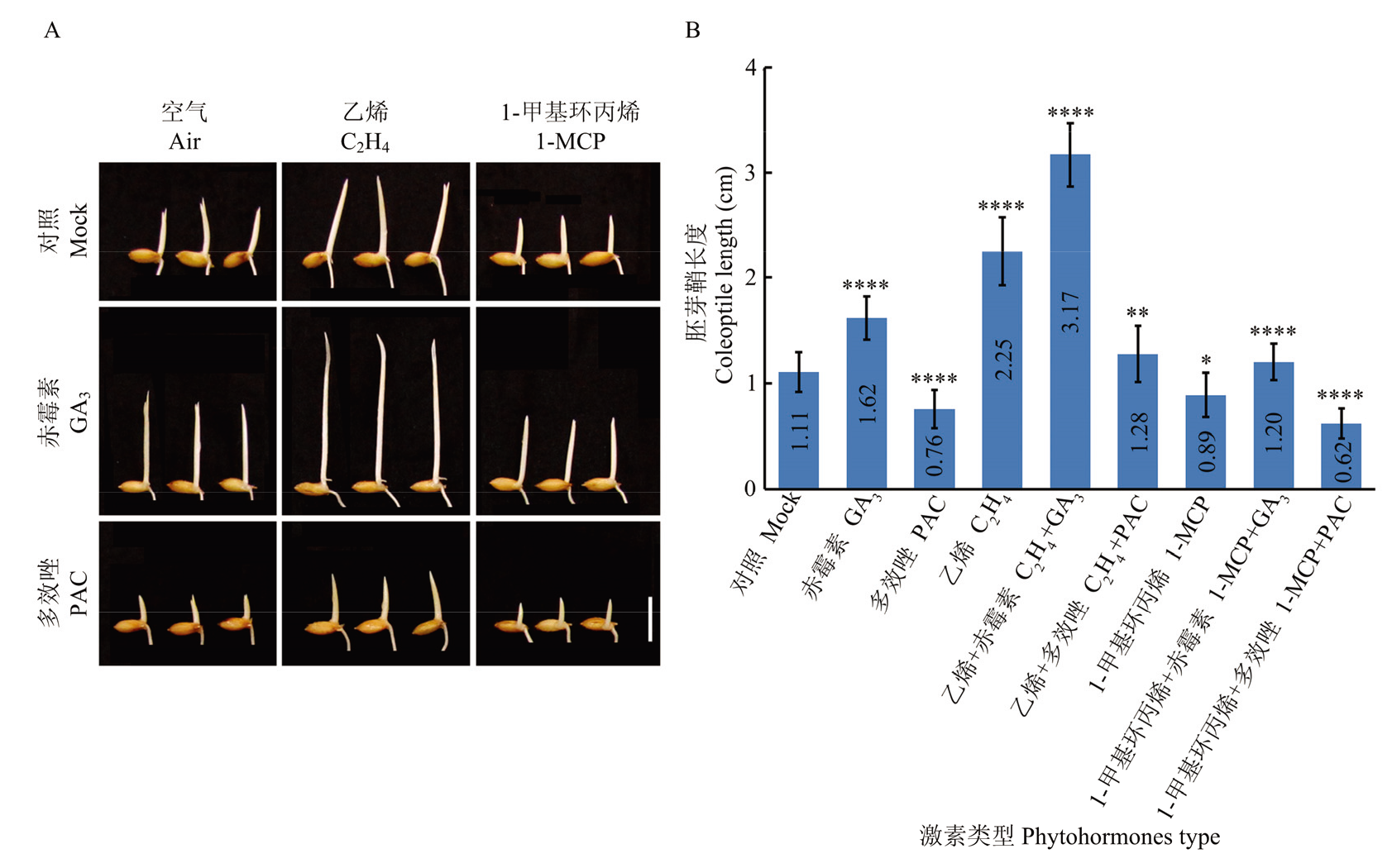
Coleoptile length of NIP treated with different hormone treatments A: Coleoptile phenotypes of NIP treated with different hormones; B: Statistical analysis of coleoptile length. All significance symbols in the figure represent comparisons between each treatment group and the Mock group. *, ** and **** indicate significant differences at P<0.05, P<0.005 and P<0.001, respectively. The same as below"

Fig. 2

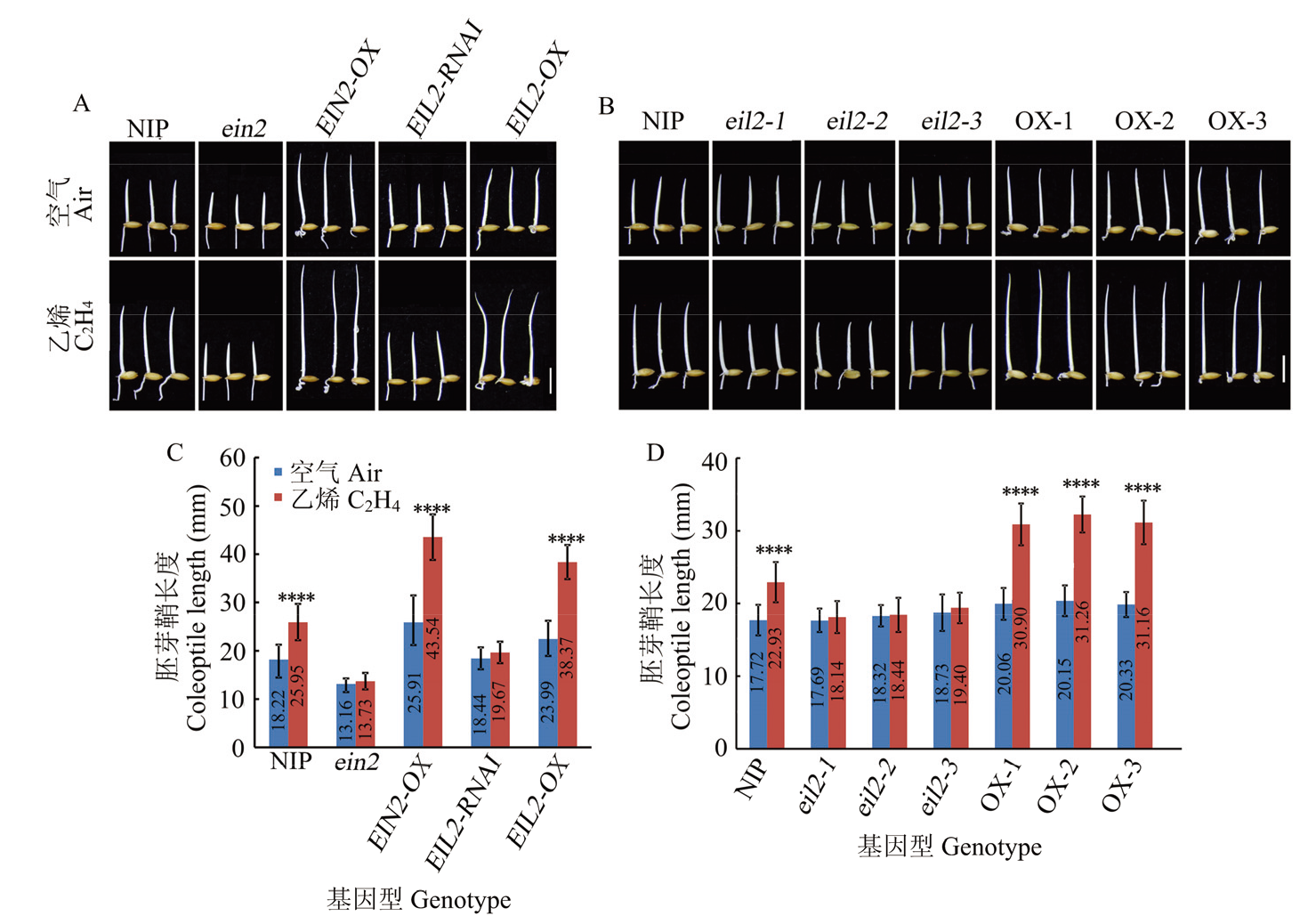
Ethylene promotes coleoptile elongation depending on ethylene signaling pathway A, B: Coleoptile phenotypes of EIN2 and EIL2 overexpression lines and mutants with or without ethylene treatment"

Fig. 3

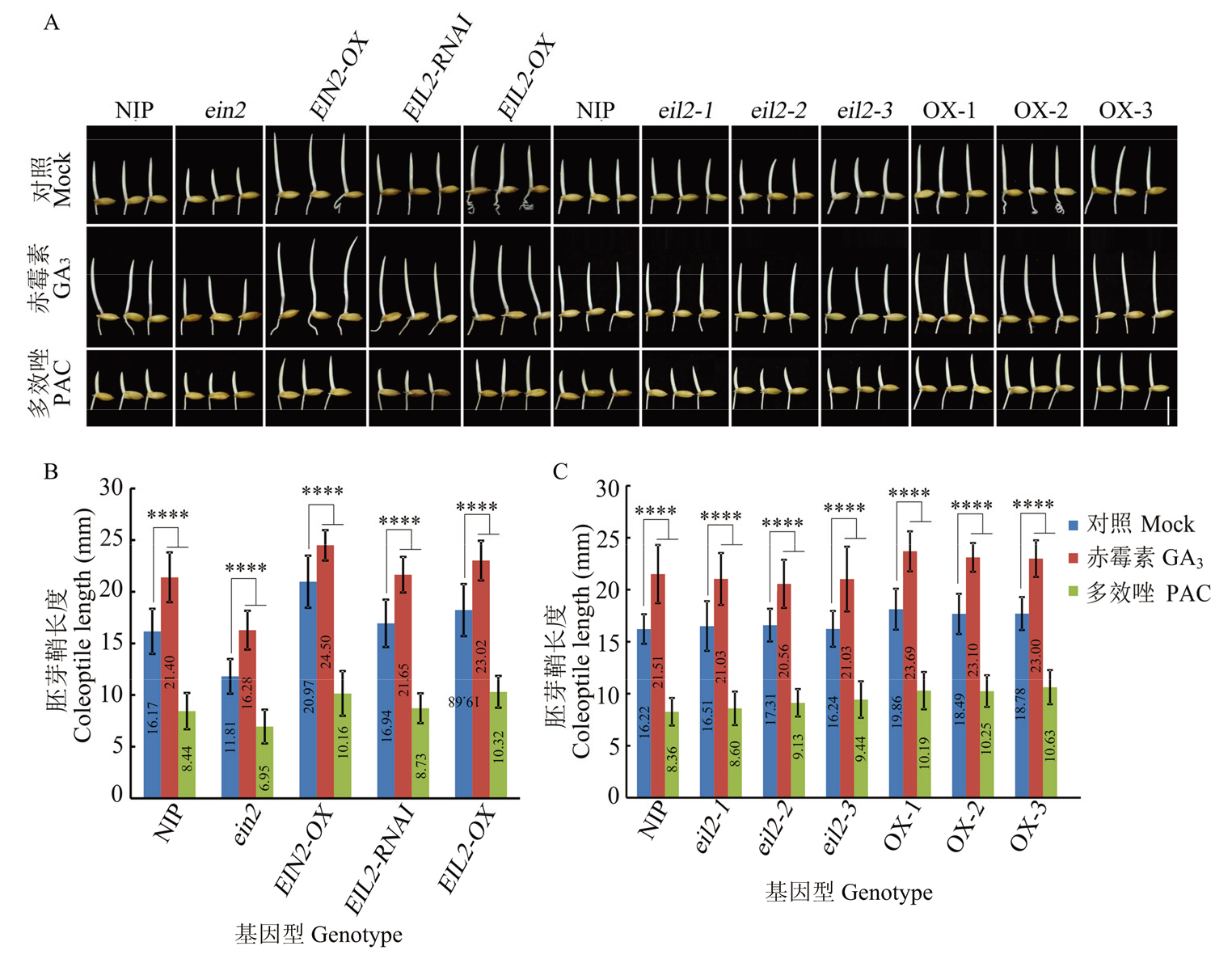
Coleoptile length of EIN2 and EIL2 overexpression lines and mutants under GA3 or PAC treatment"

Fig. 4

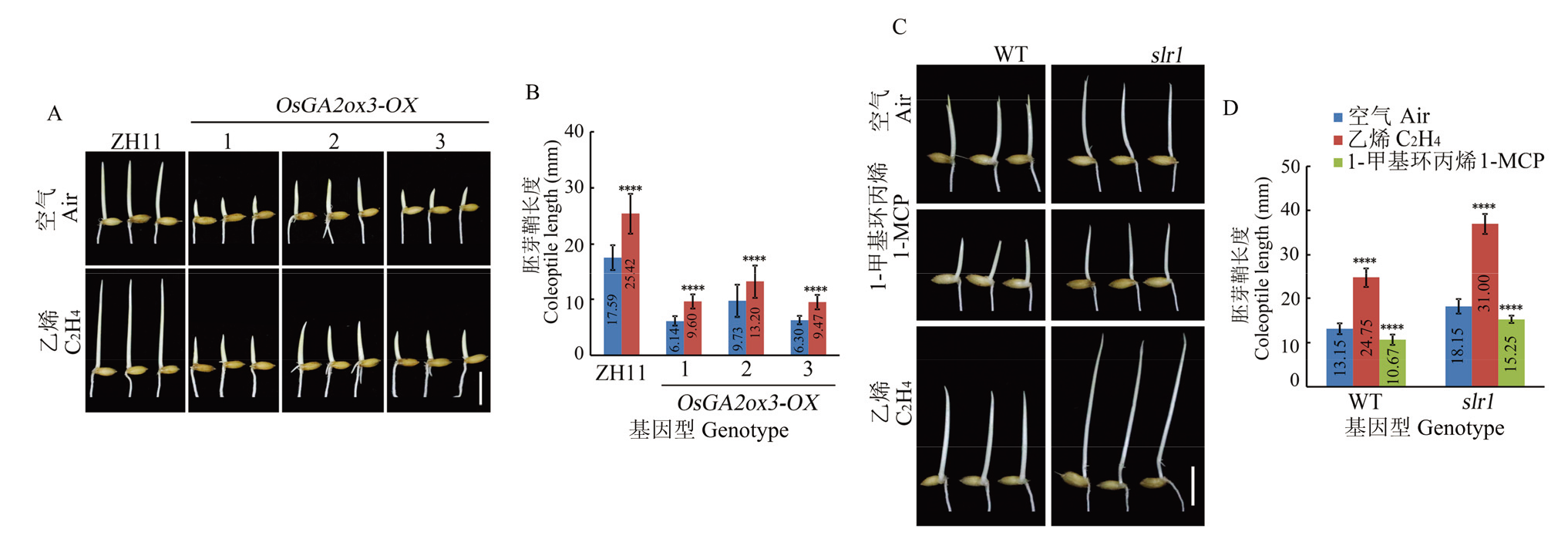
Coleoptile length under ethylene and 1-MCP treatment A: Coleoptile phenotypes of ZH11 and OsGA2ox3 overexpression plants treated with ethylene; B: Statistical analysis of coleoptile length in ZH11 and OsGA2ox3 overexpression plants; C: Coleoptile phenotypes of WT and slr1 mutants treated with ethylene and 1-MCP; D: Statistical analysis of coleoptile length in WT and slr1 mutants"

Fig. 5

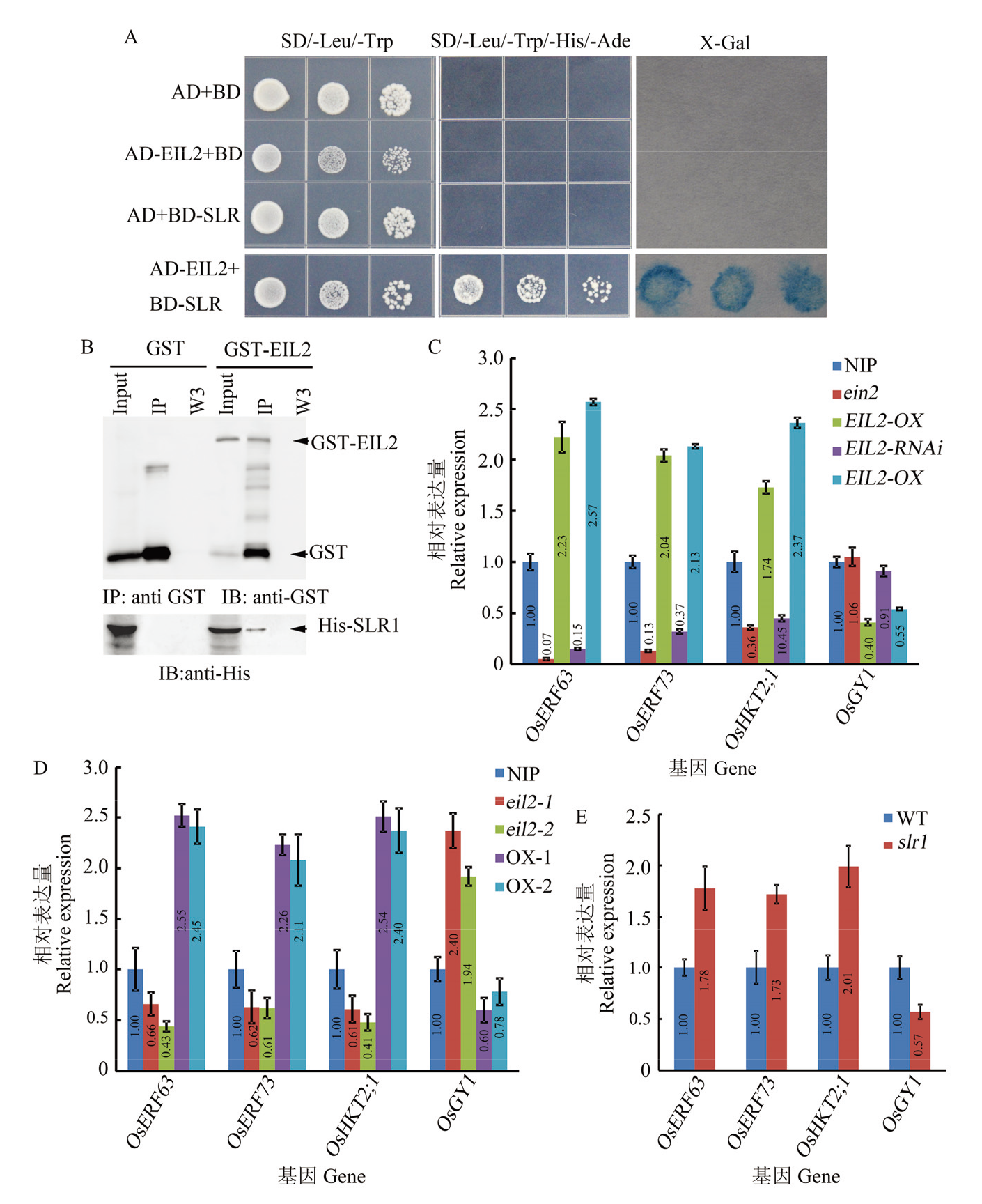
The interaction of EIL2 with SLR1 and the expression profiles of ethylene-responsive genes in different lines of EIN2, EIL2, and SLR1 A: Yeast two-hybrid assay confirms EIL2-SLR1 interaction; B: GST pull-down assay verifies their direct binding in vitro"

[1]
许辰慧. 玉米胚芽鞘生长的生理和蛋白质组学研究[D]. 郑州: 河南农业大学, 2018.
Xu C H. Physiological and protein omics study on the growth of maize coleoptile[D]. Zhengzhou: Henan Agricultural University, 2018. (in Chinese)
[2]
Qiao J Z, Quan R D, Wang J, Li Y X, Xiao D L, Zhao Z H, Huang R F, Qin H. OsEIL1 and OsEIL2, two master regulators of rice ethylene signaling, promote the expression of ROS scavenging genes to facilitate coleoptile elongation and seedling emergence from soil[J]. Plant Communications, 2024, 5(3): 100771.

doi: 10.1016/j.xplc.2023.100771
[3]
Rebetzke G J, Richards R A, Fettell N A, Long M, Condon A G, Forrester R I, Botwright T L. Genotypic increases in coleoptile length improves stand establishment, vigour and grain yield of deep-sown wheat[J]. Field Crops Research, 2007, 100(1): 10-23.

doi: 10.1016/j.fcr.2006.05.001
[4]
Yu S M, Lee H T, Lo S F, Ho T D. How does rice cope with too little oxygen during its early life?[J]. The New Phytologist, 2021, 229(1): 36-41.

doi: 10.1111/nph.v229.1
[5]
陈丽, 孙建昌. 水稻种子特性与直播栽培出苗状况的关系研究[J]. 东北农业科学, 2024, 49(5): 1-5.
Chen L, Sun J C. The relationship between seed characteristics and seedling emergence in direct seeding cultivation[J]. Journal of Northeast Agricultural Sciences, 2024, 49(5): 1-5. (in Chinese)
[6]
Lollato R, Pradella L O, Cuell A R, others. Coleoptile length of winter wheat varieties 2025: MF3612[R]. Kansas State University, 2025.
[7]
Hu Y M, Vandenbussche F, Van Der Straeten D. Regulation of seedling growth by ethylene and the ethylene-auxin crosstalk[J]. Planta, 2017, 245(3): 467-489.

doi: 10.1007/s00425-017-2651-6 pmid: 28188422
[8]
Yin C C, Zhao H, Ma B, Chen S Y, Zhang J S. Diverse roles of ethylene in regulating agronomic traits in rice[J]. Frontiers in Plant Science, 2017, 8: 1676.

doi: 10.3389/fpls.2017.01676
[9]
Qin H, He L N, Huang R F. The coordination of ethylene and other hormones in primary root development[J]. Frontiers in Plant Science, 2019, 10: 874.

doi: 10.3389/fpls.2019.00874 pmid: 31354757
[10]
Zhao H, Yin C C, Ma B, Chen S Y, Zhang J S. Ethylene signaling in rice and Arabidopsis: New regulators and mechanisms[J]. Journal of Integrative Plant Biology, 2021, 63(1): 102-125.

doi: 10.1111/jipb.v63.1
[11]
Ma B, He S J, Duan K X, Yin C C, Chen H, Yang C, Xiong Q, Song Q X, Lu X, Chen H W, Zhang W K, Lu T G, Chen S Y, Zhang J S. Identification of rice ethylene-response mutants and characterization of MHZ7/OsEIN2 in distinct ethylene response and yield trait regulation[J]. Molecular Plant, 2013, 6(6): 1830-1848.

doi: 10.1093/mp/sst087 pmid: 23718947
[12]
Ma N N, Wang Y, Qiu S C, Kang Z H, Che S G, Wang G X, Huang J L. Overexpression of OsEXPA8, a root-specific gene, improves rice growth and root system architecture by facilitating cell extension[J]. PLoS ONE, 2013, 8(10): e75997.

doi: 10.1371/journal.pone.0075997
[13]
Zhong S W, Shi H, Xue C, Wei N, Guo H W, Deng X W. Ethylene-orchestrated circuitry coordinates a seedling’s response to soil cover and etiolated growth[J]. Proceedings of the National Academy of Sciences of the United States of America, 2014, 111(11): 3913-3920.
[14]
Shi H, Liu R L, Xue C, Shen X, Wei N, Deng X W, Zhong S W. Seedlings transduce the depth and mechanical pressure of covering soil using COP1 and ethylene to regulate EBF1/EBF2 for soil emergence[J]. Current Biology, 2016, 26(2): 139-149.

doi: S0960-9822(15)01497-9 pmid: 26748855
[15]
Xiong Q, Ma B, Lu X, Huang Y H, He S J, Yang C, Yin C C, Zhao H, Zhou Y, Zhang W K, Wang W S, Li Z K, Chen S Y, Zhang J S. Ethylene-inhibited jasmonic acid biosynthesis promotes mesocotyl/ coleoptile elongation of etiolated rice seedlings[J]. The Plant Cell, 2017, 29(5): 1053-1072.

doi: 10.1105/tpc.16.00981 pmid: 28465411
[16]
Kefford N P. Auxin-gibberellin interaction in rice coleoptile elongation[J]. Plant Physiology, 1962, 37(3): 380-386.

doi: 10.1104/pp.37.3.380 pmid: 16655662
[17]
刘婧, 柳艳梅, TAKANO Makoto, 王宝山, 谢先芝. 光敏色素影响赤霉素调控的水稻幼苗光形态建成特征[J]. 科学通报, 2010, 55(24): 2384-2390.
Liu J, Liu Y M, Makoto T, Wang B S, Xie X Z. Involvement of phytochromes in gibberellin-mediated pnotomorphogenesis in rice seedlings[J]. Chinese Science Bulletin, 2010, 55(24): 2384-2390. (in Chinese)
[18]
唐娜, 姜莹, 何蓓如, 胡银岗. 赤霉素敏感性不同矮秆基因对小麦胚芽鞘长度和株高的效应[J]. 中国农业科学, 2009, 42(11): 3774-3784. DOI: 10.3864/j.issn.0578-1752.2009.11.003.
Tang N, Jiang Y, He B R, Hu Y G. Effects of dwarfing genes of rht-B1b, rht-D1b and Rht8 with different response to GA3 on coleoptile length and plant height of wheat[J]. Scientia Agricultura Sinica, 2009, 42(11): 3774-3784. DOI: 10.3864/j.issn.0578-1752.2009.11.003. (in Chinese)
[19]
Cleland R, McCombs N. Gibberellic acid: Action in barley endosperm does not require endogenous auxin[J]. Science, 1965, 150(3695): 497-498.

pmid: 5835785
[20]
费思恬, 侯鹰翔, 李兰, 张超. 水稻赤霉素信号负调控因子SLR1的生物学功能及其调控网络[J]. 生物技术通报, 2026, 42(1): 13-30.

doi: 10.13560/j.cnki.biotech.bull.1985.2025-0643
Fei S T, Hou Y X, Li L, Zhang C. Biological functions and regulatory network of SLR1, a negative regulator of gibberellin signaling in rice[J]. Biotechnology Bulletin, 2026, 42(1): 13-30. (in Chinese)
[21]
黄先忠, 蒋才富, 廖立力, 傅向东. 赤霉素作用机理的分子基础与调控模式研究进展[J]. 植物学通报, 2006, 23(5): 499-510.
Huang X Z, Jiang C F, Liao L L, Fu X D. Progress on molecular foundation of GA biosynthesis pathway and signaling[J]. Chinese Bulletin of Botany, 2006, 23(5): 499-510. (in Chinese)
[22]
Li X X, Xie Z Z, Qin T, Zhan C H, Jin L, Huang J L. The SLR 1- O s MADS 23- D14 module mediates the crosstalk between strigolactone and gibberellin signaling to control rice tillering[J]. New Phytologist, 2025, 246(5): 2137-2154.

doi: 10.1111/nph.v246.5
[23]
Dahal P, Wang Y, Hu J H, Park J, Forker K, Zhang Z L, Sharma K, Borgnia M J, Sun T P, Zhou P. Structural insights into proteolysis- dependent and-independent suppression of the master regulator DELLA by the gibberellin receptor[J]. Proceedings of the National Academy of Sciences of the United States of America, 2025, 122(32): e2511012122.
[24]
Ueguchi-Tanaka M, Nakajima M, Katoh E, Ohmiya H, Asano K, Saji S, Xiang H Y, Ashikari M, Kitano H, Yamaguchi I, Matsuoka M. Molecular interactions of a soluble gibberellin receptor, GID1, with a rice DELLA protein, SLR1, and gibberellin[J]. The Plant Cell, 2007, 19(7): 2140-2155.

doi: 10.1105/tpc.106.043729
[25]
Islam S, Park K, Xia J, Kwon E, Kim D Y. Structural insights into gibberellin-mediated DELLA protein degradation[J]. Molecular Plant, 2025, 18(7): 1210-1221.

doi: 10.1016/j.molp.2025.06.010
[26]
An F Y, Zhang X, Zhu Z Q, Ji Y S, He W R, Jiang Z Q, Li M Z, Guo H W. Coordinated regulation of apical hook development by gibberellins and ethylene in etiolated Arabidopsis seedlings[J]. Cell Research, 2012, 22(5): 915-927.

doi: 10.1038/cr.2012.29
[27]
Y S, Dong X L, Niu S P, Cao R J, Shao G N, Sheng Z H, Jiao G A, Xie L H, Hu S K, Tang S Q, Wei X J, Hu P S. An orchestrated ethylene-gibberellin signaling cascade contributes to mesocotyl elongation and emergence of rice direct seeding[J]. Journal of Integrative Plant Biology, 2024, 66(7): 1427-1439.

doi: 10.1111/jipb.v66.7
[28]
Qin H, Pandey B K, Li Y X, Huang G Q, Wang J, Quan R D, Zhou J H, Zhou Y, Miao Y C, Zhang D B, Bennett M J, Huang R F. Orchestration of ethylene and gibberellin signals determines primary root elongation in rice[J]. The Plant Cell, 2022, 34(4): 1273-1288.

doi: 10.1093/plcell/koac008 pmid: 35021223
[29]
Dong C Q, Cheng X L, Yuan M, Zhang Z, Wang Y Q, Liu J, Song L, Wang H R, Jiang Y J, Liu X Q, Wu J H, Yao Y Y, Ni Z F, Sun Q X, Chai L L, Liu J. Phase separation of Rht8-derived RNHL1 integrates ethylene and gibberellin signaling to regulate wheat internode elongation[J]. The Plant Cell, 2026, 38(4): koag081.
[30]
Mo W P, Tang W J, Du Y X, Jing Y J, Bu Q Y, Lin R C. PHYTOCHROME-INTERACTING FACTOR-LIKE14 and SLENDER RICE1 interaction controls seedling growth under salt stress[J]. Plant Physiology, 2020, 184(1): 506-517.

doi: 10.1104/pp.20.00024 pmid: 32581115
[31]
Wu H, He Q, He B, He S Y, Zeng L J, Yang L B, Zhang H, Wei Z R, Hu X M, Hu J, Zhang Y, Shang L G, Wang S K, Cui P, Xiong G S, Qian Q, Wang Q. Gibberellin signaling regulates lignin biosynthesis to modulate rice seed shattering[J]. The Plant Cell, 2023, 35(12): 4383-4404.

doi: 10.1093/plcell/koad244 pmid: 37738159
[32]
Garg R, Tyagi A K, Jain M. Microarray analysis reveals overlapping and specific transcriptional responses to different plant hormones in rice[J]. Plant Signaling & Behavior, 2012, 7(8): 951-956.
[33]
Hirano K, Asano K, Tsuji H, Kawamura M, Mori H, Kitano H, Ueguchi-Tanaka M, Matsuoka M. Characterization of the molecular mechanism underlying gibberellin perception complex formation in rice[J]. The Plant Cell, 2010, 22(8): 2680-2696.

doi: 10.1105/tpc.110.075549 pmid: 20716699
[1] BAI JingJing, ZHANG YuChen, NI ZiJie, GAO JiaYong, LIU WeiYang, GAI DongSheng, WANG YuHang, HE JiaQing, ZHANG Qiang, SHAO XiWen, WU Ying, GENG YanQiu, GUO LiYing. Effects of Different Irrigation Volumes on Lodging Resistance Characteristics and Yield of Rice in Northeast China [J]. Scientia Agricultura Sinica, 2026, 59(9): 1848-1868.
[2] YAO ZhiZhen, YANG ZiHong, ZHANG YingNan, YIN ChangBin. Green Total Factor Productivity Growth of Rice in China: Spatiotemporal and Evolutionary Patterns [J]. Scientia Agricultura Sinica, 2026, 59(9): 1937-1954.
[3] PENG TingShen, LU JiuYan, WU MeiLin, YAN YuXin, LIU HongZhou, NAN WenBin, QIN XiaoJian, LI Ming, GONG JunYi, LIANG YongShu. QTL Analysis of Yield-Related Traits in Both Huangnuo2# and Changbai7# of Perennial Chinese Rice [J]. Scientia Agricultura Sinica, 2026, 59(7): 1361-1379.
[4] CUI JieHao, ZHANG Meng, WANG Qin, YU JiaYan, LIN Kun, LI ShangZe, LAN Heng, GENG YanQiu, ZHANG Qiang, GUO LiYing, SHAO XiWen. Evaluation of Lodging Resistance and Its Physiological Mechanisms in Japonica Rice Resources [J]. Scientia Agricultura Sinica, 2026, 59(7): 1420-1438.
[5] YUAN HaoLiang, NIE Jun, LI Peng, LU YanHong, LIAO YuLin, XU ChangXu, LI ZhongYi, CAO WeiDong, ZHANG JiangLin. Effects of Co-Utilization of Chinese Milk Vetch and Rice Straw on Soil Phosphorus Composition and Phosphorus Activation of Paddy Field in Southern China [J]. Scientia Agricultura Sinica, 2026, 59(7): 1480-1491.
[6] XU YangHaoJun, CHEN LiMing, YANG ShiQi, TANG YiFan, TAN XueMing, ZENG YongJun, PAN XiaoHua, ZENG YanHua. Effects of Long-Term Different Straw Returning Methods on Soil Organic Carbon, Nutrients and Aggregate Formation in Different Soil Layers of Double Cropping Rice Field [J]. Scientia Agricultura Sinica, 2026, 59(7): 1492-1506.
[7] LI XingYu, HUANG Rong, XIAN YiMing, TIAN JiaoJiao, MA XiaoJin, YANG QiaoXi, LI Bing, WANG ChangQuan. Characteristics of Organic Carbon Fractions and Carbon Dioxide Emissions of Different Size Aggregates in Rice Field Soils in Response to Long-Term Fertilization [J]. Scientia Agricultura Sinica, 2026, 59(6): 1255-1271.
[8] MA ZhaoHui, QUAN ChengZhe, CHENG HaiTao, YANG KanJie, LI XinRui, LÜ WenYan. The Breeding Goals and Strategies of Northeast Japonica Rice Under the Background of Zhongke Fa No.5 [J]. Scientia Agricultura Sinica, 2026, 59(5): 927-936.
[9] ZHANG WeiJian, YAN ShengJi, SHANG ZiYin, TANG ZhiWei, WU LiuGe, LI JiaRui, CHEN HaoTian, DENG AiXing, ZHANG Jun, ZHANG Xin, ZHENG ChengYan, SONG ZhenWei. Methane Emissions from Paddy Fields: Not Entirely Attributable to Rice Cultivation [J]. Scientia Agricultura Sinica, 2026, 59(4): 824-833.
[10] CHEN Min, JIAO ZiLan, QIAO ChengBin, XU Hao, ZHANG Bi, MA DongHua, KONG WeiRu, WANG JingWen, SONG JiaWei, LUO ChengKe, LI PeiFu, TIAN Lei. Morpho-Physiological Responses and Adaptive Strategies of Rice Germplasm Accessions from Different Subspecies Under Salt Stress [J]. Scientia Agricultura Sinica, 2026, 59(4): 705-722.
[11] GUO FuCheng, TANG HaiJiang, HAO XinYi, MA GuoLin, YANG JiuJu, HUANG LinFeng, TIAN Lei, WANG Bin, LUO ChengKe. Effects of Different Irrigation Methods on Water-Salt Transport, Rice Yield, and Water Use Efficiency in Saline Soil in Ningxia [J]. Scientia Agricultura Sinica, 2026, 59(4): 750-764.
[12] LUO Wei, YU Hong, YUAN LiXin, WANG LingLing, ZHAO JinPeng, YIN Wei, WANG MingTian, WANG RuLin. Change of Geographic Distributions of Ratoon Rice in Sichuan- Chongqing Under Global Climate Change [J]. Scientia Agricultura Sinica, 2026, 59(4): 765-780.
[13] ZHU Shu, GUO ZhiPeng, SUN Ying. Functional Analysis of Rice Target of Rapamycin OsTOR in Regulating Root Elongation [J]. Scientia Agricultura Sinica, 2026, 59(3): 475-485.
[14] LÜ WenYan, CHENG HaiTao, MA ZhaoHui, TIAN ShuHua. Discussion on Hybridization Breeding Technology and Strategy of Rice in the New Era of Breeding [J]. Scientia Agricultura Sinica, 2026, 59(2): 233-238.
[15] LIAO TingLu, SHI YaFei, XIAO DongHao, SHE YangMengFei, GUO FuCheng, YANG JiuJu, TANG HaiJiang, LUO ChengKe. The Effect of Exogenous Nitroprusside on Sugar Metabolism in Rice Seedlings Under Alkaline Stress [J]. Scientia Agricultura Sinica, 2026, 59(2): 265-277.
Viewed
Full text


Abstract

Cited

  Shared   
  Discussed   
No Suggested Reading articles found!