Scientia Agricultura Sinica ›› 2026, Vol. 59 ›› Issue (21): 4802-4814.doi: 10.3864/j.issn.0578-1752.2026.21.007

• PLANT PROTECTION • Previous Articles     Next Articles

Analysis of the Fungal Community Composition in Maize Kernels and the Toxigenic Capacity of Dominant Fusarium Species in China

CHENG MingXin1(), CHEN WenChan1(), WEI KaiWei1, ZHANG Sai1, ZUO YuJie1, SU QianFu2, LIU Ning1, CAO ZhiYan1(), DONG JinGao1()   

  1. 1 College of Plant Protection, Hebei Agricultural University/Key Laboratory of Hebei Province for Plant Physiology and Molecular Pathology, Baoding 071000, Hebei
    2 Institute of Plant Protection, Jilin Academy of Agricultural Sciences (Northeast Innovation Center for Agricultural Science and Technology), Gongzhuling 136100, Jilin
  • Received:2026-04-25 Accepted:2026-05-16 Online:2026-11-01 Published:2026-11-06
  • Contact: CAO ZhiYan, DONG JinGao

Abstract:

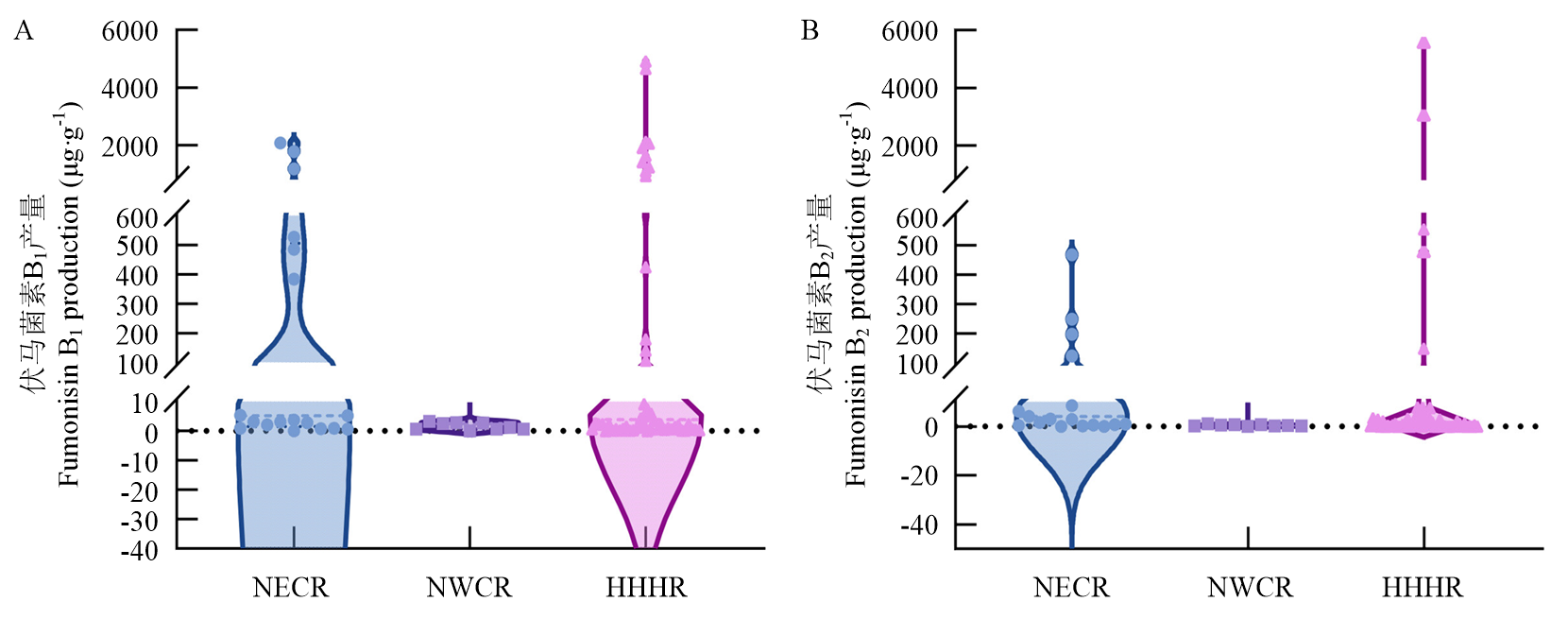
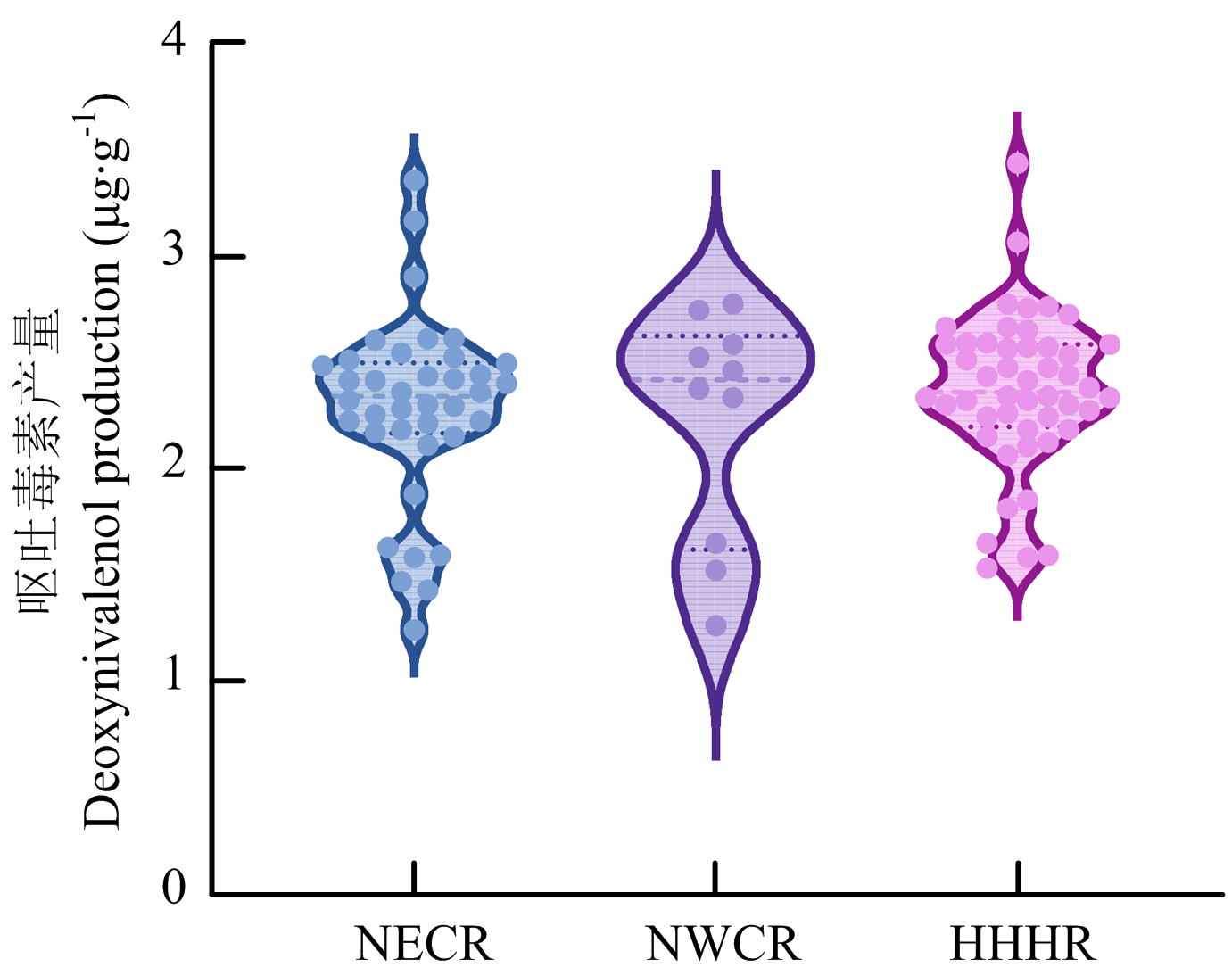
【Objective】This study aimed to clarify the composition, regional distribution characteristics, and annual succession patterns of pathogens in maize kernels from major maize-producing areas in China, systematically analyze the toxigenic capacity of dominant pathogens, and to provide scientific basis and data support for the control of mycotoxin contamination and the quality and safety assurance of maize during storage. 【Method】From 2022 to 2025, maize kernel samples were continuously collected from 41 regions across 14 provinces (autonomous regions) in China for four consecutive years, and pathogens were isolated and purified. Morphological and molecular biological methods were used to identify the contaminant fungi. The pathogen species and isolation frequency were counted to analyze their distribution characteristics and dynamic changes. The toxigenic capacity of Fusarium verticillioides and F. graminearum was determined, and the differences in toxigenic capacity of the two species among different maize-producing areas were analyzed and compared. 【Result】A total of 5 885 fungal strains were isolated, predominantly including Fusarium spp., Penicillium spp., Aspergillus niger, Trichoderma spp., A. flavus, and other fungi. Their corresponding isolation frequencies were 67.82%, 17.72%, 7.31%, 2.97%, 2.70%, and 1.48%, respectively. Among them, Fusarium spp. had the highest isolation frequency. Within the genus Fusarium, F. verticillioides was the predominant species. A total of 3 061 strains were isolated during the four-year investigation, accounting for 52.01% of the total strains. This was followed by F. graminearum, F. proliferatum, and F. oxysporum, with isolation frequencies of 11.03%, 3.14%, and 1.58%, respectively. F. culmorum was only detected in 2022 (3 strains). Among molds, Penicillium spp. and A. niger were the main contaminants, with isolation frequencies of 17.72% and 7.31%, respectively. The toxigenic capacity of the isolated F. verticillioides and F. graminearum were determined. The results showed that the FB1 production of F. verticillioides ranged from 0.07 to 4 916.92 μg·g-1, and FB2 ranged from 0.02 to 5 573.14 μg·g-1. Significant differences in toxigenic capacity were observed among strains from different production areas. Strains isolated from the Huang-Huai-Hai maize-producing area exhibited higher toxigenic capacity, with the maximum FB1 and FB2 production levels reaching 4 916.92 and 5 573.14 μg·g-1, respectively. The Northeast maize-producing area ranked second, with maximum FB1 and FB2 production levels of 2 070.29 and 468.51 μg·g-1. By contrast, the Northwest maize-producing area showed overall lower toxigenic capacity, with a concentrated distribution and a smaller proportion of high-toxin-producing strains; the maximum production levels of FB1 and FB2 were only 20.91 and 30.76 μg·g-1, respectively. The DON production of F. graminearum ranged from 1.24 to 3.43 μg·g-1. Overall the three major maize-producing areas (Northeast, Northwest, and Huang-Huai-Hai) exhibited similar toxigenic distribution patterns with only minor variations, and no significant regional differences were observed. 【Conclusion】F. verticillioides is the primary contaminant of maize kernels in China, with its population structure varying across regions and years. The toxigenic capacity (FB) of F. verticillioides varies significantly among different maize-producing areas, and high-toxin-producing strains are predominantly distributed in the Huang-Huai-Hai and Northeast maize-producing areas.

Key words: maize kernel, microbial community, Fusarium, mycotoxin, toxigenic capacity

Table 1

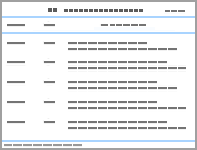
Specific primers for identification of Fusarium spp."

镰孢菌种Fusarium species 引物名称Primer name 序列Sequence (5′-3')
禾谷镰孢F. graminearum Fg16NF ACAGATGACAAGATTCAGGCACA
Fg16NR TTCTTTGACATCTGTTCAACCCA
尖孢镰孢F. oxysporum FoF1 ACATACCACTTGTTGCCTCG
FoR1 CGCCAATCAATTTGAGGAACG
拟轮枝镰孢F. verticillioides VER1 CTTCCTGCGATGTTTCTCC
VER2 AATTGGCCATTGGTATTATATATCTA
层出镰孢F. proliferatum PRO1 CTTTCCGCCAAGTTTCTTC
PRO2 TGTCAGTAACTCGACGTTGTTG
亚黏团镰孢F. subglutinans SUB1 CTGTCGCTAACCTCTTTATCCA
SUB2 CAGTATGGACGTTGGTATTATATCTAA
黄色镰孢F. culmorum FcOlF ATGGTGAACTCGTCCTGGC
FcOlR CCCTTCTTACGCCAATCTCG

Table 2

Species and abundance of contamination fungi in maize kernels from 2022 to 2025"

真菌种类Fungi species 2022 2023 2024 2025 总计Total
拟轮枝镰孢F. verticillioides 319 763 837 1142 3061
禾谷镰孢F. graminearum 89 175 170 215 649
层出镰孢F. proliferatum 52 69 51 13 185
尖孢镰孢F. oxysporum 22 29 21 21 93
黄色镰孢F. culmorum 3 — — — 3
青霉Penicillium 113 134 573 223 1043
黑曲霉A. niger 94 95 214 27 430
木霉Trichoderma 38 35 97 5 175
黄曲霉A. flavus — — 129 30 159
其他真菌Other fungi — — 70 17 87
总计Total 730 1300 2162 1693 5885

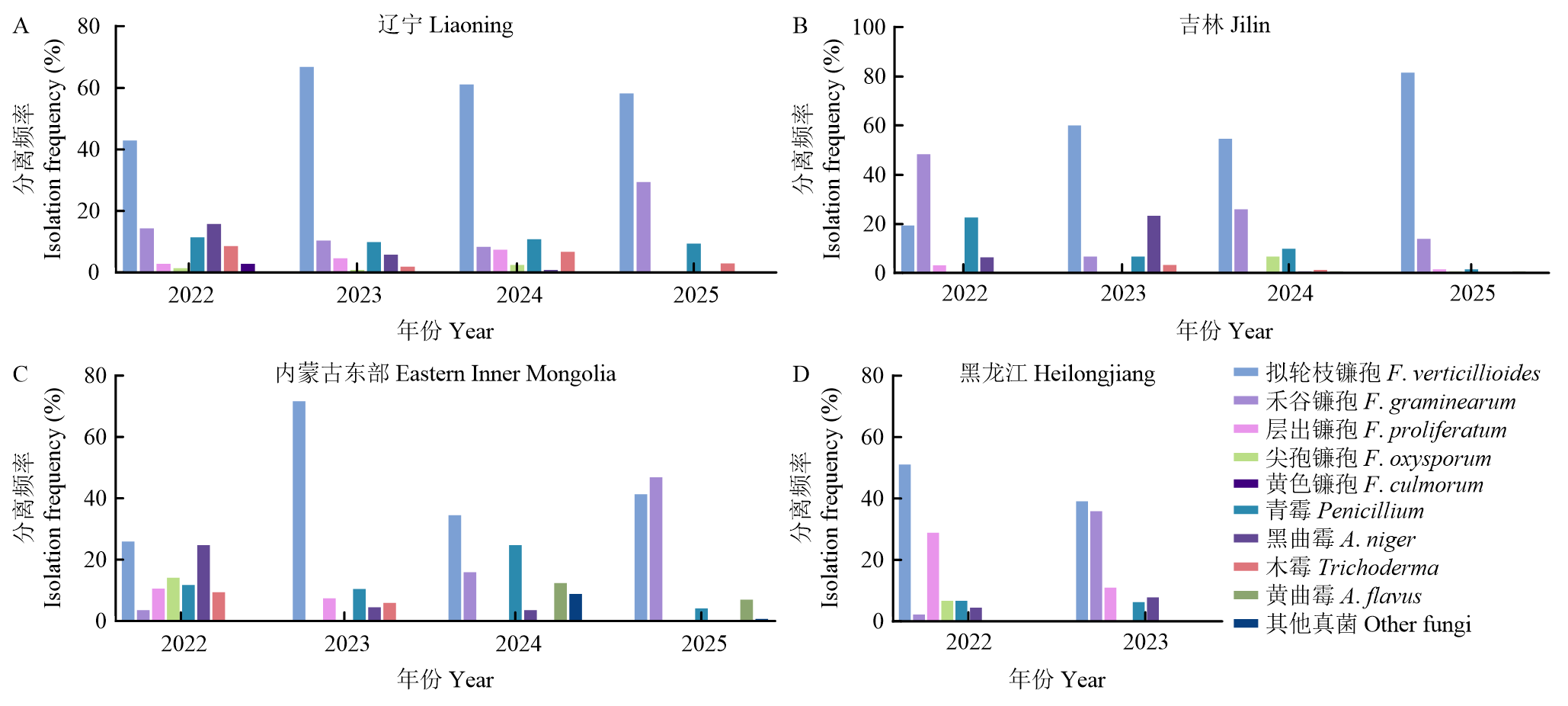
Fig. 1

Isolation frequency of maize kernels contamination fungi in Northeast maize-producing area"

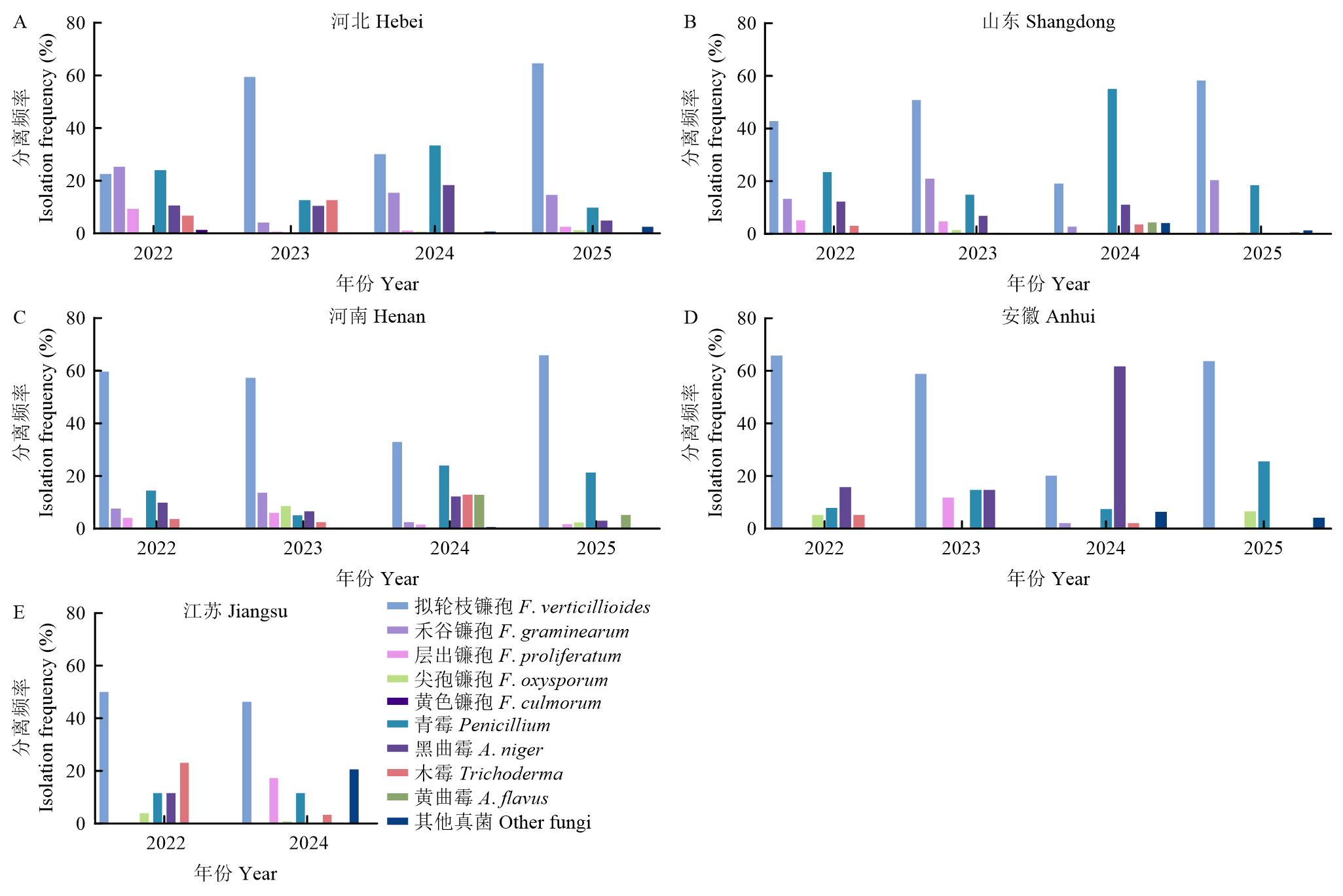
Fig. 2

Isolation frequency of maize kernels contamination fungi in Huang-Huai-Hai maize-producing area"

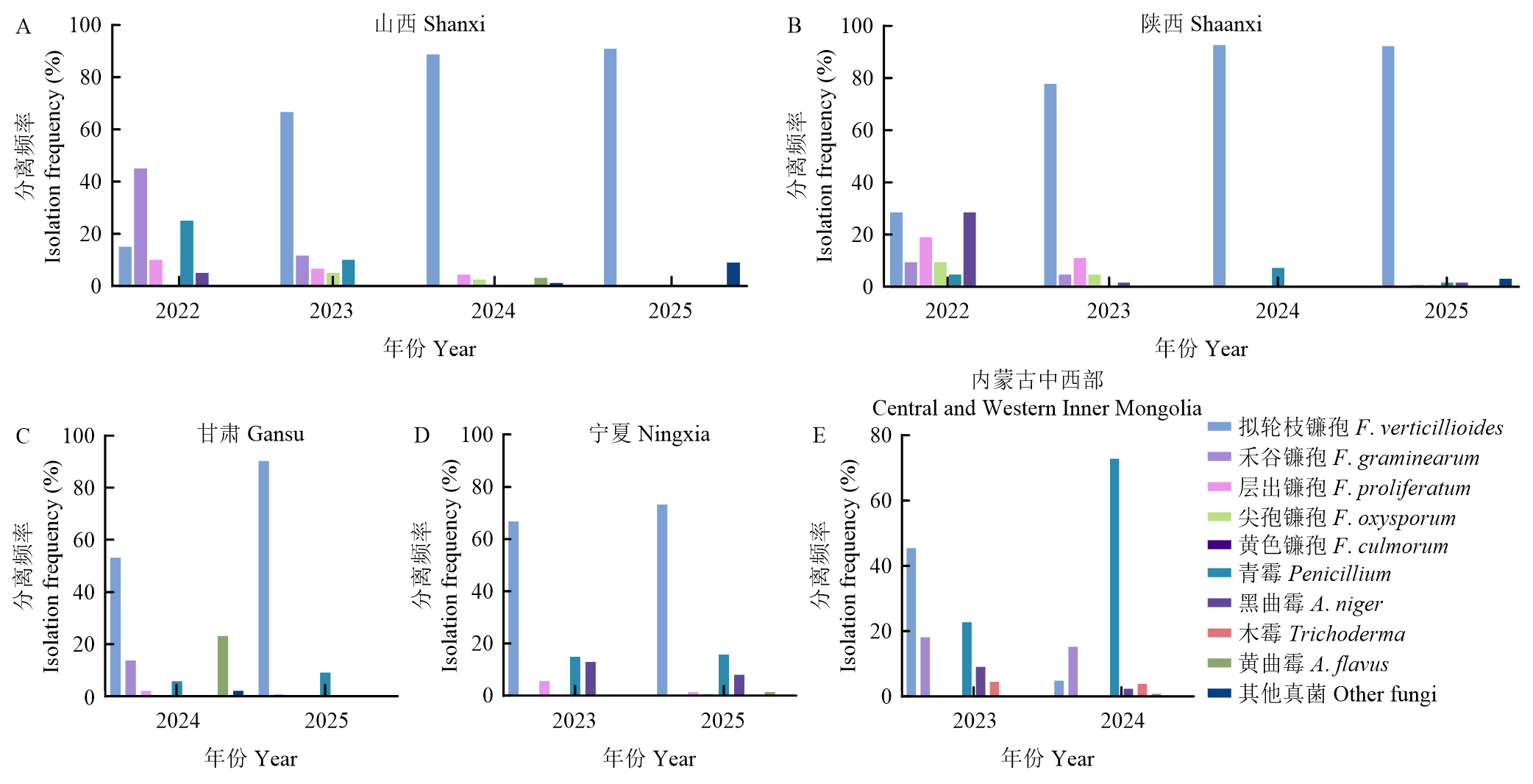
Fig. 3

Isolation frequency of maize kernels contamination fungi in Northwest maize-producing area"

Fig. 4

Toxigenic capacity of F. verticillioides for fumonisin production in different maize-producing areas The same as Fig. 5"

Fig. 5

Toxigenic capacity of F. graminearum producing DON toxin in different maize producing areas"

[1]
张天宇. 517份玉米种质籽粒容重鉴定及全基因组关联分析(GWAS)[D]. 杭州: 浙江农林大学, 2023.
Zhang T Y. Determination and genome-wide association analysis for kernel test weight of 517 maize germplasms[D]. Hangzhou: Zhejiang A&F University, 2023. (in Chinese)
[2]
朱利红, 李帅, 段灿星. 玉米种质资源对6种镰孢穗腐病的抗性鉴定与评价[C]// 中国植物病理学会. 中国植物病理学会2023年学术年会论文集. 北京: 中国农业科学技术出版社, 2023: 501.
Zhu L H, Li S, Duan C X. Identification and evaluation of maize germplasm resources for resistance to six kinds of Fusarium ear rot[C]// Chinese Society for Plant Pathology. Proceedings of the 2023 Annual Conference of the Chinese Society for Plant Pathology. Beijing: China Agricultural Science and Technology Press, 2023: 501. (in Chinese)
[3]
孙华, 张海剑, 马红霞, 石洁, 郭宁, 陈丹, 李坡. 春玉米区穗腐病病原菌组成、分布及禾谷镰孢复合种的鉴定[J]. 植物病理学报, 2018, 48(1): 8-15.

doi: 10.13926/j.cnki.apps.000161
Sun H, Zhang H J, Ma H X, Shi J, Guo N, Chen D, Li P. Composition and distribution of pathogens causing ear rot in spring maize region and identification of Fusarium graminearum species complex[J]. Acta Phytopathologica Sinica, 2018, 48(1): 8-15. (in Chinese)
[4]
席靖豪. 黄淮海夏玉米穗腐病病原多样性分析及玉米新品种抗病性鉴定[D]. 郑州: 河南农业大学, 2018.
Xi J H. Pathogen diversity analysis of summer maize ear rot in Huang-Huai-Hai Region and resistance identification of new maize varieties[D]. Zhengzhou: Henan Agricultural University, 2018. (in Chinese)
[5]
杜青, 唐照磊, 李石初, 上官玲玲, 李华娇, 段灿星. 广西玉米穗腐病致病镰孢种群构成与毒素化学型分析[J]. 中国农业科学, 2019, 52(11): 1895-1907. DOI: 10.3864/j.issn.0578-1752.2019.11.005.
Du Q, Tang Z L, Li S C, Shangguan L L, Li H J, Duan C X. Composition of Fusarium species causing maize ear rot and analysis of toxigenic chemotype in Guangxi[J]. Scientia Agricultura Sinica, 2019, 52(11): 1895-1907. DOI: 10.3864/j.issn.0578-1752.2019.11.005. (in Chinese)
[6]
Hunde T D. Ear rot diseases in maize (Zea mays L.), associated mycotoxins, and management practices in Ethiopia: A review[J]. Agrosystems, Geosciences & Environment, 2025, 8(2): e70136.
[7]
Price J L, Visagie C M, Meyer H, Yilmaz N. Fungal species and mycotoxins associated with maize ear rots collected from the Eastern Cape in South Africa[J]. Toxins, 2024, 16(2): 95.

doi: 10.3390/toxins16020095
[8]
Katati B, Schoenmakers P, Njapau H, Kachapulula P W, Zwaan B J, van Diepeningen A D, Schoustra S E. Preharvest maize fungal microbiome and mycotoxin contamination: Case of Zambia’s different rainfall patterns[J]. Applied and Environmental Microbiology, 2023, 89(6): e00078-23.
[9]
Brito V D, Achimón F, Zunino M P, Zygadlo J A, Pizzolitto R P. Fungal diversity and mycotoxins detected in maize stored in silo-bags: A review[J]. Journal of the Science of Food and Agriculture, 2022, 102(7): 2640-2650.

doi: 10.1002/jsfa.v102.7
[10]
Dinolfo M I, Martínez M, Castañares E, Arata A F. Fusarium in maize during harvest and storage: A review of species involved, mycotoxins, and management strategies to reduce contamination[J]. European Journal of Plant Pathology, 2022, 164(2): 151-166.

doi: 10.1007/s10658-022-02548-0
[11]
Arata A F, Martínez M, Pesquero N V, Cristos D, Dinolfo M I. Contamination of Fusarium spp. and mycotoxins at different ear physiological stages of maize in Argentina[J]. International Journal of Food Microbiology, 2024, 410: 110493.

doi: 10.1016/j.ijfoodmicro.2023.110493
[12]
马盼盼, 韩占府, 高岭巍, 郭红甫, 岳振国, 刘晓帆, 姬社林, 张力, 李婧. 播期、 年份及杂交种对玉米籽粒镰刀菌和伏马毒素污染及主要农艺性状的影响[J]. 玉米科学, 2025, 33(2): 88-93.
Ma P P, Han Z F, Gao L W, Guo H F, Yue Z G, Liu X F, Ji S L, Zhang L, Li J. Effects of sowing date, year and hybrid on Fusarium and fumonisin contamination and main agronomic traits of maize kernels[J]. Journal of Maize Sciences, 2025, 33(2): 88-93. (in Chinese)
[13]
Wu Q, Kuča K, Humpf H U, Klímová B, Cramer B. Fate of deoxynivalenol and deoxynivalenol-3-glucoside during cereal-based thermal food processing: A review study[J]. Mycotoxin Research, 2017, 33(1): 79-91.

doi: 10.1007/s12550-016-0263-9 pmid: 27866369
[14]
夏玉生, 郭成, 温胜慧, 孙素丽, 朱振东, 段灿星. 玉米种质抗拟轮枝镰孢与禾谷镰孢穗腐病鉴定及抗性多样性分析[J]. 植物遗传资源学报, 2022, 23(1): 61-71.

doi: 10.13430/j.cnki.jpgr.20210727001
Xia Y S, Guo C, Wen S H, Sun S L, Zhu Z D, Duan C X. Identification of maize germplasm resistance to ear rot caused by Fusarium verticillioides and Fusarium graminearum and analysis of resistance diversity[J]. Journal of Plant Genetic Resources, 2022, 23(1): 61-71. (in Chinese)
[15]
Bottalico A. Fusarium diseases of cereals: Species complex and related mycotoxin profiles, in Europe[J]. Journal of Plant Pathology, 1998, 80(2): 85-103.
[16]
Covarelli L, Stifano S, Beccari G, Raggi L, Lattanzio M T, Albertini E. Characterization of Fusarium verticillioides strains isolated from maize in Italy: Fumonisin production, pathogenicity and genetic variability[J]. Food Microbiology, 2012, 31(1): 17-24.

doi: 10.1016/j.fm.2012.02.002 pmid: 22475938
[17]
Boutigny A L, Ward T J, Ballois N, Iancu G, Ioss R. Diversity of the Fusarium graminearum species complex on French cereals[J]. European Journal of Plant Pathology, 2014, 138(1): 133-148.

doi: 10.1007/s10658-013-0312-6
[18]
Scauflaire J, Mahieu O, Louvieaux J, Foucart G, Renard F, Munaut F. Biodiversity of Fusarium species in ears and stalks of maize plants in Belgium[J]. European Journal of Plant Pathology, 2011, 131(1): 59-66.

doi: 10.1007/s10658-011-9787-1
[19]
Dorn B, Forrer H R, Schürch S, Vogelgsang S. Fusarium species complex on maize in Switzerland: Occurrence, prevalence, impact and mycotoxins in commercial hybrids under natural infection[J]. European Journal of Plant Pathology, 2009, 125(1): 51-61.

doi: 10.1007/s10658-009-9457-8
[20]
Aguín O, Cao A, Pintos C, Santiago R, Mansilla P, Butrón A. Occurrence of Fusarium species in maize kernels grown in northwestern Spain[J]. Plant Pathology, 2014, 63(4): 946-951.

doi: 10.1111/ppa.2014.63.issue-4
[21]
Zila C T, Ogut F, Romay M C, Gardner C A, Buckler E S, Holland J B. Genome-wide association study of Fusarium ear rot disease in the USA maize inbred line collection[J]. BMC Plant Biology, 2014, 14(1): 372.

doi: 10.1186/s12870-014-0372-6
[22]
Schaafsma A W, Limay-Rios V, Tamburic-Illincic L. Mycotoxins and Fusarium species associated with maize ear rot in Ontario, Canada[J]. Cereal Research Communications, 2008, 36: 525-527.
[23]
Silva J J, Viaro H P, Ferranti L S, Oliveira A L M, Ferreira J M, Ruas C F, Ono E Y, Fungaro M H. Genetic structure of Fusarium verticillioides populations and occurrence of fumonisins in maize grown in Southern Brazil[J]. Crop Protection, 2017, 99: 160-167.

doi: 10.1016/j.cropro.2017.05.020
[24]
Small I M, Flett B C, Marasas W F O, McLeod A, Stander M A, Viljoen A. Resistance in maize inbred lines to Fusarium verticillioides and fumonisin accumulation in South Africa[J]. Plant Disease, 2012, 96(6): 881-888.

doi: 10.1094/PDIS-08-11-0695 pmid: 30727350
[25]
Tsehaye H, Brurberg M B, Sundheim L, Assefa D, Tronsmo A, Tronsmo A M. Natural occurrence of Fusarium species and fumonisin on maize grains in Ethiopia[J]. European Journal of Plant Pathology, 2017, 147(1): 141-155.

doi: 10.1007/s10658-016-0987-6
[26]
Desjardins A E, Manandhar G, Plattner R D, Maragos C M, Shrestha K, McCormick S P. Occurrence of Fusarium species and mycotoxins in Nepalese maize and wheat and the effect of traditional processing methods on mycotoxin levels[J]. Journal of Agricultural and Food Chemistry, 2000, 48(4): 1377-1383.

pmid: 10775401
[27]
Navale V D, Sawant A M, Vamkudoth K R. Genetic diversity of toxigenic Fusarium verticillioides associated with maize grains, India[J]. Genetics and Molecular Biology, 2023, 46(1): e20220073.

doi: 10.1590/1678-4685-gmb-2022-0073
[28]
程璐, 陈家斌, 张艺璇, 杨丹丹, 谭静. 两种优势病原菌玉米穗腐病的研究比较[J]. 云南大学学报(自然科学版), 2022, 44(3): 647-654.
Cheng L, Chen J B, Zhang Y X, Yang D D, Tan J. Comparative study on maize ear rot caused by two dominant pathogens[J]. Journal of Yunnan University (Natural Sciences Edition), 2022, 44(3): 647-654. (in Chinese)
[29]
李晓鸯, 马周杰, 盖晓彤, 汪浩德, 姚远, 孙艳秋, 高增贵. 东北地区玉米穗腐镰孢菌种类鉴定及拟轮枝镰孢菌遗传多样性[J]. 沈阳农业大学学报, 2018, 49(2): 136-142.
Li X Y, Ma Z J, Gai X T, Wang H D, Yao Y, Sun Y Q, Gao Z G. Identification of Fusarium species causing maize ear rot and genetic diversity of Fusarium verticillioides in Northeast China[J]. Journal of Shenyang Agricultural University, 2018, 49(2): 136-142. (in Chinese)
[30]
段灿星, 王晓鸣, 宋凤景, 孙素丽, 周丹妮, 朱振东. 玉米抗穗腐病研究进展[J]. 中国农业科学, 2015, 48(11): 2152-2164. DOI: 10.3864/j.issn.0578-1752.2015.11.007.
Duan C X, Wang X M, Song F J, Sun S L, Zhou D N, Zhu Z D. Advances in research on maize resistance to ear rot[J]. Scientia Agricultura Sinica, 2015, 48(11): 2152-2164. DOI: 10.3864/j.issn.0578-1752.2015.11.007. (in Chinese)
[31]
陈聪. 东北三省谷物类镰孢菌的分离鉴定与ZEN毒素检测[D]. 哈尔滨: 东北农业大学, 2014.
Chen C. Isolation, identification of Fusarium spp. and detection of ZEN toxin in grains from three northeastern provinces[D]. Harbin: Northeast Agricultural University, 2014. (in Chinese)
[32]
郭聪聪, 朱维芳, 付萌, 庞民好, 刘颖超, 董金皋. 甘肃省玉米籽粒中镰孢菌分离频率及伏马毒素含量监测[J]. 植物保护学报, 2015, 42(6): 942-948.
Guo C C, Zhu W F, Fu M, Pang M H, Liu Y C, Dong J G. Isolation frequency of Fusarium spp. and monitoring of fumonisin content in maize kernels from Gansu Province[J]. Journal of Plant Protection, 2015, 42(6): 942-948. (in Chinese)
[33]
李丽娜. 玉米储藏期籽粒污染镰孢菌及毒素原因分析与控制[D]. 保定: 河北农业大学, 2019.
Li L N. Analysis of causes and control of Fusarium spp. and toxin contamination in maize grains during storage[D]. Baoding: Hebei Agricultural University, 2019. (in Chinese)
[34]
张赛. 玉米储藏期真菌组成及玉米品质的变化规律[D]. 保定: 河北农业大学, 2024.
Zhang S. Variation rules of fungal composition and maize quality of maize grains during storage[D]. Baoding: Hebei Agricultural University, 2024. (in Chinese)
[35]
程思锐. 温度介导的伏马毒素生物合成调控新基因挖掘与鉴定[D]. 保定: 河北农业大学, 2023.
Cheng S R. Mining and identification of novel genes regulating temperature-mediated fumonisin biosynthesis[D]. Baoding: Hebei Agricultural University, 2023. (in Chinese)
[36]
Liu N, Chen Y, Liu J, Su Q F, Zhao B, Sun M L, Jia H, Cao Z Y, Dong J G. Transcriptional differences between major Fusarium pathogens of maize, Fusarium verticillioides and Fusarium graminearum with different optimum growth temperatures[J]. Frontiers in Microbiology, 2022, 13: 1030523.

doi: 10.3389/fmicb.2022.1030523
[37]
Czembor E, Frasiński S, Urbaniak M, Waśkiewicz A, Czembor J H, Stępień Ł. Fusarium species shifts in maize grain as a response to climatic changes in Poland[J]. Agriculture, 2024, 14(10): 1793.

doi: 10.3390/agriculture14101793
[38]
Battilani P, Logrieco A F. Global risk maps for mycotoxins in wheat and maize[M]// LeslieJ F, LogriecoA F. MycotoxinReduction in Grain Chains.Wiley, 2014: 309-326.
[39]
Magan N, Medina A, Aldred D. Possible climate-change effects on mycotoxin contamination of food crops pre- and postharvest[J]. Plant Pathology, 2011, 60(1): 150-163.

doi: 10.1111/ppa.2011.60.issue-1
[40]
Cambaza E, Koseki S, Kawamura S. Meta-analytic review on the impact of temperature and water activity in deoxynivalenol synthesis by Fusarium graminearum [J]. Food Research, 2018, 2(5): 443-446.

doi: 10.26656/fr.2017.2(5).200
[41]
Lazzaro I, Susca A, Mulè G, Ritieni A, Ferracane R, Marocco A, Battilani P. Effects of temperature and water activity on FUM2 and FUM21 gene expression and fumonisin B production in Fusarium verticillioides [J]. European Journal of Plant Pathology, 2012, 134(4): 685-695.

doi: 10.1007/s10658-012-0045-y
[42]
Klich M A. Aspergillus flavus: The major producer of aflatoxin[J]. Molecular Plant Pathology, 2007, 8(6): 713-722.

doi: 10.1111/j.1364-3703.2007.00436.x pmid: 20507532
[43]
Cotty P J, Jaime-Garcia R. Influences of climate on aflatoxin producing fungi and aflatoxin contamination[J]. International Journal of Food Microbiology, 2007, 119(1/2): 109-115.

doi: 10.1016/j.ijfoodmicro.2007.07.060
[44]
王后苗, 廖伯寿. 农作物收获前黄曲霉毒素污染与控制措施[J]. 作物学报, 2012, 38(1): 1-9.
Wang H M, Liao B S. Preharvest aflatoxin contamination in crops and its management[J]. Acta Agronomica Sinica, 2012, 38(1): 1-9. (in Chinese)

doi: 10.3724/SP.J.1006.2012.00001
[45]
Qi Z H, Zhou X, Tian L, Zhang H Y, Cai L, Tang F. Distribution of mycotoxin-producing fungi across major rice production areas of China[J]. Food Control, 2022, 134: 108572.

doi: 10.1016/j.foodcont.2021.108572
[46]
Pfordt A, Douanla-Meli C, Voll F, Schrader G, Schäfer B C, von Tiedemann A. Effect of temperature and precipitation on the occurrence of Trichoderma ear rot in Europe[J]. Phytopathology Research, 2026, 8(1): 11.

doi: 10.1186/s42483-025-00396-4
[47]
Trillas M I, Segarra G, Avilés M. Is Trichoderma ear rot on maize really a new dangerous plant disease?[J]. Frontiers in Agronomy, 2024, 6: 1386568.

doi: 10.3389/fagro.2024.1386568
[48]
Pallavi K N, Prasannakumar M K, Karan R, Harish J, Mahesh H B, Kavya N, Balasundara D C, Vamsidharreddy N, Ayesha R N. Trichoderma ear rot: Insights into grain quality degradation, trichothecene risk and metabolic alterations in maize[J]. Physiological and Molecular Plant Pathology, 2025, 140: 102911.

doi: 10.1016/j.pmpp.2025.102911
[1] WANG Bin, WANG YanQun, FU Xin, MEN Jie, WANG Yang, NING Peng, PENG ZhengPing. Layered Nitrogen Fertilization Improves Soil Nitrogen Fractions and Enhances Nitrogen Utilization and Yield in Maize [J]. Scientia Agricultura Sinica, 2026, 59(21): 4865-4881.
[2] WANG LuYing, YANG Jie, LU HaiTao, WANG Xin, ZHAO YingLong, YANG Jie, WANG GuiYan. Effects of Diversified Crop Rotation on Soil Microbial Community Characteristics and Co-Occurrence Network [J]. Scientia Agricultura Sinica, 2026, 59(19): 4250-4262.
[3] GUO JinWang, ZHAO WeiSong, LI SheZeng, MO ShaoJing, YANG Wei, LU XiuYun, GUO QingGang, MA Ping. Effects of Wheat Crown Rot Occurrence on Rhizosphere Soil Microbial Community Structure and Metabolite Composition [J]. Scientia Agricultura Sinica, 2026, 59(17): 3778-3794.
[4] ZHOU ShengYi, LI Chao, YU XinRan, WU FengZhi, PAN Kai. Effects of Helianthus tuberosus Straw Biochar on Watermelon Growth, Fusarium Wilt and Soil Bacterial Communities Under Continuous Cropping [J]. Scientia Agricultura Sinica, 2026, 59(14): 3132-3146.
[5] JIA HuiLi, ZHU YiChen, CHEN SiXue, LIU Miao, DONG KuanHu, ZHAO Xiang, SHI YongHong. Effect of Nitrogen Addition on Soil Microorganisms in Leymus secalinus Grassland in Northern Shanxi [J]. Scientia Agricultura Sinica, 2026, 59(13): 2878-2893.
[6] GUO HuiTing, SUN YanWen, NIU YiHeng, LI YaPeng, LI JianHua, XU MingGang. Fertilization Significantly Changed Soil Bacterial Diversity and Dominant Microbial Community in Croplands of Northern China—Meta Analysis [J]. Scientia Agricultura Sinica, 2026, 59(1): 114-128.
[7] CHEN LongYun, HU JunQiang, HE Can, SHI JianRong, XU JianHong, WANG Gang. Purification of Deoxynivalenol-3-Glucoside by Using Macroporous Adsorption Resin Combined with High-Speed Counter-Current Chromatography [J]. Scientia Agricultura Sinica, 2025, 58(8): 1627-1637.
[8] WANG ShaoHua, SHEN NianQiao, CHU TianRan, WU YongHan, LI KangNing, SHI YanXia, XIE XueWen, LI Lei, FAN TengFei, LI BaoJu, CHAI ALi. Effects of Tomato-Rice Rotation on Physicochemical Properties and Microbial Communities of Soil with Continuous Cropping Obstacles in Cangnan, Zhejiang [J]. Scientia Agricultura Sinica, 2025, 58(4): 692-703.
[9] WANG Zhao, ZHANG Bing, DONG SiQi, HU YuXi, QI ShuYu, FENG GuoZhong, GAO Qiang, ZHOU Xue. Effects of Long-Term Nitrogen Fertilizer Application on the Rhizosphere Microbial Community Structure and Function in Black Soil and Sandy Soil [J]. Scientia Agricultura Sinica, 2025, 58(3): 520-536.
[10] WANG QingHui, LI NaiHui, ZHANG YiPing, DI ChengQian, WU FengZhi. Effects of Wheat and Common Vetch Cover Crops on Chinese Cabbage Seedling Growth and Soil Microbial Community Structure [J]. Scientia Agricultura Sinica, 2024, 57(3): 555-569.
[11] MAI ChunYan, LIU YiKe, LIU HongWei, LI HongJie, YANG Li, WU PeiPei, ZHOU Yang, ZHANG HongJun. Breeding of the Fusarium Head Blight (FHB)-Resistant Wheat Cultivar Lunxuan 20 Using the Dwarf-Male Sterile Wheat Molecular Strategy in the Yellow and Huai River Valley Winter Wheat Region [J]. Scientia Agricultura Sinica, 2024, 57(19): 3719-3729.
[12] PENG ZhiXin, ZHANG XiFen, HAN XiaoBin, SI GuoDong, XU KangWen, ZHANG ChengSheng. Effect of Fatty Acid Natural Product 2E, 4E-Decadienoic Acid on Tobacco Rhizosphere Microbial Communities [J]. Scientia Agricultura Sinica, 2024, 57(18): 3601-3611.
[13] CHAI HaiYan, PAN YiYuan, BAI Xue, MENG LingMin, ZHANG Wei, WU HongBin, WANG YiSheng, GAO YueBo, JIA Jiao, SU QianFu. Analysis of the Relationship Between Aphid-Damage and Fusarium Composition, Mycotoxin Pollution on Maize Ears [J]. Scientia Agricultura Sinica, 2024, 57(16): 3171-3181.
[14] ZHU ZuoYin, ZHAO HanKe, CHENG HaiSheng, HAN MengYi, QIU Zhi, WANG Jie, ZHOU XinLi, YANG JunHua. Study on Characterization and Interaction Analysis of Co-Contamination of Multi-Mycotoxins in the Flours of Rice, Maize, Soybean and Wheat Flour in Shanghai from 2021 to 2022 [J]. Scientia Agricultura Sinica, 2024, 57(12): 2454-2466.
[15] GUO HanYue, WANG DongSheng, RUAN Yang, QIAO YiZhu, ZHANG YunTao, LI Ling, HUANG QiWei, GUO ShiWei, LING Ning, SHEN QiRong. Characteristics and Succession of Rhizosphere Soil Microbial Communities in Continuous Cropping Watermelon [J]. Scientia Agricultura Sinica, 2023, 56(21): 4245-4258.
Viewed
Full text


Abstract

Cited

  Shared   
  Discussed   
No Suggested Reading articles found!