Scientia Agricultura Sinica ›› 2026, Vol. 59 ›› Issue (21): 4865-4881.doi: 10.3864/j.issn.0578-1752.2026.21.012

• SOIL & FERTILIZER·WATER-SAVING IRRIGATION·AGROECOLOGY & ENVIRONMENT • Previous Articles     Next Articles

Layered Nitrogen Fertilization Improves Soil Nitrogen Fractions and Enhances Nitrogen Utilization and Yield in Maize

WANG Bin1,2(), WANG YanQun1, FU Xin1(), MEN Jie1, WANG Yang1, NING Peng3, PENG ZhengPing1,2()   

  1. 1 National Key Laboratory of Crop Improvement and Regulation in North China, Baoding 071001, Hebei
    2 College of Resources and Environmental Sciences, Hebei Agricultural University/Key Laboratory of Farmland Ecological Environment of Hebei Province, Baoding 071001, Hebei
    3 College of Resources and Environmental Sciences, China Agricultural University, Beijing 100193
  • Received:2026-04-16 Accepted:2026-06-16 Online:2026-11-01 Published:2026-11-06
  • Contact: FU Xin, PENG ZhengPing

Abstract:

【Objective】This study aimed to determine the optimal application depth and ratio of nitrogen fertilizer for high-yield and high-efficiency summer maize, and to reveal the mechanism of efficient nitrogen utilization. 【Method】 Two-year field micro-plot experiment and a one-year mechanized large-plot experiment were conducted using summer maize as the test crop. Under micro-plot conditions, six treatments were established: no nitrogen application (N0:0), single-layer nitrogen application was applied only to the 0-20 cm soil layer (N1:0), dual-layer nitrogen application was applied to both the 0-20 cm and 20-40 cm soil layers at four application ratios between the two layers: 4:1 (N4:1), 3:2 (N3:2), 2:3 (N2:3), and 1:4 (N1:4). Comprehensive analyses were conducted on soil nitrogen fractions, microbial community structure, plant dry matter and nitrogen accumulation, nitrogen recovery rate, and yield during key growth stages of maize, and the optimal treatments were identified as N4:1 and N3:2. Subsequently, a mechanized large-plot experiment was carried out with N4:1, N3:2, N1:0, and N0:0 treatments to verify the nitrogen fertilizer efficiency and yield of the optimal treatments. 【Result】 (1) Compared with the N1:0 treatment, layered nitrogen fertilization increased aboveground dry matter and nitrogen accumulation in maize, and optimized the distribution of assimilates to grains, with the N3:2 treatment performing the best. (2) Layered nitrogen fertilization effectively promoted nitrogen supply in the 20-40 cm soil layer by increasing the content of total nitrogen, inorganic nitrogen, particulate organic nitrogen, and microbial biomass nitrogen in this layer. The N3:2 treatment could enhance the stability of nitrogen in deeper soil layers while maintaining the nutrient content of the surface soil without reduction. (3) Layered nitrogen fertilization altered the soil microbial community structure; the N3:2 treatment increased the species richness of the fungal community and promoted the relative abundance of beneficial fungal phyla (e.g., Mortierellomycota, Basidiomycota). Under the N3:2 treatment, while ensuring no reduction in surface soil enzyme activity, the activities of urease and N‑acetylglucosaminidase in the 20-40 cm soil layer increased by 10.6%-33.4% and 2.1%-34.6%, respectively. (4) Over the two-year field micro-plot experiment, the N3:2 treatment significantly increased average yield, 100‑grain weight, and number of grains per spike by 6.6%, 14.4%, and 7.6%, respectively, compared with the N1:0 treatment, and significantly improved nitrogen recovery rate, agronomic efficiency, partial factor productivity and cumulative utilization rate. In the mechanized large-plot experiment, the N3:2 treatment achieved significantly higher yield and efficiency than that under N1:0 treatment. 【Conclusion】The N3:2 treatment (layered nitrogen application at 0-20 cm and 20-40 cm soil layer with a ratio of 3:2) effectively coordinated soil nitrogen supply with crop nitrogen demand, improved the soil microbial environment, significantly enhanced plant dry matter and nitrogen accumulation, and achieved a win‑win outcome of high yield and high efficiency.

Key words: layered nitrogen fertilization, maize, yield, nitrogen utilization, microbial community structure, soil nitrogen fractions

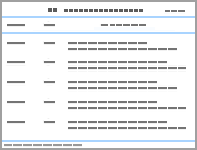
Table 1

Basic soil physicochemical properties at the experimental site"

试验
Trial
土层
Soil layer
(cm)
pH 有机质
Organic matter (g·kg-1)
全氮
Total nitrogen
(g·kg-1)
铵态氮
NH4⁺-N
(mg·kg-1)
硝态氮
NO3--N
(mg·kg-1)
有效磷
Available P
(mg·kg-1)
速效钾
Available K
(mg·kg-1)
田间微区
Field micro-plot
0-20 7.69 18.75 1.18 6.07 8.23 8.77 66.18
20-40 7.43 9.22 0.86 3.88 4.62 3.68 49.30
机械化大区
Mechanized large-plot
0-20 7.47 15.08 1.14 7.48 11.16 10.66 84.04
20-40 7.25 6.80 0.82 6.05 7.02 6.85 65.32

Table 2

Maize yield characters of different treatments under the micro-plot"

年份Year 处理Treatment 穗粒数Grains per spike 百粒重Hundred kernels weight (g) 产量Yield (kg·hm-2)
2023 N0:0 441.6±30.3b 27.4±0.5d 8974.4±126.8c
N1:0 469.7±27.6ab 28.4±0.1c 10364.5±418.4b
N4:1 505.2±32.4a 31.9±0.5a 10925.8±135.9a
N3:2 512.4±16.7a 32.2±0.5a 10949.2±101.2a
N2:3 490.1±25.3ab 30.2±0.2b 10676.0±404.9ab
N1:4 491.4±39.0ab 29.7±0.7b 10566.1±225.6ab
2024 N0:0 518.7±19.8c 27.6±3.3a 9275.0±68.6c
N1:0 574.8±17.5ab 28.4±0.9a 10479.6±568.8b
N4:1 577.4±15.4ab 32.2±1.7a 11249.8±391.6a
N3:2 611.7±26.9a 32.8±3.1a 11267.6±215.7a
N2:3 567.7±24.9b 31.3±3.3a 10731.5±130.7ab
N1:4 555.2±15.3b 29.5±2.8a 10701.8±433.6ab
平均
Average
N0:0 480.2±5.3c 27.5±1.5d 9124.7±51.6c
N1:0 522.3±8.7b 28.4±0.5bcd 10422.1±382.0b
N4:1 541.3±21.8ab 32.0±0.7ab 11086.0±133.4a
N3:2 562.0±19.0a 32.5±1.9a 11108.4±144.9a
N2:3 528.9±12.1b 30.8±1.6abc 10703.8±163.0ab
N1:4 523.3±26.9b 29.6±1.5cd 10633.8±315.4b

Table 3

N efficiencies of different treatments under the micro-plot"

年份
Year
处理
Treatment
氮素回收率
N recovery efficiency
(%)
氮肥农学效率
N agronomic efficiency (kg·kg-1)
氮肥偏生产力
N partial factor productivity (kg·kg-1)
氮肥累积利用率
Cumulative N recovery efficiency (%)
2023 N1:0 26.0±4.4bc 4.9±1.8b 46.1±1.8b —
N4:1 34.6±12.9ab 7.3±0.6ab 48.6±0.6ab —
N3:2 37.3±10.2a 7.4±0.5a 48.7±0.5a —
N2:3 33.6±3.7bc 6.2±1.8ab 47.5±1.8ab —
N1:4 21.9±5.9d 5.7±1.0ab 47.0±1.0ab —
2024 N1:0 30.13±5.4ab 6.7±2.5b 46.6±2.5b 27.2±0.04cd
N4:1 37.5±1.2a 10.1±1.7a 50.2±1.7a 37.3±0.03ab
N3:2 39.3±3.3a 10.2±1.0a 50.1±1.0a 43.9±0.06a
N2:3 38.6±8.5a 7.8±0.6ab 47.7±0.6ab 33.0±0.02bc
N1:4 25.0±9.0b 7.7±1.9ab 47.6±1.9ab 24.2±0.05e
平均
Average
N1:0 29.6±2.0ab 5.8±1.7b 46.4±1.7b —
N4:1 33.9±6.8ab 8.7±0.6a 49.3±0.6a —
N3:2 38.3±6.6a 8.8±0.6a 49.4±0.6a —
N2:3 33.7±3.1ab 7.0±0.7ab 47.6±0.7ab —
N1:4 24.3±9.0b 6.7±1.4ab 47.3±1.4ab —

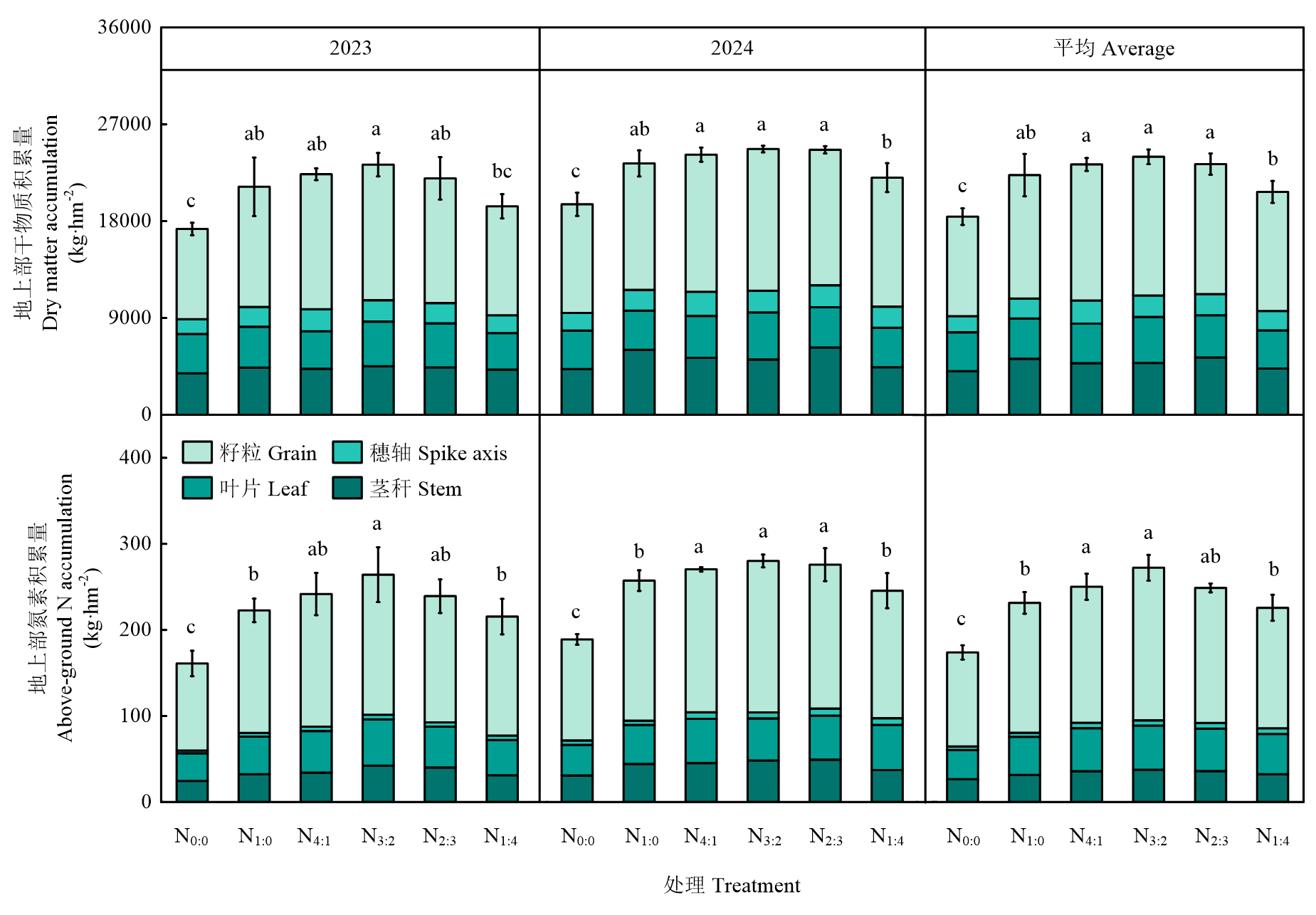
Fig. 1

Accumulation and distribution of dry matter and nutrients of treatments under the micro-plot Different lowercase letters on the column indicate significant differences between treatments of the same indicator in the same year (P<0.05)"

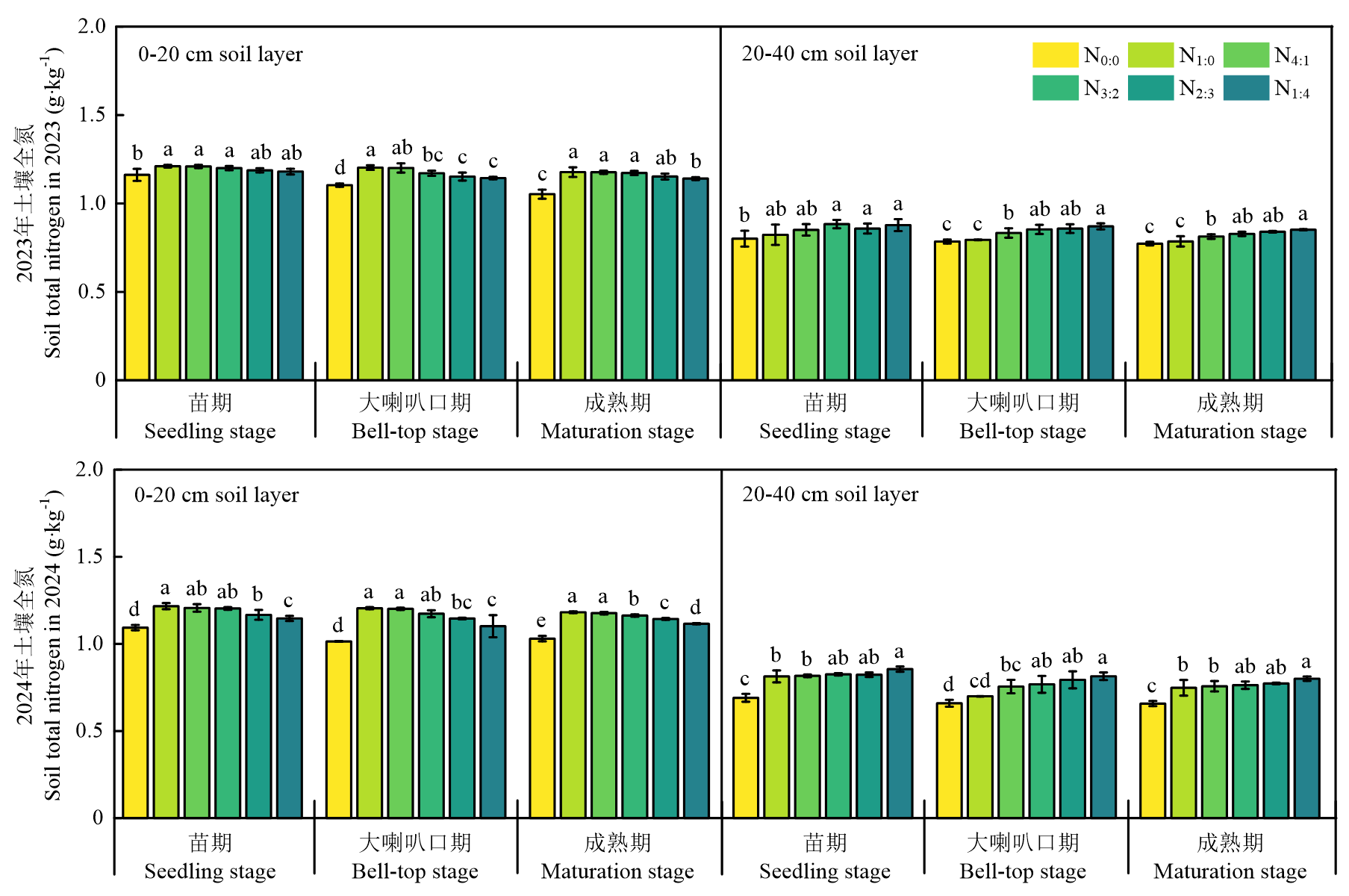
Fig. 2

Soil total nitrogen content of different treatments under the micro-plot Different lowercase letters on the bars within the same stage indicate significant differences among treatments (P<0.05). The same as below"

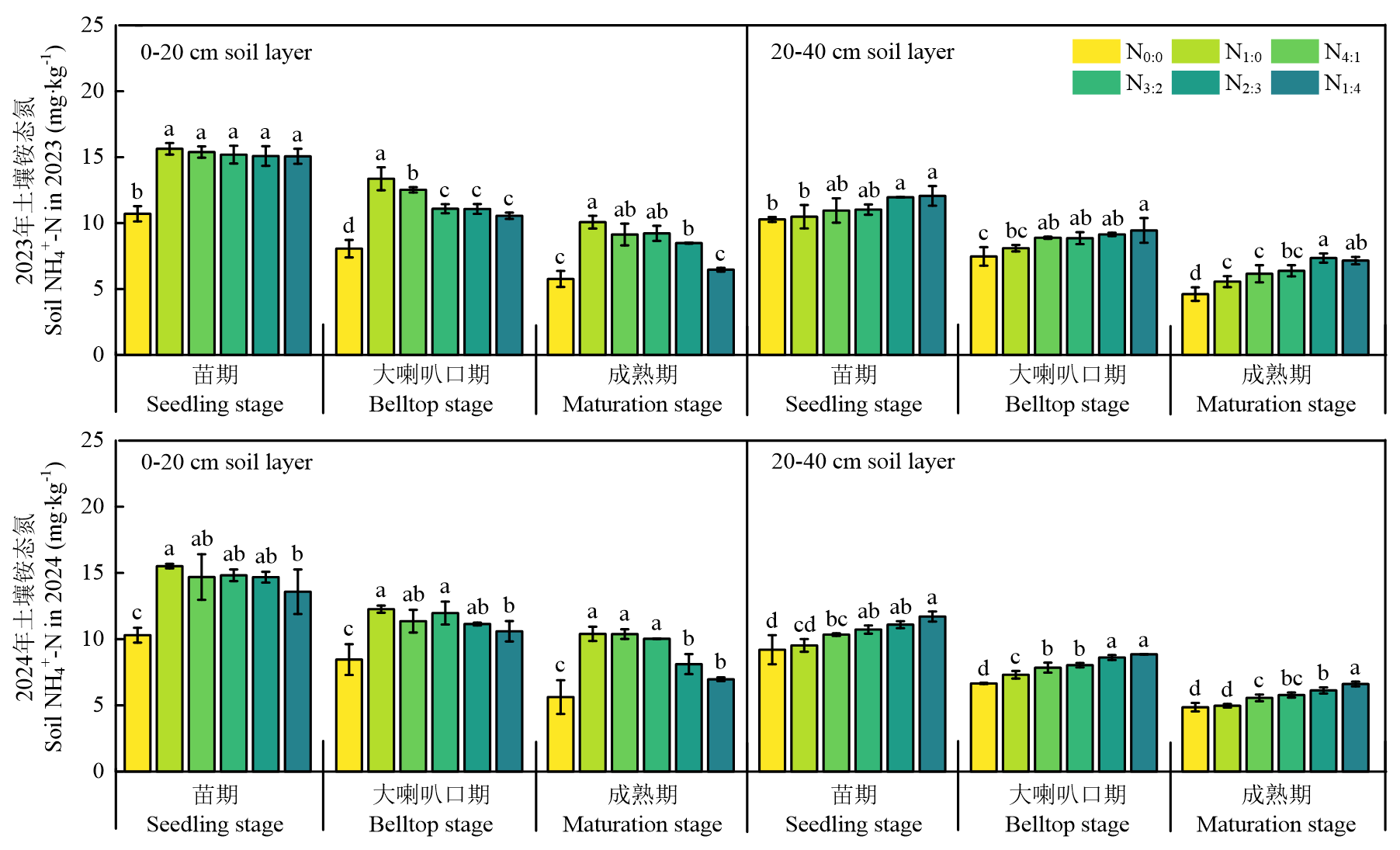
Fig. 3

Soil NH4+-N content of different treatments under the micro-plot"

Fig. 4

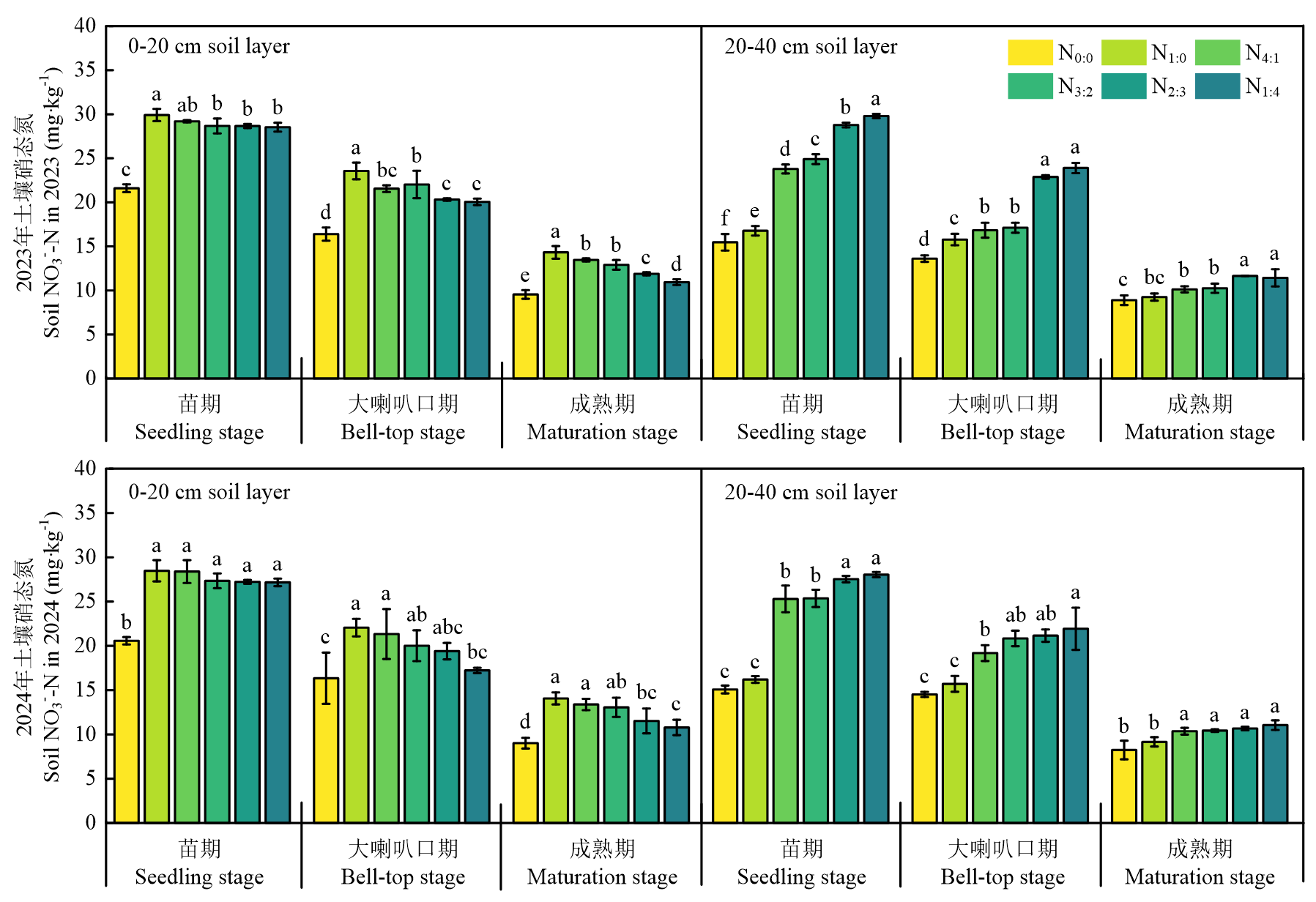
Soil NO3--N content of different treatments under the micro-plot"

Fig. 5

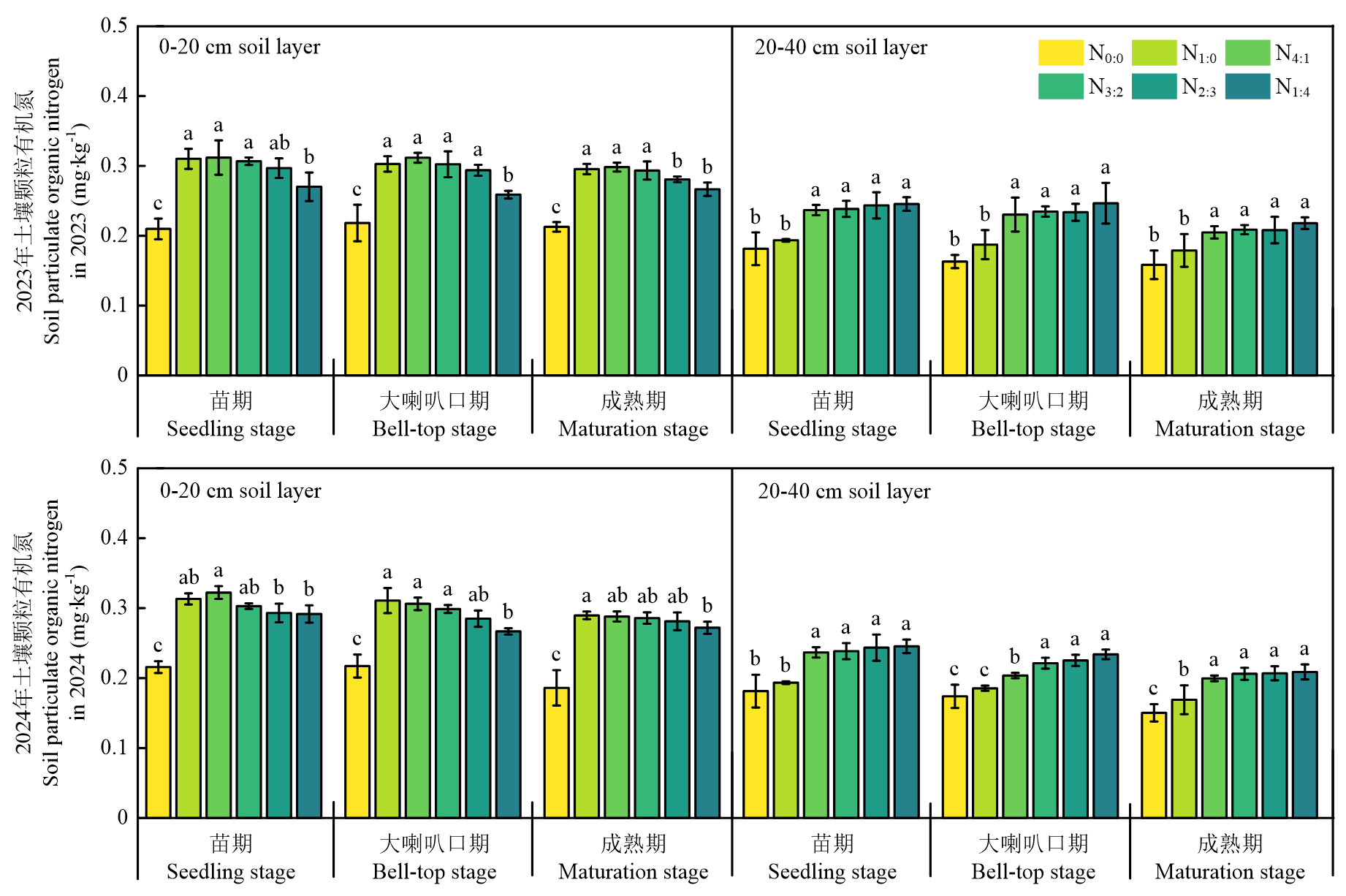
Soil particulate organic nitrogen content of different treatments under the micro-plot"

Fig. 6

Soil microbial biomass nitrogen content of different treatments under the micro-plot"

Table 4

Soil microbial Alpha diversity of different treatments in the 0-20 cm soil layer under the micro-plot"

处理
Treatment
细菌 Bacteria 真菌 Fungi
Sobs 指数
Sobs index
Shannon 指数
Shannon index
ACE 指数
ACE index
Chao 1 指数
Chao 1 index
Sobs 指数
Sobs index
Shannon 指数
Shannon index
ACE 指数
ACE index
Chao 1 指数
Chao 1 index
N0:0 3964a 7.0a 5239a 5147a 434.7a 3.9ab 465.6ab 468.9a
N1:0 3928a 6.9a 5155a 5022a 443.3a 4.1a 467.8ab 470.8a
N4:1 3759a 6.8a 4940a 4833a 364.0b 3.6b 396.5b 394.0b
N3:2 3901a 6.9a 5123a 5000a 469.3a 4.0ab 520.2a 523.9a
N2:3 3925a 6.9a 5178a 5138a 428.0ab 3.8ab 461.7ab 471.0a
N1:4 3835a 6.8a 5107a 5014a 429.3ab 4.0ab 458.3ab 463.9a

Fig. 7

Soil microbial Beta diversity of different treatments in the 0-20 cm soil layer under the micro-plot"

Fig. 8

Microbial community composition at the phylum level of different treatments in the 0-20 cm soil layer under the micro-plot"

Fig. 9

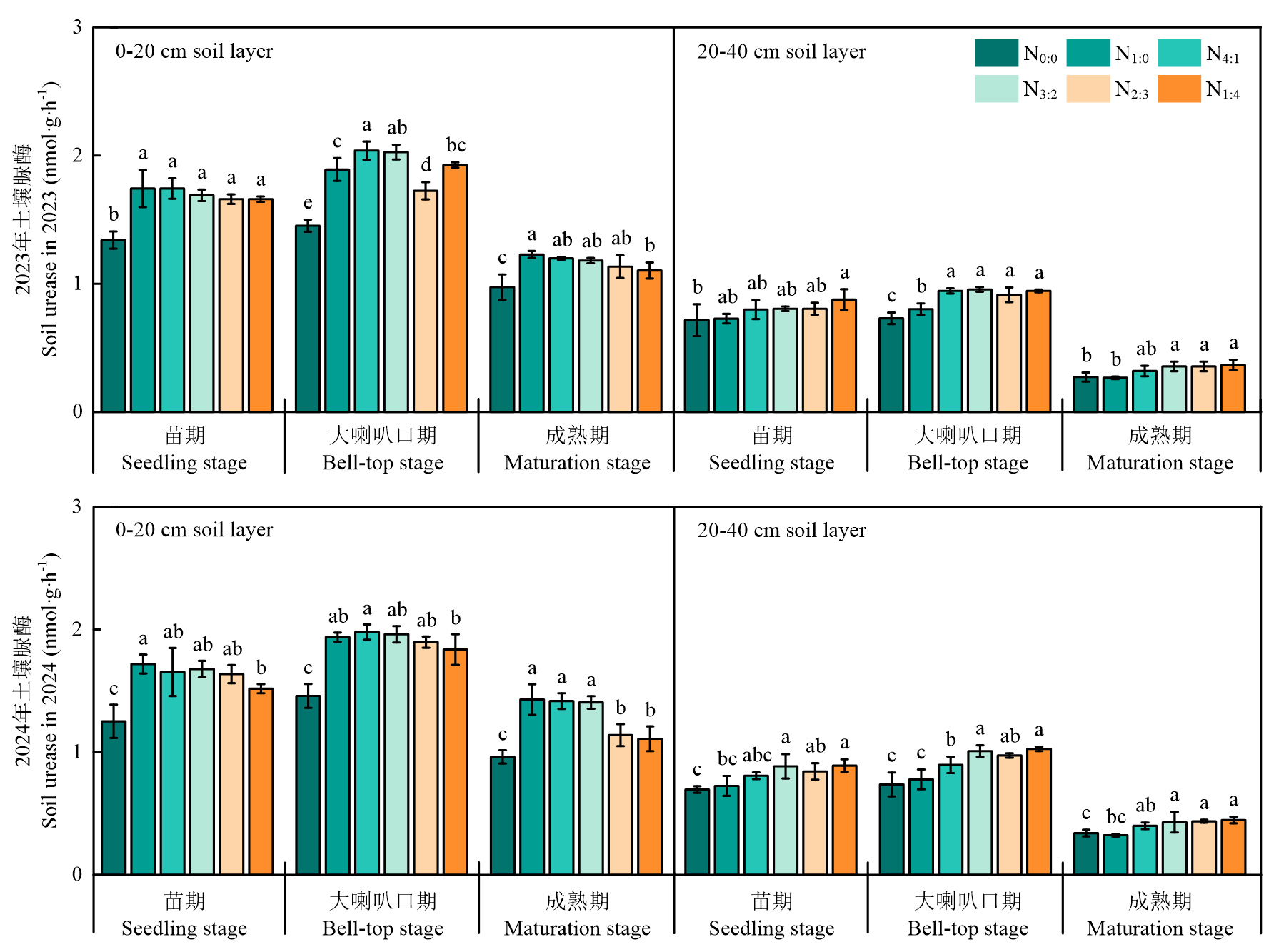
Soil urease activity of different treatments under the micro-plot Different lowercase letters on the column at the same stage indicate significant differences between treatments (P<0.05)"

Fig. 10

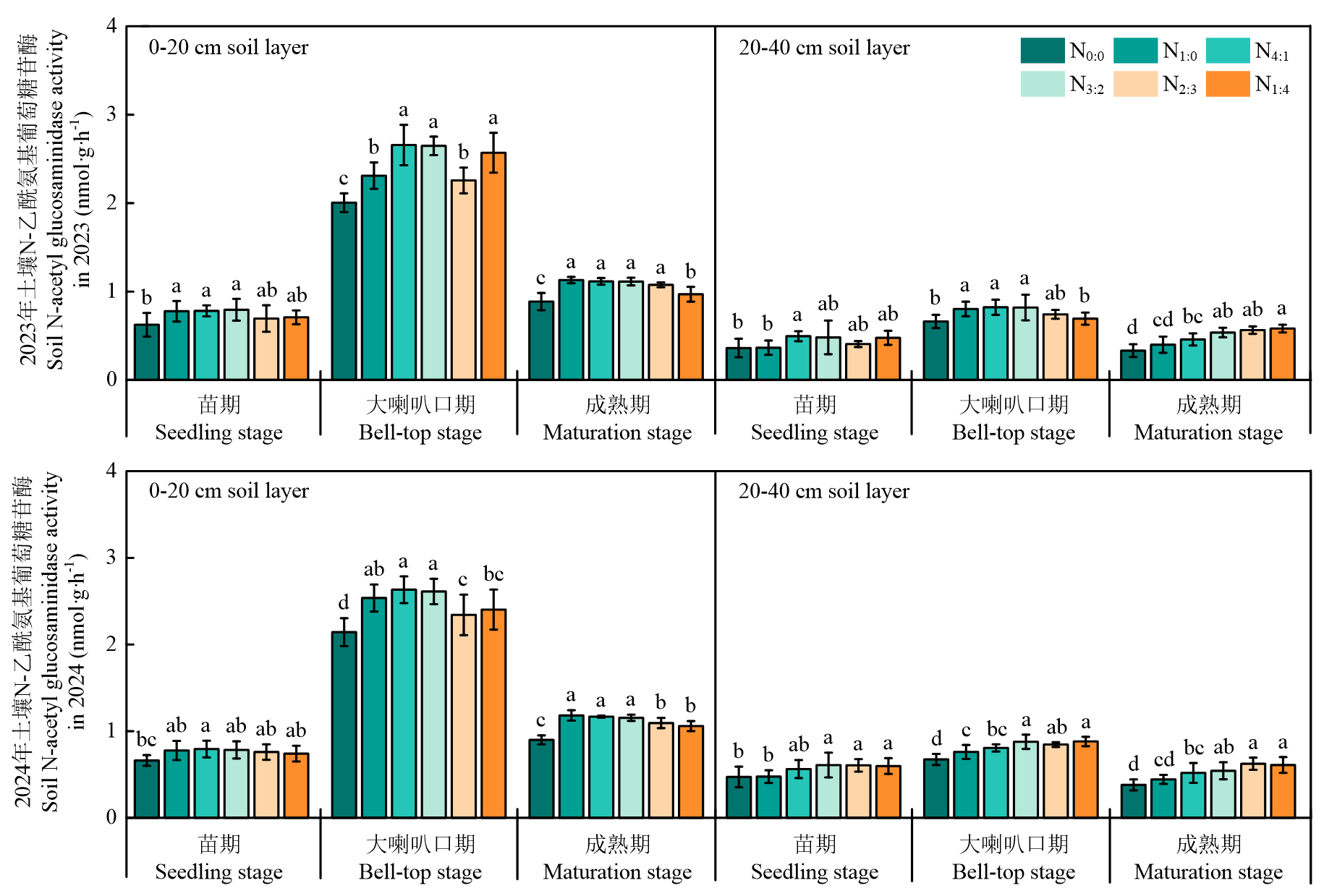
Soil N-acetyl glucosaminidase activity of different treatments under the micro-plot Different lowercase letters on the column at the same stage indicate significant differences between treatments (P<0.05)"

Table 5

Comprehensive evaluation table under the micro-plot"

处理Treatment Y1 Y2 Y3 得分Score 排名Ranking
N0:0 -1.04 0.16 -0.04 -0.91 6
N1:0 0.04 -0.09 0.15 0.10 4
N4:1 0.27 0.11 0.26 0.64 2
N3:2 0.44 0.08 0.17 0.69 1
N2:3 0.28 0.23 -0.10 0.41 3
N1:4 0.01 -0.15 0.08 -0.06 5

Fig. 11

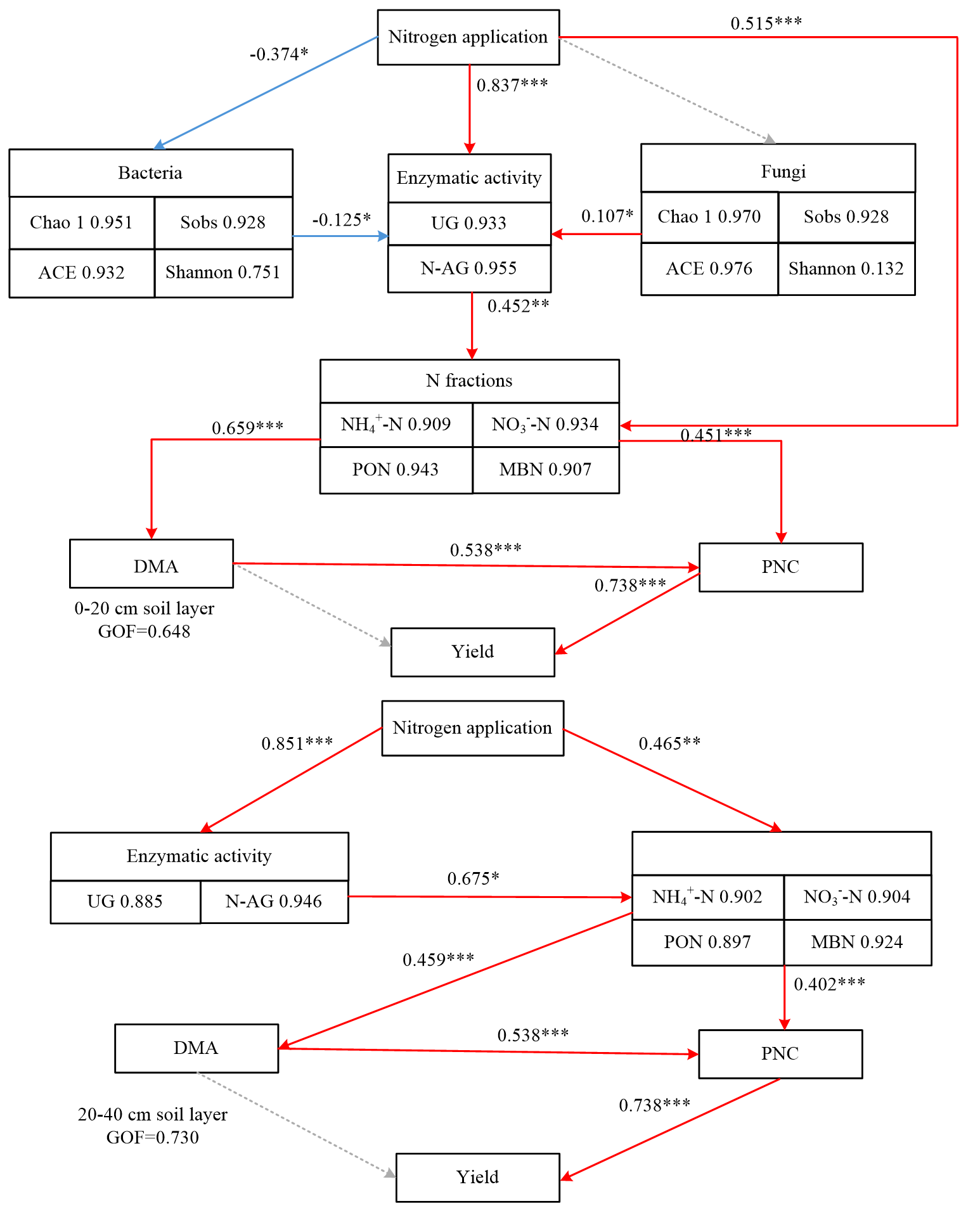
Analysis of the mechanism of soil physicochemical factors affecting crop yield under micro-plot conditions using partial least squares path modeling (PLS-PM) Boxes represent variables included in the model; Arrows in the diagram indicate causal relationships, with solid lines representing significant effects (P<0.05) and dashed lines representing non-significant effects. Numbers next to the arrows represent standardized path coefficients. Red and blue arrows indicate positive and negative causal directions, respectively. Positive and negative numbers represent positive and negative correlation values, respectively. ***, **, * indicates correlation at the P≤0.001, P≤0.01, P≤0.05 level, respectively. PON: Particulate organic nitrogen; MBN: Microbial biomass nitrogen; DMA: Dry matter accumulation; PNC: Plant nitrogen content; Fungi: Microbial fungal taxa; Bacteria: Microbial bacterial taxa; N-AG: N-acetylglucosaminidase; UG: Urease"

Table 6

Maize yield and its constituent factors of different treatments in the mechanized large-plot experiment"

处理
Treatment
穗粒数
Grains per spike
百粒重
Hundred kernels weight
(g)
产量
Yield
(kg·hm-2)
氮肥农学效率
N agronomic efficiency
(kg·kg-1)
氮肥偏生产力
N partial factor productivity(kg·kg-1)
N0:0 440.7±5.8b 22.7±2.2b 8163.0±626.1c — —
N1:0 465.1±20.9b 22.6±1.9b 9633.5±336.2b 7.3±1.8b 41.0±1.5b
N4:1 543.8±28.4a 31.7±1.4a 10622.2±194.7ab 10.3±1.1ab 47.2±1.1ab
N3:2 550.7±10.8a 33.4±1.8a 10755.5±572.1a 10.9±3.1a 47.8±3.1a
[1]
申哲, 韩天富, 曲潇林, 马常宝, 王慧颖, 柳开楼, 黄晶, 都江雪, 张璐, 刘立生, 李继文, 张会民. 我国小麦和玉米相对产量差时空变异及其对氮肥的响应[J]. 中国农业科学, 2023, 56(14): 2724-2737. DOI: 10.3864/j.issn.0578-1752.2023.14.008.
Shen Z, Han T F, Qu X L, Ma C B, Wang H Y, Liu K L, Huang J, Du J X, Zhang L, Liu L S, Li J W, Zhang H M. Spatial-temporal variation of relative yield gap of wheat and maize and its response to nitrogen fertilizer in China[J]. Scientia Agricultura Sinica, 2023, 56(14): 2724-2737. DOI: 10.3864/j.issn.0578-1752.2023.14.008. (in Chinese)
[2]
Lü F L, Hou M M, Zhang H T, Khan A, Ayaz M, Qiangjiu C, Hu C L, Yang X Y, Sun B H, Zhang S L. Closing the nitrogen use efficiency gap and reducing the environmental impact of wheat-maize cropping on smallholder farms in the Guanzhong Plain, Northwest China[J]. Journal of Integrative Agriculture, 2019, 18(1): 169-178.

doi: 10.1016/S2095-3119(18)61948-3
[3]
Wang C, Ye T, Tang L, Xiao S, Ma R, Han Z, Liu X, Tian H, Liu S, Ciais P, Zou J. Historical changes in fertilizer-induced soil nitrogen losses from upland grain crops and impacts of climate change[J]. Environmental Science & Technology, 2025, 59(50): 27291-27304.

doi: 10.1021/acs.est.5c03329
[4]
张江伟, 李慧, 柴晓甜, 赵帅, 李莉威, 张斯佳, 贾丽娟, 张建恒, 王贵彦. 玉米深松分层施肥和小麦限水灌溉对土壤微生物量碳、氮及酶活性的影响[J]. 水土保持学报, 2022, 36(6): 346-355.
Zhang J W, Li H, Chai X T, Zhao S, Li L W, Zhang S J, Jia L J, Zhang J H, Wang G Y. Effects of fertilization with subsoiling of maize and limited irrigation of wheat on soil microbial biomass carbon, nitrogen and enzymes activities[J]. Journal of Soil and Water Conservation, 2022, 36(6): 346-355. (in Chinese)
[5]
梁海, 陈宝成, 韩慧芳, 王少博, 王桂伟, 陈剑秋. 普通肥、 控释掺混肥分层施肥对小麦生长的影响[J]. 水土保持学报, 2018, 32(4): 240-245.
Liang H, Chen B C, Han H F, Wang S B, Wang G W, Chen J Q. Effects of layered application of common fertilizer and controlled- release bulk-blend fertilizer on wheat growth[J]. Journal of Soil and Water Conservation, 2018, 32(4): 240-245. (in Chinese)
[6]
姜春霞, 刘化涛, 张伟, 杨柯, 张冬梅, 翟广谦, 王娟玲, 刘恩科. 减量施氮对鲜食玉米产量、氮素利用及土壤硝态氮含量的影响[J]. 中国土壤与肥料, 2022(12): 61-67.
Jiang C X, Liu H T, Zhang W, Yang K, Zhang D M, Zhai G Q, Wang J L, Liu E K. Effect of reduced nitrogen application on yield, nitrogen utilization of fresh waxy maize and soil nitrate nitrogen content in Shanxi dryland[J]. Soil and Fertilizer Sciences in China, 2022(12): 61-67. (in Chinese)
[7]
宋金鑫. 秸秆还田和氮肥施用量对膜下滴灌玉米生长发育及产量的影响[D]. 长春: 吉林农业大学, 2019.
Song J X. Effects of straw returning field and nitrogen fertilizer application rate on growth and yield of maize under drip irrigation[D]. Changchun: Jilin Agricultural University, 2019. (in Chinese)
[8]
Nkebiwe P M, Weinmann M, Bar-Tal A, Müller T. Fertilizer placement to improve crop nutrient acquisition and yield: A review and meta-analysis[J]. Field Crops Research, 2016, 196: 389-401.

doi: 10.1016/j.fcr.2016.07.018
[9]
Wu P, Liu F, Li H, Cai T, Zhang P, Jia Z. Suitable fertilizer application depth can increase nitrogen use efficiency and maize yield by reducing gaseous nitrogen losses[J]. Science of the Total Environment, 2021, 781: 146787.

doi: 10.1016/j.scitotenv.2021.146787
[10]
Liu W, Xiong Y, Xu X, Xu F, Hussain S, Xiong H, Yuan J. Deep placement of controlled-release urea effectively enhanced nitrogen use efficiency and fresh ear yield of sweet corn in fluvo-aquic soil[J]. Scientific Reports, 2019, 9: 20307.

doi: 10.1038/s41598-019-56912-y pmid: 31889150
[11]
郭俊杰. 不同施肥模式对土壤氮循环功能微生物的影响[J]. 植物营养与肥料学报, 2021, 27(5): 751-759.
Guo J J. Effects of different fertilization managements on functional microorganisms involved in nitrogen cycle[J]. Journal of Plant Nutrition and Fertilizers, 2021, 27(5): 751-759. (in Chinese)
[12]
李景. 长期耕作对土壤团聚体有机碳及微生物多样性的影响[D]. 北京: 中国农业科学院, 2014.
Li J. Long-term tillage impacts on soil aggregate organic carbon and microbial community diversity[D]. Beijing: Chinese Academy of Agricultural Sciences, 2014. (in Chinese)
[13]
赵亚丽, 郭海斌, 薛志伟, 穆心愿, 李潮海. 耕作方式与秸秆还田对土壤微生物数量、酶活性及作物产量的影响[J]. 应用生态学报, 2015, 26(6): 1785-1792.
Zhao Y L, Guo H B, Xue Z W, Mu X Y, Li C H. Effects of tillage and straw returning on microorganism quantity, enzyme activities in soils and grain yield[J]. Chinese Journal of Applied Ecology, 2015, 26(6): 1785-1792. (in Chinese)
[14]
Liu C, Pang S, Li X, Liu P, Zhou Y, Lin X, Gu S, Wang D. Layered nitrogen fertilization regulates root morphology to promote synergistic nitrogen and phosphorus absorption in maize (Zea mays L.)[J]. Field Crops Research, 2025, 322: 109737.

doi: 10.1016/j.fcr.2025.109737
[15]
吕旭东, 孙世媛, 李亚楠, 刘玉龙, 王艳群, 付鑫, 张佳英, 宁鹏, 彭正萍. 智能机械化分层施肥对麦田根-土养分分布和小麦产量的影响[J]. 中国农业科学, 2026, 59(1): 129-146. DOI: 10.3864/j.issn.0578-1752.2026.01.010.
Lü X D, Sun S Y, Li Y N, Liu Y L, Wang Y Q, Fu X, Zhang J Y, Ning P, Peng Z P. Effects of intelligent mechanized layered fertilization on root-soil nutrient distribution and yield in wheat fields[J]. Scientia Agricultura Sinica, 2026, 59(1): 129-146. DOI: 10.3864/j.issn.0578-1752.2026.01.010. (in Chinese)
[16]
樊代佳, 李成芳, 曹凑贵. 氮肥深施对免耕稻田土壤有机质化学特性和胞外酶活性的影响[J]. 农业环境科学学报, 2021, 40(3): 621-630.
Fan D J, Li C F, Cao C G. Effects of nitrogen deep placement on chemical properties of soil organic matter and extracellular enzyme activity in no-tillage paddy fields[J]. Journal of Agro-Environment Science, 2021, 40(3): 621-630. (in Chinese)
[17]
石佳玉. 氮磷钾肥机械化施用位置及比例对玉米生长和土壤性状的影响[D]. 保定: 河北农业大学, 2024.
Shi J Y. Effects of location and rate of mechanized application of nitrogen, phosphorus and potassium fertilizers on growth and soil properties of maize[D]. Baoding: Hebei Agricultural University, 2024. (in Chinese)
[18]
宋震震, 李絮花, 李娟, 林治安, 赵秉强. 有机肥和化肥长期施用对土壤活性有机氮组分及酶活性的影响[J]. 植物营养与肥料学报, 2014, 20(3): 525-533.
Song Z Z, Li X H, Li J, Lin Z A, Zhao B Q. Long-term effects of mineral versus organic fertilizers on soil labile nitrogen fractions and soil enzyme activities in agricultural soil[J]. Journal of Plant Nutrition and Fertilizers, 2014, 20(3): 525-533. (in Chinese)
[19]
樊叶, 樊琳琳, 薛兵东, 王秀凤, 那明慧, 付俊, 高洪敏, 张丽丽. 氮肥运筹对辽东地区玉米产量和干物质积累的影响[J]. 内蒙古农业大学学报(自然科学版), 2021, 42(2): 9-14.
Fan Y, Fan L L, Xue B D, Wang X F, Na M H, Fu J, Gao H M, Zhang L L. Effect of nitrogen management on maize yield and dry matter accumulation in eastern Liaoning[J]. Journal of Inner Mongolia Agricultural University (Natural Science Edition), 2021, 42(2): 9-14. (in Chinese)
[20]
高飞, 任亮奇, 崔增团, 郭世乾, 郑杰, 叶旭, 王钰皓, 张鹏. 氮肥深施对旱作覆膜农田土壤养分含量及春玉米产量的影响[J]. 干旱地区农业研究, 2023, 41(5): 89-98.
Gao F, Ren L Q, Cui Z T, Guo S Q, Zheng J, Ye X, Wang Y H, Zhang P. Effects of deep application of nitrogen fertilizer on soil nutrient content and spring maize yield in dryland film mulched farmland[J]. Agricultural Research in the Arid Areas, 2023, 41(5): 89-98. (in Chinese)
[21]
Xu J, Han H F, Ning T Y, Li Z J, Lal R. Long-term effects of tillage and straw management on soil organic carbon, crop yield, and yield stability in a wheat-maize system[J]. Field Crops Research, 2019, 233: 33-40.

doi: 10.1016/j.fcr.2018.12.016
[22]
Liu C H, Pang S Y, Li X F, Li Y Q, Li J W, Ma R L, Lin X, Wang D. Nitrogen losses trade-offs through layered fertilization to improve nitrogen nutrition status and net economic benefit in wheat-maize rotation system[J]. Field Crops Research, 2024, 312: 109406.

doi: 10.1016/j.fcr.2024.109406
[23]
Liu Y, Li C, Cai G, Sauheitl L, Xiao M L, Shibistova O, Ge T D, Guggenberger G. Meta-analysis on the effects of types and levels of N, P, and K fertilization on organic carbon in cropland soils[J]. Geoderma, 2023, 437: 116580.

doi: 10.1016/j.geoderma.2023.116580
[24]
Liu F, Hu H B, Li X, Jia Z K, Mo F. Reducing nitrogen application through deep placement to optimize the nitrogen balance in a dryland maize cropping system[J]. Journal of Cleaner Production, 2025, 528: 146712.

doi: 10.1016/j.jclepro.2025.146712
[25]
陈思雨. 深松深度对夏玉米田碳氮动态变化及产量的影响[D]. 泰安: 山东农业大学, 2021.
Chen S Y. Effects of subsoiling depth on soil carbon and nitrogen dynamic changes and yield in summer maize field[D]. Taian: Shandong Agricultural University, 2021. (in Chinese)
[26]
贺美, 王迎春, 王立刚, 李成全, 王利民, 李玉红, 刘平奇. 深松施肥对黑土活性有机碳氮组分及酶活性的影响[J]. 土壤学报, 2020, 57(2): 446-456.
He M, Wang Y C, Wang L G, Li C Q, Wang L M, Li Y H, Liu P Q. Effects of subsoiling combined with fertilization on the fractions of soil active organic carbon and soil active nitrogen, and enzyme activities in black soil in Northeast China[J]. Acta Pedologica Sinica, 2020, 57(2): 446-456. (in Chinese)
[27]
Wang W Y, Ding S J, Guo T F, Xu X P, He P, Huang S M. Organic amendment strategies differentially regulate microbial carbon use efficiency: A long-term field study integrating microorganism and enzymatic stoichiometry[J]. Agriculture, Ecosystems & Environment, 2026, 397: 110051.

doi: 10.1016/j.agee.2025.110051
[28]
Bai L F, Zhang X Q, Li B Z, Sun F C, Zhao X Q, Wang Y F, Lu Z Y, Zhang D J, Fang J. Fungal communities are more sensitive to nitrogen fertilization than bacteria in different spatial structures of silage maize under short-term nitrogen fertilization[J]. Applied Soil Ecology, 2022, 170: 104275.

doi: 10.1016/j.apsoil.2021.104275
[29]
Llimós M, Segarra G, Sancho-Adamson M, Trillas M I, Romanyà J. Impact of olive saplings and organic amendments on soil microbial communities and effects of mineral fertilization[J]. Frontiers in Microbiology, 2021, 12: 653027.

doi: 10.3389/fmicb.2021.653027
[30]
郝佳丽, 白文斌, 史丽娟, 张建华, 王晓勇, 甄攀, 韩英. “3414”施肥方案对‘西豌1号’豌豆根际土壤微生物多样性和群落结构的影响[J]. 中国土壤与肥料, 2026(4): 96-106.
Hao J L, Bai W B, Shi L J, Zhang J H, Wang X Y, Zhen P, Han Y. The effects of the “3414” fertilization scheme on the diversity and community structure of rhizosphere soil microorganisms of ‘Xiwan 1’ pea[J]. Soil and Fertilizer Sciences in China, 2026(4): 96-106. (in Chinese)
[31]
李玥萍, 刘姗姗, 邹宇馨, 石文博, 康小虎. 氮添加下陇中盐碱黄土微生物多样性、群落结构变化特征[J]. 兰州交通大学学报, 2025, 44(6): 130-138.
Li Y P, Liu S S, Zou Y X, Shi W B, Kang X H. Variation of microbial community diversity and structure in saline-alkaline loess in Longzhong region under nitrogen addition[J]. Journal of Lanzhou Jiaotong University, 2025, 44(6): 130-138. (in Chinese)
[32]
Tang S, Ma Q, Marsden K A, Chadwick D R, Luo Y, Kuzyakov Y, Wu L, Jones D L. Microbial community succession in soil is mainly driven by carbon and nitrogen contents rather than phosphorus and sulphur contents[J]. Soil Biology and Biochemistry, 2023, 180: 109019.

doi: 10.1016/j.soilbio.2023.109019
[33]
马玉洁, 李旭, 翟英芳, 李敬宇, 付鑫, 彭正萍. 秸秆还田方式和施氮量对土壤有机碳组分及酶活性的影响[J]. 中国农业科学, 2025, 58(12): 2397-2410. DOI: 10.3864/j.issn.0578-1752.2025.12.010.
Ma Y J, Li X, Zhai Y F, Li J Y, Fu X, Peng Z P. Effects of straw returning methods and nitrogen application rates on soil organic carbon components and enzyme activity[J]. Scientia Agricultura Sinica, 2025, 58(12): 2397-2410. DOI: 10.3864/j.issn.0578-1752.2025.12.010. (in Chinese)
[1] BAI JingJing, ZHANG YuChen, NI ZiJie, GAO JiaYong, LIU WeiYang, GAI DongSheng, WANG YuHang, HE JiaQing, ZHANG Qiang, SHAO XiWen, WU Ying, GENG YanQiu, GUO LiYing. Effects of Different Irrigation Volumes on Lodging Resistance Characteristics and Yield of Rice in Northeast China [J]. Scientia Agricultura Sinica, 2026, 59(9): 1848-1868.
[2] CAI QiaoHong, ZHOU Tian, SU Ming, HONG ZiQiang, LI FanGuo, LI Tong, WANG Hua, KANG JianHong, WU HongLiang. Effects of Nitrogen Reduction and Potassium Enhancement Fertilization Mode on Photosynthetic Fluorescence Characteristics and Photosynthetic Product Accumulation of Maize in Ningxia Yellow Irrigation Area [J]. Scientia Agricultura Sinica, 2026, 59(9): 1869-1886.
[3] ZHU Pei, ZHAO Yao, BAI Yan, ZHANG JinKui, LI Mei, LONG JinJia, YANG Long, LUO LiYa, XU BenBo, XU JinSong, ZHANG XueKun. Physiological Regulation of Pydiflumetofen on Rapeseed (Brassica napus) and Its Combined Effect with Prochloraz [J]. Scientia Agricultura Sinica, 2026, 59(9): 1903-1915.
[4] CHEN XuanYi, GUO XingXing, ZHANG XiangQian, LU ZhanYuan, LIU LingYue, LUO Fang, LI JinLong, ZHANG ChuanLing, ZHANG ZhiQing, CHE ManQing. Impacts of Intercropping Row Patterns on the Heterogeneity of the Light Environment and Photosynthetic Product Production in Maize Canopy [J]. Scientia Agricultura Sinica, 2026, 59(8): 1653-1671.
[5] HOU HuiZhi, YIN JiaDe, MA MingSheng, LIU XiaoWei, LIU YanLan, LEI KangNing. Effects of Tillage and Organic Fertilizer Application on Crop Yield and Water Use in a Potato-Maize Double Cropping System in the Longdong Region [J]. Scientia Agricultura Sinica, 2026, 59(8): 1672-1685.
[6] ZHAO SiJie, REN JiaXin, NAN JiangLei, WANG XingYun, CHENG WeiNing. Relationships Between Secondary Metabolite Contents and Related Gene Expression in Maize Leaves and Their Resistance to Spodoptera frugiperda [J]. Scientia Agricultura Sinica, 2026, 59(8): 1686-1696.
[7] PENG TingShen, LU JiuYan, WU MeiLin, YAN YuXin, LIU HongZhou, NAN WenBin, QIN XiaoJian, LI Ming, GONG JunYi, LIANG YongShu. QTL Analysis of Yield-Related Traits in Both Huangnuo2# and Changbai7# of Perennial Chinese Rice [J]. Scientia Agricultura Sinica, 2026, 59(7): 1361-1379.
[8] WANG YaFei, YAN Peng, XUE JinTao, DONG XueRui, MENG FanQi, GUO LiNa, LUO Yi, ZHANG Juan, DONG ZhiQiang, LU Lin. Effects of Ethephon-Glycine Betaine-Salicylic Acid Mixture on Root System Architecture, Physiological Function and Yield of Maize Under Heat Stress [J]. Scientia Agricultura Sinica, 2026, 59(7): 1439-1455.
[9] WANG YuPing, FU Zhi, SUN JiaYing, MU XiaoMeng, LIU HuiLin, GUO JinYun, SONG WenJing, HOU LeiPing, ZHAO HaiLiang. Evaluation of the Mitigating Effect and Application Efficacy of Melatonin Applied at the Seedling Stage on Short-Term Chilling Stress in Tomato Plants [J]. Scientia Agricultura Sinica, 2026, 59(7): 1523-1535.
[10] WANG JiaNuo, CHEN GuiPing, LI Pan, WANG LiPing, NAN YunYou, HE Wei, FAN ZhiLong, HU FaLong, CHAI Qiang, YIN Wen, ZHAO LiaoHao. Photo-Physiological Mechanism at Grain Filling Stage of No-Tillage with Plastic Re-Mulching to Increase Maize Yield in Oasis Irrigation Areas [J]. Scientia Agricultura Sinica, 2026, 59(6): 1189-1202.
[11] ZHOU XinJie, REN Hao, CHEN YingLong, ZHANG JiWang, ZHAO Bin, REN BaiZhao, LIU Peng, WANG HongZhang. Effects of Calcium Peroxide on Root Morphology and Yield Formation of Summer Maize in Waterlogging Farmland [J]. Scientia Agricultura Sinica, 2026, 59(6): 1203-1216.
[12] HE JiHang, ZHANG Qing, LÜ XiangYue, XUE JiQuan, XU ShuTu, LIU JianChao. Evaluation of Nitrogen Efficiency of Different Stay-Green Maize Hybrids [J]. Scientia Agricultura Sinica, 2026, 59(6): 1217-1230.
[13] LI YongJuan, ZHANG YueTong, WANG YiBo, ZHAO ChangJiang, SONG Jie, CHEN XueLi, YAO Qin. Effects of Biochar Application on the Abundance and Community Composition of Nitrogen-Fixing Microbial nifH Gene in Soybean Rotation and Continuous Cropping Systems [J]. Scientia Agricultura Sinica, 2026, 59(6): 1272-1285.
[14] LI SiYuan, LI HongPing, CHANG HongQing, ZHANG SenYan, LI SiJia, CUI XinFei, QIAO Po, ZENG Bo, LIU GuiZhen, LIU TianXue, TANG JiHua, LI ChaoHai. Effects of Density Increase on Dynamic Change of Yield and Agronomic Traits of Maize Cultivars with Different Plant Heights [J]. Scientia Agricultura Sinica, 2026, 59(5): 967-984.
[15] DONG JinLong, ZHAO Ying, YU HaiBing, LÜ JianYe, QIN JiaQi, LIANG Chen, MING Bo, LI ShaoKun. Multi-Model Elucidating of Nutritional Quality Contributions to Maize Kernel Test Weight and Regional Heterogeneity [J]. Scientia Agricultura Sinica, 2026, 59(5): 985-995.
Viewed
Full text


Abstract

Cited

  Shared   
  Discussed   
No Suggested Reading articles found!