Scientia Agricultura Sinica ›› 2026, Vol. 59 ›› Issue (8): 1748-1759.doi: 10.3864/j.issn.0578-1752.2026.08.011

• HORTICULTURE • Previous Articles     Next Articles

Physiological Mechanism and Relevant Gene Identification for Fruit Enlargement in Satsuma mandarin+Taoye sweet orange Somatic Cybrid

GUAN ShuPing1(), LI Ke1(), XIE KaiDong1, DUAN YaoYuan1, WANG TingTing1, ZHOU ZhiHu2, WU XiaoMeng1, GUO WenWu1,*()   

  1. 1 College of Horticulture & Forestry Sciences, Huazhong Agricultural University/National Key Laboratory for Germplasm Innovation & Utilization of Horticultural Crops, Wuhan 430070
    2 Agricultural and Rural Service Center of Qu Yuan Town, Zigui County, Zigui 443600, Hubei
  • Received:2025-11-19 Accepted:2026-01-14 Online:2026-04-16 Published:2026-04-21
  • Contact: GUO WenWu

Abstract:

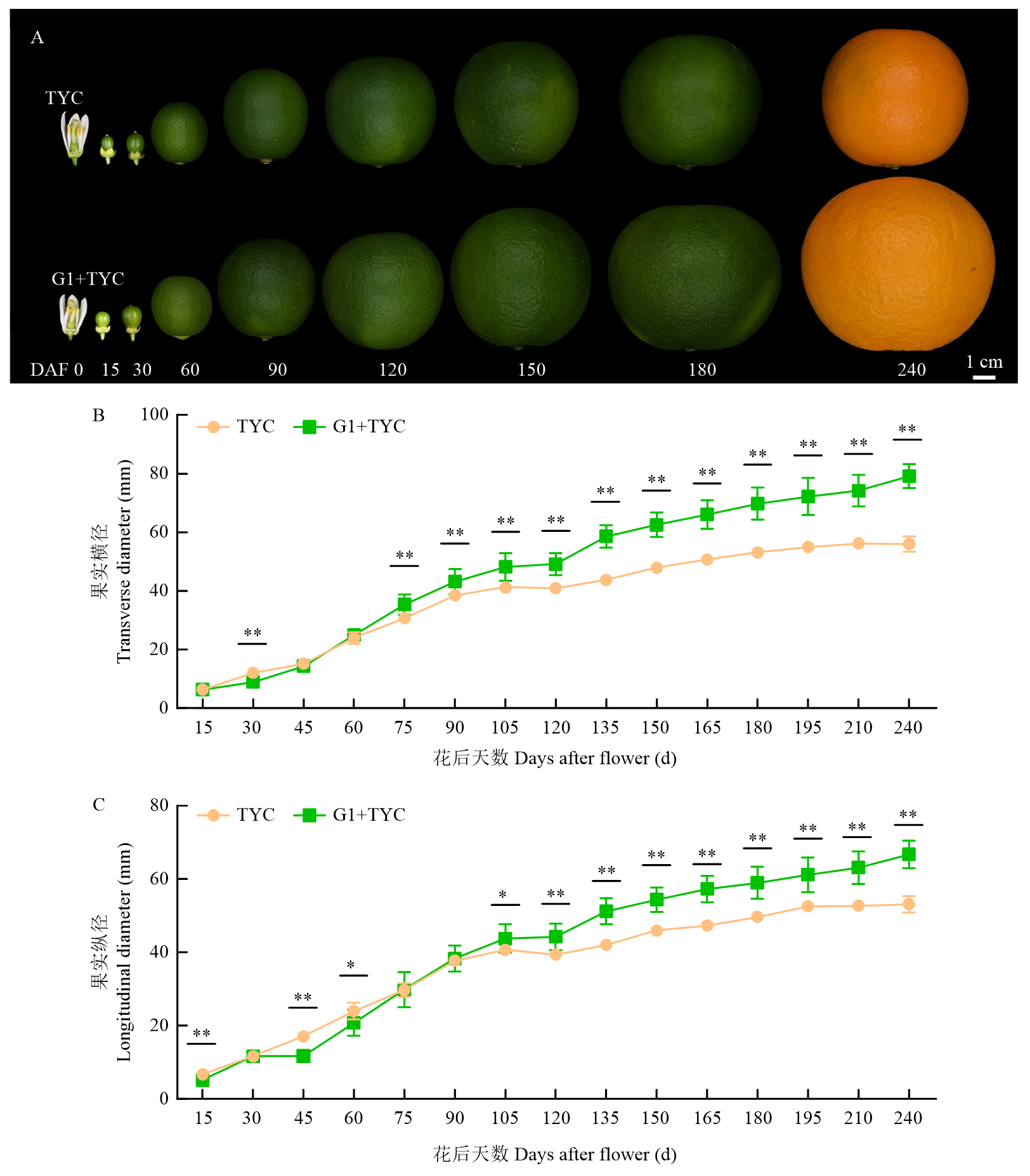
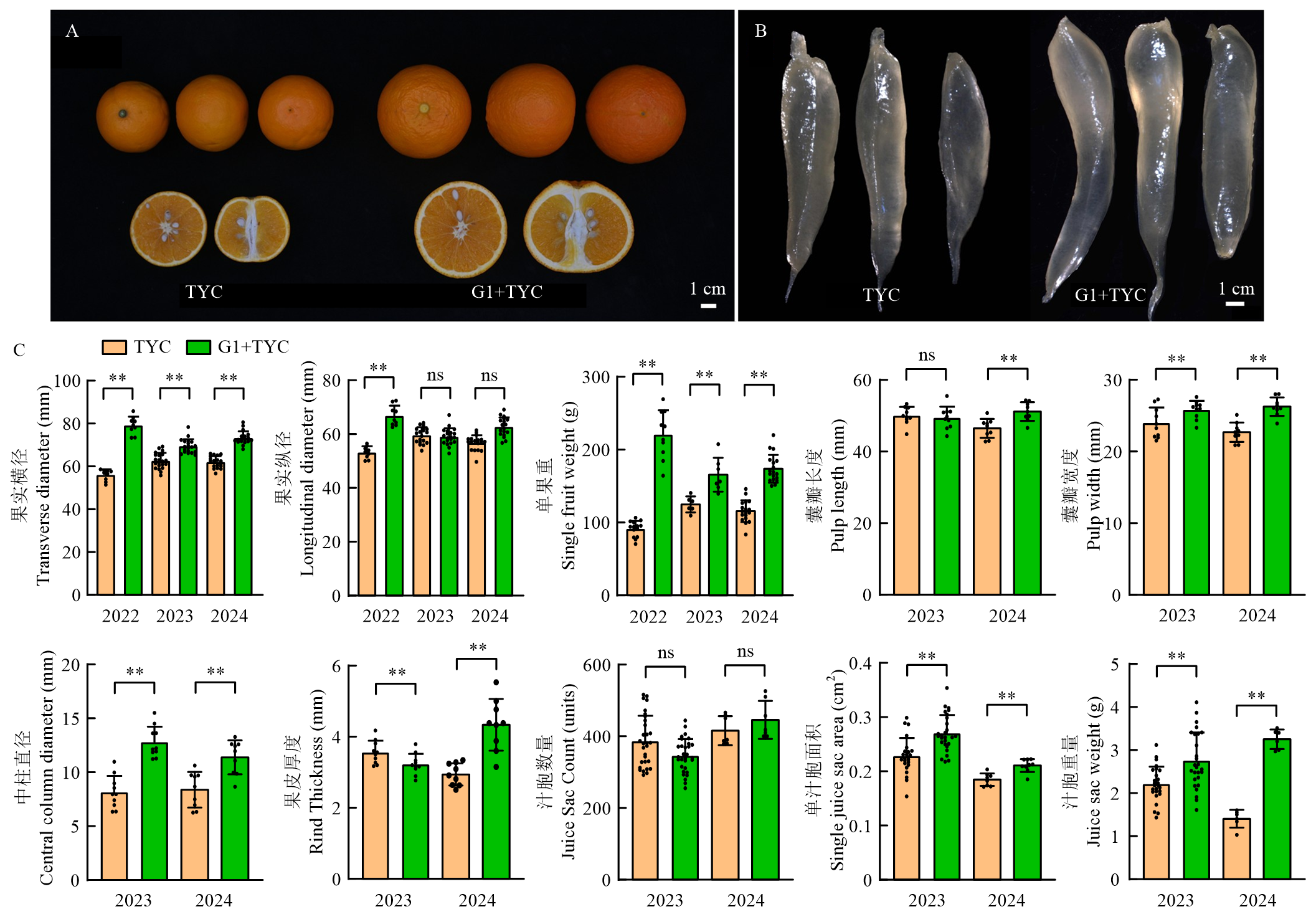
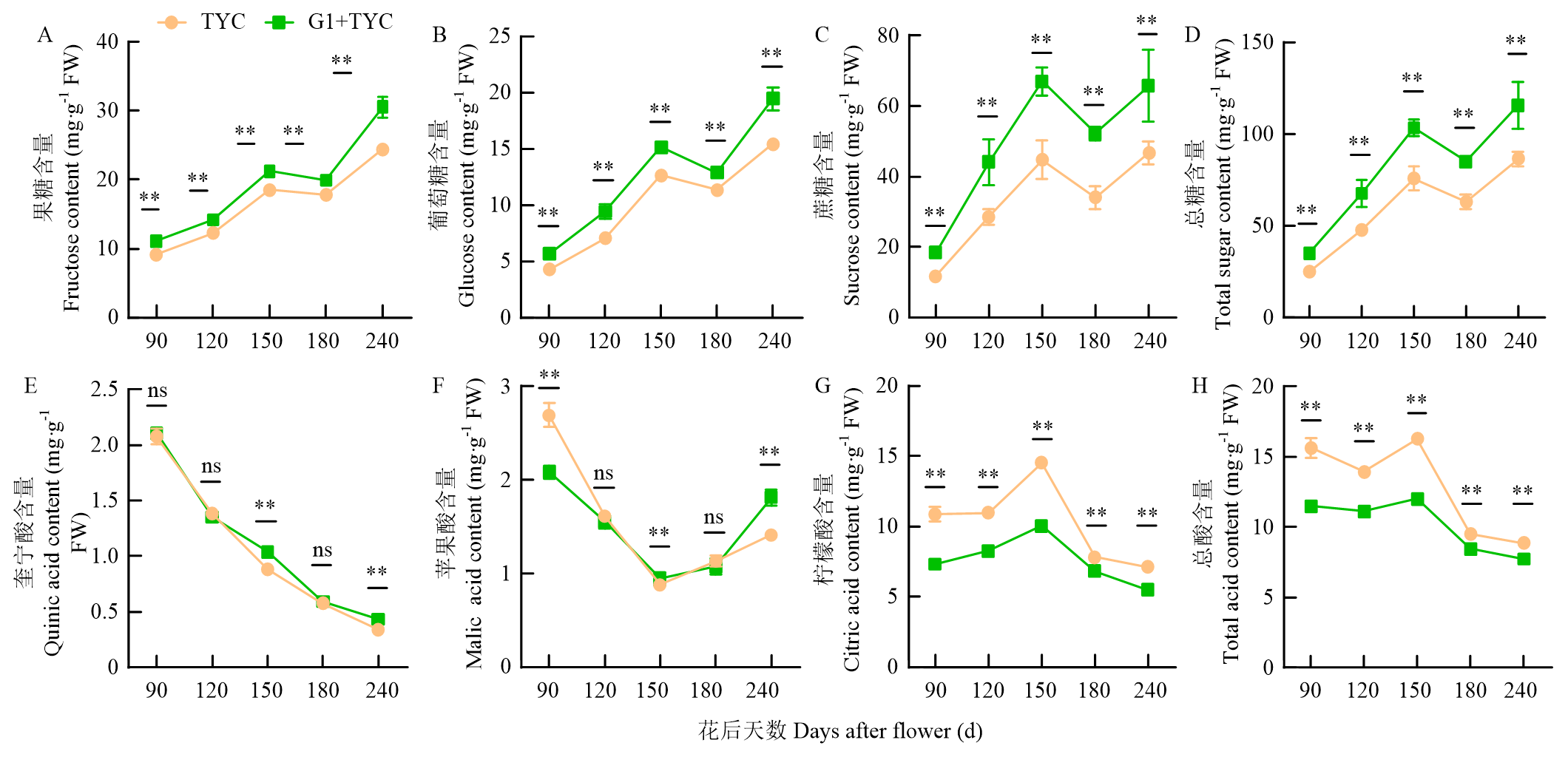
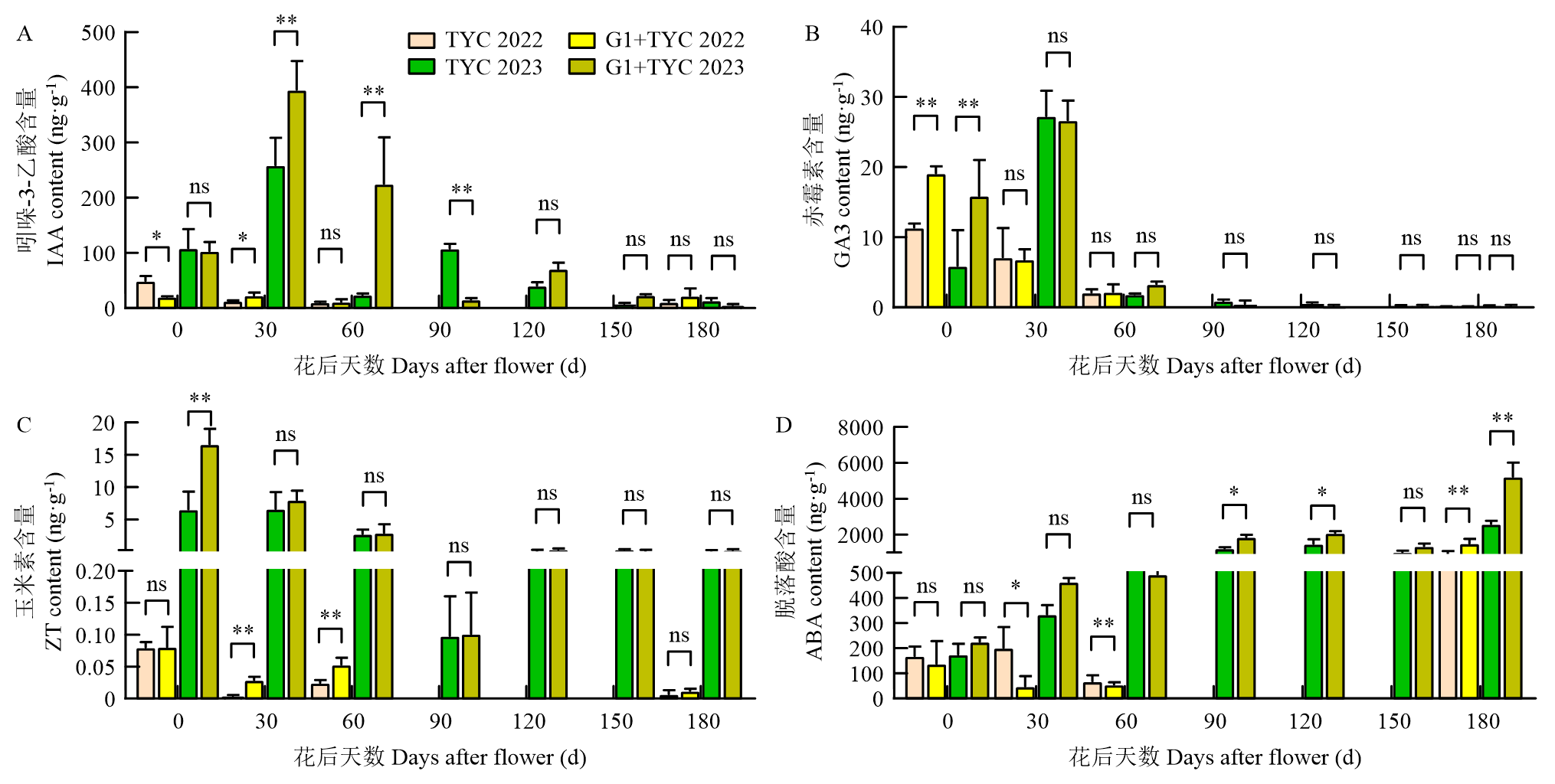
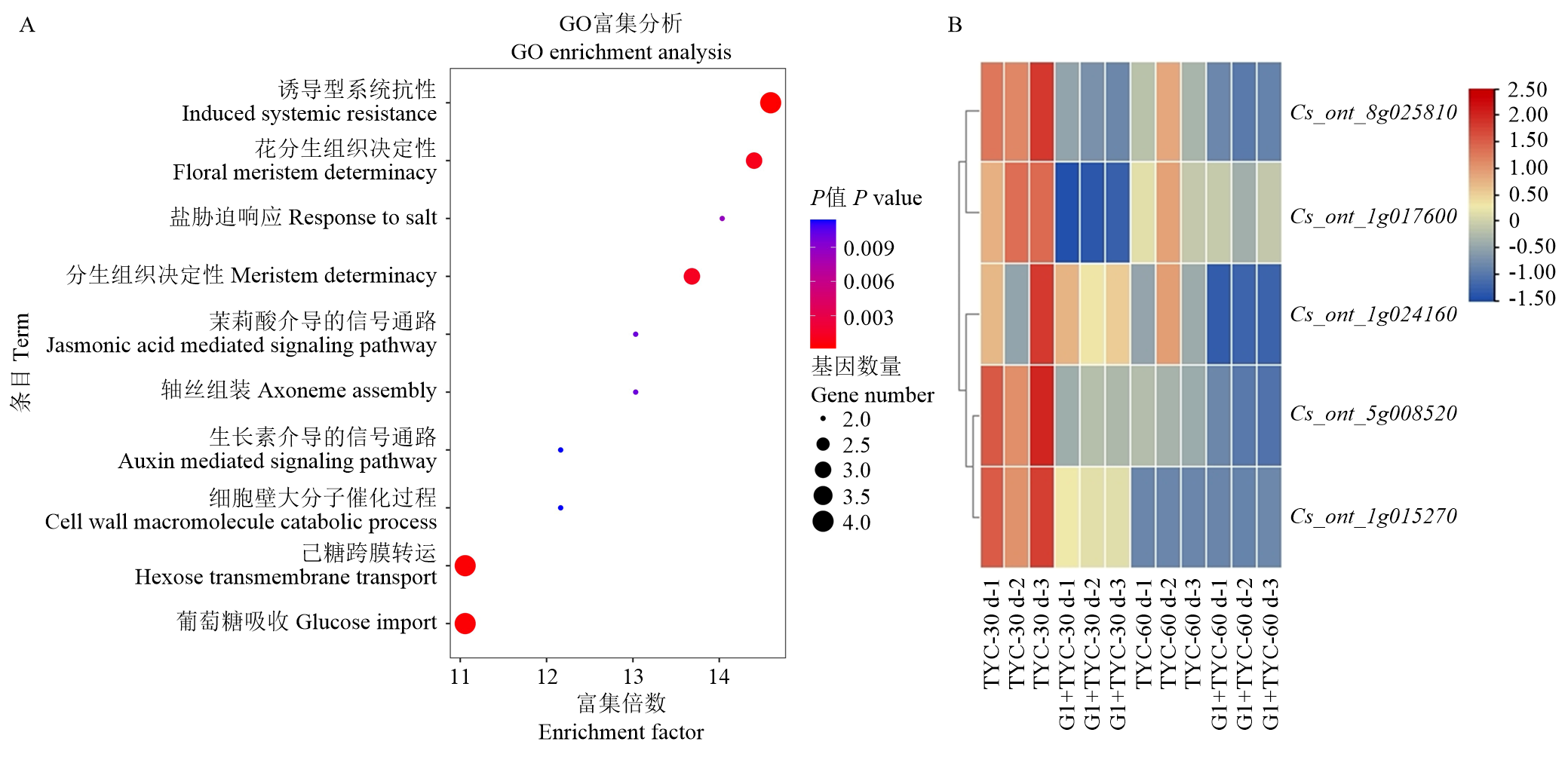
【Objective】Using the somatic cybrid Satsuma mandarin + Taoye sweet orange (G1+TYC), generated by protoplast fusion, and its mesophyll parent Taoye sweet orange (TYC) as materials, this study aimed to elucidate the physiological mechanism underlying fruit enlargement in G1+TYC and to identify candidate genes associated with the increased fruit size observed in this somatic cybrid.【Method】Ovaries and pulp tissues of G1+TYC and TYC at different developmental stages were used as materials. Dynamic monitoring of fruit size traits, determination of sugar and acid contents, and measurement of endogenous hormone levels were performed across various fruit developmental stages including the mature stage. Combined with transcriptome and bioinformatics analysis, this study was conducted to clarify the physiological causes of fruit enlargement in G1+TYC and to identify key candidate genes controlling fruit size.【Result】Dynamic monitoring of fruit development in three consecutive years showed that the transverse diameter of G1+TYC fruits was significantly larger than that of TYC starting from 75 days after flower (DAF), and the longitudinal diameter exhibited a significant superiority from 105 DAF onwards, with these differences persisting until 240 DAF. Taking the 2022 data as an example, the transverse and longitudinal diameters of the fruits from G1+TYC reached 79.14 and 66.75 mm at 240 DAF, respectively, while those from TYC were only 56.02 and 53.20 mm during the same period. This directly reflects the significant enlargement of fruit diameter of G1+TYC compared with TYC. The mature fruits of G1+TYC also had significantly higher fruit weight, segment width, single juice sac weight and area than TYC, indicating that the enlargement of juice sac volume contributed to the increase in segment width, thereby promoting the overall fruit size expansion of G1+TYC. Sugar and acid content determination revealed that the contents of fructose, glucose and sucrose in G1+TYC pulp were significantly higher than those in TYC during 90-240 DAF, whereas the contents of citric acid and total acids were significantly lower in G1+TYC. In terms of other organic acids, the difference in quinic acid and malic acid content between the two genotypes showed no obvious regularity. Endogenous hormone analysis demonstrated that the IAA content in G1+TYC pulp was significantly higher than that in TYC during 30-60 DAF. The GA3 content of G1+TYC was significantly higher only at 0 DAF, while the ZT content showed poor repeatability across the two years of measurement. The ABA content increased rapidly after 90 DAF, and the ABA content in G1+TYC pulp was significantly higher than that in TYC at 180 DAF. Combined with transcriptome sequencing and GO enrichment analysis, five genes related to IAA metabolism were identified to be differentially expressed between G1+TYC and TYC during 30-60 DAF, which might serve as key candidate genes determining the fruit enlargement of G1+TYC.【Conclusion】This study revealed that enlargement of juice sac volume and elevated IAA content in pulp at early stage of fruit development were closely associated with fruit enlargement of G1+TYC. Moreover, candidate genes related to fruit enlargement in G1+TYC were identified based on transcriptome analysis, providing valuable genetic resources for citrus fruit size regulating mechanism research and further genetic improvement.

Key words: Citrus, cybrid, fruit size, endogenous hormones, transcriptome

Table 1

Mass spectrometry parameters of different plant endogenous hormones"

激素种类
Hormones type
保留时间
Retention time (min)
母离子
Parent ions (m·z-1)
子离子
Sub ion(m·z-1)
离子模式
Ionic mode
吲哚-3-乙酸 IAA 8.6 174 128 负离子Negative
赤霉素 GA3 7.7 345 239 负离子Negative
玉米素 Zeatin 4.8 220 136 正离子Positive
脱落酸 ABA 8.9 263 153 负离子Negative

Table 2

Sequence of primers"

引物名称 Primer name 正向引物 Forward primer (5′-3′) 反向引物 Reverse primer (5′-3′)
核基因组引物
Nuclear genome primer
TAA15 GAAAGGGTTACTTGACCAGGC CTTCCCAGCTGCACAAGC
线粒体基因组引物
Mitochondrial genome primer
G1 ACGCTTTGGTTAGGCTTGG GGCTCGAATGCCTTTACG
HB CCCGCCCTTAGGAGATTG TCCCTCGGACTCGGAAAG
叶绿体基因组引物
Chloroplast genome primer
M ACTCGATATTTCAACCCATCC CACAATTCCGATCCAGAGC
NTCP9 CTTCCAAGCTAACGATGC CTGTCCTATCCATTAGACAATG

Fig. 1

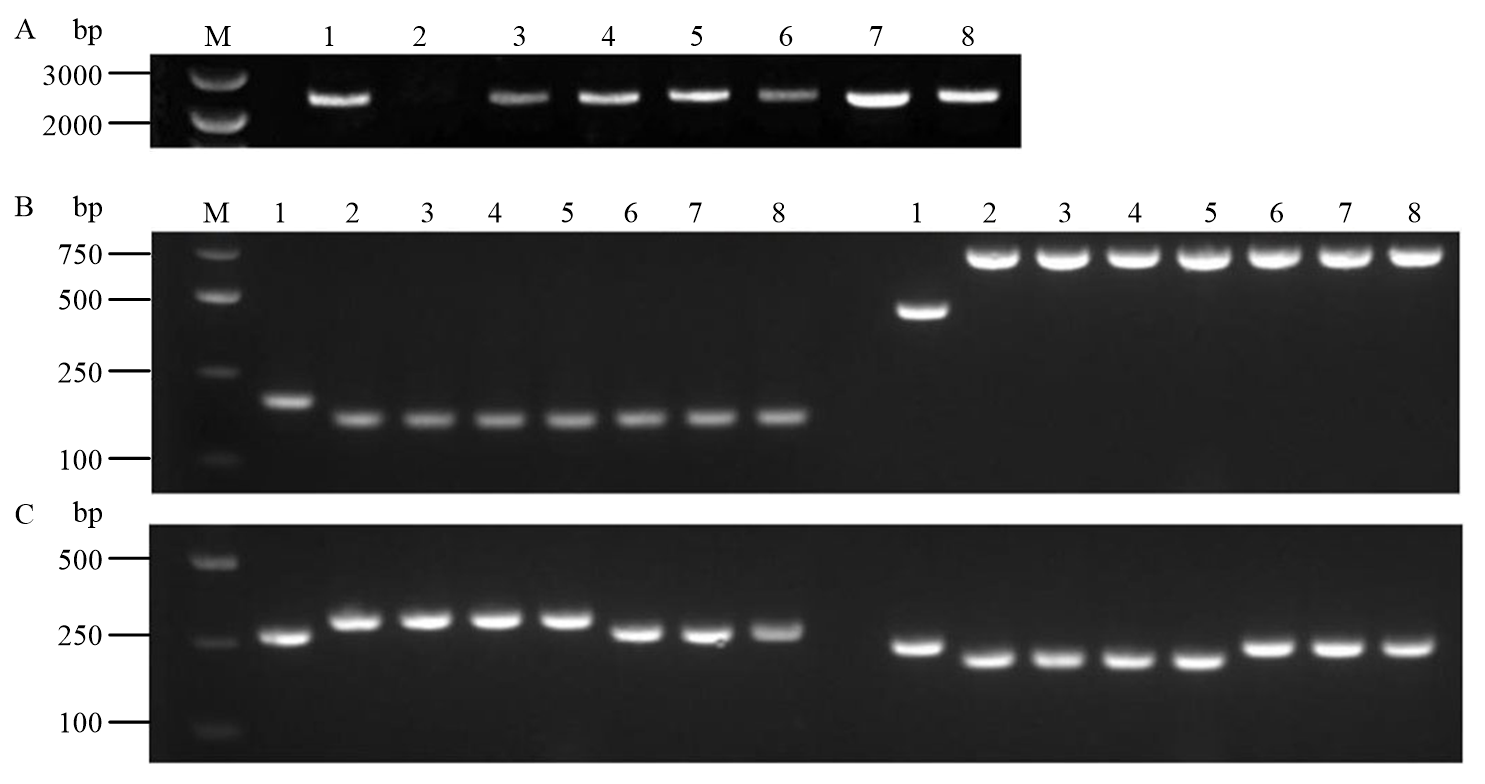
Identification of genetic origin of nuclear and cytoplasmic genomes of the G1+TYC A: Nuclear genome (TAA15); B: Mitochondrial genome (left: G1, right: HB); C: Chloroplast genome (left: M, right: NTCP9). M: DNA marker; 1: Taoye sweet orange; 2: Guoqing No.1 Satsuma mandarin; 3-8: Satsuma mandarin+Taoye sweet orange somatic cybrid"

Fig. 2

Fruits of G1+TYC and TYC at different developmental stages and their fruit growth curves A: Fruits of G1+TYC and TYC collected at 15-240 days after flower; B: Transverse diameter growth curve of G1+TYC and TYC; C: Longitudinal diameter growth curve of G1+TYC and TYC. DAF: Days after flower. *, ** indicate significant differences at P<0.05 and P<0.01, respectively. The same as below"

Fig.3

Phenotypic comparison of fruit size, weight and other morphological traits between G1+TYC and TYC A: Mature fruits of G1+TYC and TYC; B: Mature juice sacs of G1+TYC and TYC; C: Phenotypic comparison of other fruit morphological traits between G1+TYC and TYC"

Fig. 4

Statistics of soluble sugar and organic acid contents in the pulp of G1+TYC and its mesophyll parent TYC at different developmental stages in 2023"

Fig. 5

Determination of plant hormone content in the pulp of G1+TYC and TYC during 2022 and 2023"

Fig. 6

Pathway enrichment of differentially expressed genes between G1+TYC and TYC and expression of candidate genes A: Enrichment of differentially expressed gene (DEGs) pathways between G1+TYC and TYC at 60 days after flower; B: Clustering heatmap of TPM values for five DEGs in the IAA pathway in the pulp of G1+TYC and TYC at 30 days and 60 days after flower"

[1]
郭文武, 叶俊丽, 邓秀新. 新中国果树科学研究70年: 柑橘. 果树学报, 2019, 36(10): 1264-1272.
GUO W W, YE J L, DENG X X. Fruit scientific research in New China in the past 70 years: Citrus. Journal of Fruit Science, 2019, 36(10): 1264-1272. (in Chinese)
[2]
HUSSAIN S B, SHI C Y, GUO L X, KAMRAN H M, SADKA A, LIU Y Z. Recent advances in the regulation of citric acid metabolism in Citrus fruit. Critical Reviews in Plant Sciences, 2017, 36(4): 241-256.

doi: 10.1080/07352689.2017.1402850
[3]
RAO M J, ZUO H, XU Q. Genomic insights into Citrus domestication and its important agronomic traits. Plant Communications, 2020, 2(1): 100138.

doi: 10.1016/j.xplc.2020.100138
[4]
CHATER J M, GARNER L C. Foliar nutrient applications to ‘Wonderful’ pomegranate (Punica granatum L.): Ⅱ. Effects on leaf nutrient status and fruit split, yield and size. Scientia Horticulturae, 2018, 242: 207-213.

doi: 10.1016/j.scienta.2018.07.015
[5]
鲍江峰, 夏仁学, 彭抒昂. 生态因子对柑桔果实品质的影响. 应用生态学报, 2004, 15(8): 1477-1480.
BAO J F, XIA R X, PENG S A. Effect of ecological factors on Citrus fruit quality. Chinese Journal of Applied Ecology, 2004, 15(8): 1477-1480. (in Chinese)
[6]
李杰, 罗奕, 张琪悦, 潘腾飞, 于远, 佘文琴, 潘东明, 潘鹤立. 调控果实大小相关基因的研究进展. 福建农业科技, 2023, 54(5): 28-36.
LI J, LUO Y, ZHANG Q Y, PAN T F, YU Y, SHE W Q, PAN D M, PAN H L. Research progress on the genes related to the regulation of fruit size. Fujian Agricultural Science and Technology, 2023, 54(5): 28-36. (in Chinese)
[7]
黄礼森, 李树玲, 丛佩华. 梨多倍体与二倍体性状比较. 中国果树, 1990(3): 30-31, 20.
HUANG L S, LI S L, CONG P H. Comparison of polyploid and diploid characters of pear. China Fruits, 1990(3): 30-31, 20. (in Chinese)
[8]
ZHANG N, BREWER M T, VAN DER KNAAP E. Fine mapping of fw3.2 controlling fruit weight in tomato. Theoretical and Applied Genetics, 2012, 125(2): 273-284.

doi: 10.1007/s00122-012-1832-8 pmid: 22406954
[9]
FRARY A, NESBITT T C, FRARY A, GRANDILLO S, VAN DER KNAAP E, CONG B, LIU J P, MELLER J, ELBER R, ALPERT K B, et al. fw2.2: A quantitative trait locus key to the evolution of tomato fruit size. Science, 2000, 289(5476): 85-88.

doi: 10.1126/science.289.5476.85 pmid: 10884229
[10]
韩洪强. 控制茄子果型相关性状关键基因的克隆及功能研究[D]. 上海: 上海交通大学, 2014.
HAN H Q. The cloning and function analysis of fruit shape controlling key genes in eggplant[D]. Shanghai: Shanghai Jiao Tong University, 2014. (in Chinese)
[11]
罗艾, 龚桂芝, 彭祝春, 杨程, 常珍珍, 洪棋斌. 柑橘果实大小与质量的遗传分析和数量性状位点定位. 浙江大学学报(农业与生命科学版), 2021, 47(6): 719-728.
LUO A, GONG G Z, PENG Z C, YANG C, CHANG Z Z, HONG Q B. Genetic analysis and quantitative trait locus mapping of Citrus fruit size and mass. Journal of Zhejiang University (Agriculture & Life Sciences), 2021, 47(6): 719-728. (in Chinese)
[12]
ZHANG L, XU Y, LI Y T, ZHENG S S, ZHAO Z M, CHEN M L, YANG H J, YI H L, WU J X. Transcription factor CsMYB77 negatively regulates fruit ripening and fruit size in Citrus. Plant Physiology, 2024, 194(2): 867-883.

doi: 10.1093/plphys/kiad592
[13]
肖诗鑫. 柑橘胞质杂种创制及原生质体再生过程的细胞学研究[D]. 武汉: 华中农业大学, 2014,
XIAO S X. Production of somatic cybrids and cytological research on protoplast regeneration in Citrus[D]. Wuhan: Huazhong Agricultural University, 2014. (in Chinese)
[14]
管书萍, 王婷婷, 周阳广, 朱虹娴, 伍小萌, 龙春瑞, 高俊燕, 郭文武, 解凯东. 柑橘2个三倍体有性后代群体果实品质性状的遗传特点. 果树学报, 2024, 41(3): 369-378.
GUAN S P, WANG T T, ZHOU Y G, ZHU H X, WU X M, LONG C R, GAO J Y, GUO W W, XIE K D. Inheritance of some quality traits of the fruits in triploid hybrids derived from two Citrus 2x × 4x interploidy crosses. Journal of Fruit Science, 2024, 41(3): 369-378. (in Chinese)
[15]
王婷婷, 周阳广, 朱虹娴, 张苗, 段耀园, 曹惠祥, 管书萍, 解凯东, 伍小萌, 龙春瑞, 等. 2个柑橘三倍体有性群体果实糖酸性状遗传评价. 果树学报, 2022, 39(7): 1147-1156.
WANG T T, ZHOU Y G, ZHU H X, ZHANG M, DUAN Y Y, CAO H X, GUAN S P, XIE K D, WU X M, LONG C R, et al. Inheritance of sugar and acid contents in the fruits of triploid hybrids originated from two 2x × 4x crosses with Nadorcott tangor as a female parent. Journal of Fruit Science, 2022, 39(7): 1147-1156. (in Chinese)
[16]
PAN X Q, WELTI R, WANG X M. Quantitative analysis of major plant hormones in crude plant extracts by high-performance liquid chromatography-mass spectrometry. Nature Protocols, 2010, 5(6): 986-992.

doi: 10.1038/nprot.2010.37 pmid: 20448544
[17]
CHENG Y J, GUO W W, YI H L, PANG X M, DENG X X. An efficient protocol for genomic DNA extraction from Citrus species. Plant Molecular Biology Reporter, 2003, 21(2): 177-178.

doi: 10.1007/BF02774246
[18]
KIJAS J M H, THOMAS M R, FOWLER J C S, ROOSE M L. Integration of trinucleotide microsatellites into a linkage map of Citrus. Theoretical and Applied Genetics, 1997, 94(5): 701-706.

doi: 10.1007/s001220050468
[19]
李超超. 基于柑橘核质基因组演化揭示雄性不育遗传基础[D]. 武汉: 华中农业大学, 2023.
LI C C. Revealing the genetic basis of male sterility based on the evolution of Citrus cytonuclear genome[D]. Wuhan: Huazhong Agricultural University, 2023. (in Chinese)
[20]
BRYAN G J, MCNICOLL J, RAMSAY G, MEYER R C, DE JONG W S. Polymorphic simple sequence repeat markers in chloroplast genomes of Solanaceous plants. Theoretical and Applied Genetics, 1999, 99(5): 859-867.

doi: 10.1007/s001220051306
[21]
谢善鹏, 解凯东, 夏强明, 周锐, 张成磊, 郑浩, 伍小萌, 郭文武. 柑橘6个地方品种资源四倍体高效发掘及分子鉴定. 果树学报, 2022, 39(1): 1-9.
XIE S P, XIE K D, XIA Q M, ZHOU R, ZHANG C L, ZHENG H, WU X M, GUO W W. Efficient exploration and SSR identification of 53 doubled diploid seed-lings from six local Citrus cultivars and germplasm resources. Journal of Fruit Science, 2022, 39(1): 1-9. (in Chinese)
[22]
BOLGER A M, LOHSE M, USADEL B. Trimmomatic: A flexible trimmer for Illumina sequence data. Bioinformatics, 2014, 30(15): 2114-2120.

doi: 10.1093/bioinformatics/btu170 pmid: 24695404
[23]
KIM D, LANGMEAD B, SALZBERG S L. HISAT: A fast spliced aligner with low memory requirements. Nature Methods, 2015, 12(4): 357-360.

doi: 10.1038/nmeth.3317 pmid: 25751142
[24]
PERTEA M, PERTEA G M, ANTONESCU C M, CHANG T C, MENDELL J T, SALZBERG S L. StringTie enables improved reconstruction of a transcriptome from RNA-seq reads. Nature Biotechnology, 2015, 33(3): 290-295.

doi: 10.1038/nbt.3122 pmid: 25690850
[25]
WANG N, LI C C, KUANG L H, WU X M, XIE K D, ZHU A D, XU Q, LARKIN R M, ZHOU Y F, DENG X X, et al. Pan-mitogenomics reveals the genetic basis of cytonuclear conflicts in citrus hybridization, domestication, and diversification. Proceedings of the National Academy of Sciences of the United States of America, 2022, 119(43): e2206076119.
[26]
WANG R, SHI Y C, XIE K D, XIE Z Z, WU X M, GUO W W. The citrus somatic cybrids exhibit various degrees of male sterility conferred by mitochondrial genome of Satsuma mandarin (Citrus unshiu). Scientia Horticulturae, 2024, 338: 113624.

doi: 10.1016/j.scienta.2024.113624
[27]
OLMSTEAD J W, IEZZONI A F, WHITING M D. Genotypic differences in sweet cherry fruit size are primarily a function of cell number. Journal of the American Society for Horticultural Science, 2007, 132(5): 697-703.

doi: 10.21273/JASHS.132.5.697
[28]
MU Q, HUANG Z J, CHAKRABARTI M, ILLA-BERENGUER E, LIU X X, WANG Y P, RAMOS A, VAN DER KNAAP E. Fruit weight is controlled by Cell Size Regulator encoding a novel protein that is expressed in maturing tomato fruits. PLoS Genetics, 2017, 13(8): e1006930.

doi: 10.1371/journal.pgen.1006930
[29]
MALLADI A, HIRST P M. Increase in fruit size of a spontaneous mutant of ‘Gala’ apple (Malus x domestica Borkh.) is facilitated by altered cell production and enhanced cell size. Journal of Experimental Botany, 2010, 61(11): 3003-3013.

doi: 10.1093/jxb/erq134
[30]
WANG Z Y, ZHOU Z Y, WANG L M, YAN S S, CHENG Z H, LIU X F, HAN L J, CHEN G X, WANG S Y, SONG W Y, et al. The CsHEC1-CsOVATE module contributes to fruit neck length variation via modulating auxin biosynthesis in cucumber. Proceedings of the National Academy of Sciences of the United States of America, 2022, 119(39): e2209717119.
[31]
SUO J W, LIU Y, YAN J W, LI Q X, CHEN W J, LIU Z H, ZHANG Z Y, HU Y Y, YU W W, YAN J W, et al. Sucrose promotes cone enlargement via the TgNGA1-TgWRKY47-TgEXPA 2 module in Torreya grandis. New Phytologist, 2024, 243(5): 1823-1839.

doi: 10.1111/nph.v243.5
[32]
JIA H F, WANG Y H, SUN M Z, LI B B, HAN Y, ZHAO Y X, LI X L, DING N, LI C, JI W L, et al. Sucrose functions as a signal involved in the regulation of strawberry fruit development and ripening. New Phytologist, 2013, 198(2): 453-465.

doi: 10.1111/nph.12176 pmid: 23425297
[33]
LI J, CHEN G P, ZHANG J L, SHEN H, KANG J, FENG P P, XIE Q L, HU Z L. Suppression of a hexokinase gene, SlHXK1, leads to accelerated leaf senescence and stunted plant growth in tomato. Plant Science, 2020, 298: 110544.

doi: 10.1016/j.plantsci.2020.110544
[34]
KENDE H, ZEEVAART J. The five “classical” plant hormones. The Plant Cell, 1997, 9(7): 1197-1210.
[35]
IWAHORI S. Auxin of tomato fruit at different stages of its development with a special reference to high temperature injuries. Plant and Cell Physiology, 1967, 8(1): 15-22.

doi: 10.1093/oxfordjournals.pcp.a079236
[36]
MILLER A N, WALSH C S, COHEN J D. Measurement of indole-3- acetic acid in peach fruits (Prunus persica L. batsch cv redhaven) during development. Plant Physiology, 1987, 84(2): 491-494.

doi: 10.1104/pp.84.2.491
[37]
SU L Y, BASSA C, AUDRAN C, MILA I, CHENICLET C, CHEVALIER C, BOUZAYEN M, ROUSTAN J P, CHERVIN C. The auxin Sl-IAA17 transcriptional repressor controls fruit size via the regulation of endoreduplication-related cell expansion. Plant & Cell Physiology, 2014, 55(11): 1969-1976.
[38]
KIM J S, EZURA K, LEE J, ARIIZUMI T, EZURA H. Genetic engineering of parthenocarpic tomato plants using transient SlIAA9 knockdown by novel tissue-specific promoters. Scientific Reports, 2019, 9: 18871.

doi: 10.1038/s41598-019-55400-7
[39]
STASWICK P E, SERBAN B, ROWE M, TIRYAKI I, MALDONADO M T, MALDONADO M C, SUZA W. Characterization of an Arabidopsis enzyme family that conjugates amino acids to indole-3-acetic acid. The Plant Cell, 2005, 17(2): 616-627.

doi: 10.1105/tpc.104.026690
[40]
NAKAZAWA M, YABE N, ICHIKAWA T, YAMAMOTO Y Y, YOSHIZUMI T, HASUNUMA K, MATSUI M. DFL1 an auxin- responsive GH3 gene homologue, negatively regulates shoot cell elongation and lateral root formation, and positively regulates the light response of hypocotyl length. The Plant Journal, 2001, 25(2): 213-221.
[41]
TAKASE T, NAKAZAWA M, ISHIKAWA A, KAWASHIMA M, ICHIKAWA T, TAKAHASHI N, SHIMADA H, MANABE K, MATSUI M. ydk1-D, an auxin-responsive GH3 mutant that is involved in hypocotyl and root elongation. The Plant Journal, 2004, 37(4): 471-483.

doi: 10.1046/j.1365-313X.2003.01973.x
[42]
TAKASE T, NAKAZAWA M, ISHIKAWA A, MANABE K, MATSUI M. DFL2 a new member of the Arabidopsis GH3 gene family, is involved in red light-specific hypocotyl elongation. Plant & Cell Physiology, 2003, 44(10): 1071-1080.
[1] SHEN LiQiong, HE LinLi, LIU Ni, LU JunXing, ZHU Bo, ZHANG Tao. Effects of Potassium Levels on Waterlogging Resistance and Endogenous Hormone Balance of Rapeseed During Seedling Stage [J]. Scientia Agricultura Sinica, 2026, 59(3): 528-542.
[2] WANG ZhongNi, LEI Yue, LI JiaLi, GONG YanLong, ZHU SuSong. Functions of ABC Transporter OsARG1 in Rice Heading Date Regulation [J]. Scientia Agricultura Sinica, 2026, 59(1): 1-16.
[3] WANG SiQi, ZOU LiRen, BAI RuiWen, YAN Ke, WANG SiYang, QI XiaoGuang, SHEN HaiLin, WEN JingHui. Screening of Key Genes Related to Gibberellic Acid Regulation of Rachis Hardening in Honey Grapes [J]. Scientia Agricultura Sinica, 2026, 59(1): 179-189.
[4] ZHAO YuXuan, MIAO JiYuan, HU Wei, ZHOU ZhiGuo. Effects of Low Temperature at Seedling Stage on Cotton Floral Bud Differentiation and Cotton Plant Yield [J]. Scientia Agricultura Sinica, 2025, 58(7): 1311-1320.
[5] ZOU XiaoWei, XIA Lei, ZHU XiaoMin, SUN Hui, ZHOU Qi, QI Ji, ZHANG YaFeng, ZHENG Yan, JIANG ZhaoYuan. Analysis of Disease Resistance Induced by Ustilago maydis Strain with Overexpressed UM01240 Based on Transcriptome Sequencing [J]. Scientia Agricultura Sinica, 2025, 58(6): 1116-1130.
[6] SUN Ping, ZHU WenCan, LIN XianRui, WU JiaQi, CAO YiWen, CHEN ChenFei, WANG Yi, ZHU JianXi, JIA HuiJuan, QIAN MinJie, SHEN JianSheng. Effects of Rainy and Low Light Conditions on Coloration and Flavonoid Accumulation in Peach Peel Based on Metabolomic and Transcriptomic Analyses [J]. Scientia Agricultura Sinica, 2025, 58(6): 1173-1194.
[7] XIE LuLu, LI Fu, ZHANG SiYuan, GAO JianChang. Analysis of Conserved Genes in Adventitious Root Formation Based on Cross Species Transcriptomes [J]. Scientia Agricultura Sinica, 2025, 58(6): 1195-1209.
[8] GAO YanHao, WANG TingTing, BAI WeiWei, DU XingJie, LIU Xian, QIN BenYuan, FU Tong, SUN Yu, GAO TengYun, ZHANG TianLiu. The Combination of Lipidome and Transcriptome Revealed the Differential Expression Patterns of Lipid Characteristics in Different Muscle Tissues for Nanyang Cattle [J]. Scientia Agricultura Sinica, 2025, 58(6): 1239-1258.
[9] WANG Fan, LIU ChenWei, LU HongChen, XU RenChao, BIAN XiaoChun. Transcriptome Analysis of Vicia faba Response to Alternaria alternata Infection and Validation of the Disease Resistance Function of VfPR4 [J]. Scientia Agricultura Sinica, 2025, 58(22): 4656-4672.
[10] MU YingTong, LU JingShi, ZHANG YuTong, SHI FengLing. Identification of Key Drought-Responsive Genes in Upright Medicago ruthenica Sojak cv. Zhilixing Based on Transcriptome Sequencing and WGCNA [J]. Scientia Agricultura Sinica, 2025, 58(21): 4528-4543.
[11] PAN Yuan, WANG De, LIU Nan, MENG XiangLong, DAI PengBo, LI Bo, HU TongLe, WANG ShuTong, CAO KeQiang, WANG YaNan. Evaluation of the Effectiveness of Two High-Throughput Sequencing Techniques in Identifying Apple Viruses and Identification of Two Novel Viruses [J]. Scientia Agricultura Sinica, 2025, 58(2): 266-280.
[12] LIN Yan, ZHENG LingLing, TIAN Jia, WEN Yue, CHEN Chen, WANG Lei. Based on Transcriptomics and Proteomics to Provide Insights into the Molecular Mechanisms of Calyx Abscission in Korla Xiangli [J]. Scientia Agricultura Sinica, 2025, 58(18): 3744-3765.
[13] DONG Xue, CHEN MengQiu, SHAO Jin, WU XueYou, TANG PeiAn. Construction of a Differential Gene Expression and Quality Regulation Network in Stored Rice Grain Using WGCNA [J]. Scientia Agricultura Sinica, 2025, 58(14): 2885-2903.
[14] CAO YanYong, CHENG ZeQiang, MA Juan, YANG WenBo, ZHU WeiHong, SUN XinYan, LI HuiMin, XIA LaiKun, DUAN CanXing. Integrating Transcriptomic and Metabolomic Analyses Reveals Maize Responses to Stalk Rot Caused by Fusarium proliferatum [J]. Scientia Agricultura Sinica, 2025, 58(1): 75-90.
[15] QI RenJie, NING Yu, LIU Jing, LIU ZhiYang, XU Hai, LUO ZhiDan, CHEN LongZheng. Identification and Analysis of Genes Related to Bitter Gourd Saponin Synthesis Based on Transcriptome Sequencing [J]. Scientia Agricultura Sinica, 2024, 57(9): 1779-1793.
Viewed
Full text


Abstract

Cited

  Shared   
  Discussed   
No Suggested Reading articles found!