Scientia Agricultura Sinica ›› 2024, Vol. 57 ›› Issue (23): 4619-4631.doi: 10.3864/j.issn.0578-1752.2024.23.004

;

• SPECIAL FOCUS: MINING AND UTILIZATION OF CROP DISEASE RESISTANCE AND INSECT-RELATED GENES • Previous Articles     Next Articles

Fine Mapping and Analysis of Pyramiding Effects of Rice Brown Planthopper Resistance Genes QBPH1 and QBPH4

XIONG ShangYe1(), ZHANG Xiang1, LIANG BaoHui1, YE YangDong1, LI YuYang1, ZHU Xiao1, ZHU ZhiHong1, GUAN HuaZhong3, ZHANG Shuai1,2(), WU JianGuo1,2(), HU Jie1,2()   

  1. 1 College of Plant Protection, Fujian Agriculture and Forestry University/State Key Laboratory for Ecological Pest Control of Fujian and Taiwan Crops/Vector-Borne Virus Research Center, Fuzhou 350002
    2 School of Future Technology, Fujian Agriculture and Forestry University/Center for Genetic Improvement, Fuzhou 350002
    3 College of Agriculture, Fujian Agriculture and Forestry University/Fujian Key Laboratory of Crop Breeding by Design and Key Laboratory of Genetics, Fuzhou 350002
  • Received:2024-05-10 Accepted:2024-06-17 Online:2024-12-01 Published:2024-12-07

Abstract:

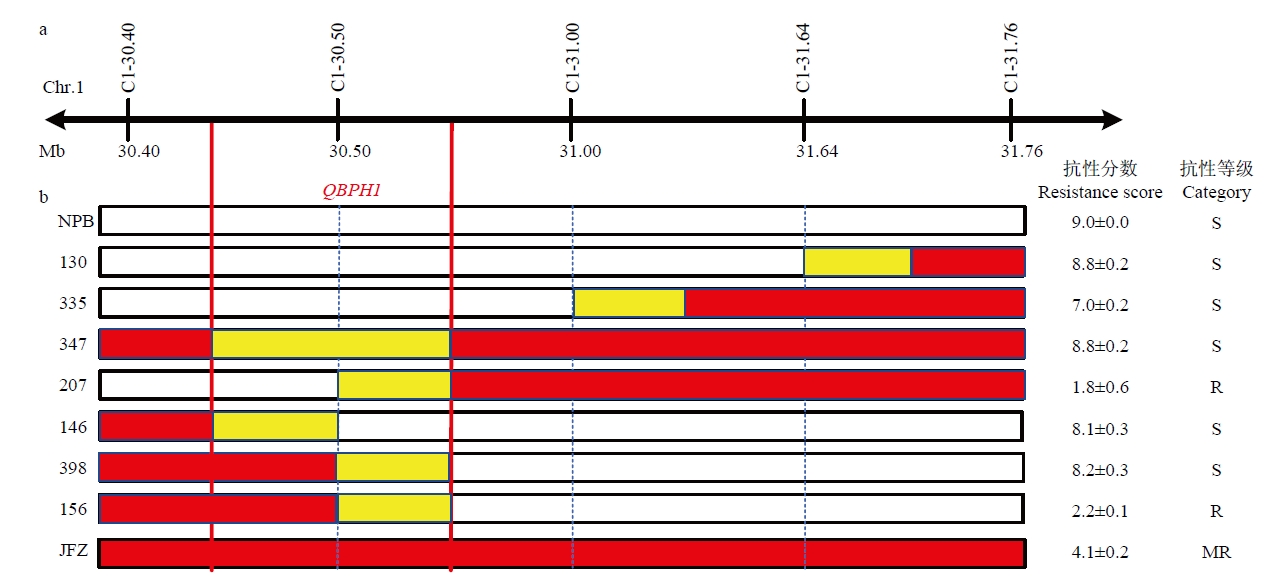
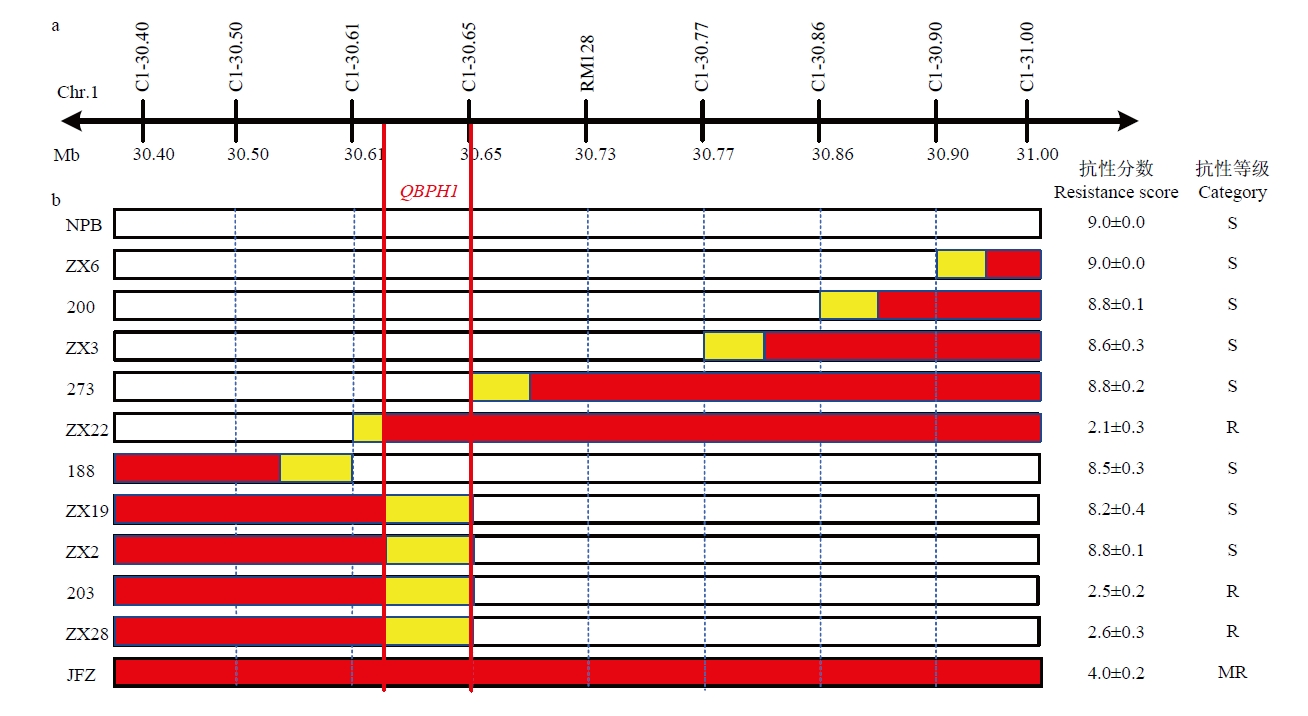
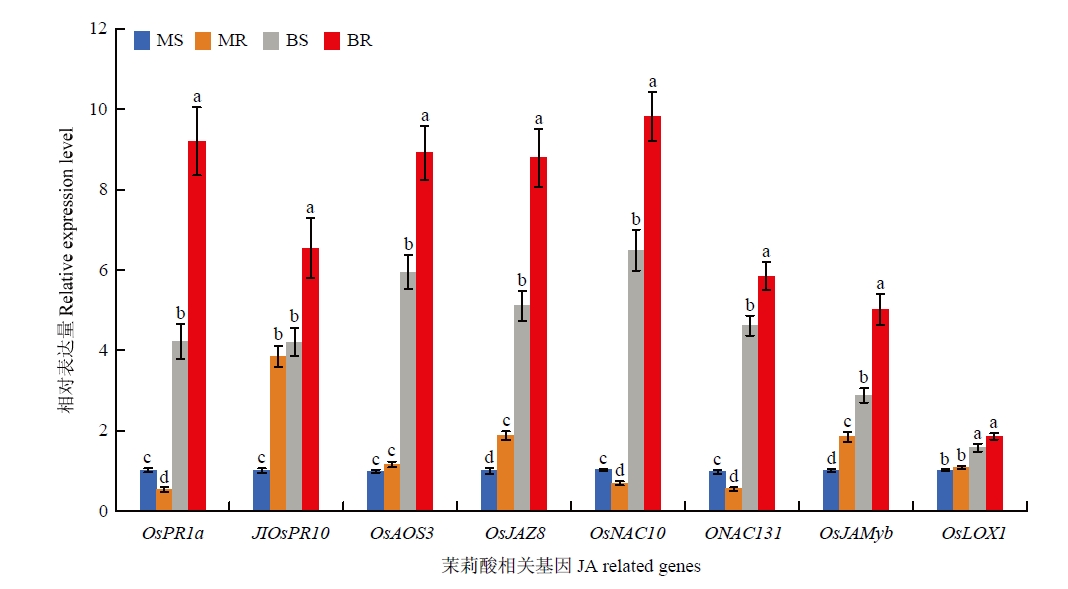
【Objective】 This study aims to discover new quantitative trait loci (QTLs) for resistance to the brown planthopper (BPH) in rice by utilizing a genetic population and to assess the pyramiding effects of these QTLs, thereby providing crucial genetic materials and resources for breeding insect-resistant rice. 【Method】 A recombinant inbred line (RIL) population derived from a cross between susceptible NPB and resistant Jiafuzhan was used, combined with seedling stage resistance evaluation and extreme mixed pool sequencing (BSA-seq) to map BPH resistance QTLs. Further, fine mapping, candidate gene identification, pyramiding effect analysis, and mixed-pool transcriptome sequencing (BSR-seq) were employed to elucidate the physiological and molecular mechanisms mediated by these QTLs. 【Result】 BSA-seq identified two major resistance QTLs on chromosomes 1 (30-32 Mb) and 4 (5-7 Mb), named QBPH1 and QBPH4, respectively. Interval-linked molecular markers confirmed the authenticity of these QTLs. QBPH4 coincides with previously cloned BPH3 and BPH15, while QBPH1 represents a newly discovered QTL. High-density markers and recombinant analysis further narrowed the QBPH1 region to 30.61-30.65 Mb. This analysis identified Os01g53294 and Os01g53330 as reliable candidate genes, which code for a respiratory burst oxidase protein B and an anthocyanin 5,3-O-glucosyltransferase, respectively. In evaluations of seedling resistance, brown planthopper honeydew area and weight, insect weight gain, lethality, and preference, comparisons between QBPH1 and QBPH4 single genes and their polymerized lines revealed no significant enhancement in resistance. Both QBPH1 and QBPH4 mediated antibiosis and antixenosis mechanisms with varying effects. BSR-seq analysis highlighted significant enrichment of differentially expressed genes (DEGs) involved in transcriptional regulation, protein phosphorylation, and redox processes among different QBPH1 alleles. Additionally, genes associated with jasmonic acid (JA) synthesis and signaling pathways were significantly upregulated in resistant materials, confirmed by RT-qPCR experiments. 【Conclusion】 A novel BPH resistance QTL, QBPH1, was successfully identified on chromosome 1 of rice. QBPH1 mediated both antibiosis and avoidance against BPH, though its aggregation effect with another QTL was not significant. QBPH1 may mediate defense mechanisms against BPH through involvement in the JA pathway. Based on this, Os01g53294 and Os01g53330 have been validated as reliable candidate genes for QBPH1.

Key words: rice, brown planthopper resistance, QTL mapping, gene pyramiding, RNA-seq

Table 1

Primer sequences"

引物 primer 正向引物 Forward primer (5′-3′) 反向引物 Reverse primer (5′-3′) 用途 Purpose
C1-30.40 GAGACTAGTGCTTCCTAGTAG CCAGATTTCTTTATAAGAAGCATG 定位 Mapping
C1-30.50 TCGGCCAGCTGATACGGTATCG TTAGAACAAGCCAAAATAGTCGTT
C1-30.61 TGCAACATAGGTGCTTTGCC CCTGCCAGCAGCCTAACTTA
C1-30.65 CCCTACACACATTGGCATGC AGGCTCTTTTGTTCACTTTACACA
RM128 TTCTTGGAAGCGAAGAGTGAGG CCTCCTTGTGCTCAGCCATGC
C1-30.77 AAACCCCTGAAGTGAATCGC CATCGCCGAAGTCGTTCAC
C1-30.86 TGTTAGGGTGGCTGTTGACT GGAACAACCACAGGAACACA
C1-30.90 TCTCGTGGTTTCCAGACGAA ACTGGGATGGTTCAGACCTC
C1-31.00 TTCATTGCGCCTTTCAGTCCCAT GAGTGGACTGTAGAGATCTCCCAC
C1-31.64 ATGCAGCCGGTCTCGTC TCGCCAAGGTGCTCAGCTC
C1-31.72 AGGAGAACTTCAGAGTGGCG CGTCCGCGGTGAAG
C1-31.76 ACCGGGGCCTAACTAGTCTA GCGGAAAAACGGGGAGAAAG
OsPR1a GTCTTCATCACCTGCAACTACTC CATGCATAAACACGTAGCATAGCA RT-qPCR
JIOsPR10 GCAGCGTCAGGCAGTTCAA GAACTCCAGCCTCTCCTTCATG
OsJAZ8 GTCGCCCACCATCAACAGCA CCGTTGGTGTCATCACTCTT
OsNAC10 TCCTTTGATGATGGCAGCAGCA TGCGGTTTCTTGACAACGGCAT
ONAC131 AATATATCCAAACCAAACACTA AGCAGCGGTTTCTTGGCAACAT
OsJAMyb GAAGAGGACTGGGAAGAGCTG GCTATCTTGGACCATCGGTTGC
OsLOX1 GCATCCCCAACAGCACATC AAGATTTGGGAGTGACATATTGG

Fig. 1

Phenotypes of BPH resistance and preliminary mapping of QTLs in RIL population a: Phenotypic map of resistance to brown planthopper at seedling stage of RIL population and parents; b: RIL population resistance score frequency distribution map; c: Mut-map of QTLs for brown planthopper resistance based on allele frequency difference"

Fig. 2

Physical map and fine mapping of QBPH1 a: Physical map of QBPH1; b: The genotype and phenotype of some recombinant plants. White region: The genotype of NPB; Red region: The genotype of JFZ; Yellow region: Recombined segments; 130-156: number of recombinant plants; S: Susceptible; R: Resistant; MR: Moderately resistant. The red frame line indicates the location interval of QBPH1. The same as below"

Fig. 3

Further fine mapping of QBPH1"

Fig. 4

Gene effect of resistance to brown planthopper in QBPH1 and QBPH4 families a: The photos of seedling resistance and honeydew secretion of BPH; b: Resistance score at seedling stage; c: Weight gain of BPH; d: Honeydew area of BPH; e: Honeydew weight of BPH; f: Preference of settled BPH; g: Survival rate of BPH. The different letters indicate that the analysis of variance is significantly different at the 0.05 level. The same as below"

Fig. 5

DEGs analysis by RNA-seq in the resistant and susceptible groups with contrary QBPH1 genotypes before and after infestation a: Wayne diagram; b: GO enrichment analysis of DEGs after comparison between the resistant group (BR) and the susceptible group (BS) after BPH infestation; c: KEGG pathway analysis of DEGs after comparison between BR and BS; d: A heat map of expression of genes related with Jasmonic acid synthesis and signaling pathway. MR, MS represent the resistant group and the susceptible group before infestation, BR and BS represent the resistant group and the susceptible group 48 hours after infestation, respectively. The same as below"

Fig. 6

RT-qPCR detection of expression levels of JA-related genes before and after infestation"

Table 2

Reliable candidate genes in the fine mapping interval of QBPH1"

基因名称 Locus name MR MS BR BS 基因注释 Gene annotation
LOC_Os01g53294 6.58 7.92 3.09 2.08 呼吸爆发氧化酶蛋白B Respiratory burst oxidase protein B
LOC_Os01g53330 1.28 1.32 3.75 1.83 花青素5,3-O-葡萄糖基转移酶Anthocyanidin 5,3-O-glucosyltransferase
[1]
ATHWAL D S, PATHAK M D, BACALANGCO E H, PURA C D. Genetics of resistance to brown planthoppers and green leafhoppers in Oryza sativa L.. Crop Science, 1971, 11(5): 747-750.
[2]
YANG K, LIU H M, JIANG W H, HU Y X, ZHOU Z Y, AN X, MIAO S, QIN Y S, DU B, ZHU L L, HE G C, CHEN R Z. Large scale rice germplasm screening for identification of novel brown planthopper resistance sources. Molecular Breeding, 2023, 43(9): 70.
[3]
CHENG X Y, ZHU L L, HE G C. Towards understanding of molecular interactions between rice and the brown planthopper. Molecular Plant, 2013, 6(3): 621-634.

doi: 10.1093/mp/sst030 pmid: 23396040
[4]
ZHAO Y, HUANG J, WANG Z Z, JING S L, WANG Y, OUYANG Y D, CAI B D, XIN X F, LIU X, ZHANG C X, PAN Y F, MA R, LI Q F, JIANG W H, ZENG Y, SHANGGUAN X X, WANG H Y, DU B, ZHU L L, XU X, FENG Y Q, HE S Y, CHEN R Z, ZHANG Q F, HE G C. Allelic diversity in an NLR gene BPH9 enables rice to combat planthopper variation. Proceedings of the National Academy of Sciences of the United States of America, 2016, 113(45): 12850-12855.
[5]
LIU Y Q, WU H, CHEN H, LIU Y L, HE J, KANG H Y, SUN Z G, PAN G, WANG Q, HU J L, ZHOU F, ZHOU K N, ZHENG X M, REN Y L, CHEN L M, WANG Y H, ZHAO Z G, LIN Q B, WU F Q, ZHANG X, GUO X P, CHENG X N, JIANG L, WU C Y, WANG H Y, WAN J M. A gene cluster encoding lectin receptor kinases confers broad-spectrum and durable insect resistance in rice. Nature Biotechnology, 2015, 33(3): 301-305.

doi: 10.1038/nbt.3069 pmid: 25485617
[6]
GUO J P, XU C X, WU D, ZHAO Y, QIU Y F, WANG X X, OUYANG Y D, CAI B D, LIU X, JING S L, SHANGGUAN X X, WANG H Y, MA Y H, HU L, WU Y, SHI S J, WANG W L, ZHU L L, XU X, CHEN R Z, FENG Y Q, DU B, HE G C. Bph6 encodes an exocyst-localized protein and confers broad resistance to planthoppers in rice. Nature Genetics, 2018, 50(2): 297-306.
[7]
DU B, ZHANG W L, LIU B F, HU J, WEI Z, SHI Z Y, HE R F, ZHU L L, CHEN R Z, HAN B, HE G C. Identification and characterization of Bph14, a gene conferring resistance to brown planthopper in rice. Proceedings of the National Academy of Sciences of the United States of America, 2009, 106(52): 22163-22168.
[8]
CHENG X Y, WU Y, GUO J P, DU B, CHEN R Z, ZHU L L, HE G C. A rice lectin receptor-like kinase that is involved in innate immune responses also contributes to seed germination. The Plant Journal, 2013, 76(4): 687-698.

doi: 10.1111/tpj.12328 pmid: 24033867
[9]
JI H, KIM S R, KIM Y H, SUH J P, PARK H M, SREENIVASULU N, MISRA G, KIM S M, HECHANOVA S L, KIM H, LEE G S, YOON U H, KIM T H, LIM H, SUH S C, YANG J, AN G, JENA K K. Map-based cloning and characterization of the BPH18 gene from wild rice conferring resistance to brown planthopper (BPH) insect pest. Scientific Reports, 2016, 6: 34376.
[10]
TAMURA Y, HATTORI M, YOSHIOKA H, YOSHIOKA M, TAKAHASHI A, WU J Z, SENTOKU N, YASUI H. Map-based cloning and characterization of a brown planthopper resistance gene BPH26 from Oryza sativa L. ssp. indica cultivar ADR52. Scientific Reports, 2014, 4: 5872.
[11]
WANG Y, CAO L M, ZHANG Y X, CAO C X, LIU F, HUANG F K, QIU Y F, LI R B, LOU X J. Map-based cloning and characterization of BPH29, a B3 domain-containing recessive gene conferring brown planthopper resistance in rice. Journal of Experimental Botany, 2015, 66(19): 6035-6045.
[12]
SHI S J, WANG H Y, NIE L Y, TAN D, ZHOU C, ZHANG Q, LI Y, DU B, GUO J P, HUANG J, WU D, ZHENG X H, GUAN W, SHAN J H, ZHU L L, CHEN R Z, XUE L J, WALLING L L, HE G C. Bph30 confers resistance to brown planthopper by fortifying sclerenchyma in rice leaf sheaths. Molecular Plant, 2021, 14(10): 1714-1732.
[13]
REN J S, GAO F Y, WU X T, LU X J, ZENG L H, LV J Q, SU X W, LUO H, REN G J. Bph32, a novel gene encoding an unknown SCR domain-containing protein, confers resistance against the brown planthopper in rice. Scientific Reports, 2016, 6: 37645.

doi: 10.1038/srep37645 pmid: 27876888
[14]
ZHOU C, ZHANG Q, CHEN Y, HUANG J, GUO Q, LI Y, WANG W S, QIU Y F, GUAN W, ZHANG J, GUO J P, SHI S J, WU D, ZHENG X H, NIE L Y, TAN J Y, HUANG C M, MA Y H, YANG F, FU X Q, DU B, ZHU L L, CHEN R Z, LI Z K, YUAN L P, HE G C. Balancing selection and wild gene pool contribute to resistance in global rice germplasm against planthopper. Journal of Integrative Plant Biology, 2021, 63(10): 1695-1711.

doi: 10.1111/jipb.13157
[15]
GUO J P, WANG H Y, GUAN W, GUO Q, WANG J, YANG J, PENG Y X, SHAN J H, GAO M Y, SHI S J, SHANGGUAN X X, LIU B F, JING S L, ZHANG J, XU C X, HUANG J, RAO W W, ZHENG X H, WU D, ZHOU C, DU B, CHEN R Z, ZHU L L, ZHU Y X, WALLING L L, ZHANG Q F, HE G C. A tripartite rheostat controls self-regulated host plant resistance to insects. Nature, 2023, 618(7966): 799-807.
[16]
WU D, GUO J P, ZHANG Q, SHI S J, GUAN W, ZHOU C, CHEN R Z, DU B, ZHU L L, HE G C. Necessity of rice resistance to planthoppers for OsEXO70H3 regulating SAMSL excretion and lignin deposition in cell walls. New Phytologist, 2022, 234(3): 1031-1046.

doi: 10.1111/nph.18012 pmid: 35119102
[17]
KOBAYASHI T. Evolving ideas about genetics underlying insect virulence to plant resistance in rice-brown planthopper interactions. Journal of Insect Physiology, 2016, 84: 32-39.

doi: S0022-1910(15)30010-X pmid: 26668110
[18]
HU W, XIAO H X, HU K, JIANG Y J, ZHANG Y. Application of marker-assisted backcross to introgress Bph3, Bph14 and Bph15 into an elite indica rice variety for improving its resistance to brown planthopper. Plant Breeding, 2016, 135(3): 291-300.
[19]
HU J, XIAO C, CHENG M X, GAO G J, ZHANG Q L, HE Y Q. Fine mapping and pyramiding of brown planthopper resistance genes QBph3 and QBph4 in an introgression line from wild rice O. officinalis. Molecular Breeding, 2015, 35(1): 3.
[20]
SHARMA P N, TORII A, TAKUMI S, MORI N, NAKAMURA C. Marker-assisted pyramiding of brown planthopper (Nilaparvata lugens Stål) resistance genes Bph1 and Bph2 on rice chromosome 12. Hereditas, 2004, 140(1): 61-69.
[21]
HU J, CHANG X Y, ZOU L, TANG W Q, WU W R. Identification and fine mapping of Bph33, a new brown planthopper resistance gene in rice (Oryza sativa L.). Rice, 2018, 11(1): 55.
[22]
HUANG Z, HE G, SHU L, LI X, ZHANG Q. Identification and mapping of two brown planthopper resistance genes in rice. Theoretical and Applied Genetics, 2001, 102(6): 929-934.
[23]
NAIK S B, DIVYA D, SAHU N, SUNDARAM R M, SARAO P S, SINGH K, LAKSHMI V J, BENTUR J S. A new gene Bph33(t) conferring resistance to brown planthopper (BPH), Nilaparvata lugens (Stål) in rice line RP2068-18-3-5. Euphytica, 2018, 214(3): 53.
[24]
YANG M, CHENG L, YAN L H, SHU W, WANG X Y, QIU Y F. Mapping and characterization of a quantitative trait locus resistance to the brown planthopper in the rice variety IR64. Hereditas, 2019, 156: 22.

doi: 10.1186/s41065-019-0098-4 pmid: 31297040
[25]
BALACHIRANJEEVI C H, PRAHALADA G D, MAHENDER A, JAMALODDIN M, SEVILLA M A L, MARFORI-NAZAREA C M, VINARAO R, SUSHANTO U, BAEHAKI S E, LI Z K, ALI J. Identification of a novel locus, BPH38(t), conferring resistance to brown planthopper (Nilaparvata lugens Stal.) using early backcross population in rice (Oryza sativa L.). Euphytica, 2019, 215(11): 185.
[26]
QI J F, LI J C, HAN X, LI R, WU J Q, YU H X, HU L F, XIAO Y T, LU J, LOU Y G. Jasmonic acid carboxyl methyltransferase regulates development and herbivory-induced defense response in rice. Journal of Integrative Plant Biology, 2016, 58(6): 564-576.

doi: 10.1111/jipb.12436
[27]
ZENG J M, ZHANG T F, HUANGFU J Y, LI R, LOU Y G. Both allene oxide synthases genes are involved in the biosynthesis of herbivore-induced jasmonic acid and herbivore resistance in rice. Plants, 2021, 10(3): 442.
[28]
WANG R, SHEN W B, LIU L L, JIANG L, LIU Y Q, SU N, WAN J M. A novel lipoxygenase gene from developing rice seeds confers dual position specificity and responds to wounding and insect attack. Plant Molecular Biology, 2008, 66(4): 401-414.

doi: 10.1007/s11103-007-9278-0 pmid: 18185911
[29]
MA F L, YANG X F, SHI Z Y, MIAO X X. Novel crosstalk between ethylene- and jasmonic acid-pathway responses to a piercing-sucking insect in rice. New Phytologist, 2020, 225(1): 474-487.

doi: 10.1111/nph.16111 pmid: 31407341
[30]
XU J, WANG X J, ZU H Y, ZENG X, BALDWIN I T, LOU Y G, LI R. Molecular dissection of rice phytohormone signaling involved in resistance to a piercing-sucking herbivore. New Phytologist, 2021, 230(4):1639-1652.
[1] PENG TingShen, LU JiuYan, WU MeiLin, YAN YuXin, LIU HongZhou, NAN WenBin, QIN XiaoJian, LI Ming, GONG JunYi, LIANG YongShu. QTL Analysis of Yield-Related Traits in Both Huangnuo2# and Changbai7# of Perennial Chinese Rice [J]. Scientia Agricultura Sinica, 2026, 59(7): 1361-1379.
[2] CUI JieHao, ZHANG Meng, WANG Qin, YU JiaYan, LIN Kun, LI ShangZe, LAN Heng, GENG YanQiu, ZHANG Qiang, GUO LiYing, SHAO XiWen. Evaluation of Lodging Resistance and Its Physiological Mechanisms in Japonica Rice Resources [J]. Scientia Agricultura Sinica, 2026, 59(7): 1420-1438.
[3] YUAN HaoLiang, NIE Jun, LI Peng, LU YanHong, LIAO YuLin, XU ChangXu, LI ZhongYi, CAO WeiDong, ZHANG JiangLin. Effects of Co-Utilization of Chinese Milk Vetch and Rice Straw on Soil Phosphorus Composition and Phosphorus Activation of Paddy Field in Southern China [J]. Scientia Agricultura Sinica, 2026, 59(7): 1480-1491.
[4] XU YangHaoJun, CHEN LiMing, YANG ShiQi, TANG YiFan, TAN XueMing, ZENG YongJun, PAN XiaoHua, ZENG YanHua. Effects of Long-Term Different Straw Returning Methods on Soil Organic Carbon, Nutrients and Aggregate Formation in Different Soil Layers of Double Cropping Rice Field [J]. Scientia Agricultura Sinica, 2026, 59(7): 1492-1506.
[5] LI XingYu, HUANG Rong, XIAN YiMing, TIAN JiaoJiao, MA XiaoJin, YANG QiaoXi, LI Bing, WANG ChangQuan. Characteristics of Organic Carbon Fractions and Carbon Dioxide Emissions of Different Size Aggregates in Rice Field Soils in Response to Long-Term Fertilization [J]. Scientia Agricultura Sinica, 2026, 59(6): 1255-1271.
[6] MA ZhaoHui, QUAN ChengZhe, CHENG HaiTao, YANG KanJie, LI XinRui, LÜ WenYan. The Breeding Goals and Strategies of Northeast Japonica Rice Under the Background of Zhongke Fa No.5 [J]. Scientia Agricultura Sinica, 2026, 59(5): 927-936.
[7] ZHANG WeiJian, YAN ShengJi, SHANG ZiYin, TANG ZhiWei, WU LiuGe, LI JiaRui, CHEN HaoTian, DENG AiXing, ZHANG Jun, ZHANG Xin, ZHENG ChengYan, SONG ZhenWei. Methane Emissions from Paddy Fields: Not Entirely Attributable to Rice Cultivation [J]. Scientia Agricultura Sinica, 2026, 59(4): 824-833.
[8] CHEN Min, JIAO ZiLan, QIAO ChengBin, XU Hao, ZHANG Bi, MA DongHua, KONG WeiRu, WANG JingWen, SONG JiaWei, LUO ChengKe, LI PeiFu, TIAN Lei. Morpho-Physiological Responses and Adaptive Strategies of Rice Germplasm Accessions from Different Subspecies Under Salt Stress [J]. Scientia Agricultura Sinica, 2026, 59(4): 705-722.
[9] GUO FuCheng, TANG HaiJiang, HAO XinYi, MA GuoLin, YANG JiuJu, HUANG LinFeng, TIAN Lei, WANG Bin, LUO ChengKe. Effects of Different Irrigation Methods on Water-Salt Transport, Rice Yield, and Water Use Efficiency in Saline Soil in Ningxia [J]. Scientia Agricultura Sinica, 2026, 59(4): 750-764.
[10] LUO Wei, YU Hong, YUAN LiXin, WANG LingLing, ZHAO JinPeng, YIN Wei, WANG MingTian, WANG RuLin. Change of Geographic Distributions of Ratoon Rice in Sichuan- Chongqing Under Global Climate Change [J]. Scientia Agricultura Sinica, 2026, 59(4): 765-780.
[11] ZHU Shu, GUO ZhiPeng, SUN Ying. Functional Analysis of Rice Target of Rapamycin OsTOR in Regulating Root Elongation [J]. Scientia Agricultura Sinica, 2026, 59(3): 475-485.
[12] LÜ WenYan, CHENG HaiTao, MA ZhaoHui, TIAN ShuHua. Discussion on Hybridization Breeding Technology and Strategy of Rice in the New Era of Breeding [J]. Scientia Agricultura Sinica, 2026, 59(2): 233-238.
[13] LIAO TingLu, SHI YaFei, XIAO DongHao, SHE YangMengFei, GUO FuCheng, YANG JiuJu, TANG HaiJiang, LUO ChengKe. The Effect of Exogenous Nitroprusside on Sugar Metabolism in Rice Seedlings Under Alkaline Stress [J]. Scientia Agricultura Sinica, 2026, 59(2): 265-277.
[14] LIU TianSheng, LIU GengYuan, ZHAO AnQi, YANG Xu, CAI MingXue, YANG AiWen, LOU MingXuan, LI MuKai, WANG Han, ZHANG YaLing. Pathogenic Population of Rice Bakanae Disease in Heilongjiang Province [J]. Scientia Agricultura Sinica, 2026, 59(2): 305-321.
[15] WANG ZhongNi, LEI Yue, LI JiaLi, GONG YanLong, ZHU SuSong. Functions of ABC Transporter OsARG1 in Rice Heading Date Regulation [J]. Scientia Agricultura Sinica, 2026, 59(1): 1-16.
Viewed
Full text


Abstract

Cited

  Shared   
  Discussed   
No Suggested Reading articles found!