Scientia Agricultura Sinica ›› 2026, Vol. 59 ›› Issue (3): 475-485.doi: 10.3864/j.issn.0578-1752.2026.03.001

• CROP GENETICS & BREEDING·GERMPLASM RESOURCES·MOLECULAR GENETICS • Previous Articles     Next Articles

Functional Analysis of Rice Target of Rapamycin OsTOR in Regulating Root Elongation

ZHU Shu1(), GUO ZhiPeng2, SUN Ying2()   

  1. 1 College of Life Sciences, Langfang Normal University, Langfang 065000, Hebei
    2 College of Life Sciences, Hebei Normal University/Key Laboratory of Molecular and Cellular Biology of Ministry of Education, Shijiazhuang 050024
  • Received:2025-08-04 Accepted:2025-10-02 Online:2026-02-01 Published:2026-01-31
  • Contact: SUN Ying

Abstract:

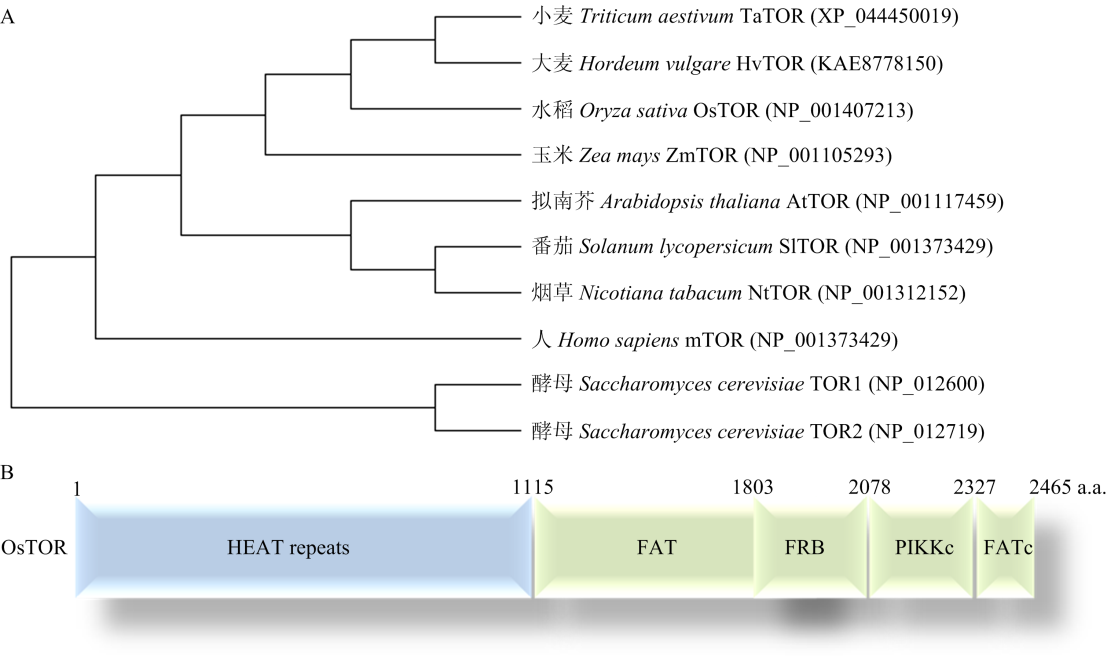
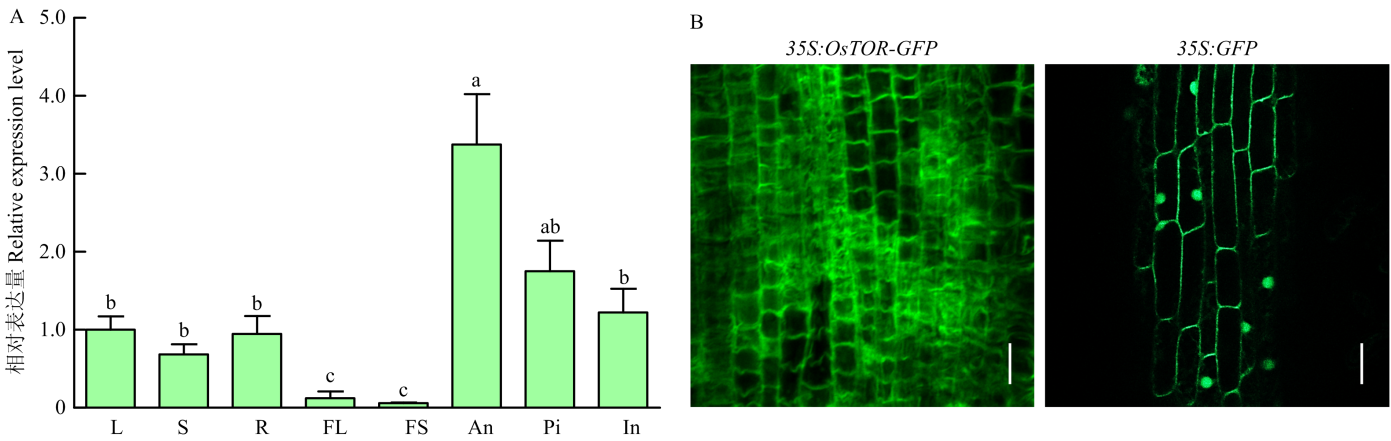
【Objective】To clone the target of rapamycin gene OsTOR in rice, and investigate its regulatory mechanism in root elongation, elucidate its biological function in rice development, and provide a molecular basis for improving rice traits and increasing its yield. 【Method】In this research, the japonica rice variety Dongjin was used as material for OsTOR expression pattern analysis via qRT- PCR. OsTOR was cloned by RT-PCR, and the overexpression vector 35S:OsTOR-GFP was constructed. The overexpression lines OsTOR-OX were generated by Agrobacterium-mediated rice genetic transformation to examine the subcellular localization of OsTOR. Rice seedlings were treated with TOR inhibitor AZD-8055, and the phenotype was observed. The root tips of inhibitor-treated and OsTOR-OX plants were cleared and the cell morphology in the meristematic zone was then visualized by CLSM. Transcriptome sequencing was performed on 7-day-after-germination (DAG) seedlings with or without AZD-8055 treatment. The expression of cell cycle related genes was further analyzed by qRT-PCR. 【Result】OsTOR was evolutionally closely related to barley and wheat TORs. It contains HEAT repeat domain, FAT, FRB, PIKKc kinase domain and FATc domain. OsTOR was localized in cytoplasm and cell membrane, and expressed in various tissues: leaves, leaf sheaths and roots of 7 DAG seedlings, as well as flag leaf blades, flag leaf sheaths, inflorescences, mature anthers, and unpollinated pistil of mature plant. AZD-8055 inhibited seedling growth and root elongation, accompanied by reduced cell proliferation in the root meristem. In contrast, OsTOR overexpression promoted root elongation. Transcriptome analysis revealed 225 genes were upregulated and 121 genes were downregulated upon AZD-8055 treatment. Among the upregulated genes, approximately 28% were associated with cell process, 18.6% with response to stimulus, and some others were involved in degradation. Downregulated genes were mainly involved in biosynthetic processes, protein metabolism, and cell cycle regulation. qRT-PCR results further confirmed that reduced OsTOR activity led to decreased expression of cell cycle-related genes. 【Conclusion】OsTOR was localized in cytoplasm and cell membrane, and was ubiquitously expressed in various tissues at different developmental stages of rice. Reduced OsTOR activity restrained seedling growth and root elongation, whereas OsTOR overexpression promoted root elongation. This effect was primarily attributed to altered expression of cell cycle-related genes, which subsequently affected cell proliferation in root meristem.

Key words: rice, target of rapamycin, root, meristem, cell cycle

Table 1

Primers used in qRT-PCR"

基因 Gene 基因号 GeneID 正向引物 Forward primer (5′-3′) 反向引物 Reverse primer (5′-3′)
OsTOR LOC_Os05g14550 TTCTTGCTGAAAGGCCATGA CCCGATTAGCAGCTTCTTCG
CDC6 LOC_Os01g63710 GAGATCCCGCTCAGATGCAGG GTCTTCCCTGTACCAGGGCAC
MCM5 LOC_Os02g55410 CTCCGCAAGTTCAAGGAGTTC CAGCGGTAGGTAATCAGCGG
ORC2 LOC_Os03g08640 GCAAGTCCATGTTGTCGCATC GGCTTTGCAGAACAACGAGG
ORC6 LOC_Os07g43540 CCAAGTTCCAGGTGATATTCGAC CCTGACACAGCCGAACTGG
UBQ LOC_Os01g48280 CTAAGTGCACCAAACCCTGATG TCTGCTTCATTGGCTTTCCA

Fig. 1

The phylogenetic tree of TOR and schematic representation of OsTOR A: The phylogenetic tree of TOR; B: Schematic representation of the OsTOR domain structure"

Fig. 2

Expression of OsTOR gene and the subcellular localization of OsTOR A: OsTOR expression pattern in different tissues of rice, L: Leaf blade, S: Sheath, R: Root; FL: Flag leaf; FS: Flag leaf sheath; An: Anther; Pi: Pistil; In: Inflorescence; Lowercase letters indicate significant differences at the P<0.05 level; The same as below; B: Subcellular localization of OsTOR (left) and GFP control (right). Bars=20 µm"

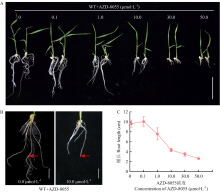
Fig. 3

Effects of AZD-8055 on the growth of rice seedlings A: Phenotypes of rice seedling with different concentrations of AZD-8055 treatment; Bars=5 cm; B: Growth status of rice seedling root after 10.0 μmol·L-1 AZD-8055 treatment; Bars=1 cm; Red arrows indicate seed root; C: Changes in rice root length after treatment with different concentrations of AZD-8055"

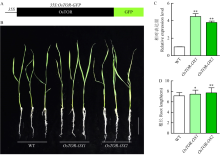
Fig. 4

Root phenotype of WT and OsTOR-OX A: Diagram of the 35S:OsTOR-GFP construct; B: Phenotypes of WT and OsTOR-OX at 14 DAG; Bars=10 cm; C: Expression level of OsTOR in WT and OsTOR-OX; D. Statistics of root length; *: Significant difference (P<0.05); **: Extremely significant difference (P<0.01). The same as below"

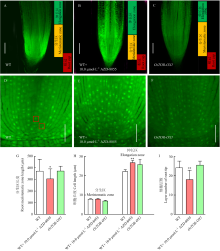
Fig. 5

Effects of OsTOR on the proliferation and growth of root meristem cells A-C: CLSM observation of rice root tips for WT, 10.0 μmol·L-1 AZD-8055 treatment and OxTOR-OX1 transgenic line; Bars=100 µm; D-F: Magnifications of meristematic zone in A-C, respectively; Red square marked cells undergoing-or that have undergone-mitosis; Bars=50 µm; G-I: Statistics of root meristematic zone length (G), cell length of meristematic zone and elongation zone (H), cell layer number (I)"

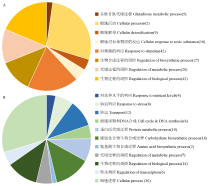
Fig. 6

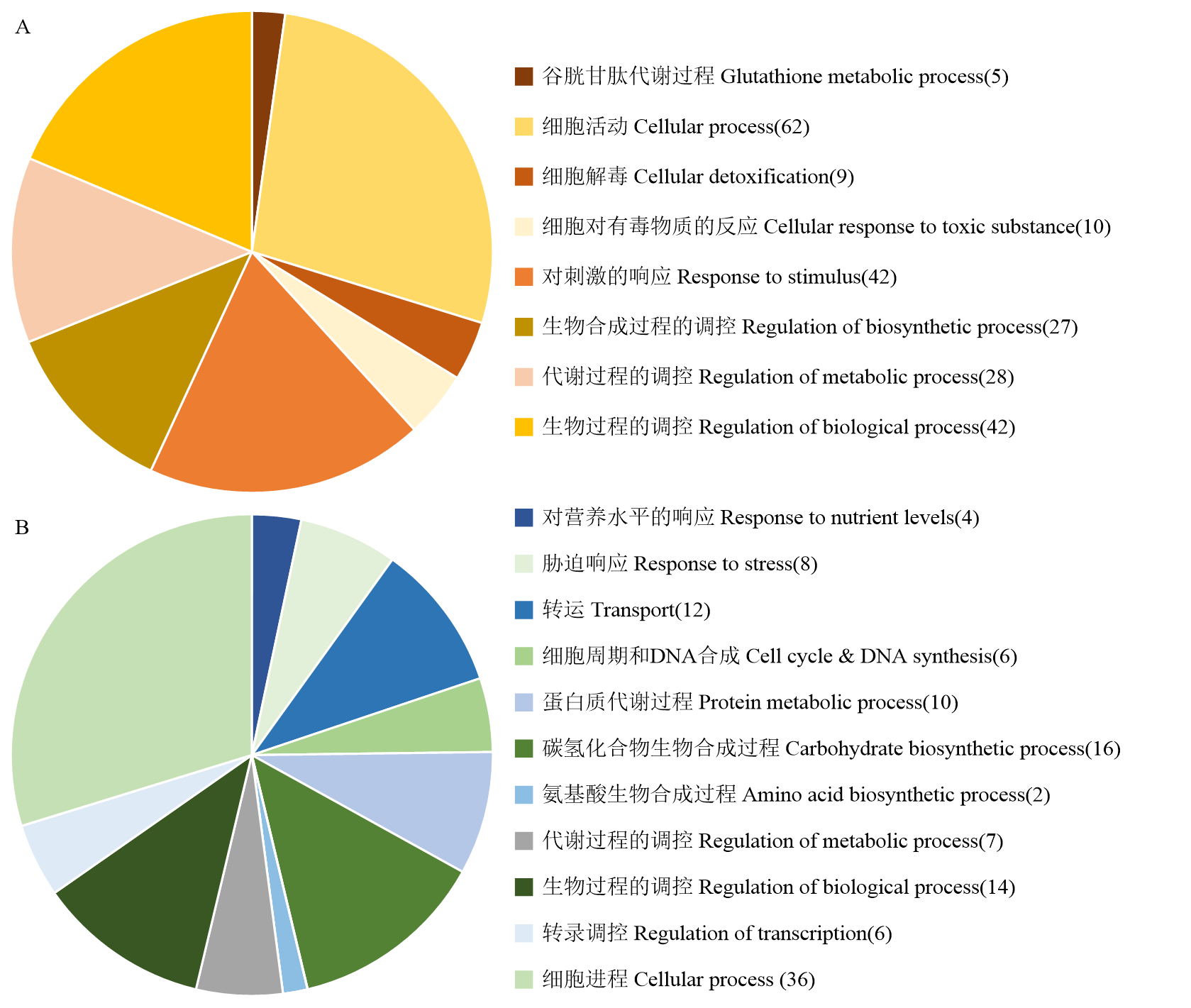
The functional categories analysis of differential genes after AZD-8055 treatment A: The functional categories of up-regulated genes; B: The functional categories of down-regulated genes"

Fig. 7

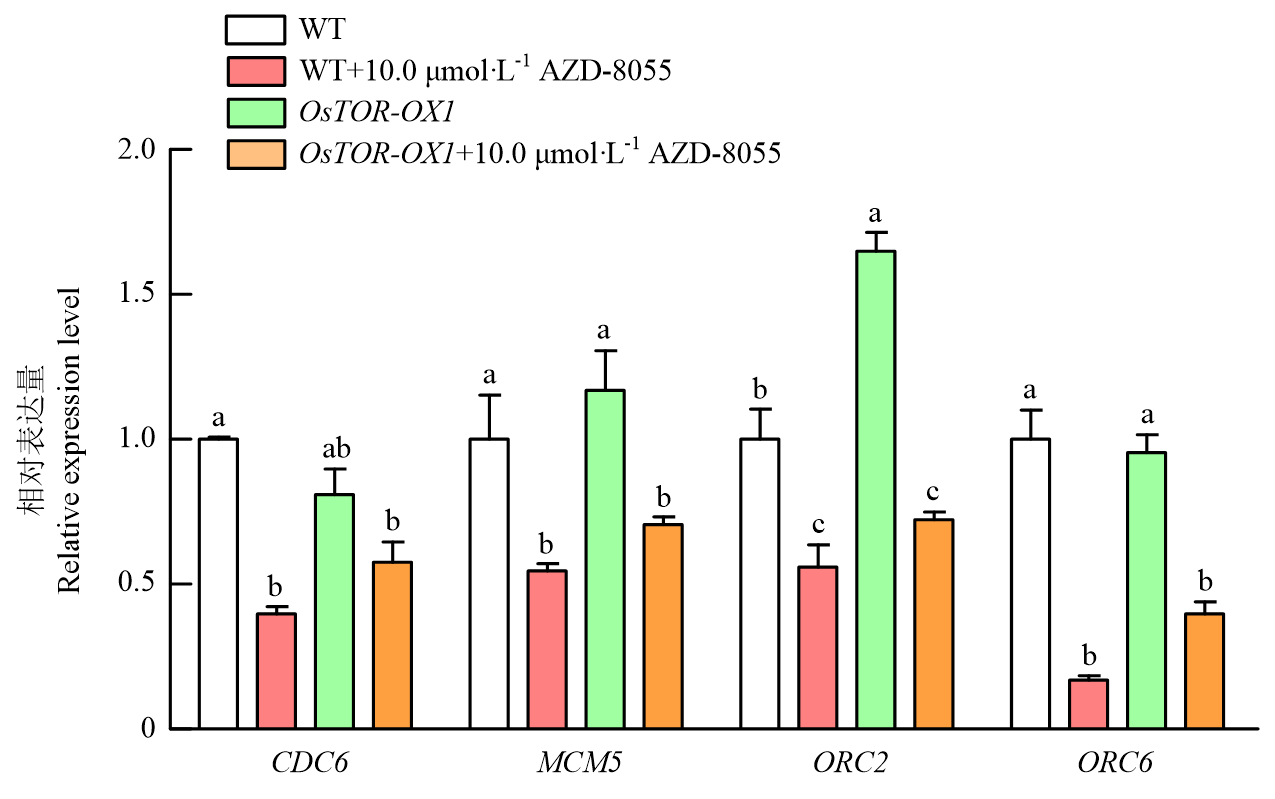
Relative expression level of cell cycle related genes"

[1]
SEO D H, SEOMUN S, CHOI Y D, JANG G. Root development and stress tolerance in rice: The key to improving stress tolerance without yield penalties. International Journal of Molecular Sciences, 2020, 21(5): 1807.

doi: 10.3390/ijms21051807
[2]
SHI L, WU Y, SHEEN J. TOR signaling in plants: Conservation and innovation. Development, 2018, 145(13): dev160887.
[3]
PEREYRA C M, AZNAR N R, RODRIGUEZ M S, SALERNO G L, MARTÍNEZ-NOËL G M A. Target of rapamycin signaling is tightly and differently regulated in the plant response under distinct abiotic stresses. Planta, 2019, 251(1): 21.

doi: 10.1007/s00425-019-03305-0 pmid: 31781934
[4]
SZWED A, KIM E, JACINTO E. Regulation and metabolic functions of mTORC1 and mTORC2. Physiological Reviews, 2021, 101(3): 1371-1426.

doi: 10.1152/physrev.00026.2020 pmid: 33599151
[5]
YANG H R, WANG J, LIU M J, CHEN X Z, HUANG M, TAN D, DONG M Q, WONG C C L, WANG J W, XU Y H, et al. 4.4 Å Resolution Cryo-EM structure of human mTOR complex 1. Protein & Cell, 2016, 7(12): 878-887.
[6]
INGARGIOLA C, TURQUETO DUARTE G, ROBAGLIA C, LEPRINCE A S, MEYER C. The plant target of rapamycin: A conduc TOR of nutrition and metabolism in photosynthetic organisms. Genes, 2020, 11(11): 1285.

doi: 10.3390/genes11111285
[7]
PATHAK B, MAURYA C, FARIA M C, ALIZADA Z, NANDY S, ZHAO S, JAMSHEER K M, SRIVASTAVA V. Targeting TOR and SnRK1 genes in rice with CRISPR/Cas9. Plants, 2022, 11(11): 1453.

doi: 10.3390/plants11111453
[8]
DENG K X, DONG P, WANG W J, FENG L, XIONG F J, WANG K, ZHANG S M, FENG S, WANG B J, ZHANG J K, et al. The TOR pathway is involved in adventitious root formation in Arabidopsis and potato. Frontiers in Plant Science, 2017, 8: 784.

doi: 10.3389/fpls.2017.00784
[9]
DINKOVA T D, DE LA CRUZ H R, GARCÍA-FLORES C, AGUILAR R, JIMÉNEZ-GARCÍA L F, DE JIMÉNEZ E S. Dissecting the TOR-S6K signal transduction pathway in maize seedlings: Relevance on cell growth regulation. Physiologia Plantarum, 2007, 130(1): 1-10.

doi: 10.1111/ppl.2007.130.issue-1
[10]
BENOÎT M, THIERRY D, LAURENT N, FRÉDÉRIC B, DAVID B, CHRISTIAN M, CHRISTOPHE R. Expression and disruption of the Arabidopsis TOR (target of rapamycin) gene. Proceedings of the National Academy of Sciences of the United States of America, 2002, 99(9): 6422-6427.
[11]
MOREAU M, AZZOPARDI M, CLÉMENT G, DOBRENEL T, MARCHIVE C, RENNE C, MARTIN-MAGNIETTE M L, TACONNAT L, RENOU J P, ROBAGLIA C, et al. Mutations in the Arabidopsis homolog of LST8/GβL, a partner of the target of rapamycin kinase, impair plant growth, flowering, and metabolic adaptation to long days. The Plant Cell, 2012, 24(2): 463-481.

doi: 10.1105/tpc.111.091306
[12]
ANDERSON G H, VEIT B, HANSON M R. The Arabidopsis AtRaptor genes are essential for post-embryonic plant growth. BMC Biology, 2005, 3: 12.

doi: 10.1186/1741-7007-3-12
[13]
DEPROST D, TRUONG H N, ROBAGLIA C, MEYER C. An Arabidopsis homolog of RAPTOR/KOG1 is essential for early embryo development. Biochemical and Biophysical Research Communications, 2005, 326(4): 844-850.

doi: 10.1016/j.bbrc.2004.11.117
[14]
SONG L M, XU G Y, LI T T, ZHOU H N, LIN Q L, CHEN J, WANG L, WU D S, LI X X, WANG L F, et al. The RALF1-FERONIA complex interacts with and activates TOR signaling in response to low nutrients. Molecular Plant, 2022, 15(7): 1120-1136.

doi: 10.1016/j.molp.2022.05.004
[15]
JAMSHEER K M, JINDAL S, SHARMA M, AWASTHI P, SREEJATH S, SHARMA M, MANNULLY C T, LAXMI A. A negative feedback loop of TOR signaling balances growth and stress-response trade-offs in plants. Cell Reports, 2022, 39(1): 110631.

doi: 10.1016/j.celrep.2022.110631
[16]
XIONG Y, MCCORMACK M, LI L, HALL Q, XIANG C B, SHEEN J. Glucose-TOR signalling reprograms the transcriptome and activates meristems. Nature, 2013, 496(7444): 181-186.

doi: 10.1038/nature12030
[17]
LI D Y, DING Y D, CHENG L, ZHANG X L, CHENG S Y, YE Y, GAO Y C, QIN Y, LIU Z, LI C Y, et al. Target of rapamycin (TOR) regulates the response to low nitrogen stress via autophagy and hormone pathways in Malus hupehensis. Horticulture Research, 2022, 9: uhac143.
[18]
CHO H, BANF M, SHAHZAD Z, VAN LEENE J, BOSSI F, RUFFEL S, BOUAIN N, CAO P F, KROUK G, DE JAEGER G, et al. ARSK 1 activates TORC1 signaling to adjust growth to phosphate availability in Arabidopsis. Current Biology, 2023, 33(9): 1778-1786.

doi: 10.1016/j.cub.2023.03.005
[19]
DONG Y H, AREF R, FORIERI I, SCHIEL D, LEEMHUIS W, MEYER C, HELL R, WIRTZ M. The plant TOR kinase tunes autophagy and meristem activity for nutrient stress-induced developmental plasticity. The Plant Cell, 2022, 34(10): 3814-3829.

doi: 10.1093/plcell/koac201 pmid: 35792878
[20]
LIU Y L, XIONG Y. Plant target of rapamycin signaling network: Complexes, conservations, and specificities. Journal of Integrative Plant Biology, 2022, 64(2): 342-370.

doi: 10.1111/jipb.13212
[21]
QUILICHINI T D, GAO P, PANDEY P K, XIANG D Q, REN M Z, DATLA R. A role for TOR signaling at every stage of plant life. Journal of Experimental Botany, 2019, 70(8): 2285-2296.

doi: 10.1093/jxb/erz125 pmid: 30911763
[22]
SUN L X, YU Y H, HU W Q, MIN Q M, KANG H L, LI Y L, HONG Y, WANG X M, HONG Y Y. Ribosomal protein S6 kinase1 coordinates with TOR-Raptor2 to regulate thylakoid membrane biosynthesis in rice. Biochimica et Biophysica Acta, 2016, 1861(7): 639-649.

doi: 10.1016/j.bbalip.2016.04.009 pmid: 27102613
[23]
DE VLEESSCHAUWER D, FILIPE O, HOFFMAN G, SEIFI H S, HAECK A, CANLAS P, VAN BOCKHAVEN J, DE WAELE E, DEMEESTERE K, RONALD P, et al. Target of rapamycin signaling orchestrates growth-defense trade-offs in plants. New Phytologist, 2018, 217(1): 305-319.

doi: 10.1111/nph.14785 pmid: 28905991
[24]
DOBRENEL T, CALDANA C, HANSON J, ROBAGLIA C, VINCENTZ M, VEIT B, MEYER C. TOR signaling and nutrient sensing. Annual Review of Plant Biology, 2016, 67: 261-285.

doi: 10.1146/annurev-arplant-043014-114648 pmid: 26905651
[25]
LOEWITH R, HALL M N. Target of rapamycin (TOR) in nutrient signaling and growth control. Genetics, 2011, 189(4): 1177-1201.

doi: 10.1534/genetics.111.133363 pmid: 22174183
[26]
TATEBE H, SHIOZAKI K. Evolutionary conservation of the components in the TOR signaling pathways. Biomolecules, 2017, 7(4): 77.

doi: 10.3390/biom7040077
[27]
FU L W, LIU Y L, QIN G C, WU P, ZI H L, XU Z T, ZHAO X D, WANG Y, LI Y X, YANG S H, et al. The TOR-EIN2 axis mediates nuclear signalling to modulate plant growth. Nature, 2021, 591(7849): 288-292.

doi: 10.1038/s41586-021-03310-y
[28]
BARRADA A, DJENDLI M, DESNOS T, MERCIER R, ROBAGLIA C, MONTANÉ M H, MENAND B. A TOR-YAK1 signaling axis controls cell cycle, meristem activity and plant growth in Arabidopsis. Development, 2019, 146(3): dev171298.
[29]
LIU Y L, HU J, DUAN X L, DING W L, XU M L, XIONG Y. Target of rapamycin (TOR): A master regulator in plant growth, development, and stress responses. Annual Review of Plant Biology, 2025, 76(1): 341-371.

doi: 10.1146/annurev-arplant-083123-050311 pmid: 39952681
[30]
VAN LEENE J, HAN C, GADEYNE A, EECKHOUT D, MATTHIJS C, CANNOOT B, DE WINNE N, PERSIAU G, VAN DE SLIJKE E, VAN DE COTTE B, et al. Capturing the phosphorylation and protein interaction landscape of the plant TOR kinase. Nature Plants, 2019, 5(3): 316-327.

doi: 10.1038/s41477-019-0378-z pmid: 30833711
[1] LÜ WenYan, CHENG HaiTao, MA ZhaoHui, TIAN ShuHua. Discussion on Hybridization Breeding Technology and Strategy of Rice in the New Era of Breeding [J]. Scientia Agricultura Sinica, 2026, 59(2): 233-238.
[2] LIAO TingLu, SHI YaFei, XIAO DongHao, SHE YangMengFei, GUO FuCheng, YANG JiuJu, TANG HaiJiang, LUO ChengKe. The Effect of Exogenous Nitroprusside on Sugar Metabolism in Rice Seedlings Under Alkaline Stress [J]. Scientia Agricultura Sinica, 2026, 59(2): 265-277.
[3] LIU TianSheng, LIU GengYuan, ZHAO AnQi, YANG Xu, CAI MingXue, YANG AiWen, LOU MingXuan, LI MuKai, WANG Han, ZHANG YaLing. Pathogenic Population of Rice Bakanae Disease in Heilongjiang Province [J]. Scientia Agricultura Sinica, 2026, 59(2): 305-321.
[4] WANG ZhongNi, LEI Yue, LI JiaLi, GONG YanLong, ZHU SuSong. Functions of ABC Transporter OsARG1 in Rice Heading Date Regulation [J]. Scientia Agricultura Sinica, 2026, 59(1): 1-16.
[5] LÜ XuDong, SUN ShiYuan, LI YaNan, LIU YuLong, WANG YanQun, FU Xin, ZHANG JiaYing, NING Peng, PENG ZhengPing. Effects of Intelligent Mechanized Layered Fertilization on Root-Soil Nutrient Distribution and Yield in Wheat Fields [J]. Scientia Agricultura Sinica, 2026, 59(1): 129-146.
[6] FEI YaoYing, WANG Di, TANG WeiJie, GUO CaiLi, ZHANG XiaoHu, QIU XiaoLei, CHENG Tao, YAO Xia, JIANG ChongYa, ZHU Yan, CAO WeiXing, ZHENG HengBiao. Estimation of Rice Grain Protein Content Using Fusion Imagery from UAV-based Multi-Sensors [J]. Scientia Agricultura Sinica, 2026, 59(1): 41-56.
[7] DONG GuiChun, WANG ZiHan, WANG ShuShen, LI Jie, HUO XiaoQing, YANG Rui, ZHOU Juan, SHU XiaoWei, LI Yan, CAO LiangJing, WANG ZiRui, YAO YouLi, HUANG JianYe. Technical Approaches for Enhancing Rice Yield and Nitrogen Use Efficiency with Sulfur-Coated Controlled-Release Fertilizers [J]. Scientia Agricultura Sinica, 2026, 59(1): 57-77.
[8] WANG AiDong, LI RuiJie, FENG XiangQian, HONG WeiYuan, LI ZiQiu, ZHANG XiaoGuo, WANG DanYing, CHEN Song. Multi-Angle Imaging and Machine Learning Approaches for Accurate Rice Leaf Area Estimation [J]. Scientia Agricultura Sinica, 2025, 58(9): 1719-1734.
[9] WEI Ping, PAN JuZhong, ZHU DePing, SHAO ShengXue, CHEN ShanShan, WEI YaQian, GAO WeiWei. The Function of OsDREB1J in Regulating Rice Grain Size [J]. Scientia Agricultura Sinica, 2025, 58(8): 1463-1478.
[10] WANG WeiMeng, WEI YunXiao, TANG YunNi, LIU MiaoMiao, CHEN QuanJia, DENG XiaoJuan, ZHANG Rui. Establishment and Rooting Optimization of Agrobacterium rhizogenes Transformation System in Cotton [J]. Scientia Agricultura Sinica, 2025, 58(8): 1479-1493.
[11] LIU JinSong, WU LongMei, BAO XiaoZhe, LIU ZhiXia, ZHANG Bin, YANG TaoTao. Effects of a Short-Term Reduction in Nitrogen Fertilizer Application Rates on the Grain Yield and Rice Quality of Early and Late-Season Dual-Use Rice in South China [J]. Scientia Agricultura Sinica, 2025, 58(8): 1508-1520.
[12] WANG Bin, WU PengHao, LU JianWei, REN Tao, CONG RiHuan, LU ZhiFeng, LI XiaoKun. Water Demand Characteristics of Rice-Oilseed Rape Rotation System in the Middle Reaches of the Yangtze River [J]. Scientia Agricultura Sinica, 2025, 58(7): 1355-1365.
[13] XIONG JiaNi, LI ZongYue, HU HengLiang, GU TianYu, GAO Yan, PENG JiaShi. Influence of Expressing OsNRAMP5 Under the Driving of the OsLCT1 Promoter on Cadmium Migration to Rice Seeds [J]. Scientia Agricultura Sinica, 2025, 58(7): 1259-1268.
[14] ZHAO Yao, CHENG Qian, XU TianJun, LIU Zheng, WANG RongHuan, ZHAO JiuRan, LU DaLei, LI CongFeng. Effects of Plant Type Improvement on Root-Canopy Characteristics and Grain Yield of Spring Maize Under High Density Condition [J]. Scientia Agricultura Sinica, 2025, 58(7): 1296-1310.
[15] JIN YiDan, HE NiQing, CHENG ZhaoPing, LIN ShaoJun, HUANG FengHuang, BAI KangCheng, ZHANG Tao, WANG WenXiao, YU MinXiang, YANG DeWei. Screening and Identification of Pigm-1 Interaction Proteins for Disease Resistance of Rice Blast [J]. Scientia Agricultura Sinica, 2025, 58(6): 1043-1051.
Viewed
Full text


Abstract

Cited

  Shared   
  Discussed   
No Suggested Reading articles found!