Scientia Agricultura Sinica ›› 2026, Vol. 59 ›› Issue (17): 3699-3711.doi: 10.3864/j.issn.0578-1752.2026.17.001

• CROP GENETICS & BREEDING·GERMPLASM RESOURCES·MOLECULAR GENETICS • Previous Articles     Next Articles

Gene Cloning and Functional Characterization of the Albino Lethal Mutant wll2 in Rice

ZHANG Ye(), WANG ChengCheng(), ZHANG Long()   

  1. College of Bioscience and Biotechnology, Yangzhou University, Yangzhou 225009, Jiangsu
  • Received:2026-01-19 Accepted:2026-03-17 Online:2026-09-03 Published:2026-09-03
  • Contact: ZHANG Long

Abstract:

【Objective】This study aims to investigate the regulatory mechanism of key gene in the methylerythritol phosphate (MEP) pathway on chloroplast development, chlorophyll biosynthesis, and seedling growth in rice. It seeks to elucidate the molecular mechanism underlying the albino lethal phenotype of the rice leaf color mutant, thereby providing a theoretical foundation for understanding photosynthetic mechanisms and developing germplasm with high photosynthetic efficiency.【Method】The wild-type rice variety Wuyunjing 8 and its derived albino lethal mutant wll2 (white leaf and lethal 2) were used as experimental materials. A combination of molecular biology techniques, including pigment content determination, transmission electron microscopy, MutMap+ analysis, CRISPR-Cas9 gene editing, quantitative real-time PCR (qRT-PCR), transient expression assay in tobacco leaves, transcriptome sequencing (RNA-seq), and Western blot analysis, was employed to clone the target gene and characterize its function.【Result】The wll2 mutant exhibited a distinct albino phenotype from germination, which persisted until the seedlings died at the four-leaf stage. Seedling growth was severely inhibited, with significantly reduced shoot and root lengths compared to the wild type. The mutant showed significantly lower chlorophyll a and chlorophyll b contents. Mesophyll cells of wll2 contained significantly fewer chloroplasts, with reduced and disorganized thylakoid membranes. Using MutMap+ analysis combined with gene editing, the gene responsible for the albino phenotype was identified as OsDXS1, which encodes 1-deoxy-D-xylulose-5-phosphate synthase, a key enzyme in the MEP terpenoid biosynthesis pathway. qRT-PCR analysis revealed that OsDXS1 is expressed in various rice tissues, with the highest transcript level in leaves, significantly exceeding that in roots, stems, sheaths, and young panicles. Transient expression in tobacco demonstrated that the OsDXS1 protein co-localized with chloroplast autofluorescence, confirming its chloroplast localization, consistent with its role in the MEP pathway. Transcriptome analysis identified 7 197 differentially expressed genes (DEGs) between wll2 and the wild type, comprising 4 055 up-regulated and 3 142 down-regulated genes. GO and KEGG enrichment analyses revealed that down-regulated DEGs were primarily enriched in photosynthesis, plastid function, and related metabolic pathways. Conversely, up-regulated DEGs were enriched in adaptive response pathways, including cell cycle, DNA metabolism, nucleic acid replication, metabolic reprogramming, and damage repair. Western blot analysis showed significantly reduced protein levels of the photosystem Ⅱ core proteins PsbE and PsbO, the photosystem I core protein PsaA, and the light-harvesting complex component LHCa1 in the mutant.【Conclusion】The gene responsible for the albino lethal phenotype in the rice wll2 mutant is OsDXS1, a key gene in the MEP pathway. Loss of function of OsDXS1 disrupts chlorophyll biosynthesis and impairs chloroplast development, ultimately leading to the albino lethal phenotype.

Key words: Oryza sativa, albino lethal, MutMap+, OsDXS1, chloroplast, RNA-seq

Fig. 1

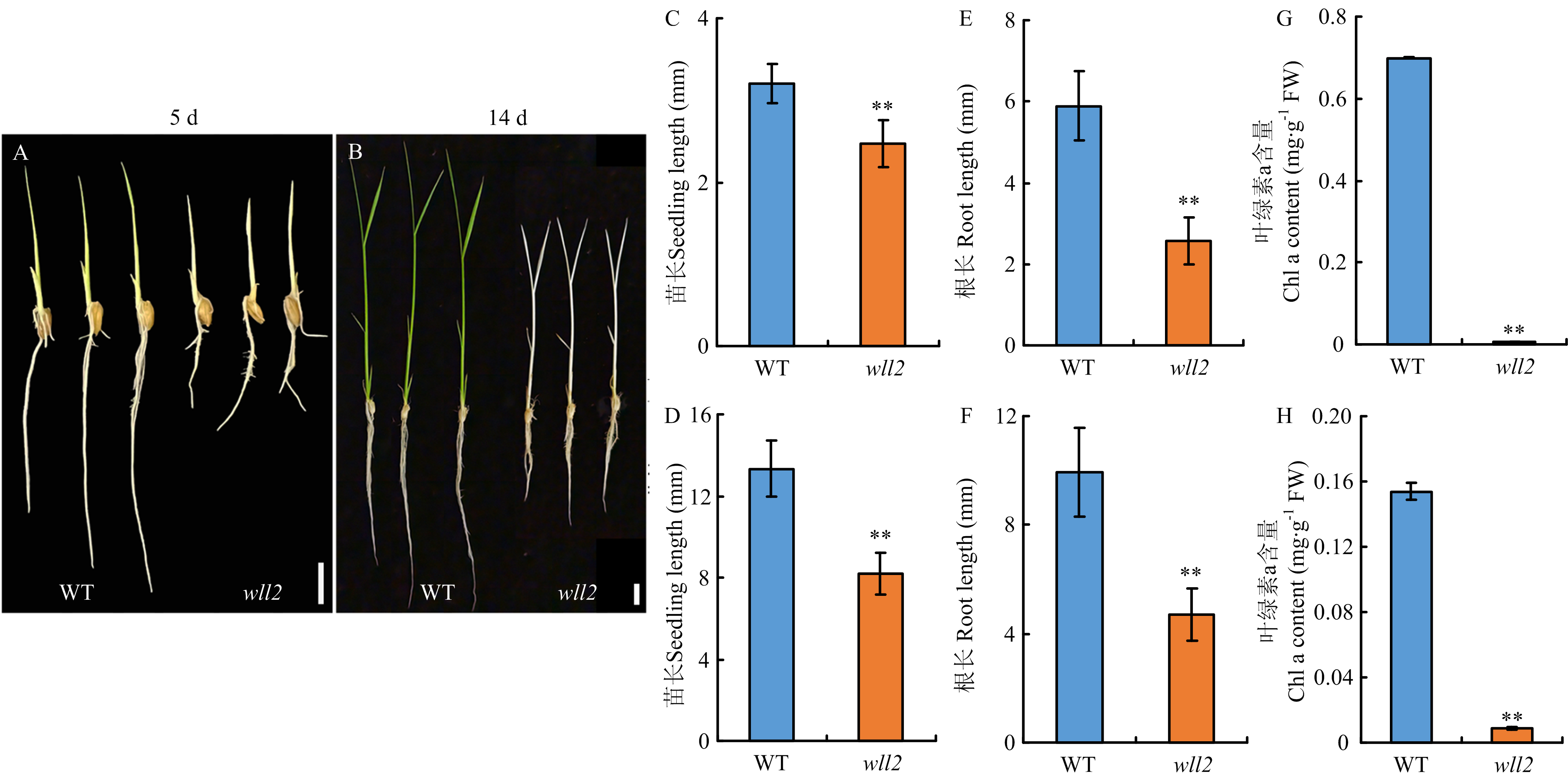
Phenotypic analysis of wild-type and wll2 at the seedling stage A, B: Phenotypes of WT and wll2 seedlings at 5 (A) and 14 (B) days after germination. Scale bars=1 cm; C, D: Seedling lengths of WT and wll2 at 5 (C) and 14 (D) days after germination; E, F: Primary root lengths of WT and wll2 at 5 (E) and 14 (F) days after germination; G, H: Chlorophyll a (Chl a) and chlorophyll b (Chl b) contents in 14-day-old seedlings of WT and wll2. **: P<0.01"

Fig. 2

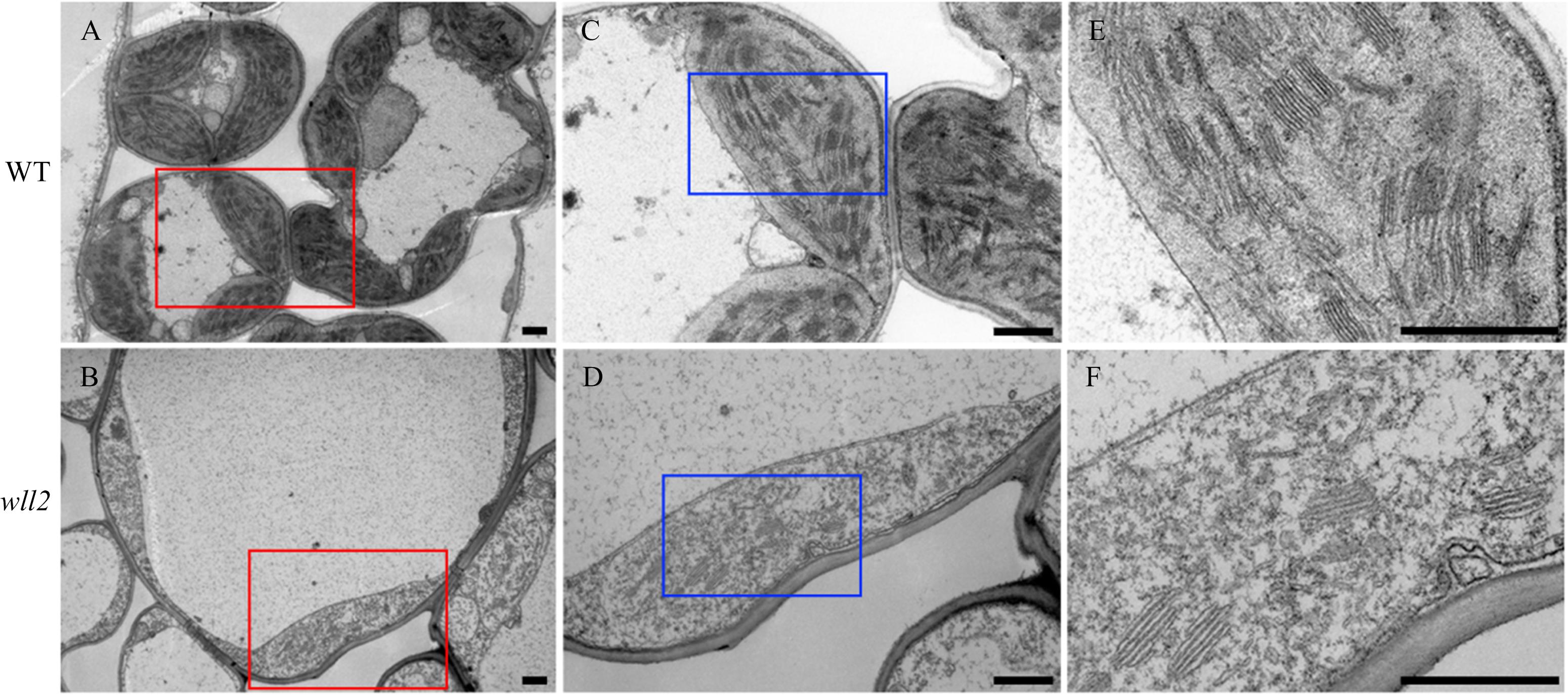
Transmission electron microscopy observation of chloroplast ultrastructure in WT and wll2 seedlings A, B: Chloroplast structures in 14-day-old seedling leaves of WT (A) and wll2 (B); C, D: Magnified views of the red-boxed areas in A and B, respectively; E, F: Magnified views of the blue-boxed areas in C and D, respectively. Scale bars=1 μm"

Fig. 3

Mapping of the wll2 mutant gene A: Mapping of the mutant gene using the MutMap+ method; B: Schematic diagram of the LOC_Os05g33840 gene structure. Black boxes represent exon regions, and the arrow indicates the G-to-A mutation site on the 3rd intron; C: Sequencing peak profiles of the candidate SNP in WT and wll2; D: Detection of the mutation site via PCR with cDNA templates from WT and wll2; E: Sequence alignment of the LOC_Os05g33840 at the mutation site between WT and wll2; F: Alignment of OsDXS1 amino acid sequences between the WT and wll2"

Fig. 4

Knockout verification of OsDXS1 A: Schematic diagram of OsDXS1 gene structure and target sites. The target sequences are shown in red font, and the PAM sites are shown in blue font; B: Sequencing peak profiles of the target sequences in cr-1 and cr-2. Red arrows indicate the mutation sites of cr-1 (-1T) and cr-2 (-2TA); C: Seedling phenotypes of cr-1 and cr-2"

Fig. 5

Tissue expression analysis of OsDXS1 and subcellular localization of its encoded protein A: Relative expression levels of OsDXS1 in different tissues; B: Subcellular localization of OsDXS1. Scale bars=10 μm"

Fig. 6

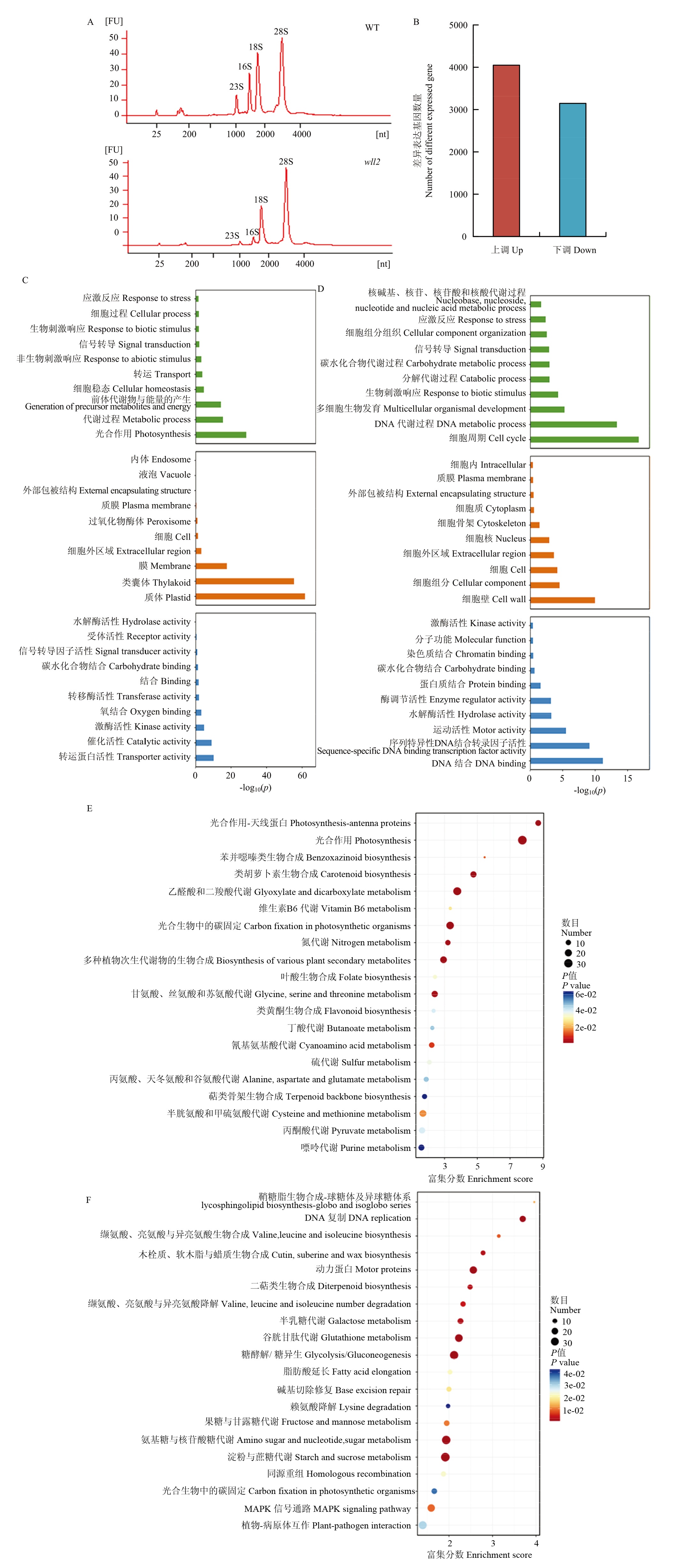
RNA-seq analysis of seedlings of WT and wll2 A: rRNA analysis of seedlings of WT and wll2; B: Number of differentially expressed genes (DEGs) in the transcriptome data of WT and wll2 seedlings; C: GO Enrichment analysis of down-regulated DEGs; D: GO enrichment analysis of up-regulated DEGs; E: KEGG pathway enrichment analysis of down-regulated DEGs; F: KEGG pathway enrichment analysis of up-regulated DEGs"

Fig. 7

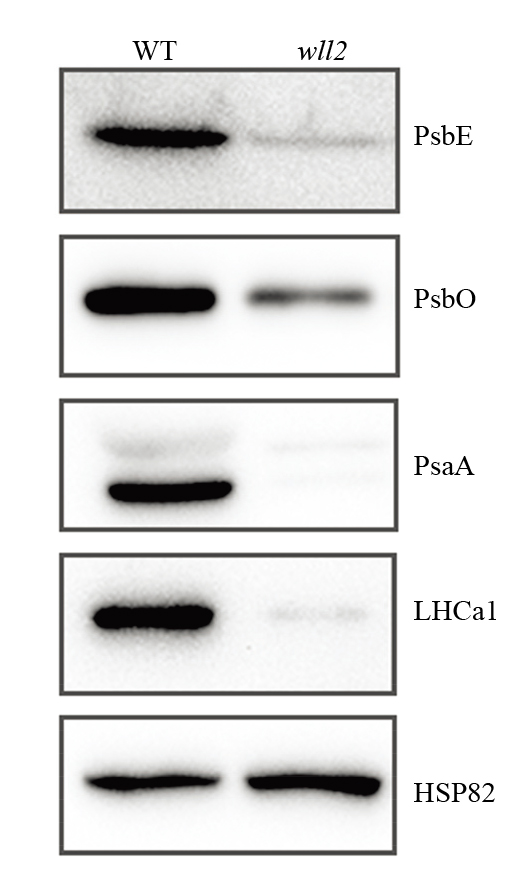
Western blot analysis of the core protein accumulation of photosynthetic complexes in young seedlings of WT and wll2"

[1]
Suomivuori C M, Fliegl H, Starikov E B, Balaban T S, Kaila V R I, Sundholm D. Absorption shifts of diastereotopically ligated chlorophyll dimers of photosystem I[J]. Physical Chemistry Chemical Physics, 2019, 21(13): 6851-6858.
[2]
Pogson B J, Albrecht V. Genetic dissection of chloroplast biogenesis and development: An overview[J]. Plant Physiology, 2011, 155(4): 1545-1551.

doi: 10.1104/pp.110.170365 pmid: 21330494
[3]
Zhao D S, Zhang C Q, Li Q F, Yang Q Q, Gu M H, Liu Q Q. A residue substitution in the plastid ribosomal protein L12/AL1 produces defective plastid ribosome and causes early seedling lethality in rice[J]. Plant Molecular Biology, 2016, 91(1): 161-177.
[4]
Wang Y, Ren Y L, Zhou K N, Liu L L, Wang J L, Xu Y, Zhang H, Zhang L, Feng Z M, Wang L W, Ma W W, Wang Y L, Guo X P, Zhang X, Lei C L, Cheng Z J, Wan J M. WHITE STRIPE LEAF4 encodes a novel P-type PPR protein required for chloroplast biogenesis during early leaf development[J]. Frontiers in Plant Science, 2017, 8: 1116.
[5]
Zhou K N, Ren Y L, Zhou F, Wang Y, Zhang L, Lyu J, Wang Y H, Zhao S L, Ma W W, Zhang H, Wang L W, Wang C M, Wu F Q, Zhang X, Guo X P, Cheng Z J, Wang J L, Lei C L, Jiang L, Li Z F, et al. Young Seedling Stripe1 encodes a chloroplast nucleoid-associated protein required for chloroplast development in rice seedlings[J]. Planta, 2017, 245(1): 45-60.
[6]
Shim K C, Kang Y N, Song J H, Kim Y J, Kim J K, Kim C, Tai T H, Park I, Ahn S N. A frameshift mutation in the Mg-chelatase I subunit gene OsCHLI is associated with a lethal chlorophyll-deficient, yellow seedling phenotype in rice[J]. Plants, 2023, 12(15): 2831.
[7]
Jung Y J, Lee H J, Yu J, Bae S, Cho Y G, Kang K K. Transcriptomic and physiological analysis of OsCAO1 knockout lines using the CRISPR/Cas9 system in rice[J]. Plant Cell Reports, 2021, 40(6): 1013-1024.
[8]
Goh C H, Jung K H, Roberts S K, McAinsh M R, Hetherington A M, Park Y I, Suh K, An G, Nam H G. Mitochondria provide the main source of cytosolic ATP for activation of outward-rectifying K+ channels in mesophyll protoplast of chlorophyll-deficient mutant rice (OsCHLH) seedlings[J]. Journal of Biological Chemistry, 2004, 279(8): 6874-6882.
[9]
Wu Z M, Zhang X, He B, Diao L P, Sheng S L, Wang J L, Guo X P, Su N, Wang L F, Jiang L, Wang C M, Zhai H Q, Wan J M. A chlorophyll-deficient rice mutant with impaired chlorophyllide esterification in chlorophyll biosynthesis[J]. Plant Physiology, 2007, 145(1): 29-40.

doi: 10.1104/pp.107.100321 pmid: 17535821
[10]
Chen W, Tang L Q, Li Q L, Cai Y C, Ahmad S, Wang Y K, Tang S J, Guo N H, Wei X J, Tang S Q, Shao G N, Jiao G A, Xie L H, Hu S K, Sheng Z H, Hu P S. YGL3 encoding an IPP and DMAPP synthase interacts with OsPIL11 to regulate chloroplast development in rice[J]. Rice, 2024, 17(1): 8.

doi: 10.1186/s12284-024-00687-y pmid: 38228921
[11]
Sugimoto H, Kusumi K, Tozawa Y, Yazaki J, Kishimoto N, Kikuchi S, Iba K. The virescent-2 mutation inhibits translation of plastid transcripts for the plastid genetic system at an early stage of chloroplast differentiation[J]. Plant and Cell Physiology, 2004, 45(8): 985-996.

doi: 10.1093/pcp/pch111 pmid: 15356324
[12]
Zhao C F, Xu J M, Chen Y, Mao C Z, Zhang S L, Bai Y H, Jiang D A, Wu P. Molecular cloning and characterization of OsCHR4, a rice chromatin-remodeling factor required for early chloroplast development in adaxial mesophyll[J]. Planta, 2012, 236(4): 1165-1176.

doi: 10.1007/s00425-012-1667-1 pmid: 22644768
[13]
Liu X, Xu Z Y, Yang Y R, Cao P H, Cheng H, Zhou H Y. Plastid caseinolytic protease OsClpR1 regulates chloroplast development and chloroplast RNA editing in rice[J]. Rice, 2021, 14(1): 45.
[14]
Miyoshi K, Ito Y, Serizawa A, Kurata N. OsHAP3 genes regulate chloroplast biogenesis in rice[J]. The Plant Journal, 2003, 36(4): 532-540.
[15]
Rohdich F, Kis K, Bacher A, Eisenreich W. The non-mevalonate pathway of isoprenoids: Genes, enzymes and intermediates[J]. Current Opinion in Chemical Biology, 2001, 5(5): 535-540.

pmid: 11578926
[16]
Tian S K, Wang D D, Yang L, Zhang Z X, Liu Y. A systematic review of 1-Deoxy-D-xylulose-5-phosphate synthase in terpenoid biosynthesis in plants[J]. Plant Growth Regulation, 2022, 96(2): 221-235.
[17]
Lange B M, Rujan T, Martin W, Croteau R. Isoprenoid biosynthesis: The evolution of two ancient and distinct pathways across genomes[J]. Proceedings of the National Academy of Sciences of the United States of America, 2000, 97(24): 13172-13177.

doi: 10.1073/pnas.240454797 pmid: 11078528
[18]
Hsieh M H, Chang C Y, Hsu S J, Chen J J. Chloroplast localization of methylerythritol 4-phosphate pathway enzymes and regulation of mitochondrial genes in ispD and ispE albino mutants in Arabidopsis[J]. Plant Molecular Biology, 2008, 66(6): 663-673.
[19]
Hsieh M H, Goodman H M. Functional evidence for the involvement of Arabidopsis IspF homolog in the nonmevalonate pathway of plastid isoprenoid biosynthesis[J]. Planta, 2006, 223(4): 779-784.
[20]
Gutiérrez-Nava M D E L, Gillmor C S, Jiménez L F, Guevara-García A, León P. CHLOROPLAST BIOGENESIS genes act cell and noncell autonomously in early chloroplast development[J]. Plant Physiology, 2004, 135(1): 471-482.

doi: 10.1104/pp.103.036996 pmid: 15133149
[21]
Guevara-García A, San Román C, Arroyo A, Cortés M E, de la Luz Gutiérrez-Nava M, León P. Characterization of the Arabidopsis clb6 mutant illustrates the importance of posttranscriptional regulation of the methyl-D-erythritol 4-phosphate pathway[J]. The Plant Cell, 2005, 17(2): 628-643.
[22]
Cao P H, Wang D, Gao S, Liu X, Qiao Z Y, Xie Y L, Dong M H, Du T X, Zhang X, Zhang R, Ji J H. OsDXR interacts with OsMORF1 to regulate chloroplast development and the RNA editing of chloroplast genes in rice[J]. Journal of Integrative Agriculture, 2023, 22(3): 669-678.
[23]
Huang R, Wang Y, Wang P R, Li C M, Xiao F L, Chen N G, Li N, Li C X, Sun C H, Li L H, Chen R J, Xu Z J, Zhu J Q, Deng X J. A single nucleotide mutation of IspF gene involved in the MEP pathway for isoprenoid biosynthesis causes yellow-green leaf phenotype in rice[J]. Plant Molecular Biology, 2018, 96(1): 5-16.
[24]
You M, Lee Y, Kim J, Baek S, Jeon Y, Lim S, Ha S. The organ-specific differential roles of rice DXS and DXR, the first two enzymes of the MEP pathway, in carotenoid metabolism in Oryza sativa leaves and seeds[J]. BMC Plant Biology, 2020, 20(1): 167.

doi: 10.1186/s12870-020-02357-9 pmid: 32293285
[25]
Yang S L, Fang G N, Ruan B P, Zhang A P, Zhou Y, Ye G J, Su W, Guo H, Wang J, Gao Z Y. Identification of thermo-sensitive chloroplast development gene TSCD5 required for rice chloroplast development under high temperature[J]. Agriculture, 2023, 13(3): 563.
[26]
许子怡, 程行, 沈奇, 赵亚男, 汤佳玉, 刘喜. 水稻黄绿叶突变体ygl3的鉴定与基因功能分析[J]. 中国农业科学, 2021, 54(15): 3149-3157. DOI: 10.3864/j.issn.0578-1752.2021.15.001.
Xu Z Y, Cheng X, Shen Q, Zhao Y N, Tang J Y, Liu X. Identification and gene functional analysis of yellow green leaf mutant ygl3 in rice[J]. Scientia Agricultura Sinica, 2021, 54(15): 3149-3157. DOI: 10.3864/j.issn.0578-1752.2021.15.001. (in Chinese)
[27]
Fang H M, Song L L, Liu K W, Gu Y S, Guo Y, Zhang C, Zhang L. OsRNE encodes an RNase E/G-type endoribonuclease required for chloroplast development and seedling growth in rice[J]. International Journal of Molecular Sciences, 2025, 26(5): 2375.
[28]
Chen C J, Wu Y, Li J W, Wang X, Zeng Z H, Xu J, Liu Y L, Feng J T, Chen H, He Y H, Xia R. TBtools-II: A “one for all, all for one” bioinformatics platform for biological big-data mining[J]. Molecular Plant, 2023, 16(11): 1733-1742.
[29]
Estévez J M, Cantero A, Reindl A, Reichler S, León P. 1-deoxy- d-xylulose-5-phosphate synthase, a limiting enzyme for plastidic isoprenoid biosynthesis in plants[J]. Journal of Biological Chemistry, 2001, 276(25): 22901-22909.

doi: 10.1074/jbc.M100854200 pmid: 11264287
[30]
Kim S, Schlicke H, Van Ree K, Karvonen K, Subramaniam A, Richter A, Grimm B, Braam J. Arabidopsis chlorophyll biosynthesis: An essential balance between the methylerythritol phosphate and tetrapyrrole pathways[J]. The Plant Cell, 2013, 25(12): 4984-4993.

doi: 10.1105/tpc.113.119172 pmid: 24363312
[31]
Wang J Z, Lei Y X, Xiao Y M, He X, Liang J B, Jiang J S, Dong S Z, Ke H Y, Leon P, Zerbe P, Xiao Y L, Dehesh K. Uncovering the functional residues of Arabidopsis isoprenoid biosynthesis enzyme HDS[J]. Proceedings of the National Academy of Sciences of the United States of America, 2020, 117(1): 355-361.
[1] WU Yu, QU XiangRu, YANG Dan, WU Qin, CHEN GuoYue, JIANG QianTao, WEI YuMing, XU Qiang. Widespread Non-Targeted Metabolomics Reveals Metabolites of Chloroplasts in Wheat Responses to Stripe Rust [J]. Scientia Agricultura Sinica, 2025, 58(7): 1333-1343.
[2] ZHUANG LiHua, LUO Lei, ZHAO ChunFang, WANG JiZhong, ZHANG YaDong, HE Lei. Identification and Gene Mapping of Rice Grain Shape Mutant sgd13 [J]. Scientia Agricultura Sinica, 2025, 58(24): 5097-5109.
[3] DONG Xue, CHEN MengQiu, SHAO Jin, WU XueYou, TANG PeiAn. Construction of a Differential Gene Expression and Quality Regulation Network in Stored Rice Grain Using WGCNA [J]. Scientia Agricultura Sinica, 2025, 58(14): 2885-2903.
[4] ZENG YueHui, ZOU WenGuang, ZHAO FuMing, XIAO ChangChun, HUANG JianHong, MA BinLin, YANG WangXing, WEI XinYu, XU XuMing. Map-Based Cloning and Functional Verification of A Novel Split Glume Gene OsSG2 in Rice (Oryza sativa L.) [J]. Scientia Agricultura Sinica, 2025, 58(11): 2062-2080.
[5] ZHANG BiDong, LIN Hong, ZHU SiYing, LI ZhongCheng, ZHUANG Hui, LI YunFeng. Identification and Candidate Gene Analysis of the ABNORMAL HULL 1 (ah1) Mutant in Rice (Oryza sativa L.) [J]. Scientia Agricultura Sinica, 2024, 57(3): 429-441.
[6] XIONG ChuWen, GUO ZhiBin, ZHOU QiangHua, CHENG YanBo, MA QiBin, CAI ZhanDong, NIAN Hai. Function Analysis of the Soybean Transcription Factor NAC1 in Tolerance to Low Phosphorus [J]. Scientia Agricultura Sinica, 2024, 57(3): 442-453.
[7] XIONG ShangYe, ZHANG Xiang, LIANG BaoHui, YE YangDong, LI YuYang, ZHU Xiao, ZHU ZhiHong, GUAN HuaZhong, ZHANG Shuai, WU JianGuo, HU Jie. Fine Mapping and Analysis of Pyramiding Effects of Rice Brown Planthopper Resistance Genes QBPH1 and QBPH4 [J]. Scientia Agricultura Sinica, 2024, 57(23): 4619-4631.
[8] YAN LiuHui, ZHONG Qi, MA ZengFeng, WEI MinYi, LIU Chi, QIN YuanYuan, ZHOU XiaoLong, HUANG DaHui, LU YingPing, QIN Gang, ZHANG YueXiong. Identification and Evolutionary Analysis of the Early Heading Gene OsEHD8 in Common Wild Rice (Oryza rufipogon Giff.) [J]. Scientia Agricultura Sinica, 2024, 57(14): 2703-2716.
[9] JI GaiGe, CHEN ZhiWu, SHAN YanJu, LIU YiFan, TU YunJie, ZOU JianMin, ZHANG Ming, JU XiaoJun, SHU JingTing, ZHANG HaiTao, TANG YanFei, JIANG HuaLian. Study of Key Genes and Signaling Pathways Regulating Dry Feather Traits in Yellow-Feathered Broiler Chickens Based on Transcriptome Analysis [J]. Scientia Agricultura Sinica, 2024, 57(1): 204-215.
[10] ZHU HongHui, LI YingZi, GAO YuanZhuo, LIN Hong, WANG ChengYang, YAN ZiYi, PENG HanPing, LI TianYe, XIONG Mao, LI YunFeng. Map-Based Cloning of the SHORT AND WIDEN GRAIN 1 Gene in Rice (Oryza sativa L.) [J]. Scientia Agricultura Sinica, 2023, 56(7): 1260-1274.
[11] WANG YueNing, DAI HongJun, HE Yan, WEI Qiang, GUO XueLiang, LIU Yan, YIN MengTing, WANG ZhenPing. Regulation Mechanism of Brassinolide on Anthocyanins Synthesis and Fruit Quality in Wine Grapes Under High Temperature Stress Based on Transcriptome Analysis [J]. Scientia Agricultura Sinica, 2023, 56(6): 1139-1153.
[12] PENG JiaWei, ZHANG Ye, KOU DanDan, YANG Li, LIU XiaoFei, ZHANG XueYing, CHEN HaiJiang, TIAN Yi. Transcriptome Analysis of Peach Fruits at Different Developmental Stages in Peach Kurakato Wase and Early-Ripening Mutant [J]. Scientia Agricultura Sinica, 2023, 56(5): 964-980.
[13] YANG Sha, LIU KeKe, LIU Ying, GUO Feng, WANG JianGuo, GAO HuaXin, MENG JingJing, ZHANG JiaLei, WAN ShuBo. The Molecular Mechanism of Pod Yield Difference Between Single- Seeding Precision Sowing and Multi-Seeds Sowing of Peanut Based on Transcriptome Analysis [J]. Scientia Agricultura Sinica, 2023, 56(22): 4386-4402.
[14] WANG WanRu, CAO YueFen, SHENG Kuang, CHEN JinHong, ZHAO TianLun, ZHU ShuiJin. The Creation and Characteristics of Cotton Germplasm Lines Transgenic 1174AALdico-2+CTP Gene with Excellent Glyphosate Tolerance [J]. Scientia Agricultura Sinica, 2023, 56(17): 3261-3276.
[15] FENG XianJun, WANG Li, WANG Tong, HOU LeiPing, LI MeiLan. Comparison of Sugar Content and Expression Analysis of Genes Related to Sugar Metabolism in Different Parts of Chinese Flowering Cabbage [J]. Scientia Agricultura Sinica, 2023, 56(11): 2158-2171.
Viewed
Full text


Abstract

Cited

  Shared   
  Discussed   
No Suggested Reading articles found!