Scientia Agricultura Sinica ›› 2026, Vol. 59 ›› Issue (10): 2288-2298.doi: 10.3864/j.issn.0578-1752.2026.10.016

• RESEARCH NOTES • Previous Articles    

Innovation of Citrus Triploids by Ploidy Hybridization Between Tetraploid Huyou and Four Pomelo Cultivars

SHEN ShangJie1(), CHEN Hui1(), ZHOU HongJian2, HONG YaYan3, YE ZheXi2, HU ZhiYong2, WU JinJie2, WANG Gang4, ZHENG LiZhen5, ZHANG Lin6, ZHANG Min2(), ZHANG Chi1()   

  1. 1 School of Horticulture, Zhejiang A&F University/Key Laboratory of Quality and Safety Control for Subtropical Fruit and Vegetable, Ministry of Agriculture and Rural Affairs, Hangzhou 311300
    2 Zhejiang A&F University/State Key Laboratory of Forest Food Resources Development and Utilization, Hangzhou 311300
    3 The People’s Government of Hejia Town, Changshan 324200, Zhejiang
    4 Agriculture and Rural Bureau of Changshan County, Changshan 324200, Zhejiang
    5 Bureau of Agriculture and Rural Affairs of Kecheng District, Quzhou 324000, Zhejiang
    6 Zhejiang Agricultural Technology Extension Center, Hangzhou 310020
  • Received:2026-01-04 Accepted:2026-03-02 Online:2026-05-16 Published:2026-05-20
  • Contact: ZHANG Min, ZHANG Chi

Abstract:

【Objective】Pummelo (Citrus grandis) is seedy under pollination to maintain fruit set and fruit quality. The objective of this study is to develop novel triploid citrus germplasm by 4x×2x intreploid hybridization, thereby providing a germplasm foundation for the breeding of seedless pummelo varieties.【Method】Allotriploids were obtained from four combinations of interploidy hybridization sharing a tetraploid Changshan Huyou (C. changshan-huyou) as their common female parent and having C. grandis Guanximiyou, C. grandis Zaoxiangyou, C. grandis Dongshizaoyou, and C. grandis Hongbaoshiyou as the male parent, respectively. Upon fruit maturity, seeds were harvested and categorized based on their sizes for inoculation on MT medium for tissue culture to obtain regenerated plants. Ploidy analysis of regenerated plants was conducted using flow cytometry, and genetic identification of triploid progenies was performed using SSR molecular markers. Additionally, systematic analysis was conducted on growth vigor, leaf morphology, and segregation patterns of monoembryony/polyembryony in triploid progenies.【Result】A total of 97 flowers were pollinated across the four hybrid combinations, yielding 29 fruits with an average fruit set rate of 29.90%. Variation in fruit set rate was observed among different male parent combinations, and the combination using Hongbaoshiyou as the male parent exhibited the highest fruit set rate (57.14%), whereas the Dongshizaoyou combination showed the lowest (9.09%). A total of 526 seeds were harvested, from which 303 regenerated plants were produced through tissue culture, resulting in an average plant regeneration rate of 57.60%. A total of 66 triploid plants were revealed by analysis of flow cytometry. These triploids were regenerated from seeds of various sizes, with the highest incidence of triploids observed in small seeds (86.36%). Triploid progenies displayed rich genetic variation in traits such as plant height and leaf morphology. In some combinations, the height of progenies was significantly greater than the female parent. The wing leaf length-to-width ratio of triploid progenies from the tetraploid Huyou×Hongbaoshiyou combination was intermediate between both parents, while in other combinations, the wing leaf length-to-width ratio of the progenies showed no significant difference from that of the female parent. Genetic identification of the 66 triploid progenies using five pairs of SSR primers showed that all triploids amplified specific bands from both parents, confirming their hybrid origin. Specifically, primer Ma3-96 amplified five types of bands in progenies from the combination of the tetraploid Huyou×Guanximiyou, and the observed ratio of these types was in accordance with the theoretical segregation ratio (4:1:1:5:1) expected for a double diploid upon chi-square test. Molecular marker identification of monoembryony/polyembryony traits indicated that the female parent, tetraploid Huyou, was polyembryonic, while the four diploid male parents were all monoembryonic. Among the 66 triploid progenies, 56 exhibited polyembryony and 10 exhibited monoembryony. The segregation ratio of monoembryony to polyembryony (5:35) in the progenies from the combination of tetraploid Huyou×Guanximiyou conformed to the theoretical expectation (1:5) upon chi-square test, indicating that the inheritance of the monoembryony/polyembryony trait in this combination followed Mendelian segregation patterns.【Conclusion】A batch of novel allotriploid germplasm was successfully generated, providing valuable genetic resources for breeding of new seedless pummelo varieties.

Key words: Citrus grandis, Citrus changshan-huyou, allotriploid, flow cytometry, SSR markers

Table 1

Sequence of the primers"

引物名称 Primer name 正向序列 Forward sequence (5′-3′) 反向序列 Reverse sequence (5′-3′) 参考文献Reference
P72 GTGAGGCAAAACGGAAAGAG GGGCCCATACAACGTAGAAG [16]
Ma3-96 ATCATTTCAACAAGGGACGG TCGCCAATCAAACAACAAAA [17]
P8 TTGCCAAGAGATTAAACGAACA GACGAGAGGTCCAGAAATCG [18]
COSC4-9 GTCCTCTTTTGACGCCTCCT CCTTTGGGTTTGTTGGACGAC [18]
CAG01 AACACTCGCACCAAATCCTC TAAATGGCAACCCCAGCTTTG [19]

Table 2

The pollination and plant regeneration from the crosses used tetraploid Huyou as the female parent"

杂交组合
Cross
授粉花数
No. of flowers
坐果数
No. of fruits
坐果率
Fruit setting rate (%)
种子数
No. of seeds
再生植株
No. of plants
三倍体
No. of
triploids
四倍体‘胡柚’ב琯溪蜜柚’ Tetraploid Huyou×Guanximiyou 61 16 26.22 328 232 40
四倍体‘胡柚‘ב早香柚’ Tetraploid Huyou×Zaoxiangyou 11 4 36.36 112 33 14
四倍体‘胡柚’ב东试早柚’ Tetraploid Huyou×Dongshizaoyou 11 1 9.09 22 14 5
四倍体‘胡柚’ב红宝石柚’ Tetraploid Huyou×Hongbaoshiyou 14 8 57.14 64 24 7
总计Total 97 29 29.90 526 303 66

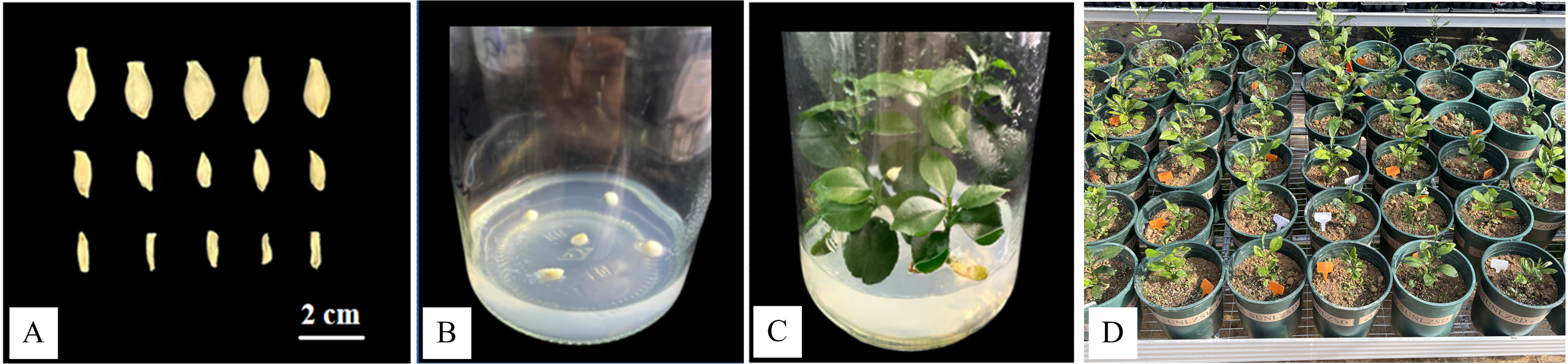
Fig. 1

Classification of seeds and plant regeneration of the tetraploid C. changshan-huyou×C. grandis Guanximiyou hybridization A: Seed classification; B: Sowing on the culture medium; C: Emergence of seedlings; D: Transplantation"

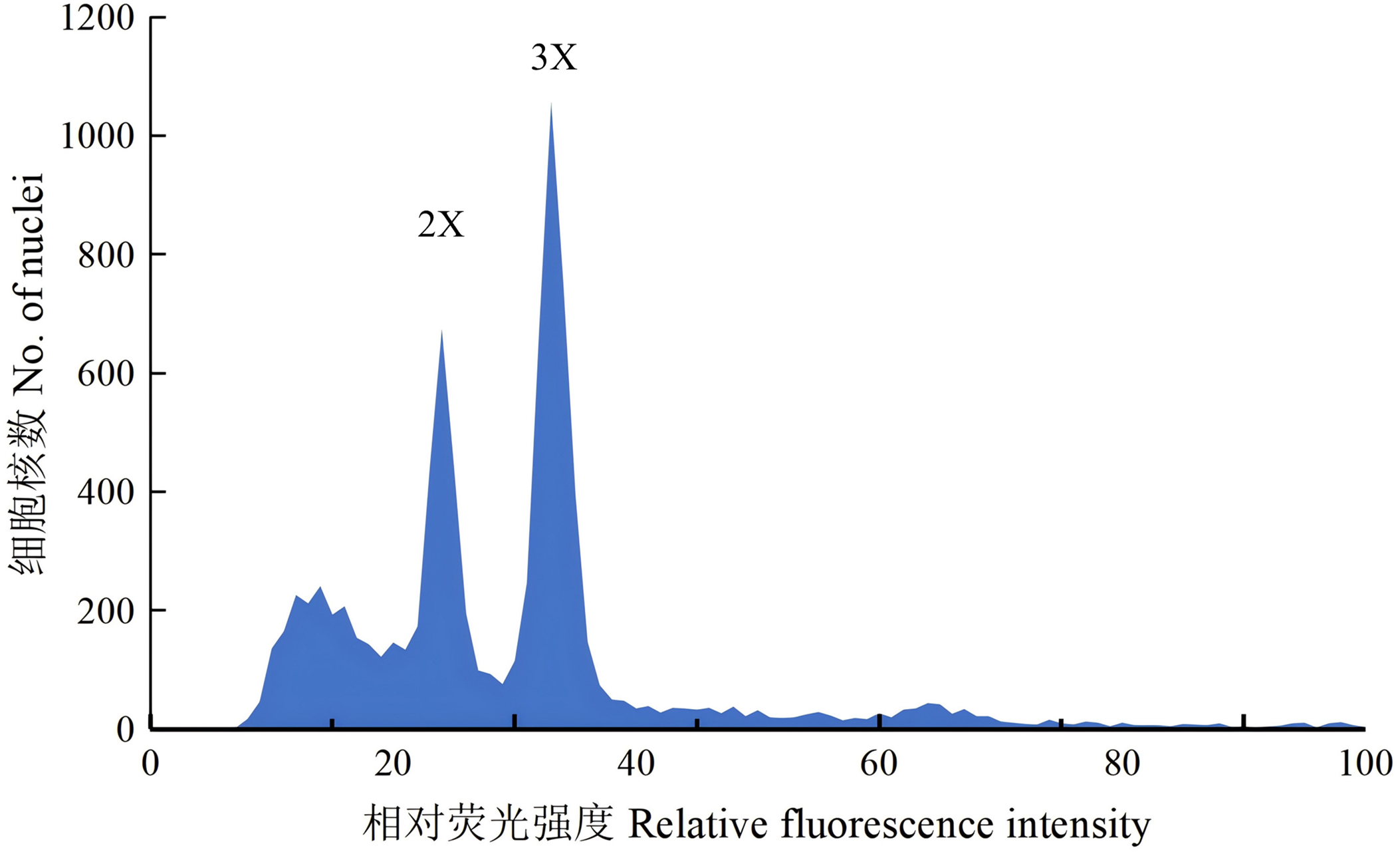
Fig. 2

Flow cytometric identification of ploidy in regenerated plants"

Table 3

Plant height and basal diameter of triploid offspring plants from four hybrid combinations"

品种
Cultivar
株高
Plant height
(cm)
地径
Ground diameter (mm)
株高/地径
Plant height/Ground diameter
四倍体‘胡柚’ב琯溪蜜柚’子代(n=40) Tetraploid Huyou × Guanximiyou 33.73±5.26a 5.97±0.73 5.65±0.62a
四倍体‘胡柚’ב早香柚’(n=14) Tetraploid Huyou × Zaoxiangyou 26.03±7.83b 5.75±0.35 4.49±1.12b
四倍体‘胡柚’ב东试早柚’(n=5) Tetraploid ‘Huyou × Dongshizaoyou 29.72±8.28ab 5.71±0.54 5.20±1.40ab
四倍体‘胡柚’ב红宝石柚’(n=7) Tetraploid Huyou × Hongbaoshiyou 33.61±7.94a 5.69±0.65 5.91±0.95a
四倍体‘胡柚’ Tetraploid Huyou 27.00±3.84b 5.71±0.66 5.08±0.68ab

Fig. 3

Comparison of leaf index and wing leaf length-to-width ratio of 4 hybrid combinations and their parents A-D: Leaf shape indices of different crosses; E-H: Length-to-width ratios of wing leaves for the corresponding crosses. HD: Tetraploid Huyou; GX: Guanximiyou; ZXY: Zaoxiangyou; HBS: Hongbaoshiyou; DSZ: Dongshizaoyou; F1(3X): Triploid hybrid progenies of the corresponding cross combinations. Different lowercase letters above the bars indicate significant differences among treatments (P<0.05). The same as below"

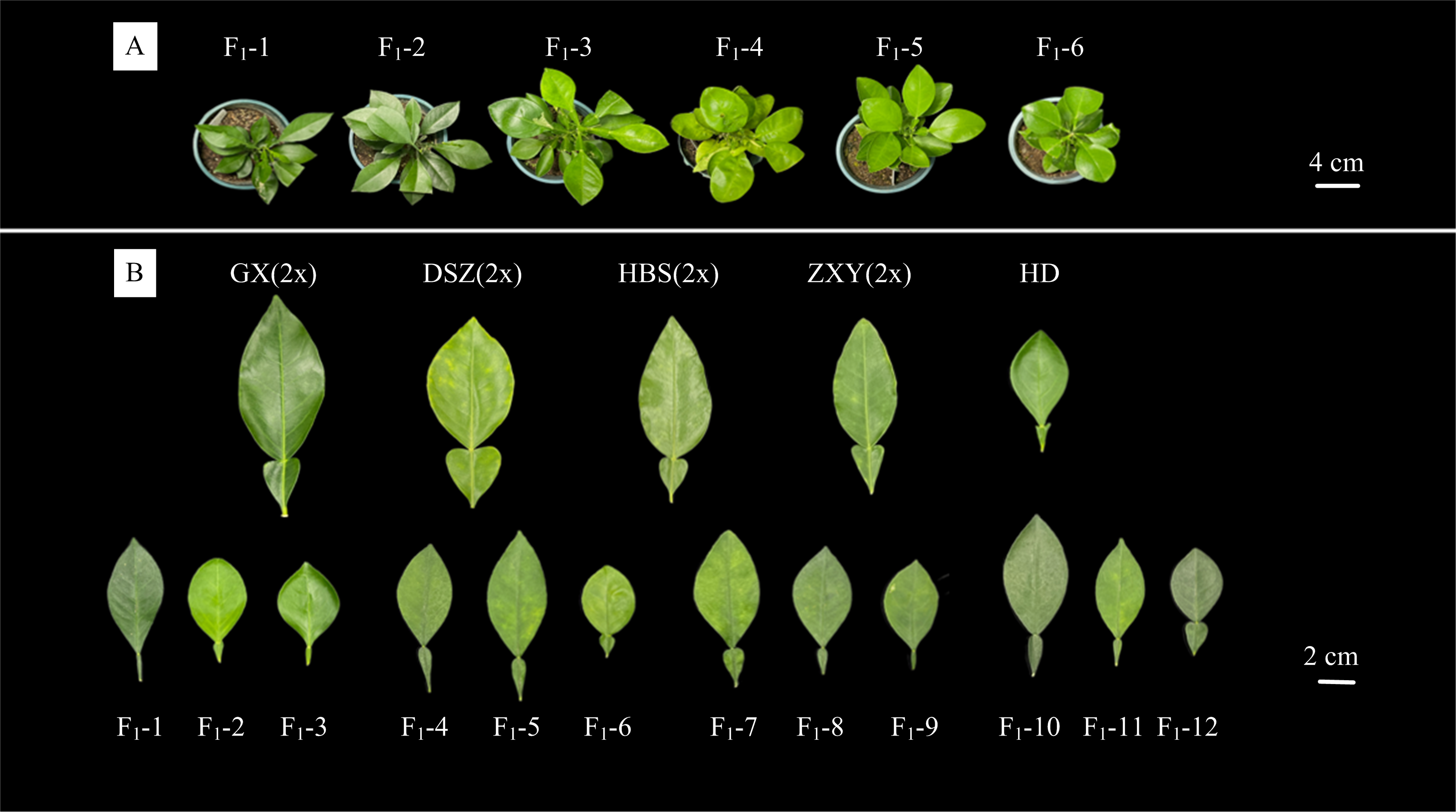
Fig. 4

Morphological characteristics of the hybrid progeny plants and leaves A: Progeny plants from the cross between tetraploid Huyou and diploid Guanximiyou; B: Comparison of leaf morphology between parents and progeny of each cross combination. F1-1-3: Progeny from tetraploid Huyou×Guanximiyou; F1-4-6: Progeny from tetraploid Huyou×Dongshizaoyou; F1-7-9: Progeny from tetraploid Huyou×Hongbaoshiyou; F1-10-12: Progeny from tetraploid Huyou×Zaoxiangyou"

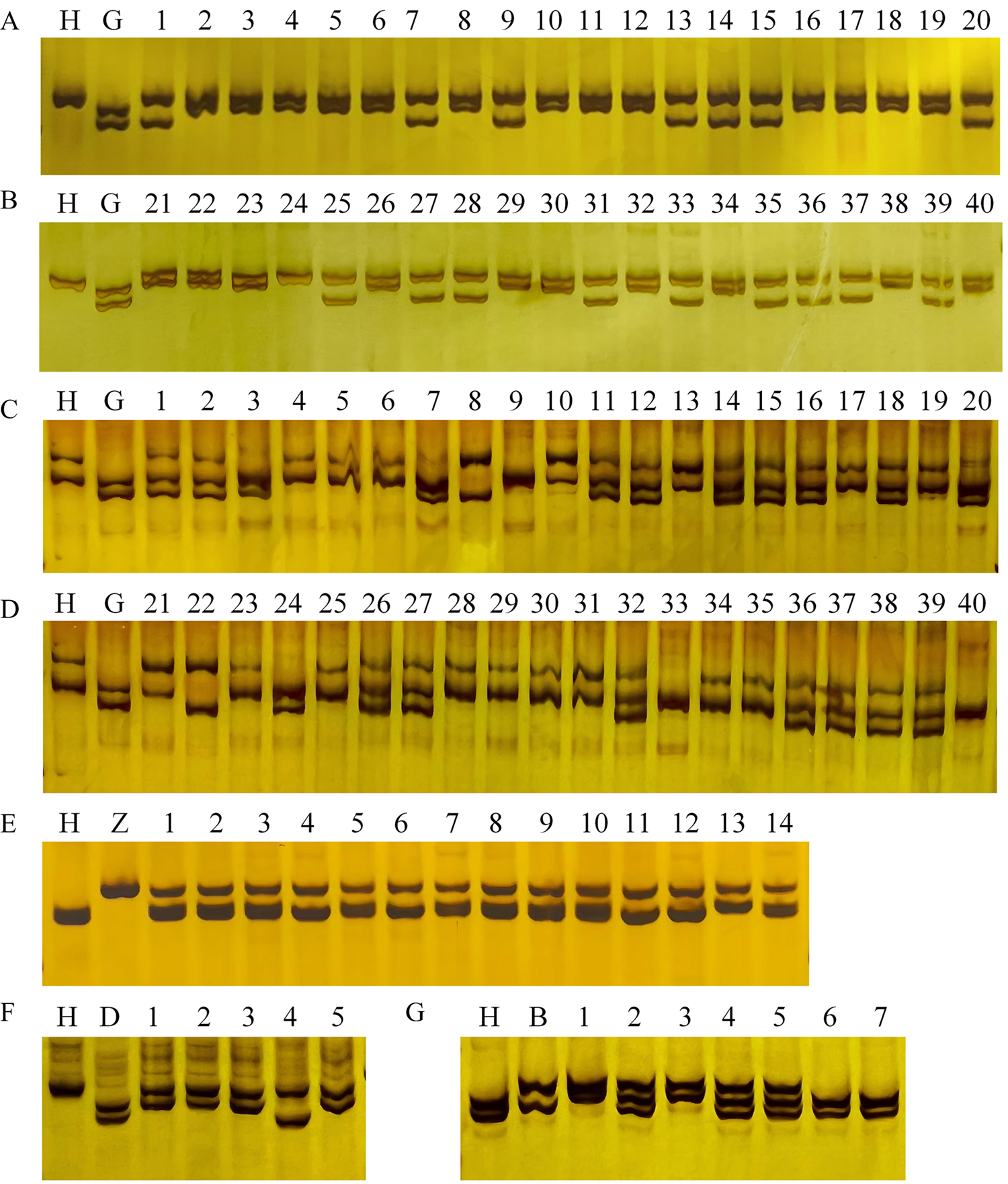
Fig. 5

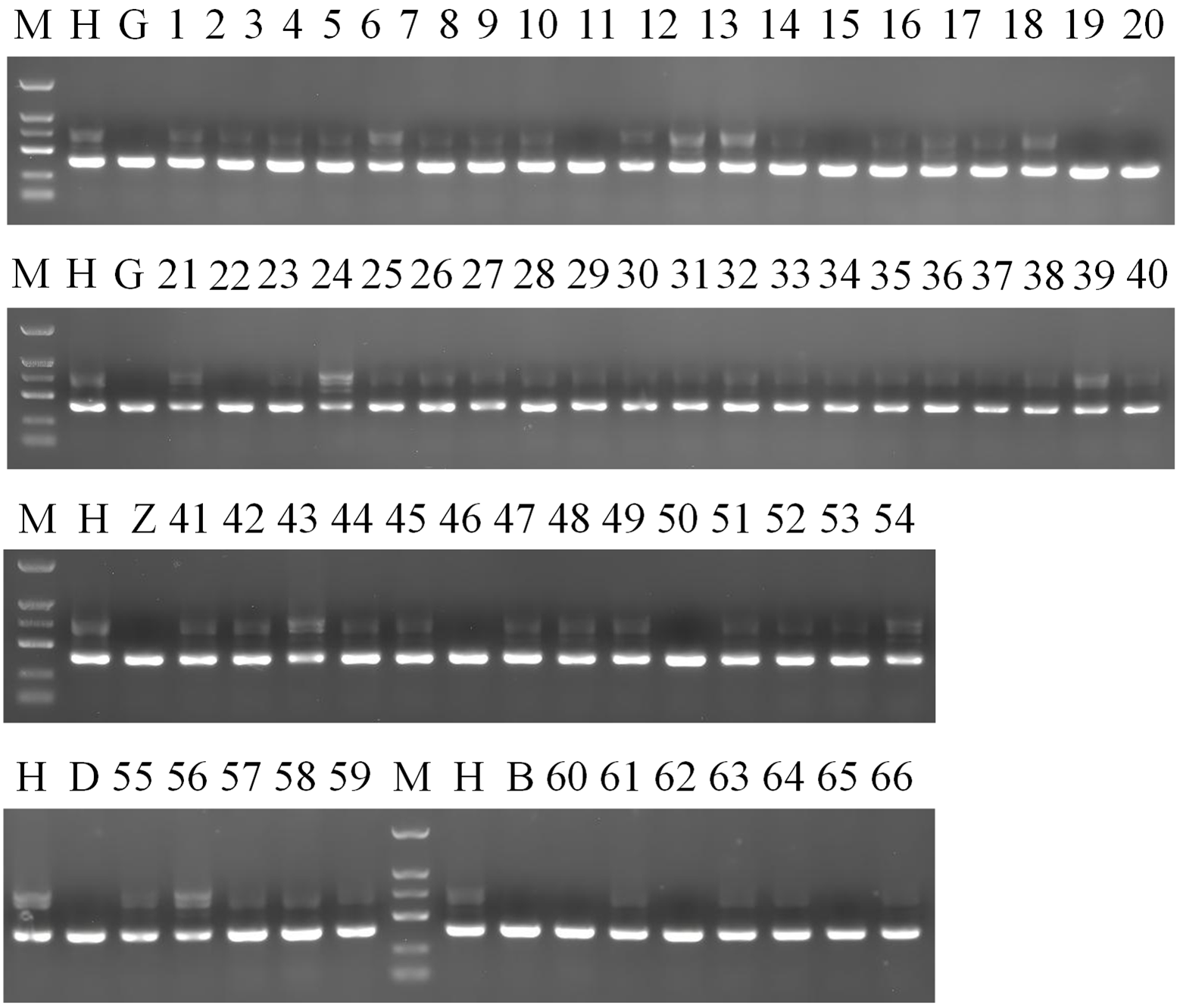
SSR molecular identification of four combination-derived regenerated triploid progeny A, B: Identification results using primer P72; C, D: Identification results using primer Ma3-96; E: Identification results using primer CAG01; F: Identification results using primer P8; G: Identification results using primer COSC4-9. H: Tetraploid Huyou; G: Guanximiyou; Z: Zaoxiangyou; D: Dongshizaoyou; B: Hongbaoshiyou; 1-40: Triploid progenies. The same as below"

Fig. 6

PCR profiles of hybrids randomly selected from the four cross combinations with the MITE marker M:2 kb DNA marker"

[1]
陈璞, 徐振江, 江东, 易静, 苏穆清, 邓超, 饶得花. 柚类种质资源DUS测试数量性状分级研究. 果树学报, 2024, 41(9): 1885-1902.
CHEN P, XU Z J, JIANG D, YI J, SU M Q, DENG C, RAO D H. Classification study on quantitative characteristics of pomelo germplasm resources for DUS test. Journal of Fruit Science, 2024, 41(9): 1885-1902. (in Chinese)
[2]
汪妮娜, 廖惠红, 黄宏明, 王茜, 刘福平, 黄其椿, 陈香玲. 琯溪蜜柚汁胞粒化影响因素及防控技术综述. 广西农学报, 2019, 34(4): 60-64.
WANG N N, LIAO H H, HUANG H M, WANG Q, LIU F P, HUANG Q C, CHEN X L. Review on influencing factors and prevention & control techniques of cellular granulation of Guanxi honey pomelo juice. Journal of Guangxi Agriculture, 2019, 34(4): 60-64. (in Chinese)
[3]
陈秋夏, 郑坚, 张旭乐, 徐文荣. 永嘉早香柚果实裂瓣规律与授粉调控. 果树学报, 2007, 24(1): 68-71.
CHEN Q X, ZHENG J, ZHANG X L, XU W R. Study on the effect of hand pollination on juice sac cracking of Yongjia Zaoxiangyou pomelo cultivar. Journal of Fruit Science, 2007, 24(1): 68-71. (in Chinese)
[4]
徐祥增, 邓乐晔, 张小娇, 张彩虹, 万子龙, 高世德. 不同品种授粉对东试早柚果实贮藏品质的影响. 中国南方果树, 2025: 1-15.
XU X Z, DENG Y Y, ZHANG X J, ZHANG C H, WAN Z L, GAO S D. Effects of different pollination cultivars on storage quality of Dongshizao pummelo fruit. South China Fruits, 2025: 1-15. (in Chinese)
[5]
张瑞敏, 吴平治, 樊正炎, 朱从一, 黄永敬, 张曼, 曾继吾. 不同授粉品种对沙田柚果实品质的影响. 现代食品, 2023, 29(21): 193-196.
ZHANG R M, WU P Z, FAN Z Y, ZHU C Y, HUANG Y J, ZHANG M, ZENG J W. Effects of different pollination varieties on fruit quality of Shatian pomelo. Modern Food, 2023, 29(21): 193-196. (in Chinese)
[6]
NAVARRO L, ALEZA P, CUENCA J, JUÁREZ J, PINA J A, ORTEGA C, NAVARRO A, ORTEGA V. The mandarin triploid breeding program in Spain. Acta Horticulturae, 2015(1065): 389-395.
[7]
OLLITRAULT P, DAMBIER D, LURO F, FROELICHER Y. Ploidy manipulation for breeding seedless triploid citrus. Plant Breeding Reviews, 2008, 30: 323-352.
[8]
解凯东, 彭珺, 袁东亚, 强瑞瑞, 谢善鹏, 周锐, 夏强明, 伍小萌, 柯甫志, 刘高平, 等. 以本地早橘和槾橘为母本倍性杂交创制柑橘三倍体. 中国农业科学, 2020, 53(23): 4961-4968. doi: 10.3864/j.issn.0578-1752.2020.23.020.
XIE K D, PENG J, YUAN D Y, QIANG R R, XIE S P, ZHOU R, XIA Q M, WU X M, KE F Z, LIU G P, et al. Production of Citrus triploids based on interploidy crossing with bendizao and man tangerines as female parents. Scientia Agricultura Sinica, 2020, 53(23): 4961-4968. doi: 10.3864/j.issn.0578-1752.2020.23.020. (in Chinese)
[9]
刘承浪, 冯迪, 曹宗洪, 陶亚文, 徐祥增, 高世德, 岳建强, 谢宗周, 叶俊丽, 柴利军, 等. 以东试早柚为母本创制柑橘三倍体种质资源. 果树学报, 2023, 40(10): 2041-2049.
LIU C L, FENG D, CAO Z H, TAO Y W, XU X Z, GAO S D, YUE J Q, XIE Z Z, YE J L, CHAI L J, et al. Creation of triploid seedling plants of Citrus by crossing Dongshizao pummelo female with tetraploid male parents. Journal of Fruit Science, 2023, 40(10): 2041-2049. (in Chinese)
[10]
VILORIA Z, GROSSER J W. Acid Citrus fruit improvement via interploid hybridization using allotetraploid somatic hybrid and autotetraploid breeding parents. Journal of the American Society for Horticultural Science, 2005, 130(3): 392-402.

doi: 10.21273/JASHS.130.3.392
[11]
陈方永, 倪海枝, 赵凯, 任正初. 柚新品种‘浙玉1号’. 园艺学报, 2009, 36(9): 1400.
CHEN F Y, NI H Z, ZHAO K, REN Z C. A new pomelo cultivar ‘Zheyu 1’. Acta Horticulturae Sinica, 2009, 36(9): 1400. (in Chinese)
[12]
ALEZA P, JUÁREZ J, HERNÁNDEZ M, OLLITRAULT P, NAVARRO L. Implementation of extensive Citrus triploid breeding programs based on 4x×2x sexual hybridisations. Tree Genetics & Genomes, 2012, 8(6): 1293-1306.
[13]
施灵荣, 赵四清, 方修贵. 常山胡柚产业现状及开发前景. 浙江柑橘, 2017, 34(3): 2-5.
SHI L R, ZHAO S Q, FANG X G. Present situation and development prospect of Changshan Huyou industry. Zhejiang Ganju, 2017, 34(3): 2-5. (in Chinese)
[14]
HUANG P R, XU T Y, WANG G, ZHANG L, YAO Y, ZHANG M, ZHANG C. Morphological and metabolic changes in Changshan Huyou (Citrus Changshan-Huyou) following natural tetraploidization. BMC Plant Biology, 2025, 25(1): 301.

doi: 10.1186/s12870-025-06293-4
[15]
徐天予, 张迟, 王刚, 叶潇玲, 陈翔, 叶生月, 张小琴, 张敏. 四倍体胡柚与鸡尾葡萄柚有性杂交创制三倍体新种质. 果树学报, 2025, 42(1): 63-71.
XU T Y, ZHANG C, WANG G, YE X L, CHEN X, YE S Y, ZHANG X Q, ZHANG M. Regeneration of triploid Citrus germplasm by the crossing between Tetra-ploid Huyou and Cocktail grapefruit. Journal of Fruit Science, 2025, 42(1): 63-71. (in Chinese)
[16]
王福生, 江东. 应用cpSSR和EST-SSR标记进行柑橘特异种质资源遗传背景研究. 园艺学报, 2010, 37(3): 465-474.
WANG F S, JIANG D. Studies on genetic background of important germplasm resources among Citrus based on cpSSR and EST-SSR marker. Acta Horticulturae Sinica, 2010, 37(3): 465-474. (in Chinese)
[17]
梁武军, 解凯东, 郭大勇, 谢宗周, 徐强, 伊华林, 郭文武. 柑橘10个品种实生后代多倍体的发掘及SSR鉴定. 园艺学报, 2014, 41(3): 409-416.
LIANG W J, XIE K D, GUO D Y, XIE Z Z, XU Q, YI H L, GUO W W. Spontaneous generation and SSR characterization of polyploids from ten Citrus cultivars. Acta Horticulturae Sinica, 2014, 41(3): 409-416. (in Chinese)
[18]
陈林杨, 刘萍, 董蓉娇, 刘梦雨, 赵东兴, 杨永智, 赵志昆. 基于SSR分子标记的柚资源遗传多样性分析. 西南农业学报, 2020, 33(11): 2432-2438.
CHEN L Y, LIU P, DONG R J, LIU M Y, ZHAO D X, YANG Y Z, ZHAO Z K. Genetic diversity analysis of pomelo resourses based on SSR molecular markers. Southwest China Journal of Agricultural Sciences, 2020, 33(11): 2432-2438. (in Chinese)
[19]
BARKLEY N A, ROOSE M L, KRUEGER R R, FEDERICI C T. Assessing genetic diversity and population structure in a Citrus germplasm collection utilizing simple sequence repeat markers (SSRs). Theoretical and Applied Genetics, 2006, 112(8): 1519-1531.

doi: 10.1007/s00122-006-0255-9
[20]
夏强明, 彭珺, 解凯东, 伍小萌, 徐强, 郭文武. 以雄性不育胞质杂种‘华柚2号’为母本创制柚有性群体. 果树学报, 2019, 36(8): 961-967.
XIA Q M, PENG J, XIE K D, WU X M, XU Q, GUO W W. Production of sexual hybrids with male sterile somatic cybrid pummelo ‘Huayou No.2’ as female parent. Journal of Fruit Science, 2019, 36(8): 961-967. (in Chinese)
[21]
WANG X, XU Y T, ZHANG S Q, CAO L, HUANG Y, CHENG J F, WU G Z, TIAN S L, CHEN C L, LIU Y, et al. Genomic analyses of primitive, wild and cultivated Citrus provide insights into asexual reproduction. Nature Genetics, 2017, 49(5): 765-772.

doi: 10.1038/ng.3839
[22]
宋健坤, 朱世平, 谭美莲, 郭文武, 邓秀新. 沙田柚(2x)×柑橘异源体细胞杂种NS(4x)的三倍体后代遗传分析. 园艺学报, 2012, 39(6): 1021-1026.
SONG J K, ZHU S P, TAN M L, GUO W W, DENG X X. Genetic analysis of triploid progenies from Shatian pummelo(2x) × Citrus allotetraploid somatic hybrid NS(4x). Acta Horticulturae Sinica, 2012, 39(6): 1021-1026. (in Chinese)
[23]
VILORIA Z, DROUILLARD D L, GRAHAM J H, GROSSER J W. Screening triploid hybrids of ‘Lakeland’ limequat for resistance to Citrus canker. Plant Disease, 2004, 88(10): 1056-1060.

doi: 10.1094/PDIS.2004.88.10.1056
[24]
LOURKISTI R, FROELICHER Y, HERBETTE S, MORILLON R, TOMI F, GIBERNAU M, GIANNETTINI J, BERTI L, SANTINI J. Triploid Citrus genotypes have a better tolerance to natural chilling conditions of photosynthetic capacities and specific leaf volatile organic compounds. Frontiers in Plant Science, 2020, 11: 330.

doi: 10.3389/fpls.2020.00330
[25]
SOOST R K, CAMERON J W. ‘oroblanco’, a triploid pummelo- grapefruit Hybrid1. HortScience, 1980, 15(5): 667-669.

doi: 10.21273/HORTSCI.15.5.667
[26]
FABRONI S, RUBERTO G, RAPISARDA P. Essential oil profiles of new Citrus hybrids, a tool for genetic Citrus improvement. Journal of Essential Oil Research, 2012, 24(2): 159-169.

doi: 10.1080/10412905.2012.659529
[27]
AHMED D, EVRARD J C, OLLITRAULT P, FROELICHER Y. The effect of cross direction and ploidy level on phenotypic variation of reciprocal diploid and triploid mandarin hybrids. Tree Genetics & Genomes, 2020, 16(1): 25.
[28]
SDIRI S, CUENCA J, NAVARRO P, SALVADOR A, BERMEJO A. New triploids late-maturing mandarins as a rich source of antioxidant compounds. European Food Research and Technology, 2020, 246(1): 225-237.

doi: 10.1007/s00217-019-03407-9
[29]
ALEZA P, CUENCA J, JUÁREZ J, PINA J A, NAVARRO L. ‘Garbí’ mandarin: A new late-maturing triploid hybrid. HortScience, 2010, 45(1): 139-141.

doi: 10.21273/HORTSCI.45.1.139
[30]
CUENCA J, ALEZA P, JUÁREZ J, PINA J A, NAVARRO L. ‘Safor’ mandarin: A new Citrus mid-late triploid hybrid. HortScience, 2010, 45(6): 977-980.

doi: 10.21273/HORTSCI.45.6.977
[31]
CUENCA J, ALEZA P, JUÁREZ J, PINA J A, NAVARRO L. Two new Ivia triploid mandarin hybrids: ‘Alborea’ and ‘Albir’. Acta Horticulturae, 2015(1065): 209-214.
[32]
ESEN A, SOOST R K, GERACI G. Seed set, size, and development after 4x × 2x and 4x × 4x crosses in Citrus Euphytica, 1978, 27(1): 283-294.

doi: 10.1007/BF00039144
[33]
YI H L, DENG X X. RAPD-based genetic analysis of offsprings from the sexual cross using allotetraploid Citrus somatic hybrid as pollen parent. Science in China Series C: Life Sciences, 2007, 50(3): 367-376.
[34]
SHIMADA T, ENDO T, FUJII H, NAKANO M, SUGIYAMA A, DAIDO G, OHTA S, YOSHIOKA T, OMURA M. MITE insertion- dependent expression of CitRKD1 with a RWP-RK domain regulates somatic embryogenesis in Citrus nucellar tissues. BMC Plant Biology, 2018, 18(1): 166.

doi: 10.1186/s12870-018-1369-3
[35]
宋放, 羊林鑫, 王策, 蒋迎春, 何利刚, 王志静, 马小方, 张豫, 宋鑫, 吴黎明. 清见×鄂柑一号杂交F1代亲缘关系及单多胚性鉴定. 果树学报, 2025, 42(5): 957-968.
SONG F, YANG L X, WANG C, JIANG Y C, HE L G, WANG Z J, MA X F, ZHANG Y, SONG X, WU L M. Identification of phylogenetic relationship and polyembryony trait in F1 hybrid offspring of Kiyomi and Egan No. 1. Journal of Fruit Science, 2025, 42(5): 957-968. (in Chinese)
[36]
梁武军, 解凯东, 谢宗周, 徐强, 伊华林, 郭文武. 三倍体葡萄柚实生后代多倍体的发掘与SSR遗传鉴定. 果树学报, 2015, 32(1): 13-18.
LIANG W J, XIE K D, XIE Z Z, XU Q, YI H L, GUO W W. Exploitation of polyploids from open-pollinated triploid grapefruit progenies and their genetic identification by SSR molecular markers. Journal of Fruit Science, 2015, 32(1): 13-18. (in Chinese)
[1] WU YuZhen, HUANG LongYu, ZHOU DaYun, HUANG YiWen, FU ShouYang, PENG Jun, KUANG Meng. Construction of SSR Fingerprint Library and Comprehensive Evaluation for Approved Cotton Varieties in China [J]. Scientia Agricultura Sinica, 2024, 57(8): 1430-1443.
[2] WANG LuLu, ZHANG MingWei, YE JiaMin, ZHANG RuiFen, DENG Mei. Effects of Soluble and Insoluble Dietary Fiber from Shatianyu Pulp on Gut Microbiota [J]. Scientia Agricultura Sinica, 2024, 57(20): 4119-4129.
[3] ZHAI CaiJiao, GE LiJiao, CHENG YuJing, QIU Liang, WANG XiaoQiu, LIU ShuiDong. Genetic Diversity Analysis of Wax Gourd and Chieh-Qua Germplasm Resources Based on Phenotypic Traits and SSR Markers [J]. Scientia Agricultura Sinica, 2024, 57(17): 3440-3457.
[4] YE JiaMin, ZHANG MingWei, LU Qi, ZHANG RuiFen, DENG Mei. Effects of Semi-Solid Fermentation with Lactobacillus on the Bitterness and Active Components of Shatianyu (Citrus grandis L. Osbeck) Fruit Powder [J]. Scientia Agricultura Sinica, 2024, 57(13): 2662-2673.
[5] LU YanQing, LIN YanJin, WANG XianDa, LU XinKun. A Transcriptome Analysis Identifies Candidate Genes Related to Fruit Cracking in Pomelo Fruits [J]. Scientia Agricultura Sinica, 2023, 56(20): 4087-4101.
[6] LU Qi,JIA XuChao,DENG Mei,ZHANG RuiFen,DONG LiHong,HUANG Fei,CHI JianWei,LIU Lei,ZHANG MingWei. Effects of Different Drying Methods on Bioactive Components of Shatianyou (Citrus grandis L. Osbeck) Pomace Powder [J]. Scientia Agricultura Sinica, 2022, 55(14): 2825-2836.
[7] ZhiJun XU, Sheng ZHAO, Lei XU, XiaoWen HU, DongSheng AN, Yang LIU. Discovery of Microsatellite Markers from RNA-seq Data in Cultivated Peanut (Arachis hypogaea) [J]. Scientia Agricultura Sinica, 2020, 53(4): 695-706.
[8] XIE KaiDong,PENG Jun,YUAN DongYa,QIANG RuiRui,XIE ShanPeng,ZHOU Rui,XIA QiangMing,WU XiaoMeng,KE FuZhi,LIU GaoPing,GROSSER Jude W,GUO WenWu. Production of Citrus Triploids Based on Interploidy Crossing with Bendizao and Man Tangerines as Female Parents [J]. Scientia Agricultura Sinica, 2020, 53(23): 4961-4968.
[9] YANG ZiBo, WANG AnBang, LENG SuFeng, GU ZhengZhong, ZHOU YangMei. Genetic Analysis of the Novel High-Yielding Wheat Cultivar Huaimai33 [J]. Scientia Agricultura Sinica, 2018, 51(17): 3237-3248.
[10] XUE YanTao, LU Ping, QIAO ZhiJun, LIU MinXuan, WANG RuiYun. Genetic Diversity and Genetic Relationship of Broomcorn Millet (Panicum miliaceum L.) Germplasm Based on SSR Markers [J]. Scientia Agricultura Sinica, 2018, 51(15): 2846-2859.
[11] LIU WenPing, Lü Wei, LI DongHua, REN GuoXiang, ZHANG YanXin, WEN Fei, HAN JunMei, ZHANG XiuRong. Drought Resistance of Sesame Germplasm Resources and Association Analysis at Adult Stage [J]. Scientia Agricultura Sinica, 2017, 50(4): 625-639.
[12] WEN Xin, DENG Shu, ZHANG ChunFen, HOU LiYuan, SHI JiangPeng, NIE YuanJun, XIAO Rong, QIN YongJun, CAO QiuFen. Regeneration of New Germplasms Using Anther Culture of Apple Cultivar ‘Gala’ [J]. Scientia Agricultura Sinica, 2017, 50(14): 2793-2806.
[13] LIAN Shuai, LU Ping, QIAO Zhi-jun, ZHANG Qi, ZHANG Qian, LIU Min-xuan, WANG Rui-yun. Genetic Diversity in Broomcorn Millet (Panicum miliaceum L.) from China and Abroad by Using SSR Markers [J]. Scientia Agricultura Sinica, 2016, 49(17): 3264-3275.
[14] LIU Xiu-yun, LI Hui, LIU Zhi-guo, ZHAO Jin, LIU Meng-jun. Genetic Diversity and Structure of 255 Cultivars of Ziziphus jujuba Mill. [J]. Scientia Agricultura Sinica, 2016, 49(14): 2772-2791.
[15] HU Zhen-bang, GAO Yun-lai, QI Zhao-ming, JIANG Hong-wei, LIU Chun-yan, XIN Da-wei, HU Guo-hua, PAN Xiao-cheng, CHEN Qing-shan. Software Development of -ID Analysis for Crop Molecular Identity Construction [J]. Scientia Agricultura Sinica, 2016, 49(12): 2255-2266.
Viewed
Full text


Abstract

Cited

  Shared   
  Discussed   
No Suggested Reading articles found!