Scientia Agricultura Sinica ›› 2026, Vol. 59 ›› Issue (16): 3496-3508.doi: 10.3864/j.issn.0578-1752.2026.16.003

• CROP GENETICS & BREEDING·GERMPLASM RESOURCES·MOLECULAR GENETICS • Previous Articles     Next Articles

Effects of the GDSL Lipase Gene GhGELP23D from Gossypium hirsutum on Plant Cell Elongation Development

CHEN HaoHua(), CHEN Gang, FENG JianTing, XIE Jing, LI QianQian, WANG Fei(), LI HongBin()   

  1. College of Life Sciences, Shihezi University, Shihezi 832003, Xinjiang
  • Received:2026-01-06 Accepted:2026-03-05 Online:2026-08-16 Published:2026-08-17
  • Contact: WANG Fei, LI HongBin

Abstract:

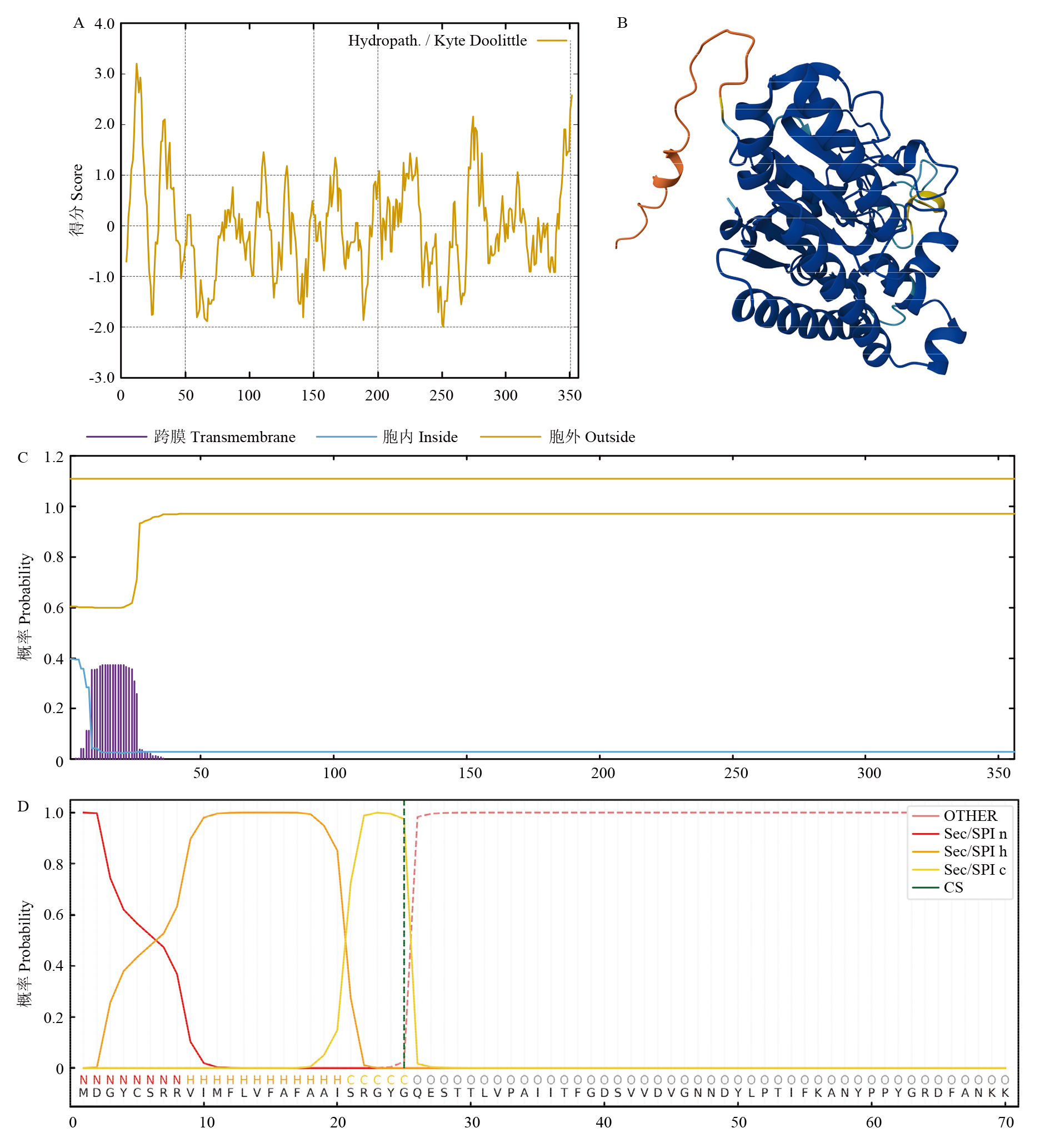
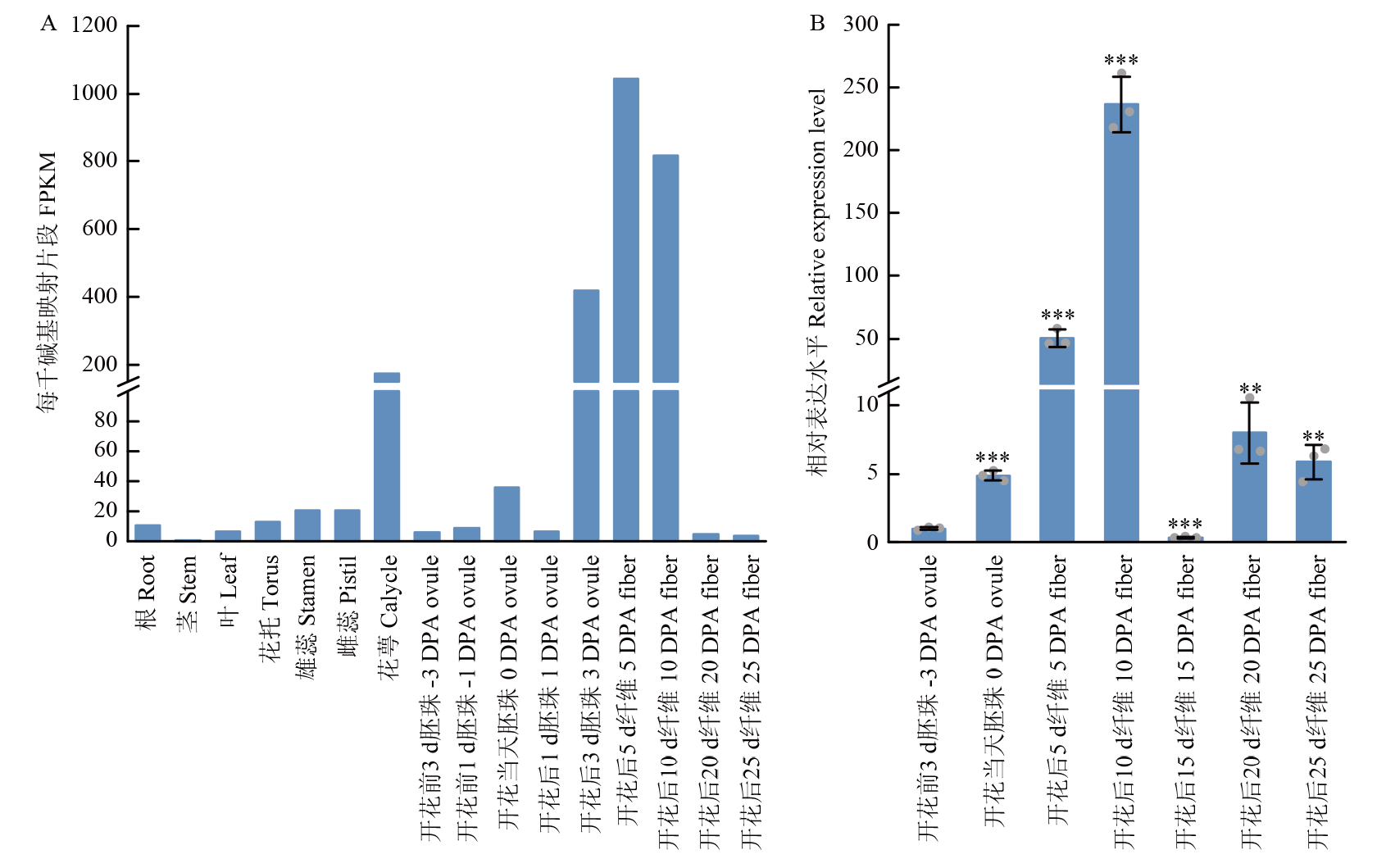
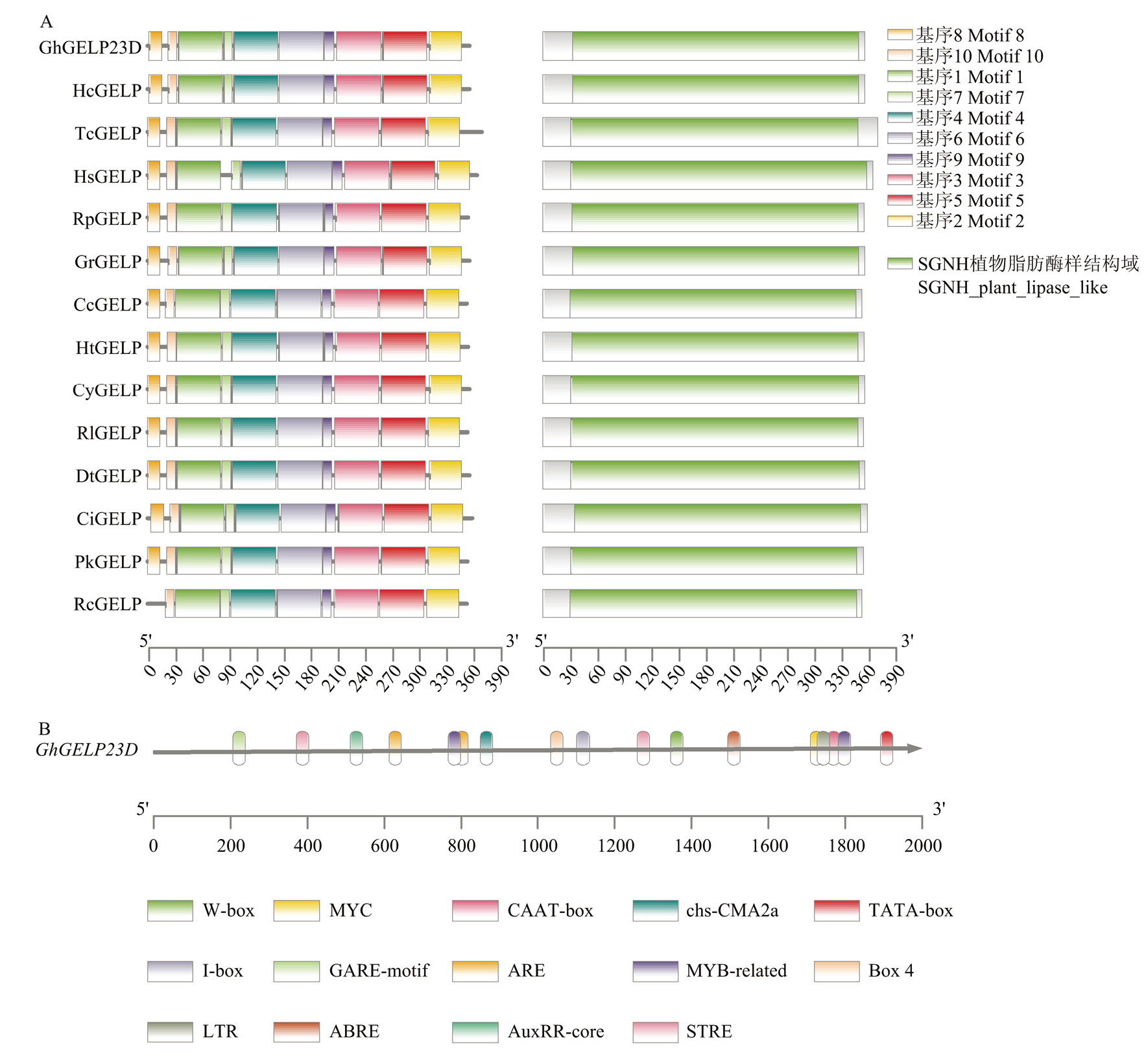
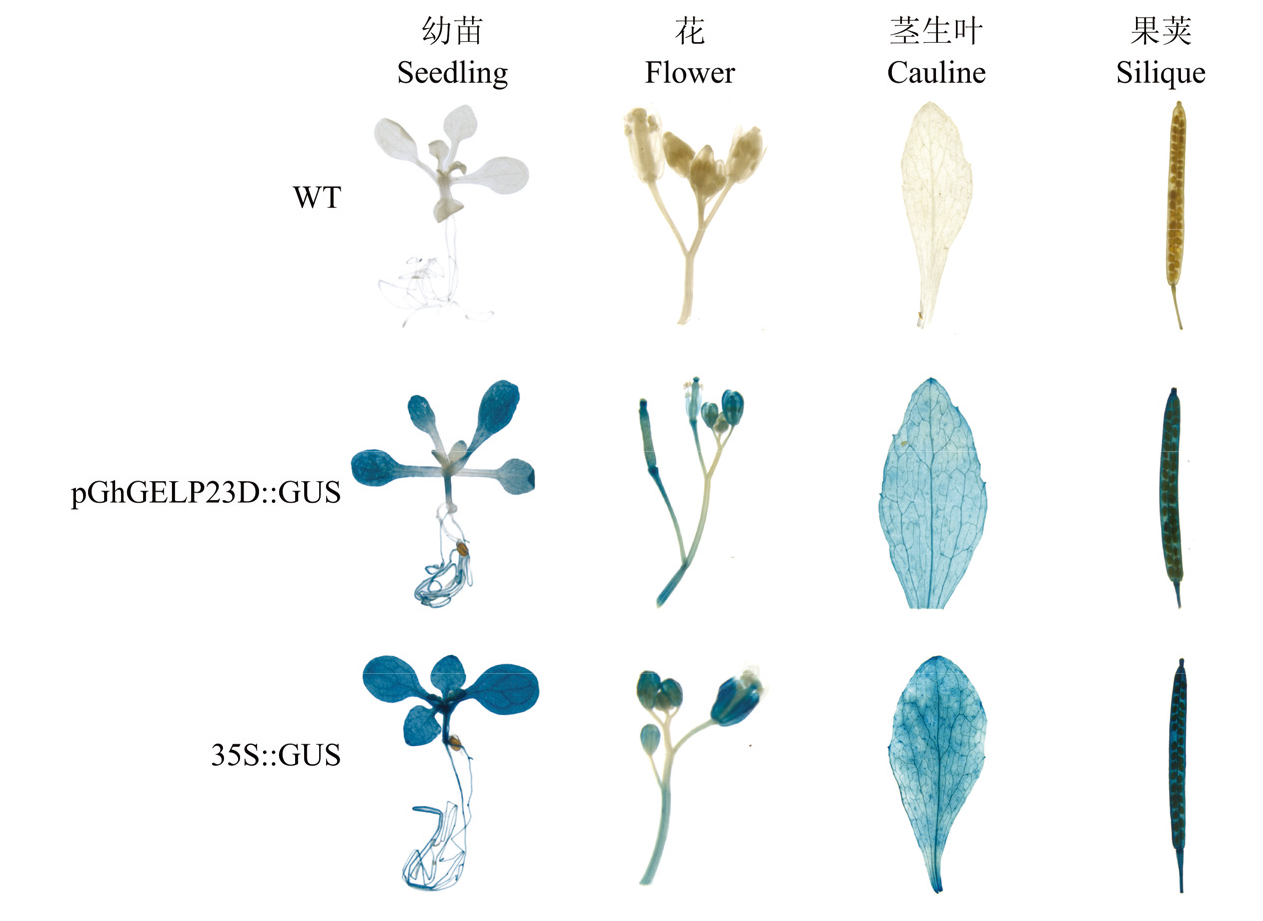
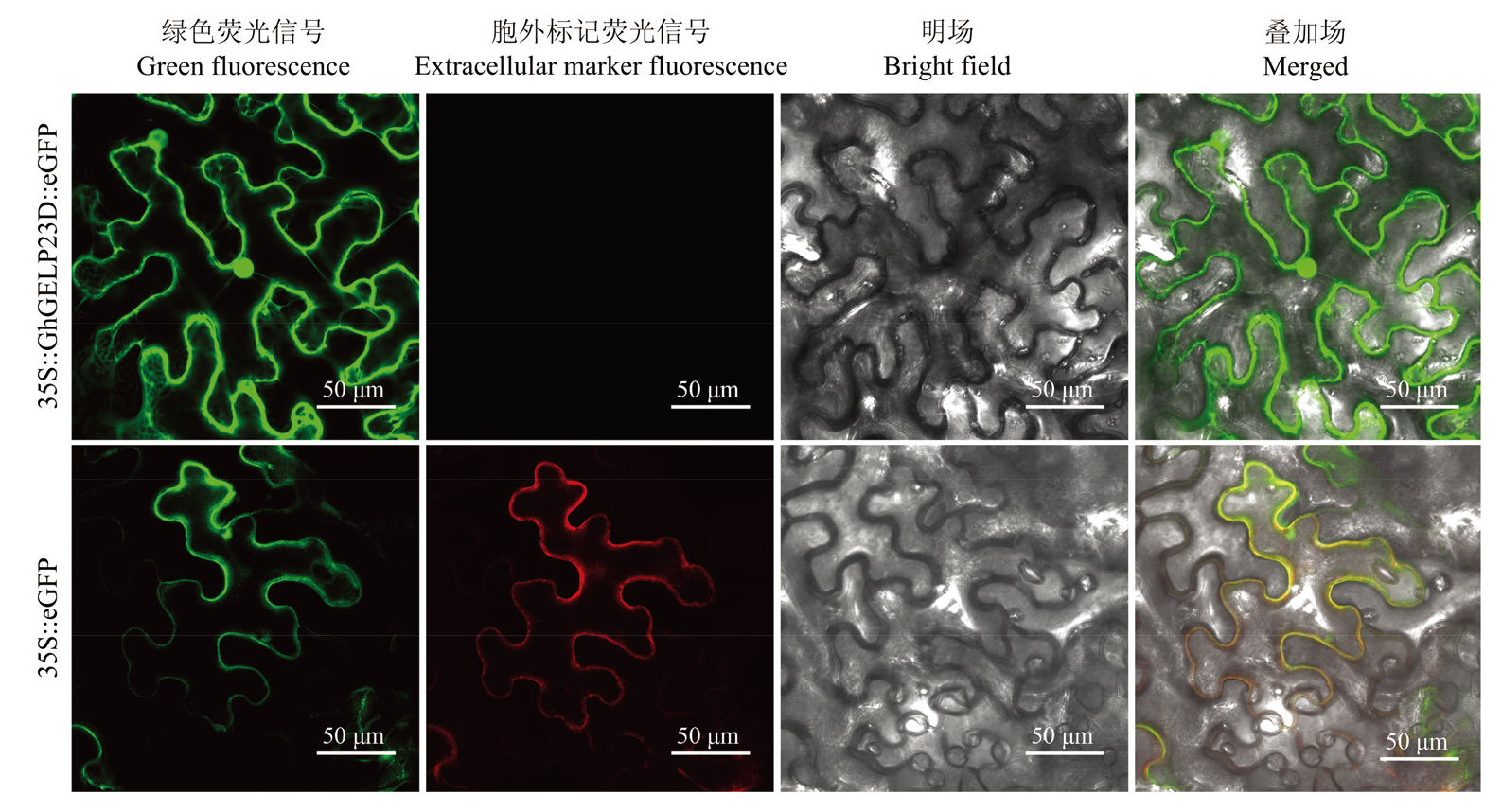
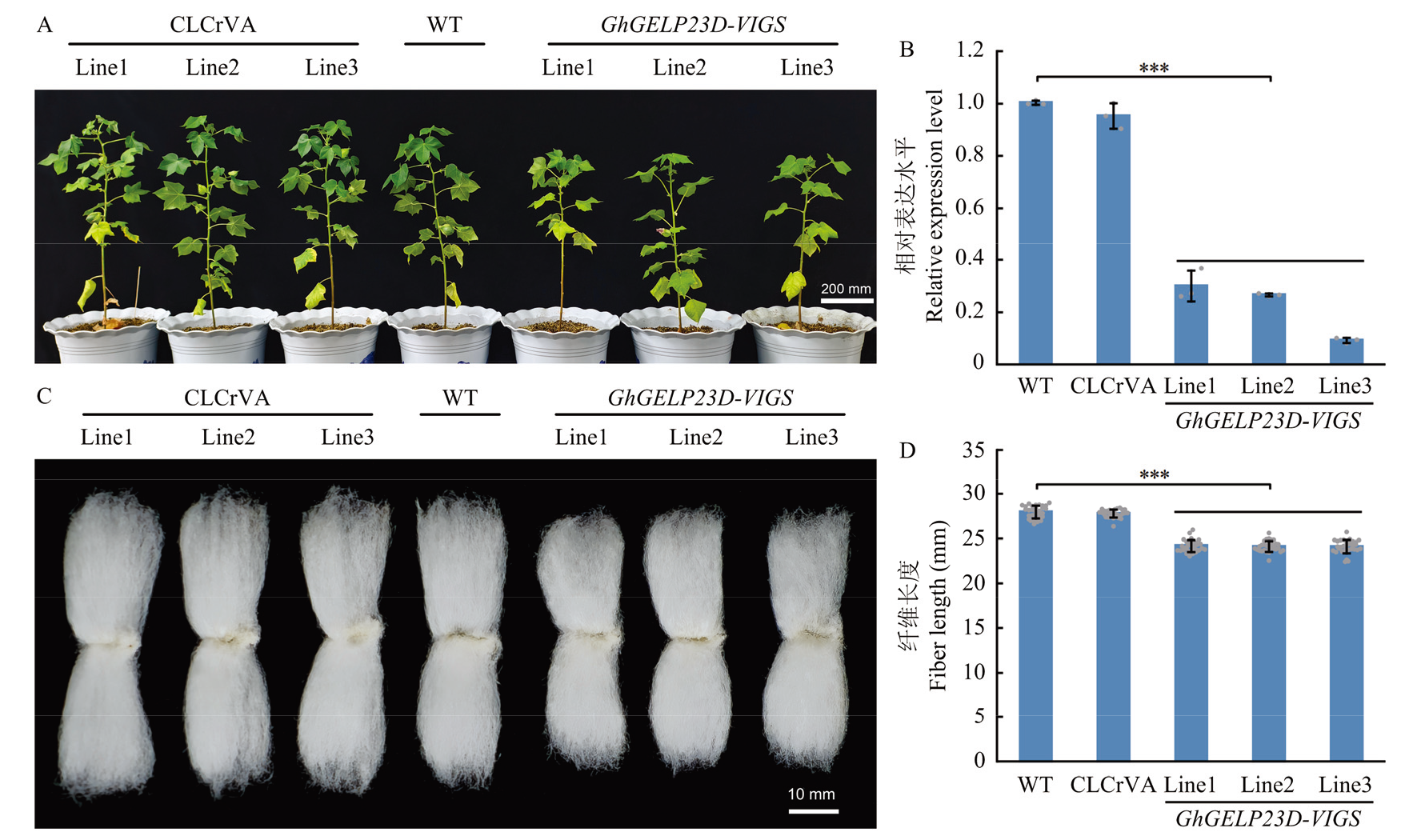
【Objective】 The GDSL esterase/lipase (GELP) family comprises a group of multifunctional hydrolases with broad substrate specificity and catalytic versatility, playing an essential role in plant growth and developmental processes. The GDSL lipase gene GhGELP23D from Gossypium hirsutum is highly expressed during cotton fiber elongation development. This study aims to investigate its function in plant cell elongation and provides references for the mechanism elucidation of GELP-mediated regulation of cell growth. 【Method】 The GhGELP23D was cloned from upland cotton fibers. Bioinformatic analyses were performed to characterize its physicochemical properties, structural features, and phylogenetic relationships. The promoter region was analyzed with PlantCARE to identify putative cis-elements. Expression patterns were detected based on public transcriptomic data and RT-qPCR validation. A GUS reporter construct driven by the GhGELP23D promoter was generated to examine the tissue-specific expression of GhGELP23D in stably transformed Arabidopsis. Subcellular localization of GhGELP23D was determined through transient expression in Nicotiana benthamiana leaves. Transgenic Arabidopsis lines heterologously expressing GhGELP23D (GhGELP23D-OE) were obtained using the floral-dip method, and phenotypic analyses were conducted. Additionally, virus-induced gene silencing (VIGS) was employed to suppress GhGELP23D expression in cotton. Silencing efficiency was verified by RT-qPCR, and the resulting changes in fiber length were assessed in GhGELP23D-VIGS plants. 【Result】 GhGELP23D encodes a 356-amino-acid protein that is stable, weakly basic, and hydrophilic, containing a typical signal peptide but no transmembrane domain. Transcriptomic analysis and RT-qPCR detection showed that GhGELP23D was highly expressed during cotton fiber elongation. Subcellular localization analysis revealed that GhGELP23D is predominantly localized to the extracellular space. Analysis of the GhGELP23D promoter indicated the presence of multiple cis-elements related to light responsiveness, hormone signaling, and stress response. Histochemical GUS staining showed that the GhGELP23D promoter can drive reporter gene expression in various Arabidopsis tissues, indicating broad tissue expression activity. Heterologous expression of GhGELP23D in Arabidopsis (GhGELP23D-OE) significantly enhanced plant growth and development, resulting in increased plant height and longer primary roots and root hairs. Furthermore, complementation of GhGELP23D in the mutant resulted in a pronounced recovery of primary root and root hair length similar to that of the wild type (WT). In cotton, the fiber length of GhGELP23D-VIGS lines was significantly reduced compared with that of empty-vector control plants, with an average decrease of approximately 13.14%.【Conclusion】 GhGELP23D encodes an extracellular GDSL lipase that is highly expressed during the fiber elongation stage of upland cotton and plays an important role in plant cell elongation development.

Key words: Gossypium hirsutum, GDSL lipase, cell elongation, GhGELP23D, subcellular localization, VIGS

Fig. 1

Bioinformatic analysis of the GhGELP23D protein A: Hydrophilicity/Hydrophobicity analysis; B: Tertiary structure prediction; C: Transmembrane domain analysis; D: Signal peptide identification"

Fig. 2

Expression analysis of GhGELP23D during fiber developmental stages A: Analysis of the expression pattern of GhGELP23D based on transcriptome data; B: RT-qPCR analysis of GhGELP23D expression during fiber developmental stages. *P<0.05, **P<0.01, ***P<0.001"

Fig. 3

Protein sequence alignment and phylogenetic analysis of GELP proteins from different crops A: Multiple sequence alignment of proteins; B: Phylogenetic analysis. Gh: Gossypium hirsutum, XP016688499.1; Hc: Hibiscus cannabinus, KAL4332816.1; Cy: Craigia yunnanensis, XWS18929.1; Dt: Diplodiscus trichospermus, XVE88786.1; Rp: Reevesia pubescens, XVF26876.1; Gr: Gossypium raimondii, XP012456097.1; Hs: Hibiscus sabdariffa, KAK8608411.1; Ht: Hibiscus trionum, GMI77967.1; Tc: Theobroma cacao, WRX26395.1; Cc: Corchorus capsularis, OMO70926.1; Pk: Pterospermum kingtungense, XVF86727.1; Ci: Carya illinoinensis, XP042949469.1; Rl: Rubroshorea leprosula, GKV27208.1; Rc: Ricinus communis, EEF46352.1"

Fig. 4

Analysis of conserved motifs of the GhGELP23D protein and cis-elements in its promoter A: Conserved motif analysis and domain prediction of proteins; B: Cis-element prediction in the promoter"

Fig. 5

Tissue-specific expression pattern of the GhGELP23D promoter"

Fig. 6

Subcellular localization analysis of the GhGELP23D protein"

Fig. 7

Genetic function analysis of GhGELP23D in regulating Arabidopsis cell elongation A: Phenotypic observation of root in one-week-old wild-type and transgenic Arabidopsis thaliana; scale bar: 10 mm; B: Phenotypic observation of plant height in five-week-old mature wild-type and transgenic Arabidopsis thaliana; scale bar: 50 mm; C: Phenotypic observation of root hairs in one-week-old wild-type and transgenic Arabidopsis thaliana; scale bar: 500 μm; D: Determination and statistical assessment of primary root length in Arabidopsis thaliana; E: Determination and statistical assessment of plant height in Arabidopsis thaliana; F: Determination and statistical assessment of root hair length in Arabidopsis thaliana"

Fig. 8

Genetic function analysis of GhGELP23D in regulating cotton fiber elongation A: Overall phenotype of GhGELP23D-VIGS lines compared with CLCrVA plants; Scale bar: 200 mm; B: RT-qPCR analysis of GhGELP23D gene silencing efficiency; C: Fiber length of GhGELP23D-VIGS lines and control plants; Scale bar: 10 mm; D: Determination and statistical assessment of mature cotton fiber length. WT: Wild-type cotton. CLCrVA: pCLCrVA empty vector control plants. GhGELP23D-VIGS: GhGELP23D-silenced plants"

[1]
Yuan B Z, Sun J. Bibliometric analysis of cotton research from plant sciences category based on web of science[J]. Journal of Natural Fibers, 2022, 19(14): 7579-7593.

doi: 10.1080/15440478.2021.1952139
[2]
Huang G, Huang J Q, Chen X Y, Zhu Y X. Recent advances and future perspectives in cotton research[J]. Annual Review of Plant Biology, 2021, 72: 437-462.

doi: 10.1146/annurev-arplant-080720-113241 pmid: 33428477
[3]
Kim H J, Triplett B A. Cotton fiber growth in planta and in vitro. Models for plant cell elongation and cell wall biogenesis[J]. Plant Physiology, 2001, 127(4): 1361-1366.

pmid: 11743074
[4]
Sun W J, Gao Z Y, Wang J, Huang Y Q, Chen Y, Li J F, Lv M L, Wang J, Luo M, Zuo K J. Cotton fiber elongation requires the transcription factor GhMYB212 to regulate sucrose transportation into expanding fibers[J]. The New Phytologist, 2019, 222(2): 864-881.

doi: 10.1111/nph.2019.222.issue-2
[5]
Suo Q W, Fang N J, Zeng J Y, Yan F L, Zhu X, Wang Y, Yu W T, Chen J M, Liang A M, Li Y H, Kong J, Xiao Y H. R2R3 MYB transcription factor GhMYB201 promotes cotton fiber elongation via cell wall loosening and very-long-chain fatty acid synthesis[J]. International Journal of Molecular Sciences, 2024, 25(17): 9559.

doi: 10.3390/ijms25179559
[6]
Xiao G H, Zhao P, Zhang Y. A pivotal role of hormones in regulating cotton fiber development[J]. Frontiers in Plant Science, 2019, 10: 87.

doi: 10.3389/fpls.2019.00087 pmid: 30838005
[7]
Somssich M, Khan G A, Persson S. Cell wall heterogeneity in root development of Arabidopsis[J]. Frontiers in Plant Science, 2016, 7: 1242.

doi: 10.3389/fpls.2016.01242 pmid: 27582757
[8]
Liu X H, Cui H Y, Zhang B C, Song M, Chen S L, Xiao C W, Tang Y J, Liesche J. Reduced pectin content of cell walls prevents stress-induced root cell elongation in Arabidopsis[J]. Journal of Experimental Botany, 2021, 72(4): 1073-1084.

doi: 10.1093/jxb/eraa533
[9]
Akoh C C, Lee G C, Liaw Y C, Huang T H, Shaw J F. GDSL family of serine esterases/lipases[J]. Progress in Lipid Research, 2004, 43(6): 534-552.

doi: 10.1016/j.plipres.2004.09.002 pmid: 15522763
[10]
Shen G D, Sun W L, Chen Z C, Shi L, Hong J, Shi J X. Plant GDSL esterases/lipases: Evolutionary, physiological and molecular functions in plant development[J]. Plants, 2022, 11(4): 468.

doi: 10.3390/plants11040468
[11]
Bischoff V, Nita S, Neumetzler L, Schindelasch D, Urbain A, Eshed R, Persson S, Delmer D, Scheible W R. TRICHOME BIREFRINGENCE and its homolog AT5G01360 encode plant-specific DUF231 proteins required for cellulose biosynthesis in Arabidopsis[J]. Plant Physiology, 2010, 153(2): 590-602.

doi: 10.1104/pp.110.153320 pmid: 20388664
[12]
Ji R, Wang H, Xin X, Peng S, Hur Y, Li Z, Feng H. BrEXL6, a GDSL lipase gene of Brassica rapa, functions in pollen development[J]. Biologia Plantarum, 2017, 61(4): 685-692.

doi: 10.1007/s10535-017-0735-6
[13]
Zhang B C, Zhang L J, Li F, Zhang D M, Liu X L, Wang H, Xu Z P, Chu C C, Zhou Y H. Control of secondary cell wall patterning involves xylan deacetylation by a GDSL esterase[J]. Nature Plants, 2017, 3: 17017.

doi: 10.1038/nplants.2017.17 pmid: 28260782
[14]
孙英超, 刘伟, 何秋伶, 祝水金, 陈进红. 不同脂肪酸种类及浓度对棉纤维分化发育的影响[J]. 浙江大学学报(农业与生命科学版), 2014, 40(6): 621-626.
Sun Y C, Liu W, He Q L, Zhu S J, Chen J H. Effects of different kinds and concentrations of fatty acids on differentiation and development of cotton fiber[J]. Journal of Zhejiang University (Agriculture and Life Sciences), 2014, 40(6): 621-626. (in Chinese)
[15]
梅文倩, 秦咏梅, 朱玉贤. 乙烯、超长链脂肪酸、活性氧、油菜素内酯和赤霉素相互作用调控棉纤维伸长发育的分子机制研究[J]. 生命科学, 2010, 22(1): 7-14.
Mei W Q, Qin Y M, Zhu Y X. Cross-talk among ethylene, very long-chain fatty acids, reactive oxygen species, brassinosteroid and gibberellin mediates cotton fiber elongation[J]. Chinese Bulletin of Life Sciences, 2010, 22(1): 7-14. (in Chinese)
[16]
Livak K J, Schmittgen T D. Analysis of relative gene expression data using real-time quantitative PCR and the 2 (-Delta Delta C(T)) Method[J]. Methods, 2001, 25(4): 402-408.

doi: 10.1006/meth.2001.1262 pmid: 11846609
[17]
Fernandez-Pozo N, Rosli H G, Martin G B, Mueller L A. The SGN VIGS tool: User-friendly software to design virus-induced gene silencing (VIGS) constructs for functional genomics[J]. Molecular Plant, 2015, 8(3): 486-488.

doi: 10.1016/j.molp.2014.11.024 pmid: 25667001
[18]
Zhang X R, Henriques R, Lin S S, Niu Q W, Chua N H. Agrobacterium-mediated transformation of Arabidopsis thaliana using the floral dip method[J]. Nature Protocols, 2006, 1(2): 641-646.

doi: 10.1038/nprot.2006.97
[19]
Oh I S, Park A R, Bae M S, Kwon S J, Kim Y S, Lee J E, Kang N Y, Lee S, Cheong H, Park O K. Secretome analysis reveals an Arabidopsis lipase involved in defense against Alternaria brassicicola[J]. The Plant Cell, 2005, 17(10): 2832-2847.

doi: 10.1105/tpc.105.034819
[20]
李志兰, 华水金, 蒋立希. 植物GDSL脂酶家族基因的研究进展[J]. 农业生物技术学报, 2014, 22(7): 916-924.
Li Z L, Hua S J, Jiang L X. Advances in studying plant GDSL-type lipase genes[J]. Journal of Agricultural Biotechnology, 2014, 22(7): 916-924. (in Chinese)
[21]
周丽霞, 杨蒙迪, 李睿. 油棕GDSL酯酶/脂肪酶基因的全基因组鉴定及表达分析[J]. 分子植物育种, 2023, 21(14): 4545-4559.
Zhou L X, Yang M D, Li R. Genome-wide identification and expression analysis of GDSL esterasr/lipase genes in Elaeis guineensis[J]. Molecular Plant Breeding, 2023, 21(14): 4545-4559. (in Chinese)
[22]
奈婕菲, 程玉祥. 一个杨树GDSL基因组织表达的特性及其在拟南芥异源的表达[J]. 江苏农业科学, 2014, 42(3): 16-18.
Nai J F, Cheng Y X. Characteristics of tissue expression of a poplar GDSL gene and its heterologous expression in Arabidopsis thaliana[J]. Jiangsu Agricultural Sciences, 2014, 42(3): 16-18. (in Chinese)
[23]
Takahashi K, Shimada T, Kondo M, Tamai A, Mori M, Hara-Nishimura I. Ectopic expression of an esterase, which is a candidate for the unidentified plant cutinase, causes cuticular defects in Arabidopsis thaliana[J]. Plant & Cell Physiology, 2010, 51(1): 123-131.
[24]
Updegraff E P, Zhao F, Preuss D. The extracellular lipase EXL4 is required for efficient hydration of Arabidopsis pollen[J]. Sexual Plant Reproduction, 2009, 22(3): 197-204.

doi: 10.1007/s00497-009-0104-5 pmid: 20033440
[25]
Wang Z Y, Cai C P, Yu Z H, Reyimu Y, Han X, Lv M, Zhang Z H, Li W X, Zhu G Z, Guo W Z. A GDSL esterase/lipase gene GbGELP identified from a fiber micronaire QTL qMIC-A11 modulates cell elongation and fiber development[J]. Theoretical and Applied Genetics, 2025, 138(6): 126.

doi: 10.1007/s00122-025-04915-x pmid: 40413700
[26]
Serna L, Martin C. Trichomes: Different regulatory networks lead to convergent structures[J]. Trends in Plant Science, 2006, 11(6): 274-280.

doi: 10.1016/j.tplants.2006.04.008 pmid: 16697247
[27]
Jiao Y, Zhang J H, Pan C D. Genome-wide analysis of the GDSL genes in pecan (Carya illinoensis K. Koch): Phylogeny, structure, promoter Cis-elements, co-expression networks, and response to salt stresses[J]. Genes, 2022, 13(7): 1103.

doi: 10.3390/genes13071103
[28]
Rastogi L, Chaudhari A A, Sharma R, Pawar P A. Arabidopsis GELP7 functions as a plasma membrane-localized acetyl xylan esterase, and its overexpression improves saccharification efficiency[J]. Plant Molecular Biology, 2022, 109(6): 781-797.

doi: 10.1007/s11103-022-01275-8 pmid: 35577991
[29]
Qin Y M, Hu C Y, Pang Y, Kastaniotis A J, Hiltunen J K, Zhu Y X. Saturated very-long-chain fatty acids promote cotton fiber and Arabidopsis cell elongation by activating ethylene biosynthesis[J]. The Plant Cell, 2007, 19(11): 3692-3704.

doi: 10.1105/tpc.107.054437
[30]
Huang L M, Lai C P, Chen L O, Chan M T, Shaw J F. Arabidopsis SFAR4 is a novel GDSL-type esterase involved in fatty acid degradation and glucose tolerance[J]. Botanical Studies, 2015, 56(1): 33.

doi: 10.1186/s40529-015-0114-6
[31]
Liu G J, Xiao G H, Liu N J, Liu D, Chen P S, Qin Y M, Zhu Y X. Targeted lipidomics studies reveal that linolenic acid promotes cotton fiber elongation by activating phosphatidylinositol and phosphatidylinositol monophosphate biosynthesis[J]. Molecular Plant, 2015, 8(6): 911-921.

doi: 10.1016/j.molp.2015.02.010
[32]
Zhang Y J, Bai B, Lee M, Alfiko Y, Suwanto A, Yue G H. Cloning and characterization of EgGDSL, a gene associated with oil content in oil palm[J]. Scientific Reports, 2018, 8: 11406.

doi: 10.1038/s41598-018-29492-6 pmid: 30061629
[33]
Lu R, Li Y, Zhang J, Wang Y, Zhang J, Li Y, Zheng Y, Li X B. The bHLH/HLH transcription factors GhFP2 and GhACE1 antagonistically regulate fiber elongation in cotton[J]. Plant Physiology, 2022, 189(2): 628-643.

doi: 10.1093/plphys/kiac088 pmid: 35226094
[34]
Wang N N, Li Y, Chen Y H, Lu R, Zhou L, Wang Y, Zheng Y, Li X B. Phosphorylation of WRKY16 by MPK3-1 is essential for its transcriptional activity during fiber initiation and elongation in cotton (Gossypium hirsutum)[J]. The Plant Cell, 2021, 33(8): 2736-2752.

doi: 10.1093/plcell/koab153
[35]
Jin F, Zhu L P, Hou L Y, Li H B, Li L, Xiao G H. Auxin resistant 2 and short hypocotyl 2 regulate cotton fiber initiation and elongation[J]. Plant Physiology, 2024, 195(3): 2032-2052.

doi: 10.1093/plphys/kiae183 pmid: 38527791
[36]
Tian Z L, Zhang Y Z, Zhu L P, Jiang B, Wang H Q, Gao R X, Friml J, Xiao G H. Strigolactones act downstream of gibberellins to regulate fiber cell elongation and cell wall thickness in cotton (Gossypium hirsutum)[J]. The Plant Cell, 2022, 34(12): 4816-4839.

doi: 10.1093/plcell/koac270 pmid: 36040191
[1] WEI Ping, PAN JuZhong, ZHU DePing, SHAO ShengXue, CHEN ShanShan, WEI YaQian, GAO WeiWei. The Function of OsDREB1J in Regulating Rice Grain Size [J]. Scientia Agricultura Sinica, 2025, 58(8): 1463-1478.
[2] ZHANG LinLin, GONG Rui, CUI YanLing, ZHONG XiongHui, LI Ye, LI RanHong, QIAN ZongWei. Effect Analysis of SmWRKY30 in Eggplant Resistance to Ralstonia solanacearum by Virus Induced Gene Silencing (VIGS) [J]. Scientia Agricultura Sinica, 2025, 58(3): 548-563.
[3] LI ChuXin, SONG ChenHu, ZHOU JinHuan, LI JiaXin, WANG XinLiang, TIAN XuBin, SONG Zhen. Research on Prevention and Control Technology of Citrus Yellow Vein Clearing Virus Based on VIGS [J]. Scientia Agricultura Sinica, 2024, 57(22): 4473-4482.
[4] LI Jie, LIANG ZhiLin, SUN Yan, TAN GenJia, HUAI BaoYu. Functional Analysis of SlSnRK1.2 in Regulating Tomato Resistance to Grey Mould [J]. Scientia Agricultura Sinica, 2024, 57(21): 4238-4247.
[5] DONG YanYu, XU BiYu, DONG ZeYu, WANG LuYao, CHEN JinWen, FANG Lei. Genome-Wide Identification and Interspecific Comparative Analysis of the EXO70 Gene Family in Cotton [J]. Scientia Agricultura Sinica, 2023, 56(23): 4621-4634.
[6] KAYOUMU MiReZhaTiJiang, WUMAIERJIANG XiErAiLi, LI XiaoTong, WANG XiangRu, GUI HuiPing, ZHANG HengHeng, ZHANG XiLing, DONG Qiang, SONG MeiZhen. Screening of Low Phosphorus Tolerant Germplasm in Cotton at Seedling Stage and Comprehensive Evaluation of Low Phosphorus Tolerance [J]. Scientia Agricultura Sinica, 2023, 56(21): 4150-4162.
[7] MA YanBin, LI HuanLi, WEN Jin, ZHOU XianTing, QIN Xin, WANG Xia, WANG XinSheng, LI YanE. Identification of Molecular Characterizations for Transgenic Cotton R1-3 Line of Glyphosate Tolerance [J]. Scientia Agricultura Sinica, 2023, 56(17): 3277-3284.
[8] DONG YongXin,WEI QiWei,HONG Hao,HUANG Ying,ZHAO YanXiao,FENG MingFeng,DOU DaoLong,XU Yi,TAO XiaoRong. Establishment of ALSV-Induced Gene Silencing in Chinese Soybean Cultivars [J]. Scientia Agricultura Sinica, 2022, 55(9): 1710-1722.
[9] GUO ShaoLei, XU JianLan, WANG XiaoJun, SU ZiWen, ZHANG BinBin, MA RuiJuan, YU MingLiang. Genome-Wide Identification and Expression Analysis of XTH Gene Family in Peach Fruit During Storage [J]. Scientia Agricultura Sinica, 2022, 55(23): 4702-4716.
[10] SHEN Qian,ZHANG SiPing,LIU RuiHua,LIU ShaoDong,CHEN Jing,GE ChangWei,MA HuiJuan,ZHAO XinHua,YANG GuoZheng,SONG MeiZhen,PANG ChaoYou. Construction of A Comprehensive Evaluation System and Screening of Cold Tolerance Indicators for Cold Tolerance of Cotton at Seedling Emergence Stage [J]. Scientia Agricultura Sinica, 2022, 55(22): 4342-4355.
[11] ZHANG Rui,ZHANG XueYao,ZHAO XiaoMing,MA EnBo,ZHANG JianZhen. Antibody Preparation and Subcellular Localization of LmKnk3-5′ in Locusta migratoria [J]. Scientia Agricultura Sinica, 2022, 55(2): 329-338.
[12] ZHAO DingLing,WANG MengXuan,SUN TianJie,SU WeiHua,ZHAO ZhiHua,XIAO FuMing,ZHAO QingSong,YAN Long,ZHANG Jie,WANG DongMei. Cloning of the Soybean Single Zinc Finger Protein Gene GmSZFP and Its Functional Analysis in SMV-Host Interactions [J]. Scientia Agricultura Sinica, 2022, 55(14): 2685-2695.
[13] YUAN JingLi,ZHENG HongLi,LIANG XianLi,MEI Jun,YU DongLiang,SUN YuQiang,KE LiPing. Influence of Anthocyanin Biosynthesis on Leaf and Fiber Color of Gossypium hirsutum L. [J]. Scientia Agricultura Sinica, 2021, 54(9): 1846-1855.
[14] XU HuanHuan,LI Yi,GAO Wei,WANG YongQin,LIU LeCheng. Cloning and Identification of γ-Glutamyl Transpeptidase AcGGT Gene from Onion (Allium cepa) [J]. Scientia Agricultura Sinica, 2021, 54(19): 4169-4178.
[15] WANG Hao,YIN Lian,LIU JieXia,JIA LiLi,DING Xu,SHEN Di,FENG Kai,XU ZhiSheng,XIONG AiSheng. The Carotenoid Cleavage Dioxygenases Gene AgCCD4 Regulates the Pigmentation of Celery Tissues with Different Colors [J]. Scientia Agricultura Sinica, 2021, 54(15): 3279-3294.
Viewed
Full text


Abstract

Cited

  Shared   
  Discussed   
No Suggested Reading articles found!