Scientia Agricultura Sinica ›› 2026, Vol. 59 ›› Issue (13): 2828-2840.doi: 10.3864/j.issn.0578-1752.2026.13.006

• PLANT PROTECTION • Previous Articles     Next Articles

The Role of Iron in Enhancing Rice Blast Resistance Induced by Endophytic Streptomyces hyaluromycini OsiPR-1

ZHAO XingYu1(), GAO Yan1,2(), TANG XinKe1,2(), FENG YinChen1, CHEN SiYing1,2, GU TianYu1,2, PENG JiaShi1,2   

  1. 1 School of Life and Health Sciences, Hunan University of Science and Technology, Xiangtan 411201, Hunan
    2 Hunan Key Laboratory of Economic Crops Genetic Improvement and Integrated Utilization/Hunan Province University Key Laboratory of Ecological Remediation and Safe Utilization of Heavy Metal-Polluted Soils, Xiangtan 411201, Hunan
  • Received:2026-03-05 Accepted:2026-04-21 Online:2026-07-01 Published:2026-07-01
  • Contact: GAO Yan, TANG XinKe

Abstract:

【Objective】 Iron (Fe) is widely involved in critical life processes such as plant growth, development, and immune responses. Endophytes colonizing plant tissues have evolved efficient mechanisms for Fe uptake and homeostasis regulation, thereby positively influencing host disease resistance. This study aims to explore rice endophytic resources and investigate the impact of Fe nutrition on their ability to induce host resistance, and to provide a theoretical basis for green management of plant diseases.【Method】Endophytic bacteria were isolated from rice leaves using surface disinfection combined with the streak plate method. Target strains with antagonistic activity against Magnaporthe oryzae were screened using the dual culture method. The selected strain was identified through morphological observation and phylogenetic analysis based on 16S rRNA and multi-gene sequences. Its siderophore-producing ability was analyzed using CAS assay medium and by amplifying genes related to siderophore biosynthesis. Three culture conditions (normal Fe, Fe-deficient, and high Fe) were established to assess the reactive oxygen species (ROS) burst, Fe accumulation, and expression levels of Fe metabolism-related genes in rice leaves after spraying with the target strain. The efficacy of the endophyte in inducing rice resistance to rice blast under different Fe regimes was evaluated.【Result】An endophytic actinomycete strain, OsiPR-1, with stable antagonistic activity against M. oryzae, was isolated from rice and identified as Streptomyces hyaluromycini. This strain exhibited a strong ability to produce siderophores, with peak production (60.2%) observed on the 6th day under Fe-deficient conditions, and three siderophore biosynthesis gene clusters were detected in its genome. Reinoculation tests showed that the strain’s colonization and its induction of blast resistance were closely related to environmental Fe levels. Under normal Fe conditions, OsiPR-1 induced early accumulation of Fe and ROS in rice stomata to trigger immune responses, and subsequently regulated Fe homeostasis restoration via secreted siderophores to establish a stable symbiotic relationship, significantly reducing rice blast lesion length by 74.8%. Under high Fe conditions, Fe and ROS accumulation induced by OsiPR-1 appeared transiently in leaf veins only at 4 h post-treatment and then rapidly disappeared. Although the strain proliferated substantially, the symbiotic relationship was unstable, resulting in a lesion length reduction of only 64.5%. Under Fe-deficient conditions, Fe and ROS accumulation in stomata was weak. However, genes involved in Fe transport (OsIRT1), Fe homeostasis (OsFRO2), and lipoxygenase catalysis (OsLOX2) were significantly up-regulated (7.7-10.3 folds). The drastic fluctuation in Fe homeostasis and the subsequent intense immune response inhibited endophyte colonization, hindering the establishment of symbiosis and leading to a sharp decline in disease control efficacy.【Conclusion】Normal Fe supply is a critical prerequisite for S. hyaluromycini OsiPR-1 to enhance rice resistance against blast through a siderophore-mediated immune induction mechanism. This study provides an important theoretical foundation for developing efficient biocontrol agents against rice blast based on precise regulation of Fe nutrition and offers new insights into the role of Fe nutrition in plant-endophyte interactions.

Key words: rice, rice blast, Magnaporthe oryzae, endophyte, iron, siderophore, biological control

Table 1

Detection primers for gene expression in rice and related strains"

引物名称
Primer name
引物序列
Primer sequence (5′-3′)
引物名称
Primer name
引物序列
Primer sequence (5′-3′)
OsUbq-F TTCTGGTCCTTCCACTTTCAG rpoB-F GCTGATCCAGAACCAGGTCC
OsUbq-R ACGATTGATTTAACCAGTCCATGA rpoB-R CGGGTTGTTCTGGTCCATGA
OsIRT1-F GCAATTCGCTGCATTGTTAG Gene of siderophore 1-F GCTACTACTTCCGCGAGTCC
OsIRT1-R GAAGTACATCATCAGTCACGAA Gene of siderophore 1-R CCGAGGTAGTAGGCGAAACG
OsFRO2-F GATCCATGTCAAGCCTGTCGA Gene of siderophore 2-F TCGAACCCCATCTGCAGAAC
OsFRO2-R AGGGACGAGATCGTCTCGTACA Gene of siderophore 2-R GGTTGACCAGGAGGCAGTAC
OsLOX2-F AGATGAGGCGCGTGATGAC Gene of siderophore 3-F CATCCCTTCCACCCCAACTG
OsLOX2-R CATGGAAGTCGAGCATGAACA Gene of siderophore 3-R GGATGCACCGGGATCAACA

Fig. 1

Screening and identification of OsiPR-1"

Fig. 2

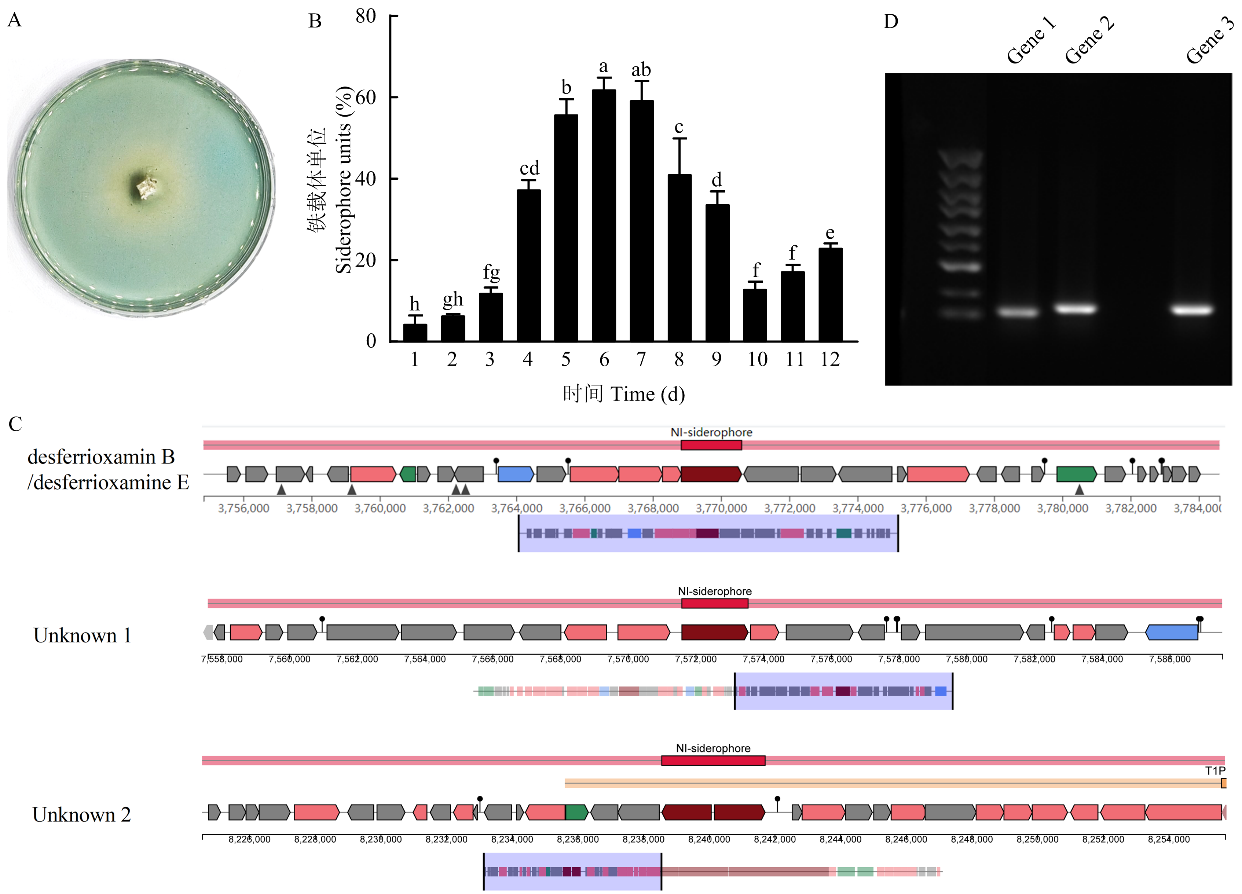
Analysis of siderophore production capacity of OsiPR-1"

Fig. 3

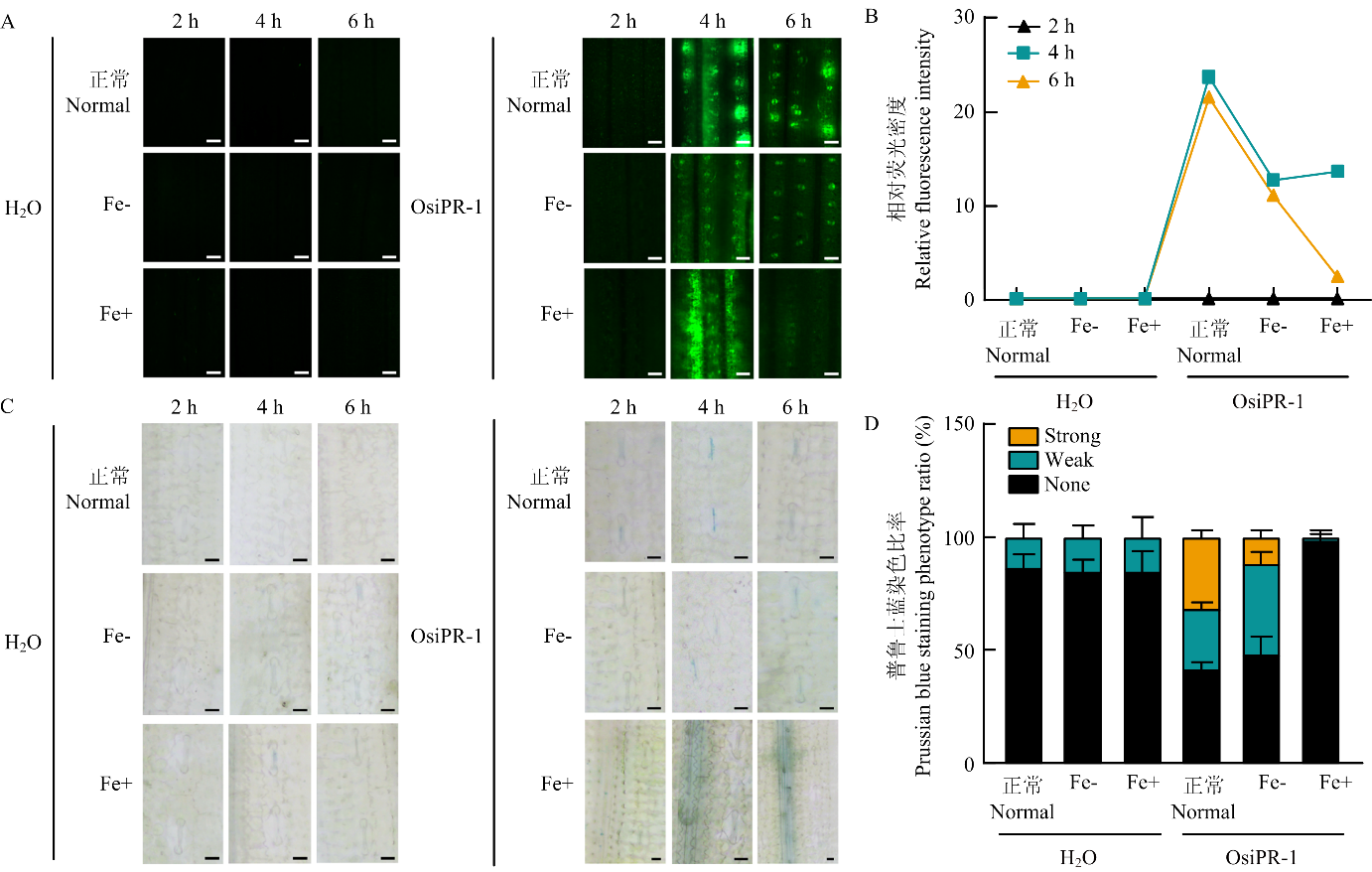
OsiPR-1 induced reactive oxygen species burst and iron accumulation in rice under different iron supply conditions"

Fig. 4

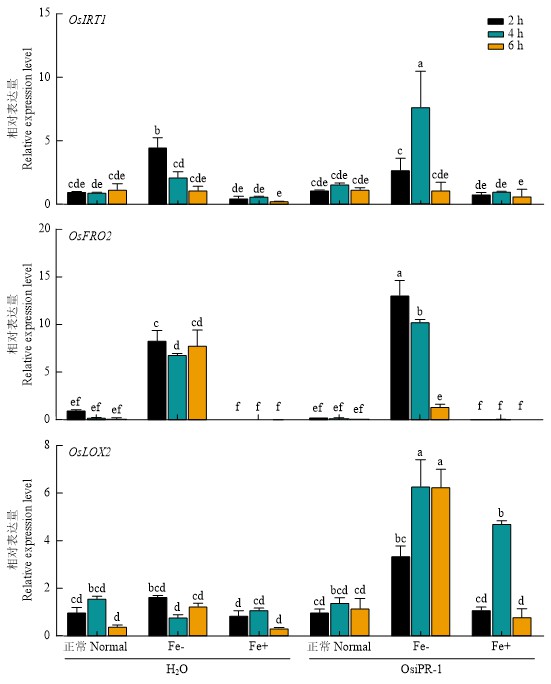
Expression of iron- and immune-related genes induced by OsiPR-1 under different iron supply conditions"

Fig. 5

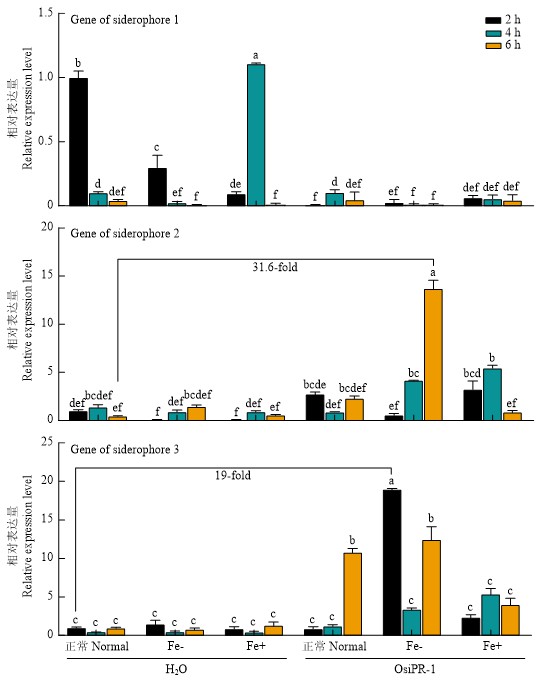
Expression of key synthetic genes in siderophore under different iron supply conditions"

Fig. 6

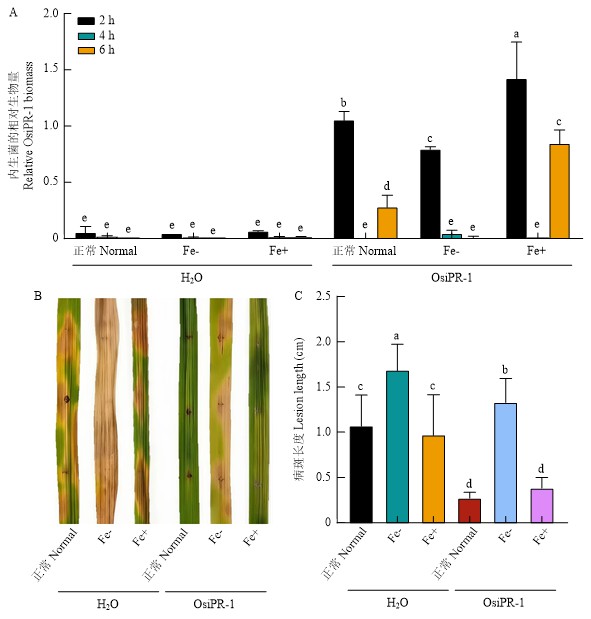
Colonization of OsiPR-1 and resistance to rice blast under different iron supply conditions"

[1]
Dean R, van Kan J A, Pretorius Z A, Hammond-Kosack K E, di Pietro A, Spanu P D, Rudd J J, Dickman M, Kahmann R, Ellis J, Foster G D. The Top 10 fungal pathogens in molecular plant pathology[J]. Molecular Plant Pathology, 2012, 13(4): 414-430.
[2]
黄炎忠, 罗小锋, 唐林, 杜三峡. 绿色防控技术的节本增收效应——基于长江流域水稻种植户的调查[J]. 中国人口·资源与环境, 2020, 30(10): 174-184.
Huang Y Z, Luo X F, Tang L, Du S X. Cost-saving and income- increasing effect of green control techniques: Evidence from rice growers in the Yangtze Basin[J]. China Population, Resources and Environment, 2020, 30(10): 174-184. (in Chinese)
[3]
张皓然, 孙星, 卢海燕, 陶婷婷, 周蓓蕾, 宋雯, 张志恒, 刘贤金, 张存政. 水稻用药策略风险评估与安全性分析[J]. 南京农业大学学报, 2021, 44(4): 675-685.
Zhang H R, Sun X, Lu H Y, Tao T T, Zhou B L, Song W, Zhang Z H, Liu X J, Zhang C Z. Evaluation of pesticide application strategy in rice and risk assessment[J]. Journal of Nanjing Agricultural University, 2021, 44(4): 675-685. (in Chinese)
[4]
陈贤, 汤宝, 赵延存, 刘凤权. 水稻细菌性条斑病的研究进展[J]. 南京农业大学学报, 2025, 48(1): 46-57.
Chen X, Tang B, Zhao Y C, Liu F Q. Research advance on bacterial leaf streak of rice[J]. Journal of Nanjing Agricultural University, 2025, 48(1): 46-57. (in Chinese)
[5]
Ashajyothi M, Velmurugan S, Kundu A, Balamurugan A, Chouhan V, Kumar A. Hydroxamate siderophores secreted by plant endophytic Pseudomonas putida elicit defense against blast disease in rice incited by Magnaporthe oryzae [J]. Letters in Applied Microbiology, 2023, 76(12): 139.
[6]
Chen J W, Zhang X, Kuang M, Cui K P, Xu T, Liu X M, Zhuo R, Qin Z W, Bu Z G, Huang Z L, Li H, Huang J, Liu T T, Zhu Y H. Endophytic Enterobacter sp. YG-14 mediated arsenic mobilization through siderophore and its role in enhancing phytostabilization[J]. Journal of Hazardous Materials, 2024, 465: 133206.
[7]
Xiong X Q, Zeng J, Ning Q, Liu H Q, Bu Z G, Zhang X, Zeng J R, Zhuo R, Cui K P, Qin Z W, Gao Y, Liu X M, Zhu Y H. Ferroptosis induction in host rice by endophyte OsiSh-2 is necessary for mutualism and disease resistance in symbiosis[J]. Nature Communications, 2024, 15: 5012.
[8]
Hao C X, Jin Y, Su H Y, Luo J M, Luo X Z, Yao M Z, Song Y T, Han J, Liu X B, Xu Y, Zheng Y J, Yang Z M, Li D Z, Liu X C, Xiao S Y, Xiong X Y, Deng Z N, Cao Y L, Ma X F. Complex regulation of citron OGD2-dependent resistance to citrus canker caused by Xanthomonas citri subsp. citri [J]. The Plant Cell, 2025, 37(10): koaf225.
[9]
Montejano-Ramírez V, Martínez-Cámara R, García-Pineda E, Valencia-Cantero E. Rhizobacterium Arthrobacter agilis UMCV2 increases organ-specific expression of FRO genes in conjunction with genes associated with the systemic resistance pathways of Medicago truncatula[J]. Acta Physiologiae Plantarum, 2018, 40(8): 138.
[10]
Briat J F, Dubos C, Gaymard F. Iron nutrition, biomass production, and plant product quality[J]. Trends in Plant Science, 2015, 20(1): 33-40.
[11]
Kobayashi T, Nishizawa N K. Iron uptake, translocation, and regulation in higher plants[J]. Annual Review of Plant Biology, 2012, 63: 131-152.
[12]
Fourcroy P, Sisó-Terraza P, Sudre D, Savirón M, Reyt G, Gaymard F, Abadía A, Abadia J, Álvarez-Fernández A, Briat J F. Involvement of the ABCG37 transporter in secretion of scopoletin and derivatives by Arabidopsis roots in response to iron deficiency[J]. New Phytologist, 2014, 201(1): 155-167.
[13]
Ishimaru Y, Suzuki M, Tsukamoto T, Suzuki K, Nakazono M, Kobayashi T, Wada Y, Watanabe S, Matsuhashi S, Takahashi M, Nakanishi H, Mori S, Nishizawa N K. Rice plants take up iron as an Fe3+-phytosiderophore and as Fe2+[J]. The Plant Journal, 2006, 45(3): 335-346.
[14]
Macho A P, Zipfel C. Plant PRRs and the activation of innate immune signaling[J]. Molecular Cell, 2014, 54(2): 263-272.
[15]
Sun J Y, Xiao S Q, Xue C S. The tug-of-war on iron between plant and pathogen[J]. Phytopathology Research, 2023, 5: 61.
[16]
Ravet K, Touraine B, Boucherez J, Briat J F, Gaymard F, Cellier F. Ferritins control interaction between iron homeostasis and oxidative stress in Arabidopsis [J]. The Plant Journal, 2009, 57(3): 400-412.
[17]
Kok A D, Yoon L L, Sekeli R, Yeong W C, Yusof Z N B, Song L K. Iron biofortification of rice: Progress and prospects[M]// Rice Crop-Current Developments. InTech, 2018, 3: 45-62.
[18]
Carrillo-Castañeda G, Muñoz J J, Peralta-Videa J R, Gomez E, Gardea-Torresdey J L. Plant growth-promoting bacteria promote copper and iron translocation from root to shoot in alfalfa seedlings[J]. Journal of Plant Nutrition, 2003, 26(9): 1801-1814.
[19]
Cui K P, Xu T, Chen J W, Yang H Y, Liu X M, Zhuo R, Peng Y H, Tang W, Wang R, Chen L S, Zhang X, Zhang Z, He Z L, Wang X N, Liu C X, Chen Y Z, Zhu Y H. Siderophores, a potential phosphate solubilizer from the endophyte Streptomyces sp. CoT10, improved phosphorus mobilization for host plant growth and rhizosphere modulation[J]. Journal of Cleaner Production, 2022, 367: 133110.
[20]
李丽丽, 曾广宇, 王继春, 何苑皞. 油茶根腐病内生拮抗促生细菌筛选及诱导系统抗性研究[J]. 中国油料作物学报, 2024, 46(6): 1390-1397.
Li L L, Zeng G Y, Wang J C, He Y H. Screening and systematic resistance induction of endogenous antagonistic growth-promoting bacteria against Camellia oleifera root rot[J]. Chinese Journal of Oil Crop Sciences, 2024, 46(6): 1390-1397. (in Chinese)
[21]
Cao L D, Gao Y, Yu J L, Niu S Q, Zeng J R, Yao Q Q, Wang X, Bu Z G, Xu T, Liu X M, Zhu Y H. Streptomyces hygroscopicus OsiSh-2- induced mitigation of Fe deficiency in rice plants[J]. Plant Physiology and Biochemistry, 2021, 158: 275-283.
[22]
方中达. 植病研究方法[M]. 3版. 北京: 中国农业出版社, 1998.
Fang Z D. Research Methods of Plant Pathology[M]. 3rd ed. Beijing: China Agriculture Press, 1998. (in Chinese)
[23]
Schwyn B, Neilands J B. Universal chemical assay for the detection and determination of siderophores[J]. Analytical Biochemistry, 1987, 160(1): 47-56.
[24]
Shirling E B, Gottlieb D. Methods for characterization of Streptomyces species[J]. International Journal of Systematic Bacteriology, 1966, 16(3): 313-340.
[25]
Rajashekara H, Prakash G, Pandian R T P, Sarkel S, Dubey A, Sharma P, Chowdary V, Mishra D, Sharma T R, Singh U D. An efficient technique for isolation and mass multiplication of Magnaporthe oryzae from blast infected samples[J]. Indian Phytopathology, 2016, 69(4): 260-265.
[26]
Yoshida S, Forno D A, Cock J H, Gomez K A. Laboratory Manual for Physiological Studies of Rice[M]. 3rd ed. Manila, Philippines: International Rice Research Institute (IRRI), 1976.
[27]
姚博, 朱瑞芬, 徐远东, 孙万斌, 刘畅, 陈积山. 基于Meta评估生防菌剂对饲草作物真菌病害防效及其影响因素[J]. 草业学报, 2025, 34(4): 189-200.
Yao B, Zhu R F, Xu Y D, Sun W B, Liu C, Chen J S. Effect of biocontrol agents to control forage crop fungal diseases and factors influencing their effectiveness: A Meta-analysis[J]. Acta Prataculturae Sinica, 2025, 34(4): 189-200. (in Chinese)
[28]
白鸽, 李言雨, 刘彩霞, 邱巍, 袁军, 秦华, 赵梦丽, 徐秋芳. 链霉菌对土传枯萎病和青枯病的防控效果评估及影响因子探究[J]. 微生物学报, 2025, 65(7): 2874-2888.
Bai G, Li Y Y, Liu C X, Qiu W, Yuan J, Qin H, Zhao M L, Xu Q F. Control effects of Streptomyces on soil-borne Fusarium wilt and bacterial wilt influencing factors analysis[J]. Acta Microbiologica Sinica, 2025, 65(7): 2874-2888. (in Chinese)
[29]
Sun X L, Xu Z H, Zhang N, Liu Y P, Xun W B, Miao Y Z, Shao J H, Zhang R F, Shen Q R. Bacillus velezensis SQR9: A model biofertilizer strain for beneficial plant root-rhizobacterium interaction[J]. Science China Life Sciences, 2026, 69(4): 1165-1176.
[30]
Hegde G M, Premchand U, Mesta R. The potential of siderophores in biological control in plant diseases[EB/OL]. ( 2025-01-09) [2026-03- 05].
[31]
Deb C R, Tatung M. Siderophore producing bacteria as biocontrol agent against phytopathogens for a better environment: A review[J]. South African Journal of Botany, 2024, 165: 153-162.
[32]
Press C M, Loper J E, Kloepper J W. Role of iron in rhizobacteria- mediated induced systemic resistance of cucumber[J]. Phytopathology, 2001, 91(6): 593-598.
[33]
Aznar A, Dellagi A. New insights into the role of siderophores as triggers of plant immunity: What can we learn from animals?[J]. Journal of Experimental Botany, 2015, 66(11): 3001-3010.
[34]
de Vleesschauwer D, Djavaheri M, Bakker P A, Höfte M. Pseudomonas fluorescens WCS374r-induced systemic resistance in rice against Magnaporthe oryzae is based on pseudobactin-mediated priming for a salicylic acid-repressible multifaceted defense response[J]. Plant Physiology, 2008, 148(4): 1996-2012.
[35]
Wilson B R, Bogdan A R, Miyazawa M, Hashimoto K, Tsuji Y. Siderophores in iron metabolism: From mechanism to therapy potential[J]. Trends in Molecular Medicine, 2016, 22(12): 1077-1090.
[36]
Trapet P L, Verbon E H, Bosma R R, Voordendag K, van Pelt J A, Pieterse C M J. Mechanisms underlying iron deficiency-induced resistance against pathogens with different lifestyles[J]. Journal of Experimental Botany, 2021, 72(6): 2231-2241.
[37]
Meziane H, van der Sluis I, van Loon L C, Höfte M, Bakker P A. Determinants of Pseudomonas putida WCS358 involved in inducing systemic resistance in plants[J]. Molecular Plant Pathology, 2005, 6(2): 177-185.
[38]
Khan M A, Castro-Guerrero N A, Mcinturf S A, Nguyen N T, Dame A N, Wang J J, Bindbeutel R K, Joshi T, Jurisson S S, Nusinow D A, Mendoza-Cozatl D G. Changes in iron availability in Arabidopsis are rapidly sensed in the leaf vasculature and impaired sensing leads to opposite transcriptional programs in leaves and roots[J]. Plant, Cell & Environment, 2018, 41(10): 2263-2276.
[39]
Herlihy J H, Long T A, McDowell J M. Iron homeostasis and plant immune responses: Recent insights and translational implications[J]. Journal of Biological Chemistry, 2020, 295(39): 13444-13457.
[40]
Lu C K, Liang G. Fe deficiency-induced ethylene synthesis confers resistance to Botrytis cinerea[J]. New Phytologist, 2023, 237(5): 1843-1855.
[41]
Kamath A, Sharma A, Shukla A, Parmar P, Patel D. Fortifying plant fortresses: Siderophores in defense against Cercospora leaf spot disease in Vigna radiata L.[J]. Frontiers in Microbiology, 2025, 15: 1492139.
[1] BAI JingJing, ZHANG YuChen, NI ZiJie, GAO JiaYong, LIU WeiYang, GAI DongSheng, WANG YuHang, HE JiaQing, ZHANG Qiang, SHAO XiWen, WU Ying, GENG YanQiu, GUO LiYing. Effects of Different Irrigation Volumes on Lodging Resistance Characteristics and Yield of Rice in Northeast China [J]. Scientia Agricultura Sinica, 2026, 59(9): 1848-1868.
[2] YAO ZhiZhen, YANG ZiHong, ZHANG YingNan, YIN ChangBin. Green Total Factor Productivity Growth of Rice in China: Spatiotemporal and Evolutionary Patterns [J]. Scientia Agricultura Sinica, 2026, 59(9): 1937-1954.
[3] PENG TingShen, LU JiuYan, WU MeiLin, YAN YuXin, LIU HongZhou, NAN WenBin, QIN XiaoJian, LI Ming, GONG JunYi, LIANG YongShu. QTL Analysis of Yield-Related Traits in Both Huangnuo2# and Changbai7# of Perennial Chinese Rice [J]. Scientia Agricultura Sinica, 2026, 59(7): 1361-1379.
[4] CUI JieHao, ZHANG Meng, WANG Qin, YU JiaYan, LIN Kun, LI ShangZe, LAN Heng, GENG YanQiu, ZHANG Qiang, GUO LiYing, SHAO XiWen. Evaluation of Lodging Resistance and Its Physiological Mechanisms in Japonica Rice Resources [J]. Scientia Agricultura Sinica, 2026, 59(7): 1420-1438.
[5] YUAN HaoLiang, NIE Jun, LI Peng, LU YanHong, LIAO YuLin, XU ChangXu, LI ZhongYi, CAO WeiDong, ZHANG JiangLin. Effects of Co-Utilization of Chinese Milk Vetch and Rice Straw on Soil Phosphorus Composition and Phosphorus Activation of Paddy Field in Southern China [J]. Scientia Agricultura Sinica, 2026, 59(7): 1480-1491.
[6] XU YangHaoJun, CHEN LiMing, YANG ShiQi, TANG YiFan, TAN XueMing, ZENG YongJun, PAN XiaoHua, ZENG YanHua. Effects of Long-Term Different Straw Returning Methods on Soil Organic Carbon, Nutrients and Aggregate Formation in Different Soil Layers of Double Cropping Rice Field [J]. Scientia Agricultura Sinica, 2026, 59(7): 1492-1506.
[7] LI XingYu, HUANG Rong, XIAN YiMing, TIAN JiaoJiao, MA XiaoJin, YANG QiaoXi, LI Bing, WANG ChangQuan. Characteristics of Organic Carbon Fractions and Carbon Dioxide Emissions of Different Size Aggregates in Rice Field Soils in Response to Long-Term Fertilization [J]. Scientia Agricultura Sinica, 2026, 59(6): 1255-1271.
[8] MA ZhaoHui, QUAN ChengZhe, CHENG HaiTao, YANG KanJie, LI XinRui, LÜ WenYan. The Breeding Goals and Strategies of Northeast Japonica Rice Under the Background of Zhongke Fa No.5 [J]. Scientia Agricultura Sinica, 2026, 59(5): 927-936.
[9] ZHANG WeiJian, YAN ShengJi, SHANG ZiYin, TANG ZhiWei, WU LiuGe, LI JiaRui, CHEN HaoTian, DENG AiXing, ZHANG Jun, ZHANG Xin, ZHENG ChengYan, SONG ZhenWei. Methane Emissions from Paddy Fields: Not Entirely Attributable to Rice Cultivation [J]. Scientia Agricultura Sinica, 2026, 59(4): 824-833.
[10] CHEN Min, JIAO ZiLan, QIAO ChengBin, XU Hao, ZHANG Bi, MA DongHua, KONG WeiRu, WANG JingWen, SONG JiaWei, LUO ChengKe, LI PeiFu, TIAN Lei. Morpho-Physiological Responses and Adaptive Strategies of Rice Germplasm Accessions from Different Subspecies Under Salt Stress [J]. Scientia Agricultura Sinica, 2026, 59(4): 705-722.
[11] GUO FuCheng, TANG HaiJiang, HAO XinYi, MA GuoLin, YANG JiuJu, HUANG LinFeng, TIAN Lei, WANG Bin, LUO ChengKe. Effects of Different Irrigation Methods on Water-Salt Transport, Rice Yield, and Water Use Efficiency in Saline Soil in Ningxia [J]. Scientia Agricultura Sinica, 2026, 59(4): 750-764.
[12] LUO Wei, YU Hong, YUAN LiXin, WANG LingLing, ZHAO JinPeng, YIN Wei, WANG MingTian, WANG RuLin. Change of Geographic Distributions of Ratoon Rice in Sichuan- Chongqing Under Global Climate Change [J]. Scientia Agricultura Sinica, 2026, 59(4): 765-780.
[13] ZHU Shu, GUO ZhiPeng, SUN Ying. Functional Analysis of Rice Target of Rapamycin OsTOR in Regulating Root Elongation [J]. Scientia Agricultura Sinica, 2026, 59(3): 475-485.
[14] YAN WenYing, ZHANG YuanZhen, WU HongXin, PANG Rui, CHEN ZePeng, JIN FengLiang, XU XiaoXia. Construction of an RNAi-Enhanced Metarhizium anisopliae Targeting PxGNBP3 and Its Immunoregulatory Mechanism in Plutella xylostella [J]. Scientia Agricultura Sinica, 2026, 59(3): 556-574.
[15] LÜ WenYan, CHENG HaiTao, MA ZhaoHui, TIAN ShuHua. Discussion on Hybridization Breeding Technology and Strategy of Rice in the New Era of Breeding [J]. Scientia Agricultura Sinica, 2026, 59(2): 233-238.
Viewed
Full text


Abstract

Cited

  Shared   
  Discussed   
No Suggested Reading articles found!