Scientia Agricultura Sinica ›› 2026, Vol. 59 ›› Issue (12): 2671-2685.doi: 10.3864/j.issn.0578-1752.2026.12.010

• SOIL & FERTILIZER·WATER-SAVING IRRIGATION·AGROECOLOGY & ENVIRONMENT • Previous Articles     Next Articles

Spatio-Temporal Variation Characteristics and Driving Factors of Paddy Soil pH Changes in Jiangxi Province

ZHANG Yan1(), XU DaWei1, FU PengHong2, QIN ZhangJie1,3, LAN Shuai1,3, LIAO JianWu4, HE QingGang5, HE XiaoLin6(), LIANG Feng1,3()   

  1. 1 College of Land Resources and Environment, Jiangxi Agricultural University, Nanchang 330045
    2 Nancheng County Agricultural Science and Technology Research Center, Fuzhou 344700, Jiangxi
    3 Key Laboratory of Agricultural Resources and Ecology in Poyang Lake Basin, Nanchang 330045
    4 Agricultural and Rural Development Promotion Center of Xiajiang County, Ji'an 331409, Jiangxi
    5 Yichun University, Yichun 336000, Jiangxi
    6 Jiangxi Agricultural Technology Extension Center, Nanchang 330046
  • Received:2025-07-10 Accepted:2025-09-20 Online:2026-06-16 Published:2026-06-16
  • Contact: HE XiaoLin, LIANG Feng

Abstract:

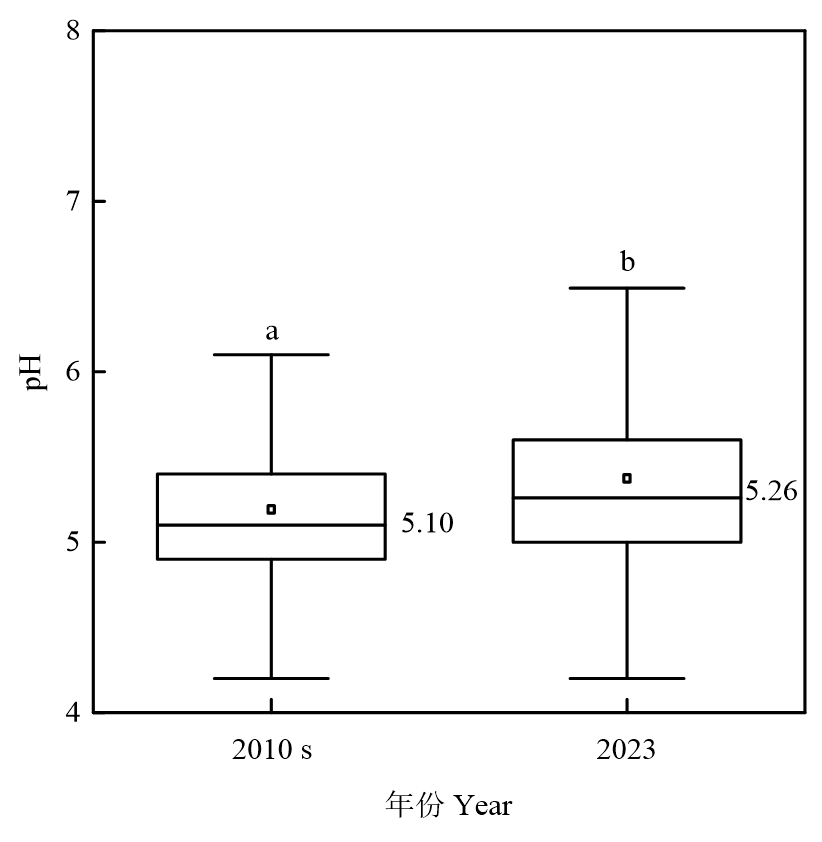
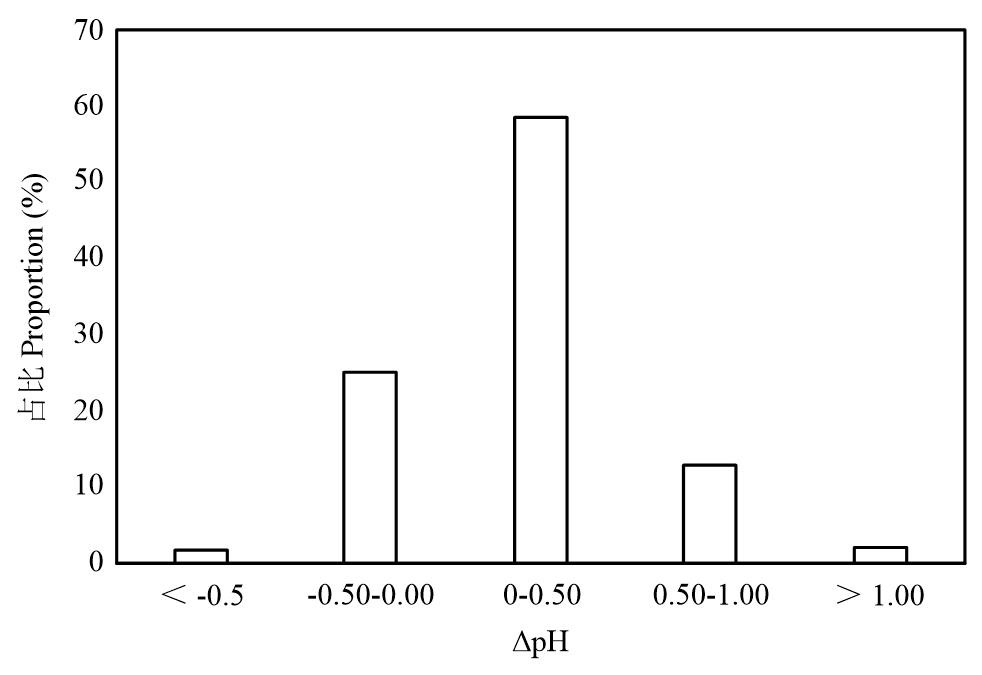
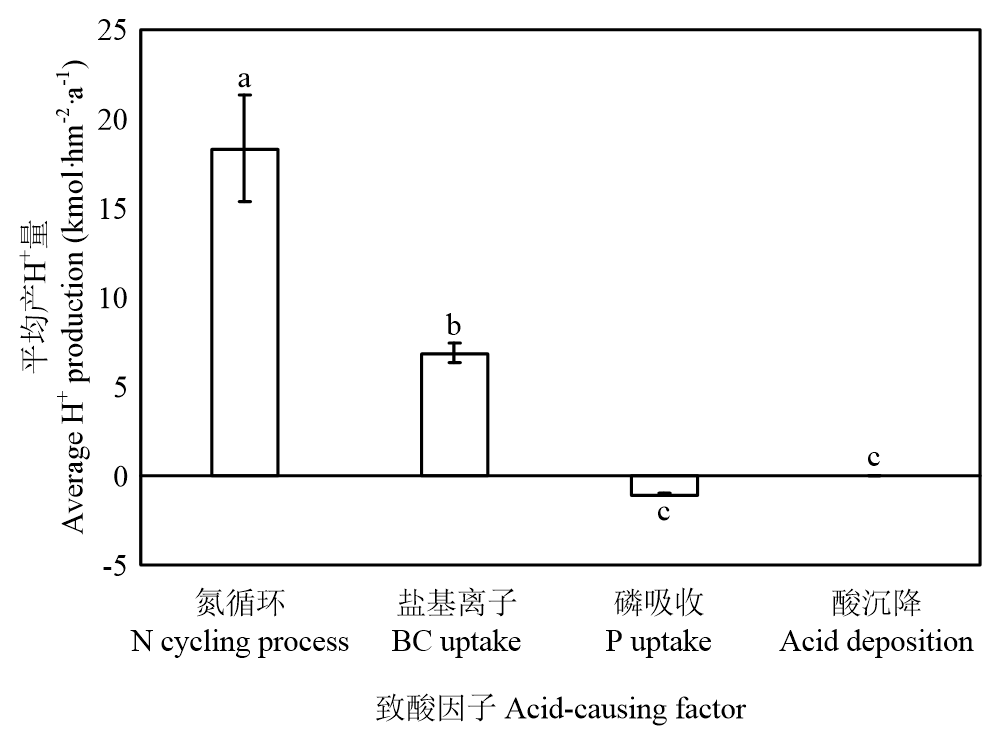
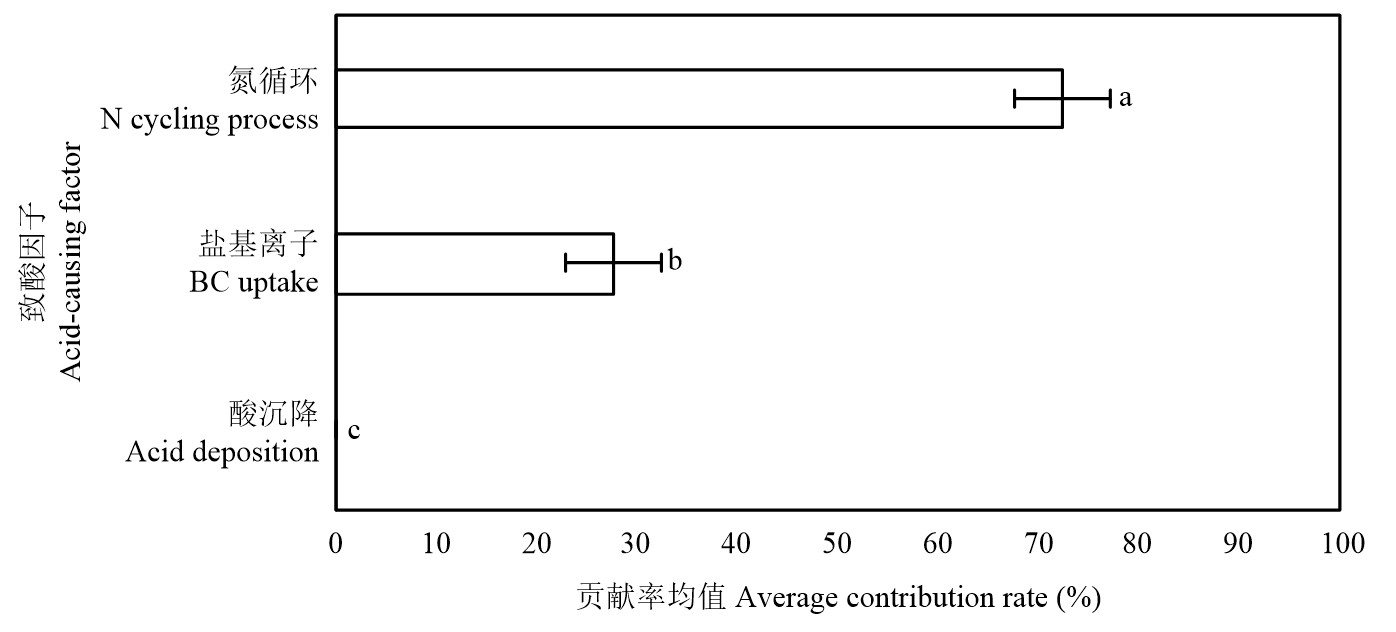
【Objective】Taking paddy fields in Jiangxi Province as an example, this study aimed to clarify the characteristics of acidity changes in paddy fields from 2010s (2007-2014) to 2023, to quantitatively analyze the drivers and relative contributions of soil acidification in Jiangxi Province, and to explore the reasons for the changes in the contribution rate of each driver over time, so as to provide the theoretical basis for the improvement of arable land acidification and the enhancement of crop yields in Jiangxi Province. 【Method】Based on the public data of China Statistical Yearbook, Jiangxi Provincial Statistical Yearbook, Jiangxi Provincial Ecological Environment Statistical Bulletin, Jiangxi Provincial Cultivated Land Quality Long-term Positioning and Monitoring Report from 2010s to 2023, and related literature, the characteristics of the change of pH in paddy fields from 2010s to 2023 were clarified, the amount of nitrogen cycling, crop harvesting, and H+ production from acid deposition were calculated, respectively, and the contribution rate of three driver factors to the change of soil acidity was quantified. 【Result】The pH of paddy fields increased from 5.20 to 5.37 from 2010s to 2023, with an increase of 0.17 units; the proportion of strongly acidic soil (pH<4.5) decreased from 0.02% to 0.00; the proportion of paddy fields with acidic soil (pH 4.5-5.5) decreased from 84.4% to 70.7%; the proportion of weakly acidic soil (pH 5.5-6.5) increased from 14.9% to 26.7%; neutral and alkaline soil (pH>6.5) increased from 0.7% to 2.6%; about 26.8% of the paddy fields were acidified (∆pH<0), The area of paddy fields with pH changes ranging from -0.50 to 0.00 accounted for approximately 25.0%, while the area of paddy fields with pH changes less than -0.5 accounted for approximately 1.8%; and about 73.2% of the paddy fields had stable or increasing pH (∆pH≥0). Soil acidity changes in paddy fields in Jiangxi Province were mainly driven by anthropogenic activities, with an average contribution of 72.3% from nitrogen cycling processes, including ammonium nitrogen nitrification, nitrate nitrogen leaching, and plant uptake of ammonium nitrogen releasing H+; crop harvesting took away saline ions with an average contribution of 27.7%, and acid deposition had a weak effect (0.04% on average). H+ production from the nitrogen cycle showed an overall decreasing trend from 21.93 kmol·hm-2·a-1 to 13.93 kmol·hm-2·a-1; H+ production from salt-based ions floated less, fluctuating between 6.02 kmol·hm-2·a-1 to 7.60 kmol·hm-2·a-1; the amount of H+ produced by acid deposition decreased slowly, from 0.04 kmol·hm-2·a-1 to 0.00 kmol·hm-2·a-1. Reducing the amount of H+ produced by the nitrogen cycle process was a key factor in curbing soil acidification. 【Conclusion】The area of paddy fields with pH increase between 2010s and 2023 accounted for 73.2%, indicating that the soil acidification problem in Jiangxi Province has been alleviated. Nitrogen cycle was the main factor of acidity change in paddy fields, and the reduction of nitrogen fertilizer dosage was the main reason for the decrease of H+ production from nitrogen cycle, so optimizing fertilizer application technology and increasing organic fertilizer could effectively curb the acidification process, and improve the quality of arable land and crop yield.

Key words: soil pH, paddy field, spatio-temporal variation, driving factors, quantification, Jiangxi Province

Table 1

Nutrient content of crop grains and straw"

养分含量Nutrient content 草谷比
Grass-to-grain ratio
P (%) K (%) Ca (%) Mg (%)
水稻籽粒 Rice grain 0.350 0.19 0.03 0.120 0.952
水稻秸秆 Rice straw 0.176 1.90 0.54 0.212
油菜籽粒 Rape seed 1.470 7.77 0.940 2.212
油菜秸秆 Rape straw 0.144 1.94 1.52 0.250

Fig. 1

Box plot of pH value changes in paddy fields in Jiangxi Province"

Fig. 2

Soil pH distribution map of paddy fields in Jiangxi Province in 2010s (A) and 2023 (B)"

Table 2

The pH classification and its area proportion in Jiangxi Province in 2010s and 2023"

分级Classification 2010s (%) 2023 (%)
<4.5 0.0 0.0
4.5—5.0 27.0 6.5
5.0—5.5 57.4 64.2
5.5—6.0 12.1 21.7
6.0—6.5 2.8 5.0
6.5—7.0 0.5 2.4
7.0—7.5 0.2 0.2
>7.5 0.0 0.0
合计 Total 100.0 100.0

Fig. 3

Paddy soil ∆pH distribution map of Jiangxi Province (pH2023-pH2010s)"

Fig. 4

Changes of paddy soils ∆pH and its area percentage from 2010s to 2023 in Jiangxi Province"

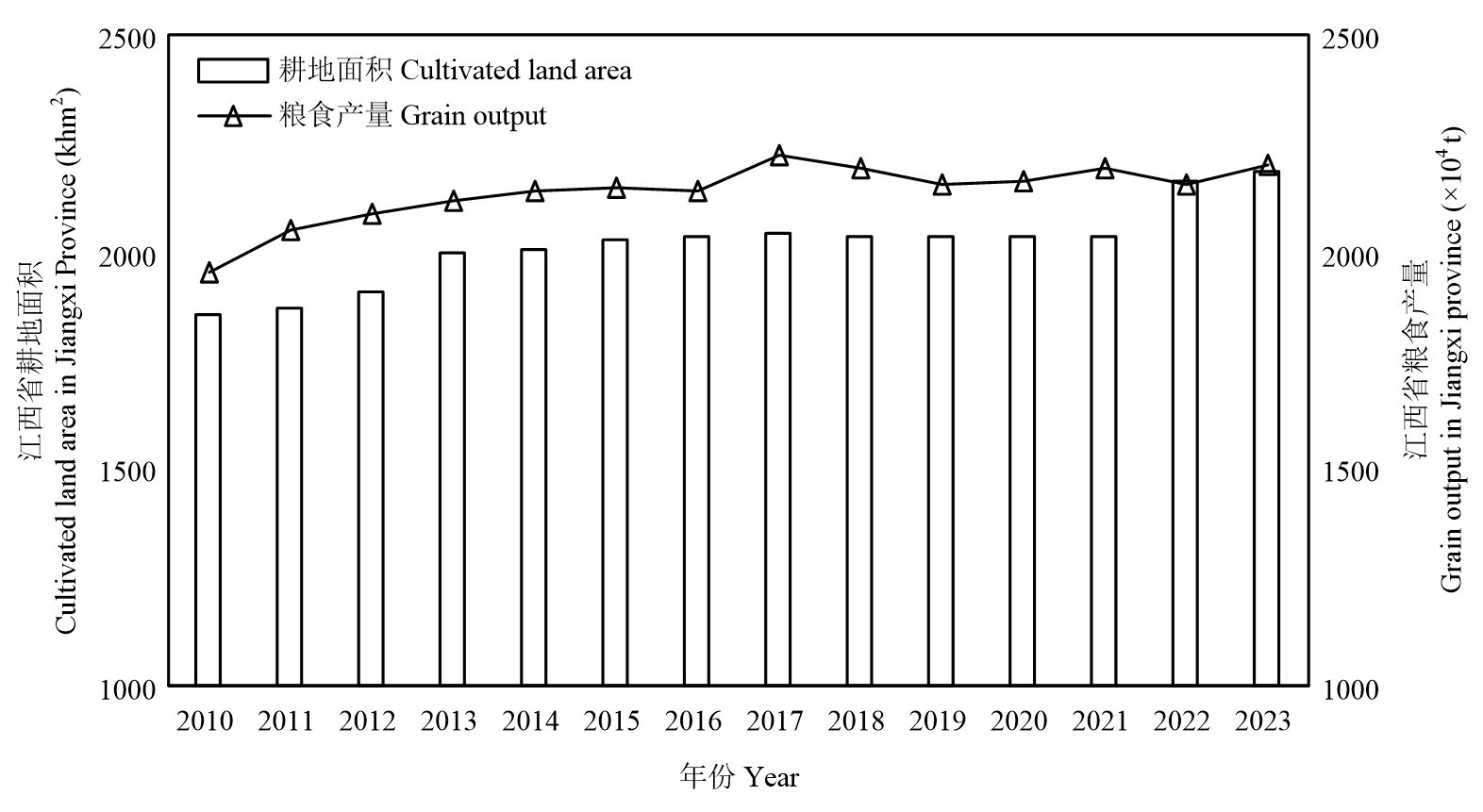
Fig. 5

The cultivated land area and grain output of Jiangxi Province over the years"

Table 3

Nitrogen fertilizer, nitrogen deposition and the proportion of each process in the nitrogen cycle in Jiangxi Province over the years"

年份Year 施氮量
N rate
(kg·hm-2·a-1)
氮沉降
N deposition
(kg·hm-2·a-1)
NO3--N 淋洗
NO3--N leaching (%)
秸秆含氮量
Straw N content (%)
籽粒含氮量
Grain N content (%)
N2O (%) 氨挥发
NH3 volatilization (%)
水稻
Rice
油菜
Rape
水稻
Rice
油菜
Rape
水稻
Rice
油菜
Rape
水稻
Rice
油菜
Rape
水稻
Rice
油菜
Rape
2010 275.51 39.18 3.03 1.20 0.87 1.21 8.67 0.72 17.08
2011 277.38 42.26 3.03 1.20 0.87 1.21 8.67 0.72 17.07
2012 267.78 41.89 3.00 1.20 0.87 1.21 8.67 0.71 17.11
2013 255.99 41.61 2.96 1.20 0.87 1.21 8.67 0.69 17.16
2014 253.75 38.72 2.96 1.20 0.87 1.21 8.67 0.69 17.17
2015 251.00 37.60 2.95 1.20 0.87 1.21 8.67 0.68 17.18
2016 244.75 37.32 2.94 1.20 0.87 1.21 8.67 0.67 17.21
2017 228.02 35.64 2.91 16.68 1.20 0.87 1.21 8.67 0.65 0.79 17.30 24.57
2018 206.47 35.83 2.90 15.04 1.20 0.87 1.21 8.67 0.63 0.77 17.44 24.63
2019 189.18 34.90 2.91 13.96 1.20 0.87 1.21 8.67 0.62 0.76 17.57 24.69
2020 177.76 33.40 2.93 13.34 1.20 0.87 1.21 8.67 0.62 0.76 17.67 24.73
2021 176.00 33.40 2.94 13.25 1.20 0.87 1.21 8.67 0.62 0.76 17.69 24.74
2022 163.63 33.40 2.98 12.69 1.20 0.87 1.21 8.67 0.61 0.76 17.82 24.79
2023 160.67 33.40 2.99 12.57 1.20 0.87 1.21 8.67 0.61 0.76 17.85 24.81

Table 4

The amount of H+ produced during the acidification process of various crops in paddy fields (kmol·hm-2·a-1)"

年份
Year
氮循环 N cycling process 盐基离子 BC uptake 磷吸收 P uptake
水稻Rice 油菜Rape 水稻Rice 油菜Rape 水稻Rice 油菜Rape
2010 21.92 6.02 -0.93
2011 22.08 6.32 -0.98
2012 21.31 6.38 —— -0.99
2013 20.36 6.45 -1.00
2014 20.17 6.52 -1.01
2015 19.94 6.52 -1.01
2016 19.44 6.52 -1.01
2017 18.09 15.87 6.52 8.32 -1.01 -0.80
2018 16.37 14.06 6.54 8.61 -1.02 -0.83
2019 14.98 12.69 6.58 8.59 -1.02 -0.82
2020 14.06 11.82 6.40 8.58 -0.99 -0.82
2021 13.92 11.68 6.52 8.75 -1.01 -0.84
2022 12.94 10.76 6.43 9.07 -1.00 -0.87
2023 12.70 10.54 6.58 8.76 -1.02 -0.84

Table 5

H+ production and its contribution rate of acid-causing factors in Jiangxi Province over 13 years"

年份
Year
H+产量H+ production (kmol·hm-2·a-1) 贡献率Contribution rate (%) H+产量H+ production (kmol·hm-2·a-1)
氮循环
N cycling process
盐基离子
BC uptake
酸沉降
Acid deposition
总H+产量
Total H+
氮循环
N cycling process
盐基离子
BC uptake
酸沉降
Acid deposition
磷吸收
P uptake
净H+产量
H+net
2010 21.92 6.02 0.04 27.98 78.3 21.5 0.1 -0.93 27.04
2011 22.08 6.32 0.01 28.41 77.7 22.2 0.0 -0.98 27.43
2012 21.31 6.38 0.03 27.72 76.9 23.0 0.1 -0.99 26.73
2013 20.36 6.45 0.05 26.86 75.8 24.0 0.2 -1.00 25.86
2014 20.17 6.52 0.01 26.69 75.6 24.4 0.0 -1.01 25.68
2015 19.94 6.52 0.01 26.47 75.3 24.6 0.0 -1.01 25.45
2016 19.44 6.52 0.00 25.97 74.9 25.1 0.0 -1.01 24.95
2017 19.56 7.29 0.00 26.85 72.8 27.2 0.0 -1.09 25.76
2018 17.69 7.35 0.00 25.04 70.6 29.4 0.0 -1.09 23.94
2019 16.20 7.40 0.00 23.61 68.6 31.4 0.0 -1.10 22.51
2020 15.15 7.20 0.00 22.35 67.8 32.2 0.0 -1.07 21.28
2021 15.07 7.38 0.00 22.45 67.1 32.9 0.0 -1.10 21.36
2022 14.04 7.36 0.00 21.41 65.6 34.4 0.0 -1.09 20.32
2023 13.93 7.60 0.00 21.53 64.7 35.3 0.0 -1.12 20.41

Fig. 6

Average H+ production by acid-causing factor The different lowercase letters in the figure indicate significant differences among the various treatments (P<0.05). The error bars represent the standard deviation. The same as below"

Fig. 7

Annual average contribution rate of acid-causing factor"

[1]
徐仁扣. 土壤酸化及其调控研究进展. 土壤, 2015, 47(2): 238-244.
XU R K. Research progresses in soil acidification and its control. Soils, 2015, 47(2): 238-244. (in Chinese)
[2]
MA M C, ZHOU J, ONGENA M, LIU W Z, WEI D, ZHAO B S, GUAN D W, JIANG X, LI J. Effect of long-term fertilization strategies on bacterial community composition in a 35-year field experiment of Chinese Mollisols. AMB Express, 2018, 8(1): 20.

doi: 10.1186/s13568-018-0549-8 pmid: 29442257
[3]
VAN MIEGROET H, COLE D W. The impact of nitrification on soil acidification and cation leaching in a red alder ecosystem. Journal of Environmental Quality, 1984, 13(4): 586-590.
[4]
周晓阳, 周世伟, 徐明岗, Colinet Gilles. 中国南方水稻土酸化演变特征及影响因素. 中国农业科学, 2015, 48(23): 4811-4817. doi: 10.3864/j.issn.0578-1752.2015.23.022.
ZHOU X Y, ZHOU S W, XU M G, GILLES C. Evolution characteristics and influence factors of acidification in paddy soil of Southern China. Scientia Agricultura Sinica, 2015, 48(23): 4811-4817. doi: 10.3864/j.issn.0578-1752.2015.23.022. (in Chinese)
[5]
苏亚飞, 包文彬, 李彦生, 于镇华, 刘晓冰. 农田土壤酸化: 原理、危害及缓解措施. 土壤与作物, 2025, 14(1): 1-14.
SU Y F, BAO W B, LI Y S, YU Z H, LIU X B. A review of soil acidification: principles, risk and mitigation measures in farmland. Soils and Crops, 2025, 14(1): 1-14. (in Chinese)
[6]
ZHOU J, XIA F, LIU X M, HE Y, XU J M, BROOKES P C. Effects of nitrogen fertilizer on the acidification of two typical acid soils in South China. Journal of Soils and Sediments, 2014, 14(2): 415-422.

doi: 10.1007/s11368-013-0695-1
[7]
李梦妮, 吴鲁洁, 赵觅漾, 陈翰, 卢升高. 土壤调理剂阻控土壤酸化提高磷素养分有效性的田间对比试验. 浙江农业科学, 2024, 65(12): 2899-2905.

doi: 10.16178/j.issn.0528-9017.20230836
LI M N, WU L J, ZHAO M Y, CHEN H, LU S G. Field comparative experiment on improving phosphorus nutrient availability by soil conditioners through remediating soil acidification. Journal of Zhejiang Agricultural Sciences, 2024, 65(12): 2899-2905. (in Chinese)

doi: 10.16178/j.issn.0528-9017.20230836
[8]
ROUSK J, BÅÅTH E, BROOKES P C, LAUBER C L, LOZUPONE C, CAPORASO J G, KNIGHT R, FIERER N. Soil bacterial and fungal communities across a pH gradient in an arable soil. The ISME Journal, 2010, 4(10): 1340-1351.

doi: 10.1038/ismej.2010.58
[9]
MENG C, TIAN D S, ZENG H, LI Z L, YI C X, NIU S L. Global soil acidification impacts on belowground processes. Environmental Research Letters, 2019, 14(7): 074003.

doi: 10.1088/1748-9326/ab239c
[10]
杨歆歆, 赵庚星, 李涛, 万广华, 李萍. 山东省土壤酸化特征及其影响因素分析. 农业工程学报, 2016, 32(S2): 155-160.
YANG X X, ZHAO G X, LI T, WAN G H, LI P. Characteristics of soil acidification and its influencing factors in Shandong Province. Transactions of the Chinese Society of Agricultural Engineering, 2016, 32(S2): 155-160. (in Chinese)
[11]
MALHI S S, NYBORG M, HARAPIAK J T. Effects of long-term N fertilizer-induced acidification and liming on micronutrients in soil and in bromegrass hay. Soil and Tillage Research, 1998, 48(1/2): 91-101.

doi: 10.1016/S0167-1987(98)00097-X
[12]
TARKALSON D D, PAYERO J O, HERGERT G W, CASSMAN K G. Acidification of soil in a dry land winter wheat-sorghum/corn-fallow rotation in the semiarid U.S.great Plains. Plant and Soil, 2006, 283(1): 367-379.

doi: 10.1007/s11104-006-0027-y
[13]
单彭义, 唐珍琦, 唐湘文, 杜辉辉, 朱捍华, 刘高翔, 周文博, 吴远帆, 周清. 湖南省耕地土壤酸化现状与综合治理对策研究. 中国农业综合开发, 2025(3): 19-24.
SHAN P Y, TANG Z Q, TANG X W, DU H H, ZHU H H, LIU G X, ZHOU W B, WU Y F, ZHOU Q. Study on the present situation and comprehensive control countermeasures of farmland soil acidification in Hunan Province. Agricultural Comprehensive Development in China, 2025(3): 19-24. (in Chinese)
[14]
徐仁扣, 李九玉, 周世伟, 徐明岗, 沈仁芳. 我国农田土壤酸化调控的科学问题与技术措施. 中国科学院院刊, 2018, 33(2): 160-167.
XU R K, LI J Y, ZHOU S W, XU M G, SHEN R F. Scientific issues and controlling strategies of soil acidification of croplands in China. Bulletin of Chinese Academy of Sciences, 2018, 33(2): 160-167. (in Chinese)
[15]
姜冠杰, 何小林, 刘敏, 张嵚, 谢军, 张小玲, 黄琳翔, 梁丰. 江西省主要土地利用方式下土壤酸化现状探究. 江西农业学报, 2021, 33(5): 46-55.
JIANG G J, HE X L, LIU M, ZHANG Q, XIE J, ZHANG X L, HUANG L X, LIANG F. Research on current situation of soil acidification under main land use modes in Jiangxi Province. Acta Agriculturae Jiangxi, 2021, 33(5): 46-55. (in Chinese)
[16]
蔡祥. 农田建设管理处. 江西省农业农村厅公告(第9号). (2024-12-30) [2025-05-04]. https://nync.jiangxi.gov.cn/jxsnynct/tzgg/content/content_1888855768969814016.html.
CAI X. Farmland Construction Management Office. Agriculture and rural areas in Jiangxi Province hall announcement (9).(2024-12-30) [2025-05-04]. https://nync.jiangxi.gov.cn/jxsnynct/tzgg/content/content_1888855768969814016.html. in Chinese)
[17]
陈正, 杨翠翠, 李轶男, 沐青, 胡克林, 张超. 我国耕地酸化的成因及治理措施分析. 农村工作通讯, 2024(22): 28-30.
CHEN Z, YANG C C, LI Y N, MU Q, HU K L, ZHANG C. Analysis on the causes and control measures of farmland acidification in China. Newsletter About Work in Rural Areas, 2024(22): 28-30. (in Chinese)
[18]
杨帆, 贾伟, 杨宁, 李文西, 段英华, 胡炎, 崔勇. 近30年我国不同地区农田耕层土壤的pH变化特征. 植物营养与肥料学报, 2023, 29(7): 1213-1227.
YANG F, JIA W, YANG N, LI W X, DUAN Y H, HU Y, CUI Y. Spatio-temporal variation of surface soil pH of farmland in different regions of China in the past 30 years. Journal of Plant Nutrition and Fertilizers, 2023, 29(7): 1213-1227. (in Chinese)
[19]
FENTON G, HELYAR K. The role of the nitrogen and carbon cycles in soil acidification. Acid Soil Action Research Report, 2002, 5(5): 369-375.
[20]
洪国胜. 土壤酸化原因、阻控技术及改良策略分析. 安徽农学通报, 2025, 31(3): 80-84.

doi: 10.16377/j.cnki.issn1007-7731.2025.03.018
HONG G S. Analysis of soil acidification causes, resistance control techniques and improvement strategies. Anhui Agricultural Science Bulletin, 2025, 31(3): 80-84. (in Chinese)

doi: 10.16377/j.cnki.issn1007-7731.2025.03.018
[21]
RAUT N, DÖRSCH P, SITAULA B K, BAKKEN L R. Soil acidification by intensified crop production in South Asia results in higher N2O/(N2+N2O) product ratios of denitrification. Soil Biology and Biochemistry, 2012, 55: 104-112.

doi: 10.1016/j.soilbio.2012.06.011
[22]
高建峰, 徐明芳, 丁瑞芬, 韩国新, 陈雪民, 莫美英. 土壤酸化的原因、危害与治理对策分析. 上海农业科技, 2015(2): 102-104.
GAO J F, XU M F, DING R F, HAN G X, CHEN X M, MO M Y. Cause, harm and control countermeasures of soil acidification. Shanghai Agricultural Science and Technology, 2015(2): 102-104. (in Chinese)
[23]
孟红旗, 刘景, 徐明岗, 吕家珑, 周宝库, 彭畅, 石孝均, 黄庆海, 王伯仁. 长期施肥下我国典型农田耕层土壤的pH演变. 土壤学报, 2013, 50(6): 1109-1116.
MENG H Q, LIU J, XU M G, J L, ZHOU B K, PENG C, SHI X J, HUANG Q H, WANG B R. Evolution of pH in topsoils of typical Chinese croplands under long-term fertilization. Acta Pedologica Sinica, 2013, 50(6): 1109-1116. (in Chinese)
[24]
汪吉东, 许仙菊, 宁运旺, 张辉, 马洪波, 张永春. 土壤加速酸化的主要农业驱动因素研究进展. 土壤, 2015, 47(4): 627-633.
WANG J D, XU X J, NING Y W, ZHANG H, MA H B, ZHANG Y C. Progresses in agricultural driving factors on accelerated acidification of soils. Soils, 2015, 47(4): 627-633. (in Chinese)
[25]
DE VRIES W, BREEUWSMA A. The relation between soil acidification and element cycling. Water, Air, and Soil Pollution, 1987, 35(3): 293-310.

doi: 10.1007/BF00290937
[26]
ZHANG Y T, HE X H, LIANG H, ZHAO J, ZHANG Y Q, XU C, SHI X J. Long-term tobacco plantation induces soil acidification and soil base cation loss. Environmental Science and Pollution Research, 2016, 23(6): 5442-5450.

doi: 10.1007/s11356-015-5673-2
[27]
DUAN L, HUANG Y M, HAO J M, XIE S D, HOU M. Vegetation uptake of nitrogen and base cations in China and its role in soil acidification. Science of the Total Environment, 2004, 330(1/2/3): 187-198.

doi: 10.1016/j.scitotenv.2004.03.035
[28]
徐影, 于镇华, 李彦生, 包文彬, 张春雨, 刘晓冰. 土壤酸化成因及其对农田土壤-微生物-作物系统影响的研究进展. 土壤通报, 2024, 55(2): 562-572.
XU Y, YU Z H, LI Y S, BAO W B, ZHANG C Y, LIU X B. Research progress on the causes of soil acidification and its influence on farmland soil-microorganism-crop system. Chinese Journal of Soil Science, 2024, 55(2): 562-572. (in Chinese)
[29]
DUAN L, YU Q, ZHANG Q, WANG Z F, PAN Y P, LARSSEN T, TANG J, MULDER J. Acid deposition in Asia: Emissions, deposition, and ecosystem effects. Atmospheric Environment, 2016, 146: 55-69.

doi: 10.1016/j.atmosenv.2016.07.018
[30]
YU H L, HE N P, WANG Q F, ZHU J X, GAO Y, ZHANG Y H, JIA Y L, YU G R. Development of atmospheric acid deposition in China from the 1990s to the 2010s. Environmental Pollution, 2017, 231: 182-190.

doi: S0269-7491(17)30111-2 pmid: 28800487
[31]
潘根兴, 冉炜. 中国大气酸沉降与土壤酸化问题. 热带亚热带土壤科学, 1994, 3(4): 243-252.
PAN G X, RAN W. On acid atmospheric deposition and soil acidification in China. Ecology and Environmental Sciences, 1994, 3(4): 243-252. (in Chinese)
[32]
杨金玲, 董岳, 冯文澜, 张昊哲, 张甘霖. 红壤关键带质子产生和消耗及其环境效应综述. 地学前缘, 2025, 32(3): 231-247.

doi: 10.13745/j.esf.sf.2025.3.27
YANG J L, DONG Y, FENG W L, ZHANG H Z, ZHANG G L. Proton production and consumption in red soil critical zone and their environmental effects: A review. Earth Science Frontiers, 2025, 32(3): 231-247. (in Chinese)

doi: 10.13745/j.esf.sf.2025.3.27
[33]
LI J Y, XU R K, ZHANG H. Iron oxides serve as natural anti-acidification agents in highly weathered soils. Journal of Soils and Sediments, 2012, 12(6): 876-887.

doi: 10.1007/s11368-012-0514-0
[34]
江西省统计局, 国家统计局江西调查总队. 江西统计年鉴(2011-2024). 北京: 中国统计出版社有限公司, 2025.
Jiangxi Provincial Bureau of Statistics, National Bureau of Statistics Jiangxi Investigation Team. Jiangxi Statistical Yearbook (2011-2024). Beijing: China Statistics Press Co, Ltd, 2025. (in Chinese)
[35]
吴仪, 谢云霄, 王婧伊, 吴志昆, 侯志洁, 蓝海林, 刘声琦, 蔡琳琳, 杨鑫, 阙正扬, 等. 2010—2023年江西省审定晚稻品种及其性状分析. 江西农业大学学报, 2025, 47(1): 10-20.
WU Y, XIE Y X, WANG J Y, WU Z K, HOU Z J, LAN H L, LIU S Q, CAI L L, YANG X, QUE Z Y, et al. Analysis of the late rice varieties approved in Jiangxi Province from 2010 to 2023 and their traits. Acta Agriculturae Universitatis Jiangxiensis, 2025, 47(1): 10-20. (in Chinese)

doi: 10.3724/aauj.2025002
[36]
中华人民共和国国家统计局. 中国统计年鉴. 北京: 中国统计出版社, 2024.
National Bureau of Statistics of the People's Republic of China. China Statistical Yearbook. Beijing: China Statistics Press, 2024. (in Chinese)
[37]
江西省稻油轮作高效栽培技术. (2023-04-26) [2025-08-01]. https://nync.jiangxi.gov.cn/jxsnynct/tgfw/content/content_1869622027362689024.html.
Efficient Cultivation Techniques for Rice-Wheat Rotation in Jiangxi Province.(2023-04-26) [2025-08-01]. https://nync.jiangxi.gov.cn/jxsnynct/tgfw/content/content_1869622027362689024.html. in Chinese)
[38]
石金明, 范敏, 席细平, 王贺礼, 万斌. 江西省秸秆资源量分析. 能源研究与管理, 2012(1): 1-4, 23.
SHI J M, FAN M, XI X P, WANG H L, WAN B. Resource analysis of stalk in Jiangxi. Energy Research and Management, 2012(1): 1-4, 23. (in Chinese)
[39]
全国农业技术推广服务中心. 中国有机肥料养分志. 北京: 中国农业出版社, 1999.
National Agro-tech Extension and Service Center. Nutrient Records of Organic Fertilizers in China. Beijing: China Agriculture Press, 1999. (in Chinese)
[40]
李小坤. 水稻营养特性及科学施肥. 北京: 中国农业出版社, 2016.
LI X K. Nutritional Characteristics of Rice and Scientific Fertilization. Beijing: China Agriculture Press, 2016. (in Chinese)
[41]
鲁如坤, 谢建昌, 蔡贵信, 朱其清, 宣家祥, 范晓辉, 施维明, 时正元, 苏彦华. 土壤-植物营养学原理和施肥. 北京: 化学工业出版社, 1998.
LU R K, XIE J C, CAI G X, ZHU Q Q, XUAN J X, FAN X H, SHI W M, SHI Z Y, SU Y H. Principles of Soil-plant Nutrition and Fertilization. Beijing: Chemical Industry Press, 1998. (in Chinese)
[42]
周海燕, 徐明岗, 蔡泽江, 文石林, 吴红慧. 湖南祁阳县土壤酸化主要驱动因素贡献解析. 中国农业科学, 2019, 52(8): 1400-1412. doi: 10.3864/j.issn.0578-1752.2019.08.010.
ZHOU H Y, XU M G, CAI Z J, WEN S L, WU H H. Quantitative analysis of driving-factors of soil acidification in Qiyang County, Hunan Province. Scientia Agricultura Sinica, 2019, 52(8): 1400-1412. doi: 10.3864/j.issn.0578-1752.2019.08.010. (in Chinese)
[43]
江西省生态环境厅. 江西省生态环境状况公报. (2024-05-29). [2025-05-04]. https://sthjt.jiangxi.gov.cn/col/col42073/index.html.
Department of Ecology and Environment of Jiangxi Province. The ecological environment in Jiangxi province bulletin. (2024-05-29). [2025-05-04]. https://sthjt.jiangxi.gov.cn/col/col42073/index.html. in Chinese)
[44]
LIU L, WEN Z, LIU S, ZHANG X Y, LIU X J. Decline in atmospheric nitrogen deposition in China between 2010 and 2020. Nature Geoscience 2024, 17(8): 733-736.

doi: 10.1038/s41561-024-01484-4
[45]
赵小敏, 梁丰, 邵华. 江西省耕地质量长期定位监测报告 2023年度. 南昌: 中国农业科学技术出版社, 2024.
ZHAO X M, LIANG F, SHAO H. Long-term Positioning Monitoring Report on Cultivated Land Quality in Jiangxi Province 2023. Nanchang: China Agricultural Science and Technology Press, 2024. (in Chinese)
[46]
CUI Z L, WANG G L, YUE S C, WU L, ZHANG W F, ZHANG F S, CHEN X P. Closing the N-use efficiency gap to achieve food and environmental security. Environmental Science & Technology, 2014, 48(10): 5780-5787.

doi: 10.1021/es5007127
[47]
ZOU H Y, LI W F, GUO X, JIANG Y F, CAI Y J, WANG H Y, ZHU Q C. Spatial heterogeneity of soil acidification driven by cropping patterns and soil types in red soil dryland of Southern China. European Journal of Agronomy, 2025, 170: 127783.

doi: 10.1016/j.eja.2025.127783
[48]
张福锁. 我国农田土壤酸化现状及影响. 民主与科学, 2016(6): 26-27.
ZHANG F S. Present situation and influence of farmland soil acidification in China. Democracy & Science, 2016(6): 26-27. (in Chinese)
[49]
刘增兵, 束爱萍, 刘光荣, 李祖章, 袁福生, 胡启锋. 江西省双季稻氮肥用量研究. 江西农业学报, 2015, 27(6): 102-105.
LIU Z B, SHU A P, LIU G R, LI Z Z, YUAN F S, HU Q F. Study on optimal application rate of nitrogen fertilizer for double cropping rice in Jiangxi Province. Acta Agriculturae Jiangxi, 2015, 27(6): 102-105. (in Chinese)
[50]
GUO X, LI H Y, YU H M, LI W F, YE Y C, BISWAS A. Drivers of spatio-temporal changes in paddy soil pH in Jiangxi Province, China from 1980 to 2010. Scientific Reports, 2018, 8: 2702.

doi: 10.1038/s41598-018-20873-5 pmid: 29426950
[51]
武菲, 赵彦锋, 张水清, 柳开楼, 韩天富. 农田土壤酸化成因及防治措施分析与展望. 环境科学. 2025. https://link.cnki.net/doi/10.13227/j.hjkx.202412155.
WU F, ZHAO Y F, ZHANG S Q, LIU K L, HAN T F. Analysis and prospect of causes and control measures of farmland soil acidification. Environmental Science. 2025. https://link.cnki.net/doi/10.13227/j.hjkx.202412155. (in Chinese)
[52]
王玲玲. 《江西省贯彻落实加强耕地保护意见工作方案》解读. 当代农机, 2024(2): 87-89.
WANG L L. Interpretation of “work plan for implementing opinions on strengthening cultivated land protection in Jiangxi Province”. Contemporary Farm Machinery, 2024(2): 87-89. (in Chinese)
[53]
省农业农村厅种植业管理处. 关于印发《江西省到2025年化肥减量化行动实施方案》和《江西省到2025年化学农药减量化行动实施方案》的通知. (2023-04-03) [2025-05-04]. https://nync.jiangxi.gov.cn/jxsnynct/zcwj1181/pc/content/content_1875388615604510732.html.
Planting Management Office, Provincial Department of Agriculture and Rural Affairs. About printing and distributing "in Jiangxi province to 2025 fertilizer reduction action plan" and "in Jiangxi province in 2025 to chemical pesticide reduction action plan for the notification. (2023-04-03) [2025-05-04]. https://nync.jiangxi.gov.cn/jxsnynct/zcwj1181/pc/content/content_1875388615604510732.html. in Chinese)
[54]
李松兴, 陈聪聪. 氮肥对环境的影响及防治. 科技资讯, 2013, 11(16): 130.
LI S X, CHEN C C. Effect of nitrogen fertilizer on environment and its prevention and control. Science & Technology Information, 2013, 11(16): 130. (in Chinese)
[55]
国家粮食和物资储备局. 粮食安全省长责任制考核工作简报第105期. (2019-07-11) [2025-05-04]. https://www.lswz.gov.cn/html/ywpd/zfdc/2019-07/11/content_245457.shtml.
National Food and Strategic Reserves Administration. Brief Report on the Assessment of the Provincial Governor's Responsibility System for Food Security 105. (2019-07-11) [2025-05-04]. https://www.lswz.gov.cn/html/ywpd/zfdc/2019-07/11/content_245457.shtml in Chinese)
[56]
范利. 绿色种养循环技术. (2024-03-05) [2025-05-04]. https://nync.jiangxi.gov.cn/jxsnynct/tgfw/content/content_1878760087557996544.html.
FAN L. Green farming cycle technology. (2024-03-05) [2025-05-04]. https://nync.jiangxi.gov.cn/jxsnynct/tgfw/content/content_1878760087557996544.html. in Chinese)
[57]
MATERECHERA S A, MKHABELA T S. The effectiveness of lime, chicken manure and leaf litter ash in ameliorating acidity in a soil previously under black wattle (Acacia mearnsii) plantation. Bioresource Technology, 2002, 85(1): 9-16.

pmid: 12146650
[58]
YAN F, SCHUBERT S, MENGEL K. Soil pH increase due to biological decarboxylation of organic anions. Soil Biology and Biochemistry, 1996, 28(4/5): 617-624.

doi: 10.1016/0038-0717(95)00180-8
[59]
韩天富, 柳开楼, 黄晶, 马常宝, 郑磊, 王慧颖, 曲潇林, 任意, 于子坤, 张会民. 近30年中国主要农田土壤pH时空演变及其驱动因素. 植物营养与肥料学报, 2020, 26(12): 2137-2149.
HAN T F, LIU K L, HUANG J, MA C B, ZHENG L, WANG H Y, QU X L, REN Y, YU Z K, ZHANG H M. Spatio-temporal evolution of soil pH and its driving factors in the main Chinese farmland during past 30 years. Journal of Plant Nutrition and Fertilizers, 2020, 26(12): 2137-2149. (in Chinese)
[60]
吴玉川. 保护地有机肥料的科学施用. 现代园艺, 2014(9): 36-38, 44.
WU Y C. Scientific use of organic fertilizer in protected land. Xiandai Horticulture, 2014(9): 36-38, 44. (in Chinese)
[61]
农田建设管理司. 农业农村部办公厅关于开展酸化耕地治理重点县建设的通知. (2023-05-08) [2025-05-04]. http://www.ntjss.moa.gov.cn/tzgg/202305/t20230508_6427010.htm.
Department of Farmland Construction Management. Agricultural office notice about to carry out the acidification of the cultivated land management of the construction of the key. (2023-05-08) [2025- 05-04]. http://www.ntjss.moa.gov.cn/tzgg/202305/t20230508_6427010.htm. in Chinese)
[62]
江西省农业技术推广中心. 统筹联动技术支撑强化监管江西省扎实开展酸化耕地治理工作. 中国农业综合开发, 2024(8): 6-7.
Jiangxi Provincial Agricultural Technology Promotion Center. Overall planning, linkage and technical support, strengthening supervision, and solidly carrying out the treatment of acidified cultivated land in Jiangxi Province. Agricultural Comprehensive Development in China, 2024(8): 6-7. (in Chinese)
[63]
XU R K, XIAO S C, JIANG J, WANG Y P. Effects of amorphous Al(OH)3 on the desorption of Ca2+, Mg2+, and Na+ from soils and minerals as related to diffuse layer overlapping. Journal of Chemical & Engineering Data, 2011, 56(5): 2536-2542.

doi: 10.1021/je200062j
[64]
ABD EL-AZEEM S A M, AHMAD M, USMAN A R A, KIM K R, OH S E, LEE S S, OK Y S. Changes of biochemical properties and heavy metal bioavailability in soil treated with natural liming materials. Environmental Earth Sciences, 2013, 70(7): 3411-3420.

doi: 10.1007/s12665-013-2410-3
[65]
WANG H X, XU J L, LIU X J, ZHANG D, LI L W, LI W, SHENG L X. Effects of long-term application of organic fertilizer on improving organic matter content and retarding acidity in red soil from China. Soil and Tillage Research, 2019, 195: 104382.

doi: 10.1016/j.still.2019.104382
[66]
胡晓军, 李玉兰, 王洋, 饶黎黎. 江西峡江: 治理酸化土壤实现藏粮于地. 中国农业综合开发, 2025(4): 17-18.
HU X J, LI Y L, WANG Y, RAO L L. Jiangxi Xiajiang: harnessing acidified soil to store grain in the ground. Agricultural Comprehensive Development in China, 2025(4): 17-18. (in Chinese)
[67]
宋文峰, 王超, 陈荣府, 文石林, 王伯仁, 沈仁芳. 长期不同施肥下小麦离子吸收对土壤酸化贡献能力的比较. 土壤, 2017, 49(1): 7-12.
SONG W F, WANG C, CHEN R F, WEN S L, WANG B R, SHEN R F. Comparison of contribution of wheat ionic uptake to soil acidification under long-term different fertilization. Soils, 2017, 49(1): 7-12. (in Chinese)
[68]
WAN Q, XU R K, LI X H. Proton release from tea plant (Camellia sinensis L.) roots induced by Al(III) under hydroponic conditions. Soil Research, 2012, 50(6): 482.

doi: 10.1071/SR12099
[69]
赵学强, 潘贤章, 马海艺, 董晓英, 车景, 王超, 时玉, 柳开楼, 沈仁芳. 中国酸性土壤利用的科学问题与策略. 土壤学报, 2023, 60(5): 1248-1263.
ZHAO X Q, PAN X Z, MA H Y, DONG X Y, CHE J, WANG C, SHI Y, LIU K L, SHEN R F. Scientific issues and strategies of acid soil use in China. Acta Pedologica Sinica, 2023, 60(5): 1248-1263. (in Chinese)
[1] YUAN HaoLiang, NIE Jun, LI Peng, LU YanHong, LIAO YuLin, XU ChangXu, LI ZhongYi, CAO WeiDong, ZHANG JiangLin. Effects of Co-Utilization of Chinese Milk Vetch and Rice Straw on Soil Phosphorus Composition and Phosphorus Activation of Paddy Field in Southern China [J]. Scientia Agricultura Sinica, 2026, 59(7): 1480-1491.
[2] XU YangHaoJun, CHEN LiMing, YANG ShiQi, TANG YiFan, TAN XueMing, ZENG YongJun, PAN XiaoHua, ZENG YanHua. Effects of Long-Term Different Straw Returning Methods on Soil Organic Carbon, Nutrients and Aggregate Formation in Different Soil Layers of Double Cropping Rice Field [J]. Scientia Agricultura Sinica, 2026, 59(7): 1492-1506.
[3] WEN YuBin, BAI ShanShan, CAI ZeJiang, SUN Nan, XU MingGang. Effects of Organic Materials on Soil Microbial Biomass and Its Acidity Regulation Mechanism [J]. Scientia Agricultura Sinica, 2026, 59(4): 834-849.
[4] ZHANG WeiJian, YAN ShengJi, SHANG ZiYin, TANG ZhiWei, WU LiuGe, LI JiaRui, CHEN HaoTian, DENG AiXing, ZHANG Jun, ZHANG Xin, ZHENG ChengYan, SONG ZhenWei. Methane Emissions from Paddy Fields: Not Entirely Attributable to Rice Cultivation [J]. Scientia Agricultura Sinica, 2026, 59(4): 824-833.
[5] YE MengXue, WANG YiLun, ZHANG Qian, ZENG Chong, WU XuePing, WU HuiJun, TIAN WenZhong, LÜ JunJie, LI JunHong, MIAO YuHong, ZHENG FengJun. Characteristics of Soil Organic Carbon Mineralization and Its Influencing Factors Under Long-Term Conservation Tillage [J]. Scientia Agricultura Sinica, 2026, 59(10): 2181-2193.
[6] WU Qiong, XIE XiangTing, WANG Lei, MOU Yong, LI JinWei. Development and Validation of Event-Specific PCR Method for the Quantification of Genetically Modified Soybean DBN8205 [J]. Scientia Agricultura Sinica, 2026, 59(1): 29-40.
[7] SHE WenTing, SUN RuiQing, DANG HaiYan, LI WenHu, ZHANG Feng, TIAN Yi, XU JunFeng, DING YuLan, WANG ZhaoHui. Sulfur Concentration and Distribution in Wheat Grain Sampled from Farmers’ Fields in Main Wheat Production Regions of China and Its Affecting Factors [J]. Scientia Agricultura Sinica, 2025, 58(5): 956-974.
[8] HONG RunJing, ZHOU Hong, LIN HuiXing, FAN HongJie. Establishment and Application of Sandwich ELISA Method for Detecting Lawsonia intracellularis [J]. Scientia Agricultura Sinica, 2025, 58(5): 1032-1042.
[9] HAN ZheQun, SU Ying, GAO QiQi, LIU MeiYing, JIA AngYuan, ZHANG HaiRui, NAN ShanShan, XU QinZheng, WANG Qiang, WANG LiJun, WU XuePing. Intelligent Drip Irrigation Water-Fertilizer Coupling Regime Realizes Synergistic Improvement of Soil Water Conservation, Salt Control and Sunflower Yield and Quality [J]. Scientia Agricultura Sinica, 2025, 58(20): 4158-4177.
[10] SUN RuiQing, DANG HaiYan, SHE WenTing, WANG XingShu, CHU HongXin, WANG Tao, DING YuLan, LUO YiNuo, XU JunFeng, LI XiaoHan, WANG ZhaoHui. Yield Components and Soil Factors Affecting Zinc Concentration in Wheat Grain and Flour in Major Wheat Production Regions of China [J]. Scientia Agricultura Sinica, 2025, 58(2): 291-306.
[11] LI ShuaiBing, LI ChenXin, REN Li, YU XiaoNa, GENG SaiNan, SHENG Kai, ZHANG YinJie, WANG YiLun. Effects of Soybean Planting on Phosphorus Absorption of Wheat and Phosphorus Transformation in Soil [J]. Scientia Agricultura Sinica, 2025, 58(19): 3932-3945.
[12] CHEN HuiXian, HE Wen, RUAN LiXia, HUANG XiaoJuan, LAN Xiu, CAI ZhaoQin, LI HengRui, HUANG ZhenLing, WEI WanLing, LIANG ZhenHua, LI TianYuan, CAO Sheng, LI XiDi, WEI JunCan. Effects of Intercropping Soybean on Cassava Growth and Soil Characteristics [J]. Scientia Agricultura Sinica, 2025, 58(11): 2176-2189.
[13] GAO YaFei, ZHAO YuanBo, XU Lin, SUN JiaYue, XIA YuXuan, XUE Dan, WU HaiWen, NING Hang, WU AnChi, WU Lin. Long-Term Sphagnum Cultivation in Cold Waterlogged Paddy Fields Increases Organic Carbon Content and Decreases Soil Extracellular Enzyme Activities [J]. Scientia Agricultura Sinica, 2024, 57(8): 1533-1546.
[14] ZHU RuiMing, ZHAO RongQin, JIAO ShiXing, LI XiaoJian, XIAO LianGang, XIE ZhiXiang, YANG QingLin, WANG Shuai, ZHANG HuiFang. Spatial Distribution and Driving Factors of Winter Wheat Irrigation Carbon Emission Intensity at Township Level in Henan Province [J]. Scientia Agricultura Sinica, 2024, 57(5): 950-964.
[15] QIU HaiHua, KUAI LeiXin, ZHANG Lu, LIU LiSheng, WEN ShiLin, CAI ZeJiang. Characteristics of Acidity and Nutrient Changes in Red Soil After Conversion of Paddy Field to Dry Land and Vegetable Field [J]. Scientia Agricultura Sinica, 2024, 57(3): 525-538.
Viewed
Full text


Abstract

Cited

  Shared   
  Discussed   
No Suggested Reading articles found!