Scientia Agricultura Sinica ›› 2026, Vol. 59 ›› Issue (5): 1070-1086.doi: 10.3864/j.issn.0578-1752.2026.05.012

• HORTICULTURE • Previous Articles     Next Articles

Widely Targeted Metabolomics-Based Analysis of the Differences in Tibetan Bunching Onion and Chive on Nutritional Quality and Flavonoid Metabolites

YUE LiXin1(), WANG QingHua1, WANG ZhenBao1, NIMAQIONGJI2, LIU ZeZhou1, KONG SuPing1, ZHANG LiFeng1, GAO LiMin1()   

  1. 1 Institute of Vegetables, Shandong Academy of Agricultural Sciences/Key Laboratory of Huang Huai Protected Horticulture Engineering, Ministry of Agriculture and Rural Affairs/Shandong Key Laboratory of Bulk Open-Field Vegetable Breeding, Ji’nan 250100
    2 Investment Promotion of Shigatse National Agricultural Science and Technology Park, Shigatse 857000, Xizang
  • Received:2025-10-13 Accepted:2025-12-02 Online:2026-03-01 Published:2026-03-06
  • Contact: GAO LiMin

Abstract:

【Objective】 The purpose of this study is to investigate the differences in agronomic traits, nutritional quality, and metabolic components between Tibetan bunching onion and chive to elucidate their unique nutritional and metabolic characteristics, thereby exploring their distinctive resource value. These findings will provide a scientific basis for the exploitation of the unique resource value of Tibetan bunching onion, as well as for the promotion of the high-value utilization and varietal improvement of specialty vegetables in Xizang.【Method】 The materials used in this study were Tibetan bunching onion and chive. A systematic comparison of their agronomic traits and nutritional quality was conducted through physiological and biochemical analyses. The metabolic profiles of the subjects were analyzed using widely targeted metabolomics, with differential metabolites being identified using the criteria of VIP>1 and FC≥2 or FC≤0.5. Subsequent KEGG pathway enrichment analysis was performed to elucidate the impacted metabolic pathways.【Result】 The results showed that there were significant differences between the two species in terms of pseudostem morphology, epidermal color, plant height, pseudostem length, leaf length, and single plant weight. Nutritional quality analysis showed that the dry matter, free amino acid, pyruvic acid, and crude fiber contents of Tibetan bunching onion were higher than those of chive, while the soluble solids, soluble sugars, vitamin C content, and sugar-acid ratio were significantly lower. Utilizing the widely targeted metabolomics-based technology, a total of 2 014 metabolites from 13 distinct classes were identified, predominantly comprising flavonoids, lipids, and alkaloids. Then 1 012 differential metabolites were identified by multivariate statistical analysis, of which 583 were up-regulated and 429 were down-regulated. KEGG pathway enrichment analysis demonstrated that the differential metabolites were significantly enriched in pathways associated with flavonoid biosynthesis, primarily encompassing the biosynthesis of flavones and flavanols, anthocyanin glycosides, and the biosynthetic pathways of kaempferol aglycone Ⅰ and quercetin aglycone Ⅰ. By constructing a flavonoid anabolic network and comparing the relative contents of metabolites, significant interspecific divergence in downstream flavonoid metabolite accumulation between Tibetan bunching onion and chive was revealed. The diversity was mainly due to the branch transformation of the common precursor dihydrokaempferol, which led to the synthesis and accumulation of different secondary metabolites, including flavonols (kaempferol and quercetin) and anthocyanins (cyanidin and delphinidin).【Conclusion】 Significant differences were observed in the agronomic traits, nutritional quality, and metabolite accumulation of the two Allium species. The Tibetan bunching onion had a high dry matter and amino acid content, a spicy and rich flavor, a coarse texture, and good storage resistance. In contrast, the chive was rich in sugars and vitamin C, and tasted sweet and fresh. Differentiation of the flavonoid synthesis pathway is mainly due to the transformation of dihydrokaempferol branches, which produce various metabolites such as flavanols and anthocyanins.

Key words: Allium, leaf, nutritional quality, widely targeted metabolomics, flavonoids, metabolic differences

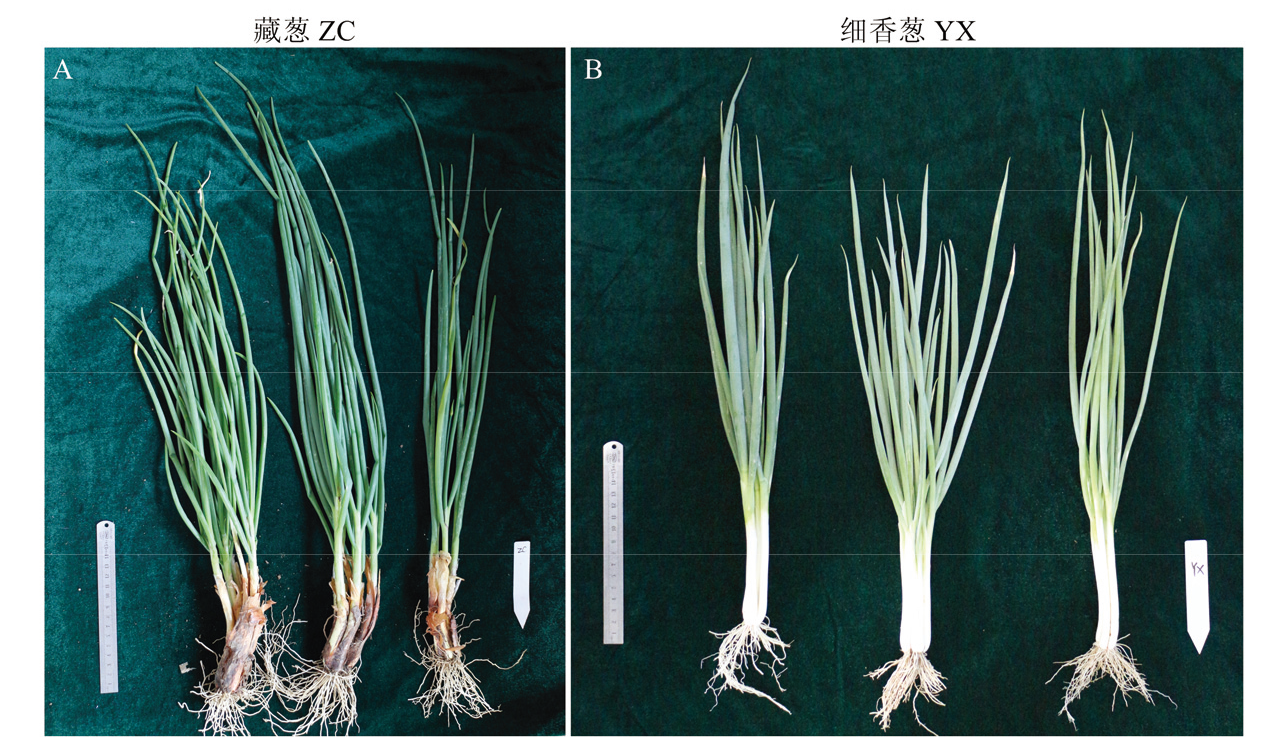
Fig. 1

Phenotypic of the Tibetan bunching onion and chive ZC: Tibetan bunching onion; YX: Chive. Bars=15 cm. The same as below"

Table 1

Statistical analysis of agronomic traits of Tibetan bunching onion and chive"

样本
Samples
分蘖数
Tiller numbers
单株叶数
Leaf numbers
株高
Plant height (cm)
假茎长
Pseudostem length (cm)
叶片长
Leaf length
(cm)
叶扁宽
Leaf weight (mm)
假茎粗
Pseudostem width (mm)
单株重
Single plant weight (g)
藏葱ZC 5.33±2.05a 4.60±0.66a 59.90±5.05a 17.00±0.92a 43.65±4.14a 8.29±1.03b 8.58±1.15a 16.19±3.96a
细香葱YX 5.75±1.48a 4.20±0.60a 46.85±5.23b 11.45±1.29b 35.45±4.65b 13.27±0.66a 8.96±1.36a 11.60±1.23b

Fig. 2

The determination of quality traits of Tibetan bunching onion and chive"

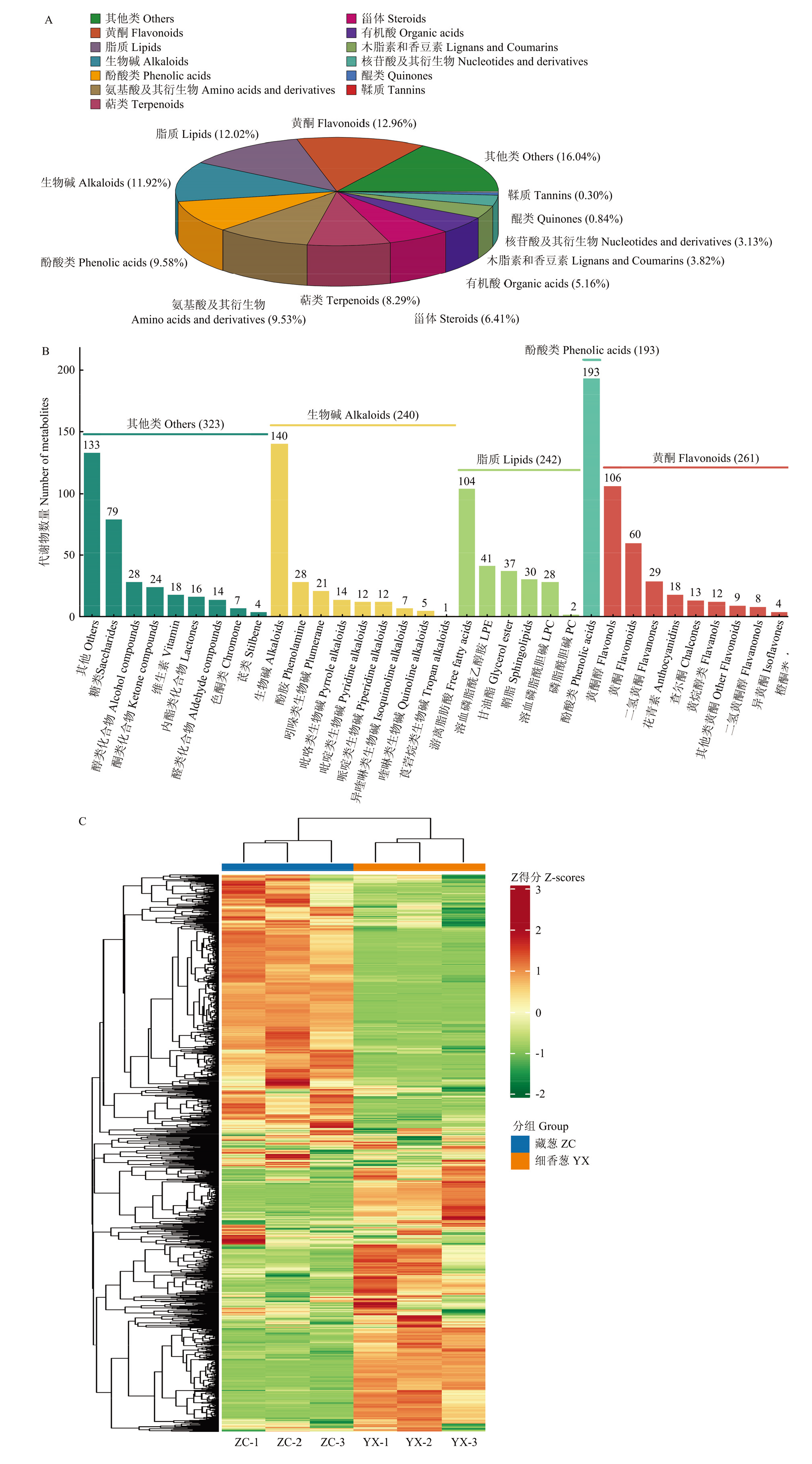
Fig. 3

The overall metabolite profile analysis of quality traits of Tibetan bunching onion and chive A: Classification and proportion of metabolites; B: Metabolite subclass analysis of the top five metabolites in the number of species; C: Clustering heatmap of metabolites"

Fig. 4

The multivariate statistical analysis of metabolites A: Correlational analysis of samples; B: PCA analysis; C: OPLS-DA score plot of different groups; D: OPLS-DA model of metabolites"

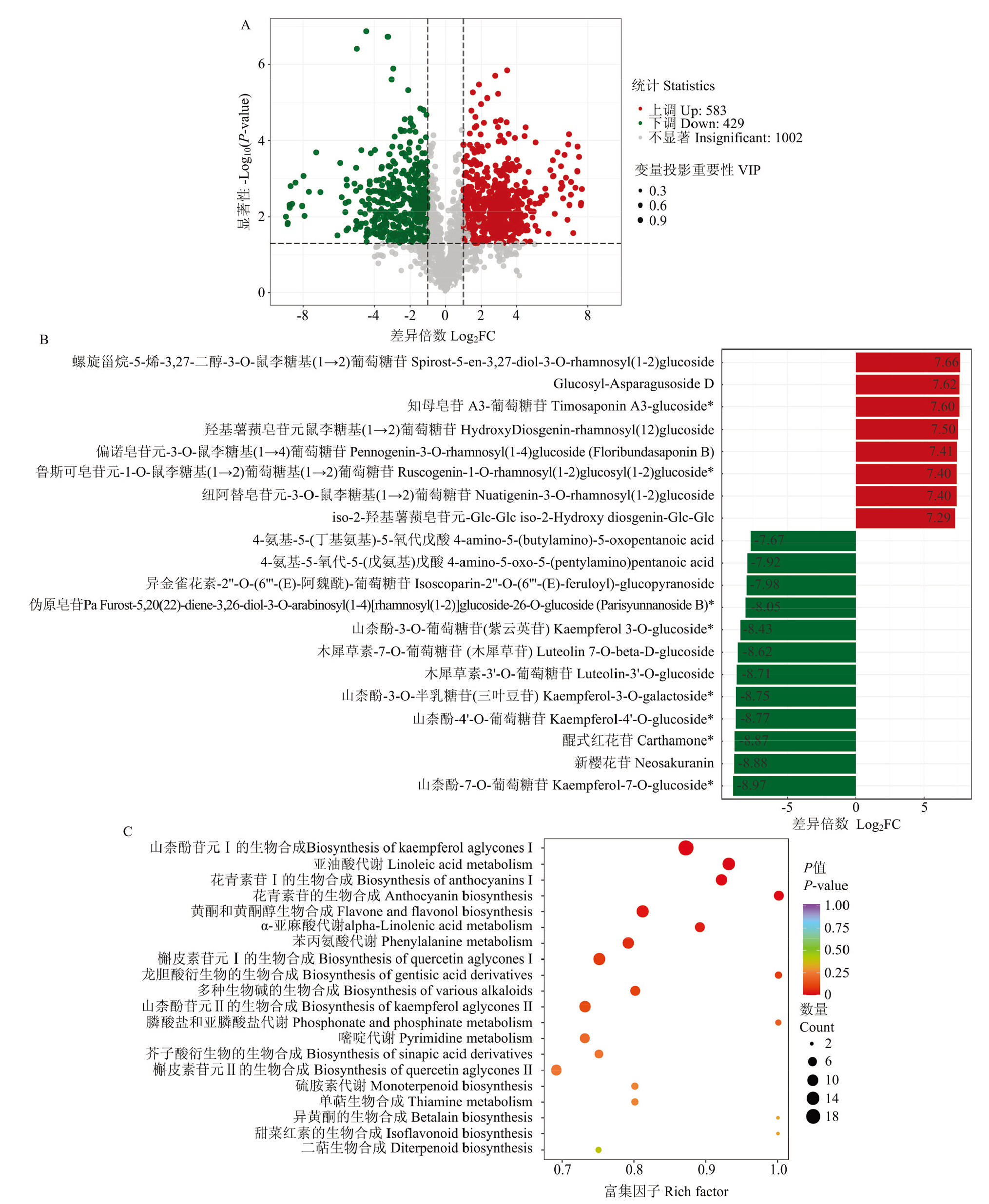
Fig. 5

Screening of differential metabolites and functional enrichment analysis A: Volcano plots of differential metabolites; B: Bar graph of the top 20 significant different metabolite multiples, *: Presence of isomers of this substance; C: KEGG enrichment map of differential metabolites"

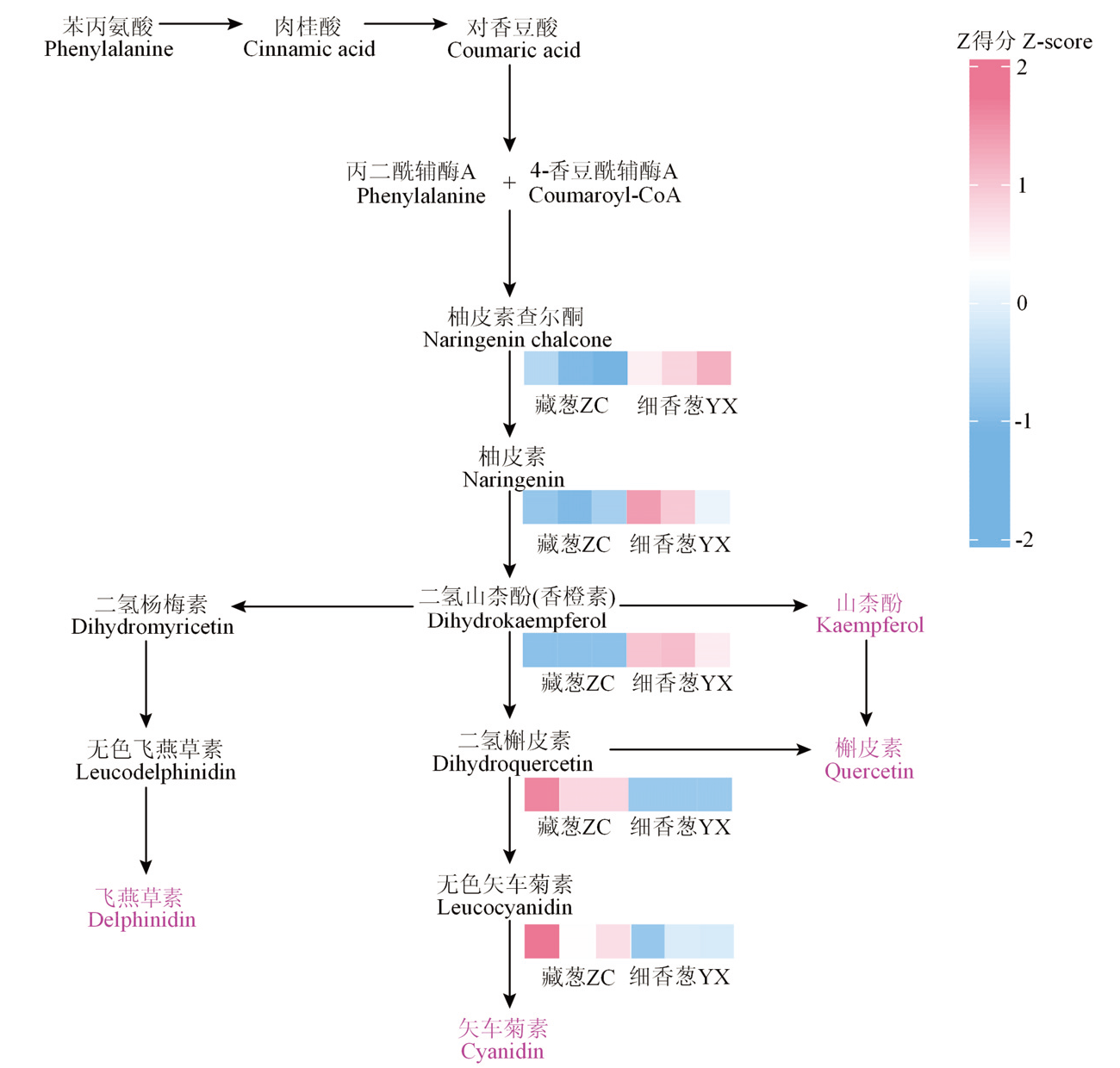
Fig. 6

Flavonoid biosynthesis pathway and relative content of its metabolites Blue to red indicates the relative content of metabolites from low to high. Solid arrows indicate direct synthesis. The same as below"

Fig. 7

Delphinidin biosynthesis pathway and relative content of its metabolites Dashed arrows indicate indirect synthesis. The same as below"

Fig. 8

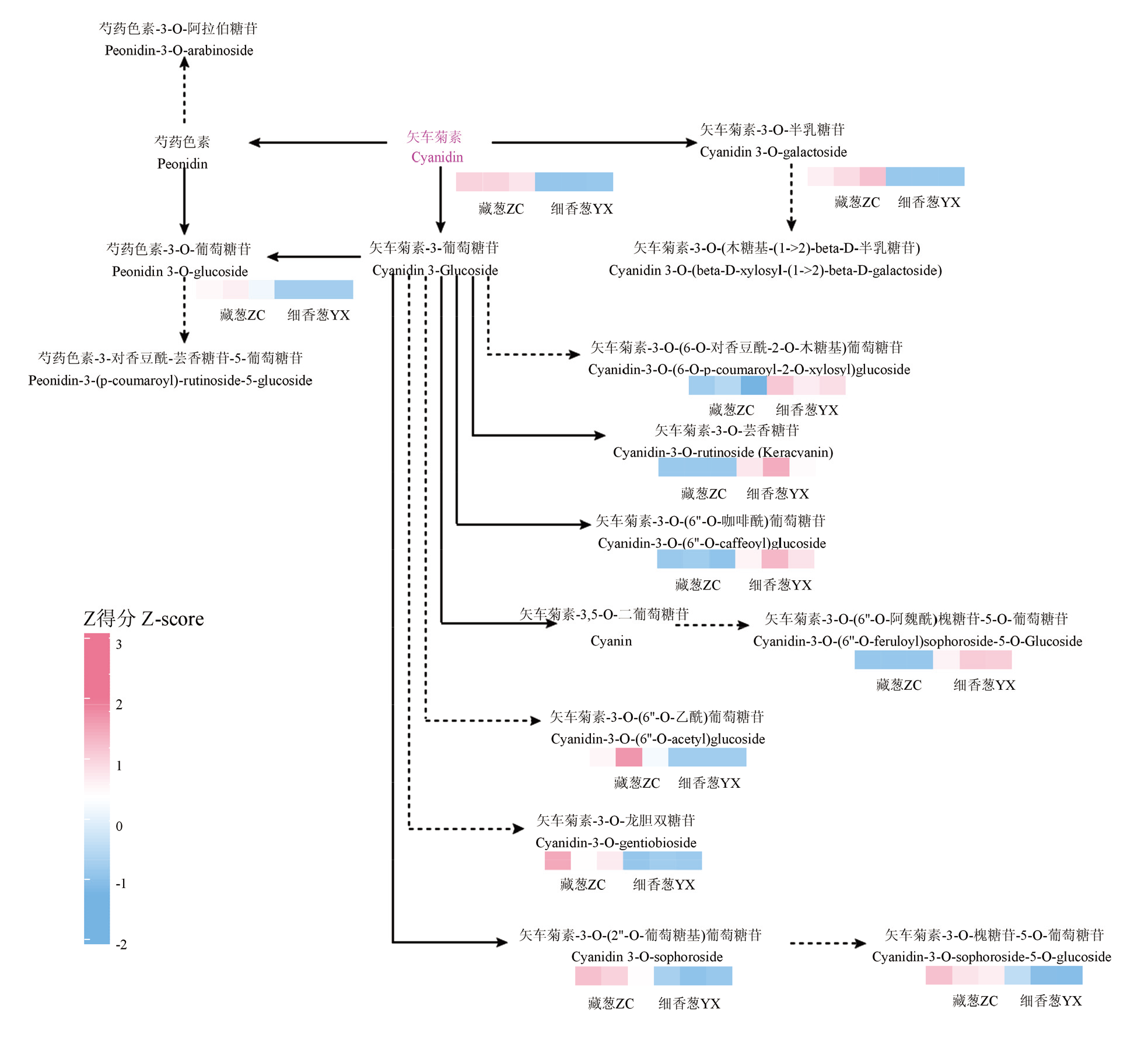
Cyanidin biosynthesis pathway and relative content of its metabolites"

Fig. 9

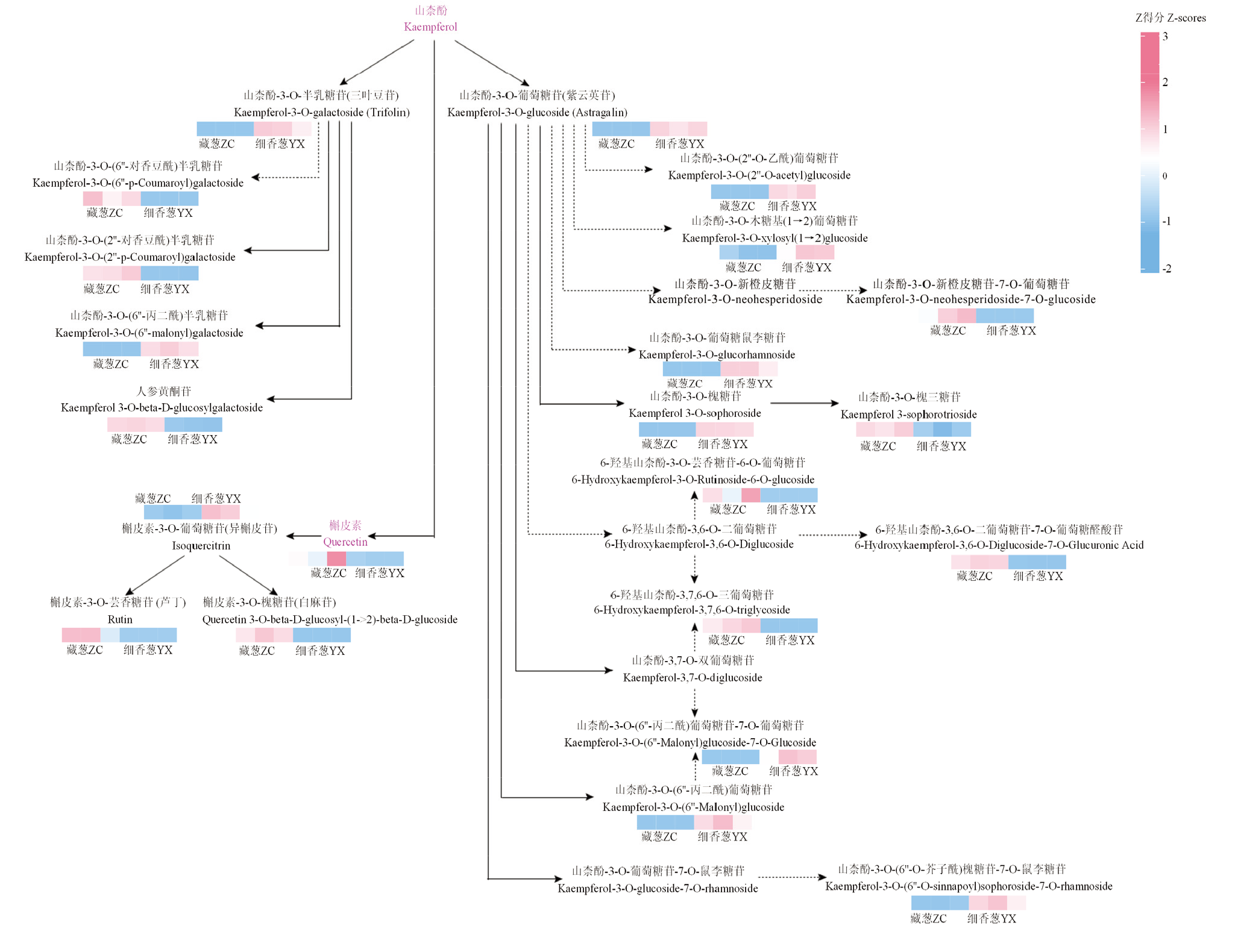
Kaempferol and quercetin biosynthesis pathway and relative content of its metabolites"

[1]
LIAO N Q, HU Z Y, MIAO J S, HU X D, LYU X L, FANG H T, ZHOU Y M, MAHMOUD A, DENG G C, MENG Y Q, et al. Chromosome-level genome assembly of bunching onion illuminates genome evolution and flavor formation in Allium crops. Nature Communications, 2022, 13: 6690.

doi: 10.1038/s41467-022-34491-3
[2]
YANG P T, YUAN Y, YAN C, JIA Y, YOU Q, DA L L, LOU A, LV B S, ZHANG Z H, LIU Y. AlliumDB: A central portal for comparative and functional genomics in Allium. Horticulture Research, 2024, 11(2): uhad285.
[3]
王怀凤, 杨晓菊, 陈锋, 蒋兵涛, 郭好先. 藏葱扩繁技术研究. 农业科技通讯, 2017(9): 153-154.
WANG H F, YANG X J, CHEN F, JIANG B T, GUO H X. Study on propagation technology of Tibetan bunching onion. Bulletin of Agricultural Science and Technology, 2017(9): 153-154. (in Chinese)
[4]
王怀凤, 永毛, 胡金鑫, 王陆州, 王世彬, 李青, 程芳. 西藏部分葱属种质资源无靶向性鉴定分析. 西藏农业科技, 2020, 42(S1): 19-24.
WANG H F, YONG M, HU J X, WANG L Z, WANG S B, LI Q, CHENG F. Non-targeted identification and analysis of some Allium germplasm resources in Xizang. Tibet Journal of Agricultural Sciences, 2020, 42(S1): 19-24.
[5]
王怀凤, 郭好先, 永毛, 李青, 程芳. 藏葱与栽培葱类营养品质比较. 农业科技通讯, 2020(5): 166-168.
WANG H F, GUO H X, YONG M, LI Q, CHENG F. Comparison of nutritional quality between Tibetan bunching onion and cultivated onion. Bulletin of Agricultural Science and Technology, 2020(5): 166-168. (in Chinese)
[6]
贾丽娥, 张超, 袁树枝, 王丹, 赵晓燕, 马越, 王清, 王宝刚. 葱属蔬菜功能成分生物活性及贮藏温度对采后品质影响的研究进展. 农产品加工, 2024(19): 102-106, 110.
JIA L E, ZHANG C, YUAN S Z, WANG D, ZHAO X Y, MA Y, WANG Q, WANG B G. Research progress on the bioactivities of functional ingredients and the effect of storage temperature on post-harvest storage quality of Allium vegetables. Farm Products Processing, 2024(19): 102-106, 110. (in Chinese)
[7]
NILE S H, NILE A S, KEUM Y S, SHARMA K. Utilization of quercetin and quercetin glycosides from onion (Allium cepa L.) solid waste as an antioxidant, urease and xanthine oxidase inhibitors. Food Chemistry, 2017, 235: 119-126.

doi: 10.1016/j.foodchem.2017.05.043
[8]
王怀凤, 唐懿, 许琳玉, 王陆州, 永毛. 基于ISSR标记的西藏22份葱属材料的遗传多样性分析. 植物资源与环境学报, 2024, 33(5): 83-89.
WANG H F, TANG Y, XU L Y, WANG L Z, YONG M. Analysis on genetic diversity of 22 Allium materials from Xizang based on ISSR marker. Journal of Plant Resources and Environment, 2024, 33(5): 83-89. (in Chinese)
[9]
鲁亚星. 寒葱活性成分分析及其咀嚼片制备工艺研究[D]. 延吉: 延边大学, 2018.
LU Y X. Study on active constituents of Allium victorialis and preparation of Chewing tablets[D]. Yanji: Yanbian University, 2018. (in Chinese)
[10]
ABDELRAHMAN M, HIRATA S, ITO S I, YAMAUCHI N, SHIGYO M. Compartmentation and localization of bioactive metabolites in different organs of Allium roylei. Bioscience, Biotechnology, and Biochemistry, 2014, 78(7): 1112-1122.

doi: 10.1080/09168451.2014.915722
[11]
YAN J K, ZHU J, LIU Y J, CHEN X, WANG W H, ZHANG H N, LI L. Recent advances in research on Allium plants: Functional ingredients, physiological activities, and applications in agricultural and food sciences. Critical Reviews in Food Science and Nutrition, 2023, 63(26): 8107-8135.

doi: 10.1080/10408398.2022.2056132
[12]
WANG F, CHEN L, CHEN H P, CHEN S W, LIU Y P. Analysis of flavonoid metabolites in Citrus Peels (Citrus reticulata “Dahongpao”) using UPLC-ESI-MS/MS. Molecules, 2019, 24(15): 2680.
[13]
张仕林. 洋葱鳞茎类黄酮类化合物含量及其转录组分析[D]. 南京: 南京农业大学, 2016.
ZHANG S L. Onion (Allium cepa L.) bulb flavonoids contents and their iptome analysis[D]. Nanjing: Nanjing Agricultural University, 2016. (in Chinese)
[14]
MORENO-ROJAS J M, MORENO-ORTEGA A, ORDÓÑEZ J L, MORENO-ROJAS R, PÉREZ-APARICIO J, PEREIRA-CARO G. Development and validation of UHPLC-HRMS methodology for the determination of flavonoids, amino acids and organosulfur compounds in black onion, a novel derived product from fresh shallot onions (Allium cepa var. aggregatum). LWT, 2018, 97: 376-383.
[15]
ABDELRAHMAN M, HIRATA S, SAWADA Y, HIRAI M Y, SATO S, HIRAKAWA H, MINE Y, TANAKA K, SHIGYO M. Widely targeted metabolome and transcriptome landscapes of Allium fistulosum -A. Cepa chromosome addition lines revealed a flavonoid hot spot on chromosome 5A. Scientific Reports, 2019, 9(1): 3541.
[16]
尹建雄, 卢红, 谢强, 丁金玲, 李尼杭. 3, 5-二硝基水杨酸比色法快速测定烟草水溶性总糖、还原糖及淀粉的探讨. 云南农业大学学报, 2007, 22(6): 829-833, 838.
YIN J X, LU H, XIE Q, DING J L, LI N H. A study on rapid colorimetric determination of water soluble total sugar, reducing sugar and starch in tobacco with 3, 5-dinitrosalicylic acid. Journal of Yunnan Agricultural University, 2007, 22(6): 829-833, 838. (in Chinese)
[17]
周春丽, 钟贤武, 范鸿冰, 吕玲琴, 苏虎, 李玉萍. 果蔬及其制品中可溶性总糖和还原糖的测定方法评价. 食品工业, 2012, 33(5): 89-92.
ZHOU C L, ZHONG X W, FAN H B, L Q, SU H, LI Y P. Evaluation of different determination of water-soluble total sugar and reducing sugar in fruit and vegetable. The Food Industry, 2012, 33(5): 89-92. (in Chinese)
[18]
焦琳娟. 以磷酸为掩蔽剂的铁(Ⅱ)-邻二氮菲分光光度法间接测定雪莲果中维生素C含量. 韶关学院学报, 2012, 33(10): 51-53.
JIAO L J. Indirect determination of the vitamin C content in Smallanthus sonchifolius by phenanthroline-Fe(Ⅱ) with phosphoric acid as masking agent. Journal of Shaoguan University, 2012, 33(10): 51-53. (in Chinese)
[19]
魏玲, 吕晓琴, 李学琴. 邻二氮菲分光光度法间接测定药片中维生素C的含量. 昌吉学院学报, 2008(2): 110-112.
WEI L, X Q, LI X Q. Indirect determination of vitamin C in tablets by o-phenanthroline spectrophotometry. Journal of Changji University, 2008(2): 110-112. (in Chinese)
[20]
顾银河, 赵文青, 史代伟, 胡伟, 王珊珊, 周治国, 王友华. 玉米抗寒性及其在低温条件下优化糖组分能力的相关性研究. 中国农业科学, 2024, 57(19): 3770-3783. doi: 10.3864/j.issn.0578-1752.2024.19.005.
GU Y H, ZHAO W Q, SHI D W, HU W, WANG S S, ZHOU Z G, WANG Y H. Study on the correlation between cold resistance of maize and its ability of optimizing sugar composition at low temperature. Scientia Agricultura Sinica, 2024, 57(19): 3770-3783. doi: 10.3864/j.issn.0578-1752.2024.19.005. (in Chinese)
[21]
翟江, 高原, 张晓伟, 韩鲁杰, 毕焕改, 李清明, 艾希珍. 硅钙对日光温室黄瓜光合作用及产量和品质的影响. 园艺学报, 2019, 46(4): 701-713.

doi: 10.16420/j.issn.0513-353x.2018-0687
ZHAI J, GAO Y, ZHANG X W, HAN L J, BI H G, LI Q M, AI X Z. Effects of silicon and calcium on photosynthesis, yield and quality of cucumber in solar-greenhouse. Acta Horticulturae Sinica, 2019, 46(4): 701-713. (in Chinese)
[22]
曹建康, 姜微波, 赵玉梅. 果蔬采后生理生化实验指导. 北京: 中国轻工业出版社, 2007.
CAO J K, JIANG W B, ZHAO Y M. Guidance on Postharvest Physiological and Biochemical Experiments of Fruits and Vegetables. Beijing: China Light Industry Press, 2007. (in Chinese)
[23]
郑安然. 1-MCP和褪黑素处理对猕猴桃果实乙醇代谢及ERF转录因子表达的影响[D]. 杭州: 浙江工商大学, 2021.
ZHENG A R. Effects of 1-MCP and melatonin treatments on ethanl metabolism and ERF gene expression in Kiwifruit during postharvest[D]. Hangzhou: Zhejiang Gongshang University, 2021. (in Chinese)
[24]
生弘杰, 卢素文, 郑暄昂, 贾海锋, 房经贵. 基于广泛靶向代谢组学的葡萄种子代谢物鉴定与比较分析. 中国农业科学, 2023, 56(7): 1359-1376. doi: 10.3864/j.issn.0578-1752.2023.07.013.
SHENG H J, LU S W, ZHENG X A, JIA H F, FANG J G. Identification and comparative analysis of metabolites in grape seed based on widely targeted metabolomics. Scientia Agricultura Sinica, 2023, 56(7): 1359-1376. doi: 10.3864/j.issn.0578-1752.2023.07.013. (in Chinese)
[25]
FRAGA C G, CLOWERS B H, MOORE R J, ZINK E M. Signature-discovery approach for sample matching of a nerve- agent precursor using liquid chromatography-mass spectrometry, XCMS, and chemometrics. Analytical Chemistry, 2010, 82(10): 4165-4173.

doi: 10.1021/ac1003568
[26]
CHEN W, GONG L, GUO Z L, WANG W S, ZHANG H Y, LIU X Q, YU S B, XIONG L Z, LUO J. A novel integrated method for large-scale detection, identification, and quantification of widely targeted metabolites: Application in the study of rice metabolomics. Molecular Plant, 2013, 6(6): 1769-1780.

doi: 10.1093/mp/sst080 pmid: 23702596
[27]
THÉVENOT E A, ROUX A, XU Y, EZAN E, JUNOT C. Analysis of the human adult urinary metabolome variations with age, body mass index, and gender by implementing a comprehensive workflow for univariate and OPLS statistical analyses. Journal of Proteome Research, 2015, 14(8): 3322-3335.

doi: 10.1021/acs.jproteome.5b00354 pmid: 26088811
[28]
KANEHISA M, GOTO S. KEGG: Kyoto encyclopedia of genes and genomes. Nucleic Acids Research, 2000, 28(1): 27-30.

doi: 10.1093/nar/28.1.27 pmid: 10592173
[29]
杨帅, 高尚珠, 卢晗, 詹亚光, 曾凡锁. 植物细胞壁形成及在非生物胁迫中的作用. 植物生理学报, 2023, 59(7): 1251-1264.
YANG S, GAO S Z, LU H, ZHAN Y G, ZENG F S. Plant cell wall development and its function in abiotic stress. Plant Physiology Journal, 2023, 59(7): 1251-1264. (in Chinese)
[30]
马骊, 孙万仓, 刘自刚, 赵艳宁, 杨刚, 刘海卿, 武军艳, 方彦, 李学才, 刘林波, 等. 白菜型与甘蓝型冬油菜抗寒机理差异的研究. 华北农学报, 2016, 31(1): 147-154.

doi: 10.7668/hbnxb.2016.01.024
MA L, SUN W C, LIU Z G, ZHAO Y N, YANG G, LIU H Q, WU J Y, FANG Y, LI X C, LIU L B, et al. Study of difference in mechanism of cold resistance of winter rapeseed of Brassica rape and Brassica napus. Acta Agriculturae Boreali-Sinica, 2016, 31(1): 147-154. (in Chinese)

doi: 10.7668/hbnxb.2016.01.024
[31]
TAKAHASHI D, SOGA K, KIKUCHI T, KUTSUNO T, HAO P F, SASAKI K, NISHIYAMA Y, KIDOKORO S, SAMPATHKUMAR A, BACIC A, et al. Structural changes in cell wall pectic polymers contribute to freezing tolerance induced by cold acclimation in plants. Current Biology, 2024, 34(5): 958-968.

doi: 10.1016/j.cub.2024.01.045
[32]
马怀宇, 吕德国, 刘国成, 秦嗣军. 低温对‘寒富’苹果花芽渗透调节物质含量和膜脂过氧化的影响. 北方园艺, 2010(21): 1-4.
MA H Y, D G, LIU G C, QIN S J. Effect of low temperature on ‘hanfu’ apple buds osmoticum content and membrane lipid peroxidation. Northern Horticulture, 2010(21): 1-4. (in Chinese)
[33]
WANG Y Q, LEI Z, YE R B, ZHOU W, ZHOU Y, ZOU Z K, LI J L, YI L C, DAI Z Y. Effects of cadmium on physiochemistry and bioactive substances of muskmelon (Cucumis melo L.). Molecules, 2022, 27(9): 2913.
[34]
ABDELRAHMAN M, ARIYANTI N A, SAWADA Y, TSUJI F, HIRATA S, HANG T T M, OKAMOTO M, YAMADA Y, TSUGAWA H, HIRAI M Y, et al. Metabolome-based discrimination analysis of shallot landraces and bulb onion cultivars associated with differences in the amino acid and flavonoid profiles. Molecules, 2020, 25(22): 5300.
[35]
ABDELRAHMAN M, HIRATA S, MUKAE T, YAMADA T, SAWADA Y, EL-SYAED M, YAMADA Y, SATO M, HIRAI M Y, SHIGYO M. Comprehensive metabolite profiling in genetic resources of garlic (Allium sativum L.) collected from different geographical regions. Molecules, 2021, 26(5): 1415.
[36]
MIEAN K H, MOHAMED S. Flavonoid (myricetin, quercetin, kaempferol, luteolin, and apigenin) content of edible tropical plants. Journal of Agricultural and Food Chemistry, 2001, 49(6): 3106-3112.

doi: 10.1021/jf000892m pmid: 11410016
[37]
SLIMESTAD R, FOSSEN T, VÅGEN I M. Onions: A source of unique dietary flavonoids. Journal of Agricultural and Food Chemistry, 2007, 55(25): 10067-10080.

doi: 10.1021/jf0712503 pmid: 17997520
[38]
TEDESCO I, CARBONE V, SPAGNUOLO C, MINASI P, RUSSO G L. Identification and quantification of flavonoids from two southern Italian cultivars of Allium cepa L.,tropea (red onion) and montoro (copper onion), and their capacity to protect human erythrocytes from oxidative stress. Journal of Agricultural and Food Chemistry, 2015, 63(21): 5229-5238.

doi: 10.1021/acs.jafc.5b01206
[39]
王佳蕊. 苦荞黄酮糖苷相关糖基转移酶基因的鉴定及功能验证[D]. 贵阳: 贵州师范大学, 2023.
WANG J R. Identification and functional verification of flavonoid glycoside related glycosyltransferase gene in Tartary Buckwheat (Fagopyrum tataricum)[D]. Guiyang: Guizhou Normal University, 2023. (in Chinese)
[40]
WANG D, YANG T, LI Y Q, DENG F, DONG S, LI W, HE Y Y, ZHANG J M, ZOU L. Light intensity: A key factor affecting flavonoid content and expression of key enzyme genes of flavonoid synthesis in Tartary Buckwheat. Plants, 2022, 11(16): 2165.

doi: 10.3390/plants11162165
[41]
马瑞雪. 基于多组学技术的不同产地“宁杞1号” 枸杞黄酮类化合物生物合成差异研究[D]. 银川: 宁夏大学, 2023.
MA R X. Study on the difference of biosynthesis of flavonoids in "Ningqi No.1" Lycium barbarum from different regions based on multiomics technology[D]. Yinchuan: Ningxia University, 2023. (in Chinese)
[42]
GIUSTI M M, WROLSTAD R E. Acylated anthocyanins from edible sources and their applications in food systems. Biochemical Engineering Journal, 2003, 14(3): 217-225.

doi: 10.1016/S1369-703X(02)00221-8
[43]
SADILOVA E, STINTZING F C, CARLE R. Thermal degradation of acylated and nonacylated anthocyanins. Journal of Food Science, 2006, 71(8): C504-C512.
[44]
袁利. UV-C处理对紫甘蓝花青素合成的影响以及花青素酰基转移酶的克隆[D]. 北京: 中国农业科学院, 2018.
YUAN L. Study on effect from UV-C treatment on anthocyanin biosynthesis and the cloning of anthocyanin acyltransferase of Red Cabbage[D]. Beijing: Chinese Academy of Agricultural Sciences, 2018. (in Chinese)
[45]
JIN L, ZHANG Y L, YAN L M, GUO Y L, NIU L X. Phenolic compounds and antioxidant activity of bulb extracts of six Lilium species native to China. Molecules, 2012, 17(8): 9361-9378.

doi: 10.3390/molecules17089361
[46]
GAO J, ZHANG T, JIN Z Y, XU X M, WANG J H, ZHA X Q, CHEN H Q. Structural characterisation, physicochemical properties and antioxidant activity of polysaccharide from Lilium lancifolium Thunb. Food Chemistry, 2015, 169: 430-438.

doi: 10.1016/j.foodchem.2014.08.016
[47]
韩嘉琪. 百合资源遗传多样性分析及百合皂苷生物合成关键基因的挖掘[D]. 太谷: 山西农业大学, 2024.
HAN J Q. Analysis of genetic diversity of lily resources and mining of key genes of lily saponin biosynthesis[D]. Taigu: Shanxi Agricultural University, 2024. (in Chinese)
[48]
CHAPARIAN F, DELAZAR Z, DINANI M S. Isolation of two steroidal saponins with antileishmanial activity from Allium giganteum L.. Research in Pharmaceutical Sciences, 2024, 19(3): 347-355.

doi: 10.4103/RPS.RPS_71_21
[49]
SOBOLEWSKA D, MICHALSKA K, PODOLAK I, GRABOWSKA K. Steroidal saponins from the genus Allium. Phytochemistry Reviews, 2016, 15(1): 1-35.

doi: 10.1007/s11101-014-9381-1
[50]
周燕燕. 百合科红葱水提物化学成分及体外活性研究[D]. 西安: 西北大学, 2020.
ZHOU Y Y. Study on the chemical compositions and in vitro activities of aqueous extracts from Liliaceae storey onion[D]. Xi’an: Northwest University, 2020. (in Chinese)
[51]
周小平, 王广树, 杨晓虹, 田丁丁. 分蘖葱头中甾体皂苷成分的分离与鉴定. 中国药物化学杂志, 2004, 14(2): 44-47.
ZHOU X P, WANG G S, YANG X H, TIAN D D. Steroidal saponins from the bulbs of Allium cepa L.var agrogatum Don. Chinese Journal of Medicinal Chemistry, 2004, 14(2): 44-47. (in Chinese)
[52]
LI C J, YUAN L, JI T F, YANG J B, WANG A G, SU Y L. Furostanol saponins from the seeds of Allium cepa L.. Fitoterapia, 2014, 99: 56-63.

doi: 10.1016/j.fitote.2014.08.022
[53]
WANG Y H, LI C, XIANG L M, HUANG W J, HE X J. Spirostanol saponins from Chinese onion (Allium chinense) exert pronounced anti- inflammatory and anti-proliferative activities. Journal of Functional Foods, 2016, 25: 208-219.

doi: 10.1016/j.jff.2016.06.005
[1] ZHANG LiDong, GUO YiCong, HUANG HongYu, NIE Jing, WANG Bing, LI MengYu, LI JiaWang, SUI XiaoLei, LI YuHe. Correlation Analysis of Cucumber Fruit Quality Integrating Sensory Evaluation with Nutritional Traits and Flavor Compound Characteristics [J]. Scientia Agricultura Sinica, 2026, 59(5): 1087-1100.
[2] DONG JinLong, ZHAO Ying, YU HaiBing, LÜ JianYe, QIN JiaQi, LIANG Chen, MING Bo, LI ShaoKun. Multi-Model Elucidating of Nutritional Quality Contributions to Maize Kernel Test Weight and Regional Heterogeneity [J]. Scientia Agricultura Sinica, 2026, 59(5): 985-995.
[3] LI SaiYa, XU YaPing, ZHENG JiaXing, ZHENG Yang, YU JiaHui, LI YongQiang, PU ShouCheng, YANG Li, GUO WeiDong. Bioactive Polyphenolic Composition and Antioxidant Activities in Leaves of 34 Vaccinium Species [J]. Scientia Agricultura Sinica, 2026, 59(4): 874-886.
[4] WANG AiDong, LI RuiJie, FENG XiangQian, HONG WeiYuan, LI ZiQiu, ZHANG XiaoGuo, WANG DanYing, CHEN Song. Multi-Angle Imaging and Machine Learning Approaches for Accurate Rice Leaf Area Estimation [J]. Scientia Agricultura Sinica, 2025, 58(9): 1719-1734.
[5] JI ShengYang, LU BaiYi, LI PeiWu. Some Reflections on Modern Science of Agricultural Product Quality [J]. Scientia Agricultura Sinica, 2025, 58(9): 1830-1844.
[6] YIN Bo, YU AiZhong, WANG PengFei, YANG XueHui, WANG YuLong, SHANG YongPan, ZHANG DongLing, LIU YaLong, LI Yue, WANG Feng. Effects of Green Manure Returning Combined with Nitrogen Fertilizer Reduction on Hydrothermal Characteristics of Wheat Field and Grain Yield in Oasis Irrigation Area [J]. Scientia Agricultura Sinica, 2025, 58(7): 1366-1380.
[7] CHEN Ge, GU Yu, WEN Jiong, FU YueFeng, HE Xi, LI Wei, ZHOU JunYu, LIU QiongFeng, WU HaiYong. Effects of Fallow Weeds Returning to the Field on Photosynthetic Matter Production and Yield of Rice [J]. Scientia Agricultura Sinica, 2025, 58(4): 647-659.
[8] GUO AoLin, LIN JunXuan, LAI GongTi, HE LiYuan, CHE JianMei, PAN Ruo, YANG FangXue, HUANG YuJi, CHEN GuiXin, LAI ChengChun. Effect of VdF3′5′H2 Overexpression on the Accumulation of Anthocyanin Composition in Spine Grape Cells [J]. Scientia Agricultura Sinica, 2025, 58(4): 802-818.
[9] WEI ChenXi, DONG ShanRong, WANG XiaoMan, LUO JianRang. Analysis of Red Color Leaf Traits in Tree Peony Based on Leaf Color Phenotypes and Anthocyanin Accumulation Characteristics [J]. Scientia Agricultura Sinica, 2025, 58(23): 5046-5056.
[10] SONG XuHui, ZHAO XueYing, ZHAO Bin, REN BaiZhao, ZHANG JiWang, LIU Peng, REN Hao. Effects of Row Ratio Allocation on Light Distribution and Photosynthetic Production Capacity of Maize-Soybean Strip Intercropping [J]. Scientia Agricultura Sinica, 2025, 58(23): 4858-4871.
[11] LUO ZiShu, ZHANG YiJia, ZHOU Rong, ZHANG YanXin, ZHOU Ting, YOU Jun, WANG LinHai. Characterization of Antioxidant Activities in Sesame Leaves and Screening of High Antioxidant Germplasm [J]. Scientia Agricultura Sinica, 2025, 58(19): 3814-3824.
[12] GUO MengZe, ZHANG Lei, SUN PingPing, JIANG Biao, YAN JinQiang, LI ZhengNan. Molecular Characterization and Evolutionary Dynamics of Tomato Leaf Curl New Delhi Virus Isolate from Wax Gourd (Benincasa hispida) in Guangdong [J]. Scientia Agricultura Sinica, 2025, 58(19): 3890-3904.
[13] REN JiaHui, SUN JuanJuan, HAO YingLu, WANG FengWu, WANG JingYu, ZHANG MingWei, LI BaoHan, ZHENG ChengZhong, HE ZhuQing, WANG ZhaoLan. Screening of Feed Oat Varieties and Its Evaluation of Silage Quality in Central Inner Mongolia [J]. Scientia Agricultura Sinica, 2025, 58(19): 4026-4038.
[14] HU JiaYan, SHEN ZhiHan, WEN LiHui, YU JiaHao, ZHANG YuJun, JIANG DongHua. Identification and Evaluation of Biocontrol Actinomycetes Against Xanthomonas oryzae pv. oryzicola for Disease Suppression and Growth Promotion in Rice [J]. Scientia Agricultura Sinica, 2025, 58(17): 3434-3450.
[15] YANG WenJuan, GAO JiaCheng, WANG YanTing, LI Yan, GUO Ming, WANG JunCheng, MENG YaXiong, WANG HuaJun, SI ErJing. Function of Effector Pg00778 Regulation on the Pathogenicity of Pyrenophora graminea to Barley [J]. Scientia Agricultura Sinica, 2025, 58(15): 3020-3035.
Viewed
Full text


Abstract

Cited

  Shared   
  Discussed   
No Suggested Reading articles found!