Scientia Agricultura Sinica ›› 2025, Vol. 58 ›› Issue (23): 5046-5056.doi: 10.3864/j.issn.0578-1752.2025.23.018

• HYBRIDIZATION BREEDING AND GERMPLASM INNOVATION IN PAEONIA • Previous Articles     Next Articles

Analysis of Red Color Leaf Traits in Tree Peony Based on Leaf Color Phenotypes and Anthocyanin Accumulation Characteristics

WEI ChenXi(), DONG ShanRong, WANG XiaoMan, LUO JianRang*()   

  1. College of Landscape Architecture and Arts, Northwest A&F University, Yangling 712100, Shaanxi
  • Received:2025-08-04 Accepted:2025-09-15 Online:2025-12-01 Published:2025-12-09
  • Contact: LUO JianRang

Abstract:

【Objective】 Tree peony, renowned for its ornamental flowers, also serves as a spring foliage plant due to the striking purple-red coloration of its young leaves. Elucidating the physiological mechanisms and key genes underlying red color leaf traits provides a theoretical basis for breeding ornamental foliage cultivars. 【Method】 Leaf samples were collected at six developmental stages from Paeonia qiui and P. Luoyang Hong. Leaf color parameters were measured using a colorimeter. Anthocyanin and chlorophyll contents were quantified through enzymatic methods. The composition of anthocyanins was analyzed by high performance liquid chromatography (HPLC). Furthermore, quantitative real-time PCR (qPCR) was utilized to examine the expression levels of structural genes involved in anthocyanin biosynthesis. 【Result】 Phenotypic observations and colorimetric analyses revealed that P. qiui exhibits a higher redness and a prolonged red-leaf period that persists until flowering. Conversely, P. Luoyang Hong displays red coloration in its young leaves during the early stages, but this red hue rapidly transitions to green following leaf expansion. HPLC analysis revealed that both tree peonies had peonidin-3,5-diglucoside (Pn3G5G) as the main anthocyanin component in leaves. The total anthocyanin content in P. qiui was significantly higher than that in P. Luoyang Hong, with the most pronounced difference observed during the S4 stage. qPCR results showed that the expression levels of CHS, DFR, and ANS in P. qiui were consistent with the trend in anthocyanin content. Correlation analysis further revealed a highly significant positive correlation between DFR expression levels and anthocyanin content, as well as a significant positive correlation for ANS. These findings underscore the critical role of DFR and ANS as key structural genes in anthocyanin biosynthesis. Similarly, in P. Luoyang Hong, the expression levels of CHS, F3H, DFR, and ANS generally aligned with the trends in anthocyanin content. Correlation analysis confirmed that both DFR and ANS expression levels were significantly positively correlated with anthocyanin content. 【Conclusion】 The primary pigment responsible for the red coloration in the leaves of P. qiui and P. Luoyang Hong is peonidin-3,5-diglucoside. DFR and ANS are key structural genes in the anthocyanin biosynthesis pathway of tree peony. Their expression levels are closely associated with anthocyanin accumulation, which in turn influences the formation of red leaf coloration in peonies.

Key words: tree peony, Paeonia qiui, leaf color, anthocyanin, structural genes

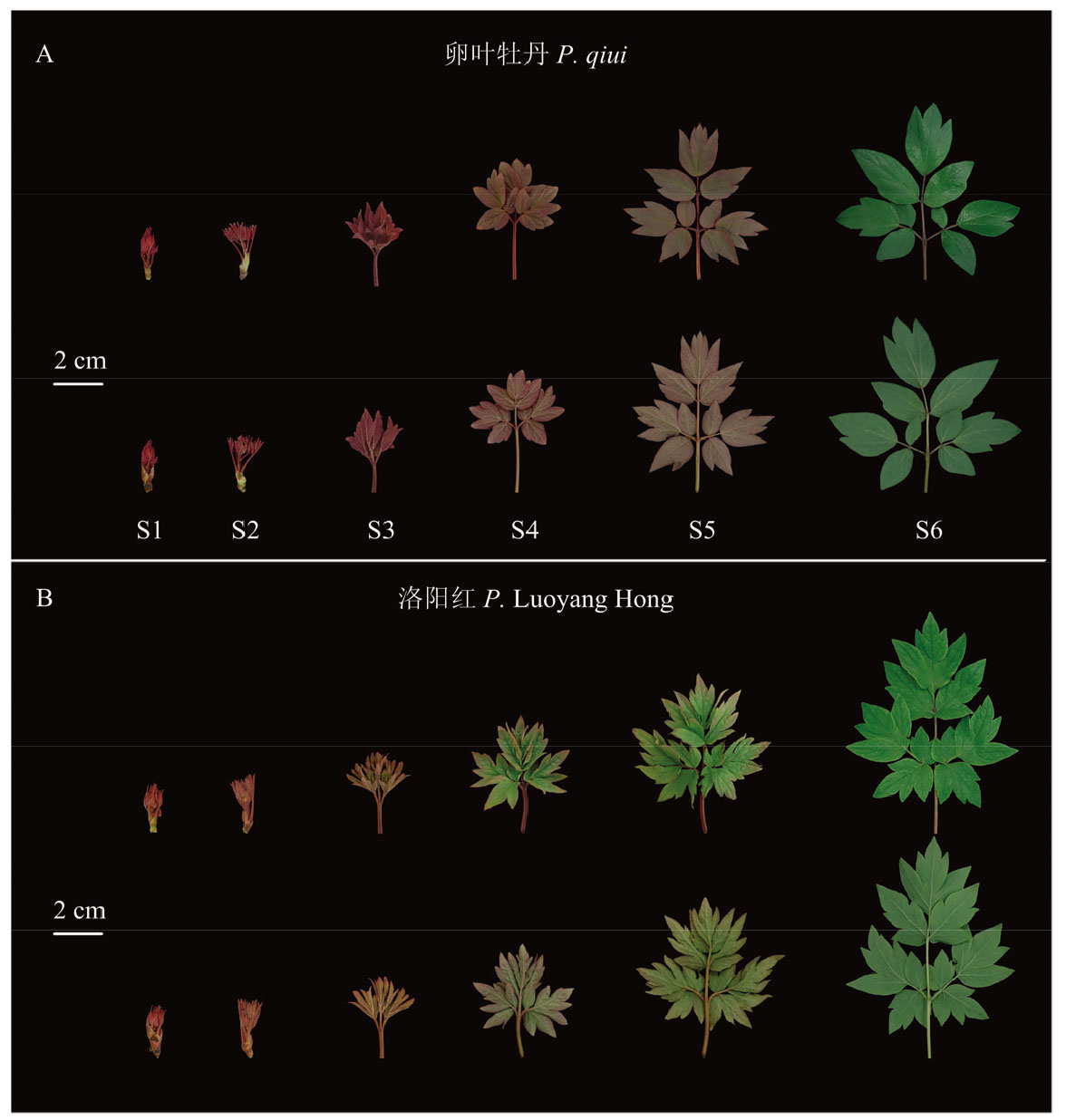
Fig. 1

Leaf phenotypes at different developmental stages in P. qiui and P. Luoyang Hong A: Leaf phenotypes of P. qiui at different developmental stages; B: Leaf phenotypes of P. Luoyang Hong at different developmental stages"

Table 1

Primers for qPCR"

基因 Gene name 正向引物 Forward primer (5′-3′) 反向引物 Reverse primer (5′-3′)
PqCHS, PsCHS TAGTCCCGGATAGCGATGGT TGCCTGGTCGCTTGTAGTTT
PqCHI, PsCHI GTCAGCGGAGTCAAGATTGAA AATATCCCGGAAGAAGTCGTC
PqF3H, PsF3H ACGAAATCCCAATCATCTCCC CTATTTCACGCCAATCTCGCA
PqF3’H, PsF3’H CAAGGCCGACAAATTCAAGGA ACCCTCGCTATCAACATCATC
PqDFR, PsDFR TGGTGGATGGAAGCTTTGATG TAAACTCCATGTCACTCCAGC
PqANS, PsANS CAGCATCACCAACATCTTCGA CAGCAATCTTCCCAGTCTCTT
PqUFGT, PsUFGT ACCATCATCCGCTACCTTTC CACTAAACAGCTCACCTTCC

Table 2

Leaf color data based on the RHSCC in P. qiui and P. Luoyang Hong"

种类 Species 时期 Period 英国皇家园艺学会比色卡 RHSCC
卵叶牡丹
P. qiui
S1 红色组47B Red group 47B
S2 红色组47A Red group 47A
S3 灰红组181B Greyed-red group 181B
S4 灰红组182B Greyed-red group 182B
S5 灰红组177C Greyed-red group 177C
S6 绿色组135C Green group 135C
洛阳红
P. Luoyang Hong
S1 红色组45C Red group 45C
S2 灰红组180C Greyed-red group 180C
S3 灰红组176D Greyed-red group 176D
S4 绿色组143C Green group 143C
S5 绿色组141C Green group 141C
S6 绿色组139B Green group 139B

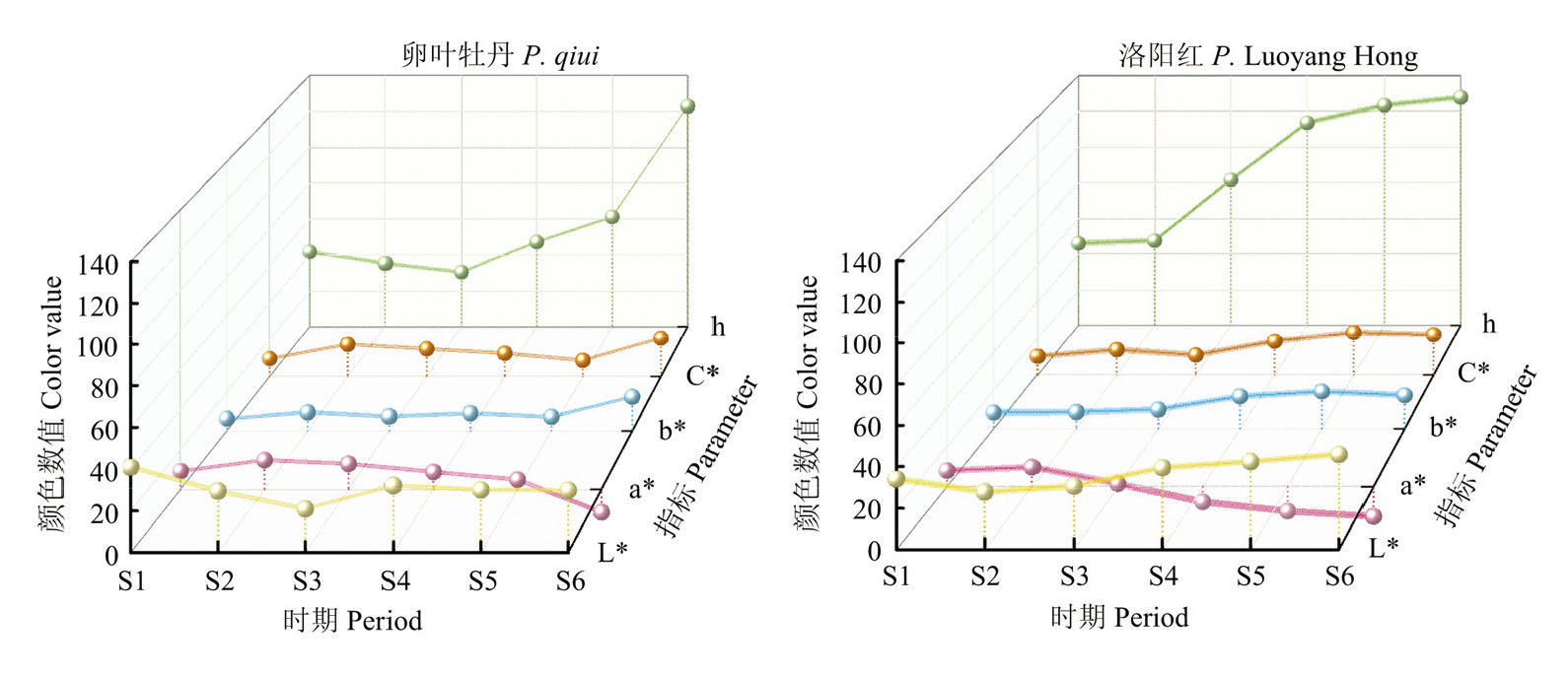
Fig. 2

Leaf color indices of P. qiui and P. Luoyang Hong"

Fig. 3

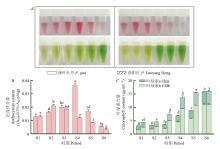
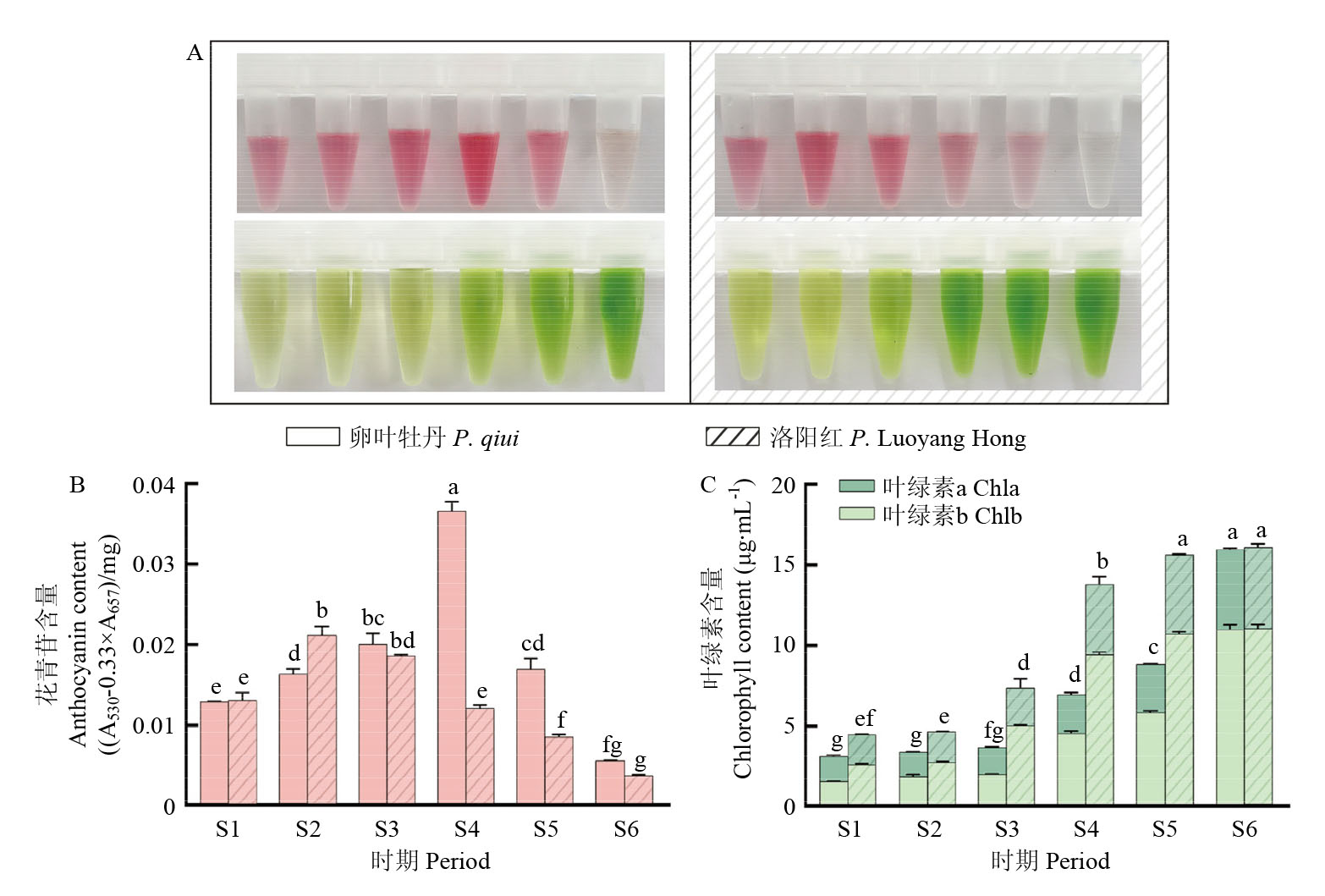
Pigment contents of leaves at different developmental stages of P. qiui and P. Luoyang Hong A: Anthocyanin extracts and chlorophyll extracts; B: Anthocyanin content in leaves; C: Chlorophyll content in leaves. Different lowercase letters indicate significant differences at P<0.05 level. The same as below"

Fig. 4

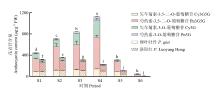
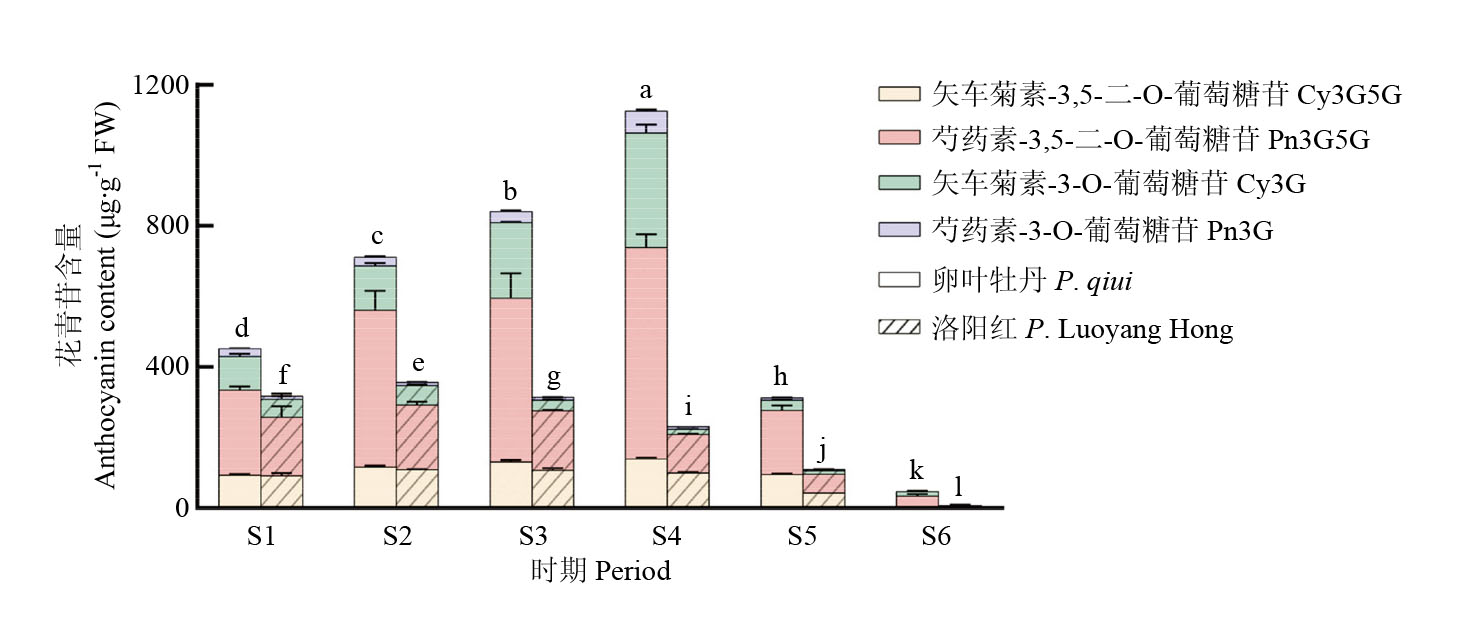
Anthocyanin composition and content at different developmental stages of P. qiui and P. Luoyang Hong"

Fig. 5

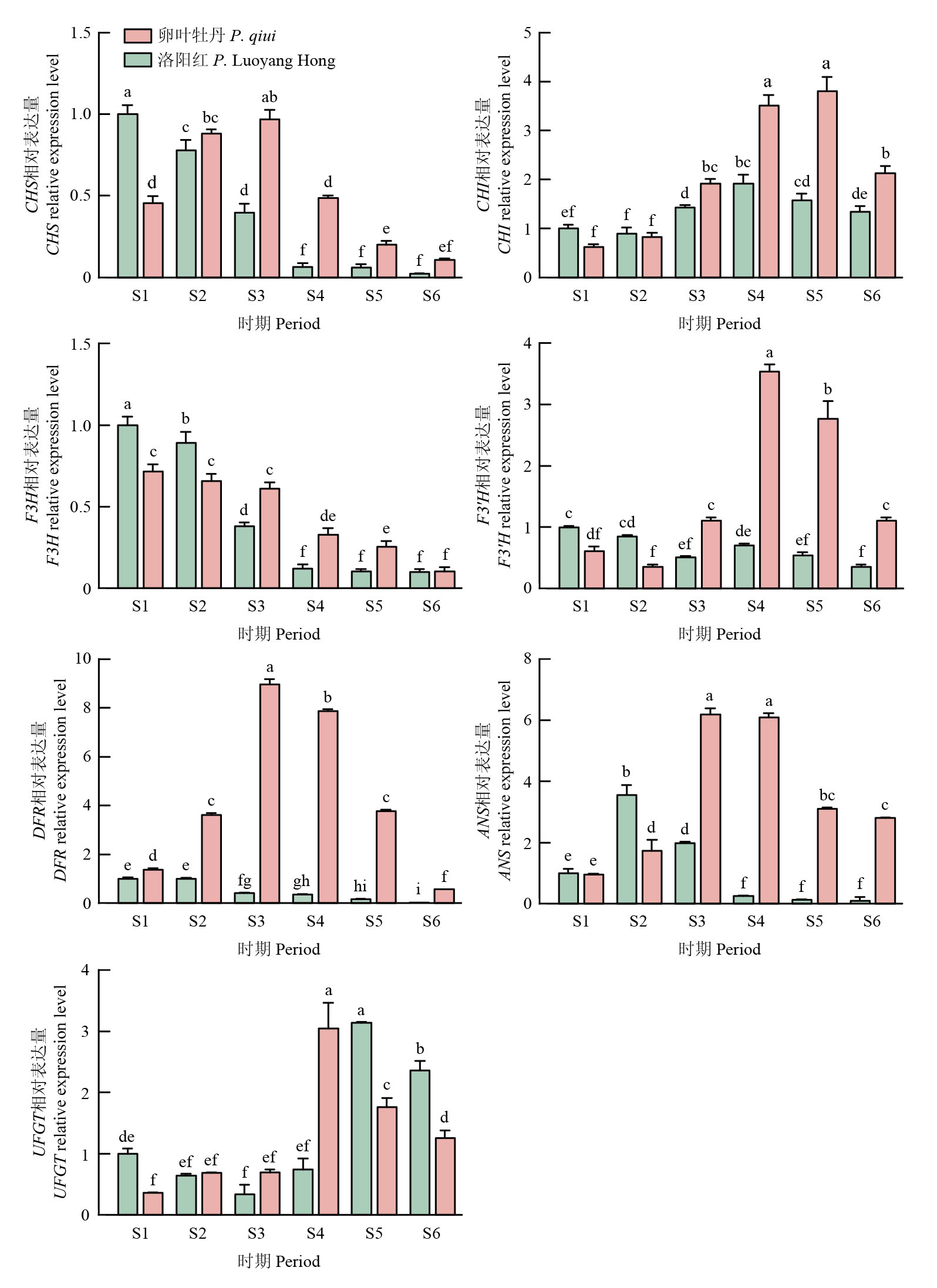
Expression analysis of genes related to anthocyanin synthesis at different developmental stages of P. qiui and P. Luoyang Hong"

Fig. 6

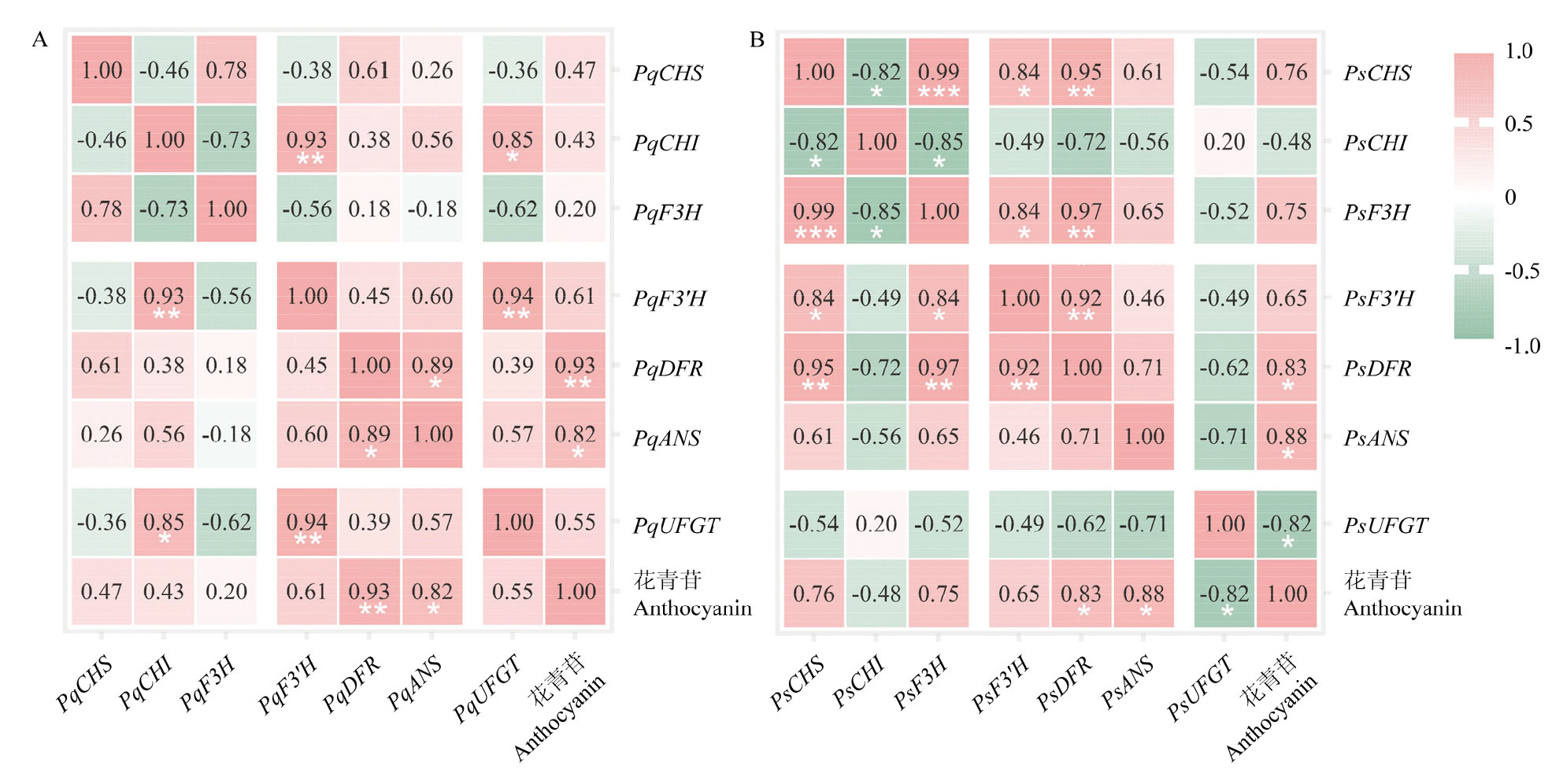
Correlation analysis between anthocyanin content and structural gene expression in the leaves of P. qiui and P. Luoyang Hong"

Fig. 7

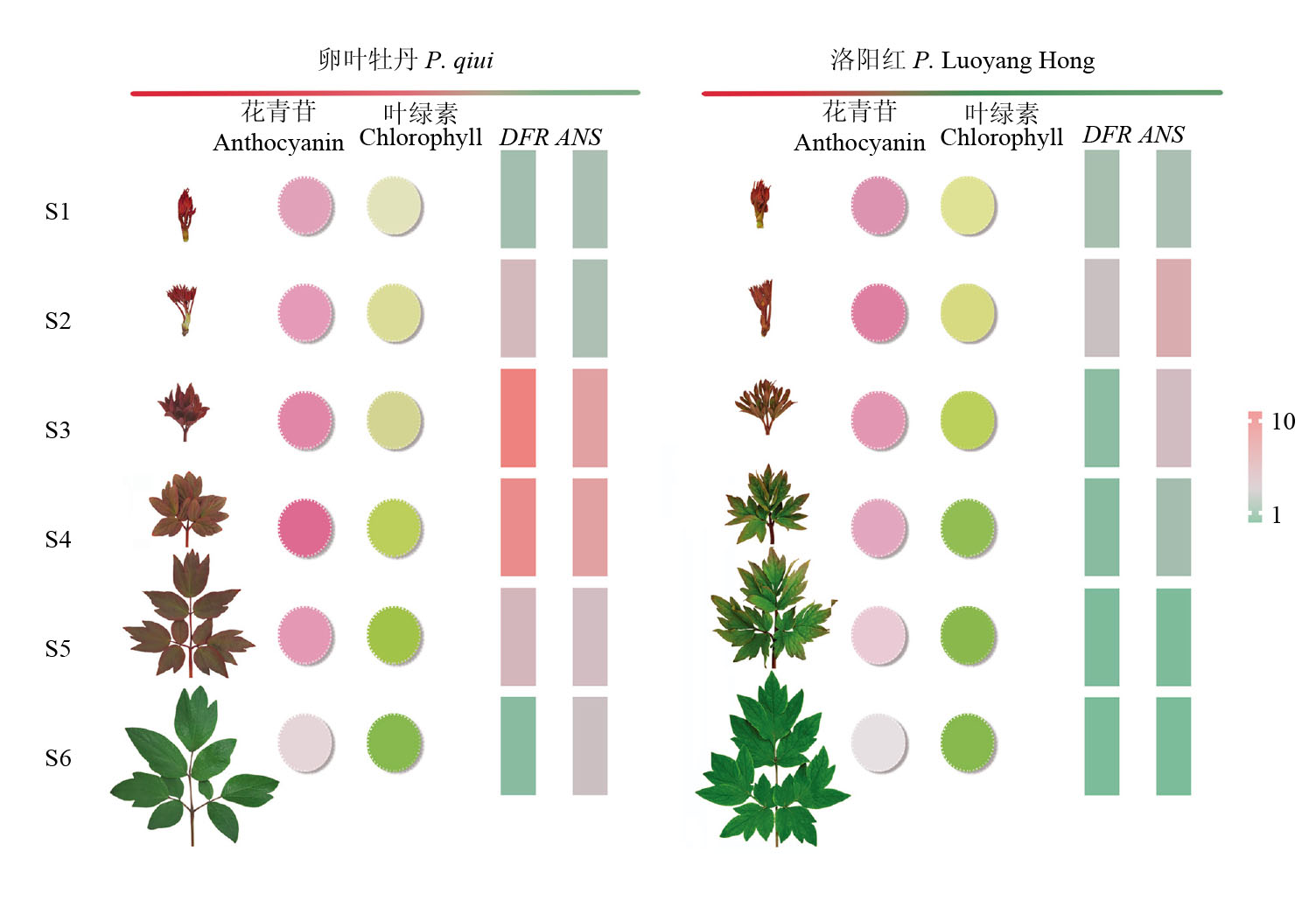
A schematic model of red leaf development in tree peonies during spring"

[1]
段晶晶, 罗建让, 李想, 张庆雨, 张延龙. 牡丹叶片红色消退过程中色素变化及相关基因表达分析. 西北植物学报, 2018, 38(10): 1885-1894.
DUAN J J, LUO J R, LI X, ZHANG Q Y, ZHANG Y L. Analysis of pigment changes and related gene expression during the red faded of tree peony leaves in spring. Acta Botanica Boreali-Occidentalia Sinica, 2018, 38(10): 1885-1894. (in Chinese)
[2]
裴颜龙, 洪德元. 卵叶牡丹: 芍药属一新种. 植物分类学报, 1995, 33(1): 91-93.
PEI Y L, HONG D Y. Paeonia qiui: A new woody species of Paeonia from Hubei, China. Acta Phytotaxonomica Sinica, 1995, 33(1): 91-93. (in Chinese)
[3]
韩欣. 牡丹杂交亲本选择及F1代遗传表现[D]. 北京: 北京林业大学, 2014.
HAN X. Studies on parental selection of tree peonies and genetic performance of several traits in F1 hybrids[D]. Beijing: Beijing Forestry University, 2014. (in Chinese)
[4]
李春雷, 崔国新, 许志茹, 李玉花. 植物二氢黄酮醇4-还原酶基因的研究进展. 生物技术通讯, 2009, 20(3): 442-445.
LI C L, CUI G X, XU Z R, LI Y H. Research advances on dihydroflavonol 4-reductase gene. Letters in Biotechnology, 2009, 20(3): 442-445.
[5]
FIEHN O. Metabolomics-the link between genotypes and phenotypes. Plant Molecular Biology, 2002, 48(1): 155-171.

doi: 10.1023/A:1013713905833
[6]
TANAKA Y, SASAKI N, OHMIYA A. Biosynthesis of plant pigments: Anthocyanins, betalains and carotenoids. The Plant Journal, 2008, 54(4): 733-749.

doi: 10.1111/j.1365-313X.2008.03447.x pmid: 18476875
[7]
KARAGEORGOU P, MANETAS Y. The importance of being red when young: Anthocyanins and the protection of young leaves of Quercus coccifera from insect herbivory and excess light. Tree Physiology, 2006, 26(5): 613-621.

doi: 10.1093/treephys/26.5.613
[8]
段晶晶. 卵叶牡丹叶片花青苷合成相关MYB筛选、克隆与功能验证[D]. 杨凌: 西北农林科技大学, 2019.
DUAN J J. Screening, cloning and functional verification of MYB related to leaf anthocyanin synthesis in Paeonia qiui[D]. Yangling: Northwest A & F University, 2019. (in Chinese)
[9]
李琴琴, 董山榕, 罗建让, 张延龙. 卵叶牡丹PqDFRPqANS及启动子克隆与功能分析. 园艺学报, 2024, 51(6): 1256-1272.
LI Q Q, DONG S R, LUO J R, ZHANG Y L. Cloning and functional analysis of PqDFR and PqANS genes and its promoters from Paeonia qiui. Acta Horticulturae Sinica, 2024, 51(6): 1256-1272. (in Chinese)
[10]
毕蒙蒙, 曹雨薇, 宋蒙, 唐玉超, 何国仁, 杨悦, 杨盼盼, 徐雷锋, 明军. 百合花色研究进展. 园艺学报, 2021, 48(10): 2073-2086.

doi: 10.16420/j.issn.0513-353x.2021-0532
BI M M, CAO Y W, SONG M, TANG Y C, HE G R, YANG Y, YANG P P, XU L F, MING J. Advances in flower color research of Lilium. Acta Horticulturae Sinica, 2021, 48(10): 2073-2086. (in Chinese)
[11]
戴思兰, 洪艳. 基于花青素苷合成和呈色机理的观赏植物花色改良分子育种. 中国农业科学, 2016, 49(3): 529-542. doi: 10.3864/j.issn.0578-1752.2016.03.011.
DAI S L, HONG Y. Molecular breeding for flower colors modification on ornamental plants based on the mechanism of anthocyanins biosynthesis and coloration. Scientia Agricultura Sinica, 2016, 49(3): 529-542. doi: 10.3864/j.issn.0578-1752.2016.03.011. (in Chinese)
[12]
GAO Z H, SUN Y B, ZHU Z M, NI N, SUN S K, NIE M Y, DU W F, IRFAN M, CHEN L J, ZHANG L. Transcription factors LvBBX24 and LvbZIP44 coordinated anthocyanin accumulation in response to light in lily petals. Horticulture Research, 2024, 11(10): uhae211.
[13]
UBI B E, HONDA C, BESSHO H, KONDO S, WADA M, KOBAYASHI S, MORIGUCHI T. Expression analysis of anthocyanin biosynthetic genes in apple skin: Effect of UV-B and temperature. Plant Science, 2006, 170(3): 571-578.

doi: 10.1016/j.plantsci.2005.10.009
[14]
史倩倩. 基于转录组测序滇牡丹花色形成分子调控机理研究[D]. 北京: 中国林业科学研究院, 2015.
SHI Q Q. Studies on the molecular mechanism of Paeonia delavayi flower color formation[D]. Beijing: Chinese Academy of Forestry, 2015. (in Chinese)
[15]
TANG Y H, FANG Z W, LIU M, ZHAO D Q, TAO J. Color characteristics, pigment accumulation and biosynthetic analyses of leaf color variation in herbaceous peony (Paeonia lactiflora Pall.). 3 Biotech, 2020, 10(2): 76.

doi: 10.1007/s13205-020-2063-3
[16]
张洁, 王亮生, 高锦明, 李圣波, 徐彦军, 李崇晖, 杨瑞珍. 贴梗海棠花青苷组成及其与花色的关系. 园艺学报, 2011, 38(3): 527-534.
ZHANG J, WANG L S, GAO J M, LI S B, XU Y J, LI C H, YANG R Z. Identification of anthocyanins involving in petal coloration in Chaenomeles speciosa cultivars. Acta Horticulturae Sinica, 2011, 38(3): 527-534. (in Chinese)
[17]
WANG L S, HASHIMOTO F, SHIRAISHI A, AOKI N, LI J J, SAKATA Y. Chemical taxonomy of the Xibei tree peony from China by floral pigmentation. Journal of Plant Research, 2004, 117(1): 47-55.

doi: 10.1007/s10265-003-0130-6
[18]
于梦, 赵蕊, 王崇章, 郭太君. 牡丹物候期观测及温湿度相关性分析. 北方园艺, 2017(1): 70-75.
YU M, ZHAO R, WANG C Z, GUO T J. Correlation analysis on phenology of tree peony and temperature and humidity. Northern Horticulture, 2017(1): 70-75. (in Chinese)
[19]
林启芳, 刘婷婷, 刘洁茹, 蔡明, 程堂仁, 王佳, 张启翔, 潘会堂. 紫薇属与黄薇属植物花瓣类黄酮组成及含量分析. 园艺学报, 2021, 48(10): 1956-1968.

doi: 10.16420/j.issn.0513-353x.2021-0408
LIN Q F, LIU T T, LIU J R, CAI M, CHENG T R, WANG J, ZHANG Q X, PAN H T. Flavonoids composition and content in petals of Lagerstroemia and Heimia species and cultivars. Acta Horticulturae Sinica, 2021, 48(10): 1956-1968. (in Chinese)
[20]
吴思惠, 朱欢欢, 张俊卫, 包满珠, 张杰. 梅花不同花色品种及开花阶段类黄酮代谢物测定与分析. 中国农业科学, 2023, 56(9): 1760-1774. doi: 10.3864/j.issn.0578-1752.2023.09.012.
WU S H, ZHU H H, ZHANG J W, BAO M Z, ZHANG J. Determination and analysis of flavonoids metabolites in different colors cultivars and blooming stages of Prunus mume. Scientia Agricultura Sinica, 2023, 56(9): 1760-1774. doi: 10.3864/j.issn.0578-1752.2023.09.012. (in Chinese)
[21]
HUO D, LIU X K, ZHANG Y, DUAN J J, ZHANG Y L, LUO J R. A novel R2R3-MYB transcription factor PqMYB4 inhibited anthocyanin biosynthesis in Paeonia qiui. International Journal of Molecular Sciences, 2020, 21(16): 5878.

doi: 10.3390/ijms21165878
[22]
XIE Y T, PEI N C, HAO Z Z, SHI Z W, CHEN L, MAI B Y, LIU Q H, LUO J J, LUO M D, SUN B. Juvenile leaf color changes and physiological characteristics of Acer tutcheri (Aceraceae) during the spring season. Forests, 2023, 14(2): 328.

doi: 10.3390/f14020328
[23]
FENG L, SHEN P, CHI X F, ZHOU Y, LIU J R, CHENG T R, WANG J, ZHANG Q X, CAI M, PAN H T. The anthocyanin formation of purple leaf is associated with the activation of LfiHY5 and LfiMYB75 in crape myrtle. Horticultural Plant Journal, 2024, 10(5): 1230-1246.

doi: 10.1016/j.hpj.2023.02.016
[24]
吴华玲, 何玉媚, 李家贤, 陈栋, 黄华林, 乔小燕, 刘军. 11个红紫芽茶树新品系的芽叶特性和生化成分研究. 植物遗传资源学报, 2012, 13(1): 42-47.

doi: 10.13430/j.cnki.jpgr.2012.01.007
WU H L, HE Y M, LI J X, CHEN D, HUANG H L, QIAO X Y, LIU J. Shoot traits and biological copositions among eleven new tea germplasms with reddishviolet shoots. Journal of Plant Genetic Resources, 2012, 13(1): 42-47. (in Chinese)

doi: 10.13430/j.cnki.jpgr.2012.01.007
[25]
ZHAO D Q, TANG W H, HAO Z J, TAO J. Identification of flavonoids and expression of flavonoid biosynthetic genes in two coloured tree peony flowers. Biochemical and Biophysical Research Communications, 2015, 459(3): 450-456.

doi: 10.1016/j.bbrc.2015.02.126 pmid: 25748574
[26]
WU Y Q, HAO Z J, TANG Y H, ZHAO D Q. Anthocyanin accumulation and differential expression of the biosynthetic genes result in a discrepancy in the red color of herbaceous peony (Paeonia lactiflora Pall.) flowers. Horticulturae, 2022, 8(4): 349.

doi: 10.3390/horticulturae8040349
[27]
JIA N, SHU Q Y, WANG L S, DU H, XU Y J, LIU Z G. Analysis of petal anthocyanins to investigate coloration mechanism in herbaceous peony cultivars. Scientia Horticulturae, 2008, 117(2): 167-173.

doi: 10.1016/j.scienta.2008.03.016
[28]
YOSHIDA K, MORI M, KONDO T. Blue flower color development by anthocyanins: From chemical structure to cell physiology. Natural Product Reports, 2009, 26(7): 884-915.

doi: 10.1039/b800165k pmid: 19554240
[29]
NAKATSUKA T, NISHIHARA M, MISHIBA K, YAMAMURA S. Temporal expression of flavonoid biosynthesis-related genes regulates flower pigmentation in gentian plants. Plant Science, 2005, 168(5): 1309-1318.

doi: 10.1016/j.plantsci.2005.01.009
[30]
SHI Q Q, YUAN M, WANG S, LUO X N, LUO S, FU Y Q, LI X, ZHANG Y L, LI L. PrMYB 5 activates anthocyanin biosynthetic PrDFR to promote the distinct pigmentation pattern in the petal of Paeonia rockii. Frontiers in Plant Science, 2022, 13: 955590.

doi: 10.3389/fpls.2022.955590
[31]
ZHU J, WANG Y Z, WANG Q Y, LI B, WANG X H, ZHOU X, ZHANG H C, XU W Z, LI S S, WANG L S. The combination of DNA methylation and positive regulation of anthocyanin biosynthesis by MYB and bHLH transcription factors contributes to the petal blotch formation in Xibei tree peony. Horticulture Research, 2023, 10(7): uhad100.
[32]
KOBAYASHI S, ISHIMARU M, DING C K, YAKUSHIJI H, GOTO N. Comparison of UDP-glucose: Flavonoid 3-O-glucosyltransferase (UFGT) gene sequences between white grapes (Vitis vinifera) and their sports with red skin. Plant Science, 2001, 160(3): 543-550.

doi: 10.1016/S0168-9452(00)00425-8
[1] TANG Yu, LEI BiXin, WANG ChuanWei, YAN XuanTao, WANG Hao, ZHENG Jie, ZHANG WenJing, MA ShangYu, HUANG ZhengLai, FAN YongHui. Response Mechanism of Anthocyanin Accumulation in Colored Wheat to Post-Anthesis High Temperature Stress [J]. Scientia Agricultura Sinica, 2025, 58(6): 1083-1101.
[2] XIAO ChangChun, WEI XinYu, ZENG YueHui, HUANG JianHong, XU XuMing. Accumulation Characteristics of Anthocyanins in Black Rice Under Different Sowing Dates and Its Relationship with Meteorological Factors [J]. Scientia Agricultura Sinica, 2025, 58(5): 890-906.
[3] GUO AoLin, LIN JunXuan, LAI GongTi, HE LiYuan, CHE JianMei, PAN Ruo, YANG FangXue, HUANG YuJi, CHEN GuiXin, LAI ChengChun. Effect of VdF3′5′H2 Overexpression on the Accumulation of Anthocyanin Composition in Spine Grape Cells [J]. Scientia Agricultura Sinica, 2025, 58(4): 802-818.
[4] GUAN ZiHeng, JI RunZe, RONG Qi, XU YuJie, ZHONG Yuan, CHENG FangYun. The New Ploidies of Intersectional Hybrids in Paeonia and Their Generation Mechanisms Revealed by Molecular Karyotype Analysis [J]. Scientia Agricultura Sinica, 2025, 58(23): 4998-5012.
[5] JIA WenQing, HE YaLin, DUAN HuiLin, YU YingYue, WANG Zheng, ZHAO GuoDong, GUO YingZi, WANG ErQiang, MU JinYan, ZHANG Yan, WANG YanLi, HE SongLin. Integrated Transcriptomic and Metabolomic Analysis of Pre- Fertilization Barriers in Distant Hybridization of Paeonia ostii × P. ludlowii [J]. Scientia Agricultura Sinica, 2025, 58(23): 5013-5030.
[6] GUO TianFa, WU JinLong, QIU QianQian, MA XinChao, WANG LiRong, WU CuiYun. Relationship Between the Formation of Non-Red Color in the Fruit Skin of Xinjiang Local Peach Varieties and the Variation of PpMYB10.1 Promoter [J]. Scientia Agricultura Sinica, 2025, 58(2): 326-338.
[7] WANG HuiLing, ZHANG YingYing, YAN AiLing, WANG XiaoYue, LIU ZhenHua, REN JianCheng, XU HaiYing, SUN Lei. Multi-Omics Analysis Reveals the Changes of Monoterpenes and Anthocyanins Accumulation During Veraison in Red Muscat-Type Grape [J]. Scientia Agricultura Sinica, 2025, 58(13): 2645-2662.
[8] YIN YuQin, XU HuanHuan, TANG LiPing, WANG XinYa, HU ChunMei, HOU XiLin, LI Ying. Genome-Wide Identification of GST Gene Family and Functional Analysis of the BcGSTF6 Gene Related to Anthocyanin in Pak Choi [J]. Scientia Agricultura Sinica, 2024, 57(16): 3234-3249.
[9] GUO RongKun, DONG NingGuang, NONG HuiLan, WANG Han, TENG WeiChao, MENG JiaXin. Targeted Metabolomics-Based Analysis of Peel Color Differences Between Yellow and Red Hawthorn [J]. Scientia Agricultura Sinica, 2024, 57(12): 2439-2453.
[10] WANG YueNing, DAI HongJun, HE Yan, WEI Qiang, GUO XueLiang, LIU Yan, YIN MengTing, WANG ZhenPing. Regulation Mechanism of Brassinolide on Anthocyanins Synthesis and Fruit Quality in Wine Grapes Under High Temperature Stress Based on Transcriptome Analysis [J]. Scientia Agricultura Sinica, 2023, 56(6): 1139-1153.
[11] CHEN JinRong, LÜ ZiJian, FAN LiSha, YOU Qian, LI Tao, GONG Chao, SUN GuangWen, LI ZhiLiang, SUN BaoJuan. Analysis of Genetic Effect of Fruit Color Controlled by Epistatic Genes in Eggplant [J]. Scientia Agricultura Sinica, 2023, 56(23): 4729-4741.
[12] CAO Jie, GU YongZhe, HONG HuiLong, WU HaiTao, ZHANG Xia, SUN JianQiang, BAO LiGao, QIU LiJuan. Pigment Identification and Gene Mapping in Red Seed Coat of Soybean [J]. Scientia Agricultura Sinica, 2023, 56(14): 2643-2659.
[13] CHEN TingTing, FU WeiMeng, YU Jing, FENG BaoHua, LI GuangYan, FU GuanFu, TAO LongXing. The Photosynthesis Characteristics of Colored Rice Leaves and Its Relation with Antioxidant Capacity and Anthocyanin Content [J]. Scientia Agricultura Sinica, 2022, 55(3): 467-478.
[14] SUN BaoJuan,WANG Rui,SUN GuangWen,WANG YiKui,LI Tao,GONG Chao,HENG Zhou,YOU Qian,LI ZhiLiang. Transcriptome and Metabolome Integrated Analysis of Epistatic Genetics Effects on Eggplant Peel Color [J]. Scientia Agricultura Sinica, 2022, 55(20): 3997-4010.
[15] XU XianBin,GENG XiaoYue,LI Hui,SUN LiJuan,ZHENG Huan,TAO JianMin. Transcriptome Analysis of Genes Involved in ABA-Induced Anthocyanin Accumulation in Grape [J]. Scientia Agricultura Sinica, 2022, 55(1): 134-151.
Viewed
Full text


Abstract

Cited

  Shared   
  Discussed   
No Suggested Reading articles found!