Scientia Agricultura Sinica ›› 2024, Vol. 57 ›› Issue (21): 4161-4174.doi: 10.3864/j.issn.0578-1752.2024.21.001

• CROP GENETICS & BREEDING·GERMPLASM RESOURCES·MOLECULAR GENETICS • Previous Articles     Next Articles

Study on the Involvement of OsFWL3 in the Regulation of Metal Ion Transport and Accumulation in Rice

LIU YiHan1,2(), MU QingShan1,2(), HE Xiang1,2, CHEN Min2, HU Jin1,2, GUAN YaJing1,2()   

  1. 1 Hainan Institute, Zhejiang University, Sanya 572025, Hainan
    2 The Advanced Seed Institute, College of Agriculture and Biotechnology, Zhejiang University/Zhejiang Key Laboratory of Crop Germplasm Innovation and Utilization, Hangzhou 310058
  • Received:2024-04-30 Accepted:2024-06-28 Online:2024-11-01 Published:2024-11-10

Abstract:

【Objective】FWL (Fruit Weight2.2-Like) gene is a negative regulator of cell proliferation, which not only regulates plant organogenesis and organ size, but also participates in the regulation of metal ion transport accumulation and signal transduction. Analyzing of the function of OsFWL3 gene is helpful to reveal the transport mechanism of trace metal elements in crops. It provides theoretical support for reducing heavy metal accumulation and improving crop quality. 【Method】The gene information, genome structure and phylogenetic tree of OsFWLs family were analyzed by bioinformatics method, and the expression profile of OsFWL3 gene was predicted. Two OsFWL3 knockout lines were obtained using CRISPR/Cas9 gene editing technology. Then wild type and Osfwl3 mutants were treated with ZnSO4 at seedling stage and filling stage, respectively. The phenotypes of plants and grains after treatment were analyzed, and the content variation of metal elements such as Zn was determined to explore the effects of OsFWL3 on the transport and accumulation of metal ions and seed quality. 【Result】The gene function of OsFWLs family is similar to some extent. OsFWL3 gene is highly expressed in anther and panicle, indicating that it is closely related to reproductive development of rice. The number of primary branches, grian length, grain thickness and 100-grain weight of Osfwl3 mutants are significantly larger than WT. OsFWL3 affects the content and distribution of Zn and other metal ions in rice seedlings and grains. The deletion of OsFWL3 gene affects the competitive transport of Zn, Cd and Mn from underground to above-ground, lower grain to central grain and husk to brown rice. 【Conclusion】OsFWL3 gene affects the distribution of Zn and other metal ions in rice grains and plants, and it plays an important role in regulating the growth and development of rice plants and grain size.

Key words: rice, OFWL3, ZnSO4 treatment, metal ion transport, metal ion accumulation, grain size

Table 1

Primers used in this study"

引物名称 Primer name 引物序列 Primer sequence (5′-3′) 用途 Purpose
OsFWL3-T-F
OsFWL3-T-R
CGCCAGGGTTTTCCCAGTCACGAC
GTTGGAAACCACGTGTGATG
Osfwl3突变体T-DNA鉴定
T-DNA identification of Osfwl3 mutants
OsFWL3-C-F
OsFWL3-C-R
CCATGGTCCACCGACCTCTTT
CATCCCAGGGTACATCTCCGG
Osfwl3突变体靶点鉴定
Target identification of Osfwl3 mutants
OsActin-qF
OsActin-qR
TGGCATCTCTCAGCACATTCC
TGCACAATGGATGGGTCAGA
实时荧光定量分析
RT-qPCR
OsFWL3-qF
OsFWL3-qR
TTCGACATGAGCCTCGGATG
ATCCCAGGGTACATCTCCGG
OsFWL3-gRT1 TCCCGCACGACGACGACCCCgttttagagctagaaat CRISPR/Cas9载体构建
CRISPR/Cas9 vector construction
OsFWL3-U3T1 GTACGGCCTGCAGGAGACGCTTgccacggatcatctgc
OsFWL3-gRT2 GCGTCTCCTGCAGGCCGTACgttttagagctagaaat
OsFWL3-U6aT2 GGGGTCGTCGTCGTGCGGGACggcagccaagccagca

Fig. 1

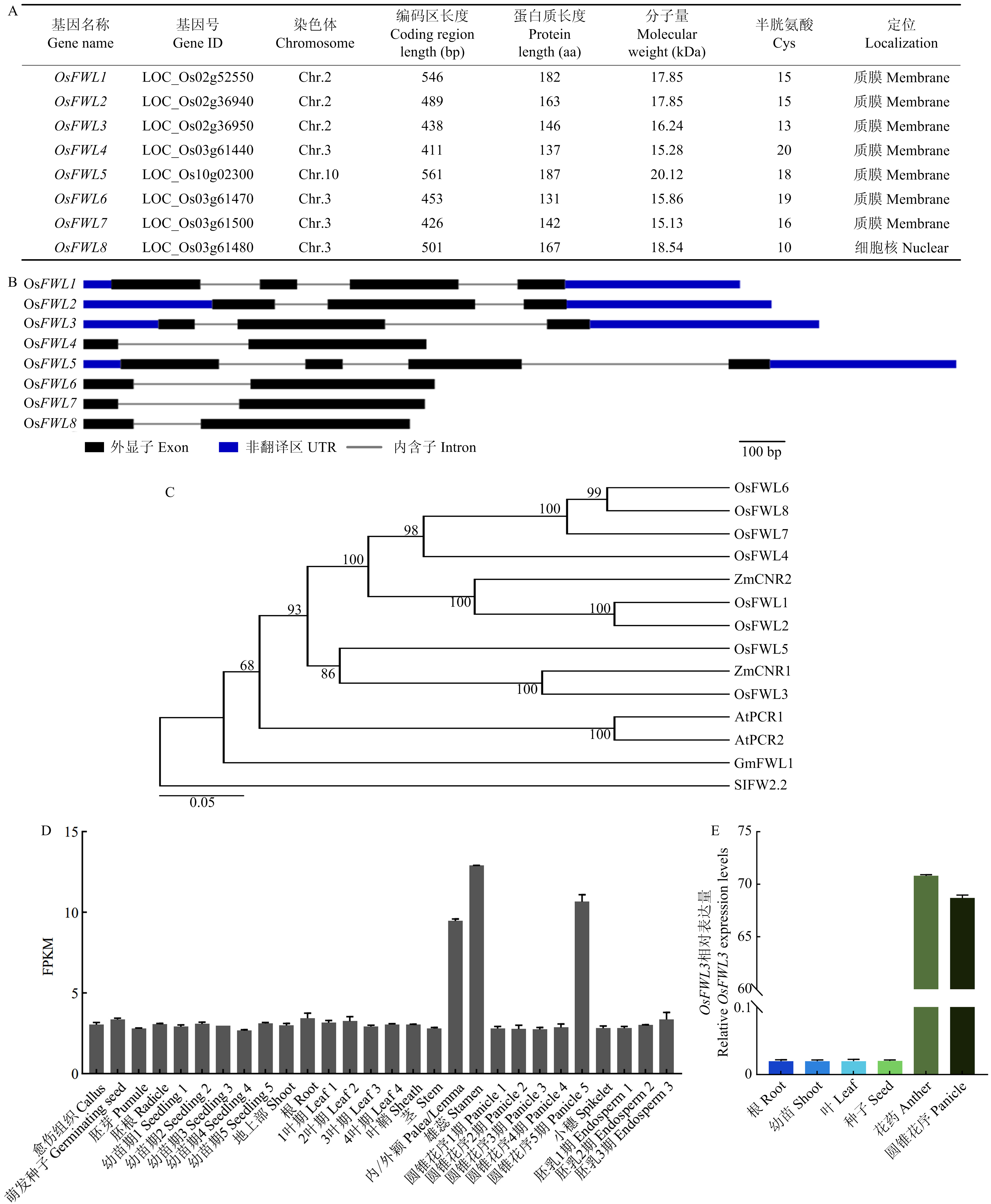
Bioinformatics analysis of OsFWL3 and FWL gene family in rice A: Summary information of rice FWL gene family; B: Genome structure of rice FWL gene family; C: Phylogenetic tree of FWL gene family, Os: Oryza sativa L., Zm: Zea mays L., At: Arabidopsis thaliana (L.), Gm: Glycine max (Linn.), SL: Solanum lycopersicum L.; D: Prediction of OsFWL3 gene expression; E: The expression patterns of OsFWL3 in specific tissues determined by qRT-PCR analysis"

Fig. 2

OsFWL3 gene regulates plant growth and grain size in rice A: The target site of OsFWL3 gene; B: Two mutant types of Osfwl3; C: Plant phenotypes of Osfwl3 and WT, scale =20 cm; D: Spike phenotypes of Osfwl3 and WT, scale =2 cm; E: Plant height of Osfwl3 and WT; F: Number of primary branches per spike in Osfwl3 and WT; G: Grain phenotypes of Osfwl3 and WT, scale =1 cm; H: Grain length of Osfwl3 and WT; I: Grain width of Osfwl3 and WT; J: Grain thickness of Osfwl3 and WT; K: Hundred-grain weight of Osfwl3 and WT. Mean ±SD (n≥10) was used for statistical analysis by one-way ANOVA, *P<0.05; **P<0.01; ***P<0.001; ****P<0.0001. The same as below"

Fig. 3

OsFWL3 affects the distribution of metal ions in rice grain A: Zn content in Osfwl3 and WT brown rice; B: Cd content in Osfwl3 and WT brown rice; C: Mg content in Osfwl3 and WT brown rice; D: Mn content in Osfwl3 and WT brown rice; E: Fe content in Osfwl3 and WT brown rice; F: Zn content in Osfwl3 and WT grain husk; G: Cd content in Osfwl3 and WT grain husk; H: Mg content in Osfwl3 and WT grain husk; I: Mn content in Osfwl3 and WT grain husk; J: Fe content in Osfwl3 and WT grain husk"

Fig. 4

OsFWL3 affects the accumulation and transport of Zn and other metal ions in rice seedling stage A: Seedling phenotypes of Osfwl3 and WT, scale=10 cm; B: Shoot height of Osfwl3 and WT; C: Root length of Osfwl3 and WT; D: Fresh weight of Osfwl3 and WT; E: Dry weight of Osfwl3 and WT; F: Zn content in the shoot and root parts of Osfwl3 and WT; G: Cd content in the shoot and root parts of Osfwl3 and WT; H: Mn content in the shoot and root parts of Osfwl3 and WT; I: Root to shoot ratio of Zn content in Osfwl3 and WT; J: Root to shoot ratio of Cd content in Osfwl3 and WT; K: Root to shoot ratio of Mn content in Osfwl3 and WT"

Fig. 5

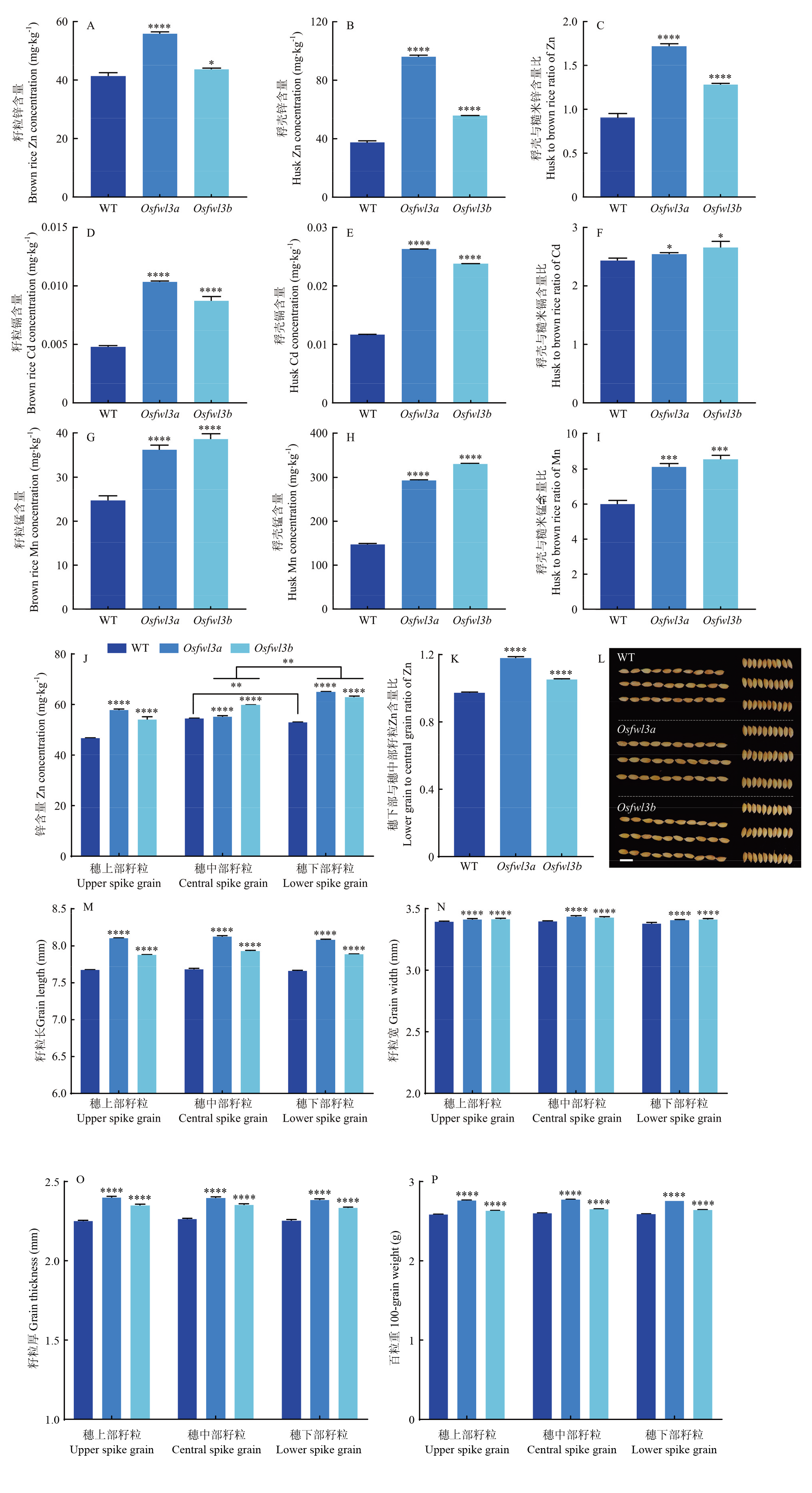
OsFWL3 affected the accumulation and transport of Zn and other metal elements in rice filling stage A: Zn content in Osfwl3 and WT brown rice; B: Zn content in Osfwl3 and WT husk; C: Husk to brown rice ratio of Zn content in Osfwl3 and WT; D: Cd content in Osfwl3 and WT brown rice; E: Cd content in Osfwl3 and WT husk; F: Husk to brown rice ratio of Cd content in Osfwl3 and WT; G: Mn content in Osfwl3 and WT brown rice; H: Mn content in Osfwl3 and WT husk; I: Husk to brown rice ratio of Mn content in Osfwl3 and WT; J: Grain Zn content in the upper, middle and lower panicles of Osfwl3 and WT; K: Lower grain to central grain ratio of Zn content in Osfwl3 and WT; L: Grain phenotypes of upper, central and lower panicle in Osfwl3 and WT; M: Grain length of upper, central and lower panicle in Osfwl3 and WT; N: Grain width of upper, central and lower panicle in Osfwl3 and WT; O: Grain thickness of upper, central and lower panicle in Osfwl3 and WT; P: 100-grain weight of upper, central and lower panicle in Osfwl3 and WT"

[1]
KHUSH G S. What it will take to feed 5.0 billion rice consumers in 2030. Plant Molecular Biology, 2005, 59(1): 1-6.

doi: 10.1007/s11103-005-2159-5 pmid: 16217597
[2]
HÄNSCH R, MENDEL R R. Physiological functions of mineral micronutrients (Cu, Zn, Mn, Fe, Ni, Mo, B, Cl). Current Opinion in Plant Biology, 2009, 12(3): 259-266.

doi: 10.1016/j.pbi.2009.05.006 pmid: 19524482
[3]
CARRASCO-GIL S, RIOS J J, ÁLVAREZ-FERNÁNDEZ A, ABADÍA A, GARCÍA-MINA J M, ABADÍA J. Effects of individual and combined metal foliar fertilisers on iron- and manganese-deficient Solanum lycopersicum plants. Plant and Soil, 2016, 402(1/2): 27-45.
[4]
WANG Y Y, YANG X E, ZHANG X C, DONG L X, ZHANG J, WEI Y Y, FENG Y, LU L L. Improved plant growth and Zn accumulation in grains of rice (Oryza sativa L.) by inoculation of endophytic microbes isolated from a Zn Hyperaccumulator, Sedum alfredii H. Journal of Agricultural and Food Chemistry. 2014, 62(8): 1783-1791.
[5]
MARRIS H, DEBOUDT K, FLAMENT P, GROBÉTY B, GIERÉ R. Fe and Mn oxidation states by TEM-EELS in fine-particle emissions from a Fe-Mn alloy making plant. Environmental Science & Technology, 2013, 47(19): 10832-10840.
[6]
YAN J L, WANG P T, WANG P, YANG M, LIAN X M, TANG Z, HUANG C F, SALT D E, ZHAO F J. A loss-of-function allele of OsHMA3 associated with high cadmium accumulation in shoots and grain of Japonica rice cultivars. Plant, Cell & Environment, 2016, 39(9): 1941-1954.
[7]
LIEDSCHULTE V, LAPARRA H, BATTEY J N D, SCHWAAR J D, BROYE H, MARK R, KLEIN M, GOEPFERT S, BOVET L. Impairing both HMA4 homeologs is required for cadmium reduction in tobacco. Plant, Cell & Environment, 2017, 40(3): 364-377.
[8]
CHANDRANGSU P, HELMANN J D. Intracellular Zn (Ⅱ) intoxication leads to dysregulation of the PerR regulon resulting in heme toxicity in Bacillus subtilis. PLoS Genetics, 2016, 12(12): e1006515.
[9]
FRARY A, NESBITT T C, GRANDILLO S, KNAAP E, CONG B, LIU J, MELLER J, ELBER R, ALPERT K B, TANKSLEY S D. fw2.2: A quantitative trait locus key to the evolution of tomato fruit size. Science, 2000, 289(5476): 85-88.

doi: 10.1126/science.289.5476.85 pmid: 10884229
[10]
CONG B, LIU J P, TANKSLEY S D. Natural alleles at a tomato fruit size quantitative trait locus differ by heterochronic regulatory mutations. Proceedings of the National Academy of Sciences of the United States of America, 2002, 99(21): 13606-13611.
[11]
LIBAULT M, STACEY G. Evolution of FW2.2-like (FWL) and PLAC8 genes in eukaryotes. Plant Signaling & Behavior, 2010, 5(10): 1226-1228.
[12]
SONG W Y, CHOI K S, KIM D Y, GEISLER M, PARK J, VINCENZETTI V, SCHELLENBERG M, KIM S H, LIM Y P, NOH E W, LEE Y, MARTINOIA E. Arabidopsis PCR2 is a zinc exporter involved in both zinc extrusion and long-distance zinc transport. The Plant Cell, 2010, 22(7): 2237-2252.
[13]
THIBIVILLIERS S, FARMER A, LIBAULT M. Isolation of Plant Root Nuclei for Single Cell RNA Sequencing. Current Protocols in Plant Biology, 2020, 5(4): e20120.
[14]
XU J, XIONG W T, CAO B B, YAN T Z, LUO T, FAN T T, LUO M Z. Molecular characterization and functional analysis of “fruit-weight 2.2-like” gene family in rice. Planta, 2013, 238(4):643-655.
[15]
熊文涛. 水稻OsFWL家族部分基因的生物学功能研究[D]. 武汉: 华中农业大学, 2018.
XIONG W T. Functional analysis of part of genes in OsFWL gene family in rice[D]. Wuhan: Huazhong Agricultural University, 2018. (in Chinese)
[16]
Ruan B P, Shang L G, Zhang B, Hu J, Wang Y X, Lin H, Zhang A P, Liu C L, Peng Y L, Zhu L, Ren D Y, Shen L, Dong G J, Zhang G H, Zeng D L, Guo L B, Qian Q, Gao Z Y. Natural variation in the promoter of TGW2 determines grain width and weight in rice. The New Phytologist, 2020, 227(2): 629-640.
[17]
王玲玲. 水稻穗粒数调控基因OsFWL2的功能研究[D]. 扬州: 扬州大学, 2018.
WANG L L. Functional analysis of OsFWL2 gene involved in grain number regulation in rice[D]. Yangzhou: Yangzhou University, 2018. (in Chinese)
[18]
WANG F J, WANG M, LIU Z P, SHI Y, HAN T Q, YE Y Y, GONG N, SUN J W, ZHU C. Different responses of low grain-Cd-accumulating and high grain-Cd-accumulating rice cultivars to Cd stress. Plant Physiology and Biochemistry, 2015, 96: 261-269.

doi: 10.1016/j.plaphy.2015.08.001 pmid: 26318143
[19]
WANG F J, TAN H F, HAN J H, ZHANG Y T, HE X, DING Y F, CHEN Z X, ZHU C. A novel family of PLAC8 motif-containing/PCR genes mediates Cd tolerance and Cd accumulation in rice. Environmental Sciences Europe, 2019, 31(1): 82.
[20]
SONG W Y, LEE H S, JIN S R, KO D, MARTINOIA E, LEE Y, AN G, AHN S N. Rice PCR1 influences grain weight and Zn accumulation in grains. Plant, Cell & Environment, 2015, 38(11): 2327-2339.
[21]
XIONG W T, WANG P, YAN T Z, CAO B B, XU J, LIU D F, LUO M Z. The rice “fruit-weight 2.2-like” gene family member OsFWL4 is involved in the translocation of cadmium from roots to shoots. Planta, 2018, 247(5): 1247-1260.
[22]
GAO Q S, LI G, SUN H, XU M, WANG H H, JI J H, WANG D, YUAN C Y, ZHAO X X. Targeted mutagenesis of the rice FW 2.2-like gene family using the CRISPR/Cas9 system reveals OsFWL4 as a regulator of tiller number and plant yield in rice. International Journal of Molecular Sciences, 2020, 21(3): 809.
[23]
GAO Q S, LIU L, ZHOU H Y, LIU X, LI W, MIN Y, YAN Y R, JI J H, ZHANG H, ZHAO X X. Mutation in OsFWL7affects cadmium and micronutrient metal accumulation in rice. International Journal of Molecular Sciences, 2021, 22(22): 12583.
[24]
陈敏. 水稻逆境相关蛋白 OsSAP5 响应高温和干旱胁迫的机理研究[D]. 杭州: 浙江大学, 2022.
CHEN M. in response to high temperature and drought stress in rice[D]. Hangzhou: Zhejiang University, 2022. (in Chinese)
[25]
PITTMAN J K. Managing the manganese: Molecular mechanisms of manganese transport and homeostasis. New Phytologist, 2005, 167(3): 733-742.

doi: 10.1111/j.1469-8137.2005.01453.x pmid: 16101910
[26]
GUO M, RUPE M A, DIETER J A, ZOU J J, SPIELBAUER D, DUNCAN K E, HOWARD R J, HOU Z J, SIMMONS C R. Cell Number Regulator1 affects plant and organ size in maize: Implications for crop yield enhancement and heterosis. The Plant Cell, 2010, 22(4): 1057-1073.

doi: 10.1105/tpc.109.073676 pmid: 20400678
[27]
SONG W Y, HÖRTENSTEINER S, TOMIOKA R, LEE Y, MARTINOIA E. Common functions or only phylogenetically related? The large family of PLAC8 motif-containing/PCR genes. Molecules and Cells, 2011, 31(1): 1-7.
[28]
QIAO K, WANG F H, LIANG S, WANG H, HU Z L, CHAI T Y. Improved Cd, Zn and Mn tolerance and reduced Cd accumulation in grains with wheat-based cell number regulator TaCNR2. Scientific Reports, 2019, 9(1): 870.

doi: 10.1038/s41598-018-37352-6 pmid: 30696904
[29]
QIAO K, GONG L, TIAN Y, HONG W, CHAI T. The metal-binding domain of wheat heavy metal ATPase 2 (TaHMA2) is involved in zinc/cadmium tolerance and translocation in Arabidopsis. Plant Cell Reports, 2018, 37: 1343-1352.
[30]
LIU D Y, LIU Y M, ZHANG W, CHEN X P, ZOU C Q. Agronomic approach of zinc biofortification can increase zinc bioavailability in wheat flour and thereby reduce zinc deficiency in humans. Nutrients, 2017, 9(5): 465.
[31]
RASHID A, RAM H, ZOU C Q, RERKASEM B, DUARTE A P, SIMUNJI S, YAZICI A, GUO S W, RIZWAN M, BAL R S, WANG Z H, MALIK S S, PHATTARAKUL N, DE FREITAS R S, LUNGU O, BARROS V L N P, CAKMAK I. Effect of zinc- biofortified seeds on grain yield of wheat, rice, and common bean grown in six countries. Journal of Plant Nutrition and Soil Science, 2019, 182(5): 791-804.
[1] PENG TingShen, LU JiuYan, WU MeiLin, YAN YuXin, LIU HongZhou, NAN WenBin, QIN XiaoJian, LI Ming, GONG JunYi, LIANG YongShu. QTL Analysis of Yield-Related Traits in Both Huangnuo2# and Changbai7# of Perennial Chinese Rice [J]. Scientia Agricultura Sinica, 2026, 59(7): 1361-1379.
[2] CUI JieHao, ZHANG Meng, WANG Qin, YU JiaYan, LIN Kun, LI ShangZe, LAN Heng, GENG YanQiu, ZHANG Qiang, GUO LiYing, SHAO XiWen. Evaluation of Lodging Resistance and Its Physiological Mechanisms in Japonica Rice Resources [J]. Scientia Agricultura Sinica, 2026, 59(7): 1420-1438.
[3] YUAN HaoLiang, NIE Jun, LI Peng, LU YanHong, LIAO YuLin, XU ChangXu, LI ZhongYi, CAO WeiDong, ZHANG JiangLin. Effects of Co-Utilization of Chinese Milk Vetch and Rice Straw on Soil Phosphorus Composition and Phosphorus Activation of Paddy Field in Southern China [J]. Scientia Agricultura Sinica, 2026, 59(7): 1480-1491.
[4] XU YangHaoJun, CHEN LiMing, YANG ShiQi, TANG YiFan, TAN XueMing, ZENG YongJun, PAN XiaoHua, ZENG YanHua. Effects of Long-Term Different Straw Returning Methods on Soil Organic Carbon, Nutrients and Aggregate Formation in Different Soil Layers of Double Cropping Rice Field [J]. Scientia Agricultura Sinica, 2026, 59(7): 1492-1506.
[5] LI XingYu, HUANG Rong, XIAN YiMing, TIAN JiaoJiao, MA XiaoJin, YANG QiaoXi, LI Bing, WANG ChangQuan. Characteristics of Organic Carbon Fractions and Carbon Dioxide Emissions of Different Size Aggregates in Rice Field Soils in Response to Long-Term Fertilization [J]. Scientia Agricultura Sinica, 2026, 59(6): 1255-1271.
[6] MA ZhaoHui, QUAN ChengZhe, CHENG HaiTao, YANG KanJie, LI XinRui, LÜ WenYan. The Breeding Goals and Strategies of Northeast Japonica Rice Under the Background of Zhongke Fa No.5 [J]. Scientia Agricultura Sinica, 2026, 59(5): 927-936.
[7] ZHANG WeiJian, YAN ShengJi, SHANG ZiYin, TANG ZhiWei, WU LiuGe, LI JiaRui, CHEN HaoTian, DENG AiXing, ZHANG Jun, ZHANG Xin, ZHENG ChengYan, SONG ZhenWei. Methane Emissions from Paddy Fields: Not Entirely Attributable to Rice Cultivation [J]. Scientia Agricultura Sinica, 2026, 59(4): 824-833.
[8] CHEN Min, JIAO ZiLan, QIAO ChengBin, XU Hao, ZHANG Bi, MA DongHua, KONG WeiRu, WANG JingWen, SONG JiaWei, LUO ChengKe, LI PeiFu, TIAN Lei. Morpho-Physiological Responses and Adaptive Strategies of Rice Germplasm Accessions from Different Subspecies Under Salt Stress [J]. Scientia Agricultura Sinica, 2026, 59(4): 705-722.
[9] GUO FuCheng, TANG HaiJiang, HAO XinYi, MA GuoLin, YANG JiuJu, HUANG LinFeng, TIAN Lei, WANG Bin, LUO ChengKe. Effects of Different Irrigation Methods on Water-Salt Transport, Rice Yield, and Water Use Efficiency in Saline Soil in Ningxia [J]. Scientia Agricultura Sinica, 2026, 59(4): 750-764.
[10] LUO Wei, YU Hong, YUAN LiXin, WANG LingLing, ZHAO JinPeng, YIN Wei, WANG MingTian, WANG RuLin. Change of Geographic Distributions of Ratoon Rice in Sichuan- Chongqing Under Global Climate Change [J]. Scientia Agricultura Sinica, 2026, 59(4): 765-780.
[11] ZHU Shu, GUO ZhiPeng, SUN Ying. Functional Analysis of Rice Target of Rapamycin OsTOR in Regulating Root Elongation [J]. Scientia Agricultura Sinica, 2026, 59(3): 475-485.
[12] LÜ WenYan, CHENG HaiTao, MA ZhaoHui, TIAN ShuHua. Discussion on Hybridization Breeding Technology and Strategy of Rice in the New Era of Breeding [J]. Scientia Agricultura Sinica, 2026, 59(2): 233-238.
[13] LIAO TingLu, SHI YaFei, XIAO DongHao, SHE YangMengFei, GUO FuCheng, YANG JiuJu, TANG HaiJiang, LUO ChengKe. The Effect of Exogenous Nitroprusside on Sugar Metabolism in Rice Seedlings Under Alkaline Stress [J]. Scientia Agricultura Sinica, 2026, 59(2): 265-277.
[14] LIU TianSheng, LIU GengYuan, ZHAO AnQi, YANG Xu, CAI MingXue, YANG AiWen, LOU MingXuan, LI MuKai, WANG Han, ZHANG YaLing. Pathogenic Population of Rice Bakanae Disease in Heilongjiang Province [J]. Scientia Agricultura Sinica, 2026, 59(2): 305-321.
[15] WANG ZhongNi, LEI Yue, LI JiaLi, GONG YanLong, ZHU SuSong. Functions of ABC Transporter OsARG1 in Rice Heading Date Regulation [J]. Scientia Agricultura Sinica, 2026, 59(1): 1-16.
Viewed
Full text


Abstract

Cited

  Shared   
  Discussed   
No Suggested Reading articles found!