Scientia Agricultura Sinica ›› 2026, Vol. 59 ›› Issue (19): 4335-4348.doi: 10.3864/j.issn.0578-1752.2026.19.012

• SPECIAL FOCUS: NATURE-BASED SOLUTIONS: RESEARCH PARADIGMS AND CHINESE PRACTICES FOR GREEN AGRICULTURAL TRANSITION • Previous Articles     Next Articles

Nature-Based Solutions for Sustainable Transition in High-Yield Cropping Systems

LUO Ning1(), LI ZhaoLei2, XU CaiLong3, NIU Na4, WANG Pu1, MENG QingFeng1()   

  1. 1 College of Agriculture, China Agricultural University, Beijing 100193
    2 College of Resource and Environment, Southwest University, Chongqing 400715
    3 Institute of Crop Science, Chinese Academy of Agricultural Sciences, Beijing 100081
    4 Binzhou Agricultural Technology Extension Center, Binzhou 256600, Shandong
  • Received:2025-08-26 Accepted:2025-11-13 Online:2026-10-01 Published:2026-10-10
  • Contact: MENG QingFeng

Abstract:

Global agriculture is facing the dual challenge of meeting the rising demand for food production while coping with increasing constraints on resources and the environment. Identifying new concepts and feasible pathways to support the sustainable transformation of crop production has therefore become a key scientific priority. This study focused on the roles and potential of nature-based solutions (NbS) in enhancing both crop productivity and sustainability. It established a theoretical framework for NbS-driven nutrient management, analyzed representative technical pathways and their performance, and summarized recent progress in relevant standards and policies to provide scientific guidance for improving the ecological productivity of agricultural systems. The major approaches currently applied in sustainable farmland management and their limitations were reviewed. Taking nutrient management as an example, a triple-pathway framework for the sustainable transformation of high-yield cropping systems was proposed based on NbS, and the applicability of the Global Standard for NbS developed by the International Union for Conservation of Nature (IUCN) in farmland management was assessed. NbS-based nutrient management could enhance nutrient use efficiency and ecosystem services by harnessing natural ecological processes, optimizing system structures, and improving coordination among multiple factors, thereby supporting high crop productivity, efficient resource use, and environmental sustainability. The three pathways included: (1) Optimization of input use within cropping systems, including adjustments in nutrient sources and application methods; (2) Redesign of cropping systems by introducing legumes into major cereals to promote biological nitrogen fixation, improve nutrient balance, and reduce carbon emissions; (3) Integrated regulation of cropping systems and inputs to facilitate system transformation and strengthen resilience. Evidence from representative regional case studies showed that NbS-driven practices could improve nutrient use efficiency, reduce environmental pollution, and enhance the resilience of high-yield systems, demonstrating both technical feasibility and strong potential for scaling up. NbS thus provides a systematic approach to achieving sustainable transformation of crop production. By integrating natural ecological processes with modern agricultural management, NbS could simultaneously improve nutrient efficiency, restore ecosystem functions, and reduce environmental risk, guiding agricultural systems toward green, low-carbon, and resilient development. Strengthening policy support systems and implementation mechanisms for NbS nutrient management would be essential to achieving coordinated progress in green agricultural development, carbon peaking, carbon neutrality, and food security.

Key words: nature-based solutions, high yield, sustainable agricultural transition, nutrient management, cropping system optimization

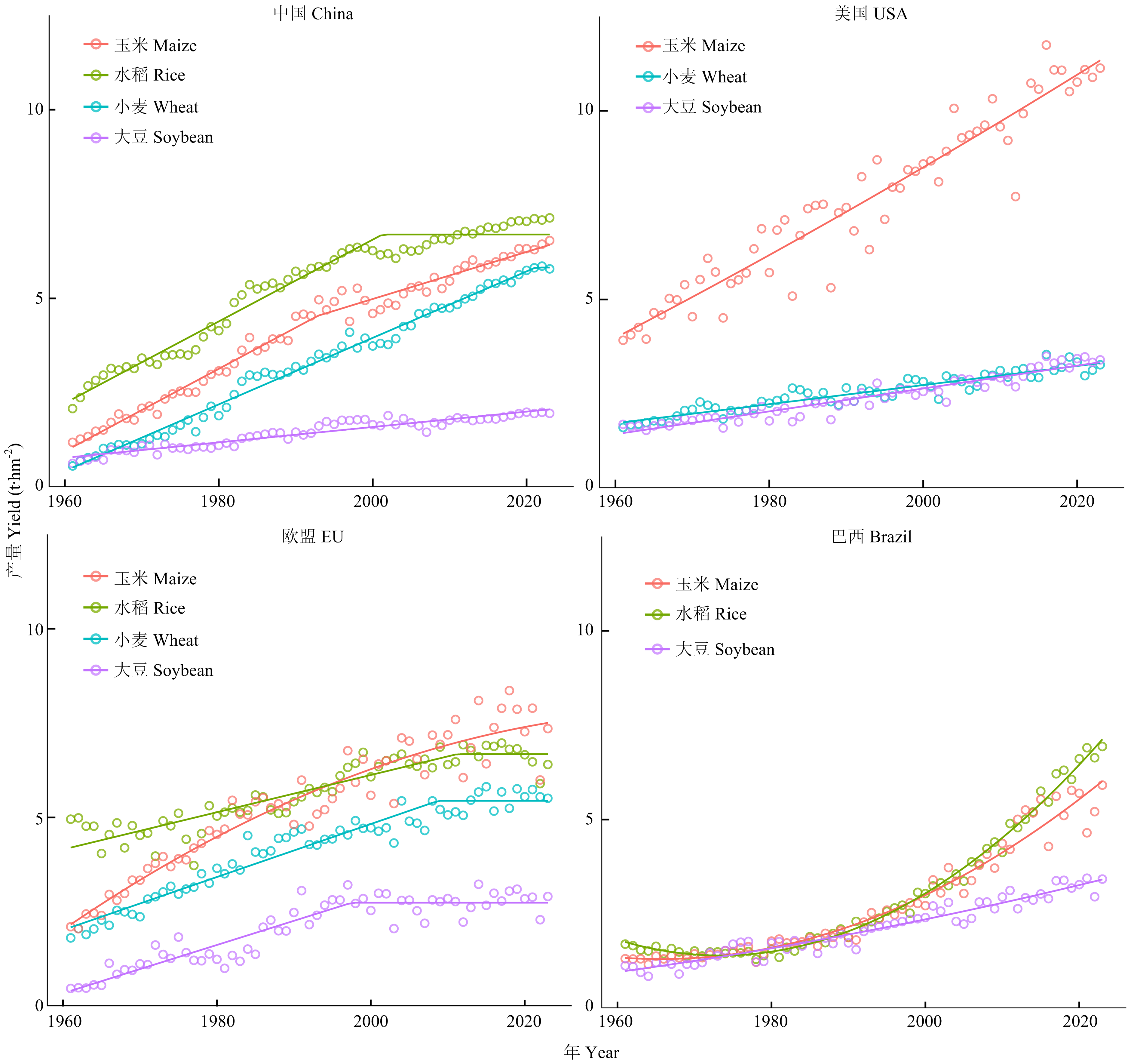
Fig. 1

Characteristics of yield trends in major crop-producing regions[5]"

Table 1

Comparison of key characteristics of major global sustainable agriculture pathways"

类型
Type
增产潜力
Yield potential
养分利用效率
Nutrient use efficiency
资源投入
Resource input
技术成本
Technological cost
可持续潜力
Sustainability potential
典型区域
Typical region
局限性
Limitation
生态农业[12]
Agroecology
中
Medium
高
High
中
Medium
中
Medium
高
High
拉美、东亚
Latin America, East Asia
对生态调控的精准管理要求高,缺乏可规模复制的标准化模式,需系统级农艺协同与农民培训支撑
High demand for precise ecological regulation; lack of scalable standardized models; requires system- level agronomic coordination and farmer training support
碳农业[13]
Carbon farming
中
Medium
高
High
高
High
高
High
中
Medium
澳大利亚、北美
Australia, North America
增碳措施成效受气候、土壤差异影响大,长期监测体系与碳市场机制尚未健全,难以形成农户积极性
Effectiveness of carbon sequestration measures varies greatly with climate and soil differences; long-term monitoring systems and carbon market mechanisms remain underdeveloped, limiting farmer motivation
自然友好型农业[14]
Nature-inclusive agriculture
低
Low
中
Medium
中
Medium
中
Medium
中
Medium
西欧、北欧乡村地区
Rural areas of Western Europe, Northern Europe
需划定生态缓冲区或留白地带,降低耕地利用率,不符合高强度复种和单位面积产出最大化的政策导向
Requires establishment of ecological buffer zones or fallow areas, reducing arable land use efficiency and conflicting with policy goals of intensive cropping and maximum yield per unit area
气候智慧型农业[15]
Climate-smart agriculture
高
High
中
Medium
高
High
高
High
中
Medium
东非、南亚
East Africa, South Asia
对气象数据、智能灌溉等技术依赖强,在中西部或偏远地区基础设施与气候信息服务体系尚不完善
Strong reliance on meteorological data and smart irrigation; limited infrastructure and climate information services in central, western, and remote regions
永续农业[16]
Permaculture
中
Medium
高
High
中
Medium
高
High
高
High
澳大利亚、
东南亚
Australia, Southeast
Asia
多以人工生态构建为基础,设计与管理复杂,需专业支持与长周期投入,难以大面积推广
Largely based on artificial ecosystem construction; complex in design and management; requires professional support and long-term investment, making large-scale implementation difficult
高自然价值农业[17]
High nature value farming
低
Low
中
Medium
低
Low
低
Low
高(区域性)
High (regional)
苏格兰、西欧山区
Scotland, Western European mountainous areas
对生态景观依赖性强,仅适用于少数保育区域,难以融入主粮产区的现代农业体系
Highly dependent on ecological landscapes; applicable only to limited conservation areas and difficult to integrate into modern agricultural systems of major grain-producing regions
生物动力农业[18]
Biodynamic agriculture
中
Medium
高
High
高
High
很高
Very high
中
Medium
德国、奥地利
Germany, Austria
依赖特定操作规程与投入剂制备体系,难以纳入主流农艺体系,科学依据争议较大,监管标准不统一
Relies on specific operational protocols and input preparation systems; difficult to integrate into mainstream agronomic practices; scientific evidence remains debated, and regulatory standards are inconsistent
低外部投入农业[19]
Low external input agriculture
低
Low
中
Medium
低
Low
低
Low
中
Medium
东南亚稻区
Southeast Asian rice-growing areas
投入少但系统依赖内部循环稳定运行,对耕作管理能力与生态系统构建要求高,经济效益难以吸引主流农户
Low input but dependent on stable internal system cycling; requires strong cultivation management skills and ecological system construction, while limited economic returns make it unattractive to mainstream farmers
有机农业[20]
Organic farming
中
Medium
高
High
高
High
高
High
高
High
美国、欧盟
United States, European Union
转型期内需承担产量下降风险,认证体系复杂,小农户难以独立满足标准化生产与全流程溯源要求
During the transition period, there is a risk of yield reduction; certification systems are complex, and smallholders find it difficult to independently meet standardized production and full-process traceability requirements
循环农业[21]
Circular agriculture
中
Medium
很高
Very high
中
Medium
中
Medium
高
High
中国、荷兰
China, Netherlands
农牧系统分离背景下,资源回流链条难打通,粪污收集、运输、处理与还田体系尚未全域配套建设
Under the separation of crop and livestock systems, resource recycling chains are difficult to establish; manure collection, transportation, treatment, and field-return systems have not yet been fully developed or implemented nationwide
保护性农业[22]
Conservation agriculture
中
Medium
中
Medium
中
Medium
中
Medium
中
Medium
南美、南亚
South America, South Asia
覆盖作物选择与土壤覆盖控制需因地制宜,高温高湿区腐解慢且影响作物管理,农机设备适应性亦受限
Cover crop selection and soil cover management must be adapted to local conditions; in hot and humid regions, decomposition is slow and affects crop management, while the adaptability of agricultural machinery is also limited
生态集约化[23]
Ecological intensification
高
High
高
High
高
High
高
High
高
High
法国、比利时、荷兰
France, Belgium, Netherlands
精准施肥、防控等措施依赖信息化技术与农业服务体系,农户接受度与区域能力差异大,落地难度高
Precision fertilization and pest control rely on digital technologies and agricultural service systems; large differences in farmer acceptance and regional capacity make implementation challenging
再生农业[24]
Regenerative agriculture
中
Medium
很高
Very high
中
Medium
中
Medium
很高
Very high
北美、澳洲
North America, Australia
实施周期长、见效慢,需长期生态效应累积与持续管理能力,缺乏财政支持与系统监测工具限制推广
Long implementation cycle and slow effectiveness; requires accumulation of long-term ecological effects and sustained management capacity; lack of financial support and systematic monitoring tools limits widespread adoption
可持续集约化[25]
Sustainable intensification
很高
Very high
高
High
高
High
高
High
高
High
印度、中国华北
India, the North China Plain
技术集成度高,投入设备、数据管理、制度协同缺口大,当前农户组织化水平和服务体系仍难以全面支撑
High level of technological integration; significant gaps in equipment investment, data management, and institutional coordination; current farmer organization and service systems remain insufficient for comprehensive support
NbS养分管理(本研究)
NbS nutrient management
中
Medium
很高
Very high
中
Medium
中
Medium
很高
Very high
中国、欧盟试点
Demonstration fields in China, the European Union
评价体系与标准尚未健全,政策支持和金融机制有待完善,需依托数据平台与系统集成推动落地
Evaluation systems and standards remain underdeveloped; policy support and financial mechanisms need improvement; implementation requires data platforms and system integration

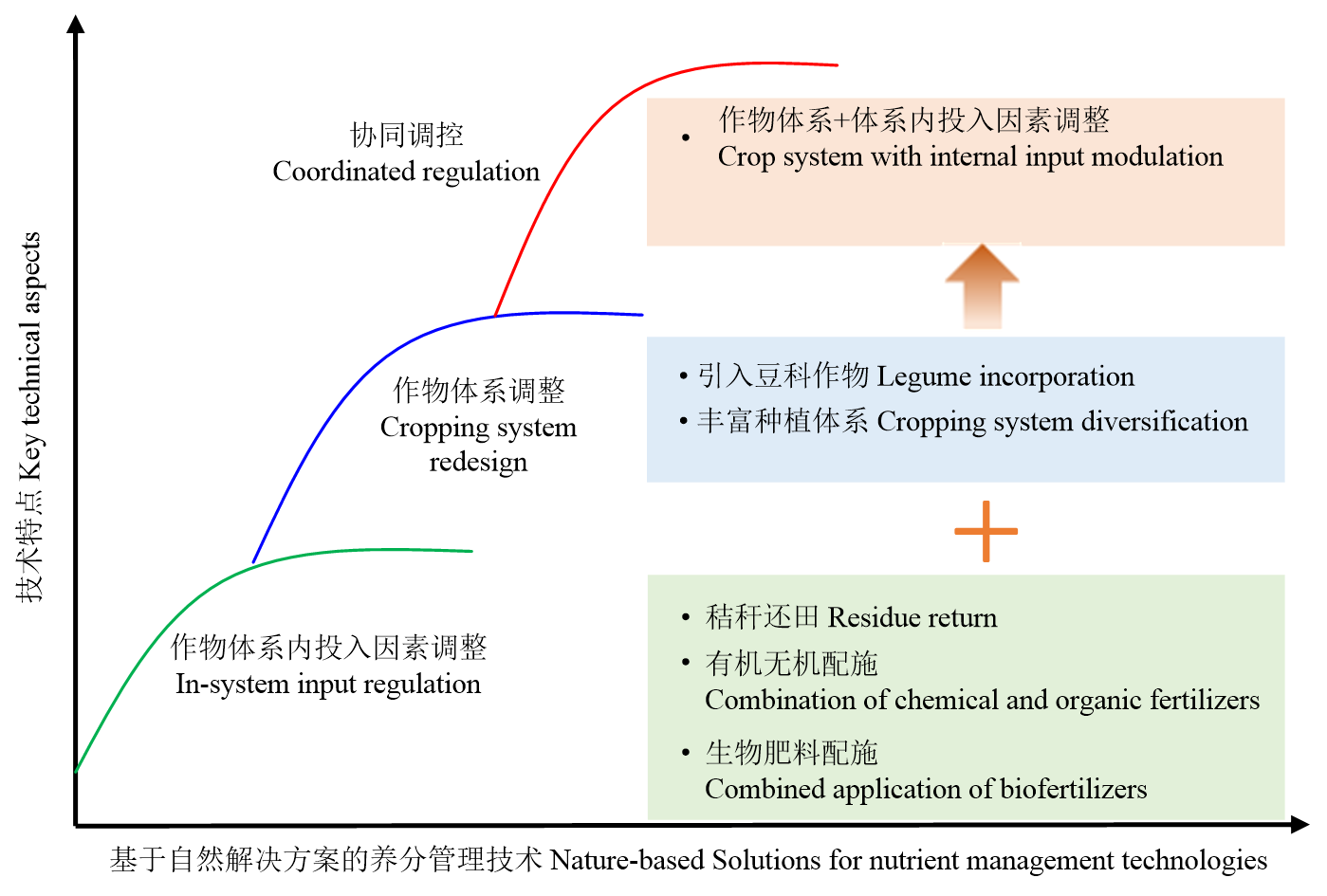
Fig. 2

Framework for nutrient management based on Nature-based Solutions"

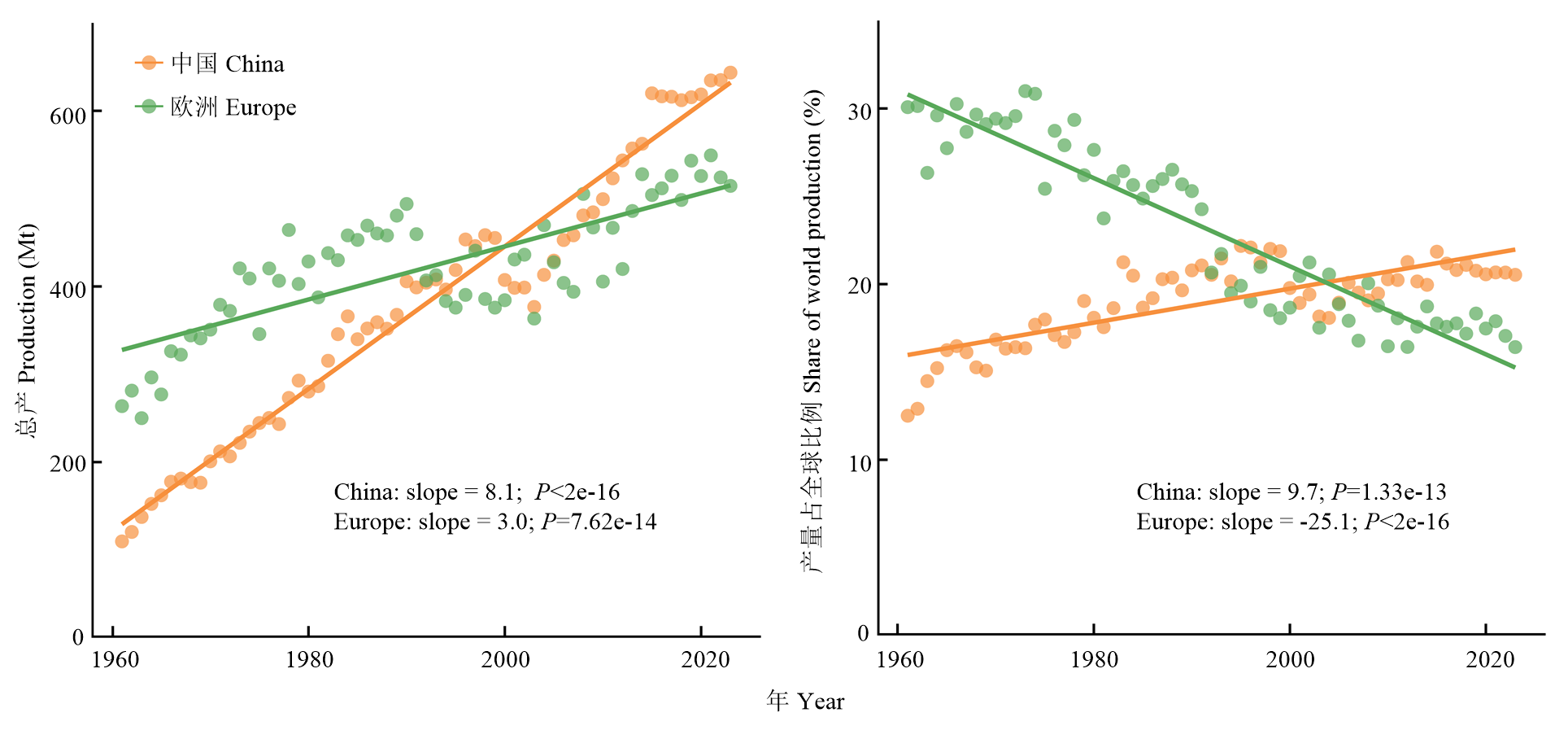
Fig. 3

Trends in cereal production and its share of global production in China and Europe[5]"

[1]
Alexandratos N, Bruinsma J. World agriculture towards 2030/2050: The 2012 revision: 12-03[R]. Agricultural Development Economics Division, Food and Agriculture Organization of the United Nations, Rome, 2012.
[2]
Malekpour S, Allen C, Sagar A, Scholz I, Persson Å, Miranda J J, Bennich T, Dube O P, Kanie N, Madise N, Shackell N, Montoya J C, Pan J H, Hathie I, Bobylev S N, Agard J, Al-Ghanim K. What scientists need to do to accelerate progress on the SDGs[J]. Nature, 2023, 621(7978): 250-254.

doi: 10.1038/d41586-023-02808-x
[3]
West P C, Gerber J S, Engstrom P M, Mueller N D, Brauman K A, Carlson K M, Cassidy E S, Johnston M, MacDonald G K, Ray D K, Siebert S. Leverage points for improving global food security and the environment[J]. Science, 2014, 345(6194): 325-328.

doi: 10.1126/science.1246067 pmid: 25035492
[4]
Gerber J S, Ray D K, Makowski D, Butler E E, Mueller N D, West P C, Johnson J A, Polasky S, Samberg L H, Siebert S, Sloat L. Global spatially explicit yield gap time trends reveal regions at risk of future crop yield stagnation[J]. Nature Food, 2024, 5(2): 125-135.

doi: 10.1038/s43016-023-00913-8 pmid: 38279050
[5]
Crops and livestock products, food and agriculture organization of the United Nations[DB]. (Retrieved May 20, 2025). http://www.fao.org/faostat/en/#data/QCL.
[6]
Yang Y, Tilman D, Jin Z N, Smith P, Barrett C B, Zhu Y G, Burney J, D’Odorico P, Fantke P, Fargione J, Finlay J C, Rulli M C, Sloat L, Jan van Groenigen K, West P C, Ziska L, Michalak A M, Clim-Ag Team, Lobell D B, Clark M, et al. Climate change exacerbates the environmental impacts of agriculture[J]. Science, 2024, 385(6713): eadn3747.
[7]
Rizzo A, Sarti C, Nardini A, Conte G, Masi F, Pistocchi A. Nature-based solutions for nutrient pollution control in European agricultural regions: A literature review[J]. Ecological Engineering, 2023, 186: 106772.

doi: 10.1016/j.ecoleng.2022.106772
[8]
Bremer L L, Keeler B, Pascua P, Walker R, Sterling E. Nature-based solutions, sustainable development, and equity[M]//Nature-based Solutions and Water Security. Amsterdam: Elsevier, 2021: 81-105.
[9]
马文奇, 马林, 张建杰, 张福锁. 农业绿色发展理论框架和实现路径的思考[J]. 中国生态农业学报(中英文), 2020, 28(8): 1103-1112.
Ma W Q, Ma L, Zhang J J, Zhang F S. Theoretical framework and realization pathway of agricultural green development[J]. Chinese Journal of Eco-Agriculture, 2020, 28(8): 1103-1112. (in Chinese)
[10]
Oberč B P, Arroyo Schnell A. Approaches to sustainable agriculture: exploring the pathways towards the future of farming[M]. IUCN, International Union for Conservation of Nature, 2020.
[11]
张福锁, 崔振岭, 王激清, 李春俭, 陈新平. 中国土壤和植物养分管理现状与改进策略[J]. 植物学通报, 2007, 42(6): 687-694.
Zhang F S, Cui Z L, Wang J Q, Li C J, Chen X P. Current status of soil and plant nutrient management in China and improvement strategies[J]. Chinese Bulletin of Botany, 2007, 42(6): 687-694. (in Chinese)
[12]
Paull J. Attending the first organic agriculture course: Rudolf steiner’s agriculture course at koberwitz, 1924[J]. European Journal of Social Sciences, 2011, 21(1): 64-70.
[13]
Bumbiere K, Diaz Sanchez F A, Pubule J, Blumberga D. Development and assessment of carbon farming solutions[J]. Environmental and Climate Technologies, 2022, 26(1): 898-916.

doi: 10.2478/rtuect-2022-0068
[14]
Runhaar H. Governing the transformation towards ‘nature-inclusive’ agriculture: Insights from the Netherlands[J]. International Journal of Agricultural Sustainability, 2017, 15(4): 340-349.

doi: 10.1080/14735903.2017.1312096
[15]
Food, agriculture organization of the United Nations. Climate-Smart Agriculture: Policies, Practices and Financing for Food Security, Adaptation and Mitigation[M]. Rome, Italy: Food and Agriculture Organization of the United Nations, 2013.
[16]
Mollison B C, Slay R M. Introduction to Permaculture[M]. 2nd ed. Tyalgum, Australia: Tagari Publications, 1994.
[17]
Andersen E, Baldock D, Brouwer F M, Elbersen B S, Godeschalk F E, Nieuwenhuizen W, Van Eupen M, Hennekens S M. Developing a high nature value farming area indicator[R]. Wageningen: Wageningen University & Research, 2004.
[18]
Paull J. Biodynamic agriculture: The journey from koberwitz to the world, 1924-1938[J]. Journal of Organic Systems, 2011, 6(1): 27-41.
[19]
Constance D H. Sustainable agriculture in the United States: A critical examination of a contested process[J]. Sustainability, 2009, 2(1): 1-25.

doi: 10.3390/su2010001
[20]
Reganold J P, Wachter J M. Organic agriculture in the twenty-first century[J]. Nature Plants, 2016, 2: 15221.

doi: 10.1038/nplants.2015.221 pmid: 27249193
[21]
Helgason K S, Iversen K, Julca A. Circular agriculture for sustainable rural development: PB_105[R]. United Nations Department of Economic and Social Affairs, 2021.
[22]
Lal R, Eckert D J, Fausey N R, Edwards W M. Conservation Tillage In Sustainable Agriculture[M]// Sustainable Agricultural Systems. Boca Raton: CRC Press, 2020: 203-225.
[23]
Cassman K G. Ecological intensification of cereal production systems: Yield potential, soil quality, and precision agriculture[J]. Proceedings of the National Academy of Sciences of the United States of America, 1999, 96(11): 5952-5959.

doi: 10.1073/pnas.96.11.5952 pmid: 10339523
[24]
Quarles W. Regenerative agriculture can reduce global warming[J]. IPM Practitioner, 2018, 36(1/2): 1-8.
[25]
Schut A G T, Giller K E. Sustainable intensification of agriculture in Africa[J]. Frontiers of Agricultural Science and Engineering, 2020, 7(4): 371.

doi: 10.15302/J-FASE-2020357
[26]
Wang Y N, Yao Y Z, Han B B, Willcock S, Storkey J, Dong X Z, Zhong Y Y, Wang X Z, Deng Y, Zhang W, Li Q R, Chen X P, Li Z L. Nature-based nutrient management through returning agricultural organic waste enhances soil aggregate organic carbon stability[J]. Agriculture, Ecosystems & Environment, 2025, 381: 109467.

doi: 10.1016/j.agee.2024.109467
[27]
Liu B, Guo C Y, Xu J, Zhao Q Y, Chadwick D, Gao X P, Zhou F, Lakshmanan P, Wang X Z, Guan X L, Zhao H Y, Fang L F, Li S Y, Bai Z H, Ma L, Chen X J, Cui Z L, Shi X J, Zhang F S, Chen X P, et al. Co-benefits for net carbon emissions and rice yields through improved management of organic nitrogen and water[J]. Nature Food, 2024, 5(3): 241-250.

doi: 10.1038/s43016-024-00940-z pmid: 38486125
[28]
Yao W, Yang Y D, Beillouin D, Zhao J, Olesen J E, Zhou J, Smith P, Zeng Z H, Lambers H, Rillig M C, Wanger T C, Zang H D. Legume-rice rotations increase rice yields and carbon sequestration potential globally[J]. One Earth, 2025, 8(2): 101170.

doi: 10.1016/j.oneear.2024.12.006
[29]
Zhu Y P, Wang J H, Zhu Y J, Lai H, Qu Z R, Zhao J, Wei D, Wang P, Meng Q F. Unlocking maize yield potential through exploring canopy-root interactions with nature-based nutrient management[J]. Field Crops Research, 2024, 318: 109618.

doi: 10.1016/j.fcr.2024.109618
[30]
International union for conservation of nature. Guidance for Using the IUCN Global Standard for Nature-Based Solutions: A User-Friendly Framework for the Verification, Design and Scaling up of Nature- Based Solutions[M], first edition Gland, Switzerland: IUCN, 2020.
[31]
Rezaei E E, Webber H, Asseng S, Boote K, Durand J L, Ewert F, Martre P, MacCarthy D S. Climate change impacts on crop yields[J]. Nature Reviews Earth & Environment, 2023, 4(12): 831-846.
[32]
Cong W F, Ying H, Ying F Y, An Z C, Shen J B, Zhang F S. Green technology for increasing grain crop production and efficiency: Innovation and application in China[J]. Frontiers of Agricultural Science and Engineering, 2025, 12(3): 431-440.
[33]
徐上, 黄喆. 气候-生态突变对农业生产的影响[J]. 科学与社会, 2024, 14(4): 30-42.
Xu S, Huang Z. The socio-economic impact of climate-ecological mutation on agricultural production[J]. Science and Society, 2024, 14(4): 30-42. (in Chinese)
[34]
Richter B D, Ao Y F, Lamsal G, Wei D Y, Amaya M, Marston L, Davis K F. Alleviating water scarcity by optimizing crop mixes[J]. Nature Water, 2023, 1(12): 1035-1047.

doi: 10.1038/s44221-023-00155-9
[35]
卢彩云, 罗锡文, 李洪文, 臧英, 区颖刚. 我国保护性耕作的发展与政策建议[J]. 中国工程科学, 2024, 26(2): 103-112.

doi: 10.15302/J-SSCAE-2023.07.038
Lu C Y, Luo X W, Li H W, Zang Y, Ou Y G. Progress and suggestions of conservation tillage in China[J]. Strategic Study of CAE, 2024, 26(2): 103-112. (in Chinese)

doi: 10.15302/J-SSCAE-2023.07.038
[36]
Singh S, Singh R, Singh K, Katoch K, Zaeen A A, Birhan D A, Singh A, Sandhu H S, Singh H, Sahrma L K. Smart fertilizer technologies: An environmental impact assessment for sustainable agriculture[J]. Smart Agricultural Technology, 2024, 8: 100504.

doi: 10.1016/j.atech.2024.100504
[37]
吴瑶瑶, 关通, 李鑫磊, 张童, 郭桂祯, 王丹丹. 旱灾风险预警研究进展与展望[J]. 地理研究, 2025, 44(9): 2285-2299.

doi: 10.11821/dlyj020241067
Wu Y Y, Guan T, Li X L, Zhang T, Guo G Z, Wang D D. Research progress and prospect of drought risk early warning[J]. Geographical Research, 2025, 44(9): 2285-2299. (in Chinese)
[38]
Zhu P, Burney J. Untangling irrigation effects on maize water and heat stress alleviation using satellite data[J]. Hydrology and Earth System Sciences, 2022, 26(3): 827-840.

doi: 10.5194/hess-26-827-2022
[39]
孙晓, 姚海燕, 仲晓琳, 丁宝冲, 窦家聪, 于安军, 季帆, 孙玉萍. 水肥一体化技术应用与系统研究[J]. 农业工程技术, 2023, 43(13): 43-46.
Sun X, Yao H Y, Zhong X L, Ding B C, Dou J C, Yu A J, Ji F, Sun Y P. Application and system research of water and fertilizer integration technology[J]. Agricultural Engineering Technology, 2023, 43(13): 43-46. (in Chinese)
[40]
Wu W A, Han J Y, Gu Y N, Li T, Xu X R, Jiang Y H, Li Y P, Sun J F, Pan G X, Cheng K. Impact of biochar amendment on soil hydrological properties and crop water use efficiency: A global meta-analysis and structural equation model[J]. GCB Bioenergy, 2022, 14(6): 657-668.

doi: 10.1111/gcbb.v14.6
[41]
Lou G M, Chen P L, Li P B, Gao H Z, Xiong J W, Wan S S, Zheng Y Y, Wang Y F, Alam M, Chen Y, Wang L, Bai J J, Tan X, Rao W T, Wu B, Zhou H, Li Y H, Gao G J, Zhang Q L, Xiao J H, et al. Antagonistic Ghd7-OsNAC42 complexes modulate carbon and nitrogen metabolism to achieves superior quality and high yield in rice[J]. Advanced Science, 2025, 12(31): e04163.

doi: 10.1002/advs.v12.31
[42]
Ju X J, Liu X, Jiang W J, Liang H, Smith P, Luo J F, Huang W C, Adalibieke W, Fu J, Zhou F. The contributions of cultivar and fertilization improvements to single rice nitrogen use efficiency trends across China[J]. Global Change Biology, 2025, 31(7): e70316.

doi: 10.1111/gcb.v31.7
[43]
Zhou Y, Xu L, Zhang J, Li W, Jiang Y, Wang S, Ding Y, Liu Z, Li G. Low N apparent surplus with higher rice yield under long-term fertilizer postponing in the rice-wheat cropping system[J]. The Crop Journal, 2022, 10(4): 1178-1186.

doi: 10.1016/j.cj.2022.01.001
[44]
Dun C P, Wang R, Mi K L, Zhang Y T, Zhang H P, Cui P Y, Guo Y L, Lu H, Zhang H C. One-time application of controlled-release bulk blending fertilizer enhances yield, quality and photosynthetic efficiency in late Japonica rice[J]. Journal of Integrative Agriculture, 2024, 23(11): 3672-3691.

doi: 10.1016/j.jia.2023.10.007
[45]
Bhadha J H, Capasso J M, Khatiwada R, Swanson S, LaBorde C. Raising soil organic matter content to improve water holding capacity[J]. Edis, 2017, 2017(5).
[46]
Cheng J, Lin B J, Chen J S, Duan H X, Sun Y F, Zhao X, Dang Y P, Xu Z Y, Zhang H L. Strategies for crop straw management in China’s major grain regions: Yield-driven conditions and factors influencing the effectiveness of straw return[J]. Resources, Conservation and Recycling, 2025, 212: 107941.

doi: 10.1016/j.resconrec.2024.107941
[47]
Ai S, Zhang Z X, Wang X B, Meng X H, Gao Q H, Liu Z Q, Yang F, Cheng K. Coupling mechanism of methane production and carbon fixation regulated by artificial humic acid in paddy soils: Insights into microbial communities and metabolic pathways[J]. Environmental Science & Technology, 2025, 59(30): 15777-15791.

doi: 10.1021/acs.est.4c12790
[48]
冯立忠. 高标准农田建设中农田水利配套设施存在的问题及优化策略[J]. 农业产业化, 2025(10): 129-131, 135.
Feng L Z. Problems and optimization strategies of irrigation and water conservancy facilities in high-standard farmland construction[J]. Agricultural Industrialization, 2025(10): 129-131, 135. (in Chinese)
[49]
宋雪莲, 张文, 王普昶, 阮玺睿, 柳嘉佳, 王志伟, 张威. 遥感技术在智慧农业中的应用研究[J]. 安徽农业科学, 2022, 50(7): 1-5.
Song X L, Zhang W, Wang P C, Ruan X R, Liu J J, Wang Z W, Zhang W. Research on application of remote sensing technology in wisdom agriculture[J]. Journal of Anhui Agricultural Sciences, 2022, 50(7): 1-5. (in Chinese)
[50]
池书瑶, 卢玮楠, 罗宇, 赵敏娟. 大豆玉米带状复合种植的盈利困境: 成本与产值的双重解析[J]. 农业经济问题, 2025(6): 49-65.
Chi S Y, Lu W N, Luo Y, Zhao M J. The profitability dilemma of soybean-maize relay strip intercropping: A dual analysis of costs and output[J]. Issues in Agricultural Economy, 2025(6): 49-65. (in Chinese)
[51]
齐彦栋, 金诚谦, 刘岗微, 杨腾祥. 大豆玉米带状复合种植全程机械化关键技术与装备[J]. 中国农机化学报, 2023, 44(1): 14-24.
Qi Y D, Jin C Q, Liu G W, Yang T X. Key techniques and equipments of the whole-process mechanization for soybean and corn strip compound planting system[J]. Journal of Chinese Agricultural Mechanization, 2023, 44(1): 14-24. (in Chinese)
[52]
孟远夺, 赵英杰, 黄耀蓉, 汪洪, 袁天佑, 边武英. 我国商品有机肥料质量状况分析与思考[J]. 中国土壤与肥料, 2024(8): 251-259.
Meng Y D, Zhao Y J, Huang Y R, Wang H, Yuan T Y, Bian W Y. Analysis and thinking of the commercial organic fertilizer quality in China[J]. Soil and Fertilizer Sciences in China, 2024(8): 251-259. (in Chinese)
[53]
Shan T L, Feng S, Li K J, Chang R D, Huang R P. Unveiling the effects of artificial intelligence and green technology convergence on carbon emissions: An explainable machine learning-based approach[J]. Journal of Environmental Management, 2025, 373: 123657.

doi: 10.1016/j.jenvman.2024.123657
[54]
罗宁, 孟庆锋, 王璞. 玉米单产提升关键技术: AI赋能智慧栽培[J]. 中国农民合作社, 2025(5): 21-22.
Luo N, Meng Q F, Wang P. Key technology of increasing maize yield: AI empowering and intelligent cultivation[J]. China Farmers’ Cooperatives, 2025(5): 21-22. (in Chinese)
[55]
Qu Z R, Luo N, Guo J M, Xu J, Wang P, Meng Q F. Enhancing sustainability in the new variety-based low emergy system for maize production by nitrogen optimization[J]. Renewable and Sustainable Energy Reviews, 2024, 199: 114471.

doi: 10.1016/j.rser.2024.114471
[56]
任凤玲, 王谦. 我国土壤健康研究现状与展望[J]. 环境工程技术学报, 2024, 14(5): 1403-1411.
Ren F L, Wang Q. Current status and prospects of soil health research in China[J]. Journal of Environmental Engineering Technology, 2024, 14(5): 1403-1411. (in Chinese)
[57]
张卫峰, 马林, 黄高强, 武良, 陈新平, 张福锁. 中国氮肥发展、贡献和挑战[J]. 中国农业科学, 2013, 46(15): 3161-3171. DOI: 10.3864/j.issn.0578-1752.2013.15.010.
Zhang W F, Ma L, Huang G Q, Wu L, Chen X P, Zhang F S. The development and contribution of nitrogenous fertilizer in China and challenges faced by the country[J]. Scientia Agricultura Sinica, 2013, 46(15): 3161-3171. DOI: 10.3864/j.issn.0578-1752.2013.15.010. (in Chinese)
[58]
Zhang P G, Yang A Z, Wang X F, Wang L H, Sha Y, Li M. Optimizing soybean production and emission reduction through biogas slurry substitution and straw incorporation: A five-year field study in Northeast China’s black soil region[J]. Agriculture, Ecosystems & Environment, 2025, 393: 109853.

doi: 10.1016/j.agee.2025.109853
[59]
Qu X Y, Yao W, Ji H J, Xu Y, Jia R, Chen X J, Li H J, Sánchez- Rodríguez A R, Shen Y J, Yang Y D, Zeng Z H, Zang H D. Optimizing nitrogen fertilization and irrigation strategies to balance agroecosystem services in the wheat-maize double cropping system: A 21-year field study[J]. Field Crops Research, 2025, 322: 109706.

doi: 10.1016/j.fcr.2024.109706
[60]
Zhou Y D, Bao R X, Yan H F, Zhang C, Zheng H X, Wu J B, Zhang J Y, Wang G Q, Tian D L, Xue R, Wang B Y. Optimization of shallow buried drip irrigation and nitrogen management for spring maize in the sandy land of Northwest China[J]. Field Crops Research, 2025, 333: 110056.

doi: 10.1016/j.fcr.2025.110056
[1] XIAO YunZe, ZHANG Yu, CHENG Gong, LIAN ZiRou, ZHOU HouXi. Exploring Research Paradigms for Agricultural Heritage from the Perspective of Nature-Based Solutions [J]. Scientia Agricultura Sinica, 2026, 59(19): 4374-4390.
[2] NING MingHao, LU XinDan, GAO Fang, XU Shang, JIA XiangPing. Strengthening the Codex Alimentarius System from a Nature-Based Solution Perspective: Governance Models and Practical Approaches [J]. Scientia Agricultura Sinica, 2026, 59(19): 4358-4373.
[3] KONG WeiLi, WANG LiJie, ZHENG JingKang, GAO Fang, LI Tao, ZHANG KeKe, ZHANG YuTing. Key Technologies and Models of Straw Comprehensive Utilization: Grain-Mushroom Rotation in Designated Zones as a Nature-Based Solution [J]. Scientia Agricultura Sinica, 2026, 59(19): 4349-4357.
[4] LIANG XiaoHe, WANG Qi, LEI Jie, ZHOU JiaJia, WU Yu, ZHOU AiLian. Evolutionary Trajectory, Driving Mechanisms, and China’s Pathway in Global Nature-Based Solutions for Agricultural Research [J]. Scientia Agricultura Sinica, 2026, 59(19): 4323-4334.
[5] LIU ChunLei, WANG Juan. Genetic Variation Analysis of New Germplasm with Combined High Yield and Salt Tolerance Developed from Derivative Materials of Pokkali [J]. Scientia Agricultura Sinica, 2025, 58(20): 4117-4130.
[6] ZHU TianCi, MA TianFeng, KE Jian, ZHU TieZhong, HE HaiBing, YOU CuiCui, WU ChenYang, WANG GuanJun, WU LiQuan. Characteristics of Good Taste and High Yield Type Japonica Rice in the Lower Reaches of the Yangtze River [J]. Scientia Agricultura Sinica, 2024, 57(4): 820-830.
[7] WEI XiaoDong, SONG XueMei, WANG Ning, ZHAO QingYong, ZHU Zhen, CHEN Tao, ZHAO Ling, WANG CaiLin, ZHANG YaDong. Distribution Characteristics of Photosynthetic Products of Nanjing Series of Super Rice During Filling Stage [J]. Scientia Agricultura Sinica, 2024, 57(12): 2309-2321.
[8] GUO ShiBo, ZHANG FangLiang, ZHANG ZhenTao, ZHOU LiTao, ZHAO Jin, YANG XiaoGuang. The Possible Effects of Global Warming on Cropping Systems in China XIV. Distribution of High-Stable-Yield Zones and Agro-Meteorological Disasters of Soybean in Northeast China [J]. Scientia Agricultura Sinica, 2022, 55(9): 1763-1780.
[9] MI GuoHua,HUO YueWen,ZENG AiJun,LI GangHua,WANG Xiu,ZHANG FuSuo. Integration of Agricultural Machinery and Agronomic Techniques for Crop Nutrient Management in China [J]. Scientia Agricultura Sinica, 2022, 55(21): 4211-4224.
[10] ZHU TieZhong,KE Jian,YAO Bo,CHEN TingTing,HE HaiBing,YOU CuiCui,ZHU DeQuan,WU LiQuan. Super-High Yield Characteristics of Mechanically Transplanting Double- Cropping Early Rice in the Northern Margin Area of Yangtze River [J]. Scientia Agricultura Sinica, 2021, 54(7): 1553-1564.
[11] LOU ShanWei,DONG HeZhong,TIAN XiaoLi,TIAN LiWen. The " Short, Dense and Early" Cultivation of Cotton in Xinjiang: History, Current Situation and Prospect [J]. Scientia Agricultura Sinica, 2021, 54(4): 720-732.
[12] ZHANG ShunTao, LU JianWei, CONG RiHuan, REN Tao, LI XiaoKun, LIAO ShiPeng, ZHANG YueQiang, GUO ShiWei, ZHOU MingHua, HUANG YiGuo, CHENG Hui. Effect of Rapeseed Rotation on the Yield of Next-Stubble Crops [J]. Scientia Agricultura Sinica, 2020, 53(14): 2852-2858.
[13] HU Lei,ZHU Ying,XU Dong,CHEN ZhiFeng,HU BingQiang,HAN Chao,QIU Shi,WU Pei,ZHANG HongCheng,WEI HaiYan. Characteristics of Good Taste and High Yield Type of Single Cropping Late Japonica Rice in Southern China [J]. Scientia Agricultura Sinica, 2019, 52(2): 215-227.
[14] ZHANG XiaoMeng, WANG Yin, YAN Li, FENG GuoZhong, GAO Qiang. Characteristics of Nitrogen and Phosphorus Nutrient Flow in Farming and Animal Husbandry System in Northeast China [J]. Scientia Agricultura Sinica, 2018, 51(3): 417-429.
[15] MA Lin, BAI ZhaoHai, WANG Xuan, CAO YuBo, MA WenQi, ZHANG FuSuo. Significance and Research Priority of Nutrient Management in Soil-Crop-Animal Production System in China [J]. Scientia Agricultura Sinica, 2018, 51(3): 406-416.
Viewed
Full text


Abstract

Cited

  Shared   
  Discussed   
No Suggested Reading articles found!