Scientia Agricultura Sinica ›› 2026, Vol. 59 ›› Issue (3): 637-654.doi: 10.3864/j.issn.0578-1752.2026.03.012

• HORTICULTURE • Previous Articles     Next Articles

Identification of Nuclear Male Sterility Genes in Pepper Based on BSA-Seq and Proteomics

PEI HongXia1(), WANG LuYao2(), JIANG YaPing2, LI ShengMei3(), GAO JingXia1()   

  1. 1 Institute of Horticulture, Ningxia Academy of Agriculture and Forestry Sciences, Yinchuan 750002
    2 Hainan Institute of Zhejiang University, Sanya 572024, Hainan
    3 Xinjiang Agricultural Vocational and Technical University, Changji 831100, Xinjiang
  • Received:2025-07-11 Accepted:2025-09-05 Online:2026-02-01 Published:2026-01-31
  • Contact: LI ShengMei, GAO JingXia

Abstract:

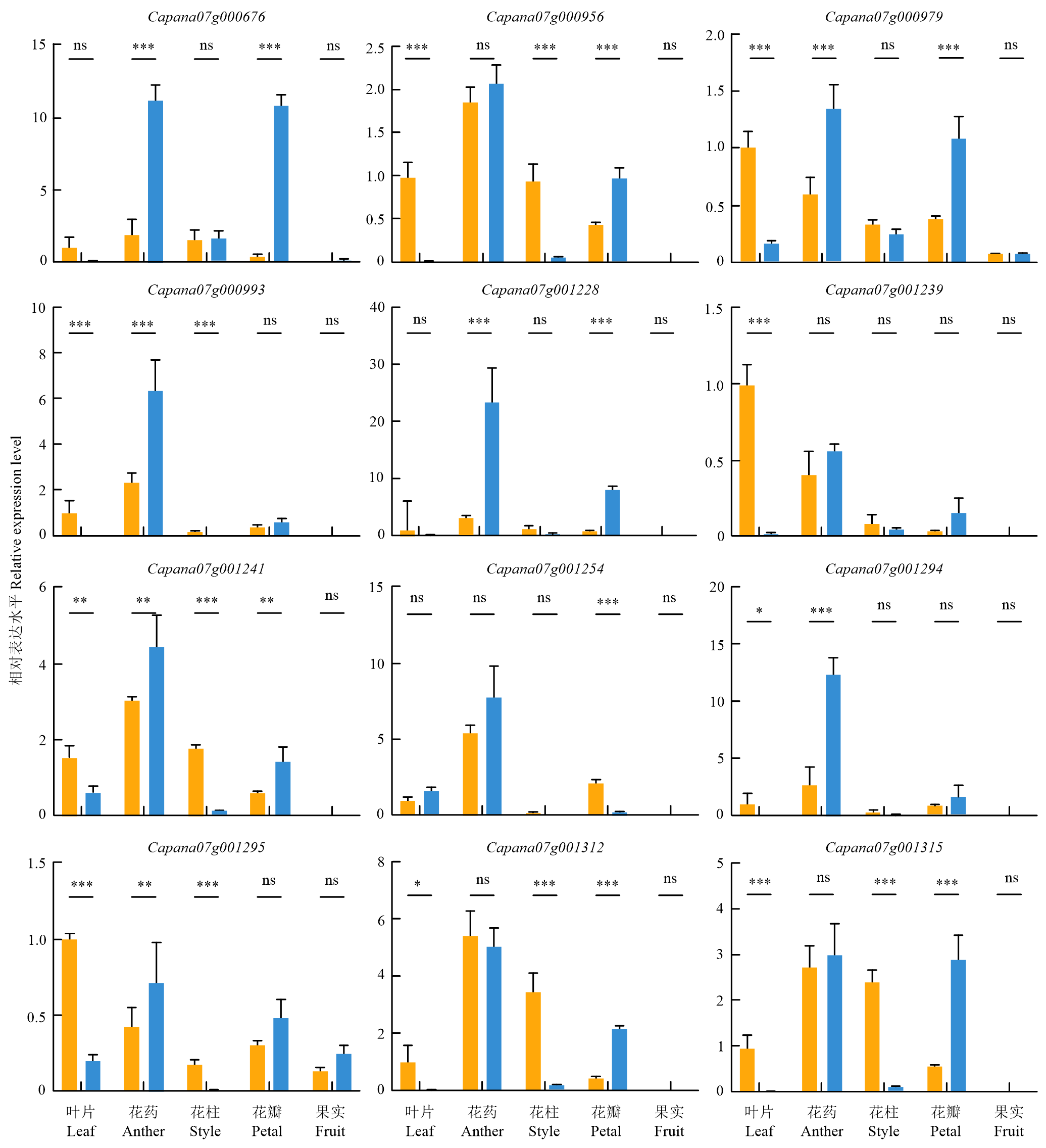
【Objective】Male-sterile lines constitute a principal means of exploiting heterosis and advancing genetic breeding in pepper (Capsicum annuum L.). Fine mapping of the Genic male sterility (GMS) genes can provide relevant gene resources for subsequent gene cloning, functional verification, molecular mechanism analysis, and creation of new germplasm, laying the foundation for the development of nuclear male sterile lines in pepper. 【Method】A natural GMS mutant pby-1 and its wild type PBY-1 were used as parents for hybridization to obtain F1 progeny, which were then self-pollinated to F2 generation. Thirty plants showing sterile and normal phenotypes were selected from the F2 population to construct two extreme pools. Through bulked segregant analysis sequencing (BSA-Seq), candidate regions associated with male sterility were identified, and candidate genes within the regions were mined. GO (Gene Ontology) and KEGG (Kyoto Encyclopedia of Genes and Genomes) enrichment analyses were conducted. Further, the candidate genes were jointly analyzed with the differentially expressed proteins of the parents pby-1 and PBY-1 at different developmental stages to narrow down the range of candidate genes related to nuclear male sterility in pepper. The expression levels of the candidate genes in pepper flower organs were detected by real-time fluorescence quantitative PCR to verify their potential in regulating male sterility in pepper. 【Result】Through BSA-Seq sequencing analysis, 12 regions associated with male sterility were identified on chromosome Chr.07, with a total length of approximately 70.02 Mb, containing 343 candidate genes, which did not overlap with the known ms-1, ms-2, and ms-3 sterility gene regions. The results of GO enrichment and KEGG enrichment analysis indicated that carbohydrate metabolism, lipid transport metabolism, and plant hormone signal transduction pathways were closely related to male sterility in pepper. Through comprehensive analysis combining proteomics data, 12 candidate genes (Capana07g000676, Capana07g000956, Capana07g000979, Capana07g000993, Capana07g001228, Capana07g001239, Capana07g001241, Capana07g001254, Capana07g001294, Capana07g001295, Capana07g001312, and Capana07g001315) were screened. Through qRT-PCR detection, Capana07g000676, Capana07g000979, Capana07g000993, Capana07g001228, Capana07g001241, and Capana07g001294 were identified as key candidate genes for male sterility. 【Conclusion】By combining BSA-Seq with proteomics, the functional region of nuclear male sterility was located on chromosome 7 of the pepper, and six core candidate genes were screened.

Key words: Capsicum spp., genic male sterility, BSA-Seq, proteomics, integrated multi-omics analysis

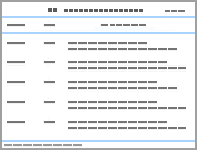
Table 1

qRT-PCR primers of candidate genes"

引物ID Primer ID 引物序列 Primer sequence (5′-3′)
Capana07g000676-qPCR-F GAGCACAAAATGGTAGTTGCGA
Capana07g000676-qPCR-R AAGTAGACGATTTGCTGGCG
Capana07g000956-qPCR-F CATCGACTGTGGTGGTCCTC
Capana07g000956-qPCR-R TGTTGAAGACGACGCTGGAA
Capana07g000979-qPCR-F AAGATACGCATCCGCTGG
Capana07g000979-qPCR-R TAAAACACACCGCCGTCAA
Capana07g000993-qPCR-F TGGCGAGGGGAATGTGAATC
Capana07g000993-qPCR-R CGATTCAGGCTGTCTGGGTT
Capana07g001228-qPCR-F GCAGGAGCAGTGGTAATGGT
Capana07g001228-qPCR-R CTCAGCAACACTATCCGGCA
Capana07g001239-qPCR-F TCCGACAGAAGCCAAGAAGG
Capana07g001239-qPCR-R TCAGAAATGGGAAAGACGACAGT
Capana07g001241-qPCR-F TACTTGGTACCTGGTGCTGG
Capana07g001241-qPCR-R GCCAAATAACGAAGGCACCC
Capana07g001254-qPCR-F TCGGAGATCGCGTTGTTGAA
Capana07g001254-qPCR-R CGCCTTGATGGAAACGTGAC
Capana07g001294-qPCR-F CTTGAACCAGGTTGTGCTGC
Capana07g001294-qPCR-R AGGCAAGTGACTCGATGCAA
Capana07g001295-qPCR-F GCTGAGGAAGCTGAAGAGCA
Capana07g001295-qPCR-R TCCATTGCGACCTCCAAACA
Capana07g001312-qPCR-F TAGTCTTGCTGTTGGCTGGG
Capana07g001312-qPCR-R GCTTTAACTGTCGTGCTGCC
Capana07g001315-qPCR-F AGGGGTGCACTGATTTGCAT
Capana07g001315-qPCR-R CTGCTCCTCCGTACCAACAT
CaREV05-qPCR-F GGACCAGCAAAGGTTGATTT
CaREV05-qPCR-R CAGATGGAGGGTTGATTCCT

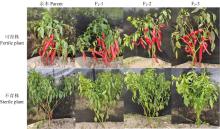
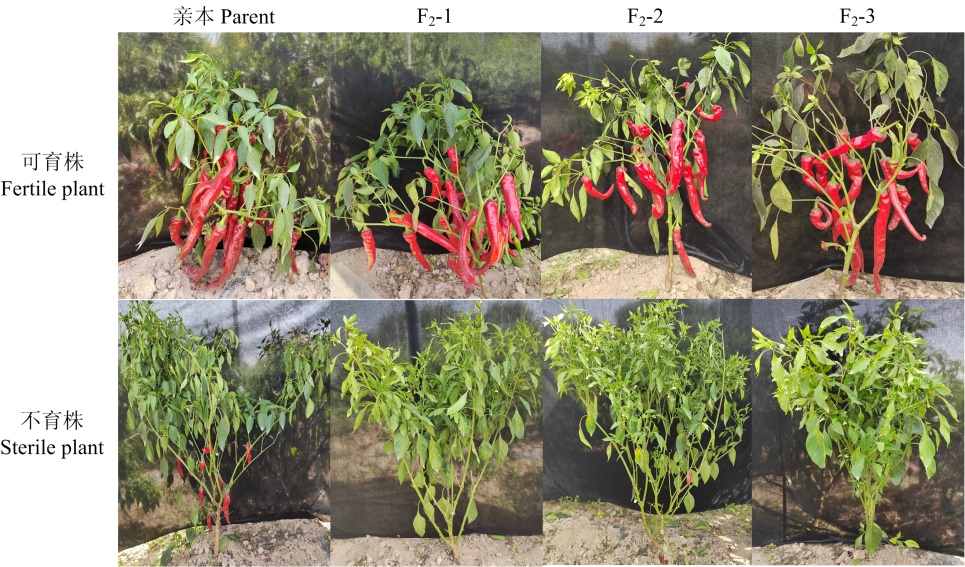
Fig. 1

Differences in fertility phenotypes between parent and F2 populations"

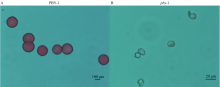
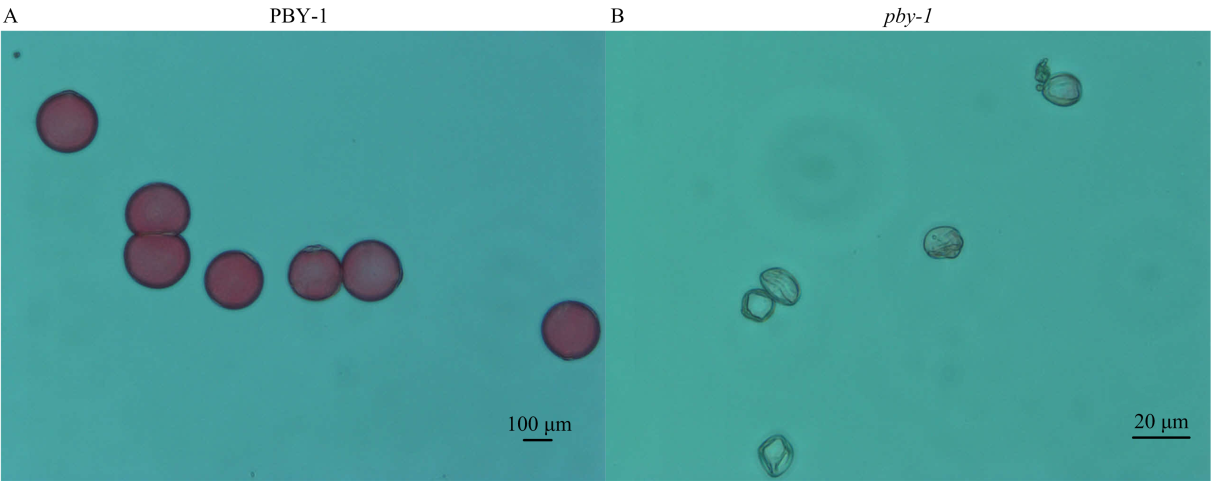
Fig. 2

Vitality detection of pollen grains in fertile and sterile plants A: Fertile type; B: Sterile type"

Table 2

Genetic analysis of the male sterility in pby-1"

组合
Combination
世代
Generations
可育株
Fertile strain
不育株
Sterile strain
总数
Total
期望比例
Expectation ratio
实际比例
Actual proportion
χ2
pby-1×PBY-1 F1 255 0 255 全可育 Fully fertile 全可育 Fully fertile /
F2 770 264 1034 3F﹕1S 2.917﹕1 0.156(P=0.69)
BC1 799 808 1607 1F﹕1S 1﹕1.011 0.0504(P=0.82)

Table 3

Statistical analysis of BSA-Seq data"

编号
ID
原始读段
Raw reads
接头比例
Adapter percent (%)
有效读段
Clean_reads
有效碱基数
Clean_base
Q30比例
Q30
(%)
GC含量
GC
(%)
比对率
Properly-
mapped (%)
覆盖深度
Ave_depth
覆盖比例
Cov_ratio
(%)
R01 121331436 0.02 121312127 36345286212 92.60 35.52 95.49 11× 88.36
R02 118143280 0.04 118091227 35365642094 93.55 39.12 93.72 10× 85.47
R03 240816363 0.01 240773371 72130680194 92.92 34.80 95.85 22× 89.37
R04 230255180 0.03 230183074 68955090602 92.42 34.74 95.69 21× 89.68

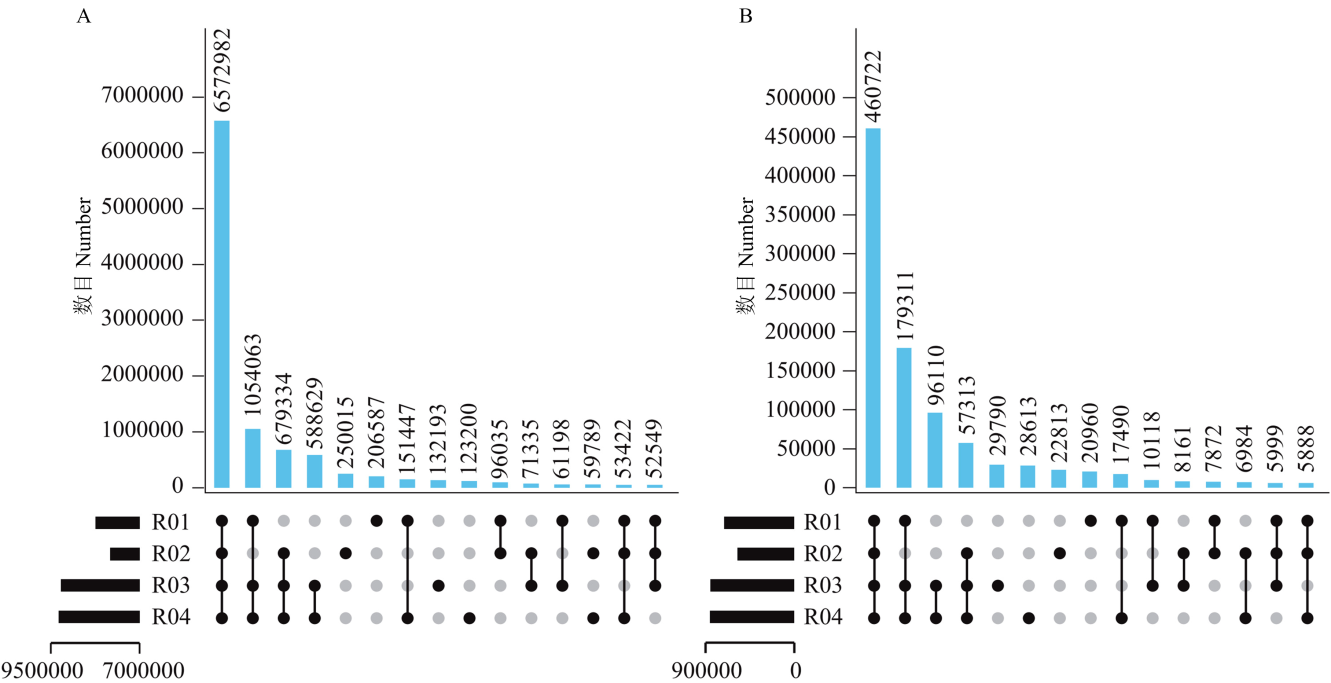
Fig. 3

Upset diagram of SNPs and InDels detected in parent, fertile pool, and sterile pool A: SNP upset diagram; B: InDel upset diagram"

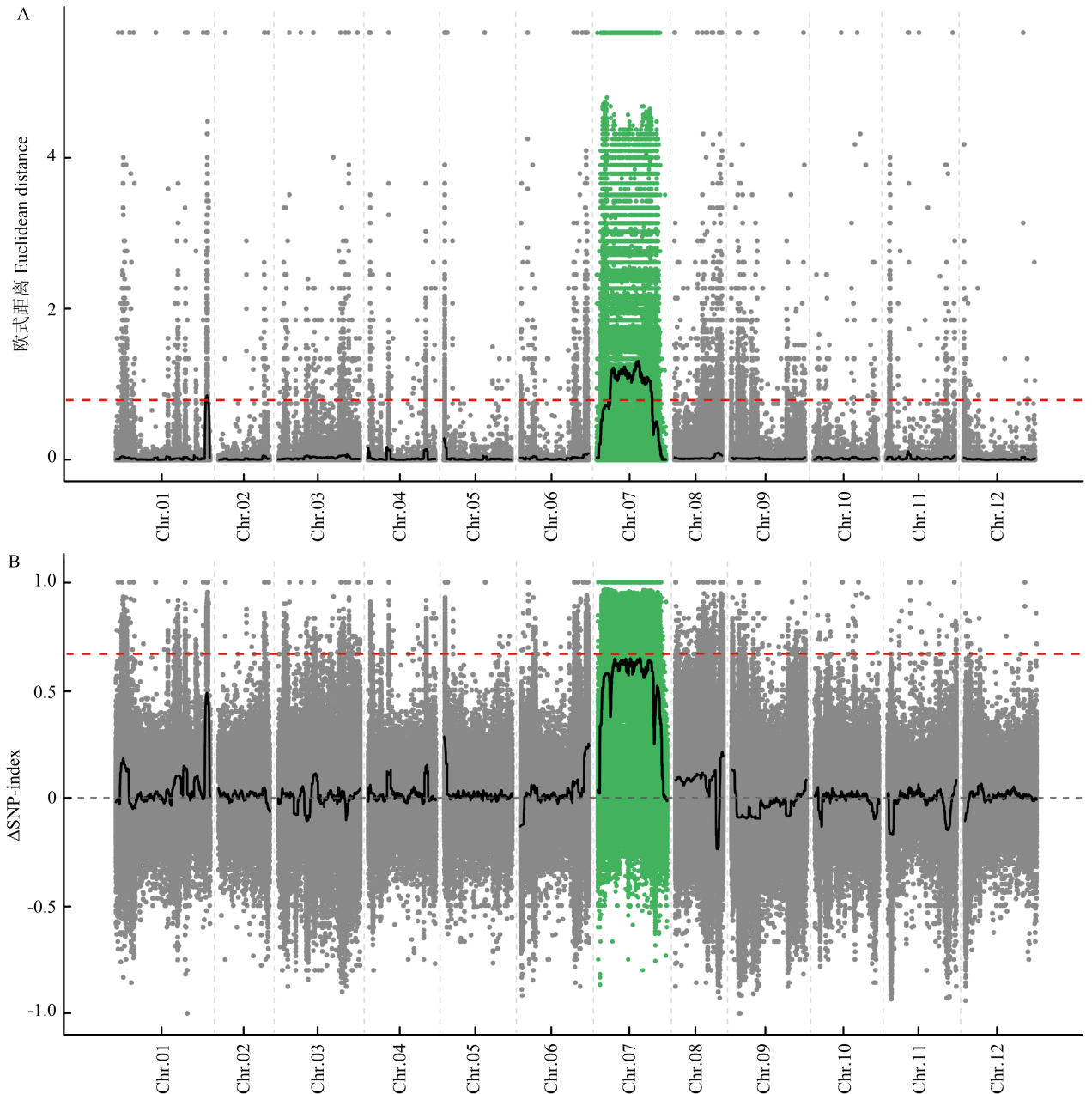
Fig. 4

The distribution of SNP-based ED and ΔSNP-index association values on the chromosomes A: The distribution of SNP-based ED association values on the chromosomes; B: The distribution of SNP-based ΔSNP-index association values on the chromosomes"

Table 4

Analysis of candidate SNP-associated regions"

染色体 Chromosome 开始 Start (bp) 结束 End (bp) 区间大小 Size (Mb) 基因数 Gene number
Chr.07 100650000 101180000 0.53 1
Chr.07 102340000 110650000 8.31 33
Chr.07 117910000 137750000 19.84 52
Chr.07 160200000 172740000 12.54 137
Chr.07 51230000 61780000 10.55 49
Chr.07 62420000 65490000 3.07 21
Chr.07 69800000 91530000 21.73 60
Chr.07 98710000 100300000 1.59 6
总计Total - - 78.16 359

Fig. 5

The distribution of InDel-based ED and ΔInDel-index association values on the chromosomes A: The distribution of InDel-based ED association values on the chromosomes; B: The distribution of InDel-based ΔInDel-index association values on the chromosomes"

Table 5

Analysis of candidate InDel-associated regions"

染色体 Chromosome 开始 Start (bp) 结束 End (bp) 区间大小 Size (Mb) 基因数 Gene number
Chr.07 102730000 110510000 7.78 32
Chr.07 118520000 137650000 19.13 52
Chr.07 149840000 150650000 0.81 6
Chr.07 152260000 152980000 0.72 1
Chr.07 160550000 176010000 15.46 171
Chr.07 176540000 176600000 0.06 1
Chr.07 49410000 50610000 1.20 1
Chr.07 51160000 65660000 14.50 71
Chr.07 69440000 74810000 5.37 24
Chr.07 75590000 78070000 2.48 5
Chr.07 78150000 79000000 0.85 5
Chr.07 81480000 82020000 0.54 3
Chr.07 84940000 91280000 6.34 13
Chr.07 98750000 101240000 2.49 7
总计Total - - 77.73 392

Table 6

Cross-analysis of candidate SNP and InDel regions"

染色体 Chromosome 开始 Start (bp) 结束 End (bp) 区间大小 Size (Mb) 基因数 Gene number
Chr.07 100650000 101180000 0.53 1
Chr.07 102730000 110510000 7.78 32
Chr.07 118520000 137650000 19.13 52
Chr.07 160550000 172740000 12.19 136
Chr.07 51230000 61780000 10.55 49
Chr.07 62420000 65490000 3.07 21
Chr.07 69800000 74810000 5.01 20
Chr.07 75590000 78070000 2.48 5
Chr.07 78150000 79000000 0.85 5
Chr.07 81480000 82020000 0.54 3
Chr.07 84940000 91280000 6.34 13
Chr.07 98750000 100300000 1.55 6
总计Total - - 70.02 343

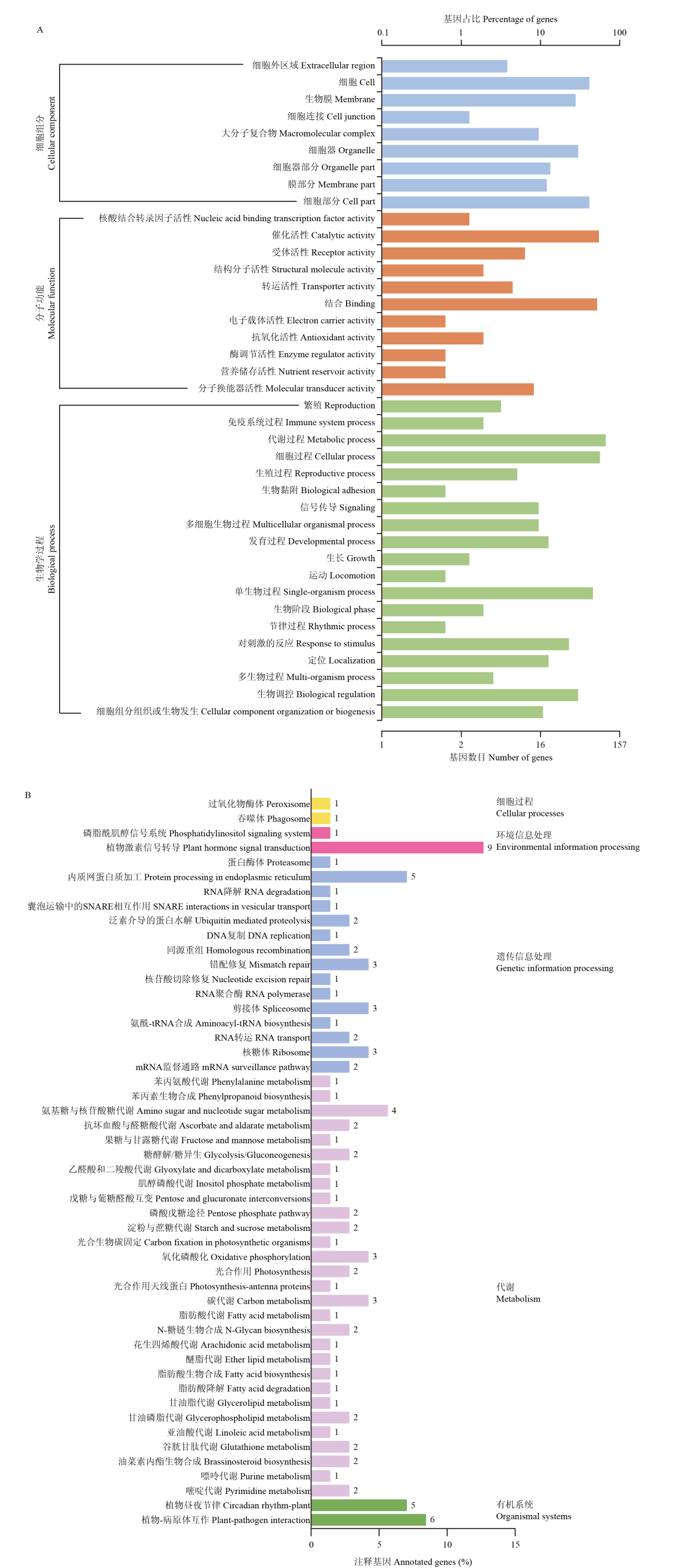
Fig. 6

Gene GO and KEGG annotation in the candidate region related to male sterility A: Gene ontology (GO) enrichment analysis of genes within the candidate region; B: Gene KEGG enrichment analysis within the candidate region"

Table 7

Male sterility candidate genes and annotations"

基因
Gene_IDs
Pfam号
Pfam_IDs
Pfam注释
Pfam_description
染色体位置
Chromosome location
蛋白编号
Protein
accession
蛋白功能注释
Protein description
比率
Ratio
调控类型
Regulated type
分子质量
MW
(kDa)
Capana07g000676 PF12697 α/β水解酶家族
Alpha/beta hydrolase family
Chr.07:63427965:63430386:- A0A2G2ZK80 含AB水解酶-1结构域蛋白
AB hydrolase-1 domain-containing protein
1.515 上调 Up 36.1
PF00561 α/β水解酶折叠
Alpha/beta hydrolase fold
A0A1U8FW28 含AB水解酶-1结构域蛋白
AB hydrolase-1 domain-containing protein
0.751 下调 Down 36.8
A0A2G2ZK45 含AB水解酶-1结构域蛋白
AB hydrolase-1 domain-containing protein
1.624 上调 Up 36.5
Capana07g000956 PF00571 胱硫醚β-合成酶结构域CBS domain Chr.07:124819375:124819884:+ A0A2G3A5F5 含CBS结构域蛋白 CBS domain-containing protein 1.304 上调 Up 26.0
Capana07g000979 PF00128 α-淀粉酶 Alpha amylase Chr.07:132522155:132527031:+
催化结构域 Catalytic domain
Capana07g000993 PF00082 枯草杆菌蛋白酶家族Subtilase family Chr.07:135830482:135833179:- A0A2G3AE94 枯草杆菌蛋白酶样蛋白酶 Subtilisin-like protease 0.702 下调 Down 79.0
PF05922 肽酶抑制剂I9家族Peptidase inhibitor I9 A0A2G3AF34 含抑制剂I9结构域蛋白
Inhibitor I9 domain-containing protein
0.683 下调 Down 24.1
Capana07g001228 PF00646 F-box结构域 F-box domain Chr.07:165750151:165751491:+ A0A1U8H680 含F-box结构域蛋白 F-box domain-containing protein 1.319 上调 Up 43.0
Capana07g001239 PF02518 组氨酸激酶-, DNA旋转酶B-, 热休克蛋白90样ATP酶结构域
Histidine kinase-, DNA gyrase B-, and HSP90- like ATPase
Chr.07:166068142:166074467:- A0A2G2Z950 热休克蛋白82
Heat shock protein 82
1.349 上调 Up 80.3
A0A1U8GAJ4 内质网样蛋白
Endoplasmin-like protein
0.74 下调 Down 92.9
Capana07g001241 PF00106 短链脱氢酶 Short chain dehydrogenase Chr.07:166153425:166159029:-
PF13561 烯酰-(酰基载体蛋白)还原酶
Enoyl-(Acyl carrier protein) reductase
A0A2G2YR93 托品酮还原酶2
Tropinone reductase 2
0.763 下调 Down 29.5
Capana07g001254 PF00069 蛋白激酶结构域 Protein kinase domain Chr.07:167320450:167335317:- A0A1U8GXD8 酪蛋白激酶1δ Casein kinase I isoform delta 1.483 上调 Up 53.1
PF07714 蛋白酪氨酸激酶
Protein tyrosine kinase
A0A2G2YZW4 含蛋白激酶结构域蛋白
Protein kinase domain-containing protein
3.431 上调 Up 48.5
A0A2G2YBJ3 假定丝氨酸/苏氨酸蛋白激酶
Putative serine/threonine-protein kinase
1.32 上调 Up 54.2
Capana07g001294 PF00651 BTB/POZ结构域BTB/POZ domain Chr.07:170187515:170190321:-
Capana07g001295 PF00564 PB1结构域 PB1 domain Chr.07:170302463:170304671:+
Capana07g001312 PF07714 蛋白酪氨酸激酶 Protein tyrosine kinase Chr.07:171800459:171817027:+ A0A2G3APD0 丝氨酸/苏氨酸蛋白激酶CTR1
Serine/threonine-protein kinase CTR1
1.429 上调 Up 80.9
PF00069 蛋白激酶结构域 Protein kinase domain
PF01476 LysM结构域 LysM domain
Capana07g001315 PF02902 Ulp1蛋白酶家族 Ulp1 protease family Chr.07:171946489:171949534:+
C-末端催化结构域 C-terminal catalytic domain

Fig. 7

Validation of the expression levels of candidate genes by qRT-PCR ns: No significance; *: P<0.01; **: P<0.001; ***: P<0.0001"

[1]
HONG S T, CHUNG J E, AN G, KIM S R. Analysis of 176 expressed sequence tags generated from cDNA clones of hot pepper by single-pass sequencing. Journal of Plant Biology, 1998, 41(2): 116-124.

doi: 10.1007/BF03030398
[2]
CHEN C M, HAO X F, CHEN G J, CAO B H, CHEN Q H, LIU S Q, LEI J J. Characterization of a new male sterility-related gene Camf1 in Capsicum annum L.. Molecular Biology Reports, 2012, 39(1): 737-744.

doi: 10.1007/s11033-011-0793-3
[3]
LIU C, MA N, WANG P Y, FU N, SHEN H L. Transcriptome sequencing and de novo analysis of a cytoplasmic male sterile line and its near-isogenic restorer line in chili pepper (Capsicum annuum L.). PLoS ONE, 2013, 8(6): e65209.

doi: 10.1371/journal.pone.0065209
[4]
LIU F, YU H Y, DENG Y T, ZHENG J Y, LIU M L, OU L J, YANG B Z, DAI X Z, MA Y Q, FENG S Y, et al. PepperHub, an informatics hub for the chili pepper research community. Molecular Plant, 2017, 10(8): 1129-1132.

doi: S1674-2052(17)30076-X pmid: 28343897
[5]
SWAMY B N, HEDAU N K, G V C, KANT L, PATTANAYAK A. CMS system and its stimulation in hybrid seed production of Capsicum annuum L.. Scientia Horticulturae, 2017, 222: 175-179.

doi: 10.1016/j.scienta.2017.05.023
[6]
邹学校, 马艳青, 戴雄泽, 李雪峰, 杨莎. 辣椒在中国的传播与产业发展. 园艺学报, 2020, 47(9): 1715-1726.
ZOU X X, MA Y Q, DAI X Z, LI X F, YANG S. Spread and industry development of pepper in China. Acta Horticulturae Sinica, 2020, 47(9): 1715-1726. (in Chinese)

doi: 10.16420/j.issn.0513-353x.2020-0103
[7]
王立浩, 张宝玺, 张正海, 曹亚从, 于海龙, 冯锡刚. “十三五” 我国辣椒育种研究进展、产业现状及展望. 中国蔬菜, 2021(2): 21-29.
WANG L H, ZHANG B X, ZHANG Z H, CAO Y C, YU H L, FENG X G. Status in breeding and production of Capsicum spp. in China during ‘the thirteenth Five-Year Plan’ Period and future prospect. China Vegetables, 2021(2): 21-29. (in Chinese)
[8]
张强, 张涛, 常晓轲, 韩娅楠, 程志芳, 刘卫, 王彬, 姚秋菊. 一个辣椒胞质雄性不育SCAR标记的KASP转化及其应用. 华北农学报, 2019, 34(5): 93-98.

doi: 10.7668/hbnxb.20190131
ZHANG Q, ZHANG T, CHANG X K, HAN Y N, CHENG Z F, LIU W, WANG B, YAO Q J. Transformation and application of one molecular marker from SCAR to KASP in pepper CMS. Acta Agriculturae Boreali-Sinica, 2019, 34(5): 93-98. (in Chinese)

doi: 10.7668/hbnxb.20190131
[9]
孟雅宁, 严立斌, 田玉, 范妍芹. 利用重测序InDel位点开发甜椒隐性核不育分子标记. 分子植物育种, 2019, 17(18): 6041-6046.
MENG Y N, YAN L B, TIAN Y, FAN Y Q. Development of recessive genic male sterile molecular markers in sweet pepper using resequencing InDel sites. Molecular Plant Breeding, 2019, 17(18): 6041-6046. (in Chinese)
[10]
杨婷玉, 邵贵芳, 张水, 王姣, 张靖柔, 赵凯, 邓明华. 辣椒胞质雄性不育系CaNAD9线粒体基因的克隆及表达分析. 热带作物学报, 2020, 41(5): 978-984.

doi: 10.3969/j.issn.1000-2561.2020.05.018
YANG T Y, SHAO G F, ZHANG S, WANG J, ZHANG J R, ZHAO K, DENG M H. Cloning and expression analysis of mitochondrial gene of cytoplasmic male sterile line CaNAD9 in pepper (Capsicum annuum L.). Chinese Journal of Tropical Crops, 2020, 41(5): 978-984. (in Chinese)
[11]
梁赛, 贾利, 王艳, 张强强, 陈友根, 江海坤, 方凌, 张其安, 董言香. 辣椒细胞核雄性不育系主要农艺性状的对比及生理特性分析. 中国蔬菜, 2020(10): 55-61.
LIANG S, JIA L, WANG Y, ZHANG Q Q, CHEN Y G, JIANG H K, FANG L, ZHANG Q A, DONG Y X. Comparison and physiological traits of main agronomic characters of nuclear sterile lines in pepper. China Vegetables, 2020(10): 55-61. (in Chinese)
[12]
LV J H, LIU Z B, LIU Y H, OU L J, DENG M H, WANG J, SONG J S, MA Y Q, CHEN W C, ZHANG Z Q, et al. Comparative transcriptome analysis between cytoplasmic male-sterile line and its maintainer during the floral bud development of pepper. Horticultural Plant Journal, 2020, 6(2): 89-98.

doi: 10.1016/j.hpj.2020.01.004
[13]
邵贵芳, 张凡, 王姣, 赵凯, 莫云容, 邓明华. 辣椒雄性不育的研究进展. 生物技术通报, 2017, 33(8): 7-13.

doi: 10.13560/j.cnki.biotech.bull.1985.2017-0207
SHAO G F, ZHANG F, WANG J, ZHAO K, MO Y R, DENG M H. Research progress on male sterility of pepper. Biotechnology Bulletin, 2017, 33(8): 7-13. (in Chinese)
[14]
JINDAL S K, DHALIWAL M S, MEENA O P. Molecular advancements in male sterility systems of Capsicum: A review. Plant Breeding, 2020, 139(1): 42-64.

doi: 10.1111/pbr.v139.1
[15]
CHENG Q, WANG P, LIU J Q, WU L, ZHANG Z P, LI T T, GAO W J, YANG W C, SUN L, SHEN H L. Identification of candidate genes underlying genic male-sterile msc-1 locus via genome resequencing in Capsicum annuum L.. Theoretical and Applied Genetics, 2018, 131(9): 1861-1872.

doi: 10.1007/s00122-018-3119-1
[16]
CHENG Q, LI T, AI Y X, LU Q H, WANG Y H, WU L, LIU J Q, SUN L, SHEN H L. Phenotypic, genetic, and molecular function of msc-2, a genic male sterile mutant in pepper (Capsicum annuum L.). Theoretical and Applied Genetics, 2020, 133(3): 843-855.

doi: 10.1007/s00122-019-03510-1
[17]
DONG J C, HU F, GUAN W D, YUAN F C, LAI Z P, ZHONG J, LIU J, WU Z M, CHENG J W, HU K L. A 163-bp insertion in the Capana10g000198 encoding a MYB transcription factor causes male sterility in pepper (Capsicum annuum L.). The Plant Journal, 2023, 113(3): 521-535.

doi: 10.1111/tpj.v113.3
[18]
REN W J, SI J C, CHEN L, FANG Z Y, ZHUANG M, LV H H, WANG Y, JI J L, YU H L, ZHANG Y Y. Mechanism and utilization of ogura cytoplasmic male sterility in cruciferae crops. International Journal of Molecular Sciences, 2022, 23(16): 9099.

doi: 10.3390/ijms23169099
[19]
KIM D H, KANG J G, KIM B D. Isolation and characterization of the cytoplasmic male sterility-associated orf456 gene of chili pepper (Capsicum annuum L.). Plant Molecular Biology, 2007, 63(4): 519-532.

doi: 10.1007/s11103-006-9106-y
[20]
JI J J, HUANG W, YIN C C, GONG Z H. Mitochondrial cytochrome C oxidase and F1Fo-ATPase dysfunction in peppers (Capsicum annuum L.) with cytoplasmic male sterility and its association with orf507 and Ψatp6-2 genes. International Journal of Molecular Sciences, 2013, 14(1): 1050-1068.

doi: 10.3390/ijms14011050
[21]
LEE S B, KIM J E, KIM H T, LEE G M, KIM B S, LEE J M. Genetic mapping of the c1 locus by GBS-based BSA-seq revealed Pseudo-Response Regulator 2 as a candidate gene controlling pepper fruit color. Theoretical and Applied Genetics, 2020, 133(6): 1897-1910.

doi: 10.1007/s00122-020-03565-5 pmid: 32088729
[22]
张曦, 王秀雪, 邹春蕾. 辣椒抗疫病基因初步定位. 东北农业大学学报, 2021, 52(3): 20-25.
ZHANG X, WANG X X, ZOU C L. Preliminary mapping of Phytophthora blight resistance genes in pepper. Journal of Northeast Agricultural University, 2021, 52(3): 20-25. (in Chinese)
[23]
XU X M, HENG Z, WANG H M, SUN Q D, XU X W. Molecular advancements of male sterility in pepper. Chinese Agricultural Science Bulletin, 2024, 40(13): 27-35.

doi: 10.11924/j.issn.1000-6850.casb2023-0860
[24]
PENG G Q, LIU Z L, ZHUANG C X, ZHOU H. Environment- sensitive genic male sterility in rice and other plants. Plant, Cell & Environment, 2023, 46(4): 1120-1142.

doi: 10.1111/pce.14503
[25]
李合生. 植物生理生化实验原理和技术. 北京: 高等教育出版社, 2000.
LI H S. Principles and Techniques of Plant Physiological Biochemical Experiment. Beijing: Higher Education Press, 2000. (in Chinese)
[26]
罗阿东, 陆邹红, 蔡秋, 王艳, 曹云恒, 陈霄. 不同提取方法提取辣椒及其制品中DNA效果研究. 现代农业科技, 2019(1): 212-213, 215.
LUO A D, LU Z H, CAI Q, WANG Y, CAO Y H, CHEN X. Study on effect of different extraction methods on DNA extraction from chilli and its products. Modern Agricultural Science and Technology, 2019(1): 212-213, 215. (in Chinese)
[27]
QIN C, YU C S, SHEN Y O, FANG X D, CHEN L, MIN J M, CHENG J W, ZHAO S C, XU M, LUO Y, et al. Whole-genome sequencing of cultivated and wild peppers provides insights into Capsicum domestication and specialization. PNAS 2014, 111(14): 5135-5140.
[28]
LI H, DURBIN R. Fast and accurate short read alignment with Burrows-Wheeler transform. Bioinformatics, 2009, 25(14): 1754-1760.

doi: 10.1093/bioinformatics/btp324 pmid: 19451168
[29]
MCKENNA A, HANNA M, BANKS E, SIVACHENKO A, CIBULSKIS K, KERNYTSKY A, GARIMELLA K, ALTSHULER D, GABRIEL S, DALY M, et al. The Genome Analysis Toolkit: A MapReduce framework for analyzing next-generation DNA sequencing data. Genome Research, 2010, 20(9): 1297-1303.

doi: 10.1101/gr.107524.110 pmid: 20644199
[30]
REUMERS J, DE RIJK P, ZHAO H, LIEKENS A, SMEETS D, CLEARY J, VAN LOO P, VAN DEN BOSSCHE M, CATTHOOR K, SABBE B, et al. Optimized filtering reduces the error rate in detecting genomic variants by short-read sequencing. Nature Biotechnology, 2012, 30(1): 61-68.

doi: 10.1038/nbt.2053
[31]
CINGOLANI P, PLATTS A, WANG L L, COON M, NGUYEN T, WANG L, LAND S J, LU X Y, RUDEN D M. A program for annotating and predicting the effects of single nucleotide polymorphisms, SnpEff: SNPs in the genome of Drosophila melanogaster strain w1118; Iso-2; Iso-3. Fly, 2012, 6(2): 80-92.
[32]
HILL J T, DEMAREST B L, BISGROVE B W, GORSI B, SU Y C, YOST H J. MMAPPR: Mutation mapping analysis pipeline for pooled RNA-seq. Genome Research, 2013, 23(4): 687-697.

doi: 10.1101/gr.146936.112 pmid: 23299975
[33]
FEKIH R, TAKAGI H, TAMIRU M, ABE A, NATSUME S, YAEGASHI H, SHARMA S, SHARMA S, KANZAKI H, MATSUMURA H, et al. MutMap+: Genetic mapping and mutant identification without crossing in rice. PLoS ONE, 2013, 8(7): e68529.

doi: 10.1371/journal.pone.0068529
[34]
ASHBURNER M, BALL C A, BLAKE J A, BOTSTEIN D, BUTLER H, CHERRY J M, DAVIS A P, DOLINSKI K, DWIGHT S S, EPPIG J T, et al. Gene ontology: Tool for the unification of biology. Nature Genetics, 2000, 25(1): 25-29.

doi: 10.1038/75556
[35]
KANEHISA M, GOTO S, KAWASHIMA S, OKUNO Y, HATTORI M. The KEGG resource for deciphering the genome. Nucleic Acids Research, 2004, 32(suppl_1): D277-D280.
[36]
CHEN C J, CHEN H, ZHANG Y, THOMAS H R, FRANK M H, HE Y H, XIA R. TBtools: An integrative toolkit developed for interactive analyses of big biological data. Molecular Plant, 2020, 13(8): 1194-1202.

doi: S1674-2052(20)30187-8 pmid: 32585190
[37]
CHENG Y, PANG X, WAN H J, AHAMMED G J, YU J H, YAO Z P, RUAN M Y, YE Q J, LI Z M, WANG R Q, et al. Identification of optimal reference genes for normalization of qPCR analysis during pepper fruit development. Frontiers in Plant Science, 2017, 8: 1128.

doi: 10.3389/fpls.2017.01128 pmid: 28706523
[38]
刘丽滨, 孔子豪, 李聪, 杨博皓, 高树仁, 孙丽芳, 仲义. 玉米核雄性不育系7024不育性遗传分析及不育基因初步定位. 玉米科学, 2024, 32(6): 11-18.
LIU L B, KONG Z H, LI C, YANG B H, GAO S R, SUN L F, ZHONG Y. Genetic analysis of sterility and preliminary mapping of sterility genes in maize genic male sterile line 7024. Journal of Maize Sciences, 2024, 32(6): 11-18. (in Chinese)
[39]
汪胜, 贾利, 唐菁, 李浩宇, 宋婷婷, 袁娟伟, 严从生, 方凌, 张其安, 孙玉军, 等. 辣椒细胞核雄性不育材料GMS702AB的鉴定. 植物遗传资源学报, 2024, 25(4): 612-621.

doi: 10.13430/j.cnki.jpgr.20230923001
WANG S, JIA L, TANG J, LI H Y, SONG T T, YUAN J W, YAN C S, FANG L, ZHANG Q A, SUN Y J, et al. Identification of nuclear male sterile material GMS702AB in pepper. Journal of Plant Genetic Resources, 2024, 25(4): 612-621. (in Chinese)

doi: 10.13430/j.cnki.jpgr.20230923001
[40]
ZOU C, WANG P X, XU Y B. Bulked sample analysis in genetics, genomics and crop improvement. Plant Biotechnology Journal, 2016, 14(10): 1941-1955.

doi: 10.1111/pbi.12559 pmid: 26990124
[41]
尹明智, 胡燕. 基于BSA-seq法的油菜野芥胞质雄性不育恢复基因的分析. 西北植物学报, 2020, 40(7): 1148-1156.
YIN M Z, HU Y. Location analysis of restorer gene of Sinapis arvensis cytoplasmic male sterility in Brassica napus based on BSA-seq method. Acta Botanica Boreali-Occidentalia Sinica, 2020, 40(7): 1148-1156. (in Chinese)
[42]
甘丹阳, 李龙盘, 王倩, 徐国成, 居超明. 温敏核不育水稻HD9802-9S育性相关基因的BSA测序初步分析. 湖北大学学报(自然科学版), 2020, 42(2): 165-171.
GAN D Y, LI L P, WANG Q, XU G C, JU C M. Prelimary analysis of BSA-seq of fertility related genes in thermo-sensitive genic male sterile rice HD9802-9S. Journal of Hubei University (Natural Science), 2020, 42(2): 165-171. (in Chinese)
[43]
高斌. 棉花细胞质雄性不育恢复基因的定位、克隆与验证[D]. 武汉: 华中农业大学, 2021.
GAO B. Mapping, cloning and function analysis of the restorer gene of CMS in cotton[D]. Wuhan: Huazhong Agricultural University, 2021. (in Chinese)
[44]
唐雨. 甜瓜ms4雄性不育株的生物学特性及不育基因的初步定位[D]. 哈尔滨: 东北农业大学, 2021.
TANG Y. Biological characteristics of the ms4 male sterile mutant and preliminary mapping of the male sterility gene in melon[D].Harbin: Northeast Agricultural University, 2021. (in Chinese)
[45]
张颖. 大豆核不育基因ms6的定位、克隆及功能性分子标记开发[D]. 长春: 吉林农业大学, 2021.
ZHANG Y. Mapping, cloning of the nuclear male sterility gene ms6 and development of functional molecular markers in soybean[D]. Changchun: Jilin Agricultural University, 2021. (in Chinese)
[46]
卫笑. 小麦BNS雄性不育遗传机制研究和不育基因QTLs初步定位[D]. 新乡: 河南科技学院, 2018.
WEI X. Study on genetic mechanism of BNS male sterility and preliminary QTL mapping of the sterility gene in wheat[D]. Xinxiang: Henan Institute of Science and Technology, 2018. (in Chinese)
[47]
WU Z M, CHENG J W, QIN C, HU Z Q, YIN C X, HU K L. Differential proteomic analysis of anthers between cytoplasmic male sterile and maintainer lines in Capsicum annuum L.. International Journal of Molecular Sciences, 2013, 14(11): 22982-22996.

doi: 10.3390/ijms141122982
[48]
白志元, 杨玉花, 张瑞军. 不同恢复型大豆细胞质雄性不育杂种F1的转录组分析. 植物遗传资源学报, 2022, 23(6): 1847-1855.

doi: 10.13430/j.cnki.jpgr.20220510001
BAI Z Y, YANG Y H, ZHANG R J. Transcriptomic analysis of soybean cytoplasmic male sterile F1 hybrids from pollination with different restorer types. Journal of Plant Genetic Resources, 2022, 23(6): 1847-1855. (in Chinese)
[49]
YUAN G Q, ZOU T, HE Z Y, XIAO Q, LI G W, LIU S J, XIONG P P, CHEN H, PENG K, ZHANG X, et al. Swollen tapetum and sterility 1 is required for tapetum degeneration and pollen wall formation in rice. Plant Physiology, 2022, 190(1): 352-370.

doi: 10.1093/plphys/kiac307 pmid: 35748750
[50]
任源, 林彦萍. 玉米细胞核雄性不育基因的研究进展及其在玉米育种中的应用. 分子植物育种, 2022, 20(12): 3959-3973.
REN Y, LIN Y P. Research progress of nuclear male sterility gene in maize and its application in maize breeding. Molecular Plant Breeding, 2022, 20(12): 3959-3973. (in Chinese)
[51]
XIANG X J, SUN L P, YU P, YANG Z F, ZHANG P P, ZHANG Y X, WU W X, CHEN D B, ZHAN X D, KHAN R M, et al. The MYB transcription factor Baymax 1 plays a critical role in rice male fertility. Theoretical and Applied Genetics, 2021, 134(2): 453-471.

doi: 10.1007/s00122-020-03706-w
[52]
JIA W J, LI X, WANG R, DUAN Q, HE J N, GAO J P, WANG J H. Disruption of the contents of endogenous hormones cause pollen development obstruction and abortion in male-sterile hybrid Lily populations. Plants, 2023, 12(22): 3804.

doi: 10.3390/plants12223804
[53]
韩玉翠. YS型小麦温敏雄性不育基因定位及表达调控研究[D]. 杨凌: 西北农林科技大学, 2020.
HAN Y C. Gene mapping and expression regulation of YS-type thermo-sensitive male sterility in wheat[D]. Yangling: Northwest A & F University, 2020. (in Chinese)
[54]
郑湘如, 王丽. 植物学. 北京: 中国农业大学出版社, 2001.
ZHENG X R, WANG L. Botany. Beijing: China Agricultural University Press, 2001. (in Chinese)
[55]
OLLIS D L, CHEAH E, CYGLER M, DIJKSTRA B, FROLOW F, FRANKEN S M, HAREL M, REMINGTON S J, SILMAN I, SCHRAG J. The alpha/beta hydrolase fold. Protein Engineering, 1992, 5(3): 197-211.

doi: 10.1093/protein/5.3.197 pmid: 1409539
[56]
KALLBERG Y, OPPERMANN U, JÖRNVALL H, PERSSON B. Short-chain dehydrogenases/reductases (SDRs). European Journal of Biochemistry, 2002, 269(18): 4409-4417.

doi: 10.1046/j.1432-1033.2002.03130.x pmid: 12230552
[57]
张月婷, 秦政, 王建, 汪信东. 短链脱氢酶超家族介导植物次级代谢研究进展. 南方林业科学, 2020, 48(5): 62-67.
ZHANG Y T, QIN Z, WANG J, WANG X D. Short-chain dehydrogenase research advances in secondary metabolism of plants. South China Forestry Science, 2020, 48(5): 62-67. (in Chinese)
[58]
STAVRINIDES A K, TATSIS E C, DANG T T, CAPUTI L, STEVENSON C E M, LAWSON D M, SCHNEIDER B, O’CONNOR S E. Discovery of a short-chain dehydrogenase from Catharanthus roseus that produces a new monoterpene indole alkaloid. ChemBioChem, 2018, 19(9): 940-948.

doi: 10.1002/cbic.v19.9
[1] ZHANG YiRu, HAN Xue, YAO XinJie, FENG Jun, WEI AiLi, LI WenChao, ZHANG Bin, HAN YuanHuai, LI HongYing. Integrated Multi-Omics Elucidates the Pigmentation Dynamics During Post-Harvest Maturation in Foxtail Millet (Setaria italica) [J]. Scientia Agricultura Sinica, 2025, 58(9): 1702-1718.
[2] YANG YongNian, ZENG XiangCui, LIU QingSong, LI RuYue, LONG RuiCai, CHEN Lin, WANG Xue, HE Fei, KANG JunMei, LI MingNa. Differential Proteomic Analysis of Alfalfa Seedlings Under Salt- Alkaline Stress [J]. Scientia Agricultura Sinica, 2025, 58(21): 4512-4527.
[3] QIU DongFeng, LIU Gang, LIU ChunPing, XIA KuaiFei, WANG TingBao, WU Yan, HE Yong, HUANG XianBo, ZHANG ZaiJun, YOU AiQing, TIAN ZhiHong. Breeding of a New Heat-Tolerance Fragrant Rice Germplasm ZY532 Using Sanming Dominant Genic Male Sterile Rice [J]. Scientia Agricultura Sinica, 2025, 58(18): 3571-3582.
[4] ZHANG HuiHui, KANG HanYe, LIU Hui, ZHANG JinRui, HUO Fan, GUO WeiQi, YE XiaoFang, JI Rong, HU HongXia. Differentially Expressed Proteins Analysis of Locusta migratoria Infected by Paranosema locustae Based on TMT Proteomics Technique [J]. Scientia Agricultura Sinica, 2024, 57(24): 4884-4893.
[5] YAN LiuHui, ZHONG Qi, MA ZengFeng, WEI MinYi, LIU Chi, QIN YuanYuan, ZHOU XiaoLong, HUANG DaHui, LU YingPing, QIN Gang, ZHANG YueXiong. Identification and Evolutionary Analysis of the Early Heading Gene OsEHD8 in Common Wild Rice (Oryza rufipogon Giff.) [J]. Scientia Agricultura Sinica, 2024, 57(14): 2703-2716.
[6] MIAO Long, SHU Kuo, HU YanJiao, HUANG Ru, HE GenHua, ZHANG WenMing, WANG XiaoBo, QIU LiJuan. Identification and Gene Mapping of Hard Seededness Mutant Mzp661 in Soybean [J]. Scientia Agricultura Sinica, 2024, 57(11): 2065-2078.
[7] ZHOU WenQi, ZHANG HeTong, HE HaiJun, GONG DianMing, YANG YanZhong, LIU ZhongXiang, LI YongSheng, WANG XiaoJuan, LIAN XiaoRong, ZHOU YuQian, QIU FaZhan. Candidate Gene Localization of ZmDLE1 Gene Regulating Plant Height and Ear Height in Maize [J]. Scientia Agricultura Sinica, 2023, 56(5): 821-837.
[8] ZANG XinShan, WANG KangWen, ZHANG XianLiang, WANG XuePing, WANG Jun, LIANG Yu, PEI XiaoYu, REN Xiang, LÜ YuLong, GAO Yu, WANG XingXing, PENG YunLing, MA XiongFeng. Research Advances of Map-Based Cloning Genes in Cotton [J]. Scientia Agricultura Sinica, 2023, 56(23): 4635-4647.
[9] CAO Jie, GU YongZhe, HONG HuiLong, WU HaiTao, ZHANG Xia, SUN JianQiang, BAO LiGao, QIU LiJuan. Pigment Identification and Gene Mapping in Red Seed Coat of Soybean [J]. Scientia Agricultura Sinica, 2023, 56(14): 2643-2659.
[10] WANG Chao,FANG DongLu,ZHANG PanRong,JIANG Wen,PEI Fei,HU QiuHui,MA Ning. Physiological Metabolic Rol e of Nanocomposite Packaged Agaricus bisporus During Postharvest Cold Storage Analyzed by TMT-Based Quantitative Proteomics [J]. Scientia Agricultura Sinica, 2022, 55(23): 4728-4742.
[11] ZHOU GuiYing,YANG XiaoMin,TENG ZiWen,SUN LiJuan,ZHENG ChangYing. Quantitative Proteomic Analysis of Spirotetramat Inhibiting Hatching of Frankliniella occidentalis Eggs [J]. Scientia Agricultura Sinica, 2022, 55(15): 2938-2948.
[12] XU YunMei, LI YuMei, JIA YuXin, ZHANG ChunZhi, LI CanHui, HUANG SanWen, ZHU GuangTao. Fine Mapping and Candidate Genes Analysis for Regulatory Gene of Anthocyanin Synthesis in Red-Colored Tuber Flesh [J]. Scientia Agricultura Sinica, 2019, 52(15): 2678-2685.
[13] ZHANG Yan, DONG ZhaoMing, XI XingHang, ZHANG XiaoLu, YE Lin, GUO KaiYu, XIA QingYou, ZHAO Ping. Protein Components of Degumming Bombyx mori Silk [J]. Scientia Agricultura Sinica, 2018, 51(11): 2216-2224.
[14] LIU Lu, LU Jing, WANG Ying, PANG XiaoYang, XU Man, ZHANG ShuWen, Lü JiaPing. Antitumor Effect of Violacein Against HT29 by Comparative Proteomics [J]. Scientia Agricultura Sinica, 2017, 50(9): 1694-1704.
[15] HAO WenYuan, LI FeiWu, YAN Wei, LI CongCong, HAO DongYun, GUO ChangHong. Assessment of the Unintended Effects of Four Genetically Modified Maize Varieties by Proteomic Approach [J]. Scientia Agricultura Sinica, 2017, 50(19): 3652-3664.
Viewed
Full text


Abstract

Cited

  Shared   
  Discussed   
No Suggested Reading articles found!