Scientia Agricultura Sinica ›› 2026, Vol. 59 ›› Issue (12): 2537-2550.doi: 10.3864/j.issn.0578-1752.2026.12.001

• CROP GENETICS & BREEDING· GERMPLASM RESOURCES· MOLECULAR GENETICS • Previous Articles     Next Articles

Analysis of Genetic Diversity and Allelic Variation of the Badh2 Gene in Guizhou Aromatic Rice Germplasm Based on High-Density SNP Markers

GUAN YaDong1,2(), LONG WuHua2, WU Xian2, WANG Qian2, LIU XueWei2, WANG XueLiang5, WANG ZhongNi2, GONG YanLong2, YAO YuanXun4, ZHU SuSong3()   

  1. 1 School of Life Sciences, Guizhou Normal University, Guiyang 550001
    2 Guizhou Rice Research Institute, Guiyang 550006
    3 Guizhou Crop Germplasm Resources Research Institute, Guiyang 550006
    4 Guizhou Zhaofeng Seed Industry Co., Ltd., Qiandongnan 556000, Guizhou
    5 Rice Research Institute, Qiandongnan Miao and Dong Autonomous Prefecture Academy of Agricultural Sciences, Qiandongnan 556000, Guizhou
  • Received:2026-03-23 Accepted:2026-05-01 Online:2026-06-16 Published:2026-06-16
  • Contact: ZHU SuSong

Abstract:

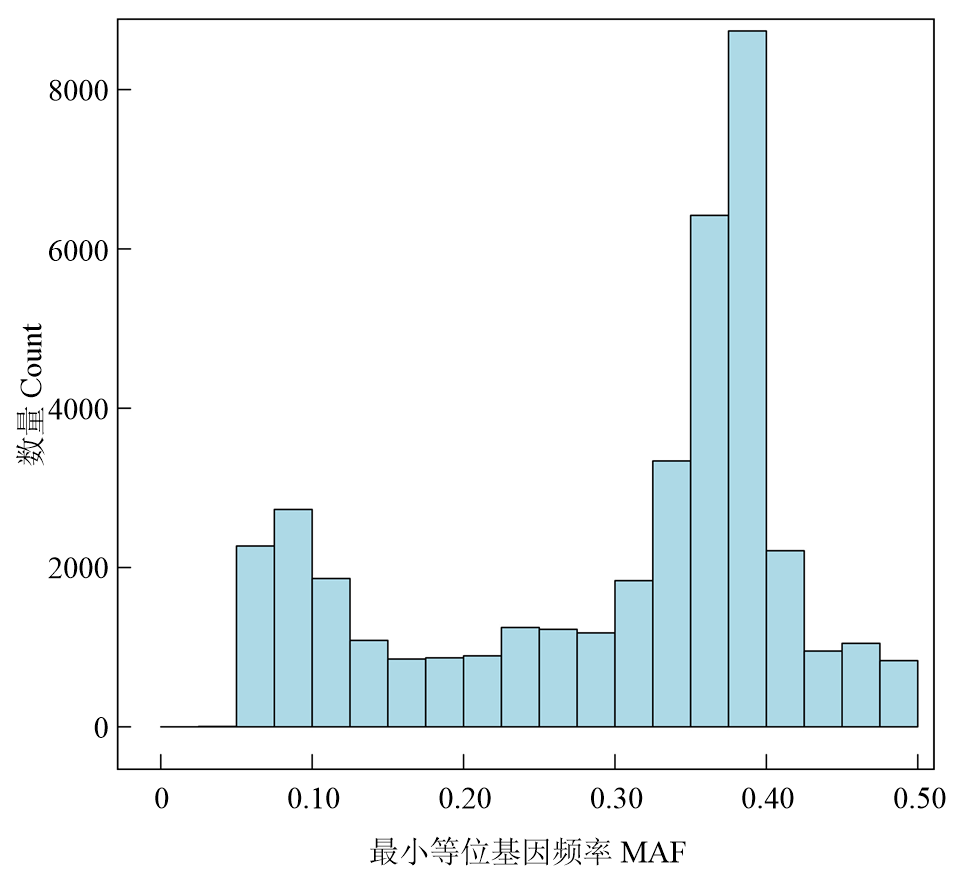
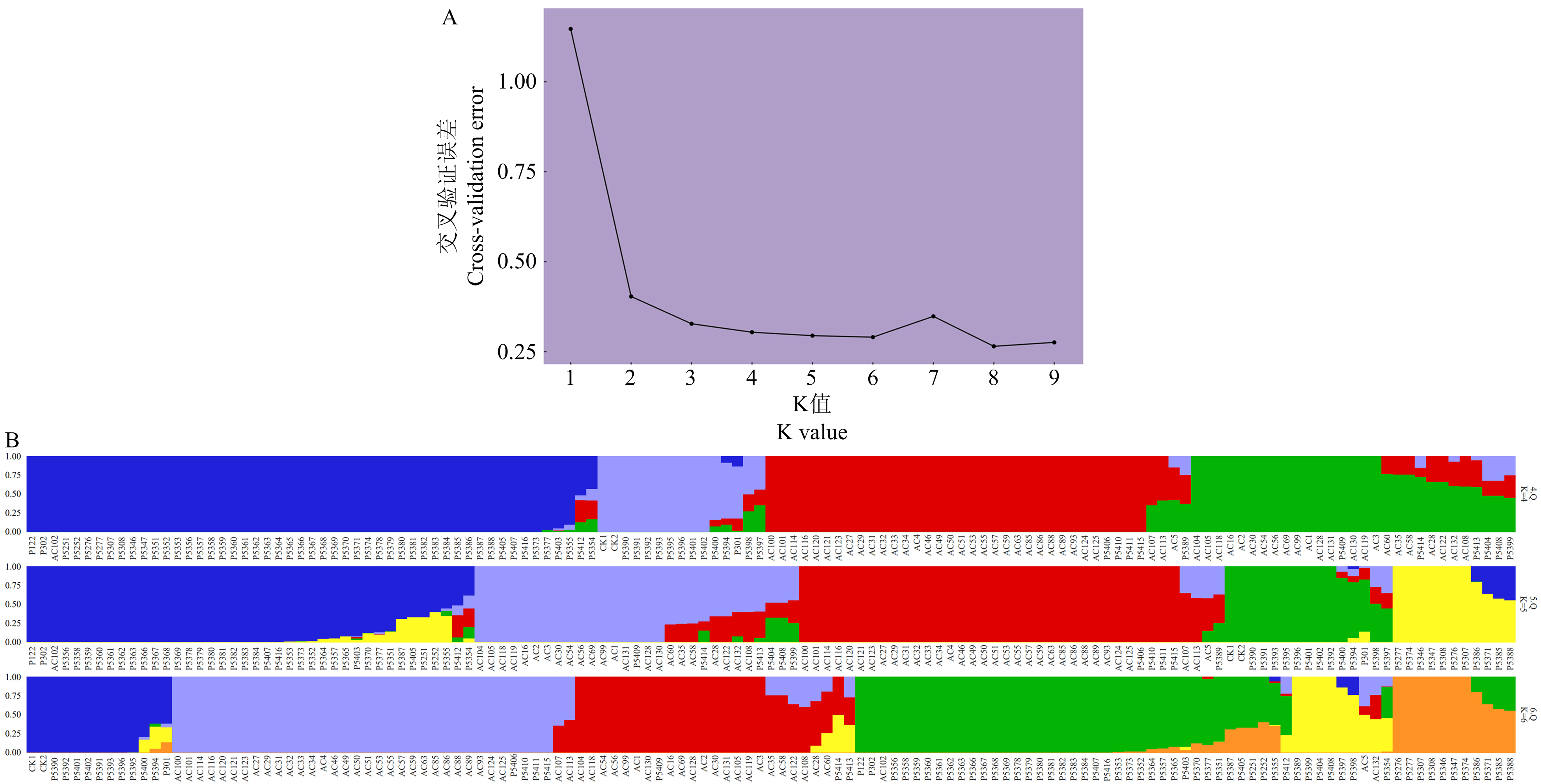
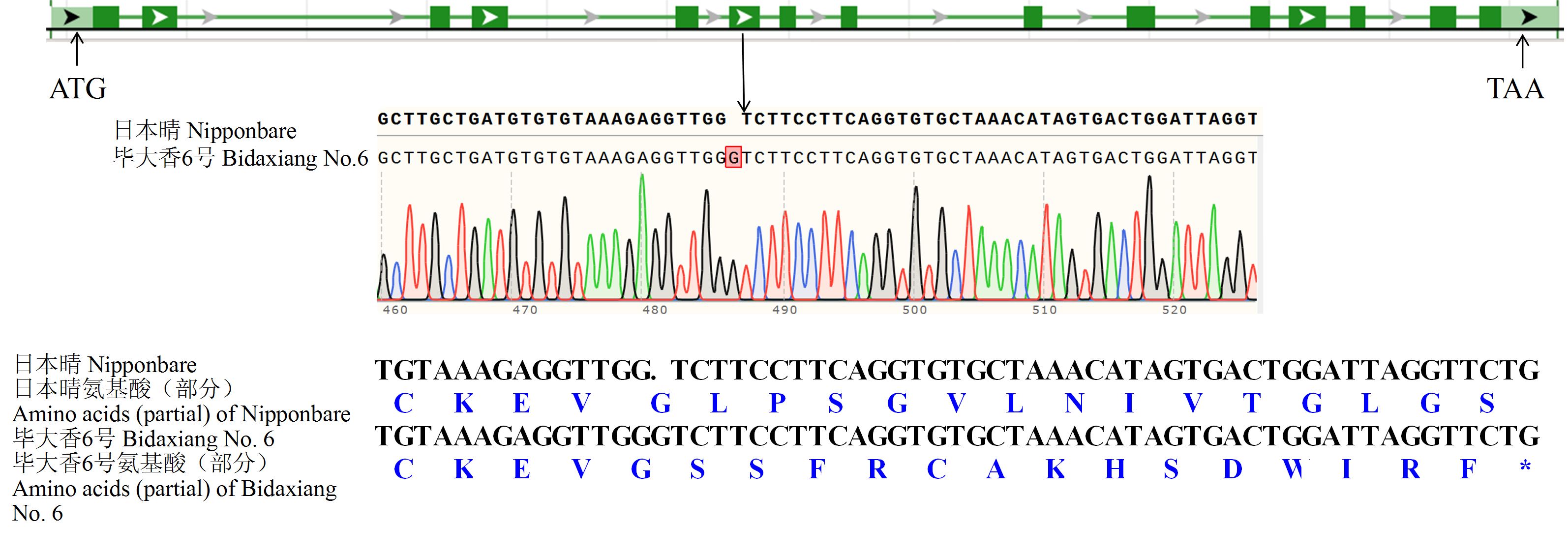
【Objective】The genetic diversity of fragrant rice germplasm resources in Guizhou (including Guizhou scented glutinous rice, breeding materials of Guizhou scented rice and Guizhou local scented rice excluding Guizhou scented glutinous rice) was analyzed, the differences in their genetic background were evaluated, and the allelic variation of the Badh2 gene was identified. This study provides theoretical basis and material support for addressing the problem of narrow genetic basis in fragrant rice breeding. 【Method】A total of 131 test materials were collected in this study, including 87 Guizhou fragrant rice accessions. In addition, 40 fragrant rice materials were obtained from Guangdong, Fujian, Jiangsu and other provinces, together with 3 Thai fragrant rice accessions and 1 Indian fragrant rice accession. A 50K liquid-phase gene chip was used for genome-wide scanning of the 131 fragrant rice materials, and high-quality SNP loci were acquired after data filtering. Genetic diversity was evaluated based on genetic parameters including minor allele frequency, polymorphism information content and effective number of alleles. Combined with population structure analysis and cluster analysis, the genetic background differences among different fragrant rice populations were explored. Gene typing was performed on 87 Guizhou fragrant rice accessions using full-length primers of the fragrance gene Badh2 to clarify allelic variation types.【Result】Genome-wide scanning was performed on 131 aromatic rice accessions. After stringent quality filtering, a total of 39 580 high-quality SNP loci were obtained. The minor allele frequency (MAF) ranged from 0.05 to 0.50, the polymorphism information content (PIC) varied between 0.091 and 0.634, and the number of effective alleles ranged from 2.000 to 10.526. The Nei’s genetic diversity index and Shannon’s information index ranged from 0.095 to 0.500 and 0.199 to 0.693, respectively, indicating a relatively high level of overall genetic diversity at the loci in the aromatic rice population. Population structure analysis revealed that the 131 aromatic rice accessions could be divided into four genetic subgroups, with limited gene flow and significant genetic differentiation among subgroups. Most Guizhou aromatic He rice accessions were clustered into two genetic subgroups, while 13 accessions showed no clear population assignment. Notably, the Guizhou aromatic He rice population exhibited a unique genetic structure compared with aromatic rice populations from other provinces and abroad. Allelic variation analysis showed that the aroma formation of 4 accessions was independent of the Badh2 gene, potentially representing novel aromatic rice germplasm. 1 accession carried a single-base G insertion at the 39 bp position of the sixth exon of Badh2, and 82 aromatic rice accessions belonged to the badh2-E7 mutation type.【Conclusion】The genetic parameter results revealed high locus genetic diversity in the Guizhou fragrant rice population. Based on allelic variation analysis, badh2-E7 was identified as the dominant allelic variant in Guizhou fragrant rice, and novel materials with a new mutation in the sixth exon of Badh2 as well as new Badh2-independent mutant materials were also found.

Key words: Guizhou fragrant rice resources, genetic diversity, group structure, genetic diversity, 50K liquid gene chip, Badh2

Table 1

A list of nine primer pairs used for sequencing the complete badh2/Badh2 alleles"

引物名称Primer name 引物序列Primer sequence (5′-3′) 退火温度Annealing temperature (℃) PCR产物PCR product (bp)
Badh2P2 F: CCGAAGTCCGTACCAACTGC
R: CAATCAGCCATGCTTCCAAC
56.8 972
Badh2P3 F: GTGCGTATCCTCTGTTCTGG
R: CAAGCGTCTCTAGTCTAGCC
58.9 855
Badh2P4 F: CTGAGCTGGCTAGACTAGAG
R: CCATCAGGAGAGGATAGTTTC
59.6 1025
Badh2P5 F: CCTCCGTGTTAATGCAGCTC
R: CATAGCAAGTGGCATGTACC
61.6 1026
Badh2P6 F: GGTTGGTCTTCCTTCAGGTTG
R: GTTCCTTCCTAACTGCCTTCC
56.4 926
Badh2P7 F: CCAGACGAGCAGGATGCAAG
R: CATGGTCAGGAGCAAGAAGC
53.1 984
Badh2P8 F: GTGGCAAGGAAGGCAGTTAG
R: GCAAATAAGGCTTGGAAGGAC
54.1 912
Badh2P9 F: TTTCAGTTCTCTTGCTCCTGA
R: CAGTTAATCTCTGGCATCGC
57.5 1023
Badh2P10 F: GGCCAACGATACTCAGTTGAG
R: CCGGTCATCAGCTAACCTTCC
57.5 1083

Table 2

The number and proportion of SNP markers on chromosomes"

染色体
Chromosome
SNP数量
Number of SNPs
所占比例
Proportion (%)
Chr.01 5336 13.5
Chr.02 4821 12.2
Chr.03 4321 10.9
Chr.04 3166 8.0
Chr.05 2719 6.9
Chr.06 3764 9.5
Chr.07 3276 8.3
Chr.08 2748 6.9
Chr.09 2384 6.0
Chr.10 2533 6.4
Chr.11 2430 6.1
Chr.12 2082 5.3

Fig. 1

Minor allele frequency (MAF) distribution of 131 fragrant rice materials"

Fig. 2

Polymorphism information content (PIC) distribution of 131 fragrant rice materials"

Table 3

Analysis of genetic diversity of 131 fragrant rice resources"

参数
Parameter
最小等位
基因频率
MAF
多态性
信息含量
PIC
观测杂合度
Observed heterozygosity
期望杂合度
Expected heterozygosity
有效等位基因数
Effective number of alleles
Shannon信息指数
Shannon’s diversity index
Nei′s遗传多样性指数
Nei’s genetic
diversity index
最大值Maximum 0.500 0.634 0.797 0.500 10.526 0.693 0.500
最小值Minimum 0.050 0.091 0.000 0.095 2.000 0.199 0.095
平均值Average 0.300 0.310 0.007 0.389 3.118 0.570 0.389

Fig. 3

Genetic distance distribution of 131 fragrant rice materials"

Fig. 4

Population structure analysis of 131 fragrant rice germplasm resources A: K value plot of 131 fragrant rice accessions; B: Population structure of 131 fragrant rice accessions (K=4-6). Colors denote different subpopulations, and color proportions show individual ancestral components"

Fig. 5

Genetic relatedness analysis of 131 fragrant rice accessions A: Phylogenetic tree. CK1: Nipponbare; CK2: 9311. The numbers in the figure are variety codes, which are consistent with Supplementary Table 1; B: PCA clustering scatter plot"

Fig. 6

Sequence alignment of the mutant seventh exon in partial fragrant rice materials"

Fig. 7

Mutation analysis and amino acid sequence alignment of Bidaxiang No.6"

[1]
ZHANG Z, WANG Y F, WANG Z M, ASHRAF U, MO Z W, TIAN H, DUAN M Y, LI Y Q, TANG X R, PAN S G. Precise delivery of nitrogen at tillering stage enhances grain yield and nitrogen use efficiency in double rice cropping systems of South China. Field Crops Research, 2022, 289: 108736.

doi: 10.1016/j.fcr.2022.108736
[2]
KHANDAGALE K S, ZANAN R L, MATHURE S V, NADAF A B. Haplotype variation of Badh2 gene, unearthing of a new fragrance allele and marker development for non-basmati fragrant rice ‘Velchi’ (Oryza sativa L.). Agri Gene, 2017, 6: 40-46.

doi: 10.1016/j.aggene.2017.09.003
[3]
齐金岗, 陈颖, 刘开强, 王小姣, 李林娟, 赵丽冰, 李孝琼, 郭嗣斌. 利用CRISPR-Cas9技术编辑OsBADH2基因改良优质恢复系桂恢852的香味品质. 南方农业学报, 2024, 55(7): 2058-2068.
QI J G, CHEN Y, LIU K Q, WANG X J, LI L J, ZHAO L B, LI X Q, GUO S B. Improving the aroma quality of high-quality restorer line Guihui 852 by editing OsBADH2 gene with CRISPR-Cas9 technology. Journal of Southern Agriculture, 2024, 55(7): 2058-2068. (in Chinese)
[4]
BUTTERY R G, LING L C, MON T R. Quantitative analysis of 2-acetyl-1-pyrroline in rice. Journal of Agricultural and Food Chemistry, 1986, 34(1): 112-114.

doi: 10.1021/jf00067a031
[5]
VERMA D K, SRIVASTAV P P. Extraction, identification and quantification methods of rice aroma compounds with emphasis on 2-acetyl-1-pyrroline (2-AP) and its relationship with rice quality: A comprehensive review. Food Reviews International, 2022, 38(2): 111-162.

doi: 10.1080/87559129.2020.1720231
[6]
LI Y, MIAO Y Y, YUAN H L, HUANG F K, SUN M Q, HE L Q, LIU X Q, LUO J. Volatilome-based GWAS identifies OsWRKY19 and OsNAC021 as key regulators of rice aroma. Molecular Plant, 2024, 17(12): 1866-1882.

doi: 10.1016/j.molp.2024.11.002
[7]
BRADBURY L M T, FITZGERALD T L, HENRY R J, JIN Q S, WATERS D L E. The gene for fragrance in rice. Plant Biotechnology Journal, 2005, 3(3): 363-370.

doi: 10.1111/j.1467-7652.2005.00131.x pmid: 17129318
[8]
CHEN S H, YANG Y, SHI W W, JI Q, HE F, ZHANG Z D, CHENG Z K, LIU X N, XU M L. Badh2, encoding betaine aldehyde dehydrogenase, inhibits the biosynthesis of 2-acetyl-1-pyrroline, a major component in rice fragrance. The Plant Cell, 2008, 20(7): 1850-1861.

doi: 10.1105/tpc.108.058917
[9]
SHI W W, YANG Y, CHEN S H, XU M L. Discovery of a new fragrance allele and the development of functional markers for the breeding of fragrant rice varieties. Molecular Breeding, 2008, 22(2): 185-192.

doi: 10.1007/s11032-008-9165-7
[10]
HE Q, PARK Y J. Discovery of a novel fragrant allele and development of functional markers for fragrance in rice. Molecular Breeding, 2015, 35(11): 217.

doi: 10.1007/s11032-015-0412-4
[11]
GIANG V Q, KY H, THANH TUNG N C, HIEN N L, VAN MANH N, THANH N N, THANH V C, YEAP S K. Novel deletion in exon 7 of betaine aldehyde dehydrogenase 2 (BADH2). Rice Science, 2023, 30(2): 104-112.

doi: 10.1016/j.rsci.2023.01.003
[12]
胡明珠, 杨瑰丽, 刘洪, 林晓莲, 梁雪雨, 刘永柱, 郭涛, 王慧. 香型水稻种质资源筛选与Badh2等位变异分析. 分子植物育种, 2025, 23(15): 5028-5036.
HU M Z, YANG G L, LIU H, LIN X L, LIANG X Y, LIU Y Z, GUO T, WANG H. The screening of fragrant rice germplasm and analysis of allelic varia-tion of Badh2. Molecular Plant Breeding, 2025, 23(15): 5028-5036. (in Chinese)
[13]
梁雪雨, 郭敏, 欧旭华, 陈莹, 周丹华, 黄翠红, 王慧, 杨瑰丽. 南方稻区主栽香稻品种香味基因Badh2基因型分析. 广东农业科学, 2023, 50(12): 104-111.
LIANG X Y, GUO M, OU X H, CHEN Y, ZHOU D H, HUANG C H, WANG H, YANG G L. Genotypic analysis of aroma gene Badh2 in aromatic rice cultivars in South China. Guangdong Agricultural Sciences, 2023, 50(12): 104-111. (in Chinese)
[14]
LI Y, ZHANG W T, LI M Y, LING X T, GUO D S, YANG Y W, LIU Q, ZHANG B L, WANG J Y. Discovery of OsODC as a key enhancer of aroma and development of highly fragrant rice. Plant Communications, 2025, 6(1): 101141.

doi: 10.1016/j.xplc.2024.101141
[15]
王春萍, 张现伟, 白文钦, 蒋晓英, 吴红, 林清, 唐永群, 姚雄, 张巫军, 唐荣莉, 等. 新型香稻渝恢2103香味分子遗传特性分析. 作物学报, 2017, 43(10): 1499-1506.
WANG C P, ZHANG X W, BAI W Q, JIANG X Y, WU H, LIN Q, TANG Y Q, YAO X, ZHANG W J, TANG R L, et al. Molecular genetic characteristics of fragrance in a new fragrant rice variety Yuhui 2103. Acta Agronomica Sinica, 2017, 43(10): 1499-1506. (in Chinese)

doi: 10.3724/SP.J.1006.2017.01499
[16]
LORIEUX M, PETROV M, HUANG N, GUIDERDONI E, GHESQUIÈRE A. Aroma in rice: Genetic analysis of a quantitative trait. Theoretical and Applied Genetics, 1996, 93(7): 1145-1151.

doi: 10.1007/BF00230138 pmid: 24162494
[17]
AMARAWATHI Y, SINGH R, SINGH A K, SINGH V P, MOHAPATRA T, SHARMA T R, SINGH N K. Mapping of quantitative trait loci for basmati quality traits in rice (Oryza sativa L.). Molecular Breeding, 2008, 21(1): 49-65.

doi: 10.1007/s11032-007-9108-8
[18]
GOLESTAN HASHEMI F S, RAFII M Y, ISMAIL M R, MOHAMED M T M, RAHIM H A, LATIF M A, ASLANI F. The genetic and molecular origin of natural variation for the fragrance trait in an elite Malaysian aromatic rice through quantitative trait loci mapping using SSR and gene-based markers. Gene, 2015, 555(2): 101-107.

doi: 10.1016/j.gene.2014.10.048 pmid: 25445269
[19]
陈惠查, 张再兴, 阮仁超, 杨玉顺, 金桃叶, 游俊梅. 贵州稻种禾类种质资源耐冷性和抗旱性鉴定与评价利用. 贵州农业科学, 1999, 27(6): 38-40.
CHEN H C, ZHANG Z X, RUAN R C, YANG Y S, JIN T Y, YOU J M. Evaluation and identification of tolerance to cold and resistance to drought on Guizhou HE (Oryza sativa) germplasm resources. Guizhou Agricultural Sciences, 1999, 27(6): 38-40. (in Chinese)
[20]
王艳杰, 王艳丽, 焦爱霞, 才吉卓玛, 杨京彪, 阮仁超, 薛达元. 民族传统文化对农作物遗传多样性的影响: 以贵州黎平县香禾糯资源为例. 自然资源学报, 2015, 30(4): 617-628.

doi: 10.11849/zrzyxb.2015.04.008
WANG Y J, WANG Y L, JIAO A X, CAIJIZHUOMA , YANG J B, RUAN R C, XUE D Y. Influence of national traditional culture on crop genetic diversity: Take an example of kam sweet rice in liping county of Guizhou province. Journal of Natural Resources, 2015, 30(4): 617-628. (in Chinese)
[21]
阮仁超, 陈惠查, 陈能刚, 游俊梅, 陈锋, 焦爱霞, 谭金玉, 涂敏, 黎小冰. 新世纪贵州稻种遗传资源研究利用进展. 山地农业生物学报, 2015, 34(5): 1-8, 101.
RUAN R C, CHEN H C, CHEN N G, YOU J M, CHEN F, JIAO A X, TAN J Y, TU M, LI X B. Progress on the research and utilization of rice germplasm resources in Guizhou in the 21st century. Journal of Mountain Agriculture and Biology, 2015, 34(5): 1-8, 101. (in Chinese)
[22]
STONE R. Chinese province Crafts pioneering law to thwart biopiracy. Science, 2008, 320(5877): 732-733.

doi: 10.1126/science.320.5877.732
[23]
WANG Y J, JIAO A X, CHEN H C, MA X D, CUI D, HAN B, RUAN R C, XUE D Y, HAN L Z. Status and factors influencing on-farm conservation of Kam Sweet Rice (Oryza sativa L.) genetic resources in southeast Guizhou province, China. Journal of Ethnobiology and Ethnomedicine, 2018, 14(1): 76.

doi: 10.1186/s13002-018-0256-1
[24]
齐永文, 张冬玲, 张洪亮, 王美兴, 孙俊立, 廖登群, 魏兴华, 裘宗恩, 汤圣祥, 曹永生, 等. 中国水稻选育品种遗传多样性及其近50年变化趋势. 科学通报, 2006, 51(6): 693-699.
QI Y W, ZHANG D L, ZHANG H L, WANG M X, SUN J L, LIAO D Q, WEI X H, QIU Z E, TANG S X, CAO Y S, et al. Genetic diversity of rice varieties in China and its changing trend in recent 50 years. Chinese Science Bulletin, 2006, 51(6): 693-699. (in Chinese)
[25]
宋玥, 李飞, 王君瑞, 乔卫华, 王新华, 徐志健, 吕树伟, 汤翠凤, 王记林, 刘文强, 等. 中国普通野生稻重要农艺性状的遗传多样性研究. 植物遗传资源学报, 2020, 21(6): 1512-1520.

doi: 10.13430/j.cnki.jpgr.20200206003
SONG Y, LI F, WANG J R, QIAO W H, WANG X H, XU Z J, S W, TANG C F, WANG J L, LIU W Q, et al. Genetic diversity analysis of important agronomic traits of common wild rice germplasm accessions collected from China. Journal of Plant Genetic Resources, 2020, 21(6): 1512-1520. (in Chinese)

doi: 10.13430/j.cnki.jpgr.20200206003
[26]
赵凤民, 李修平, 薛菁芳, 王立楠, 马文东, 张献国, 单莉莉, 郭俊祥. 黑龙江省香稻资源遗传多样性分析. 分子植物育种, 2020, 18(12): 4120-4127.
ZHAO F M, LI X P, XUE J F, WANG L N, MA W D, ZHANG X G, SHAN L L, GUO J X. Analysis of genetic diversity of aromatic rice germplasm resources in Heilongjiang Province. Molecular Plant Breeding, 2020, 18(12): 4120-4127. (in Chinese)
[27]
朱勇良, 黄凌哲, 乔中英, 谢裕林, 王建平, 黄萌, 陈培峰, 吴建祥. 我国部分香稻SSR指纹图谱的构建及遗传相似性分析. 江西农业学报, 2011, 23(4): 5-9.
ZHU Y L, HUANG L Z, QIAO Z Y, XIE Y L, WANG J P, HUANG M, CHEN P F, WU J X. Establishment of SSR fingerprint map and analysis of genetic similarity among some aromatic rice lines in China. Acta Agriculturae Jiangxi, 2011, 23(4): 5-9. (in Chinese)
[28]
TARANG A, GASHTI A B. The power of microsatellite markers and AFLPs in revealing the genetic diversity of Hashemi aromatic rice from Iran. Journal of Integrative Agriculture, 2016, 15(6): 1186-1197.

doi: 10.1016/S2095-3119(15)61221-7
[29]
赵一洲, 倪善君, 张战, 李鑫, 毛艇, 张丽丽, 刘研, 刘福才. 基于SNP标记的粳型香稻品种品质性状差异及遗传多样性分析. 辽宁农业科学, 2020(1): 1-6.
ZHAO Y Z, NI S J, ZHANG Z, LI X, MAO T, ZHANG L L, LIU Y, LIU F C. Analysis of quality traits and genetic diversity of Japonica fragrant rice varieties based on SNP markers. Liaoning Agricultural Sciences, 2020(1): 1-6. (in Chinese)
[30]
朴日花, 金永梅, 李萍, 陈莫军, 孟凡梅, 周广春, 严永峰. 我国北方香型粳稻资源遗传多样性及其香味基因Badh2的等位基因分析. 吉林农业大学学报, 2021, 43(5): 507-515.
PIAO R H, JIN Y M, LI P, CHEN M J, MENG F M, ZHOU G C, YAN Y F. Analyses of genetic diversity and Badh2 alleles of aromatic Japonica rice germplasm resources in northern China. Journal of Jilin Agricultural University, 2021, 43(5): 507-515. (in Chinese)
[31]
杨世丽, 杨胜海, 李涛, 管艳伟, 杨文荟, 潘宗东, 周丽洁, 赵全志. 基于SNP芯片的贵州香禾糯遗传多样性分析及核心种质构建. 种子, 2024, 43(7): 9-16.
YANG S L, YANG S H, LI T, GUAN Y W, YANG W H, PAN Z D, ZHOU L J, ZHAO Q Z. Genetic diversity analysis and core germplasm construction of Guizhou kam sweet rice based on SNP chip. Seed, 2024, 43(7): 9-16. (in Chinese)
[32]
吴娴, 王倩, 吴朝昕, 阙涛, 吴钱蓉, 龙武华, 彭强, 朱速松. 基于50K液相芯片分析贵州香稻资源遗传多样性. 四川农业大学学报, 2025, 43(1): 104-110.
WU X, WANG Q, WU C X, QUE T, WU Q R, LONG W H, PENG Q, ZHU S S. Genetic diversity analysis of fragrant rice resources in Guizhou province based on 50K liquid phase chip. Journal of Sichuan Agricultural University, 2025, 43(1): 104-110. (in Chinese)
[33]
刘旭, 郑殿升, 刘作易. 贵州农业生物资源调查. 北京: 科学出版社, 2019.
LIU X, ZHENG D S, LIU Z Y. Investigation on Agricultural Biological Resources in Guizhou. Beijing: Science Press, 2019. (in Chinese)
[34]
PATERSON A H, BRUBAKER C L, WENDEL J F. A rapid method for extraction of cotton (Gossypium spp.) genomic DNA suitable for RFLP or PCR analysis. Plant Molecular Biology Reporter, 1993, 11(2): 122-127.

doi: 10.1007/BF02670470
[35]
BOTSTEIN D, WHITE R L, SKOLNICK M, DAVIS R W. Construction of a genetic linkage map in man using restriction fragment length polymorphisms. American Journal of Human Genetics, 1980, 32(3): 314-331.

pmid: 6247908
[36]
阳树英, 邹应斌, 夏冰, 吴朝晖, 周婷, 陈逸. 中国传统地方香稻品种资源的多样性及其在特殊生境成香机理的探讨. 中国稻米, 2015, 21(3): 1-7.

doi: 10.3969/j.issn.1006-8082.2015.03.001
YANG S Y, ZOU Y B, XIA B, WU C H, ZHOU T, CHEN Y. Advances on biodiversity of Chinese traditional regional aromatic rice cultivars and the mechanism of aroma production by the special habitats. China Rice, 2015, 21(3): 1-7. (in Chinese)
[37]
余亚莹, 邵高能, 圣忠华, 蒋汉伟, 贺记外, 孙园园, 蔡怡聪, 胡培松, 唐绍清. 国内外香稻资源遗传多样性研究. 植物分类与资源学报, 2015, 37(6): 871-880.
YU Y Y, SHAO G N, SHENG Z H, JIANG H W, HE J W, SUN Y Y, CAI Y C, HU P S, TANG S Q. Genetic diversity of global aromatic rice varieties. Plant Diversity and Resources, 2015, 37(6): 871-880. (in Chinese)
[38]
谢向誉, 尚小红, 严华兵, 曹升, 王颖, 肖亮, 陆柳英, 曾文丹. 广西地方食用木薯种质资源遗传多样性分析. 核农学报, 2020, 34(11): 2397-2406.

doi: 10.11869/j.issn.100-8551.2020.11.2397
XIE X Y, SHANG X H, YAN H B, CAO S, WANG Y, XIAO L, LU L Y, ZENG W D. Genetic diversity analysis of edible cassava landraces in Guangxi. Journal of Nuclear Agricultural Sciences, 2020, 34(11): 2397-2406. (in Chinese)

doi: 10.11869/j.issn.100-8551.2020.11.2397
[39]
陈越, 陈玲, 钟巧芳, 张敦宇, 李婷婷, 程在全. 云南同名地方稻种资源主要表型性状及遗传变异的比较分析. 南方农业学报, 2022, 53(7): 1796-1808.
CHEN Y, CHEN L, ZHONG Q F, ZHANG D Y, LI T T, CHENG Z Q. Comparative analysis of main phenotypic traits and genetic variations of the local rice germplasm resources of the same name in Yunnan. Journal of Southern Agriculture, 2022, 53(7): 1796-1808. (in Chinese)
[40]
张建冲, 杨翠, 杨世丽, 余显权, 周丽洁. 贵州地方水稻种质的SSR遗传多样性及群体结构分析. 分子植物育种, 2022, 20(11): 3664-3676.
ZHANG J C, YANG C, YANG S L, YU X Q, ZHOU L J. Genetic diversity and population structure analysis of rice Landrace germplasm from Guizhou Province by SSR markers. Molecular Plant Breeding, 2022, 20(11): 3664-3676. (in Chinese)
[41]
王艳杰. 贵州禾类稻种资源的遗传演化及其与侗族传统文化关系研究[D]. 北京: 中国农业科学院, 2017.
WANG Y J. Genetic evolution of He rice germplasm resources in Guizhou and its relationship with the traditional culture of the Dong nationality[D]. Beijing: Chinese Academy of Agricultural Sciences, 2017. (in Chinese)
[42]
吴娴, 徐海峰, 张志斌, 王倩, 宫彦龙, 张习春, 龙思芳, 罗秦欢, 宋莉, 王忠妮, 等. 基于KASP标记的贵州禾群体遗传多样性与结构分析. 分子植物育种, 2021, 19(4): 1345-1353.
WU X, XU H F, ZHANG Z B, WANG Q, GONG Y L, ZHANG X C, LONG S F, LUO Q H, SONG L, WANG Z N, et al. Genetic diversity and population structure study of Guizhou He based on KASP marker. Molecular Plant Breeding, 2021, 19(4): 1345-1353. (in Chinese)
[43]
LIU C H, CUI D, JIAO A X, MA X D, LI X B, HAN B, CHEN H C, RUAN R C, WANG Y J, HAN L Z. Kam sweet rice (Oryza sativa L.)is a special ecotypic rice in southeast Guizhou, China as revealed by genetic diversity analysis. Frontiers in Plant Science, 2022, 13: 830556.

doi: 10.3389/fpls.2022.830556
[44]
WANG Z N, LUO Q H, JIANG X, WU X, XU H F, ZHU S S. Diversity analysis of the Waxy gene in Oryza sativa L. “Guizhou HE”. ScienceAsia, 2021, 47(4): 434.

doi: 10.2306/scienceasia1513-1874.2021.055
[45]
KEERTHANA U, SENAPATI A K, BAG M K, PRABHUKARTHIKEYAN S R, NAVEENKUMAR R, YADAV M K, BAITE M S, BEHURA A, KAR M K, MOHAPATRA S D. Leveraging genetic diversity of aromatic rice landraces in Odisha for sustainable rice blast resistance. Physiological and Molecular Plant Pathology, 2025, 138: 102682.

doi: 10.1016/j.pmpp.2025.102682
[46]
项宇晨. 水稻种质资源遗传多样性流失的主要原因及保护对策. 江西农业, 2024(14): 181-183.
XIANG Y C. Main reasons and protection countermeasures of genetic diversity loss of rice germplasm resources. Jiangxinongye, 2024(14): 181-183. (in Chinese)
[47]
SUN P Y, ZHANG W H, ZHANG L, SHU F, HE Q, XU N, PENG Z R, ZENG J, FANG P P, DENG H F. Development and application of a novel functional marker for fragrance in rice. Rice Science, 2023, 30(3): 176-180.
[48]
周桂林, 王至严, 林慧慧, 于智坤, 宣艺冉, 朱哲逸, 吴晴. 香稻种质资源的分子鉴定和应用. 安徽农业科学, 2025, 53(13): 75-79.
ZHOU G L, WANG Z Y, LIN H H, YU Z K, XUAN Y R, ZHU Z Y, WU Q. Molecular identification and utilization of aromatic rice germplasm resources. Journal of Anhui Agricultural Sciences, 2025, 53(13): 75-79. (in Chinese)
[49]
阮仁超, 陈惠查, 游俊梅, 朱玉琴, 朱明, 陈能刚. 贵州稻种遗传资源收集品的保存现状与展望. 种子, 2007, 26(10): 53-56.
RUAN R C, CHEN H C, YOU J M, ZHU Y Q, ZHU M, CHEN N G. Current status and prospects of conservation for rice genetic resources in Guizhou. Seed, 2007, 26(10): 53-56. (in Chinese)
[50]
LIU C H, WANG T Y, CHEN H C, MA X D, JIAO C Z, CUI D, HAN B, LI X B, JIAO A X, RUAN R C, et al. Genomic footprints of Kam Sweet Rice domestication indicate possible migration routes of the Dong people in China and provide resources for future rice breeding. Molecular Plant, 2023, 16(2): 415-431.

doi: 10.1016/j.molp.2022.12.020
[51]
BRADBURY L M T, GILLIES S A, BRUSHETT D J, WATERS D L E, HENRY R J. Inactivation of an aminoaldehyde dehydrogenase is responsible for fragrance in rice. Plant Molecular Biology, 2008, 68(4): 439-449.

doi: 10.1007/s11103-008-9381-x
[52]
SINGH R K, SINGH U, KHUSH G S. Aromatic Rices. U.S.: Science Press, 2000.
[53]
FITZGERALD T L, WATERS D L E, BROOKS L O, HENRY R J. Fragrance in rice (Oryza sativa) is associated with reduced yield under salt treatment. Environmental and Experimental Botany, 2010, 68(3): 292-300.

doi: 10.1016/j.envexpbot.2010.01.001
[54]
NIU X L, TANG W, HUANG W Z, REN G J, WANG Q L, LUO D, XIAO Y Y, YANG S M, WANG F, LU B R, et al. RNAi-directed downregulation of OsBADH2 results in aroma (2-acetyl-1-pyrroline) production in rice (Oryza sativa L.). BMC Plant Biology, 2008, 8(1): 100.

doi: 10.1186/1471-2229-8-100
[1] GE YuBin, HE ChunGui, WANG Ning, ZHANG GuoQin, ZHANG ZhengYing, LÜ Xin. Genetic Diversity Analysis and Innovative Utilization of Introduced Tropical Sorghum Germplasm Resources Based on Phenotypic Traits [J]. Scientia Agricultura Sinica, 2026, 59(8): 1622-1638.
[2] YAO Lin, PENG LüWen, YANG Hong, RAO JiaYi, GAO HaoRan, TAO QianYi, XIE NianCi, CHEN YingYu, LI SaiJun, LIU ShuoQian, HUANG FeiYi. Polyphenolic Diversity and Genotypic Analysis of Tea Plants with Different Parents and Their F1 Progeny [J]. Scientia Agricultura Sinica, 2026, 59(8): 1760-1774.
[3] LONG Xi, CHAI Jie, ZHANG Liang, PAN Yu, TU Zhi, ZHANG LiJuan, ZHANG LiDan, TANG YiTong, GUO ZongYi, PAN HongMei. Analysis of Population Structure and Selection Signals of Huchuan Mountain Pigs Based on Whole-Genome SNPs [J]. Scientia Agricultura Sinica, 2026, 59(8): 1809-1824.
[4] HE ZhiLin, SUN CuiXia, YUE HongLi, TAN YueXia, ZHANG YaoHai, WANG FuSheng, LIU SiTao, JIANG Dong. Genetic Diversity Analysis and GWAS of Alloocimene Based on Resequencing of Citron, Lemon Germplasm Resources [J]. Scientia Agricultura Sinica, 2026, 59(2): 386-401.
[5] ZHANG YueQing, ZHANG YuTing, XUE ChenFei, HAN QinYu, HE YiRong, XU ZiJuan, FAN XiuMei, WANG JunE, LUO Dan, FENG Xue, SUN Sheng. Genetic Diversity Analysis and Comprehensive Evaluation of Phenotypic Traits in 364 Cherry Tomato Germplasm Resources [J]. Scientia Agricultura Sinica, 2026, 59(11): 2468-2483.
[6] MIAO JunJie, XIE PingHua, LIAO XiaoHua, MAO HuiRong, XIE ChongChong, ZHOU Jing, TAN HongLi, WU LiPing, WANG YaNan, OUYANG Jing, YAN XueMing, CHEN Hao. The Whole Genome Data Revealed the Characteristics of Germplasm Resource and Genetic Diversity of Fengcheng Ducks [J]. Scientia Agricultura Sinica, 2026, 59(11): 2513-2525.
[7] XU YuJuan, ZHANG Jie, WANG TianYi, CHEN HaoYang, ZHAO JiaJia, WU BangBang, HAO YuQiong, LI XiaoHua, ZHENG XingWei, ZUO JingJing, ZHENG Jun. Identification of Glu-A3 and Glu-B3 of Low-Molecular-Weight Glutenin in Shanxi Wheat and Its Effect on Quality [J]. Scientia Agricultura Sinica, 2025, 58(24): 5110-5127.
[8] CHEN CaiJin, MA Lin, JIANG QingXue, LIU JinHui, MIAO Tong, ZHANG ZhiPeng, MENG Xiang, MA XiaoRan, ZHOU XinYue, ZHANG Jian, LIU WenHui, WANG XueMin. Genetic Diversity Analysis of Phenotypic Traits of 244 Forage Oat Germplasm Resources [J]. Scientia Agricultura Sinica, 2025, 58(23): 4825-4836.
[9] WEI YiMin, ZHOU MeiLiang, TANG Yu. Origin, Evolution and Spread of Crop Buckwheat [J]. Scientia Agricultura Sinica, 2025, 58(21): 4305-4316.
[10] LIU XiaoXu, ZHONG ZeXin, QIU JiaRen, YANG ChunXiao, ZHANG YongJun, XIE Wen, ZHANG YouJun, PAN HuiPeng. GENETIC DIVERSITY OF MTCO1 IN DIFFERENT GEOGRAPHICAL POPULATIONS OF MEGALUROTHRIPS USITATUS [J]. Scientia Agricultura Sinica, 2025, 58(21): 4361-4371.
[11] GUO MengZe, ZHANG Lei, SUN PingPing, JIANG Biao, YAN JinQiang, LI ZhengNan. Molecular Characterization and Evolutionary Dynamics of Tomato Leaf Curl New Delhi Virus Isolate from Wax Gourd (Benincasa hispida) in Guangdong [J]. Scientia Agricultura Sinica, 2025, 58(19): 3890-3904.
[12] LIU PengPeng, LI JiangBo, XU HongJun, NIE YingBin, HAN XinNian, KONG DeZhen, SANG Wei. Genetic Diversity Analysis of Protein Fractions and Quality in Xinjiang Winter Wheat Cultivar Resources [J]. Scientia Agricultura Sinica, 2025, 58(15): 2948-2959.
[13] WANG Hui, DING BaoPeng, LI YuXian, REN QuanRu, ZHOU Hai, ZHAO JunLiang, HU HaiFei. Research Progress and Prospects on Crop Pan-Genomics [J]. Scientia Agricultura Sinica, 2025, 58(11): 2045-2061.
[14] LI Pei, HE ZhiLin, TAN YueXia, ZHAO WanTong, FENG JinYing, CHEN GuiHu, YAN Chi, WANG ZiHao, HUANG Ping, JIANG Dong. Genetic Diversity Analysis of Mandarin and Excellent Germplasm Screening Based on Whole-Genome Resequencing Data and Phenotypic Traits [J]. Scientia Agricultura Sinica, 2024, 57(23): 4761-4773.
[15] YANG Chun, YANG DaiXing, LI Yan, LIANG SiHui, DENG XiaoQiang, QIAO DaHe, CHEN Juan, GUO Yan, LIN KaiQin, CHEN ZhengWu. Comprehensive Analysis of Morphologic Characters and Biochemical Components of Guizhou Dashu Tea Germplasms [J]. Scientia Agricultura Sinica, 2024, 57(19): 3894-3916.
Viewed
Full text


Abstract

Cited

  Shared   
  Discussed   
No Suggested Reading articles found!