Scientia Agricultura Sinica ›› 2026, Vol. 59 ›› Issue (8): 1809-1824.doi: 10.3864/j.issn.0578-1752.2026.08.015

• ANIMAL SCIENCE·VETERINARY SCIENCE • Previous Articles    

Analysis of Population Structure and Selection Signals of Huchuan Mountain Pigs Based on Whole-Genome SNPs

LONG Xi1,2(), CHAI Jie1,2, ZHANG Liang1,2, PAN Yu1,2, TU Zhi1,2, ZHANG LiJuan1,2, ZHANG LiDan2, TANG YiTong1, GUO ZongYi1,2,*(), PAN HongMei1,2,*()   

  1. 1 Chongqing Academy of Animal Science and Veterinary Medicine, Chongqing 402460
    2 National Swine Technology Innovation Center, Chongqing 402460
  • Received:2025-07-22 Accepted:2026-03-30 Online:2026-04-21 Published:2026-04-21
  • Contact: GUO ZongYi, PAN HongMei

Abstract:

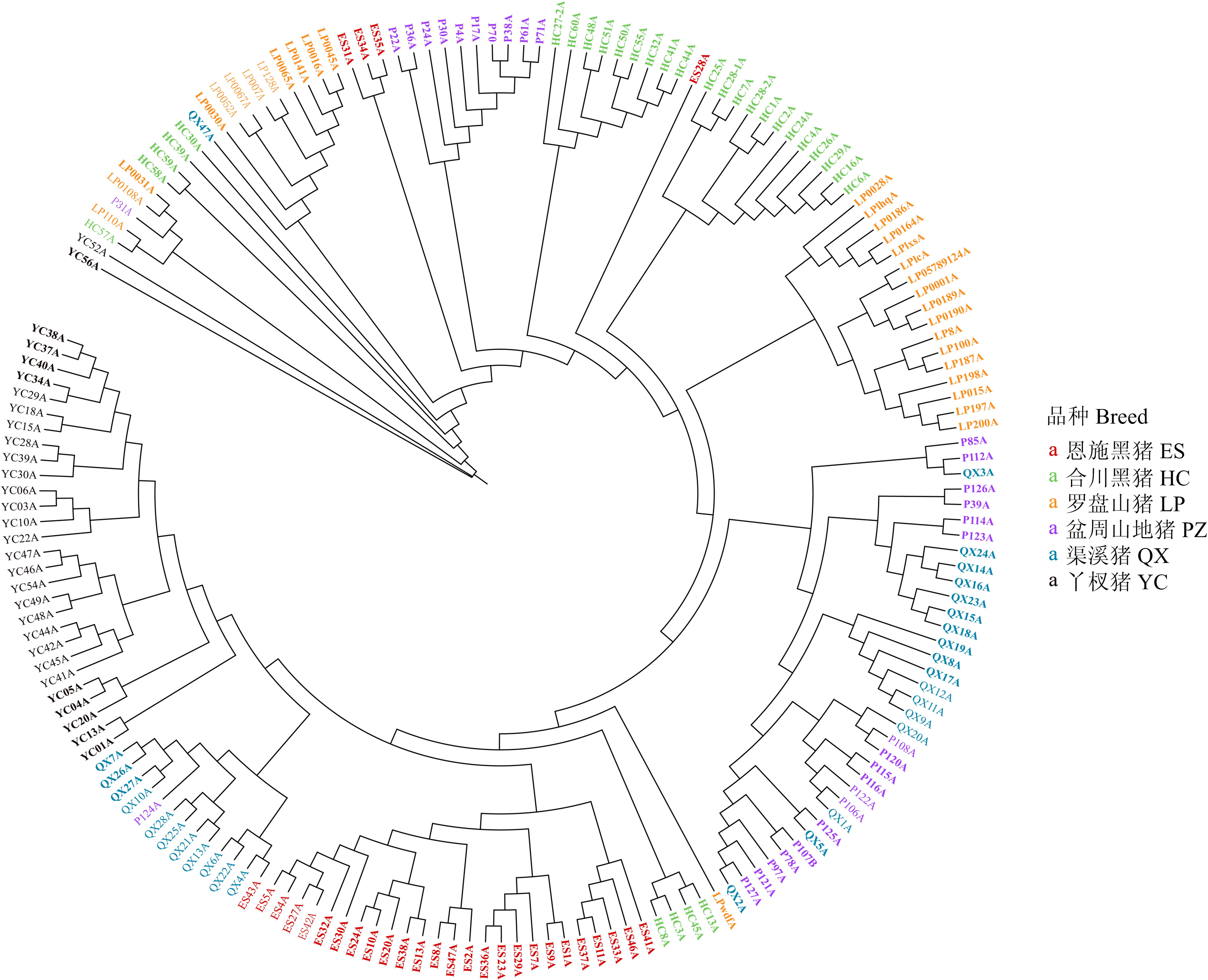
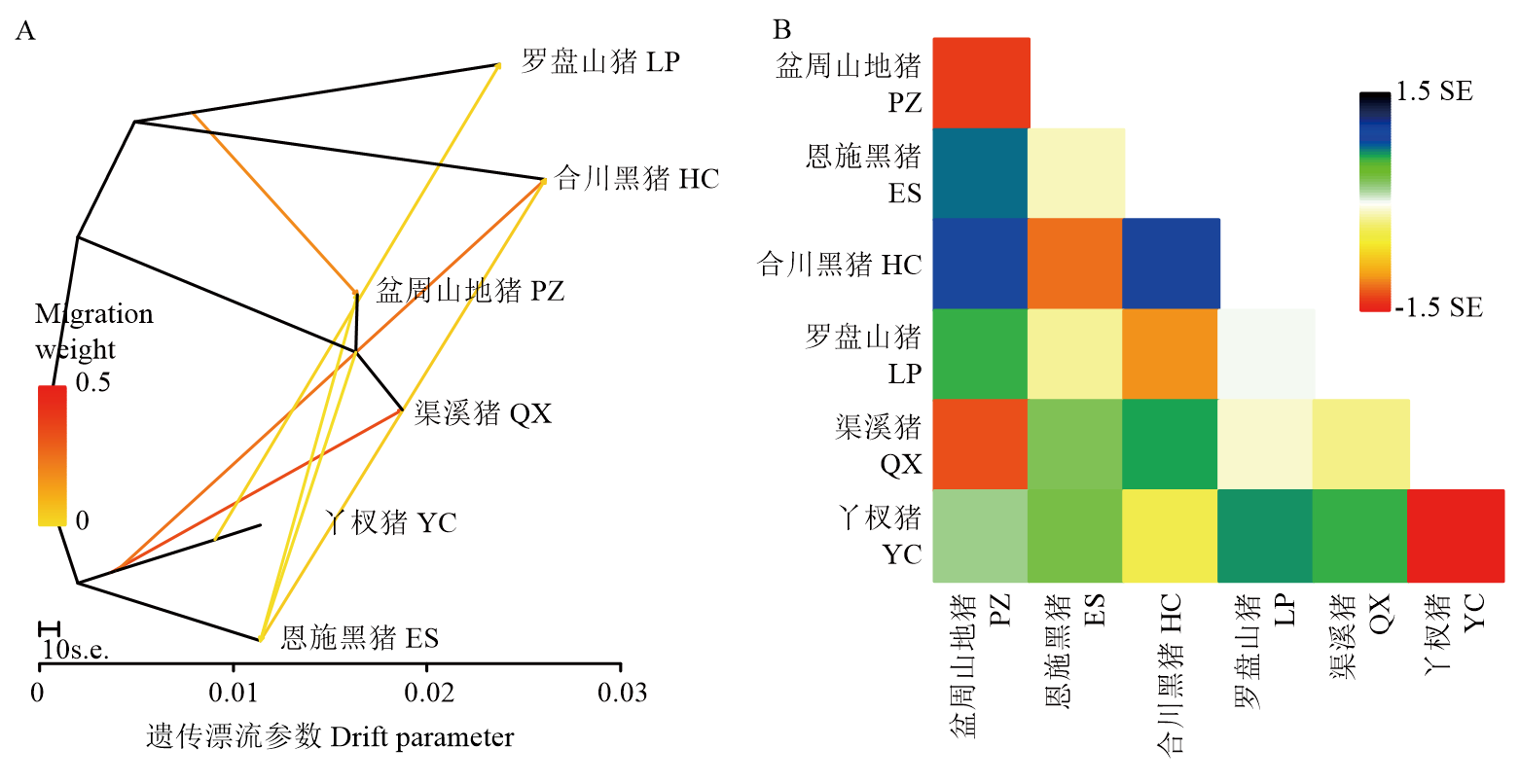
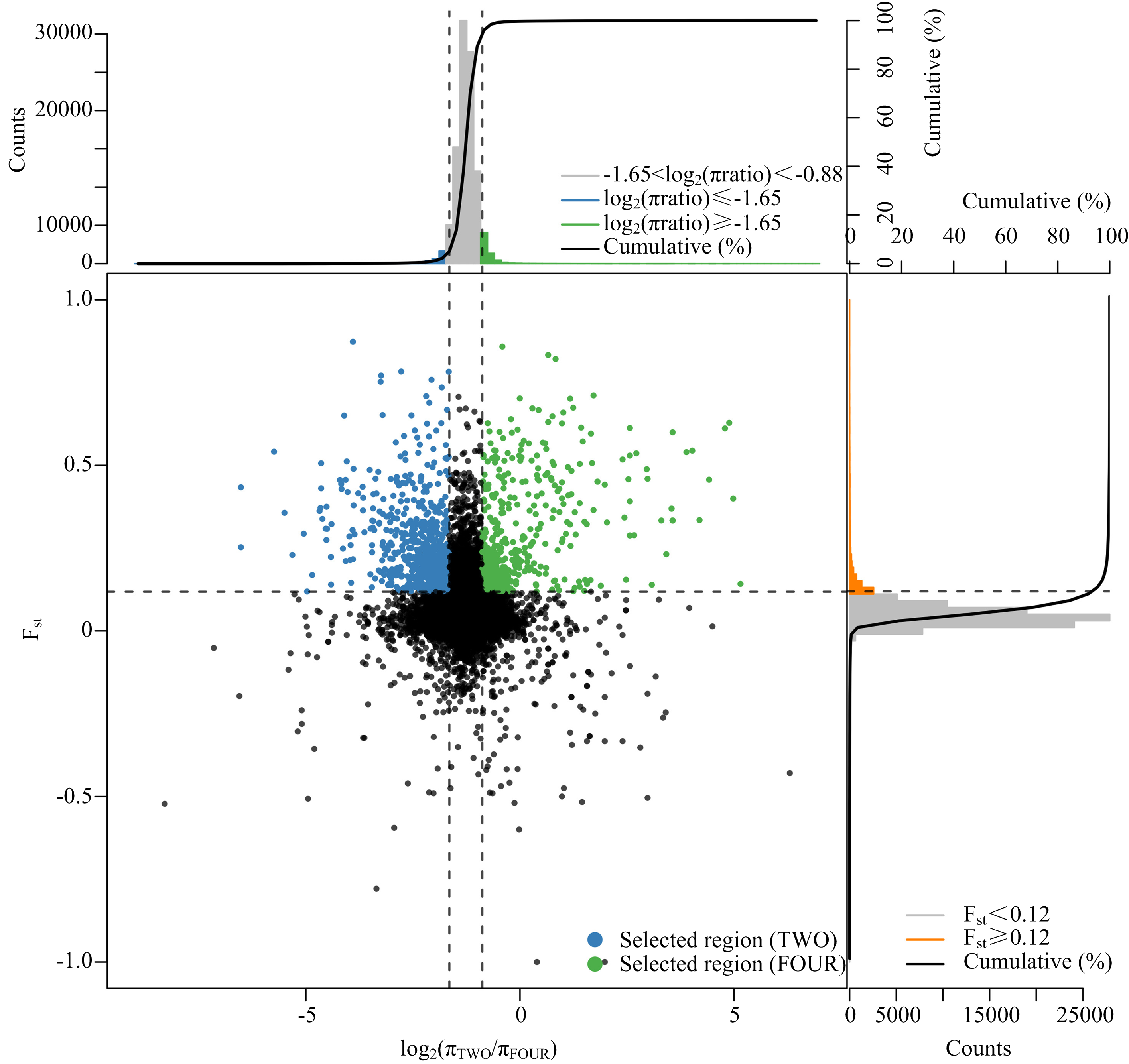
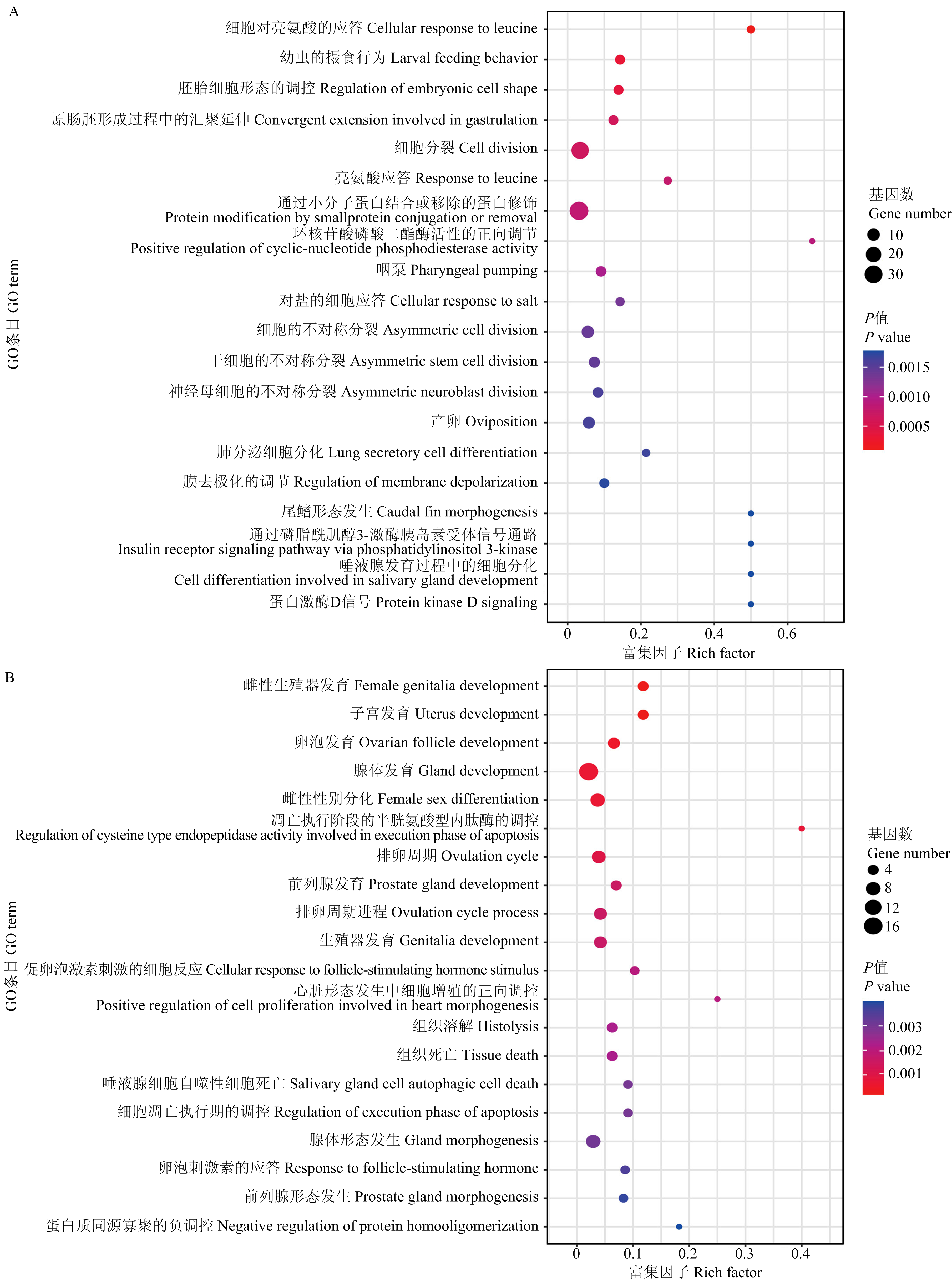
【Background】Genetic resources constitute the cornerstone of seed-industry revitalization and sustainable agriculture. Their conservation and judicious utilization are imperative for safeguarding national seed security, enhancing livestock competitiveness, and maintaining biodiversity. The Huchuan Mountain pigs, a representative indigenous pig cluster in Southwest China, possess a unique genetic background and valuable local traits. It is a crucial source of income for local farmers and underpins regional agricultural development. However, frequent outbreaks of African swine fever and intensifying market competition have severely eroded its genetic diversity. Several populations—most notably Luopanshan, Hechuan Black, and Quxi pigs—are now critically endangered, demanding urgent conservation measures. Systematically dissecting the genetic structure, population divergence, and putative adaptive variants of the Huchuan Mountain pigs is therefore of both theoretical and practical importance for informed conservation and genetic improvement.【Objective】This study aimed to comprehensively characterize the population structure and genetic differentiation of the Huchuan Mountain pigs cluster, to identify selection signatures under contrasting conservation schemes, and to uncover candidate adaptive genes, thereby providing a robust scientific basis for the conservation and genetic enhancement of local pig resources.【Method】Taking these six Huchuan Mountain pig populations as study subjects, whole-genome resequencing was performed. Based on high-quality SNP data, principal component analysis (PCA) and Admixture analysis were employed to evaluate genetic differences and admixture levels among populations, thereby revealing the genetic structure of each population. By constructing a phylogenetic tree, the kinship relationships and introgression events among populations were analyzed to further clarify their genetic connections. Combining the Fst (population genetic differentiation index) and π (nucleotide diversity) ratio, those selection signatures were detected to identify regions and candidate genes under selection during adaptive evolution in populations conserved under different conservation models. GO and KEGG functional enrichment analyses of these candidate genes were conducted to uncover their potential functions and biological characteristics related to adaptation, thus systematically dissecting the genetic structure and the genetic mechanisms underlying adaptive phenotypes in Huchuan Mountain pig populations.【Result】PCA and ADMIXTURE analysis revealed pronounced genetic differentiation among populations. Yacha and Enshi Black pigs exhibited distinct genetic backgrounds, whereas Quxi and Penzhou Mountain pigs displayed extensive genetic admixture. A subset of Hechuan Black individuals clustered closely with Enshi Black pigs, and introgression signals were detected in multiple directions, especially involving Luopanshan pigs. The phylogeny tree corroborated these findings, underscoring the complex reticulate evolution within the cluster. Selection signal analysis based on Fst and θπ ratio revealed 998 highly differentiated loci corresponding to 7 088 candidate genes in the nature-reserve conservation model and 616 highly differentiated loci corresponding to 3 360 candidate genes in the preserving farms model. Functional enrichment indicated that genes under natural selection in the nature-reserve conservation model were predominantly associated with immune response, energy metabolism, and environmental adaptation, whereas those under artificial selection in the preserving farms model were enriched for reproductive regulation, hormone signaling, and metabolic pathways, reflecting distinct genetic adaptations under different rearing and management conditions. 【Conclusion】The Huchuan Mountain pig cluster was characterized by intricate population structure and marked genetic differentiation. Nature-reserve conservation effectively preserved genetic diversity and adaptive potential, whereas preserving farms conservation enhanced production and reproductive performance. These findings provided the critical genomic evidence for designing complementary conservation strategies tailored to the sustainable utilization of this invaluable genetic resource.

Key words: Huchuan Mountain pigs, re-sequencing, whole-genome SNPs, group structure, signal selection

Table 1

Sample information of 179 individuals from six breeds"

品种
Breed
简称
Abbreviation
样本数量
Number of samples
采样地点
Location of samples
保种模式
Breed conservation model
采样时间
Sampling time
罗盘山猪
Luopanshan pig
LP 公 Male 3 重庆市潼南区新胜镇罗盘山猪保护区
Luopanshan pig conservation area in Xinsheng town, Tongnan district, Chongqing
保护区
Conservation area
2022年12月
December 2022
母 Female 27
合川黑猪
Hechuan Black pig
HC 公 Male 14 重庆市合川区龙市镇合川黑猪保护区
Hechuan black pig conservation area in Longshi town, Hechuan district, Chongqing
保护区
Conservation area
2022年12月
December 2022
母 Female 16
盆周山地猪
Penzhou Mountain pig
PZ 公 Male 15 重庆市盆周山地猪涪陵保种场
Fuling conservation farm of Penzhou mountain pig in Chongqing
保种场
Conservation farm
2022年12月
December 2022
母 Female 15
恩施黑猪
Enshi Black pig
ES 公 Male 11 湖北省恩施州地大农牧有限责任公司
Hubei Enshi prefecture dida agriculture and animal husbandry Co., Ltd.
保种场
Conservation farm
2022年12月
December 2022
母 Female 19
丫杈猪
Yacha pig
YC 公 Male 7 四川省泸州市古蔺县兰洋生态农业专业合作社
Lanyang ecological agriculture specialized cooperative in Gulin county, Luzhou city, Sichuan
保种场
Conservation farm
2022年12月
December 2022
母 Female 23
渠溪猪
Quxi pig
QX 公 Male 5 重庆市渠溪猪丰都保种场
Chongqing Fengdu conservation farm of Quxi Pig
保种场
Conservation farm
2022年12月
December 2022
母 Female 24

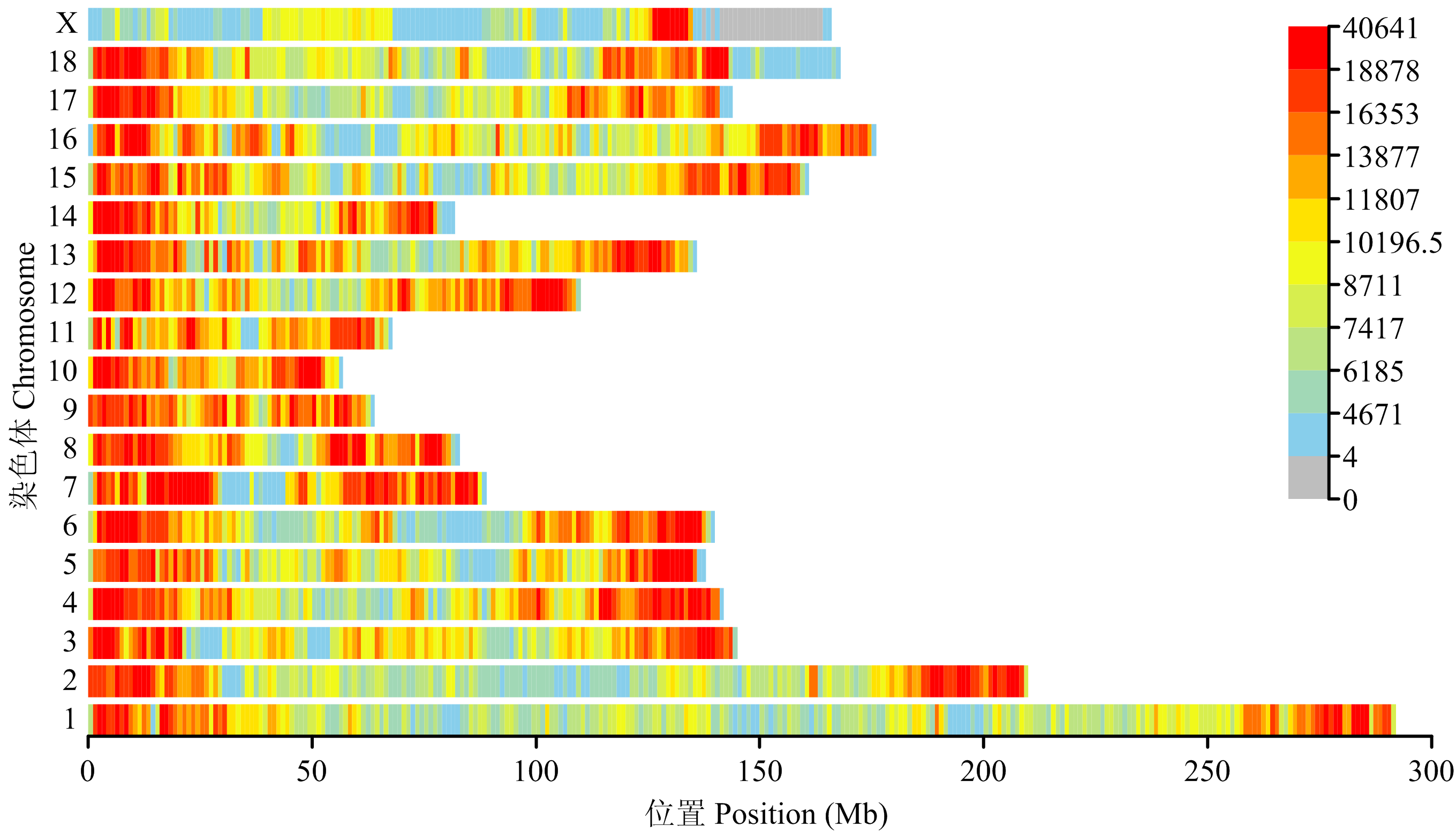
Fig. 1

Distribution of SNPs on chromosomes"

Table 2

Genetic diversity parameters analysis of Huchuan Mountain pigs"

有效等位基因数
Effective allele number
期望杂合度
Expected heterozygosity
观测杂合度
Observed heterozygosity
纯合度
Homozygosity
多态信息含量
Polymorphism information content
罗盘山猪Luopanshan pig 1.405 0.2 440 0.2 295 0.770 0.198
合川黑猪Hechuan Black pig 1.398 0.2 407 0.2 127 0.787 0.196
盆周山地猪Penzhou Mountain pig 1.446 0.2 703 0.2 625 0.737 0.220
恩施黑猪Enshi Black pig 1.467 0.2 834 0.2 830 0.717 0.231
丫杈猪Yacha pig 1.479 0.2 859 0.2 989 0.701 0.231
渠溪猪Quxi pig 1.486 0.2 948 0.3 061 0.694 0.240

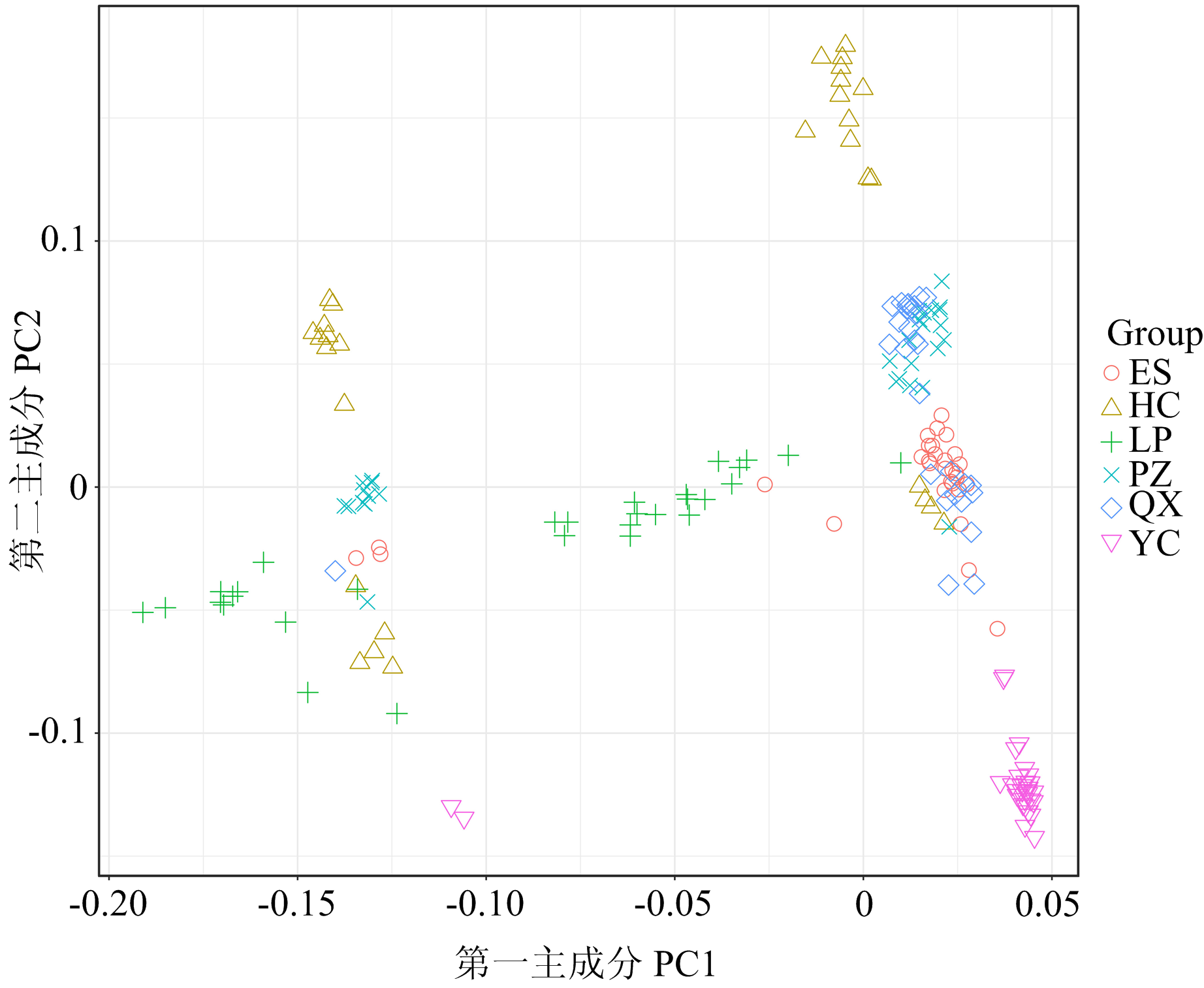
Fig. 2

Principal component analysis of Huchuan Mountain pigs"

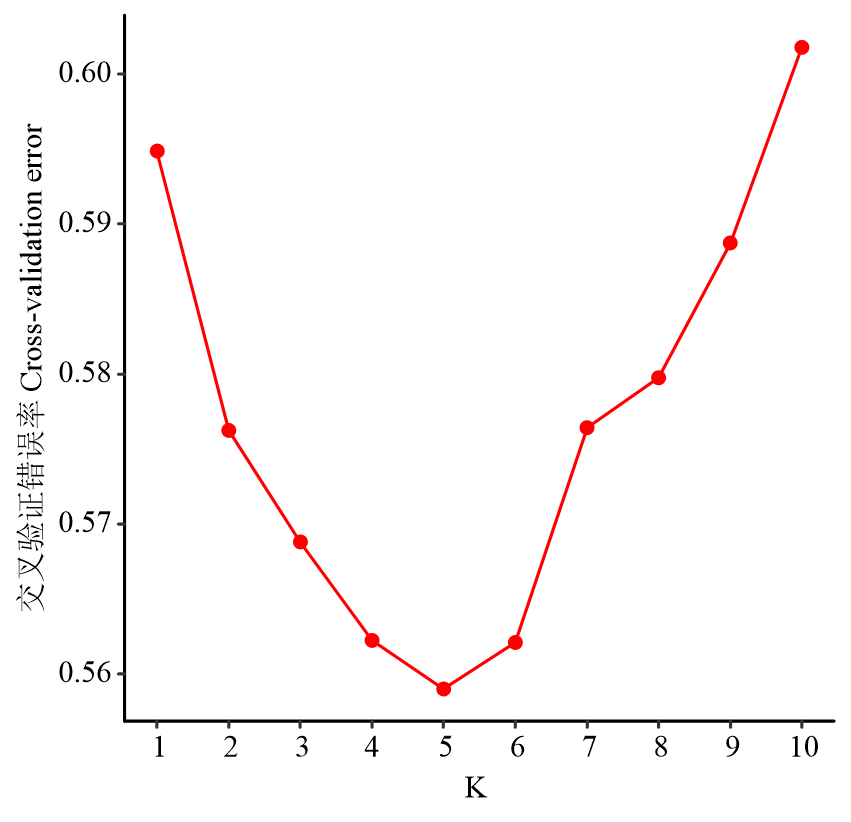
Fig. 3

Cross-validation error values at different K values"

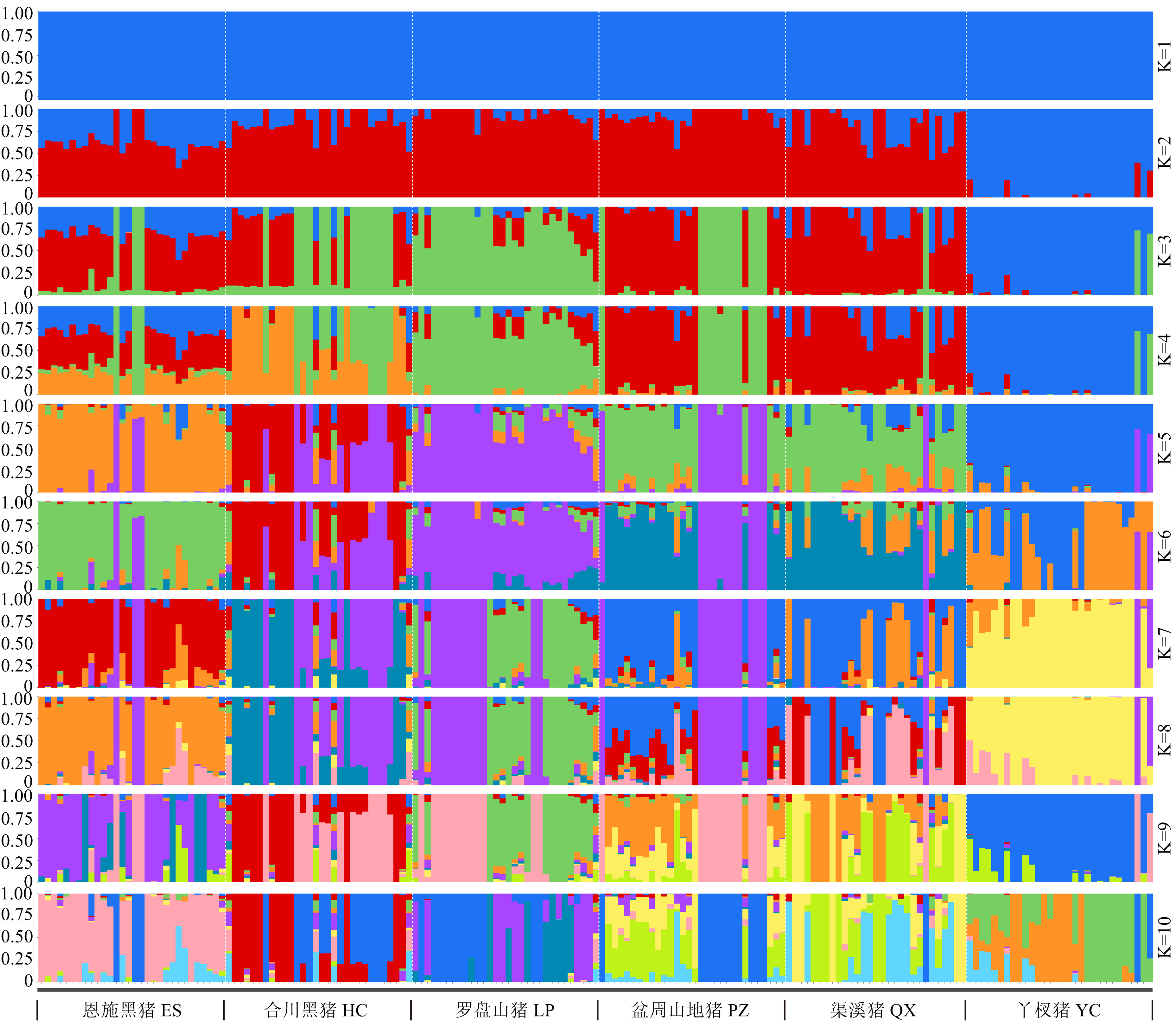
Fig. 4

Ancestral component analysis of Huchuan Mountain pigs"

Fig. 5

Phylogenetic tree of Huchuan Mountain pigs"

Fig. 6

Gene flow analysis of six groups of Huchuan Mountain pigs A: Genetic drift and introgression network among populations. The x-axis denotes drift parameter, and the color and thickness of lines correspond to migration weight, reflecting the intensity of inter-population gene flow; B: Heatmap of genetic differentiation matrix among six pig populations. The color gradient represents standardized genetic differentiation Z-score (-1.5 SE to 1.5 SE)"

Fig. 7

Identification of candidate selected regions under different conservation models in Huchuan Mountain pigs based on joint analysis of Fst and θπ ratio The x-axis represents the log2θπ ratio) between the population conserved in nature reserves (TWO) and the population conserved in breeding farms (FOUR), while the y-axis indicates the Fst values. Blue dots represent genomic regions under selection in the population conserved under the nature reserve model, and green dots represent those under selection in the population conserved under the breeding farm model. The marginal plots on the top and right show the distribution density and cumulative percentage of log2(θπ ratio) and Fst values, respectively. The selection thresholds are defined as log2(θπ ratio)≤-1.65 or≥1.65, and Fst≥0.12"

Fig. 8

GO enrichment analysis results A: GO enrichment results of candidate selected genes in the population under the nature reserve conservation model; B: GO enrichment results of candidate selected genes in the population under the breeding farm conservation model"

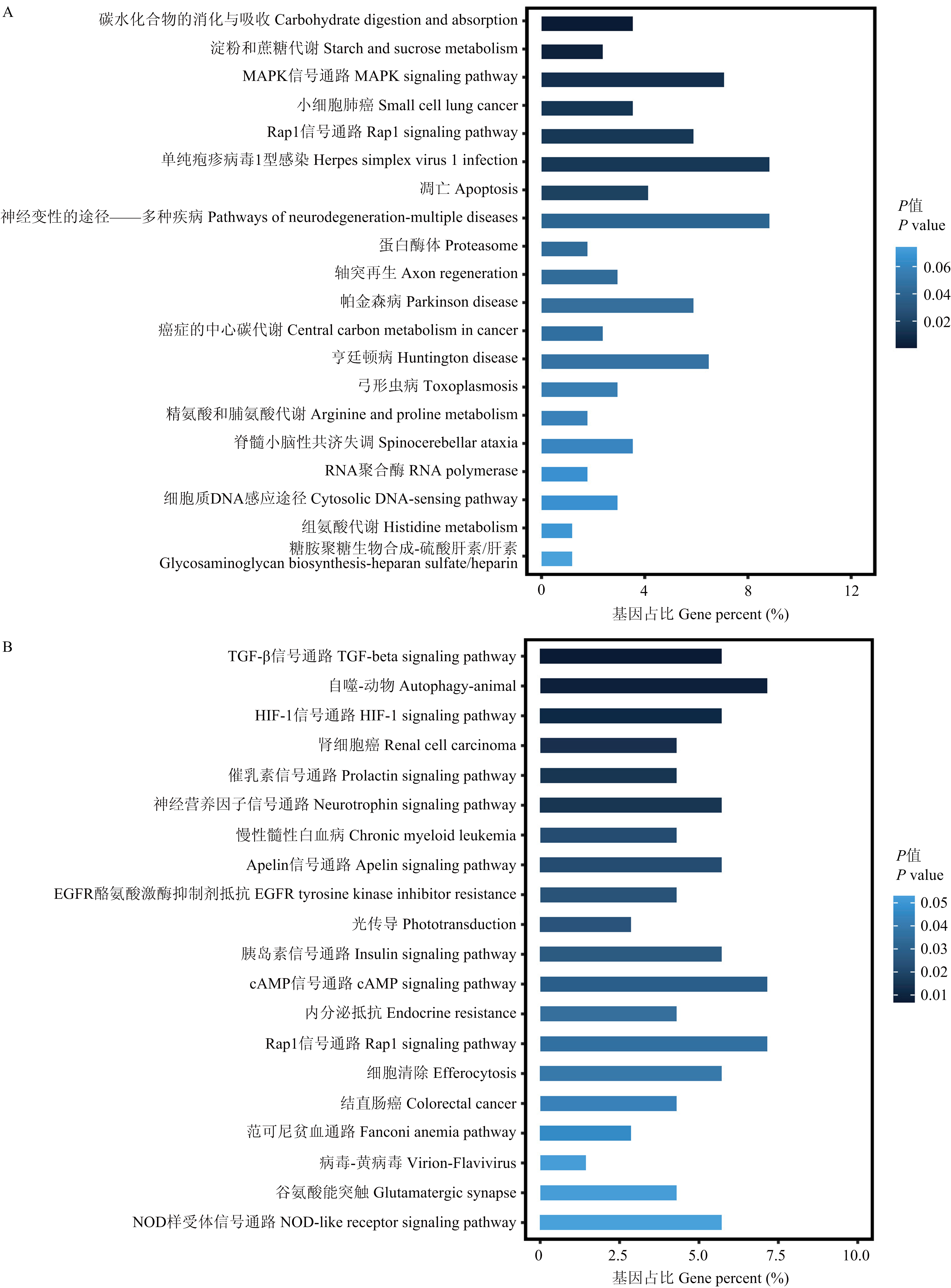
Fig. 9

KEGG enrichment analysis results A: KEGG enrichment results of candidate selected genes in the population under the nature reserve conservation model; B: KEGG enrichment results of candidate selected genes in the population under the breeding"

[1]
李林峰, 吴卓穗, 王盼, 曾检华, 胡旭进, 李剑豪, 孟繁明, 胡斌. 中国主要地方猪资源杂交利用屠宰性能对比分析. 广东畜牧兽医科技, 2024, 49(4): 24-34.

doi: 10.19978/j.cnki.xmsy.2024.04.04
LI L F, WU Z S, WANG P, ZENG J H, HU X J, LI J H, MENG F M, HU B. Comparative analysis on the slaughter performance of major endemic pig resources in China. Guangdong Journal of Animal and Veterinary Science, 2024, 49(4): 24-34. (in Chinese)
[2]
赵思思, 贾青, 胡慧艳, 李晓敏. 西南型地方猪品种资源的变化. 贵州农业科学, 2016, 44(10): 91-94.
ZHAO S S, JIA Q, HU H Y, LI X M. Change of indigenous pig breed resources in southwest China. Guizhou Agricultural Sciences, 2016, 44(10): 91-94. (in Chinese)
[3]
王旭, 尹亚斌. 四川农业大学: 保护开发利用猪品种确保生猪稳产保供. 中国畜牧业, 2021(1): 25.
WANG X, YIN Y B. Sichuan agricultural university: Protect, develop and utilize pig breeds to ensure stable production and supply of pigs. China Animal Industry, 2021(1): 25. (in Chinese)
[4]
葛桂华, 李强, 王小强, 杨舒慧, 陈映, 杨东丽. 四川省地方猪遗传资源的保护利用. 四川畜牧兽医, 2022, 49(7): 8-9.
GE G H, LI Q, WANG X Q, YANG S H, CHEN Y, YANG D L. Protection and utilization of local pig genetic resources in Sichuan Province. Sichuan Animal & Veterinary Sciences, 2022, 49(7): 8-9. (in Chinese)
[5]
国家畜禽遗传资源委员会. 中国畜禽遗传资源志-猪志. 北京: 中国农业出版社, 2011.
National Commission on Genetic Resources for Livestock and Poultry. Animal genetic resources in China. Beijing: China Agriculture Press, 2011. (in Chinese)
[6]
邓纯干, 张向东, 邓茂林. 恩施黑猪的生产性能与杂交效果测定. 中国畜牧杂志, 1983, 19(5): 33-36.
DENG C G, ZHANG X D, DENG M L. Production performance and crossbreeding effect of Enshi black pig. Chinese Journal of Animal Science, 1983, 19(5): 33-36. (in Chinese)
[7]
付玉华. 多组学分析揭示恩施黑猪经济性状相关的遗传信号和分子通路[D]. 武汉: 华中农业大学, 2017.
FU Y H. Multiple omics analysis revealed economic characters related genomic signatures and molecular pathways in Enshi black pig[D]. Wuhan: Huazhong Agricultural University, 2017. (in Chinese)
[8]
吴林慧, 孙琦, 王荔茹, 张凯丽, 谢胜松, 李新云, 赵书红, 马云龙. 恩施黑猪基因组群体遗传学参数的估计与选择信号研究. 畜牧兽医学报, 2019, 50(3): 485-494.
WU L H, SUN Q, WANG L R, ZHANG K L, XIE S S, LI X Y, ZHAO S H, MA Y L. A study of the population genetics parameters and selection signatures in Enshi black pig. Acta Veterinaria et Zootechnica Sinica, 2019, 50(3): 485-494. (in Chinese)

doi: 10.11843/j.issn.0366-6964.2019.03.003
[9]
龙熙, 柴捷, 陈力, 潘红梅, 张亮, 陈四清, 郭宗义, 张廷焕. 基于SNP芯片的盆周山地猪保种群体保种效果评估. 华北农学报, 2022, 37(S1): 358-365.

doi: 10.7668/hbnxb.20192586
LONG X, CHAI J, CHEN L, PAN H M, ZHANG L, CHEN S Q, GUO Z Y, ZHANG T H. Evaluation of the conservation effect in penzhoushandi conserved population based on SNP chip. Acta Agriculturae Boreali-Sinica, 2022, 37(S1): 358-365. (in Chinese)

doi: 10.7668/hbnxb.20192586
[10]
潘晓, 王德蓉, 周丽萍. 湖川山地猪(合川黑猪)遗传资源保护与开发利用. 中国猪业, 2013, 8(S1): 146-148.
PAN X, WANG D R, ZHOU L P. Protection, development and utilization of genetic resources of huchuan mountain pig (Hechuan black pig). China Swine Industry, 2013, 8(S1): 146-148. (in Chinese)
[11]
龙熙, 陈力, 吴平先, 张廷焕, 潘红梅, 张亮, 王金勇, 郭宗义, 柴捷. 合川黑猪保种群遗传结构及选择信号分析. 畜牧兽医学报, 2023, 54(5): 1854-1867.

doi: 10.11843/j.issn.0366-6964.2023.05.009
LONG X, CHEN L, WU P X, ZHANG T H, PAN H M, ZHANG L, WANG J Y, GUO Z Y, CHAI J. Evaluation of the genetic structure and selection signatures in Hechuan black pigs conserved population. Acta Veterinaria et Zootechnica Sinica, 2023, 54(5): 1854-1867. (in Chinese)

doi: 10.11843/j.issn.0366-6964.2023.05.009
[12]
邓娟. 湖川山地猪(罗盘山猪)的保护和开发利用. 中国猪业, 2013, 8(S1): 132-133.
DENG J. Protection, development and utilization of huchuan mountain pig (compass mountain pig). China Swine Industry, 2013, 8(S1): 132-133. (in Chinese)
[13]
陈勇. 渠溪猪保护与利用. 今日养猪业, 2008(3): 49-50.
CHEN Y. Protection and utilization of quxi pig. Pigs Today, 2008(3): 49-50. (in Chinese)
[14]
杨雪梅, 吕学斌, 何志平, 梁艳, 龚建军, 向德. 丫杈猪种质特性研究. 养猪, 2009(5): 36-38.
YANG X M, X B, HE Z P, LIANG Y, GONG J J, XIANG D. Study on germplasm characteristics of bifurcation pigs. Swine Production, 2009(5): 36-38. (in Chinese)
[15]
陶璇, 杨雪梅, 梁艳, 刘一辉, 汪勇, 孔繁晶, 雷云峰, 杨跃奎, 王言, 安瑞, 等. 基于SNP芯片的丫杈猪保种群体遗传结构研究. 畜牧兽医学报, 2023, 54(6): 2308-2319.

doi: 10.11843/j.issn.0366-6964.2023.06.011
TAO X, YANG X M, LIANG Y, LIU Y H, WANG Y, KONG F J, LEI Y F, YANG Y K, WANG Y, AN R, et al. Analysis of genetic structure of conservation population in yacha pig based on SNP chip. Acta Veterinaria et Zootechnica Sinica, 2023, 54(6): 2308-2319. (in Chinese)

doi: 10.11843/j.issn.0366-6964.2023.06.011
[16]
童雄, 罗威, 闵力, 张志飞, 马新燕, 罗成龙, 陈卫东, 徐斌, 李大刚. 基于全基因组SNPs分析陆丰黄牛和雷琼牛的群体结构与遗传多样性特征. 中国农业科学, 2023, 56(14): 2798-2811. doi: 10.3864/j.issn.0578-1752.2023.14.014.
TONG X, LUO W, MIN L, ZHANG Z F, MA X Y, LUO C L, CHEN W D, XU B, LI D G. Population structure and genetic diversity of Lufeng cattle and Leiqiong cattle based on genome- wide SNPs. Scientia Agricultura Sinica, 2023, 56(14): 2798-2811. doi: 10.3864/j.issn.0578-1752.2023.14.014. (in Chinese)
[17]
李沛, 何治霖, 谈月霞, 赵婉彤, 冯锦英, 陈贵虎, 严池, 王子豪, 黄平, 江东. 基于重测序数据与表型性状的宽皮柑橘遗传多样性分析与优异种质筛选. 中国农业科学, 2024, 57(23): 4761-4773. doi: 10.3864/j.issn.0578-1752.2024.23.014.
LI P, HE Z L, TAN Y X, ZHAO W T, FENG J Y, CHEN G H, YAN C, WANG Z H, HUANG P, JIANG D. Genetic diversity analysis of mandarin and excellent germplasm screening based on whole-genome resequencing data and phenotypic traits. Scientia Agricultura Sinica, 2024, 57(23): 4761-4773. doi: 10.3864/j.issn.0578-1752.2024.23.014. (in Chinese)
[18]
CHEN S F, ZHOU Y Q, CHEN Y R, GU J. Fastp: An ultra-fast all-in- one FASTQ preprocessor. Bioinformatics, 2018, 34(17): i884-i890.
[19]
LI H. Aligning sequence reads, clone sequences and assembly contigs with BWA-MEM. ArXiv: Genomics, 2013.
[20]
LI H, HANDSAKER B, WYSOKER A, FENNELL T, RUAN J, HOMER N, MARTH G, ABECASIS G, DURBIN R. The sequence alignment/map format and SAMtools. Bioinformatics, 2009, 25(16): 2078-2079.

doi: 10.1093/bioinformatics/btp352 pmid: 19505943
[21]
MCKENNA A, HANNA M, BANKS E, SIVACHENKO A, CIBULSKIS K, KERNYTSKY A, GARIMELLA K, ALTSHULER D, GABRIEL S, DALY M, DEPRISTO M A. The Genome Analysis Toolkit: A MapReduce framework for analyzing next-generation DNA sequencing data. Genome Research, 2010, 20(9): 1297-1303.

doi: 10.1101/gr.107524.110 pmid: 20644199
[22]
PURCELL S, NEALE B, TODD-BROWN K, THOMAS L, FERREIRA M A R, BENDER D, MALLER J, SKLAR P, DE BAKKER P I W, DALY M J, SHAM P C. PLINK: A tool set for whole-genome association and population-based linkage analyses. The American Journal of Human Genetics, 2007, 81(3): 559-575.

doi: 10.1086/519795
[23]
WICKHAM H. ggplot2. WIREs Computational Statistics, 2011, 3(2): 180-185.
[24]
KUMAR S, STECHER G, LI M, KNYAZ C, TAMURA K. MEGA X: Molecular evolutionary genetics analysis across computing platforms. Molecular Biology and Evolution, 2018, 35(6): 1547-1549.

doi: 10.1093/molbev/msy096 pmid: 29722887
[25]
YU G C, SMITH D K, ZHU H C, GUAN Y, LAM T T. Ggtree: An r package for visualization and annotation of phylogenetic trees with their covariates and other associated data. Methods in Ecology and Evolution, 2017, 8(1): 28-36.

doi: 10.1111/mee3.2017.8.issue-1
[26]
ALEXANDER D H, NOVEMBRE J, LANGE K. Fast model-based estimation of ancestry in unrelated individuals. Genome Research, 2009, 19(9): 1655-1664.

doi: 10.1101/gr.094052.109 pmid: 19648217
[27]
DANECEK P, AUTON A, ABECASIS G, ALBERS C A, BANKS E, DEPRISTO M A, HANDSAKER R E, LUNTER G, MARTH G T, SHERRY S T, MCVEAN G, DURBIN R, GROUP G P A. The variant call format and VCFtools. Bioinformatics, 2011, 27(15): 2156-2158.

doi: 10.1093/bioinformatics/btr330 pmid: 21653522
[28]
QUINLAN A R, HALL I M. BEDTools: A flexible suite of utilities for comparing genomic features. Bioinformatics, 2010, 26(6): 841-842.

doi: 10.1093/bioinformatics/btq033 pmid: 20110278
[29]
GROTH D, HARTMANN S, KLIE S, SELBIG J. Principal components analysis. Computational Toxicology. Totowa, NJ: Humana Press, 2012: 527-547.
[30]
农业农村部. 种质资源保护利用取得新突破. 植物遗传资源学报, 2025, 26(2): 404.
Ministry of Agriculture and Rural Affairs. New breakthroughs have been made in the protection and utilization of germplasm resources. Journal of Plant Genetic Resources, 2025, 26(2): 404. (in Chinese)
[31]
皮忠宽. 浅谈地方畜禽品种遗传资源保护及利用策略. 中文科技期刊数据库(全文版)农业科学, 2024, 5: 129-132.
PI Z K. A brief discussion on the conservation and utilization strategies of local livestock and poultry genetic resources. Chinese Scientific and Technological Journal Database (Full-text Edition)- Agricultural Sciences, 2024, 5: 129-132. (in Chinese)
[32]
编辑部. 加强地方畜禽遗传资源保护. 中国畜牧业, 2024, 24:8.
Editorial Department. Strengthening the conservation of local livestock and poultry genetic resources. China Animal Industry, 2024, 24: 8. (in Chinese)
[33]
李广斌. 地方优良猪品种的保护和利用探讨. 中文科技期刊数据库(全文版)农业科学, 2025, 4: 96-99.
LI G B. Discussion on the conservation and utilization of excellent local pig breeds. Chinese Scientific and Technological Journal Database (Full-text Edition) - Agricultural Sciences, 2025, 4: 96-99. (in Chinese)
[34]
张雯韬, 马思奇, 向鸿坤, 贺建华, 伍树松. 地方猪品种改良及营养调控研究进展. 中国猪业, 2024, 19(2): 3-14.
ZHANG W T, MA S Q, XIANG H K, HE J H, WU S S. Research progress on variety improvement and nutrition regulation of local pig breeds. China Swine Industry, 2024, 19(2): 3-14. (in Chinese)
[35]
朱蓓蓓, 李美发, 李杨, 曾璐瑶. 恩施黑猪饲养管理措施. 猪业科学, 2024, 41(1): 124-125.
ZHU B B, LI M F, LI Y, ZENG L Y. Management measures of Enshi black pig feeding. Swine Industry Science, 2024, 41(1): 124-125. (in Chinese)
[36]
牛丽莉, 赵叶, 林涛, 李林祥, 曾德彬, 张裕贤, 朱砺. 青峪猪的保护与利用. 四川畜牧兽医, 2021, 48(12): 40-40, 43.
NIU L L, ZHAO Y, LIN T, LI L X, ZENG D B, ZHANG Y X, ZHU L. Protection and utilization of Qingyu pig. Sichuan Animal & Veterinary Sciences, 2021, 48(12): 40-40, 43. (in Chinese)
[37]
李良华, 武华玉, 徐小娟, 宋忠旭, 彭先文, 梅书棋, 刘贵生, 董斌科, 孙华, 李明波, 胡建国. 湖川山地猪(恩施黑猪)资源之开发利用. 中国猪业, 2013, 8(S1): 101-103.
LI L H, WU H Y, XU X J, SONG Z X, PENG X W, MEI S Q, LIU G S, DONG B K, SUN H, LI M B, HU J G. Development and utilization of huchuan mountain pig (Enshi black pig) resources. China Swine Industry, 2013, 8(S1): 101-103. (in Chinese)
[38]
任宏伟. 猪基因组育种研究进展与应用趋势. 养猪, 2025(1): 17-19.
REN H W. Advances in porcine genomic breeding research and application trends. Swine Production, 2025(1): 17-19. (in Chinese)
[39]
刘国信. 加强地方猪种保护利用推动产业高质量发展. 兽药市场指南, 2024(4): 1-6.
LIU G X. Strengthening the conservation and utilization of local pig breeds to promote high-quality industry development. Veterinary Drug Market Guide, 2024(4): 1-6. (in Chinese)
[40]
ABDI H, WILLIAMS L J. Principal component analysis. Wiley Interdisciplinary Reviews, 2010, 2(4): 433-459.

doi: 10.1002/wics.v2:4
[41]
ALEXANDER D H, LANGE K. Enhancements to the ADMIXTURE algorithm for individual ancestry estimation. BMC Bioinformatics, 2011, 12(1): 246.

doi: 10.1186/1471-2105-12-246
[42]
ROBINSON D F, FOULDS L R. Comparison of phylogenetic trees. Mathematical Biosciences, 1981, 53(1/2): 131-147.

doi: 10.1016/0025-5564(81)90043-2
[43]
STEPHAN W. Selective sweeps. Genetics, 2019, 211(1): 5-13.

doi: 10.1534/genetics.118.301319 pmid: 30626638
[44]
NIELSEN R, WILLIAMSON S, KIM Y, HUBISZ M J, CLARK A G, BUSTAMANTE C. Genomic scans for selective sweeps using SNP data. Genome Research, 2005, 15(11): 1566-1575.

doi: 10.1101/gr.4252305 pmid: 16251466
[1] XU JinQing, BIAN HaiYan, CHEN TongRui, WANG Lei, WANG HanDong, YOU En, DENG Chao, TANG YouLin, SHEN YuHu. Comparison of the Genome Sequence Polymorphisms Between the Main Naked Barley Varieties Kunlun 14 and Kunlun 15 in Qinghai Province [J]. Scientia Agricultura Sinica, 2024, 57(21): 4192-4204.
[2] TONG Xiong, LUO Wei, MIN Li, ZHANG ZhiFei, MA XinYan, LUO ChengLong, CHEN WeiDong, XU Bin, LI DaGang. Population Structure and Genetic Diversity of Lufeng Cattle and Leiqiong Cattle Based on Genome-Wide SNPs [J]. Scientia Agricultura Sinica, 2023, 56(14): 2798-2811.
[3] WANG Jia, ZENG ZhaoQiong, LIANG JianQiu, YU XiaoBo, WU HaiYing, ZHANG MingRong. Development New Molecular Markers for Quantitative Trait Locus (QTL) Analysis of the Seed Protein Content Based on Whole Genome Re-Sequencing in Soybean [J]. Scientia Agricultura Sinica, 2019, 52(16): 2743-2757.
[4] QI ChuanXiang, XU KUI, MU YuLian, YANG ShuLin, LI Kui, WU TianWen. The Cloning of Porcine CBR1 Gene’s Different Copy Forms and Analysis of Its Polymorphism [J]. Scientia Agricultura Sinica, 2018, 51(8): 1607-1616.
[5] SONG Bei-zhou,WANG Mei-chao,KONG Yun,YAO Yun-cong,WU Hong-ying,HU Jing-hui,QI Li-ping,BI Ning-ning
. The Structure Characteristics of Arthropod Community in Plots of Pear Orchard Intercropped with Different Aromatic Plants
[J]. Scientia Agricultura Sinica, 2010, 43(4): 769-779 .
Viewed
Full text


Abstract

Cited

  Shared   
  Discussed   
No Suggested Reading articles found!