Scientia Agricultura Sinica ›› 2026, Vol. 59 ›› Issue (11): 2513-2525.doi: 10.3864/j.issn.0578-1752.2026.11.015

• ANIMAL SCIENCE·VETERINARY SCIENCE • Previous Articles     Next Articles

The Whole Genome Data Revealed the Characteristics of Germplasm Resource and Genetic Diversity of Fengcheng Ducks

MIAO JunJie1(), XIE PingHua2, LIAO XiaoHua3, MAO HuiRong4, XIE ChongChong2, ZHOU Jing1, TAN HongLi1, WU LiPing1, WANG YaNan1, OUYANG Jing1, YAN XueMing1, CHEN Hao1()   

  1. 1 College of Life Sciences, Jiangxi Normal University of Science and Technology, Nanchang 330013
    2 Fengcheng Feihuang Poultry Co., LTD, Fengcheng 331100, Jiangxi
    3 Fengcheng Bureau of Agriculture and Rural Affairs, Fengcheng 331100, Jiangxi
    4 Jiangxi Agricultural University, Nanchang 330045
  • Received:2024-11-29 Accepted:2026-04-17 Online:2026-06-01 Published:2026-06-03
  • Contact: CHEN Hao

Abstract:

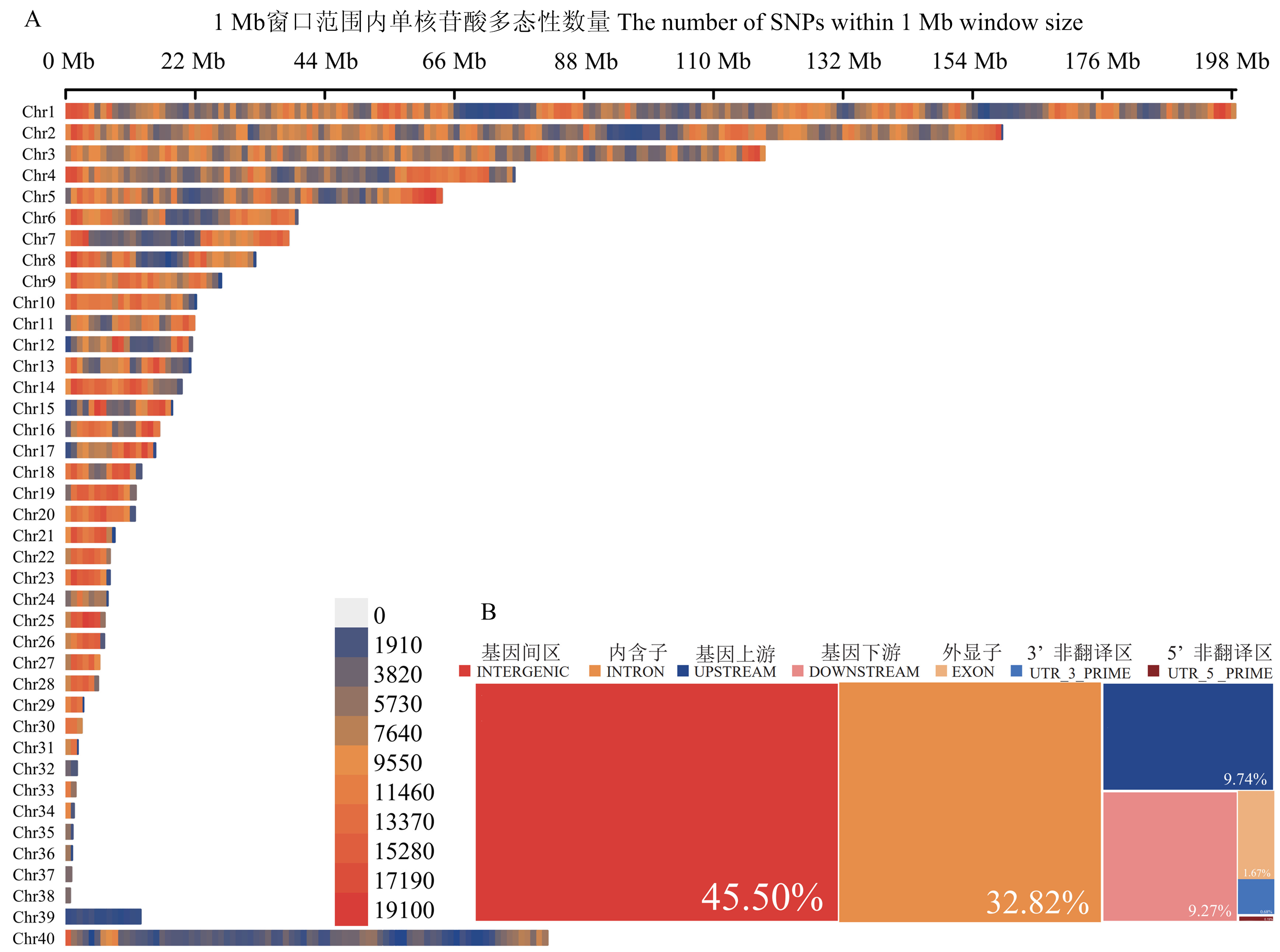
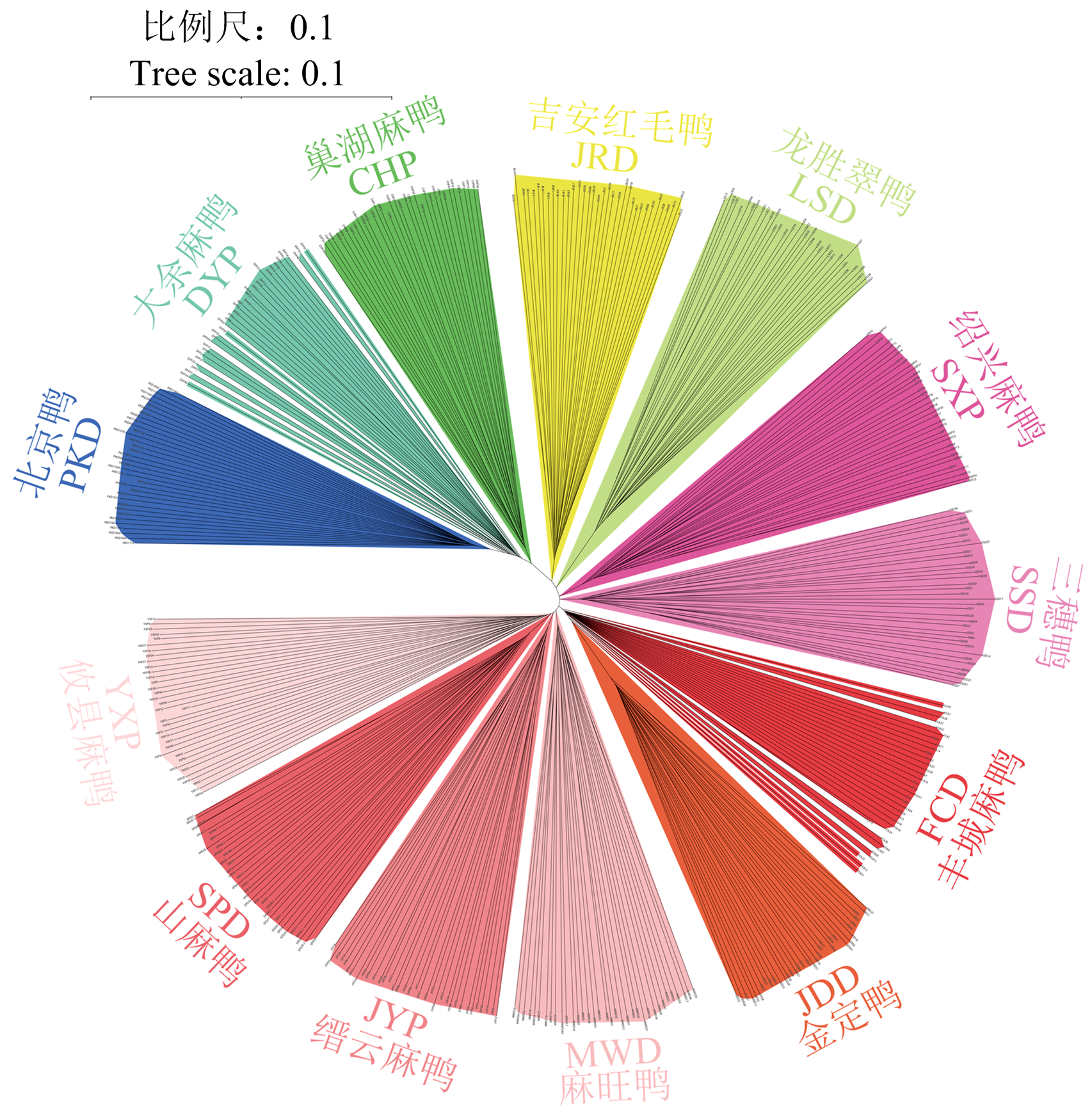
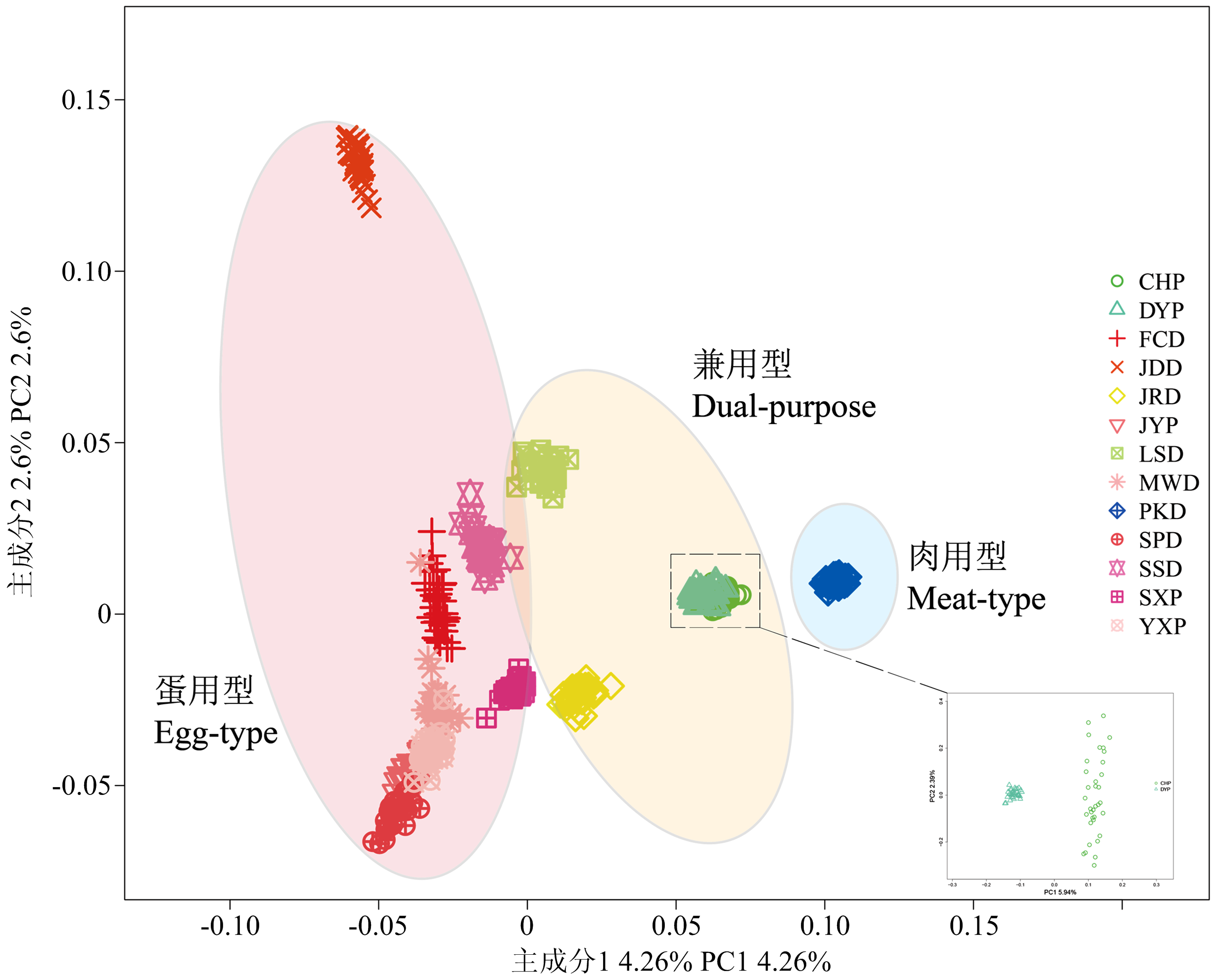
【Objective】 This study aims to investigate the phylogenetic relationships between Fengcheng duck (FCD) and Chinese indigenous duck breeds, analyze the genetic diversity and genetic structure of FCD and other duck breeds, so as to provide a theoretical foundation for the identification and conservation of Chinese indigenous duck resources. 【Method】 Whole-genome resequencing at 12× coverage was performed on blood samples from 35 FCD individuals. Genome data from 420 individuals of 12 breeds from different regions in China were integrated, totaling 455 individuals across 13 breeds. Using a high-quality Ji'an Red duck genome as a reference, genome single nucleotide polymorphisms (SNPs) were detected using GATK software, and all variants were annotated using SnpEff software. Based on autosomal SNPs, a phylogenetic tree was constructed, and PCA clustering and Admixture analysis were performed to assess the population structure of indigenous ducks. Six parameters, were used to evaluate population genetic diversity, including common SNPs, expected heterozygosity, observed heterozygosity, inbreeding coefficient, population genetic distance, and runs of homozygosity, and the fixation index (Fst) was employed to quantify the degree of differentiation between populations.【Result】A total of 8 656 794 SNPs were detected in the FCD population, with an average of one variant per 132 base pairs. Combined with the genomic data of other local duck breeds, a total of 8 889 170 SNPs were detected, which were mainly enriched in intergenic regions (45.50%), followed by intronic regions (32.82%), upstream regions (9.74%), downstream regions (9.27%), and exonic regions (1.67%). In protein-coding genes, 54 150 missense mutations, 117 021 synonymous mutations, 74 667 3'UTR mutations, 73 start codon mutations, 1 162 stop-loss mutations, 210 start-loss mutations, and 2 346 stop-gain mutations were identified. The results of the phylogenetic tree, PCA, and Admixture analyses showed that each breed clustered independently, with significant differentiation among meat-type, dual-purpose, and egg-type duck groups. The relationships between different breeds were more based on economic use rather than geographical distance. FCD clustered with egg-type duck groups, particularly showing the closest relationship with Youxian duck. Genetic admixture was observed among some individuals of different duck breeds. Beijing duck and Jinding duck had higher inbreeding coefficients, fewer common SNPs, lower heterozygosity, and longer runs of homozygosity, indicating reduced genetic diversity due to strong artificial selection, whereas FCD exhibited the highest number of common SNPs and heterozygosity, indicating rich genetic diversity. 【Conclusion】 Using whole-genome SNP markers, this study systematically analyzed the genetic structure and diversity characteristics of Chinese indigenous ducks and Fengcheng ducks, providing important data support for the independent classification and conservation of Chinese indigenous duck resources.

Key words: Fengcheng duck, Chinese local duck, whole-genome SNPs, population structure, genetic diversity

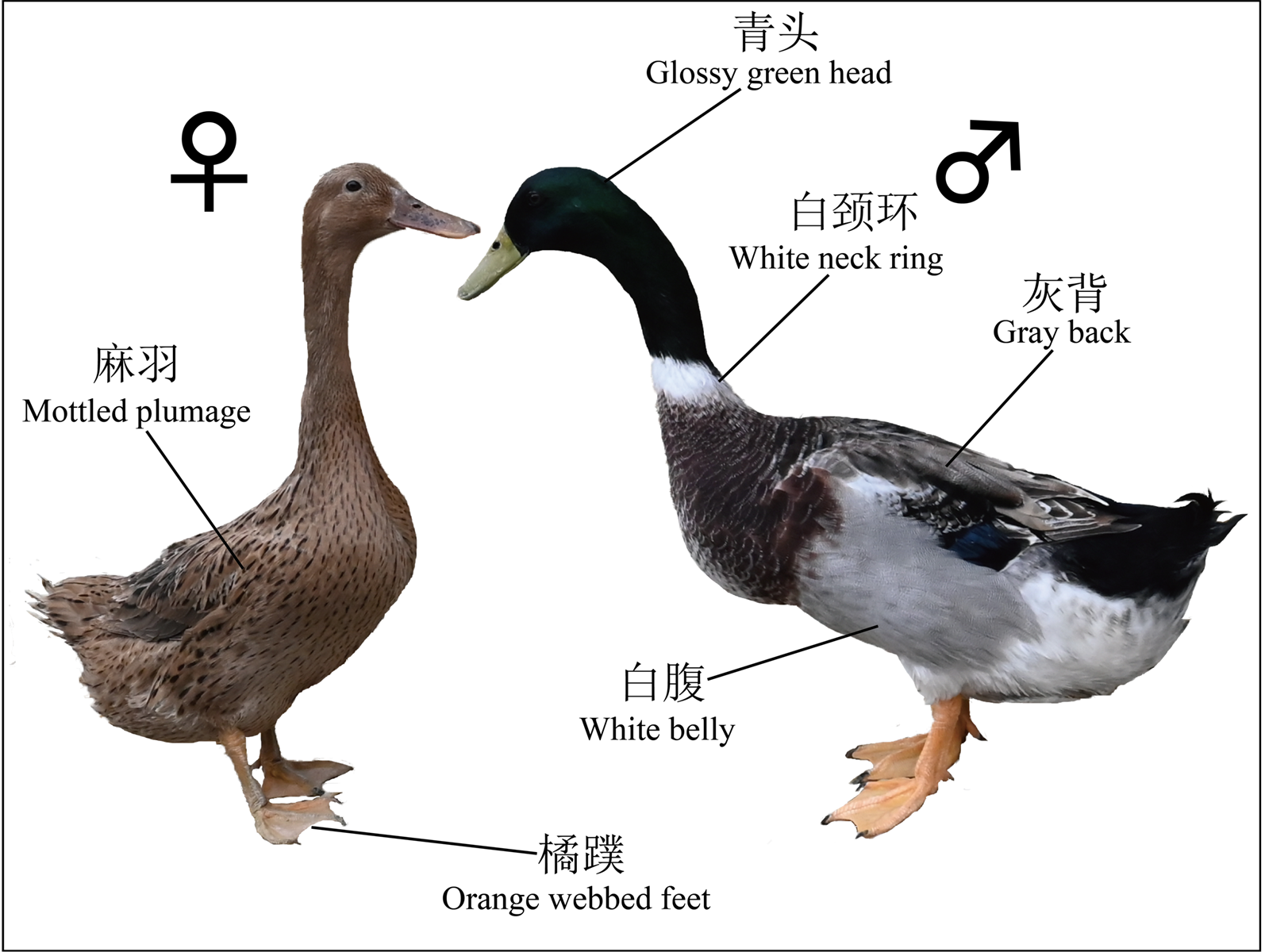
Fig. 1

Fengcheng duck"

Table 1

Sample origin"

品种
Breed
品种代号
Breed code
样本量
Sample size
原产地
Origin region
地理气候
Geographical climate
经济类型
Economic type
巢湖麻鸭Chaohu duck CHP 35 安徽巢湖Chaohu, Anhui 平原湿地Plain wetland 兼用型Dual-purpose
大余麻鸭Dayu duck DYP 35 江西大余Dayu, Jiangxi 山地丘陵Mountainous hilly 兼用型Dual-purpose
丰城麻鸭Fengcheng duck FCD 35 江西丰城Fengcheng, Jiangxi 平原湿地Plain wetland 蛋用型Egg-type
金定鸭Jinding duck JDD 35 福建漳州Zhangzhou, Fujian 海湾滩涂Bay tidal flat 蛋用型Egg-type
吉安红毛鸭Ji'an Red-feather duck JRD 35 江西吉安Ji'an, Jiangxi 山地丘陵Mountainous hilly 兼用型Dual-purpose
缙云麻鸭Jinyun duck JYP 35 浙江缙云Jinyun, Zhejiang 山地丘陵Mountainous hilly 兼用型Dual-purpose
龙胜翠鸭Longsheng duck LSD 35 广西龙胜Longsheng, Guangxi 山地丘陵Mountainous hilly 兼用型Dual-purpose
麻旺鸭Mawang duck MWD 35 湖北鹤峰Hefeng, Hubei 山地丘陵Mountainous hilly 蛋用型Egg-type
北京鸭Peking duck PKD 35 中国北京Beijing, China 平原Plain 肉用型Meat-type
山麻鸭Shanma duck SPD 35 福建龙岩Longyan, Fujian 山地丘陵Mountainous hilly 蛋用型Egg-type
三穗鸭Sansui duck SSD 35 贵州三穗Sansui, Guizhou 山地丘陵Mountainous hilly 蛋用型Egg-type
绍兴麻鸭Shaoxing duck SXP 35 浙江绍兴Shaoxing, Zhejiang 山地丘陵Mountainous hilly 蛋用型Egg-type
攸县麻鸭Youxian duck YXP 35 湖南攸县Youxian, Hunan 平原湿地Plain wetland 蛋用型Egg-type
总计 Total 455

Fig. 2

Density distribution of SNPs on chromosomes in 455 Chinese local ducks A: Density distribution of SNPS on chromosomes of 13 Chinese local duck species, with colors from blue to red indicating SNP density from low to high; B: The proportion of variation types of 13 Chinese local ducks, and the size of color block indicates the proportion of each type to the total variation"

Fig. 3

Contiguous evolutionary trees of 13 Chinese local duck species constructed based on IBS distances"

Fig. 4

Principal component analysis of autosomal SNPs in the genomes of 13 Chinese local ducks"

Fig. 5

Assessment of Admixture population structure of local ducks in China at different values of K"

Table 2

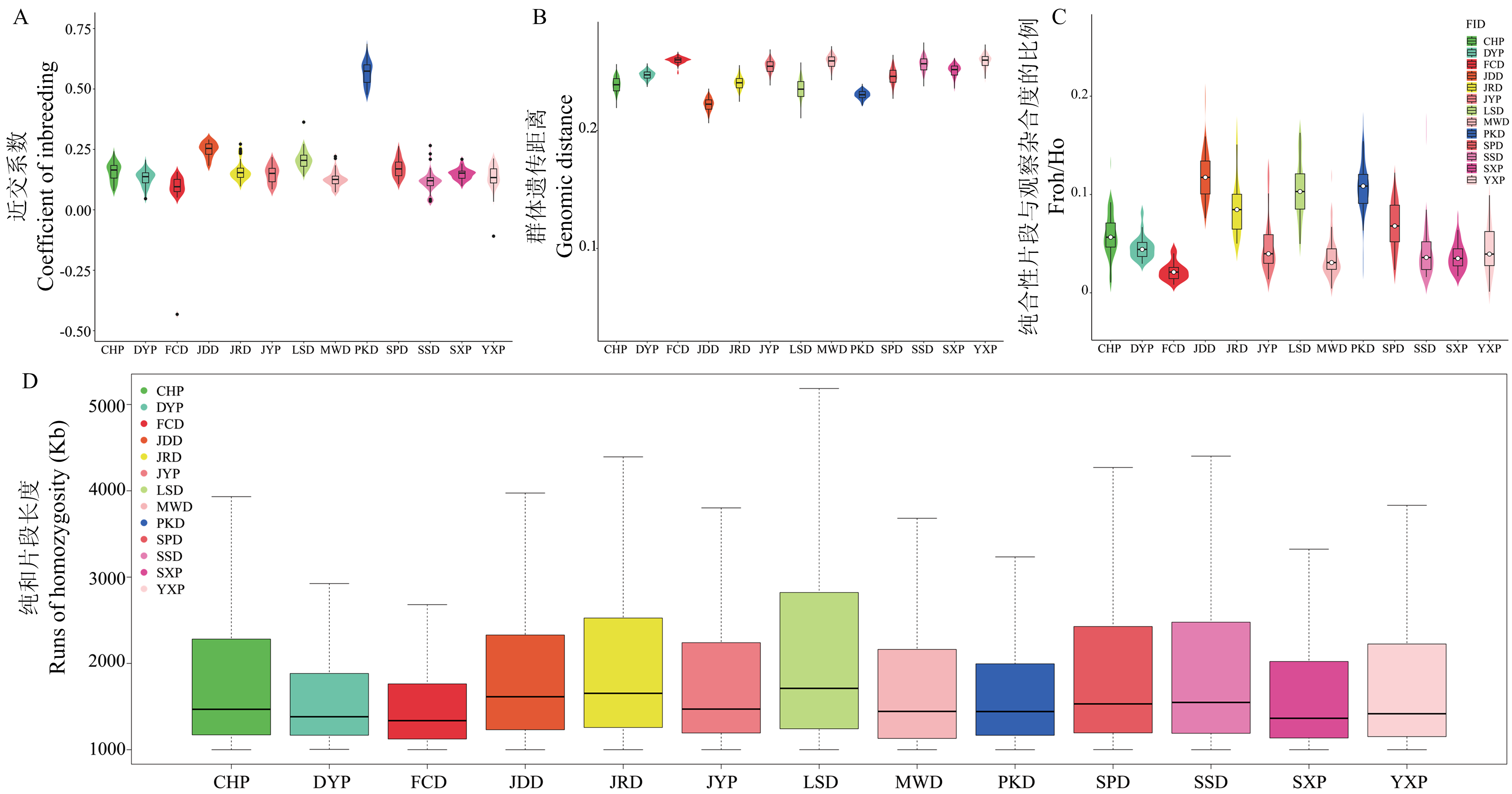
Nucleotide and genetic diversity parameters of local ducks in China"

品种代号 Breed code Csnp Pn He Ho F DST ROH
CHP 4215869 0.903 0.283 0.271 0.16±0.04 0.238±0.010 5.90±2.43
DYP 4271257 0.961 0.292 0.28 0.13±0.04 0.246±0.007 4.64±1.24
FCD 4572552 0.985 0.312 0.307 0.09±0.10 0.259±0.006 2.19±0.94
JDD 3994489 0.844 0.263 0.249 0.25±0.03 0.221±0.008 12.17±2.81
JRD 4270744 0.911 0.284 0.27 0.16±0.04 0.239±0.008 8.89±3.07
JYP 4418259 0.953 0.298 0.282 0.15±0.04 0.252±0.012 4.92±2.92
LSD 4092656 0.903 0.276 0.261 0.21±0.04 0.233±0.013 10.89±3.66
MWD 4469107 0.966 0.303 0.285 0.13±0.03 0.257±0.010 3.77±2.30
PKD 3482916 0.821 0.241 0.141 0.57±0.05 0.230±0.004 10.67±3.06
SPD 4306058 0.93 0.289 0.273 0.17±0.04 0.244±0.013 6.86±2.49
SSD 4486689 0.964 0.303 0.291 0.12±0.05 0.254±0.013 4.52±3.49
SXP 4346655 0.949 0.294 0.278 0.15±0.02 0.249±0.010 3.70±1.44
YXP 4494220 0.973 0.305 0.289 0.13±0.06 0.258±0.007 4.55±2.87
Total 55421471

Fig. 6

Genetic diversity of 13 Chinese local duck species A: The inbreeding number F of each breed, where a larger F represents more frequent inbreeding within the population; B: The intra-population genetic distance DST of each breed, where a smaller DST represents the closer relatedness of individuals within the population; C: Froh/Ho levels of each breed, with greater Froh/Ho indicating greater genetic diversity of the population; D: The distribution of ROH of homozygous fragments in each breed, with higher ROH and longer ROH indicating lower genetic diversity"

Table 3

Genetic differentiation indices between Fengcheng Duck and other local duck breeds"

品种代号Breed code 产地Origin region 经济类型Economic type Fst值Fst value
YXP 湖南攸县Youxian, Hunan 蛋用型Egg-type 0.021
MWD 湖北鹤峰Hefeng, Hubei 蛋用型Egg-type 0.024
JYP 浙江缙云Jinyun, Zhejiang 兼用型Dual-purpose 0.030
SSD 贵州三穗Sansui, Guizhou 蛋用型Egg-type 0.032
SPD 福建龙岩Longyan, Fujian 蛋用型Egg-type 0.042
SXP 浙江绍兴Shaoxing, Zhejiang 蛋用型Egg-type 0.042
DYP 江西大余Dayu, Jiangxi 兼用型Dual-purpose 0.054
JRD 江西吉安Ji'an, Jiangxi 兼用型Dual-purpose 0.062
JDD 福建漳州Zhangzhou, Fujian 蛋用型Egg-type 0.067
CHP 安徽巢湖Chaohu, Anhui 兼用型Dual-purpose 0.070
LSD 广西龙胜Longsheng, Guangxi 兼用型Dual-purpose 0.073
PKD 中国北京Beijing, China 肉用型Meat-type 0.102

Fig. 7

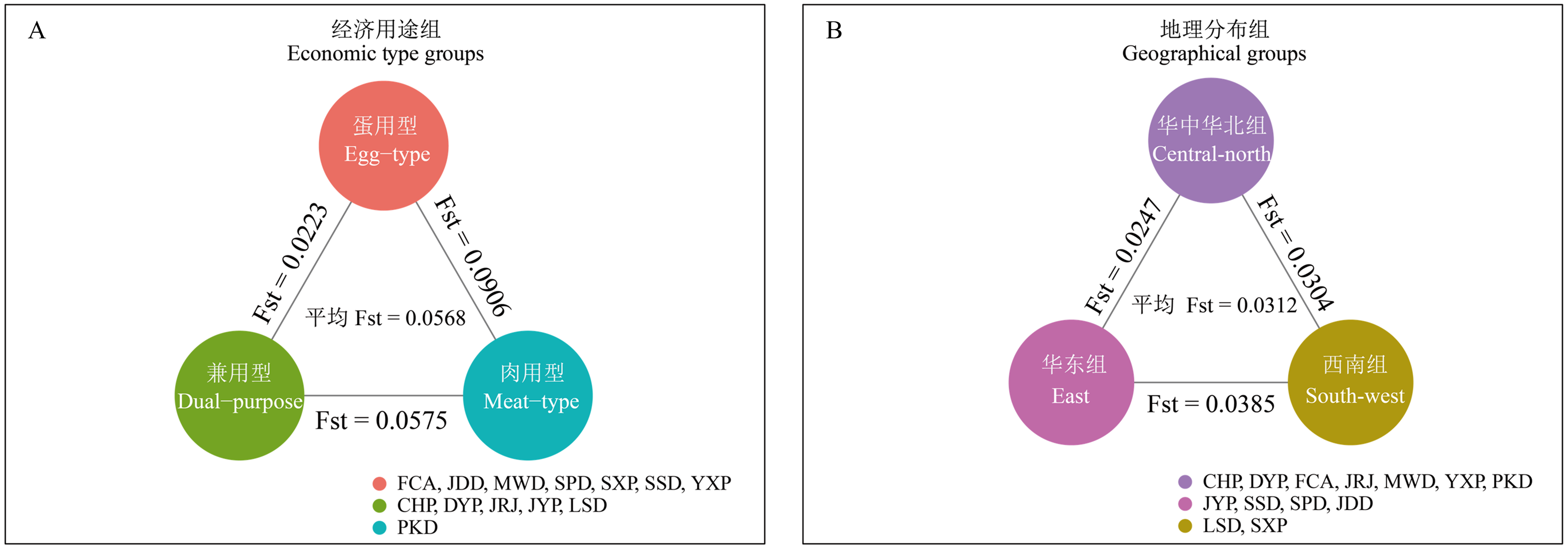
Analysis of genetic differentiation (Fst) among Chinese local duck populations under different classification criteria A: Comparisons of Fst among groups classified by economic type, including Egg-type, Meat-type, and Dual-purpose groups. B: Comparisons of Fst among groups classified by geographical region, including Central-North, East, and South-west groups Circles represent different economic or geographical groups, values on the connecting lines indicate the mean pairwise Fst between groups, and the central Mean Fst represents the overall average genetic differentiation under each classification criterion. Breed abbreviations included in each group are provided in the legend below the figure"

[1]
Food and Agriculture Organization of the United Nations (FAO). FAOSTAT Database[DB/OL]. 2024, [2026-03-16]. https://www.fao.org/faostat/en/#data.
[2]
侯水生, 刘灵芝. 2025年水禽产业与技术发展报告[J/OL]. 中国畜牧杂志,1-12[2026-03-16]. Doi:10.19556/j.0258-7033.20260228-10.
HOU S S, LIU L Z. 2025 Waterfowl Industry and Technology Development Report[J/OL]. Chinese Journal of Animal Science, 1-12 [2026-03-16]. Doi:10.19556/j.0258-7033.20260228-10. (in Chinese)
[3]
QIAO R, LI X, HAN X, WANG K, LV G, REN G, LI X. Population structure and genetic diversity of four Henan pig populations. Animal Genetics, 2019, 50(3): 262-265.

doi: 10.1111/age.12775 pmid: 30883844
[4]
CAI Z X, SARUP P, OSTERSEN T, NIELSEN B, FREDHOLM M, KARLSKOV-MORTENSEN P, SØRENSEN P, JENSEN J, GULDBRANDTSEN B, LUND M S, CHRISTENSEN O F, SAHANA G. Genomic diversity revealed by whole-genome sequencing in three Danish commercial pig breeds. Journal of Animal Science, 2020, 98(7): skaa229.
[5]
BHATI M, KADRI N K, CRYSNANTO D, PAUSCH H. Assessing genomic diversity and signatures of selection in Original Braunvieh cattle using whole-genome sequencing data. BMC Genomics, 2020, 21(1): 27.

doi: 10.1186/s12864-020-6446-y pmid: 31914939
[6]
CHO Y, KIM J Y, KIM N. Comparative genomics and selection analysis of Yeonsan Ogye black chicken with whole-genome sequencing. Genomics, 2022, 114(2): 110298.

doi: 10.1016/j.ygeno.2022.110298
[7]
CHEN H, LUO K Y, WANG C, XUAN R, ZHENG S M, TANG H B, LI Y H, XIONG Y P, WU Y F, WANG L P, OUYANG J, YAN X M. Genomic characteristics and selection signals of Zhongshan ducks. Animal, 2023, 17(5): 100797.

doi: 10.1016/j.animal.2023.100797
[8]
ZHENG S M, OUYANG J, LIU S Y, TANG H B, XIONG Y P, YAN X M, CHEN H. Genomic signatures reveal selection in Lingxian white goose. Poultry Science, 2023, 102(1): 102269.

doi: 10.1016/j.psj.2022.102269
[9]
SUN J L, CHEN T, ZHU M, WANG R, HUANG Y F, WEI Q, YANG M M, LIAO Y Y. Whole-genome sequencing revealed genetic diversity and selection of Guangxi indigenous chickens. PLoS ONE, 2022, 17(3): e0250392.

doi: 10.1371/journal.pone.0250392
[10]
ZHANG Z, JIA Y, CHEN Y, WANG L, LV X, YANG F, HE Y, NING Z, QU L. Genomic variation in Pekin duck populations developed in three different countries as revealed by whole-genome data. Animal Genetics, 2018, 49(2): 132-136.

doi: 10.1111/age.12639 pmid: 29388248
[11]
SU Y, LONG R J, CHEN G H, WU X S, XIE K Z, WAN J H. Genetic analysis of six endangered local duck populations in China based on microsatellite markers. Journal of Genetics and Genomics, 2007, 34(11): 1010-1018.

pmid: 18037138
[12]
FENG P S, ZENG T, YANG H, CHEN G H, DU J P, CHEN L, SHEN J D, TAO Z R, WANG P, YANG L, LU L Z. Whole-genome resequencing provides insights into the population structure and domestication signatures of ducks in Eastern China. BMC Genomics, 2021, 22(1): 401.

doi: 10.1186/s12864-021-07710-2 pmid: 34058976
[13]
BOLGER A M, LOHSE M, USADEL B. Trimmomatic: A flexible trimmer for Illumina sequence data. Bioinformatics, 2014, 30(15): 2114-2120.

doi: 10.1093/bioinformatics/btu170 pmid: 24695404
[14]
LI H, DURBIN R. Fast and accurate short read alignment with Burrows-Wheeler transform. Bioinformatics, 2009, 25(14): 1754-1760.

doi: 10.1093/bioinformatics/btp324 pmid: 19451168
[15]
LI H, HANDSAKER B, WYSOKER A, FENNELL T, RUAN J, HOMER N, MARTH G, ABECASIS G, DURBIN R. The sequence alignment/map format and SAMtools. Bioinformatics, 2009, 25(16): 2078-2079.

doi: 10.1093/bioinformatics/btp352 pmid: 19505943
[16]
MCKENNA A, HANNA M, BANKS E, SIVACHENKO A, CIBULSKIS K, KERNYTSKY A, GARIMELLA K, ALTSHULER D, GABRIEL S, DALY M, DEPRISTO M A. The Genome Analysis Toolkit: A MapReduce framework for analyzing next-generation DNA sequencing data. Genome Research, 2010, 20(9): 1297-1303.

doi: 10.1101/gr.107524.110 pmid: 20644199
[17]
CHANG C C, CHOW C C, TELLIER L C, VATTIKUTI S, PURCELL S M, LEE J J. Second-generation PLINK: rising to the challenge of larger and richer datasets. Gigascience, 2015, 4: s13742-15-0047-8.
[18]
CINGOLANI P, PLATTS A, WANG L L, COON M, NGUYEN T, WANG L, LAND S J, LU X Y, RUDEN D M. A program for annotating and predicting the effects of single nucleotide polymorphisms, SnpEff: SNPs in the genome of Drosophila melanogaster strain w1118; iso-2; iso-3. Fly, 2012, 6(2): 80-92.
[19]
LETUNIC I, BORK P. Interactive Tree Of Life (iTOL) v5: An online tool for phylogenetic tree display and annotation. Nucleic Acids Research, 2021, 49(W1): W293-W296.

doi: 10.1093/nar/gkab301
[20]
YANG J, LEE S H, GODDARD M E, VISSCHER P M. GCTA: A tool for genome-wide complex trait analysis. The American Journal of Human Genetics, 2011, 88(1): 76-82.

doi: 10.1016/j.ajhg.2010.11.011
[21]
ALEXANDER D H, NOVEMBRE J, LANGE K. Fast model-based estimation of ancestry in unrelated individuals. Genome Research, 2009, 19(9): 1655-1664.

doi: 10.1101/gr.094052.109 pmid: 19648217
[22]
唐兆子, 唐健. 绿头鸭是家鸭的祖先. 科学课, 2003(1): 59.
TANG Z Z, TANG J. The mallard is the ancestor of domestic ducks. Lesson Science, 2003(1): 59. (in Chinese)
[23]
何大乾. 中国主要地方鸭种线粒体DNA部分序列的遗传多样性及其起源进化研究[D]. 雅安: 四川农业大学, 2007.
HE D Q. Study on the genetic diversity of the mtDNA partial sequences and its evolution for the main Chinese domestic duck[D]. Yaan: Sichuan Agricultural University, 2007. (in Chinese)
[24]
LI H F, ZHU W Q, SONG W T, SHU J T, HAN W, CHEN K W. Origin and genetic diversity of Chinese domestic ducks. Molecular Phylogenetics and Evolution, 2010, 57(2): 634-640.

doi: 10.1016/j.ympev.2010.07.011
[25]
施威, 赖闽苏, 王思明. 南京鸭肴文化的历史演进与现代释义. 农业考古, 2014(6): 260-263.
SHI W, LAI M S, WANG S M. Historical evolution and modern interpretation of Nanjing duck dish culture. Agricultural Archaeology, 2014(6): 260-263. (in Chinese)
[26]
胡志刚, 曹俊婷, 张慧林, 刘光宇, 汪阳, 刘小林. 中国养鸭的历史起源及演变. 中国家禽, 2021, 43(4): 96-102.
HU Z G, CAO J T, ZHANG H L, LIU G Y, WANG Y, LIU X L. Historical origin and evolution of duck breeding history in China. China Poultry, 2021, 43(4): 96-102. (in Chinese)
[27]
国家畜禽遗传资源委员会. 中国畜禽遗传资源志-家禽志. 北京: 中国农业出版社, 2011.
China National Commission of Animal Genetic Resources. Animal Genetic Resources in China. Beijing: China Agriculture Press, 2011. (in Chinese)
[28]
GU H, ZHU T, LI X, CHEN Y, WANG L, LV X, YANG W, JIA Y, JIANG Z, QU L. A joint analysis strategy reveals genetic changes associated with artificial selection between egg-type and meat-type ducks. Animal Genetics, 2020, 51(6): 890-898.

doi: 10.1111/age.13014 pmid: 33058234
[29]
陈国宏. 水禽遗传资源的现状与利用. 中国家禽, 2010, 32(20): 4-8.
CHEN G H. Current situation and application of waterfowl genetic resources. China Poultry, 2010, 32(20): 4-8. (in Chinese)
[30]
胡胜强, 郝金平, 庄海滨, 刘伟. 北京鸭育种的过去、现在和将来. 水禽世界, 2010(1): 7-10.
HU S Q, HAO J P, ZHUANG H B, LIU W. The past, present, and future of Beijing duck breeding. Shuiqin Shijie, 2010(1): 7-10. (in Chinese)
[31]
ZHANG Y, WANG L D, BIAN Y Q, WANG Z S, XU Q, CHANG G B, CHEN G H. Marginal diversity analysis of conservation of Chinese domestic duck breeds. Scientific Reports, 2019, 9: 13141.

doi: 10.1038/s41598-019-49652-6 pmid: 31511604
[32]
WANG R, SUN J L, HAN H, HUANG Y F, CHEN T, YANG M M, WEI Q, WAN H F, LIAO Y Y. Whole-genome resequencing reveals genetic characteristics of different duck breeds from the Guangxi region in China. G3 Genes|Genomes|Genetics, 2021, 11(4): jkab054.
[33]
ZHANG Y, COLLI L, BARKER J S F. Asian water buffalo: Domestication, history and genetics. Animal Genetics, 2020, 51(2): 177-191.

doi: 10.1111/age.12911 pmid: 31967365
[34]
MALOMANE D K, WEIGEND S, SCHMITT A O, WEIGEND A, REIMER C, SIMIANER H. Genetic diversity in global chicken breeds in relation to their genetic distances to wild populations. Genetics Selection Evolution, 2021, 53(1): 36.

doi: 10.1186/s12711-021-00628-z pmid: 33853523
[35]
张海英. 明清江南与江西地区的经济联系. 华东师范大学学报(哲学社会科学版), 2001, 33(3): 80-85.
ZHANG H Y. Economic connections between the regions of Jiang Nan and Jiang xi during the Ming and Qing dynasties. Journal of East China Normal University (Philosophy and Social Sciences), 2001, 33(3): 80-85. (in Chinese)
[1] GE YuBin, HE ChunGui, WANG Ning, ZHANG GuoQin, ZHANG ZhengYing, LÜ Xin. Genetic Diversity Analysis and Innovative Utilization of Introduced Tropical Sorghum Germplasm Resources Based on Phenotypic Traits [J]. Scientia Agricultura Sinica, 2026, 59(8): 1622-1638.
[2] YAO Lin, PENG LüWen, YANG Hong, RAO JiaYi, GAO HaoRan, TAO QianYi, XIE NianCi, CHEN YingYu, LI SaiJun, LIU ShuoQian, HUANG FeiYi. Polyphenolic Diversity and Genotypic Analysis of Tea Plants with Different Parents and Their F1 Progeny [J]. Scientia Agricultura Sinica, 2026, 59(8): 1760-1774.
[3] LONG Xi, CHAI Jie, ZHANG Liang, PAN Yu, TU Zhi, ZHANG LiJuan, ZHANG LiDan, TANG YiTong, GUO ZongYi, PAN HongMei. Analysis of Population Structure and Selection Signals of Huchuan Mountain Pigs Based on Whole-Genome SNPs [J]. Scientia Agricultura Sinica, 2026, 59(8): 1809-1824.
[4] HE ZhiLin, SUN CuiXia, YUE HongLi, TAN YueXia, ZHANG YaoHai, WANG FuSheng, LIU SiTao, JIANG Dong. Genetic Diversity Analysis and GWAS of Alloocimene Based on Resequencing of Citron, Lemon Germplasm Resources [J]. Scientia Agricultura Sinica, 2026, 59(2): 386-401.
[5] ZHANG YueQing, ZHANG YuTing, XUE ChenFei, HAN QinYu, HE YiRong, XU ZiJuan, FAN XiuMei, WANG JunE, LUO Dan, FENG Xue, SUN Sheng. Genetic Diversity Analysis and Comprehensive Evaluation of Phenotypic Traits in 364 Cherry Tomato Germplasm Resources [J]. Scientia Agricultura Sinica, 2026, 59(11): 2468-2483.
[6] XU YuJuan, ZHANG Jie, WANG TianYi, CHEN HaoYang, ZHAO JiaJia, WU BangBang, HAO YuQiong, LI XiaoHua, ZHENG XingWei, ZUO JingJing, ZHENG Jun. Identification of Glu-A3 and Glu-B3 of Low-Molecular-Weight Glutenin in Shanxi Wheat and Its Effect on Quality [J]. Scientia Agricultura Sinica, 2025, 58(24): 5110-5127.
[7] CHEN CaiJin, MA Lin, JIANG QingXue, LIU JinHui, MIAO Tong, ZHANG ZhiPeng, MENG Xiang, MA XiaoRan, ZHOU XinYue, ZHANG Jian, LIU WenHui, WANG XueMin. Genetic Diversity Analysis of Phenotypic Traits of 244 Forage Oat Germplasm Resources [J]. Scientia Agricultura Sinica, 2025, 58(23): 4825-4836.
[8] WEI YiMin, ZHOU MeiLiang, TANG Yu. Origin, Evolution and Spread of Crop Buckwheat [J]. Scientia Agricultura Sinica, 2025, 58(21): 4305-4316.
[9] LIU XiaoXu, ZHONG ZeXin, QIU JiaRen, YANG ChunXiao, ZHANG YongJun, XIE Wen, ZHANG YouJun, PAN HuiPeng. GENETIC DIVERSITY OF MTCO1 IN DIFFERENT GEOGRAPHICAL POPULATIONS OF MEGALUROTHRIPS USITATUS [J]. Scientia Agricultura Sinica, 2025, 58(21): 4361-4371.
[10] GUO MengZe, ZHANG Lei, SUN PingPing, JIANG Biao, YAN JinQiang, LI ZhengNan. Molecular Characterization and Evolutionary Dynamics of Tomato Leaf Curl New Delhi Virus Isolate from Wax Gourd (Benincasa hispida) in Guangdong [J]. Scientia Agricultura Sinica, 2025, 58(19): 3890-3904.
[11] LIU PengPeng, LI JiangBo, XU HongJun, NIE YingBin, HAN XinNian, KONG DeZhen, SANG Wei. Genetic Diversity Analysis of Protein Fractions and Quality in Xinjiang Winter Wheat Cultivar Resources [J]. Scientia Agricultura Sinica, 2025, 58(15): 2948-2959.
[12] WANG Hui, DING BaoPeng, LI YuXian, REN QuanRu, ZHOU Hai, ZHAO JunLiang, HU HaiFei. Research Progress and Prospects on Crop Pan-Genomics [J]. Scientia Agricultura Sinica, 2025, 58(11): 2045-2061.
[13] DENG YuanJian, LIU Peng. Study on the Influence of Rural Population Structure on Agricultural Green Total Factor Productivity [J]. Scientia Agricultura Sinica, 2024, 57(23): 4725-4745.
[14] LI Pei, HE ZhiLin, TAN YueXia, ZHAO WanTong, FENG JinYing, CHEN GuiHu, YAN Chi, WANG ZiHao, HUANG Ping, JIANG Dong. Genetic Diversity Analysis of Mandarin and Excellent Germplasm Screening Based on Whole-Genome Resequencing Data and Phenotypic Traits [J]. Scientia Agricultura Sinica, 2024, 57(23): 4761-4773.
[15] YANG Chun, YANG DaiXing, LI Yan, LIANG SiHui, DENG XiaoQiang, QIAO DaHe, CHEN Juan, GUO Yan, LIN KaiQin, CHEN ZhengWu. Comprehensive Analysis of Morphologic Characters and Biochemical Components of Guizhou Dashu Tea Germplasms [J]. Scientia Agricultura Sinica, 2024, 57(19): 3894-3916.
Viewed
Full text


Abstract

Cited

  Shared   
  Discussed   
No Suggested Reading articles found!