Scientia Agricultura Sinica ›› 2026, Vol. 59 ›› Issue (3): 475-485.doi: 10.3864/j.issn.0578-1752.2026.03.001

• CROP GENETICS & BREEDING·GERMPLASM RESOURCES·MOLECULAR GENETICS • Previous Articles     Next Articles

Functional Analysis of Rice Target of Rapamycin OsTOR in Regulating Root Elongation

ZHU Shu1(), GUO ZhiPeng2, SUN Ying2()   

  1. 1 College of Life Sciences, Langfang Normal University, Langfang 065000, Hebei
    2 College of Life Sciences, Hebei Normal University/Key Laboratory of Molecular and Cellular Biology of Ministry of Education, Shijiazhuang 050024
  • Received:2025-08-04 Accepted:2025-10-02 Online:2026-02-01 Published:2026-01-31
  • Contact: SUN Ying

Abstract:

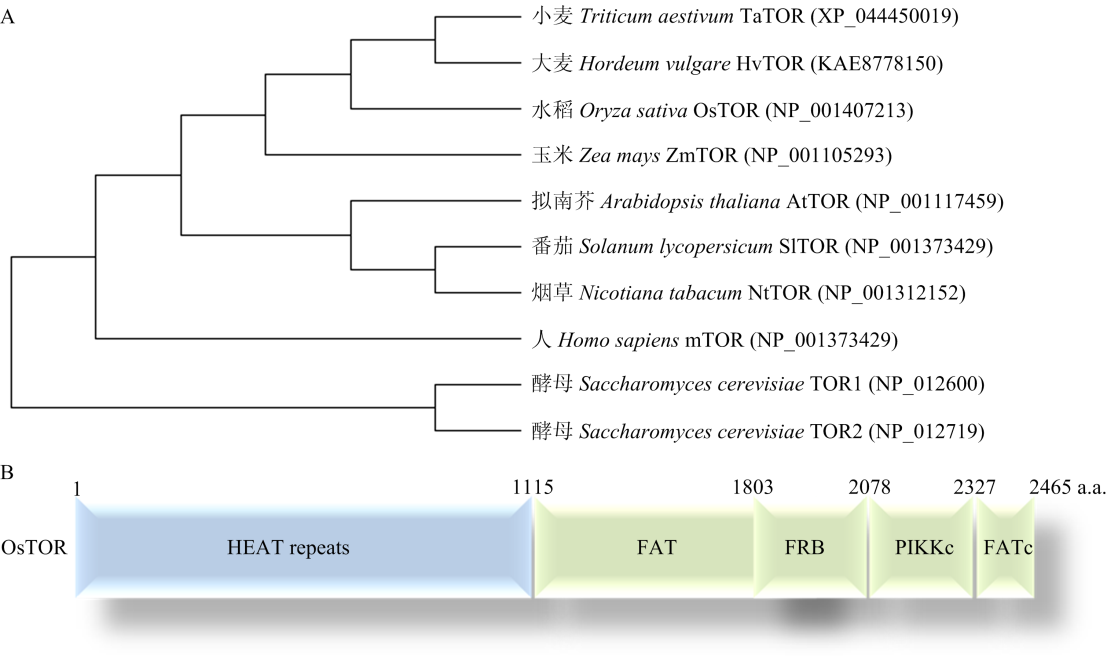
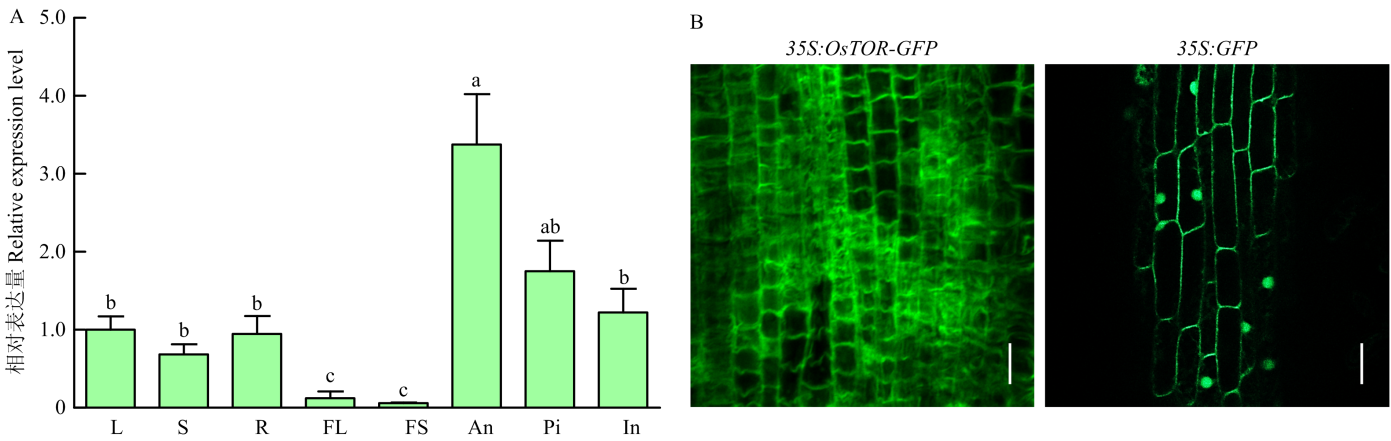
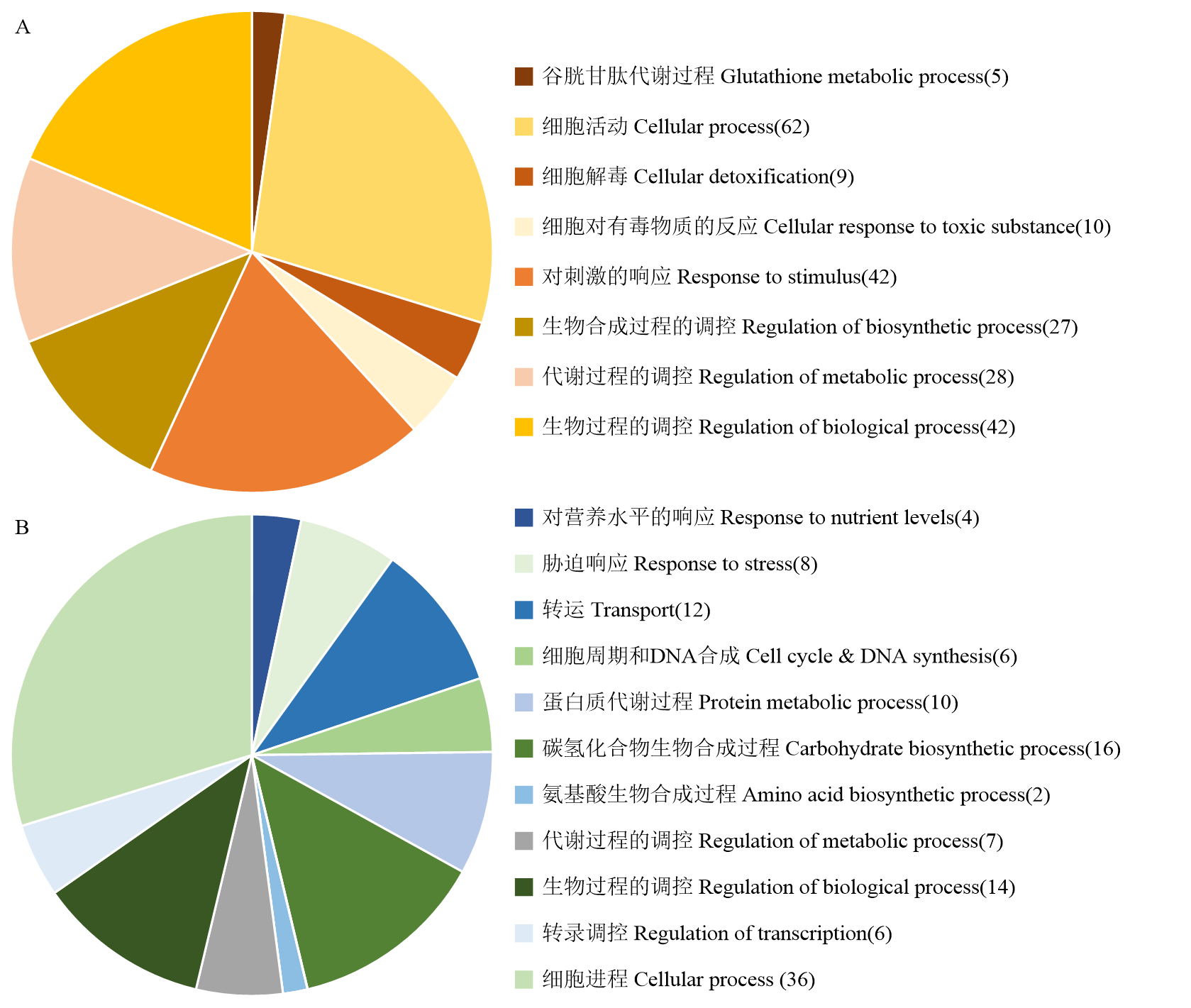
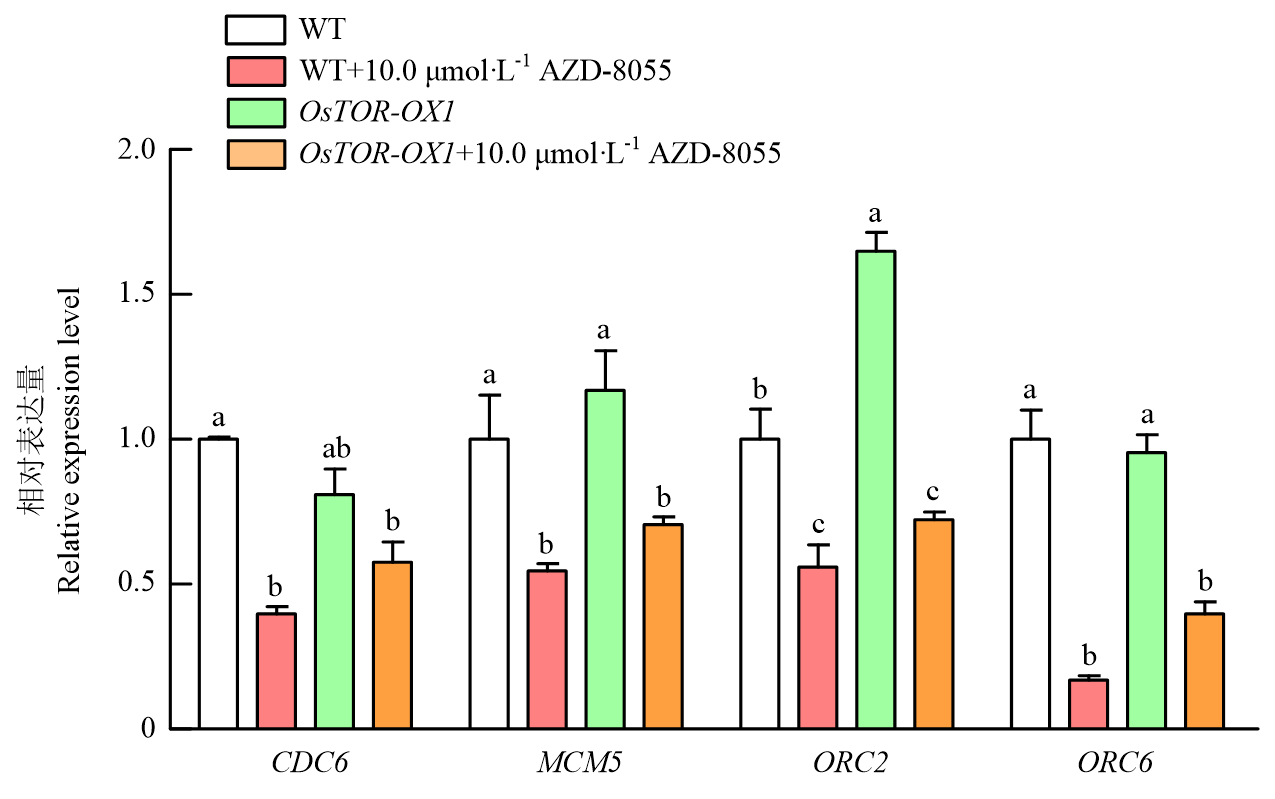
【Objective】To clone the target of rapamycin gene OsTOR in rice, and investigate its regulatory mechanism in root elongation, elucidate its biological function in rice development, and provide a molecular basis for improving rice traits and increasing its yield. 【Method】In this research, the japonica rice variety Dongjin was used as material for OsTOR expression pattern analysis via qRT- PCR. OsTOR was cloned by RT-PCR, and the overexpression vector 35S:OsTOR-GFP was constructed. The overexpression lines OsTOR-OX were generated by Agrobacterium-mediated rice genetic transformation to examine the subcellular localization of OsTOR. Rice seedlings were treated with TOR inhibitor AZD-8055, and the phenotype was observed. The root tips of inhibitor-treated and OsTOR-OX plants were cleared and the cell morphology in the meristematic zone was then visualized by CLSM. Transcriptome sequencing was performed on 7-day-after-germination (DAG) seedlings with or without AZD-8055 treatment. The expression of cell cycle related genes was further analyzed by qRT-PCR. 【Result】OsTOR was evolutionally closely related to barley and wheat TORs. It contains HEAT repeat domain, FAT, FRB, PIKKc kinase domain and FATc domain. OsTOR was localized in cytoplasm and cell membrane, and expressed in various tissues: leaves, leaf sheaths and roots of 7 DAG seedlings, as well as flag leaf blades, flag leaf sheaths, inflorescences, mature anthers, and unpollinated pistil of mature plant. AZD-8055 inhibited seedling growth and root elongation, accompanied by reduced cell proliferation in the root meristem. In contrast, OsTOR overexpression promoted root elongation. Transcriptome analysis revealed 225 genes were upregulated and 121 genes were downregulated upon AZD-8055 treatment. Among the upregulated genes, approximately 28% were associated with cell process, 18.6% with response to stimulus, and some others were involved in degradation. Downregulated genes were mainly involved in biosynthetic processes, protein metabolism, and cell cycle regulation. qRT-PCR results further confirmed that reduced OsTOR activity led to decreased expression of cell cycle-related genes. 【Conclusion】OsTOR was localized in cytoplasm and cell membrane, and was ubiquitously expressed in various tissues at different developmental stages of rice. Reduced OsTOR activity restrained seedling growth and root elongation, whereas OsTOR overexpression promoted root elongation. This effect was primarily attributed to altered expression of cell cycle-related genes, which subsequently affected cell proliferation in root meristem.

Key words: rice, target of rapamycin, root, meristem, cell cycle

Table 1

Primers used in qRT-PCR"

基因 Gene 基因号 GeneID 正向引物 Forward primer (5′-3′) 反向引物 Reverse primer (5′-3′)
OsTOR LOC_Os05g14550 TTCTTGCTGAAAGGCCATGA CCCGATTAGCAGCTTCTTCG
CDC6 LOC_Os01g63710 GAGATCCCGCTCAGATGCAGG GTCTTCCCTGTACCAGGGCAC
MCM5 LOC_Os02g55410 CTCCGCAAGTTCAAGGAGTTC CAGCGGTAGGTAATCAGCGG
ORC2 LOC_Os03g08640 GCAAGTCCATGTTGTCGCATC GGCTTTGCAGAACAACGAGG
ORC6 LOC_Os07g43540 CCAAGTTCCAGGTGATATTCGAC CCTGACACAGCCGAACTGG
UBQ LOC_Os01g48280 CTAAGTGCACCAAACCCTGATG TCTGCTTCATTGGCTTTCCA

Fig. 1

The phylogenetic tree of TOR and schematic representation of OsTOR A: The phylogenetic tree of TOR; B: Schematic representation of the OsTOR domain structure"

Fig. 2

Expression of OsTOR gene and the subcellular localization of OsTOR A: OsTOR expression pattern in different tissues of rice, L: Leaf blade, S: Sheath, R: Root; FL: Flag leaf; FS: Flag leaf sheath; An: Anther; Pi: Pistil; In: Inflorescence; Lowercase letters indicate significant differences at the P<0.05 level; The same as below; B: Subcellular localization of OsTOR (left) and GFP control (right). Bars=20 µm"

Fig. 3

Effects of AZD-8055 on the growth of rice seedlings A: Phenotypes of rice seedling with different concentrations of AZD-8055 treatment; Bars=5 cm; B: Growth status of rice seedling root after 10.0 μmol·L-1 AZD-8055 treatment; Bars=1 cm; Red arrows indicate seed root; C: Changes in rice root length after treatment with different concentrations of AZD-8055"

Fig. 4

Root phenotype of WT and OsTOR-OX A: Diagram of the 35S:OsTOR-GFP construct; B: Phenotypes of WT and OsTOR-OX at 14 DAG; Bars=10 cm; C: Expression level of OsTOR in WT and OsTOR-OX; D. Statistics of root length; *: Significant difference (P<0.05); **: Extremely significant difference (P<0.01). The same as below"

Fig. 5

Effects of OsTOR on the proliferation and growth of root meristem cells A-C: CLSM observation of rice root tips for WT, 10.0 μmol·L-1 AZD-8055 treatment and OxTOR-OX1 transgenic line; Bars=100 µm; D-F: Magnifications of meristematic zone in A-C, respectively; Red square marked cells undergoing-or that have undergone-mitosis; Bars=50 µm; G-I: Statistics of root meristematic zone length (G), cell length of meristematic zone and elongation zone (H), cell layer number (I)"

Fig. 6

The functional categories analysis of differential genes after AZD-8055 treatment A: The functional categories of up-regulated genes; B: The functional categories of down-regulated genes"

Fig. 7

Relative expression level of cell cycle related genes"

[1]
SEO D H, SEOMUN S, CHOI Y D, JANG G. Root development and stress tolerance in rice: The key to improving stress tolerance without yield penalties. International Journal of Molecular Sciences, 2020, 21(5): 1807.

doi: 10.3390/ijms21051807
[2]
SHI L, WU Y, SHEEN J. TOR signaling in plants: Conservation and innovation. Development, 2018, 145(13): dev160887.
[3]
PEREYRA C M, AZNAR N R, RODRIGUEZ M S, SALERNO G L, MARTÍNEZ-NOËL G M A. Target of rapamycin signaling is tightly and differently regulated in the plant response under distinct abiotic stresses. Planta, 2019, 251(1): 21.

doi: 10.1007/s00425-019-03305-0 pmid: 31781934
[4]
SZWED A, KIM E, JACINTO E. Regulation and metabolic functions of mTORC1 and mTORC2. Physiological Reviews, 2021, 101(3): 1371-1426.

doi: 10.1152/physrev.00026.2020 pmid: 33599151
[5]
YANG H R, WANG J, LIU M J, CHEN X Z, HUANG M, TAN D, DONG M Q, WONG C C L, WANG J W, XU Y H, et al. 4.4 Å Resolution Cryo-EM structure of human mTOR complex 1. Protein & Cell, 2016, 7(12): 878-887.
[6]
INGARGIOLA C, TURQUETO DUARTE G, ROBAGLIA C, LEPRINCE A S, MEYER C. The plant target of rapamycin: A conduc TOR of nutrition and metabolism in photosynthetic organisms. Genes, 2020, 11(11): 1285.

doi: 10.3390/genes11111285
[7]
PATHAK B, MAURYA C, FARIA M C, ALIZADA Z, NANDY S, ZHAO S, JAMSHEER K M, SRIVASTAVA V. Targeting TOR and SnRK1 genes in rice with CRISPR/Cas9. Plants, 2022, 11(11): 1453.

doi: 10.3390/plants11111453
[8]
DENG K X, DONG P, WANG W J, FENG L, XIONG F J, WANG K, ZHANG S M, FENG S, WANG B J, ZHANG J K, et al. The TOR pathway is involved in adventitious root formation in Arabidopsis and potato. Frontiers in Plant Science, 2017, 8: 784.

doi: 10.3389/fpls.2017.00784
[9]
DINKOVA T D, DE LA CRUZ H R, GARCÍA-FLORES C, AGUILAR R, JIMÉNEZ-GARCÍA L F, DE JIMÉNEZ E S. Dissecting the TOR-S6K signal transduction pathway in maize seedlings: Relevance on cell growth regulation. Physiologia Plantarum, 2007, 130(1): 1-10.

doi: 10.1111/ppl.2007.130.issue-1
[10]
BENOÎT M, THIERRY D, LAURENT N, FRÉDÉRIC B, DAVID B, CHRISTIAN M, CHRISTOPHE R. Expression and disruption of the Arabidopsis TOR (target of rapamycin) gene. Proceedings of the National Academy of Sciences of the United States of America, 2002, 99(9): 6422-6427.
[11]
MOREAU M, AZZOPARDI M, CLÉMENT G, DOBRENEL T, MARCHIVE C, RENNE C, MARTIN-MAGNIETTE M L, TACONNAT L, RENOU J P, ROBAGLIA C, et al. Mutations in the Arabidopsis homolog of LST8/GβL, a partner of the target of rapamycin kinase, impair plant growth, flowering, and metabolic adaptation to long days. The Plant Cell, 2012, 24(2): 463-481.

doi: 10.1105/tpc.111.091306
[12]
ANDERSON G H, VEIT B, HANSON M R. The Arabidopsis AtRaptor genes are essential for post-embryonic plant growth. BMC Biology, 2005, 3: 12.

doi: 10.1186/1741-7007-3-12
[13]
DEPROST D, TRUONG H N, ROBAGLIA C, MEYER C. An Arabidopsis homolog of RAPTOR/KOG1 is essential for early embryo development. Biochemical and Biophysical Research Communications, 2005, 326(4): 844-850.

doi: 10.1016/j.bbrc.2004.11.117
[14]
SONG L M, XU G Y, LI T T, ZHOU H N, LIN Q L, CHEN J, WANG L, WU D S, LI X X, WANG L F, et al. The RALF1-FERONIA complex interacts with and activates TOR signaling in response to low nutrients. Molecular Plant, 2022, 15(7): 1120-1136.

doi: 10.1016/j.molp.2022.05.004
[15]
JAMSHEER K M, JINDAL S, SHARMA M, AWASTHI P, SREEJATH S, SHARMA M, MANNULLY C T, LAXMI A. A negative feedback loop of TOR signaling balances growth and stress-response trade-offs in plants. Cell Reports, 2022, 39(1): 110631.

doi: 10.1016/j.celrep.2022.110631
[16]
XIONG Y, MCCORMACK M, LI L, HALL Q, XIANG C B, SHEEN J. Glucose-TOR signalling reprograms the transcriptome and activates meristems. Nature, 2013, 496(7444): 181-186.

doi: 10.1038/nature12030
[17]
LI D Y, DING Y D, CHENG L, ZHANG X L, CHENG S Y, YE Y, GAO Y C, QIN Y, LIU Z, LI C Y, et al. Target of rapamycin (TOR) regulates the response to low nitrogen stress via autophagy and hormone pathways in Malus hupehensis. Horticulture Research, 2022, 9: uhac143.
[18]
CHO H, BANF M, SHAHZAD Z, VAN LEENE J, BOSSI F, RUFFEL S, BOUAIN N, CAO P F, KROUK G, DE JAEGER G, et al. ARSK 1 activates TORC1 signaling to adjust growth to phosphate availability in Arabidopsis. Current Biology, 2023, 33(9): 1778-1786.

doi: 10.1016/j.cub.2023.03.005
[19]
DONG Y H, AREF R, FORIERI I, SCHIEL D, LEEMHUIS W, MEYER C, HELL R, WIRTZ M. The plant TOR kinase tunes autophagy and meristem activity for nutrient stress-induced developmental plasticity. The Plant Cell, 2022, 34(10): 3814-3829.

doi: 10.1093/plcell/koac201 pmid: 35792878
[20]
LIU Y L, XIONG Y. Plant target of rapamycin signaling network: Complexes, conservations, and specificities. Journal of Integrative Plant Biology, 2022, 64(2): 342-370.

doi: 10.1111/jipb.13212
[21]
QUILICHINI T D, GAO P, PANDEY P K, XIANG D Q, REN M Z, DATLA R. A role for TOR signaling at every stage of plant life. Journal of Experimental Botany, 2019, 70(8): 2285-2296.

doi: 10.1093/jxb/erz125 pmid: 30911763
[22]
SUN L X, YU Y H, HU W Q, MIN Q M, KANG H L, LI Y L, HONG Y, WANG X M, HONG Y Y. Ribosomal protein S6 kinase1 coordinates with TOR-Raptor2 to regulate thylakoid membrane biosynthesis in rice. Biochimica et Biophysica Acta, 2016, 1861(7): 639-649.

doi: 10.1016/j.bbalip.2016.04.009 pmid: 27102613
[23]
DE VLEESSCHAUWER D, FILIPE O, HOFFMAN G, SEIFI H S, HAECK A, CANLAS P, VAN BOCKHAVEN J, DE WAELE E, DEMEESTERE K, RONALD P, et al. Target of rapamycin signaling orchestrates growth-defense trade-offs in plants. New Phytologist, 2018, 217(1): 305-319.

doi: 10.1111/nph.14785 pmid: 28905991
[24]
DOBRENEL T, CALDANA C, HANSON J, ROBAGLIA C, VINCENTZ M, VEIT B, MEYER C. TOR signaling and nutrient sensing. Annual Review of Plant Biology, 2016, 67: 261-285.

doi: 10.1146/annurev-arplant-043014-114648 pmid: 26905651
[25]
LOEWITH R, HALL M N. Target of rapamycin (TOR) in nutrient signaling and growth control. Genetics, 2011, 189(4): 1177-1201.

doi: 10.1534/genetics.111.133363 pmid: 22174183
[26]
TATEBE H, SHIOZAKI K. Evolutionary conservation of the components in the TOR signaling pathways. Biomolecules, 2017, 7(4): 77.

doi: 10.3390/biom7040077
[27]
FU L W, LIU Y L, QIN G C, WU P, ZI H L, XU Z T, ZHAO X D, WANG Y, LI Y X, YANG S H, et al. The TOR-EIN2 axis mediates nuclear signalling to modulate plant growth. Nature, 2021, 591(7849): 288-292.

doi: 10.1038/s41586-021-03310-y
[28]
BARRADA A, DJENDLI M, DESNOS T, MERCIER R, ROBAGLIA C, MONTANÉ M H, MENAND B. A TOR-YAK1 signaling axis controls cell cycle, meristem activity and plant growth in Arabidopsis. Development, 2019, 146(3): dev171298.
[29]
LIU Y L, HU J, DUAN X L, DING W L, XU M L, XIONG Y. Target of rapamycin (TOR): A master regulator in plant growth, development, and stress responses. Annual Review of Plant Biology, 2025, 76(1): 341-371.

doi: 10.1146/annurev-arplant-083123-050311 pmid: 39952681
[30]
VAN LEENE J, HAN C, GADEYNE A, EECKHOUT D, MATTHIJS C, CANNOOT B, DE WINNE N, PERSIAU G, VAN DE SLIJKE E, VAN DE COTTE B, et al. Capturing the phosphorylation and protein interaction landscape of the plant TOR kinase. Nature Plants, 2019, 5(3): 316-327.

doi: 10.1038/s41477-019-0378-z pmid: 30833711
[1] PENG TingShen, LU JiuYan, WU MeiLin, YAN YuXin, LIU HongZhou, NAN WenBin, QIN XiaoJian, LI Ming, GONG JunYi, LIANG YongShu. QTL Analysis of Yield-Related Traits in Both Huangnuo2# and Changbai7# of Perennial Chinese Rice [J]. Scientia Agricultura Sinica, 2026, 59(7): 1361-1379.
[2] CUI JieHao, ZHANG Meng, WANG Qin, YU JiaYan, LIN Kun, LI ShangZe, LAN Heng, GENG YanQiu, ZHANG Qiang, GUO LiYing, SHAO XiWen. Evaluation of Lodging Resistance and Its Physiological Mechanisms in Japonica Rice Resources [J]. Scientia Agricultura Sinica, 2026, 59(7): 1420-1438.
[3] WANG YaFei, YAN Peng, XUE JinTao, DONG XueRui, MENG FanQi, GUO LiNa, LUO Yi, ZHANG Juan, DONG ZhiQiang, LU Lin. Effects of Ethephon-Glycine Betaine-Salicylic Acid Mixture on Root System Architecture, Physiological Function and Yield of Maize Under Heat Stress [J]. Scientia Agricultura Sinica, 2026, 59(7): 1439-1455.
[4] YUAN HaoLiang, NIE Jun, LI Peng, LU YanHong, LIAO YuLin, XU ChangXu, LI ZhongYi, CAO WeiDong, ZHANG JiangLin. Effects of Co-Utilization of Chinese Milk Vetch and Rice Straw on Soil Phosphorus Composition and Phosphorus Activation of Paddy Field in Southern China [J]. Scientia Agricultura Sinica, 2026, 59(7): 1480-1491.
[5] XU YangHaoJun, CHEN LiMing, YANG ShiQi, TANG YiFan, TAN XueMing, ZENG YongJun, PAN XiaoHua, ZENG YanHua. Effects of Long-Term Different Straw Returning Methods on Soil Organic Carbon, Nutrients and Aggregate Formation in Different Soil Layers of Double Cropping Rice Field [J]. Scientia Agricultura Sinica, 2026, 59(7): 1492-1506.
[6] YE MeJin, WU Lei, MD NAHIBUZZAMAN Lohani, YIN Li, HU XinRong, LIU YaXi, JIANG YunFeng, CHEN GuoYue, PU ZhiEn, LI Yang, LI Ting, ZOU YaYa, WU JiaYi, MA Jian. Genome-Wide Association Study-Based Identification of Loci Controlling Mature Embryo Size in Chinese Wheat Landraces and Their Genetic Effects Analysis [J]. Scientia Agricultura Sinica, 2026, 59(6): 1157-1171.
[7] ZHOU XinJie, REN Hao, CHEN YingLong, ZHANG JiWang, ZHAO Bin, REN BaiZhao, LIU Peng, WANG HongZhang. Effects of Calcium Peroxide on Root Morphology and Yield Formation of Summer Maize in Waterlogging Farmland [J]. Scientia Agricultura Sinica, 2026, 59(6): 1203-1216.
[8] LI XingYu, HUANG Rong, XIAN YiMing, TIAN JiaoJiao, MA XiaoJin, YANG QiaoXi, LI Bing, WANG ChangQuan. Characteristics of Organic Carbon Fractions and Carbon Dioxide Emissions of Different Size Aggregates in Rice Field Soils in Response to Long-Term Fertilization [J]. Scientia Agricultura Sinica, 2026, 59(6): 1255-1271.
[9] MA ZhaoHui, QUAN ChengZhe, CHENG HaiTao, YANG KanJie, LI XinRui, LÜ WenYan. The Breeding Goals and Strategies of Northeast Japonica Rice Under the Background of Zhongke Fa No.5 [J]. Scientia Agricultura Sinica, 2026, 59(5): 927-936.
[10] ZHANG WeiJian, YAN ShengJi, SHANG ZiYin, TANG ZhiWei, WU LiuGe, LI JiaRui, CHEN HaoTian, DENG AiXing, ZHANG Jun, ZHANG Xin, ZHENG ChengYan, SONG ZhenWei. Methane Emissions from Paddy Fields: Not Entirely Attributable to Rice Cultivation [J]. Scientia Agricultura Sinica, 2026, 59(4): 824-833.
[11] HAO Kun, CHEN HongDe, ZHANG Wei, ZHONG Yun, DANG MeiRong, ZHU ShiJiang, HUANG ZhiKun, JIN Ying. Comprehensive Evaluation of Water-Nitrogen Management Under Surge-Root Irrigation Based on Citrus Yield, Quality, and Water- Nitrogen Use Efficiency [J]. Scientia Agricultura Sinica, 2026, 59(4): 862-873.
[12] CHEN Min, JIAO ZiLan, QIAO ChengBin, XU Hao, ZHANG Bi, MA DongHua, KONG WeiRu, WANG JingWen, SONG JiaWei, LUO ChengKe, LI PeiFu, TIAN Lei. Morpho-Physiological Responses and Adaptive Strategies of Rice Germplasm Accessions from Different Subspecies Under Salt Stress [J]. Scientia Agricultura Sinica, 2026, 59(4): 705-722.
[13] GUO FuCheng, TANG HaiJiang, HAO XinYi, MA GuoLin, YANG JiuJu, HUANG LinFeng, TIAN Lei, WANG Bin, LUO ChengKe. Effects of Different Irrigation Methods on Water-Salt Transport, Rice Yield, and Water Use Efficiency in Saline Soil in Ningxia [J]. Scientia Agricultura Sinica, 2026, 59(4): 750-764.
[14] LUO Wei, YU Hong, YUAN LiXin, WANG LingLing, ZHAO JinPeng, YIN Wei, WANG MingTian, WANG RuLin. Change of Geographic Distributions of Ratoon Rice in Sichuan- Chongqing Under Global Climate Change [J]. Scientia Agricultura Sinica, 2026, 59(4): 765-780.
[15] LÜ WenYan, CHENG HaiTao, MA ZhaoHui, TIAN ShuHua. Discussion on Hybridization Breeding Technology and Strategy of Rice in the New Era of Breeding [J]. Scientia Agricultura Sinica, 2026, 59(2): 233-238.
Viewed
Full text


Abstract

Cited

  Shared   
  Discussed   
No Suggested Reading articles found!