Scientia Agricultura Sinica ›› 2026, Vol. 59 ›› Issue (3): 486-498.doi: 10.3864/j.issn.0578-1752.2026.03.002

• CROP GENETICS & BREEDING·GERMPLASM RESOURCES·MOLECULAR GENETICS • Previous Articles     Next Articles

Changes of Cropping System and Suggestions on Ecological Cultivation Regions of Soybeans in China

LIU FangDong(), SUN Lei, WANG WuBin, ZHAO JinMing, GAI JunYi()   

  1. Soybean Research Institute, Nanjing Agricultural University/National Center for Soybean Improvement, Ministry of Agriculture and Rural Affairs/Key Laboratory of Biology and Genetic Improvement of Soybean, Ministry of Agriculture and Rural Affairs/State Innovation Platform for Integrated Production and Education in Soybean Bio-Breeding/State Key Laboratory of Crop Genetics and Germplasm Enhancement and Utilization/Jiangsu Collaborative Innovation Center for Modern Crop Production/Jiangsu Zhongshan Biological Breeding Laboratory/Sanya Institute, Nanjing 210095
  • Received:2025-01-14 Accepted:2025-11-10 Online:2026-02-01 Published:2026-01-31
  • Contact: GAI JunYi

Abstract:

The soybean cropping system involves its distribution across the country, the lighting time, accumulated temperature and cropping system of the varieties, the rotation system, as well as the monocropping, intercropping and relay intercropping methods, serves as the foundation for soybean production, breeding, introduction, and technology innovation. Optimizing the soybean cropping system is of decisive significance for enhancing the comprehensive production capacity and benefits of soybeans in China. Since the founding of the People's Republic of China (PRC) 70 years ago, the area planted with soybeans in regions with one crop per year system has expanded, while the area in regions that have shifted from triple crops per two years system to double crops per year system has decreased. In areas that have transitioned from double crops per year and then to triple crops per year, the area planted with soybeans has remained stable with a slight increase. From a national perspective, the soybean cultivation region has expanded to the northern part of Northeast China, and the soybean cultivation region in the South and Southwest has remained stable with a slight increase. The Northwest region has performed a new high-yield area for soybeans. Historically, the division of soybean cultivation regions was based on the basic data, investigations and experiments of the planting system at that time. In the recent 30 years, there have been significant advancements in soybean production, breeding and cultivation techniques, especially in the changes of soybean cultivation areas. The division of ecological cultivation region is a fundamental task closely related to soybean cultivation, resource utilization, introduction and breeding for cultivars. Based on the review of the changes in soybean cultivation region in China since the PRC establishment, including the northward expansion and southward shift of cultivation region, the renewal and upgrading of varieties, the improvement of mechanization levels, the comprehensive progress of cultivation techniques, and the promotion of intercropping system, especially the emphasis on developing the soybean industry as a national policy in China since 2000, this review comprehensively analyzed the dynamic characteristics of the soybean cropping system and technical system in PRC and thus proposed suggestions for adjusting the ecological cultivation region divisions of soybeans. From which a new soybean ecological cultivation region system is proposed. The main results comprise the changes in soybean cropping regions and the advances in cropping system, the environmental cultivation regions and changes of soybeans, the ecology of modern soybeans in China, and discussion and prospect on ecological cultivation region of soybeans in China. Influenced by updates of soybean cultivars, advancements in cultivation and farming technology, and requirements on food security, the soybean cropping system has undergone significant changes. The new six ecological cultivation regions were suggested as Northeast Spring Planting Soybean Ecological Cultivation Region, Northwest Spring Planting Soybean Ecological Cultivation Region, Huang-Huai-Hai Summer Planting Soybean Ecological Cultivation Region, Changjiang Valleys Spring-Summer-Autumn Planting Soybean Ecological Cultivation Region, Southwest Plateau Spring-Summer Planting Soybean Ecological Cultivation Region, and South China All Season Planting Soybean Ecological Cultivation Region. This division and naming system is considered as consistent as that of the national crop cultivation system, and also pays attention to the connection with previous ecological cultivation region division systems in soybean.

Key words: soybean, cropping system, maturity group, ecological cultivation region system

Table 1

Soybean acreage in provinces and municipalities in China (khm2, State Statistical Bureau)"

地区
Region
年份Year
2023 2019 2014 2009 2004 1999 1994 1989 1984 1979 1974 1969 1964 1959 1954 1949
北京Beijing 4.3 1.4 4.1 8.4 13.6 10.4 14.9 13.5 7.8 7.7 6.8 22.7 30.9 39.0 56.5 51.2
天津Tianjin 5.7 5.2 6.4 11.6 29.3 35.2 58.6 47.0 25.8 20.6 22.1 4.7 0.0 0.0 0.0 0.0
河北Hebei 113.6 93.5 86.7 145.7 274.3 438.1 575.9 415.9 268.5 276.5 248.0 442.0 694.8 524.7 794.9 558.9
山西Shanxi 117.0 129.1 149.5 178.8 210.9 245.9 282.7 245.1 161.0 129.5 129.6 238.7 322.1 295.1 479.9 188.5
内蒙古
Inner Mongolia
1235.3 1189.8 744.6 931.2 752.9 736.8 603.9 317.6 192.6 182.7 35.3 54.0 265.8 204.0 223.9 106.0
辽宁Liaoning 122.8 83.9 63.5 135.2 295.9 235.1 318.6 370.2 372.5 508.8 517.2 538.7 586.4 684.5 648.4 487.6
吉林Jilin 328.8 345.0 242.8 462.6 525.9 278.4 504.9 537.3 397.1 576.5 675.6 756.0 742.3 885.2 939.2 665.7
黑龙江Heilongjiang 4886.9 4279.5 2792.9 4165.2 3555.5 2153.2 2789.1 2263.8 1795.4 1665.1 1466.5 1494.0 1373.7 1440.0 1520.3 1033.0
上海Shanghai 0.6 0.7 3.2 5.2 5.3 5.5 7.6 5.9 1.6 1.8 1.3 4.7 11.5 11.5 19.3 32.3
江苏Jiangsu 225.4 191.8 201.7 230.9 216.4 210.4 255.4 309.4 285.7 240.5 313.0 448.7 678.6 573.5 984.5 404.2
浙江Zhejiang 81.0 90.2 85.1 54.5 116.6 109.2 86.0 69.6 61.3 64.8 54.8 76.7 99.3 94.4 177.7 165.5
安徽Anhui 631.5 636.2 679.7 891.1 888.1 478.9 504.9 590.5 750.4 653.0 714.7 636.7 698.8 573.3 928.1 452.0
福建Fujian 35.8 32.7 32.9 45.4 88.4 109.2 103.2 87.3 75.7 50.4 62.1 68.7 66.7 67.3 91.3 78.0
江西Jiangxi 112.7 108.8 100.5 95.6 101.5 150.4 166.2 137.6 132.2 125.9 138.1 148.0 196.9 255.5 248.9 111.4
山东Shandong 232.4 183.5 147.5 164.7 241.2 492.2 571.5 487.5 483.3 634.1 863.5 1072.7 1498.9 1417.3 2300.1 1915.4
河南Henan 380.8 394.7 381.9 462.1 522.5 569.2 656.3 673.1 942.7 859.4 818.5 893.3 1267.9 1240.7 1629.5 913.6
湖北Hubei 242.2 211.7 136.8 111.4 183.8 207.0 201.4 173.7 159.1 224.3 191.1 223.3 258.5 274.7 249.4 242.5
湖南Hunan 139.7 113.3 101.1 91.2 188.1 206.6 214.5 181.8 160.9 131.7 102.3 138.7 154.8 251.8 155.3 42.8
广东Guangdong 35.9 32.6 36.4 48.8 80.4 96.4 104.7 115.7 135.6 130.1 140.2 78.0 90.3 69.8 138.5 69.9
广西Guangxi 110.1 93.9 94.7 99.2 219.6 275.9 250.2 204.1 229.6 152.8 108.5 112.7 86.8 94.7 163.1 58.5
海南Hainan 1.8 1.9 3.0 3.3 6.7 8.8 7.7 7.4 0.0 0.0 0.0 0.0 0.0 0.0 0.0 0.0
重庆Chongqing 118.4 96.9 95.0 82.5 95.1 74.2 0.0 0.0 0.0 0.0 0.0 0.0 0.0 0.0 0.0 0.0
四川Sichuan 554.0 402.0 312.4 243.6 200.9 137.9 189.4 191.3 182.5 190.5 213.3 228.7 232.2 253.3 268.1 230.2
贵州Guizhou 238.3 191.8 180.9 149.0 131.1 142.2 130.9 130.5 127.9 108.4 125.9 204.7 124.9 114.0 106.5 84.9
云南Yunnan 175.2 185.2 159.4 143.7 149.7 111.4 86.2 71.0 66.7 47.4 47.4 77.3 91.9 97.0 126.6 104.9
西藏Xizang 0.0 0.1 0.1 0.1 0.3 0.3 0.0 23.3 0.3 0.0 0.0 0.0 0.0 0.0 0.0 0.0
陕西Shaanxi 177.0 151.1 143.5 205.3 308.1 273.2 344.9 279.7 195.7 195.1 208.7 274.0 355.5 314.0 341.8 280.4
甘肃Gansu 62.0 41.4 67.6 82.6 86.7 86.2 90.0 53.0 41.2 31.9 26.5 45.3 39.2 47.9 39.1 26.8
宁夏Ningxia 27.2 4.9 11.4 19.3 20.5 40.5 44.3 34.3 20.2 22.5 21.0 28.0 29.5 28.0 18.5 14.5
新疆Xinjiang 77.5 39.0 32.5 70.5 79.7 43.4 58.0 20.1 13.1 14.9 9.2 18.0 10.4 12.0 4.3 0.0
青海Qinghai 0.0 0.0 0.0 0.0 0.0 0.0 0.0 0.0 0.0 0.0 0.0 0.0 0.0 0.1 0.1 0.0
台湾Taiwan - - - - - - - - - - - - - - - -
总计Total 12496.9 11350.8 9111.8 11347.7 11593.0 9961.1 11215.9 10046.2 9270.4 9225.9 9235.2 10298.0 11972.6 11822.3 14607.8 10267.7

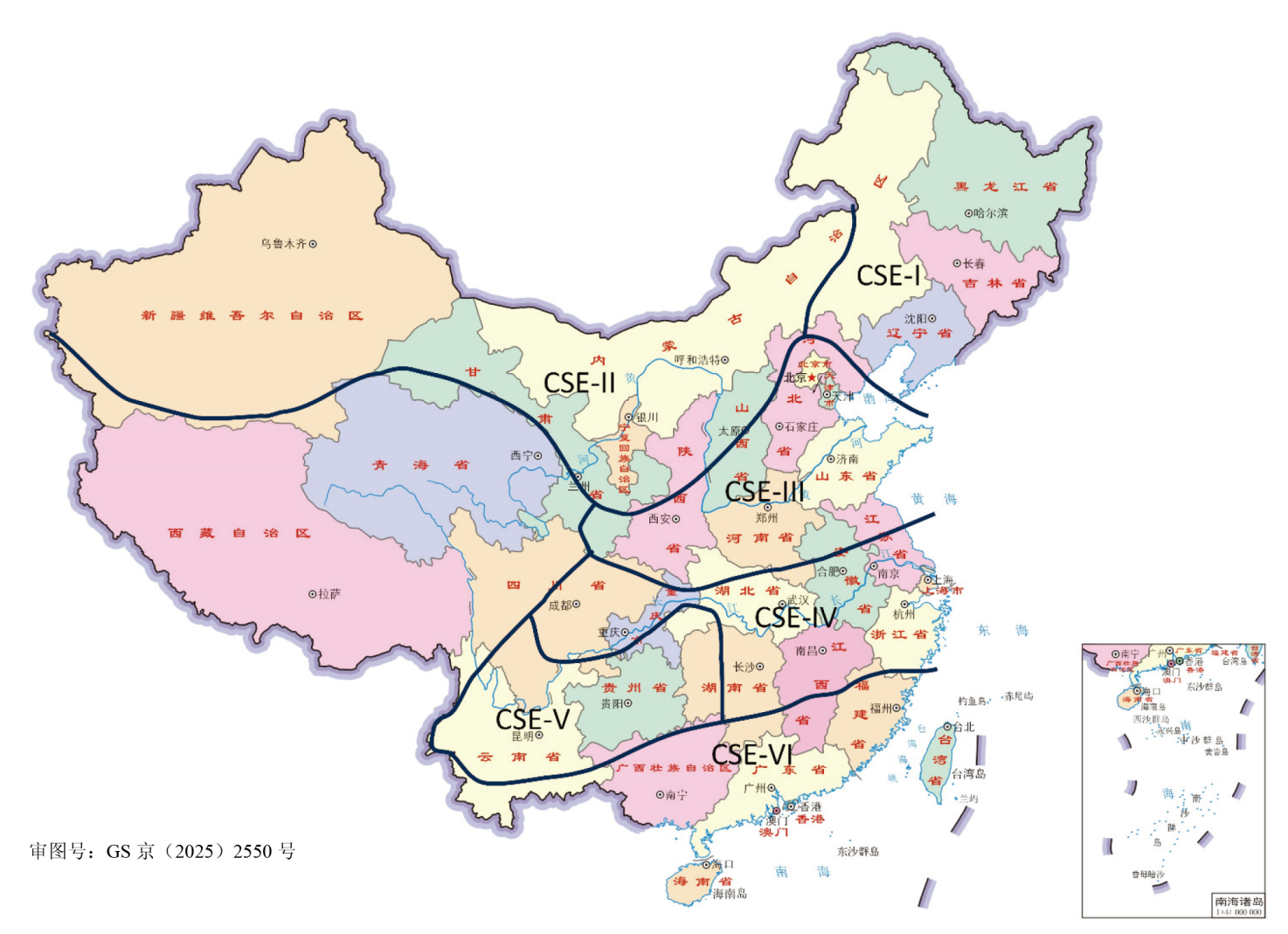
Fig. 1

Distribution of soybean ecological cultivation regions in China CSE: Chinese soybean ecological cultivation region. CSE-Ⅰ: Northeast spring planting soybean ecological cultivation region; CSE-Ⅱ: Northwest spring planting soybean ecological cultivation region; CSE-Ⅲ: Huang-Huai-Hai summer planting soybean ecological cultivation region; CSE-Ⅳ: Changjiang valley spring-summer-autumn planting soybean ecological cultivation region; CSE-Ⅴ: Southwest plateau spring-summer planting soybean ecological cultivation region; CSE-Ⅵ: South China all season planting soybean ecological cultivation region. The same as below"

Table 2

Modern geographical distribution and climatic characteristics of soybean ecological cultivation region in China"

生态栽
培区
CSE
名称
Name
年降水
Average annual
rainfall
10 ℃以上积温
Accumulated temperature over 10 ℃
地理范围
Geographical distribution
CSE-Ⅰ 东北春作大豆生态栽培区
Northeast spring planting soybean ecological cultivation region
400-800 mm,小部分小于400 mm
Most 400-800 mm, fraction below 400 mm
大部分2000-3000 ℃
Most 2000-3000 ℃
大兴安岭以东及西麓、小兴安岭南及北麓、内蒙古高原以东、燕山-太行山以北的东北平原等
The Northeast Plain, which is located of the east and west slopes of Great Khingan Mountains, south and north slopes of Little Khingan Mountains, east of Inner Mongolian Plateau, north of Yanshan-Taihang Mountains, etc
CSE-Ⅱ 西北春作大豆生态栽培区
Northwest spring planting soybean ecological cultivation region
大部分400 mm以下
Most below 400 mm
大部分2000-3000 ℃,部分3000-4000 ℃
Most 2000-3000 ℃, fraction 3000-4000 ℃
内蒙古高原、黄土高原北部、河套平原、河西走廊、塔里木盆地、准格尔盆地等
The Inner Mongolian Plateau, northern Loess Plateau, Hetao Plain, Hexi Corridor, Tarim Basin, Jurggar Basin, etc
CSE-Ⅲ 黄淮海夏作大豆生态栽培区
Huang-Huai-Hai summer planting soybean ecological cultivation region
400 mm以上,南部800-1600 mm
Most 400 mm, southern 800-1600 mm
大部分4000-5000 ℃,部分3000-4000 ℃
Most 4000-5000 ℃, fraction 3000-4000 ℃
太行山以东、燕山以南、秦岭/大巴山-淮河以北的华北平原、关中平原、秦巴山区等
The east of Taihang Mountains, south of Yanshan, north of Qinling/Daba Mountains- Huai River, North China Plain, Guanzhong Plain, and Qinba Mountains, etc
CSE-Ⅳ 长江流域春夏秋作大豆生态栽培区
Changjiang valley spring- summer-autumn planting soybean ecological cultivation region
大部分800 mm,东南部1600 mm以上
Most 800 mm, southeastern 1600 mm
大部分5000-6000 ℃,部分4000-5000 ℃
Most 5000-6000 ℃, fraction 4000-5000 ℃
秦岭/大巴山-淮河以南、川西高原以东、云贵高原以北以东、南岭以北的长江中下游平原、两湖平原、四川盆地、江南丘陵等
The south of Qinling/Daba Mountains-Huai River, east of the Western Sichuan Plateau, north of Yunnan-Guizhou Plateau, north of southeast Hilly-Nanling Mountain, Middle and Lower Yangtze Valleys, Two Lakes Plain, Sichuan Basin, Jiangnan Hills, etc
CSE-Ⅴ 西南高原春夏作大豆生态栽培区
Southwest plateau spring-summer planting soybean ecological cultivation region
800-1600 mm
Most 800-1600 mm
大部分3000-5000 ℃
Most 3000-5000 ℃
川西川南高原区、云贵高原、湘西雪峰山等
Western Sichuan and Southern Sichuan Plateau, Yunnan-Guizhou Plateau, WesternXuefeng Mountain, etc
CSE-Ⅵ 岭南四季大豆生态栽培区
South China all season planting soybean ecological cultivation region
1600 mm,部分800- 1600 mm
Most 1600 mm, fraction 800-1600 mm
大部分6000 ℃以上,小部分5000-6000℃
Most 6000℃, fraction 5000-6000 ℃
云贵高原以东以南、南岭及其以南等
East and south of Yunnan-Guizhou Plateau and south of Nanling Mountain, etc

Table 3

The approximate correspondence between soybean ecological cultivation region and farming system in China"

生态栽培区CSE 名称
Name
耕作区划[8]
Cultivation region [8]
二级区[8]
Secondary region [8]
CSE-Ⅰ 东北春作大豆生态栽培区
Northeast spring planting soybean ecological cultivation region
1东北平原丘陵半湿润喜温作物一熟区
1 Semi-humid-thermophilic single-crop region in Northeast Plain-Hills
1.2三江平原农业区、1.3松嫩平原农业区、1.4长白山地农林区、1.5辽东滨海农渔区、2.1内蒙古草原农牧区东北部、2.2辽吉西蒙东南冀北山地农牧区等
1.2 Sanjiang Plain farming region, 1.3 Songnen Plain farming region, 1.4 Changbai Mountain farming-forestry region, 1.5 Liaoning coastal farming- fishery region, 2.1 Northeastern Inner Mongolia Grassland farming-pastoral region, 2.2 Western of Liaoning and Jilin, southeastern Inner Mongolia, and northern Hebei Mountain farming-pastoral region, etc
CSE-Ⅱ 西北春作大豆生态栽培区
Northwest spring planting soybean ecological cultivation region
2内蒙古高原半干旱温凉作物一熟区、3甘新绿洲喜温作物一熟区、5黄土高原易旱喜温作物一熟二熟区
2 Inner Mongolia Plateau semi-arid cool-warm single-crop region, 3 Gansu-Xinjiang oasis warm single-crop region, 5 Loess Plateau drought-prone warm single-double-crop region
2.1内蒙古草原农牧区、2.3晋北后山坝上高原农牧区、2.4河套银川平原农牧区、2.5鄂尔多斯高原农牧区、2.6阿拉善高原农业区、3.1北疆准噶尔盆地农牧林区、3.2南疆塔里木盆地农牧区、3.3河西走廊农牧区、5.1黄土高原中部沟谷农林牧区、5.2黄土高原南部旱塬农林牧区、5.3黄土高原西部丘陵农林区等
2.1 Inner Mongolia Grassland farming-pastoral region, 2.3 Shanxi Houshan Bashang Plateau farming-pastoral region, 2.4 Hetao Yinchuan Plain farming-pastoral region, 2.5 Ordos Plateau farming-pastoral region, 2.6 Alxa Plateau farming region, 3.1 Junggar Basin farming-pastoral region, 3.2 Tarim Basin farming-pastoral region, 3.3 Hexi Corridor farming-pastoral region, 5.1 Central Loess Plateau valley farming- forestry region, 5.2 Southern Loess Plateau dry plateau farming-forestry region, 5.3 Western Loess Plateau hilly farming-forestry region, etc
CSE-Ⅲ 黄淮海夏作大豆生态栽培区
Huang-Huai-Hai summer planting soybean ecological cultivation region
5黄土高原易旱喜温作物一熟二熟区、6黄淮海平原丘陵灌溉农作二熟区、7西南山地丘陵旱地水田二熟区
5 Single-double-crop region for drought- prone and temperature-loving in Loess Plateau, 6 Double-crop region for irrigation farming in Huang-huai-hai Plain-hills, 7 Double-crop region for dryland paddy fields in southwestern mountainous-hilly
5.4汾渭谷地二熟农业区、5.5豫西晋东丘陵山地二熟农林区、6.1燕山太行山山前平原农业区、6.2冀鲁豫低洼平原农业区、6.3山东丘陵农林渔区、6.4黄淮平原农业区、7.1秦巴山林农区等
5.4 Fenwei Valley double-crop farming region, 5.5 West Henan and East Shanxi hilly-mountainous double-crop farming-forestry region, 6.1 Yanshan-Taihang Mountain piedmont plain farming region, 6.2 Hebei, Shandong and Henan low-lying-plain farming region, 6.3 Shandong hilly farming-forestry-fishery region, 6.4 Huanghuai Plain farming region, 7.1 Qin-ba Mountain forest-farming region, etc
CSE-Ⅳ 长江流域春夏秋作大豆生态栽培区
Changjiang Valley spring- summer-autumn planting soybean ecological cultivation region
8四川盆地水田旱地二熟区、9长江中下游平原三熟区丘陵水田旱地三熟二熟区、10江南丘陵山地水田旱地三熟区
8 Sichuan Basin paddy field and dry land double-crop region, 9 Middle and lower reaches of Yangtze River plain triple-double-crop region, hilly paddy field and dry land triple-crop region, 10 Jiangnan hilly-mountain paddy field and dry land triple-crop region
8.1盆西平原农林区、8.2盆东丘陵山地林农区、9.1鄂豫皖低山平原农林区、9.2江淮平原农业区、9.3沿江平原农业区、9.4两湖平原农林区大部和10.1浙闽沿海丘陵山地农林渔区等
8.1 Basin-West Plain farming-forestry region, 8.2 Basin-East hilly- mountainous forestry-farming region, 9.1 Hubei-Henan-Anhui low- mountain-plain farming-forestry region, 9.2 Jianghuai Plain farming region, 9.3 Riverside Plain farming region, 9.4 Most of Two Lakes Plain farming-forestry region, and 10.1 Zhejiang-Fujian coastal-hilly- mountainous farming-forestry-fishery region, etc
CSE-Ⅴ 西南高原春夏作大豆生态栽培区
Southwest plateau spring- summer planting soybean ecological cultivation region
7西南山地丘陵旱地水田二熟区
7 Southwest mountainous-hilly dryland paddy field double-crop region
7.2渝鄂黔湘浅山农林区、7.3贵州高原农林牧区、7.4川滇黔高原山地农林牧区和7.5云南高原农林牧区等
7.2 Chongqing-Hubei-Guizhou-Hunan low-mountain farming-forestry region, 7.3 Guizhou plateau farming-forestry-pastoral region, 7.4 Sichuan-Yunnan-Guizhou plateau-mountain farming-forestry-pastoral region, and 7.5 Yunnan plateau farming-forestry-pastoral region, etc
CSE-Ⅵ 岭南四季大豆生态栽培区
South China all season planting soybean ecological cultivation region
10江南丘陵山地水田旱地三熟区、11华南丘陵平原水田旱地三熟区
10 Triple-crop region of paddy fields and dry land in hilly-mountainous of Jiangnan; 11 Triple-crop region of paddy fields and dry land in hilly-plain of South China
10.1浙闽沿海丘陵山地农林渔区中南部、10.2南岭丘陵山地农林区、11.1华南低平原农林渔区和11.2西双版纳山地丘陵农林牧区等
10.1 Central and southern of Zhejiang-Fujian coastal hilly-mountainous farming-forestry-fishery region, 10.2 Nanling hilly-mountainous farming- forestry-fishery region, 11.1 South China low-plain farming-forestry- fishery region, and 11.2 Xishuangbanna mountainous-hilly farming- forestry-pastoral region, etc

Table 4

The farming system in modern soybean ecological cultivation regions in China"

生态栽
培区
CSE
名称
Name
行政区域分布
Distribution of administrative regions
主栽作物/种植制度
Main crops/ cultivation system
面积
Area
(khm2)
大豆熟期组Maturity group
CSE-Ⅰ 东北春作大豆生态栽培区
Northeast spring planting soybean ecological cultivation region
黑龙江、吉林、辽宁、河北北部、内蒙古东部
Heilongjiang, Jilin, Liaoning, northern Hebei, Eastern Inner Mongolia
春玉米、水稻、大豆
Sp-corn, rice, soybean
6365 000-Ⅲ
CSE-Ⅱ 西北春作大豆生态栽培区
Northwest spring planting soybean ecological cultivation region
新疆和内蒙古大部、甘肃大部、宁夏、陕西中北部、山西西北部Most of Xinjiang and Inner Mongolia, most of Gansu, Ningxia, central northern Shaanxi, and northwestern Shanxi 春小麦、春玉米、棉花、冬小麦-夏玉米
Sp-wheat, sp-corn, cotton, win-wheat- su-corn
456 000-Ⅲ
CSE-Ⅲ 黄淮海夏作大豆生态栽培区
Huang-Huai-Hai summer planting soybean ecological cultivation region
河北和河南大部、北京、天津、山东、安徽和江苏北部,山西和陕西中南部、甘肃东南部
Hebei and most of Henan, Beijing, Tianjin, Shandong, Anhui and northern Jiangsu, Shanxi and central southern Shaanxi, and southeastern Gansu
冬小麦/油菜-中稻/夏玉米
Win-wheat/rape-semi-late rice/su-corn
1394 Ⅱ-Ⅳ
CSE-Ⅳ 长江流域春夏秋作大豆生态栽培区
Changjiang Valley spring-summer- autumn planting soybean ecological cultivation region
四川中东部、湖北大部、河南最南部、安徽和江苏中南部、湖南中东部、江西中北部、浙江和上海等
Central and eastern Sichuan, most of Hubei, southernmost Henan, central and southern Anhui and Jiangsu, central and eastern Hunan, central and northern Jiangxi, Zhejiang and Shanghai, etc
冬小麦/油菜-中稻/夏玉米、油-稻-稻
Win-wheat/ rape- semi-late rice/ su-corn, rape-early rice- late rice
1407 春0-Ⅲ,夏秋Ⅲ-Ⅵ
Sp 0-Ⅲ, Su/ au Ⅲ-Ⅵ
CSE-Ⅴ 西南高原春夏作大豆生态栽培区
Southwest plateau spring-summer planting soybean ecological cultivation region
四川西部南部、重庆西南部、湖北西南部、贵州、云南大部、湖南西部等
Southwest Sichuan, southwestern Chongqing, southwestern Hubei, Guizhou, most of Yunnan, western Hunan, etc
春玉米、冬小麦/油菜-中稻/夏玉米、油-稻-稻
Sp-corn, win-wheat/rape- semi- late rice/su-corn, rape-early rice- late rice
503 春Ⅱ-Ⅲ,夏秋Ⅳ-Ⅴ
Sp Ⅱ-Ⅲ, Su/ au Ⅳ-Ⅴ
CSE-Ⅵ 岭南四季大豆生态栽培区
South China all season planting soybean ecological cultivation region
广东、广西、福建、台湾、海南、湖南和江西南部、云南最南部
Guangdong, Guangxi, Fujian, Taiwan, Hainan, Hunan, southern Jiangxi, and southernmost Yunnan
油-稻-稻、薯-稻-稻、春玉米-夏玉米
Rape- early rice- late rice, sweet potato- early rice- late rice, sp-corn- su-corn
168 春Ⅱ-Ⅲ,夏秋Ⅶ-Ⅷ
Sp Ⅱ-Ⅲ, Su/ au Ⅶ-Ⅷ

Table 5

The approximate correspondence between soybean ecological cultivation regions and historical soybean cultivation regions in China"

生态栽
培区
CSE
名称
Name
王金陵[18]
WANG J L [18]
吉林省农科院[19]
Jilin Academy of Agricultural Sciences[19]
吕世霖等[20]
LÜ S L,
et al[20]
卜慕华等[21]
BO M H,
et al [21]
盖钧镒等[22]
GAI J Y,
et al[22]
CSE-Ⅰ 东北春作大豆生态栽培区
Northeast spring planting soybean ecological cultivation region
春作大豆区
Spring planting soybean region
东北春大豆亚区
Northeast spring soybean sub-region
东北春播亚区、内蒙古春播亚区
Northeast spring planting sub- region; Inner Mongolia spring planting sub-region
东北春作亚区
Northeast spring planting sub-region
东北亚区
Northeast sub-region
CSE-Ⅱ 西北春作大豆生态栽培区
Northwest spring planting soybean ecological cultivation region
春作大豆区
Spring planting soybean region
黄土高原春大豆亚区、西北春大豆亚区
Loess Plateau spring soybean sub-region; northwest spring soybean sub-region
新疆春播亚区、冀晋陕中部春夏播亚区
Xinjiang spring planting sub region; spring and summer planting sub-region in central Hebei, Shanxi, and Shaanxi
北部高原春作亚区、西北春作亚区
Northern Plateau spring planting sub-region; Northwest spring planting sub-region
华北高原亚区、西北亚区
Northern Plateau planting sub-region; Northwest sub- regions
CSE-Ⅲ 黄淮海夏作大豆生态栽培区
Huang-Huai-Hai summer planting soybean ecological cultivation region
夏作大豆冬闲区
Summer planting- winter fallow region
黄淮流域夏大豆区
Huang-Huai summer soybean region
黄淮大豆区、长江中下游秦巴春夏播亚区
Huang-Huai soybean region; middle and lower Changjiang Valley, Qin-Ba Spring, summer planting sub-region
黄淮海流域夏作区
Huang-Huai-Hai summer planting region
黄淮海二熟制春夏作大豆栽培区
Huang-Huai-Hai double cropping, spring and summer planting cultivating region
CSE-Ⅳ 长江流域春夏秋作大豆生态栽培区
Changjiang Valley spring- summer-autumn planting soybean ecological cultivation Region
夏作大豆区
Summer planting soybean region
长江中下游夏大豆亚区、四川夏大豆亚区、秋大豆区
Middle and lower Changjiang Valley summer soybean sub- region; Sichuan summer soybean sub-region; autumn soybean region
长江中下游秦巴春夏播亚区、鄂赣浙闽北春夏秋播亚区、四川春夏秋播亚区
Middle and lower Changjiang Valley, Qin-Ba spring summer planting sub-region; Hubei, Jiangxi, Zhejiang, Northern Fujian spring summer autumn sub- region; Sichuan spring summer autumn sub-region
长江亚区、东南亚区、中南亚区
Changjiang valleys sub-region; eastern South sub-region; Middle south sub- region
长江中下游二熟制春夏作大豆栽培区、东中南亚区、四川盆地亚区
Middle and lower Changjiang Valley double cropping, spring and summer planting cultivating region; Eastern Middle South sub-region; Sichuan Basin sub-region
CSE-Ⅴ 西南高原春夏作大豆生态栽培区
Southwest plateau spring- summer planting soybean ecological cultivation region
夏作大豆区、秋作大豆区
Summer planting soybean region; autumn planting soybean region
云贵高原夏大豆亚区
Yunnan-Guizhou Plateau summer soybean planting region
云贵高原春夏秋播亚区
Yunnan-Guizhou Plateau spring, summer autumn, planting region
西南高原春作亚区
Southwest Plateau spring planting region
西南高原二熟制春夏作大豆栽培区
Southwest Plateau double cropping, spring and summer planting cultivating region
CSE-Ⅵ 岭南四季大豆生态栽培区
South China all season planting soybean ecological cultivation region
秋作大豆区、大豆两获区
Autumn planting soybean region, soybean two harvest region
秋大豆区、冬大豆区
Autumn soybean region; winter soybean region
华南南部四季区、鄂赣浙闽北春夏秋播亚区
South China all season planting region; Hubei Jiangxi Zhejiang northern Fujian spring summer autumn sub-region; Sichuan spring summer autumn sub- region
东南亚区、中南亚区、华南多作亚区
Eastern South sub- region; Middle South sub-region; South China multiple cropping planting region
东中南亚区、华南热带多熟制四季大豆栽培区
Eastern Middle South sub- region; South China tropical multiple cropping, all season planting cultivating region
[1]
宋雯雯, 李继存, 赵云, 周静, 黄新阳, 曾海燕, 杨光明, 李素真, 吴存祥, 韩天富. 中国大豆微核心种质光温综合反应敏感性的鉴定. 植物遗传资源学报, 2020, 21(1): 146-153.

doi: 10.13430/j.cnki.jpgr.20190606004
SONG W W, LI J C, ZHAO Y, ZHOU J, HUANG X Y, ZENG H Y, YANG G M, LI S Z, WU C X, HAN T F. Identification of photothermal comprehensive responses in Chinese soybean mini core collection. Journal of Plant Genetic Resources, 2020, 21(1): 146-153. (in Chinese)
[2]
ZHANG L X, LIU W, TSEGAW M, XU X, QI Y P, SAPEY E, LIU L P, WU T T, SUN S, HAN T F. Principles and practices of the photo-thermal adaptability improvement in soybean. Journal of Integrative Agriculture, 2020, 19(2): 295-310.

doi: 10.1016/S2095-3119(19)62850-9
[3]
杨永华, 盖钧镒, 马育华. 大豆生育期光温反应特性的遗传. 作物学报, 1994, 20(2): 144-148.
YANG Y H, GAI J Y, MA Y H. Inheritance of sensitivity of responses of growth period traits to planting seasons in soybeans. Acta Agronomica Sinica, 1994, 20(2): 144-148. (in Chinese)
[4]
WU T T, LI J Y, WU C X, SUN S, MAO T T, JIANG B J, HOU W S, HAN T F. Analysis of the independent- and interactive-photo-thermal effects on soybean flowering. Journal of Integrative Agriculture, 2015, 14(4): 622-632.

doi: 10.1016/S2095-3119(14)60856-X
[5]
MAO T T, LI J Y, WEN Z X, WU T T, WU C X, SUN S, JIANG B J, HOU W S, LI W B, SONG Q J, et al. Association mapping of loci controlling genetic and environmental interaction of soybean flowering time under various photo-thermal conditions. BMC Genomics, 2017, 18(1): 415.

doi: 10.1186/s12864-017-3778-3 pmid: 28549456
[6]
姜芬芬, 孙磊, 刘方东, 王吴彬, 邢光南, 张焦平, 张逢凯, 李宁, 李艳, 贺建波, 等. 世界大豆生育阶段光温综合反应的地理分化和演化. 中国农业科学, 2022, 55(3): 451-466. doi: 10.3864/j.issn.0578-1752.2022.03.003.
JIANG F F, SUN L, LIU F D, WANG W B, XING G N, ZHANG J P, ZHANG F K, LI N, LI Y, HE J B, et al. Geographic differentiation and evolution of photo-thermal comprehensive responses of growth-periods in global soybeans. Scientia Agricultura Sinica, 2022, 55(3): 451-466. doi: 10.3864/j.issn.0578-1752.2022.03.003. (in Chinese)
[7]
盖钧镒, 汪越胜, 张孟臣, 王继安, 常汝镇. 中国大豆品种熟期组划分的研究. 作物学报, 2001, 27(3): 286-292.
GAI J Y, WANG Y S, ZHANG M C, WANG J A, CHANG R Z. Studies on the classification of maturity groups of soybeans in China. Acta Agronomica Sinica, 2001, 27(3): 286-292. (in Chinese)
[8]
陈阜, 姜雨林, 尹小刚. 中国耕作制度发展及区划方案调整. 中国农业资源与区划, 2021, 42(3): 1-6.
CHEN F, JIANG Y L, YIN X G. Adjustment of China’s farming system regionalization scheme. Chinese Journal of Agricultural Resources and Regional Planning, 2021, 42(3): 1-6. (in Chinese)
[9]
张素心, 申格, 余强毅, 吴文斌. 中国耕地种植制度遥感探测及其时空特征. 中国农业科学, 2024, 57(8): 1469-1489. doi: 10.3864/j.issn.0578-1752.2024.08.005.
ZHANG S X, SHEN G, YU Q Y, WU W B. Remote sensing detection of cropping system and its spatial-temporal pattern in China. Scientia Agricultura Sinica, 2024, 57(8): 1469-1489. doi: 10.3864/j.issn.0578-1752.2024.08.005. (in Chinese)
[10]
刘巽浩. 农作制与中国农作制区划. 中国农业资源与区划, 2002, 23(5): 11-15.
LIU X H. Farming system and farming system regional planning in China. Chinese Journal of Agricultrural Resources and Regional Planning, 2002, 23(5): 11-15. (in Chinese)
[11]
潘铁夫, 张德荣, 张文广, 叶修祺, 荆淑民, 戚鹤年, 潘荣欣, 王荣堂, 高振福, 张振, 等. 中国大豆气候区划的研究, 大豆科学, 1984, 1(3): 169-182.
PAN T F, ZHANG D R, ZHANG W G, YE X Q, JIN S M, QI H N, PAN R X, WANG R T, GANG Z F, ZHANG Z, et al. A study on the climatic regionalization of soybean in China. Soybean Science, 1984, 1(3): 169-182. (in Chinese)
[12]
王金陵, 武镛祥, 吴和礼, 孙善澄. 中国南北地区大豆光照生态类型的分析. 农业学报, 1956, 7(2): 169-180.
WANG J L, WU Y X, WU H L, SUN S D. Analysis of south and north areas of China light ecological type of variety. Journal of Agriculture, 1956, 7(2): 169-180. (in Chinese)
[13]
王国勋, 罗学华, 李友华. 论我国南北大豆生育期生态类型及在引种工作中的应用. 大豆科学, 1982, 1(1): 33-40.
WANG G X, LUO X H, LI Y H. Discussion about the ecological type of duration and it uses in introduction of soybean (Soja max L.) in China. Soybean Science, 1982, 1(1): 33-40. (in Chinese)
[14]
郝耕, 陈杏娟, 卜慕华. 中国大豆品种生育期组的划分. 作物学报, 1992, 18(4): 275-281.
HAO G, CHEN X J, BU M H. Classification of the Chinese soybean cultivars into maturity groups. Acta Agronomica Sinica, 1992, 18(4): 275-281. (in Chinese)
[15]
任全兴, 盖钧镒, 马育华. 我国大豆品种生育期生态特性研究. 中国农业科学, 1987, 20(5): 23-28. doi: 10.3864/j.issn.0578-1752.1987-20-05-23-28.
REN Q X, GAI J Y, MA Y H. A study on the ecological properties of the growth periods of the Chinese soybean varieties. Scientia Agricultura Sinica, 1987, 20(5): 23-28. doi: 10.3864/j.issn.0578-1752.1987-20-05-23-28. (in Chinese)
[16]
刘巽浩, 韩湘玲. 中国耕作制度区划. 北京: 北京农业大学出版社, 1987.
LIU X H, HAN X L. Regionalization of Farming System in China. Beijing: Beijing Agricultural University Press, 1987. (in Chinese)
[17]
安萍莉, 陈思宇, 孟丽君, 江丽. 三调耕地分等中全国标准耕作制度体系的确定. 中国农业大学学报, 2020, 25(8): 61-72.
AN P L, CHEN S Y, MENG L J, JIANG L. Determination of standard farming system in cultivated land classification of the third national land survey. Journal of China Agricultural University, 2020, 25(8): 61-72. (in Chinese)
[18]
王金陵. 中国大豆栽培区域划分之初步探讨. 农报, 1943, 8(25-30): 282-286.
WANG J L. A preliminary study on the classification of cultivation regions of soybean in China. Agricultural Newspaper, 1943, 8(25-30): 282-286. (in Chinese)
[19]
吉林省农业科学院. 中国大豆育种与栽培. 北京: 农业出版社, 1987.
Jilin Academy of Agricultural Sciences. Breeding and Cultivation of Soybeans in China. Beijing: Agricultural Press, 1987. (in Chinese)
[20]
吕世霖, 程舜华, 程创基, 郭显荣, 李娥, 王峰. 我国大豆栽培区划的研究. 山西农业大学学报, 1981, l(1): 9-17.
S L, CHENG S H, CHENG C J, GUN X R, LI E, WANG F. A study on the classification of soybean cultivation regions in China. Journal of Shanxi Agricultural University, 1981, 1(1): 9-17. (in Chinese)
[21]
卜慕华, 潘铁夫. 中国大豆栽培区域探讨. 大豆科学, 1982, 1(2): 105-121.
BU M H, PAN T F. A study on the regionalization of soybean producing area in China. Soybean Science, 1982, 1(2): 105-121. (in Chinese)
[22]
盖钧镒, 汪越胜. 中国大豆品种生态区域划分的研究. 中国农业科学, 2001, 34(2): 139-145. doi: 10.3864/j.issn.0578-1752.2001-34-2-23-29.
GAI J Y, WANG Y S. A study on the varietal eco-regions of soybeans in China. Scientia Agricultura Sinica, 2001, 34(2): 139-145. doi: 10.3864/j.issn.0578-1752.2001-34-2-23-29. (in Chinese)
[23]
宋雯雯. 中国大豆功能性成分地理分布规律及环境影响因素分析[D]. 北京: 中国农业科学院, 2018.
SONG W W. Studies of soybean functional components distribution across China and analysis on the environmental influences[D]. Beijing: Chinese Academy of Agricultural Sciences, 2018. (in Chinese)
[24]
SONG W W, SUN S, WU T T, YANG R P, TIAN S Y, XU C L, JIANG B J, YUAN S, HOU W S, WU C X, et al. Geographic distributions and the regionalization of soybean seed compositions across China. Food Research International, 2023, 164: 112364.

doi: 10.1016/j.foodres.2022.112364
[25]
汪越胜, 盖钧镒. 中国各省大豆品种的熟期组分布. 作物品种资源, 1999, 1(4): 5-6, 48.
WANG Y S, GAI J Y. Distribution of maturity groups of soybean varieties in China Province. Crop Variety Resources, 1999, 1(4): 5-6, 48. (in Chinese)
[26]
汪越胜, 盖钧镒. 中国大豆品种生态区划的修正: Ⅱ.各区范围及主要品种类型. 应用生态学报, 2002, 13(1): 71-75.
WANG Y S, GAI J Y. Study on the ecological regions of soybean in China: Ⅱ. Ecological environment and representative varieties. Chinese Journal of Applied Ecology, 2002, 13(1): 71-75. (in Chinese)
[27]
傅蒙蒙, 王燕平, 任海祥, 王德亮, 包荣军, 杨兴勇, 田忠艳, 曹景举, 傅连舜, 程延喜, 等. 东北春大豆熟期组的划分与地理分布. 大豆科学, 2016, 35(2): 181-192.
FU M M, WANG Y P, REN H X, WANG D L, BAO R J, YANG X Y, TIAN Z Y, CAO J J, FU L S, CHENG Y X, et al. A study on criterion, identification and distribution of maturity groups for spring-sowing soybeans in Northeast China. Soybean Science, 2016, 35(2): 181-192. (in Chinese)
[28]
任珩, 赵文智, 杨荣, 杜泽玉. 河西走廊绿洲农业水生产力提升的途径与对策. 中国沙漠, 2024, 44(5): 217-224.

doi: 10.7522/j.issn.1000-694X.2024.00108
REN H, ZHAO W Z, YANG R, DU Z Y. Pathway and countermeasures to improve agricultural water productivity in oasis of Hexi Corridor. Journal of Desert Research, 2024, 44(5): 217-224. (in Chinese)

doi: 10.7522/j.issn.1000-694X.2024.00108
[29]
祝宏辉, 杜美玲, 尹小君. 节水农业技术对绿洲农业生态效率的影响:促进还是抑制?——以新疆玛纳斯河流域绿洲农业为例. 干旱区资源与环境, 2022, 36(10): 34-41.
ZHU H H, DU M L, YIN X J. Impact of water-saving agricultural technology on oasis agricultural ecological efficiency: Promote or inhibit. Journal of Arid Land Resources and Environment, 2022, 36(10): 34-41. (in Chinese)
[1] CAI TingYang, ZHU YuPeng, LI RuiDong, WU ZongSheng, XU YiFan, SONG WenWen, XU CaiLong, WU CunXiang. Effects of Leaf-Cutting at Seedling Stage on Photosynthetic Characteristics, Pod Distribution and Yield Formation in Soybean in the Huang-Huai-Hai Region [J]. Scientia Agricultura Sinica, 2026, 59(2): 292-304.
[2] WU Qiong, XIE XiangTing, WANG Lei, MOU Yong, LI JinWei. Development and Validation of Event-Specific PCR Method for the Quantification of Genetically Modified Soybean DBN8205 [J]. Scientia Agricultura Sinica, 2026, 59(1): 29-40.
[3] LIU LuPing, HU XueJie, QI Jin, CHEN Qiang, LIU Zhi, ZHAO TianTian, SHI XiaoLei, LIU BingQiang, MENG QingMin, ZHANG MengChen, HAN TianFu, YANG ChunYan. Cloning of the Promoters and Analysis of Expression Patterns of Maturity Genes E1 and E2 in Soybean [J]. Scientia Agricultura Sinica, 2025, 58(5): 840-850.
[4] ZHENG Yu, CHEN Yi, TI JinSong, SHI LongFei, XU XiaoBo, LI YuLin, GUO Rui. Evaluation of Carbon Footprint and Economic Benefit of Different Tobacco Rotation Patterns [J]. Scientia Agricultura Sinica, 2025, 58(4): 733-747.
[5] ZHANG Qi, XUE FuZhen, YANG XiuJie, JIANG SuYang, HUANG XueJuan, MA JiaYi, ZHANG ZheWen, XU JieFei. Study on the Function of Soybean Nicotinamide Enzyme GmNIC1 Gene Under Saline Alkali Stress [J]. Scientia Agricultura Sinica, 2025, 58(24): 5128-5142.
[6] MA HeXiao, GE GuoLong, ZHANG XiangQian, LU ZhanYuan, WANG ManXiu, RONG MeiRen, SHI JingJing, ZHANG DeJian, SUN XuePing. Effects of Different Crop Rotation Systems on Soil Readily Oxidized Organic Carbon and Carbon Pool Activity Differences [J]. Scientia Agricultura Sinica, 2025, 58(24): 5201-5215.
[7] GAO ChunHua, ZHAO HaiJun, ZHAO FengTao, KONG WeiLin, JU FeiYan, LI ZongXin, SHI DeYang, LIU Ping. Effect of Growth Regulators on the Stem Characteristics and Yield of Summer Maize in Maize-Soybean Strip Intercropping [J]. Scientia Agricultura Sinica, 2025, 58(23): 4920-4935.
[8] YANG ShuQi, ZHAO YingXing, QIAN Xin, ZHANG XuePeng, MENG WeiWei, SUI Peng, LI ZongXin, CHEN YuanQuan. Comprehensive Evaluation of the Maize-Soybean Intercropping Pattern in the Huang-Huai Region [J]. Scientia Agricultura Sinica, 2025, 58(23): 4936-4951.
[9] FANG Jian, QIN ZhaoJi, YU YuanYuan, YU NingNing, ZHAO Bin, LIU Peng, REN BaiZhao, ZHANG JiWang. Impacts of Varying Row Ratio Arrangements on Plant Performance, Stand Yield, and Comprehensive Benefits in Soybean-Maize Strip intercropping [J]. Scientia Agricultura Sinica, 2025, 58(23): 4841-4857.
[10] SONG XuHui, ZHAO XueYing, ZHAO Bin, REN BaiZhao, ZHANG JiWang, LIU Peng, REN Hao. Effects of Row Ratio Allocation on Light Distribution and Photosynthetic Production Capacity of Maize-Soybean Strip Intercropping [J]. Scientia Agricultura Sinica, 2025, 58(23): 4858-4871.
[11] SHI DeYang, GAO ChunHua, LI YanHong, ZHAO HaiJun, XIA DeJun. Effects of Row Spacing Configuration on the Canopy Characteristics and Grain Yield of the Intercropping Maize [J]. Scientia Agricultura Sinica, 2025, 58(23): 4872-4885.
[12] ZHANG MengYu, HE ZaiJu, WANG XingXing, REN Hao, REN BaiZhao, LIU Peng, ZHANG JiWang, ZHAO Bin. The Influences of Different Plant Height Combinations of Maize Varieties on Light Distribution in the Canopy and the Photosynthetic Characteristics of Maize Under Maize-Soybean Strip Intercropping Pattern [J]. Scientia Agricultura Sinica, 2025, 58(23): 4886-4904.
[13] KONG WeiLin, GAO ChunHua, ZHAO FengTao, JU FeiYan, LI ZongXin, ZHAO HaiJun, LIU Ping. Effects of Nitrogen Application Rate Combined with Drip Irrigation Amount After Sowing on Yield, Economic Benefit, Water Use Characteristics of Maize-Soybean Strip Intercropping Planting System [J]. Scientia Agricultura Sinica, 2025, 58(23): 4905-4919.
[14] YU Zhe, ZHOU FangXue, LIU RunFa, TIAN YaQi, JIHAO MuHa, WANG YongXiang, FENG WenMi, MOU KeXin, JING Yan, LI HaiYan. Screening for Soybean Host Factors that Interact with Soybean Mosaic Virus Nuclear Inclusion Proteins Using the Yeast Two-Hybrid System [J]. Scientia Agricultura Sinica, 2025, 58(19): 3799-3813.
[15] LI ShuaiBing, LI ChenXin, REN Li, YU XiaoNa, GENG SaiNan, SHENG Kai, ZHANG YinJie, WANG YiLun. Effects of Soybean Planting on Phosphorus Absorption of Wheat and Phosphorus Transformation in Soil [J]. Scientia Agricultura Sinica, 2025, 58(19): 3932-3945.
Viewed
Full text


Abstract

Cited

  Shared   
  Discussed   
No Suggested Reading articles found!