Scientia Agricultura Sinica ›› 2025, Vol. 58 ›› Issue (23): 4998-5012.doi: 10.3864/j.issn.0578-1752.2025.23.015

• HYBRIDIZATION BREEDING AND GERMPLASM INNOVATION IN PAEONIA • Previous Articles     Next Articles

The New Ploidies of Intersectional Hybrids in Paeonia and Their Generation Mechanisms Revealed by Molecular Karyotype Analysis

GUAN ZiHeng(), JI RunZe, RONG Qi, XU YuJie, ZHONG Yuan*(), CHENG FangYun*()   

  1. School of Landscape Architecture, Beijing Forestry University/State Key Laboratory of Efficient Production of Forest Resources/ Beijing Key Laboratory of Ornamental Plants Germplasm Innovation & Molecular Breeding/National Engineering Research Center for Floriculture/Peony International Institute, Beijing 100083
  • Received:2025-03-18 Accepted:2025-05-06 Online:2025-12-01 Published:2025-12-09
  • Contact: ZHONG Yuan, CHENG FangYun

Abstract:

【Objective】 Inter-sectional hybrids (Paeonia Itoh Group) produced by crossing between tree peonies and herbaceous peonies are important emerging ornamental plants. No previous studies have found ploidy other than triploid (2n=3x=15, ABC), or translocation between A and B genomes in intersectional hybrids. By employing the wider range of materials and the improved karyotyping technology, this research aimed to test whether there is other ploidy or inter-genome translocation in intersectional hybrids, and to explore how the intersectional hybrid traits are related to chromosome compositions, which could lay a theoretical foundation for the generation mechanism of inter-sectional hybrids in genus Paeonia and the genetic rules of their traits. 【Method】 In this study, we did molecular karyotype analysis on 11 intersectional hybrids from P. lactiflora Fen Yun Fei He (2n=2x=10, CC) × P. × lemoinei ‘L’ Esperance’ (2n=2x=10, AB) by bicolor genomic in situ hybridization (GISH) and rDNA fluorescence in situ hybridization (FISH). The relationship between morphology and ploidy of leaves from the inter-sectional hybrid Jing Hua Huan Cai was examined by flow cytometry. 【Result】 The results showed that 9 of them were triploids (2n=3x=15, ABC), in 2 of which chromosomal translocations between A and B genomes were found, including reciprocal translocations between 2A and 2B, or 3A and 3B chromosomes, and non-reciprocal translocations between 3A and 3B chromosomes. In the rest two intersectional hybrids, Jing Rui Zi was diploid (2n=2x=10, AC), but Jing Hua Huan Cai were diploid (2n=2x=10, AC), or near triploid (2n=3x-1=14, AB-1C) or in more other ploidy, which were found to exist independently or in chimeric state in different divided seedlings. Therein, the unlobed leaves of Jing Hua Huan Cai were all diploids, while the lobed leaves were near triploid, near diploid, or chimera involving near triploid. The intersectional hybrids with different ploidy had highly consistent traits, including herbaceous life form, leathery flower disc and high sterility of both pistils and stamens. However, leaf morphology, flower color and flowering time were significantly different among different ploidy. 【Conclusion】 The results above confirm that triploidization is the main pathway for the formation of intersectional hybrids, and the newly discovered few diploids might be formed by the loss of B genome chromosomes during mitosis of somatic cells in triploids or near triploids. The traits of intersectional hybrids are strongly influenced by their ploidy level. The three subgenomes from the parents were all closely related to the trait formation of intersectional hybrids. These findings reveal the diversity of chromosome karyotypes and the formation mechanism of intersectional hybrids in Paeonia.

Key words: herbaceous peony, tree peony, karyotype, diploid, triploid, aneuploid, translocation, trait

Fig. 1

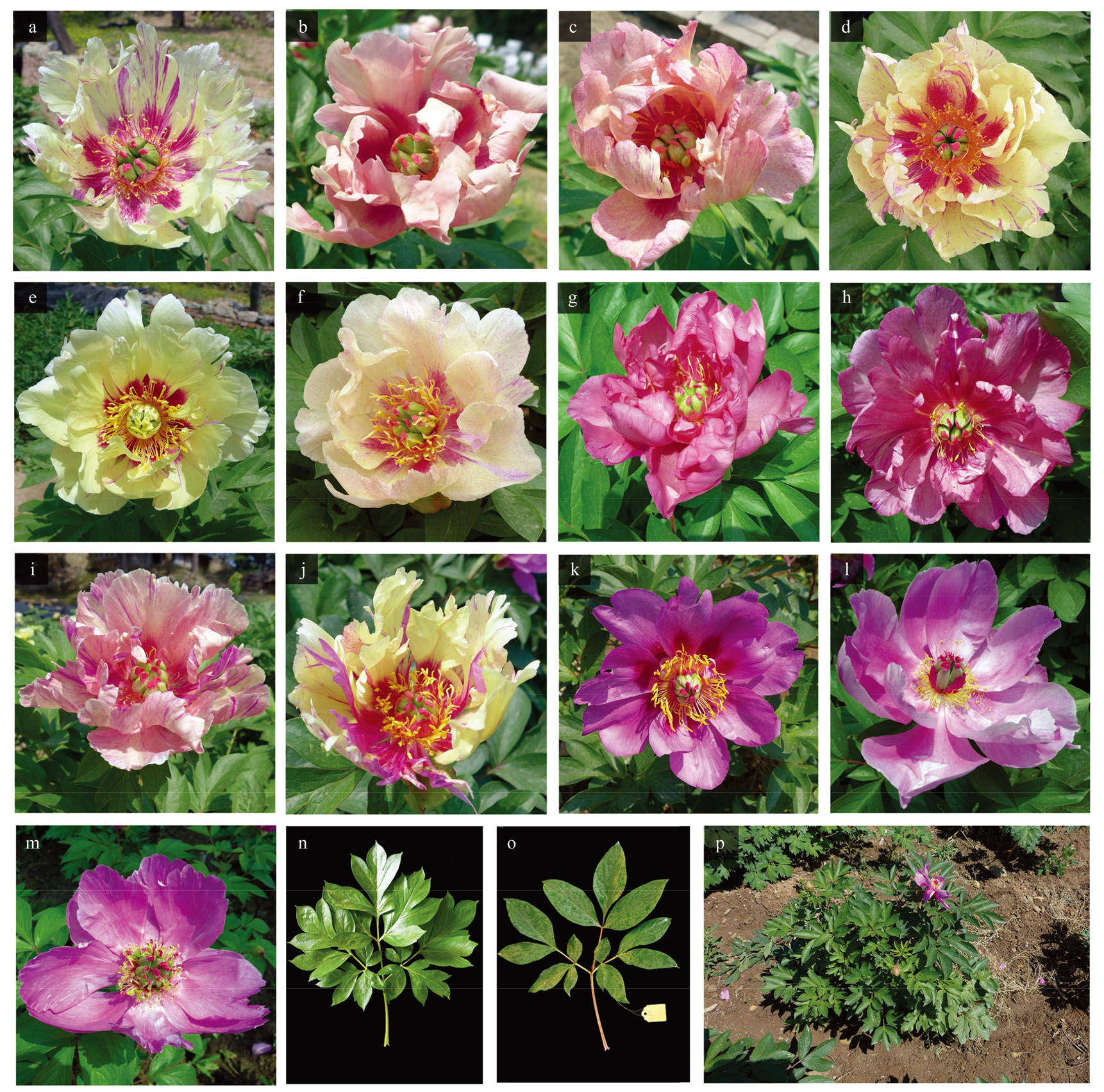
The 11 intersectional hybrid progenies produced by crossing the pollen parent, P. × lemoinei ‘L’ Esperance’, to P. lactiflora Fen Yun Fei He a-m: Flowers of the intersectional hybrids. a: N2-1; b: N2-10; c: N3-1; d: N5-6; e: S2-2; f: Jing Rui Huang; g: Jing Gui Mei; h: Jing Hua Xu Ri; i: Jing Hua Zhao Xia. J-l: Jing Hua Huan Cai; m: Jing Rui Zi. n-o: Leaves of the intersectional hybrids, n: Lobed; o: Unlobed. p: Jing Hua Huan Cai has both lobed and unlobed leaves"

Fig. 2

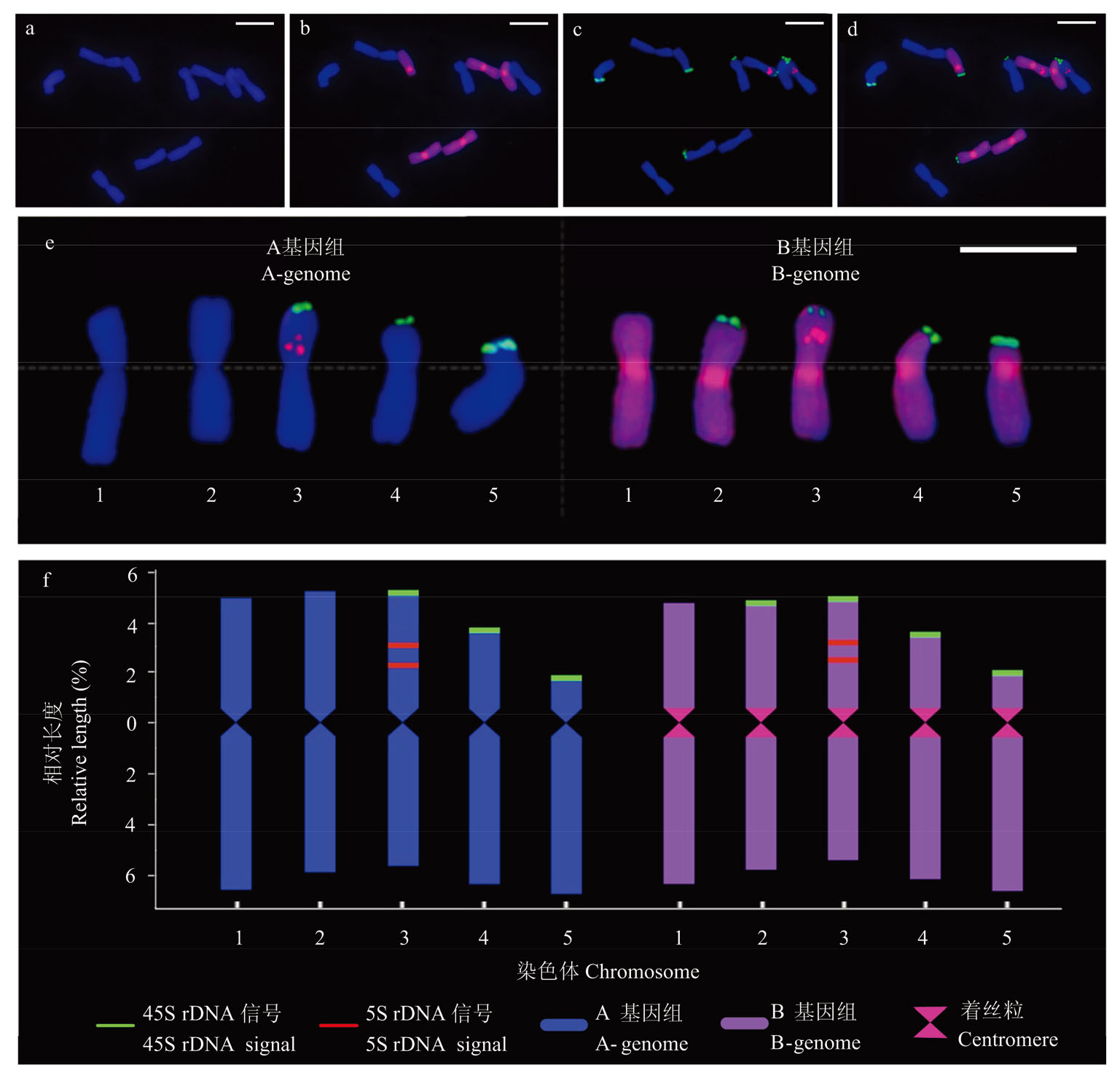
Karyotype of P. × lemoinei ‘L’ Esperance’, the pollen parent of intersectional hybrids a: DAPI stained; b: GISH signals (red) with B-genome as probes; c: rDNA-FISH signals, red: 5S rDNA, green: 45S rDNA; d: Composite picture with GISH and FISH signals; e: Chromosome karyotype; f: Idiogram. Bars=10 μm"

Table 1

Karyotype information of intersectional hybrid progenies"

材料名称
Name of materials
基因组构成
Genome structure
核型公式
Karyotype formula
sm染色体编号
Number of sm chromosomes
异源易位染色体
Chromosomes with inter-genome translocations
N2-1 ABC 2n=3x=15=10m+2sm+3st 4A, 4C -
N2-10 ABC 2n=3x=15=11m+1sm+3st 4C -
N3-1 ABC 2n=3x=15=10m+2sm+3st 4A, 4C -
N5-6 ABC 2n=3x=15=12m+3st - -
S2-2 ABC 2n=3x=15=11m+1sm+3st 4C -
京蕊黄Jing Rui Huang ABC 2n=3x=15=9m+3sm+3st 4A, 4B, 4C -
京桂美Jing Gui Mei ABC 2n=3x=15=10m+2sm+3st 4A, 4B -
京华旭日Jing Hua Xu Ri ABC 2n=3x=15=10m+2sm+3st 4A, 4B 2A, 2B, 3A, 3B
京华朝霞Jing Hua Zhao Xia ABC 2n=3x=15=11m+1sm+3st 4C 3A, 3B
京蕊紫Jing Rui Zi AC 2n=2x=10=6m+2sm+2st 4A, 4C -
京华幻彩Jing Hua Huan Cai AC 2n=2x=10=7m+1sm+2st 4C -
AB-1C 2n=3x-1=14=10m+1sm+3st 4A -

Fig. 3

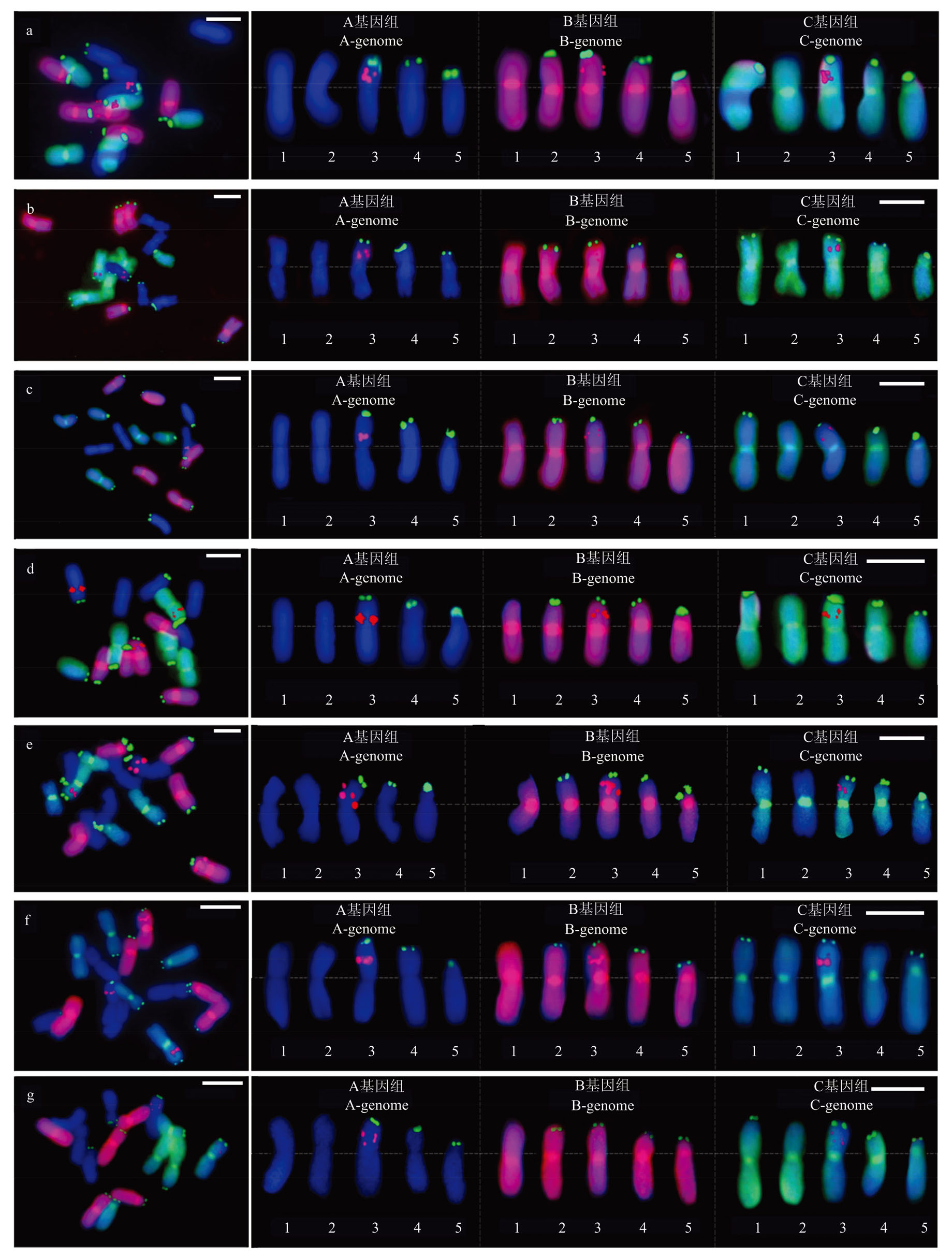
Karyotype of 7 triploid intersectional hybrids without inter-genome translocations a: N2-1; b: N2-10; c: N3-1; d: N5-6; e: S2-2; f: Jing Rui Huang; g: Jing Gui Mei. Small red spots in the middle of the short arms: 5S rDNA signals; The small green spots at the end of the short arms: 45S rDNA signals. Bars=10 μm"

Fig. 4

Karyotype of 2 triploid intersectional hybrids with inter-genome translocations"

Fig. 5

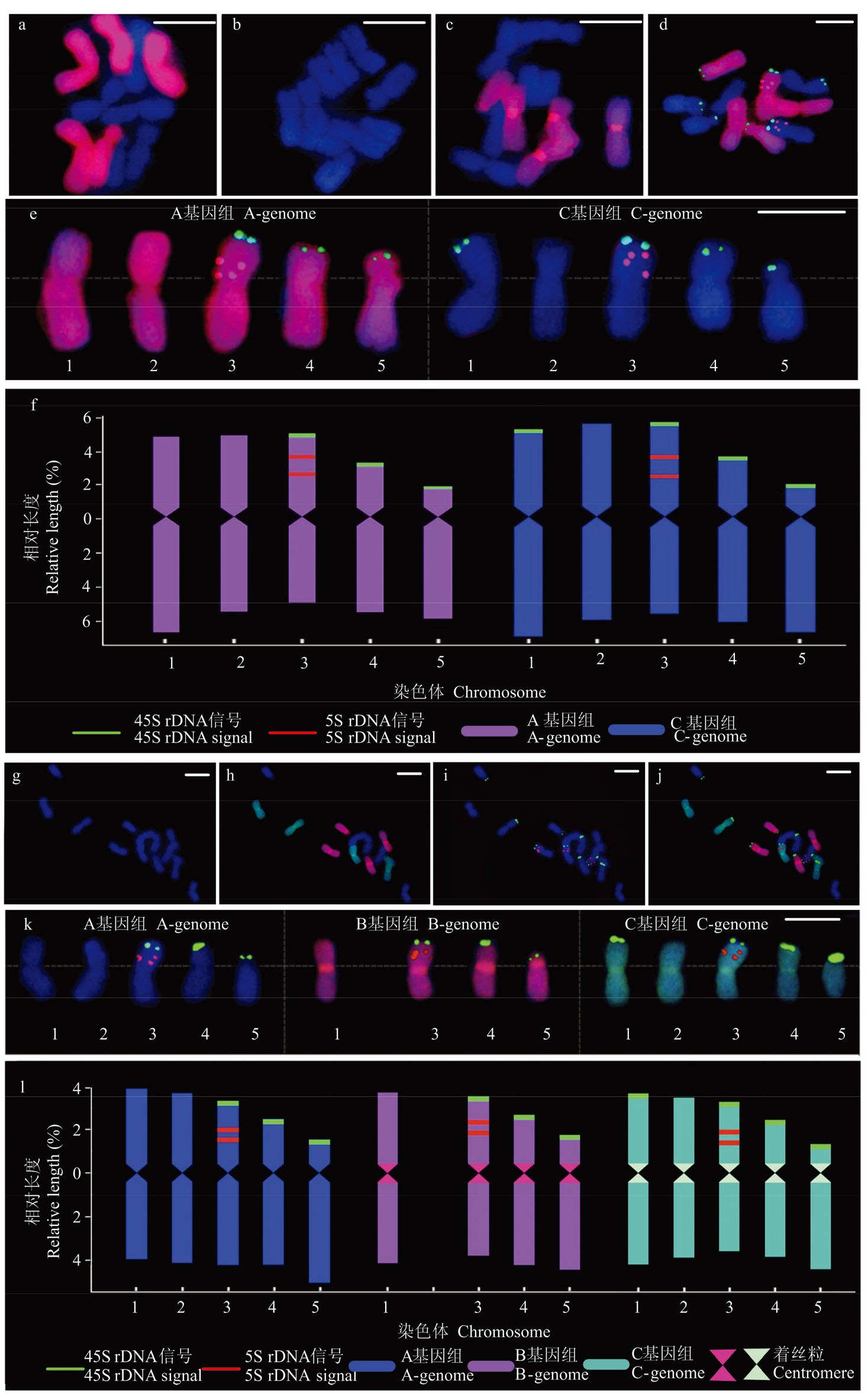
Karyotype of an intersectional hybrid named Jing Rui Zi a: GISH signals (red) with A-genome as probes; b: Absence of GISH signals (red) with B-genome as probes; c: C: GISH signals (red) with C-genome as probes; d: Composited picture with GISH and FISH signals (with A-genome as GISH probes, with 5S and 45S rDNA as FISH probes); e: Chromosome karyotype; f: Idiogram. Bars=10 μm"

Fig. 6

Karyotype of an intersectional hybrid named Jing Hua Huan Cai with 2 different ploidies a-f: Karyotype of the diploid,a: GISH signals (red) with A-genome as probes, b: Absence of GISH signals (red) with B-genome as probes, c: GISH signals (red) with C-genome as probes, d: Composited picture with GISH and FISH signals (with A-genome as GISH probes, with 5S and 45S rDNA as FISH probes), e: Chromosome karyotype, f: Idiogram; g-l: Karyotype of the near triploid aneuploid, g:DAPI stained, h: GISH signals with B-genome (red) and C-genome (green) as probes, i: rDNA-FISH signals (red: 5S rDNA, green: 45S rDNA), j: Composited picture with GISH and FISH signals, k: Chromosome karyotype, l: Idiogram. Bars=10 μm"

Table 2

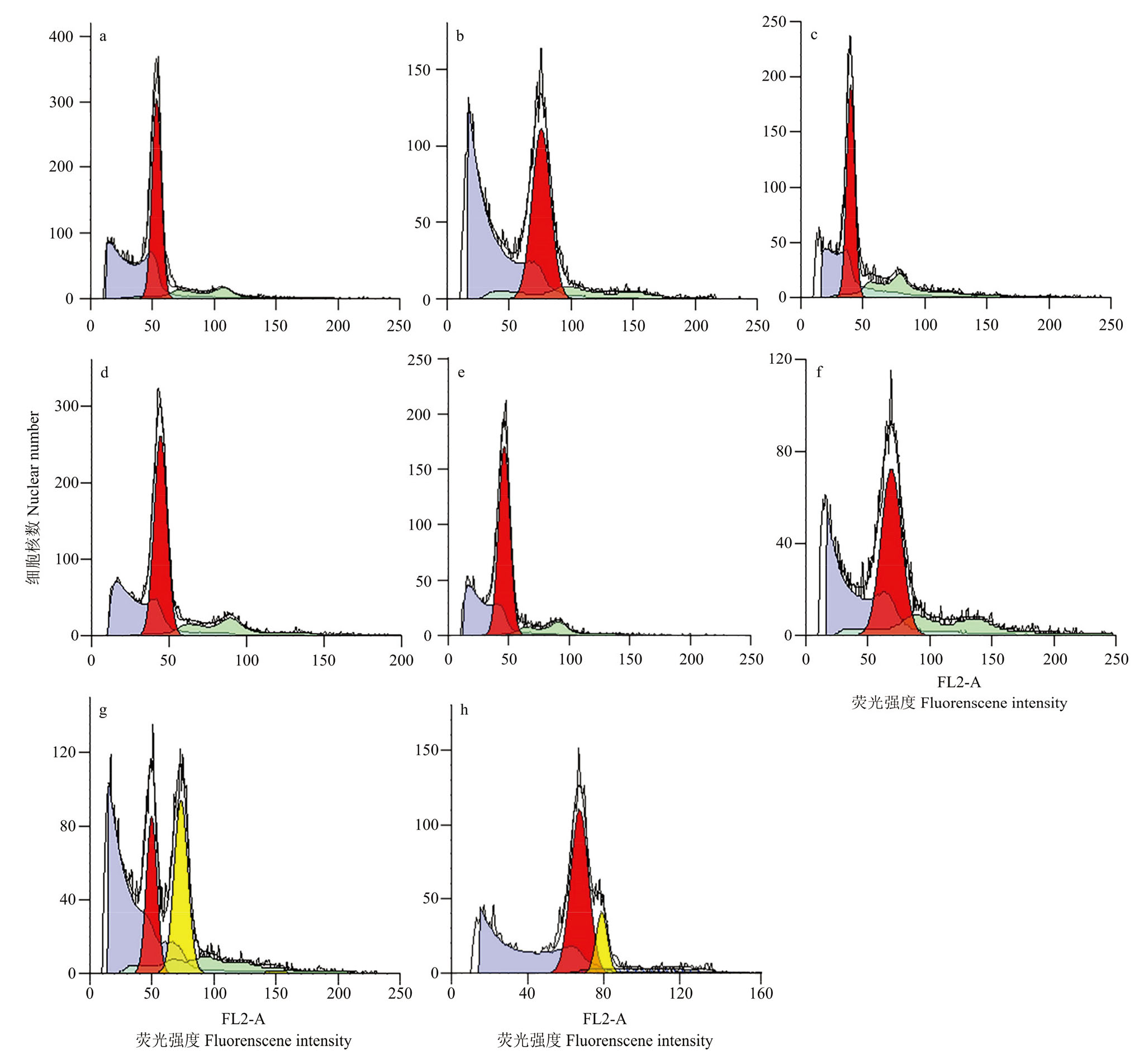
Genome size and ploidy estimation of leaves with different morphologies in Jing Hua Huan Cai"

材料名称
Name of materials
样品数
No. of samples
DNA含量(峰值荧光强度)
DNA content (Fluorescence intensity at peak)
估测基因组大小
Estimated genome size (Gb)
倍性计算
Ploidy calculation
估测倍性
Estimated ploidy
凤丹P. ostii Feng Dan(2n=2x=10)* 2 53.16±0.21 12.28 2.00 2.06 二倍体Diploid
京蕊黄Jing Rui Huang(2n=3x=15)* 2 77.57±1.60a 17.91±0.37 2.92 3.00 三倍体Diploid
京蕊紫Jing Rui Zi(2n=2x=10)* 3 39.39±0.53d 9.10±0.12 1.48 1.52 二倍体Diploid
京华幻彩不裂叶片
Jing Hua Huan Cai unlobed leaves
9 43.36±4.02cd 10.01±0.92 1.63 1.68 二倍体Diploid
京华幻彩开裂叶片Ⅰ
Jing Hua Huan Cai lobed leaves Ⅰ
3 50.18±2.75c 11.59±0.64 1.89 1.94 近二倍体
Near diploid
京华幻彩开裂叶片Ⅱ
Jing Hua Huan Cai lobed leaves Ⅱ
4 69.58±3.83b 16.07±0.88 2.62 2.69 近三倍体
Near triploid
京华幻彩开裂叶片Ⅲ
Jing Hua Huan Cai lobed leaves Ⅲ
4 47.31±1.69c 10.93±0.39 1.78 1.83 近二倍体
Near diploid
69.49±2.67b 16.05±0.62 2.61 2.69 近三倍体
Near triploid
京华幻彩开裂叶片Ⅳ
Jing Hua Huan Cai lobed leaves Ⅳ
1 67.36 15.56 2.53 2.61 近三倍体
Near triploid
79.05 18.26 2.97 3.06 三倍体Triploid

Fig. 7

Measurement of DNA content of leaves with different morphologies in Jing Hua Huan Cai by flow cytometry a: P. ostii Feng Dan, diploid; b: Jing Rui Huang, triploid; c: Jing Rui Zi, diploid; d: Jing Hua Huan Cai unlobed leaves, diploid; e-h: Different ploidies were detected in Jing Hua Huan Cai lobed leaves, e: Near diploid with a genome slightly larger than diploid; f: Near triploid with a genome slightly smaller than triploid; g: Chimera with near diploid and near triploid; h: Chimera with near triploid and triploid"

Fig. 8

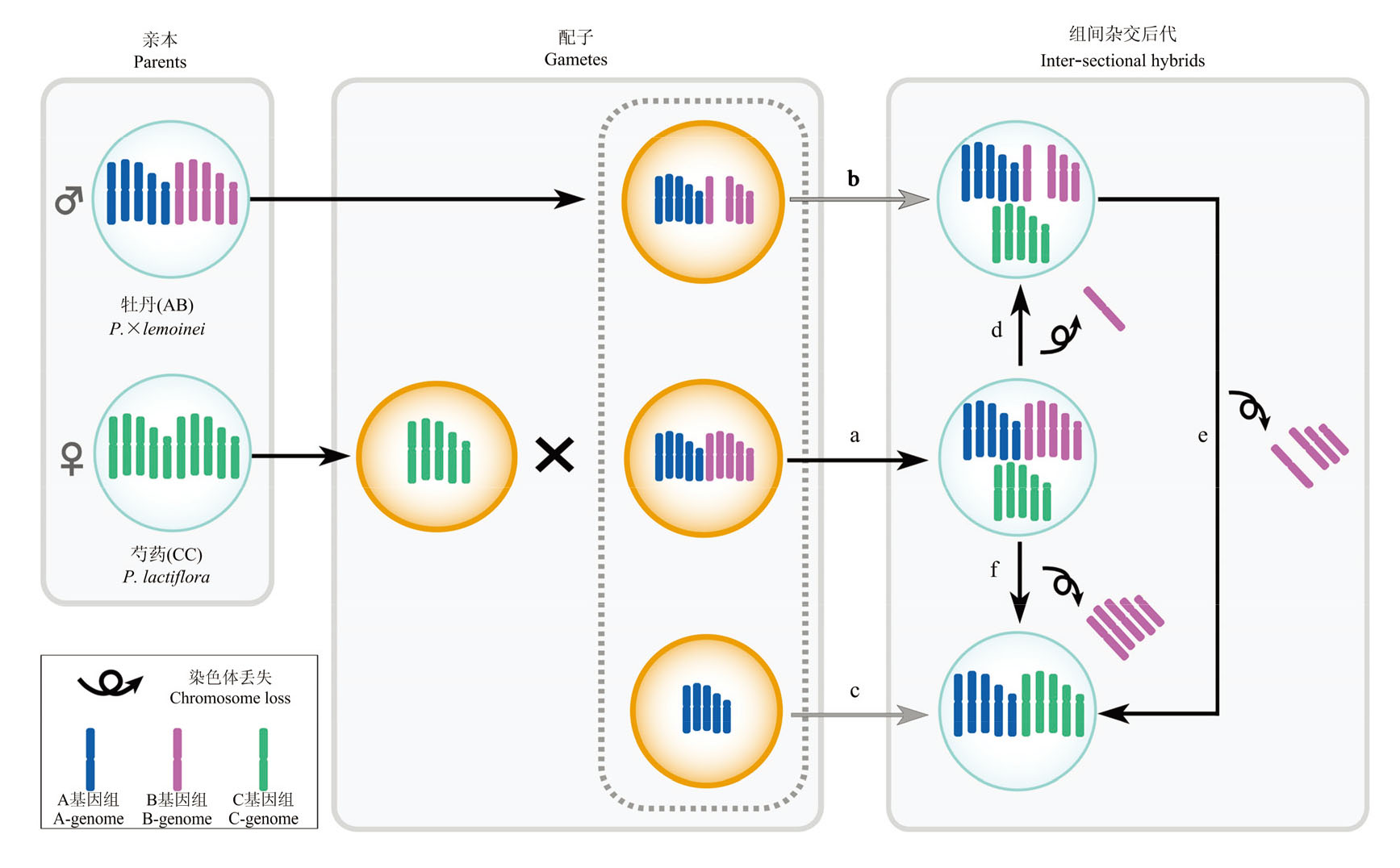
Formation mechanism of different ploidy of intersectional hybrids in Paeonia"

Fig. 9

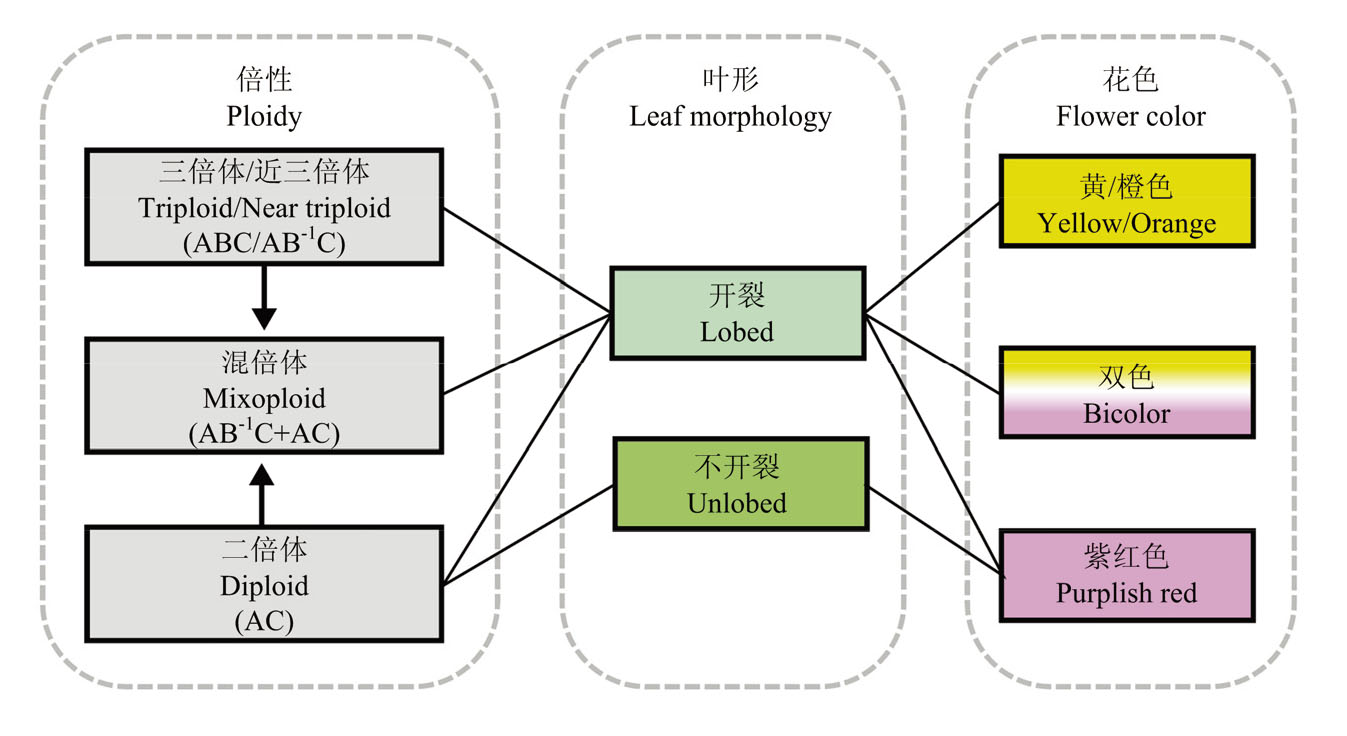
Relationship between different ploidy and characters of intersectional hybrids"

[1]
HONG D Y. Peonies of the World:Taxonomy and Phytogeography. UK: Kew Press, 2010.
[2]
CHENG F Y. Advances in the breeding of tree peonies and a cultivar system for the cultivar group. International Journal of Plant Breeding, 2007, 1(2): 89-104.
[3]
郝青, 刘政安, 舒庆艳, 王亮生, 陈富飞. 中国首例芍药牡丹远缘杂交种的发现及鉴定. 园艺学报, 2008, 35(6): 853-858.
HAO Q, LIU Z A, SHU Q Y, WANG L S, CHEN F F. Identification of intersectional hybrid between section moutan and section Paeonia found in China for the first time. Acta Horticulturae Sinica, 2008, 35(6): 853-858. (in Chinese)
[4]
侯祥云, 郭先锋. 芍药属植物杂交育种研究进展. 园艺学报, 2013, 40(9): 1805-1812.
HOU X Y, GUO X F. Progress in Paeonia crossbreeding research. Acta Horticulturae Sinica, 2013, 40(9): 1805-1812. (in Chinese)
[5]
PAGE M. The Gardener’s Peony:Herbaceous and Tree Peonies. Portland Cambridge: Timber Press, 2005.
[6]
孙菊芳, 成仿云. 芍药与牡丹组间杂种引种栽培初报. 中国园林, 2007, 23(5): 51-54.
SUN J F, CHENG F Y. Preliminary report on the introduction of intersectional hybrids between tree and herbaceous peonies. Chinese Landscape Architecture, 2007, 23(5): 51-54. (in Chinese)
[7]
王越岚. 牡丹的杂交育种及组间杂种育性的研究[D]. 北京: 北京林业大学, 2009.
WANG Y L. Cross-breeding in tree peony and fertility research of intersectional hybrids[D]. Beijing: Beijing Forestry University, 2009. (in Chinese)
[8]
钟原, 成仿云, 何桂梅, 高静, 王荣, 杜秀娟, 王越岚, 刘玉英, 曹羲君, 王莹. 5个芍药属组间杂交新品种. 林业科学, 2016, 52(6): 164.
ZHONG Y, CHENG F Y, HE G M, GAO J, WANG R, DU X J, WANG Y L, LIU Y Y, CAO X J, WANG Y. Five new peony cultivars bred from inter-sectional hybrids in Paeonia. Scientia Silvae Sinicae, 2016, 52(6): 164. (in Chinese)
[9]
肖佳佳. 芍药属杂交亲和性及杂种败育研究[D]. 北京: 北京林业大学, 2010.
XIAO J J. A study on the crossing compatibility and hybrid abortion of Paeonia[D]. Beijing: Beijing Forestry University, 2010. (in Chinese)
[10]
CUI L T, CHEN T, ZHAO X, WANG S L, REN X X, XUE J Q, ZHANG X X. Karyotype analysis, genomic and fluorescence in situ hybridization (GISH and FISH) reveal the ploidy and parental origin of chromosomes in Paeonia Itoh hybrids. International Journal of Molecular Sciences, 2022, 23(19): 11406.

doi: 10.3390/ijms231911406
[11]
HONG C H, ZHAO Y Y, QIAO M Y, HUANG Z T, WEI L, ZHOU Q Q, LU W Q, SUN G R, HUANG Z M, GAO H B. Molecular dissection of the parental contribution in Paeonia Itoh hybrids. Plant Physiology, 2024, 196(3): 1953-1964.

doi: 10.1093/plphys/kiae413
[12]
YANG L H, ZHANG J J, TEIXEIRA DA SILVA J A, YU X N. Variation in ploidy and karyological diversity in different herbaceous peony cultivar groups. Journal of the American Society for Horticultural Science, 2017, 142(4): 272-278.

doi: 10.21273/JASHS04015-17
[13]
ZHONG Y, DU M J, JI R Z, RONG Q, GUAN Z H, CHENG F Y. Cytogenetic analysis reveals a mechanism of compatibility in distant hybridization between tree peony and herbaceous peony. Euphytica, 2024, 220(4): 66.

doi: 10.1007/s10681-024-03326-1
[14]
YAO X C, DU X Z, GE X H, CHEN J P, LI Z Y. Intra- and intergenomic chromosome pairings revealed by dual-color GISH in trigenomic hybrids of Brassica juncea and B. carinata with B. maurorum. Genome, 2010, 53(1): 14-22.

doi: 10.1139/G09-082
[15]
ROA F, GUERRA M. Non-random distribution of 5S rDNA sites and its association with 45S rDNA in plant chromosomes. Cytogenetic and Genome Research, 2015, 146(3): 243-249.

doi: 10.1159/000440930 pmid: 26489031
[16]
ROA F, GUERRA M. Distribution of 45S rDNA sites in chromosomes of plants: Structural and evolutionary implications. BMC Evolutionary Biology, 2012, 12: 225.

doi: 10.1186/1471-2148-12-225 pmid: 23181612
[17]
YOUNIS A, RAMZAN F, HWANG Y J, LIM K B. FISH and GISH: Molecular cytogenetic tools and their applications in ornamental plants. Plant Cell Reports, 2015, 34(9): 1477-1488.

doi: 10.1007/s00299-015-1828-3 pmid: 26123291
[18]
ZHONG Y, DU M J, JI R Z, CHENG F Y. Cytological origination of the first found allotriploid tree peony, Paeonia × lemoinei ‘Oukan’ (AAB), reveled by molecular karyotype comparation. Scientia Horticulturae, 2024, 324: 112563.

doi: 10.1016/j.scienta.2023.112563
[19]
WAMINAL N E, PELLERIN R J, KIM N S, JAYAKODI M, PARK J Y, YANG T J, KIM H H. Rapid and efficient FISH using pre-labeled oligomer probes. Scientific Reports, 2018, 8: 8224.

doi: 10.1038/s41598-018-26667-z pmid: 29844509
[20]
李懋学, 陈瑞阳. 关于植物核型分析的标准化问题. 武汉植物学研究, 1985, 3(4): 297-302.
LI M X, CHEN R Y. A suggestion on the standardization of karyotype analysis in plants. Journal of Wuhan Botanical Research, 1985, 3(4): 297-302. (in Chinese)
[21]
YUAN J H, JIANG S J, JIAN J B, LIU M Y, YUE Z, XU J B, LI J, XU C Y, LIN L H, JING Y, et al. Genomic basis of the giga- chromosomes and giga-genome of tree peony Paeonia ostii. Nature Communications, 2022, 13: 7328.

doi: 10.1038/s41467-022-35063-1
[22]
DE STORME N, MASON A. Plant speciation through chromosome instability and ploidy change: Cellular mechanisms, molecular factors and evolutionary relevance. Current Plant Biology, 2014, 1: 10-33.

doi: 10.1016/j.cpb.2014.09.002
[23]
WRIGHT K M, PIRES J C, MADLUNG A. Mitotic instability in resynthesized and natural polyploids of the genus Arabidopsis (Brassicaceae). American Journal of Botany, 2009, 96(9): 1656-1664.

doi: 10.3732/ajb.0800270
[24]
ISHII T, KARIMI-ASHTIYANI R, HOUBEN A. Haploidization via chromosome elimination: Means and mechanisms. Annual Review of Plant Biology, 2016, 67: 421-438.

doi: 10.1146/arplant.2016.67.issue-1
[25]
KLOC M, KUBIAK J Z, GHOBRIAL R M. Natural genetic engineering: A programmed chromosome/DNA elimination. Developmental Biology, 2022, 486: 15-25.

doi: 10.1016/j.ydbio.2022.03.008 pmid: 35321809
[26]
ISHII T, UEDA T, TANAKA H, TSUJIMOTO H. Chromosome elimination by wide hybridization between Triticeae or oat plant and pearl millet: Pearl millet chromosome dynamics in hybrid embryo cells. Chromosome Research, 2010, 18(7): 821-831.

doi: 10.1007/s10577-010-9158-3
[27]
CLARK K A, KRYSAN P J. Chromosomal translocations are a common phenomenon in Arabidopsis thaliana T-DNA insertion lines. The Plant Journal, 2010, 64(6): 990-1001.

doi: 10.1111/tpj.2010.64.issue-6
[28]
李树贤. 植物染色体与遗传育种. 北京: 科学出版社, 2008.
LI S X. Plant Chromosomes and Genetic Breeding. Beijing: Science Press, 2008. (in Chinese)
[29]
MASON A S, BATLEY J. Creating new interspecific hybrid and polyploid crops. Trends in Biotechnology, 2015, 33(8): 436-441.

doi: 10.1016/j.tibtech.2015.06.004 pmid: 26164645
[30]
WOODHOUSE M R, CHENG F, PIRES J C, LISCH D, FREELING M, WANG X W. Origin, inheritance, and gene regulatory consequences of genome dominance in polyploids. Proceedings of the National Academy of Sciences of the United States of America, 2014, 111(14): 5283-5288.
[1] YUE RunQing, LI WenLan, DING ZhaoHua, MENG ZhaoDong. Molecular Characteristics and Resistance Evaluation of Transgenic Maize LD05 with Stacked Insect and Herbicide Resistance Traits [J]. Scientia Agricultura Sinica, 2025, 58(7): 1269-1283.
[2] YANG YongQing, HU PengJu, SONG YaHui, JIN XinXin, SU Qiao, WANG Jin. QTL Mapping of Quality Traits for A Peanut Germplasm SW9721-3 with Ultra-High Oil Content [J]. Scientia Agricultura Sinica, 2025, 58(4): 635-646.
[3] ZHOU GuangFei, MA Liang, MA Lu, ZHANG ShuYu, ZHANG HuiMin, SONG XuDong, ZHANG ZhenLiang, LU HuHua, HAO DeRong, MAO YuXiang, XUE Lin, CHEN GuoQing. Genome-Wide Association Study of Husk Traits in Maize [J]. Scientia Agricultura Sinica, 2025, 58(3): 431-442.
[4] JIA WenQing, HE YaLin, DUAN HuiLin, YU YingYue, WANG Zheng, ZHAO GuoDong, GUO YingZi, WANG ErQiang, MU JinYan, ZHANG Yan, WANG YanLi, HE SongLin. Integrated Transcriptomic and Metabolomic Analysis of Pre- Fertilization Barriers in Distant Hybridization of Paeonia ostii × P. ludlowii [J]. Scientia Agricultura Sinica, 2025, 58(23): 5013-5030.
[5] WEI ChenXi, DONG ShanRong, WANG XiaoMan, LUO JianRang. Analysis of Red Color Leaf Traits in Tree Peony Based on Leaf Color Phenotypes and Anthocyanin Accumulation Characteristics [J]. Scientia Agricultura Sinica, 2025, 58(23): 5046-5056.
[6] CHEN CaiJin, MA Lin, JIANG QingXue, LIU JinHui, MIAO Tong, ZHANG ZhiPeng, MENG Xiang, MA XiaoRan, ZHOU XinYue, ZHANG Jian, LIU WenHui, WANG XueMin. Genetic Diversity Analysis of Phenotypic Traits of 244 Forage Oat Germplasm Resources [J]. Scientia Agricultura Sinica, 2025, 58(23): 4825-4836.
[7] SHI DeYang, GAO ChunHua, LI YanHong, ZHAO HaiJun, XIA DeJun. Effects of Row Spacing Configuration on the Canopy Characteristics and Grain Yield of the Intercropping Maize [J]. Scientia Agricultura Sinica, 2025, 58(23): 4872-4885.
[8] TANG GuiMei, LI WeiDong, ZHOU YuXia, KONG YouHan, XIAO XiaoLing, PENG YingShu, ZHANG Li, FU HongYan, LIU Yang, HUANG GuoLin. Genetic Diversity Analysis of Cymbidium faberi Germplasm Resources Based on Phenotypic Traits [J]. Scientia Agricultura Sinica, 2025, 58(2): 339-354.
[9] LI YueQi, MA ZhongHua, SU Ming, LIU Hao, MA FengLan, MA XiaoYing, LI Tao, LI QingYun, ZHANG Dan, LIU JiLi, WU Na. Response of Maize Photosynthetic Production Capacity in Saline- Alkaline Soil to Organic Fertilizer Application Rates Under Differential Tillage Practices [J]. Scientia Agricultura Sinica, 2025, 58(19): 3872-3889.
[10] LI Ming, CHENG YuKun, BAI Bin, LEI Bin, GENG HongWei. Genome-Wide Association Study on Spike Architecture Traits and Elite Haplotype Mining in Winter Wheat [J]. Scientia Agricultura Sinica, 2025, 58(18): 3583-3597.
[11] XIANG AiHui, BAI RongJi, HAO YuQiong, ZHAO JiaJia, WU BangBang, LI XiaoHua, ZHENG XingWei, GUAN PanFeng, ZHENG Jun. Identification of Dwarf Genes and Mining of Plant Height Genetic Loci in Shanxi Wheat [J]. Scientia Agricultura Sinica, 2025, 58(17): 3372-3388.
[12] LIU PengPeng, LI JiangBo, XU HongJun, NIE YingBin, HAN XinNian, KONG DeZhen, SANG Wei. Genetic Diversity Analysis of Protein Fractions and Quality in Xinjiang Winter Wheat Cultivar Resources [J]. Scientia Agricultura Sinica, 2025, 58(15): 2948-2959.
[13] ZHENG MinHua, CHEN Luo, XING JiaLe, XIE YueLan, JIANG XianYa, NIE Shuai, CAI FuGe, WU HaoXiang, LU ZhanHua, SUN Wei, HUO Xing, BAI Song, ZHAO JunLiang, YANG Wu. Genome-Wide Association Study and Genetic Improvement Study of Rice Blast Resistance [J]. Scientia Agricultura Sinica, 2025, 58(14): 2707-2719.
[14] LI Hao, TIAN YuYang, ZHANG ZiMing, CAO YiFan, CIREN LuoBu, NIMA CangJue, DANZENG LuoSang, LEI ChuZhao, BASANG ZhuZha, CHEN NingBo. Research Progress on the Function of Bovine Thyroid Gene and Its Correlation with Environmental Adaptability [J]. Scientia Agricultura Sinica, 2025, 58(13): 2682-2692.
[15] ZHANG TianYu, LIU LiJun, YANG Gang, WU JunYan, PU YuanYuan, MA Li, WANG WangTian, LU XiaoMing, MA YuanQiang, SUN WanCang. Genetic Gain Analysis of Agronomic Traits of Brassica rapa L. in Northern China from 2006 to 2022 [J]. Scientia Agricultura Sinica, 2025, 58(11): 2081-2095.
Viewed
Full text


Abstract

Cited

  Shared   
  Discussed   
No Suggested Reading articles found!