Scientia Agricultura Sinica ›› 2026, Vol. 59 ›› Issue (4): 887-899.doi: 10.3864/j.issn.0578-1752.2026.04.014

• FOOD SCIENCE AND ENGINEERING • Previous Articles     Next Articles

Optimization of Detection Conditions for Aerobic Spore-Forming Bacillus in Honey and Analysis of Its Contamination Characteristics

YANG Fan1,2(), HU XiaoQian1,2, WANG Yu2, YUE CaiXia2, ZHANG Rui2, TIAN Wen1,2, WANG TingTing2, LI Yang2, JI MeiQuan2, ZHANG LiHui3, AN KeJing4   

  1. 1 School of Food Science and Engineering, Nanjing University of Finance and Economics, Nanjing 210023
    2 Nanjing Customs Laboratory for Animal, Plant and Food Inspection and Quarantine, Nanjing 210019
    3 School of Pharmacy, Hubei University of Chinese Medicine, Wuhan 430065
    4 Guangdong Academy of Agricultural Sciences, Guangzhou 510640
  • Received:2025-06-19 Online:2026-02-10 Published:2026-02-10
  • Contact: YANG Fan

Abstract:

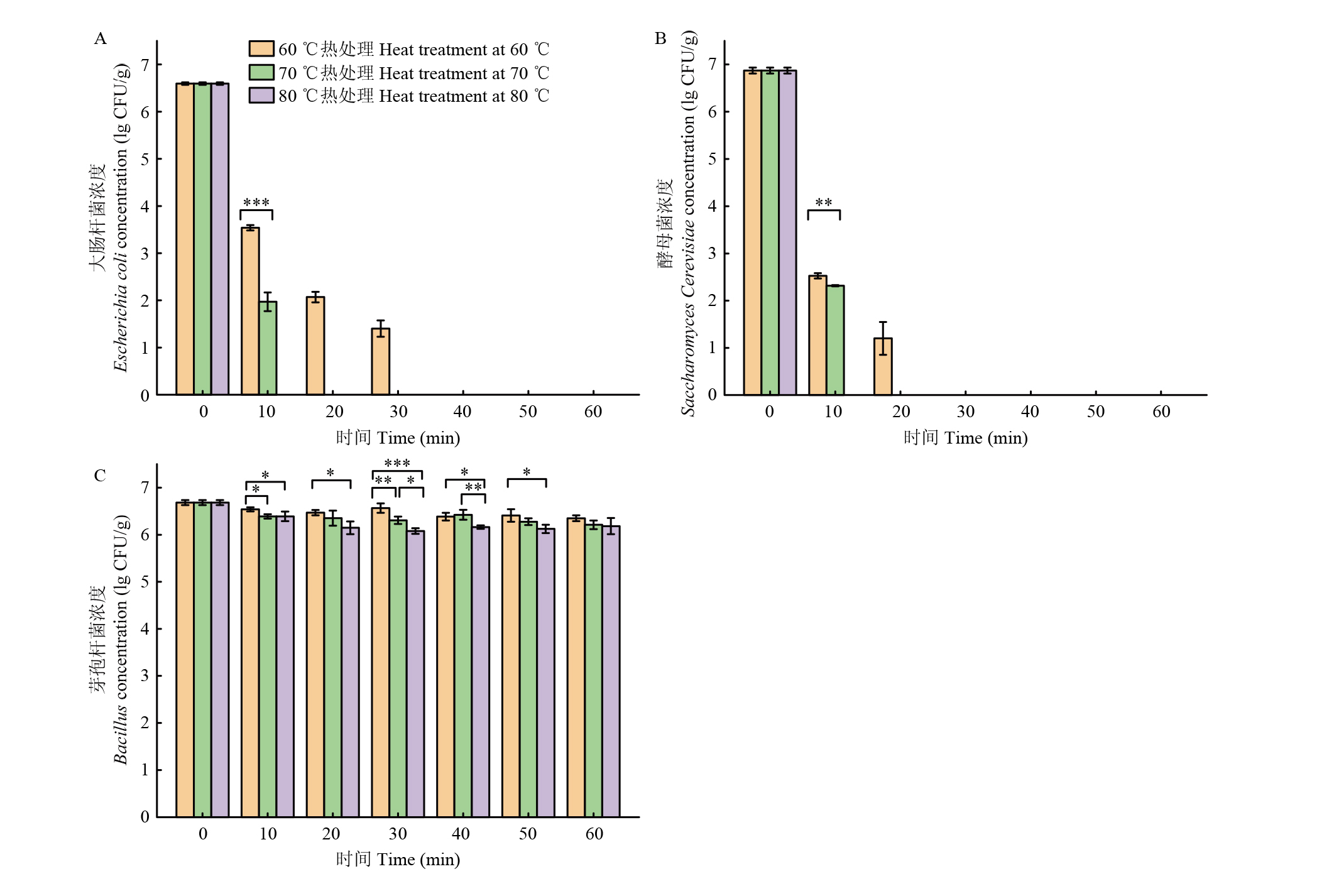
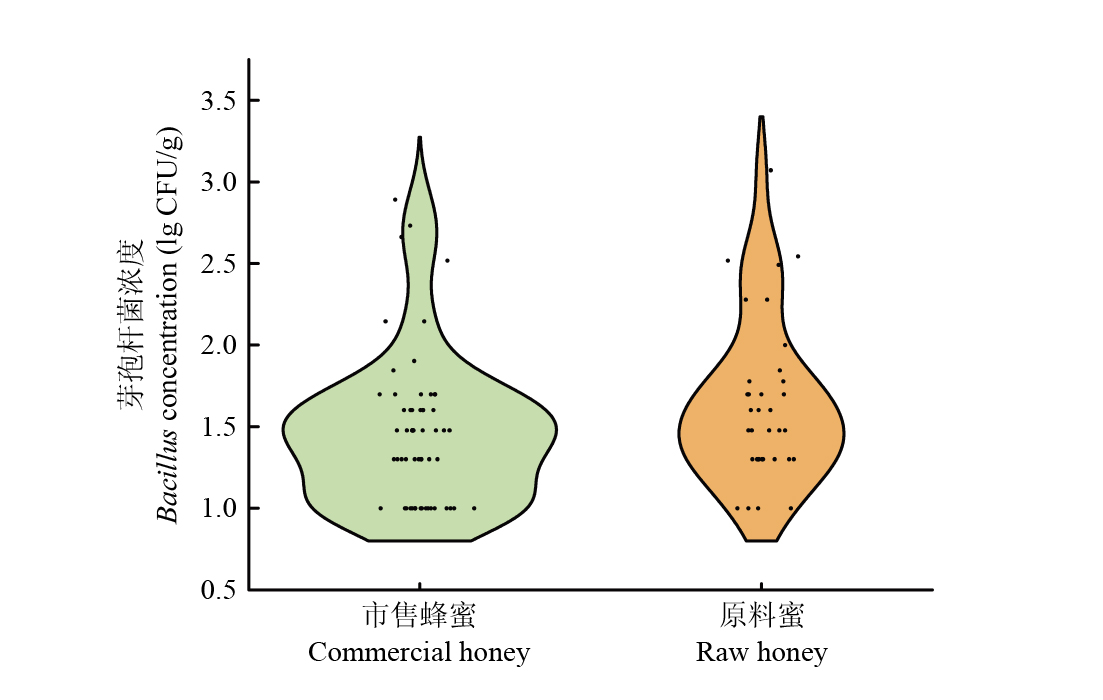
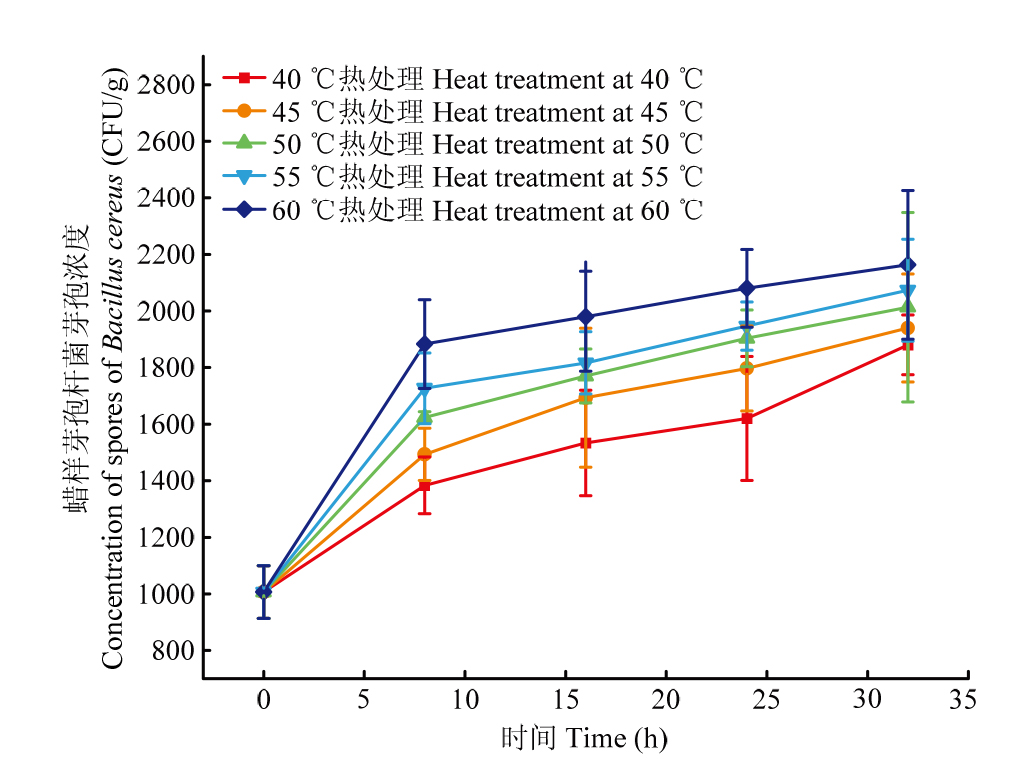
【Objective】The thermostability and potential safety risks of Bacillus may pose a threat to the quality of honey products. Therefore, it is necessary to optimize the pre-treatment process for Bacillus detection in honey, to clarify the contamination characteristics of Bacillus, and to evaluate the risks in the processing chain, aiming to provide a theoretical basis for establishing a scientific and effective quality and safety control system.【Method】To improve the accuracy of Bacillus detection results in honey, this study selected a temperature range of 60-80 ℃ to carry out heat treatment experiments, and systematically explored the optimal process conditions for simultaneously achieving efficient inactivation of miscellaneous bacteria and retention of Bacillus spore concentration. Quantitative counting of Bacillus was performed on 150 commercial honey samples and 150 raw honey samples, followed by further strain isolation and purification. Meanwhile, Matrix-Assisted Laser Desorption/Ionization Time of Flight Mass Spectrometry (MALDI-TOF MS) and next-generation sequencing based bacterial genome sequencing were combined to identify the species of Bacillus in honey. The species and detection rates of Bacillus in each honey sample were statistically analyzed, and food safety risk assessment was conducted accordingly. Furthermore, by simulating the honey processing procedures, the study investigated the effect of heat treatment at 40-60 ℃ on the growth of Bacillus cereus spores in honey and clarified its variation trend.【Result】Heat treatment at 80 ℃ for 10 min could completely inactivate the interfering bacteria (Escherichia coli and Saccharomyces cerevisiae) in honey, while maintaining the spore viability at the same order of magnitude. Statistical analysis was conducted on the results of Bacillus quantification and identification in 150 commercial honey samples and 150 raw honey samples. The results showed that the total detection rate of Bacillus in commercial honey was 38.7%, dominated by Bacillus cereus (20.7%), Bacillus subtilis (12.7%) and Bacillus pumilus (11.3%). By contrast, the total detection rate of Bacillus in raw honey was 23.3%, mainly including Bacillus cereus (16.7%), Bacillus pumilus (8.0%) and Bacillus licheniformis (3.3%). A comparison of the samples with the highest Bacillus concentration in commercial and raw honey indicated that all of these samples were subject to single contamination by Bacillus cereus. In addition, experiments simulating the heat treatment conditions (40-60 ℃) during honey processing demonstrated that the number of Bacillus cereus spores was positively correlated with temperature-time, namely, the spore count exhibited a significant upward trend with the increase of treatment temperature and extension of treatment duration. Correlation analysis of Bacillus species indicated that Bacillus contamination in commercial honey was primarily derived from raw honey. The detection of environmental strains indirectly demonstrated that honey was susceptible to microbial contamination throughout the whole chain, including honey collection by bees, raw honey harvesting and subsequent processing procedures.【Conclusion】Heat treatment at 80 ℃ for 10 min was identified as the optimal pre-treatment protocol for Bacillus detection in honey. Bacillus cereus was confirmed as the primary hazard bacterium in honey. It was recommended that honey production enterprises listed Bacillus as one of the core monitoring indicators for the quality control of raw honey.

Key words: honey, Bacillus, heat treatment, pollution characteristics, MALDI-TOF MS, second-generation sequencing, risk assessment, processing technology

Table 1

Types and quantities of commercial honey"

市售蜂蜜类型
Types of commercial honey
检测数量
Detection quantity
洋槐蜂蜜Robinia pseudoacacia honey 38
百花蜂蜜Mixed nectar honey 35
荆条蜂蜜Vitex negundo honey 20
枣花蜂蜜Ziziphus jujuba honey 15
椴树蜂蜜 Tilia spp. honey 11
油菜蜂蜜 Brassica napus honey 11
紫云英蜂蜂蜜Astragalus sinicus honey 9
麦卢卡蜂蜜Leptospermum scoparium honey 3
紫花苕蜂蜜Vicia villosa honey 1
益母草蜂蜜Leonurus japonicus honey 1
枇杷蜂蜜 Eriobotrya japonica honey 1
葵花蜂蜜Helianthus annuus honey 1
党参蜂蜜Codonopsis pilosula honey 1
黄芪蜂蜜Astragalus membranaceus honey 1
桂花蜂蜜Osmanthus fragrans honey 1
枸杞蜂蜜Lycium barbarum honey 1

Table 2

Type, quantity, and collection information of raw honey"

原料蜜类型
Types of raw honey
检测数量
Detection quantity
采集地址
Collection address
采集时间(年.月)
Collection time (Y.M)
椴树蜂蜜 Tilia spp. honey
12 吉林延边安图县 Antu County, Yanbian, Jilin 2023.07
8 伊春嘉荫保兴马连 Malian, Baoxing, Jiayin, Yichun 2023.07
4 伊春嘉荫东升 Dongsheng, Jiayin, Yichun 2023.07
3 伊春嘉荫保兴永丰 Yongfeng, Baoxing, Jiayin, Yichun 2023.07
洋槐蜂蜜Robinia pseudoacacia honey
11 山西灵石 Lingshi, Shanxi 2023.05
10 山西永和Yonghe, Shanxi 2023.05
7 山西大宁县 Daning County, Shanxi 2023.05
6 甘肃省泾川县 Jingchuan County, Gansu 2023.05
5 甘肃省天水市Tianshui, Gansu 2023.05
5 河北省石家庄市 Shijiazhuang, Hebei 2023.05
5 山西石楼Shilou, Shaanxi 2023.05
5 山西石楼 Shilou, Shaanxi 2023.05
4 甘肃省庆阳市 Qingyang, Gansu 2023.05
4 山西省临汾市 Linfen, Shanxi 2023.05
4 山西隰县 Xixian, Shanxi 2023.05
4 陕西麟游县 Linyou, Shaanxi 2023.05
3 河南省洛阳市 Luoyang, Henan 2023.05
3 山东省潍坊市 Weifang, Shandong 2023.05
2 山西柳林 Liulin, Shanxi 2023.05
油菜蜂蜜 Brassica napus honey
2 四川中江县 Zhongjiang, Sichuan 2024.03
1 江苏宝应 Baoying, Jiangsu 2024.04
1 江苏涟水 Lianshui, Jiangsu 2024.04
1 江苏南京 Nanjing, Jiangsu 2024.04
1 江苏泰州 Taizhou, Jiangsu 2024.04
1 江苏兴化 Xinghua, Jiangsu 2024.04
1 江苏盐城 Yancheng, Jiangsu 2024.04
枇杷蜂蜜 Eriobotrya japonica honey 16 江苏扬州 Yangzhou, Jiangsu 2024.05
枣花蜂蜜 Ziziphus jujuba honey 12 陕西省榆林市 Yulin, Shaanxi 2024.06
枸杞蜂蜜 Lycium barbarum honey 3 青海西海 Xihai, Qinghai 2023.07
山花蜂蜜 Mountain multi-floralr honey 2 青海东海 Donghai, Qinghai 2023.07

Fig. 1

The effect of different heat treatment temperatures and times on the concentration of Escherichia coli, Saccharomyces cerevisiae, and Bacillus in honey"

Fig. 2

Bacillus concentration (≥1 lg CFU/g) in 150 commercial honey samples and 150 raw honey samples"

Fig. 3

Detection rates of different Bacillus species in commercial (A) and raw (B) honey"

Fig. 4

ANI similarity heatmap of strains isolated from 4 commercial honey samples"

Table 3

Results of species identification of strains isolated from 4 commercial honey samples"

编号 No. 菌种类型 Strains Species 相似度 Similarity (%) 基因组集合组装序列 Genome Collection Assembly
1158 高地芽孢杆菌Bacillus altitudinis 98.52 GCA 028550655.1
2987 高地芽孢杆菌Bacillus altitudinis 98.45 GCA 028550655.1
1913 沙福芽孢杆菌Bacillus safensis 98.72 GCA 000828395.1
2739 沙福芽孢杆菌Bacillus safensis 99.12 GCA 015854505.1

Fig. 5

The influence of temperature and time on the spore concentration of Bacillus cereus in honey"

[1]
中华人民共和国卫生部. GB 14963-2011 食品安全国家标准蜂蜜. 北京: 中国标准出版社, 2011.
Ministry of Health of the People's Republic of China. GB 14963-2011 national food safety standard:Honey. Beijing: Standards Press of China, 2011. (in Chinese)
[2]
RARA A R, AKHMAD E Z H, DIMAS A. Diastase enzyme activity and antibacterial effectiveness to gastroenteretis by Apis mellifera honey from Indonesia. Journal of Smart Bioprospecting and Technology, 2024, 5(1): 20-25.
[3]
SUN L P, SHI F F, HE X J, CAI Y J, YU Y L, YAO D, ZHOU J H, WEI X P. Establishment and application of quantitative method for 22 organic acids in honey based on SPE-GC-MS. European Food Research and Technology, 2023, 249(2): 473-484.

doi: 10.1007/s00217-022-04146-0
[4]
EDO G I, AKPOGHELIE P O, JIKAH A N, ONOHARIGHO F O, OWHERUO J O, OKORONKWO K A. Quality, composition and health effects of natural honey: A review. Natural Resources for Human Health, 2023, 3(4): 449-461.

doi: 10.53365/nrfhh/174739
[5]
EDO G I, ONOHARIGHO F O, AKPOGHELIE P O, AKPOGHELIE E O, AGBO J J, AGOH E, LAWAL R A. Natural honey (raw honey): Insights on quality, composition, economic and health effects: A comprehensive review. Food Science and Engineering, 2023: 265-293.
[6]
徐国钧, 郭智勇, 温佳豪, 刘青松. 中国蜂蜜在国际市场的定价话语权: 基于国际市场势力的实证分析. 世界农业, 2019(3): 77-83, 103, 116.
XU G J, GUO Z Y, WEN J H, LIU Q S. Pricing power of China's honey in international market: An empirical analysis based on international market power. World Agriculture, 2019(3): 77-83, 103, 116. (in Chinese)
[7]
孟丽峰, 齐季, 罗照明, 游森刚. 2024年全球蜂蜜出口贸易概况. 中国蜂业, 2025, 76(10): 36-40.
MENG L F, QI J, LUO Z M, YOU S G. Overview of global honey export trade in 2024. Apiculture of China, 2025, 76(10): 36-40. (in Chinese)
[8]
LØVDAL I S, HOVDA M B, GRANUM P E, ROSNES J T. Promoting Bacillus cereus spore germination for subsequent inactivation by mild heat treatment. Journal of Food Protection, 2011, 74(12): 2079-2089.

doi: 10.4315/0362-028X.JFP-11-292
[9]
ROSIAK E, MADRAS-MAJEWSKA B, TEPER D, ŁEPECKA A, ZIELIŃSKA D. Cluster analysis classification of honey from two different climatic zones based on selected physicochemical and of microbiological parameters. Molecules, 2021, 26(8): 2361.

doi: 10.3390/molecules26082361
[10]
DIXIT D M, SAXENA S. Study of phytochemical and antimicrobial activity of honey against pathogenic bacteria E. coli and Pseudomonas. International Journal for Multidisciplinary Research, 2023, 5(4): 5113.

doi: 10.36948/ijfmr
[11]
SALOMÓN V M, HERO J S, MORALES A H, PISA J H, MALDONADO L M, VERA N, MADRID R E, ROMERO C M. Microbiological diversity and associated enzymatic activities in honey and pollen from stingless bees from northern Argentina. Microorganisms, 2024, 12(4): 711.

doi: 10.3390/microorganisms12040711
[12]
ECHEVERRIGARAY S, SCARIOT F J, FORESTI L, SCHWARZ L V, ROCHA R K M, DA SILVA G P, MOREIRA J P, DELAMARE A P L. Yeast biodiversity in honey produced by stingless bees raised in the Highlands of southern Brazil. International Journal of Food Microbiology, 2021, 347: 109200.

doi: 10.1016/j.ijfoodmicro.2021.109200
[13]
曾德新, 厉蓉蓉, 张娜, 封振, 许蔚, 张锐, 周俊, 蒋鲁岩. 市售蜂蜜中残留细菌的分离与鉴定. 美食研究, 2021(3): 75-81.
ZENG D X, LI R R, ZHANG N, FENG Z, XU W, ZHANG R, ZHOU J, JIANG L Y. Isolation and identification of residual bacteria in commercial honey. Journal of Researches on Dietetic Science and Culture, 2021(3): 75-81. (in Chinese)
[14]
OBAKPORORO E A, SWAROOPA D R, PRAKASH M H. Antibacterial potential components of Bacillus species and antibiotics residues in branded and unbranded honey samples from Nigeria. African Journal of Biotechnology, 2017, 16(2): 58-64.

doi: 10.5897/AJB
[15]
BUSCH A, SCHOTTE U, JEßBERGER N, FRENTZEL H, PLÖTZ M, ABDULMAWJOOD A. Establishment and validation of a two-step LAMP assay for detection of Bacillus cereus-group isolates in food and their possibility of non-haemolytic enterotoxin production. Frontiers in Microbiology, 2022, 13: 930648.

doi: 10.3389/fmicb.2022.930648
[16]
SUN X Q, XIAO J, WEI H Y, CHEN K, LIANG M D, HUANG Z S, LAO J Q, LIN X M, ZENG S M. A ddPCR method for simultaneous detection and quantification of Salmonella enterica, Staphylococcus aureus, Listeria monocytogenes, and Bacillus cereus in foods. Scientific Reports, 2025, 15: 32092.

doi: 10.1038/s41598-025-17272-y
[17]
郑飞. 蜂蜜浓缩加工工艺. 农村新技术, 2017(1): 54.
ZHENG F. Honey concentration processing technology. New Rural Technology, 2017(1): 54. (in Chinese)
[18]
宁准梅. 蜂蜜过滤工艺的优化及其对产品品质影响的研究. 工业微生物, 2022, 52(3): 35-40.
NING Z M. Optimization of honey filtration process and its effect on product quality. Industrial Microbiology, 2022, 52(3): 35-40. (in Chinese)
[19]
刘秀芬. 中国非成熟蜂蜜的成因及加工工艺探析. 食品安全导刊, 2021(25): 184-187.
LIU X F. Analysis on the causes and processing technology of immature honey in China. China Food Safety Magazine, 2021(25): 184-187. (in Chinese)
[20]
李传东. 成熟蜂蜜采收加工生产工艺初探. 蜜蜂杂志, 2022, 42(3): 29-30.
LI C D. Study on the honey harvesting and processing technologies. Journal of Bee, 2022, 42(3): 29-30. (in Chinese)
[21]
JUNEJA V K, OSORIA M, ALTUNTAS E G, TANEJA N K, THAKUR S, KUMAR G D, SETLOW P. Effects of spore purity on the wet heat resistance of Clostridium perfringens, Bacillus cereus and Bacillus subtilis sporesf. Food Research International, 2024, 177: 113904.

doi: 10.1016/j.foodres.2023.113904
[22]
国家卫生和计划生育委员会. GB 4789.15—2016 食品安全国家标准食品微生物学检验霉菌和酵母计数. 北京: 中国标准出版社, 2017.
National Health and Family Planning Commission of the People's Republic of China. GB 4789.15- 2016 national food safety standard:Microbiological examination of foods-Enumeration of Moulds and Yeasts. Beijing: Standards Press of China, 2017. (in Chinese)
[23]
国家卫生和计划生育委员会. GB 4789.14—2014 食品安全国家标准食品微生物学检验蜡样芽胞杆菌检验. 北京: 中国标准出版社, 2015.
National Health and Family Planning Commission of the People's Republic of China. GB 4789.14- 2014 national food safety standard:Microbiological examination of foods-Examination of Bacillus cereus. Beijing: Standards Press of China, 2015. (in Chinese)
[24]
中华人民共和国卫生部. GB 4789.38—2012 食品安全国家标准食品微生物学检验大肠杆菌计数. 北京: 中国标准出版社, 2012.
Ministry of Health of the People's Republic of China. GB 4789.38- 2012 national food safety standard:Microbiological examination of foods-enumeration of Escherichia coli. Beijing: Standards Press of China, 2012. (in Chinese)
[25]
国家卫生健康委员会, 国家市场监督管理总局. GB 4789.2—2022 食品安全国家标准食品微生物学检验菌落总数测定. 北京: 中国标准出版社, 2022.
National Health Commission of the People's Republic of China, State Administration for Market Regulation. GB 4789.2-2022 national food safety standard:Microbiological examination of foods-Determination of total viable counts. Beijing: Standards Press of China, 2022. (in Chinese)
[26]
ALIPPI A M, ABRAHAMOVICH E. HiCrome Bacillus agar for presumptive identification of Bacillus and related species isolated from honey samples. International Journal of Food Microbiology, 2019, 305: 108245.

doi: 10.1016/j.ijfoodmicro.2019.108245
[27]
张东春, 张雅娟, 孙颖, 司海山, 康亚朋, 马梦戈, 王志新, 宁亚维. 细菌芽孢的形成、萌发及控制手段研究进展. 食品工业科技, 2023, 44(15): 463-473.
ZHANG D C, ZHANG Y J, SUN Y, SI H S, KANG Y P, MA M G, WANG Z X, NING Y W. Research progress on formation, germination and control methods of bacterial spores. Science and Technology of Food Industry, 2023, 44(15): 463-473. (in Chinese)
[28]
DAI Y F, XU X Y, YAN X, LI D M, CAO W, TANG L L, HU M, JIANG C H. Evaluation of a rapid and simplified protocol for direct identification of microorganisms from positive blood cultures by using matrix assisted laser desorption ionization time-of-flight mass spectrometry (MALDI-TOF MS). Frontiers in Cellular and Infection Microbiology, 2021, 11: 632679.

doi: 10.3389/fcimb.2021.632679
[29]
RYCHERT J. Benefits and limitations of MALDI-TOF mass spectrometry for the identification of microorganisms. Journal of Infectiology, 2019, 2(4): 1-5.
[30]
沈应博, 史晓敏, 沈建忠, 汪洋, 王少林. 全基因组测序与生物信息学分析在细菌耐药性研究中的应用. 生物工程学报, 2019, 35(4): 541-557.
SHEN Y B, SHI X M, SHEN J Z, WANG Y, WANG S L. Application of whole genome sequencing technology and bioinformatics analysis in antimicrobial resistance researches. Chinese Journal of Biotechnology, 2019, 35(4): 541-557. (in Chinese)
[31]
PAJOR M, WOROBO R W, MILEWSKI S, SZWEDA P. The antimicrobial potential of bacteria isolated from honey samples produced in the apiaries located in Pomeranian voivodeship in northern Poland. International Journal of Environmental Research and Public Health, 2018, 15(9): 2002.

doi: 10.3390/ijerph15092002
[32]
蒋波, 李琼琼, 张芝华, 戴佳丽, 秦峰, 杨美成. 市售蜂蜜中污染微生物的调查分析. 上海预防医学, 2022, 34(1): 77-80.
JIANG B, LI Q Q, ZHANG Z H, DAI J L, QIN F, YANG M C. Analysis of contaminated microorganisms in commercial honey. Shanghai Journal of Preventive Medicine, 2022, 34(1): 77-80. (in Chinese)
[33]
中华人民共和国农业部. 饲料添加剂品种目录(2013). 北京: 农业农村部, 2024.
Ministry of Agriculture of the People's Republic of China. Catalogue of feed additive varieties (2013). Beijing: Ministry of Agriculture and Rural Affairs, 2024. (in Chinese)
[34]
宗凯, 周莉质, 李云飞, 陈雪娇, 孙娟娟, 郑海松, 余晓峰. 基于MALDI-TOF-MS质谱技术对蜂蜜中芽孢杆菌的鉴定与分型. 安徽农业科学, 2016, 44(8): 107-109.
ZONG K, ZHOU L Z, LI Y F, CHEN X J, SUN J J, ZHENG H S, YU X F. Identification and analysis of Bacillus in honey based on MALDI-TOF-MS. Journal of Anhui Agricultural Sciences, 2016, 44(8): 107-109. (in Chinese)
[35]
AGATA N, OHTA M, YOKOYAMA K. Production of Bacillus cereus emetic toxin (cereulide) in various foods. International Journal of Food Microbiology, 2002, 73(1): 23-27.

doi: 10.1016/S0168-1605(01)00692-4
[36]
罗信旭, 谢珊. 食品中呕吐毒素Cereulide特性及检测方法研究进展. 食品安全导刊, 2021(27): 142-143.
LUO X X, XIE S. Research progress on characteristics and detection methods of Cereulide in food. China Food Safety Magazine, 2021(27): 142-143. (in Chinese)
[37]
中华人民共和国卫生部. WS/T 82—1996 蜡样芽胞杆菌食物中毒诊断标准及处理原则. 北京: 中国标准出版社, 1997.
Ministry of Health of the People's Republic of China. WS/T 82-1996 diagnostic criteria and management principles for Bacillus cereus food poisoning. Beijing: Standards Press of China, 1997. (in Chinese)
[38]
LIN Y C, BRIANDET R, Bacillus cereus sensu lato biofilm formation and its ecological importance. Biofilm, 2022, 4: 100070.

doi: 10.1016/j.bioflm.2022.100070
[39]
罗欢, 王炜捷, 李玮玮, 郭银莉, 刘伟佳, 卢嵘, 薛云新, 王岱, 赵西林. 细菌生物膜抵抗消毒剂的研究进展. 中国抗生素杂志, 2023, 48(2): 133-143.
LUO H, WANG W J, LI W W, GUO Y L, LIU W J, LU R, XUE Y X, WANG D, ZHAO X L. Research progress on the resistance of bacterial biofilms to disinfectants. Chinese Journal of Antibiotics, 2023, 48(2): 133-143. (in Chinese)
[40]
LAYMAN M L, RAMSEY C L, FREEBURY P C, NEWMAN D H, NEWMAN S E. Decontamination using chlorine dioxide disinfectant with adjuvants verses hydrogen-peroxide and pentapotassium disinfectants on farm equipment. Global Journal of Agricultural Innovation, Research & Development, 2018, 5: 29-37.
[41]
吴凡华. 热加工对蜂蜜抗氧化活性、酚类化合物和挥发性成分的影响研究[D]. 西安: 西北大学, 2022.
WU F H. Effect of thermal processing on antioxidant activity, phenolic compounds and volatile components of honey[D]. Xi'an: Northwest University, 2022. (in Chinese)
[42]
张国志, 张言政, 李珊珊, 胡福良. 蜂蜜中的酶及其在蜂蜜质量控制中的应用. 食品安全质量检测学报, 2021, 12(21): 8313-8320.
ZHANG G Z, ZHANG Y Z, LI S S, HU F L. Enzymes in honey and their application in honey quality control. Journal of Food Safety & Quality, 2021, 12(21): 8313-8320. (in Chinese)
[43]
李静媛, 张莹, 姜楠楠, 赵方圆. 加热处理对蜂蜜中4种酶活性的影响. 安徽农学通报, 2017, 23(7): 20-22.
LI J Y, ZHANG Y, JIANG N N, ZHAO F Y. Effect of heating process on four kinds of enzymes in honey. Anhui Agricultural Science Bulletin, 2017, 23(7): 20-22. (in Chinese)
[44]
HASAN A E Z, ANDRIANTO D, SAFITHRI M, AHMADA I G C. Total phenolics, flavonoids, and antioxidant activities of Indonesian Apis dorsata honey due to heating. Indonesian Journal of Applied Research, 2023, 4(2): 84-93.
[45]
陈伟盛, 简敏骞, 刘瑜, 郑小玲. 关于蜡样芽孢杆菌片活菌数测定和杂菌检查方法的研究. 中国药学杂志, 2024, 59(9): 840-844.

doi: 10.11669/cpj.2024.09.010
CHEN W S, JIAN M Q, LIU Y, ZHENG X L. Methods for examining viable bacterial count and contaminating bacteria of Bacillus cereus tablets. Chinese Pharmaceutical Journal, 2024, 59(9): 840-844. (in Chinese)
[46]
MAEDA Y, KAGAMI I, KOGA S. Thermal analysis of the spores of Bacillus cereus with special reference to heat activation. Canadian Journal of Microbiology, 1978, 24(11): 1331-1334.

doi: 10.1139/m78-214
[1] LI FangLiang, KONG QingBo, ZHANG Qing. Research on the Estimation Model of Calcium Content in Guanxi Honey Pomelo Leaves Based on Spectral Index [J]. Scientia Agricultura Sinica, 2025, 58(7): 1321-1332.
[2] QIN Lu, SHEN DanDan, JIANG XiaoLi, XIE HePing, AO YiJun, YANG Yang, ZHU Feng, XU RangWei, LIAO WenYue, CHENG YunJiang. Effect of Water Status on the Storability of Citrus Fruits Harvested Under Continuous Rainy Weather [J]. Scientia Agricultura Sinica, 2025, 58(24): 5259-5273.
[3] ZHANG AiHong, YANG Fei, ZHAO YuanYe, ZHAO YiHan, DI DianPing, MIAO HongQin. Pathogenicity and Epidemic Risk of Barley Yellow Striate Mosaic Virus [J]. Scientia Agricultura Sinica, 2024, 57(23): 4686-4697.
[4] ZHAO SiJian, NIE Qian, ZHANG Qiao, CHEN AiLian, LI Yue. Study on Production Risk Assessment of Three Major Grain Crops in China Based on Multi-Source Data [J]. Scientia Agricultura Sinica, 2024, 57(21): 4276-4289.
[5] WU ShiHao, HUANG TianRan, HUANG Ming. Effect of Heat Treatment on the Warmed-Over Flavor of Nanjing Water-Boiled Salted Duck Detected by HS-SPME-GC-MS Technology and Electronic Nose [J]. Scientia Agricultura Sinica, 2023, 56(17): 3435-3451.
[6] HuaZhi CHEN,YuanChan FAN,HaiBin JIANG,Jie WANG,XiaoXue FAN,ZhiWei ZHU,Qi LONG,ZongBing CAI,YanZhen ZHENG,ZhongMin FU,GuoJun XU,DaFu CHEN,Rui GUO. Improvement of Nosema ceranae Genome Annotation Based on Nanopore Full-Length Transcriptome Data [J]. Scientia Agricultura Sinica, 2021, 54(6): 1288-1300.
[7] DU Yu,ZHU ZhiWei,WANG Jie,WANG XiuNa,JIANG HaiBin,FAN YuanChan,FAN XiaoXue,CHEN HuaZhi,LONG Qi,CAI ZongBing,XIONG CuiLing,ZHENG YanZhen,FU ZhongMin,CHEN DaFu,GUO Rui. Construction and Annotation of Ascosphaera apis Full-Length Transcriptome Utilizing Nanopore Third-Generation Long-Read Sequencing Technology [J]. Scientia Agricultura Sinica, 2021, 54(4): 864-876.
[8] ZHANG Qiao, WANG Ke. The Uncertainty of Agricultural Yield Risk Assessment and Agricultural Insurance Pricing: Literature Review and Wayforward [J]. Scientia Agricultura Sinica, 2021, 54(22): 4778-4786.
[9] LI XiaoBei,ZHAO XiaoYan,LI JianYing,CHEN Lei,ZHOU ChangYan,HE XiangWei. Residue Behavior and Dietary Intake Risk Assessment of Imidaclothiz in Pakchoi (Brassica chinensis L.) [J]. Scientia Agricultura Sinica, 2020, 53(17): 3587-3596.
[10] LI Zhen,LIU ZhiYong,JIANG WuJun,HE XuJiang,YAN WeiYu,ZHANG LiZhen,ZENG ZhiJiang. Effects of Natural Bee Bread on Blood Lipid, Antioxidation and Immune Function in Rats with Hyperlipidemia [J]. Scientia Agricultura Sinica, 2019, 52(16): 2912-2920.
[11] JIA ShiRong. Risk Assessment and Regulation of Genetically Engineered Crops: History and Reformation [J]. Scientia Agricultura Sinica, 2018, 51(4): 601-612.
[12] ZHU Yang,LIU YongFeng,WEI YanChao,SHEN Qian,WANG YiFan. Qualitative and Quantitative Detection Methods of Pork in Beef and Its Chinese Processing Products [J]. Scientia Agricultura Sinica, 2018, 51(22): 4352-4363.
[13] ZHANG Bo,WU XiaoBo,LIAO ChunHua,HE XuJiang,YAN WeiYu,ZENG ZhiJiang. Research and Application of Honeybee Non-Grafting Larvae Technology [J]. Scientia Agricultura Sinica, 2018, 51(22): 4387-4394.
[14] DAI PengYuan, SHEN Dan, TANG Qian, LI YanSen, LI ChunMei. Research Progress on Characteristics of Particulate Matter in Livestock Houses and Its Harmful Effects on Respiratory Tract Health of Livestock and Poultry [J]. Scientia Agricultura Sinica, 2018, 51(16): 3214-3225.
[15] HU GuiXian, LAI AiPing, YUAN YuWei, ZHANG ZhiHeng, ZHAO ShouPing, ZHU JiaHong, WANG Qiang. Cumulative Risk Assessment of Dietary Sulfur Dioxide Residues of Consumers [J]. Scientia Agricultura Sinica, 2017, 50(7): 1317-1325.
Viewed
Full text


Abstract

Cited

  Shared   
  Discussed   
No Suggested Reading articles found!