Scientia Agricultura Sinica ›› 2026, Vol. 59 ›› Issue (4): 793-806.doi: 10.3864/j.issn.0578-1752.2026.04.007

• PLANT PROTECTION • Previous Articles     Next Articles

Identification and Expression Analysis of the Fatty Acid Elongase Gene Family in Bemisia tabaci MED

JIANG Feng1(), WU ChunYan1, WANG YiHao1, YANG ZeZhong2, GONG Cheng1(), LUO Chen1   

  1. 1 College of Plant Protection, Yangzhou University, Yangzhou 225000, Jiangsu
    2 Institute of Plant Protection, Tianjin Academy of Agricultural Sciences, Tianjin 300381
  • Received:2025-11-15 Online:2026-02-10 Published:2026-02-10
  • Contact: GONG Cheng

Abstract:

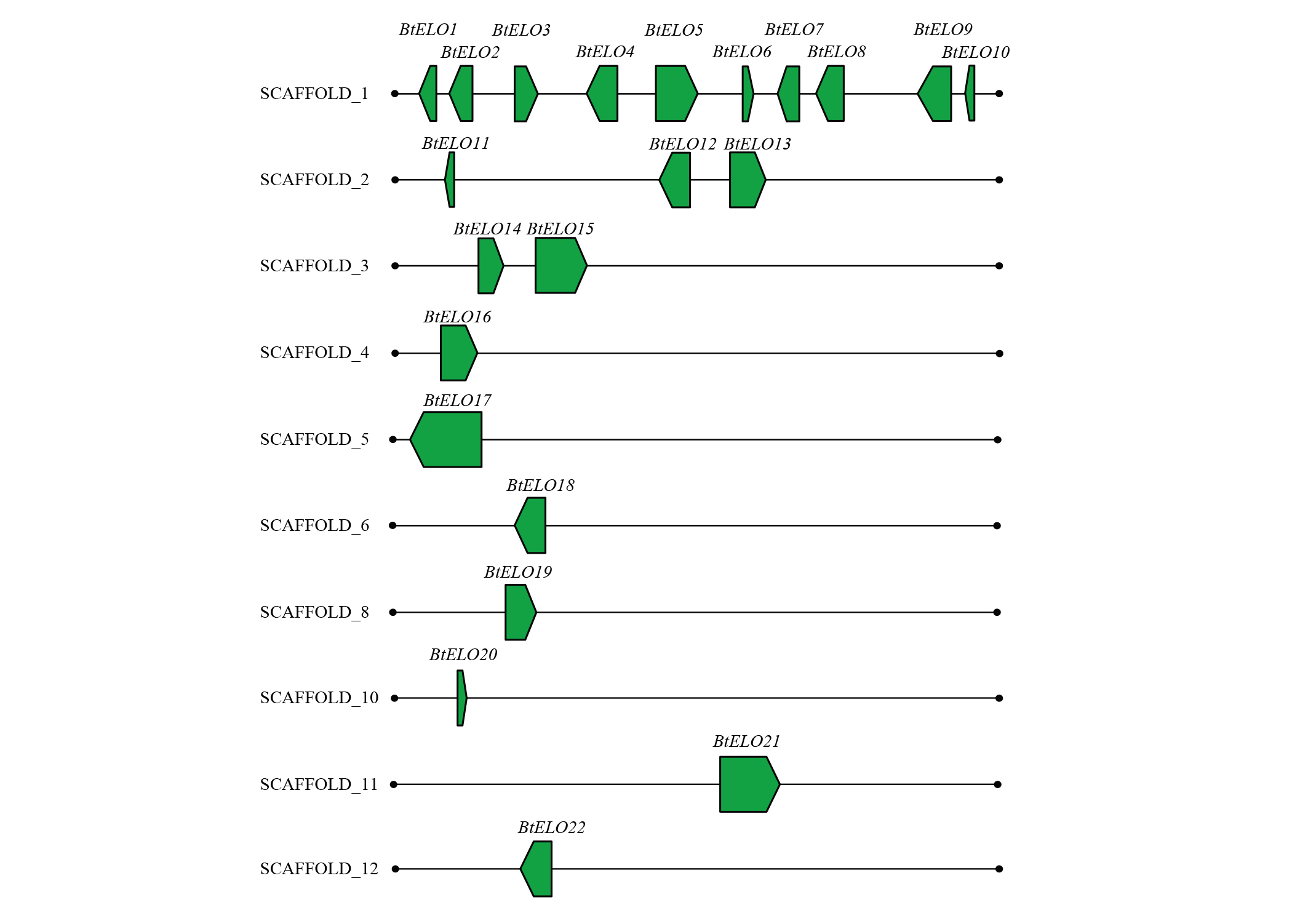
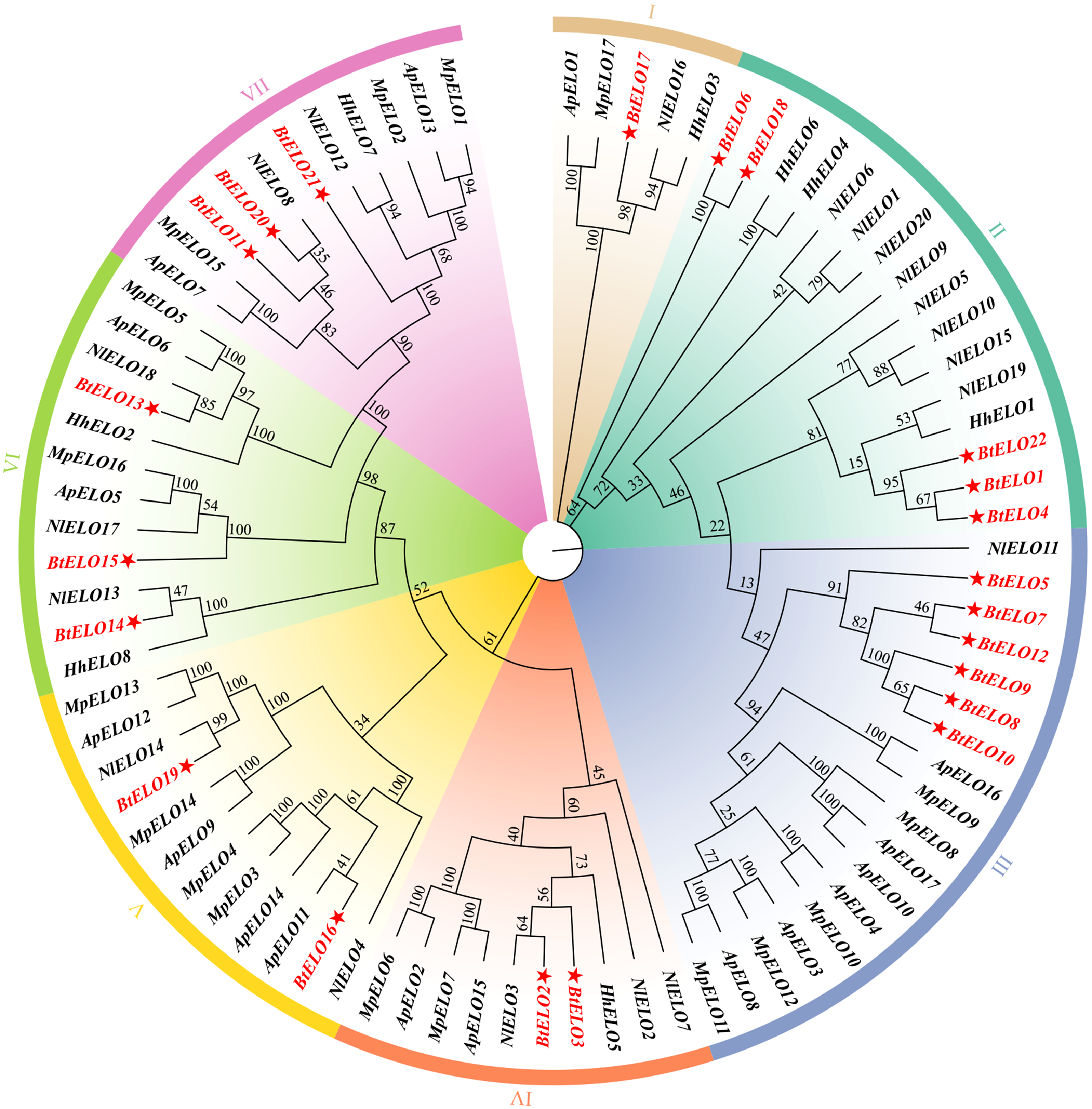
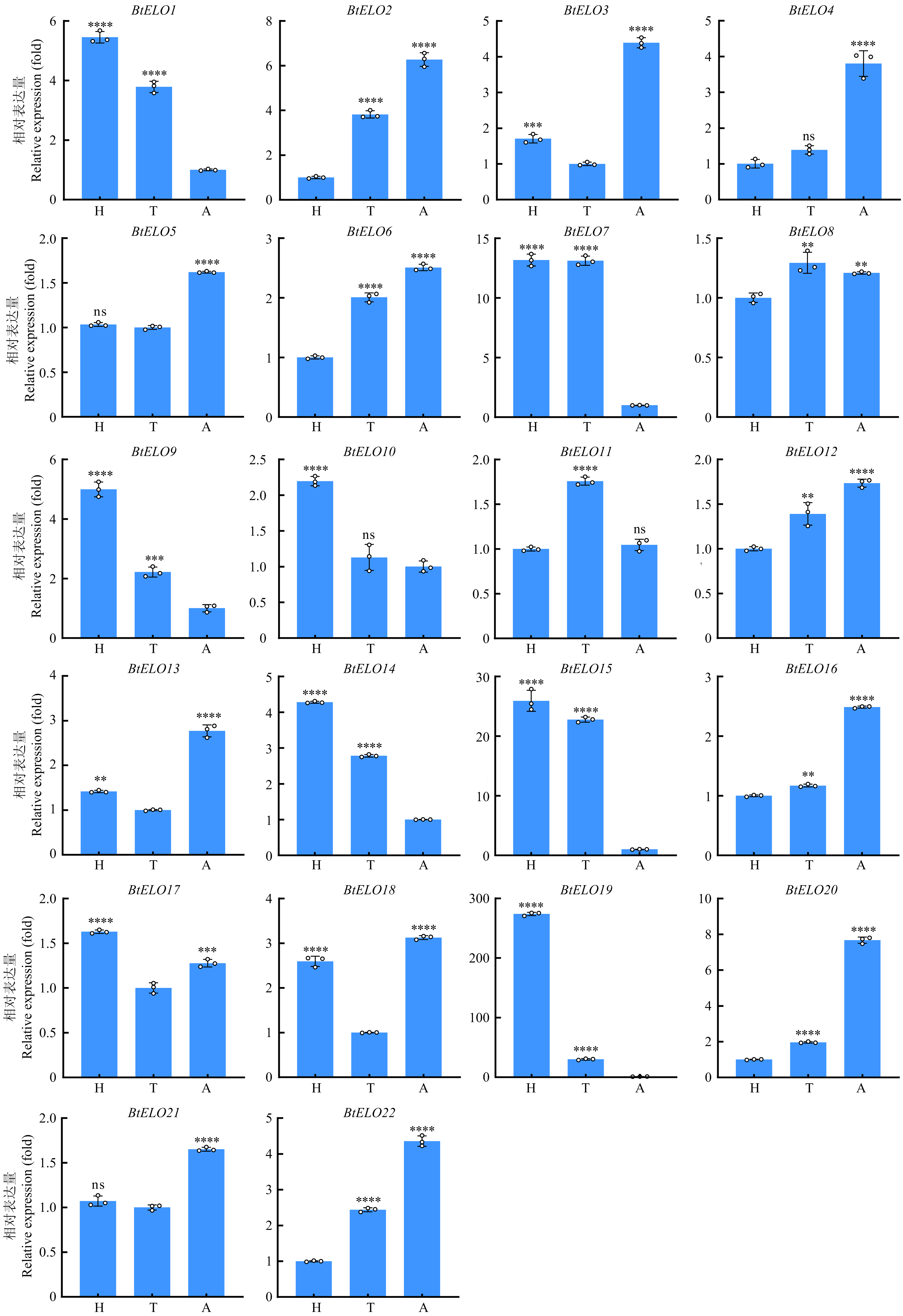
【Objective】The host adaptability of Bemisia tabaci is closely associated with the plasticity of its lipid metabolism, particularly fatty acid metabolism. Fatty acid elongases (ELOs) are key regulatory components in fatty acid biosynthesis and modification. A comprehensive characterization of the ELO gene family in B. tabaci will contribute to elucidate the metabolic mechanisms underlying its nutritional adaptation, growth, and reproduction, and to identify novel target gene resources for sustainable green pest management strategies.【Method】Based on the B. tabaci MED genome and ELO sequences from other insects, ELO genes in B. tabaci were identified through multiple sequence alignment, 22 BtELO coding sequences were amplified and cloned using RT-PCR. Bioinformatics analyses were conducted to determine gene structure and protein physicochemical properties, and a maximum-likelihood phylogenetic tree was constructed to examine the evolutionary relationships between BtELOs and ELO genes from other Hemipteran insects. The temporal and spatial expression patterns of BtELOs in different developmental stages (egg, 1st-4th instar nymphs, and adults) and in various adult tissues (head, thorax, and abdomen) were analyzed using quantitative real-time PCR (qRT-PCR).【Result】A total of 22 BtELOs CDS were successfully identified and cloned, ranging from 714 to 1 296 bp. These genes, located on 10 genomic SCAFFOLDs, were sequentially designated BtELO1 through BtELO22 based on their linear arrangement. The encoded proteins, comprising 237 to 431 amino acids, are generally hydrophobic, contain 6-7 transmembrane domains, and are predicted to localize in the endoplasmic reticulum. Sequence alignment and phylogenetic analyses revealed that BtELO proteins possess the typical ELO conserved domain and histidine cluster (HXXHH). The sequence similarity among BtELO family members was as high as 76%. The BtELOs were grouped into 7 major evolutionary clades with clear phylogenetic clustering patterns, indicating conserved evolutionary relationships, with some genes forming independent clades indicative of gene duplication events. Spatiotemporal expression profiling revealed that the expression of BtELOs exhibited clear stage- and tissue-specific patterns in B. tabaci, indicating that these genes may perform diverse biological functions in this species.【Conclusion】The 22 BtELOs identified in B. tabaci contain the typical elongase domain and the conserved HXXHH motif. All BtELOs are expressed in various developmental stages and tissues of B. tabaci. Several genes exhibit high expression in eggs and adult abdomens, suggesting potential roles in reproductive processes, whereas those highly expressed during the nymphal stages may be associated with growth, development, and molting.

Key words: Bemisia tabaci, fatty acid elongase (ELO), gene family, bioinformatics, qRT-PCR

Table 1

Primer sequences"

基因
Gene
登录号
Accession number
引物序列Primer sequence (5′-3′)
开放阅读框扩增Amplification of ORF 实时荧光定量PCR qRT-PCR
BtELO1 PX527230 ATGGCAACCGAAGTAGTTTTAG CTGGGACTGCTTATCTTCAACTGT
GGATCATTTCATTTTATTTTCGTCA CAGGAAAAAGAATGACGAACAATC
BtELO2 PX527231 AATGCTGCTGGTGGTAGTGAA GTGTGGTGATATACATGGAGAA
TCGAGTAGGCTTCAAGGTAACAT AACGCCGGAGAACATTAC
BtELO3 PX527232 CACCTTGGATCTTGGATAGTTT GGGCCATGGAATGAGTTTAG
GTACGAGAAGGTAACCTGTGCT TCCAATTCGACCTCTTGTATTC
BtELO4 PX527233 TATTGATTTTGGATCGCCGA GTAGGCCCACGTTGATAAG
GAGCGTTGCTTGTCCGTAAA GTGTTCTTCGTACTCCGTAAA
BtELO5 PX527234 CGAATCGTTGGTGAACTGAC ATACTCTTCGCCGACTTCT
AGAGCGGAGGTCAACGACTA CGAACAGTCTAGGATAGCTTTG
BtELO6 PX527235 TCCGTATAACCACATCTCAGGAC CATGAATCAAGGCGTTCAATAC
AAACAAGATTACAACTGGAATTCA CCTCCACGTTTATCACCATT
BtELO7 PX527236 TCCCCGGATTTTTATTAATTTGT TGGAACTACCTCATGTTGAAAG
CAGTTGAATGAATTGACAGCGAT ACCATCTGAGTGTGATGATAGA
BtELO8 PX527237 TCCAGCTCCGCATGATTG GAGCCGATGTGAAATGCTGATC
ATGTGTGGATCGCCAATAGATAG GCTCCCACCTTTTTACTTTTGCTA
BtELO9 PX527238 ATGACGCAGATTCAAAGGGG ACATGACTCAACTCCAAATAGGTCA
TTTCAACGGAGATCATGTGGTT AAAACGAAGATGTTCACTGCGAT
BtELO10 PX527239 ATGGCGCAGATTCAAAGACAA TTGTTCATATCTGGATGTACGGGTA
CGAAATTGCATTGCGATCC CTGATTTGGAGTTGAGTGATGTGTT
BtELO11 PX527240 CCTTCCGACTCCAATATACCTT GAGTTCTTCGACACCTTCTTC
GCAAGTTCCTCGCAATCAT CATGATACCGTGGTGGATAAC
BtELO12 PX527241 AGGGAAGCCTATTTGACGTTAA TCTTTCAGAATGGTTGGCTCG
GCTCTTCTCCCGTCCAGATT TGTTTCTCCCAAGAGGCGTG
BtELO13 PX527242 TAAAATAGTGTCTTGCTTATCGTCT AGCGACCATGTAGTAGAAGTA
TTCACCCAGCTCAGATAACTATG GTGTCTGGATGGGAATGAAA
BtELO14 PX527243 TTTATTTGTCGGTCCTACTCATT CTGAAGAGCCAGAAGAAGAAG
CTGTACAGAGGAATCACGACTT CTCCTGTCAACTGCTTATCTAC
BtELO15 PX527244 GTTTACGCTGGTGAAGTGGACT GCTGTGGATAGGTACCATTATT
ACTAAGAAAGGGCTCTGTGACG TTGCCAAAGTGGGAATAGG
BtELO16 PX527245 CTGGAATGATTCGCTGGC GGACGACCAAGTTCCATTTA
TTTTCAACGGGCATCTTCA TGCGAGCTCTGCTATCT
BtELO17 PX527246 CCTCTCGTACCCACACTTACC CTCTCACCAACTACTCCTACA
AAGAGAGTTCAACGCAGTCAAT CATGTAGAGTCCGCAATAGTAAA
BtELO18 PX527247 ATGTTCAAACGGGTTCTCTGC ATCATAGTCTGCGTGCTGTTCTTC
CTTTTACAAACAATAGCCAGTCCA CTTTGTCTTCTTATCGCTGGTGAG
BtELO19 PX527248 ATTCGGGCTCACTTGTGTG AAGAACGTGTCGCAGAAC
AAGTATCATCACGAGGAAAAATC GCCGGTGACTTTCGTAAATA
BtELO20 PX527249 CCAAGTGATTCTCTAACCTATTGATT GTCCGAGAAGAGGAAGTAGA
GTCATACGCCCTTTTTGCC ATCCACGCTTTCCAACTAC
BtELO21 PX527250 ATCCGACTTCGTGCAGGGAT GGGAGAGACCATTTGCATAG
TATTCCTTTCTTTTCAGGGCTC GCTCATGCAACCACAAATG
BtELO22 PX527251 GGCTCGTCATACAGACCCAA CTTCACGTCTATCACCACAC
TTGGAATTTGCGGAGACACT CTGAATTGATCACGCCGATA
EF1α EE600682 TAGCCTTGTGCCAATTTCCG
CCTTCAGCATTACCGTCC

Fig. 1

The PCR products of the BtELO gene family"

Fig. 2

SCAFFOLD distribution of the BtELO gene family"

Fig. 3

Exon-intron distribution of the BtELO gene family"

Table 2

Physicochemical property analysis of ELO proteins in B. tabaci"

蛋白
Protein
氨基酸数量
Amino acids size (aa)
分子量
Mw (kDa)
等电点
pI
不稳定系数
Instability index (II)
脂肪系数
Aliphatic index
亲水性平均系数
Grand of hydropathicity
BtELO1 272 31.93 9.16 43.10 100.33 0.424
BtELO2 338 39.34 9.40 39.16 92.19 -0.086
BtELO3 270 31.90 9.37 30.44 100.33 0.239
BtELO4 289 33.66 9.44 31.90 108.24 0.348
BtELO5 268 31.59 9.57 35.59 104.70 0.390
BtELO6 290 33.74 9.66 35.21 104.79 0.379
BtELO7 276 32.54 9.58 25.79 105.18 0.362
BtELO8 277 32.62 9.59 32.23 106.53 0.348
BtELO9 280 33.26 9.70 31.28 111.00 0.394
BtELO10 277 33.09 9.56 38.26 106.97 0.306
BtELO11 313 36.29 9.53 33.65 84.76 0.157
BtELO12 277 32.62 9.66 32.16 104.08 0.353
BtELO13 343 39.98 9.48 44.96 69.62 -0.049
BtELO14 333 38.48 9.55 34.40 79.64 -0.075
BtELO15 431 50.02 9.02 24.04 78.47 -0.309
BtELO16 269 31.04 9.31 41.58 112.71 0.380
BtELO17 292 34.44 9.41 48.91 82.81 0.121
BtELO18 289 33.63 9.37 24.19 91.45 0.242
BtELO19 301 35.38 8.92 42.34 95.55 0.123
BtELO20 322 37.72 9.44 29.24 78.11 -0.065
BtELO21 319 37.35 9.57 35.48 83.98 0.096
BtELO22 237 27.90 9.52 26.00 106.88 0.387

Fig. 4

Multiple sequence alignment of ELO proteins from B. tabaci, N. lugens, and D. melanogaster"

Fig. 5

Phylogenetic tree of BtELOs with other Hemiptera ELOs"

Fig. 6

Relative expression levels of BtELO gene family at different developmental stages"

Fig. 7

Relative expression levels of BtELO gene family in different tissues of adults"

[1]
XIA J X, GUO Z J, YANG Z Z, HAN H L, WANG S L, XU H F, YANG X, YANG F S, WU Q J, XIE W, ZHOU X G, DERMAUW W, TURLINGS T C J, ZHANG Y J. Whitefly hijacks a plant detoxification gene that neutralizes plant toxins. Cell, 2021, 184(7): 1693-1705.

doi: 10.1016/j.cell.2021.02.014 pmid: 33770502
[2]
ZHENG H X, XIE W, WANG S L, WU Q J, ZHOU X M, ZHANG Y J. Dynamic monitoring (B versus Q) and further resistance status of Q-type Bemisia tabaci in China. Crop Protection, 2017, 94: 115-122.

doi: 10.1016/j.cropro.2016.11.035
[3]
OLIVEIRA M R V, HENNEBERRY T J, ANDERSON P. History, current status, and collaborative research projects for Bemisia tabaci. Crop Protection, 2001, 20(9): 709-723.

doi: 10.1016/S0261-2194(01)00108-9
[4]
GONG C, GUO Z J, HU Y, YANG Z Z, XIA J X, YANG X, XIE W, WANG S L, WU Q J, YE W F, ZHOU X G, TURLINGS T C J, ZHANG Y J. A horizontally transferred plant fatty acid desaturase gene steers whitefly reproduction. Advance Science, 2024, 11(10): e2306653.
[5]
郑天祥, 钱雨农, 张大羽. 昆虫脂肪酸合成通路关键基因的研究进展. 中国生物工程杂志, 2017, 37(11): 19-27.
ZHENG T X, QIAN Y N, ZHANG D Y. Key genes involved in fatty acids biosynthesis in insect. China Biotechnology, 2017, 37(11): 19-27. (in Chinese)
[6]
LEONARD A E, PEREIRA S L, SPRECHER H, HUANG Y S. Elongation of long-chain fatty acids. Progress in Lipid Research, 2004, 43(1): 36-54.

pmid: 14636670
[7]
BLACKLOCK B J. Fatty acid elongation by ELOVL condensing enzymes depends on a histidine nucleophile. Nature Structural & Molecular Biology, 2021, 28(6): 462-464.

doi: 10.1038/s41594-021-00609-2
[8]
JAKOBSSON A, WESTERBERG R, JACOBSSON A. Fatty acid elongases in mammals: Their regulation and roles in metabolism. Progress in Lipid Research, 2006, 45(3): 237-249.

doi: 10.1016/j.plipres.2006.01.004 pmid: 16564093
[9]
CHERTEMPS T, DUPORTETS L, LABEUR C, WICKER-THOMAS C. A new elongase selectively expressed in Drosophila male reproductive system. Biochemical and Biophysical Research Communications, 2005, 333(4): 1066-1072.

doi: 10.1016/j.bbrc.2005.06.015
[10]
NG W C, CHIN J S R, TAN K J, YEW J Y. The fatty acid elongase Bond is essential for Drosophila sex pheromone synthesis and male fertility. Nature Communications, 2015, 6: 8263.

doi: 10.1038/ncomms9263
[11]
LI D T, CHEN X, WANG X Q, MOUSSIAN B, ZHANG C X. The fatty acid elongase gene family in the brown planthopper, Nilaparvata lugens. Insect Biochemistry and Molecular Biology, 2019, 108: 32-43.

doi: 10.1016/j.ibmb.2019.03.005
[12]
ZHAO C X, YE K Q, LOU Y H, YU X P, SHENTU X P, LI D T. Silencing of NlELO10 affects lipid metabolism in brown planthopper. Archives of Insect Biochemistry and Physiology, 2025, 119(1): e70065.

doi: 10.1002/arch.v119.1
[13]
ZHAO X M, YANG Y, NIU N, ZHAO Y Y, LIU W M, MA E, MOUSSIAN B, ZHANG J Z. The fatty acid elongase gene LmELO7 is required for hydrocarbon biosynthesis and cuticle permeability in the migratory locust, Locusta migratoria. Journal of Insect Physiology, 2020, 123: 104052.

doi: 10.1016/j.jinsphys.2020.104052
[14]
WANG H Y, XIA B, WANG H F, WAN B, ZHONG L, XIN T R. Fatty acid elongase gene PcELO7 is essential for lipid accumulation and fecundity of Panonychus citri (Acari: Tetranychidae). Journal of Agricultural and Food Chemistry, 2024, 72(4): 2100-2108.

doi: 10.1021/acs.jafc.3c07412
[15]
姚晶, 郭晓军, 王甦, 王昱超, 罗晨, 张帆, 李绍勤. 利用TaqMan等位基因技术鉴定烟粉虱MEAM1和MED隐种. 昆虫学报, 2013, 56(1): 98-103.
YAO J, GUO X J, WANG S, WANG Y C, LUO C, ZHANG F, LI S Q. Discrimination of cryptic species MEAM1 and MED of Bemisia tabaci (Hemiptera: Aleyrodidae) by using TaqMan allele-selective PCR. Acta Entomologica Sinica, 2013, 56(1): 98-103. (in Chinese)
[16]
LI R M, XIE W, WANG S L, WU Q J, YANG N N, YANG X, PAN H P, ZHOU X M, BAI L Y, XU B Y, ZHOU X G, ZHANG Y J. Reference gene selection for qRT-PCR analysis in the sweetpotato whitefly, Bemisia tabaci (Hemiptera: Aleyrodidae). PLoS ONE, 2013, 8(1): e53006.

doi: 10.1371/journal.pone.0053006
[17]
HALL T A. BioEdit:A user-friendly biological sequence alignment editor and analysis program for Windows 95/98/NT. Nucleic Acids Symposium Series, 1999, 41(41): 95-98.
[18]
WANG X Y, YU H, GAO R, LIU M, XIE W L. A comprehensive review of the family of very-long-chain fatty acid elongases: Structure, function, and implications in physiology and pathology. European Journal of Medical Research, 2023, 28: 532.

doi: 10.1186/s40001-023-01523-7 pmid: 37981715
[19]
ZUO W D, LI C L, LUAN Y, ZHANG H, TONG X L, HAN M J, GAO R, HU H, SONG J B, DAI F Y, LU C. Genome-wide identification and analysis of elongase of very long chain fatty acid genes in the silkworm, Bombyx mori. Genome, 2018, 61(3): 167-176.

doi: 10.1139/gen-2017-0224
[20]
JUNG A, HOLLMANN M, SCHÄFER M A. The fatty acid elongase NOA is necessary for viability and has a somatic role in Drosophila sperm development. Journal of Cell Science, 2007, 120(16): 2924-2934.

doi: 10.1242/jcs.006551
[21]
XU G X, GUO C, SHAN H Y, KONG H Z. Divergence of duplicate genes in exon-intron structure. Proceedings of the National Academy of Sciences of the United States of America, 2012, 109(4): 1187-1192.
[22]
ZHOU Y Y, JIN Y, LIU S Q, XU S L, HUANG Y X, XU Y S, SHI L G, WANG H B. Genome-wide identification and comparative analysis of lipocalin families in Lepidoptera with an emphasis on Bombyx mori. Insect Science, 2023, 30(1): 15-30.

doi: 10.1111/ins.v30.1
[23]
VOGT R G, GROßE-WILDE E, ZHOU J J. The Lepidoptera odorant binding protein gene family: Gene gain and loss within the GOBP/ PBP complex of moths and butterflies. Insect Biochemistry and Molecular Biology, 2015, 62: 142-153.

doi: 10.1016/j.ibmb.2015.03.003
[24]
WU J Y, TANG W J, LI Z Y, CHAKRABORTY A, ZHOU C, LI F, HE S L. Duplications and losses of the detoxification enzyme glycosyltransferase 1 are related to insect adaptations to plant feeding. International Journal of Molecular Sciences, 2024, 25(11): 6080.

doi: 10.3390/ijms25116080
[25]
BIRCHLER J A, YANG H. The multiple fates of gene duplications: Deletion, hypofunctionalization, subfunctionalization, neofunctionalization, dosage balance constraints, and neutral variation. The Plant Cell, 2022, 34(7): 2466-2474.

doi: 10.1093/plcell/koac076 pmid: 35253876
[26]
王宏燕. 柑橘全爪螨对螺螨双酯胁迫的响应及其分子机制[D]. 南昌: 南昌大学, 2024.
WANG H Y. Response and molecular mechanism of Panonychus citri (Acari: Tetranychidae) to spirobudiclofen stress[D]. Nanchang: Nanchang University, 2024. (in Chinese)
[27]
KACZMAREK A, BOGUŚ M. The metabolism and role of free fatty acids in key physiological processes in insects of medical, veterinary and forensic importance. PeerJ, 2021, 9: e12563.
[28]
CHERTEMPS T, DUPORTETS L, LABEUR C, UEDA R, TAKAHASHI K, SAIGO K, WICKER-THOMAS C. A female-biased expressed elongase involved in long-chain hydrocarbon biosynthesis and courtship behavior in Drosophila melanogaster. Proceedings of the National Academy of Sciences of the United States of America, 2007, 104(11): 4273-4278.
[29]
POIDEVIN M, MAZURAS N, BONTONOU G, DELAMOTTE P, DENIS B, DEVILLIERS M, AKIKI P, PETIT D, LUCA L, SOULIE P, GILLET C, WICKER-THOMAS C, MONTAGNE J. A fatty acid anabolic pathway in specialized-cells sustains a remote signal that controls egg activation in Drosophila. PLoS Genetics, 2024, 20(3): e1011186.

doi: 10.1371/journal.pgen.1011186
[30]
LOHER W, GANJIAN I, KUBO I, STANLEY-SAMUELSON D, TOBE S S. Prostaglandins:Their role in egg-laying of the cricket Teleogryllus commodus. Proceedings of the National Academy of Sciences of the United States of America, 1981, 78(12): 7835-7838.
[31]
HOLZE H, SCHRADER L, BUELLESBACH J. Advances in deciphering the genetic basis of insect cuticular hydrocarbon biosynthesis and variation. Heredity, 2021, 126(2): 219-234.

doi: 10.1038/s41437-020-00380-y pmid: 33139902
[32]
CHUNG H, CARROLL S B. Wax, sex and the origin of species: Dual roles of insect cuticular hydrocarbons in adaptation and mating. BioEssays, 2015, 37(7): 822-830.

doi: 10.1002/bies.201500014 pmid: 25988392
[33]
BALABANIDOU V, GRIGORAKI L, VONTAS J. Insect cuticle: A critical determinant of insecticide resistance. Current Opinion in Insect Science, 2018, 27: 68-74.

doi: S2214-5745(17)30119-0 pmid: 30025637
[34]
WANG S Y, LI B L, ZHANG D Y. NlCYP4G76 and NlCYP4G115 modulate susceptibility to desiccation and insecticide penetration through affecting cuticular hydrocarbon biosynthesis in Nilaparvata lugens (Hemiptera: Delphacidae). Frontiers in Physiology, 2019, 10: 913.

doi: 10.3389/fphys.2019.00913
[35]
WEI X, ZHENG C, PENG T F, PAN Y O, XI J H, CHEN X W, ZHANG J H, YANG S, GAO X W, SHANG Q L. miR-276 and miR-3016-modulated expression of acetyl-CoA carboxylase accounts for spirotetramat resistance in Aphis gossypii Glover. Insect Biochemistry and Molecular Biology, 2016, 79: 57-65.

doi: 10.1016/j.ibmb.2016.10.011
[1] LUO ZhengYing, HU SiZhen, LIN XiuQin, HU Xin, ZHANG Min, XU ChaoHua, LIU XinLong, ZENG QianChun. Identification and Functional Characterization of the PEBP Gene Family in Regulating Flowering Time in Saccharum spontaneum and Saccharum officinarum [J]. Scientia Agricultura Sinica, 2026, 59(4): 734-749.
[2] YANG CaiLi, LI YongZhou, HE LiangLiang, SONG YinHua, ZHANG Peng, LIU ZhaoXian, LI PengHui, LIU SanJun. Genome-Wide Identification and Analysis of TPS Gene Family and Functional Verification of VvTPS4 in the Formation of Monoterpenes in Grape [J]. Scientia Agricultura Sinica, 2025, 58(7): 1397-1417.
[3] ZHANG TianYu, LI Bai, ZANG JinPing, CAO HongZhe, DONG JinGao, XING JiHong, ZHANG Kang. Genome-Wide Identification and Expression Analysis of HMG Family Genes in Botrytis cinerea [J]. Scientia Agricultura Sinica, 2025, 58(4): 704-718.
[4] LI JianKun, PENG Chao, ZHANG ZiYang, LIANG Xi, WEI MingKang, YANG Qiang, LI BinQi, Muhammad Moaaz Ali, Viola Kayima, CHEN FaXing, DENG HongHong. Dynamics of Fruit Hollowness and Browning and Associated Lignin Accumulation and Its Genome-Wide Identification of Ps4CL Gene Family in Huangguan Plum [J]. Scientia Agricultura Sinica, 2025, 58(4): 759-778.
[5] XU DuoDuo, DU QianQian, ZHAO LiXiang, LI Yan, HUANG Gan, LI YongHua, LU JiuXing. Genome-Wide Analysis of AP2/ERF Transcription Factors in Peony [J]. Scientia Agricultura Sinica, 2025, 58(23): 5031-5045.
[6] YI ZeHui, WANG Ying, SONG HuiXia, ZHAO Jing, MAO LiPing. Genome-Wide Identification and Expression Analysis of Peroxiredoxins Gene Family in Asparagus officinalis [J]. Scientia Agricultura Sinica, 2025, 58(18): 3728-3743.
[7] QI XiangYu, LI XinRu, CHEN ShuangShuang, FENG Jing, CHEN HuiJie, LIU XinTong, JIN YuYan, DENG YanMing. Identification of the FLA Gene Family and Functional Analysis of JsFLA2 in Jasminum sambac [J]. Scientia Agricultura Sinica, 2025, 58(17): 3516-3530.
[8] WANG Wei, WU ChuanLei, HU XiaoYu, LI JiaJia, BAI PengYu, WANG GuoJi, MIAO Long, WANG XiaoBo. Genome-Wide Identification of Soybean LOX Gene Family and the Effect of GmLOX15A1 Gene Allele on 100-Seed Weight [J]. Scientia Agricultura Sinica, 2025, 58(1): 10-29.
[9] WANG ChengZe, ZHANG Yan, FU Wei, JIA JingZhe, DONG JinGao, SHEN Shen, HAO ZhiMin. Bioinformatics and Expression Pattern Analysis of Maize ACO Gene Family [J]. Scientia Agricultura Sinica, 2024, 57(7): 1308-1318.
[10] ZENG XiangCui, YANG YongNian, LI RuYue, JIANG XueQian, JIANG Xu, XU YanRan, LIU ZhongKuan, LONG RuiCai, KANG JunMei, YANG QingChuan, LI MingNa. Identification of Alfalfa (Medicago sativa) MsCEP Genes and Functional Analysis of Its Regulation in Root Growth and Development [J]. Scientia Agricultura Sinica, 2024, 57(24): 4839-4853.
[11] ZHONG ZiChun, WU HongXin, ZHANG Jie, GUO YuJing, HE LiuYan, XU XiaoXia, JIN FengLiang, PANG Rui. Comparative Analysis of the Toll Receptor Gene Families in Three Species of Rice Planthoppers [J]. Scientia Agricultura Sinica, 2024, 57(20): 4007-4021.
[12] SUN SiSi, MA Wu, SI HuiRu, WANG XianZhong, LIU Qiang, LUO YanLin, CHEN XiaoYuLong, TANG Bin. AQPs Characteristics of Megoura crassicauda and Their Expression Changes in Response to High Relative Humidity Stress [J]. Scientia Agricultura Sinica, 2024, 57(20): 4057-4070.
[13] YIN JunLiang, LI JingYi, HAN Shuo, YANG PeiHua, MA JiaWei, LIU YiQing, HU HaiJun, ZHU YongXing. Identification of Ginger (Zingiber officinale Roscoe) NHX Gene Family Members and Characterization of Their Expression Patterns in Silicon Alleviating Salt Stress [J]. Scientia Agricultura Sinica, 2024, 57(19): 3848-3869.
[14] WANG Yuan, DU MengDan, LI ZhengGang, SHE XiaoMan, YU Lin, LAN GuoBing, DING ShanWen, HE ZiFu, TANG YaFei. Identification of Pathogen Causing Tomato White Tip and Curl Leaf Disease and Its Pathogenicity in Guangdong Province [J]. Scientia Agricultura Sinica, 2024, 57(12): 2350-2363.
[15] XIAO Tao, LI Hui, LUO Wei, YE Tao, YU Huan, CHEN YouBo, SHI YuShi, ZHAO DePeng, WU Yun. Screening of Candidate Genes for Green Shell Egg Shell Color Traits in Chishui Black Bone Chicken Based on Transcriptome Sequencing [J]. Scientia Agricultura Sinica, 2023, 56(8): 1594-1605.
Viewed
Full text


Abstract

Cited

  Shared   
  Discussed   
No Suggested Reading articles found!