Scientia Agricultura Sinica ›› 2023, Vol. 56 ›› Issue (7): 1377-1390.doi: 10.3864/j.issn.0578-1752.2023.07.014

• HORTICULTURE • Previous Articles     Next Articles

Identification of Salt-Tolerant Transcription Factors in the Roots of Pyrus betulaefolia by the Association Analysis of Genome-Wide DNA Methylation and Transcriptome

LI Hui1(), ZHANG YuFeng1,2, LI XiaoGang1, WANG ZhongHua1, LIN Jing1, CHANG YouHong1   

  1. 1 Institute of Pomology, Jiangsu Academy of Agricultural Sciences/Jiangsu Key Laboratory for Horticultural Crop Genetic Improvement, Nanjing 210014
    2 College of Biology and the Environment, Nanjing Forestry University, Nanjing 210037
  • Received:2022-05-05 Accepted:2023-02-01 Online:2023-04-01 Published:2023-04-03

Abstract:

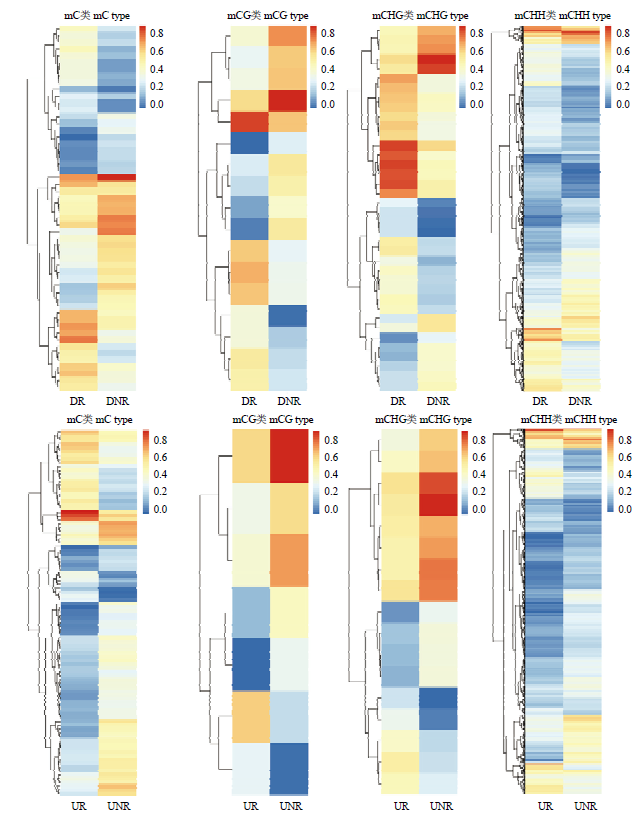
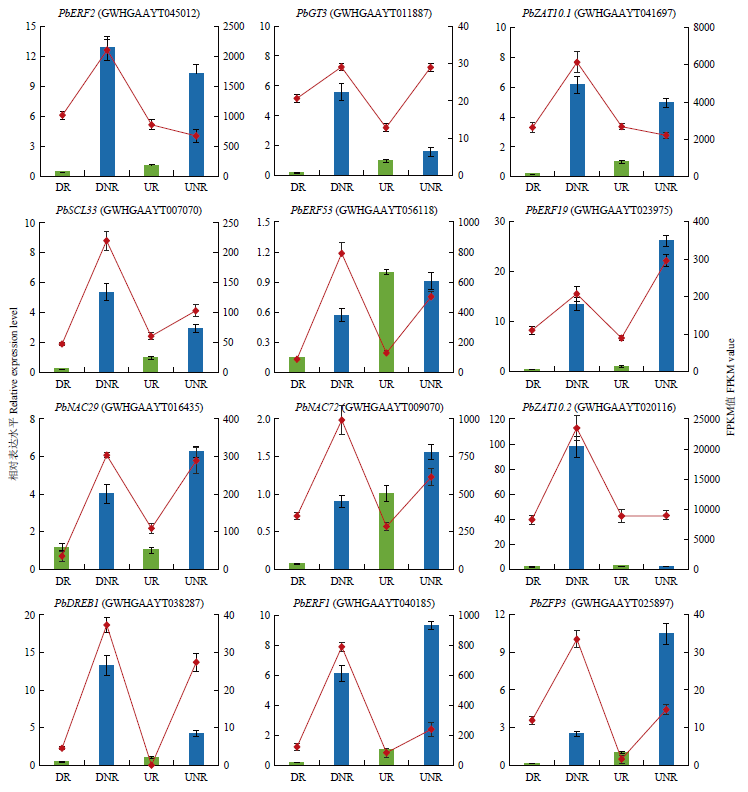
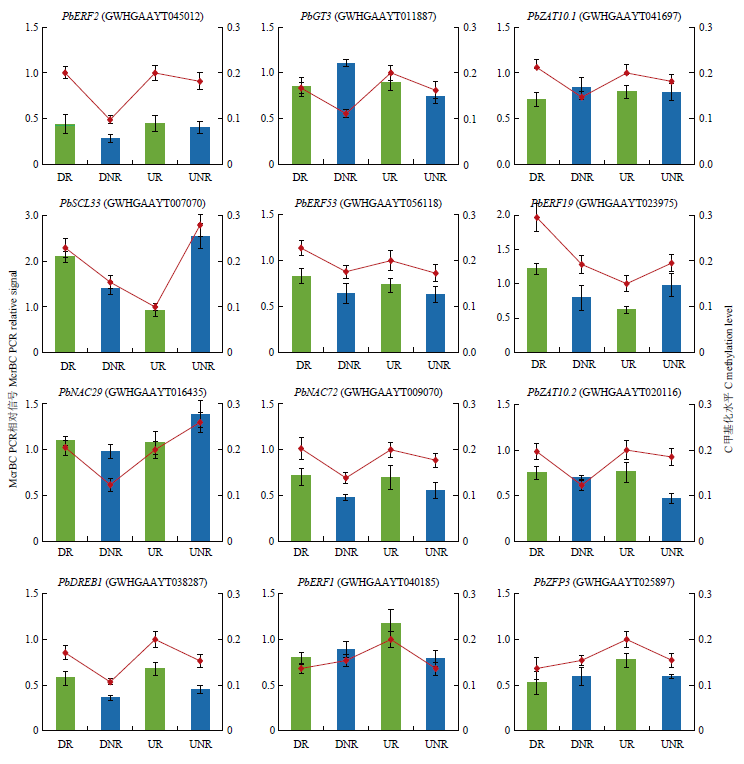
【Objective】 Here, two ecotypes of P. betulaefolia from Huaguo Mountain, Lianyungang (the salt-tolerant ecotype, D) and Purple Mountain, Nanjing (the common ecotype, U) were collected for this research. The purpose of this study was to analyze the role of transcription factor genes in the roots of two ecotypes of P. betulaefolia differing in terms of salt stress. Transcription factors involving in the regulation of the salt tolerance of different P. betulaefolia ecotypes were identified on the grounds of differential expression under salt stress and the relationship between the methylation status and the relative expression level of relevant tolerance genes after exposure to salt stress was investigated. 【Method】 The 90-day-old P. betulaefolia seedlings were grown hydroponically in Hoagland’s nutrient solution supplemented with 200 mmol∙L-1 NaCl, with seedlings grown in Hoagland’s nutrient solution as the control. The sodium ion content in the tissues was determined by flame graphite furnace atomic absorption spectrometry. Whole-genome DNA methylation analysis and transcriptome sequencing were performed on three replicates for the following four root samples: ecotype D and ecotype U, each grown in the presence or absence of salt stress. Bioinformatics analysis of transcription factor gene expression under salt stress at the levels of transcriptional regulation and epigenetic methylation were carried out using transcriptome sequencing data and whole-genome DNA methylation results, respectively. Then, McrBC-PCR and real-time fluorescence quantitative PCR (qPCR) were used to confirm the levels of methylation and transcription of differential transcription factor genes. 【Result】 After exogenous NaCl treatment for 24 h, the concentration of sodium ions in P. betulaefolia roots increased significantly, with the increase in sodium ion concentration in the salt-tolerant ecotype being significantly less than that in the common ecotype. In the whole seedling, the final salt concentration of tolerant ecotype was only 73.1% of that of the common ecotype. Whereas, in the roots, the sodium content of the salt-tolerant ecotype was 1.1 times of that in the common ecotype. These results indicated that the salt-tolerant ecotype could store more sodium ions in roots and limit their upward transport after salt stress. A total of 2 682 transcription factor (TF) genes from 69 gene families were detected in roots. Among them, 243 TF genes displayed differential expression in response to salt stress, including 37 AP2/ERF, 19 bHLH, 7 bZIP, 10 HD-Zip, 30 MYB, 18 NAC, 8 WRKY, and 23 ZFP family genes. The global methylation level of transcription factor genes in the genome of the salt-tolerant rootstock ecotype decreased, whereas the overall methylation level of these genes in the common ecotype increased after exposure to 200 mmol∙L-1 NaCl. The differentially methylated regions in both ecotypes were mainly in the position of gene promoters, with the type of differentially methylated sequences being mostly mCHH, constituting more than 93% of the sum of all three types of methylated sequences. The expression levels of twenty-three transcription factor genes, which belonged to the AP2/ERF, bHLH, DREB, GRAS, GT factor, HB Zip, MYB, NAC, Trihelix, and zinc-finger ZFP gene families, were upregulated, and their methylation levels were downregulated in both two ecotypes in response to salt stress. These genes may be involved in the regulation of sodium uptake and accumulation in roots under salt stress. The expression patterns and promoter methylation of representative candidate genes identified by bioinformatics analysis were confirmed by qPCR and McrBC-qPCR.【Conclusion】 The differentially expressed genes in roots of P. betulaefolia under salt stress included 243 transcription factor genes in both ecotypes. The methylation changes in DNA sequences in eight transcription factor genes (PbERF2, PbGT3, PbZAT10.1, PbSCL33, PbDREB1, PbZAT10.2, PbERF53, and PbNAC72) were correlated with their transcriptional activity. Our results provided preliminary experimental evidence for supporting a relationship between promoter DNA methylation and expression of TF genes in P. betulaefolia in response to salt stress as part of the molecular role of TFs involved in the regulation of salt tolerance among different P. betulaefolia ecotypes, which would increase our understanding of the role of epigenetics in the response of woody trees to abiotic stress.

Key words: Pyrus betulaefolia, salt stress, transcription factors, DNA methylation, transcriptome

Table 1

Primer sequences of qPCR and McrBC-qPCR in this study"

基因名称
Gene name
基因ID
Gene ID
正向引物
Forward primer (5′-3′)
反向引物
Reverse primer (5′-3′)
用途
Destination
PbDREB1 GWHGAAYT038287 CGACGAGGAGGTCATTTTGG TGTTCGGTTCTCTCATTTCGC qPCR
TCCCTAAGGACACTATGCGT AGAGCAAGATATTTCCATAAAAGAGCA McrBC-qPCR
PbERF1 GWHGAAYT040185 GAAATGCTTCTCTATGGAGTTCTTG TCTCTTATCTCCGCCGCAA qPCR
AGATCTAGTGATATTCCCTT TCGACA TCACAAATCCAAGCCAAAACCA McrBC-qPCR
PbERF2 GWHGAAYT045012 CTTCAGTACCCTGTACCCGTGT TTTACCGAAAAACCGTAGGAAC qPCR
TCTGAGTCGCCGAGATGGTA ATCGGGGATCATATTAGGGGT McrBC-qPCR
PbERF19 GWHGAAYT023975 GCAGCACAGCAAACAGAAAAC ACGCAAGCAATAATACGCAAC qPCR
ACCTCGTGTTTTTACTGTGGA TCAACCAAAAATAACAAGAAGCACA McrBC-qPCR
PbERF53 GWHGAAYT056118 TCTCAAGAAAGTCAAGAGCCCTG GTTGAACGGGTGGGGGAAT qPCR
GCTCAATGGCCTCCTAAACCT TCGCTCTGAGCAAGAATGAAGT McrBC-qPCR
PbGT3 GWHGAAYT011887 GAAGGAAAAGGGTCACCATCG CGCCGTGCTTCCCTTATTC qPCR
GCACCTTTAGATGTAAAAGTTCATGC TGGACTCCAAGCCTTTTAATTGC McrBC-qPCR
PbNAC29 GWHGAAYT016435 TAGCCTCCACTCCCTTACCTG TCGCACCATTCGGATACTTG qPCR
AGGCCATAAATTCGGACATTTGC AAGCACAAGCAAAAGCTCTCG McrBC-qPCR
PbNAC72 GWHGAAYT009070 GAGCCCTCTCGCAAAAATG CAGCGTCTTGAGCGAGTTTAT qPCR
AGGCTGGTATTTTGTCAAAAGATGG TCTAGATTGTAACATACTTTGGAGTGC McrBC-qPCR
PbSCL33 GWHGAAYT007070 GAAACTGTGGATTTGCGGAA CATCACCGTTAGGAGAAGCGT qPCR
GTCCCACTCTGTCCTTTGCT AGTTGAAGGACTATAACTGTACGT McrBC-qPCR
PbZAT10.1 GWHGAAYT041697 CGTTTGAAGAGGCGGAGGA GATGAGGCAGAGAGCGAGGT qPCR
TGCGGATTCGATACTTACAATCTCT GCCACATGAGATGTTTAACGCA McrBC-qPCR
PbZAT10.2 GWHGAAYT020116 GGACCCTCTCCTTTCCCATT CGGAGTTTGTTTCTTTAGTGTCTGT qPCR
GGATCAATACGACGTCGGCT ACTGTGCATTTAATTTTATACGCAAT McrBC-qPCR
PbZFP3 GWHGAAYT025897 TATTCGGGTTTTCGGTGACG GTACACTTGTCGCTACCCGTTG qPCR
AGCGTTGATAAACGTACTCATTTCT TTGACTTGGCCTTTTAGAATTAGG McrBC-qPCR

Table 2

Contents of sodium ions in different ecotypes of Pyrus betulaefolia after salt stress"

株系
Ecotype
组别
Group
全株钠含量
The sodium content
of whole plants (g·kg-1)
根系中钠占全株的比例
Ratio of root sodium to whole plant (%)
耐盐
Salt-tolerant
对照CK 7.45±0.64c 65.06a
NaCl 25.38±2.22b 47.09c
普通
Common
对照CK 7.05±0.53c 62.55b
NaCl 31.85±2.13a 35.79d

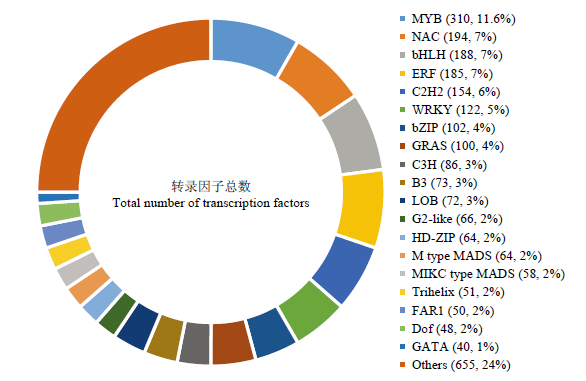
Fig. 1

Types and proportions of transcription factors detected in Pyrus betulaefolia root"

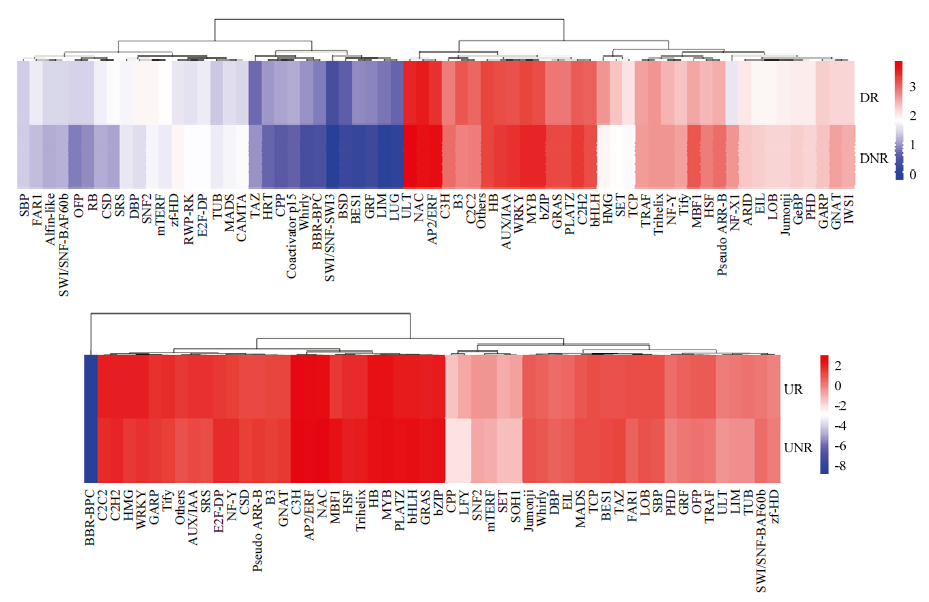
Fig. 2

The heatmaps of transcription factors expression among different roots of Pyrus betulaefolia ecotypes in response to salt stress DR: The root of salt-tolerant ecotype under normal conditions; DNR: The roots of salt-tolerant ecotype under 200 mmol·L-1 NaCl for 24 h; UR: The root of common ecotype under normal conditions; UNR: The roots of common ecotype under 200 mmol·L-1 NaCl for 24 h. The same as below"

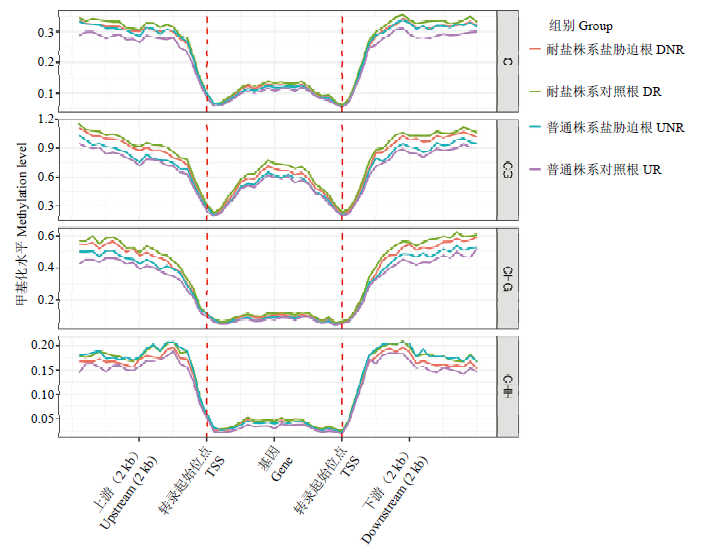
Fig. 3

Distribution of methylation levels (MLs) in different regions of transcription factors in roots of Pyrus betulaefolia"

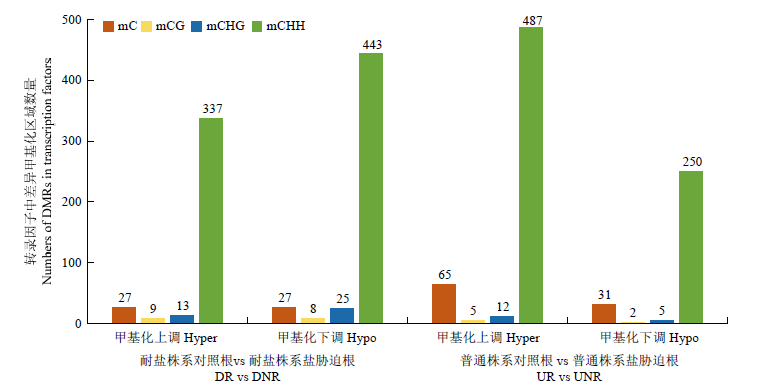
Fig. 4

The number of differentially methylated regions in transcription factors among different roots of Pyrus betulaefolia ecotypes in response to salt stress"

Fig. 5

The heatmaps of differentially methylated regions in transcription factors among different roots of Pyrus betulaefolia ecotypes in response to salt stress"

Table 3

Combined analysis of the number of differential transcription factors among different roots of Pyrus betulaefolia ecotypes in response to salt stress"

组别
Group
甲基化类型
Methylation type
甲基化水平上升 Hyper methylation 甲基化水平下降 Hypo methylation
基因区*
Gene region
启动子区**
Promoter region
基因区*
Gene region
启动子区**
Promoter region
耐盐株系对照根vs
耐盐株系盐胁迫根
DR vs DNR
mC 0 (0) 7 (7) 0 (0) 13 (13)
mCG 3 (3) 1 (1) 3 (3) 1 (1)
mCHG 1 (1) 2 (2) 5 (3) 6 (6)
mCHH 26 (25) 113 (104) 35 (32) 157 (150)
普通株系对照根vs
普通株系盐胁迫根
UR vs UNR
mC 7 (7) 16 (16) 2 (2) 13 (13)
mCG 2 (2) 1 (1) 2 (2) 0 (0)
mCHG 2 (2) 1 (1) 2 (2) 0 (0)
mCHH 47 (44) 144 (131) 20 (19) 96 (93)

Fig. 6

Expression analysis of DMR-associated transcription factors genes among different roots of Pyrus betulaefolia ecotypes in response to salt stress"

Fig. 7

DNA methylation levels of DMR-associated transcription factors among different roots of Pyrus betulaefolia ecotypes in response to salt stress and their differential methylation regions verification"

[1]
LI J G, PU L J, HAN M F, ZHU M, ZHANG R S, XIANG Y Z. Soil salinization research in China: Advances and prospects. Journal of Geographical Sciences, 2014, 24(5): 943-960.

doi: 10.1007/s11442-014-1130-2
[2]
FANG S M, HOU X, LIANG X L. Response mechanisms of plants under saline-alkali stress. Frontiers in Plant Science, 2021, 12: 667458.

doi: 10.3389/fpls.2021.667458
[3]
YANG Y Q, GUO Y. Elucidating the molecular mechanisms mediating plant salt-stress responses. The New Phytologist, 2018, 217(2): 523-539.

doi: 10.1111/nph.14920
[4]
GOLLDACK D, LÜKING I, YANG O. Plant tolerance to drought and salinity: Stress regulating transcription factors and their functional significance in the cellular transcriptional network. Plant Cell Reports, 2011, 30(8): 1383-1391.

doi: 10.1007/s00299-011-1068-0 pmid: 21476089
[5]
JIANG Y Q, DEYHOLOS M K. Comprehensive transcriptional profiling of NaCl-stressed Arabidopsis roots reveals novel classes of responsive genes. BMC Plant Biology, 2006, 6: 25.

doi: 10.1186/1471-2229-6-25
[6]
GUO J Y, SHI G Y, GUO X Y, ZHANG L W, XU W Y, WANG Y M, SU Z, HUA J P. Transcriptome analysis reveals that distinct metabolic pathways operate in salt-tolerant and salt-sensitive upland cotton varieties subjected to salinity stress. Plant Science, 2015, 238: 33-45.

doi: 10.1016/j.plantsci.2015.05.013 pmid: 26259172
[7]
GRUBER V, BLANCHET S, DIET A, ZAHAF O, BOUALEM A, KAKAR K, ALUNNI B, UDVARDI M, FRUGIER F, CRESPI M. Identification of transcription factors involved in root apex responses to salt stress in Medicago truncatula. Molecular Genetics and Genomics, 2009, 281(1): 55-66.

doi: 10.1007/s00438-008-0392-8
[8]
陈嘉贝, 张芙蓉, 黄丹枫, 张利达, 张屹东. 盐胁迫下两个甜瓜品种转录因子的转录组分析. 植物生理学报, 2014, 50(2): 150-158.
CHEN J B, ZHANG F R, HUANG D F, ZHANG L D, ZHANG Y D. Transcriptome analysis of transcription factors in two melon (Cucumis melo L.) cultivars under salt stress. Plant Physiology Journal, 2014, 50(2): 150-158. (in Chinese)
[9]
ZHANG H M, LANG Z B, ZHU J K. Dynamics and function of DNA methylation in plants. Nature Reviews Molecular Cell Biology, 2018, 19(8): 489-506.

doi: 10.1038/s41580-018-0016-z pmid: 29784956
[10]
FERREIRA L J, AZEVEDO V, MAROCO J, OLIVEIRA M M, SANTOS A P. Salt tolerant and sensitive rice varieties display differential methylome flexibility under salt stress. PLoS ONE, 2015, 10(5): e0124060.

doi: 10.1371/journal.pone.0124060
[11]
WANG B H, FU R, ZHANG M, DING Z Q, CHANG L, ZHU X Y, WANG Y F, FAN B X, YE W W, YUAN Y L. Analysis of methylation-sensitive amplified polymorphism in different cotton accessions under salt stress based on capillary electrophoresis. Genes & Genomics, 2015, 37(8): 713-724.
[12]
AHMAD F, FARMAN K, WASEEM M, RANA R M, NAWAZ M A, REHMAN H M, ABBAS T, BALOCH F S, AKREM A, HUANG J, ZHANG H S. Genome-wide identification, classification, expression profiling and DNA methylation (5mC) analysis of stress-responsive ZFP transcription factors in rice (Oryza sativa L.). Gene, 2019, 718: 144018.

doi: 10.1016/j.gene.2019.144018
[13]
KARAN R, DELEON T, BIRADAR H, SUBUDHI P K. Salt stress induced variation in DNA methylation pattern and its influence on gene expression in contrasting rice genotypes. PLoS ONE, 2012, 7(6): e40203.

doi: 10.1371/journal.pone.0040203
[14]
SONG Y G, JI D D, LI S, WANG P, LI Q, XIANG F N. The dynamic changes of DNA methylation and histone modifications of salt responsive transcription factor genes in soybean. PLoS ONE, 2012, 7(7): e41274.

doi: 10.1371/journal.pone.0041274
[15]
LI H, LIN J, YANG Q S, LI X G, CHANG Y H. Comprehensive analysis of differentially expressed genes under salt stress in pear (Pyrus betulaefolia) using RNA-Seq. Plant Growth Regulation, 2017, 82(3): 409-420.

doi: 10.1007/s10725-017-0266-3
[16]
LI H, LIU W, YANG Q S, LIN J, CHANG Y H. Isolation and comparative analysis of two Na+/H+ antiporter NHX2 genes from Pyrus betulaefolia. Plant Molecular Biology Reporter, 2018, 36(3): 439-450.

doi: 10.1007/s11105-018-1089-8
[17]
WU Q S, ZOU Y N. Adaptive responses of birch-leaved pear (Pyrus betulaefolia) seedlings to salinity stress. Notulae Botanicae Horti Agrobotanici Cluj-Napoca, 2009, 37(1): 133-138.
[18]
YU X J, SHI P J, HUI C, MIAO L F, LIU C L, ZHANG Q Y, FENG C N. Effects of salt stress on the leaf shape and scaling of Pyrus betulifolia bunge. Symmetry, 2019, 11(8): 991.

doi: 10.3390/sym11080991
[19]
LIN L K, YUAN K L, HUANG Y D, DONG H Z, QIAO Q H, XING C H, HUANG X S, ZHANG S L. A WRKY transcription factor PbWRKY40 from Pyrus betulaefolia functions positively in salt tolerance and modulating organic acid accumulation by regulating PbVHA-B1 expression. Environmental and Experimental Botany, 2022, 196: 104782.

doi: 10.1016/j.envexpbot.2022.104782
[20]
LIU C X, XU X Y, KAN J L, CHENG Z M, CHANG Y H, LIN J, LI H. Genome-wide analysis of the C3H zinc finger family reveals its functions in salt stress responses of Pyrus betulaefolia. PeerJ, 2020, 8: e9328.

doi: 10.7717/peerj.9328
[21]
LI H, ZHANG Y F, ZHOU X Y, LIN J, LIU C X, LI X G, CHANG Y H. Single-base resolution methylome of different ecotype from Pyrus betulaefolia reveals epigenomic changes in response to salt stress. Scientia Horticulturae, 2022, 306: 111437.

doi: 10.1016/j.scienta.2022.111437
[22]
PATEL R K, JAIN M. NGS QC Toolkit: A toolkit for quality control of next generation sequencing data. PLoS ONE, 2012, 7(2): e30619.

doi: 10.1371/journal.pone.0030619
[23]
KIM D, LANGMEAD B, SALZBERG S L. HISAT: A fast spliced aligner with low memory requirements. Nature Methods, 2015, 12(4): 357-360.

doi: 10.1038/nmeth.3317 pmid: 25751142
[24]
DONG X G, WANG Z, TIAN L M, ZHANG Y, QI D, HUO H L, XU J Y, LI Z, LIAO R, SHI M, ALI WAHOCHO S, LIU C, ZHANG S M, TIAN Z X, CAO Y F. De novo assembly of a wild pear (Pyrus betuleafolia) genome. Plant Biotechnology Journal, 2020, 18(2): 581-595.

doi: 10.1111/pbi.v18.2
[25]
LOVE M I, HUBER W, ANDERS S. Moderated estimation of fold change and dispersion for RNA-seq data with DESeq2. Genome Biology, 2014, 15(12): 550.

doi: 10.1186/s13059-014-0550-8
[26]
ZHENG Y, JIAO C, SUN H H, ROSLI H G, POMBO M A, ZHANG P F, BANF M, DAI X B, MARTIN G B, GIOVANNONI J J, ZHAO P X, RHEE S Y, FEI Z J. iTAK: A program for genome-wide prediction and classification of plant transcription factors, transcriptional regulators, and protein kinases. Molecular Plant, 2016, 9(12): 1667-1670.

doi: 10.1016/j.molp.2016.09.014
[27]
CHEN S F, ZHOU Y Q, CHEN Y R, GU J. Fastp: An ultra-fast all-in-one FASTQ preprocessor. Bioinformatics, 2018, 34(17): i884-i890.

doi: 10.1093/bioinformatics/bty560
[28]
KRUEGER F, ANDREWS S R. Bismark: A flexible aligner and methylation caller for Bisulfite-Seq applications. Bioinformatics, 2011, 27(11): 1571-1572.

doi: 10.1093/bioinformatics/btr167 pmid: 21493656
[29]
AKALIN A, KORMAKSSON M, LI S, GARRETT-BAKELMAN F E, FIGUEROA M E, MELNICK A, MASON C E. methylKit: A comprehensive R package for the analysis of genome-wide DNA methylation profiles. Genome Biology, 2012, 13(10): R87.

doi: 10.1186/gb-2012-13-10-r87
[30]
QUINLAN A R, HALL I M. BEDTools: A flexible suite of utilities for comparing genomic features. Bioinformatics, 2010, 26(6): 841-842.

doi: 10.1093/bioinformatics/btq033 pmid: 20110278
[31]
LIVAK K J, SCHMITTGEN T D. Analysis of relative gene expression data using real-time quantitative PCR and the 2-ΔΔCTmethod. Methods, 2001, 25(4): 402-408.

doi: 10.1006/meth.2001.1262
[32]
MAO H D, WANG H W, LIU S X, LI Z G, YANG X H, YAN J B, LI J S, TRAN L S P, QIN F. A transposable element in a NAC gene is associated with drought tolerance in maize seedlings. Nature Communications, 2015, 6(1): 8326.

doi: 10.1038/ncomms9326
[33]
VIGGIANO L, DE PINTO M C. Dynamic DNA methylation patterns in stress response//RAJEWSKY N, JURGA S, BARCISZEWSKI J. Plant Epigenetics. Cham, Switzerland: Springer, 2017: 281-302.
[34]
FINNEGAN E J, PEACOCK W J, DENNIS E S. Reduced DNA methylation in Arabidopsis thaliana results in abnormal plant development. Proceedings of the National Academy of Sciences of the United States of America, 1996, 93(16): 8449-8454.
[35]
AL-HARRASI I, AL-YAHYAI R, YAISH M W. Differential DNA methylation and transcription profiles in date palm roots exposed to salinity. PLoS ONE, 2018, 13(1): e0191492.

doi: 10.1371/journal.pone.0191492
[36]
YAISH M W, AL-LAWATI A, AL-HARRASI I, PATANKAR H V. Genome-wide DNA Methylation analysis in response to salinity in the model plant caliph medic (Medicago truncatula). BMC Genomics, 2018, 19(1): 78.

doi: 10.1186/s12864-018-4484-5 pmid: 29361906
[37]
潘教文, 李臻, 王庆国, 管延安, 李小波, 戴绍军, 丁国华, 刘炜. NaCl处理谷子萌发期种子的转录组学分析. 中国农业科学, 2019, 52(22): 3964-3976. doi: 10.3864/j.issn.0578-1752.2019.22.003.

doi: 10.3864/j.issn.0578-1752.2019.22.003
PAN J W, LI Z, WANG Q G, GUAN Y A, LI X B, DAI S J, DING G H, LIU W. Transcriptomics analysis of Na Cl response in foxtail millet (Setaria italica L.) seeds at germination stage. Scientia Agricultura Sinica, 2019, 52(22): 3964-3976. doi: 10.3864/j.issn.0578-1752.2019.22.003. (in Chinese)

doi: 10.3864/j.issn.0578-1752.2019.22.003
[38]
WANG J, MAROWSKY N C, FAN C Z. Divergence of gene body DNA methylation and evolution of plant duplicate genes. PLoS ONE, 2014, 9(10): e110357.

doi: 10.1371/journal.pone.0110357
[1] LU XueLi, GILLANI SyedaWajeeha, MENG Chen, LI XiaoBin, SONG YiRu, BAI Yu, WANG JuYing, FENG XiaoFei, LIU ChenChen, LI YiQiang, XU ZongChang. Effects of Different Types of Salt Stress on Seed Germination of Pennisetum alopecuroides and Study on Sodium-Regulated Transcriptome [J]. Scientia Agricultura Sinica, 2026, 59(7): 1400-1419.
[2] ZHANG ZhiLin, LIU Rong, ZONG XuXiao, HAO XiaoPeng, YANG Tao. Integrated Multi-Stage Evaluation of Salt Tolerance in Vicia faba L. and Itaconic Acid-Mediated Alleviation of Germination-Stage Salt Stress [J]. Scientia Agricultura Sinica, 2026, 59(6): 1172-1188.
[3] WANG ZhongNi, LEI Yue, LI JiaLi, GONG YanLong, ZHU SuSong. Functions of ABC Transporter OsARG1 in Rice Heading Date Regulation [J]. Scientia Agricultura Sinica, 2026, 59(1): 1-16.
[4] WANG SiQi, ZOU LiRen, BAI RuiWen, YAN Ke, WANG SiYang, QI XiaoGuang, SHEN HaiLin, WEN JingHui. Screening of Key Genes Related to Gibberellic Acid Regulation of Rachis Hardening in Honey Grapes [J]. Scientia Agricultura Sinica, 2026, 59(1): 179-189.
[5] TENG MengXin, XU Ya, HE Jing, WANG Qi, QIAO Fei, LI JingYang, LI XinGuo. Identification and Functional Analysis of Ca2+-ATPase Gene Family in Banana [J]. Scientia Agricultura Sinica, 2025, 58(7): 1418-1433.
[6] ZOU XiaoWei, XIA Lei, ZHU XiaoMin, SUN Hui, ZHOU Qi, QI Ji, ZHANG YaFeng, ZHENG Yan, JIANG ZhaoYuan. Analysis of Disease Resistance Induced by Ustilago maydis Strain with Overexpressed UM01240 Based on Transcriptome Sequencing [J]. Scientia Agricultura Sinica, 2025, 58(6): 1116-1130.
[7] SUN Ping, ZHU WenCan, LIN XianRui, WU JiaQi, CAO YiWen, CHEN ChenFei, WANG Yi, ZHU JianXi, JIA HuiJuan, QIAN MinJie, SHEN JianSheng. Effects of Rainy and Low Light Conditions on Coloration and Flavonoid Accumulation in Peach Peel Based on Metabolomic and Transcriptomic Analyses [J]. Scientia Agricultura Sinica, 2025, 58(6): 1173-1194.
[8] XIE LuLu, LI Fu, ZHANG SiYuan, GAO JianChang. Analysis of Conserved Genes in Adventitious Root Formation Based on Cross Species Transcriptomes [J]. Scientia Agricultura Sinica, 2025, 58(6): 1195-1209.
[9] GAO YanHao, WANG TingTing, BAI WeiWei, DU XingJie, LIU Xian, QIN BenYuan, FU Tong, SUN Yu, GAO TengYun, ZHANG TianLiu. The Combination of Lipidome and Transcriptome Revealed the Differential Expression Patterns of Lipid Characteristics in Different Muscle Tissues for Nanyang Cattle [J]. Scientia Agricultura Sinica, 2025, 58(6): 1239-1258.
[10] WANG Fan, LIU ChenWei, LU HongChen, XU RenChao, BIAN XiaoChun. Transcriptome Analysis of Vicia faba Response to Alternaria alternata Infection and Validation of the Disease Resistance Function of VfPR4 [J]. Scientia Agricultura Sinica, 2025, 58(22): 4656-4672.
[11] LÜ HuanHuan, LI RuYue, LIU QingSong, XU Lei, XU YanRan, YU HaoJie, GUO ChangHong, LONG RuiCai. Cloning and Salt Tolerance Function Analysis of MsKTI3 Gene in Alfalfa [J]. Scientia Agricultura Sinica, 2025, 58(21): 4497-4511.
[12] MU YingTong, LU JingShi, ZHANG YuTong, SHI FengLing. Identification of Key Drought-Responsive Genes in Upright Medicago ruthenica Sojak cv. Zhilixing Based on Transcriptome Sequencing and WGCNA [J]. Scientia Agricultura Sinica, 2025, 58(21): 4528-4543.
[13] PAN Yuan, WANG De, LIU Nan, MENG XiangLong, DAI PengBo, LI Bo, HU TongLe, WANG ShuTong, CAO KeQiang, WANG YaNan. Evaluation of the Effectiveness of Two High-Throughput Sequencing Techniques in Identifying Apple Viruses and Identification of Two Novel Viruses [J]. Scientia Agricultura Sinica, 2025, 58(2): 266-280.
[14] LIN Yan, ZHENG LingLing, TIAN Jia, WEN Yue, CHEN Chen, WANG Lei. Based on Transcriptomics and Proteomics to Provide Insights into the Molecular Mechanisms of Calyx Abscission in Korla Xiangli [J]. Scientia Agricultura Sinica, 2025, 58(18): 3744-3765.
[15] DONG Xue, CHEN MengQiu, SHAO Jin, WU XueYou, TANG PeiAn. Construction of a Differential Gene Expression and Quality Regulation Network in Stored Rice Grain Using WGCNA [J]. Scientia Agricultura Sinica, 2025, 58(14): 2885-2903.
Viewed
Full text


Abstract

Cited

  Shared   
  Discussed   
No Suggested Reading articles found!