Scientia Agricultura Sinica ›› 2026, Vol. 59 ›› Issue (22): 4990-5005.doi: 10.3864/j.issn.0578-1752.2026.22.004

• SPECIAL FOCUS: RESEARCH ON CROP TOLERANCE TO WATERLOGGING AND SUBMERGENCE • Previous Articles     Next Articles

Screening of 240 Barley Accessions for Waterlogging Tolerance

MAO Juan1(), LI Wen1, ZENG FanRong1, QIN Yuan1(), WU XiaoJian2()   

  1. 1 College of Agriculture, Yangtze University/Key Laboratory of Green and Efficient Crop Production in the Middle Reaches of Yangtze River, Ministry of Agriculture and Rural Affairs (Co-Constructed by Ministry and Province)/Hubei Key Laboratory of Waterlogging Disaster and Agricultural Use of Wetland, Jingzhou 434025, Hubei
    2 The Office of Platform and Laboratory Management, Yangtze University, Jingzhou 434025, Hubei
  • Received:2026-06-12 Accepted:2026-08-17 Online:2026-11-16 Published:2026-11-19
  • Contact: QIN Yuan, WU XiaoJian

Abstract:

【Objective】Waterlogging stress is one of the major abiotic stresses affecting barley production, leading to an average yield reduction of 23%. Collecting barley germplasm from diverse ecological regions worldwide and evaluating their waterlogging tolerance to identify tolerant accessions can provide both genetic resources and theoretical basis for mitigating the risks of waterlogging caused by frequent extreme weather events and ensuring stable barley production.【Method】A total of 240 barley accessions (including 132 cultivars and 108 wild accessions) from global sources were subjected to waterlogging treatment at the seedling stage. Multiple indicators were measured for each accession, including yellowing leaf rate, necrotic leaf ratio, damaged leaf ratio, relative dry weight, chlorophyll content, chlorophyll fluorescence parameters, and adventitious root index. Descriptive statistics, principal component analysis (PCA), and cluster analysis were employed to comprehensively evaluate the waterlogging tolerance of the test accessions. 【Result】Under waterlogging stress, all seven seedling-stage waterlogging-related traits exhibited varying degrees of variation among both cultivars and wild accessions, with most traits not following a normal distribution within the population. Overall, the waterlogging tolerance of cultivars was generally weaker than that of wild accessions. Correlation analysis revealed that leaf damage-related indicators were highly positively correlated with each other, while physiological tolerance indicators and morphological adaptation indicators were relatively independent within each category; cross-category correlations were predominantly negative. PCA condensed the seven traits into three principal components, with a cumulative contribution rate of 69.547%. Given the weak partial correlations among the evaluation indicators (KMO=0.411<0.5), the entropy weight method combined with the fuzzy membership function, which does not rely on the correlation matrix among variables but standardizes and objectively weights based on the numerical distribution of each individual indicator, was adopted to construct a comprehensive evaluation value (D-value). Among these, six continuously distributed traits were used to calculate membership function values and the comprehensive D-value, while the adventitious root index, which follows a graded distribution, served as an auxiliary reference for screening extreme accessions. Based on cluster analysis of the D-values, the 240 accessions were classified into five groups: highly waterlogging-tolerant, weakly waterlogging-tolerant, intermediate, weakly waterlogging-sensitive, and highly waterlogging-sensitive. In the highly waterlogging-tolerant group, the proportion of wild accessions was higher than that of cultivars, whereas the highly waterlogging-sensitive group was dominated by cultivars.【Conclusion】Using the D-value-based clustering results as the primary comprehensive evaluation basis, and further incorporating adventitious root grade as an independent validation indicator for the root adaptation dimension, cross-screening combined with phenotypic identification ultimately identified five extremely waterlogging-tolerant barley accessions (Hv30, Hv115, Hv145, Hv204, Hv229) and five extremely waterlogging-sensitive accessions (Hv25, Hv26, Hv27, Hv66, Hv93) at the seedling stage.

Key words: barley, germplasm resources, seedling stage, waterlogging tolerance, germplasm screening

Table 1

Statistical analysis of waterlogging stress at the seedling stage in 240 barley accessions"

指标
Indicator
平均值
Average
最小值
Minimum
中位值
Median
最大值
Maximum
柯尔莫哥洛夫Kolmogorov 标准差
SD
变异系数CV(%)
柯尔莫哥洛夫检验Kolmogorov- Smirnov test P值
P value
黄叶率
YLR
栽培种Cultivated barley 0.168 0.011 0.167 0.406 0.048 0.200 0.082 49.47
野生种Wild barley 0.147 0.014 0.129 0.455 0.114 0.002 0.082 55.37
死叶率
NLR
栽培种Cultivated barley 0.275 0.133 0.259 0.541 0.085 0.022 0.095 34.64
野生种Wild barley 0.255 0.105 0.248 0.614 0.124 0.000 0.077 30.36
叶片受损率
DLR
栽培种Cultivated 0.442 0.162 0.413 0.846 0.086 0.019 0.153 34.62
野生种Wild barley 0.402 0.172 0.382 0.854 0.091 0.029 0.127 31.70
相对干重
RDW
栽培种Cultivated barley -0.303 -0.773 -0.372 1.319 0.113 0.000 0.296 -97.88
野生种Wild barley -0.127 -0.857 -0.237 4.344 0.171 0.000 0.629 -494.64
相对SPAD值
RSPAD
栽培种Cultivated barley -0.199 -0.685 -0.203 0.218 0.065 0.200 0.141 -70.67
野生种Wild barley -0.199 -0.573 -0.208 0.161 0.053 0.200 0.133 -66.87
相对Fv/Fm
RFv/Fm
栽培种Cultivated barley -0.136 -0.245 -0.137 -0.041 0.080 0.036 0.034 -24.61
野生种Wild barley -0.100 -0.194 -0.095 -0.042 0.097 0.015 0.029 -29.05
不定根指数
AR
栽培种Cultivated barley 1.470 1.000 1.000 3.000 0.365 0.000 0.585 39.83
野生种Wild barley 1.660 1.000 2.000 3.000 0.338 0.000 0.566 34.17

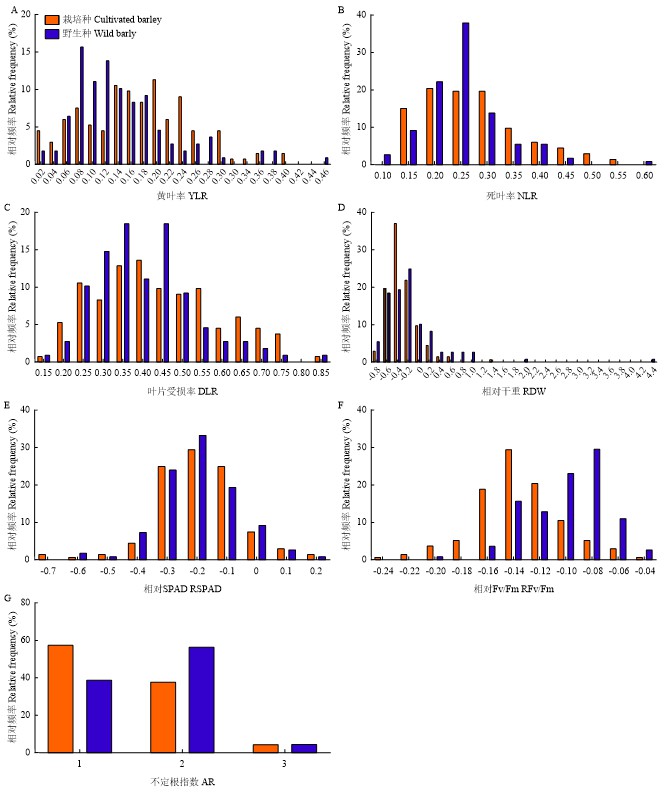
Fig. 1

Frequency distribution of waterlogging tolerance- related traits in cultivated and wild barley"

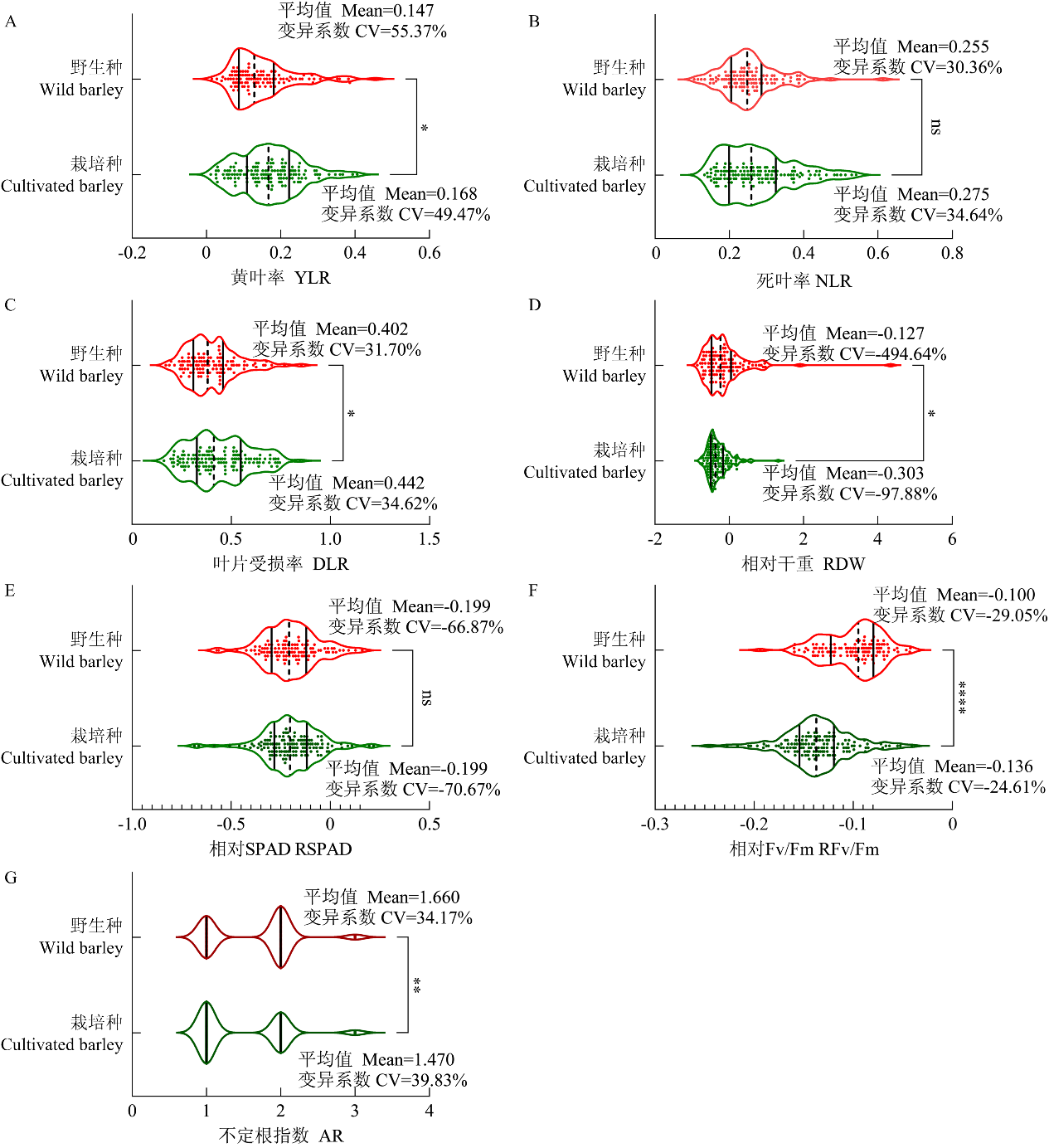
Fig. 2

Comparison of waterlogging tolerance-related traits between cultivated and wild barley *: P<0.05; **: P<0.01; ***: P<0.001;****: P<0.0001. The same as below"

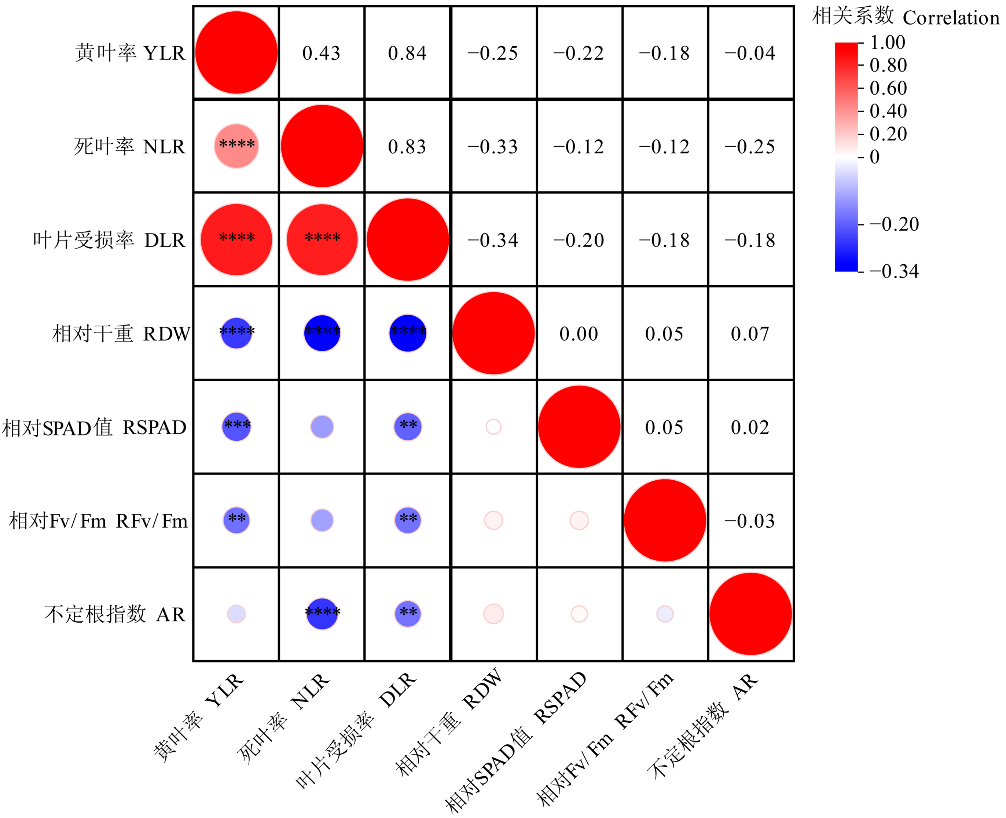
Fig. 3

Spearman rank correlation analysis of waterlogging tolerance-related traits at the seedling stage in 240 barley accessions Spearman’s rank correlation coefficients (rs) are shown in the upper triangle; the size and color intensity of circles in the lower triangle represent the correlation magnitude"

Table 2

Factor structure analysis of waterlogging tolerance-related traits at the seedling stage in 240 barley accessions"

总方差解释Total variance explained 旋转后的成分矩阵Rotated component matrix
成分
Components
旋转载荷平方和Rotation sums of squared loadings 性状
Trait
成分Components
总计
Total
方差百分比
Explained variance (%)
累积
Cumulative (%)
PC1 PC2 PC3
PC1 2.519 35.980 35.980 叶片受损率DLR 0.935 0.229 0.139
PC 2 1.236 17.656 53.636 黄叶率YLR 0.843 0.032 -0.102
PC 3 1.114 15.911 69.547 死叶率NLR 0.724 0.342 0.321
相对SPAD值RSPAD 0.561 -0.437 -0.090
相对干重RDW 0.110 0.775 0.070
不定根指数AR 0.145 0.111 0.838
相对Fv/Fm RFv/Fm 0.248 0.511 -0.515

Fig. 4

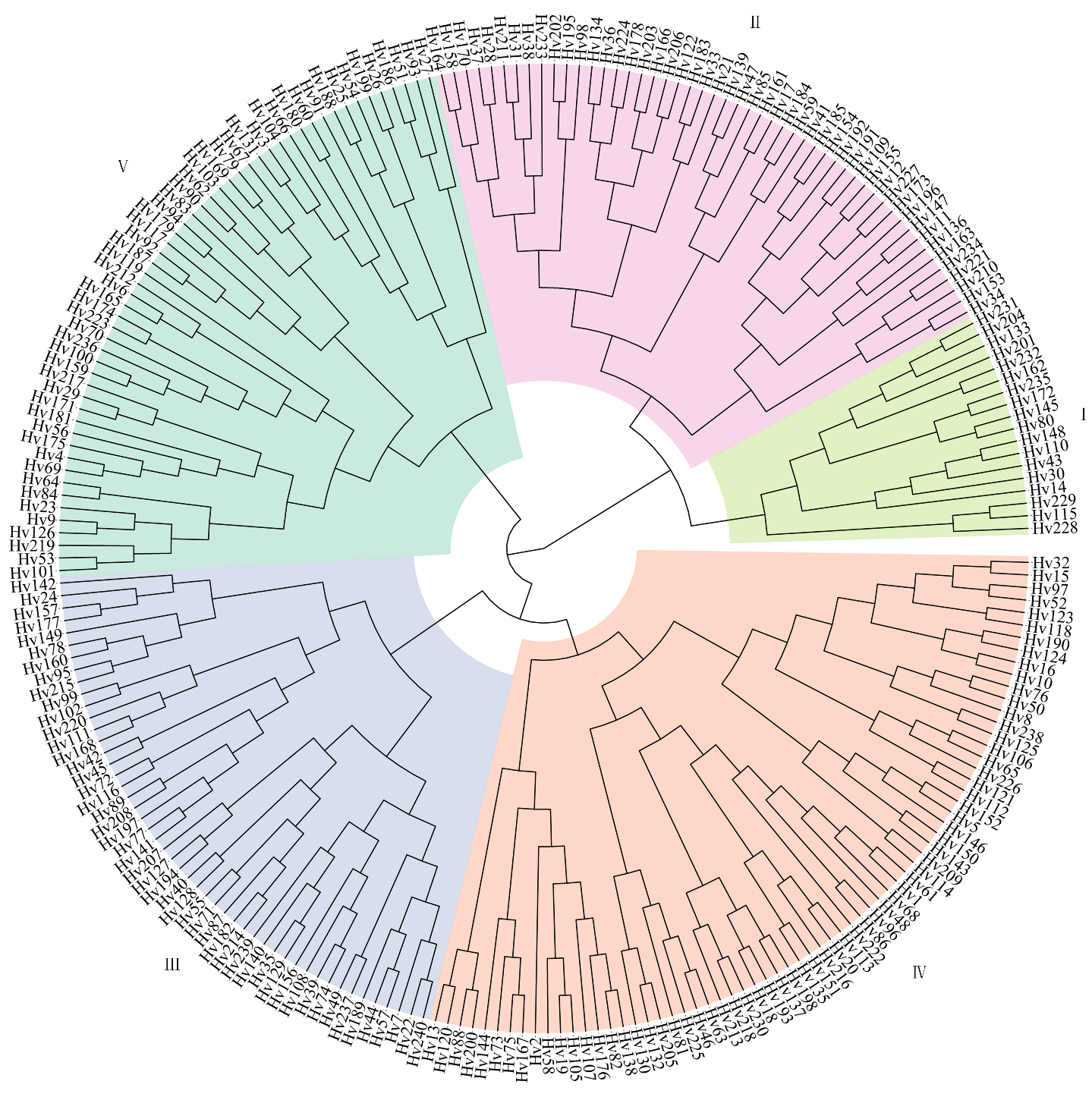
Dendrogram of waterlogging tolerance clustering for 240 barley accessions at the seedling stage Ⅰ: Highly waterlogging-tolerant; Ⅱ: Weakly waterlogging-tolerant ; Ⅲ: Moderately waterlogging-tolerant; Ⅳ: Weakly waterlogging-sensitive; Ⅴ: Highly waterlogging-sensitive"

Table 3

Basic information and physiological phenotypes of extreme waterlogging-tolerant barley accessions under submergence stress"

编号
Accession number
品种名
Variety
name
产地
Origin
栽培/野生
Cultivated
/Wild barley
黄叶率
YLR
死叶率
NLR
叶片受损率
DLR
相对SPAD
RSPAD
相对
干重
RDW
相对Fv/Fm
RFv/Fm
不定根指数
AR
D值
得分
D value
排名
Rank
Hv229 HOR 13751 以色列Israel 野生Wild barley 0.084 0.164 0.247 -0.216 1.908 -0.084 1 0.892 1
Hv115 阿卡迪
Accad
约旦
Jordan
栽培
Cultivated barley
0.032 0.170 0.202 -0.181 1.319 -0.145 2 0.885 2
Hv228 HOR 11183 伊拉克Iraq 野生Wild barley 0.073 0.264 0.337 -0.121 0.977 -0.055 1 0.832 3
Hv232 HOR 13787 以色列Israel 野生Wild barley 0.086 0.210 0.296 -0.177 0.805 -0.064 2 0.792 4
Hv162 XZ19 中国西藏
Xizang, China
野生
Wild barley
0.069 0.191 0.260 -0.260 0.915 -0.141 2 0.788 5
Hv133 ECI-station2-
ge17
进化谷
Evolution Canyon (Israel)
野生
Wild barley
0.353 0.228 0.581 -0.230 4.344 -0.042 2 0.774 6
Hv231 HOR 13784 以色列Israel 野生Wild barley 0.073 0.264 0.337 -0.236 0.860 -0.096 2 0.771 7
Hv204 XZ178 中国西藏
Xizang, China
野生
Wild barley
0.073 0.116 0.189 0.014 0.512 -0.085 2 0.768 8
Hv201 XZ153 中国西藏
Xizang, China
野生
Wild barley
0.098 0.215 0.312 -0.193 0.721 -0.083 2 0.754 9
Hv235 HOR 14021 以色列Israel 野生Wild barley 0.082 0.226 0.308 -0.140 0.627 -0.085 2 0.738 10

Table 4

Basic information and physiological phenotypes of extreme waterlogging-sensitive barley accessions under submergence stress"

编号
Accession number
品种名
Variety
name
产地
Origin
栽培/野生Cultivated
/Wild barley
黄叶率
YLR
死叶率
NLR
叶片受损率
DLR
相对SPAD
RSPAD
相对
干重
RDW
相对Fv/Fm
RFv/Fm
不定根指数
AR
D值
得分
D value
排名
Rank
Hv27 拉皮德
Rapid
捷克斯洛伐克
Czechoslovakia
栽培
Cultivated barley
0.237 0.461 0.697 -0.685 -0.718 -0.245 2 0.117 240
Hv93 970339 中国青海
Qinghai, China
栽培
Cultivated barley
0.305 0.541 0.846 -0.431 -0.467 -0.227 1 0.158 239
Hv186 XZ95 中国西藏Xizang, China 野生Wild barley 0.455 0.251 0.705 -0.134 -0.780 -0.155 1 0.189 238
Hv51 驻大麦7号
Zhudamai 7
中国河南
Henan, China
栽培
Cultivated barley
0.299 0.418 0.716 -0.395 -0.704 -0.139 1 0.191 237
Hv66 Clipper/
Volla/Arr
/Esp
国际玉米小麦改良中心
CIMMYT (International Maize and Wheat Improvement Center)
栽培
Cultivated barley
0.263 0.434 0.697 -0.203 -0.598 -0.157 1 0.239 236
Hv3 希霍德-鲁登
Schiho-Dolden
日本
Japan
栽培
Cultivated barley
0.192 0.441 0.633 -0.047 -0.773 -0.153 1 0.241 235
Hv131 ICARDA 41 E 叙利亚
Syria
栽培
Cultivated barley
0.360 0.373 0.733 -0.212 -0.604 -0.107 2 0.241 234
Hv104 扬农啤6号
Yangnongpi 6
中国江苏
Jiangsu, China
栽培
Cultivated barley
0.394 0.237 0.631 -0.301 -0.631 -0.139 2 0.244 233
Hv60 Victoria/
Mal1-4-3094-2
国际玉米小麦改良中心
CIMMYT (International Maize and Wheat Improvement Center)
栽培
Cultivated barley
0.303 0.368 0.671 -0.508 -0.458 -0.160 1 0.247 232
Hv180 XZ72 中国西藏Xizang, China 野生Wild barley 0.386 0.180 0.566 -0.325 -0.689 -0.146 2 0.247 231

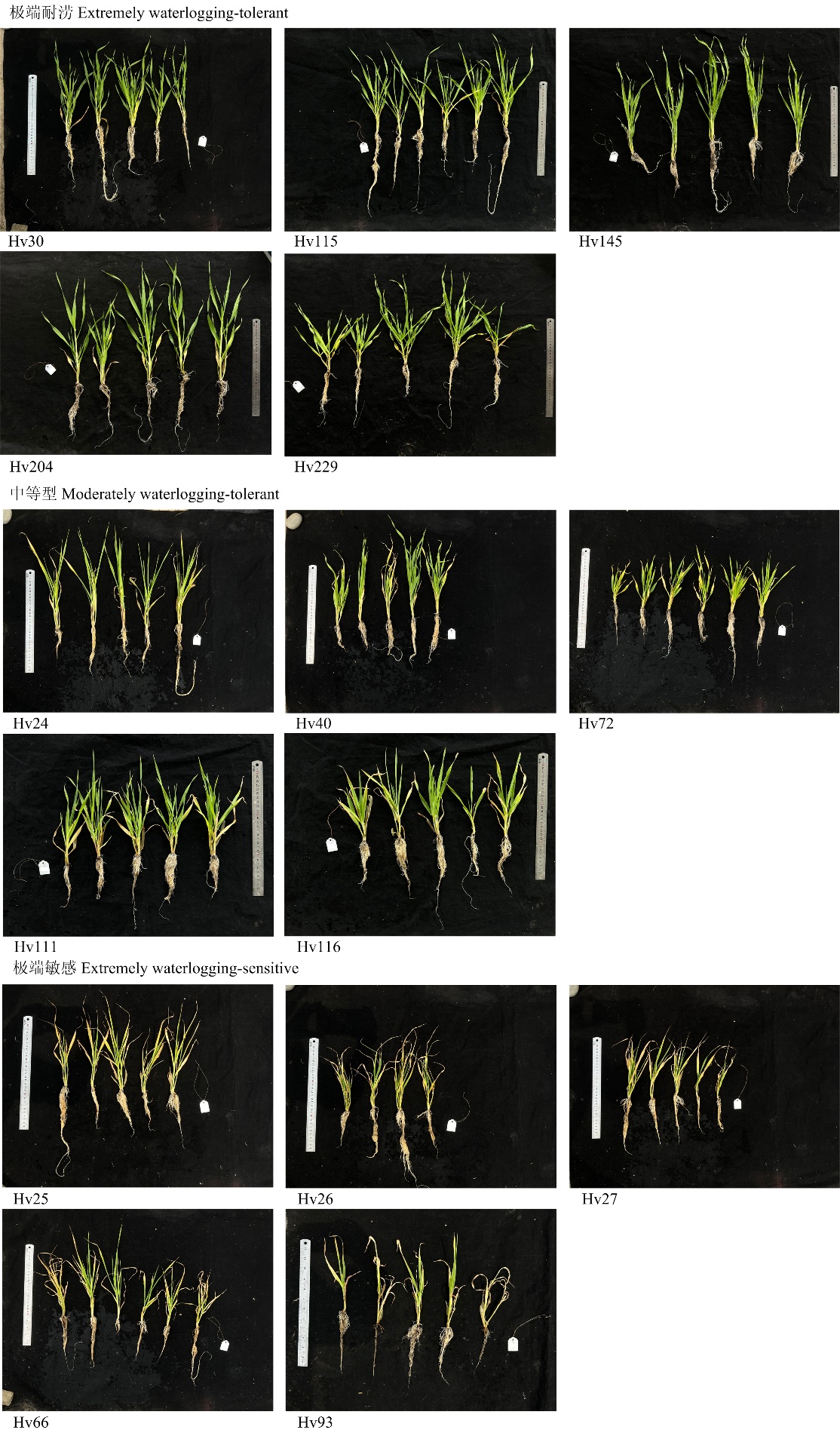
Fig. 5

Phenotypic of extreme waterlogging-tolerant, Moderately waterlogging-tolerant and extreme waterlogging-sensitive barley germplasm under waterlogging stress"

[1]
Han J C, Zhang Z, Xu J L, Chen Y, Jägermeyr J, Cao J, Luo Y C, Cheng F, Zhuang H M, Wu H Q, Mei Q H, Song J, Tao F L. Threat of low-frequency high-intensity floods to global cropland and crop yields[J]. Nature Sustainability, 2024, 7(8): 994-1006.
[2]
Liang Y L, Wang Y L, Zhao Y J, Lu Y, Liu X Y. Analysis and projection of flood hazards over China[J]. Water, 2019, 11(5): 1022.
[3]
Yang R, Wang C H, Yang Y M, Harrison M T, Zhou M X, Liu K. Implications of soil waterlogging for crop quality: A meta-analysis[J]. European Journal of Agronomy, 2024, 161: 127395.
[4]
Zeng F R, Konnerup D, Shabala L, Zhou M X, Colmer T D, Zhang G P, Shabala S. Linking oxygen availability with membrane potential maintenance and K+ retention of barley roots: Implications for waterlogging stress tolerance[J]. Plant, Cell & Environment, 2014, 37(10): 2325-2338.
[5]
Zhang X C, Shabala S, Koutoulis A, Shabala L, Johnson P, Hayes D, Nichols D S, Zhou M X. Waterlogging tolerance in barley is associated with faster aerenchyma formation in adventitious roots[J]. Plant and Soil, 2015, 394(1): 355-372.
[6]
Chen S, Xu Z Y, Adil M F, Zhang G P. Cultivar-, stress duration- and leaf age-specific hub genes and co-expression networks responding to waterlogging in barley[J]. Environmental and Experimental Botany, 2021, 191: 104599.
[7]
Xu Z Y, Ye L Z, Shen Q F, Zhang G P. Advances in the study of waterlogging tolerance in plants[J]. Journal of Integrative Agriculture, 2024, 23(9): 2877-2897.
[8]
Çolak N G, Eken N T, Ülger M, Frary A, Doğanlar S. Exploring wild alleles from Solanum pimpinellifolium with the potential to improve tomato flavor compounds[J]. Plant Science, 2020, 298: 110567.
[9]
Tong C, Hill C B, Zhou G F, Zhang X Q, Jia Y, Li C D. Opportunities for improving waterlogging tolerance in cereal crops: Physiological traits and genetic mechanisms[J]. Plants, 2021, 10(8): 1560.
[10]
Bailey-Serres J, Fukao T, Gibbs D J, Holdsworth M J, Lee S C, Licausi F, Perata P, Voesenek L A C J, van Dongen J T. Making sense of low oxygen sensing[J]. Trends in Plant Science, 2012, 17(3): 129-138.
[11]
Luan H Y, Chen C Y, Yang J, Qiao H L, Li H T, Li S F, Zheng J Y, Shen H Q, Xu X, Wang J. Genome-wide association scan and transcriptome analysis reveal candidate genes for waterlogging tolerance in cultivated barley[J]. Frontiers in Plant Science, 2022, 13: 1048939.
[12]
Broughton S, Zhou G F, Teakle N L, Matsuda R, Zhou M X, O’Leary R A, Colmer T D, Li C D. Waterlogging tolerance is associated with root porosity in barley (Hordeum vulgare L.)[J]. Molecular Breeding, 2015, 35(1): 27.
[13]
Qi X H, Li Q Q, Shen J T, Qian C L, Xu X W, Xu Q, Chen X H. Sugar enhances waterlogging-induced adventitious root formation in cucumber by promoting auxin transport and signalling[J]. Plant, Cell & Environment, 2020, 43(6): 1545-1557.
[14]
Liao W B, Huang G B, Yu J H, Zhang M L, Shi X L. Nitric oxide and hydrogen peroxide are involved in indole-3-butyric acid-induced adventitious root development in marigold[J]. The Journal of Horticultural Science and Biotechnology, 2011, 86(2): 159-165.
[15]
Liao W B, Huang G B, Yu J H, Zhang M L. Nitric oxide and hydrogen peroxide alleviate drought stress in marigold explants and promote its adventitious root development[J]. Plant Physiology and Biochemistry, 2012, 58: 6-15.
[16]
Xu X W, Chen M Y, Ji J, Xu Q, Qi X H, Chen X H. Comparative RNA-seq based transcriptome profiling of waterlogging response in cucumber hypocotyls reveals novel insights into the de novo adventitious root primordia initiation[J]. BMC Plant Biology, 2017, 17(1): 129.
[17]
Luan H Y, Shen H Q, Pan Y H, Guo B J, Lv C, Xu R G. Elucidating the hypoxic stress response in barley (Hordeum vulgare L.) during waterlogging: A proteomics approach[J]. Scientific Reports, 2018, 8: 9655.
[18]
Luan H Y, Li H T, Li Y, Chen C Y, Li S F, Wang Y, Yang J, Xu M, Shen H Q, Qiao H L, Wang J. Transcriptome analysis of barley (Hordeum vulgare L.) under waterlogging stress, and overexpression of the HvADH4 gene confers waterlogging tolerance in transgenic Arabidopsis[J]. BMC Plant Biology, 2023, 23(1): 62.
[19]
Colmer T D. Long-distance transport of gases in plants: A perspective on internal aeration and radial oxygen loss from roots[J]. Plant, Cell & Environment, 2003, 26(1): 17-36.
[20]
Xu X W, Ji J, Ma X T, Xu Q, Qi X H, Chen X H. Comparative proteomic analysis provides insight into the key proteins involved in cucumber (Cucumis sativus L.) adventitious root emergence under waterlogging stress[J]. Frontiers in Plant Science, 2016, 7: 1515.
[21]
Kumutha D, Sairam R K, Ezhilmathi K, Chinnusamy V, Meena R C. Effect of waterlogging on carbohydrate metabolism in pigeon pea (Cajanus cajan L.): Upregulation of sucrose synthase and alcohol dehydrogenase[J]. Plant Science, 2008, 175(5): 706-716.
[22]
Safavi-Rizi V, Herde M, Stöhr C. RNA-Seq reveals novel genes and pathways associated with hypoxia duration and tolerance in tomato root[J]. Scientific Reports, 2020, 10: 1692.
[23]
Wang F F, Zhou Z X, Liu X H, Zhu L, Guo B J, Lv C, Zhu J, Chen Z H, Xu R G. Transcriptome and metabolome analyses reveal molecular insights into waterlogging tolerance in Barley[J]. BMC Plant Biology, 2024, 24(1): 385.
[24]
Xiong J Y, Huang B B, Peng D, Shen Q F, Wu D Z, Zhang G P. JAZ2 negatively regulates drought tolerance in barley by modulating PLT2 expression[J]. Plant, Cell & Environment, 2025, 48(1): 699-710.
[25]
Manik S M N, Quamruzzaman M, Livermore M, Zhao C C, Johnson P, Hunt I, Shabala S, Zhou M X. Impacts of barley root cortical aerenchyma on growth, physiology, yield components, and grain quality under field waterlogging conditions[J]. Field Crops Research, 2022, 279: 108461.
[26]
Kuai J, Liu Z W, Wang Y H, Meng Y L, Chen B L, Zhao W Q, Zhou Z G, Oosterhuis D M. Waterlogging during flowering and boll forming stages affects sucrose metabolism in the leaves subtending the cotton boll and its relationship with boll weight[J]. Plant Science, 2014, 223: 79-98.
[27]
Ahmed I M, Cao F B, Zhang M, Chen X H, Zhang G P, Wu F B. Difference in yield and physiological features in response to drought and salinity combined stress during anthesis in Tibetan wild and cultivated barleys[J]. PLoS ONE, 2013, 8(10): e77869.
[28]
Falakboland Z, Zhou M X, Zeng F R, Kiani-Pouya A, Shabala L, Shabala S. Plant ionic relation and whole-plant physiological responses to waterlogging, salinity and their combination in barley[J]. Functional Plant Biology, 2017, 44(9): 941-953.
[29]
刘瑞, 曾源, 加央, 许甫超, 徐晴, 彭严春, 董国清, 董静, 秦丹丹. 大麦种质资源芽期耐渍性遗传多样性分析及耐渍种质筛选[J]. 大麦与谷类科学, 2023, 40(3): 1-10.
Liu R, Zeng Y, Jiayang, Xu F C, Xu Q, Peng Y C, Dong G Q, Dong J, Qin D D. Genetic diver sity analysis and scr eening of water logging toler ance of barley germplasm resources at germination stage[J]. Barley and Cereal Sciences, 2023, 40(3): 1-10. (in Chinese)
[30]
Zhang J X, Zhang A W, Liu Z X, He W T, Yang S Y. Multi-index fuzzy comprehensive evaluation model with information entropy of alfalfa salt tolerance based on LiDAR data and hyperspectral image data[J]. Frontiers in Plant Science, 2023, 14: 1200501.
[31]
Yuan B B, Wang S D, Guo L H. Drought vulnerability assessment of winter wheat using an improved entropy-comprehensive fuzzy evaluation method: A case study of Henan Province in China[J]. Atmosphere, 2023, 14(5): 779.
[32]
Hastings C, Mosteller F, Tukey J W, Winsor C P. Low moments for small samples: A comparative study of order statistics[J]. The Annals of Mathematical Statistics, 1947, 18(3): 413-426.
[33]
周元成, 曹永立, 王镇, 贾志荣, 姚勇, 陈爱萍. 不同大麦品种抗旱性鉴定指标的筛选与评价[J]. 中国农业科技导报, 2022, 24(2): 86-92.
Zhou Y C, Cao Y L, Wang Z, Jia Z R, Yao Y, Chen A P. Screening and evaluation of drought resistance indexes in different barley varieties[J]. Journal of Agricultural Science and Technology, 2022, 24(2): 86-92. (in Chinese)
[34]
宋智豪, 高景阳, 赵众欢, 于忠良, 侯鑫, 赵博文, 周子键, 陈甲法, 景沛, 孙豆豆, 吴建宇. 玉米耐淹性鉴定体系建立与优异种质筛选[J]. 玉米科学, 2026, 34(3): 10-18.
Song Z H, Gao J Y, Zhao Z H, Yu Z L, Hou X, Zhao B W, Zhou Z J, Chen J F, Jing P, Sun D D, Wu J Y. Establishment of an identification system and screening of elite germplasm for waterlogging tolerance in maize[J]. Journal of Maize Sciences, 2026, 34(3): 10-18. (in Chinese)
[35]
高旭, 张志仙, 朱长志, 檀国印, 何道根. 青花菜种质资源苗期耐涝性综合鉴定及评价[J]. 西北农林科技大学学报(自然科学版), 2018, 46(4): 117-127.
Gao X, Zhang Z X, Zhu C Z, Tan G Y, He D G. Comprehensive identification and evaluation of waterlogging tolerance during seedling stage of broccoli germplasms[J]. Journal of Northwest A&F University (Natural Science Edition), 2018, 46(4): 117-127. (in Chinese)
[36]
佟汉文, 刘易科, 朱展望, 陈泠, 邹娟, 张宇庆, 高春保, 焦春海. 作物耐渍鉴定与评价方法的研究进展[J]. 作物杂志, 2015(6): 10-15.
Tong H W, Liu Y K, Zhu Z W, Chen L, Zou J, Zhang Y Q, Gao C B, Jiao C H. Progress on identification and evaluation of waterlogging tolerance in crops[J]. Crops, 2015(6): 10-15. (in Chinese)
[37]
高珅奥, 田仁美, 贾惠宁, 王脉, 刘德政, 路秋梅, 卢山, 高志鹏, 万富旗, 张旭斌, 黄艳菊, 陈亮, 胡银岗. 236份小麦种质苗期耐盐性鉴定及耐盐指标筛选[J]. 麦类作物学报, 2024, 44(9): 1115-1124.
Gao S A, Tian R M, Jia H N, Wang M, Liu D Z, Lu Q M, Lu S, Gao Z P, Wan F Q, Zhang X B, Huang Y J, Chen L, Hu Y G. Identification of salt tolerance of 236 wheat germplasm at seedling stage and screening of salt tolerance indicators[J]. Journal of Triticeae Crops, 2024, 44(9): 1115-1124. (in Chinese)
[38]
张育哲, 王博华, 孙娜, 程宇坤, 王兆强, 耿洪伟, 任毅. 冬小麦苗期抗旱性综合评价与指标筛选[J]. 麦类作物学报, 2025, 45(12): 1647-1654.
Zhang Y Z, Wang B H, Sun N, Cheng Y K, Wang Z Q, Geng H W, Ren Y. Comprehensive evaluation and indicator screening of drought tolerance in winter wheat seedlings[J]. Journal of Triticeae Crops, 2025, 45(12): 1647-1654. (in Chinese)
[39]
谭志新, 谢留伟, 李洪戈, 李芳军, 田晓莉, 李召虎. 基于AHP-隶属函数法的棉花子叶期耐低钾能力鉴定[J]. 作物学报, 2024, 50(1): 199-208.
Tan Z X, Xie L W, Li H G, Li F J, Tian X L, Li Z H. Identification of cotton low potassium tolerance based on AHP-membership function method at cotyledonary stage[J]. Acta Agronomica Sinica, 2024, 50(1): 199-208. (in Chinese)
[40]
谢锐, 韩志刚, 张向前, 金晓蕾, 程玉臣, 任永峰, 魏淑丽, 郭斌煜, 方静, 郭景山, 赵小庆, 路战远. 阴山沿麓马铃薯氮效率综合评价及高产氮高效品种筛选[J]. 植物营养与肥料学报, 2025, 31(11): 2266-2279.
Xie R, Han Z G, Zhang X Q, Jin X L, Cheng Y C, Ren Y F, Wei S L, Guo B Y, Fang J, Guo J S, Zhao X Q, Lu Z Y. Comprehensive evaluation of nitrogen use efficiency and screening of potato cultivars with high Tuber yield and nitrogen efficiency in the Yinshan area[J]. Journal of Plant Nutrition and Fertilizers, 2025, 31(11): 2266-2279. (in Chinese)
[41]
Pan J W, Sharif R, Xu X W, Chen X H. Mechanisms of waterlogging tolerance in plants: Research progress and prospects[J]. Frontiers in Plant Science, 2020, 11: 627331.
[42]
Zhang Y S, Chen X J, Geng S Y, Zhang X J. A review of soil waterlogging impacts, mechanisms, and adaptive strategies[J]. Frontiers in Plant Science, 2025, 16: 1545912.
[43]
Nuruzzaman Manik S M N, Quamruzzaman M, Zhao C C, Johnson P, Hunt I, Shabala S, Zhou M X. Genome-wide association study reveals marker trait associations (MTA) for waterlogging-triggered adventitious roots and aerenchyma formation in barley[J]. International Journal of Molecular Sciences, 2022, 23(6): 3341.
[44]
Sherwood O L, Burke R, O’Rourke J, Whelan C V, Downey F, Ryan L, McCabe E F, Huang Z X, Ng C K Y, McCabe P F, Kacprzyk J. Transcriptional signatures associated with waterlogging stress responses and aerenchyma formation in barley root tissue[J]. Annals of Botany, 2025, 136(5/6): 1175-1191.
[45]
Mammadov J, Buyyarapu R, Guttikonda S K, Parliament K, Abdurakhmonov I Y, Kumpatla S P. Wild relatives of maize, rice, cotton, and soybean: Treasure troves for tolerance to biotic and abiotic stresses[J]. Frontiers in Plant Science, 2018, 9: 886.
[46]
Nevo E, Chen G X. Drought and salt tolerances in wild relatives for wheat and barley improvement[J]. Plant, Cell & Environment, 2010, 33(4): 670-685.
[47]
Zhu Q H, Zheng X M, Luo J C, Gaut B S, Ge S. Multilocus analysis of nucleotide variation of Oryza sativa and its wild relatives: Severe bottleneck during domestication of rice[J]. Molecular Biology and Evolution, 2007, 24(3): 875-888.
[48]
Pan R, Ding M Q, Feng Z B, Zeng F R, Medison M B, Hu H F, Han Y, Xu L, Li C D, Zhang W Y. HvGST4 enhances tolerance to multiple abiotic stresses in barley: Evidence from integrated meta-analysis to functional verification[J]. Plant Physiology and Biochemistry, 2022, 188: 47-59.
[1] GE YuBin, HE ChunGui, WANG Ning, ZHANG GuoQin, ZHANG ZhengYing, LÜ Xin. Genetic Diversity Analysis and Innovative Utilization of Introduced Tropical Sorghum Germplasm Resources Based on Phenotypic Traits [J]. Scientia Agricultura Sinica, 2026, 59(8): 1622-1638.
[2] LI ZhiWei, WANG ZiQi, GAO YaMeng, GAO RunHong, CHEN Xue, YANG Zhu, KAN WenJie, JIAN ShuangLing, YAN ShengNan, TANG CaiGuo, WU LiFang. Effects of Different Light Quality on Growth Acceleration and Photosynthetic Characteristics of Barley [J]. Scientia Agricultura Sinica, 2026, 59(8): 1639-1652.
[3] CHEN MinDong, QIU BoYin, HUANG Hao, LI YongPing, WEN QingFang. Evaluation of Curd Texture Quality in Loose-Curd Cauliflower Germplasm [J]. Scientia Agricultura Sinica, 2026, 59(6): 1302-1316.
[4] ZHANG HuaYao, TANG YangJun, CHEN JianJun, LÜ Yan, XU Rong, ZENG Liu, YI JianPing, LUO Dan, LIU ShengYi, CHENG Yong, ZHANG YuanYuan, ZOU XiLing. Construction of Comprehensive Evaluation System for Waterlogging Tolerance at the Germination Stage and Screening of Elite Germplasm in Brassica napus L. [J]. Scientia Agricultura Sinica, 2026, 59(22): 4962-4975.
[5] GUO XiaoJiang, SUN ChaoLin, GENG YuJing, ZHANG Miao, LI Yang, LI Wei, WANG JiRui, CHEN GuoYue, WEI YuMing, PU ZhiEn. Genetic Dissection of Waterlogging Tolerance at the Germination Stage and Discovery of Elite Germplasm in Wheat [J]. Scientia Agricultura Sinica, 2026, 59(22): 4976-4989.
[6] TANG WeiHua, ZHANG ZhiLin, YAN ZhiMing, LIU TongKun, HOU XiLin. Comprehensive Stage-Specific Evaluation of Salt-Alkali Tolerance and Tetraploidization Effects in Diploid and Tetraploid Non-Heading Chinese Cabbage [J]. Scientia Agricultura Sinica, 2026, 59(21): 4904-4923.
[7] HE ZhiLin, SUN CuiXia, YUE HongLi, TAN YueXia, ZHANG YaoHai, WANG FuSheng, LIU SiTao, JIANG Dong. Genetic Diversity Analysis and GWAS of Alloocimene Based on Resequencing of Citron, Lemon Germplasm Resources [J]. Scientia Agricultura Sinica, 2026, 59(2): 386-401.
[8] PU XinYuan, MA YunFei, ZHAO Jun, ZHAO LiPing, ZHAO XingDong, HU Xin, ZAN FengGang, LIU JiaYong, YANG LiHua, XIA HongMing, LU Xin, RAO XiBing, TANG SiQi, BAI YaDong, ZHANG Jing, REN ShengLin, ZHAO PeiFang. Evaluation of Smut Resistance and Screening of Resistant Germplasm in 291 Sugarcane Accessions [J]. Scientia Agricultura Sinica, 2026, 59(19): 4221-4234.
[9] JIA YaXiong, YANG WeiFang, LIU Tao, WANG Di, LIU MengChao, CHEN TianJin, HOU ShuiSheng. Security Challenges and Risks in the International Exchange of China's Livestock and Poultry Germplasm Resources [J]. Scientia Agricultura Sinica, 2026, 59(17): 3907-3919.
[10] FENG YaQing, SUN YaHan, ZHOU QiaoHui, LIN Peng, LI JiaYi, WANG HuiShen, LIU Tao, LIU ZhanDe, WANG NanNan. Screening Evaluation and Physiological Difference Analysis of Kiwifruit Germplasm Resources for Tolerance to Combined Stress of Iron Deficiency and Waterlogging [J]. Scientia Agricultura Sinica, 2026, 59(15): 3387-3399.
[11] MA YaJun, YAN YaJun, YANG WeiDi, YANG TianHui, WANG Chuan, GAO Ting. Research Progress on Germplasm Innovation and Comprehensive Utilization of Forage Triticale [J]. Scientia Agricultura Sinica, 2026, 59(14): 2993-3005.
[12] XIE YongXiang, PAN YiMin, HUANG Rui, QIN HuiBin, HOU Sen, HE Qiang, LING Liang, MU ZhiXin, WANG HaiGang. Identification and Comprehensive Evaluation of the Barren-Tolerant Germplasm Resources of Foxtail Millet in Shanxi [J]. Scientia Agricultura Sinica, 2026, 59(11): 2325-2339.
[13] ZHANG YueQing, ZHANG YuTing, XUE ChenFei, HAN QinYu, HE YiRong, XU ZiJuan, FAN XiuMei, WANG JunE, LUO Dan, FENG Xue, SUN Sheng. Genetic Diversity Analysis and Comprehensive Evaluation of Phenotypic Traits in 364 Cherry Tomato Germplasm Resources [J]. Scientia Agricultura Sinica, 2026, 59(11): 2468-2483.
[14] LÜ Tao, SUN GuoQing, GUO DongCai, CHEN QuanJia, CAI YongSheng, FAN BiaoXing, QU YanYing, ZHENG Kai. Development and Effectiveness Evaluation of InDel Molecular Markers Closely Linked to Fiber Strength QTL in Gossypium barbadense [J]. Scientia Agricultura Sinica, 2025, 58(9): 1684-1701.
[15] ZHAO YuXuan, MIAO JiYuan, HU Wei, ZHOU ZhiGuo. Effects of Low Temperature at Seedling Stage on Cotton Floral Bud Differentiation and Cotton Plant Yield [J]. Scientia Agricultura Sinica, 2025, 58(7): 1311-1320.
Viewed
Full text


Abstract

Cited

  Shared   
  Discussed   
No Suggested Reading articles found!