Scientia Agricultura Sinica ›› 2026, Vol. 59 ›› Issue (14): 2993-3005.doi: 10.3864/j.issn.0578-1752.2026.14.001

• CROP GENETICS & BREEDING·GERMPLASM RESOURCES·MOLECULAR GENETICS • Previous Articles     Next Articles

Research Progress on Germplasm Innovation and Comprehensive Utilization of Forage Triticale

MA YaJun1(), YAN YaJun2, YANG WeiDi1, YANG TianHui1, WANG Chuan1, GAO Ting1()   

  1. 1 Institute of Animal Science, Ningxia Academy of Agriculture and Forestry Sciences, Yinchuan 750002
    2 College of Life Sciences, Sichuan University, Chengdu 610065
  • Received:2025-12-10 Accepted:2026-02-07 Online:2026-07-16 Published:2026-07-21
  • Contact: GAO Ting

Abstract:

Resource scarcity and food security challenges are intensifying, making the development and utilization of suboptimal agricultural areas (marginal lands) a critical strategy for ensuring global food supply. As the first artificially created allopolyploid crop, dwarfed triticale combines wheat’s high yield and quality with rye’s robust stress tolerance, demonstrating unique advantages in marginal land agriculture. This paper systematically reviews research progress on triticale’s genetic evolution, germplasm resources, stress resistance mechanisms, and industrial applications. It focuses on evaluating the strengths and limitations of hexaploid triticale breeding strategies, aiming to provide theoretical guidance for unlocking its potential in ecological restoration, forage security, and functional food development. Employing bibliometric analysis and systematic review methodologies, we comprehensively retrieved and integrated domestic and international triticale-related studies. From the genetic evolution perspective, it traces the historical trajectory and driving factors behind the shift in breeding focus from octoploid to hexaploid triticale. From a resource conservation perspective, it summarizes the global status of germplasm collection and the preservation strategy of “low temperature and humidity + periodic renewal”; from a physiological mechanism perspective, it analyzes signal transduction and molecular regulatory networks under saline-alkali and drought stress; from an industrial application perspective, it evaluates the research achievements in forage rotation, ecological restoration, and processing utilization; and it compares the research progress of traditional phenotypic selection with modern molecular breeding techniques. Current research indicates: (1) Genetic Evolution: Breeding strategies for triticale have achieved a fundamental shift from cytologically unstable octoploids to genetically stable hexaploids (e.g., CIMMYT’s “Armadillo” line). However, narrow genetic backgrounds and the absence of superior traits from wheat’s D genome remain major bottlenecks. (2) Stress Resistance Mechanisms: Triticale exhibits exceptional adaptability to marginal lands. Its salt tolerance relies on root organic acid secretion for Na+ chelation and a “root > stem > leaf” ion compartmentalization strategy, while drought resistance is achieved through accumulation of osmotic regulatory compounds and maintenance of photosystem Ⅱ (PSⅡ) activity; (3) Industrial Applications: The “silage maize-forage triticale” relay cropping system achieves a Land Equivalent Ratio (LER) exceeding 1.35, effectively alleviating seasonal forage shortages. It also holds promising prospects for saline-alkali land remediation and the development of high-dietary-fiber functional foods; (4) Breeding Technology: Research paradigms are transitioning from traditional phenotypic selection to “molecular design + high-throughput phenotyping.” SSR marker-based and GWAS-driven identification of stress-resistant QTLs has become a hotspot. The successful development of triticale confirms that introducing the foreign R genome is an effective approach to push crop stress tolerance beyond conventional limits. Future research should establish an innovative strategy of “learning from wheat to enhance rye”: Leverage hexaploid wheat pangenome information to decipher the genetic basis of complex traits in triticale. Employ chromosome engineering to precisely introduce superior genes from wheat’s D genome-such as those controlling gluten strength and dwarfism-to create “recombinant” germplasm combining stress tolerance with high quality. Simultaneously, establish a dual industrial structure integrating “grain-forage dual-purpose” and “ecological restoration” to fully realize its strategic value within resilient agricultural systems.

Key words: triticale, germplasm resources, molecular design breeding, saline-alkali land utilization, forage, stress resistance mechanisms

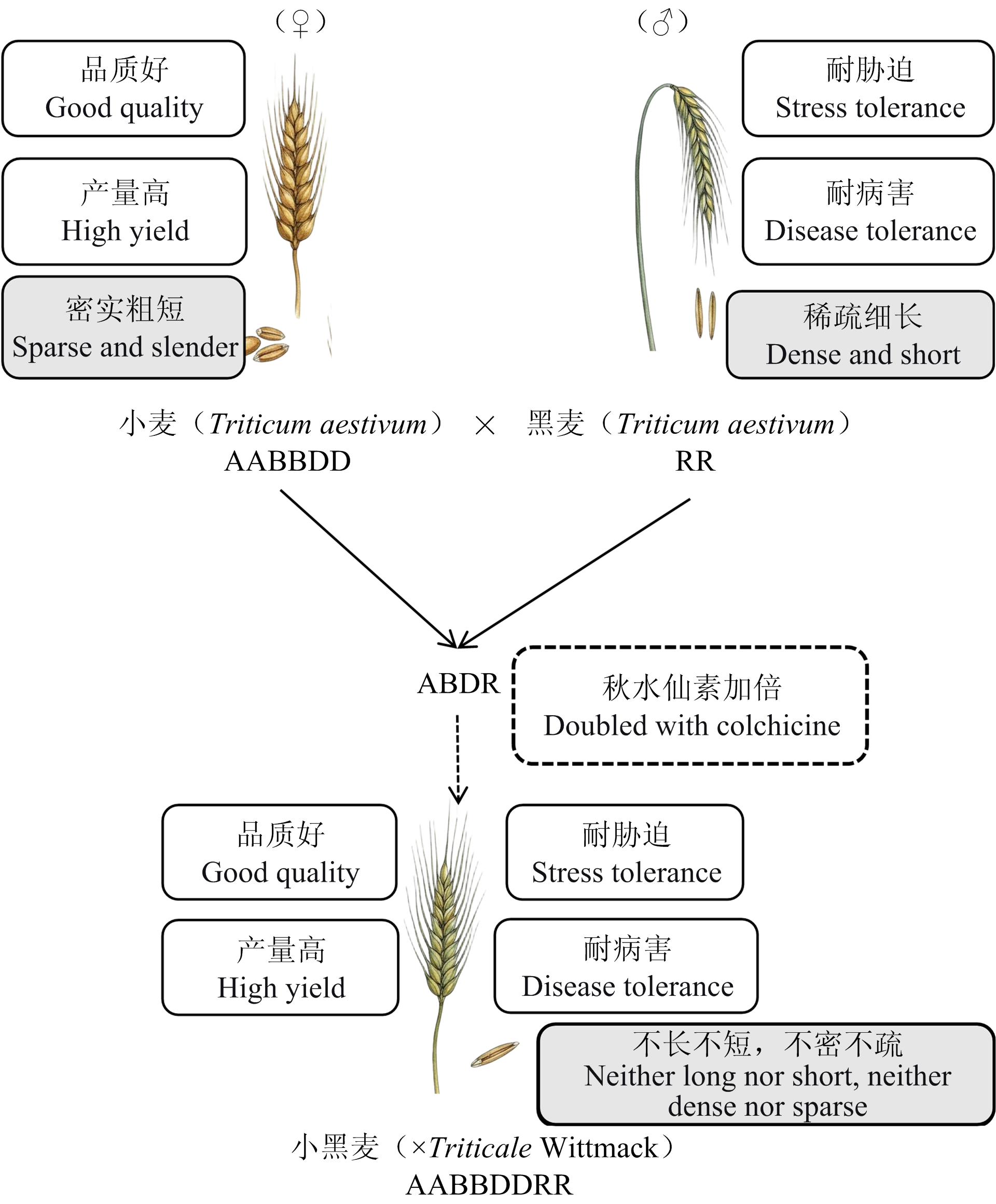
Fig. 1

Comparison of spike morphology among triticale and its parental species, wheat and rye"

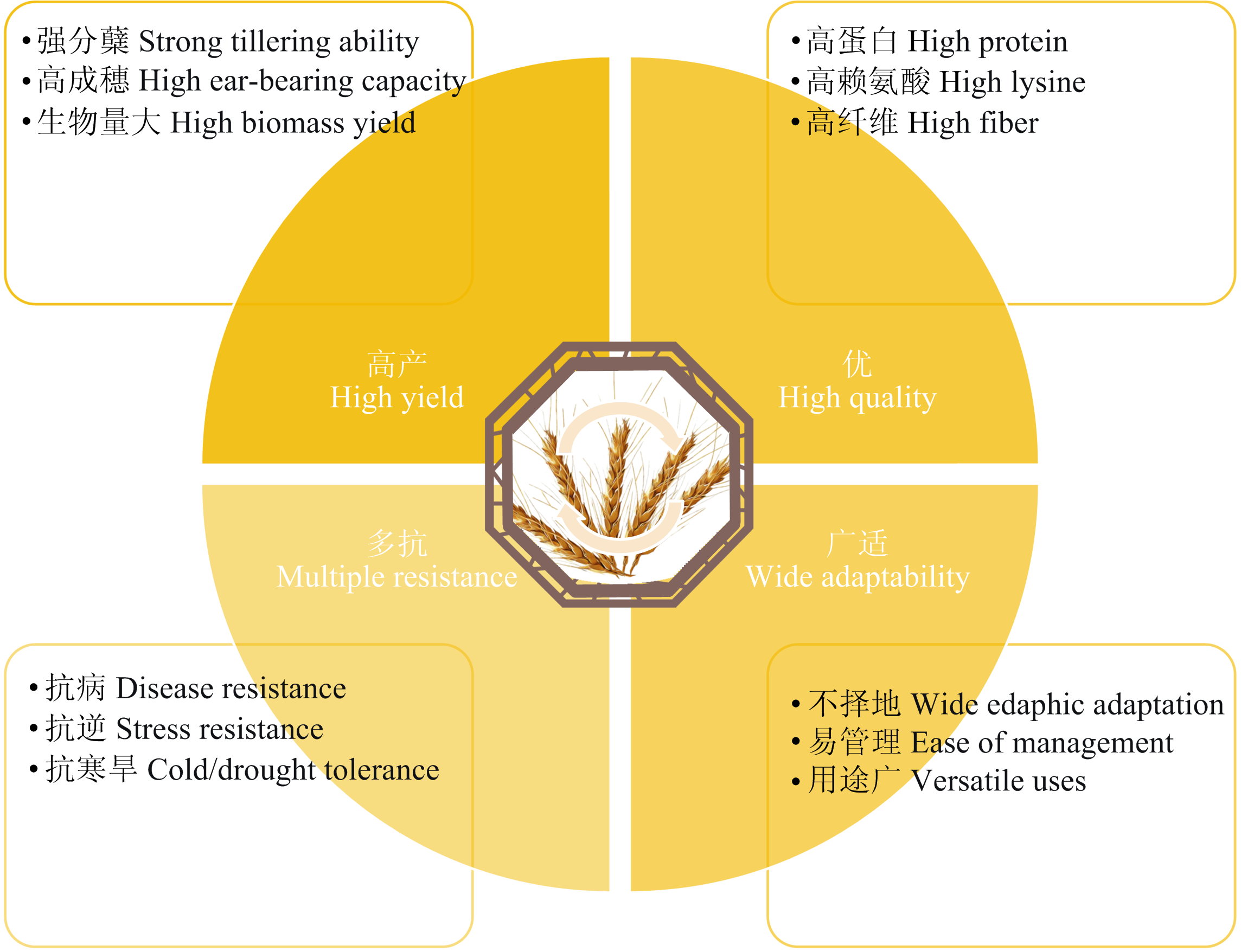
Fig. 2

Overview of the advantages of triticale"

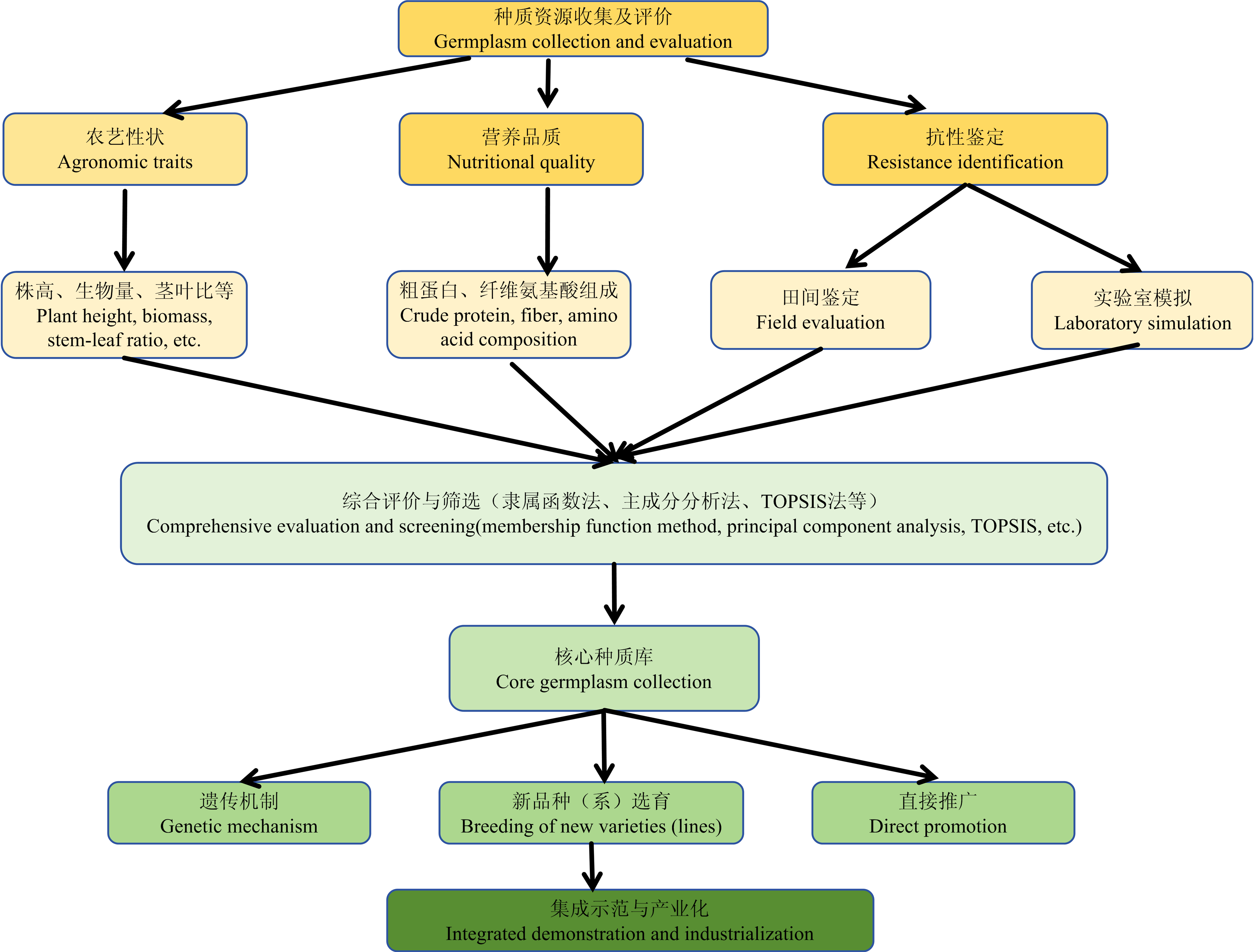
Fig. 3

Systematic evaluation and utilization technology roadmap for forage triticale germplasm resources"

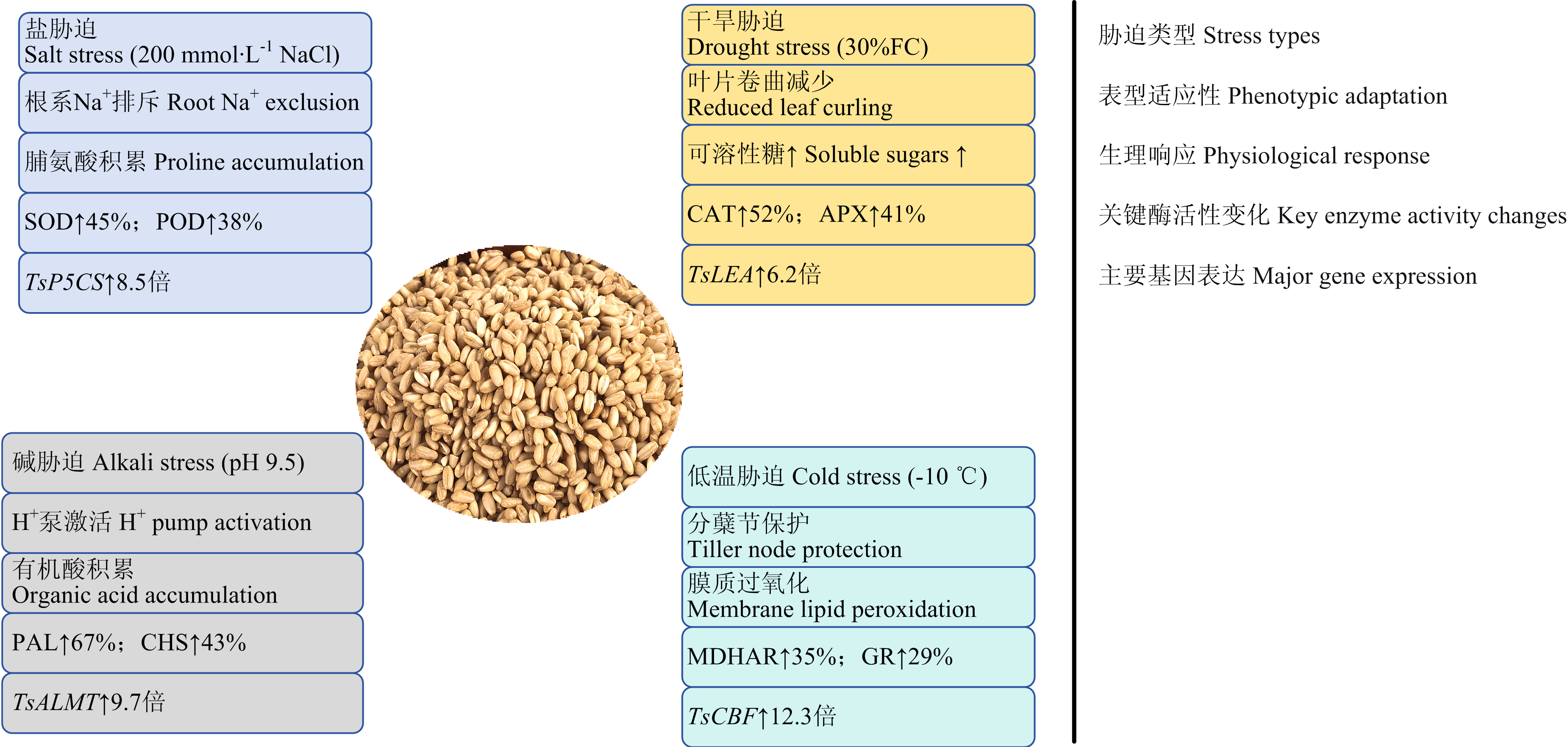
Fig. 4

Physiological response mechanisms of major stress tolerance in triticale"

Table 1

Performance of representative forage triticale varieties in the saline-alkali land of Ningxia"

品种
Variety
株高
Plant height (cm)
鲜草产量
Fresh forage yield (t·hm-2)
干草产量
Hay yield (t·hm-2)
蛋白含量
Protein content (%)
相对饲用价
Relative feed value
耐盐等级
Salt tolerance grade
出苗率
Emergence rate (%)
越冬率
Winter survival rate (%)
中饲1048 Zhongsi 1048 145 75.2 18.5 16.8 142 强 High 95.2 98.5
冀饲5号Jisi 5 138 68.9 17.2 15.9 135 中 Moderate 92.1 96.2
晋饲草1号Jinsicao 1 152 72.1 19.1 17.2 148 强 High 96.8 99.1
陇饲1号Longsi 1 141 69.8 17.8 16.3 138 中 Moderate 93.5 97.3
宁饲1号Ningsi 1 136 65.4 16.9 15.7 132 中 Moderate 91.7 95.8

Table 2

Economic benefit analysis of the “silage maize + forage triticale” double-cropping model"

项目 Item 单位成本 Unit cost (yuan·hm-2) 总成本 Total cost (10000 yuan) 占比 Proportion (%)
小黑麦种植成本Triticale planting cost 4200 28.0 46.7
小黑麦产出收入Triticale output income -9750 -65.0 57.5
玉米种植成本Maize planting cost 4800 32.0 53.3
玉米产出收入Maize output income -7200 -48.0 42.5
总成本Total cost 9000 60.0 100.0
总收入Total income -16950 -113.0 100.0
净利润Net profit 7950 53.0 46.7
土地当量比Land equivalent ratio 1.35 1.35
投资回报率 Return on investment (%) 88.3 88.3

Table 3

Development directions of triticale functional foods"

应用方向
Application area
核心价值
Core value
产品示例
Product examples
技术要点/优势
Key technical points/advantages
营养强化配粉
Nutritionally fortified flour blending
高蛋白、高赖氨酸
High protein, high lysine
营养强化面包、馒头、面条
Nutritionally enhanced bread, steamed buns, noodles
复配比例20%—30%;需辅以食品改良剂优化质构
Blending ratio 20%-30%; requires food improvers to optimize texture
酿造工业
Brewing industry
高α-淀粉酶活性、高氮源
High α-amylase activity, high nitrogen source
特种啤酒、麦芽、发酵醋
Specialty beer, malt, fermented vinegar
简化糖化工艺,提升发酵效率,赋予独特风味
Simplifies saccharification process, enhances fermentation efficiency, imparts unique flavor
功能性配料
Functional ingredients
麸皮富含膳食纤维与多酚
Bran rich in dietary fiber and polyphenols
高纤维饼干、益生元饮品、天然抗氧化剂
High-fiber biscuits, probiotic beverages, natural antioxidants
提取利用副产物,提升产品健康属性,实现全籽粒利用
Extract and utilize by-products to enhance the health attributes of products and achieve whole-grain utilization

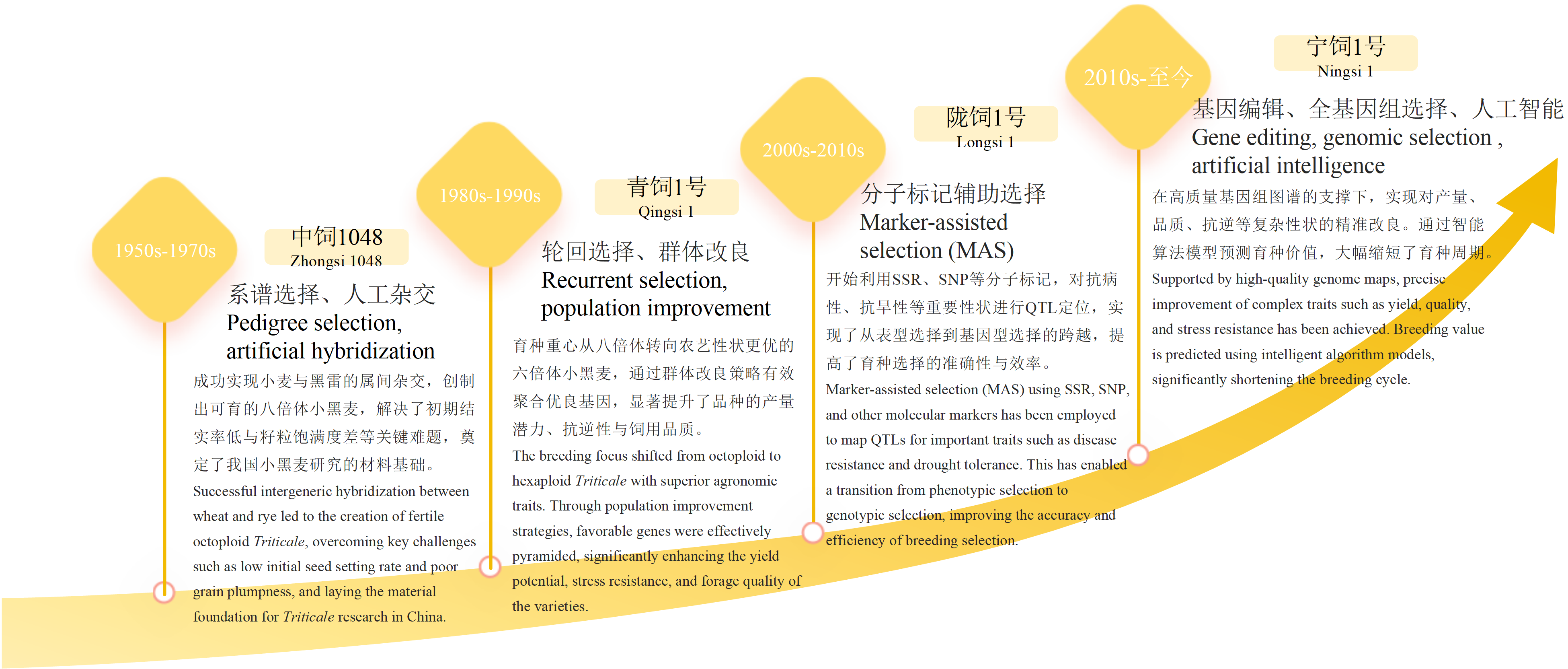
Fig. 5

Development history and achievements of Chinese triticale breeding technology"

[1]
Fehr W R. Principles of Cultivar Development: Volume 2, Crop Species[M]. New York: Macmillan Press, 1987.
[2]
Wilson S. II. Wheat and rye hybrids[J]. Transactions of the Botanical Society of Edinburgh, 1873, 12(1/2/3/4): 286-288.

doi: 10.1080/03746607309469536
[3]
Müntzing A. Problems of AlloPolyploidy in Triticale[M]// Polyploidy: Biological Relevance. Boston, MA: Springer US, 1980: 409-426.
[4]
Blakeslee A F, Avery A G. Methods of inducing doubling of chromosomes in plants[J]. Journal of Heredity, 1937, 28(12): 393-411.

doi: 10.1093/oxfordjournals.jhered.a104294
[5]
O’Mara J G. Cytogenetic studies on Triticale: I. A method for determining the effects of individual Secale chromosomes on Triticum[J]. Genetics, 1940, 25(4): 401-408.

doi: 10.1093/genetics/25.4.401
[6]
Villareal R L, Varughese G, Abdalla O S. Advances in spring Triticale breeding[M]// Plant Breeding Reviews. Hoboken, NJ: Wiley, 1990: 43-90.
[7]
Fernandez-Figares I, Marinetto J, Royo C, Ramos J M, Garcia del Moral L F. Amino-acid composition and protein and carbohydrate accumulation in the grain of Triticale grown under terminal water stress simulated by a senescing agent[J]. Journal of Cereal Science, 2000, 32(3): 249-258.

doi: 10.1006/jcrs.2000.0329
[8]
鲍文奎. 植物育种中的几个遗传问题[J]. 种子, 1983, 2(3): 70-72.
Bao W K. Several genetic problems in plant breeding[J]. Seed, 1983, 2(3): 70-72. (in Chinese)
[9]
王小军, 鲍文奎. 八倍体小黑麦耐盐细胞系产生的遗传机制[J]. 植物学报, 1998, 40(4): 330-336.
Wang X J, Bao W K. Genetic mechanism of salt-tolerant cell line of octoploid Triticale[J]. Journal of Integrative Plant Biology, 1998, 40(4): 330-336. (in Chinese)
[10]
董永琴, 严育瑞, 鲍文奎. 八倍体小黑麦新品种的适宜播期范围与稳产性[J]. 作物学报, 1991, 17(1): 24-31.
Dong Y Q, Yan Y R, Bao W K. Studies on the relationship between the range of seeding dates and the yield stability of some new octoploid Triticale cultivars[J]. Acta Agronomica Sinica, 1991, 17(1): 24-31. (in Chinese)
[11]
孙元枢. 中国小黑麦遗传育种研究与应用[M]. 杭州: 浙江科学技术出版社, 2002.
Sun Y S. Triticale Genetic Breeding and Utilization in China[M]. Hangzhou: Zhejiang Science & Technology Press, 2002. (in Chinese)
[12]
张成合, 曹军, 鲍文奎. 小黑麦单倍体愈伤组织(n=28)耐碱和耐盐变异体的筛选与鉴定[J]. 综合植物生物学杂志, 1986(2): 137-144.
Zhang C H, Cao J, Bao W K. Selection and characterization of high pH resistant or salt resistant variants from haploid Triticale callus (n=28)[J]. Journal of Integrative Plant Biology, 1986(2): 137-144. (in Chinese)
[13]
Leśniowska-Nowak J, Bednarek P T, Czapla K, Nowak M, Niedziela A. Effect of chromosomal localization of NGS-based markers on their applicability for analyzing genetic variation and population structure of hexaploid Triticale[J]. International Journal of Molecular Sciences, 2024, 25(17): 9568.

doi: 10.3390/ijms25179568
[14]
张晓娟, 孙权, 陈永伟, 马文礼, 马宏秀, 蒋鹏. 宁夏引黄灌区饲用小黑麦复种青贮玉米高效栽培技术[J]. 饲料工业, 2024, 45(6): 125-129.
Zhang X J, Sun Q, Chen Y W, Ma W L, Ma H X, Jiang P. High-efficient cultivation techniques of forage Triticale multiple cropping silage corn in Ningxia irrigation area[J]. Feed Industry, 2024, 45(6): 125-129. (in Chinese)
[15]
崔建宁, 张敏, 徐灿, 陈永伟, 杨波, 哈蓉, 王昊, 靳韦, 杨宏波. 灵武农场秋播小黑麦后复种青贮玉米的种植效果分析[J]. 智慧农业导刊, 2024, 4(7): 35-38.
Cui J N, Zhang M, Xu C, Chen Y W, Yang B, Ha R, Wang H, Jin W, Yang H B. An analysis of the effect of planting silage corn after planting Triticale in autumn on Lingwu farm[J]. Journal of Smart Agriculture, 2024, 4(7): 35-38. (in Chinese)
[16]
王伟, 奇明嘎, 王志军, 赵牧其尔, 格根图. 不同添加剂及混合比例对全株玉米与饲用小黑麦混合青贮品质的影响[J]. 草地学报, 2025, 33(9): 3077-3087.

doi: 10.11733/j.issn.1007-0435.2025.09.031
Wang W, Qi M G, Wang Z J, Zhao M Q E, Ge G T. Effects of different additives and mixing ratios on the quality of mixed silage of whole-plant corn with forage Triticale[J]. Acta Agrestia Sinica, 2025, 33(9): 3077-3087. (in Chinese)
[17]
王清韵, 周丁扬, 安萍莉, 姜广辉. 自然保护地政策对区域生态环境质量的影响: 以三江源地区为例[J]. 应用生态学报, 2023, 34(5): 1349-1359.

doi: 10.13287/j.1001-9332.202305.023
Wang Q Y, Zhou D Y, An P L, Jiang G H. Impacts of nature reserve policy on regional ecological environment quality: A case study of Sanjiangyuan region[J]. Chinese Journal of Applied Ecology, 2023, 34(5): 1349-1359. (in Chinese)

doi: 10.13287/j.1001-9332.202305.023
[18]
薛风娟, 加羊吉, 张海英, 孙浩, 蒲小剑, 赵媛媛, 王伟, 徐成体. 不同饲用小黑麦种子萌发期耐盐碱性的综合评价[J]. 种子, 2025, 44(12): 55-65.
Xue F J, Jia Y J, Zhang H Y, Sun H, Pu X J, Zhao Y Y, Wang W, Xu C T. Comprehensive evaluation on salt and alkali tolerance during germination period of different forage × Triticosecale seeds[J]. Seed, 2025, 44(12): 55-65. (in Chinese)
[19]
刘晶, 杜明川, 黄晓萍, 杨鑫光, 冯召扬, 杜文华. 小黑麦种质在青海不同地区的生产性能与营养价值综合评价[J]. 种子, 2023, 42(11): 106-111.
Liu J, Du M C, Huang X P, Yang X G, Feng Z Y, Du W H. Comprehensive evaluation of the production performance and nutritional value of Triticale germplasm in different regions of Qinghai[J]. Seed, 2023, 42(11): 106-111. (in Chinese)
[20]
Oettler G. The fortune of a botanical curiosity-Triticale: Past, present and future[J]. The Journal of Agricultural Science, 2005, 143(5): 329-346.

doi: 10.1017/S0021859605005290
[21]
Ramadan E, Freeg H A, Shalaby N, Rizk M S, Ma J, Du W H, Ibrahim O M, Alwutayd K M, AbdElgawad H, Jo I H, El-Tahan A M. Response of nine Triticale genotypes to different salt concentrations at the germination and early seedling stages[J]. PeerJ, 2023, 11: e16256.
[22]
蔺美玲, 张邦彦, 武晋民, 闫棣楷, 李腾飞, 刘盼婷, 许兴, 王彬. 宁夏平原中度盐碱地小黑麦种质资源适应性评价[J]. 草业科学, 2025, 42(1): 1-21.
Lin M L, Zhang B Y, Wu J M, Yan D K, Li T F, Liu P T, Xu X, Wang B. Adaptability evaluation of triticale germplasm resources on moderately saline-alkali land in Ningxia Plain[J]. Pratacultural Science, 2025, 42(1): 1-21. (in Chinese)
[23]
代寒凌, 田新会, 杜文华, 吴建平. 甘南地区饲用型小黑麦草产量及营养品质研究[J]. 草原与草坪, 2019, 39(2): 66-72.
Dai H L, Tian X H, Du W H, Wu J P. Study on grass yield and nutrient quality of forage type Triticale in Gannan area[J]. Grassland and Turf, 2019, 39(2): 66-72. (in Chinese)
[24]
Kumssa T T, Anderson J D, Johnson J P, Norton S, Saha M C, Trammell M A, Rogers J K, Butler T J, Ma X F. Trends of seasonal forage yield changes of Triticale in the southern Great Plains of the United States[J]. Grassland Research, 2022, 1(3): 166-173.

doi: 10.1002/glr2.v1.3
[25]
张帆, 杨青川. 紫花苜蓿育种历史、现状与展望[J]. 中国农业科学, 2025, 58(21): 4471-4481. DOI: 10.3864/j.issn.0578-1752.2025.21.016.
Zhang F, Yang Q C. The breeding history, current status and prospects of alfalfa[J]. Scientia Agricultura Sinica, 2025, 58(21): 4471-4481. DOI: 10.3864/j.issn.0578-1752.2025.21.016. (in Chinese)
[26]
郎旭. 冬性小黑麦新种质选育及冬黑麦特异SSR标记筛选[D]. 哈尔滨: 哈尔滨师范大学, 2022.
Lang X. Breeding of new winter Triticale germplasm and screening of specific SSR markers for winter rye[D]. Harbin: Harbin Normal University, 2022. (in Chinese)
[27]
卢新雄, 王力荣, 辛霞, 尹广鹍, 张金梅, 陈晓玲, 何娟娟, 刘运霞. 种质圃作物种质资源安全保存策略与实践[J]. 植物遗传资源学报, 2023, 24(1): 32-43.

doi: 10.13430/j.cnki.jpgr.20220602001
Lu X X, Wang L R, Xin X, Yin G K, Zhang J M, Chen X L, He J J, Liu Y X. Strategy and practice of the safe conservation of crop germplasm resources in national field genebanks of China[J]. Journal of Plant Genetic Resources, 2023, 24(1): 32-43. (in Chinese)
[28]
Walters C, Berjak P, Pammenter N, Kennedy K, Raven P. Preservation of recalcitrant seeds[J]. Science, 2013, 339(6122): 915-916.

doi: 10.1126/science.1230935
[29]
徐翠莲, 王瑞清, 张俐敏, 田依轩, 胡文明. 小黑麦花粉干燥法超低温保存技术研究[J]. 湖北农业科学, 2015, 54(21): 5223-5226.
Xu C L, Wang R Q, Zhang L M, Tian Y X, Hu W M. Studies on cryopreservation of Triticale pollen after drying treatment[J]. Hubei Agricultural Sciences, 2015, 54(21): 5223-5226. (in Chinese)
[30]
Yang W N, Feng H, Zhang X H, Zhang J, Doonan J H, Batchelor W D, Xiong L Z, Yan J B. Crop phenomics and high-throughput phenotyping: Past decades, current challenges, and future perspectives[J]. Molecular Plant, 2020, 13(2): 187-214.

doi: S1674-2052(20)30008-3 pmid: 31981735
[31]
张银霞, 褚红丽, 赵方媛, 杜文华. 饲草型小黑麦品种(系)的抗寒生理生化指标评价[J]. 西北农业学报, 2024, 33(12): 2231-2243.
Zhang Y X, Chu H L, Zhao F Y, Du W H. Evaluation of physiological and biochemical indexes of cold resistancein forage Triticale varieties(lines)[J]. Acta Agriculturae Boreali-occidentalis Sinica, 2024, 33(12): 2231-2243. (in Chinese)
[32]
Zhao Y J, Liu X J, Wu Y, Tong C C, Lin F. Effects of Medicago sativa-Triticale wittmack intercropping system on rhizosphere soil nutrients and bacterial community in semi-arid region of Northwest China[J]. The Journal of Applied Ecology, 2020, 31(5): 1645-1652.
[33]
Rasouli F, Yun P, Kiani-Pouya A, Movahedi A, Rasouli M, Salehi M, Shabala S. One size does not fit all: Different strategies employed by Triticale and barley plants to deal with soil salinity[J]. Environmental and Experimental Botany, 2024, 218: 105585.

doi: 10.1016/j.envexpbot.2023.105585
[34]
Roohi E, Sarvestani T, Modarres-Sanavy S A M, Siosemardeh A. Comparative study on the effect of soil water stress on photosynthetic function of Triticale, bread wheat, and barley[J]. Journal of Agricultural Science and Technology, 2013, 15(2): 215-228.
[35]
Hura T, Grzesiak S, Hura K, Grzesiak M, Rzepka A. Differences in the physiological state between Triticale and maize plants during drought stress and followed rehydration expressed by the leaf gas exchange and spectrofluorimetric methods[J]. Acta Physiologiae Plantarum, 2006, 28(5): 433-443.

doi: 10.1007/BF02706626
[36]
Richards R A. Selectable traits to increase crop photosynthesis and yield of grain crops[J]. Journal of Experimental Botany, 2000, 51(Spec No): 447-458.

doi: 10.1093/jexbot/51.suppl_1.447
[37]
Sahoo M M, Tarshish R, Tubul Y, Sabag I, Gadri Y, Morota G, Peleg Z, Alchanatis V, Herrmann I. Multimodal ensemble of UAV-borne hyperspectral, thermal, and RGB imagery to identify combined nitrogen and water deficiencies in field-grown sesame[J]. ISPRS Journal of Photogrammetry and Remote Sensing, 2025, 222: 33-53.

doi: 10.1016/j.isprsjprs.2025.02.011
[38]
Dhariwal R, Fedak G, Dion Y, Pozniak C, Laroche A, Eudes F, Randhawa H S. High density single nucleotide polymorphism (SNP) mapping and quantitative trait loci (QTL) analysis in a biparental spring Triticale Population localized major and minor effect Fusarium Head blight resistance and associated traits QTL[J]. Genes, 2018, 9(1): 19.

doi: 10.3390/genes9010019
[39]
Jiang Q S, Dong H B, Li Q D, Zhang Z X, Gao C Y, Yin Y T, Hou X Y. Factors influencing farmer willingness to plant forage Triticale in winter fallow fields in Northern China: An example from central Shanxi Province[J]. Grassland Research, 2024, 3(3): 290-298.

doi: 10.1002/glr2.v3.3
[40]
贾惠森, 李伟. 不同比例小黑麦青贮饲料替代苜蓿干草对奶牛生产性能、乳成分及瘤胃发酵参数的影响[J]. 中国饲料, 2025(18): 133-136.
Jia H S, Li W. Effects of different proportions of Triticale silage substituting alfalfa hay on milk production performance, milk composition and rumen fermentation parameters of dairy cows[J]. China Feed, 2025(18): 133-136. (in Chinese)
[41]
张银霞, 刘翠, 郭蕊, 宋谦, 赵方媛, 杜文华. 陇东旱塬区小黑麦茬后复种青贮玉米品种的营养品质研究[J]. 草原与草坪, 2026, 46(2): 117-123.
Zhang Y X, Liu C, Guo R, Song Q, Zhao F Y, Du W H. Study on nutritional quality of multiple cropping silage maize varieties after Triticale stubble in dryland area of Longdong[J]. Grassland and Turf, 2026, 46(2): 117-123. (in Chinese)
[42]
Sarkar D. Proline-associated antioxidant enzyme response in cool-season turfgrasses under abiotic stress[D]. Amherst: University of Massachusetts Amherst, 2009.
[43]
Heger J, Eggum B O. The nutritional values of some high-yielding cultivars of Triticale[J]. Journal of Cereal Science, 1991, 14(1): 63-71.

doi: 10.1016/S0733-5210(09)80018-0
[44]
Kandrokov R. Effects of Triticale flour on the quality of honey cookies[J]. Foods and Raw Materials, 2023: 215-222.
[45]
Munoz-Insa A, Gastl M, Becker T. Influence of malting on the protein composition of TriticaleTriticosecale wittmack) ‘trigold’[J]. Cereal Chemistry, 2016, 93(1): 10-19.

doi: 10.1094/CCHEM-12-14-0251-R
[46]
Nocente F, De Francesco G, Marconi O, Floridi S, Latini A, Cantale C, Galeffi P, Ammar K, Gazza L. Malting and brewing process optimization of elite lines of Triticale for beer production[J]. Food and Bioprocess Technology, 2025, 18(4): 3346-3355.

doi: 10.1007/s11947-024-03654-z
[47]
Xiong M, Zheng S Y, Bai T M, Chen D W, Qin W, Zhang Q, Lin D R, Liu Y T, Liu A P, Huang Z Q, Chen H. The difference among structure, physicochemical and functional properties of dietary fiber extracted from Triticale and hull-less barley[J]. LWT, 2022, 154: 112771.

doi: 10.1016/j.lwt.2021.112771
[48]
Agil R, Hosseinian F. Triticale bran: A novel dietary source of prebiotics and antioxidants in fermented dairy products[J]. CFW Plexus, 2012(AACCI 2011 Annual Meeting): 56: A14.
[49]
任永康, 崔磊, 牛瑜琦, 杨峰, 郭庆, 唐朝晖, 逯成芳, 孙玉. 小黑麦新品种晋饲草1号的选育[J]. 中国种业, 2017(12): 59-60.
Ren Y K, Cui L, Niu Y Q, Yang F, Guo Q, Tang C H, Lu C F, Sun Y. Breeding of a new Triticale variety jinjicao No.1[J]. China Seed Industry, 2017(12): 59-60. (in Chinese)
[50]
郭庆, 杨峰, 闫贵云, 任永康, 郭高明, 孙玉, 崔磊. 小黑麦新品种神农饲草1号的选育及应用[J]. 中国种业, 2024(5): 124-127.
Guo Q, Yang F, Yan G Y, Ren Y K, Guo G M, Sun Y, Cui L. Breeding and application of a new Triticale variety shennongsicao No. 1[J]. China Seed Industry, 2024(5): 124-127. (in Chinese)
[51]
Kuluev B R, Mikhailova E V, Kuluev A R, Galimova A A, Zaikina E A, Khlestkina E K. Genome editing in species of the tribe triticeae with the CRISPR/cas system[J]. Molecular Biology, 2022, 56(6): 885-901.

doi: 10.1134/S0026893322060127
[52]
Hojsgaard D, Nagel M, Feingold S E, Massa G A, Bradshaw J E. New frontiers in potato breeding: Tinkering with reproductive genes and apomixis[J]. Biomolecules, 2024, 14(6): 614.

doi: 10.3390/biom14060614
[1] GE YuBin, HE ChunGui, WANG Ning, ZHANG GuoQin, ZHANG ZhengYing, LÜ Xin. Genetic Diversity Analysis and Innovative Utilization of Introduced Tropical Sorghum Germplasm Resources Based on Phenotypic Traits [J]. Scientia Agricultura Sinica, 2026, 59(8): 1622-1638.
[2] CHEN MinDong, QIU BoYin, HUANG Hao, LI YongPing, WEN QingFang. Evaluation of Curd Texture Quality in Loose-Curd Cauliflower Germplasm [J]. Scientia Agricultura Sinica, 2026, 59(6): 1302-1316.
[3] HE ZhiLin, SUN CuiXia, YUE HongLi, TAN YueXia, ZHANG YaoHai, WANG FuSheng, LIU SiTao, JIANG Dong. Genetic Diversity Analysis and GWAS of Alloocimene Based on Resequencing of Citron, Lemon Germplasm Resources [J]. Scientia Agricultura Sinica, 2026, 59(2): 386-401.
[4] ZHANG YueQing, ZHANG YuTing, XUE ChenFei, HAN QinYu, HE YiRong, XU ZiJuan, FAN XiuMei, WANG JunE, LUO Dan, FENG Xue, SUN Sheng. Genetic Diversity Analysis and Comprehensive Evaluation of Phenotypic Traits in 364 Cherry Tomato Germplasm Resources [J]. Scientia Agricultura Sinica, 2026, 59(11): 2468-2483.
[5] XIE YongXiang, PAN YiMin, HUANG Rui, QIN HuiBin, HOU Sen, HE Qiang, LING Liang, MU ZhiXin, WANG HaiGang. Identification and Comprehensive Evaluation of the Barren-Tolerant Germplasm Resources of Foxtail Millet in Shanxi [J]. Scientia Agricultura Sinica, 2026, 59(11): 2325-2339.
[6] LÜ Tao, SUN GuoQing, GUO DongCai, CHEN QuanJia, CAI YongSheng, FAN BiaoXing, QU YanYing, ZHENG Kai. Development and Effectiveness Evaluation of InDel Molecular Markers Closely Linked to Fiber Strength QTL in Gossypium barbadense [J]. Scientia Agricultura Sinica, 2025, 58(9): 1684-1701.
[7] CHEN CaiJin, MA Lin, JIANG QingXue, LIU JinHui, MIAO Tong, ZHANG ZhiPeng, MENG Xiang, MA XiaoRan, ZHOU XinYue, ZHANG Jian, LIU WenHui, WANG XueMin. Genetic Diversity Analysis of Phenotypic Traits of 244 Forage Oat Germplasm Resources [J]. Scientia Agricultura Sinica, 2025, 58(23): 4825-4836.
[8] TIAN XianXian, FENG ShaoFang, WANG Qing, PAN ChenDong, LI Bo, FANG KaiXing, WU HuaLing, QIN DanDan. Biochemical Characteristics Analysis and Suitability Evaluation of Liannan Daye Tea Germplasm Resources [J]. Scientia Agricultura Sinica, 2025, 58(22): 4797-4812.
[9] ZHANG Fan, YANG QingChuan. The Breeding History, Current Status and Prospects of Alfalfa [J]. Scientia Agricultura Sinica, 2025, 58(21): 4471-4481.
[10] CHEN TianXiao, CAO Rong, SONG QianNan, HU LiangLiang, WANG SuHua, WANG LiXia, CHENG XuZhen, CHEN HongLin. Comprehensive Evaluation of Salt Tolerance at the Seedling Stage and Screening of Tolerant Germplasm in Adzuki Bean (Vigna angularis) [J]. Scientia Agricultura Sinica, 2025, 58(21): 4317-4332.
[11] CHEN YongXian, CHEN RuiJiang, DU YiZhi, ZHU JunJie, CHEN WanXia, ZHAO ZiHan, WANG JiChun, DU Kang, ZHANG Kai. Screening and Identification of Drought-Tolerant Sweet Potato Germplasm Resources [J]. Scientia Agricultura Sinica, 2025, 58(2): 214-237.
[12] BAO MingFang, QIN Yan, CHEN CaiJin, ZHANG ShangPei, ZHANG GuoHui, SHA XiaoDi. Evaluation of 111 Alfalfa Germplasm Resources for Seedling Phenotypic Drought Tolerance Characterization [J]. Scientia Agricultura Sinica, 2025, 58(19): 3825-3836.
[13] MENG ZiNuo, FU ChangQing, ZHANG LingYu, GAO ShunJuan, CHANG JinHua, CUI JiangHui. Assessment of Salt Tolerance and Screening of Salt Tolerant Germplasm in Sorghum Seedling Stage [J]. Scientia Agricultura Sinica, 2025, 58(16): 3317-3326.
[14] WU HuiQin, WANG Jing, YANG Yi, LIU XueQing, ZHANG KaiXuan, WANG LuYao, LU JiaWei, ZHAI Yuan, CHENG Yan. Analysis and Evaluation of Fruit Texture Quality of 96 Pepper Germplasm Resources [J]. Scientia Agricultura Sinica, 2025, 58(14): 2854-2868.
[15] CHEN CaiJin, MA Lin, BAO MingFang, ZHANG GuoHui, JIANG QingXue, YANG TianHui, WANG Chuan, WANG XiaoChun, GAO Ting, WANG XueMin, LIU WenHui. Identification and Evaluation of Drought Resistance for 111 Germplasm Resources of Alfalfa During Germination Stage [J]. Scientia Agricultura Sinica, 2025, 58(10): 1896-1907.
Viewed
Full text


Abstract

Cited

  Shared   
  Discussed   
No Suggested Reading articles found!