Scientia Agricultura Sinica ›› 2026, Vol. 59 ›› Issue (15): 3387-3399.doi: 10.3864/j.issn.0578-1752.2026.15.011

• HORTICULTURE • Previous Articles     Next Articles

Screening Evaluation and Physiological Difference Analysis of Kiwifruit Germplasm Resources for Tolerance to Combined Stress of Iron Deficiency and Waterlogging

FENG YaQing1(), SUN YaHan1(), ZHOU QiaoHui1, LIN Peng1, LI JiaYi1, WANG HuiShen1, LIU Tao2, LIU ZhanDe1, WANG NanNan1()   

  1. 1 College of Horticulture, Northwest A&F University, Yangling 712100, Shaanxi
    2 Institute of Economic Crop Research, Shiyan Academy of Agricultural Sciences, Shiyan 442700, Hubei
  • Received:2026-03-10 Accepted:2026-05-09 Online:2026-08-01 Published:2026-08-03
  • Contact: WANG NanNan

Abstract:

【Objective】To screen kiwifruit germplasm with tolerance to combined stress of iron (Fe) deficiency and waterlogging, and to clarify physiological and biochemical differences under single or combined stresses of the two factors, so as to provide a scientific basis and genetic resources for the breeding of kiwifruit germplasm tolerant to Fe deficiency and waterlogging.【Method】Seventeen tissue-cultured kiwifruit genotypes belonging to four species, namely Actinidia chinensis (Ac), A. macrosperma (Am), A. polygama (Ap) and A. valvata (Av), were used to determine plant growth parameters, leaf net photosynthetic rate (Pn), and biomass in various parts for assessing the tolerance differences under combined stress of Fe deficiency and waterlogging. Moreover, two tolerance-contrasting genotypes (Av1 and Av5) from the same kiwifruit species were analyzed for the similarities and differences in physiological responses to combined stress.【Result】Using the weight-based membership function method and cluster analysis, the combined tolerance of the seventeen kiwifruit genotypes was classified into three groups: High tolerant, including Av1, Av2, Am1, Av3, Av4, Am2, Ap1, Am3, and Av5; Medium tolerant, including Acd1, XX, Ap2, YX, Acd2, and HWD; And low tolerant, including QH and QM. Across kiwifruit species, the greatest tolerance was observed in Av and Am, followed by Ap, and then Ac. The superior tolerance of Av and Am was related to their excellent aboveground performance, including plant height, new leaf number, leaf area, leaf length and width, fresh weight of aboveground parts and whole plant; and that of Ap was associated with its good root performance, including root volume and root fresh and dry weight. Combined stress enhanced proton extrusion, ferric chelate reductase activity and Fe concentration in roots of both genotypes. However, in new leaves, combined stress decreased Fe concentration in Av5 but increased that in Av1, which contributed to more positive root physiological regulation in Av5. Both waterlogging and combined stresses increased root porosity of both genotypes. In Av1, combined stress increased cortex proportion and decreased the ratio of the endodermis to phloem of roots and stems. Additionally, combined stress increased C/N in various plant organs, particularly for Av1.【Conclusion】The tolerance in combined Fe deficiency and waterlogging stress differed substantially among four kiwifruit species or different genotypes within the same species. Compared with Av5, Av1 is better able to uptake and transport Fe, to adjust anatomical structures of roots and stems, and to raise C/N in various plant organs, thereby performing better in tolerance to combined stress of Fe deficiency and waterlogging.

Key words: Actinidia, germplasm resources, iron deficiency tolerance, waterlogging tolerance, combinatorial stress

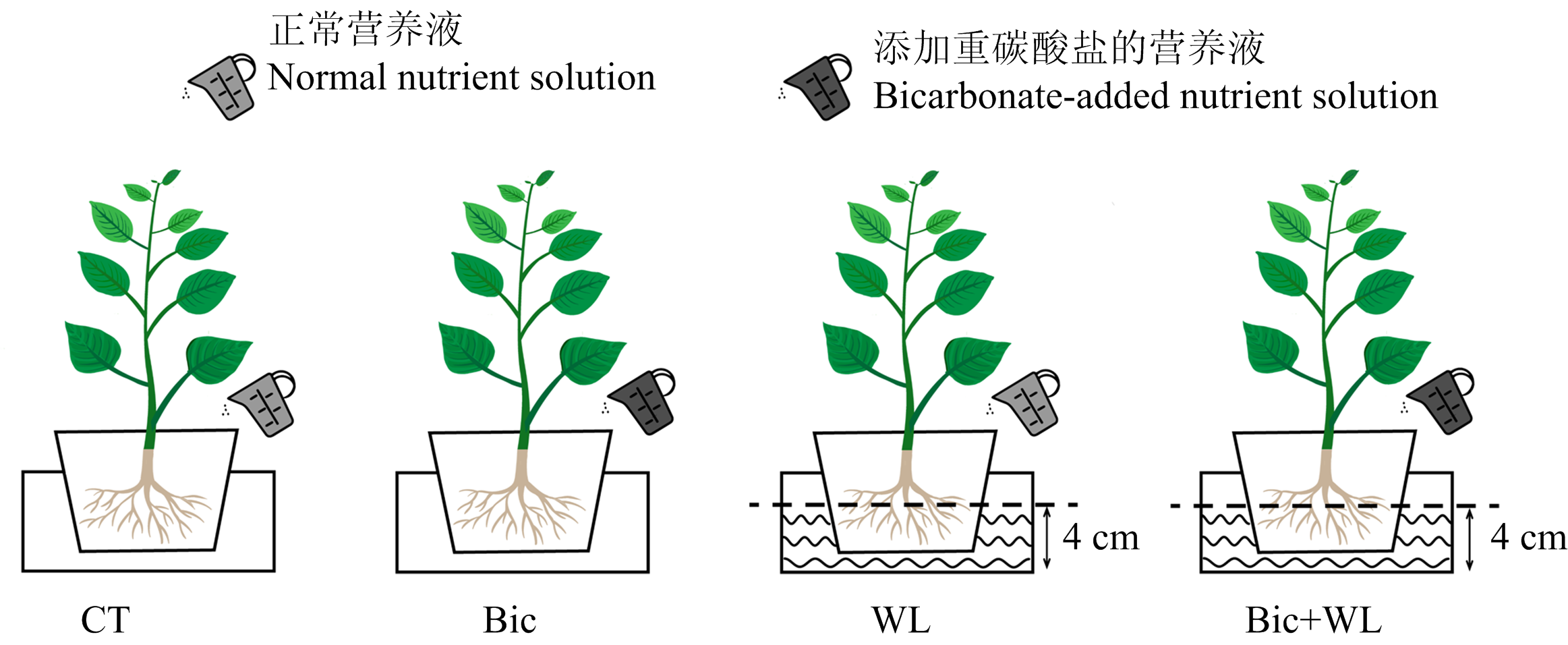
Fig. 1

A schematic diagram of the treatments of Fe deficiency and waterlogging stresses CT: Control; Bic: Fe deficiency stress; WL: Waterlogging stress; Bic+WL: Combined stress of Fe deficiency and waterlogging. The same as below"

Fig. 2

Cross-sectional structure of roots and stems in Actinidia valvata kiwifruit species"

Fig. 3

Plant phenotypes of 17 kiwifruit germplasms under combined stress of Fe deficiency and waterlogging after 35 days Each germplasm name is marked in the lower right corner of the photos, the left one is the control, and the right one is the combined stress of Fe deficiency and waterlogging. bar=5 cm"

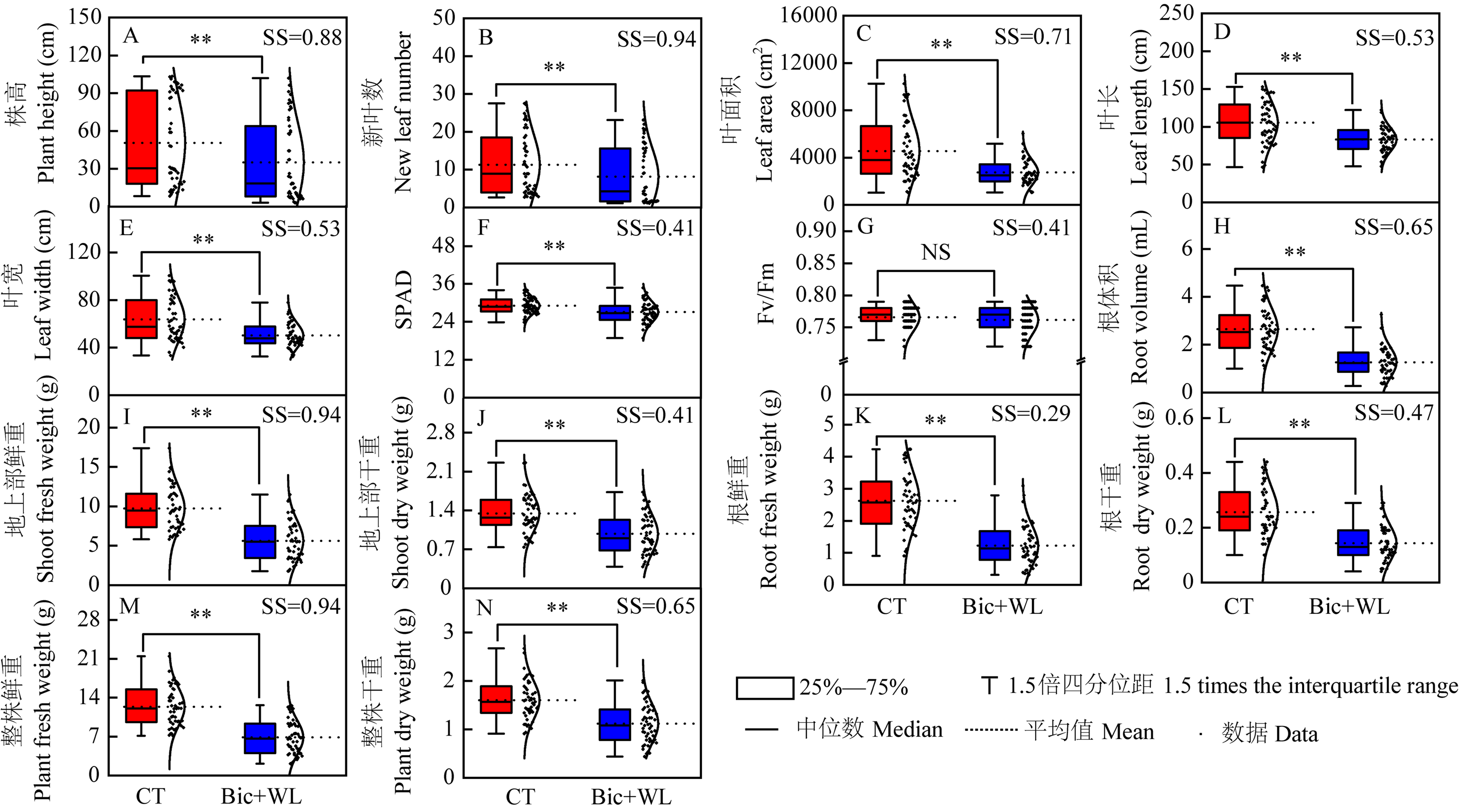
Fig. 4

Effects of combined stress of Fe deficiency and waterlogging on kiwifruit plant growth-related parameters SS: Stress sensibility; **: Significant at P<0.01; NS: Not significant. The same as below"

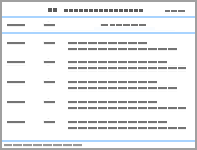
Table 1

Principle component (PC) analysis and weight of the growth-related parameters in seventeen kiwifruit genotypes"

参数Parameter PC1 PC2 PC3 每个参数权重Weight per parameter (%)
整株干重Plant dry weight 0.903 -0.326 0.170 8.755
地上部干重Shoot dry weight 0.901 -0.226 0.224 8.561
整株鲜重Plant fresh weight 0.971 -0.030 -0.008 8.406
地上部鲜重Shoot fresh weight 0.940 0.125 0.022 8.392
根鲜重Root fresh weight 0.805 -0.515 -0.058 8.238
叶面积Leaf area 0.757 0.568 0.200 8.136
叶宽Leaf width 0.764 0.553 0.115 8.052
根体积Root volume 0.762 -0.556 -0.091 8.012
新叶数New leaf number 0.795 0.237 -0.318 7.798
根干重Root dry weight 0.727 -0.626 0.011 7.783
叶长Leaf length 0.691 0.584 0.279 7.710
株高Plant height 0.710 0.342 -0.430 7.468
SPAD -0.162 -0.108 0.819 2.687
特征值Eigenvalue 8.009 2.296 1.179
贡献率Contribution (%) 61.609 17.662 9.069

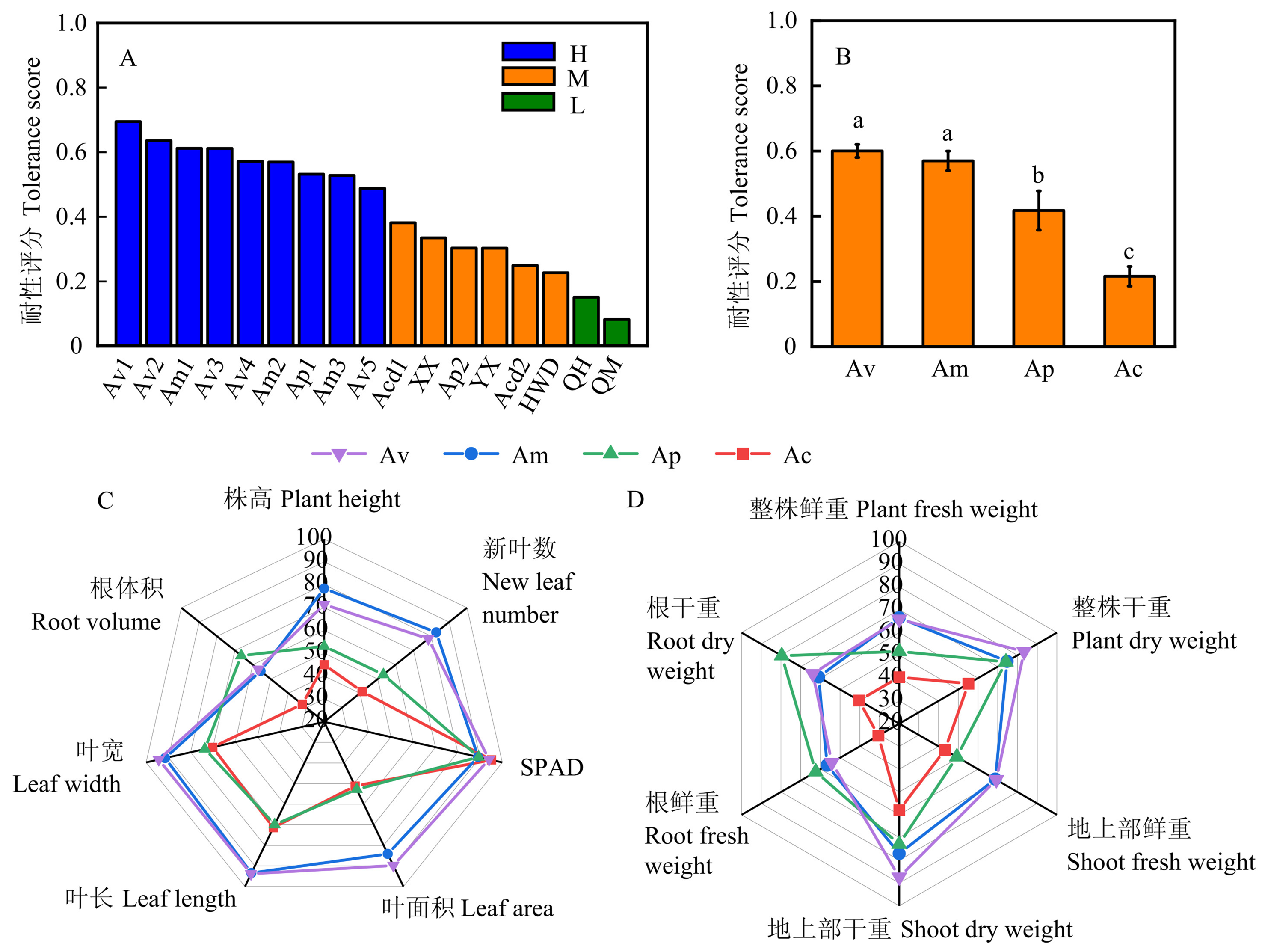
Fig. 5

Tolerance evaluation and growth-responsive characterization of different kiwifruit genotypes on combined stress of Fe deficiency and waterlogging A: Genotypic tolerance scores; B: Species tolerance scores; C: Tolerance variations in growth phenotypic traits across species; D: Tolerance variations in biomass across species. H: High-tolerant type; M: Medium-tolerant type; L: Low-tolerant type. Different letters indicate significant differences at P<0.05. The same as below"

Fig. 6

Effects of Fe deficiency, waterlogging and their combined stress on kiwifruit plant phenotype(A) and growth-related parameters (B-I) bar=5 cm"

Fig. 7

Effects of Fe deficiency, waterlogging and their combined stress on root H+ extrusion (A-B) and FCR activity (C), and Fe content (D-G) in various kiwifruit plant parts Yellow indicates low pH, and purple indicates high pH; bar=5 cm. D: New leaves; E: Old leaves; F: Stems; G: Roots"

Fig. 8

Effects of Fe deficiency, waterlogging and their combined stress on cross-sectional structure of roots and stems and root porosity A: Root cross-section; B: Stem cross-section; C: Root diameter; D: Stem diameter; E: Root porosity; F: Proportions of different root tissues; G: Proportions of different stem tissues; H: Ratio of cortex and endodermis to stele in roots. bar=1 mm"

Fig. 9

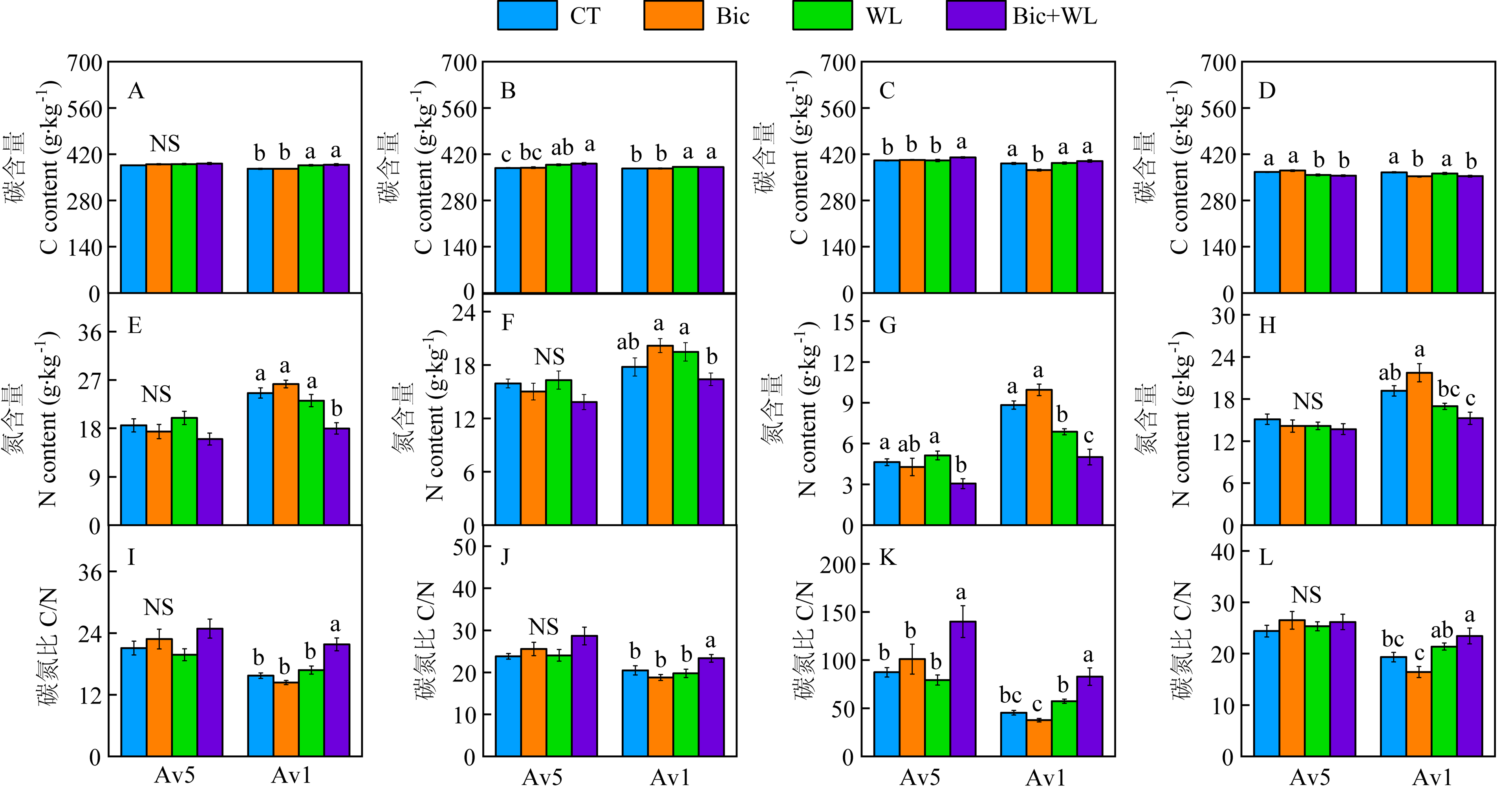
Effects of Fe deficiency, waterlogging and their combined stress on carbon (C) and nitrogen (N) contents and C/N of various kiwifruit plant parts A, E and I: New leaves; B, F and J: Old leaves; C, G and K: Stems; D, H and L: Roots"

[1]
李岚欣, 孙洁, 辛奇, 赵泽众, 刘帮迪, 姜微波. 乡村振兴背景下我国猕猴桃产业技术高质量发展分析[J]. 保鲜与加工, 2022, 22(7): 82-90.
Li L X, Sun J, Xin Q, Zhao Z Z, Liu B D, Jiang W B. Analysis and review of high-quality development kiwifruit industry technology under rural revitalization in China[J]. Storage and Process, 2022, 22(7): 82-90.(in Chinese)
[2]
陕西省统计局. 12-22各市(区)茶、桑、果面积及产量(2024年)[EB/OL]. [2026-02-28]. http://tjj.shaanxi.gov.cn/upload/2025/zk/indexch.htm.
Statistics Bureau of Shaanxi Province. 12-22 area and output of tea plantation cocoon, orchards by city(district)(2024)[EB/OL]. [2026-02-28]. http://tjj.shaanxi.gov.cn/upload/2025/zk/indexch.htm.(in Chinese)
[3]
United Nations Food and Agriculture Organization[EB/OL]. [2026-02-28]. http://www.fao.org/faostat/en/#data/QC.
[4]
Wang N N, He H H, Lacroix C, Morris C, Liu Z D, Ma F W. Soil fertility, leaf nutrients and their relationship in kiwifruit orchards of China’s central Shaanxi Province[J]. Soil Science and Plant Nutrition, 2019, 65(4): 369-376.
[5]
张西玲, 郝苏娟, 王西锐. 气候资源变化对陕西省猕猴桃生产的影响分析[J]. 中国果树, 2019(5): 70-73.
Zhang X L, Hao S J, Wang X R. Effect of climate resources change on kiwifruit production in Shaanxi Province[J]. China Fruits, 2019(5): 70-73.(in Chinese)
[6]
刘旭峰, 樊秀芳, 张林森, 姚春潮, 龙周侠, 王西玲. 陕西关中猕猴桃产区缺铁性黄化病发生原因研究[J]. 西北农业学报, 2002, 11(2): 57-59.
Liu X F, Fan X F, Zhang L S, Yao C C, Long Z X, Wang X L. Inducing factors of iron deficiency chlorosis of kiwis in Guanzhong area of Shaanxi[J]. Acta Agriculturae Boreali-Occidentalis Sinica, 2002, 11(2): 57-59.(in Chinese)
[7]
王南南, 董晓珂, 牛友怡, 陈元磊, 洪蔚金, 马百全, 袁雨婷, 冯亚青, 刘占德. 基于缺铁诊断指标筛选的猕猴桃叶片黄化诱因分析[J]. 植物营养与肥料学报, 2024, 30(3): 550-562.
Wang N N, Dong X K, Niu Y Y, Chen Y L, Hong W J, Ma B Q, Yuan Y T, Feng Y Q, Liu Z D. Analysis of the inducing factors of kiwifruit leaf chlorosis based on selection of diagnostic indicators for iron deficiency[J]. Journal of Plant Nutrition and Fertilizers, 2024, 30(3): 550-562.(in Chinese)
[8]
Wang N N, Yao C C, Li M J, Li C Y, Liu Z D, Ma F W. Anatomical and physiological responses of two kiwifruit cultivars to bicarbonate[J]. Scientia Horticulturae, 2019, 243: 528-536.
[9]
Chen Y L, Bao W W, Hong W J, Dong X K, Gong M Y, Cheng Q Q, Mao K, Yao C C, Liu Z D, Wang N N. Evaluation of eleven kiwifruit genotypes for bicarbonate tolerance and characterization of two tolerance-contrasting genotypes[J]. Plant Physiology and Biochemistry, 2023, 194: 202-213.
[10]
Wang N N, Jiao X Y, Guo T L, Li C Y, Liu Z D, Ma F W. Time course of physiological responses in kiwifruit induced by bicarbonate[J]. Trees, 2019, 33(6): 1711-1722.
[11]
Wang N N, Dong X K, Chen Y L, Ma B Q, Yao C C, Ma F W, Liu Z D. Direct and bicarbonate-induced iron deficiency differently affect iron translocation in kiwifruit roots[J]. Plants, 2020, 9(11): 1578.
[12]
Li Z, Zhong Y P, Bai D F, Lin M M, Qi X J, Fang J B. Comparative analysis of physiological traits of three Actinidia valvata Dunn genotypes during waterlogging and post-waterlogging recovery[J]. Horticulture, Environment, and Biotechnology, 2020, 61(5): 825-836.
[13]
Bai D F, Li Z, Gu S C, Li Q H, Sun L M, Qi X J, Fang J B, Zhong Y P, Hu C G. Effects of kiwifruit rootstocks with opposite tolerance on physiological responses of grafting combinations under waterlogging stress[J]. Plants, 2022, 11(16): 2098.
[14]
Xu Z Y, Ye L Z, Shen Q F, Zhang G P. Advances in the study of waterlogging tolerance in plants[J]. Journal of Integrative Agriculture, 2024, 23(9): 2877-2897.
[15]
白丹凤, 李志, 齐秀娟, 陈锦永, 顾红, 黄武权, 任建杰, 钟云鹏, 方金豹. 4种基因型猕猴桃对淹水胁迫的生理响应及耐涝性评价[J]. 果树学报, 2019, 36(2): 163-173.
Bai D F, Li Z, Qi X J, Chen J Y, Gu H, Huang W Q, Ren J J, Zhong Y P, Fang J B. Physiological responses and tolerance evaluation of four species of Actinidia to waterlogging stress[J]. Journal of Fruit Science, 2019, 36(2): 163-173.(in Chinese)
[16]
Pan J W, Sharif R, Xu X W, Chen X H. Mechanisms of waterlogging tolerance in plants: Research progress and prospects[J]. Frontiers in Plant Science, 2020, 11: 627331.
[17]
Baldi E, Pastore C, Chiarelli G, Quartieri M, Spinelli F, Toselli M. Molecular responses to drought and waterlogging stresses of kiwifruit (Actinidia chinensis var. deliciosa) potted vines[J]. Horticulturae, 2024, 10(8): 834.
[18]
Suzuki N, Rivero R M, Shulaev V, Blumwald E, Mittler R. Abiotic and biotic stress combinations[J]. The New Phytologist, 2014, 203(1): 32-43.
[19]
Tahjib-Ul-Arif M, Hasan M T, Rahman M A, Nuruzzaman M, Rahman A M S, Hasanuzzaman M, Haque M R, Hossain M A, Abdel Hamed Abdel Latef A, Murata Y, Brestic M. Plant response to combined salinity and waterlogging stress: Current research progress and future prospects[J]. Plant Stress, 2023, 7: 100137.
[20]
武芮, 洪蔚金, 刘颖濯, 姚春潮, 刘占德, 王南南. 30份猕猴桃种质对碱胁迫生理响应的初步评价[J]. 中国果树, 2024(12): 60-68.
Wu R, Hong Y J, Liu Y Z, Yao C C, Liu Z D, Wang N N. Preliminary study of physiological response evaluation of alkaline stress in 30 kiwifruit germplasms[J]. China Fruits, 2024(12): 60-68.(in Chinese)
[21]
樊秀彩, 刘崇怀, 孙海生, 李民. 快速鉴定葡萄砧木种质耐碱性的方法[J]. 中外葡萄与葡萄酒, 2009(11): 48-49.
Fan X C, Liu C H, Sun H S, Li M. Method for quickly identifying alkali tolerance of grape rootstock germplasm[J]. Sino-Overseas Grapevine & Wine, 2009(11): 48-49.(in Chinese)
[22]
Schmidt W, Michalke W, Schikora A. Proton pumping by tomato roots. Effect of Fe deficiency and hormones on the activity and distribution of plasma membrane H+-ATPase in rhizodermal cells[J]. Plant, Cell & Environment, 2003, 26(3): 361-370.
[23]
Wachsman G, Sparks E E, Benfey P N. Genes and networks regulating root anatomy and architecture[J]. The New Phytologist, 2015, 208(1): 26-38.
[24]
Schweingruber F H, Börner A. Stem anatomical structures of major taxonomic units[M]//The Plant Stem: A Microscopic Aspect. Cham: Springer, 2018: 81-120.
[25]
Yang X X, Li Y, Ren B B, Ding L, Gao C M, Shen Q R, Guo S W. Drought-induced root aerenchyma formation restricts water uptake in rice seedlings supplied with nitrate[J]. Plant & Cell Physiology, 2012, 53(3): 495-504.
[26]
Boxma R. Bicarbonate as the most important soil factor in lime-induced chlorosis in the Netherlands[J]. Plant and Soil, 1972, 37(2): 233-243.
[27]
Zhao Y Y, Chen Y L, Liu S Z, Li F, Sun M D, Liang Z X, Sun Z, Yu F T, Rengel Z, Li H G. Bicarbonate rather than high pH in growth medium induced Fe-deficiency chlorosis in dwarfing rootstock quince A (Cydonia oblonga Mill.) but did not impair Fe nutrition of vigorous rootstock Pyrus betulifolia[J]. Frontiers in Plant Science, 2023, 14: 1237327.
[28]
Tagliavini M, Rombolà A D. Iron deficiency and chlorosis in orchard and vineyard ecosystems[J]. European Journal of Agronomy, 2001, 15(2): 71-92.
[29]
Alhendawi R A, Römheld V, Kirkby E A, Marschner H. Influence of increasing bicarbonate concentrations on plant growth, organic acid accumulation in roots and iron uptake by barley, sorghum, and maize[J]. Journal of Plant Nutrition, 1997, 20(12): 1731-1753.
[30]
Rajan P, Natraj P, Kim M, Lee M, Jang Y J, Lee Y J, Kim S C. Climate change impacts on and response strategies for kiwifruit production: A comprehensive review[J]. Plants, 2024, 13(17): 2354.
[31]
Renziehausen T, Frings S, Schmidt-Schippers R. ‘Against all floods’: Plant adaptation to flooding stress and combined abiotic stresses[J]. The Plant Journal, 2024, 117(6): 1836-1855.
[32]
陈锦永, 方金豹, 齐秀娟, 顾红, 林苗苗, 张威远, 魏翠果. 猕猴桃砧木研究进展[J]. 果树学报, 2015, 32(5): 959-968.
Chen J Y, Fang J B, Qi X J, Gu H, Lin M M, Zhang W Y, Wei C G. Research progress on rootstock of kiwifruit[J]. Journal of Fruit Science, 2015, 32(5): 959-968.(in Chinese)
[33]
Tahir J, Hoyte S, Bassett H, Brendolise C, Chatterjee A, Templeton K, Deng C, Crowhurst R, Montefiori M, Morgan E, Wotton A, Funnell K, Wiedow C, Knaebel M, Hedderley D, Vanneste J, McCallum J, Hoeata K, Nath A, Chagné D, et al. Multiple quantitative trait loci contribute to resistance to bacterial canker incited by Pseudomonas syringae pv. Actinidiae in kiwifruit (Actinidia chinensis)[J]. Horticulture Research, 2019, 6: 101.
[34]
Bao W W, Chen X, Li R N, Li M, Xie C J, Dou M R, Zhang K Z, Wang J, Gao Z X, Liu Z D, Xu Y. Comprehensive assessment of drought resistance and recovery in kiwifruit genotypes using multivariate analysis[J]. The Plant Journal, 2024, 119(1): 100-114.
[35]
Xing M Y, Wang W Q, Zhang C, Xi D J, Wang M C, Yin X R, Liu H, Liu X F. Identification and functional analyses of the transcription factors AcWRKY117 and AcWRKY29 involved in waterlogging response in kiwifruit plant[J]. Scientia Horticulturae, 2024, 324: 112568.
[36]
胡慧, 向小奇, 刘伟涛, 梁德娟, 段晓云. 对萼猕猴桃耐涝机理的初步研究[J]. 湖南农业科学, 2019(7): 75-77.
Hu H, Xiang X Q, Liu W T, Liang D J, Duan X Y. Preliminary study on waterlogging tolerance mechanism of Actinidia valvata dunn[J]. Hunan Agricultural Sciences, 2019(7): 75-77.(in Chinese)
[37]
Davenport J R, Stevens R G. High soil moisture and low soil temperature are associated with chlorosis occurrence in concord grape[J]. HortScience, 2006, 41(2): 418-422.
[38]
Zuo Y, Ren L, Zhang F, Jiang R F. Bicarbonate concentration as affected by soil water content controls iron nutrition of peanut plants in a calcareous soil[J]. Plant Physiology and Biochemistry, 2007, 45(5): 357-364.
[39]
Zhang J H, He N P, Liu C C, Xu L, Chen Z, Li Y, Wang R M, Yu G R, Sun W, Xiao C W, Chen H Y H, Reich P B. Variation and evolution of C: N ratio among different organs enable plants to adapt to N-limited environments[J]. Global Change Biology, 2020, 26(4): 2534-2543.
[40]
Donnini S, De Nisi P, Gabotti D, Tato L, Zocchi G. Adaptive strategies of Parietaria diffusa (M.& K.) to calcareous habitat with limited iron availability[J]. Plant, Cell & Environment, 2012, 35(6): 1171-1184.
[1] GE YuBin, HE ChunGui, WANG Ning, ZHANG GuoQin, ZHANG ZhengYing, LÜ Xin. Genetic Diversity Analysis and Innovative Utilization of Introduced Tropical Sorghum Germplasm Resources Based on Phenotypic Traits [J]. Scientia Agricultura Sinica, 2026, 59(8): 1622-1638.
[2] CHEN MinDong, QIU BoYin, HUANG Hao, LI YongPing, WEN QingFang. Evaluation of Curd Texture Quality in Loose-Curd Cauliflower Germplasm [J]. Scientia Agricultura Sinica, 2026, 59(6): 1302-1316.
[3] HE ZhiLin, SUN CuiXia, YUE HongLi, TAN YueXia, ZHANG YaoHai, WANG FuSheng, LIU SiTao, JIANG Dong. Genetic Diversity Analysis and GWAS of Alloocimene Based on Resequencing of Citron, Lemon Germplasm Resources [J]. Scientia Agricultura Sinica, 2026, 59(2): 386-401.
[4] MA YaJun, YAN YaJun, YANG WeiDi, YANG TianHui, WANG Chuan, GAO Ting. Research Progress on Germplasm Innovation and Comprehensive Utilization of Forage Triticale [J]. Scientia Agricultura Sinica, 2026, 59(14): 2993-3005.
[5] ZHANG YueQing, ZHANG YuTing, XUE ChenFei, HAN QinYu, HE YiRong, XU ZiJuan, FAN XiuMei, WANG JunE, LUO Dan, FENG Xue, SUN Sheng. Genetic Diversity Analysis and Comprehensive Evaluation of Phenotypic Traits in 364 Cherry Tomato Germplasm Resources [J]. Scientia Agricultura Sinica, 2026, 59(11): 2468-2483.
[6] XIE YongXiang, PAN YiMin, HUANG Rui, QIN HuiBin, HOU Sen, HE Qiang, LING Liang, MU ZhiXin, WANG HaiGang. Identification and Comprehensive Evaluation of the Barren-Tolerant Germplasm Resources of Foxtail Millet in Shanxi [J]. Scientia Agricultura Sinica, 2026, 59(11): 2325-2339.
[7] LÜ Tao, SUN GuoQing, GUO DongCai, CHEN QuanJia, CAI YongSheng, FAN BiaoXing, QU YanYing, ZHENG Kai. Development and Effectiveness Evaluation of InDel Molecular Markers Closely Linked to Fiber Strength QTL in Gossypium barbadense [J]. Scientia Agricultura Sinica, 2025, 58(9): 1684-1701.
[8] CHEN CaiJin, MA Lin, JIANG QingXue, LIU JinHui, MIAO Tong, ZHANG ZhiPeng, MENG Xiang, MA XiaoRan, ZHOU XinYue, ZHANG Jian, LIU WenHui, WANG XueMin. Genetic Diversity Analysis of Phenotypic Traits of 244 Forage Oat Germplasm Resources [J]. Scientia Agricultura Sinica, 2025, 58(23): 4825-4836.
[9] TIAN XianXian, FENG ShaoFang, WANG Qing, PAN ChenDong, LI Bo, FANG KaiXing, WU HuaLing, QIN DanDan. Biochemical Characteristics Analysis and Suitability Evaluation of Liannan Daye Tea Germplasm Resources [J]. Scientia Agricultura Sinica, 2025, 58(22): 4797-4812.
[10] CHEN TianXiao, CAO Rong, SONG QianNan, HU LiangLiang, WANG SuHua, WANG LiXia, CHENG XuZhen, CHEN HongLin. Comprehensive Evaluation of Salt Tolerance at the Seedling Stage and Screening of Tolerant Germplasm in Adzuki Bean (Vigna angularis) [J]. Scientia Agricultura Sinica, 2025, 58(21): 4317-4332.
[11] CHEN YongXian, CHEN RuiJiang, DU YiZhi, ZHU JunJie, CHEN WanXia, ZHAO ZiHan, WANG JiChun, DU Kang, ZHANG Kai. Screening and Identification of Drought-Tolerant Sweet Potato Germplasm Resources [J]. Scientia Agricultura Sinica, 2025, 58(2): 214-237.
[12] BAO MingFang, QIN Yan, CHEN CaiJin, ZHANG ShangPei, ZHANG GuoHui, SHA XiaoDi. Evaluation of 111 Alfalfa Germplasm Resources for Seedling Phenotypic Drought Tolerance Characterization [J]. Scientia Agricultura Sinica, 2025, 58(19): 3825-3836.
[13] MENG ZiNuo, FU ChangQing, ZHANG LingYu, GAO ShunJuan, CHANG JinHua, CUI JiangHui. Assessment of Salt Tolerance and Screening of Salt Tolerant Germplasm in Sorghum Seedling Stage [J]. Scientia Agricultura Sinica, 2025, 58(16): 3317-3326.
[14] WU HuiQin, WANG Jing, YANG Yi, LIU XueQing, ZHANG KaiXuan, WANG LuYao, LU JiaWei, ZHAI Yuan, CHENG Yan. Analysis and Evaluation of Fruit Texture Quality of 96 Pepper Germplasm Resources [J]. Scientia Agricultura Sinica, 2025, 58(14): 2854-2868.
[15] CHEN CaiJin, MA Lin, BAO MingFang, ZHANG GuoHui, JIANG QingXue, YANG TianHui, WANG Chuan, WANG XiaoChun, GAO Ting, WANG XueMin, LIU WenHui. Identification and Evaluation of Drought Resistance for 111 Germplasm Resources of Alfalfa During Germination Stage [J]. Scientia Agricultura Sinica, 2025, 58(10): 1896-1907.
Viewed
Full text


Abstract

Cited

  Shared   
  Discussed   
No Suggested Reading articles found!