Scientia Agricultura Sinica ›› 2026, Vol. 59 ›› Issue (21): 4831-4840.doi: 10.3864/j.issn.0578-1752.2026.21.009

• PLANT PROTECTION • Previous Articles     Next Articles

Odorant-Binding Protein OBP4 Mediates Repellent Behavior of Bemisia tabaci to Host Plant Volatiles

JI Yuan(), SUN YuXiang, GONG Cheng, LIU HangWei(), LUO Chen   

  1. College of Plant Protection, Yangzhou University, Yangzhou 225000, Jiangsu
  • Received:2026-07-28 Accepted:2026-08-28 Online:2026-11-01 Published:2026-11-06
  • Contact: LIU HangWei

Abstract:

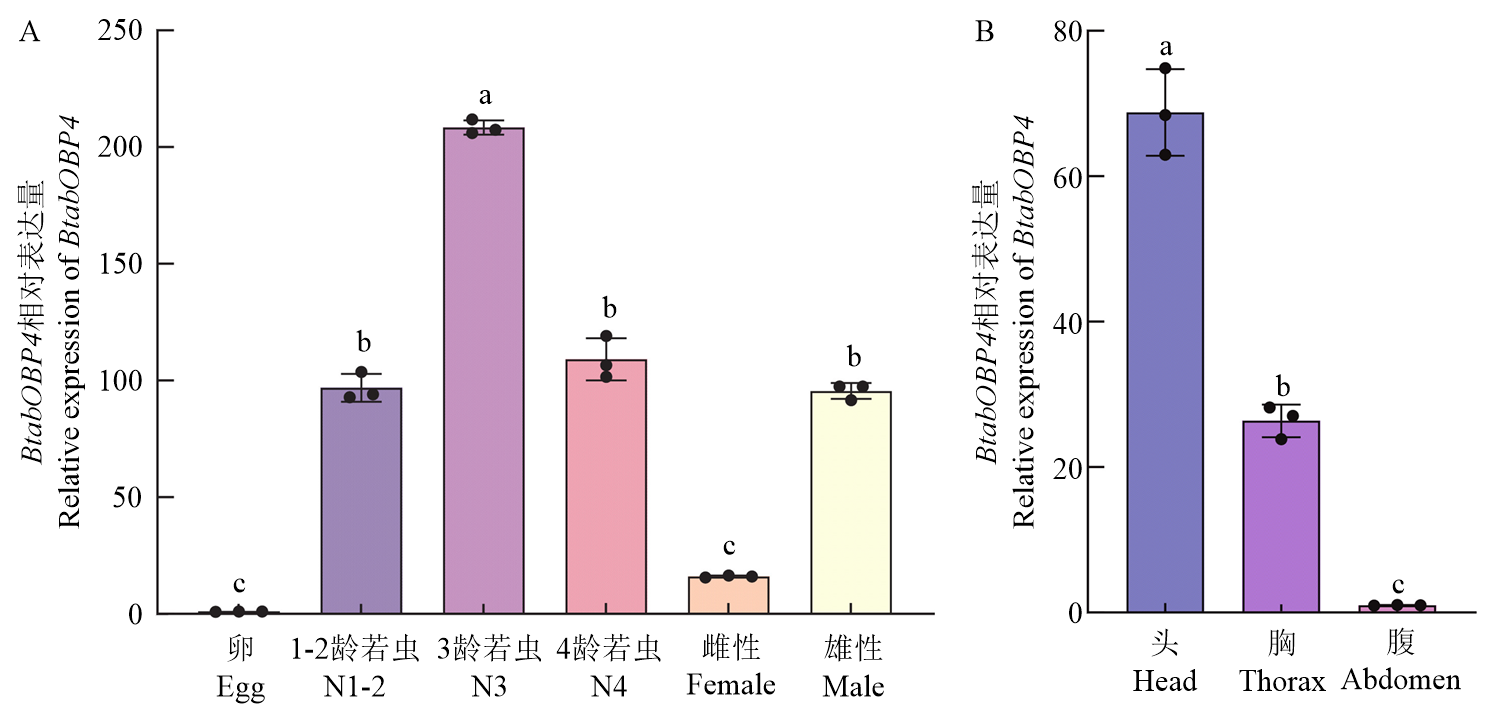
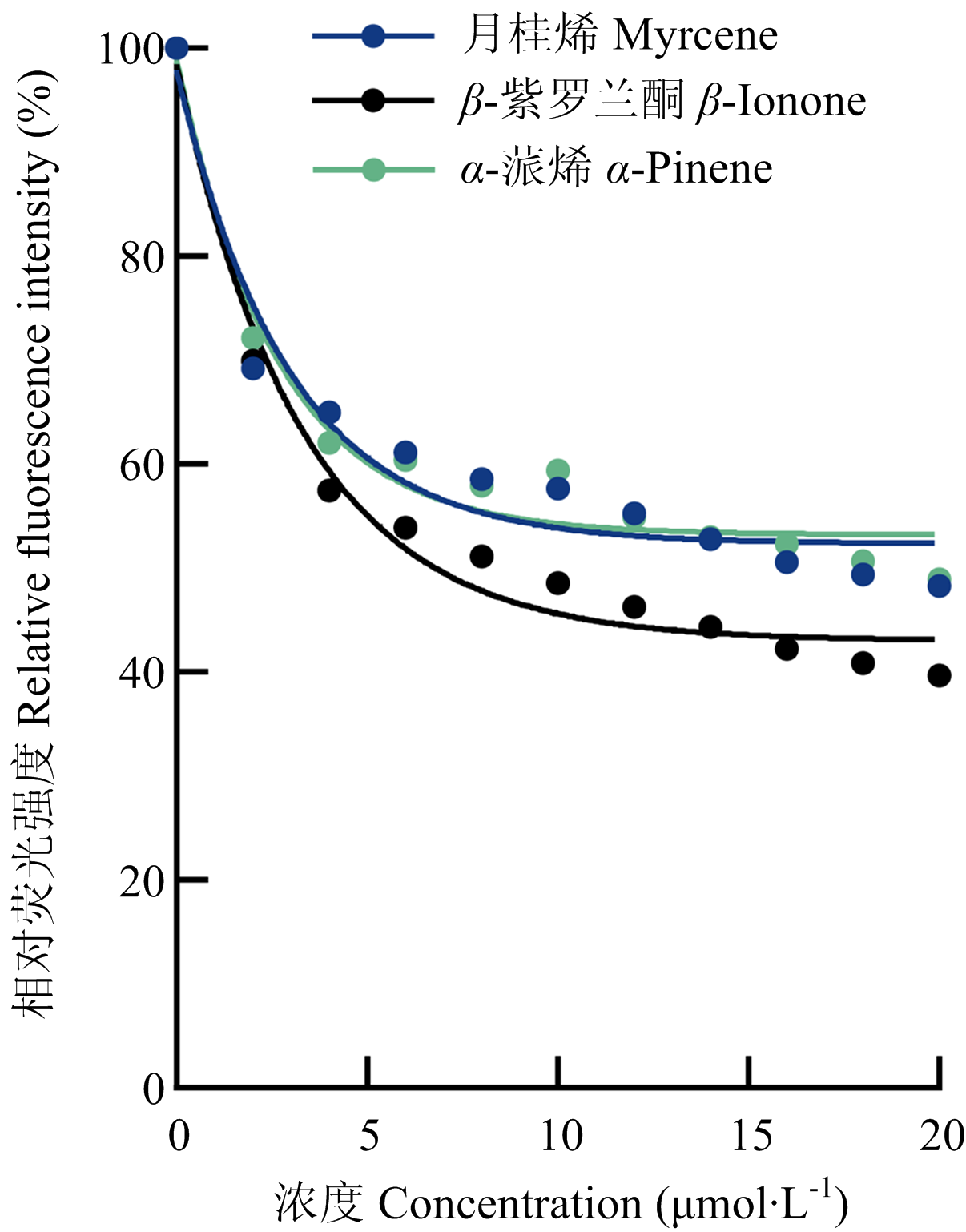
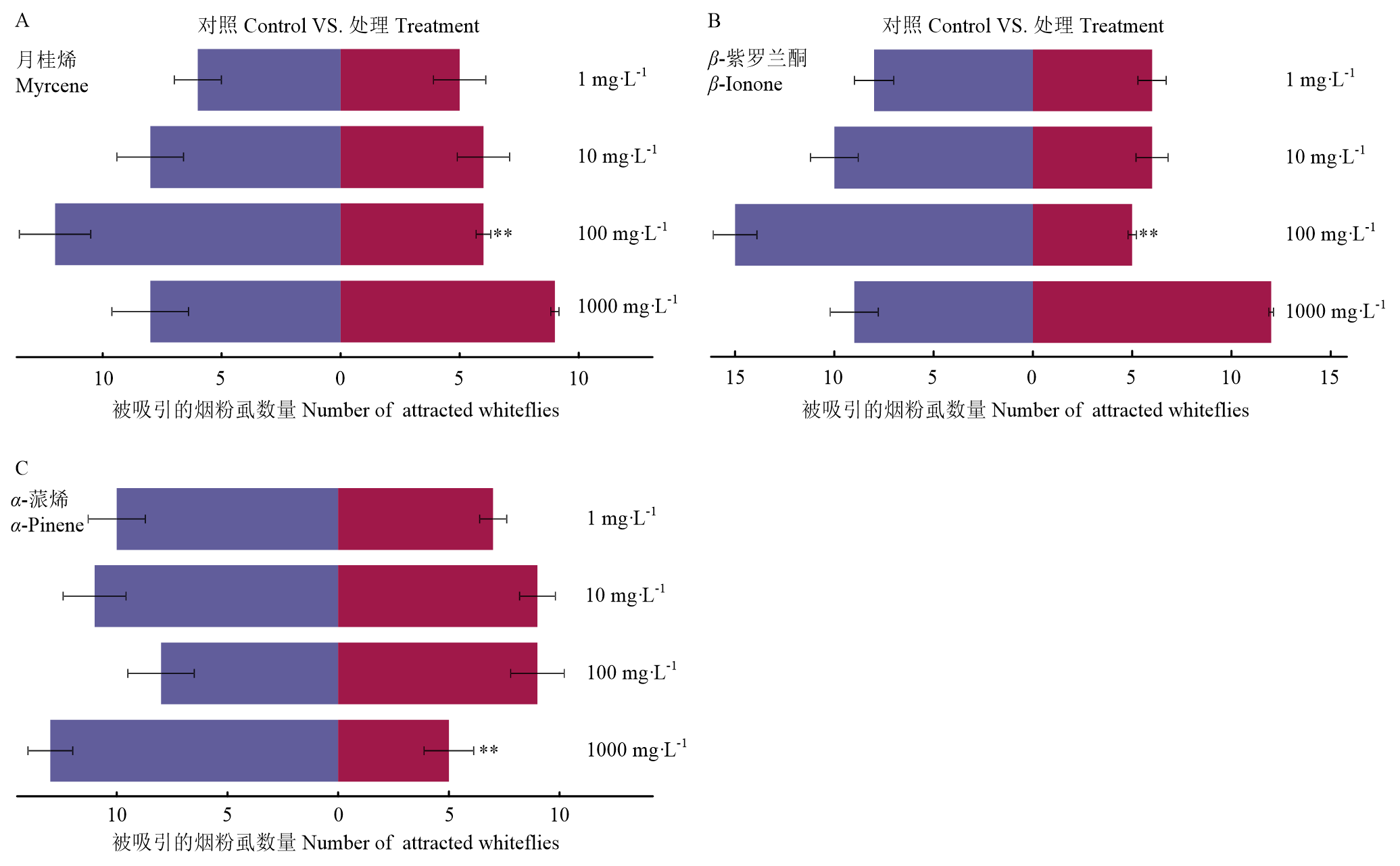
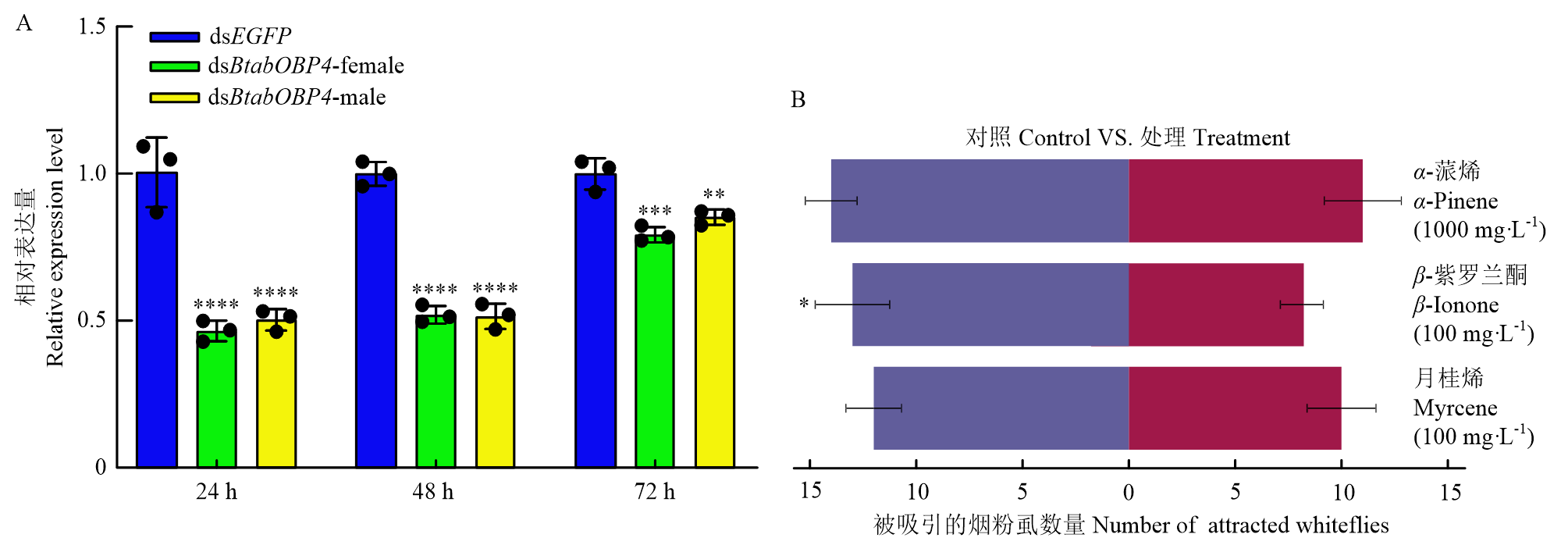
【Background】The whitefly, Bemisia tabaci, is a highly polyphagous agricultural pest of global significance, exhibiting a distinct preference for specific host plants. Odorant-binding proteins (OBPs), which specifically bind to environmental odor molecules, play a pivotal role in insect behaviors such as host location, oviposition site selection, and predator avoidance. 【Objective】The purpose of this study is to deeply elucidate the molecular mechanism of OBP in the chemosensory and behavioral regulation of B. tabaci, reveal the physiological basis of its host adaptability, and to provide a theoretical basis for the development of new green prevention and control technologies based on olfactory interference. 【Method】Quantitative real-time PCR (qRT-PCR) was used to detect the expression profile of BtabOBP4 in different developmental stages (egg, 1st-4th instar nymphs, adult) and different adult tissues (head, thorax, abdomen) of B. tabaci. The full-length BtabOBP4 was cloned, and the recombinant BtabOBP4 protein was induced for heterologous expression and purified. Fluorescence competitive binding assays were conducted to screen the binding capacity of BtabOBP4 to plant volatiles and secondary metabolites. Y-tube olfactometer was used to determine the behavioral tropism of B. tabaci to candidate ligands. Feeding-mediated RNA interference (RNAi) technology was employed to silence the BtabOBP4 to verify its regulatory effect on chemosensory behavior in B. tabaci. 【Result】BtabOBP4 showed the highest expression level at the 3rd instar nymph stage of B. tabaci, and exhibited sexual dimorphism in the adult stage (male was approximately 4 times that of female), and was specifically enriched in the head. BtabOBP4 could specifically bind to myrcene, β-ionone, and α-pinene (the Ki values were 25.68, 43.95, and 33.65 μmol·L-1, respectively). Notably, 100 mg·L-1 myrcene, 100 mg·L-1 β-ionone, and 1 000 mg·L-1 α-pinene repelled B. tabaci by 33%, 43%, and 44%, respectively. After 24 h of dsRNA feeding, the silencing efficiency of BtabOBP4 reached 55% in females and 51% in males. The repellent responses of B. tabaci to myrcene and α-pinene were completely abolished, while the repellency toward β-ionone was significantly attenuated. 【Conclusion】BtabOBP4 is highly expressed in the 3rd instar nymphs and male adults of B. tabaci, with specific enrichment in the head tissue, suggesting its pivotal role in chemical communication. The BtabOBP4 protein exhibits specific binding affinity to myrcene, β-ionone, and α-pinene. Notably, silencing of BtabOBP4 via RNA interference significantly abolished or attenuated the repellent behavior of B. tabaci toward these compounds. These findings indicate that BtabOBP4 functions as a key olfactory receptor mediating host plant recognition and selection in B. tabaci, regulating repellent responses by perceiving specific plant volatiles.

Key words: Bemisia tabaci, odorant-binding protein (OBP), plant volatile, behavioral response, RNA interference (RNAi)

Table 1

Primer sequences"

引物Primer 引物序列Primer sequence (5′-3′) 引物用途Usage of primers
BtabOBP4-ORF-F gctgatatcggatccgaattcATGGCGCAAGACGCGAAG ORF全长扩增
ORF full-length amplification
BtabOBP4-ORF-R ctcgagtgcggccgcaagcttTCAAGCCTTGATGTAAAAGTTGTGC
BtabOBP4-qF TTGGTACATCCGAGCTTCCG 荧光定量PCR
qRT-PCR
BtabOBP4-qR CATCAGCCTCTTAGCCCCG
EF1α-qF TAGCCTTGTGCCAATTTCCG
EF1α-qR CCTTCAGCATTACCGTCC
BtOBP4-dsF TAATACGACTCACTATAGGGGACGCGAAGCAAAAAGTAGC RNAi
BtOBP4-dsR TAATACGACTCACTATAGGGGGGCCAAGGAACACTTCATA
dsEGFP-F TAATACGACTCACTATAGGGAGACAGTGCTTCAGCCGCTAC
dsEGFP-R TAATACGACTCACTATAGGGAGAGTTCACCTTGATGCCGTTC

Table 2

The compounds used in ligand binding assays"

化合物名称Compound name CAS号CAS number 化合物名称Compound name CAS号CAS number
植物挥发物Plant volatile α-石竹烯α-Caryophyllene 6753-98-6
1-辛醇1-Octanol 111-87-5 β-石竹烯β-Caryophyllene 87-44-5
2-庚酮2-Heptanone 110-43-0 香芹酚Carvacrol 499-75-2
α-蒎烯α-Pinene 80-56-8 2-甲基萘酚2-Methylnaphthol 135-19-3
α-萜品醇α-Terpineol 98-55-5 植物次生代谢物Plant secondary metabolite
β-紫罗兰酮β-Ionone 14901-07-6 儿茶素Catechin 154-23-4
莰烯Camphene 79-92-5 棉酚Gossypol 303-45-7
肉桂醇Cinnamyl alcohol 104-54-1 槲皮素Quercetin 117-39-5
丁酸乙酯Ethyl butyrate 105-54-4 奎宁Quinine 130-95-0
吲哚Indole 120-72-9 芦丁水合物Rutin hydrate 207671-50-9
芳樟醇Linalool 78-70-6 D-(-)-水杨苷D-(-)-Salicin 138-52-3
月桂烯Myrcene 123-35-3 单宁酸Tannic acid 1401-55-4
乙酸辛酯Octyl acetate 112-14-1 可可碱Theobromine 83-67-0
α-水芹烯α-Phellandrene 99-83-2 茶碱Theophylline 58-55-9
2-乙烯基-1-醇2-Ethen-1-ol 557-75-5 2-丁基-1-辛醇2-Butyl-1-octanol 3913-2-8
2-甲基萘2-Methylnaphthalene 91-57-6 2-乙基-1-癸醇2-Ethyl-1-decanol 25512-77-4

Fig. 1

The expression level of BtabOBP4 in different developmental stages and different tissues of adults B. tabaci Data are presented as mean±SD. Different lowercase letters on the column indicate significant differences among groups (P<0.05) by one-way ANOVA followed by Tukey’s multiple comparison test"

Fig. 2

Expression and purification of recombinant BtabOBP4 protein"

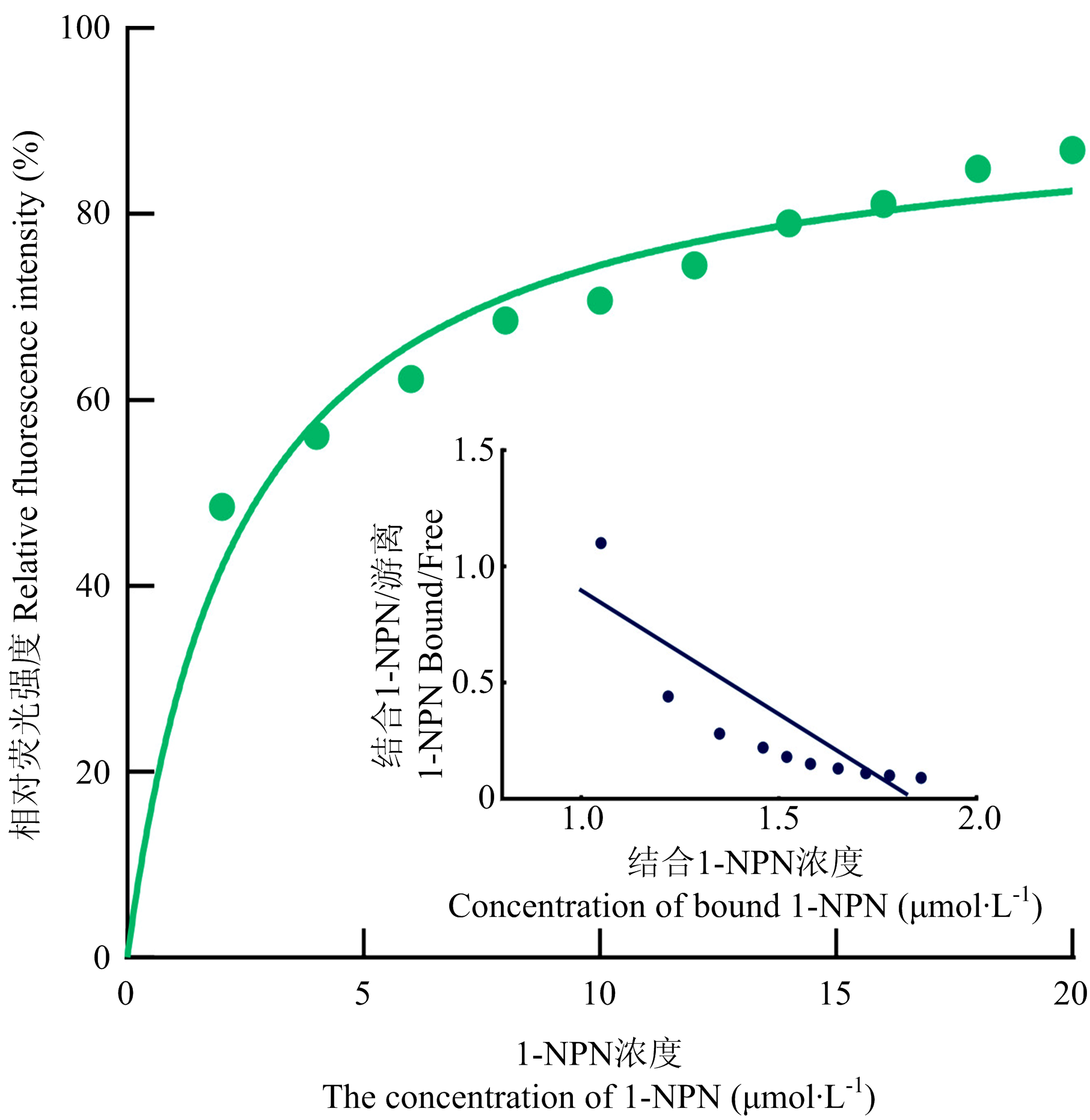
Fig. 3

Binding analysis of BtabOBP4 protein with 1-NPN"

Fig. 4

Competitive binding of candidate ligands with 1-NPN to recombinant BtabOBP4 protein"

Fig. 5

Behavioral responses of B. tabaci to myrcene, β- ionone, and α-pinene"

Fig. 6

In vivo functional validation of BtabOBP4"

[1]
Abendroth J A, Moural T W, Wei H, Zhu F. Roles of insect odorant binding proteins in communication and xenobiotic adaptation[J]. Frontiers in Insect Science, 2023, 3: 1274197.

doi: 10.3389/finsc.2023.1274197
[2]
Yang J, Farhan M, Zhang Y L, Ji J, Jing T X, Zhang S. AgosOBP3 knockdown disrupts host plant preference in cotton-specialized Aphis gossypii[J]. Pest Management Science, 2026, 82(9): 8868-8877.

doi: 10.1002/ps.v82.9
[3]
Pelosi P, Iovinella I, Zhu J, Wang G, Dani F R. Beyond chemoreception: Diverse tasks of soluble olfactory proteins in insects[J]. Biological Reviews, 2018, 93: 184-200.

doi: 10.1111/brv.2018.93.issue-1
[4]
王覃丽, 谭顺阳, 夏根, 刘文庆, 杨玉婷, 田丽霞. 韭菜迟眼蕈蚊气味结合蛋白OBP11的配体结合能力及关键氨基酸分析[J]. 中国农业科学, 2026, 59(18): 4007-4020. DOI: 10.3864/j.issn.0578-1752.2026.18.005.
Wang Q L, Tan S Y, Xia G, Liu W Q, Yang Y T, Tian L X. Ligand binding property and key amino acid analysis of odorant-binding protein OBP11 in Bradysia odoriphaga[J]. Scientia Agricultura Sinica, 2026, 59(18): 4007-4020. DOI: 10.3864/j.issn.0578-1752.2026.18.005. (in Chinese)
[5]
Deng M, Lin L, Lin W, Lin L, Lu K. Structural and transcriptional plasticity of OBP3 confers insecticide adaptation in Spodoptera litura[J]. Journal of Agricultural and Food Chemistry, 2025, 73(31): 19340-19352.

doi: 10.1021/acs.jafc.5c05054
[6]
Lin L, Deng M, Lin L, Lin W, Li Z, Lu K. Functional and structural characterization of OBP7 reveals a sequestration-based chlorpyrifos resistance mechanism in Nilaparvata lugens[J]. Pesticide Biochemistry and Physiology, 2026, 219: 107033.

doi: 10.1016/j.pestbp.2026.107033
[7]
Oliveira M R V, Henneberry T J, Anderson P. History, current status, and collaborative research projects for Bemisia tabaci[J]. Crop Protection, 2001, 20(9): 709-723.

doi: 10.1016/S0261-2194(01)00108-9
[8]
Kavallieratos N G, Wakil W, Eleftheriadou N, Ghazanfar M U, El-Shafie H, Simmons A M, Dimase M, Smith H A, Chandler D. Integrated management system of the whitefly Bemisia tabaci: A review[J]. Entomologia Generalis, 2024, 44(5): 1117-1133.

doi: 10.1127/entomologia/2024/2764
[9]
Zhang X Y, Han W H, Zhang F B, Wang J X, Liu S S, Wang X W. Attraction of Nicotiana benthamiana to Bemisia tabaci is related to a chemical signal in plant volatile, undecane[J]. Pest Management Science, 2025, 81(11): 7359-7369.

doi: 10.1002/ps.v81.11
[10]
Gao L, Wei Y, Li K, Chen J, Wang P, Du J, Peng J, Gao Y, Zhang Z H, Liu Y, Shi X, Zhang D. Perilla frutescens repels and controls Bemisia tabaci MED with its key volatile linalool and caryophyllene[J]. Crop Protection, 2024, 184: 106837.

doi: 10.1016/j.cropro.2024.106837
[11]
Bleeker P M, Diergaarde P J, Ament K, Guerra J, Weidner M, Schütz S, de Both M T, Haring M A, Schuurink R C. The role of specific tomato volatiles in tomato-whitefly interaction[J]. Plant Physiology, 2009, 151: 925-935.

doi: 10.1104/pp.109.142661 pmid: 19692533
[12]
Li S, Li H, Zhou Q, Zhang F, Desneux N, Wang S, Shi L. Essential oils from two aromatic plants repel the tobacco whitefly Bemisia tabaci[J]. Journal of Pest Science, 2022, 95: 971-982.

doi: 10.1007/s10340-021-01412-0
[13]
Wang R, Li F Q, Zhang W, Zhang X M, Qu C, Tetreau G, Sun L J, Luo C, Zhou J J. Identification and expression profile analysis of odorant binding protein and chemosensory protein genes in Bemisia tabaci MED by head transcriptome[J]. PLoS ONE, 2017, 12(2): e0171739.

doi: 10.1371/journal.pone.0171739
[14]
Zhan H, Dewer Y, Zhang J Tian J H, Li D, Qu C, Yang Z, Li F Q, Luo C. Odorant-binding protein 1 plays a crucial role in the olfactory response of Bemisia tabaci to R-curcumene[J]. Journal of Agricultural and Food Chemistry, 2021, 69(43): 12785-12793.

doi: 10.1021/acs.jafc.1c03825
[15]
Shi X B, Yue H, Wei Y, Preisser E L, Wang P, Du J, Xia J X, Li K L, Yang X, Chen J B, Zhang S B, Zhang Z H, Zhou X G, Zhang D Y, Liu Y. Neophytadiene, a plant specialized metabolite, mediates the virus-vector-plant tripartite interactions[J]. Advanced Science, 2025, 12(22): e2416891.
[16]
Li F Q, Li D, Dewer Y, Qu C, Yang Z, Tian J H, Luo C. Discrimination of oviposition deterrent volatile β-ionone by odorant- binding proteins 1 and 4 in the whitefly Bemisia tabaci[J]. Biomolecules, 2019, 9(10): 563.

doi: 10.3390/biom9100563
[17]
姚晶, 郭晓军, 王甦, 王昱超, 罗晨, 张帆, 李绍勤. 利用TaqMan等位基因技术鉴定烟粉虱MEAM1和MED隐种[J]. 昆虫学报, 2013, 56(1): 98-103.
Yao J, Guo X J, Wang S, Wang Y C, Luo C, Zhang F, Li S Q. Discrimination of cryptic species MEAM1 and MED of Bemisia tabaci (Hemiptera: Aleyrodidae) by using TaqMan allele-selective PCR[J]. Acta Entomologica Sinica, 2013, 56(1): 98-103. (in Chinese)
[18]
江峰, 吴春燕, 王亦好, 杨泽众, 龚成, 罗晨. 烟粉虱MED脂肪酸延长酶基因家族鉴定和表达分析[J]. 中国农业科学, 2026, 59(4): 793-806. DOI: 10.3864/j.issn.0578-1752.2026.04.007.
Jiang F, Wu C Y, Wang Y H, Yang Z Z, Gong C, Luo C. Identification and expression analysis of the fatty acid elongase gene family in Bemisia tabaci MED[J]. Scientia Agricultura Sinica, 2026, 59(4): 793-806. DOI: 10.3864/j.issn.0578-1752.2026.04.007. (in Chinese)
[19]
高云, 马丽君, 周福才, 刘航玮, 杨新玲, 罗晨. 莲缢管蚜气味结合蛋白9的鉴定及与8种杀虫剂的结合特性[J]. 农药学学报, 2026, 28(2): 269-276.
Gao Y, Ma L J, Zhou F C, Liu H W, Yang X L, Luo C. Identification of odorant binding protein 9 in Rhopalosiphum nymphaeae and its binding characteristics with eight insecticides[J]. Chinese Journal of Pesticide Science, 2026, 28(2): 269-276. (in Chinese)
[20]
李姝, 赵静, 张晓曼, 王文君, 罗晨, 王甦. 烟粉虱MED隐种对13种植物挥发性物质的行为反应[J]. 植物保护学报, 2016, 43(1): 105-110.
Li S, Zhao J, Zhang X M, Wang W J, Luo C, Wang S. Behavioral responses of Bemisia tabaci MED to 13 plant volatiles[J]. Journal of Plant Protection, 2016, 43(1): 105-110. (in Chinese)
[21]
Qi W, Lu Y, Shao X, Maienfisch P. Effects of natural ionones and derived novel analogues with simplified structures on behavioral responses of whiteflies[J]. Pest Management Science, 2024, 80(9): 4523-4532.

doi: 10.1002/ps.v80.9
[22]
Rivas da Silva A C, Lopes P M, Barros de Azevedo M M, Costa D C M, Alviano C S, Alviano D S. Biological activities of α-pinene and β-pinene enantiomers[J]. Molecules, 2012, 17(6): 6305-6316.

doi: 10.3390/molecules17066305
[23]
Chen G, Su Q, Shi X B, Liu X, Peng Z K, Zheng H X, Xie W, Xu B Y, Wang S L, Wu Q J, Zhou X G, Zhang Y J. Odor, not performance, dictates Bemisia tabaci’s selection between healthy and virus infected plants[J]. Frontiers in Physiology, 2017, 8: 146.
[24]
Tu H, Qin Y. Repellent effects of different celery varieties in Bemisia tabaci (Hemiptera: Aleyrodidae) biotype Q[J]. Journal of Economic Entomology, 2017, 110: 1307-1316.

doi: 10.1093/jee/tox110
[25]
Liu H W, Sun X J, Shi Z, An X K, Khashaveh A, Li Y, Gu S H, Zhang Y J. Identification and functional analysis of odorant- binding proteins provide new control strategies for Apolygus lucorum[J]. International Journal of Biological Macromolecules, 2023, 224: 1129-1141.

doi: 10.1016/j.ijbiomac.2022.10.197
[26]
Xiao Y, Chen M X, Zheng L L, Guo C S, Luo F, Peng Z K, Yin F, Wang H H, Shen J M, Li Z Y. Evolution and function of antenna-binding proteins II in recognition of brassicaceous volatiles by the striped flea beetle[J]. Journal of Agricultural and Food Chemistry, 2025, 73(42): 26574-26583.

doi: 10.1021/acs.jafc.5c07078
[27]
Horowitz A R, Ghanim M, Roditakis E, Nauen R, Ishaaya I. Insecticide resistance and its management in Bemisia tabaci species[J]. Journal of Pest Science, 2020, 93: 893-910.

doi: 10.1007/s10340-020-01210-0
[1] ZHANG Qi, CHEN ErHu, SUN DeHong, TANG PeiAn. Relationship Between Glutathione S-Transferase Genes CfGSTe1 and CfGSTd1 and Ethyl Formate Tolerance in Cryptolestes ferrugineus [J]. Scientia Agricultura Sinica, 2026, 59(5): 1008-1019.
[2] JIANG Feng, WU ChunYan, WANG YiHao, YANG ZeZhong, GONG Cheng, LUO Chen. Identification and Expression Analysis of the Fatty Acid Elongase Gene Family in Bemisia tabaci MED [J]. Scientia Agricultura Sinica, 2026, 59(4): 793-806.
[3] WANG QinLi, TAN ShunYang, XIA Gen, LIU WenQing, YANG YuTing, TIAN LiXia. Ligand Binding Property and Key Amino Acid Analysis of Odorant- Binding Protein OBP11 in Bradysia odoriphaga [J]. Scientia Agricultura Sinica, 2026, 59(18): 4007-4020.
[4] WANG MengHan, WANG DengJie, LIANG XingHui, WANG EnDong, ZHANG Bo, WANG HaiHong. Control of Bemisia tabaci on Tomato by the Combined Application of Beauveria bassiana and Food Attractants [J]. Scientia Agricultura Sinica, 2026, 59(12): 2637-2655.
[5] CHEN ErHu, TANG JingJie, HU ShunJie, TANG PeiAn. The Roles of Heat Shock Protein Genes CfHsp70-1 and CfHsp70-2 in Enhancing the High-Temperature Tolerance after Heat Acclimation in Cryptolestes ferrugineus [J]. Scientia Agricultura Sinica, 2025, 58(5): 918-928.
[6] XIAO ZhuoDan, QIAO JiaZheng, GAO YuLan, SHANG ZhangYin, LIU Huai, WANG Jia. Silencing of Cytochrome P450 Genes CYP6CY53 and CYP302A1 in Aphis craccivora Enhances the Sensitivity to Flonicamid [J]. Scientia Agricultura Sinica, 2025, 58(18): 3664-3675.
[7] CHEH ErHu, YUAN GuoQing, CHEN Yan, CHEN MengQiu, SUN ShengYuan, TANG PeiAn. Mitochondrial Protein-Coding Genes Nad5, Nad6 and Atp6 are Involved in Phosphine Resistance of Cryptolestes ferrugineus [J]. Scientia Agricultura Sinica, 2024, 57(9): 1722-1733.
[8] LUO LiDan, CHEN JiaMing, AN Qi, LIU Lei, SUN QinZhe, LIU Huan, WANG SenShan, SONG LiWen. Effects of Extreme High Temperature on Trehalose Content and Trehalose Transporter Gene in Tetranychus truncatus [J]. Scientia Agricultura Sinica, 2024, 57(6): 1091-1101.
[9] ZHAO YiYan, GUO HongFang, LIU WeiMin, ZHAO XiaoMing, ZHANG JianZhen. Effects of Apolipophorin on Ovarian Development and Lipid Deposition in Locusta migratoria [J]. Scientia Agricultura Sinica, 2024, 57(4): 711-720.
[10] YUAN GuoQing, CHEN ErHu, TANG PeiAn. The Mechanisms of Mitochondrial Protein-Coding Genes ND6 and ATP6 in Regulating Cold Tolerance of Cryptolestes ferrugineus [J]. Scientia Agricultura Sinica, 2024, 57(22): 4483-4494.
[11] LI ChuXin, SONG ChenHu, ZHOU JinHuan, LI JiaXin, WANG XinLiang, TIAN XuBin, SONG Zhen. Research on Prevention and Control Technology of Citrus Yellow Vein Clearing Virus Based on VIGS [J]. Scientia Agricultura Sinica, 2024, 57(22): 4473-4482.
[12] WANG Ni, SHI ZheYi, YOU YuanZheng, ZHANG Chao, ZHOU WenWu, ZHOU Ying, ZHU ZengRong. Effects of miRNA on Gene Expression of Sphingolipids Metabolism and Small RNA Analysis of Silencing NlSPT1 and NlSMase4 in Nilaparvata lugens [J]. Scientia Agricultura Sinica, 2024, 57(20): 4022-4034.
[13] WANG Yuan, DU MengDan, LI ZhengGang, SHE XiaoMan, YU Lin, LAN GuoBing, DING ShanWen, HE ZiFu, TANG YaFei. Identification of Pathogen Causing Tomato White Tip and Curl Leaf Disease and Its Pathogenicity in Guangdong Province [J]. Scientia Agricultura Sinica, 2024, 57(12): 2350-2363.
[14] CHEH ErHu, SHEN DanRong, DU WenWei, MENG HongJie, TANG PeiAn. Cuticle Protein Genes are Involved in Phosphine Resistance of Cryptolestes ferrugineus [J]. Scientia Agricultura Sinica, 2023, 56(9): 1696-1707.
[15] SHAO HongYang, MENG Xiang, ZHANG Tao, CHEN Min. Analysis of Cytochrome P450 Genes in Response to Quercetin and Function of CYP6ZB2 in Hyphantria cunea [J]. Scientia Agricultura Sinica, 2023, 56(7): 1322-1332.
Viewed
Full text


Abstract

Cited

  Shared   
  Discussed   
No Suggested Reading articles found!