Scientia Agricultura Sinica ›› 2026, Vol. 59 ›› Issue (18): 4007-4020.doi: 10.3864/j.issn.0578-1752.2026.18.005

• SPECIAL FOCUS: MECHANISM ANALYSIS, TECHNOLOGY OPTIMIZATION AND DECISION-MAKING SUPPORT FOR PRECISION PREVENTION AND CONTROL OF AGRICULTURAL PESTS • Previous Articles     Next Articles

Ligand Binding Property and Key Amino Acid Analysis of Odorant- Binding Protein OBP11 in Bradysia odoriphaga

WANG QinLi1(), TAN ShunYang1, XIA Gen1, LIU WenQing2, YANG YuTing1(), TIAN LiXia2()   

  1. 1 College of Agriculture, Yangtze University/Ministry of Agriculture and Rural Affairs Key Laboratory of Sustainable Crop Production in the Middle Reaches of the Yangtze River (Co-Construction by Ministry and Province)/Hubei Key Laboratory of Waterlogging Disaster and Agricultural Use of Wetland, Jingzhou 434025, Hubei
    2 Institute of Plant Protection, Beijing Academy of Agriculture and Forestry Sciences, Beijing 100097
  • Received:2025-12-29 Accepted:2026-02-08 Online:2026-09-16 Published:2026-09-20
  • Contact: YANG YuTing, TIAN LiXia

Abstract:

【Objective】The objective of this study is to elucidate the molecular characteristics of the odorant-binding protein BodoOBP11, which is highly expressed in the antennae of adult Bradysia odoriphaga, and to investigate its olfactory function in host localization.【Method】Bioinformatics tools were used to analyze the basic characteristics and evolutionary relationships of BodoOBP11. The spatio-temporal expression patterns of BodoOBP11 across different developmental stages and tissues were then assessed using quantitative real-time PCR (qPCR). The BodoOBP11 protein was obtained through prokaryotic expression in E. coli, purification via nickel affinity chromatography, and cleavage using recombinant enterokinase. Using fluorescence competitive binding assays with the fluorescent probe 1-NPN, the binding ability of the protein to 22 volatile compounds from the host plant (Chinese chives) and one putative sex pheromone compound was subsequently evaluated. Finally, protein structure prediction, molecular docking, and site-directed mutagenesis were employed to identify the key binding sites between BodoOBP11 and ligand compounds.【Result】BodoOBP11 has an open reading frame of 426 bp, encoding 141 amino acid residues, including an N-terminal signal peptide of 20 amino acids. It exhibits the typical features of the Classic-C OBP, characterized by six conserved cysteine residues. The predicted molecular weight of the mature protein is 13.53 kDa, with an isoelectric point of 7.71. qPCR analysis revealed distinct expression patterns of BodoOBP11. Across developmental stages, its expression was highest in male adults, followed by female adults and pupae. In different tissues, BodoOBP11 showed significant high expression in the antennae of both sexes, with the highest level detected in male antennae. Fluorescence competitive binding assays demonstrated that BodoOBP11 binds to six volatiles: dipropyl trisulfide, 2-tridecanone, dipropyl disulfide, 2-undecanone, phenethyl isothiocyanate, and α-ionone. The strongest binding affinity was observed for dipropyl trisulfide. Protein structure prediction and molecular docking indicated that BodoOBP11 binds to these six ligands primarily via hydrogen bonding and hydrophobic interactions. Specifically, Thr74 forms hydrogen bonds with 2-tridecanone, 2-undecanone, and α-ionone, while residues Val76, Ile107, Leu127, Met131, Phe138, and Phe140 mainly mediate hydrophobic interactions. Site-directed mutagenesis followed by fluorescence competitive binding assays revealed that mutations of Ile107, Phe138, and Phe140 to alanine significantly reduced the binding affinity of BodoOBP11 to all six ligands, indicating their critical roles in binding.【Conclusion】BodoOBP11 exhibits strong binding affinity to six volatile compounds from Chinese chive, including dipropyl trisulfide, 2-tridecanone, and dipropyl disulfide, etc. Furthermore, residues Ile107, Phe138, and Phe140 were identified as crucial sites for binding these ligands. These findings preliminarily reveal its molecular mechanism in mediating host plant volatile recognition by adult B. odoriphaga using BodoOBP11, offering a theoretical foundation for developing green control technologies based on olfactory interference.

Key words: Bradysia odoriphaga, odorant-binding protein (OBP), fluorescence competitive binding, molecular docking, site-directed mutagenesis

Table 1

Primer information of BodoOBP11"

引物名称Primer name 引物序列Primer sequence
用于克隆
For cloning
F: CGCGGATCCGGTGTAACGATGGAGCAAAT
R: GGGAAGCTTTTAAGCAAACGTGAACTTTTTAT
用于实时荧光定量分析
For qPCR analysis
F: AACTATGAGGCATCTCTGAA
R: TTACTCCATTAGCAGCATCT
内参基因
Reference gene
RPS15-F: ATCGTGGCGTCGATTTGGAT
RPS15-R: CTCATTTGGTGGGGCTTCCT
RPL18-F: TTCCCTTATCCATCAAACATT
RPL18-R: CTTAGAATAACTTCAGGTAATGC
用于原核表达
For heterologous expression
F: CGCGGATCCGGTGTAACGATGGAGCAAAT
R: GGGAAGCTTTTAAGCAAACGTGAACTTTTTAT
基因定点突变
Site-directed mutant
T74A-F: GCCGGAGTCATGAAGAAAAACAAACT
T74A-R: CATTTCCAACACACATTGCATGT
V76A-F: GCCATGAAGAAAAACAAACT
V76A-R: TCCTGTCATTTCCAACACACAT
I107A-F: GCCACGCAGTGCAAAGATGC
I107A-R: ACCATTTTTATTTTCTTCCACAATGTCGT
L127A-F: GCCCTTCCTAATAAGAT
L127A-R: TATGTATGCTGCTTCGCAGGCAT
M131A-F: GCCTACAAAAACAATAAAAAGTTCACGT
M131A-R: GCATTGAACTAATATGTATGCTGCT
P138A-F: CGCGGATCCGGTGTAACGATGGAGCAAAT
P138A-R: GGGAAGCTTTTAAGCAAACGTGGCCTTTT
P140A-F: CGCGGATCCGGTGTAACGATGGAGCAAAT
P140A-R: GGGAAGCTTTTAAGCGGCCGTGAACT

Fig. 1

Sequences and evolutionary analysis of BodoOBP11"

Fig. 2

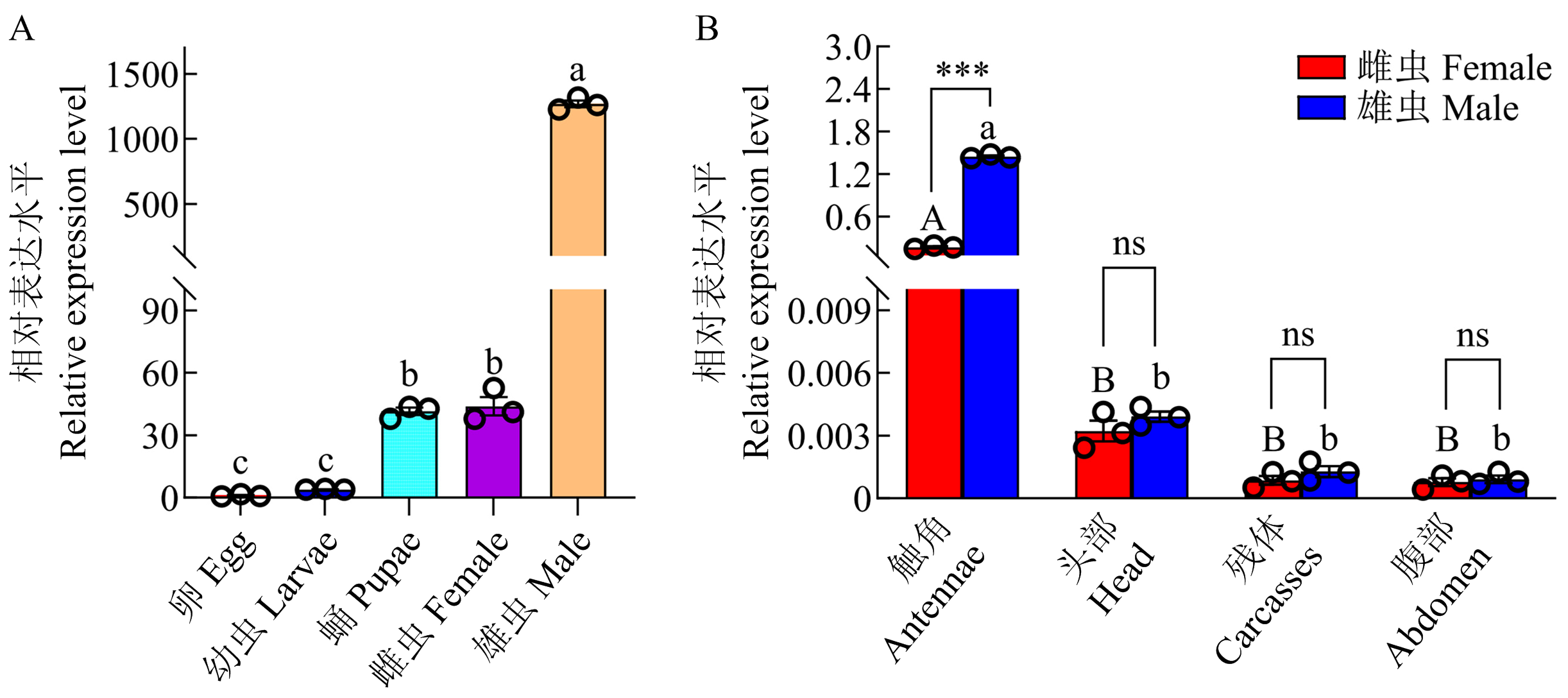
Spatio-temporal expression patterns of BodoOBP11 Expression levels of different developmental stages and different tissues of the same sex were analyzed using ANOVA, different letters indicate significant difference (P<0.05, Tukey’s HSD test); Expression levels of different sexes in the same tissue were analyzed by t-test, *P<0.05, ** P<0.01, *** P<0.001, ns: No significant difference"

Fig. 3

Binding characteristics of recombinant protein BodoOBP11 with ligand compounds"

Table 2

Binding affinity of BodoOBP11 with different volatile compounds"

化合物名称
Compound name
分子式
Molecular formula
分子量
Molecular weight
CAS号
CAS number
BodoOBP11 (pH 7.4)
IC50 (μmol·L-1) Ki (μmol·L-1)
假定的性信息素Putative sex pheromone
正十七烷Heptadecane C17H36 240.47 629-78-7
韭菜挥发物Chinese chives’ volatile
酮类Ketones
2-十一烷酮2-Undecanone C11H22O 170.29 112-12-9 21.12±7.38 19.15±6.69
2-十三烷酮2-Tridecanone C13H26O 198.34 593-08-8 15.58±2.95 14.13±2.67
α-紫罗酮α-Ionone C13H20O 192.30 127-41-3 26.38±0.86 23.91±0.79
醇类Alcohols
3-甲基-2-丁烯-1-醇3-Methyl-2-buten-1-ol C5H10O 86.13 556-82-1
芳樟醇Linalool C10H18O 154.25 78-70-6
香茅醇Citronellol C10H20O 156.27 106-22-9
醛类Aldehydes
苯甲醛Benzaldehyde C7H6O 106.12 100-52-7
壬醛1-Nonanal C9H18O 142.24 124-19-6
庚醛Heptaldehyde C7H14O 114.19 111-71-7
挥发性硫类化合物Volatile sulfur compounds
二丙基二硫Propyl disulfide C6H14S2 150.31 629-19-6 18.33±2.80 16.62±2.54
二丙基三硫醚Dipropyl trisulfide C6H14S3 182.37 6028-61-1 5.25±0.47 4.76±0.43
二甲基三硫Dimethyl trisulfide C2H6S3 126.26 3658-80-8
二烯丙基二硫Diallyl disulfide C6H10S2 146.27 2179-57-9
甲基丙基二硫Methyl propyl disulfide C4H10S2 122.25 2179-60-4
不饱和烃类Unsaturated hydrocarbons
1-庚烯1-Heptene C7H14 98.18 1161-13-3
石竹烯Caryophyllene C55H24 204.36 87-44-5
β-蒎烯β-Pinene C10H16 136.23 127-91-3
酯类Esters
异硫氰酸苯乙酯Phenylethyl isothiocyanate C9H9NS 163.24 2257-09-2 21.67±1.66 19.64±1.51
3-(甲硫基)丙基异硫酸酯 3-(methyl thioyl) propyl isosulfate C5H9NS2 147.26 505-79-3
水杨酸甲酯Methyl salicylate C8H8O3 152.15 119-36-8
烯丙基硫氢酸酯Allyl thiocyanate C4H5NS 99.15 764-49-8
月桂酸乙酯Ethyl dodecanoate C14H28O2 228.37 106-33-2

Fig. 4

Three-dimensional structures of BodoOBP11 and molecular docking to six ligands"

Table 3

Docking results for BodoOBP11 with six ligands"

配体名称
Ligand name
结合能
Binding energy (kJ·mol-1)
氢键
Conventional
hydrogen bond
疏水相互作用
Hydrophobic interaction
二丙基二硫Propyl disulfide -15.23 Lys81, Leu82, Ala114, Leu127
二丙基三硫醚Dipropyl trisulfide -16.61 Val76, Leu82, Ile107, Phe138, Phe140
2-十三烷酮2-Tridecanone -21.67 Thr74 Leu71, Val76, Leu82, Gln90, Ile107, Leu127, Met131, Phe138, Phe140
2-十一烷酮2-Undecanone -20.71 Thr74 Leu71, Val76, Gln90, Ile107, Leu127, Val128, Met131, Phe138, Phe140
α-紫罗酮α-Ionone -26.02 Thr74 Val76, Gln90, Leu94, Ile107, Met131, Phe138, Phe140
异硫氰酸苯乙酯Phenylethyl isothiocyanate -21.46 Leu71, Ile107, Leu127, Val128, Met131, Phe138, Phe140

Fig. 5

Binding characteristics of seven mutated BodoOBP11"

Fig. 6

Comparison of the binding affinities for BodoOBP11 WT and seven mutants to the six ligands"

[1]
杨集昆, 张学敏. 韭菜蛆的鉴定迟眼蕈蚊属二新种(双翅目: 眼蕈蚊科)[J]. 北京农业大学学报, 1985, 11(2): 153-157.
Yang J K, Zhang X M. Notes on the fragrant onion gnats with descriptions of two new species of Bradysia (Sciaridae: Diptera)[J]. Acta Agriculturae Universitatis Pekinensis, 1985, 11(2): 153-157. (in Chinese)
[2]
王覃丽, 王福, 华登科, 杨玉婷. 韭菜迟眼蕈蚊气味受体BodoOR71和BodoOR72基因时空表达分析[J]. 中国蔬菜, 2024(6): 55-64.
Wang Q L, Wang F, Hua D K, Yang Y T. Spatiotemporal expression analysis of odorant receptor genes of BodoOR71 and BodoOR72 in Bradysia odoriphaga[J]. China Vegetables, 2024(6): 55-64. (in Chinese)
[3]
吴青君, 于毅, 谷希树, 刘峰, 宋敦伦, 魏国树, 贺敏, 刘长仲, 许国庆, 张友军. 韭菜根蛆的发生危害及综合防治技术研究——公益性行业(农业)科研专项“作物根蛆类害虫综合防治技术研究与示范”进展[J]. 应用昆虫学报, 2016, 53(6): 1165-1173.
Wu Q J, Yu Y, Gu X S, Liu F, Song D L, Wei G S, He M, Liu C Z, Xu G Q, Zhang Y J. The occurrence of, and damage caused by, root maggots on Chinese chives and integrated management techniques to control these pests[J]. Chinese Journal of Applied Entomology, 2016, 53(6): 1165-1173. (in Chinese)
[4]
杨玉婷, 梁玲, 史彩华, 谢文, 张友军. 不同温度下韭菜迟眼蕈蚊年龄-阶段两性实验种群生命表的构建[J]. 植物保护, 2019, 45(1): 51-57.
Yang Y T, Liang L, Shi C H, Xie W, Zhang Y J. Age-stage, two-sex life table of laboratory populations of Bradysia odoriphaga Yang et Zhang under different temperatures[J]. Plant Protection, 2019, 45(1): 51-57. (in Chinese)
[5]
杨玉婷, 史彩华, 程佳旭, 张友军. 不同寄主植物对韭菜迟眼蕈蚊生长发育、繁殖和保护酶活力的影响[J]. 植物保护, 2017, 43(5): 119-123.
Yang Y T, Shi C H, Cheng J X, Zhang Y J. Effects of feeding on different host plants on development, reproduction and protective enzymes of Bradysia odoriphaga[J]. Plant Protection, 2017, 43(5): 119-123. (in Chinese)
[6]
Li X, Zhang X G, Xiao C, Gao Y L, Dong W X. Behavioral responses of potato tuber moth (Phthorimaea operculella) to tobacco plant volatiles[J]. Journal of Integrative Agriculture, 2020, 19(2): 325-332.

doi: 10.1016/S2095-3119(19)62663-8
[7]
Zhang L, Jiang H Q, Wu F, Wen P, Qing J, Song X M, Li H L. Eastern honeybee Apis cerana sense cold flowering plants by increasing the static binding affinity of odorant-binding protein to cold floral volatiles from loquats[J]. International Journal of Biological Macromolecules, 2023, 232: 123227.

doi: 10.1016/j.ijbiomac.2023.123227
[8]
Li D X, Li C B, Liu D G. Analyses of structural dynamics revealed flexible binding mechanism for the Agrilus mali odorant binding protein 8 towards plant volatiles[J]. Pest Management Science, 2021, 77(4): 1642-1653.

doi: 10.1002/ps.v77.4
[9]
Yang Y T, Wang F, Wang Q L, Tan S Y, Zhou Z X, Su Q, Hua D K, Tian L X. Functional characterization of BodoCSP3 in odorant recognition and host-seeking behavior of the insect pest Bradysia odoriphaga (Diptera: Sciaridae)[J]. Pest Management Science, 2026, 82(3): 2206-2215.

doi: 10.1002/ps.v82.3
[10]
Jing T T, Qian X N, Du W K, Gao T, Li D F, Guo D Y, He F, Yu G M, Li S P, Schwab W, Wan X C, Sun X L, Song C K. Herbivore-induced volatiles influence moth preference by increasing the β-ocimene emission of neighbouring tea plants[J]. Plant, Cell and Environment, 2021, 44(11): 3667-3680.

doi: 10.1111/pce.v44.11
[11]
Britch S C, Dame D A, Meisch M V, Kline D L, Walker T W, Allan S A, Urban J, Aldridge R L, Linthicum K J. Spatial repellents protect small perimeters from riceland mosquitoes in a warm-humid environment[J]. Journal of the American Mosquito Control Association, 2021, 37(1): 41-45.

doi: 10.2987/20-6974.1 pmid: 33857316
[12]
Yang Y T, Su Q, Shi L L, Chen G, Zeng Y, Shi C H, Zhang Y J. Electrophysiological and behavioral responses of Bradysia odoriphaga (Diptera: Sciaridae) to volatiles from its host plant, Chinese chives (Allium tuberosum Rottler ex Spreng)[J]. Journal of Economic Entomology, 2019, 112(4): 1638-1644.

doi: 10.1093/jee/toz057
[13]
Pelosi P, Zhou J J, Ban L P, Calvello M. Soluble proteins in insect chemical communication[J]. Cellular and Molecular Life Sciences, 2006, 63(14): 1658-1676.

doi: 10.1007/s00018-005-5607-0 pmid: 16786224
[14]
Zhou J J. Odorant-binding proteins in insects[M]// Vitamins and Hormones. Amsterdam: Elsevier, 2010, 83: 241-272.
[15]
Leal W S, Nikonova L, Peng G. Disulfide structure of the pheromone binding protein from the silkworm moth, Bombyx mori[J]. FEBS Letters, 1999, 464(2): 85-90.

doi: 10.1016/S0014-5793(99)01683-X
[16]
Brito N F, Moreira M F, Melo A C A. A look inside odorant-binding proteins in insect chemoreception[J]. Journal of Insect Physiology, 2016, 95: 51-65.

doi: S0022-1910(16)30108-1 pmid: 27639942
[17]
Sun L, Wang Q, Wang Q, Dong K, Xiao Y, Zhang Y J. Identification and characterization of odorant binding proteins in the forelegs of Adelphocoris lineolatus (Goeze)[J]. Frontiers in Physiology, 2017, 8: 735.

doi: 10.3389/fphys.2017.00735
[18]
Liu X Q, Jiang H B, Fan J Y, Liu T Y, Meng L W, Liu Y, Yu H Z, Dou W, Wang J J. An odorant-binding protein of Asian citrus psyllid, Diaphorina citri, participates in the response of host plant volatiles[J]. Pest Management Science, 2021, 77(7): 3068-3079.

doi: 10.1002/ps.v77.7
[19]
Wang Q, Liu J T, Zhang Y J, Chen J L, Li X C, Liang P, Gao X W, Zhou J J, Gu S H. Coordinative mediation of the response to alarm pheromones by three odorant binding proteins in the green peach aphid Myzus persicae[J]. Insect Biochemistry and Molecular Biology, 2021, 130: 103528.

doi: 10.1016/j.ibmb.2021.103528
[20]
Li E T, Wu H J, Qin J H, Luo J, Li K B, Cao Y Z, Zhang S, Peng Y, Yin J. Involvement of Holotrichia parallela odorant binding protein 3 in the localization of oviposition sites[J]. International Journal of Biological Macromolecules, 2023, 242: 124744.

doi: 10.1016/j.ijbiomac.2023.124744
[21]
Zhao Y H, Ding J F, Zhang Z Q, Liu F, Zhou C G, Mu W. Sex- and tissue-specific expression profiles of odorant binding protein and chemosensory protein genes in Bradysia odoriphaga (Diptera: Sciaridae)[J]. Frontiers in Physiology, 2018, 9: 107.

doi: 10.3389/fphys.2018.00107
[22]
Tang B W, Tai S L, Dai W, Zhang C N. Expression and functional analysis of two odorant-binding proteins from Bradysia odoriphaga (Diptera: Sciaridae)[J]. Journal of Agricultural and Food Chemistry, 2019, 67(13): 3565-3574.

doi: 10.1021/acs.jafc.9b00568
[23]
Yang Y T, Hua D K, Shi C H, Xie W, Zhang Y J. Molecular and binding characteristics of OBP5 of Bradysia odoriphaga (Diptera: Sciaridae)[J]. Journal of Economic Entomology, 2021, 114(4): 1509-1516.

doi: 10.1093/jee/toab095
[24]
Yang Y T, Tan S Y, Wang Q L, Wang F, Zhang Y J. Key amino acids in odorant-binding protein OBP7 enable Bradysia odoriphaga to recognize host plant volatiles[J]. International Journal of Biological Macromolecules, 2025, 284(2): 138179.

doi: 10.1016/j.ijbiomac.2024.138179
[25]
Yang Y T, Luo L, Tian L X, Zhao C W, Niu H L, Hu Y F, Shi C H, Xie W, Zhang Y J. Function and characterization analysis of BodoOBP8 from Bradysia odoriphaga (Diptera: Sciaridae) in the recognition of plant volatiles and sex pheromones[J]. Insects, 2021, 12(10): 879.

doi: 10.3390/insects12100879
[26]
Zhu J Q, Wang F, Zhang Y J, Yang Y T, Hua D K. Odorant binding protein 10 from Bradysia odoriphaga (Diptera: Sciaridae) binds volatile host plant compounds[J]. Journal of Insect Science, 2023, 23(1): 7.
[27]
王鸿梅, 冯静. 韭菜挥发油中化学成分的研究[J]. 天津医科大学学报, 2002, 8(2): 191-192.
Wang H M, Feng J. Identification on chemical components of volatile oil of chive by GC/MS[J]. Journal of Tianjin Medical University, 2002, 8(2): 191-192. (in Chinese)
[28]
Li H J, He X K, Zeng A J, Liu Y J, Jiang S R. Bradysia odoriphaga copulatory behavior and evidence of a female sex pheromone[J]. Journal of Agricultural and Urban Entomology, 2007, 24(1): 27-34.

doi: 10.3954/1523-5475-24.1.27
[29]
Trifinopoulos J, Nguyen L T, von Haeseler A, Minh B Q. W-IQ-TREE: A fast online phylogenetic tool for maximum likelihood analysis[J]. Nucleic Acids Research, 2016, 44(1): 232-235.

doi: 10.1093/nar/gkv997
[30]
Pfaffl M W. A new mathematical model for relative quantification in real-time RT-PCR[J]. Nucleic Acids Research, 2001, 29(9): e45.

doi: 10.1093/nar/29.9.e45 pmid: 11328886
[31]
Silva D, Ceballos R, Arismendi N, Dalmon A, Vargas M. Variant A of the deformed wings virus alters the olfactory sensitivity and the expression of odorant binding proteins on antennas of Apis mellifera[J]. Insects, 2021, 12(10): 895.

doi: 10.3390/insects12100895
[32]
Li X H, Hu F J, Li R F, Peng D H, Gao P, Rao F Q, Li Y H, Liu D G. The pleiotropic odorant binding protein CaspOBP12 involved in perception of Ceutorhynchus asper for plant volatiles and pesticides[J]. Pesticide Biochemistry and Physiology, 2025, 214: 106578.

doi: 10.1016/j.pestbp.2025.106578
[33]
Chen Y W, Yang H H, Gu N, Li J Q, Zhu X Y, Zhang Y N. Identification of attractants for adult Spodoptera litura based on the interaction between odorant-binding protein 34 and host volatiles[J]. Pesticide Biochemistry and Physiology, 2024, 203: 106005.

doi: 10.1016/j.pestbp.2024.106005
[34]
Wang Q K, Liu G T, Yan L P, Xu W T, Hilton D J, Liu X H, Pei W Y, Li X Y, Wu J B, Zhao H F, Zhang D, Elgar M A. Short-term particulate matter contamination severely compromises insect antennal olfactory perception[J]. Nature Communications, 2023, 14: 4112.

doi: 10.1038/s41467-023-39469-3 pmid: 37433781
[35]
Liu H, Zhao X F, Fu L, Han Y Y, Chen J, Lu Y Y. BdorOBP2 plays an indispensable role in the perception of methyl eugenol by mature males of Bactrocera dorsalis (Hendel)[J]. Scientific Reports, 2017, 7: 15894.

doi: 10.1038/s41598-017-15893-6
[36]
Wang H, Ma Y F, Wang M M, Chen G L, Dewer Y, He M, Zhang F, Yang Y F, Liu J F, He P. Expression, affinity, and functional characterization of the specific binding of two putative pheromone- binding proteins in the omnivorous German cockroach Blattella germanica[J]. Journal of Agricultural and Food Chemistry, 2020, 68(47): 13573-13583.

doi: 10.1021/acs.jafc.0c02456
[37]
赵云贺. 韭菜迟眼蕈蚊化学感受基因的鉴定、克隆及功能研究[D]. 泰安: 山东农业大学, 2019.
Zhao Y H. Identification, cloning and functional characterization of chemosensory genes in Bradysia odoriphaga (Diptera: Sciaridae)[D]. Taian: Shandong Agricultural University, 2019. (in Chinese)
[38]
Obata T, Koh H S, Kim M, Fukami H. Constituents of planthopper attractant in rice plant[J]. Applied Entomology and Zoology, 1983, 18(2): 161-169.

doi: 10.1303/aez.18.161
[39]
Wen M, Li E T, Li J Q, Chen Q, Zhou H F, Zhang S, Li K B, Ren B Z, Wang Y L, Yin J. Molecular characterization and key binding sites of sex pheromone-binding proteins from the meadow moth, Loxostege sticticalis[J]. Journal of Agricultural and Food Chemistry, 2019, 67(46): 12685-12695.

doi: 10.1021/acs.jafc.9b03235
[40]
Hao E H, Li Y N, Guo B, Yang X, Lu P F, Qiao H L. Key residues affecting binding affinity of Sirex noctilio Fabricius odorant-binding protein (SnocOBP9) to aggregation pheromone[J]. International Journal of Molecular Sciences, 2022, 23(15): 8456.

doi: 10.3390/ijms23158456
[41]
Li H L, Song X M, Wu F, Qiu Y L, Fu X B, Zhang L Y, Tan J. Chemical structure of semiochemicals and key binding sites together determine the olfactory functional modes of odorant-binding protein 2 in eastern honey bee, Apis cerana[J]. International Journal of Biological Macromolecules, 2020, 145: 876-884.

doi: 10.1016/j.ijbiomac.2019.11.189
[42]
del Mármol J, Yedlin M A, Ruta V. The structural basis of odorant recognition in insect olfactory receptors[J]. Nature, 2021, 597: 126-131.

doi: 10.1038/s41586-021-03794-8
[43]
Xiang D K, Abdelnabby H, Wang M Q. Predicted structure of odorant-binding protein 12 from Monochamus alternatus (Hope) suggests a mechanism of flexible odorant-binding[J]. International Journal of Biological Macromolecules, 2023, 243: 125152.

doi: 10.1016/j.ijbiomac.2023.125152
[44]
付淑慧, 张鹤, 赵婉清, 梁志刚. 小菜蛾气味结合蛋白PxylOBP33与其相关信息化学物质的分子对接[J]. 环境昆虫学报, 2023, 45(5): 1291-1305.
Fu S H, Zhang H, Zhao W Q, Liang Z G. Molecular docking of Plutella xylostella odorant binding protein PxylOBP33 with its related semiochemicals[J]. Environmental Entomology, 2023, 45(5): 1291-1305. (in Chinese)
[45]
Liu Z, Tang D, Lai Y, Gao S, Han H, Zhou Y. Prokaryotic expression and binding characteristics of odor-binding protein GqinOBP10 in Gynaephora qinghaiensis[J]. International Journal of Molecular Sciences, 2025, 26(21): 10502.

doi: 10.3390/ijms262110502
[46]
Yang H H, Li S P, Yin M Z, Zhu X Y, Li J B, Zhang Y N, Li X M. Functional differentiation of two general odorant-binding proteins to sex pheromones in Spodoptera frugiperda[J]. Pesticide Biochemistry and Physiology, 2023, 191: 105348.

doi: 10.1016/j.pestbp.2023.105348
[1] YAO Hong, SHI ShouRong, ZHAO RuQian. The Potential and Mechanism of Chlorogenic Acid to Alleviate Intestinal Inflammation in Chickens Based on Network Pharmacology and Molecular Docking [J]. Scientia Agricultura Sinica, 2025, 58(3): 600-616.
[2] WANG MengYun, DENG LiYuan, YU Yang, YANG YuHeng, FANG AnFei, TIAN BinNian, WANG Jing, BI ChaoWei. Effects of Amino Acid Substitutions at Different Sites of Succinate Dehydrogenase on the Sensitivity of Magnaporthe oryzae to Benzovindiflupyr [J]. Scientia Agricultura Sinica, 2025, 58(24): 5175-5189.
[3] LIU WenLong, CHANG YiFang, LI WenYu, SUN LiJuan, ZHENG ChangYing. Effects of Drought Stress During the Pupal Stage on Mating Behavior and Sensitivity to Lufenuron in Bradysia odoriphaga [J]. Scientia Agricultura Sinica, 2025, 58(14): 2793-2804.
[4] LIU ZhuoLin, LIU HongYun. The Potential and Mechanisms of Apigenin to Relieve Heat Stress and Hypoxia in Dairy Cows Based on Network Pharmacology and Molecular Docking [J]. Scientia Agricultura Sinica, 2024, 57(5): 1010-1022.
[5] XU ChongXin, JIN JiaFeng, SUN XiaoMing, SHEN Cheng, ZHANG Xiao, CHEN ChengYu, LIU XianJin, LIU Yuan. Rational Design and Innovative Application Strategy for the Insecticidal Protein Based on Bt Toxin [J]. Scientia Agricultura Sinica, 2024, 57(1): 96-125.
[6] YANG Ling, TIAN XiaoLi, GUI LianYou, WANG FuLian, ZHANG GuoHui. Interaction Mechanisms Between Bactrocera minax Odorant-Binding Protein BminOBP6 and Its Ligands [J]. Scientia Agricultura Sinica, 2023, 56(7): 1311-1321.
[7] NIAN HeFen, ZHANG YuXi, LI BoLiao, CHEN XiuLin, LUO Kun, LI GuangWei. Expression and Ligand Binding Characteristics of GfunOBP2 from Grapholita funebrana [J]. Scientia Agricultura Sinica, 2023, 56(12): 2302-2316.
[8] LI GuiXiang,LI XiuHuan,HAO XinChang,LI ZhiWen,LIU Feng,LIU XiLi. Sensitivity of Corynespora cassiicola to Three Common Fungicides and Its Resistance to Fluopyram from Shandong Province [J]. Scientia Agricultura Sinica, 2022, 55(7): 1359-1370.
[9] XiaoHe LIU,GuiSheng QIU,ZhaoGuo TONG,HuaiJiang ZHANG,WenTao YAN,Qiang YUE,LiNa SUN. Ligands Binding Characteristics of Chemosensory Protein CsasCSP16 of Carposina sasakii [J]. Scientia Agricultura Sinica, 2021, 54(5): 945-958.
[10] QIN JianHui,LI JinQiao,ZHAO Xu,LI KeBin,CAO YaZhong,YIN Jiao. Expression, Purification and Functional Analysis of Odorant Binding Protein 11 (OBP11) in Anomala corpulenta [J]. Scientia Agricultura Sinica, 2021, 54(14): 3017-3028.
[11] LI ZuRen,LUO DingFeng,BAI HaoDong,XU JingJing,HAN JinCai,XU Qiang,WANG RuoZhong,BAI LianYang. Cloning and Expression Analysis of Light Harvesting Chlorophyll a/b Protein Gene CcLhca-J9 in Conyza canadensis [J]. Scientia Agricultura Sinica, 2021, 54(1): 86-94.
[12] Ling LI,Yao TAN,XiaoRong ZHOU,BaoPing PANG. Molecular Cloning, Prokaryotic Expression and Binding Characterization of Odorant Binding Protein GdauOBP20 in Galeruca daurica [J]. Scientia Agricultura Sinica, 2019, 52(20): 3705-3712.
[13] TAN Jing, SONG XinMi, FU XiaoBin, TANG MingZhu, WU Fan, HUA QiYun, LI HongLiang. Functional Mode and Immunocytochemical Localization of Chemosensory Protein 1 (CSP1) in Apis cerana cerana [J]. Scientia Agricultura Sinica, 2017, 50(15): 3052-3062.
[14] ZHANG Xiao, HU Xiao-dan, ZHONG Jian-feng, WU Ai-hua, XU Chong-xin, LIU Yuan, ZHANG Cun-zheng, XIE Ya-jing, LIU Xian-jin. Expression and Molecular Simulation of Alkaline Phosphatase Receptor of Plutella xyllostella [J]. Scientia Agricultura Sinica, 2016, 49(23): 4555-4565.
[15] LI Hong-Liang, ZHANG Lin-Ya, ZHUANG Shu-Lin, NI Cui-Xia, HAN Bao-Yu, SHANG Han-Wu. Interpretation of Odorant Binding Function and Mode of General Odorant Binding Protein ASP2 in Chinese Honeybee (Apis cerana cerana) [J]. Scientia Agricultura Sinica, 2013, 46(1): 154-161.
Viewed
Full text


Abstract

Cited

  Shared   
  Discussed   
No Suggested Reading articles found!