Scientia Agricultura Sinica ›› 2025, Vol. 58 ›› Issue (23): 5031-5045.doi: 10.3864/j.issn.0578-1752.2025.23.017

• HYBRIDIZATION BREEDING AND GERMPLASM INNOVATION IN PAEONIA • Previous Articles     Next Articles

Genome-Wide Analysis of AP2/ERF Transcription Factors in Peony

XU DuoDuo(), DU QianQian, ZHAO LiXiang, LI Yan, HUANG Gan, LI YongHua, LU JiuXing*()   

  1. College of Landscape Architecture, Henan Agricultural University, Zhengzhou 450002
  • Received:2025-06-09 Accepted:2025-08-15 Online:2025-12-01 Published:2025-12-09
  • Contact: LU JiuXing

Abstract:

【Objective】 To investigate the roles of the AP2/ERF gene family in peony flower development and provide a theoretical foundation for the precise regulation of flower type breeding in peony. 【Method】 Using the peony genome as a reference, we systematically identified members of the AP2/ERF gene family and performed phylogenetic, gene structure, cis-element, and repeat event analyses. Genome sequences of Arabidopsis thaliana, rice, grape, and sweetgum were retrieved from public databases for interspecific synteny analysis using peony as the reference. RNA-seq datasets from various peony tissue types were obtained from global public repositories, processed by file segmentation and sequence alignment, and subsequently used to construct heatmaps with TBtools for functional prediction of AP2/ERF gene family members. Principal component and hierarchical clustering analyses were conducted to evaluate overall sample correlations. Tissue-specific expression patterns were further validated via quantitative real-time PCR (qRT-PCR) of 12 selected genes. 【Result】 A total of 126 AP2/ERF family members were identified and classified into four subfamilies (AP2, ERF, DREB, and RAV) and one unclassified group (Soloists) based on phylogenetic analysis. Synteny analysis revealed that 122 of these genes were anchored to the five chromosomes of peony, comprising 73 syntenic gene pairs. The number of homologous gene pairs between peony and sweetgum or grape was substantially higher than that between peony and Arabidopsis thaliana or rice, indicating a high degree of subfamily conservation, frequently accompanied by loss of the untranslated region (UTR). Cis-element analysis indicated that AP2/ERF family genes in peony are predominantly involved in plant growth and development, hormone signaling, abiotic stress responses, and light signal regulation. Expression profiling revealed that 48% of the 126 identified AP2/ERF members were associated with flower development. Twelve genes potentially related to flower development were identified, including three from the AP2 subfamily, six from the DREB subfamily, and three from the ERF subfamily. Using roots, stems, leaves, fully bloomed petals, and flower buds at five differentiation stages of the Fengdanbai cultivar as materials, qRT-PCR validation was performed. The results showed that 83% of these genes exhibited expression patterns consistent with RNA-seq predictions. 【Conclusion】 The expansion of the peony AP2/ERF gene family is attributed to both tandem and segmental duplications and occurred subsequent to the divergence between peony and Arabidopsis thaliana. In addition to members of the AP2 subfamily, certain genes from the ERF and DREB subfamilies also contribute to flower development in peony, highlighting a notable functional divergence of AP2/ERF family members in peony compared to other plant species.

Key words: peony, gene identification, AP2/ERF, flower development, genome, principal component analysis, qRT-PCR

Table 1

The sequences of primers used for qRT-PCR"

基因Gene 引物序列Primer sequence (5′-3′)
ubiquitin F:AGCCCATATTCAGGAGGTGT
R:GCAATCTCAGGTACAAGGGG
PoDREB2 F:CCCGACACCCAATTTACCGA
R:ACGTGCCCAACCATATCCTC
PoERF37 F:ACCCACTTCAAAACTCCGCA
R:TTCCGCTACCCATTTTCCCC
PoDREB25 F:GGTTCTCGAGCCATGACCAA
R:ATTGGGCTTGGATCTGGTGG
PoAP2-9 F:ACTTCCTCTCATCAGCCCCT
R:CGCGGGCTATTCGAGTTAGT
PoAP2-5 F:CGCATCATGGCAAGCAGTAC
R:AACACCGGTCGATTGCTGAT
PoERF19 F:CAGAGATCCGAACAAACGCG
R:ACGTCCCGATCTCAAGAGGA
PoERF2 F:CTGGCTTGGTACGTTCGACT
R:GAGGAGGCGACGATGATGTT
PoDREB28 F:ACATCACAACAGCAATGCGG
R:ACCCCATTTCCTTCGTCGAA
PoDREB43 F:TTCGACGCTGCACTCTTTTG
R:GCAGCCTCTTGAATTTCCGG
PoAP2-16 F:AGCATGGAAGATGGCAAGCT
R:TTCTGCAGCTTCCTCTTGGG
PoDREB39 F:AAGGGACCGATGAAAGGCTG
R:AACTTCCCCACTCCCTCTGT
PoDREB21 F:GTGGCCGCATCTAACGAAAG
R:GTTCCTTCCACCCAGCAAGA

Fig. 1

Phylogenetic tree of the Peony AP2/ERF family Different colors represent different subgroups within each subfamily. Blue stars indicate genes in peonies, while red triangles indicate genes in Arabidopsis"

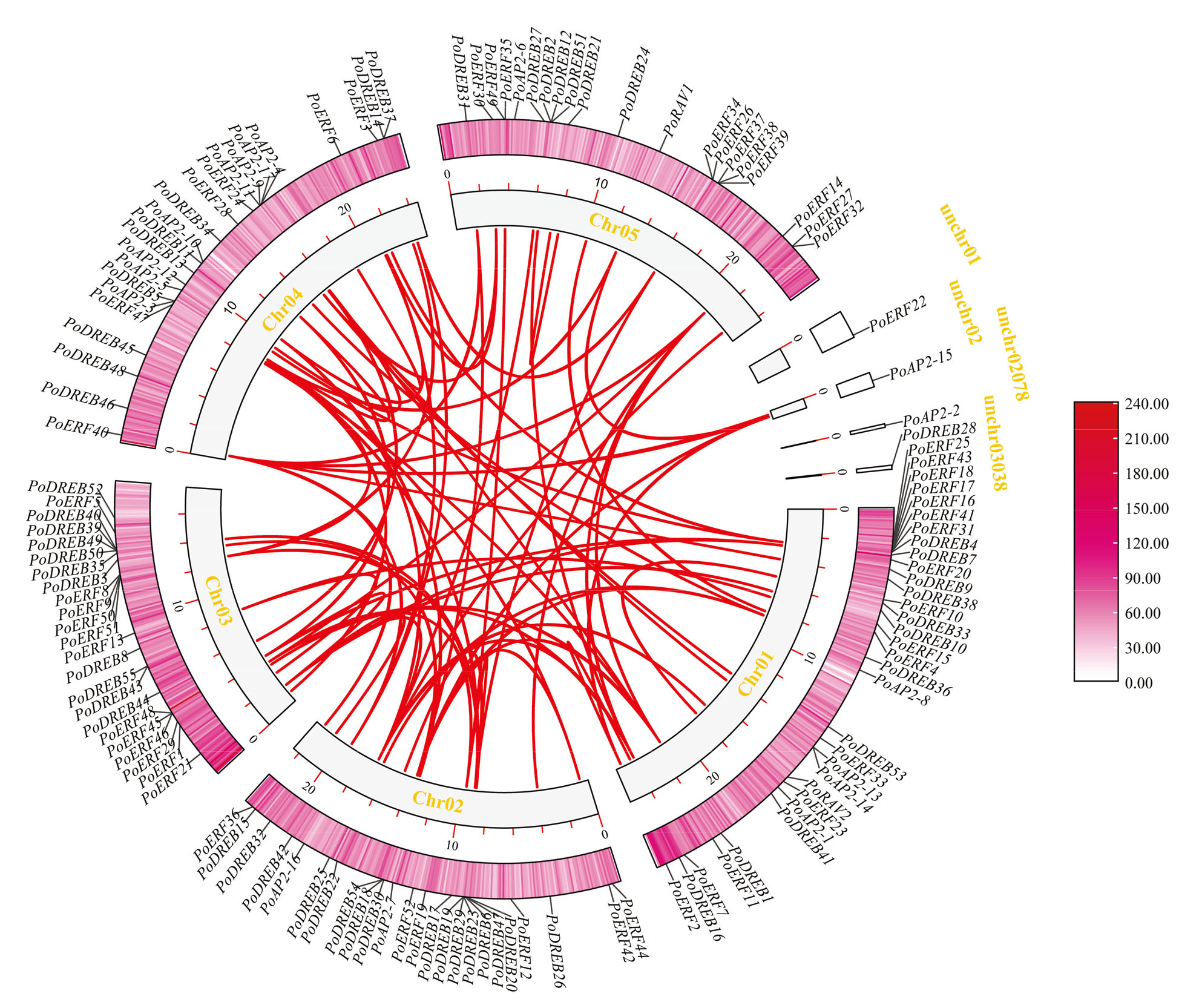
Fig. 2

Co-lineage mapping within the peony genome"

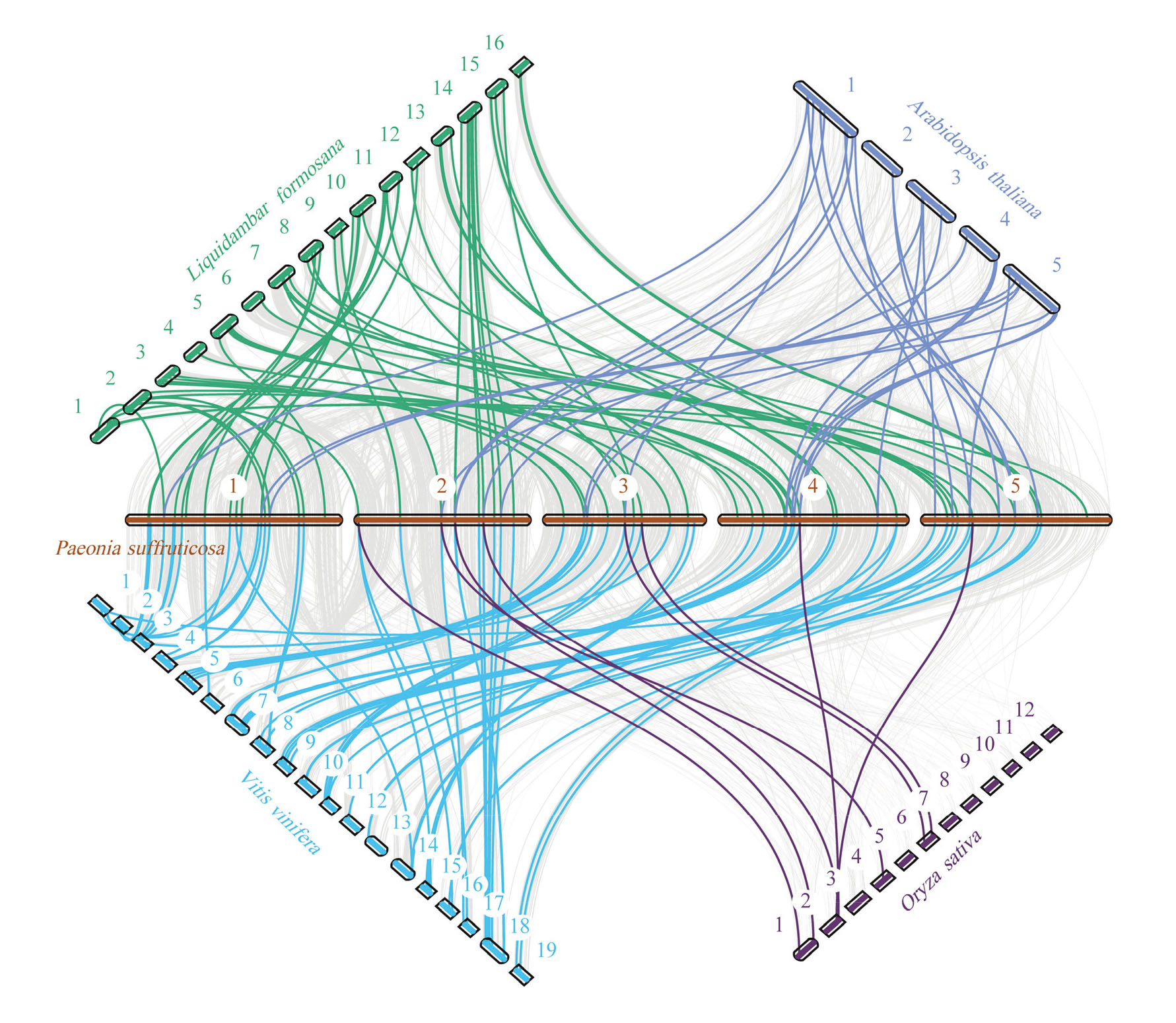
Fig. 3

Co-linearity and homology of PoAP2/ERF genes between peony and other species"

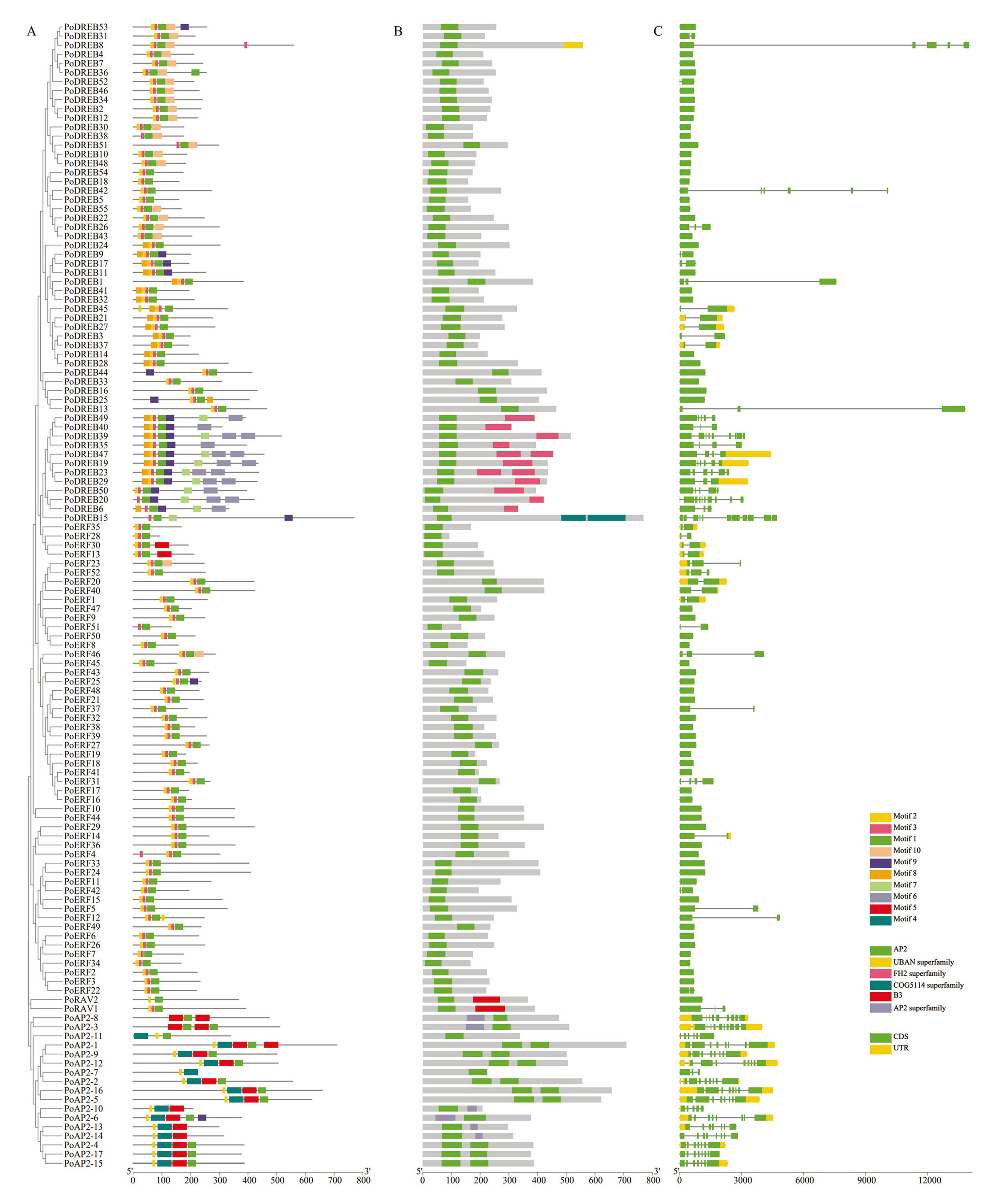
Fig. 4

Distribution of conserved motifs and gene structure of peony AP2/ERF gene A: Phylogenetic tree and motif composition; B: Protein structural domains; C: Exon-intron structure"

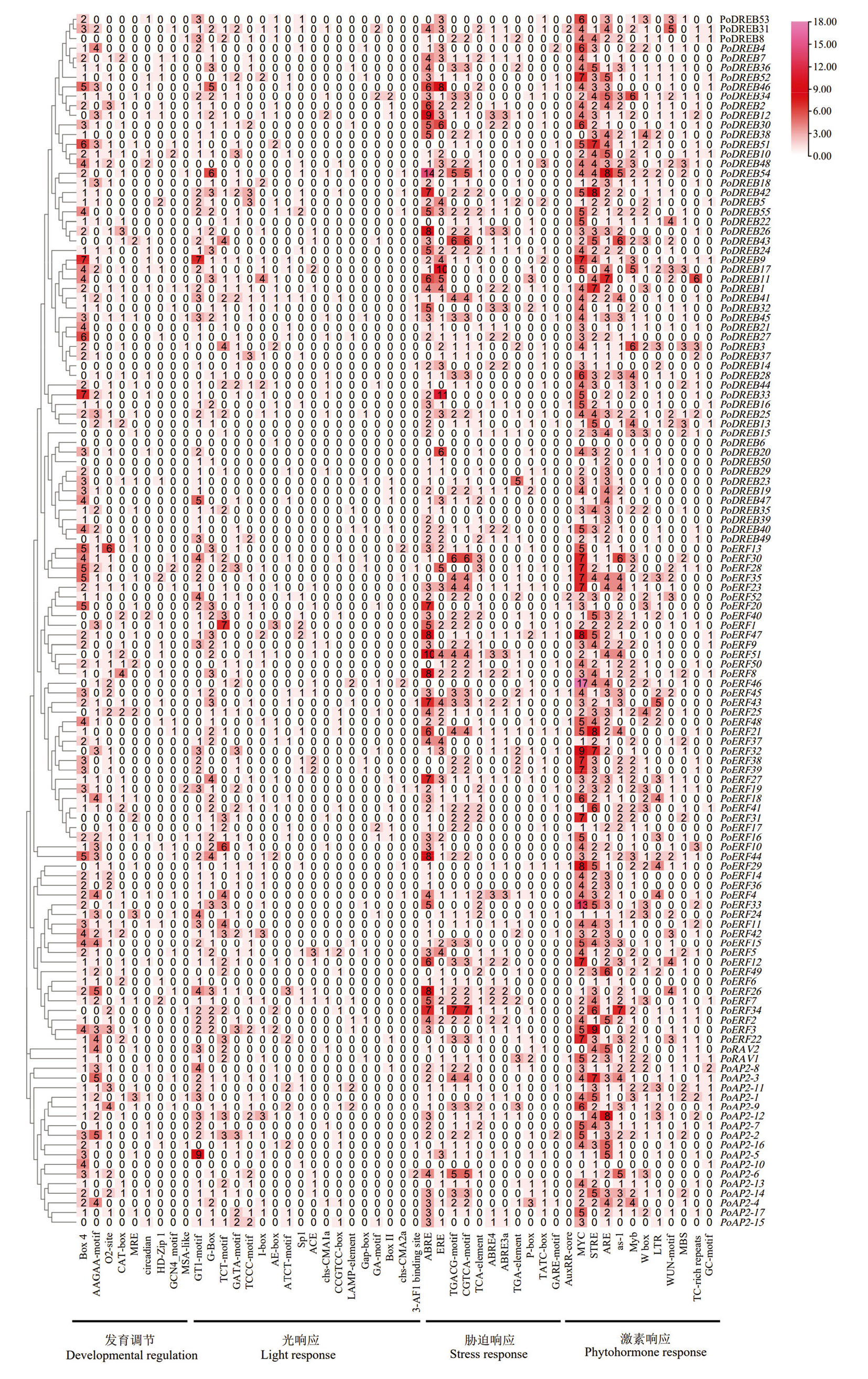
Fig. 5

Analysis of cis-regulatory elements of the peony AP2/ERF promoter"

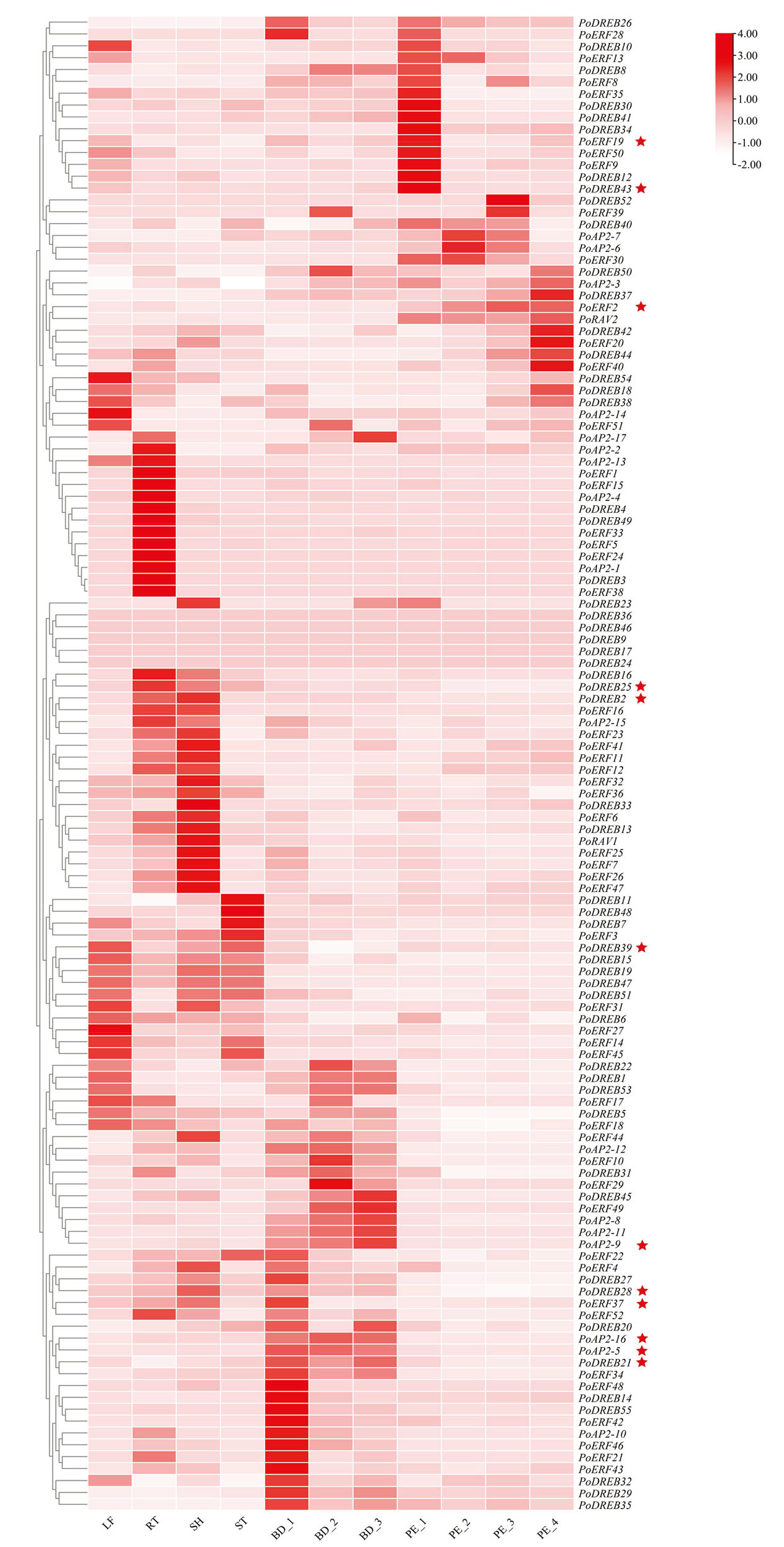
Fig. 6

Heat map of the expression levels of different tissues of peony AP2/ERF gene LF: Leaf; RT: Root; SH: Branch; ST: Stem; BD_1: Stage of sepal differentiation of flower buds; BD_2: Stage of petal differentiation of flower buds; BD_3: Fully differentiated flower buds; PE_1: Unpigmented compact buds; PE_2: Buds slightly pigmented prior to anthesis; PE_ 3: First bloomed flowers; PE_4: Fully opened flowers with anthers exposed. Asterisks refer to the 12 genes for which fluorescence quantification was done"

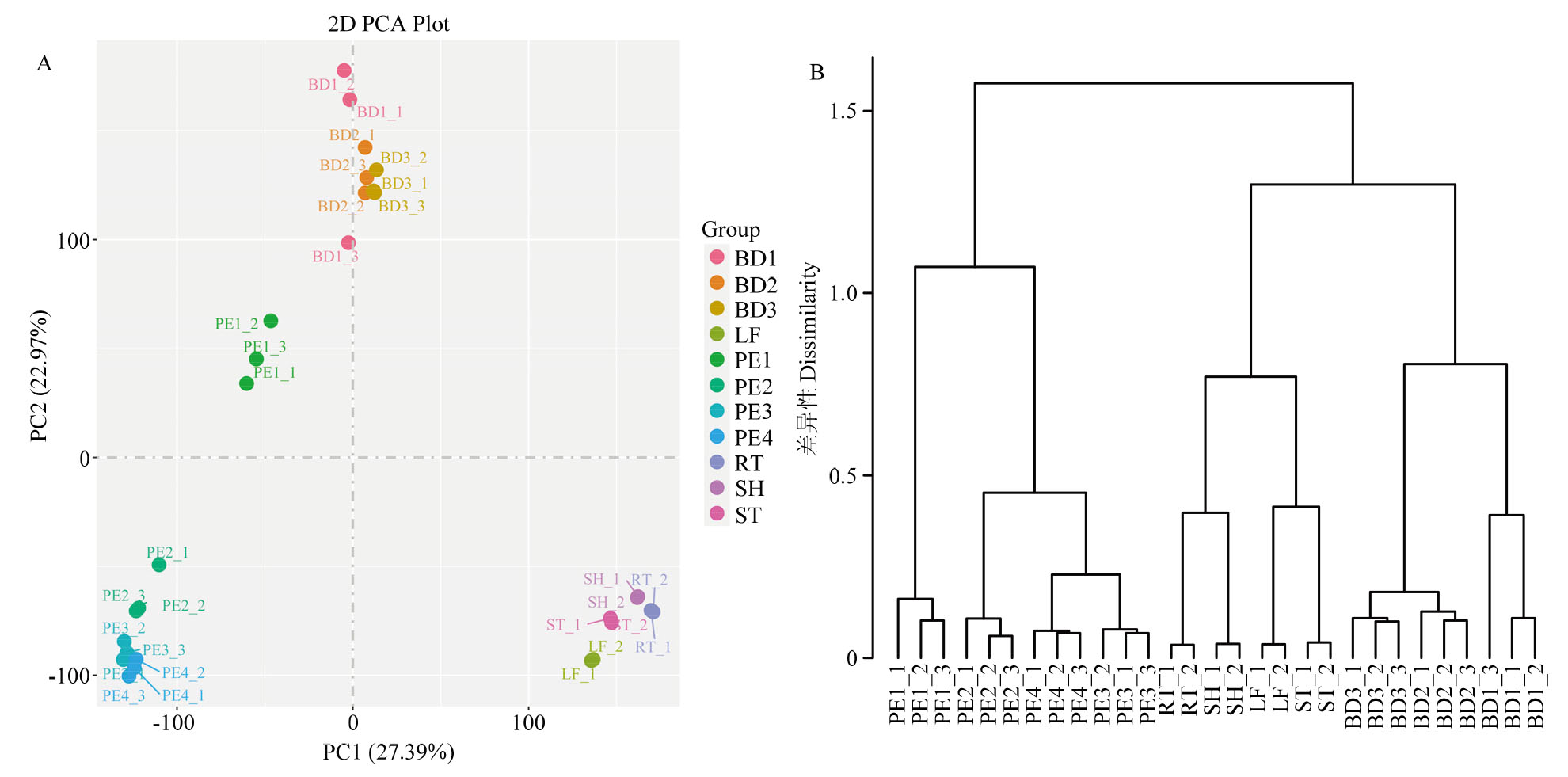
Fig. 7

Principal component analysis and cluster analysis of samples from RNA-seq datasets of different sites"

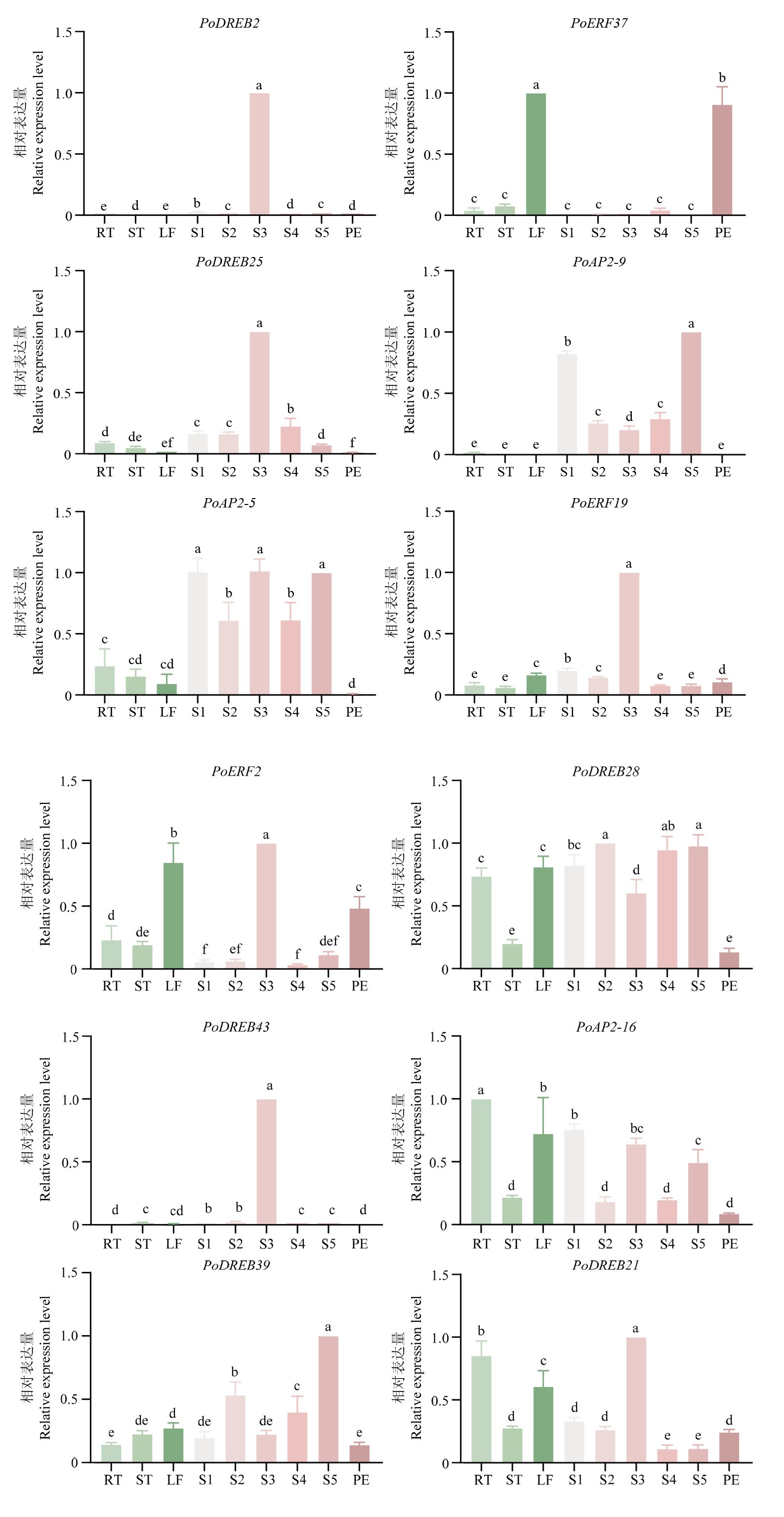
Fig. 8

Tissue-specific fluorescence quantitative PCR analysis of 12 AP2/ERF genes RT: Root; ST: Stem; LF: Leaf; S1: Flower buds at the stage of sepal primordial differentiation; S2: Flower buds at the stage of petal primordial differentiation; S3: Flower buds at the stage of stamen primordial differentiation; S4: Flower buds at the stage of pistil primordial differentiation; S5: Flower buds at the stage of completion of differentiation; PE: Flower petals in full bloom. Different letters indicate significant differences at P<0.05"

[1]
ALVAREZ-BUYLLA E R, BENÍTEZ M, CORVERA-POIRÉ A, CHAOS CADOR A, DE FOLTER S, GAMBOA DE BUEN A, GARAY-ARROYO A, GARCÍA-PONCE B, JAIMES-MIRANDA F, PÉREZ-RUIZ R V, et al. Flower development. The Arabidopsis Book, 2010, 8: e0127.
[2]
THEIßEN G, MELZER R, RÜMPLER F. MADS-domain transcription factors and the floral quartet model of flower development: Linking plant development and evolution. Development, 2016, 143(18): 3259-3271.

doi: 10.1242/dev.134080 pmid: 27624831
[3]
ZHANG A J, HE H B, LI Y, WANG L X, LIU Y X, LUAN X C, WANG J X, LIU H J, LIU S Y, ZHANG J, et al. MADS-box subfamily gene GmAP 3 from Glycine max regulates early flowering and flower development. International Journal of Molecular Sciences, 2023, 24(3): 2751.

doi: 10.3390/ijms24032751
[4]
CHEN X M. A microRNA as a translational repressor of APETALA2 in Arabidopsis flower development. Science, 2004, 303(5666): 2022-2025.

doi: 10.1126/science.1088060
[5]
YANT L, MATHIEU J, DINH T T, OTT F, LANZ C, WOLLMANN H, CHEN X M, SCHMID M. Orchestration of the floral transition and floral development in Arabidopsis by the bifunctional transcription factor APETALA2. The Plant Cell, 2010, 22(7): 2156-2170.

doi: 10.1105/tpc.110.075606
[6]
FRANÇOIS L, VERDENAUD M, FU X P, RULEMAN D, DUBOIS A, VANDENBUSSCHE M, BENDAHMANE A, RAYMOND O, JUST J, BENDAHMANE M. A miR172 target-deficient AP2-like gene correlates with the double flower phenotype in roses. Scientific Reports, 2018, 8: 12912.

doi: 10.1038/s41598-018-30918-4
[7]
LIU W C, ZHENG T C, QIU L K, GUO X Y, LI P, YONG X, LI L L, AHMAD S, WANG J, CHENG T R, et al. A 49-bp deletion of PmAP2L results in a double flower phenotype in Prunus mume. Horticulture Research, 2024, 11(2): uhad278.
[8]
JOFUKU K D, DEN BOER B G, VAN MONTAGU M, OKAMURO J K. Control of Arabidopsis flower and seed development by the homeotic gene APETALA2. The Plant Cell, 1994, 6(9): 1211-1225.
[9]
田明康, 徐智祥, 刘秀群, 眭顺照, 李名扬, 李志能. 蜡梅AP2亚家族转录因子鉴定及CpAP2-L11功能研究. 园艺学报, 2023, 50(2): 382-396.

doi: 10.16420/j.issn.0513-353x.2021-1114
TIAN M K, XU Z X, LIU X Q, SUI S Z, LI M Y, LI Z N. Identification of the AP 2 subfamily transcription factors in Chimonanthus praecox and the functional study of CpAP2-L11. Acta Horticulturae Sinica, 2023, 50(2): 382-396. (in Chinese)
[10]
FENG K, HOU X L, XING G M, LIU J X, DUAN A Q, XU Z S, LI M Y, ZHUANG J, XIONG A S. Advances in AP2/ERF super-family transcription factors in plant. Critical Reviews in Biotechnology, 2020, 40(6): 750-776.

doi: 10.1080/07388551.2020.1768509 pmid: 32522044
[11]
LV S Z, CHENG S, WANG Z Y, LI S M, JIN X, LAN L, YANG B, YU K, NI X M, LI N, et al. Draft genome of the famous ornamental plant Paeonia suffruticosa. Ecology and Evolution, 2020, 10(11): 4518-4530.

doi: 10.1002/ece3.v10.11
[12]
HORTON P, PARK K J, OBAYASHI T, FUJITA N, HARADA H, ADAMS-COLLIER C J, NAKAI K. WoLF PSORT: Protein localization predictor. Nucleic Acids Research, 2007, 35(Web Server issue): W585-W587.
[13]
TAMURA K, PETERSON D, PETERSON N, STECHER G, NEI M, KUMAR S. MEGA5: Molecular evolutionary genetics analysis using maximum likelihood, evolutionary distance, and maximum parsimony methods. Molecular Biology and Evolution, 2011, 28(10): 2731-2739.

doi: 10.1093/molbev/msr121 pmid: 21546353
[14]
BAILEY T L, BODEN M, BUSKE F A, FRITH M, GRANT C E, CLEMENTI L, REN J Y, LI W W, NOBLE W S. MEME Suite: Tools for motif discovery and searching. Nucleic Acids Research, 2009, 37(Suppl_2): W202-W208.
[15]
BRAY N L, PIMENTEL H, MELSTED P, PACHTER L. Erratum: Near-optimal probabilistic RNA-seq quantification. Nature Biotechnology, 2016, 34(8): 888.

doi: 10.1038/nbt0816-888d pmid: 27504780
[16]
刘传娇, 王顺利, 薛璟祺, 朱富勇, 任秀霞, 李名扬, 张秀新. 牡丹泛素延伸蛋白基因ubiquitin的克隆及其作为内参基因的研究. 园艺学报, 2015, 42(10): 1983-1992.

doi: 10.16420/j.issn.0513-353x.2015-0180;
LIU C J, WANG S L, XUE J Q, ZHU F Y, REN X X, LI M Y, ZHANG X X. Cloning of ubiquitin gene encoding polyubiquitin extension protein from tree peony and its application as a reference gene. Acta Horticulturae Sinica, 2015, 42(10): 1983-1992. (in Chinese)
[17]
ZHUANG J, CAI B, PENG R H, ZHU B, JIN X F, XUE Y, GAO F, FU X Y, TIAN Y S, ZHAO W, et al. Genome-wide analysis of the AP2/ERF gene family in Populus trichocarpa. Biochemical and Biophysical Research Communications, 2008, 371(3): 468-474.

doi: 10.1016/j.bbrc.2008.04.087
[18]
LICAUSI F, GIORGI F M, ZENONI S, OSTI F, PEZZOTTI M, PERATA P. Genomic and transcriptomic analysis of the AP2/ERF superfamily in Vitis vinifera. BMC Genomics, 2010, 11: 719.

doi: 10.1186/1471-2164-11-719
[19]
LI X X, DUAN X P, JIANG H X, SUN Y J, TANG Y P, YUAN Z, GUO J K, LIANG W Q, CHEN L, YIN J Y, et al. Genome-wide analysis of basic/helix-loop-helix transcription factor family in rice and Arabidopsis. Plant Physiology, 2006, 141(4): 1167-1184.

doi: 10.1104/pp.106.080580
[20]
SAKUMA Y, LIU Q, DUBOUZET J G, ABE H, SHINOZAKI K, YAMAGUCHI-SHINOZAKI K. DNA-binding specificity of the ERF/AP2 domain of Arabidopsis DREBs, transcription factors involved in dehydration- and cold-inducible gene expression. Biochemical and Biophysical Research Communications, 2002, 290(3): 998-1009.

doi: 10.1006/bbrc.2001.6299
[21]
ZHANG H N, PAN X L, LIU S H, LIN W Q, LI Y H, ZHANG X M. Genome-wide analysis of AP2/ERF transcription factors in pineapple reveals functional divergence during flowering induction mediated by ethylene and floral organ development. Genomics, 2021, 113(2): 474-489.

doi: 10.1016/j.ygeno.2020.10.040 pmid: 33359830
[22]
ZHOU L X, YARRA R. Genome-wide identification and characterization of AP2/ERF transcription factor family genes in oil palm under abiotic stress conditions. International Journal of Molecular Sciences, 2021, 22(6): 2821.

doi: 10.3390/ijms22062821
[23]
EL-SHARKAWY I, SHERIF S, MILA I, BOUZAYEN M, JAYASANKAR S. Molecular characterization of seven genes encoding ethylene-responsive transcriptional factors during plum fruit development and ripening. Journal of Experimental Botany, 2009, 60(3): 907-922.

doi: 10.1093/jxb/ern354
[24]
DIETZ K J, VOGEL M O, VIEHHAUSER A. AP2/EREBP transcription factors are part of gene regulatory networks and integrate metabolic, hormonal and environmental signals in stress acclimation and retrograde signalling. Protoplasma, 2010, 245(1): 3-14.

doi: 10.1007/s00709-010-0142-8
[25]
CHUCK G, MEELEY R, HAKE S. Floral meristem initiation and meristem cell fate are regulated by the maize AP2 genes ids1 and sid1. Development, 2008, 135(18): 3013-3019.

doi: 10.1242/dev.024273 pmid: 18701544
[26]
TIAN Q, REED J W. Control of auxin-regulated root development by the Arabidopsis thaliana SHY2/IAA3 gene. Development, 1999, 126(4): 711-721.

doi: 10.1242/dev.126.4.711
[27]
SHARMA P, KUMAR V, SINGH S K, THAKUR S, SIWACH P, SREENIVASULU Y, SRINIVASAN R, BHAT S R. Promoter trapping and deletion analysis show Arabidopsis thaliana APETALA2 gene promoter is bidirectional and functions as a pollen- and ovule-specific promoter in the reverse orientation. Applied Biochemistry and Biotechnology, 2017, 182(4): 1591-1604.

doi: 10.1007/s12010-017-2420-9
[28]
KITOMI Y, ITO H, HOBO T, AYA K, KITANO H, INUKAI Y. The auxin responsive AP2/ERF transcription factor CROWN ROOTLESS5 is involved in crown root initiation in rice through the induction of OsRR1, a type-a response regulator of cytokinin signaling. The Plant Journal, 2011, 67(3): 472-484.

doi: 10.1111/j.1365-313X.2011.04610.x pmid: 21481033
[29]
NEOGY A, GARG T, KUMAR A, DWIVEDI A K, SINGH H, SINGH U, SINGH Z, PRASAD K, JAIN M, YADAV S R. Genome-wide transcript profiling reveals an auxin-responsive transcription factor, OsAP2/ERF-40, promoting rice adventitious root development. Plant and Cell Physiology, 2019, 60(10): 2343-2355.

doi: 10.1093/pcp/pcz132 pmid: 31318417
[30]
ANDRIANKAJA A, BOISSON-DERNIER A, FRANCES L, SAUVIAC L, JAUNEAU A, BARKER D G, DE CARVALHO-NIEBEL F. AP2-ERF transcription factors mediate nod factor- dependent Mt ENOD11 activation in root hairs via a novel Cis-regulatory motif. The Plant Cell, 2007, 19(9): 2866-2885.

doi: 10.1105/tpc.107.052944
[31]
HIROTA A, KATO T, FUKAKI H, AIDA M, TASAKA M. The auxin- regulated AP2/EREBP gene PUCHI is required for morphogenesis in the early lateral root primordium of Arabidopsis. The Plant Cell, 2007, 19(7): 2156-2168.

doi: 10.1105/tpc.107.050674
[32]
MAES T, VAN DE STEENE N, ZETHOF J, KARIMI M, D’HAUW M, MARES G, VAN MONTAGU M, GERATS T. Petunia Ap2-like genes and their role in flower and seed development. The Plant Cell, 2001, 13(2): 229-244.

doi: 10.1105/tpc.13.2.229
[33]
HU Y B, ZHAO L F, CHONG K, WANG T. Overexpression of OsERF1, a novel rice ERF gene, up-regulates ethylene-responsive genes expression besides affects growth and development in Arabidopsis. Journal of Plant Physiology, 2008, 165(16): 1717-1725.

doi: 10.1016/j.jplph.2007.12.006
[34]
LIU J X, LI J Y, WANG H N, FU Z D, LIU J, YU Y X. Identification and expression analysis of ERF transcription factor genes in Petunia during flower senescence and in response to hormone treatments. Journal of Experimental Botany, 2011, 62(2): 825-840.

doi: 10.1093/jxb/erq324
[35]
CHUCK G, MEELEY R B, HAKE S. The control of maize spikelet meristem fate by the APETALA2-like gene indeterminate spikelet1. Genes & Development, 1998, 12(8): 1145-1154.

doi: 10.1101/gad.12.8.1145
[1] LI YunLi, DIAO DengChao, LIU YaRui, SUN YuChen, MENG XiangYu, WU ChenFang, WANG Yu, WU JianHui, LI ChunLian, ZENG QingDong, HAN DeJun, ZHENG WeiJun. Genome-Wide Association Study of Heat Tolerance at Seedling Stage in A Wheat Natural Population [J]. Scientia Agricultura Sinica, 2025, 58(9): 1663-1683.
[2] LUO ZhengYing, HU Xin, WU ZhuanDi, QIAN ZhenFeng, TIAN ChunYan, LIU XinLong, LI FuSheng. Genome-Wide Survey and Development of Novel SSR Markers in Erianthus fulvus [J]. Scientia Agricultura Sinica, 2025, 58(5): 851-863.
[3] ZHANG TianYu, LI Bai, ZANG JinPing, CAO HongZhe, DONG JinGao, XING JiHong, ZHANG Kang. Genome-Wide Identification and Expression Analysis of HMG Family Genes in Botrytis cinerea [J]. Scientia Agricultura Sinica, 2025, 58(4): 704-718.
[4] ZHOU GuangFei, MA Liang, MA Lu, ZHANG ShuYu, ZHANG HuiMin, SONG XuDong, ZHANG ZhenLiang, LU HuHua, HAO DeRong, MAO YuXiang, XUE Lin, CHEN GuoQing. Genome-Wide Association Study of Husk Traits in Maize [J]. Scientia Agricultura Sinica, 2025, 58(3): 431-442.
[5] CHEN CaiJin, MA Lin, JIANG QingXue, LIU JinHui, MIAO Tong, ZHANG ZhiPeng, MENG Xiang, MA XiaoRan, ZHOU XinYue, ZHANG Jian, LIU WenHui, WANG XueMin. Genetic Diversity Analysis of Phenotypic Traits of 244 Forage Oat Germplasm Resources [J]. Scientia Agricultura Sinica, 2025, 58(23): 4825-4836.
[6] GUAN ZiHeng, JI RunZe, RONG Qi, XU YuJie, ZHONG Yuan, CHENG FangYun. The New Ploidies of Intersectional Hybrids in Paeonia and Their Generation Mechanisms Revealed by Molecular Karyotype Analysis [J]. Scientia Agricultura Sinica, 2025, 58(23): 4998-5012.
[7] JIA WenQing, HE YaLin, DUAN HuiLin, YU YingYue, WANG Zheng, ZHAO GuoDong, GUO YingZi, WANG ErQiang, MU JinYan, ZHANG Yan, WANG YanLi, HE SongLin. Integrated Transcriptomic and Metabolomic Analysis of Pre- Fertilization Barriers in Distant Hybridization of Paeonia ostii × P. ludlowii [J]. Scientia Agricultura Sinica, 2025, 58(23): 5013-5030.
[8] WEI ChenXi, DONG ShanRong, WANG XiaoMan, LUO JianRang. Analysis of Red Color Leaf Traits in Tree Peony Based on Leaf Color Phenotypes and Anthocyanin Accumulation Characteristics [J]. Scientia Agricultura Sinica, 2025, 58(23): 5046-5056.
[9] WU ShuYu, HENG YanFang, YU TaiFei, WANG ShiJia, YU SiJia, LI Yuan, HU Zheng, ZHANG Hui, SUN XianJun, LI Liang, JIANG QiYan. Identification of Salt Tolerance in Maize Natural Populations at the Seedling Stage and Analysis of Salt Tolerance-Associated Genes [J]. Scientia Agricultura Sinica, 2025, 58(20): 4085-4099.
[10] GUO MengZe, ZHANG Lei, SUN PingPing, JIANG Biao, YAN JinQiang, LI ZhengNan. Molecular Characterization and Evolutionary Dynamics of Tomato Leaf Curl New Delhi Virus Isolate from Wax Gourd (Benincasa hispida) in Guangdong [J]. Scientia Agricultura Sinica, 2025, 58(19): 3890-3904.
[11] YI ZeHui, WANG Ying, SONG HuiXia, ZHAO Jing, MAO LiPing. Genome-Wide Identification and Expression Analysis of Peroxiredoxins Gene Family in Asparagus officinalis [J]. Scientia Agricultura Sinica, 2025, 58(18): 3728-3743.
[12] LI Ming, CHENG YuKun, BAI Bin, LEI Bin, GENG HongWei. Genome-Wide Association Study on Spike Architecture Traits and Elite Haplotype Mining in Winter Wheat [J]. Scientia Agricultura Sinica, 2025, 58(18): 3583-3597.
[13] XIANG AiHui, BAI RongJi, HAO YuQiong, ZHAO JiaJia, WU BangBang, LI XiaoHua, ZHENG XingWei, GUAN PanFeng, ZHENG Jun. Identification of Dwarf Genes and Mining of Plant Height Genetic Loci in Shanxi Wheat [J]. Scientia Agricultura Sinica, 2025, 58(17): 3372-3388.
[14] LIU ChenXi, ZHAO BingBing, SHI ZhiBin, WANG ShiDa, WANG JingFei. Construction of Infectious Clones for Canine Parvovirus CPV-2c SX-LC Strain and Virus Rescue [J]. Scientia Agricultura Sinica, 2025, 58(17): 3561-3570.
[15] LUO JiaRui, WU SanLing, GUO Fu, LIU Zhen, SONG JingHan, TAN YuanYuan, SHU QingYao. Identification and Characterization of Retrotransposon Tos17 in the Genomes of Indica Rice [J]. Scientia Agricultura Sinica, 2025, 58(15): 2933-2947.
Viewed
Full text


Abstract

Cited

  Shared   
  Discussed   
No Suggested Reading articles found!