Scientia Agricultura Sinica ›› 2026, Vol. 59 ›› Issue (7): 1536-1551.doi: 10.3864/j.issn.0578-1752.2026.07.012

• HORTICULTURE • Previous Articles     Next Articles

Effects of 2, 4-Epibrassinolide on Postharvest Storage Quality and Physiological Performance of Apple

SU YiFan1(), YANG ZhanXu1, WANG Di2, MAO JunCheng1, WEI MengMeng1, CHEN Ze3, BAI XinRan3, CHU TianGe3, MA ChangNing1, QIAO MingFei1, SUN Quan1,4,5,*(), HU DaGang1,*()   

  1. 1 College of Horticultural Science and Engineering, Shandong Agricultural University/National Engineering Research Center for Apple/Key Laboratory of Biology and Germplasm Creation of Horticultural Crops in Huang-Huai Region, Ministry of Agriculture and Rural Affairs/Shandong Provincial Key Laboratory of Fruit and Vegetable Germplasm Innovation and Utilization, Taian 271018, Shandong
    2 Pingyi County Inspection and Testing Center, Pingyi 273300, Shandong
    3 College of Future Technologies at Shandong Agricultural University, Taian 271018, Shandong
    4 National Key Laboratory of Germplasm Innovation and Utilization for Horticultural Crops, Huazhong Agricultural University, Wuhan 430070
    5 Hongshan Laboratory, Hubei, Wuhan 430070
  • Received:2025-09-03 Accepted:2025-10-20 Online:2026-04-08 Published:2026-04-08
  • Contact: SUN Quan, HU DaGang

Abstract:

【Objective】This study systematically investigated the regulatory effects of 2, 4-epibrassinolide (EBR) on the postharvest storage quality of apple fruit. The physiological and molecular mechanisms of EBR delaying fruit softening, maintaining flavor quality, and enhancing antioxidant capacity were elucidated so as to offer a theoretical foundation and technical insight for developing novel plant-derived preservatives. 【Method】Using Luli apples as experimental material, fruits were treated by immersion in 3 μmol·L-1 EBR solution for 2 hours, with a distilled water group serving as the control. After treatment, fruits were stored at room temperature for 20 days. Samples were collected at 0, 3, 5, and 10 days to assess textural properties (firmness, brittleness, and flesh homogeneity), ethylene production rate, endogenous BR levels, and the expression of key BR signaling gene MdBZR1, as well as ethylene biosynthesis genes MdACS1 and MdACO1. Changes in cell wall composition (cellulose, protopectin, and soluble pectin) and the activities of related degrading enzymes (α-Gal, β-Gal, PG, PME, and β-GC) were analyzed. The dynamics of flavor compounds were evaluated, including starch, soluble sugars (glucose, fructose, and sucrose) and organic acids (malic acid, and citric acid). Additionally, the activities of antioxidant enzymes (SOD, POD, CAT, and APX), levels of reactive oxygen species ($\mathrm{O}_2^{\bar{.}}$ and H2O2), content of stress-related metabolites (proline, soluble protein, total phenols, and flavonoids), and malondialdehyde (MDA) accumulation were measured.【Result】EBR treatment significantly delayed apple fruit softening. Reductions in firmness, brittleness, and flesh homogeneity in the EBR group were 2.88%, 7.43%, and 4.63% lower than those in the control, respectively. Ethylene production was significantly suppressed during mid-to-late storage, with rates 37.11% and 19.35% lower than the control on days 5 and 10, respectively. Expression of ethylene synthesis-related genes MdACO1 and MdACS1 was notably downregulated. EBR treatment promoted endogenous BR accumulation, resulting in 22.17% higher than the control on day 10, and significantly upregulated MdBZR1 expression. Activities of cell wall-degrading enzymes were generally suppressed, and degradation of cellulose and protopectin was delayed by 29.57% and 16.32%, respectively, while soluble pectin accumulation was reduced by 53.00%. In terms of flavor, EBR treatment significantly increased the content of soluble sugars (glucose, fructose, and sucrose) and organic acids (malic acid, and citric acid), enhancing the fruit’s sweet-sour taste and nutritional quality. Moreover, EBR significantly boosted the activities of SOD, POD, CAT, and APX, reduced $\mathrm{O}_2^{\bar{.}}$ and H2O2 levels, lowered MDA accumulation, and increased the contents of proline, soluble protein, total phenols, and flavonoids, collectively improving the fruit’s antioxidant capacity and delaying senescence.【Conclusion】EBR treatment significantly improves the postharvest storage performance and marketable shelf life of apple fruit. This improvement is achieved through the synergistic action of multiple coordinated pathways, which include activating the BR signaling pathway, suppressing ethylene biosynthesis, retarding cell wall degradation and associated metabolic activities, regulating the balance of sugar and acid metabolism, and enhancing the antioxidant defense system. This study not only revealed the multifaceted physiological roles of EBR in fruit preservation but also provided important theoretical and practical support for the development of hormone-based green preservation technologies.

Key words: apple, 2, 4-epibrassinolide, postharvest, storage performance, preservation, cell wall metabolism

Table 1

The primer sequences used for quantitative real-time PCR (qRT-PCR) analysis"

基因 Gene 正向引物 Forward primer (5′-3′) 反向引物 Reverse primer (5′-3′)
MdACS1 GAGAAGACAGTCGCTCACG GGCTACCTTTCATCTACCG
MdACO1 CGGATGGGACCAGAATG CGTTGCCTGGGTTGTAG
MdBZR1 AACGGTAATGCTGATGCG GACGTGGCAGAGGATGA
MdDWF4 TTATTCTCTGTCTTCTTCCATCAATTGTA GCGGGAGATTGAGTCTGGTT
MdROT3 ATGGGATGGGTTTTGGGATG TGGAACTTGACCCTTTTGATTTTC
18S ACACGGGGAGGTAGTGACAA CCTCCAATGGATCCTCGTTA

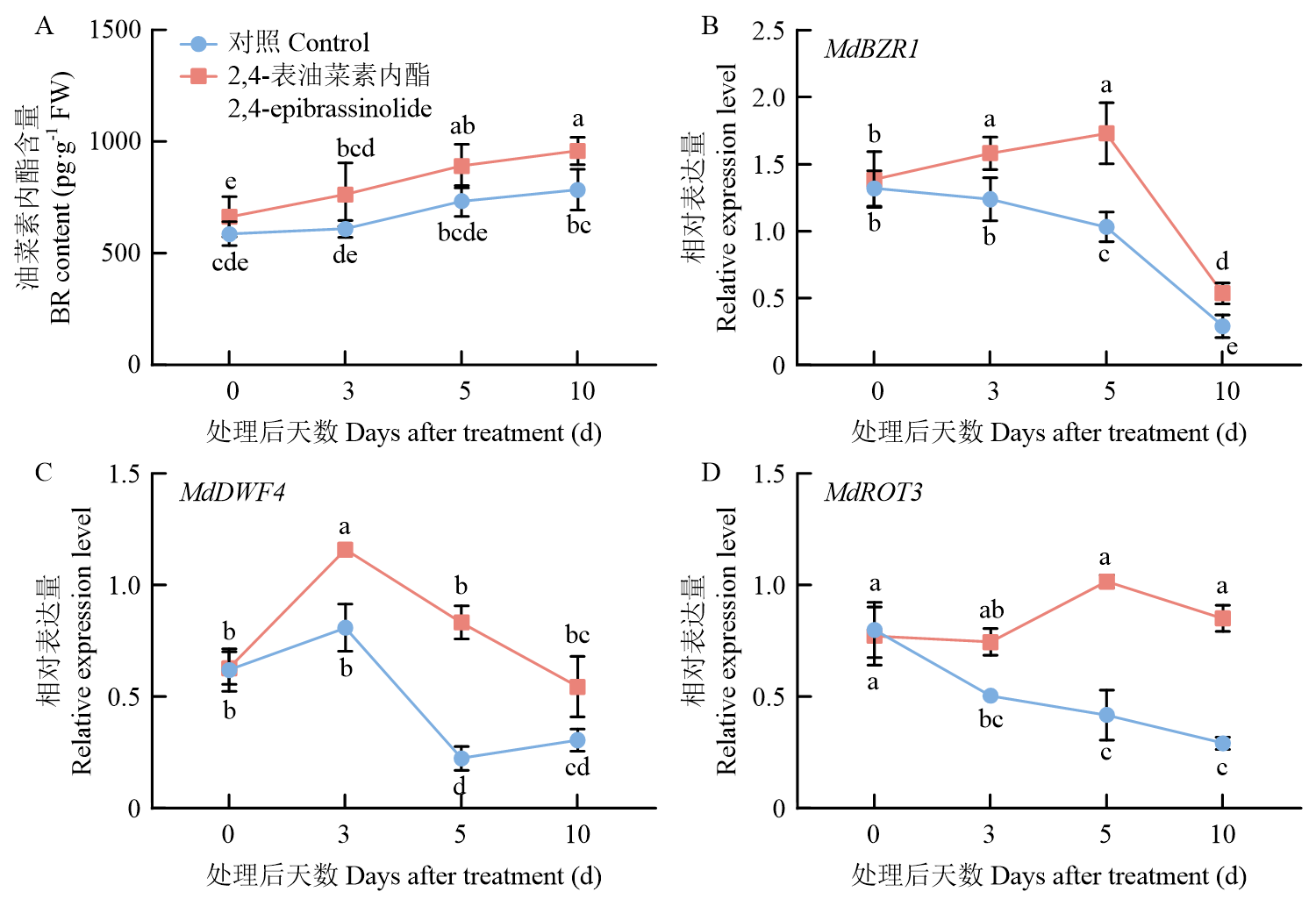
Fig. 1

EBR induces endogenous BR accumulation and signal transduction response Different lowercase letters indicate significant difference (P<0.05). The same as below"

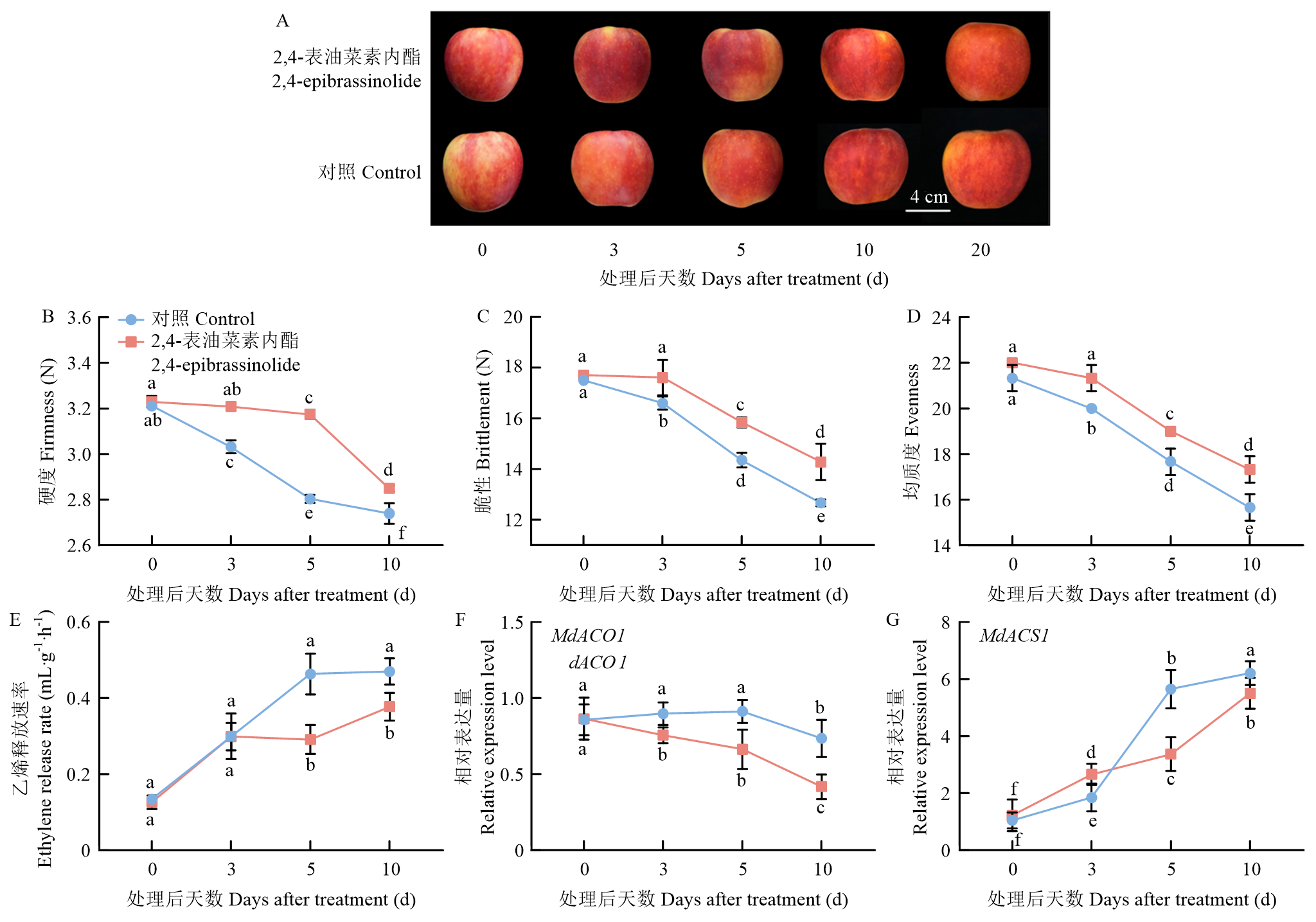
Fig. 2

EBR inhibits senescence and softening during the post-harvest ripening process of apples"

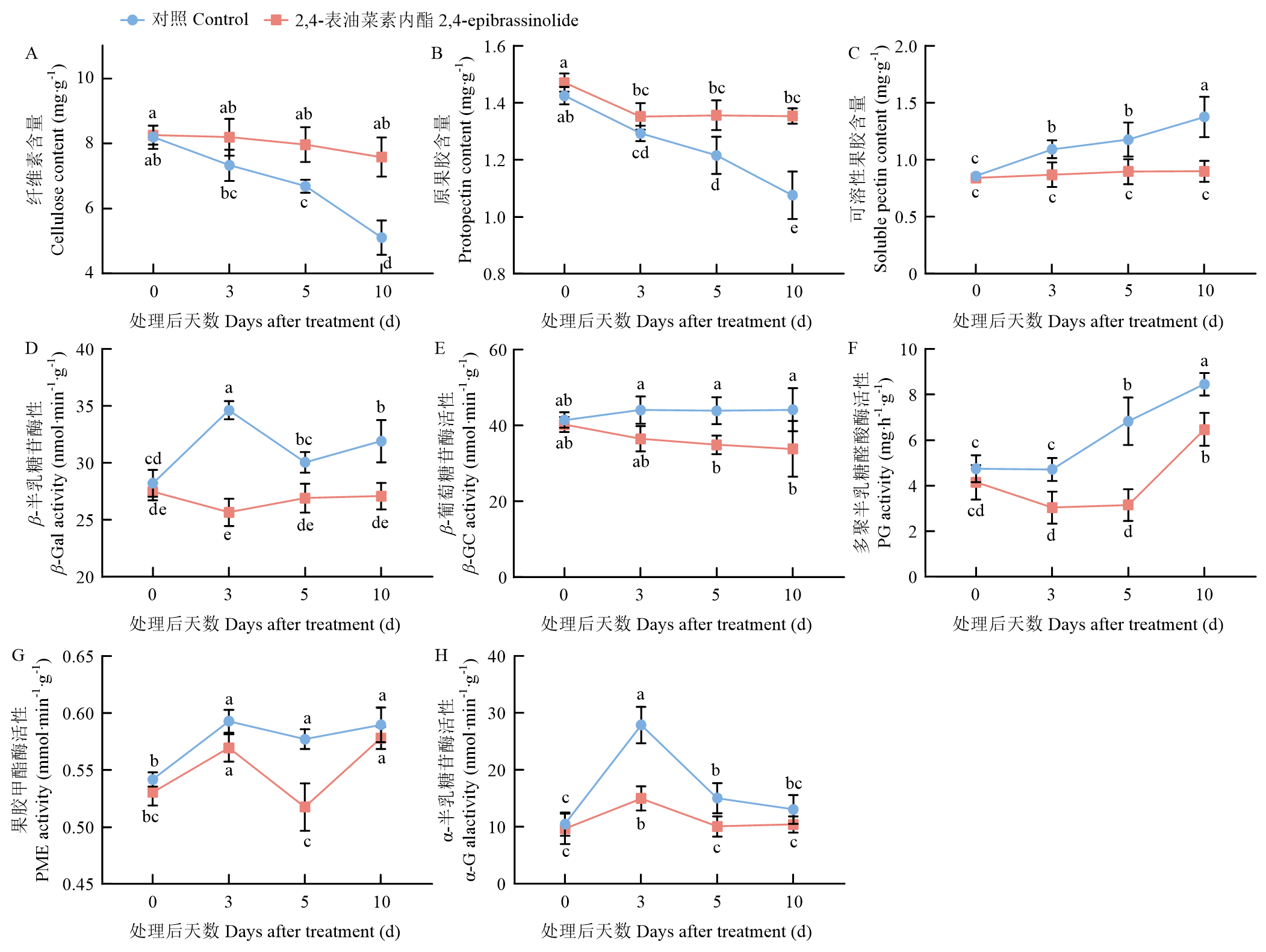
Fig. 3

EBR slows down the degradation of the cell wall"

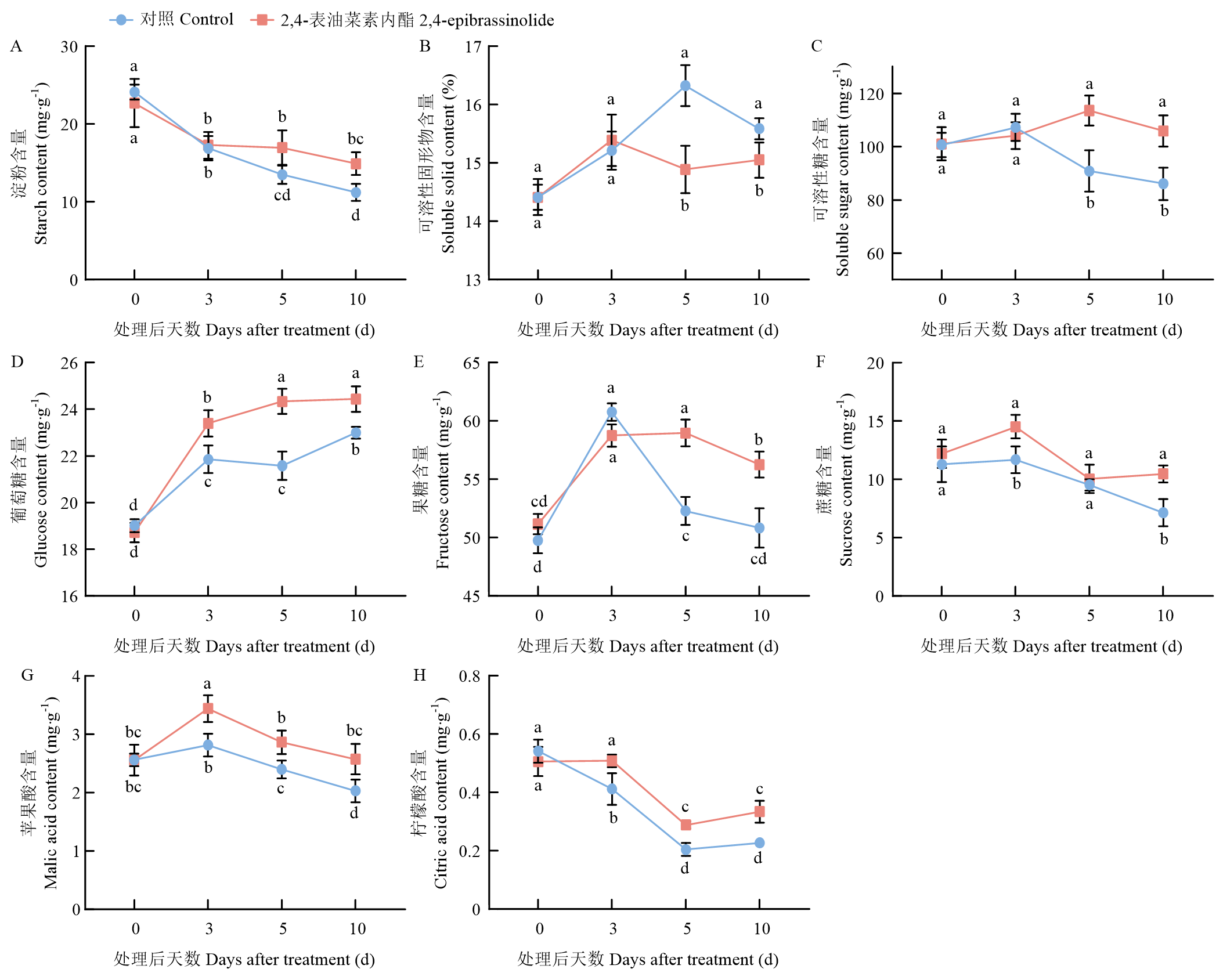
Fig. 4

EBR effects on sugar and acid accumulation in apple fruits"

Fig. 5

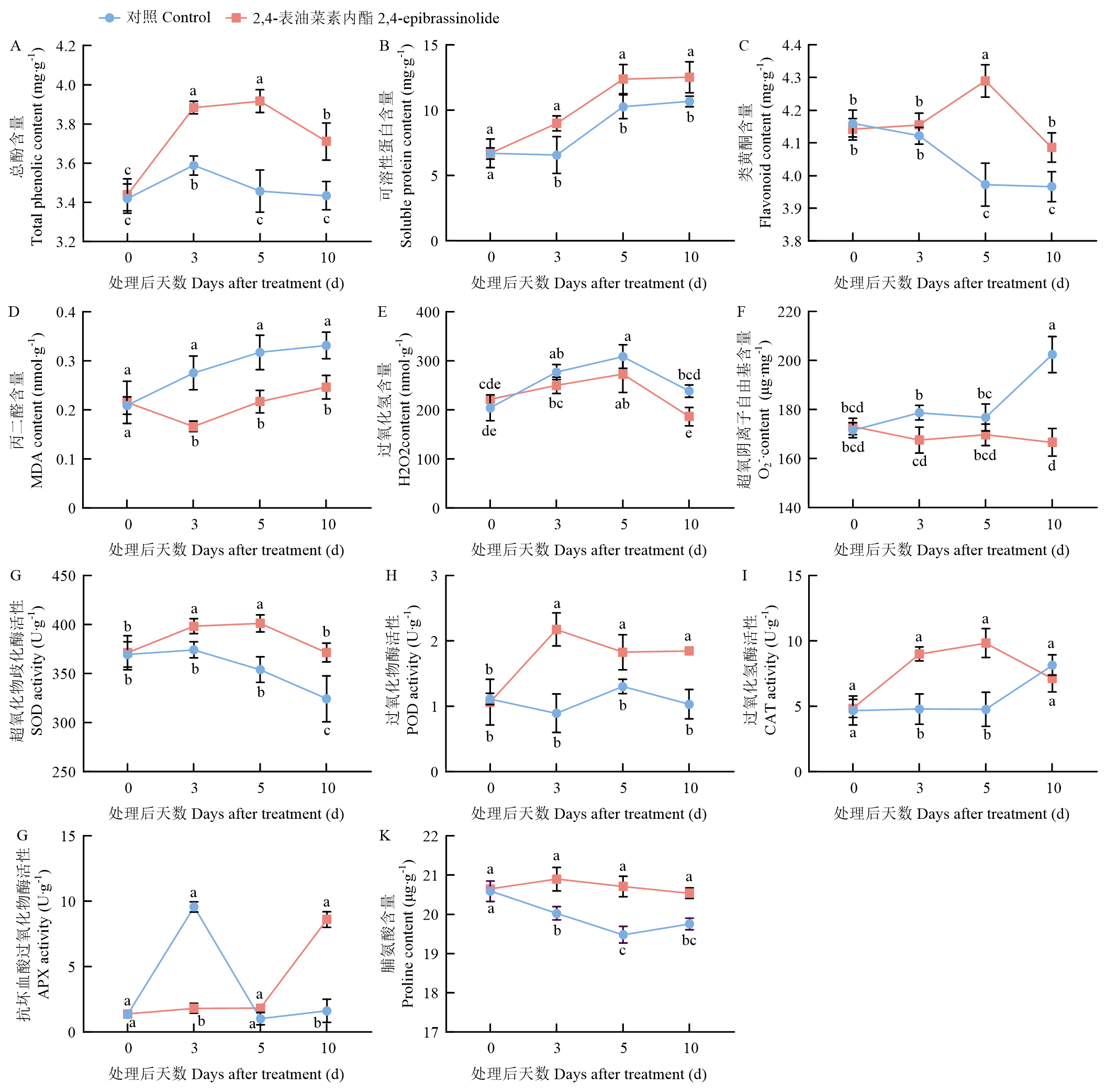
EBR enhances the antioxygenic property of apple fruits"

Fig. 6

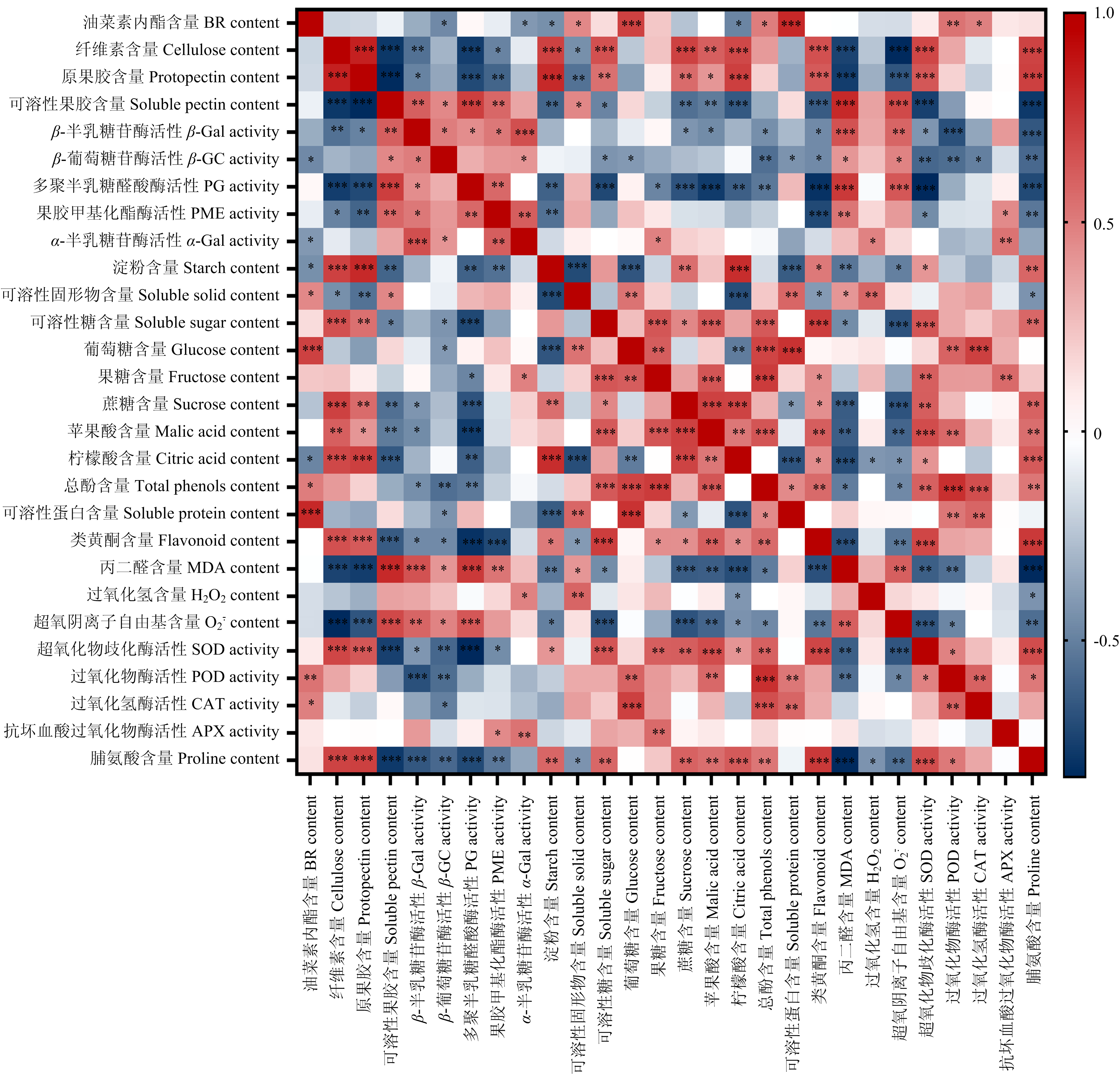
Correlation analysis of each indicator *: P<0.05; **: P<0.01; ***: P<0.001"

[1]
VALLÉE MARCOTTE B, VERHEYDE M, POMERLEAU S, DOYEN A, COUILLARD C. Health benefits of apple juice consumption: A review of interventional trials on humans. Nutrients, 2022, 14(4): 821.

doi: 10.3390/nu14040821
[2]
强晓敏, 李秀红, 李进, 何芳婷, 王林海. 新形势下我国苹果产业高质量发展对策. 西北园艺(果树), 2021(4): 6-8.
QIANG X M, LI X H, LI J, HE F T, WANG L H. China’s apple industry in the new situation under the high-quality development of countermeasures. Northwest Horticulture, 2021(4): 6-8. (in Chinese)
[3]
WANG J H, SUN Q, MA C N, WEI M M, WANG C K, ZHAO Y W, WANG W Y, HU D G. MdWRKY31-MdNAC 7 regulatory network: Orchestrating fruit softening by modulating cell wall-modifying enzyme MdXTH2 in response to ethylene signalling. Plant Biotechnology Journal, 2024, 22(12): 3244-3261.

doi: 10.1111/pbi.v22.12
[4]
JIANG F, XU M Y, ZHANG H, LIU M, ZHAO L, DU G D. Ethylene promotes fruit softening of ‘Nanguo’ pear via cell wall degradation. Journal of Plant Growth Regulation, 2024, 43(12): 4770-4781.

doi: 10.1007/s00344-024-11432-6
[5]
LAHAYE M, FALOURD X, LAILLET B, LE GALL S. Cellulose, pectin and water in cell walls determine apple flesh viscoelastic mechanical properties. Carbohydrate Polymers, 2020, 232: 115768.

doi: 10.1016/j.carbpol.2019.115768
[6]
TSUCHIDA Y, YAKUSHIJI H, OE T, NEGORO K, GATO N, KOTANI T, ONISHI Y, KOBATA T, TAMURA M. Differences in cell-wall polysaccharide degradation during softening process in two cultivars of Japanese apricot fruits. Journal of the Japanese Society for Horticultural Science, 2014, 83(1): 81-89.

doi: 10.2503/jjshs1.CH-067
[7]
FAN Z Q, BA L J, SHAN W, XIAO Y Y, LU W J, KUANG J F, CHEN J Y. A banana R2R3-MYB transcription factor MaMYB3 is involved in fruit ripening through modulation of starch degradation by repressing starch degradation-related genes and MabHLH6. The Plant Journal, 2018, 96(6): 1191-1205.

doi: 10.1111/tpj.2018.96.issue-6
[8]
PEIRS A, SCHEERLINCK N, PEREZ A B, JANCSÓK P, NICOLAı̈ B M. Uncertainty analysis and modelling of the starch index during apple fruit maturation. Postharvest Biology and Technology, 2002, 26(2): 199-207.

doi: 10.1016/S0925-5214(02)00038-8
[9]
SHIGA T M, SOARES C A, NASCIMENTO J R, PURGATTO E, LAJOLO F M, CORDENUNSI B R. Ripening-associated changes in the amounts of starch and non-starch polysaccharides and their contributions to fruit softening in three banana cultivars. Journal of the Science of Food and Agriculture, 2011, 91(8): 1511-1516.

doi: 10.1002/jsfa.4342 pmid: 21445854
[10]
YAMAKI S. Isolation of vacuoles from immature apple fruit flesh and compartmentation of sugars, organic acids, phenolic compounds and amino acids. Plant and Cell Physiology, 1984, 25(1): 151-166.
[11]
COLARIC M, VEBERIC R, STAMPAR F, HUDINA M. Evaluation of peach and nectarine fruit quality and correlations between sensory and chemical attributes. Journal of the Science of Food and Agriculture, 2005, 85(15): 2611-2616.

doi: 10.1002/jsfa.v85:15
[12]
YU J Q, GU K D, ZHANG L L, SUN C H, ZHANG Q Y, WANG J H, WANG C K, WANG W Y, DU M C, HU D G. MdbHLH 3 modulates apple soluble sugar content by activating phosphofructokinase gene expression. Journal of Integrative Plant Biology, 2022, 64(4): 884-900.

doi: 10.1111/jipb.v64.4
[13]
JIANG B, FANG X J, FU D Q, WU W J, HAN Y C, CHEN H J, LIU R L, GAO H Y. Exogenous salicylic acid regulates organic acids metabolism in postharvest blueberry fruit. Frontiers in Plant Science, 2022, 13: 1024909.

doi: 10.3389/fpls.2022.1024909
[14]
ZHENG X Z, GONG M, ZHANG Q D, TAN H Q, LI L P, TANG Y W, LI Z G, PENG M C, DENG W. Metabolism and regulation of ascorbic acid in fruits. Plants, 2022, 11(12): 1602.

doi: 10.3390/plants11121602
[15]
SU J, LI M H, YANG H Q, SHU H L, YU K M, CAO H L, XU G Z, WANG M H, ZHU Y F, ZHU Y G, MA C H, SHAO J H. Enrichment of grape berries and tomato fruit with health-promoting tartaric acid by expression of the Vitis vinifera transketolase VvTK2 gene. International Journal of Biological Macromolecules, 2024, 257: 128734.

doi: 10.1016/j.ijbiomac.2023.128734
[16]
WU J H, GAO H Y, ZHAO L, LIAO X J, CHEN F, WANG Z F, HU X S. Chemical compositional characterization of some apple cultivars. Food Chemistry, 2007, 103(1): 88-93.

doi: 10.1016/j.foodchem.2006.07.030
[17]
ZHANG Y Z, LI P M, CHENG L L. Developmental changes of carbohydrates, organic acids, amino acids, and phenolic compounds in ‘Honeycrisp’ apple flesh. Food Chemistry, 2010, 123(4): 1013-1018.

doi: 10.1016/j.foodchem.2010.05.053
[18]
ALI KHAN S, BEEKWILDER J, SCHAART J G, MUMM R, SORIANO J M, JACOBSEN E, SCHOUTEN H J. Differences in acidity of apples are probably mainly caused by a malic acid transporter gene on LG16. Tree Genetics & Genomes, 2013, 9(2): 475-487.
[19]
YANG C, CHEN T, SHEN B R, SUN S X, SONG H Y, CHEN D, XI W P. Citric acid treatment reduces decay and maintains the postharvest quality of peach (Prunus persica L.) fruit. Food Science & Nutrition, 2019, 7(11): 3635-3643.

doi: 10.1002/fsn3.v7.11
[20]
HU Y F, HAO Y C, WEI Z Y, CUI H Y, ZHAN Y X. Effect of 1-MCP coupling with carbon dioxide treatment on antioxidant enzyme activities and quality of fresh-cut Fuji apples. Journal of Food Processing and Preservation, 2020, 44(12): e14903.
[21]
LV J Y, TAI R, CAO Y, GE Y H, CHEN J X, LI J R. Genome-wide identification and comparative expression analysis of ascorbate peroxidase (APX) gene family in apple fruit under 1-methylcyclopropene (1-MCP) and ethephon treatments during ripening. Scientia Horticulturae, 2024, 329: 113016.

doi: 10.1016/j.scienta.2024.113016
[22]
FENG Z Q, LI T, LI X Y, LUO L X, LI Z, LIU C L, GE S F, ZHU Z L, LI Y Y, JIANG H, JIANG Y M. Enhancement of apple stress resistance via proline elevation by sugar substitutes. International Journal of Molecular Sciences, 2024, 25(17): 9548.

doi: 10.3390/ijms25179548
[23]
HIDALGO M, SÁNCHEZ-MORENO C, DE PASCUAL-TERESA S. Flavonoid-flavonoid interaction and its effect on their antioxidant activity. Food Chemistry, 2010, 121(3): 691-696.

doi: 10.1016/j.foodchem.2009.12.097
[24]
JIA D F, LIAO G L, YE B, ZHONG M, HUANG C H, XU X B. Changes in fruit quality, phenolic compounds, and antioxidant activity of kiwifruit (Actinidia eriantha) during on-vine ripening. LWT-Food Science and Technology, 2024, 206: 116564.

doi: 10.1016/j.lwt.2024.116564
[25]
孙嘉茂, 崔全石, 王语晴, 司雅静, 时瑀繁, 卜海东, 袁晖, 王爱德. 苹果采前喷施EBR与MeJA对采后品质的影响. 园艺学报, 2022, 49(10): 2236-2248.

doi: 10.16420/j.issn.0513-353x.2022-0594
SUN J M, CUI Q S, WANG Y Q, SI Y J, SHI Y F, BU H D, YUAN H, WANG A D. Effects of brassinolides and methyl jasmonate spraying on the postharvest quality of apple fruit. Acta Horticulturae Sinica, 2022, 49(10): 2236-2248. (in Chinese)

doi: 10.16420/j.issn.0513-353x.2022-0594
[26]
WARANG O, BHATTACHARJEE P, DEBBARMA S, CHANDER S. Brassinosteroids: Unveiling their role in fruit ripening and quality. Applied Fruit Science, 2025, 67(2): 82.

doi: 10.1007/s10341-025-01304-y
[27]
MANGHWAR H, HUSSAIN A, ALI Q, LIU F. Brassinosteroids (BRs) role in plant development and coping with different stresses. International Journal of Molecular Sciences, 2022, 23(3): 1012.

doi: 10.3390/ijms23031012
[28]
SUN Y, FAN X Y, CAO D M, TANG W Q, HE K, ZHU J Y, HE J X, BAI M Y, ZHU S W, OH E, et al. Integration of brassinosteroid signal transduction with the transcription network for plant growth regulation in Arabidopsis. Developmental Cell, 2010, 19(5): 765-777.

doi: 10.1016/j.devcel.2010.10.010
[29]
YU X F, LI L, ZOLA J, ALURU M, YE H X, FOUDREE A, GUO H Q, ANDERSON S, ALURU S, LIU P, RODERMEL S, YIN Y H. A brassinosteroid transcriptional network revealed by genome-wide identification of BESI target genes in Arabidopsis thaliana. The Plant Journal, 2011, 65(4): 634-646.

doi: 10.1111/tpj.2011.65.issue-4
[30]
NOLAN T M, VUKAŠINOVIĆ N, LIU D R, RUSSINOVA E, YIN Y H. Brassinosteroids: Multidimensional regulators of plant growth, development, and stress responses. The Plant Cell, 2020, 32(2): 295-318.

doi: 10.1105/tpc.19.00335 pmid: 31776234
[31]
LV M H, LI J. Molecular mechanisms of brassinosteroid-mediated responses to changing environments in Arabidopsis. International Journal of Molecular Sciences, 2020, 21(8): 2737.

doi: 10.3390/ijms21082737
[32]
SHI H Y, LI X P, LV M H, LI J. BES1/BZR1 family transcription factors regulate plant development via brassinosteroid-dependent and independent pathways. International Journal of Molecular Sciences, 2022, 23(17): 10149.

doi: 10.3390/ijms231710149
[33]
CHAI Y M, ZHANG Q, TIAN L, LI C L, XING Y, QIN L, SHEN Y Y. Brassinosteroid is involved in strawberry fruit ripening. Plant Growth Regulation, 2013, 69(1): 63-69.

doi: 10.1007/s10725-012-9747-6
[34]
LI J Z, GUO T T, GUO M L, DAI X N, XU X F, LI Y J, SONG Z Z, LIANG M X. Exogenous BR delayed peach fruit softening by inhibiting pectin degradation enzyme genes. Frontiers in Plant Science, 2023, 14: 1226921.

doi: 10.3389/fpls.2023.1226921
[35]
PAN R J, GUO M L, GUO T T, WANG X Y, CHU Z J, LI J Z, YANG J J, LIANG M X. The shelf life of sweet cherry fruit was prolonged under brassinolide treatment. Journal of Food Measurement and Characterization, 2025, 19(8): 5720-5729.

doi: 10.1007/s11694-025-03350-2
[36]
JI Y L, QU Y, JIANG Z Y, YAN J J, CHU J F, XU M Y, SU X, YUAN H, WANG A D. The mechanism for brassinosteroids suppressing climacteric fruit ripening. Plant Physiology, 2021, 185(4): 1875-1893.

doi: 10.1093/plphys/kiab013 pmid: 33743010
[37]
MOU Y L, DONG X G, ZHANG Y, TIAN L M, HUO H L, QI D, XU J Y, LIU C, LI N M, YIN C, YANG X. Identification and evaluation of flesh texture of crisp pear fruit based on penetration test using texture analyzer. Horticulturae, 2025, 11(4): 359.

doi: 10.3390/horticulturae11040359
[38]
孙超, 黎家. 油菜素甾醇类激素的生物合成、代谢及信号转导. 植物生理学报, 2017, 53(3): 291-307.
SUN C, LI J. Biosynthesis, catabolism, and signal transduction of brassinosteroids. Plant Physiology Communications, 2017, 53(3): 291-307. (in Chinese)
[39]
JIA C G, ZHAO S K, BAO T T, ZHAO P Q, PENG K, GUO Q X, GAO X, QIN J C. Tomato BZR/BES transcription factor SlBZR1 positively regulates BR signaling and salt stress tolerance in tomato and Arabidopsis. Plant Science, 2021, 302: 110719.

doi: 10.1016/j.plantsci.2020.110719
[40]
YANG X T, SONG J, CAMPBELL-PALMER L, FILLMORE S, ZHANG Z Q. Effect of ethylene and 1-MCP on expression of genes involved in ethylene biosynthesis and perception during ripening of apple fruit. Postharvest Biology and Technology, 2013, 78: 55-66.

doi: 10.1016/j.postharvbio.2012.11.012
[41]
YANG S F, HOFFMAN N E. Ethylene biosynthesis and its regulation in higher plants. Annual Review of Plant Physiology, 1984, 35: 155-189.

doi: 10.1146/arplant.1984.35.issue-1
[42]
LU S W, ZHANG Y, ZHU K J, YANG W, YE J L, CHAI L J, XU Q, DENG X X. The Citrus transcription factor CsMADS6 modulates carotenoid metabolism by directly regulating carotenogenic genes. Plant Physiology, 2018, 176(4): 2657-2676.

doi: 10.1104/pp.17.01830
[43]
MUIR J G, ROSE R, ROSELLA O, LIELS K, BARRETT J S, SHEPHERD S J, GIBSON P R. Measurement of short-chain carbohydrates in common Australian vegetables and fruits by high-performance liquid chromatography (HPLC). Journal of Agricultural and Food Chemistry, 2009, 57(2): 554-565.

doi: 10.1021/jf802700e pmid: 19123815
[44]
BUYSSE J, MERCKX R. An improved colorimetric method to quantify sugar content of plant tissue. Journal of Experimental Botany, 1993, 44(267): 1627-1629.

doi: 10.1093/jxb/44.10.1627
[45]
HU L Y, HU S L, WU J, LI Y H, ZHENG J L, WEI Z J, LIU J, WANG H L, LIU Y S, ZHANG H. Hydrogen sulfide prolongs postharvest shelf life of strawberry and plays an antioxidative role in fruits. Journal of Agricultural and Food Chemistry, 2012, 60(35): 8684-8693.

doi: 10.1021/jf300728h
[46]
SEPPÄ L, PELTONIEMI A, TAHVONEN R, TUORILA H. Flavour and texture changes in apple cultivars during storage. LWT-Food Science and Technology, 2013, 54(2): 500-512.

doi: 10.1016/j.lwt.2013.06.012
[47]
VIDYA VARDHINI B, RAO S S R. Acceleration of ripening of tomato pericarp discs by brassinosteroids. Phytochemistry, 2002, 61(7): 843-847.

doi: 10.1016/s0031-9422(02)00223-6 pmid: 12453577
[48]
ZAHARAH S S, SINGH Z, SYMONS G M, REID J B. Role of brassinosteroids, ethylene, abscisic acid, and indole-3-acetic acid in mango fruit ripening. Journal of Plant Growth Regulation, 2012, 31(3): 363-372.

doi: 10.1007/s00344-011-9245-5
[49]
LI H, YE K Y, SHI Y T, CHENG J K, ZHANG X Y, YANG S H. BZR1 positively regulates freezing tolerance via CBF-dependent and CBF-independent pathways in Arabidopsis. Molecular Plant, 2017, 10(4): 545-559.

doi: 10.1016/j.molp.2017.01.004
[50]
CAO S, ZHENG Y, YANG Z. Effect of 1-MCP treatment on nutritive and functional properties of loquat fruit during cold storage. New Zealand Journal of Crop and Horticultural Science, 2011, 39(1): 61-70.

doi: 10.1080/01140671.2010.526621
[51]
VAN BUREN J P. The chemistry of texture in fruits and vegetables. Journal of Texture Studies, 1979, 10(1): 1-23.

doi: 10.1111/jts.1979.10.issue-1
[52]
VORAGEN A G J, COENEN G J, VERHOEF R P, SCHOLS H A. Pectin, a versatile polysaccharide present in plant cell walls. Structural Chemistry, 2009, 20(2): 263-275.

doi: 10.1007/s11224-009-9442-z
[53]
XIA X J, FANG P P, GUO X, QIAN X J, ZHOU J, SHI K, ZHOU Y H, YU J Q. Brassinosteroid-mediated apoplastic H2O2- glutaredoxin 12/14 cascade regulates antioxidant capacity in response to chilling in tomato. Plant, Cell & Environment, 2018, 41(5): 1052-1064.

doi: 10.1111/pce.v41.5
[1] CONG QiQi, ZHANG JingYi, MENG XiangLong, DAI PengBo, LI Bo, HU TongLe, WANG ShuTong, CAO KeQiang, WANG YaNan. Identification of Hypovirus in Apple Ring Rot Fungus Botryosphaeria dothidea and Detection of Virus-Carrying Status in China [J]. Scientia Agricultura Sinica, 2025, 58(3): 478-492.
[2] QIN Lu, SHEN DanDan, JIANG XiaoLi, XIE HePing, AO YiJun, YANG Yang, ZHU Feng, XU RangWei, LIAO WenYue, CHENG YunJiang. Effect of Water Status on the Storability of Citrus Fruits Harvested Under Continuous Rainy Weather [J]. Scientia Agricultura Sinica, 2025, 58(24): 5259-5273.
[3] PAN Yuan, WANG De, LIU Nan, MENG XiangLong, DAI PengBo, LI Bo, HU TongLe, WANG ShuTong, CAO KeQiang, WANG YaNan. Evaluation of the Effectiveness of Two High-Throughput Sequencing Techniques in Identifying Apple Viruses and Identification of Two Novel Viruses [J]. Scientia Agricultura Sinica, 2025, 58(2): 266-280.
[4] QIN Jiaxin, OU LüSuo, XU ChenXi, ZOU YunQian, LU ChengQue, ZHU Feng, XU RangWei, CHEN XiangLing, QIN KeFeng, LI GuoGuo, CHENG YunJiang. Effect of Fluroxypyr-Meptyl on the Quality of Orah Mandarin During On-Tree Preservation [J]. Scientia Agricultura Sinica, 2025, 58(19): 3970-3984.
[5] DONG Xue, CHEN MengQiu, SHAO Jin, WU XueYou, TANG PeiAn. Construction of a Differential Gene Expression and Quality Regulation Network in Stored Rice Grain Using WGCNA [J]. Scientia Agricultura Sinica, 2025, 58(14): 2885-2903.
[6] HUANG Hao, WU QingHong, ZHANG Yu, WANG Ye, LIU QingE, FANG YiDa, LUO ZiSheng. Effects of Novel Phase Change Coolant on the Postharvest Quality of Shiitake Mushrooms [J]. Scientia Agricultura Sinica, 2024, 57(5): 989-999.
[7] WANG WenJun, JIANG HaiYan, TIAN Hao, MENG Kuo, GOU WenQing. Research Progress on Postharvest Disease and Its Control Techniques of Agaricus bisporus [J]. Scientia Agricultura Sinica, 2024, 57(23): 4794-4805.
[8] ZHANG Yi, LIU Ying, CHENG CunGang, LI YanQing, LI Zhuang. Effects of Combined Application Proportion of Cow Manure and Chemical Fertilizer on Soil Organic Carbon Pool and Enzyme Activity in Apple Orchard [J]. Scientia Agricultura Sinica, 2024, 57(20): 4107-4118.
[9] ZHOU HanMi, MA LinShuang, SUN QiLi, CHEN JiaGeng, LI JiChen, SU YuMin, CHEN Cheng, WU Qi. Optimization of Integrated Water and Nitrogen Regulation System in Apple Based on Multi-Objective Comprehensive Evaluation [J]. Scientia Agricultura Sinica, 2024, 57(18): 3654-3670.
[10] ZENG YanXin, GONG HaoNan, YOU ChunXiang, LU JingSheng, GAO WenSheng, WANG XiaoFei. Effects of Different Rootstocks on Growth and Fruit Quality of Young Ruixianghong Apple Trees with Multi-Stem Shape [J]. Scientia Agricultura Sinica, 2024, 57(14): 2847-2861.
[11] ZHANG HaiQing, ZHANG HengTao, GAO QiMing, YAO JiaLong, WANG YaRong, LIU ZhenZhen, MENG XiangPeng, ZHOU Zhe, YAN ZhenLi. Transcriptome Analysis for Screening Key Genes Related to Regulating Branching Ability in Apple [J]. Scientia Agricultura Sinica, 2024, 57(10): 1995-2009.
[12] SUN Zheng, LAI ZhongXiao, ZHAO XiaoMin, JIANG ZhiLi, CHEN GuangYou, MA ZhiQing. Application Evaluation of the Whole-Process Biological Management Scheme for Apple Pests in the Weibei Dry Highland [J]. Scientia Agricultura Sinica, 2023, 56(6): 1102-1112.
[13] ZHENG WenYan, CHANG YuanSheng, HE Ping, HE XiaoWen, WANG Sen, GAO WenSheng, LI LinGuang, WANG HaiBo. Development and Validation of KASP Markers Based on a Whole- Genome Resequencing Approach in a Hybrid Population of Luli × Red No. 1 [J]. Scientia Agricultura Sinica, 2023, 56(5): 935-950.
[14] WANG ZiDun, WANG Hui, FENG YuChen, ZHANG XueLiang, YAN LeiYu, LIU XiaoJie, ZHAO ZhengYang. Effects of Different Color Fruit Bags on Quality of Ruixue Apple Fruits [J]. Scientia Agricultura Sinica, 2023, 56(4): 729-740.
[15] LI XingXing, ZHOU GuoFu, LUO GuanYu, CHEN SiRong, ZHANG JinLong, CHEN GuoHua, ZHANG XiaoMing. Selection Preference and Adaptability of Bactrocera dorsalis to Different Varieties of Malus pumila [J]. Scientia Agricultura Sinica, 2023, 56(17): 3358-3371.
Viewed
Full text


Abstract

Cited

  Shared   
  Discussed   
No Suggested Reading articles found!