Scientia Agricultura Sinica ›› 2026, Vol. 59 ›› Issue (4): 912-926.doi: 10.3864/j.issn.0578-1752.2026.04.016

• ANIMAL SCIENCE·VETERINARY SCIENCE • Previous Articles    

Regulatory Role of Guanylate-Binding Protein 2 in Staphylococcus aureus -Induced Macrophage Apoptosis

MA GuiLan(), ZHANG XuYang, LI Wu()   

  1. School of Life Sciences, Ningxia University/Key Lab of Ministry of Education for Protection and Utilization of Special Biological Resources in Western China, Yinchuan 750021
  • Received:2025-07-03 Online:2026-02-10 Published:2026-02-10
  • Contact: LI Wu

Abstract:

【Background】Staphylococcus aureus is a common gram-positive pathogenic bacterium capable of causing various infectious diseases and toxin-mediated illnesses. As central effectors of innate immunity, macrophage play a critical role in eliminating S. aureus. However, S. aureus can evade immune clearance by inducing macrophage apoptosis. Guanylate-binding protein 2 (GBP2), an interferon-inducible GTPase, participates in host immune regulation against intracellular pathogens, but its specific functions and regulatory mechanisms in S. aureus-induced macrophage apoptosis remain unclear.【Objective】This study aimed to investigate the regulatory role of GBP2 and its underlying molecular mechanisms in macrophage apoptosis during S. aureus infection to reveal novel immune evasion strategies of S. aureus, so as to provide a theoretical basis for developing new anti-S. aureus therapeutic strategies.【Method】Small interfering RNA (siRNA) technology was used to establish a GBP2-knockdown model in the murine macrophage cell line RAW264.7. After S. aureus infection, the expression levels of the target proteins in macrophages were analyzed by western blotting. These proteins included GBP2, key apoptosis-related proteins (Cleaved-Caspase3 and Cleaved-PARP1), regulatory proteins (Bax and Bcl-2), and key molecules of the MAPK signaling pathway (total JNK, ERK, p38, and their phosphorylated forms p-JNK, p-ERK, and p-p38). Changes in GBP2 mRNA expression levels were measured using quantitative real-time polymerase chain reaction. The intracellular localization and expression of GBP2 were observed using immunofluorescence staining. Apoptosis rates were quantified by flow cytometry using the Annexin V-FITC/PI double-staining assay. All experiments included appropriate controls. Differences between groups were analyzed using one-way analysis of variance, with statistical significance set at P<0.05.【Result】S. aureus infection significantly increased both GBP2 protein and mRNA expression levels in RAW264.7 macrophages (P<0.001). Concurrently, infection activated the intrinsic apoptotic pathway, as evidenced by significantly increased expression of Cleaved-Caspase3 and Cleaved-PARP1 (P<0.001), upregulation of the pro-apoptotic protein Bax, downregulation of the anti-apoptotic protein Bcl-2, and a significantly elevated Bax/Bcl-2 ratio (P<0.001). Flow cytometry confirmed a significantly higher apoptosis rate in the S. aureus-infected group than that in the control group (P<0.001). Furthermore, S. aureus infection markedly activated the MAPK signaling pathway, as indicated by significantly increased levels of p-JNK, p-ERK, and p-p38 (P<0.001). When compared with S. aureus infection alone, the siRNA-GBP2+S. aureus group exhibited significant inhibition of the apoptotic phenotype; Cleaved-Caspase3 and Cleaved-PARP1 expression levels were markedly reduced (P<0.001), the Bax/Bcl-2 ratio was significantly decreased (P<0.001), and the apoptosis rates were also significantly reduced (P<0.001). Simultaneously, GBP2 knockdown significantly suppressed the activation of the MAPK pathway, leading to reduced phosphorylation of JNK, ERK, and p38 (P<0.001).【Conclusion】GBP2 acted as a regulator of S. aureus-induced macrophage apoptosis, likely through modulation of MAPK pathway activation. These findings enhanced our understanding of S. aureus pathogenesis and host-pathogen interactions and reveal a novel function of GBP2 in the immune response to bacterial infection. Targeting GBP2 or its MAPK-mediated apoptotic signaling pathway might represent a promising therapeutic approach to combat S. aureus infection, protect host immune cells, and enhance pathogen clearance.

Key words: macrophage, guanylate-binding protein 2 (GBP2), Staphylococcus aureus, MAPK signaling pathway, apoptosis

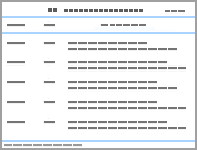
Table 1

The sequence of small interfere RNA"

siRNA 正向 Sense (5′-3′) 反向 Antisense (5′-3′)
#1 CCGCUAACUUUGUGGGCUUTT AAGCCCACAAAGUUAGCGGTT
#2 GAGACAAGAGCUAGAGAAATT UUUCUCUAGCUCUUGUCUCTT
#3 GAUGAAAGACGAACAGAAATT UUUCUGUUCGUCUUUCAUCTT
NC UUCUCCGAACGUGUCACGUTT ACGUGACACGUUCGGAGAATT

Table 2

Gene specific primers for RT-qPCR"

基因 Gene 引物 Primer 引物序列 Primer sequence (5′-3′)
β-actin
Forward AGGGAAATCGTGCGTGACAT
Reverse GGAAAAGAGCCTCAGGGCAT
GBP2
Forward GCAAACCCTGGTTCTGCTTG
Reverse CAGTCGCGGCTCATTAAAGC

Fig. 1

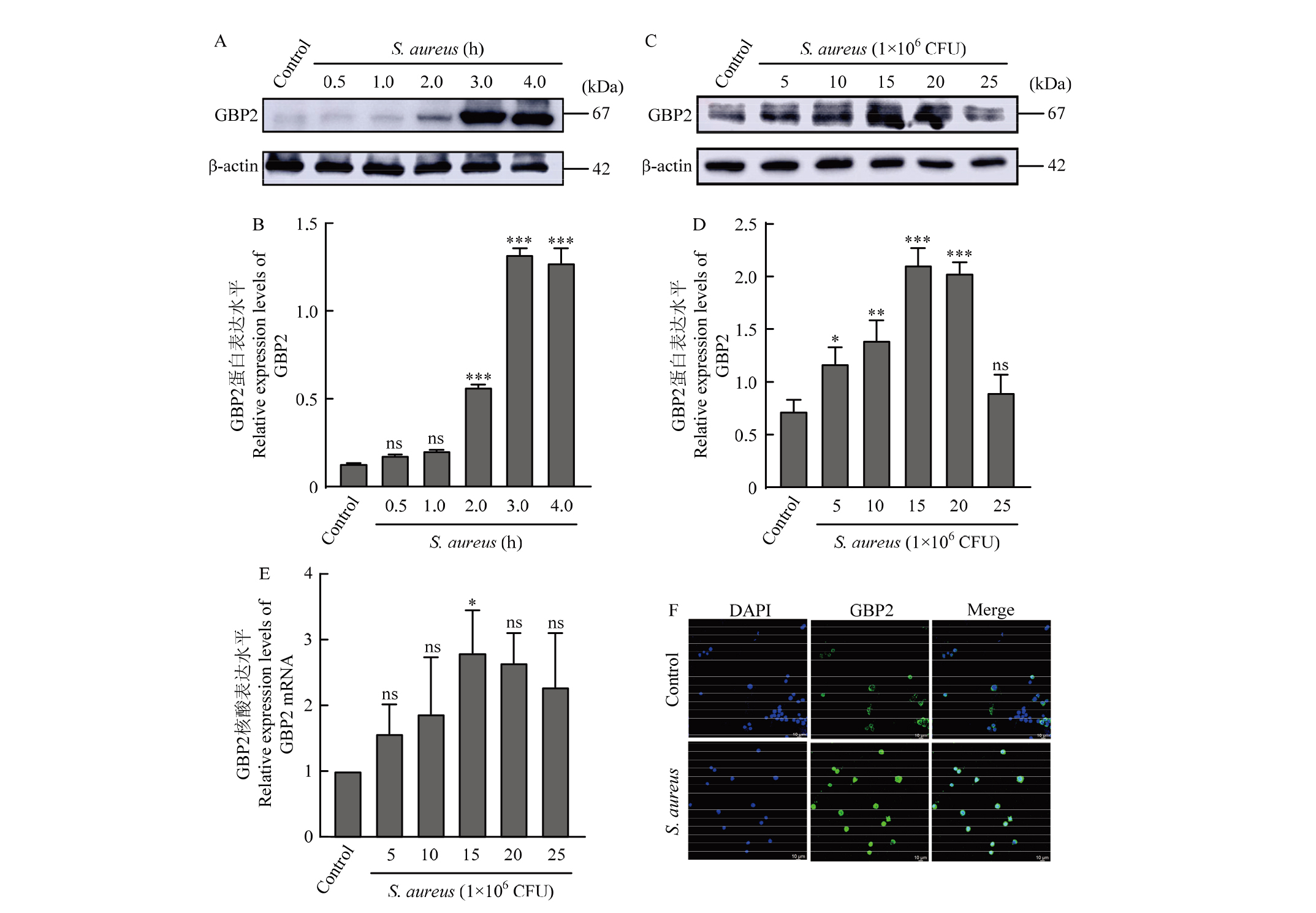
S. aureus induces elevated GBP2 expression in macrophages A: Western blot analysis of GBP2 protein expression in macrophages at different time points post-infection with S. aureus; B: Densitometric analysis of GBP2 protein expression at different time points post-infection; C: Western blot analysis of GBP2 protein expression in the macrophages infected with S. aureus at different multiplicities of infection (MOIs); D: Densitometric analysis of GBP2 protein expression at different MOIs; E: RT-qPCR analysis of GBP2 transcriptional changes; F: Immunofluorescence detection showing GBP2 localization and fluorescence intensity in RAW264.7 cells 3 h post-infection with S. aureus (40× magnification; scale bar = 10 µm). Data represent three independent experiments (n = 3). * P<0.05, ** P<0.01, and *** P<0.001. The same as below"

Fig. 2

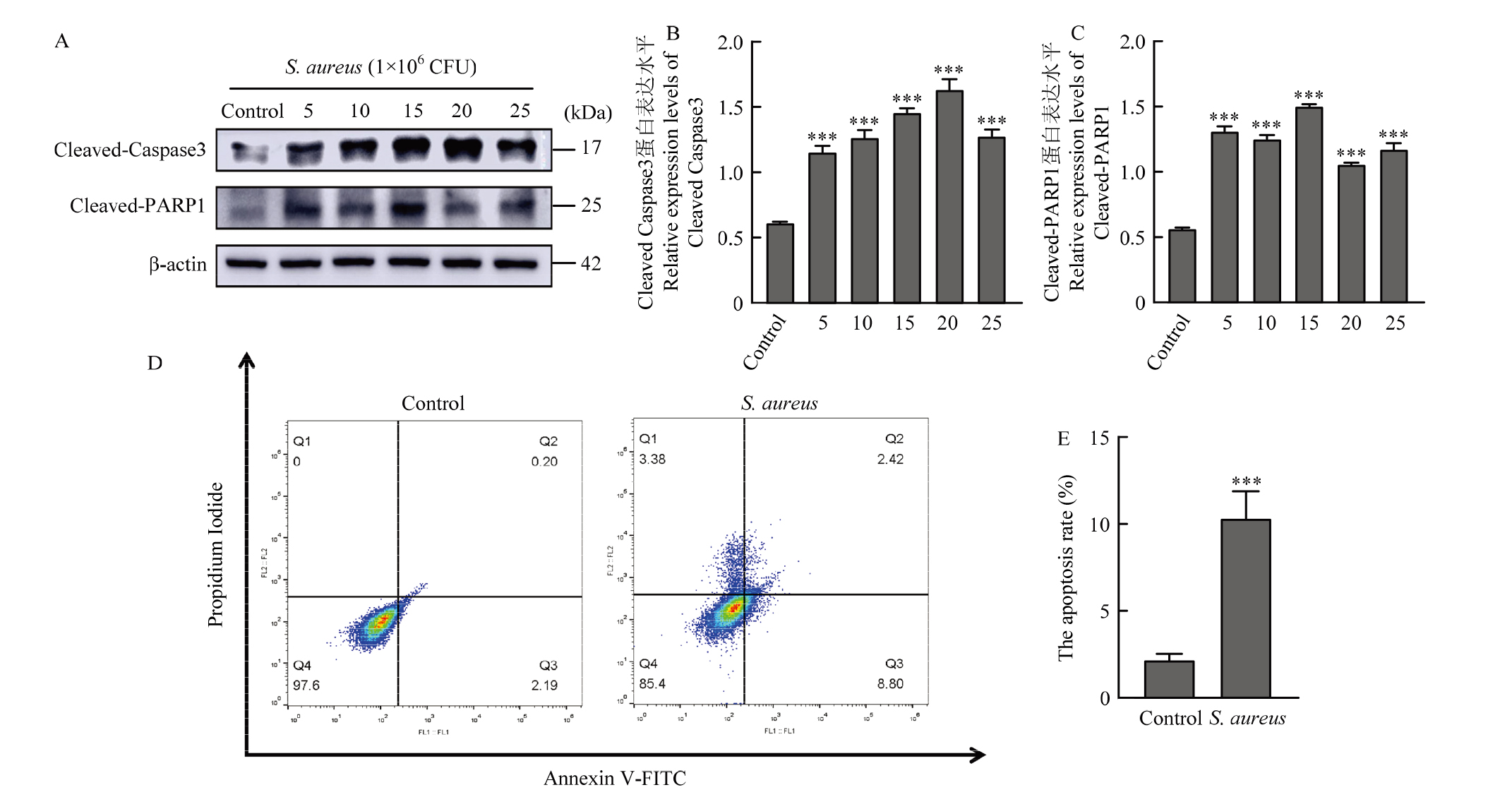
Effect of S. aureus infection on RAW264.7 cell apoptosis A: Western blot analysis of Cleaved-Caspase3 and Cleaved-PARP1 protein expression in the macrophages infected with S. aureus at different multiplicities of infection (MOIs); B, C: Densitometric quantification of Cleaved-Caspase3 and Cleaved-PARP1 protein levels; D: Flow cytometric analysis of apoptosis rates in the RAW264.7 cells 3 h post-infection; E: Histogram showing the quantitative analysis of apoptosis rates. Data represent mean ± SD from three independent experiments"

Fig. 3

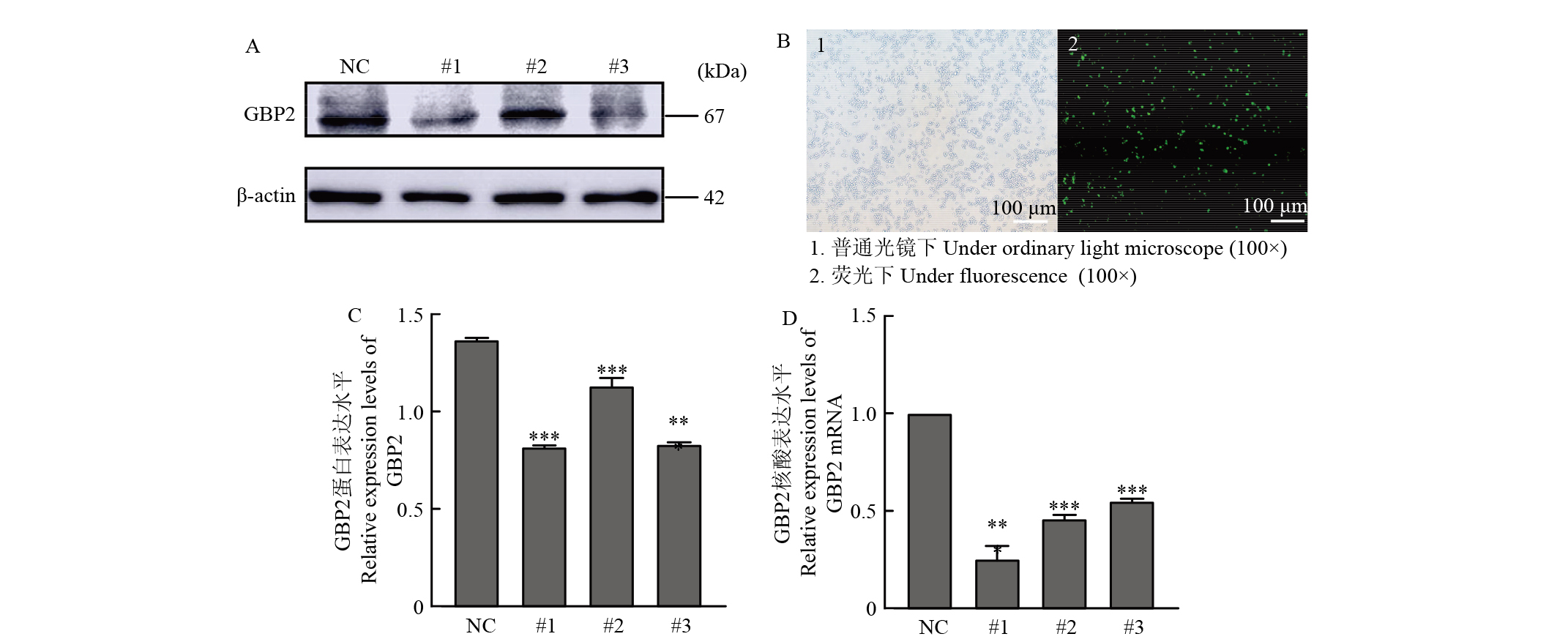
Validation of GBP2 knockdown by small interfering RNA (siRNA) in RAW264.7 cells A: Western blot analysis of GBP2 protein expression in the RAW264.7 cells 24 h post-transfection with three different siRNA-GBP2 constructs; B: Fluorescence microscopy assessment of transfection efficiency (100× magnification; scale bar = 100 µm); C: Densitometric quantification of GBP2 protein levels; D: RT-qPCR analysis of GBP2 mRNA expression. Representative images/data from three independent experiments are shown"

Fig. 4

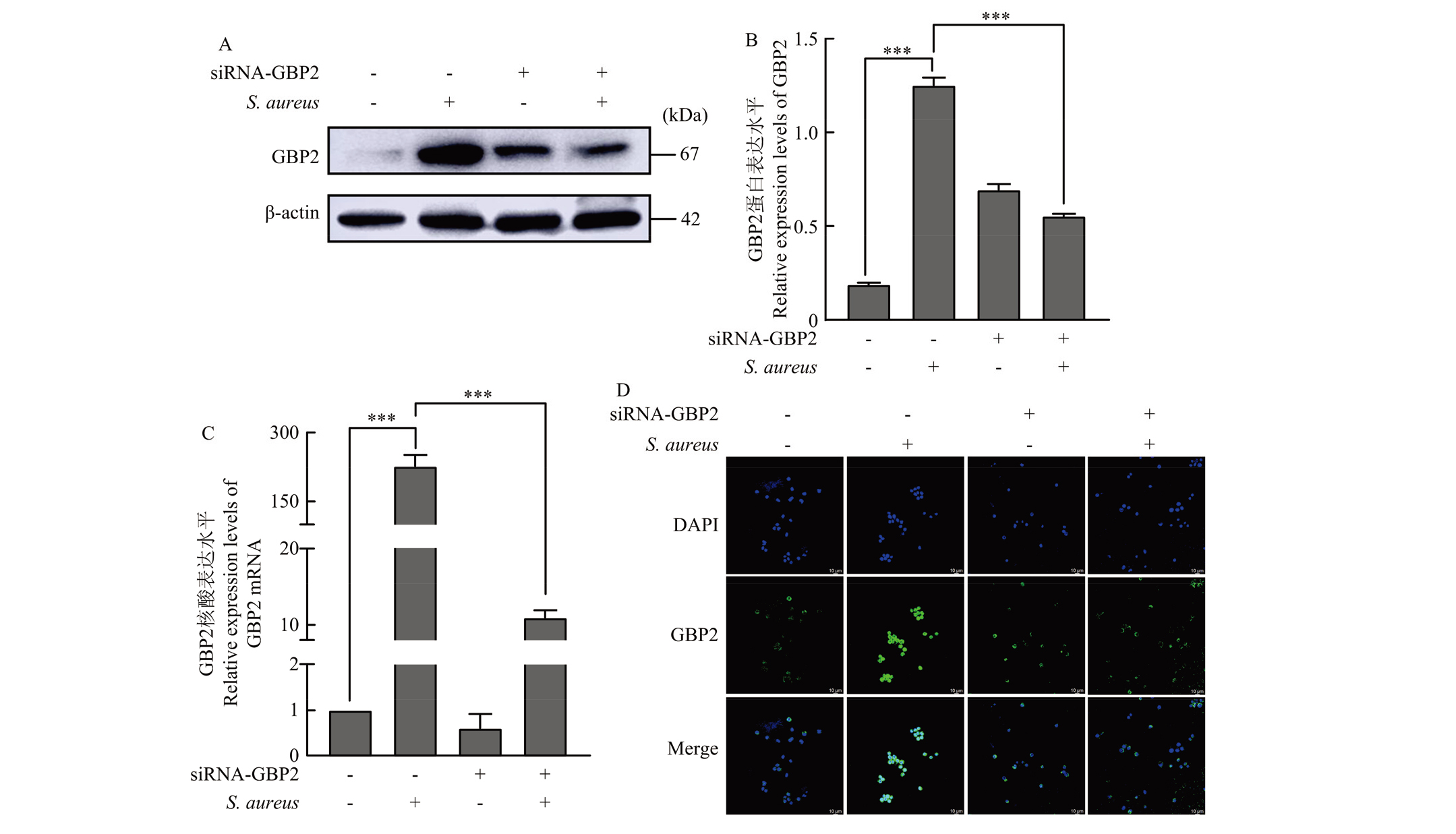
Establishment of S. aureus-infected RAW264.7 cell model following siRNA-GBP2 transfection A: Western blot analysis of GBP2 protein expression in RAW264.7 cells transfected with siRNA-GBP2 for 24 h followed by S. aureus infection for 3 h; B: Densitometric quantification of GBP2 protein levels; C: RT-qPCR analysis of GBP2 mRNA expression after S. aureus infection of siRNA-GBP2-transfected cells; D: Immunofluorescence verification of GBP2 knockdown efficiency after S. aureus infection. (40× magnification; scale bar =10 µm). Data represent mean ± SD from three independent experiments"

Fig. 5

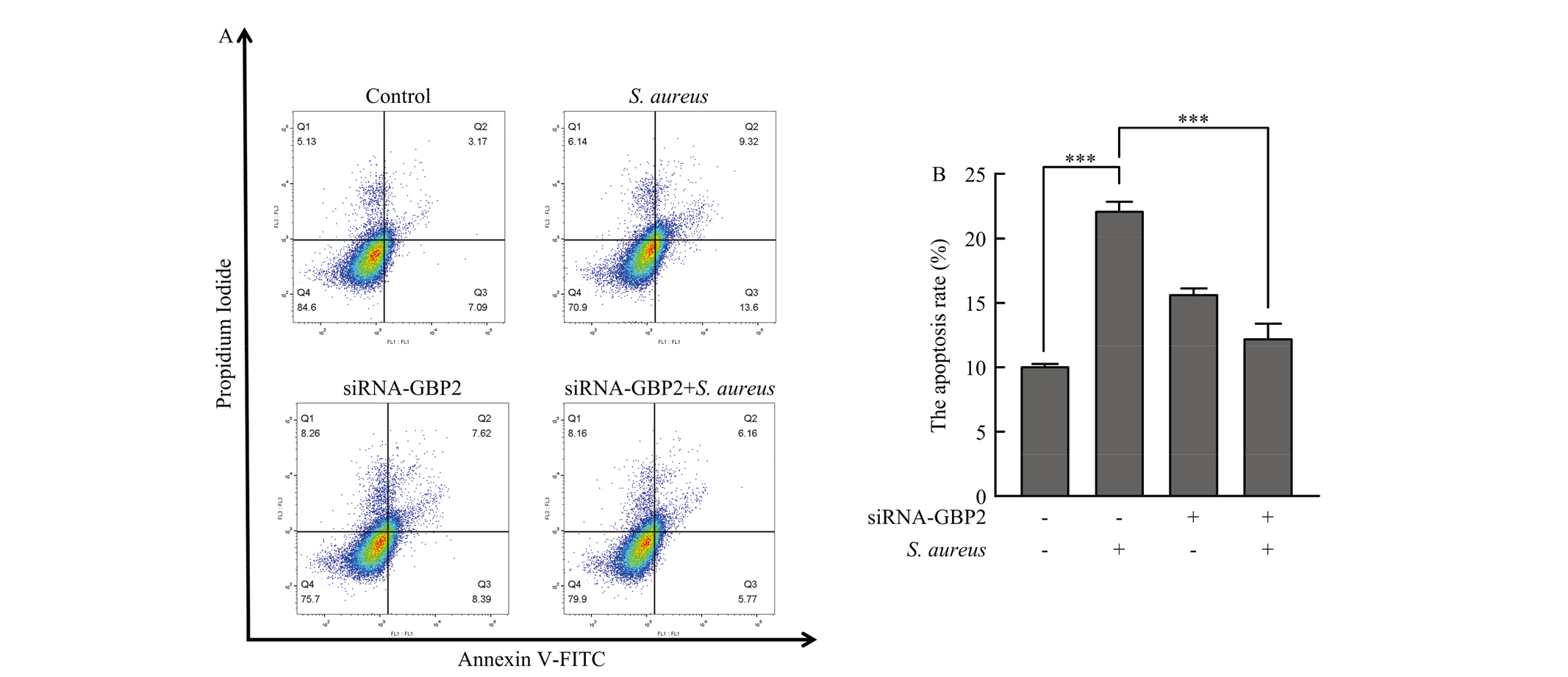
Effect of S. aureus infection on RAW264.7 cell apoptosis following siRNA-GBP2 transfection A: Flow cytometric analysis of apoptosis in the RAW264.7 cells after S. aureus infection; B: Quantitative analysis of apoptotic rates. Data represent mean ± SD from three independent experiments (n = 3). * P<0.05, ** P<0.01, and *** P<0.001."

Fig. 6

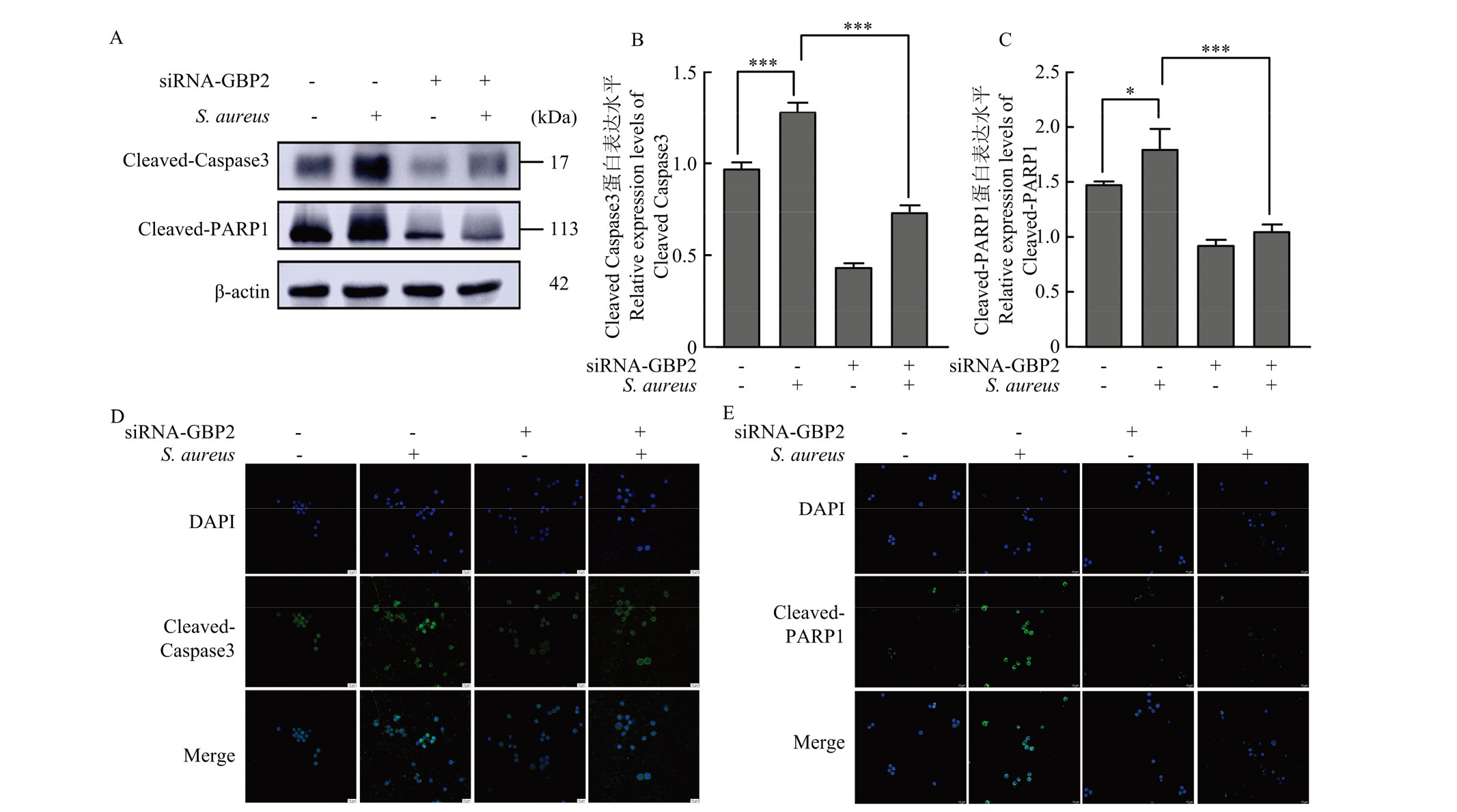
Effect of siRNA-GBP2 on expression of key apoptosis-related proteins in S. aureus-infected macrophages A: Western blot analysis of the key apoptosis proteins Cleaved-Caspase3 and Cleaved-PARP1; B, C: Densitometric quantification of Cleaved-Caspase3 and Cleaved-PARP1 protein levels; D, E: Immunofluorescence analysis of Cleaved-Caspase3 and Cleaved-PARP1 localization. (40× magnification; scale bar =10 µm). Data represent mean ± SD from three independent experiments"

Fig. 7

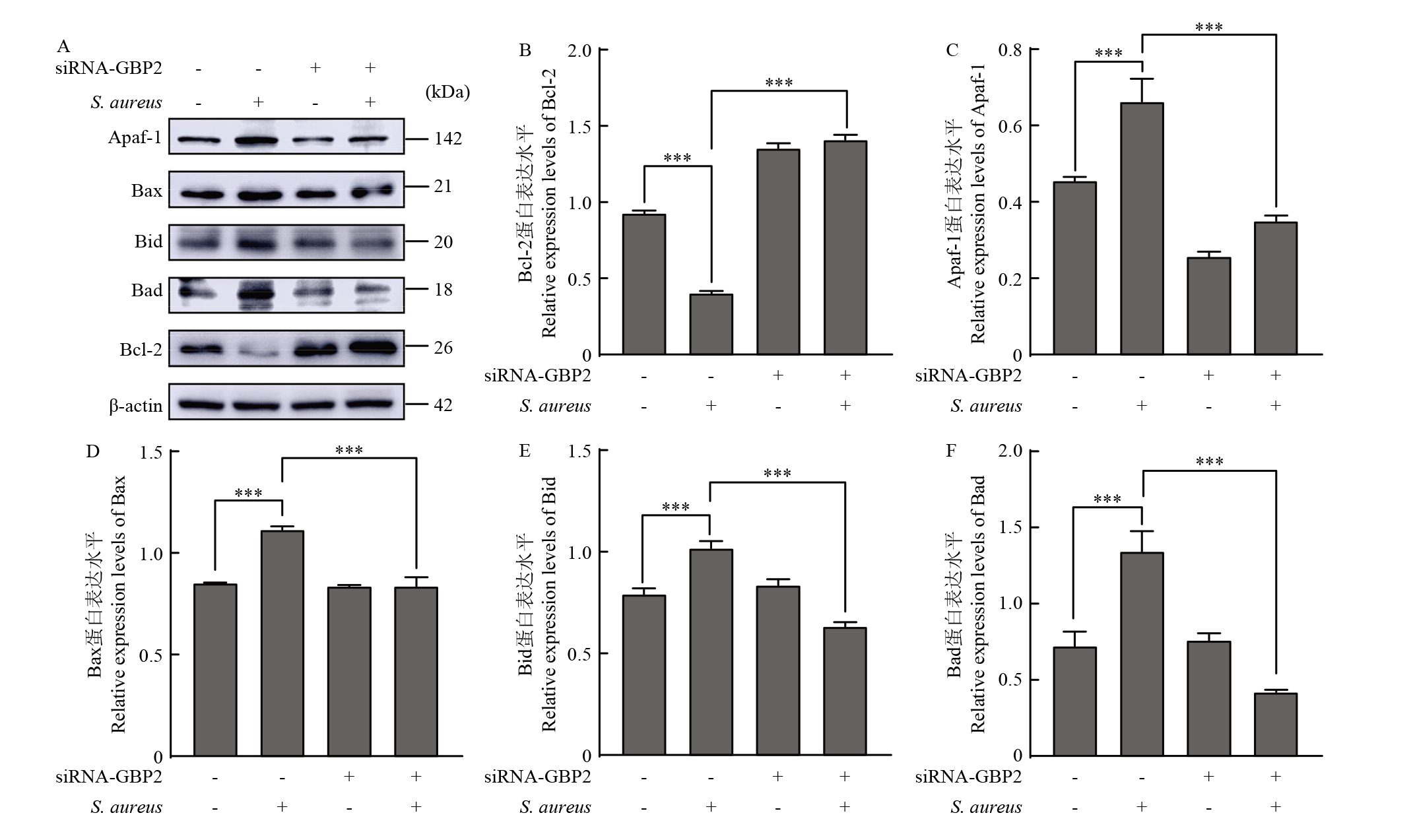
Effect of siRNA-GBP2 on key proteins of the intrinsic apoptotic pathway in S. aureus-infected macrophages A: Western blot analysis of the key intrinsic apoptotic pathway proteins (Bcl-2, Apaf-1, Bax, Bid, and Bad); B: Densitometric quantification of the Bcl-2 protein levels; C-F: Densitometric quantification of Apaf-1, Bax, Bid, and Bad protein expression. Data represent mean ± SD from three independent experiments"

Fig. 8

Effect of siRNA-GBP2 on key proteins of the intrinsic apoptotic pathway in S. aureus-infected macrophages A, B: Immunofluorescence detection of the anti-apoptotic proteins Bcl-XL and Bcl-2; C, D: Immunofluorescence detection of the pro-apoptotic proteins Bax and Bid. (40× magnification; scale bar = 10 µm)"

Fig. 9

Effect of siRNA-GBP2 on MAPK signaling pathway protein expression in S. aureus-infected macrophages A: Western blot analysis of phospho-p38 (p-p38), p38, phospho-JNK (p-JNK), JNK, phospho-ERK (p-ERK), and ERK protein expression; B-D: Densitometric quantification of key MAPK signaling proteins. Data represent mean ± SD from three independent experiments"

[1]
CHEUNG G Y C, BAE J S, OTTO M. Pathogenicity and virulence of Staphylococcus aureus. Virulence, 2021, 12(1): 547-569.

doi: 10.1080/21505594.2021.1878688
[2]
徐重新, 沈建兴, 金嘉凤, 何鑫, 谢雅晶, 张霄, 朱庆, 刘媛, 刘贤金. 基因工程抗体功能修饰及其在农业食品安全中的应用策略. 中国农业科学, 2025, 58(2): 355-386. doi: 10.3864/j.issn.0578-1752.2025.02.011.
XU C X, SHEN J X, JIN J F, HE X, XIE Y J, ZHANG X, ZHU Q, LIU Y, LIU X J. Functional modification of genetically engineered antibodies and their application strategies in agriculture and food safety. Scientia Agricultura Sinica, 2025, 58(2): 355-386. doi: 10.3864/j.issn.0578-1752.2025.02.011. (in Chinese)
[3]
THAM E H, CHIA M, RIGGIONI C, NAGARAJAN N, COMMON J E A, KONG H H. The skin microbiome in pediatric atopic dermatitis and food allergy. Allergy, 2024, 79(6): 1470-1484.

doi: 10.1111/all.16044 pmid: 38308490
[4]
SONG Y D, MA Q H, LUO J C, YANG Z F, LI J Q, ZHAO J. Liushen Wan alleviates the virulence and inflammation of Staphylococcus aureus via NLRP3 inflammasome and TLR2-NF-κB/p38 MAPK signaling pathways. International Immunopharmacology, 2025, 144: 113633.

doi: 10.1016/j.intimp.2024.113633
[5]
AHMAD-MANSOUR N, LOUBET P, POUGET C, DUNYACH- REMY C, SOTTO A, LAVIGNE J P, MOLLE V. Staphylococcus aureus toxins: An update on their pathogenic properties and potential treatments. Toxins, 2021, 13(10): 677.

doi: 10.3390/toxins13100677
[6]
PIEWNGAM P, OTTO M. Staphylococcus aureus colonisation and strategies for decolonisation. The Lancet Microbe, 2024, 5(6): e606-e618.

doi: 10.1016/S2666-5247(24)00040-5
[7]
PIDWILL G R, GIBSON J F, COLE J, RENSHAW S A, FOSTER S J. The role of macrophages in Staphylococcus aureus infection. Frontiers in Immunology, 2021, 11: 620339.

doi: 10.3389/fimmu.2020.620339
[8]
BERTRAND B P, SHINDE D, THOMAS V C, IBBERSON C B, KIELIAN T. Metabolic diversity of human macrophages: potential influence on Staphylococcus aureus intracellular survival. Infection and Immunity, 2024, 92(2): e00474-23.
[9]
徐蕾, 于嘉霖, 刘莉, 邓光存, 吴晓玲. lincRNA Cox2通过miR-129-5p/AMPK调控BCG感染的巨噬细胞糖酵解进程. 中国农业科学, 2024, 57(8): 1606-1619. doi: 10.3864/j.issn.0578-1752.2024.08.014.
XU L, YU J L, LIU L, DENG G C, WU X L. lincRNA Cox2 regulates BCG-infected macrophages glycolysis by mi R-129-5p/AMPK. Scientia Agricultura Sinica, 2024, 57(8): 1606-1619. doi: 10.3864/j.issn.0578-1752.2024.08.014. (in Chinese)
[10]
SCHERR T D, ROUX C M, HANKE M L, ANGLE A, DUNMAN P M, KIELIAN T. Global transcriptome analysis of Staphylococcus aureus biofilms in response to innate immune cells. Infection and Immunity, 2013, 81(12): 4363-4376.

doi: 10.1128/IAI.00819-13
[11]
PEYRUSSON F, TULKENS P M, VAN BAMBEKE F. Cellular pharmacokinetics and intracellular activity of gepotidacin against Staphylococcus aureus isolates with different resistance phenotypes in models of cultured phagocytic cells. Antimicrobial Agents and Chemotherapy, 2018, 62(4): e02245-17.
[12]
PEYRUSSON F, VARET H, NGUYEN T K, LEGENDRE R, SISMEIRO O, COPPÉE J Y, WOLZ C, TENSON T, VAN BAMBEKE F. Intracellular Staphylococcus aureus persisters upon antibiotic exposure. Nature Communications, 2020, 11: 2200.

doi: 10.1038/s41467-020-15966-7
[13]
YUE J C, LÓPEZ J M. Understanding MAPK signaling pathways in apoptosis. International Journal of Molecular Sciences, 2020, 21(7): 2346.

doi: 10.3390/ijms21072346
[14]
WANG X Z, LI H Y, WANG J, XU H L, XUE K, LIU X T, ZHANG Z Z, LIU J Z, LIU Y X. Staphylococcus aureus extracellular vesicles induce apoptosis and restrain mitophagy-mediated degradation of damaged mitochondria. Microbiological Research, 2023, 273: 127421.

doi: 10.1016/j.micres.2023.127421
[15]
LIU K, MAO W, LIU B, LI T T, WU J D, FU C Q, SHEN Y, PEI L, CAO J S. Live S. aureus and heat-killed S. aureus induce different inflammation-associated factors in bovine endometrial tissue in vitro. Molecular Immunology, 2021, 139: 123-130.

doi: 10.1016/j.molimm.2021.07.015
[16]
OU J X, LI K X, YUAN H, DU S H, WANG T T, DENG Q N, WU H M, ZENG W Y, CHENG K, NANDAKUMAR K S. Staphylococcus aureus vesicles impair cutaneous wound healing through p38 MAPK- MerTK cleavage-mediated inhibition of macrophage efferocytosis. Cell Communication and Signaling, 2025, 23(1): 14.

doi: 10.1186/s12964-024-01994-z
[17]
CAO W Y, LI J H, YANG K P, CAO D L. An overview of autophagy: Mechanism, regulation and research progress. Bulletin Du Cancer, 2021, 108(3): 304-322.

doi: 10.1016/j.bulcan.2020.11.004 pmid: 33423775
[18]
YEUNG Y T, AZIZ F, GUERRERO-CASTILLA A, ARGUELLES S. Signaling pathways in inflammation and anti-inflammatory therapies. Current Pharmaceutical Design, 2018, 24(14): 1449-1484.

doi: 10.2174/1381612824666180327165604 pmid: 29589535
[19]
于嘉霖. 脂肪酸结合蛋白4对BCG诱导巨噬细胞凋亡的调控作用[D]. 银川: 宁夏大学, 2020.
YU J L. Role of fatty acid binding protein 4 in regulating apoptosis of macrophage induced by Bacillus Calmette-Guerin infection[D]. Yinchuan: Ningxia University, 2020. (in Chinese)
[20]
HUANG S, MENG Q C, MAMINSKA A, MACMICKING J D. Cell-autonomous immunity by IFN-induced GBPs in animals and plants. Current Opinion in Immunology, 2019, 60: 71-80.

doi: S0952-7915(19)30033-0 pmid: 31176142
[21]
BRITZEN-LAURENT N, LIPNIK K, OCKER M, NASCHBERGER E, SCHELLERER V S, CRONER R S, VIETH M, WALDNER M, STEINBERG P, HOHENADL C, STÜRZL M. GBP-1 acts as a tumor suppressor in colorectal cancer cells. Carcinogenesis, 2013, 34(1): 153-162.

doi: 10.1093/carcin/bgs310
[22]
LIU P F, CHEN H C, SHU C W, SIE H C, LEE C H, LIOU H H, CHENG J T, TSAI K W, GER L P. Guanylate-binding protein 6 is a novel biomarker for tumorigenesis and prognosis in tongue squamous cell carcinoma. Clinical Oral Investigations, 2020, 24(8): 2673-2682.

doi: 10.1007/s00784-019-03129-y
[23]
XU H, SUN L L, ZHENG Y W, YU S Y, OU-YANG J, HAN H, DAI X L, YU X T, LI M, LAN Q. GBP3 promotes glioma cell proliferation via SQSTM1/p62-ERK1/2 axis. Biochemical and Biophysical Research Communications, 2018, 495(1): 446-453.

doi: 10.1016/j.bbrc.2017.11.050
[24]
LIU B, HUANG R F, FU T T, HE P, DU C Y, ZHOU W, XU K, REN T. GBP2 as a potential prognostic biomarker in pancreatic adenocarcinoma. PeerJ, 2021, 9: e11423.
[25]
WANG Y F, PAN J D, AN F M, CHEN K, CHEN J W, NIE H, ZHU Y P, QIAN Z T, ZHAN Q. GBP2 is a prognostic biomarker and associated with immunotherapeutic responses in gastric cancer. BMC Cancer, 2023, 23(1): 925.

doi: 10.1186/s12885-023-11308-0 pmid: 37784054
[26]
ZHANG W D, TANG X, PENG Y, XU Y K, LIU L, LIU S C. GBP2 enhances paclitaxel sensitivity in triple-negative breast cancer by promoting autophagy in combination with ATG2 and inhibiting the PI3K/AKT/mTOR pathway. International Journal of Oncology, 2024, 64(4): 34.

doi: 10.3892/ijo
[27]
REN Y Q, YANG B, GUO G, ZHANG J P, SUN Y Q, LIU D, GUO S H, WU Y Q, WANG X G, WANG S L, et al. GBP2 facilitates the progression of glioma via regulation of KIF22/EGFR signaling. Cell Death Discovery, 2022, 8: 208.

doi: 10.1038/s41420-022-01018-0
[28]
DAI F, ZHANG X Y, MA G L, LI W. ACOD 1 mediates Staphylococcus aureus-induced inflammatory response via the TLR4/NF-κB signaling pathway. International Immunopharmacology, 2024, 140: 112924.

doi: 10.1016/j.intimp.2024.112924
[29]
王薇, 罗春海, 贾红豆, 刘佳金, 李丹阳, 付世新. 谷氨酰胺对氧化应激状态下胎衣不下奶牛内质网应激的影响. 中国农业科学, 2025, 58(7): 1451-1462. doi: 10.3864/j.issn.0578-1752.2025.07.015.
WANG W, LUO C H, JIA H D, LIU J J, LI D Y, FU S X. Effect of gln on endoplasmic reticulum stress in retained fetal membranes cows under oxidative stress via the PI3K/AKT pathway. Scientia Agricultura Sinica, 2025, 58(7): 1451-1462. doi: 10.3864/j.issn.0578-1752.2025.07.015. (in Chinese)
[30]
ZHU Z H, HU Z, LI S W, FANG R D, ONO H K, HU D L. Molecular characteristics and pathogenicity of Staphylococcus aureus exotoxins. International Journal of Molecular Sciences, 2023, 25(1): 395.

doi: 10.3390/ijms25010395
[31]
WANG X G, LEE J C. Staphylococcus aureus membrane vesicles: an evolving story. Trends in Microbiology, 2024, 32(11): 1096-1105.

doi: 10.1016/j.tim.2024.04.003
[32]
NAGATA S. Apoptisis and clearance of apoptotic cells. Annual Review of Immunology, 2018, 36: 489-517.

doi: 10.1146/immunol.2018.36.issue-1
[33]
ZHANG X P, HU X M, RAO X C. Apoptosis induced by Staphylococcus aureus toxins. Microbiological Research, 2017, 205: 19-24.

doi: 10.1016/j.micres.2017.08.006
[34]
TAM K, TORRES V J. Staphylococcus aureus Secreted toxins and extracellular enzymes. Microbiology Spectrum, 2019, 7(2): 7.2.16.
[35]
ENOSI TUIPULOTU D, FENG S Y, PANDEY A, ZHAO A Y, NGO C, MATHUR A, LEE J, SHEN C, FOX D, XUE Y S, et al. Immunity against Moraxella catarrhalis requires guanylate-binding proteins and caspase-11-NLRP 3 inflammasomes. The EMBO Journal, 2023, 42(6): e112558.

doi: 10.15252/embj.2022112558
[36]
DU C H, WU Y D, YANG K, LIAO W N, RAN L, LIU C N, ZHANG S Z, YU K, CHEN J, QUAN Y, et al. Apoptosis-resistant megakaryocytes produce large and hyperreactive platelets in response to radiation injury. Military Medical Research, 2023, 10: 66.

doi: 10.1186/s40779-023-00499-z
[37]
MIAO Q, GE M H, HUANG L L. Up-regulation of GBP2 is associated with neuronal apoptosis in rat brain cortex following traumatic brain injury. Neurochemical Research, 2017, 42(5): 1515-1523.

doi: 10.1007/s11064-017-2208-x pmid: 28239766
[38]
王健宏. 鸟苷酸结合蛋白1对BCG诱导的巨噬细胞凋亡的调控作用[D]. 银川: 宁夏大学, 2021.
WANG J H. Role of guanylate binding protein 1 in regulating apoptosis of macrophage induced by Bacillus Calmette-guérin infection[D]. Yinchuan: Ningxia University, 2021. (in Chinese)
[1] XU Lei, YU JiaLin, LIU Li, DENG GuangCun, WU XiaoLing. lincRNA Cox2 Regulates BCG-infected Macrophages Glycolysis by miR-129-5p/AMPK [J]. Scientia Agricultura Sinica, 2024, 57(8): 1606-1619.
[2] WANG SiQi, ZHOU ChunXue, LI YuQi, DU Xing, PAN ZengXiang, LI QiFa. miR-34a Induces Early Apoptosis of Porcine Ovarian Granulosa Cells by Activating lncRNA NORHA Transcription [J]. Scientia Agricultura Sinica, 2024, 57(5): 1000-1009.
[3] MENG ZhaoYi, WANG YunLu, YAO YiLong, XI GuangYin, NIU JiaQiang, SOLANGSIZHU, GUO Min, XU YeFen. lncRNA-MSTRG.7889.1 Competitively Binds to bta-miR-146a Targeting Smad4 to Regulate Apoptosis of Yak Granulosa Cells [J]. Scientia Agricultura Sinica, 2024, 57(4): 797-809.
[4] WANG JinPeng, LUORENG ZhuoMa, LI YanXia, FENG Fen, WANG ZhengXing, PAN ChuanYing, LAN XianYong, WANG XingPing. The Function of lncRNA RRAS2-AS1 in LPS Induced Bovine Mammary Epithelial Cells Inflammation [J]. Scientia Agricultura Sinica, 2024, 57(14): 2874-2888.
[5] PAN YangYang, WANG JingLei, WANG Meng, WANG LiBin, ZHANG Qian, CHEN Rui, ZHANG TianTian, CUI Yan, XU GengQuan, FAN JiangFeng, YU SiJiu. Formation and Function of Paraspeckle During Pre-implantation Embryos Development in Yak [J]. Scientia Agricultura Sinica, 2023, 56(6): 1189-1203.
[6] TAO WenJing, ZHANG ZiTing, LIU Yuan, SONG Dan, LI XiangChen. Inhibitory Effect of N-acetylcysteine on Bisphenol A-Induced Apoptosis and Inflammatory Response in Porcine Kidney Cells [J]. Scientia Agricultura Sinica, 2023, 56(3): 549-558.
[7] LIU YuFang,CHEN YuLin,ZHOU ZuYang,CHU MingXing. miR-221-3p Regulates Ovarian Granulosa Cells Apoptosis by Targeting BCL2L11 in Small-Tail Han Sheep [J]. Scientia Agricultura Sinica, 2022, 55(9): 1868-1876.
[8] WANG JiaMin,SHI JiaChen,MA FangFang,CAI Yong,QIAO ZiLin. Effects of Soy Isoflavones on the Proliferation and Apoptosis of Yak Ovarian Granulosa Cells [J]. Scientia Agricultura Sinica, 2022, 55(8): 1667-1675.
[9] LI WenHui,HE YiJing,JIANG Yao,ZHAO HongYu,PENG Lei,LI Jia,RUI Rong,JU ShiQiang. Effects of FB1 on Apoptosis and Autophagy of Porcine Oocytes in vitro Maturation [J]. Scientia Agricultura Sinica, 2022, 55(6): 1241-1252.
[10] TANG ZiYun,HU JianXin,CHEN Jin,LU YiXing,KONG LingLi,DIAO Lu,ZHANG FaFu,XIONG WenGuang,ZENG ZhenLing. Relationship Between Biofilm Formation and Molecular Typing of Staphylococcus aureus from Animal Origin [J]. Scientia Agricultura Sinica, 2022, 55(3): 602-612.
[11] MingJie XING,XianHong GU,XiaoHong WANG,Yue HAO. Effects of IL-15 Overexpression on Myoblast Differentiation of Porcine Skeletal Muscle Cells [J]. Scientia Agricultura Sinica, 2022, 55(18): 3652-3663.
[12] YANG ChangPei,WANG NaiXiu,WANG Kai,HUANG ZiQing,LIN HaiLan,ZHANG Li,ZHANG Chen,FENG LuQiu,GAN Ling. Effects and Mechanisms of Exogenous GABA Against Oxidative Stress in Piglets [J]. Scientia Agricultura Sinica, 2022, 55(17): 3437-3449.
[13] FENG YunKui,WANG Jian,MA JinLiang,ZHANG LiuMing,LI YongJun. Effects of miR-31-5p on the Proliferation and Apoptosis of Hair Follicle Stem Cells in Goat [J]. Scientia Agricultura Sinica, 2021, 54(23): 5132-5143.
[14] MA MengNan,WANG HuiMing,WANG MiaoMiao,YAO Wang,ZHANG JinBi,PAN ZengXiang. Identification of circINHBB During Follicular Atresia and Its Effect on Granulosa Cell Apoptosis [J]. Scientia Agricultura Sinica, 2021, 54(18): 3998-4007.
[15] LI RunTing,CHEN LongXin,ZHANG LiMeng,HE HaiYing,WANG Yong,YANG RuoChen,DUAN ChunHui,LIU YueQin,WANG YuQin,ZHANG YingJie. Transient Expression and the Effect on Proliferation and Apoptosis of Granule Cell Stimulating Factor in Ovarian Fibroblasts [J]. Scientia Agricultura Sinica, 2021, 54(11): 2434-2444.
Viewed
Full text


Abstract

Cited

  Shared   
  Discussed   
No Suggested Reading articles found!