Scientia Agricultura Sinica ›› 2026, Vol. 59 ›› Issue (21): 4729-4745.doi: 10.3864/j.issn.0578-1752.2026.21.003

• CROP GENETICS & BREEDING·GERMPLASM RESOURCES·MOLECULAR GENETICS • Previous Articles     Next Articles

Analysis on the Composition Characteristics of Plant Height and Ear Height of Nationally Approved Maize Varieties and the Differences in Different Ecological Regions

YANG Yang1(), CHANG ShiHui1(), ZENG Bo2, LI YuMing2, ZHANG RuYang1, XU TianJun1, SUN Xuan1, CHEN ChuanYong1, CAO Qiang1, WANG FengGe1, ZHAO JiuRan1()   

  1. 1 Maize Research Institute, Beijing Academy of Agriculture and Forestry Sciences/Key Laboratory of Crop DNA Fingerprinting Innovation and Utilization, Ministry of Agriculture and Rural Affairs (Co-construction by Ministry and Province)/Beijing Key Laboratory of Maize DNA Fingerprinting and Molecular Breeding, Beijing 100097
    2 National Agricultural Technology Extension and Service Center, Beijing 100125
  • Received:2026-08-16 Accepted:2026-09-28 Online:2026-11-01 Published:2026-11-06
  • Contact: ZHAO JiuRan

Abstract:

【Objective】Plant height and ear height are key morphological traits in maize, serving as intuitive indicators of plant architecture. Analyzing their compositional characteristics, temporal trends, and regional variation across ecological zones provides a theoretical foundation for understanding how varietal replacement reshapes plant architecture structure and how environmental gradients influence phenotypic expression. 【Method】A comprehensive dataset comprising 7 502 nationally approved maize varieties released between 2000 and 2025 was compiled. Statistical analyses were conducted to characterize the distribution, correlation, and interrelationships of plant height and ear height across variety types. A stratified threshold system for ear height was established based on empirical quantiles derived from plant height strata and corresponding ear height distributions. Adaptive performance and sources of phenotypic variation were assessed from two complementary perspectives: (1) inter-regional comparison across major ecological testing zones, and (2) intra-varietal cross-regional expression—i.e., phenotypic consistency or plasticity of the same variety grown in different environments. Temporal evolution of both traits over the 26-year period was further quantified. 【Result】Among 6 379 grain maize varieties, average plant height was 284.6 cm and average ear height was 109.0 cm. For 898 fresh maize (sweet and waxy) varieties, average plant height was 228.2 cm and average ear height was 89.9 cm. Silage maize (n=183) exhibited the tallest stature (average plant height= 302.0 cm; average ear height= 130.0 cm), whereas pop maize (n=42) averaged 245.9 cm in plant height and 112.8 cm in ear height. The ear height is divided into five grades: ultra-high ear position, high ear position, medium ear position, low ear position and ultra-low ear position, and the dividing lines are 138 cm, 108 cm, 87 cm and 51 cm respectively. Based on joint classification of plant height and ear height, grain maize predominantly fell into high and medium stem with high and medium ear position. Fresh maize clustered in medium and dwarf stem with medium and low ear position. Silage maize is mainly high stem with high ear position, and pop maize is primarily medium stem with high ear position. The statistical distribution of plant height in different ecological regions of the national regional test group showed a trend of increasing from the Dong-Nan spring-sowing regions (DN) to the medium maturity region of the Dong-Hua-Bei (DHB-M), and then decreasing to the Bei-Fang very early-maturity region (BF-VE). The ear height showed an increasing trend from the DN to the Xi-Nan (XN) and Xi-Bei (XB) spring-sowing regions. The Huang-Huai-Hai summer-sowing region (HHH), hosting the largest number of tested varieties, exhibited average plant and ear heights of 268.5 cm and 101.0 cm, respectively—predominantly medium stem and medium ear position. The second-ranked Dong-Hua-Bei spring-sowing region (DHB) were 293.3 cm and 113.7 cm, respectively, and were dominated by high stem and high ear position. Hierarchical clustering of both traits yielded congruent patterns: smaller plant architecture was observed in DN, HHH, Jing-Jin-Ji early-maturing (JJJ-E), Bei-Fang early-maturity region (BF-E), and BF-VE regions; larger plant architecture prevailed in XB, DHB, DHB-M, and Dong-Hua-Bei medium-early (DHB-ME) regions. Cross-regional phenotypic divergence increased significantly with geographical distance between the two ecological zones where the same variety was approved—most pronounced between DN and DHB, where DHB varieties averaged 54.6 cm taller in plant height and 35.8 cm higher in ear height than their DN counterparts. Notably, ear height demonstrated greater environmental sensitivity than plant height. Over the 26-year period, grain maize plant height increased modestly (average annual increment: 0.79 cm), whereas ear height declined steadily (average annual decrement: 0.19 cm). 【Conclusion】Distinct breeding objectives and divergent environmental selection pressures have driven substantial differentiation in plant architecture among maize market classes. Grain maize (the dominant category in China’s national variety portfolio) exhibits taller, bulkier architecture, reflecting a long-standing breeding emphasis on maximizing biomass accumulation for yield enhancement. In contrast, fresh maize prioritizes ear quality and harvest efficiency, resulting in shorter, which contains abundant dwarf germplasm resources to be fully excavated. Further investigation into environmental drivers (including photoperiod-temperature interactions and seasonal precipitation patterns during critical growth stages) is warranted to disentangle the relative contributions of genetic and environmental factors to phenotypic differentiation.

Key words: maize, variety approval, plant height, ear height, ecological region

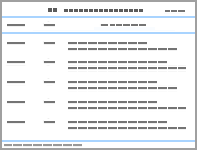
Table 1

Statistical characteristics and correlation analysis of plant height and ear height of different types of nationally approved varieties"

品种类型
Variety type
品次数
Variety record count
株高
Average
plant height (cm)
株高变异系数
CV in
plant height (%)
穗位高
Average
ear height (cm)
穗位高变异系数
CV in
ear height (%)
相关系数
Correlation coefficient
籽粒玉米 Grain maize 6379 284.6 7.20 109.0 10.47 0.77
鲜食玉米 Fresh maize 898 228.2 10.18 89.9 19.12 0.84
青贮玉米 Silage maize 183 302.0 5.74 130.0 10.84 0.78
爆裂玉米 Pop maize 42 245.9 6.80 112.8 10.02 0.79

Table 2

The corresponding relationship between plant height and ear height in different grades and their distribution ranges"

株高等级
Plant height grade
株高范围
Plant height range (cm)
不同株高品次占比
Plant height proportion (%)
线性拟合方程
Linear fitting formula
穗位高等级
Ear height grade
穗位高范围
Ear height range (cm)
不同穗位高品次占比
Ear height proportion (%)
超高秆
Ultra-high stem
≥340.0 0.13 y=1.54x-386.85 超高穗位
Ultra-high ear position
≥138.0 1.25
高秆
High stem
280.0-340.0 52.75 y=0.44x-15.53 高穗位
High ear position
108.0-138.0 49.13
中秆
Medium stem
220.0-280.0 42.66 y=0.33x+14.11 中穗位
Medium ear position
87.0-108.0 42.43
矮秆
Dwarf stem
160.0-220.0 4.45 y=0.55x-37.05 低穗位
Low ear position
51.0-87.0 7.13
超矮秆
Ultra-dwarf stem
<160.0 0.01 — 超低穗位
Ultra-low ear position
<51.0 0.05

Fig. 1

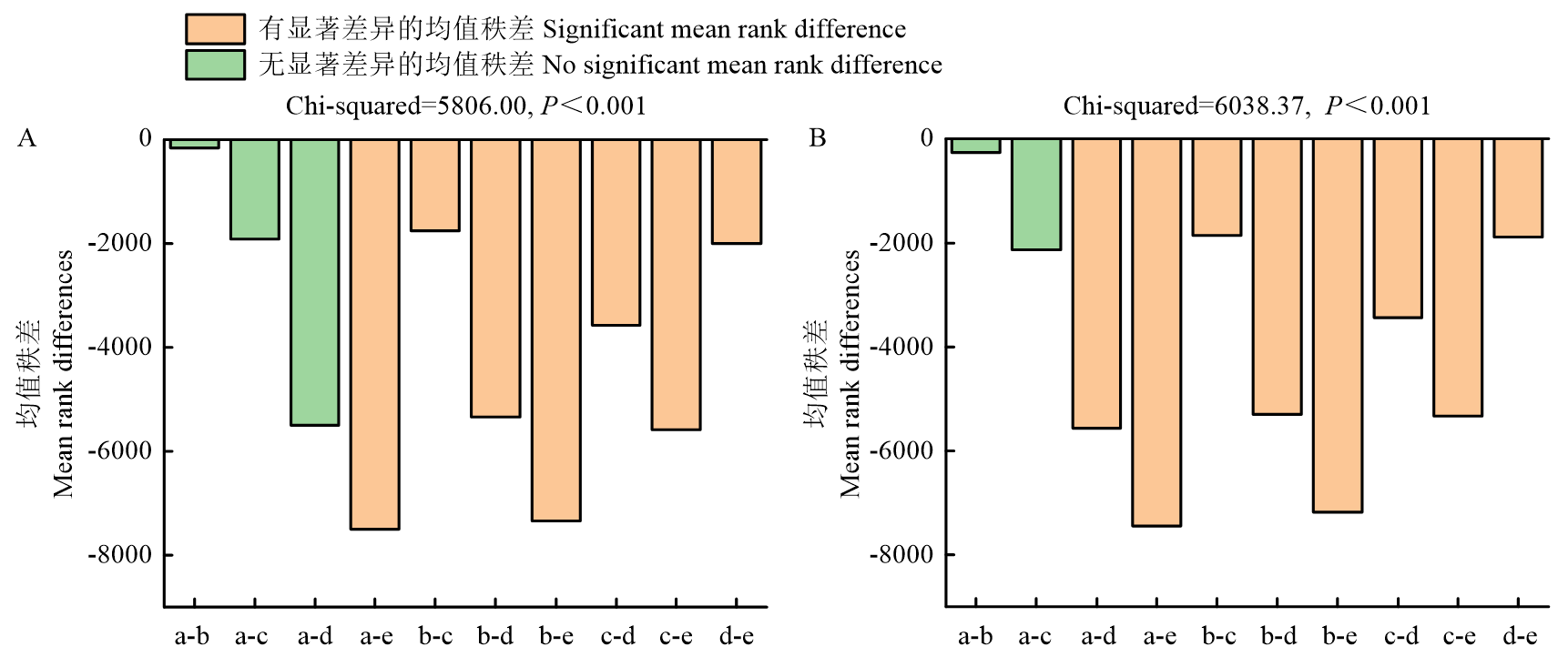
Dunn′s multiple comparison and Kruskal-Wallis nonparametric test analysis of two threshold schemes for ear height A: The ear height threshold Scheme One; B: The ear height threshold Scheme Two. a-e correspond to five ear height grades: ultra-low ear position, low ear position, medium ear position, high ear position and ultra-high ear position; Chi-squared: Chi-square statistic; P value: Chi-square test significance probability. The same as below"

Fig.2

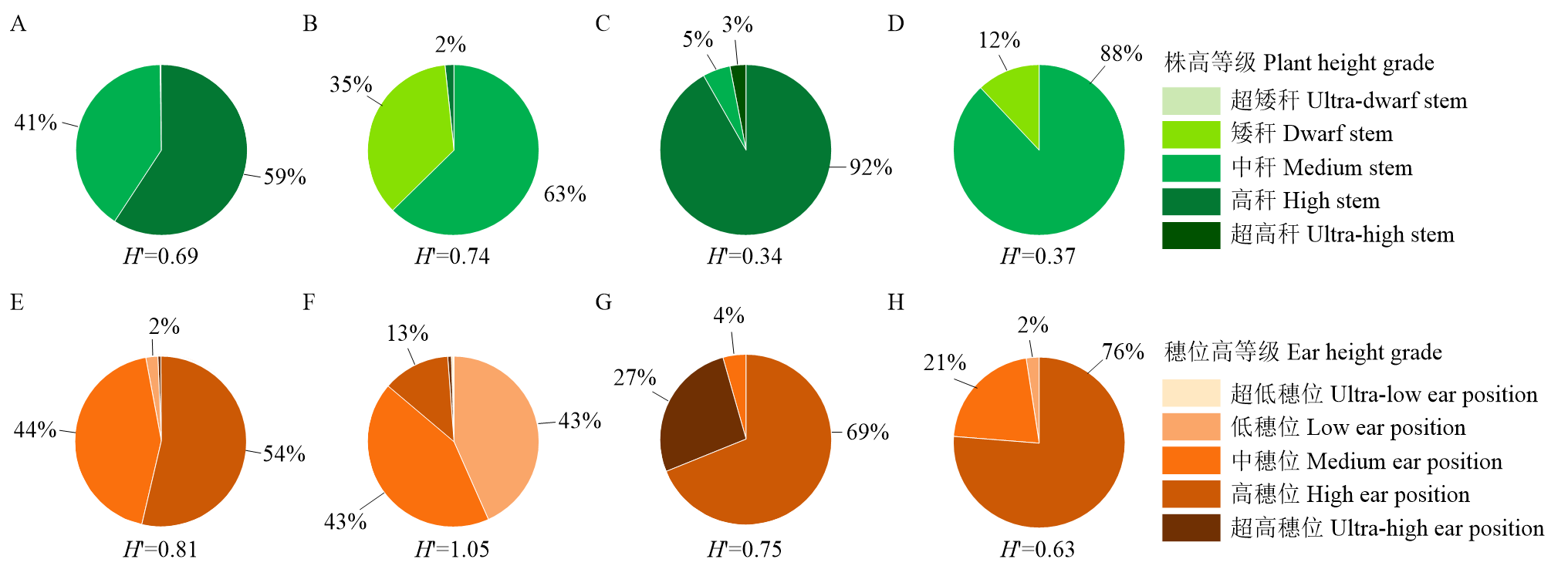
Classification composition of plant height and ear height of different types of nationally approved maize varieties A-D are the plant height composition of grain maize, fresh maize, silage maize and pop maize; E-H are the ear height composition of grain maize, fresh maize, silage maize and pop maize. H′ is the size of the Shannon Wiener index"

Fig. 3

Statistical distribution differences of plant height and ear height of nationally approved maize varieties in different ecological regions A-F were plant height of grain maize, ear height of grain maize, plant height of fresh maize, ear height of fresh maize, plant height of silage maize, ear height of silage maize in different ecological regions. According to the law of transition from south to north and from low latitude to high latitude, the ecological regions are arranged in turn. The hollow square represents the mean value of plant height and ear height of the varieties in the corresponding ecological region. RD: Re-Dai region; DN :Dong-Nan spring-sowing region; XN: Xi-Nan spring-sowing region; HHH: Huang-Huai-Hai summer-sowing region; JJJ-E: Jing-Jin-Ji early maturing region; DHB: Dong-Hua-Bei spring-sowing region; XB: Xi-Bei spring-sowing region; DHB-M: Dong-Hua-Bei medium maturity region; DHB-ME: Dong-Hua-Bei medium early maturing region; BF-E: Bei-Fang early maturing region; BF-VE: Bei-Fang very early maturing region. a-g are significant difference markers. The same as below"

Table 3

Statistical analysis of plant height and ear height distribution of nationally approved varieties in different ecological regions"

品种类型
Variety type
生态区
Ecological region
株高Plant height 穗位高Ear height
超矮秆
Ultra dwarf
stem
矮秆
Dwarf stem
中秆
Medium stem
高秆
High stem
超高秆
Ultra high stem
超低穗位
Ultra-low ear position
低穗位
Low ear position
中穗位
Medium ear position
高穗位
High ear position
超高穗位
Ultra-high ear position
籽粒玉米
Grain
maize
热带亚热带
RD
65 28 28 63 2
东南春DN 2 27 2 20 7
西南春XN 1 313 540 2 204 644 4
黄淮海夏
HHH
1325 390 64 1320 329 2
京津冀早熟
JJJ-E
68 39 1 74 32
东华北春
DHB
2 194 773 1 2 241 717 10
西北春XB 50 463 1 48 452 12
东华北中熟 DHB-M 77 725 4 162 638 6
东华北中早熟
DHB-ME
203 578 7 331 441 2
北方早熟BF-E 98 154 6 182 63 1
北方极早熟
BF-VE
5 171 83 59 172 28
鲜食玉米
Fresh
maize
东南春DN 184 141 2 214 103 6
西南春XN 1 73 137 80 112 19
黄淮海夏
HHH
37 160 1 57 96 45
东华北春DHB 25 125 14 2 39 73 44 6
青贮玉米
Silage
maize
东南春DN 3 3
西南春XN 2 76 1 63 14
黄淮海夏
HHH
4 47 7 31 13
西北春XB 13 1 8 6
东华北春DHB 3 30 4 21 16

Fig. 4

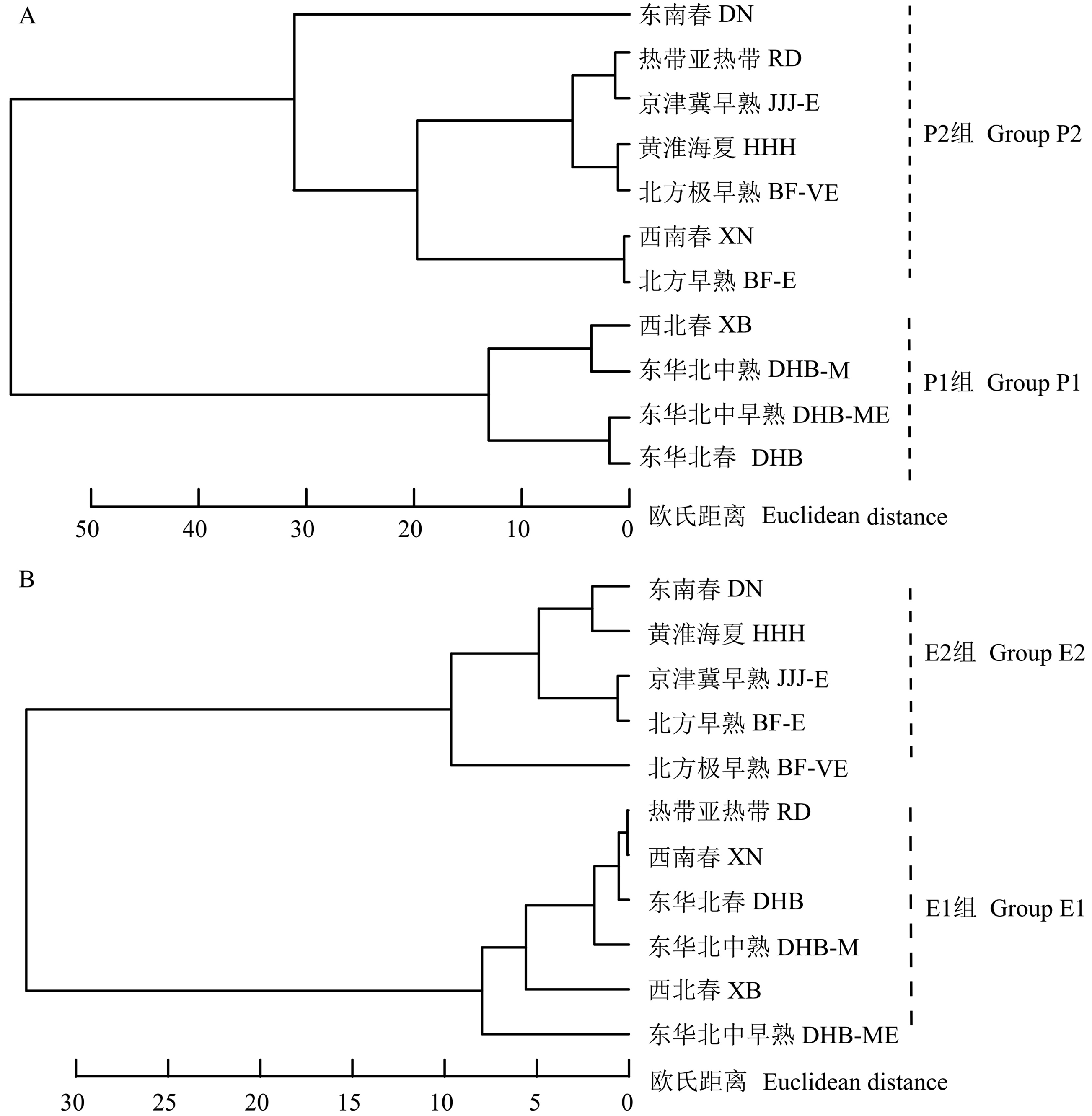
Cluster analysis of grain maize in different ecological regions based on plant height and ear height data A: Plant height of grain maize; B: Ear height of grain maize"

Fig. 5

Phenotypic difference of plant height and ear height of nationally approved maize varieties planted in two ecological regions The values in each grid from top to bottom represent the mean value of the difference from the horizontal axis ecological region to the vertical axis ecological region, the significance level of the mean value of the difference, and the degree of freedom. The difference of plant height ecological region (above the diagonal line) is the vertical axis minus the horizontal axis ecological region, and the difference of ear height ecological region (below the diagonal line) is the horizontal axis minus the vertical axis ecological region. *: P≤0.05, **: P≤0.01, ***: P≤0.001. The same as below"

Fig. 6

Variation of plant height and ear height of nationally approved maize varieties planted across three or four ecological regions The hollow square represents the mean value of plant height and ear height of the varieties in the corresponding ecological region, and the number below the arrow connection represents the mean value of the difference between the plant height and ear height of the varieties in the two ecological regions"

Table 4

Analysis of Finlay-Wilkinson regression coefficient and variance component estimation of plant height and ear height of cross-regional nationally approved maize varieties"

性状
Trait
平均回归系数
Mean β₁
回归系数平均
标准误差
Mean SE of β₁
变异来源
Variation source
后验均值
Posterior mean value
95%置信区间
95% credible interval
方差分量占比
Percentage of variance (%)
株高
Plant height
0.59 0.22 品种遗传效应Genotype (G) 526.70 [424.50, 647.20] 41.3
环境效应Environment (E) 683.20 [149.70, 1616.00] 53.6
品种遗传与环境互作效应
Genotype×Environment (G×E)
4.12 [3.08×10⁻⁴, 26.11] 0.3
残差Residual 60.40 [39.07, 75.28] 4.7
穗位高
Ear height
0.99 0.34 品种遗传效应Genotype (G) 134.10 [106.80, 166.00] 30.6
环境效应Environment (E) 275.30 [73.91, 625.40] 62.8
品种遗传与环境互作效应
Genotype×Environment (G×E)
13.65 [1.30×10⁻³, 26.11] 3.1
残差Residual 14.93 [2.91, 30.33] 3.4

Fig. 7

Changing trend of plant height and ear height of nationally approved gain and fresh maize varieties with different years from 2000 to 2025 A: Change trend of plant height and ear height of grain maize; B: Change trend of plant height and ear height of fresh maize. The solid line in the figure represents the average value of plant height/ear height of the approved varieties in each year, and the dotted line is a linear fitting trend line"

[1]
王宝宝, 王海洋. 理想株型塑造之于玉米耐密改良[J]. 生物技术通报, 2023, 39(8): 11-30.

doi: 10.13560/j.cnki.biotech.bull.1985.2023-0660
Wang B B, Wang H Y. Molecular design of ideal plant architecture for high-density tolerance of maize plant[J]. Biotechnology Bulletin, 2023, 39(8): 11-30. (in Chinese)
[2]
马雅杰, 高悦欣, 李依萍, 龙艳, 董振营, 万向元. 玉米株高和穗位高的遗传基础与分子机制[J]. 中国生物工程杂志, 2021, 41(12): 61-73.
Ma Y J, Gao Y X, Li Y P, Long Y, Dong Z Y, Wan X Y. Progress on genetic analysis and molecular dissection on maize plant height and ear height[J]. China Biotechnology, 2021, 41(12): 61-73. (in Chinese)
[3]
杨楠, 丁玉川, 焦晓燕, 王劲松, 董二伟, 王立革, 武萍. 种植密度对高粱群体生理指标、产量及其构成因素的影响[J]. 农学学报, 2013, 3(7): 11-17.
Yang N, Ding Y C, Jiao X Y, Wang J S, Dong E W, Wang L G, Wu P. Effects of plant density on population physiological indices, grain yield and yield component factors of sorghum[J]. Journal of Agriculture, 2013, 3(7): 11-17. (in Chinese)

doi: 10.11924/j.issn.2095-4050.2013-xb0265
[4]
Yan Y Y, Duan F Y, Li X, Zhao R L, Hou P, Zhao M, Li S K, Wang Y H, Dai T B, Zhou W B. Photosynthetic capacity and assimilate transport of the lower canopy influence maize yield under high planting density[J]. Plant Physiology, 2024, 195(4): 2652-2667.

doi: 10.1093/plphys/kiae204 pmid: 38590166
[5]
Multani D S, Briggs S P, Chamberlin M A, Blakeslee J J, Murphy A S, Johal G S. Loss of an MDR transporter in compact stalks of maize br2 and sorghum dw3 mutants[J]. Science, 2003, 302(5642): 81-84.

doi: 10.1126/science.1086072 pmid: 14526073
[6]
Yamaguchi I, Nakajima M, Park S H. Trails to the gibberellin receptor, GIBBERELLIN INSENSITIVE DWARF1[J]. Bioscience, Biotechnology, and Biochemistry, 2016, 80(6): 1029-1036.

doi: 10.1080/09168451.2016.1148575
[7]
Wu L, Zhang D F, Xue M, Qian J J, He Y, Wang S C. Overexpression of the maize GRF10, an endogenous truncated growth-regulating factor protein, leads to reduction in leaf size and plant height[J]. Journal of Integrative Plant Biology, 2014, 56(11): 1053-1063.

doi: 10.1111/jipb.v56.11
[8]
Wang W X, Guo W J, Le L, Yu J, Wu Y, Li D W, Wang Y F, Wang H, Lu X D, Qiao H, Gu X F, Tian J, Zhang C Y, Pu L. Integration of high-throughput phenotyping, GWAS, and predictive models reveals the genetic architecture of plant height in maize[J]. Molecular Plant, 2023, 16(2): 354-373.

doi: 10.1016/j.molp.2022.11.016
[9]
Adak A, Kang M, Anderson S L, Murray S C, Jarquin D, Wong R K W, Katzfuß M. Phenomic data-driven biological prediction of maize through field-based high-throughput phenotyping integration with genomic data[J]. Journal of Experimental Botany, 2023, 74(17): 5307-5326.

doi: 10.1093/jxb/erad216
[10]
明博, 谢瑞芝, 侯鹏, 李璐璐, 王克如, 李少昆. 2005—2016年中国玉米种植密度变化分析[J]. 中国农业科学, 2017, 50(11): 1960-1972. DOI: 10.3864/j.issn.0578-1752.2017.11.002.
Ming B, Xie R Z, Hou P, Li L L, Wang K R, Li S K. Changes of maize planting density in China[J]. Scientia Agricultura Sinica, 2017, 50(11): 1960-1972. DOI: 10.3864/j.issn.0578-1752.2017.11.002. (in Chinese)
[11]
杨扬, 常诗惠, 田红丽, 易红梅, 王璐, 任洁, 范亚明, 刘亚维, 王凤格, 赵久然. 不同生态区国审玉米品种的遗传多样性分析[J]. 作物学报, 2026, 52(5): 1352-1363.

doi: 10.3724/SP.J.1006.2026.53086
Yang Y, Chang S H, Tian H L, Yi H M, Wang L, Ren J, Fan Y M, Liu Y W, Wang F G, Zhao J R. Genetic diversity analysis of nationally approved maize varieties in different ecological regions[J]. Acta Agronomica Sinica, 2026, 52(5): 1352-1363. (in Chinese)

doi: 10.3724/SP.J.1006.2026.53086
[12]
戴明宏, 赵久然, 杨国航, 王荣焕. 不同生态区玉米产量及农艺性状比较[J]. 中国农学通报, 2010, 26(11): 127-131.
Dai M H, Zhao J R, Yang G H, Wang R H. Comparison between different ecological regions on maize yield and agronomic characters[J]. Chinese Agricultural Science Bulletin, 2010, 26(11): 127-131. (in Chinese)

doi: 10.11924/j.issn.1000-6850.2009-2795
[13]
孙悦, 库婷婷, 熊伟, 刘倩彤, 党同洋, 张超, 刘霞, 冷冰莹, 张恩盈. 近20年山东省审定玉米品种主要性状演变规律分析[J]. 山东农业科学, 2025, 57(3): 37-46.
Sun Y, Ku T T, Xiong W, Liu Q T, Dang T Y, Zhang C, Liu X, Leng B Y, Zhang E Y. Analysis on evolution rule of main traits of maize varieties approved in Shandong Province in recent 20 years[J]. Shandong Agricultural Sciences, 2025, 57(3): 37-46. (in Chinese)
[14]
田慧娟, 胡梦婷, 杨凯智, 张丹. 新疆近20年来审定玉米品种主要性状的演变分析[J]. 江苏农业科学, 2023, 51(16): 54-61.
Tian H J, Hu M T, Yang K Z, Zhang D. Study on evolution of main characters of maize cultivars approved in Xinjiang area in recent 20 years[J]. Jiangsu Agricultural Sciences, 2023, 51(16): 54-61. (in Chinese)
[15]
徐国强, 苏萍萍, 段海洋, 李娜, 高炯浩, 高勇, 付志远, 李卫华, 汤继华, 张雪海. 河南省近20年玉米品种主要性状的演变及育种方向分析[J]. 分子植物育种, 2023, 21(12): 4158-4169.
Xu G Q, Su P P, Duan H Y, Li N, Gao J H, Gao Y, Fu Z Y, Li W H, Tang J H, Zhang X H. Changes of main agronomic traits and breeding direction of maize varieties approved in Henan Province in recent 20 years[J]. Molecular Plant Breeding, 2023, 21(12): 4158-4169. (in Chinese)
[16]
王天依, 王荣焕, 王夏青, 张如养, 徐瑞斌, 焦炎炎, 孙轩, 王继东, 宋伟, 赵久然. 玉米矮秆基因与矮秆育种研究[J]. 生物技术通报, 2023, 39(8): 43-51.

doi: 10.13560/j.cnki.biotech.bull.1985.2023-0504
Wang T Y, Wang R H, Wang X Q, Zhang R Y, Xu R B, Jiao Y Y, Sun X, Wang J D, Song W, Zhao J R. Research in maize dwarf genes and dwarf breeding[J]. Biotechnology Bulletin, 2023, 39(8): 43-51. (in Chinese)
[17]
Ward J H Jr. Hierarchical grouping to optimize an objective function[J]. Journal of the American Statistical Association, 1963, 58(301): 236-244.

doi: 10.1080/01621459.1963.10500845
[18]
孙美红, 田园, 张慧芋. 2019—2023年山西省审定玉米品种的农艺·产量及品质性状分析[J]. 安徽农业科学, 2024, 52(21): 19-24.
Sun M H, Tian Y, Zhang H Y. Analysis of agronomic, yield and quality characters of maize in Shanxi Province in 2019-2023[J]. Journal of Anhui Agricultural Sciences, 2024, 52(21): 19-24. (in Chinese)
[19]
杨勤, 陈岩, 刘永红, 韩友学, 毛双林, 岳丽杰, 刘禹池, 梁南山. 四川省近36年审定玉米品种主要农艺性状变化趋势[J]. 西南农业学报, 2023, 36(3): 445-453.
Yang Q, Chen Y, Liu Y H, Han Y X, Mao S L, Yue L J, Liu Y C, Liang N S. Change trend on main agronomic traits of maize varieties released in Sichuan Province in recent 36 years[J]. Southwest China Journal of Agricultural Sciences, 2023, 36(3): 445-453. (in Chinese)
[20]
余忠浩, 周亚星, 周伟, 王静, 张立东. 2002—2021年内蒙古自治区普通玉米审定品种性状演变及综合分析[J]. 种子, 2022, 41(10): 139-148.
Yu Z H, Zhou Y X, Zhou W, Wang J, Zhang L D. Variety trait evolution approval and comprehensive analysis of common maize in Inner Mongolia autonomous region from 2002 to 2021[J]. Seed, 2022, 41(10): 139-148. (in Chinese)
[21]
Stokstad E. High hopes for short corn[J]. Science, 2023, 382(6669): 364-367.

doi: 10.1126/science.adl5302 pmid: 37883569
[22]
Xiao S L, Song W, Wang R H, Zhang S, Liu M Y, Zhang R Y, Xu T J, Liu H, Hu J, Xing J F, Wang X Q, Wang T Y, Fu X D, Zhao J R. Reinventing a sustainable Green Revolution by breeding and planting semi-dwarf maize[J]. Molecular Plant, 2025, 18(10): 1626-1642.

doi: 10.1016/j.molp.2025.08.011
[23]
Stubbs C J, Kunduru B, Bokros N, Verges V, Porter J, Cook D D, DeBolt S, McMahan C, Sekhon R S, Robertson D J. Moving toward short stature maize: The effect of plant height on maize stalk lodging resistance[J]. Field Crops Research, 2023, 300: 109008.

doi: 10.1016/j.fcr.2023.109008
[24]
Tian J G, Wang C L, Chen F Y, Qin W C, Yang H, Zhao S H, Xia J L, Du X, Zhu Y F, Wu L S, Cao Y, Li H, Zhuang J H, Chen S J, Zhang H Y, Chen Q Y, Zhang M C, Deng X W, Deng D Z, Li J G, et al. Maize smart-canopy architecture enhances yield at high densities[J]. Nature, 2024, 632(8025): 576-584.

doi: 10.1038/s41586-024-07669-6
[25]
Wang B, Smith S M, Li J Y. Genetic regulation of shoot architecture[J]. Annual Review of Plant Biology, 2018, 69: 437-468.

doi: 10.1146/annurev-arplant-042817-040422 pmid: 29553800
[26]
Bogueier N. Positioning Preceon™ Smart Corn[EB/OL]. (2024-11-01) [2026-09-07]. https://www.cropscience.bayer.us/articles/channel/positioning-preceon-smart-corn.
[27]
耿子叶, 张树婧. 中国北京种业大会: 育种家征集AI大模型, 京字号小麦烤馕受欢迎[EB/OL]. (2026-09-04)[2026-09-07]. https://www.bjnews.com.cn/detail-1788520878129469.html.
Geng Z Y, Zhang S Q. China Beijing Seed Industry Conference: Breeders call for AI models, Beijing-style wheat naan is popular[EB/OL]. (2026-09-04)[2026-09-07]. https://www.bjnews.com.cn/detail-1788520878129469.html. (in Chinese)
[28]
王轶潇. 我国首张主粮基因编辑安全证书落户济南舜丰生物矮秆玉米获认可[EB/OL]. (2024-05-11)[2026-09-07]. https://www.sohu.com/a/778106562_121123795.
Wang Y X. China’s first major grain gene editing safety certificate has been approved by Jinan Shunfeng Biological dwarf corn[EB/OL]. (2024-05-11)[2026-09-07]. https://www.sohu.com/a/778106562_121123795. (in Chinese)
[29]
赵久然, 孙世贤. 对超级玉米育种目标及技术路线的再思考[J]. 玉米科学, 2007, 15(1): 21-23, 28.
Zhao J R, Sun S X. Re-thinking on breeding objective and technical route of super maize[J]. Journal of Maize Sciences, 2007, 15(1): 21-23, 28. (in Chinese)
[30]
刘杭, 侯乐新, 王方明, 张玉强, 李建生, 丁宁. 我国青贮玉米育种现状和遗传改良策略[J]. 玉米科学, 2021, 29(1): 1-7.
Liu H, Hou L X, Wang F M, Zhang Y Q, Li J S, Ding N. Genetic improvement status and strategies of silage maize in China[J]. Journal of Maize Sciences, 2021, 29(1): 1-7. (in Chinese)
[31]
赵耀, 程前, 徐田军, 刘正, 王荣焕, 赵久然, 陆大雷, 李从锋. 高密度条件下株型改良对春玉米根-冠特征及籽粒产量的影响[J]. 中国农业科学, 2025, 58(7): 1296-1310. DOI: 10.3864/j.issn.0578-1752.2025.07.004.
Zhao Y, Cheng Q, Xu T J, Liu Z, Wang R H, Zhao J R, Lu D L, Li C F. Effects of plant type improvement on root-canopy characteristics and grain yield of spring maize under high density condition[J]. Scientia Agricultura Sinica, 2025, 58(7): 1296-1310. DOI: 10.3864/j.issn.0578-1752.2025.07.004. (in Chinese)
[32]
王玉兰, 马晓萍, 张彦荣, 倪淑凤, 王春明. 国内外爆裂玉米遗传育种研究动态[J]. 吉林农业大学学报, 1998, 20(4): 99-102.
Wang Y L, Ma X P, Zhang Y R, Ni S F, Wang C M. Research trends in inherent breeding of internal and external popcorn[J]. Journal of Jilin Agricultural University, 1998, 20(4): 99-102. (in Chinese)
[33]
杨明花, 布阿依夏木·那曼提, 刘强, 刘琪, 廖必勇, 冯国瑞, 达吾来·杰克山, 艾尔居玛·吐卢汗. 鲜食玉米自交系种质资源主要农艺性状的多样性分析[J]. 种子, 2025, 44(9): 128-136.
Yang M H, Buayishamu N, Liu Q, Liu Q, Liao B Y, Feng R, Dawulai J, Ergüma T. Diversity analysis of main agronomic traits in inbred line germplasm resources of fresh maize[J]. Seed, 2025, 44(9): 128-136. (in Chinese)
[34]
Li C H, Li Z Y, Lu B S, Shi Y X, Xiao S L, Dong H, Zhang R Y, Liu H, Jiao Y Y, Xu L, Su A G, Wang X Q, Zhao Y X, Wang S, Fan Y L, Luo M J, Xi S L, Yu A N, Wang F G, Ge J R, et al. Large-scale metabolomic landscape of edible maize reveals convergent changes in metabolite differentiation and facilitates its breeding improvement[J]. Molecular Plant, 2025, 18(4): 619-638.

doi: 10.1016/j.molp.2025.02.007 pmid: 40025737
[35]
Zhou Y, Li Y, Luo L, Zhang D L, Wang X Y, Chen Y, Zhang Y B, Zhang Q Y, Luo H Y, Xie P F, Du Y Y, Duan S F, Zhou Y, Yang T, Li X F, He R Y, Li Y Z, Cheng M J, Li Y, Ma Z B, et al. Maize- Tripsacum-Teosinte allopolyploid (MTP), a novel dwarf mutant inducer tool in maize[J]. Plant Biotechnology Journal, 2025, 23(1): 112-127.

doi: 10.1111/pbi.v23.1
[36]
Li S, Tian Y H, Wu K, Ye Y F, Yu J P, Zhang J Q, Liu Q, Hu M Y, Li H, Tong Y P, Harberd N P, Fu X D. Modulating plant growth-metabolism coordination for sustainable agriculture[J]. Nature, 2018, 560(7720): 595-600.

doi: 10.1038/s41586-018-0415-5
[37]
Wang H L, Qi X T, Zhu J J, Liu C L, Fan H W, Zhang X C, Li X H, Yang Q, Xie C X. Pollen self-elimination CRISPR-Cas genome editing prevents transgenic pollen dispersal in maize[J]. Plant Communications, 2023, 4(6): 100637.

doi: 10.1016/j.xplc.2023.100637
[38]
刘月娥. 玉米对区域光、温、水资源变化的响应研究[D]. 北京: 中国农业科学院, 2013.
Liu Y E. The research on maize’s responses to the regional resources change of light, temperature and water[D]. Beijing: Chinese Academy of Agricultural Sciences, 2013. (in Chinese)
[39]
史振声, 李海燕, 李凤海, 吴玉群, 杨翠翠, 王志斌, 王宏伟, 吕香玲, 朱敏. 玉米株高的年际间变化及其与产量的关系研究[J]. 玉米科学, 2013, 21(5): 24-29.
Shi Z S, Li H Y, Li F H, Wu Y Q, Yang C C, Wang Z B, Wang H W, Lü X L, Zhu M. Relationship between the interannual change of maize height and yield[J]. Journal of Maize Sciences, 2013, 21(5): 24-29. (in Chinese)
[40]
张书萍, 王延波, 赵海岩, 常程, 隋阳辉, 徐亮, 刘晶, 肖万欣. 东北春玉米区温度条件与玉米生长发育及产量形成的量化分析[J]. 玉米科学, 2022, 30(3): 54-62.
Zhang S P, Wang Y B, Zhao H Y, Chang C, Sui Y H, Xu L, Liu J, Xiao W X. Quantitative analysis of temperature conditions and maize growth and yield formation in spring maize region of Northeast China[J]. Journal of Maize Sciences, 2022, 30(3): 54-62. (in Chinese)
[41]
周宝元, 葛均筑, 孙雪芳, 韩玉玲, 马玮, 丁在松, 李从锋, 赵明. 黄淮海麦玉两熟区周年光温资源优化配置研究进展[J]. 作物学报, 2021, 47(10): 1843-1853.

doi: 10.3724/SP.J.1006.2021.13012
Zhou B Y, Ge J Z, Sun X F, Han Y L, Ma W, Ding Z S, Li C F, Zhao M. Research advance on optimizing annual distribution of solar and heat resources for double cropping system in the Yellow- Huaihe-Haihe Rivers plain[J]. Acta Agronomica Sinica, 2021, 47(10): 1843-1853. (in Chinese)

doi: 10.3724/SP.J.1006.2021.13012
[42]
Liu Y E, Xie R Z, Hou P, Li S K, Zhang H B, Ming B, Long H L, Liang S M. Phenological responses of maize to changes in environment when grown at different latitudes in China[J]. Field Crops Research, 2013, 144: 192-199.

doi: 10.1016/j.fcr.2013.01.003
[43]
Liu Y E, Hou P, Xie R Z, Li S K, Zhang H B, Ming B, Ma D L, Liang S M. Spatial adaptabilities of spring maize to variation of climatic conditions[J]. Crop Science, 2013, 53(4): 1693-1703.

doi: 10.2135/cropsci2012.12.0688
[44]
杨国航, 孙世贤, 张春原, 刘春阁, 赵久然. 东北早熟春玉米区玉米生产现状和发展趋势[J]. 玉米科学, 2007, 15(4): 143-145.
Yang G H, Sun S X, Zhang C Y, Liu C G, Zhao J R. Current production status and prospect development of maize in northeast early maturity spring maize area[J]. Journal of Maize Sciences, 2007, 15(4): 143-145. (in Chinese)
[45]
苗永茂, 李丽君, 王海霞, 融晓萍, 聂丽娜, 周璇. 西北春玉米组品种试验现状分析[J]. 中国种业, 2021(12): 45-48.
Miao Y M, Li L J, Wang H X, Rong X P, Nie L N, Zhou X. Analysis on the current situation of spring maize variety trial in Northwest China[J]. China Seed Industry, 2021(12): 45-48. (in Chinese)
[46]
曹冬梅, 丁明亚, 方继友. 我国北方早熟玉米区高密度、超高密度栽培的品种选择[J]. 农业科技通讯, 2007(12): 56-59.
Cao D M, Ding M Y, Fang J Y. Variety selection of high-density and ultra-high-density cultivation in early-maturing corn areas in northern China[J]. Bulletin of Agricultural Science and Technology, 2007(12): 56-59. (in Chinese)
[47]
周进宝, 杨国航, 孙世贤, 赵久然. 黄淮海夏播玉米区玉米生产现状和发展趋势[J]. 作物杂志, 2008(2): 4-7.
Zhou J B, Yang G H, Sun S X, Zhao J R. Current situation and prospect of maize production in the Huanghuaihai summer maize region[J]. Crops, 2008(2): 4-7. (in Chinese)
[48]
孔令杰, 马行军, 卢红, 孟庆长, 郑飞, 赵文明, 张美景, 陈艳萍, 袁建华. 环境因素对玉米植株性状的影响[J]. 安徽农业科学, 2014, 42(33): 11641-11643.
Kong L J, Ma X J, Lu H, Meng Q C, Zheng F, Zhao W M, Zhang M J, Chen Y P, Yuan J H. Effects of environmental factors on plant traits in maize[J]. Journal of Anhui Agricultural Sciences, 2014, 42(33): 11641-11643. (in Chinese)
[49]
Li W, Ge F H, Qiang Z Q, Zhu L, Zhang S S, Chen L M, Wang X Q, Li J S, Fu Y. Maize ZmRPH1 encodes a microtubule-associated protein that controls plant and ear height[J]. Plant Biotechnology Journal, 2020, 18(6): 1345-1347.

doi: 10.1111/pbi.v18.6
[50]
Popović A, Kravić N, Branković-Radojčić D, Golijan J, Mladenović M, Vančetović J, Babić V. Variability in ratio between ear and plant height among maize top cross hybrids ear and plant height of maize top cross hybrids[J]. Selekcija i Semenarstvo, 2022, 28(2): 1-12.
[51]
何文昭, 王红武, 胡小娇, 李坤, 王琪, 吴宇锦, 刘志芳, 黄长玲. 玉米株高和穗位高在不同环境下的数量遗传分析[J]. 作物杂志, 2017(3): 13-18.
He W Z, Wang H W, Hu X J, Li K, Wang Q, Wu Y J, Liu Z F, Huang C L. Quantitative genetic research of plant height and ear height in maize under different environments[J]. Crops, 2017(3): 13-18. (in Chinese)
[52]
Wang F X, Yu Z P, Zhang M L, Wang M L, Lu X D, Liu X, Li Y B, Zhang X S, Tan B C, Li C L, Ding Z J. ZmTE1 promotes plant height by regulating intercalary meristem formation and internode cell elongation in maize[J]. Plant Biotechnology Journal, 2022, 20(3): 526-537.

doi: 10.1111/pbi.v20.3
[53]
赵久然, 王荣焕. 玉米生产技术大全(第2版)[M]. 北京: 中国农业出版社, 2025: 50-51.
Zhao J R, Wang R H. Complete collection of corn production technology. 2nd ed[M]. Beijing: China Agriculture Press, 2025: 50-51. (in Chinese)
[54]
马雅杰, 鲍建喜, 高悦欣, 李雅楠, 秦文萱, 王彦博, 龙艳, 李金萍, 董振营, 万向元. 玉米株高和穗位高性状全基因组关联分析[J]. 作物学报, 2023, 49(3): 647-661.

doi: 10.3724/SP.J.1006.2023.23023
Ma Y J, Bao J X, Gao Y X, Li Y N, Qin W X, Wang Y B, Long Y, Li J P, Dong Z Y, Wan X Y. Genome-wide association analysis of plant height and ear height related traits in maize[J]. Acta Agronomica Sinica, 2023, 49(3): 647-661. (in Chinese)

doi: 10.3724/SP.J.1006.2023.23023
[55]
冯宣军, 潘立腾, 熊浩, 汪青军, 李静威, 张雪梅, 胡尔良, 林海建, 郑洪建, 卢艳丽. 南方地区120份甜、糯玉米自交系重要目标性状和育种潜力分析[J]. 中国农业科学, 2022, 55(5): 856-873. DOI: 10.3864/j.issn.0578-1752.2022.05.003.
Feng X J, Pan L T, Xiong H, Wang Q J, Li J W, Zhang X M, Hu E L, Lin H J, Zheng H J, Lu Y L. Investigation on important target traits and breeding potential of 120 sweet and waxy maize inbred lines in the south of China[J]. Scientia Agricultura Sinica, 2022, 55(5): 856-873. DOI: 10.3864/j.issn.0578-1752.2022.05.003. (in Chinese)
[56]
余海兵, 王金顺, 任向东, 刘正. 4个玉米早代材料应用潜力研究[J]. 干旱地区农业研究, 2013, 31(2): 32-37, 72.
Yu H B, Wang J S, Ren X D, Liu Z. Potential application four maize early generation material[J]. Agricultural Research in the Arid Areas, 2013, 31(2): 32-37, 72. (in Chinese)
[57]
岳海旺, 魏建伟, 刘朋程, 陈淑萍, 卜俊周. 基于GYT双标图分析对黄淮海生态区玉米品种综合评价[J]. 作物学报, 2024, 50(4): 836-856.

doi: 10.3724/SP.J.1006.2024.33034
Yue H W, Wei J W, Liu P C, Chen S P, Bu J Z. Comprehensive evaluation of maize hybrids in the mega-environments of Huanghuaihai plain based on GYT biplot analysis[J]. Acta Agronomica Sinica, 2024, 50(4): 836-856. (in Chinese)

doi: 10.3724/SP.J.1006.2024.33034
[58]
李广昌, 倪秋凉, 王志纯. 甜玉米产量相关性状的AMMI模型分析[J]. 福建农业科技, 2014, 45(2): 1-6.
Li G C, Ni Q L, Wang Z C. AMMI model analysis on the traits related to yield of sweet corn[J]. Fujian Agricultural Science and Technology, 2014, 45(2): 1-6. (in Chinese)
[1] CAI QiaoHong, ZHOU Tian, SU Ming, HONG ZiQiang, LI FanGuo, LI Tong, WANG Hua, KANG JianHong, WU HongLiang. Effects of Nitrogen Reduction and Potassium Enhancement Fertilization Mode on Photosynthetic Fluorescence Characteristics and Photosynthetic Product Accumulation of Maize in Ningxia Yellow Irrigation Area [J]. Scientia Agricultura Sinica, 2026, 59(9): 1869-1886.
[2] CHEN XuanYi, GUO XingXing, ZHANG XiangQian, LU ZhanYuan, LIU LingYue, LUO Fang, LI JinLong, ZHANG ChuanLing, ZHANG ZhiQing, CHE ManQing. Impacts of Intercropping Row Patterns on the Heterogeneity of the Light Environment and Photosynthetic Product Production in Maize Canopy [J]. Scientia Agricultura Sinica, 2026, 59(8): 1653-1671.
[3] HOU HuiZhi, YIN JiaDe, MA MingSheng, LIU XiaoWei, LIU YanLan, LEI KangNing. Effects of Tillage and Organic Fertilizer Application on Crop Yield and Water Use in a Potato-Maize Double Cropping System in the Longdong Region [J]. Scientia Agricultura Sinica, 2026, 59(8): 1672-1685.
[4] ZHAO SiJie, REN JiaXin, NAN JiangLei, WANG XingYun, CHENG WeiNing. Relationships Between Secondary Metabolite Contents and Related Gene Expression in Maize Leaves and Their Resistance to Spodoptera frugiperda [J]. Scientia Agricultura Sinica, 2026, 59(8): 1686-1696.
[5] WANG YaFei, YAN Peng, XUE JinTao, DONG XueRui, MENG FanQi, GUO LiNa, LUO Yi, ZHANG Juan, DONG ZhiQiang, LU Lin. Effects of Ethephon-Glycine Betaine-Salicylic Acid Mixture on Root System Architecture, Physiological Function and Yield of Maize Under Heat Stress [J]. Scientia Agricultura Sinica, 2026, 59(7): 1439-1455.
[6] WANG JiaNuo, CHEN GuiPing, LI Pan, WANG LiPing, NAN YunYou, HE Wei, FAN ZhiLong, HU FaLong, CHAI Qiang, YIN Wen, ZHAO LiaoHao. Photo-Physiological Mechanism at Grain Filling Stage of No-Tillage with Plastic Re-Mulching to Increase Maize Yield in Oasis Irrigation Areas [J]. Scientia Agricultura Sinica, 2026, 59(6): 1189-1202.
[7] ZHOU XinJie, REN Hao, CHEN YingLong, ZHANG JiWang, ZHAO Bin, REN BaiZhao, LIU Peng, WANG HongZhang. Effects of Calcium Peroxide on Root Morphology and Yield Formation of Summer Maize in Waterlogging Farmland [J]. Scientia Agricultura Sinica, 2026, 59(6): 1203-1216.
[8] HE JiHang, ZHANG Qing, LÜ XiangYue, XUE JiQuan, XU ShuTu, LIU JianChao. Evaluation of Nitrogen Efficiency of Different Stay-Green Maize Hybrids [J]. Scientia Agricultura Sinica, 2026, 59(6): 1217-1230.
[9] LI YongJuan, ZHANG YueTong, WANG YiBo, ZHAO ChangJiang, SONG Jie, CHEN XueLi, YAO Qin. Effects of Biochar Application on the Abundance and Community Composition of Nitrogen-Fixing Microbial nifH Gene in Soybean Rotation and Continuous Cropping Systems [J]. Scientia Agricultura Sinica, 2026, 59(6): 1272-1285.
[10] LI SiYuan, LI HongPing, CHANG HongQing, ZHANG SenYan, LI SiJia, CUI XinFei, QIAO Po, ZENG Bo, LIU GuiZhen, LIU TianXue, TANG JiHua, LI ChaoHai. Effects of Density Increase on Dynamic Change of Yield and Agronomic Traits of Maize Cultivars with Different Plant Heights [J]. Scientia Agricultura Sinica, 2026, 59(5): 967-984.
[11] DONG JinLong, ZHAO Ying, YU HaiBing, LÜ JianYe, QIN JiaQi, LIANG Chen, MING Bo, LI ShaoKun. Multi-Model Elucidating of Nutritional Quality Contributions to Maize Kernel Test Weight and Regional Heterogeneity [J]. Scientia Agricultura Sinica, 2026, 59(5): 985-995.
[12] CHENG MingXin, CHEN WenChan, WEI KaiWei, ZHANG Sai, ZUO YuJie, SU QianFu, LIU Ning, CAO ZhiYan, DONG JinGao. Analysis of the Fungal Community Composition in Maize Kernels and the Toxigenic Capacity of Dominant Fusarium Species in China [J]. Scientia Agricultura Sinica, 2026, 59(21): 4802-4814.
[13] WANG Bin, WANG YanQun, FU Xin, MEN Jie, WANG Yang, NING Peng, PENG ZhengPing. Layered Nitrogen Fertilization Improves Soil Nitrogen Fractions and Enhances Nitrogen Utilization and Yield in Maize [J]. Scientia Agricultura Sinica, 2026, 59(21): 4865-4881.
[14] FENG YuYu, ZHOU YaRong, CHAI YingYing, YANG JunNing, WEI JiaZhi, YU XiaoXue, ZHAO Yan, MA XiongFeng, WANG CaiXiang, SU JunJi. Genetic Identification of the GhAARS Ⅰ Family in Upland Cotton and Functional Analysis of GhAARS Ⅰ-17 in Regulating Plant Height [J]. Scientia Agricultura Sinica, 2026, 59(20): 4447-4460.
[15] CHEN GuiPing, WEI JinGui, GUO Yao, LI Pan, WANG FeiEr, QIU HaiLong, FENG FuXue, YIN Wen. Synergistic Effects of Wide-Narrow Row and Density Enhancement on the Photosynthetic Characteristics and Resource Utilization of Maize in Oasis Irrigation Areas [J]. Scientia Agricultura Sinica, 2026, 59(2): 278-291.
Viewed
Full text


Abstract

Cited

  Shared   
  Discussed   
No Suggested Reading articles found!