Scientia Agricultura Sinica ›› 2026, Vol. 59 ›› Issue (19): 4289-4300.doi: 10.3864/j.issn.0578-1752.2026.19.008

• SOIL & FERTILIZER·WATER-SAVING IRRIGATION·AGROECOLOGY & ENVIRONMENT • Previous Articles     Next Articles

Inventory and Mitigation Potential of Nitric Oxide Emissions from Agricultural Soils in China Based on Localized Emission Factors

ZENG HuiMing1(), LU KeXin1, ZHOU WenJing1, CHENG Kun1,2()   

  1. 1 College of Resources and Environmental Sciences, Nanjing Agricultural University, Nanjing 211800
    2 Jiangsu Collaborative Innovation Center for Solid Organic Waste Resource Utilization, Nanjing 211800
  • Received:2025-12-24 Accepted:2026-03-05 Online:2026-10-01 Published:2026-10-10
  • Contact: CHENG Kun

Abstract:

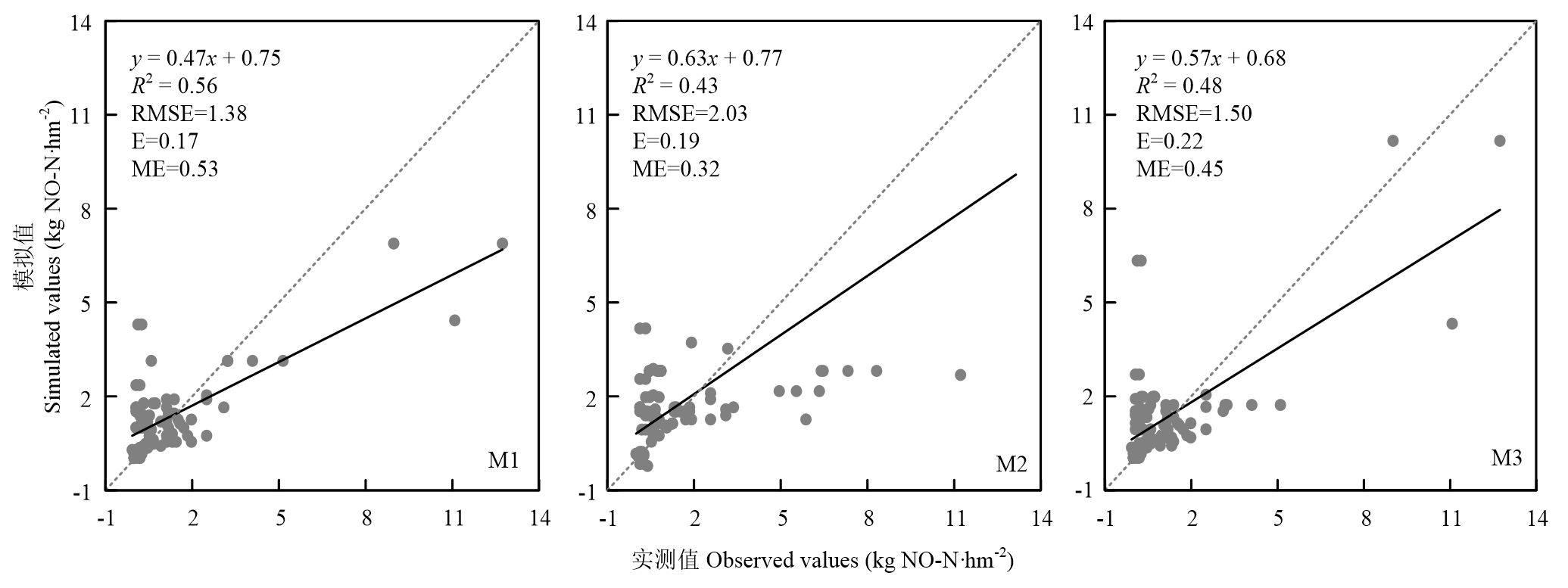
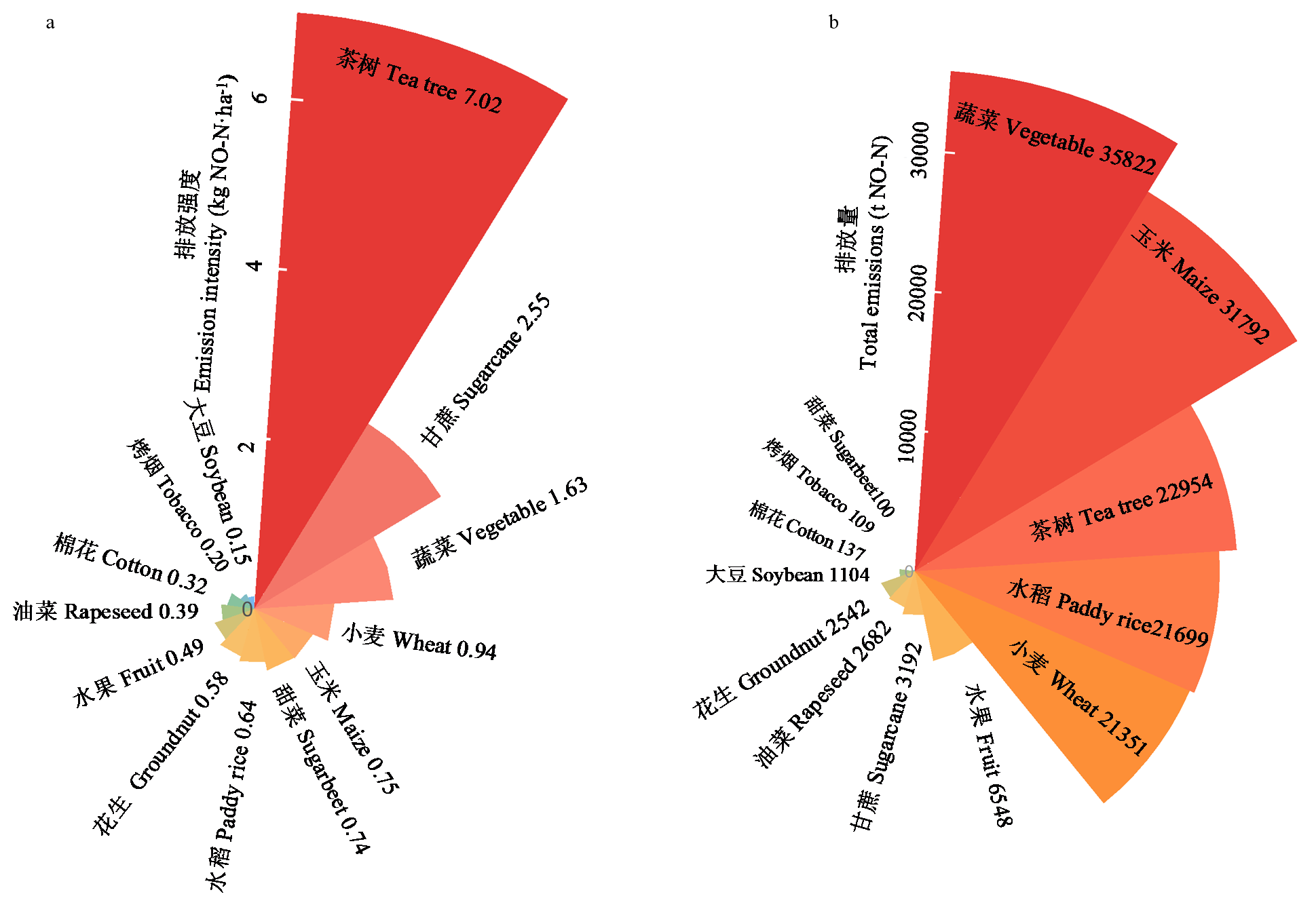
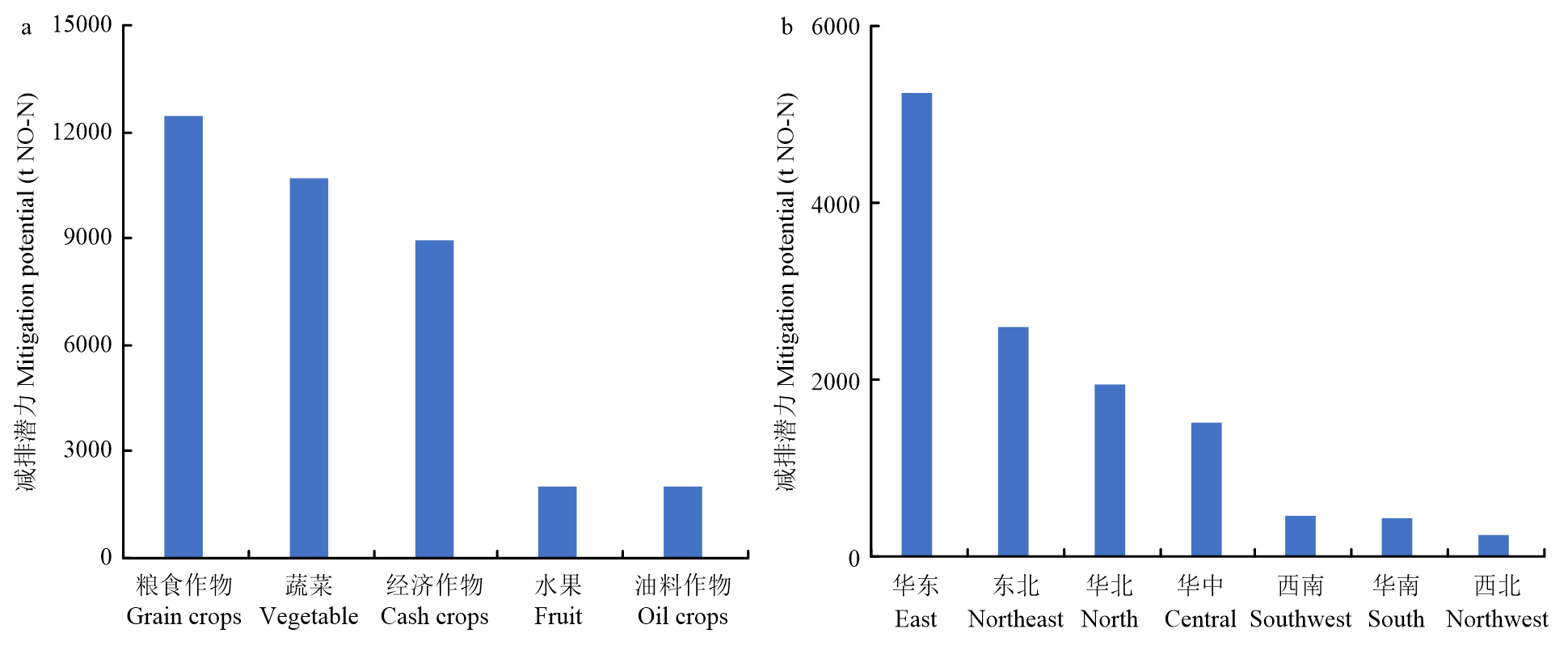
【Objective】Nitric oxide (NO) is not only a crucial precursor for tropospheric ozone formation but also participates in acid rain formation and nitrogen deposition processes, posing a severe threat to ecological security. Agriculture is a key anthropogenic source of NO. Given China’s substantial nitrogen fertilizer consumption, NO emissions from its agricultural soils warrant attention. Addressing the high uncertainty associated with current estimations that rely on global default emission factors (EFs) or a single national EF, this study aims to construct a localized EF dataset reflecting the characteristics of China's geographical regions, crops, and fertilizer types. Furthermore, it seeks to calculate the 2021 NO emission inventory for Chinese cropland soils and assess mitigation potentials, thereby providing a scientific basis for green agricultural development.【Method】This study systematically retrieved 54 field in-situ observation papers from the CNKI and Web of Science databases, extracting 440 pairs of full-growth period data. Three EF calculation methods—Maximum Likelihood Estimation (M1), Linear Regression With Intercept (M2), and Linear Regression Without Intercept (M3)—were compared. Adopting a “70% calculation+30% independent validation” mode, the optimal algorithm was screened to calculate localized EFs for China. By combining statistical data on crop planting areas and nitrogen application rates across provinces in 2021, the NO emission inventory for Chinese croplands was calculated, and uncertainty was quantified using the error propagation method. Finally, optimized management scenarios, such as fertilizer reduction and organic substitution, were established to predict NO mitigation potential.【Result】Independent validation results indicated that the M1 method yielded the highest prediction accuracy (R2=0.56). The calculated localized EFs demonstrated significant differences across crops and fertilization practices. Under sole synthetic fertilizer application, tea plantations exhibited the highest EF (1.91%), while rice paddies had the lowest (0.27%). Combined application of organic and inorganic fertilizers generally resulted in lower EFs compared to sole synthetic fertilizer application. Spatially, EFs presented a pattern of being higher in the southeast and lower in the northwest. It was estimated that the total NO emissions induced by nitrogen fertilizer application in Chinese croplands in 2021 were 150 kt NO-N, with an uncertainty of 9.1%. Regarding crop contribution, grain crops were the primary emission source, accounting for 49.9% of the total emissions. Among them, maize contributed the most (31.8 kt NO-N) due to its large planting area and high nitrogen application rates. Despite their smaller planting areas, tea plantations and sugarcane exhibited high emission intensities per unit area due to intensive nitrogen inputs, reaching 7.02 kg NO-N·hm-2 and 2.55 kg NO-N·hm-2, respectively. Regionally, East China contributed 40.9% of the total NO emissions from cereal crops nationwide (30.6 kt NO-N). Scenario analysis indicated significant mitigation potential for NO emissions from Chinese agricultural soils. Through the implementation of scientific nitrogen reduction and the promotion of organic fertilizer substitution technologies, the national NO mitigation potential could reach 24%, equivalent to an annual reduction of 36 kt NO-N. East, North, and Northeast China together accounted for 78.9% of the national mitigation potential from cereal crops.【Conclusion】By constructing a localized emission factor (EF) dataset based on field measurements, this study controlled the uncertainty of NO emission estimates from Chinese cropland soils to within 9.1%. However, due to the scarcity of field measurement data in regions such as Northeast and Northwest China, there remains some uncertainty in regional estimates. This study clarified the significant spatial heterogeneity and crop specificity of NO emissions from Chinese agricultural soils, identifying East China and high-nitrogen-input cash crops as priority areas for future NO mitigation and control. The findings confirm that optimizing chemical fertilizer application rates and implementing organic fertilizer substitution are effective pathways for reducing agricultural soil NO emissions. These results provide scientific support for formulating differentiated, region- and crop-specific agricultural nitrogen management policies and air pollution control measures.

Key words: NO emissions, emission factor, nitrogen fertilizer, soil, nitrogen management, environmental risk

Fig. 1

Comparison of measured and simulated NO emission values by different methods"

Table 1

NO emission factors of agricultural soils in different regions of China (%)"

地区
Region
肥料类型
Fertilizer type
水稻
Paddy rice
小麦
Wheat
玉米
Maize
茶树
Tea tree
蔬菜
Vegetable
其他
Others
华北North Min 0.29±0.04 (n=10) 0.63±0.34 (n=13)
华东
East
Min 0.41±0.14 (n=27) 0.59±0.17 (n=71) 0.24±0.15 (n=12) 1.81±0.92 (n=9) 0.46±0.16 (n=17) 0.37±0.09 (n=7)
Min&OM 0.16±0.11 (n=5) 0.08 ±0.04 (n=10) 0.63 (n=1) 1.11±0.6(n=13) 0.37±0.41 (n=10) 0.10±0.09 (n=4)
华南South Min 2.35±0.23 (n=3) 0.75±0.11 (n=4)
华中
Central
Min 0.04±0.02 (n=17) 0.49±0.31(n=6) 0.56±0.19 (n=7) 2.83% (n=1)
Min&OM 0.02±0.003 (n=3) 0.14±0.04 (n=15) 0.32±0.09 (n=18) 0.73±0.71 (n=5)
西北
Northwest
Min 0.04±0.02 (n=2) 0.1±0.1(n=5)
Min&OM 0.02±0.003 (n=3)
西南
Southwest
Min 0.13±0.08 (n=6) 0.07±0.05 (n=5) 0.15%±0.12% (n=6) 0.08%±0.02% (n=3)
Min&OM 0.07±0.04 (n=8) 0.12±0.06 (n=6) 0.04±0.03 (n=4)
全国
National
Min 0.27±0.1(n=44) 0.51±0.13 (n=95) 0.38±0.13 (n=42) 1.91±0.85 (n=10) 0.61±0.28 (n=26) 0.42±0.14 (n=14)
Min&OM 0.10±0.08 (n=8) 0.10±0.03 (n=36) 0.28±0.08 (n=25) 1.01±0.47 (n=18) 0.37±0.41 (n=10) 0.07±0.05 (n=8)

Table 2

Soil NO emissions induced by nitrogen fertilizer application for different crop types in China"

作物类型Crop type 排放强度Emission intensity (kg NO-N·hm-2) 排放量Emission amount (t NO-N)
粮食作物Grain crops 0.75±0.11 74842.59±11180
油料作物Oil crops 0.34±0.06 6328.7±1108.25
经济作物Cash crops 4.72±1.18 26492.29±6603.78
蔬菜Vegetable 1.63±0.18 35821.92±3863.54
水果Fruit 0.49±0.05 6547.69±725.97
所有作物All crops 0.95±0.09 150033.19±13611.92

Fig. 2

NO emission intensity (a) and total emissions (b) for different crops"

Table 3

Soil NO emissions induced by nitrogen fertilizer application in major cereal crops across different regions in China"

地区
Region
水稻Paddy rice 小麦Wheat 玉米Maize 主要粮食作物Major grain crops
排放强度
Emission intensity
(kg NO-N·hm-2)
排放量
Emission
amount
(t NO-N)
排放强度
Emission
intensity
(kgNO-N·hm-2)
排放量
Emission
amount
(t NO-N)
排放强度
Emission
intensity
(kg NO-N·hm-2)
排放量
Emission
amount
(t NO-N)
排放强度
Emission intensity
(kgNO-N·hm-2)
排放量
Emission
amount
(t NO-N)
东北
Northeast
0.38±0.14 1990.3±733.27 0.16±0.02 11.02±1.63 1.02±0.55 13871.23±7453.20 0.84±0.40 15872.55±7489.18
华北
North
0.51±0.19 119.70±44.10 0.74±0.11 2388.00±352.33 1.04±0.56 9777.83±5253.76 0.95±0.41 12285.53±5265.75
西北
Northwest
0.57±0.15 90.17±23.95 0.10±0.05 294.65±130.95 0.32±0.31 1188.78±1134.75 0.23±0.17 1573.60±1142.53
华东
East
1.13±0.21 15730.46±2921.12 1.39±0.39 12745.29±3612.84 0.38±0.25 2162.08±1398.99 1.07±0.17 30637.83±4852.09
华中
Central
0.06±0.01 390.39±93.07 0.86±0.56 5820.91±3750.01 0.75±0.25 3469.95±1175.77 0.53±0.22 9681.25±3931.12
西南
Southwest
0.41±0.13 1592.32±514.89 0.16±0.09 91.94±53.90 0.17±0.13 819.42±614.57 0.27±0.09 2503.68±803.56
华南
South
0.47±0.12 1785.59±446.67 NA NA 0.82±0.28 502.57±171.93 0.52±0.11 2288.16±478.62

Fig. 3

The mitigation potential of soil NO emissions of agricultural systems in China (a: different crop types; b: major cereal crops across different regions)"

[1]
Crutzen P J. The role of NO and NO2 in the chemistry of the troposphere and stratosphere[J]. Annual Review of Earth and Planetary Sciences, 1979, 7: 443-472.

doi: 10.1146/earth.1979.7.issue-1
[2]
Bobbink R, Hornung M, Roelofs J G M. The effects of air-borne nitrogen pollutants on species diversity in natural and semi-natural European vegetation[J]. Journal of Ecology, 1998, 86(5): 717-738.

doi: 10.1046/j.1365-2745.1998.8650717.x
[3]
Denman K L, Brasseur G, Chidthaisong A, Ciais P, Cox P M, Dickinson R E, Hauglustaine D, Heinze C, Holland E, Jacob D, Lohmann U, Ramachandran S, Da Silva Dias P L, Worlstey S C, Zhang X. Couplings between changes in the climate system and biogeochemistry//Solomon S, Qin D, Manning M, Chen Z, Marquis M, Averyt K B, Tignor M, Miller H L. Climate Change 2007: The Physical Science Basis. Contribution of Working Group I to the Fourth Assessment Report of the Intergovernmental Panel on Climate Change[M]. Cambridge, UK: Cambridge University Press, 2007: 499-587.
[4]
Guo S, Hu M, Zamora M L, Peng J F, Shang D J, Zheng J, Du Z F, Wu Z J, Shao M, Zeng L M, Molina M J, Zhang R Y. Elucidating severe urban haze formation in China[J]. PNAS, 2014, 111(49): 17373-17378.

doi: 10.1073/pnas.1419604111 pmid: 25422462
[5]
Cui S H, Shi Y L, Groffman P M, Schlesinger W H, Zhu Y G. Centennial-scale analysis of the creation and fate of reactive nitrogen in China (1910-2010)[J]. PNAS, 2013, 110(6): 2052-2057.

doi: 10.1073/pnas.1221638110 pmid: 23341613
[6]
Pilegaard K. Processes regulating nitric oxide emissions from soils[J]. Philosophical Transactions of the Royal Society of London Series B, Biological Sciences, 2013, 368(1621): 20130126.
[7]
Drury C F, Findlay W I, Mckenney D J. Nitric oxide and nitrous oxide production from soil: water and oxygen effects[J]. Soil Science Society of America Journal, 1992, 56(3): 766-770.

doi: 10.2136/sssaj1992.03615995005600030015x
[8]
Kesik M, Blagodatsky S, Papen H, Butterbach-Bahl K. Effect of pH, temperature and substrate on N2O, NO and CO2 production by Alcaligenes faecalis p[J]. Journal of Applied Microbiology, 2006, 101(3): 655-667.

pmid: 16907816
[9]
Chen Y T, Bogner C, Borken W, Stange C F, Matzner E. Minor response of gross N turnover and N leaching to drying, rewetting and irrigation in the topsoil of a Norway spruce forest[J]. European Journal of Soil Science, 2011, 62(5): 709-717.

doi: 10.1111/ejs.2011.62.issue-5
[10]
Goldberg S D, Gebauer G. Drought turns a Central European Norway spruce forest soil from an N2O source to a transient N2O sink[J]. Global Change Biology, 2009, 15(4): 850-860.

doi: 10.1111/gcb.2009.15.issue-4
[11]
Schindlbacher A, Zechmeister-Boltenstern S, Butterbach-Bahl K. Effects of soil moisture and temperature on NO, NO2, and N2O emissions from European forest soils[J]. Journal of Geophysical Research: Atmospheres, 2004, 109(D17): D17302.
[12]
Kesik M, Brüggemann N, Forkel R, Kiese R, Knoche R, Li C S, Seufert G, Simpson D, Butterbach-Bahl K. Future scenarios of N2O and NO emissions from European forest soils[J]. Journal of Geophysical Research: Biogeosciences, 2006, 111(G2): G02018.
[13]
Yienger J J, Levy H II. Empirical model of global soil-biogenic NOx emissions[J]. Journal of Geophysical Research: Atmospheres, 1995, 100(D6): 11447-11464.

doi: 10.1029/95JD00370
[14]
Yan X Y, Ohara T, Akimoto H. Statistical modeling of global soil NOx emissions[J]. Global Biogeochemical Cycles, 2005, 19(3): 2004GB002276.
[15]
Skiba U, Smith K A, Fowler D. Nitrification and denitrification as sources of nitric oxide and nitrous oxide in a sandy loam soil[J]. Soil Biology and Biochemistry, 1993, 25(11): 1527-1536.

doi: 10.1016/0038-0717(93)90007-X
[16]
Veldkamp E, Keller M. Fertilizer-induced nitric oxide emissions from agricultural soils[J]. Nutrient Cycling in Agroecosystems, 1997, 48(1): 69-77.

doi: 10.1023/A:1009725319290
[17]
Yan X Y, Shimizu K, Akimoto H, Ohara T. Determining fertilizer -induced NO emission ratio from soils by a statistical distribution model[J]. Biology and Fertility of Soils, 2003, 39(1): 45-50.

doi: 10.1007/s00374-003-0665-7
[18]
Liu S W, Lin F, Wu S, Ji C, Sun Y, Jin Y G, Li S Q, Li Z F, Zou J W. A meta-analysis of fertilizer-induced soil NO and combined NO+N2O emissions[J]. Global Change Biology, 2017, 23(6): 2520-2532.

doi: 10.1111/gcb.2017.23.issue-6
[19]
Wang Y, Yao Z S, Zheng X H, Subramaniam L, Butterbach-Bahl K. A synthesis of nitric oxide emissions across global fertilized croplands from crop-specific emission factors[J]. Global Change Biology, 2022, 28(14): 4395-4408.

doi: 10.1111/gcb.v28.14
[20]
Intergovernmental Panel on Climate Change. 2019 Refinement to the 2006 IPCC Guidelines for National Greenhouse Gas Inventories[M]. Geneva, Switzerland: IPCC, 2019.
[21]
Zhou W J, Chen L B, Cheng W X, Li Y P, Li T, Smith P, Cheng K. Synergistic effects of climate change and nitrogen use on future nitric oxide emissions from China’s croplands[J]. Journal of Environmental Management, 2025, 377: 124643.

doi: 10.1016/j.jenvman.2025.124643
[22]
Food and Agriculture Organization of the United Nations. FAOSTAT Database Collections[DS/OL]. Rome, Italy: Food and Agriculture Organization of the United Nations, 2025[2026-01-22]. http://www.fao.org/faostat/.
[23]
Wang Q G, Han Z W, Higano Y. An inventory of nitric oxide emissions from soils in China[J]. Environmental Pollution, 2005, 135(1): 83-90.

pmid: 15701395
[24]
Zheng X H, Wang M X, Wang Y S, Shen R X, Li J, Heyer J, Koegge M, Papen H, Jin J S, Li L T. Mitigation options for methane, nitrous oxide and nitric oxide emissions from agricultural ecosystems[J]. Advances in Atmospheric Sciences, 2000, 17(1): 83-92.

doi: 10.1007/s00376-000-0045-2
[25]
Xu P, Chen A P, Houlton B Z, Zeng Z Z, Wei S, Zhao C X, Liao Y J, Zheng Z H, Luan S J, Zheng Y. Spatial variation of reactive nitrogen emissions from China’s croplands codetermined by regional urbanization and its feedback to global climate change[J]. Geophysical Research Letters, 2020, 47(12): e2019GL086551.
[26]
Shen Y L, Xiao Z M, Wang Y, Yao L, Xiao W. Multisource remote sensing based estimation of soil NOx emissions from fertilized cropland at high-resolution: spatio-temporal patterns and impacts[J]. Journal of Geophysical Research: Atmospheres, 2022, 127(20): e2022JD036741.
[27]
Ma R Y, Yu K, Xiao S Q, Liu S W, Ciais P, Zou J W. Data-driven estimates of fertilizer-induced soil NH3, NO and N2O emissions from croplands in China and their climate change impacts[J]. Global Change Biology, 2022, 28(3): 1008-1022.

doi: 10.1111/gcb.v28.3
[28]
Smith P, Smith J U, Powlson D S, Mcgill W B, Arah J R M, Chertov O G, Coleman K, Franko U, Frolking S, Jenkinson D S, Jensen L S, Kelly R H, Klein-Gunnewiek H, Komarov A S, Li C, Molina J A E, Mueller T, Parton W J, Thornley J H M, Whitmore A P. A comparison of the performance of nine soil organic matter models using datasets from seven long-term experiments[J]. Geoderma, 1997, 81(1/2): 153-225.

doi: 10.1016/S0016-7061(97)00087-6
[29]
Zhou F, Shang Z Y, Ciais P, Tao S, Piao S L, Raymond P, He C F, Li B G, Wang R, Wang X H, Peng S S, Zeng Z Z, Chen H, Ying N, Hou X K, Xu P. A new high-resolution N2O emission inventory for China in 2008[J]. Environmental Science & Technology, 2014, 48(15): 8538-8547.

doi: 10.1021/es5018027
[30]
Intergovernmental Panel on Climate Change. 2006 IPCC Guidelines for National Greenhouse Gas Inventories[R]. Prepared by National Greenhouse Gas Inventories Programme. Hayama: Institute for Global Environmental Strategies, 2006.
[31]
Guo Y X, Chen Y F, Searchinger T D, Zhou M, Pan D, Yang J N, Wu L, Cui Z L, Zhang W F, Zhang F S, Ma L, Sun Y L, Zondlo M A, Zhang L, Mauzerall D L. Air quality, nitrogen use efficiency and food security in China are improved by cost-effective agricultural nitrogen management[J]. Nature Food, 2020, 1(10): 648-658.

doi: 10.1038/s43016-020-00162-z pmid: 37128115
[32]
Yin Y H, Guo S F, Xu Q Y, Liu J, Wang H Y, Zhuang Y H, Wang Z, Hua L L, Liu H B, Zhai L M. Co-benefits for cropland yield, nitrogen emissions, and climate impact through multi-objective optimization agricultural manure solutions[J]. Nature Communications, 2025, 16: 6415.

doi: 10.1038/s41467-025-61885-w
[33]
Yue Q, Wu H, Sun J F, Cheng K, Smith P, Hillier J, Xu X R, Pan G X. Deriving emission factors and estimating direct nitrous oxide emissions for crop cultivation in China[J]. Environmental Science & Technology, 2019, 53(17): 10246-10257.

doi: 10.1021/acs.est.9b01285
[34]
Huang Y, Li D J. Soil nitric oxide emissions from terrestrial ecosystems in China: A synthesis of modeling and measurements[J]. Scientific Reports, 2014, 4: 7406.

doi: 10.1038/srep07406 pmid: 25490942
[35]
Bouwman A F, Boumans L J M, Batjes N H. Emissions of N2O and NO from fertilized fields: Summary of available measurement data[J]. Global Biogeochemical Cycles, 2002, 16(4): 1-13.

doi: 10.1029/2001GB001398
[36]
Liu X J, Mosier A R, Halvorson A D, Zhang F S. Tillage and nitrogen application effects on nitrous and nitric oxide emissions from irrigated corn fields[J]. Plant and Soil, 2005, 276(1): 235-249.

doi: 10.1007/s11104-005-4894-4
[37]
Yao Z S, Yan G X, Zheng X H, Wang R, Liu C Y, Butterbach-Bahl K. Straw return reduces yield-scaled N2O plus NO emissions from annual winter wheat-based cropping systems in the North China Plain[J]. Science of the Total Environment, 2017, 590: 174-185.
[38]
Skiba U, Ball B. The effect of soil texture and soil drainage on emissions of nitric oxide and nitrous oxide[J]. Soil Use and Management, 2002, 18(1): 56-60.

doi: 10.1111/sum.2002.18.issue-1
[39]
刘柳松, 施建成. 旱地农田生态系统N2O排放对气温升高的响应[J]. 安徽农业科学, 2012, 40(28): 13950-13954.
Liu L S, Shi J C. Response of N2O emissions of farmland ecosystem on temperature rising[J]. Journal of Anhui Agricultural Sciences, 2012, 40(28): 13950-13954. (in Chinese)
[40]
Dick J, Skiba U M, Wilson J. The effect of rainfall on NO and N2O emissions from Ugandan agroforest soils[J]. Phyton, 2001, 41(3): 73-80.
[41]
Wang Y, Yao Z S, Pan Z L, Guo H J, Chen Y C, Cai Y J, Zheng X H. Nonlinear response of soil nitric oxide emissions to fertilizer nitrogen across croplands[J]. Biology and Fertility of Soils, 2024, 60(4): 483-492.

doi: 10.1007/s00374-024-01818-9
[42]
Koppa A, Rains D, Hulsman P, Poyatos R, Miralles D G. A deep learning-based hybrid model of global terrestrial evaporation[J]. Nature Communications, 2022, 13: 1912.

doi: 10.1038/s41467-022-29543-7 pmid: 35395845
[1] HOU HuiZhi, YIN JiaDe, MA MingSheng, LIU XiaoWei, LIU YanLan, LEI KangNing. Effects of Tillage and Organic Fertilizer Application on Crop Yield and Water Use in a Potato-Maize Double Cropping System in the Longdong Region [J]. Scientia Agricultura Sinica, 2026, 59(8): 1672-1685.
[2] WANG CaiYu, LIU XiaoLi, LI WenGuang, YANG WenPing, YANG ZhenPing, GAO ZhiQiang. Effects of Different Substitution Rates of Organic Fertilizers on Soil Multifunctionality and Its Microbial Driving Mechanisms [J]. Scientia Agricultura Sinica, 2026, 59(8): 1712-1726.
[3] XU YangHaoJun, CHEN LiMing, YANG ShiQi, TANG YiFan, TAN XueMing, ZENG YongJun, PAN XiaoHua, ZENG YanHua. Effects of Long-Term Different Straw Returning Methods on Soil Organic Carbon, Nutrients and Aggregate Formation in Different Soil Layers of Double Cropping Rice Field [J]. Scientia Agricultura Sinica, 2026, 59(7): 1492-1506.
[4] LI YongJuan, ZHANG YueTong, WANG YiBo, ZHAO ChangJiang, SONG Jie, CHEN XueLi, YAO Qin. Effects of Biochar Application on the Abundance and Community Composition of Nitrogen-Fixing Microbial nifH Gene in Soybean Rotation and Continuous Cropping Systems [J]. Scientia Agricultura Sinica, 2026, 59(6): 1272-1285.
[5] WEI YuanHui, YU YiHui, LI ZiJun, DING WenJie, TU WenLong, MAO YanLing. Effects of Long-Term Fertilization on Soil Organic Carbon Structure and Carbon-Fixing Bacterial Community Structure in Yellow-Mud Paddy Soil [J]. Scientia Agricultura Sinica, 2026, 59(5): 1020-1033.
[6] LI WenHu, LI HaiFeng, DU YuPeng, DING YuLan, LUO YiNuo, LI YuKe, SHE WenTing, ZHANG Feng, TENG Yu, ZHANG SiQi, HUANG Cui, LI XiaoHan, LIU JinShan, WANG ZhaoHui. Regional Differences in Wheat Zinc Uptake and Translocation Responses to Soil Zinc Fertilization [J]. Scientia Agricultura Sinica, 2026, 59(5): 1034-1047.
[7] YAN YanGe, ZHANG ShuiQin, XU Meng, XU JiuKai, LI YanTing, ZHAO BingQiang, YUAN Liang. Transformation Characteristics of Dextran-Modified Urea in Fluvo- Aquic Soil [J]. Scientia Agricultura Sinica, 2026, 59(5): 1048-1059.
[8] WEN YuBin, BAI ShanShan, CAI ZeJiang, SUN Nan, XU MingGang. Effects of Organic Materials on Soil Microbial Biomass and Its Acidity Regulation Mechanism [J]. Scientia Agricultura Sinica, 2026, 59(4): 834-849.
[9] GUO FuCheng, TANG HaiJiang, HAO XinYi, MA GuoLin, YANG JiuJu, HUANG LinFeng, TIAN Lei, WANG Bin, LUO ChengKe. Effects of Different Irrigation Methods on Water-Salt Transport, Rice Yield, and Water Use Efficiency in Saline Soil in Ningxia [J]. Scientia Agricultura Sinica, 2026, 59(4): 750-764.
[10] LIU MengYang, LIU Jie, CHEN Xiang, WANG QingYun, LUO LaiChao, QI YongBo, TIAN Da, LI JinCai, CHAI RuShan. Effects of Long-Term Straw Return on Distribution of Aggregates and Phosphorus Fractions in Shajiang Black Soil [J]. Scientia Agricultura Sinica, 2026, 59(3): 575-588.
[11] XIAN QingLin, XIAO JianKe, GAO AQing, GAO LiChuang, LIU Yang. Effects of Planting Patterns Combined with Soil Moisture Measurement and Supplementary Irrigation on the Yield and Water Use Efficiency of Winter Wheat [J]. Scientia Agricultura Sinica, 2026, 59(3): 589-601.
[12] YAN TingLin, DU YaDan, HU XiaoTao, WANG He, LI XiaoYan, WANG YuMing, NIU WenQuan, GU XiaoBo. The Impacts of Nitrogen Fertilizer Organic Alternatives Under Aerated Drip Irrigation on Cotton Yield and Water Use Efficiency Under Deficit Irrigation Conditions [J]. Scientia Agricultura Sinica, 2026, 59(3): 602-618.
[13] CHEN GuiPing, WEI JinGui, GUO Yao, LI Pan, WANG FeiEr, QIU HaiLong, FENG FuXue, YIN Wen. Synergistic Effects of Wide-Narrow Row and Density Enhancement on the Photosynthetic Characteristics and Resource Utilization of Maize in Oasis Irrigation Areas [J]. Scientia Agricultura Sinica, 2026, 59(2): 278-291.
[14] ZHANG ZhiYong, TAN ShiChao, XIONG ShuPing, MA XinMing, WEI YiHao, WANG XiaoChun. Effects of Annual Water and Nitrogen Optimization on Yield and Nitrogen Migration of Wheat-Maize Rotation System in Irrigation Area of Northern Henan [J]. Scientia Agricultura Sinica, 2026, 59(2): 336-353.
[15] WANG RenZhuo, LI YueYing, HUANG ShaoMin, JIANG GuiYing, ZHANG Qi, LIU ChaoLin, YANG Jin, WANG MengRu, WANG BeiBei, LIU Fang, GUO DouDou, JIE XiaoLei, SONG Lian, LIU ShiLiang. Effects of Long-Term Combination of Organic and Inorganic Fertilizers on Bacterial Community Structure, Ecological Network, and Key Species in Fluvo-Aquic Soil [J]. Scientia Agricultura Sinica, 2026, 59(2): 354-367.
Viewed
Full text


Abstract

Cited

  Shared   
  Discussed   
No Suggested Reading articles found!