Scientia Agricultura Sinica ›› 2026, Vol. 59 ›› Issue (17): 3853-3870.doi: 10.3864/j.issn.0578-1752.2026.17.011

• HORTICULTURE • Previous Articles     Next Articles

Effects of Combined Treatment of Light Quality and Sodium Selenite on Growth and Quality in Mustard Sprouts

HAN ShuYu1(), ZHANG BaoCai2, YU XueNa1, HUANG Zhi1, TANG Yi1, LI HuanXiu1, ZHANG Fen1, HUANG HuanHuan1(), SUN Bo1   

  1. 1 College of Horticulture, Sichuan Agricultural University, Chengdu 611130
    2 Sichuan Zhongdu Agriculture Seed Co., ltd, Chengdu 610041
  • Received:2026-04-30 Accepted:2026-06-09 Online:2026-09-03 Published:2026-09-03
  • Contact: HUANG HuanHuan

Abstract:

【Objective】The effects of combined treatment of light quality and sodium selenite on the growth and quality of mustard sprouts were clarified, which provided a theoretical basis and technical support for the optimization of light environment and quality improvement in facility cultivation of mustard sprouts.【Method】This study focused on mustard sprouts, investigating the impacts of different light qualities (white light, red light, blue light) alone and in combination with sodium selenite on key quality indicators such as morphogenesis, photosynthetic characteristics, antioxidant capacity, and accumulation of secondary metabolites, and combined with transcriptome analysis to reveal its regulatory mechanism.【Result】Compared with white light, red light treatment significantly increased the edible fresh weight, plant height, and soluble sugar content of mustard sprouts by 1.19-, 1.07-, and 1.06-fold, respectively. Blue light promoted photosynthetic pigment accumulation by upregulating the expression of photosynthetic pigment-related genes (chlE, por, crtISO, crtZ). The content of total chlorophylls and total carotenoids under blue light were 1.09- and 1.08-fold higher than those under white light, and 1.10- and 1.04-fold higher than those under red light, respectively. Additionally, blue light enhanced the accumulation of flavonoids and total phenolics in mustard sprouts by upregulating the genes involved in phenylpropanoid biosynthesis (PAL, C4H, 4CL, CCR, COMT, POD), with their content increasing by 1.20- and 1.44-fold relative to white light, and by 1.05- and 1.10-fold relative to red light, respectively. Furthermore, blue light treatment significantly increased total glucosinolates content by 1.28-fold and 1.23-fold compared with white light and red light treatments, respectively. The combination of white or blue light with sodium selenite further promoted the accumulation of total chlorophylls and total carotenoids, with the respective content significantly increased by 1.15- and 1.15-fold, and 1.07- and 1.07-fold. The synergistic interaction between blue light and sodium selenite regulated carbon and nitrogen metabolism to facilitate the accumulation of soluble sugar and soluble protein, whose content were significantly enhanced by 1.07-fold and 1.08-fold, respectively. This synergistic effect also improved the antioxidant capacity of mustard sprouts, with the content of ascorbic acid, flavonoids, and total phenolics being 1.13-, 1.16-, and 1.05-fold higher than those under single blue light treatment. Principal component analysis (PCA) showed that PC1 and PC2 accounted for 66.1% and 14.0% of the total variance, respectively. The combined treatment of red light and sodium selenite was strongly correlated with plant height, edible fresh weight, and soluble sugar content; single blue light treatment was closely associated with total glucosinolates content; and the combined treatment of blue light and sodium selenite exhibited significant positive correlations with total chlorophylls, total carotenoids, ascorbic acid, and phenolic compounds. Correlation analysis further demonstrated that soluble protein content was significantly and positively correlated with flavonoids, total phenolics, total chlorophylls, and total carotenoids.【Conclusion】Light quality and sodium selenite have significant regulation and synergistic interaction effects on the nutritional quality of mustard sprouts. In particular, the synergistic effect of blue light and sodium selenite can promote the photosynthetic pigments, antioxidant activity and secondary metabolites accumulation of mustard sprouts in an all-round way.

Key words: mustard sprouts, light quality, sodium selenite, growth, quality

Fig. 1

Plant growth and Se content under different treatments in mustard sprouts A: Phenotypes of mustard sprouts under different treatments; B: Edible fresh weight; C: Plant height; D: Se content. W: White light, SeW: White light+sodium selenite, R: Red light, SeR: Red light+sodium selenite, B: Blue light, SeB: Blue light+sodium selenite. Different letters indicate statistically significant differences among treatments (P<0.05). The same as below"

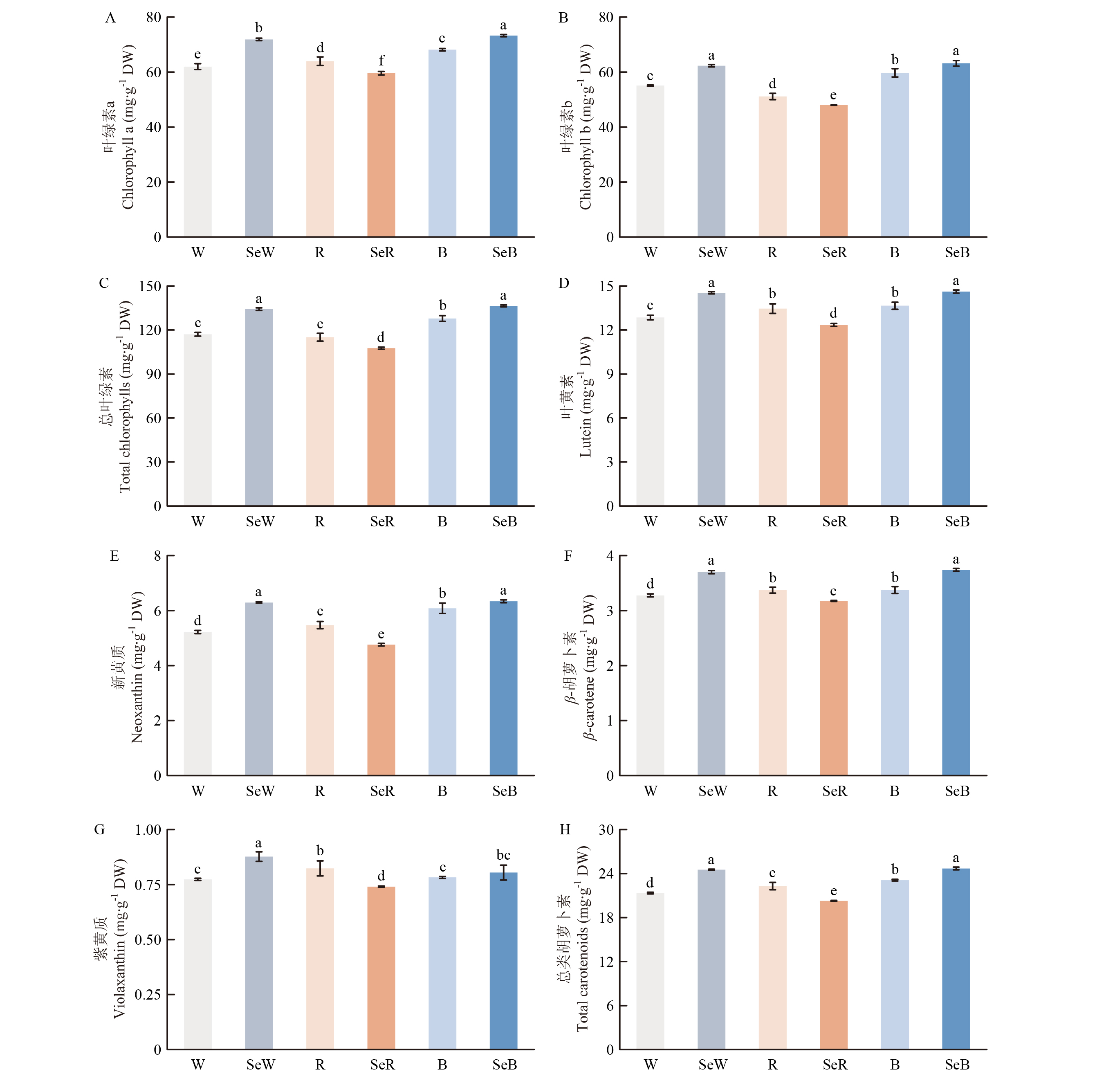
Fig. 2

Chlorophylls, carotenoids content under different treatments in mustard sprouts"

Fig. 3

Content of nutrients, antioxidants and antioxidant capacity under different treatments in mustard sprouts"

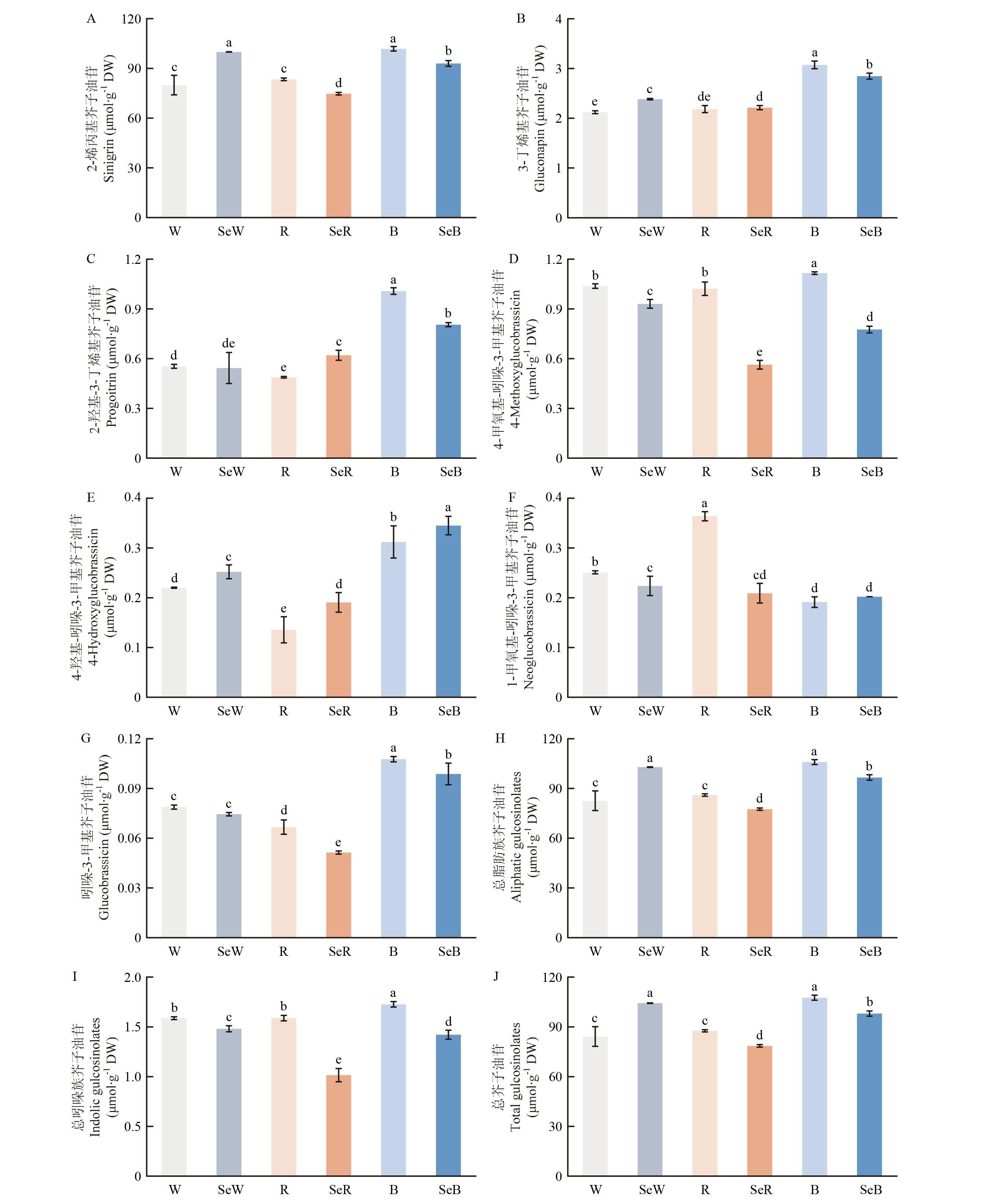
Fig. 4

Glucosinolate content under different treatments in mustard sprouts"

Fig. 5

PCA biplot (A) and correlation plot (B) illustrating the effects of light quality and sodium selenite treatment on the growth and quality of mustard sprouts SIN: Sinigrin; GNA: Gluconapin; PRO: Progoitrin; NGBS: Neoglucobrassicin; GBS: Glucobrassicin; 4-MGBS: 4-methoxyglucobrassicin; 4-HGBS: 4-hydroxyglucobrassicin; AGS: Aliphatic glucosinolates; IGS: Indolic glucosinolates; GS: Total glucosinolates"

Fig. 6

Differentially expressed genes (DEGs) and Kyoto encyclopedia of genes and genomes (KEGG) enrichment analysis in mustard sprouts under different treatments A: Number of DEGs up and down; B, C: Venn diagram of DEGs among comparison groups; D: KEGG enrichment analysis of DEGs among comparison groups"

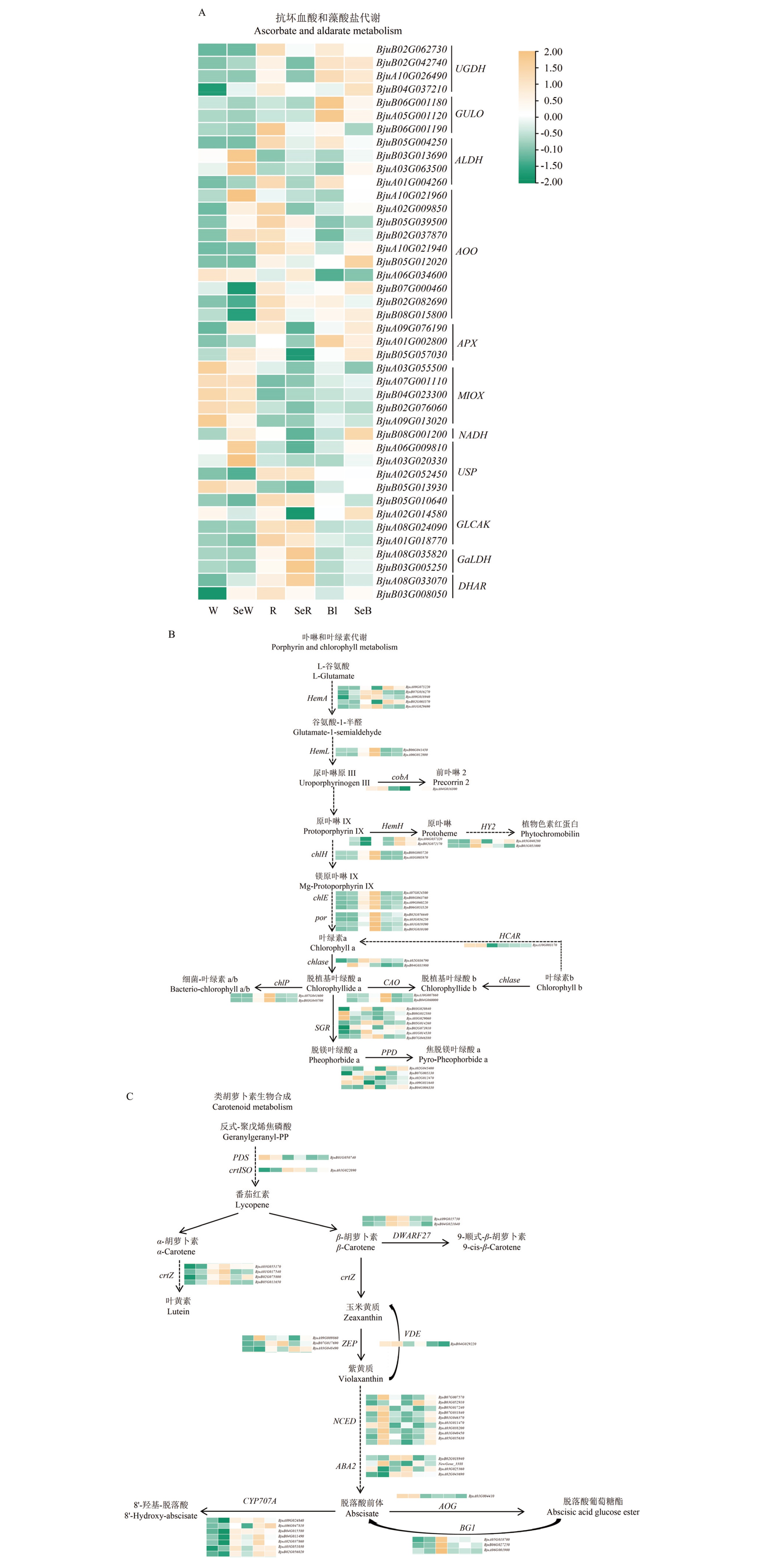
Fig. 7

Ascorbate and aldarate metabolism (A), porphyrin and chlorophyll metabolism (B) and carotenoid biosynthesis (C) pathways and heat map of related genes"

Fig. 8

Starch and sucrose metabolism pathway and heat map of related genes"

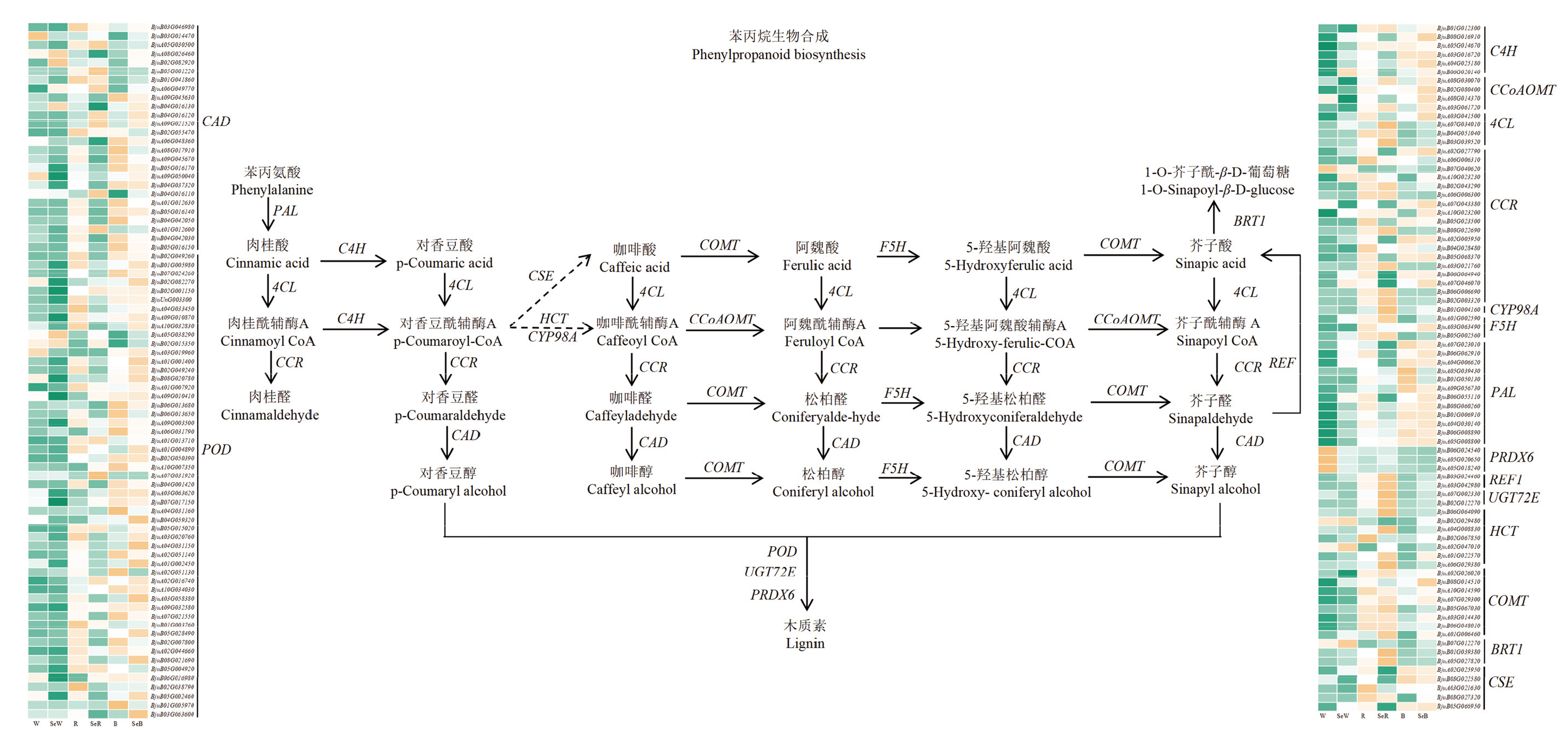
Fig. 9

Phenylpropanoid biosynthesis pathway and heat map of related genes"

Fig. 10

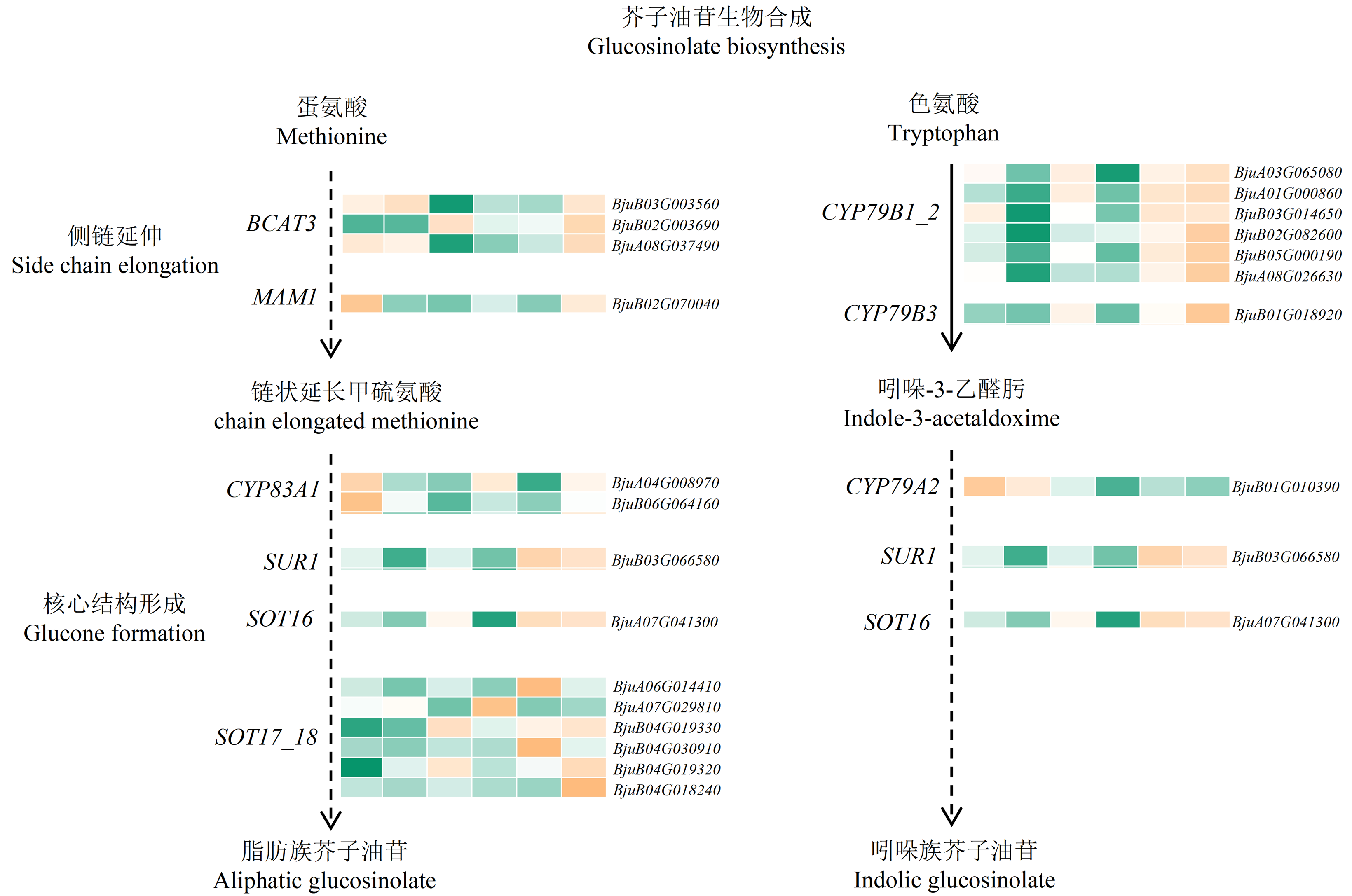
Glucosinolate biosynthetic pathway and heat map of related genes"

[1]
Yu X, Di H, Zhao Y, Liu R, Wang Y, Lu Y, Liang K, Chen Z, Ma J, Guan Z, Huang Z, Tang Y, Xu J, Li H, Tang Q, Chen Y, Bian J, Zhang F, Sun B. Optimized processing and formulation for retaining the sensory and nutritional quality of mustard leaf tea[J]. Food Chemistry: X, 2025, 27: 102515.
[2]
Zhou A, Tang J, Li Y, Cheng W, Yao X, Escalona V H, Qian G, Ma J, Yu X, Li H, Huang Z, Tang Y, Zhang F, Chen Z, Sun B. Combination of light quality and melatonin regulates the quality in mustard sprouts[J]. Food Chemistry: X, 2024, 23: 101560.
[3]
吕铮. 不同LED光质对荞麦芽苗菜生长及品质的影响[D]. 长春: 吉林农业大学, 2023.
Z. The effect of different LED light quality on the growth and quality of buckwheat sprouts[D]. Changchun: Jilin Agricultural University, 2023. (in Chinese)
[4]
Zhuang L, Huang G, Li X, Xiao J, Guo L. Effect of different LED lights on aliphatic glucosinolates metabolism and biochemical characteristics in broccoli sprouts[J]. Food Research International, 2022, 154: 111015.
[5]
Fiutak G, Michalczyk M. Effect of artificial light source on pigments, thiocyanates and ascorbic acid content in kale sprouts (Brassica oleracea L. var. Sabellica L.)[J]. Food Chemistry, 2020, 330: 127189.
[6]
Kang C H, Yoon E K, Muthusamy M, Kim J A, Jeong M J, Lee S I. Blue LED light irradiation enhances L-ascorbic acid content while reducing reactive oxygen species accumulation in Chinese cabbage seedlings[J]. Scientia Horticulturae, 2020, 261: 108924.
[7]
Xue A, Liang W, Wen S, Gao Y, Huang X, Tong Y, Hao Y, Luo L. Metabolomic analysis based on EESI-MS indicate blue LED light promotes aliphatic-glucosinolates biosynthesis in broccoli sprouts[J]. Journal of Food Composition and Analysis, 2021, 97: 103777.
[8]
莫言玲, 罗亚兰, 刘义华, 曾静, 郭健, 陈静静. 不同LED光质对芥菜芽苗菜生长、营养品质和抗氧化特性的影响[J]. 中国蔬菜, 2023(11): 56-62.
Mo Y L, Luo Y L, Liu Y H, Zeng J, Guo J, Chen J J. Effects of different LED light qualities on growth, nutritional quality and antioxidant activity of mustard sprouts[J]. China Vegetables, 2023(11): 56-62. (in Chinese)
[9]
Li X, Yang X, Shu S, Wang H, Wang L, Li S, Tian J, Su L, Lin S, Pan Y, Yang Y, Yang L, Ju R, Zhao C, Xu W. Selenium-fortified radish sprouts: Elevated nutritional and antioxidant profiling[J]. LWT, 2025, 227: 118023.
[10]
Yang X, Liao X, Yu L, Rao S, Chen Q, Zhu Z, Cong X, Zhang W, Ye J, Cheng S, Xu F. Combined metabolome and transcriptome analysis reveal the mechanism of selenate influence on the growth and quality of cabbage (Brassica oleracea var. capitata L.)[J]. Food Research International, 2022, 156: 111135.
[11]
刘萌, 何洪巨, 黄晓欣, 刘光敏, 张俊花, 黄伟. 外源物质亚硒酸钠处理对西兰花营养品质和硫苷含量的影响[J]. 北方园艺, 2021(21): 1-7.
Liu M, He H J, Huang X X, Liu G M, Zhang J H, Huang W. Effects of exogenous substance Na2SeO3 treatment on nutritional quality and glucosinolate content of broccoli[J]. Northern Horticulture, 2021(21): 1-7. (in Chinese)
[12]
Chen J, Chen H, Wang H, Zhan J, Yuan X, Cui J, Su N. Selenium treatment promotes anthocyanin accumulation in radish sprouts (Raphanus sativus L.) by its regulation of photosynthesis and sucrose transport[J]. Food Research International, 2023, 165: 112551.
[13]
Hsu F C, Wirtz M, Heppel S C, Bogs J, Krämer U, Khan M S, Bub A, Hell R, Rausch T. Generation of Se-fortified broccoli as functional food: impact of Se fertilization on S metabolism[J]. Plant, Cell & Environment, 2011, 34(2): 192-207.
[14]
Sun B, Di H, Zhang J, Xia P, Huang W, Jian Y, Zhang C, Zhang F. Effect of light on sensory quality, health-promoting phytochemicals and antioxidant capacity in post-harvest baby mustard[J]. Food Chemistry, 2021, 339: 128057.
[15]
Sun B, Tian Y X, Jiang M, Yuan Q, Chen Q, Zhang Y, Luo Y, Zhang F, Tang H R. Variation in the main health-promoting compounds and antioxidant activity of whole and individual edible parts of baby mustard (Brassica juncea var. gemmifera)[J]. RSC Advances, 2018, 8(59): 33845-33854.
[16]
Cano-Lamadrid M, Martínez-Zamora L, Castillejo N, Cattaneo C, Pagliarini E, Artés-Hernández F. How does the phytochemical composition of sprouts and microgreens from Brassica vegetables affect the sensory profile and consumer acceptability[J]. Postharvest Biology and Technology, 2023, 203: 112411.
[17]
任毛飞. 光质对植物生长发育、光合作用和碳氮代谢的影响研究进展[J]. 植物生理学报, 2023, 59(7): 1211-1228.
Ren M F. Research progress on the effects of light quality on plant growth and development, photosynthesis, and carbon and nitrogen metabolism[J]. Plant Physiology Journal, 2023, 59(7): 1211-1228. (in Chinese)
[18]
Zhou A, Zhang Y, Li L, Di H, Bian J, Ma J, Escalona V H, Hong H, Li H, Tang Y, Huang Z, Zhang F, Chen Z, Sun B. Effects of combined treatment of light quality and melatonin on health-promoting compounds in Chinese kale sprouts[J]. LWT, 2024, 199: 116137.
[19]
Wang Y, Song S, Hao Y, Chen C, Ou X, He B, Zhang J, Jiang Z, Li C, Zhang S, Su W, Chen R. Role of BraRGL1 in regulation of Brassica rapa bolting and flowering[J]. Horticulture Research, 2023, 10(8): uhad119.
[20]
Xu F, He S, Zhang J, Mao Z, Wang W, Li T, Hua J, Du S, Xu P, Li L, Lian H, Yang H Q. Photoactivated CRY1 and phyB interact directly with AUX/IAA proteins to inhibit auxin signaling in Arabidopsis[J]. Molecular Plant, 2018, 11(4): 523-541.
[21]
赵爽, 周羽琪, 杨旭妍, 范震宇, 李方全, 袁太勇, 吴桐, 王玉书. 硒硫互作对白菜芽苗菜硫代葡萄糖苷含量及抗氧化性的影响[J]. 食品科学, 2023, 44(1): 22-29.
Zhao S, Zhou Y Q, Yang X Y, Fan Z Y, Li F Q, Yuan T Y, Wu T, Wang Y S. Effect of selenium and sulfur interaction on the glucosinolate content and antioxidant activity of sprouts of Chinese cabbage[J]. Food Science, 2023, 44(1): 22-29. (in Chinese)

doi: 10.7506/spkx1002-6630-20220209-032
[22]
李晓红, 句荣辉. 硒对萝卜芽苗菜抗氧化性及相关成分含量的影响[J]. 中国食品添加剂, 2023, 34(12): 98-105.
Li X H, Ju R H. Effects of selenium on antioxidant capacity and related nutrient components content in radish sprouts[J]. China Food Additives, 2023, 34(12): 98-105. (in Chinese)
[23]
Gao G R, Wei S Y, Ding M Z, Hou Z J, Wang D J, Xu Q M, Cheng J S, Yuan Y J. Enhancing fengycin production in the co-culture of Bacillus subtilis and Corynebacterium glutamicum by engineering proline transporter[J]. Bioresource Technology, 2023, 383: 129229.
[24]
Jakobek L. Interactions of polyphenols with carbohydrates, lipids and proteins[J]. Food Chemistry, 2015, 175: 556-567.

doi: 10.1016/j.foodchem.2014.12.013 pmid: 25577120
[25]
Di H, Li L, Su L, Peng L, Rao L, Chen Z, Escalona V H, Yang J, Zhou Y N, Li Y, Yu X, Liang K, Huang Z, Tang Y, Li H, Zhang F, Shi P, Sun B. NaCl and light quality reprogram carbohydrate metabolism to modulate growth, quality, and flavor in mustard (Brassica juncea) sprouts[J]. Food Chemistry, 2026, 501: 147579.
[26]
Tong M, Zhai K, Duan Y, Xia W, Zhao B, Zhang L, Chu J, Yao X. Selenium alleviates the adverse effects of microplastics on kale by regulating photosynthesis, redox homeostasis, secondary metabolism and hormones[J]. Food Chemistry, 2024, 450: 139349.
[27]
Yang H, Yang X, Ning Z, Kwon S Y, Li M L, Tack F M G, Kwon E E, Rinklebe J, Yin R. The beneficial and hazardous effects of selenium on the health of the soil-plant-human system: An overview[J]. Journal of Hazardous Materials, 2022, 422: 126876.
[28]
Abdullah , Wani K I, Hayat K, Naeem M, Aftab T. Multifaceted role of selenium in plant physiology and stress resilience: A review[J]. Plant Science, 2025, 355: 112456.
[29]
张帆. 不同光质下外源硒对水培生菜生长和品质的影响[J]. 西北农业学报, 2024, 33(2): 245-255.
Zhang F. Effect of exogenous selenium on growth and quality of hydroponic lettuce under different light qualities[J]. Acta Agriculturae Boreali-occidentalis Sinica, 2024, 33(2): 245-255. (in Chinese)
[30]
Bournonville C, Mori K, Deslous P, Decros G, Blomeier T, Mauxion J P, Jorly J, Gadin S, Cassan C, Maucourt M, Just D, Brès C, Rothan C, Ferrand C, Fernandez-Lochu L, Bataille L, Miura K, Beven L, Zurbriggen M D, Pétriacq P, et al. Blue light promotes ascorbate synthesis by deactivating the PAS/LOV photoreceptor that inhibits GDP-L-galactose phosphorylase[J]. The Plant Cell, 2023, 35(7): 2615-2634.

doi: 10.1093/plcell/koad108 pmid: 37052931
[31]
Feng R, Wang L, Yang J, Zhao P, Zhu Y, Li Y, Yu Y, Liu H, Rensing C, Wu Z, Ni R, Zheng S. Underlying mechanisms responsible for restriction of uptake and translocation of heavy metals (metalloids) by selenium via root application in plants[J]. Journal of Hazardous Materials, 2021, 402: 123570.
[32]
Sun L, Huo J, Liu J, Yu J, Zhou J, Sun C, Wang Y, Leng F. Anthocyanins distribution, transcriptional regulation, epigenetic and post-translational modification in fruits[J]. Food Chemistry, 2023, 411: 135540.
[33]
Ding S, Su P, Wang D, Chen X, Tang C, Hou J, Wu L. Blue and red light proportion affects growth, nutritional composition, antioxidant properties and volatile compounds of Toona sinensis sprouts[J]. LWT, 2023, 173: 114400.
[34]
Skrypnik L, Feduraev P, Golovin A, Maslennikov P, Styran T, Antipina M, Riabova A, Katserov D. The integral boosting effect of selenium on the secondary metabolism of higher plants[J]. Plants, 2022, 11(24): 3432.
[35]
Bansal S, Lakra N, Mishra S, Ahlawat Y K. Unraveling the potential of glucosinolates for nutritional enhancement and stress tolerance in Brassica crops[J]. Vegetable Research, 2024, 4(1): 1-17.
[36]
Kopsell D A, Sams C E. Increases in shoot tissue pigments, glucosinolates, and mineral elements in sprouting broccoli after exposure to short-duration blue light from light emitting diodes[J]. Journal of the American Society for Horticultural Science, 2013, 138(1): 31-37.
[37]
Sams C E, Panthee D R, Charron C S, Kopsell D A, Yuan J S. Selenium regulates gene expression for glucosinolate and carotenoid biosynthesis in Arabidopsis[J]. Journal of the American Society for Horticultural Science, 2011, 136(1): 23-34.
[38]
Gui J Y, Rao S, Gou Y, Xu F, Cheng S. Comparative study of the effects of selenium yeast and sodium selenite on selenium content and nutrient quality in broccoli florets (Brassica oleracea L. var. italica)[J]. Journal of the Science of Food and Agriculture, 2022, 102(4): 1707-1718.
[39]
Tian M, Yang Y, Ávila F W, Fish T, Yuan H, Hui M, Pan S, Thannhauser T W, Li L. Effects of selenium supplementation on glucosinolate biosynthesis in broccoli[J]. Journal of Agricultural and Food Chemistry, 2018, 66(30): 8036-8044.

doi: 10.1021/acs.jafc.8b03396 pmid: 29975053
[1] ZHU Pei, ZHAO Yao, BAI Yan, ZHANG JinKui, LI Mei, LONG JinJia, YANG Long, LUO LiYa, XU BenBo, XU JinSong, ZHANG XueKun. Physiological Regulation of Pydiflumetofen on Rapeseed (Brassica napus) and Its Combined Effect with Prochloraz [J]. Scientia Agricultura Sinica, 2026, 59(9): 1903-1915.
[2] WANG ZhiGao, LI LiuBin, XU Ying, JU ChengHui, HE Rong. Image Processing-Based Detection Method for Corn Damage Ratio and Synchronous Analysis of Quality Variation [J]. Scientia Agricultura Sinica, 2026, 59(9): 1987-2001.
[3] HUANG GuoQin. The Strategic Path of Enhancing Grain Production Capacity in Southern China [J]. Scientia Agricultura Sinica, 2026, 59(9): 2029-2041.
[4] LI ZhiWei, WANG ZiQi, GAO YaMeng, GAO RunHong, CHEN Xue, YANG Zhu, KAN WenJie, JIAN ShuangLing, YAN ShengNan, TANG CaiGuo, WU LiFang. Effects of Different Light Quality on Growth Acceleration and Photosynthetic Characteristics of Barley [J]. Scientia Agricultura Sinica, 2026, 59(8): 1639-1652.
[5] YUE LiXin, WANG QingHua, WANG ZhenBao, NIMAQIONGJI, LIU ZeZhou, KONG SuPing, ZHANG LiFeng, GAO LiMin. Widely Targeted Metabolomics-Based Analysis of the Differences in Tibetan Bunching Onion and Chive on Nutritional Quality and Flavonoid Metabolites [J]. Scientia Agricultura Sinica, 2026, 59(5): 1070-1086.
[6] ZHANG LiDong, GUO YiCong, HUANG HongYu, NIE Jing, WANG Bing, LI MengYu, LI JiaWang, SUI XiaoLei, LI YuHe. Correlation Analysis of Cucumber Fruit Quality Integrating Sensory Evaluation with Nutritional Traits and Flavor Compound Characteristics [J]. Scientia Agricultura Sinica, 2026, 59(5): 1087-1100.
[7] WANG ShaoHua, FAN QiuLi, YANG JinChang, SUN YuJie, YU Niu, JIANG ShouQun. Effects of Different Levels of Mytilaria laosensis Leaves Feeding on Growth Performance, Immune Function, Antioxidant Capacity, Carcass Quality and Meat Quality of Yellow-Feathered Chickens [J]. Scientia Agricultura Sinica, 2026, 59(5): 1111-1127.
[8] LIU HaiQing, JIN JiaoJiao, SUN WanCang, CHAI Peng, QI WeiLiang, YANG Gang, LI Chan, LUO XueMei, SU YunYun, QIN XueXue. Morphogenesis of the Low-Growth Point and Its Multi-Hormonal Regulatory Mechanism During Overwintering in Winter Rapeseed (Brassica napus L.) [J]. Scientia Agricultura Sinica, 2026, 59(5): 951-966.
[9] DONG JinLong, ZHAO Ying, YU HaiBing, LÜ JianYe, QIN JiaQi, LIANG Chen, MING Bo, LI ShaoKun. Multi-Model Elucidating of Nutritional Quality Contributions to Maize Kernel Test Weight and Regional Heterogeneity [J]. Scientia Agricultura Sinica, 2026, 59(5): 985-995.
[10] HAO Kun, CHEN HongDe, ZHANG Wei, ZHONG Yun, DANG MeiRong, ZHU ShiJiang, HUANG ZhiKun, JIN Ying. Comprehensive Evaluation of Water-Nitrogen Management Under Surge-Root Irrigation Based on Citrus Yield, Quality, and Water- Nitrogen Use Efficiency [J]. Scientia Agricultura Sinica, 2026, 59(4): 862-873.
[11] YAN TingLin, DU YaDan, HU XiaoTao, WANG He, LI XiaoYan, WANG YuMing, NIU WenQuan, GU XiaoBo. The Impacts of Nitrogen Fertilizer Organic Alternatives Under Aerated Drip Irrigation on Cotton Yield and Water Use Efficiency Under Deficit Irrigation Conditions [J]. Scientia Agricultura Sinica, 2026, 59(3): 602-618.
[12] ZHANG MengBo, TAN HongBing, SHEN Tian, XU MeiLong, ZHOU XinMing, FANG YuLin, JU YanLun. Effects of Different Irrigation Amounts and Anti-transpirant Treatments on Wine Quality [J]. Scientia Agricultura Sinica, 2026, 59(2): 413-426.
[13] ZHAO FeiFei, TAN XiWen, MENG ZiYi, CHENG Hao, CHENG Nan, ZHANG XiaoXin, GAO Ang, SONG XingHu, ZHAO Qiang. Effects of Drip Application of Biological Enzymes on Growth, Yield and Quality of Cotton [J]. Scientia Agricultura Sinica, 2026, 59(17): 3763-3777.
[14] LU XiaoFeng, HAO ShuoJie, WANG Yang, GAO Na, TONG Wei, TIAN RuiDong, SUN HaiLong, LIU Shuo. Effects of Controlled Atmosphere and 1-MCP Treatment on Quality of Yuhuangli Plum During Refrigeration [J]. Scientia Agricultura Sinica, 2026, 59(15): 3424-3439.
[15] ZHANG WuJun, DUAN XiuJian, LIANG ZiMeng, DU Bin, TANG YongQun, LI JingYong, YAO Xiong. Effects of Sowing Density on Culm Lodging Resistance in the Main Crop and Annual Grain Yield of Precision Hill-Direct-Seeded Ratoon Rice [J]. Scientia Agricultura Sinica, 2026, 59(14): 3038-3055.
Viewed
Full text


Abstract

Cited

  Shared   
  Discussed   
No Suggested Reading articles found!