Scientia Agricultura Sinica ›› 2025, Vol. 58 ›› Issue (23): 4905-4919.doi: 10.3864/j.issn.0578-1752.2025.23.008

• RESEARCH AND DEVELOPMENT OF TECHNOLOGY FOR ENHANCED PRODUCTIVITY • Previous Articles     Next Articles

Effects of Nitrogen Application Rate Combined with Drip Irrigation Amount After Sowing on Yield, Economic Benefit, Water Use Characteristics of Maize-Soybean Strip Intercropping Planting System

KONG WeiLin1(), GAO ChunHua2, ZHAO FengTao2, JU FeiYan2, LI ZongXin3, ZHAO HaiJun3, LIU Ping1,*()   

  1. 1 State Key Laboratory of Nutrient Use and Management/Key Laboratory of Agro- Environment in Huang-Huai-Hai Plain, Ministry of Agriculture and Rural Affairs/Institute of Agricultural Resources and Environment, Shandong Academy of Agricultural Sciences, Jinan 250100
    2 Institute of Industrial Crops, Shandong Academy of Agricultural Sciences, Jinan 250100
    3 Shandong Academy of Agricultural Sciences, Jinan 250100
  • Received:2025-04-29 Accepted:2025-08-29 Online:2025-12-01 Published:2025-12-09
  • Contact: LIU Ping

Abstract:

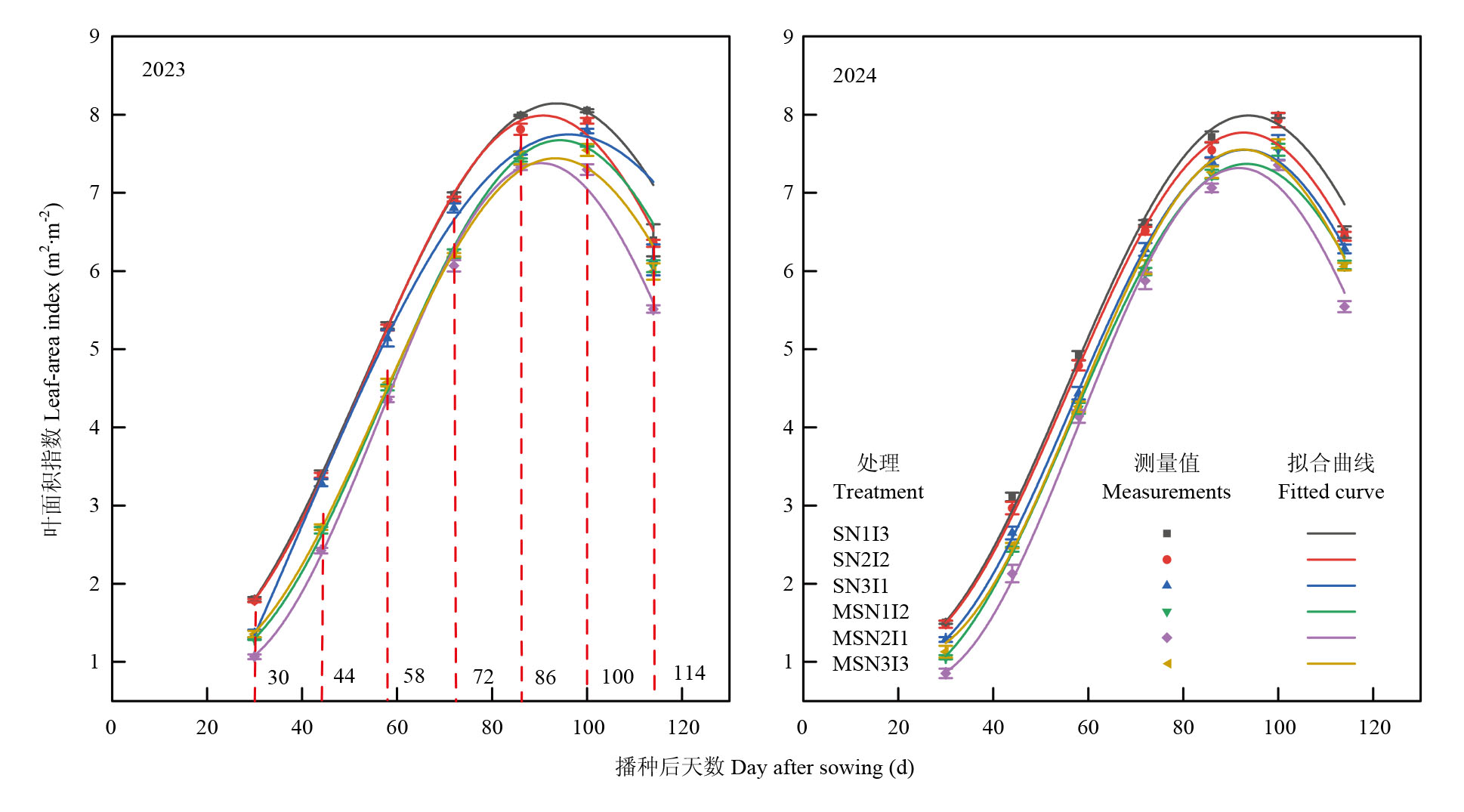
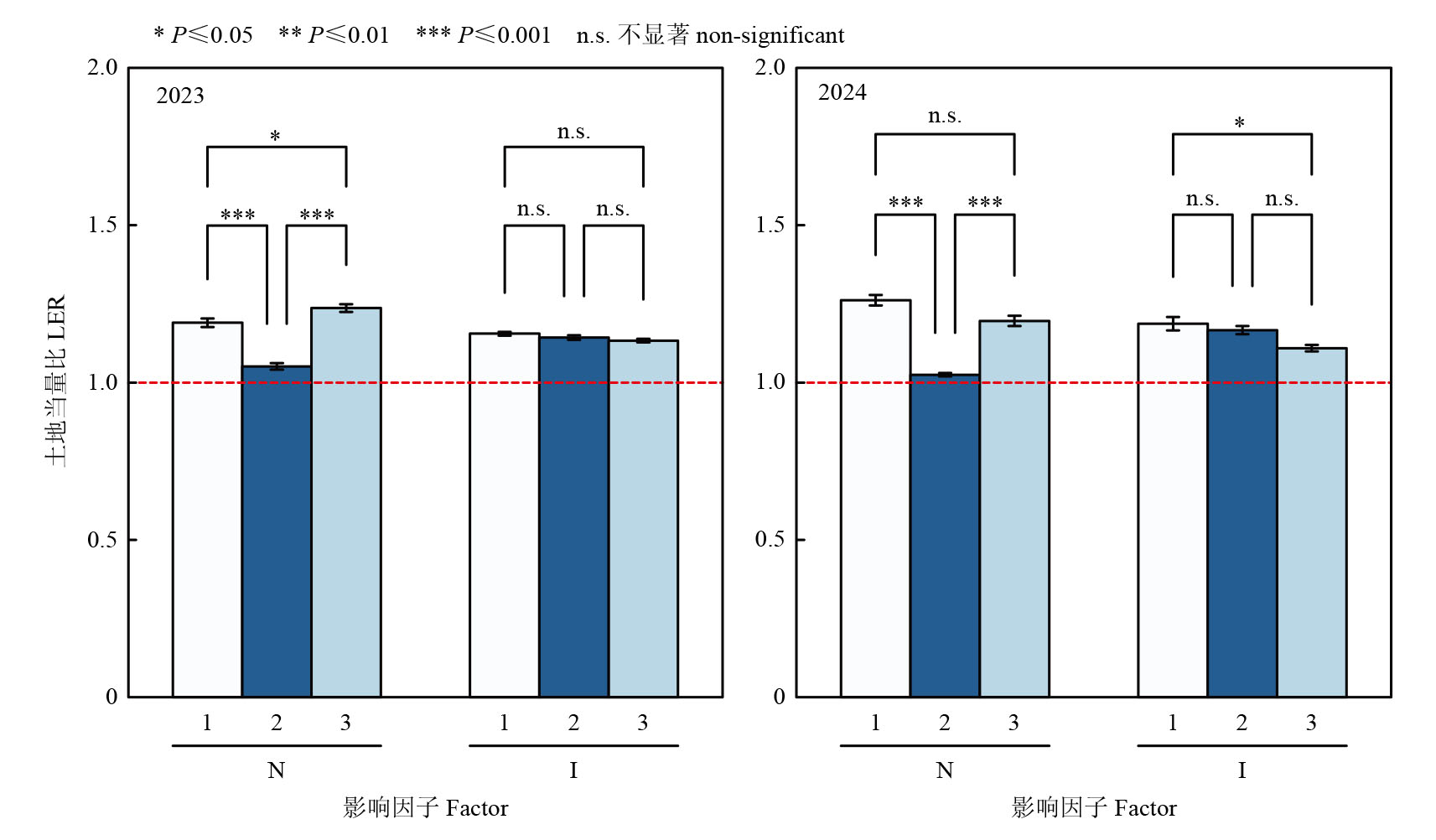
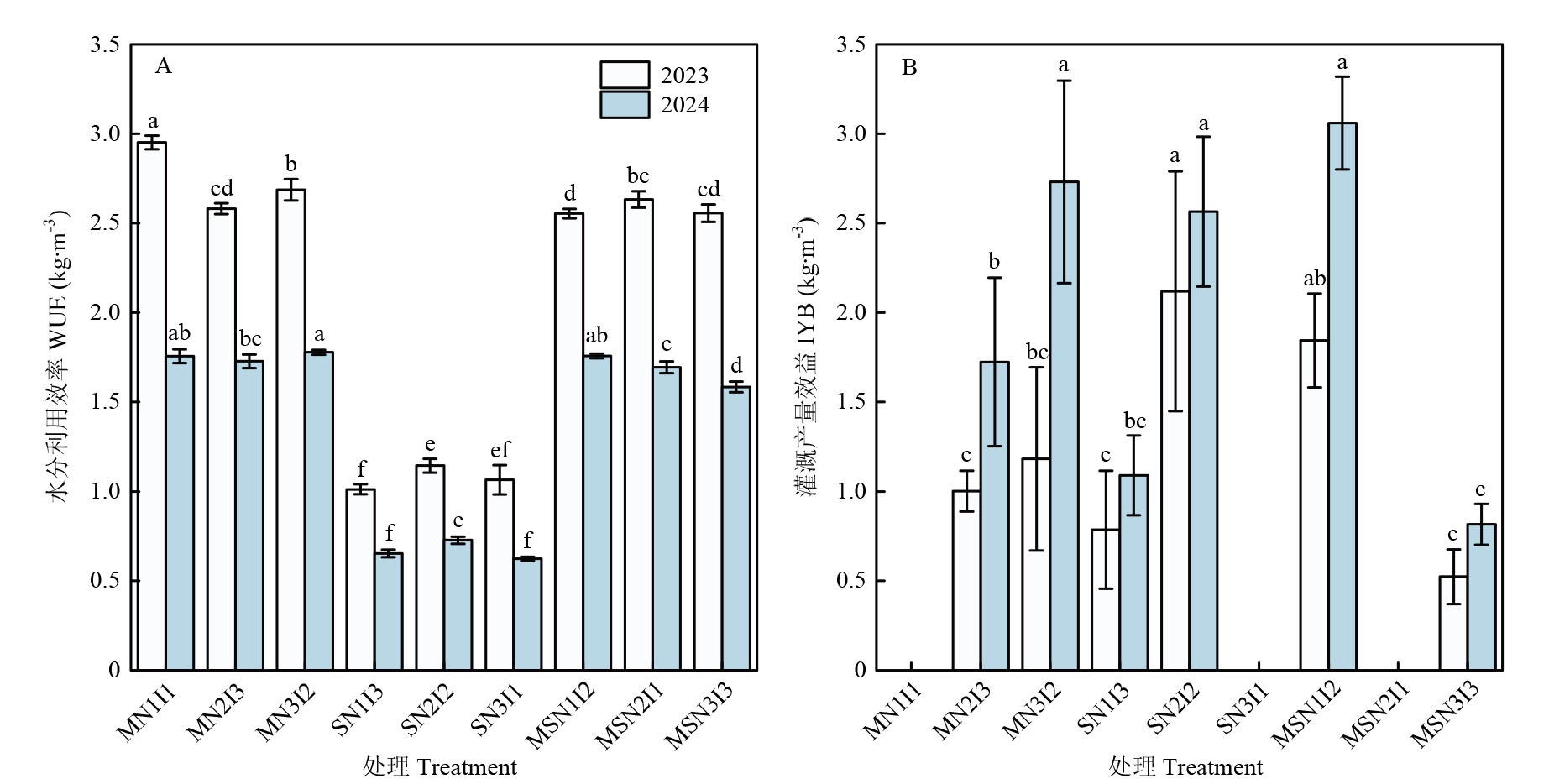
【Objective】 This study aimed to clarify how varying nitrogen application rates and amounts of drip irrigation after sowing influence productivity and resource efficiency in a maize-soybean strip intercropping system, offering a theoretical framework for improving water-nitrogen management in the Huang-Huai-Hai area. 【Method】 From 2023 to 2024, a three-factor orthogonal experimental design was conducted, featuring three cultivation methods: maize alone (M), soybean alone (S), and maize-soybean strip intercropping (MS). The nitrogen levels tested were 120 kg·hm-2 (N1), 180 kg·hm-2 (N2), and 240 kg·hm-2 (N3), while post-sowing irrigation was applied at 0 mm (I1), 30 mm (I2), and 60 mm (I3). This study systematically analyzed the impacts of these planting patterns on leaf area dynamics, yield, water use characteristics, and economic benefits of water and nitrogen regulation. 【Result】 The leaf area index (LAI) for both maize and soybean reached its maximum around 90 days after sowing, following a sine function trend (goodness-of-fit R2>0.967). The MS method notably enhanced maize LAI but reduced soybean LAI. Soybean was particularly responsive to water availability; the lack of post-sowing irrigation (I1) led to a significant decrease in LAI for both S and MS soybean by 13.25%-25.00% and 17.73%-24.48%, respectively, at 30 days after sowing. The most effective intercropping treatment (MSN1I2: low nitrogen at 120 kg·hm-2+30 mm irrigation) yielded 9 063-9 088 kg·hm-2. Although this yield was 3.48%-4.11% less than the highest yield from maize monoculture (MN2I3: 180 kg·hm-2 N+60 mm irrigation), its land equivalent ratio (LER) remained above 1 (1.02-1.26), highlighting the benefits of intensified land use. In comparison to maize monoculture, the strip intercropping system enhanced soil water retention in the 0-40 cm plough layer by 1.20%-8.64%. On average, the trip intercropping system improved economic returns by 4.11%-8.04% and 49.62%-63.28% compared with maize and soybean monocultures, respectively, with the MSN1I2 treatment yielding the highest benefit of 23 638 yuan·hm-2. This treatment (MSN1I2) showed a synergistic improvement in water and nitrogen efficiency, with an irrigation water productivity of 3.06 kg·m-3. 【Conclusion】 In the maize-soybean strip intercropping system, lowering nitrogen application to 120 kg·hm-2 along with 30 mm of post-sowing drip irrigation (MSN1I2) could optimize canopy structure, maintain high and stable yields, enhance economic returns, and improve water and nitrogen efficiency. This approach offered the valuable technical guidance for regional initiatives aimed at reducing nitrogen and enhancing efficiency.

Key words: strip intercropping system, nitrogen application, irrigation after sowing, yield, economic benefits, maize, soybean

Table 1

Basic properties of 0-20 cm soil layer at the beginning of the 2023 to 2024 experiment seasons"

年份
Year
pH 有机质
Organic matter (g·kg-1)
全氮
Total nitrogen (g·kg-1)
碱解氮
Alkeline-N (mg·kg-1)
速效磷
Olsen-P (mg·kg-1)
速效钾
Olsen-K (mg·kg-1)
2023 5.44 13.87 0.72 70.56 13.21 142.12
2024 5.79 12.65 0.86 71.67 15.74 143.68

Fig. 1

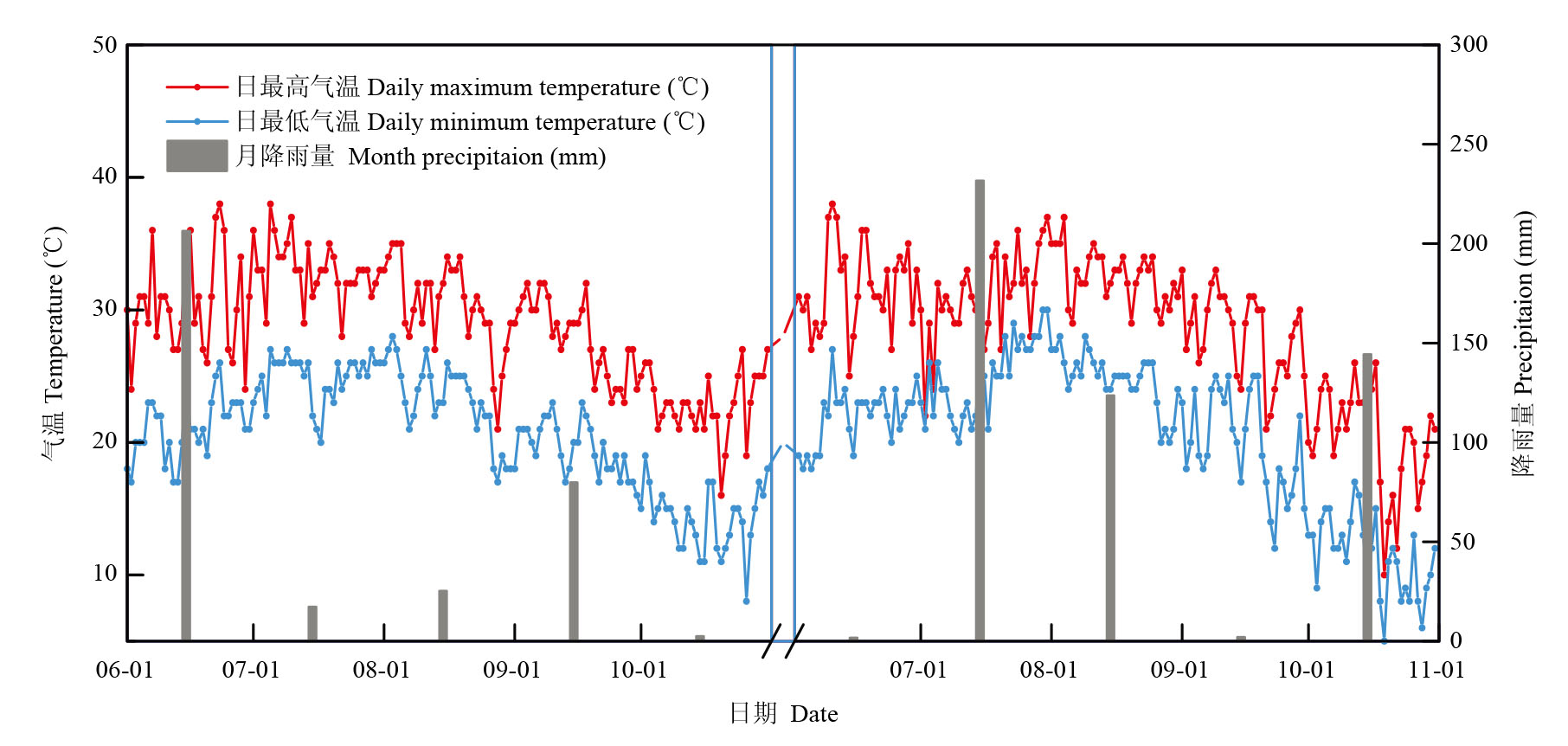
Meteorological conditions during the growth periods of maize and soybeans in 2023-2024"

Table 2

Orthogonal test designs table"

处理
Treatment
种植模式(因子P)
Planting pattern (Factor P)
施氮量(因子N)
Nitrogen fertilizer rate (Factor N) (kg N·hm-2)
灌溉量(因子I)
Irrigation amount (Factor I) (mm)
MN1I1 玉米单作 Maize monoculture (M) 120 (N1) 0 (I1)
MN2I3 玉米单作Maize monoculture (M) 180 (N2) 60 (I3)
MN3I2 玉米单作Maize monoculture (M) 240 (N3) 30 (I2)
SN1I3 大豆单作Soybean monoculture (S) 120 (N1) 60 (I3)
SN2I2 大豆单作Soybean monoculture (S) 180 (N2) 30 (I2)
SN3I1 大豆单作Soybean monoculture (S) 240 (N3) 0 (I1)
MSN1I2 玉米大豆带状复合种植Maize and soybean intercropping (MS) 120 (N1) 30 (I2)
MSN2I1 玉米大豆带状复合种植Maize and soybean intercropping (MS) 180 (N2) 0 (I1)
MSN3I3 玉米大豆带状复合种植Maize and soybean intercropping (MS) 240 (N3) 60 (I3)

Fig. 2

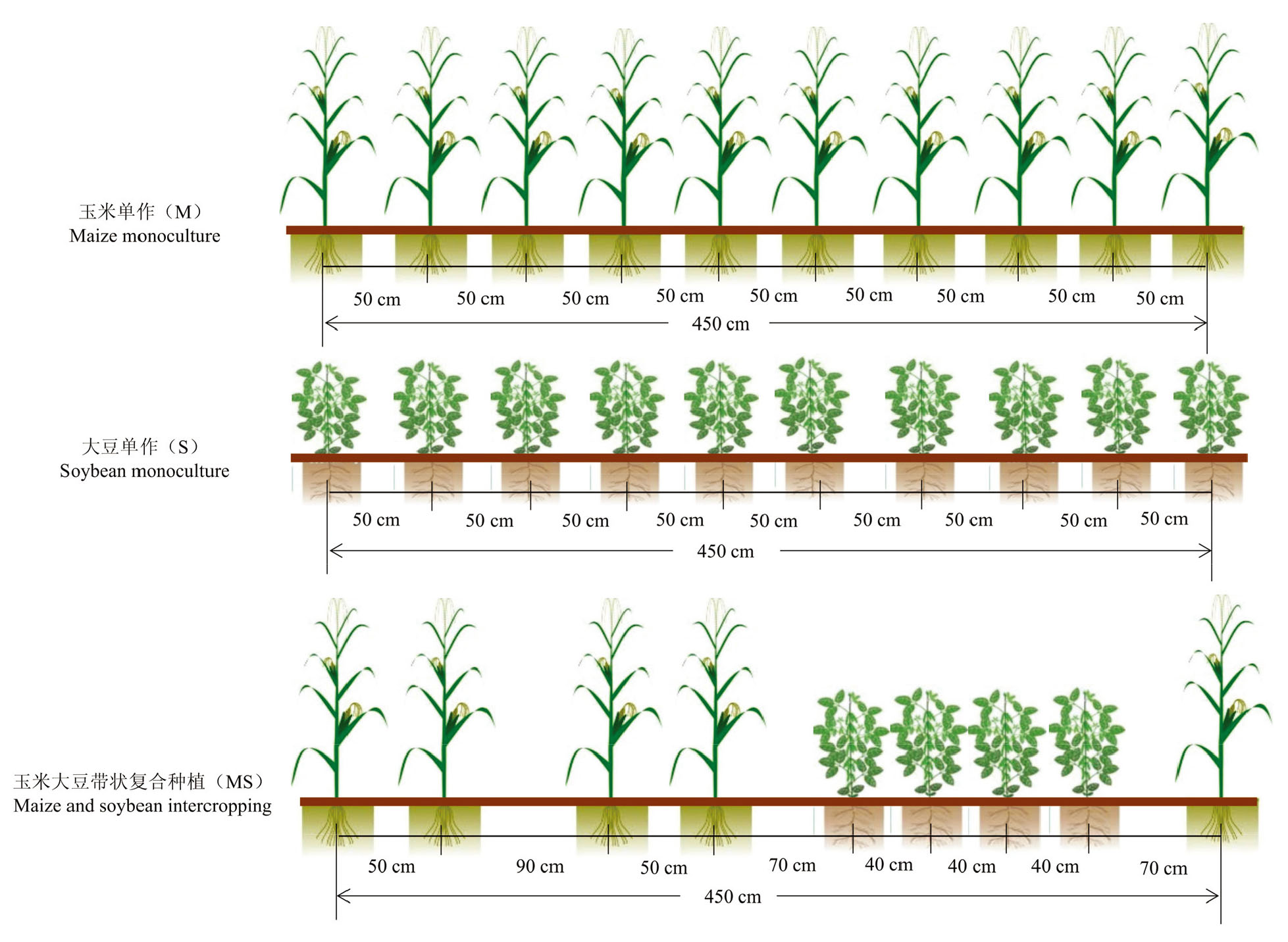
Planting pattern diagram"

Fig. 3

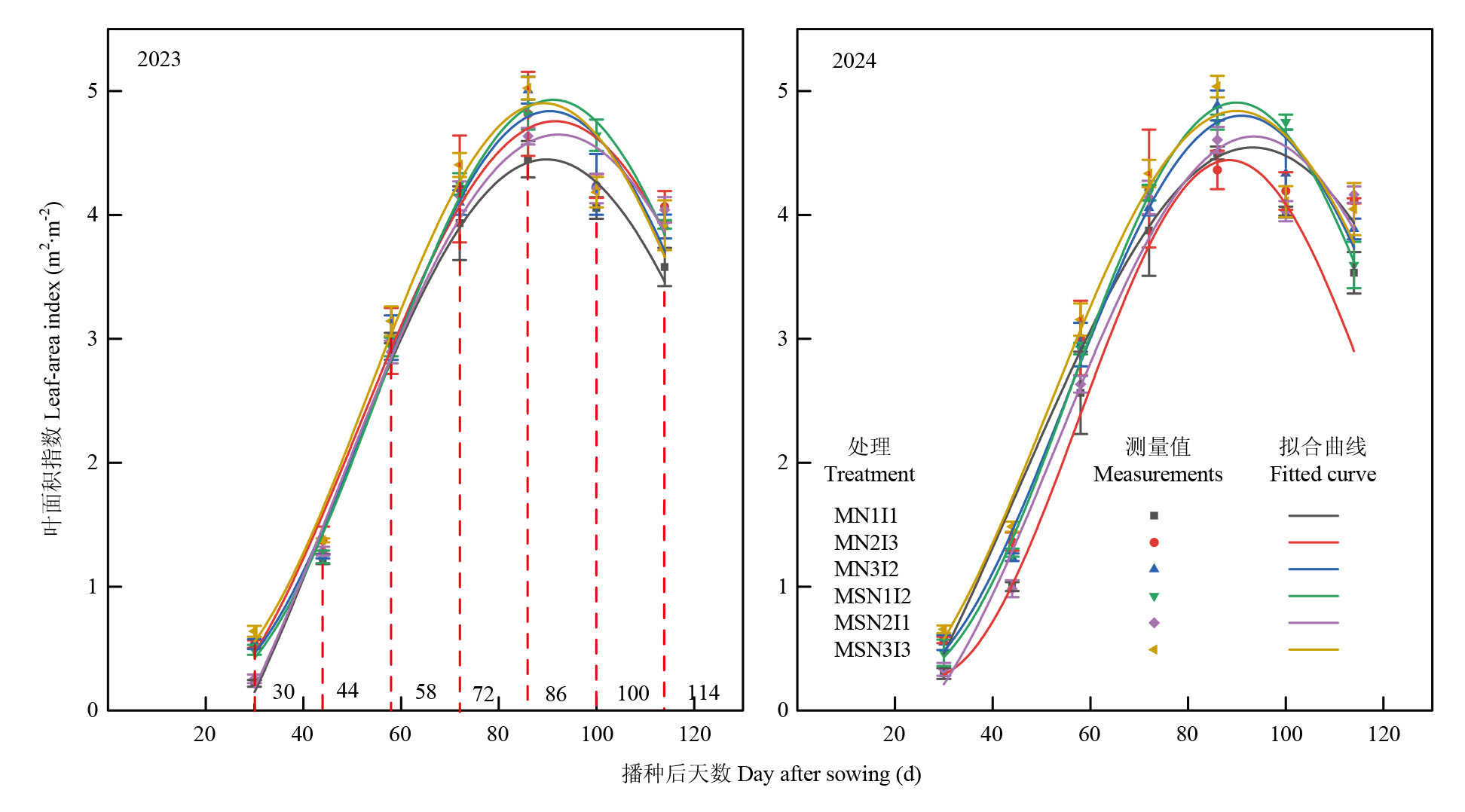
Dynamic fitting diagram of maize leaf area index"

Table 3

Analysis of fitting parameters of sine function of maize leaf area index in 2023 and 2024"

年份 Year 处理 Treatment y0 xc w A R2
2023 MN1I1 1.68 46.17 87.24 2.77 0.9899**
MN2I3 2.30 51.49 80.08 2.46 0.9823**
MN3I2 2.51 54.61 71.72 2.33 0.9808**
MSN1I2 2.55 55.25 71.84 2.38 0.9953**
MSN2I1 1.79 47.12 90.14 2.86 0.9869**
MSN3I3 2.55 53.17 72.11 2.35 0.9749**
2024 MN1I1 1.78 45.14 96.20 2.77 0.9767**
MN2I3 2.35 57.65 61.52 2.09 0.9974**
MN3I2 2.52 55.09 71.75 2.29 0.9878**
MSN1I2 2.59 55.87 68.11 2.32 0.9973**
MSN2I1 2.17 53.31 80.29 2.47 0.9674**
MSN3I3 2.42 51.26 77.35 2.42 0.9686**

Fig. 4

Dynamic fitting diagram of soybean leaf area index"

Table 4

Analysis of fitting parameters of sine function of soybean leaf area index in 2023 and 2024"

年份 Year 处理 Treatment y0 xc w A R2
2023 SN1I3 4.54 -111.77 82.14 3.61 0.9997**
MN2I2 4.59 -97.28 75.22 3.40 0.9987**
MN3I1 2.61 -189.21 114.14 5.13 0.9974**
MSN1I2 4.32 -93.19 75.01 3.35 0.9995**
MSN2I1 4.14 56.45 67.56 3.24 0.9990**
MSN3I3 4.22 -94.46 75.13 3.22 0.9985**
2024 SN1I3 4.53 -96.85 76.23 3.46 0.9987**
MN2I2 4.44 -92.72 74.18 3.33 0.9982**
MN3I1 4.27 -89.15 72.86 3.28 0.9999**
MSN1I2 4.05 -91.79 74.07 3.31 0.9987**
MSN2I1 4.03 -77.28 67.63 3.28 0.9957**
MSN3I3 4.32 -81.07 69.47 3.23 0.9963**

Table 5

The influence of various factors on crop yield"

处理 Treatment 产量 Yield(kg·hm-2
种植模式(因子P)
Planting pattern (FactorP)
施氮量(因子N)
Nitrogen fertilizer rate (Factor N)
灌溉量(因子I)
Irrigation amount (Factor I)
2023 2024
M N1 I1 8860.97c 8344.79d
N2 I3 9462.02a 9379.11a
N3 I2 9215.53b 9164.05b
S N1 I3 3768.85e 3632.72f
N2 I2 3933.02e 3748.40f
N3 I1 3297.36f 2979.07g
MS N1 I2 9088.27b 9063.46b
N2 I1 8535.18d 8145.69e
N3 I3 8849.46c 8635.35c

Table 6

The range analysis of each factor on crop yield"

年份
Year
项目
Item
源Source
种植模式 Planting pattern 施氮量 Nitrogen fertilizer rate 灌溉量 Irrigation amount
2023 k1 9179.51 7239.36 6897.84
k2 3666.41 7310.08 7412.27
k3 8824.31 7120.79 7360.11
R 5513.10 189.29 514.43
P 0.01* 0.25 0.04*
2024 k1 8962.65 7013.66 6489.85
k2 3453.40 7091.07 7325.30
k3 8614.83 6926.15 7215.72
R 5509.25 164.91 835.45
P 0.01* 0.67 0.06

Fig. 5

Land equivalent ratio of belt compound planting pattern"

Fig. 6

Soil water storage at maturity in 0-100 cm soil layer"

Fig. 7

Effects of various factors on water use efficiency and irrigation water production benefits under different planting patterns"

Table 7

The influence of various factors on economic benefit"

处理 Treatment 经济效益 Economic benefits (yuan/hm2)
种植模式(因子P)
Planting pattern (Factor P)
施氮量(因子N)
Nitrogen fertilizer rate (Factor N)
灌溉量(因子I)
Ir Irrigation amount (Factor I)
2023 2024
M N1 I1 20538.46c 14501.93e
N2 I3 21899.63b 16416.78c
N3 I2 21117.71c 15838.37d
S N1 I3 15915.03d 11172.43f
N2 I2 16587.78d 11349.98f
N3 I1 8120.90e 13322.22g
MS N1 I2 23637.75a 18014.22a
N2 I1 21888.51b 15727.64d
N3 I3 23038.62a 16772.18b

Table 8

The range analysis of each factor on economic benefit"

年份
Year
项目
Item
源 Soruce
种植模式 Planting pattern 施氮量 Nitrogen fertilizer rate 灌溉量 Irrigation amount
2023 k1 21185.27 20030.41 18583.06
k2 15275.01 20125.31 20447.75
k3 22854.96 19159.52 20284.43
R 5513.10 189.29 514.43
P 0.01* 0.18 0.05
2024 k1 15585.69 14562.86 12881.66
k2 10312.61 14498.13 15067.52
k3 16838.01 13675.32 14787.13
R 5509.25 164.91 835.45
P 0.01* 0.01* 0.01*
[1]
李易玲, 彭西红, 陈平, 杜青, 任俊波, 杨雪丽, 雷鹿, 雍太文, 杨文钰. 减量施氮对套作玉米大豆叶片持绿、光合特性和系统产量的影响. 中国农业科学, 2022, 55(9): 1749-1762. doi:10.3864/j.issn.0578-1752.2022.09.005.
LI Y L, PENG X H, CHEN P, DU Q, REN J B, YANG X L, LEI L, YONG T W, YANG W Y. Effects of reducing nitrogen application on leaf stay-green, photosynthetic characteristics and system yield in maize-soybean relay strip intercropping. Scientia Agricultura Sinica, 2022, 55(9): 1749-1762. doi:10.3864/j.issn.0578-1752.2022.09.005. (in Chinese)
[2]
李海, 沈鹏, 吕凯, 阮贞静, 李梅, 刘廷菊, 安曈昕. 玉米间作大豆行比配置对坡耕地水土流失的影响. 水土保持研究, 2024, 31(4): 11-19.
LI H, SHEN P, K, RUAN Z J, LI M, LIU T J, AN T X. Effect of row ratio configuration of maize intercropping soybean on soil and water loss in slope farmland. Research of Soil and Water Conservation, 2024, 31(4): 11-19. (in Chinese)
[3]
JING B, SHI W J, CHEN T. Maize/soybean intercropping with nitrogen reduction: A pathway for improved nitrogen efficiency and reduced environmental impact in Northwest China. Soil and Tillage Research, 2025, 253: 106696.

doi: 10.1016/j.still.2025.106696
[4]
GAO M L, LIU F Y, ZHANG H Z, YUAN H B, ZONG R, ZHANG M M, LI Q Q. Exploring the effects of irrigation schedules on evapotranspiration partitioning and crop water productivity of winter wheat (Triticum aestivum L.) in North China Plain using RZWQM2. Journal of Agronomy and Crop Science, 2024, 210(5): e12760.

doi: 10.1111/jac.v210.5
[5]
雷联. 膜下滴灌调亏对制种玉米植株生长、产量和水分利用的影响. 浙江农业学报, 2023, 35(7): 1542-1549.

doi: 10.3969/j.issn.1004-1524.20221365
LEI L. Effects of regulated deficit drip irrigation under film on plant growth, yield and water use of seed-producing maize. Acta Agriculturae Zhejiangensis, 2023, 35(7): 1542-1549. (in Chinese)

doi: 10.3969/j.issn.1004-1524.20221365
[6]
杨立达, 彭新月, 朱文雪, 赵静, 袁晓婷, 林萍, 罗凯, 李易玲, 罗春明, 李雨泽, 杨文钰, 雍太文. 秸秆还田与灌溉方式对大豆玉米带状间作出苗及幼苗生长的影响. 中国农业科学, 2024, 57(17): 3366-3383. doi:10.3864/j.issn.0578-1752.2024.17.005.
YANG L D, PENG X Y, ZHU W X, ZHAO J, YUAN X T, LIN P, LUO K, LI Y L, LUO C M, LI Y Z, YANG W Y, YONG T W. Effects of straw returning and irrigation methods on seedling emergence and growth in soybean and maize strip intercropping. Scientia Agricultura Sinica, 2024, 57(17): 3366-3383. doi:10.3864/j.issn.0578-1752.2024.17.005. (in Chinese)
[7]
JIN Y, HE J, TURNER N C, DU Y L, LI F M. Water-conserving and biomass-allocation traits are associated with higher yields in modern cultivars compared to landraces of soybean [Glycine max (L.) Merr.] in rainfed water-limited environments. Environmental and Experimental Botany, 2019, 168: 103883.

doi: 10.1016/j.envexpbot.2019.103883
[8]
HOU S, SUN X R, CHEN G H, SIDDIQUE K H M, CHEN Z L, LIU F, PING S Y, LAI H T, GUO H H, AN Y J, LIN Z L, ZHANG Z X, SUN L Z, YANG P Z. Biochar addition mitigates asymmetric competition of water and increases yield advantages of maize-alfalfa strip intercropping systems in a semiarid region on the Loess Plateau. Field Crops Research, 2024, 319: 109645.

doi: 10.1016/j.fcr.2024.109645
[9]
WANG Y Z, ZHANG Y P, YANG Z Y, FEI J C, ZHOU X, RONG X M, PENG J W, LUO G W. Intercropping improves maize yield and nitrogen uptake by regulating nitrogen transformation and functional microbial abundance in rhizosphere soil. Journal of Environmental Management, 2024, 358: 120886.

doi: 10.1016/j.jenvman.2024.120886
[10]
DU Q, ZHOU L, CHEN P, LIU X M, SONG C, YANG F, WANG X C, LIU W G, SUN X, DU J B, et al. Relay-intercropping soybean with maize maintains soil fertility and increases nitrogen recovery efficiency by reducing nitrogen input. The Crop Journal, 2020, 8(1): 140-152.

doi: 10.1016/j.cj.2019.06.010
[11]
ZHANG W, WEI Y X, KHAN A, LU J S, XIONG J L, ZHU S G, FANG X W, WANG W, HAO M, ZHAO L, et al. Intercropped soybean boosts nitrogen benefits and amends nitrogen use pattern under plastic film mulching in the semiarid maize field. Field Crops Research, 2023, 295: 108881.

doi: 10.1016/j.fcr.2023.108881
[12]
杨玲. 宁夏引黄灌区玉米‖大豆对田间水氮利用及作物产量的影响[D]. 杨凌: 西北农林科技大学, 2022.
YANG L. Effect ofwater and nitrogen utilization and crop yield of maize and soybean intercropping system in Yellow River irrigation area of Ningxia[D]. Yangling: Northwest A & F University, 2022. (in Chinese)
[13]
ZHANG L Q, FENG Y D, ZHAO Z H, CUI Z G, BAOYIN B, WANG H Y, LI Q Z, CUI J H. Maize/soybean intercropping with nitrogen supply levels increases maize yield and nitrogen uptake by influencing the rhizosphere bacterial diversity of soil. Frontiers in Plant Science, 2024, 15: 1437631.

doi: 10.3389/fpls.2024.1437631
[14]
秦德志, 崔文芳, 陈静, 刘剑, 秦丽, 严海欧. 滴灌下氮肥减量配施生物炭对玉米大豆间作系统光合特性和产量的影响. 大豆科学, 2024, 43(3): 332-341.
QIN D Z, CUI W F, CHEN J, LIU J, QIN L, YAN H O. Effects of nitrogen fertilizer reduction combined with biochar on photosynth-etic characteristics and yield of maize soybean intercropping system under drip irrigation. Soybean Science, 2024, 43(3): 332-341. (in Chinese)
[15]
祝庆, 袁超, 张国伟, 许瀚元, 李淑芬, 柴文波, 王军. 玉米品种和密度对大豆玉米间作群体结构和产量的影响. 中国油料作物学报, 2025, 47(4): 980-992.

doi: 10.19802/j.issn.1007-9084.2025077
ZHU Q, YUAN C, ZHANG G W, XU H Y, LI S F, CHAI W B, WANG J. Influence of maize variety and planting density on population structure and yield of soybean-maize intercropping system. Chinese Journal of Oil Crop Sciences, 2025, 47(4): 980-992. (in Chinese)

doi: 10.19802/j.issn.1007-9084.2025077
[16]
董奎军, 张亦涛, 刘瀚文, 张继宗, 王伟军, 温延臣, 雷秋良, 文宏达. 玉米大豆间作减量施氮对当季作物农艺性状、经济效益和后茬小麦产量的影响. 中国农业科学, 2024, 57(22): 4495-4506. doi:10.3864/j.issn.0578-1752.2024.22.009.
DONG K J, ZHANG Y T, LIU H W, ZHANG J Z, WANG W J, WEN Y C, LEI Q L, WEN H D. Effects of nitrogen reduction application of summer maize-soybean intercropping on agronomic traits and economic benefits as well as its yield of subsequent wheat. Scientia Agricultura Sinica, 2024, 57(22): 4495-4506. doi:10.3864/j.issn.0578-1752.2024.22.009. (in Chinese)
[17]
赵方洋, 曹红霞, 马丽娜, 党小文, 万宇, 彭美龄, 李志军. 补充灌溉对黄土高原谷子生长、产量及水分利用效率的影响. 干旱地区农业研究, 2024, 42(5): 44-53, 84.
ZHAO F Y, CAO H X, MA L N, DANG X W, WAN Y, PENG M L, LI Z J. Effects of supplementary irrigation on growth, yield, and water use efficiency of millet in the Loess Plateau. Agricultural Research in the Arid Areas, 2024, 42(5): 44-53, 84. (in Chinese)
[18]
高仁才. 田间配置对玉豆系统光环境、光能利用和产量的影响研究[D]. 雅安: 四川农业大学, 2015.
GAO R C. Study on the effect of field configuration on light environment, light utilization and yield in maize-soybean relay strip intercropping[D]. Yaan: Sichuan Agricultural University, 2015. (in Chinese)
[19]
雷志刚, 王业建, 郗浩江, 李铭东, 李召锋, 赵海菊, 韩登旭, 杨杰, 阿布来提·阿布拉, 梁晓玲. 不同青贮玉米品种品质性状与农艺性状的相关分析. 新疆农业科学, 2017, 54(4): 694-699.
LEI Z G, WANG Y J, XI H J, LI M D, LI Z F, ZHAO H J, HAN D X, YANG J, ABLAITI A, LIANG X L. Correlation analysis of agronomic characteristics and quality traits of different silage maize varieties. Xinjiang Agricultural Sciences, 2017, 54(4): 694-699. (in Chinese)
[20]
WANG R N, SUN Z X, ZHANG L Z, YANG N, FENG L S, BAI W, ZHANG D S, WANG Q, EVERS J B, LIU Y, et al. Border-row proportion determines strength of interspecific interactions and crop yields in maize/peanut strip intercropping. Field Crops Research, 2020, 253: 107819.

doi: 10.1016/j.fcr.2020.107819
[21]
HUSSAIN S, PANG T, IQBAL N, SHAFIQ I, SKALICKY M, BRESTIC M, SAFDAR M E, MUMTAZ M, AHMAD A, ASGHAR M A, et al. Acclimation strategy and plasticity of different soybean genotypes in intercropping. Functional Plant Biology, 2020, 47(7): 592-610.

doi: 10.1071/FP19161 pmid: 32375994
[22]
苏本营, 宋艳霞, 陈圣宾, 杨文钰. 大豆幼苗对套作玉米遮荫环境的光合生理生态响应. 生态学报, 2015, 35(10): 3298-3308.
SU B Y, SONG Y X, CHEN S B, YANG W Y. Photosynthetic responses of soybean(Glycine max) seedlings to shading caused by maize in an intercropping system. Acta Ecologica Sinica, 2015, 35(10): 3298-3308. (in Chinese)
[23]
寇红太. 行比配置对膜下滴灌玉米-大豆间作系统水氮光利用及产量的影响[D]. 杨凌: 西北农林科技大学, 2024.
KOU H T. Effects of row configuration on water-nitrogen-light utilization and yield of maize-soybean intercropping system under film-mulched drip irrigation[D]. Yangling: Northwest A&F University, 2024. (in Chinese)
[24]
OZEKI K, MIYAZAWA Y, SUGIURA D. Rapid stomatal closure contributes to higher water use efficiency in major C4 compared to C3 Poaceae crops. Plant Physiology, 2022, 189(1): 188-203.

doi: 10.1093/plphys/kiac040 pmid: 35134220
[25]
李多, 王晨, 张明聪, 曹亮, 金喜军, 张玉先, 王孟雪. 大豆苗期水分亏缺对土壤酶活性及微生物多样性的影响. 作物杂志, 2024(2): 148-157.
LI D, WANG C, ZHANG M C, CAO L, JIN X J, ZHANG Y X, WANG M X. Effects of water deficit in soybean seedling stage on soil enzyme activity and microbial diversity. Crops, 2024(2): 148-157. (in Chinese)
[26]
GU L M, LIU T N, ZHAO J, DONG S T, LIU P, ZHANG J W, ZHAO B. Nitrate leaching of winter wheat grown in lysimeters as affected by fertilizers and irrigation on the North China Plain. Journal of Integrative Agriculture, 2015, 14(2): 374-388.

doi: 10.1016/S2095-3119(14)60747-4
[27]
叶优良, 肖焱波, 黄玉芳, 李隆. 小麦/玉米和蚕豆/玉米间作对水分利用的影响. 中国农学通报, 2008, 24(3): 445-449.
YE Y L, XIAO Y B, HUANG Y F, LI L. Effect of wheat/maize and faba bean/maize intercropping on water use. Chinese Agricultural Science Bulletin, 2008, 24(3): 445-449. (in Chinese)
[28]
LI L, SUN J H, ZHANG F S, GUO T W, BAO X G, SMITH F A, SMITH S E. Root distribution and interactions between intercropped species. Oecologia, 2006, 147(2): 280-290.

pmid: 16211394
[29]
GU Y, ZHENG H Y, LI S, WANG W T, GUAN Z Y, LI J Z, MEI N, HU W H. Effects of narrow-wide row planting patterns on canopy photosynthetic characteristics, bending resistance and yield of soybean in maize-soybean intercropping systems. Scientific Reports, 2024, 14: 9361.

doi: 10.1038/s41598-024-59916-5
[30]
SHEN L, WANG X Y, LIU T T, WEI W W, ZHANG S, KEYHANI A B, LI L H, ZHANG W. Border row effects on the distribution of root and soil resources in maize-soybean strip intercropping systems. Soil and Tillage Research, 2023, 233: 105812.

doi: 10.1016/j.still.2023.105812
[31]
王雅梅. 玉米-大豆不同宽幅间作对大豆光合特性和水分利用效率的影响[D]. 北京: 中国农业科学院, 2020.
WANG Y M. Effects of maize-soybean intercropping with different width on photosynthetic characteristics and water use efficiency of soybean[D]. Beijing: Chinese Academy of Agricultural Sciences, 2020. (in Chinese)
[32]
ALI RAZA M, GUL H, WANG J, YASIN H S, QIN R J, BIN KHALID M H, NAEEM M, FENG L Y, IQBAL N, GITARI H, AHMAD S, BATTAGLIA M, ANSAR M, YANG F, YANG W Y. Land productivity and water use efficiency of maize-soybean strip intercropping systems in semi-arid areas: A case study in Punjab Province, Pakistan. Journal of Cleaner Production, 2021, 308: 127282.

doi: 10.1016/j.jclepro.2021.127282
[33]
陈世超, 刘文丰, 杜太生. 基于水氮管理与种植结构优化的作物丰产高效管理策略. 农业工程学报, 2022, 38(16): 144-152.
CHEN S C, LIU W F, DU T S. Achieving high-yield and high- efficient management strategy based on optimized irrigation and nitrogen fertilization management and planting structure. Transactions of the Chinese Society of Agricultural Engineering, 2022, 38(16): 144-152. (in Chinese)
[34]
邓浩亮, 潘小番, 兰雪梅, 王勤礼, 肖让, 滕安国, 雷联. 水氮互作对河西绿洲灌区玉豆带状复合种植玉米产量及水氮利用效率的影响. 玉米科学, 2024, 32(7): 73-82.
DENG H L, PAN X F, LAN X M, WANG Q L, XIAO R, TENG A G, LEI L. Effect of water and nitrogen interaction on maize-soybean strip intercropping planting yields and water-nitrogen use efficiency in Hexi oasis irrigation area. Journal of Maize Sciences, 2024, 32(7): 73-82. (in Chinese)
[35]
ZHAI J, ZHANG G Q, ZHANG Y M, XU W Q, XIE R Z, MING B, HOU P, WANG K R, XUE J, LI S K. Effect of the rate of nitrogen application on dry matter accumulation and yield formation of densely planted maize. Sustainability, 2022, 14(22): 14940.

doi: 10.3390/su142214940
[36]
雷雲翔, 陆思豪, 应晓成, 沈新平, 蒋敏. 不同间作方式对玉米/大豆的光合性能、产量和土壤微生态特征的影响. 农业资源与环境学报, 2023, 40(3): 610-618.
LEI Y X, LU S H, YING X C, SHEN X P, JIANG M. Effects of different intercropping methods on photosynthetic performance, yield, and soil microecological characteristics of maize and soybean. Journal of Agricultural Resources and Environment, 2023, 40(3): 610-618. (in Chinese)
[37]
CHEN P, SONG C, LIU X M, ZHOU L, YANG H, ZHANG X N, ZHOU Y, DU Q, PANG T, FU Z D, et al. Yield advantage and nitrogen fate in an additive maize-soybean relay intercropping system. Science of the Total Environment, 2019, 657: 987-999.

doi: 10.1016/j.scitotenv.2018.11.376
[38]
ZHAO Z X, LI Z Y, LI Y, YU L Y, GU X B, CAI H J. Supplementary irrigation and reduced nitrogen application improve the productivity, water and nitrogen use efficiency of maize-soybean intercropping system in the semi-humid drought-prone region of China. Agricultural Water Management, 2024, 305: 109126.

doi: 10.1016/j.agwat.2024.109126
[39]
岳高红, 黄业昌, 高锡腾, 梅霞, 刘永安, 潘彬荣. 甜玉米/鲜食大豆间作对根际固氮细菌和丛枝菌根真菌的影响. 玉米科学, 2024, 32(5): 67-77.
YUE G H, HUANG Y C, GAO X T, MEI X, LIU Y A, PAN B R. Effects of different sweet maize/vegetable soybean interplanting systems on rhizosphere nitrogen-fixing bacteria and arbuscular mycorrhizal fungi communities. Journal of Maize Sciences, 2024, 32(5): 67-77. (in Chinese)
[40]
周颖, 陈平, 杜青, 庞婷, 付智丹, 张晓娜, 任建锐, 杨文钰, 雍太文. 不同间套作模式对大豆农艺性状及系统经济效益的影响. 四川农业大学学报, 2018, 36(6): 745-750.
ZHOU Y, CHEN P, DU Q, PANG T, FU Z D, ZHANG X N, REN J R, YANG W Y, YONG T W. The effects of agronomic traits of soybean and system economic benefits in the different intercropping patterns. Journal of Sichuan Agricultural University, 2018, 36(6): 745-750. (in Chinese)
[1] PU LiXia, ZHANG JiaRui, YE JianPing, HUANG XiuLan, FAN GaoQiong, YANG HongKun. The Combined Effects of 16, 17-Dihydro Gibberellin A5 and Straw Mulching on Tillering and Grain Yield of Dryland Wheat [J]. Scientia Agricultura Sinica, 2025, 58(9): 1735-1748.
[2] GUO ChenLi, LIU Yang, CHEN Yan, HU Wei, WANG YouHua, ZHOU ZhiGuo, ZHAO WenQing. Effects of Phosphorus Fertilizer Postpone Under Nitrogen Reduction Condition on Yield, Phosphorus Fertilizer Utilization Efficiency of Drip-Irrigated Cotton [J]. Scientia Agricultura Sinica, 2025, 58(9): 1749-1766.
[3] LIU JinSong, WU LongMei, BAO XiaoZhe, LIU ZhiXia, ZHANG Bin, YANG TaoTao. Effects of a Short-Term Reduction in Nitrogen Fertilizer Application Rates on the Grain Yield and Rice Quality of Early and Late-Season Dual-Use Rice in South China [J]. Scientia Agricultura Sinica, 2025, 58(8): 1508-1520.
[4] WEI WenHua, LI Pan, SHAO GuanGui, FAN ZhiLong, HU FaLong, FAN Hong, HE Wei, CHAI Qiang, YIN Wen, ZHAO LianHao. Response of Silage Maize Yield and Quality to Reduced Irrigation and Combined Organic-Inorganic Fertilizer in Northwest Irrigation Areas [J]. Scientia Agricultura Sinica, 2025, 58(8): 1521-1534.
[5] XUE YuQi, ZHAO JiYu, SUN WangSheng, REN BaiZhao, ZHAO Bin, LIU Peng, ZHANG JiWang. Effects of Different Nitrogen Forms on Yield and Quality of Summer Maize [J]. Scientia Agricultura Sinica, 2025, 58(8): 1535-1549.
[6] LI ShaoXing, SONG WenFeng, WEI ZeYu, ZHOU YuLing, SONG LiXia, REN Ke, MA Qun, WANG LongChang. Effects of Straw and Milk Vetch Mulching on Soil Fertility and Sweet Potato Yield [J]. Scientia Agricultura Sinica, 2025, 58(8): 1591-1603.
[7] YIN Bo, YU AiZhong, WANG PengFei, YANG XueHui, WANG YuLong, SHANG YongPan, ZHANG DongLing, LIU YaLong, LI Yue, WANG Feng. Effects of Green Manure Returning Combined with Nitrogen Fertilizer Reduction on Hydrothermal Characteristics of Wheat Field and Grain Yield in Oasis Irrigation Area [J]. Scientia Agricultura Sinica, 2025, 58(7): 1366-1380.
[8] CHEN GuiPing, LI Pan, SHAO GuanGui, WU XiaYu, YIN Wen, ZHAO LianHao, FAN ZhiLong, HU FaLong. The Regulatory Effect of Reduced Irrigation and Combined Organic- Inorganic Fertilizer Application on Stay-Green Characteristics in Silage Maize Leaves After Tasseling Stage [J]. Scientia Agricultura Sinica, 2025, 58(7): 1381-1396.
[9] YUE RunQing, LI WenLan, DING ZhaoHua, MENG ZhaoDong. Molecular Characteristics and Resistance Evaluation of Transgenic Maize LD05 with Stacked Insect and Herbicide Resistance Traits [J]. Scientia Agricultura Sinica, 2025, 58(7): 1269-1283.
[10] ZHAO Yao, CHENG Qian, XU TianJun, LIU Zheng, WANG RongHuan, ZHAO JiuRan, LU DaLei, LI CongFeng. Effects of Plant Type Improvement on Root-Canopy Characteristics and Grain Yield of Spring Maize Under High Density Condition [J]. Scientia Agricultura Sinica, 2025, 58(7): 1296-1310.
[11] TIAN LiWen, LOU ShanWei, ZHANG PengZhong, DU MingWei, LUO HongHai, LI Jie, PAHATI MaiMaiTi, MA TengFei, ZHANG LiZhen. Analysis of Problems and Pathways for Increasing Cotton Yield per Unit Area in Xinjiang Under Green and Efficient Production Mode [J]. Scientia Agricultura Sinica, 2025, 58(6): 1102-1115.
[12] ZOU XiaoWei, XIA Lei, ZHU XiaoMin, SUN Hui, ZHOU Qi, QI Ji, ZHANG YaFeng, ZHENG Yan, JIANG ZhaoYuan. Analysis of Disease Resistance Induced by Ustilago maydis Strain with Overexpressed UM01240 Based on Transcriptome Sequencing [J]. Scientia Agricultura Sinica, 2025, 58(6): 1116-1130.
[13] LIU LuPing, HU XueJie, QI Jin, CHEN Qiang, LIU Zhi, ZHAO TianTian, SHI XiaoLei, LIU BingQiang, MENG QingMin, ZHANG MengChen, HAN TianFu, YANG ChunYan. Cloning of the Promoters and Analysis of Expression Patterns of Maturity Genes E1 and E2 in Soybean [J]. Scientia Agricultura Sinica, 2025, 58(5): 840-850.
[14] ZHANG HongCheng, XING ZhiPeng, ZHANG RuiHong, SHAN Xiang, XI XiaoBo, CHENG Shuang, WENG WenAn, HU Qun, CUI PeiYuan, WEI HaiYan. Characteristics and Technical Approaches of Integrated Unmanned High-Yield Cultivation of Wheat [J]. Scientia Agricultura Sinica, 2025, 58(5): 864-876.
[15] ZHAO TongTong, GU XiaoBo, TAN ChuanDong, YAN TingLin, LI XiaoYan, CHANG Tian, DU YaDan. Effects of Water-Nitrogen Coupling on the Mineralization of Organic Carbon and Nitrogen for Mulched Farmland Soils in the Arid Regions of Northwest China [J]. Scientia Agricultura Sinica, 2025, 58(5): 929-942.
Viewed
Full text


Abstract

Cited

  Shared   
  Discussed   
No Suggested Reading articles found!