Scientia Agricultura Sinica ›› 2026, Vol. 59 ›› Issue (16): 3655-3672.doi: 10.3864/j.issn.0578-1752.2026.16.013

• HORTICULTURE • Previous Articles     Next Articles

Integrative Transcriptomic and Metabolomic Analyses Reveal Flavonoid Accumulation Characteristics in the Flesh of Red-Fleshed Grape and Self-Pollinated Progenies

WU PeiJing2(), SU Ling1(), CHEN YingChun1, MENG Dong2, YANG Qing2, ZHANG Man2, ZHOU XiaoMiao2, TAO JianMin3, ZHENG Huan3, LI Bo1, GONG Lei1,3()   

  1. 1 Shandong Academy of Grape, Jinan Key Laboratory of Fruit Quality Control and Deep Processing, Jinan 250100
    2 College of Forestry, Beijing Forestry University, Beijing 100083
    3 College of Horticulture, Nanjing Agricultural University, Nanjing 210095
  • Received:2026-04-25 Accepted:2026-06-26 Online:2026-08-16 Published:2026-08-17
  • Contact: GONG Lei

Abstract:

【Objective】 This study investigated differences in flavonoid-related gene expression and metabolite profiles in the flesh of red-fleshed grape berries and their self-pollinated progenies, aiming to elucidate the metabolic accumulation characteristics of flavonoid biosynthesis, and provide insights into transcriptional regulation, so as to lay a theoretical foundation for improving flavonoid contents in grape berries and breeding new grape varieties. 【Method】 The red-fleshed grape germplasm Zhongshanhongyu (ZSHY), its self-pollinated progenies Nan 19 (N19) and Nan 30 (N30), and Muscat (MGX) were used as materials. Four pairwise comparison groups (ZSHY_vs_MGX, N30_vs_ZSHY, N19_vs_MGX, and N30_vs_N19) were established for targeting flavonoid metabolomics alongside transcriptome sequencing (RNA-seq) of berry flesh. Enrichment analyses were subsequently conducted to characterize flavonoid metabolites accumulation, identify key structural genes, and dissect the transcriptional regulatory networks involved in flavonoid biosynthetic pathway. 【Result】 Based on targeted flavonoid metabolomics technology, a total of 104 differentially accumulated flavonoid metabolites were detected, and 62 core metabolites exhibiting significant differences were further identified. Notably, most flavonols and flavanols accumulated to substantially higher levels in ZSHY and N19 than in N30 and MGX. KEGG enrichment analysis revealed that these differential metabolites were predominantly enriched in flavonoid biosynthesis pathways, particularly responsible for anthocyanin, flavone, and flavonol biosynthesis. Transcriptome profiling identified 758 differentially expressed genes (DEGs), which were significantly overrepresented in flavonoid and phenylpropanoid biosynthesis pathways. Furthermore, 30 core DEGs directly involved in flavonoid biosynthesis were screened, whose expression patterns were broadly consistent with the metabolite accumulation profiles, showing high transcript abundance in ZSHY and N19, but low expression in N30 and MGX. In addition, 22 transcription factors (TFs) significantly correlated with flavonoid structural genes were identified, mainly belonging to the WRKY, MYB, and ERF families. 【Conclusion】 Significant differences existed in flavonoid metabolism between the red-fleshed grape and its self-pollinated progenies. The elevated flavonoid accumulation in the flesh of ZSHY and N19 was closely associated with the upregulation of the key structural genes in the flavonoid pathway, and the identified TFs might play important regulatory roles in this process.

Key words: red-fleshed grape, fruit flesh, self-progeny, flavonoids, transcriptome, metabolomics

Table 1

The list of primers"

基因Gene 基因ID Gene ID 引物序列Primers sequence (5′-3′)
Actin F: CTTGGCTGATAGGCTGGCGAAG
R: TCCACATCTGCTCAAAGGTGCTTAG
PAL VIT_13s0019g04460 F: ATGAGGTGAAGCGGATGGTG
R: GCCTTTACTCCCTCTCTCGC
CYP73A4 VIT_06s0004g08150 F: AATCCTGGTGAACGCATGGT
R: TTGGCCTCAACCTTGGACTC
4CL2 VIT_11s0052g01090 F: CCAGATCATCTTCCGCTGCA
R: GCCTTGCTTGATCCCCATCT
CHS VIT_14s0068g00920 F: CCAAAATCGAACGCCCACTC
R: TGGAAATCAACCCTGGGACG
CHIL2 VIT_13s0067g02870 F: CAAGGGTTCACAGTACGGGG
R: TCCAAAGCTTCCTCCTCCTCT
CHI VIT_13s0067g03820 F: TGGAGTCCATCATCGGCAAG
R: TTCTCATCCCCAGCCTCCTT
HCT VIT_11s0037g00440 F: GCCTCTCCCATGATCAACCC
R: GCGTTGCGAATCCTCTGAAC
CYP75B2 VIT_17s0000g07210 F: CCTCTACCACTTCCTCACGC
R: GCCCATACGGAGATGCATGA
CYP75A1 VIT_06s0009g02970 F: TTATGGGGCAAGGTGGAAGC
R: TTAACATCTCCGGCACCACC
DFR VIT_18s0001g12800 F: AATGAAATCGTGTGCTGCCG
R: ACTCCAGCAGCTTTCATCGT
LDOX VIT_02s0025g04720 F: ATGGTGACTTCAGTGGCTCC
R: GAACCTGAGGCCCTTCATCC
UFGT VIT_16s0039g02230 F: AATGGGAGGATGGTGGAGGA
R: TAGGACCAACTGCCCTGTCT

Fig. 1

Determination of flavonoid content in flesh of different grape germplasms ***: P<0.001"

Fig. 2

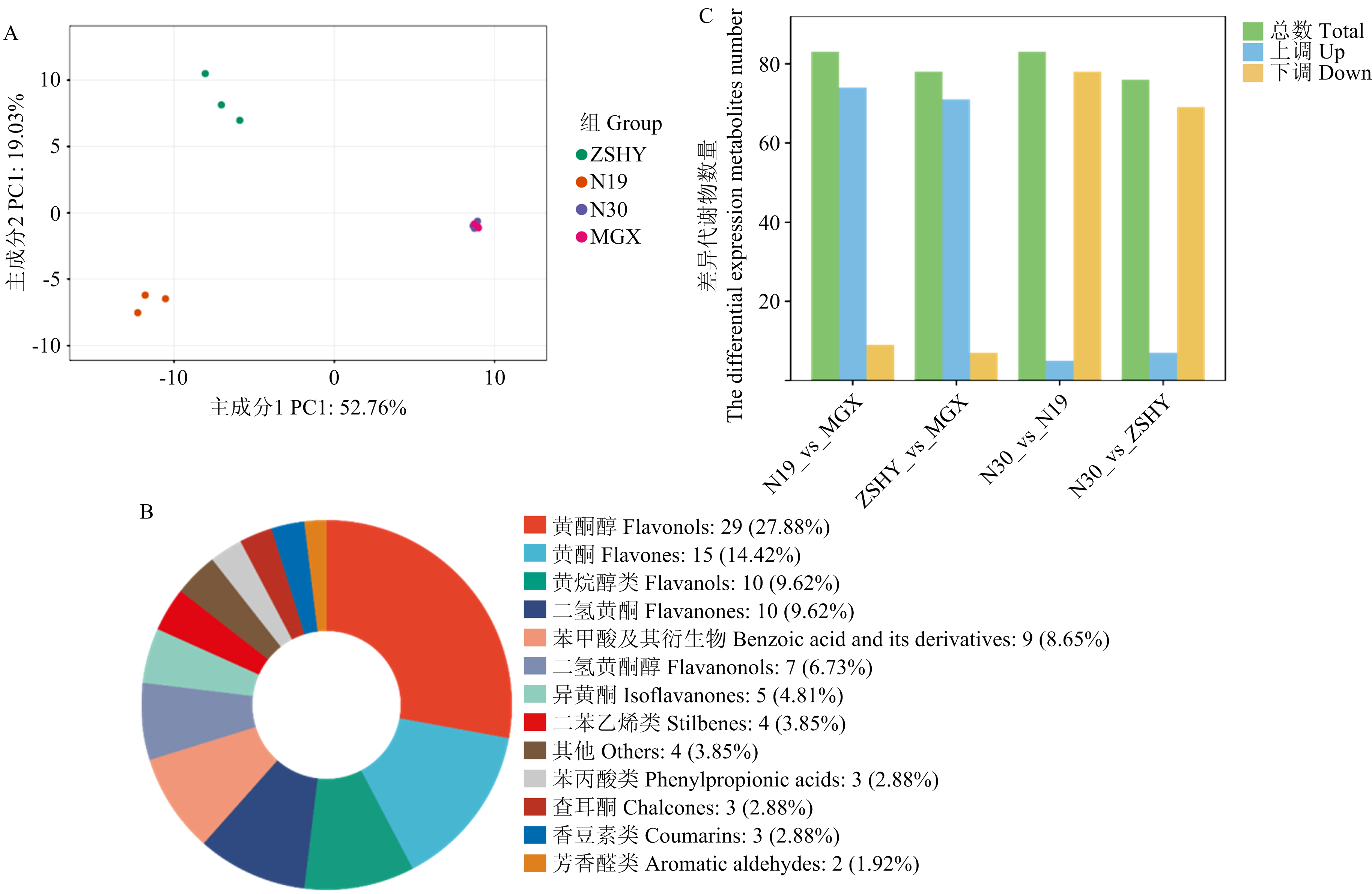
Metabolomics analysis A: Principal component analysis (PCA) plot of Metabolomics; B: Flavonoid component proportions; C: Statistics of the number of DAMs selected through comparison between different groups"

Fig. 3

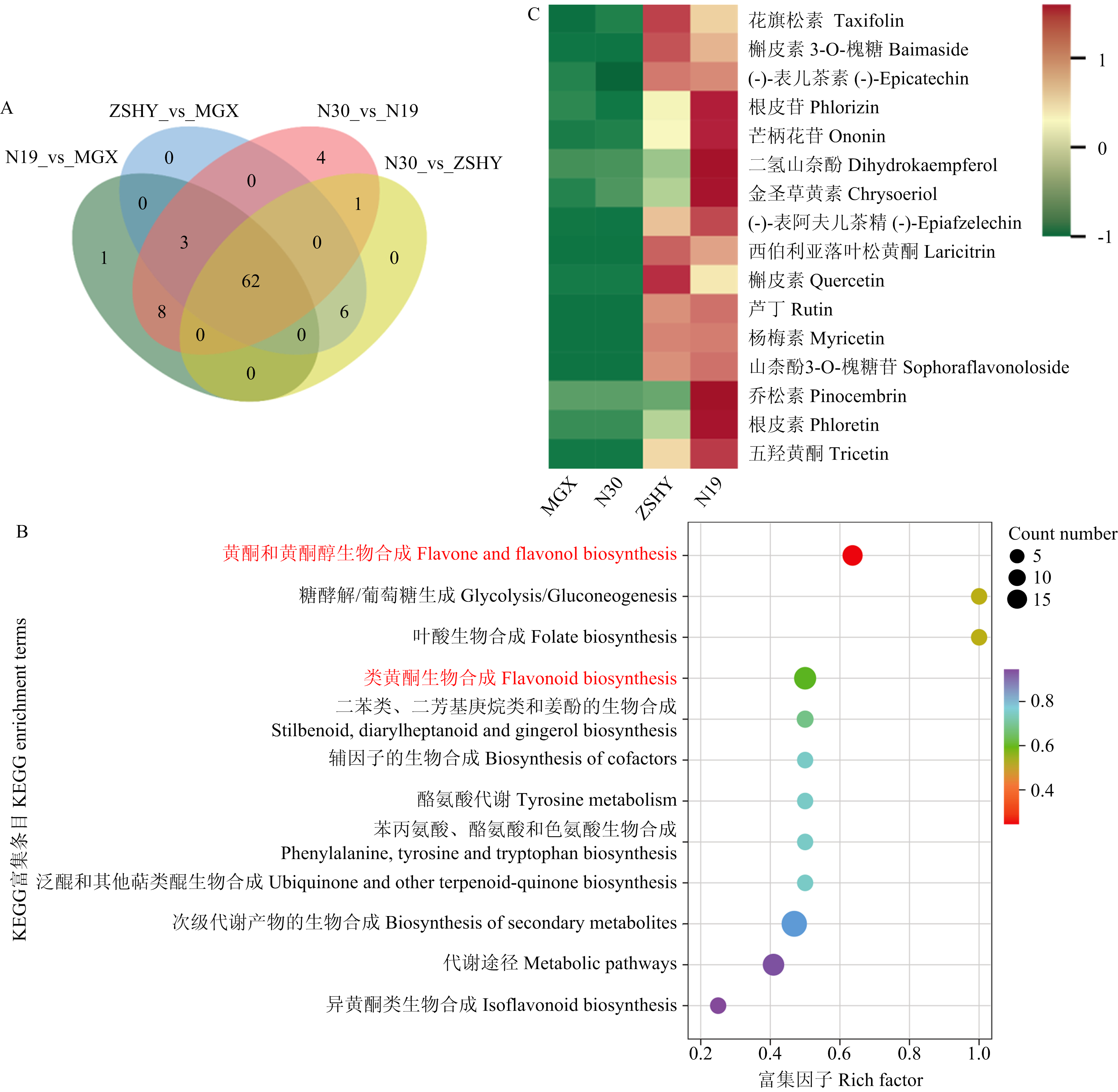
Venn analysis (A) and KEGG enrichment analysis (B) of core DAMs, Clustering heatmap of core differential flavonoid metabolites"

Table 2

Quality and yield statistics of RNA-Seq libraries"

样品
Sample
原始数据
Raw reads (M)
过滤后数据
Clean reads (M)
过滤后碱基总数
Clean bases (G)
有效碱基百分比
Valid bases (%)
碱基质量值
Q30 (%)
GC含量
GC content (%)
特异比对率
Unique map (%)
MGX-1 44.82 44.71 6.70 99.77 97.94 46.24 86.00
MGX-2 46.83 46.74 7.00 99.80 97.89 45.98 88.42
MGX-3 45.39 45.27 6.78 99.73 97.95 46.56 86.93
N30-1 46.26 46.12 6.90 99.71 97.99 46.26 86.66
N30-2 46.78 46.68 6.99 99.79 97.86 46.32 85.48
N30-3 46.69 46.56 6.97 99.72 97.96 46.35 86.81
ZSHY-1 46.35 46.22 6.92 99.72 98.00 47.08 83.65
ZSHY-2 46.29 46.14 6.91 99.68 98.02 46.56 86.76
ZSHY-3 46.15 46.05 6.90 99.77 98.01 46.80 86.10
N19-1 46.91 46.67 6.97 99.47 97.94 46.17 85.52
N19-2 46.70 46.50 6.95 99.55 97.92 46.33 85.43
N19-3 47.25 47.11 7.05 99.70 97.89 46.30 85.44

Fig. 4

Analysis of RNA-Seq results A: Principal component analysis (PCA) plot of RNA-seq data; B: Statistics of the number of DEGs selected through comparison between different groups; C: Venn analysis across groups; D: The hierarchical clustering analysis heatmap of DEGs, with blue to red representing gene expression levels from low to high; E: Venn analysis of core DEGs"

Fig. 5

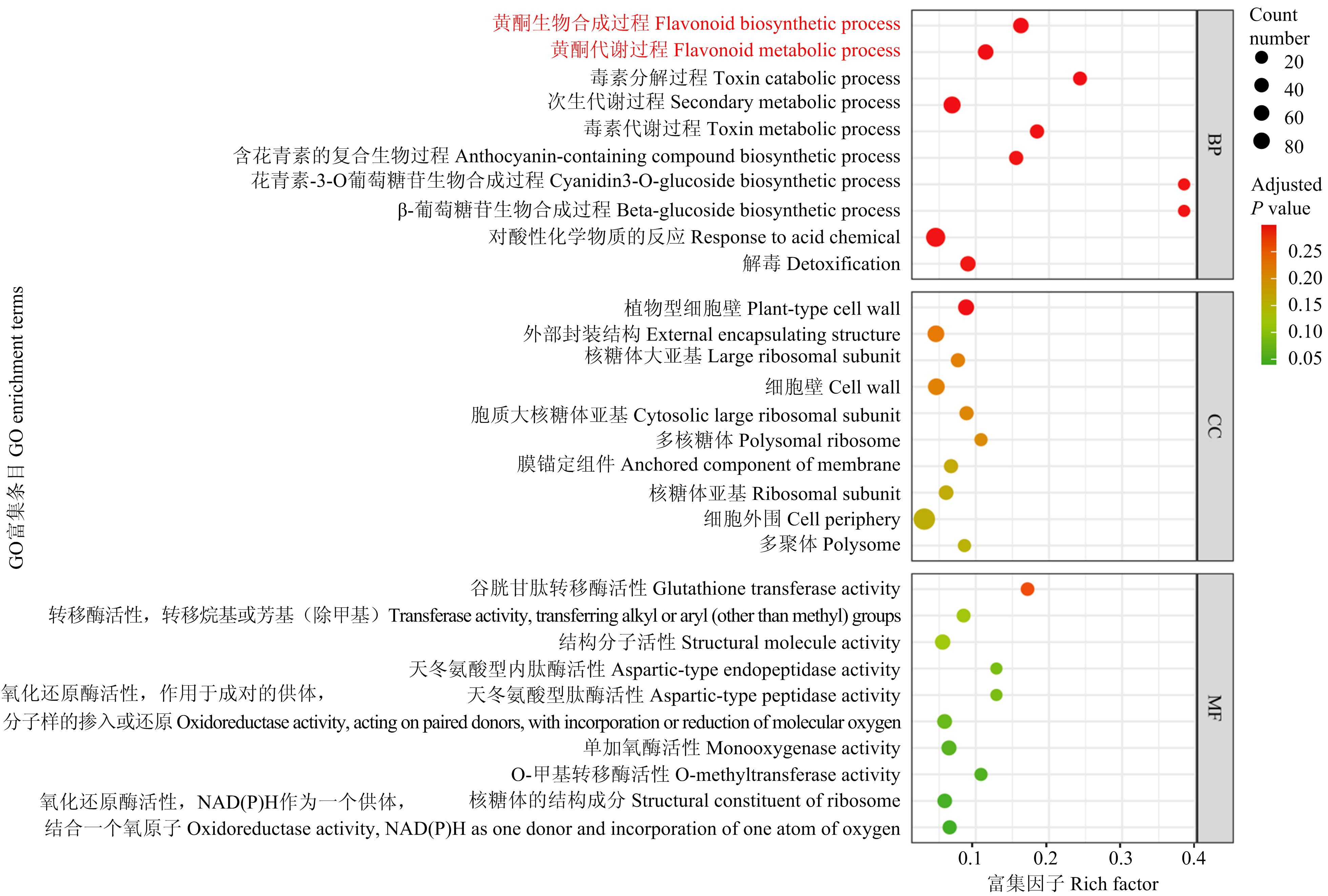
The GO enrichment analysis"

Fig. 6

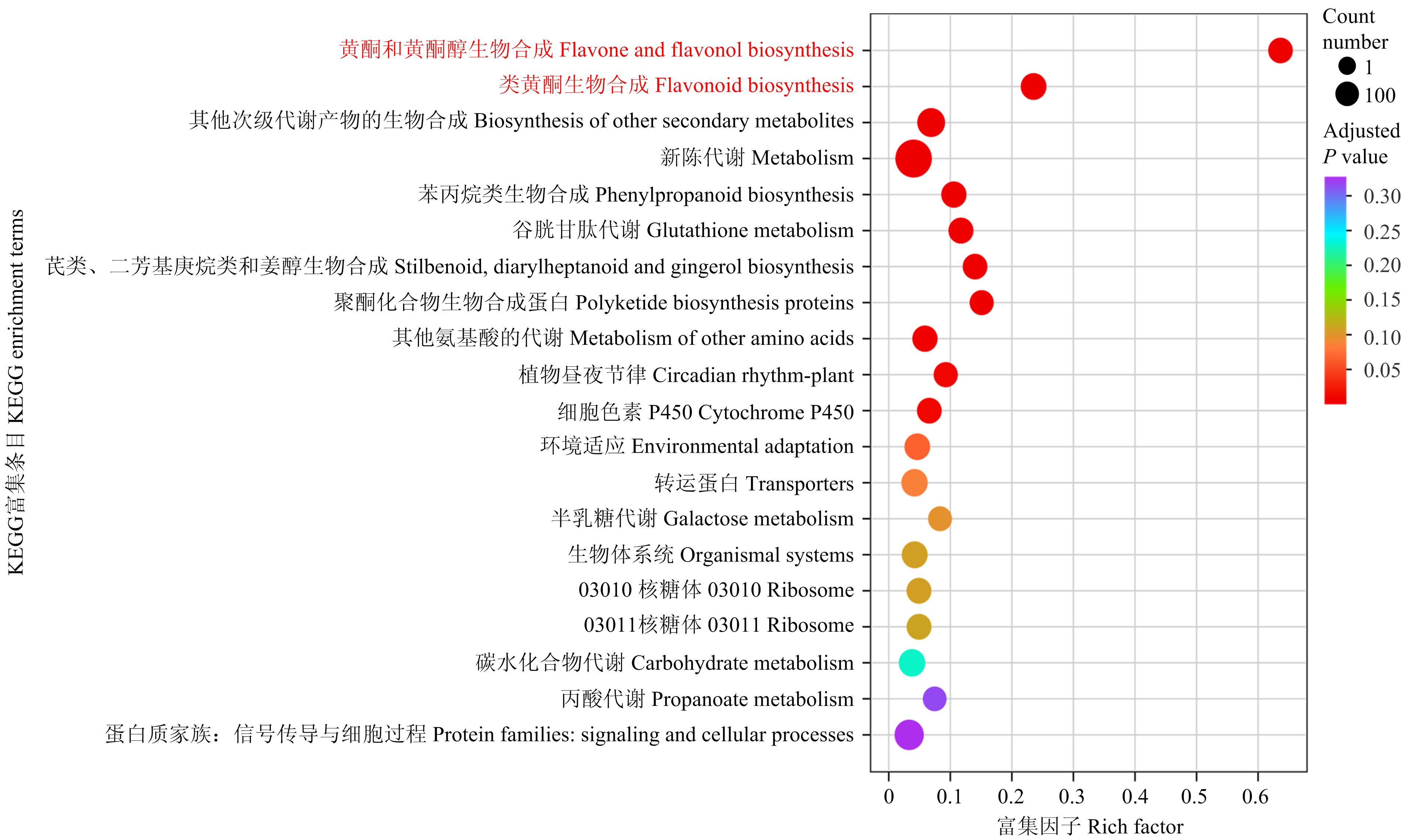
The KEGG enrichment analysis"

Table 3

Flavonoid-related differentially expressed structural genes"

基因名称
Gene name
基因
Gene
基因ID
Gene ID
数量
Count
编号
KO ID
苯丙氨酸解氨酶 Phenylalanine ammonia-lyase PAL VIT_13s0019g04460 1 K10775
肉桂酸-4-羟化酶 Cinnamate-4-hydroxylase CYP73A VIT_06s0004g08150 1 K00487
4-香豆酸辅酶A连接酶
4-coumarate coenzyme A ligase
4CL2 VIT_11s0052g01090; VIT_16s0039g02040 2 K01904
查尔酮合成酶
Chalcone synthase
CHS VIT_16s0022g01020; VIT_05s0136g00260; VIT_14s0068g00920;
VIT_16s0022g01140; VIT_16s0022g01190; VIT_00s1492g00010;
VIT_16s0022g01000
7 K00660
查尔酮异构酶样蛋白
Chalcone-flavanone isomerase-related
CHIL2 VIT_13s0067g02870 1 K01859
查尔酮异构酶Chalcone isomerase CHI VIT_13s0067g03820 1 K01859
莽草酸O-羟基肉桂酰转移酶
Shikimate O-hydroxycinnamoyltransferase
HCT VIT_11s0037g00440 1 K13065
黄烷酮3'羟化酶Flavonoid 3'- hydroxylase CYP75B2 VIT_17s0000g07200; VIT_17s0000g07210 2 K05280
类黄酮3', 5'羟基化酶
Flavonoid 3', 5'-hydroxylase
CYP75A1 VIT_06s0009g02970; VIT_06s0009g02840; VIT_06s0009g02860 3 K13083
CYP75A2 VIT_06s0009g02830 1 K13083
CYP75A3 VIT_06s0009g02920; VIT_06s0009g02880; VIT_06s0009g02810 3 K13083
类黄酮 O-甲基转移酶
Flavonoid O-methyltransferase
FAOMT VIT_01s0010g03510; VIT_01s0010g03470; IT_01s0010g03490;
VIT_01s0010g03460
4 K13272
二氢黄酮醇-4-还原酶
Dihydroflavonol 4-reductase
DFR VIT_18s0001g12800 1 K13802
无色花青素双加氧酶
Leucoanthocyanin dioxygenase
LDOX VIT_02s0025g04720 1 K05277
UDP类黄酮-3-O-葡萄糖基转移酶
UDP flavonoid-3-O-glucosyltransferase
UFGT VIT_16s0039g02230 1 K12930

Fig. 7

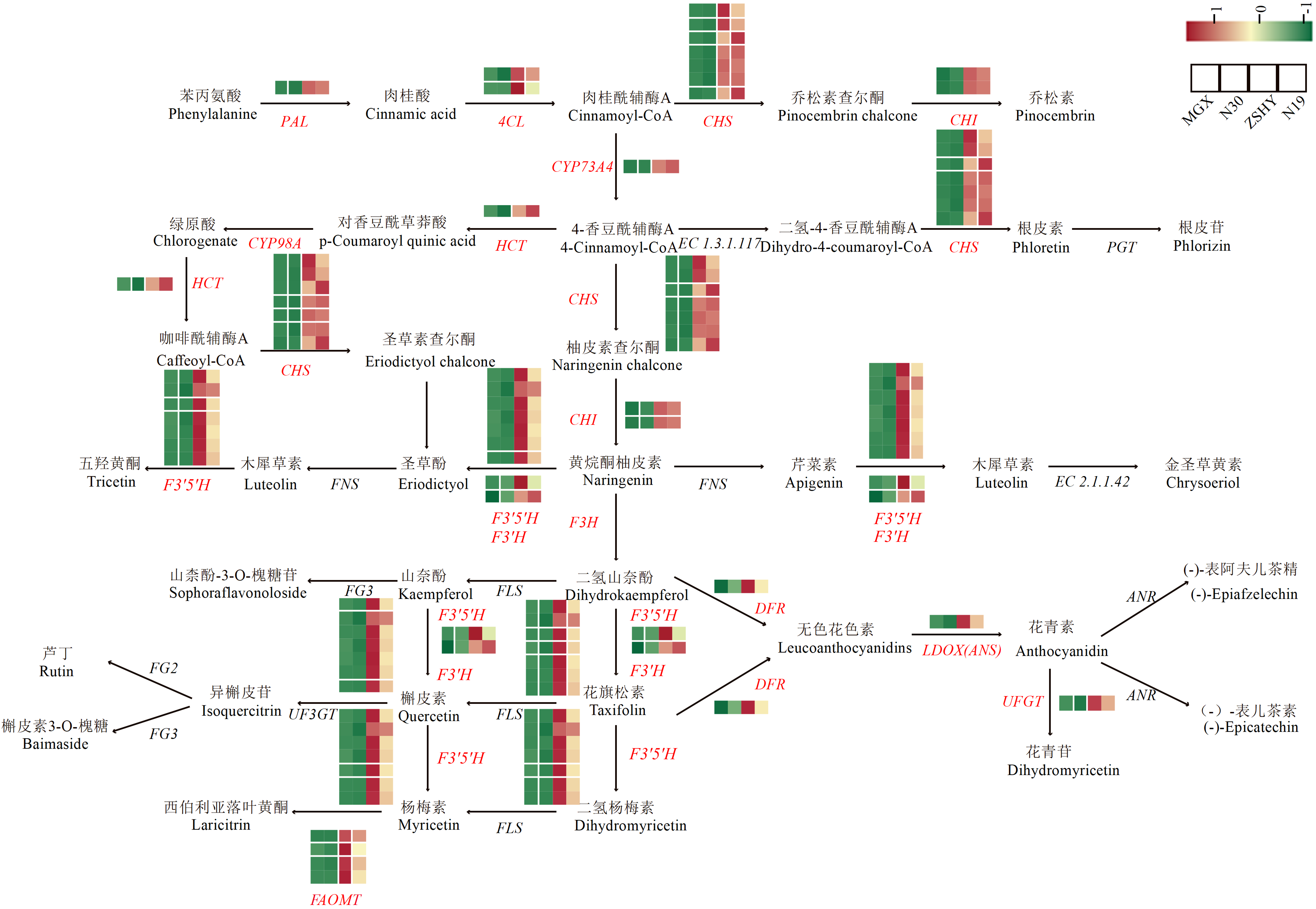
Flavonoid biosynthesis pathway map"

Fig. 8

Correlation analysis between transcription factors and the expression of flavonoid biosynthesis pathway genes (A), Analysis of cis-acting elements in the promoters of flavonoid biosynthesis pathway genes (B) 1: 60K protein binding site; 2: Auxin-responsive element; 3: cis-acting element involved in salicylic acid responsiveness; 4: cis-acting element involved in the abscisic acid responsiveness; 5: cis-acting regulatory element essential for the anaerobic induction; 6: cis-acting regulatory element involved in circadian control; 7: cis-acting regulatory element involved in light responsiveness; 8: cis-regulatory element involved in endosperm expression; 9: Light responsive element; 10: MYB binding site involved in drought-inducibility; 11: Part of a conserved DNA module involved in light responsiveness; 12: Part of a light responsive element; 13: Part of a light responsive module; 14: Part of a module for light response; 15: cis-acting element involved in light responsiveness; 16: Element for maximal elicitor-mediated activation (2copies) ; 17: MYBHv1 binding site; 18: cis-acting element involved in defense and stress responsiveness; 19: cis-acting regulatory element involved in auxin responsiveness; 20: Enhancer-like element involved in anoxic specific inducibility; 21: Gibberellin-responsive element; 22: cis-acting element involved in cell cycle regulation; 23: cis-acting element involved in low-temperature responsiveness; 24: cis-acting regulatory element involved in the MeJA-responsiveness;25: cis-acting regulatory element related to meristem expression; 26: Wound-responsive element; 27: cis-acting element involved in gibberellin-responsiveness; 28: Involved in endosperm-specific negative expression; 29: cis-acting element involved in phytochrome down-regulation expression; 30: MYB binding site involved in light responsiveness; 31: Element involved in differentiation of the palisade mesophyll cells; 32: MYB binding site involved in flavonoid biosynthetic genes regulation; 33: cis-acting regulatory element involved in zein metabolism regulation; 34: cis-acting regulatory element involved in seed-specific regulation"

Fig. 9

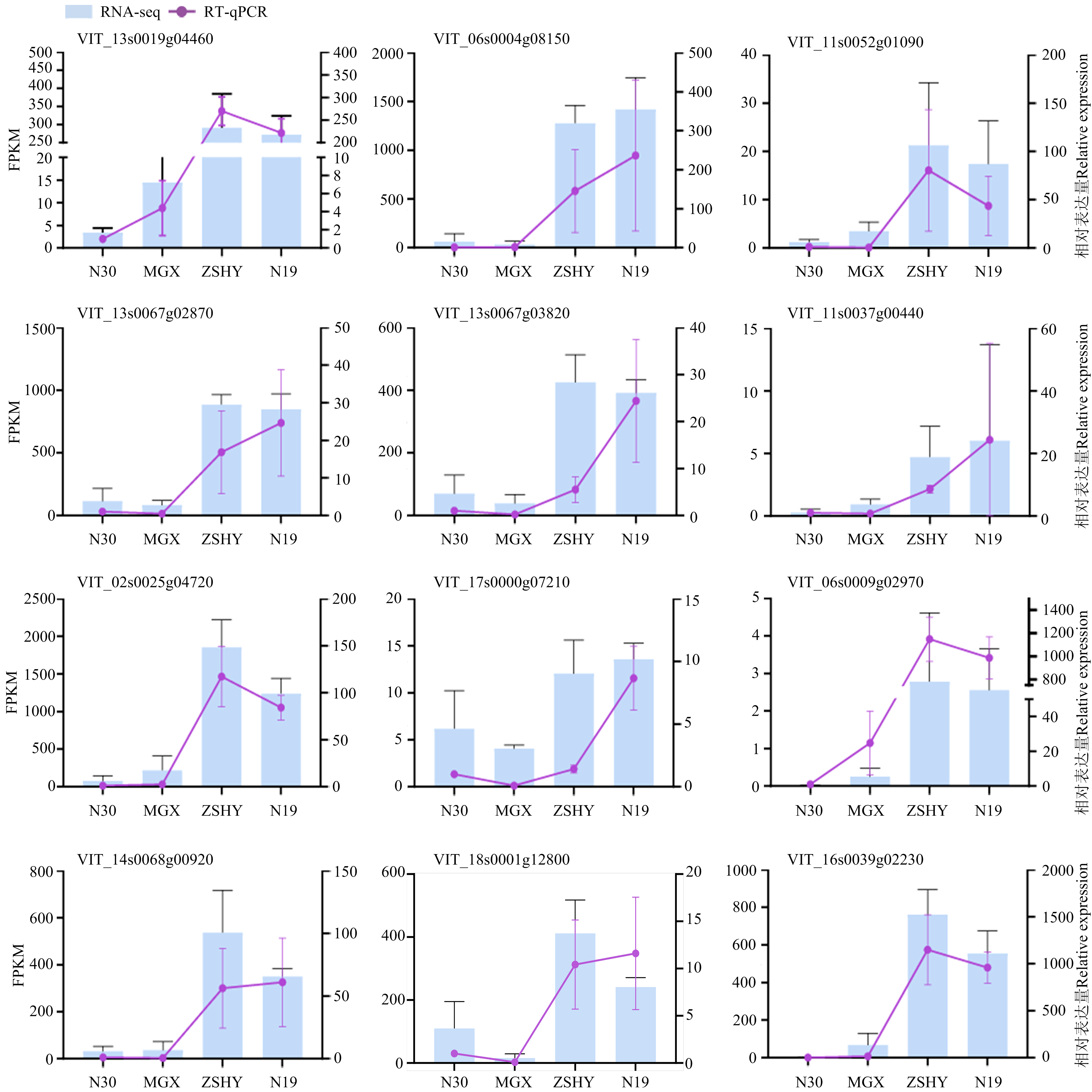
Relative expression levels of flavonoid biosynthesis pathway genes"

[1]
Liang C M, Ge W J, Feng Y Y, Wang M J, Zan S W, Xie H H, Yu F C, Guan P Y, Liang J J, Wen P F. Transcription factor VvbHLH92 negatively regulates salicylic acid mediated proanthocyanidins biosynthesis in grapevine[J]. Scientia Horticulturae, 2025, 341: 113989.

doi: 10.1016/j.scienta.2025.113989
[2]
生弘杰, 卢素文, 郑暄昂, 贾海锋, 房经贵. 基于广泛靶向代谢组学的葡萄种子代谢物鉴定与比较分析[J]. 中国农业科学, 2023, 56(7): 1359-1376. DOI: 10.3864/j.issn.0578-1752.2023.07.013.
Sheng H J, Lu S W, Zheng X A, Jia H F, Fang J G. Identification and comparative analysis of metabolites in grape seed based on widely targeted metabolomics[J]. Scientia Agricultura Sinica, 2023, 56(7): 1359-1376. DOI: 10.3864/j.issn.0578-1752.2023.07.013. (in Chinese)
[3]
Flamini R, Mattivi F, De Rosso M, Arapitsas P, Bavaresco L. Advanced knowledge of three important classes of grape phenolics: Anthocyanins, stilbenes and flavonols[J]. International Journal of Molecular Sciences, 2013, 14(10): 19651-19669.

doi: 10.3390/ijms141019651 pmid: 24084717
[4]
Mao Y Y, Luo J J, Cai Z P. Biosynthesis and regulatory mechanisms of plant flavonoids: A review[J]. Plants, 2025, 14(12): 1847.

doi: 10.3390/plants14121847
[5]
Shen N, Wang T F, Gan Q, Liu S A, Wang L, Jin B. Plant flavonoids: Classification, distribution, biosynthesis, and antioxidant activity[J]. Food Chemistry, 2022, 383: 132531.

doi: 10.1016/j.foodchem.2022.132531
[6]
卢素文, 郑暄昂, 王佳洋, 房经贵. 葡萄类黄酮代谢研究进展[J]. 园艺学报, 2021, 48(12): 2506-2524.

doi: 10.16420/j.issn.0513-353x.2021-0558
Lu S W, Zheng X A, Wang J Y, Fang J G. Research progress on the metabolism of flavonoids in grape[J]. Acta Horticulturae Sinica, 2021, 48(12): 2506-2524. (in Chinese)

doi: 10.16420/j.issn.0513-353x.2021-0558
[7]
Li S T, Zachgo S. TCP3 interacts with R2R3-MYB proteins, promotes flavonoid biosynthesis and negatively regulates the auxin response in Arabidopsis thaliana[J]. The Plant Journal, 2013, 76(6): 901-913.

doi: 10.1111/tpj.2013.76.issue-6
[8]
Rasheed S, Saleem M, Abbas S, Manzoor F. Potent biostress regulators for abiotic stress management in plants[J]. Discover Plants, 2025, 2(1): 367.

doi: 10.1007/s44372-025-00450-7
[9]
葛诗蓓, 张学宁, 韩文炎, 李青云, 李鑫. 植物类黄酮的生物合成及其抗逆作用机制研究进展[J]. 园艺学报, 2023, 50(1): 209-224.

doi: 10.16420/j.issn.0513-353x.2021-1186
Ge S B, Zhang X N, Han W Y, Li Q Y, Li X. Research progress on plant flavonoids biosynthesis and their anti-stress mechanism[J]. Acta Horticulturae Sinica, 2023, 50(1): 209-224. (in Chinese)

doi: 10.16420/j.issn.0513-353x.2021-1186
[10]
邹凤莲, 寿森炎, 叶纨芝, 卢钢. 类黄酮化合物在植物胁迫反应中作用的研究进展[J]. 细胞生物学杂志, 2004, 26(1): 39-44.
Zou F L, Shou S Y, Ye W Z, Lu G. Advances in the research on flavonoid biosynthesis and plant stress response[J]. Chinese Journal of Cell Biology, 2004, 26(1): 39-44. (in Chinese)
[11]
Zahra M, Abrahamse H, George B P. Flavonoids: Antioxidant powerhouses and their role in nanomedicine[J]. Antioxidants, 2024, 13(8): 922.

doi: 10.3390/antiox13080922
[12]
Liu W X, Feng Y, Yu S H, Fan Z Q, Li X L, Li J Y, Yin H F. The flavonoid biosynthesis network in plants[J]. International Journal of Molecular Sciences, 2021, 22(23): 12824.

doi: 10.3390/ijms222312824
[13]
Park S, Kim D H, Yang J H, Lee J Y, Lim S H. Increased flavonol levels in tobacco expressing AcFLS affect flower color and root growth[J]. International Journal of Molecular Sciences, 2020, 21(3): 1011.

doi: 10.3390/ijms21031011
[14]
孙萍, 朱文灿, 林贤锐, 吴嘉颀, 曹译文, 陈辰斐, 王轶, 朱建锡, 贾惠娟, 钱敏杰, 沈建生. 基于代谢组和转录组解析多雨寡照对桃果皮着色和类黄酮积累的影响[J]. 中国农业科学, 2025, 58(6): 1173-1194. DOI: 10.3864/j.issn.0578-1752.2025.06.010.
Sun P, Zhu W C, Lin X R, Wu J Q, Cao Y W, Chen C F, Wang Y, Zhu J X, Jia H J, Qian M J, Shen J S. Effects of rainy and low light conditions on coloration and flavonoid accumulation in peach peel based on metabolomic and transcriptomic analyses[J]. Scientia Agricultura Sinica, 2025, 58(6): 1173-1194. DOI: 10.3864/j.issn.0578-1752.2025.06.010. (in Chinese)
[15]
王慧玲, 张莹莹, 闫爱玲, 王晓玥, 刘振华, 任建成, 徐海英, 孙磊. 多组学联合解析红色玫瑰香型葡萄品种转色过程中单萜和花色苷积累规律[J]. 中国农业科学, 2025, 58(13): 2645-2662. DOI: 10.3864/j.issn.0578-1752.2025.13.012.
Wang H L, Zhang Y Y, Yan A L, Wang X Y, Liu Z H, Ren J C, Xu H Y, Sun L. Multi-omics analysis reveals the changes of monoterpenes and anthocyanins accumulation during veraison in red Muscat-type grape[J]. Scientia Agricultura Sinica, 2025, 58(13): 2645-2662. DOI: 10.3864/j.issn.0578-1752.2025.13.012. (in Chinese)
[16]
Yang Q F, Li C L, Wang Y, Pei X, Wang A X, Jin L, Fang L C. Transcriptome and metabolome analyses of flavonoid biosynthesis during berry development of muscadine grape (Vitis rotundifolia Michx)[J]. Plants, 2025, 14(13): 2025.

doi: 10.3390/plants14132025
[17]
Li Y K, Fang J B, Qi X J, Lin M M, Zhong Y P, Sun L M, Cui W. Combined analysis of the fruit metabolome and transcriptome reveals candidate genes involved in flavonoid biosynthesis in Actinidia arguta[J]. International Journal of Molecular Sciences, 2018, 19(5): 1471.

doi: 10.3390/ijms19051471
[18]
He F, Mu L, Yan G L, Liang N N, Pan Q H, Wang J, Reeves M J, Duan C Q. Biosynthesis of anthocyanins and their regulation in colored grapes[J]. Molecules, 2010, 15(12): 9057-9091.

doi: 10.3390/molecules15129057 pmid: 21150825
[19]
Jeong S T, Goto-Yamamoto N, Hashizume K, Esaka M. Expression of multi-copy flavonoid pathway genes coincides with anthocyanin, flavonol and flavan-3-ol accumulation of grapevine[J]. Vitis-Journal of Grapevine Research, 2008, 47(3): 135-140.
[20]
Qin Y, Zhang C Y, Fan X C, Jiang J F, Zhang Y, Liu J H, Liu C H, Sun L. VvMYBA1 and VvMYB3 form an activator-repressor system to regulate anthocyanin biosynthesis in grape[J]. Horticultural Plant Journal, 2025, 11(4): 1493-1505.

doi: 10.1016/j.hpj.2024.03.011
[21]
Downey M O, Dokoozlian N K, Krstic M P. Cultural practice and environmental impacts on the flavonoid composition of grapes and wine: A review of recent research[J]. American Journal of Enology and Viticulture, 2006, 57(3): 257-268.

doi: 10.5344/ajev.2006.57.3.257
[22]
Zhu L, Huang Y, Zhang Y L, Xu C M, Lu J, Wang Y. The growing season impacts the accumulation and composition of flavonoids in grape skins in two-crop-a-year viticulture[J]. Journal of Food Science and Technology, 2017, 54(9): 2861-2870.

doi: 10.1007/s13197-017-2724-3 pmid: 28928526
[23]
Bai S J, Tao X Q, Hu J G, Chen H W, Wu J Y, Zhang F C, Cai J S, Wu G H, Meng J F. Flavonoids profile and antioxidant capacity of four wine grape cultivars and their wines grown in the Turpan Basin of China, the hottest wine region in the world[J]. Food Chemistry: X, 2025, 26: 102301.

doi: 10.1016/j.fochx.2025.102301
[24]
Castillo-Muñoz N, Gómez-Alonso S, García-Romero E, Hermosín- Gutiérrez I. Flavonol profiles of Vitis vinifera red grapes and their single-cultivar wines[J]. Journal of Agricultural and Food Chemistry, 2007, 55(3): 992-1002.

pmid: 17263504
[25]
Lu S W, Wang J Y, Zhuge Y X, Zhang M W, Liu C, Jia H F, Fang J G. Integrative analyses of metabolomes and transcriptomes provide insights into flavonoid variation in grape berries[J]. Journal of Agricultural and Food Chemistry, 2021, 69(41): 12354-12367.

doi: 10.1021/acs.jafc.1c02703 pmid: 34632763
[26]
赵一凡, 彭文婷, 李惠清, 郭玉婷, 王军. 五个欧亚种酿酒葡萄果实类黄酮及香气物质差异分析[J]. 中外葡萄与葡萄酒, 2021(6): 1-12.
Zhao Y F, Peng W T, Li H Q, Guo Y T, Wang J. Difference analysis of flavonoids and aroma compounds of five Vitis vinifera wine grape varieties[J]. Sino-Overseas Grapevine & Wine, 2021(6): 1-12. (in Chinese)
[27]
Degu A, Morcia C, Tumino G, Hochberg U, Toubiana D, Mattivi F, Schneider A, Bosca P, Cattivelli L, Terzi V, Fait A. Metabolite profiling elucidates communalities and differences in the polyphenol biosynthetic pathways of red and white Muscat genotypes[J]. Plant Physiology and Biochemistry, 2015, 86: 24-33.

doi: S0981-9428(14)00339-8 pmid: 25461697
[28]
Panighel A, Cumerlato V, Braido D, Flamini R, De Rosso M, Gardiman M, Crespan M. Biochemical properties and quality potential of new grapevine genotypes produced by crossing a black berry winegrape and a white berry seedless table cultivar (Raboso Veronese × Sultanina)[J]. Food Bioscience, 2024, 62: 105452.

doi: 10.1016/j.fbio.2024.105452
[29]
高磊. ‘钟山红’与‘钟山红玉’及其杂交后代葡萄果肉花色苷合成机制的研究[D]. 南京: 南京农业大学, 2023: 58-59, 62-63.
Gao L. Studies on the mechanism of anthocyanin synthesis in grape flesh of ‘ZhongShanHong’and ‘ZhongShanHongYu’and their Hybrids[D]. Nanjing: Nanjing Agricultural University, 2023: 58-59, 62-63. (in Chinese)
[30]
韩梅梅, 杨晓帆, 王军, 潘秋红. 基因型与微环境差异对葡萄果实黄烷-3-醇含量的影响[J]. 果树学报, 2014, 31(2): 221-230.
Han M M, Yang X F, Wang J, Pan Q H. Effects of different grapevine genotypes and micro-environments on concentrations of flavan-3-ols[J]. Journal of Fruit Science, 2014, 31(2): 221-230. (in Chinese)
[31]
Jaakola L. New insights into the regulation of anthocyanin biosynthesis in fruits[J]. Trends in Plant Science, 2013, 18(9): 477-483.

doi: 10.1016/j.tplants.2013.06.003 pmid: 23870661
[32]
Zhou L, Wang Y, Peng Z H. Molecular characterization and expression analysis of Chalcone synthase gene during flower development in tree peony (Paeonia suffruticosa)[J]. African Journal of Biotechnology, 2011, 10(8): 1275-1284.
[33]
Wang Q H, Jia Y H, Lin X, Tan L, Du H M, Wang A H. Identification and expression analysis of Chalcone Synthase gene family in Tartary buckwheat[J]. Genes, 2025, 16(4): 451.

doi: 10.3390/genes16040451
[34]
邵雪花, 赖多, 肖维强, 刘传和, 贺涵, 匡石滋. 番石榴果实品质评价及黄酮类化合物合成相关基因挖掘[J]. 华南农业大学学报, 2023, 44(2): 245-253.
Shao X H, Lai D, Xiao W Q, Liu C H, He H, Kuang S Z. Evaluation of guava fruit quality and mining of genes related to flavonoid synthesis[J]. Journal of South China Agricultural University, 2023, 44(2): 245-253. (in Chinese)
[35]
Cheng T T, Lin J, Zhou X, Wang H S, Zhou X J, Huang X P, Chen T Z. Integrative metabolomics and transcriptomics profiling reveals differential expression of flavonoid synthesis in Ophiopogon japonicus (L. F.) Ker-Gawl. in adaptation to drought[J]. PLoS ONE, 2025, 20(1): e0313580.

doi: 10.1371/journal.pone.0313580
[36]
Hichri I, Barrieu F, Bogs J, Kappel C, Delrot S, Lauvergeat V. Recent advances in the transcriptional regulation of the flavonoid biosynthetic pathway[J]. Journal of Experimental Botany, 2011, 62(8): 2465-2483.

doi: 10.1093/jxb/erq442 pmid: 21278228
[37]
Baudry A, Heim M A, Dubreucq B, Caboche M, Weisshaar B, Lepiniec L. TT2, TT8, and TTG1 synergistically specify the expression of BANYULS and proanthocyanidin biosynthesis in Arabidopsis thaliana[J]. The Plant Journal, 2004, 39(3): 366-380.

doi: 10.1111/tpj.2004.39.issue-3
[38]
Xu W J, Dubos C, Lepiniec L. Transcriptional control of flavonoid biosynthesis by MYB-bHLH-WDR complexes[J]. Trends in Plant Science, 2015, 20(3): 176-185.

doi: 10.1016/j.tplants.2014.12.001 pmid: 25577424
[39]
Yao G F, Ming M L, Allan A C, Gu C, Li L T, Wu X, Wang R Z, Chang Y J, Qi K J, Zhang S L, Wu J. Map-based cloning of the pear gene MYB114 identifies an interaction with other transcription factors to coordinately regulate fruit anthocyanin biosynthesis[J]. The Plant Journal, 2017, 92(3): 437-451.

doi: 10.1111/tpj.2017.92.issue-3
[40]
Ni J B, Bai S L, Zhao Y, Qian M J, Tao R Y, Yin L, Gao L, Teng Y W. Ethylene response factors Pp4ERF24 and Pp12ERF96 regulate blue light-induced anthocyanin biosynthesis in ‘Red Zaosu’ pear fruits by interacting with MYB114[J]. Plant Molecular Biology, 2019, 99(1): 67-78.

doi: 10.1007/s11103-018-0802-1
[1] GUAN ShuPing, LI Ke, XIE KaiDong, DUAN YaoYuan, WANG TingTing, ZHOU ZhiHu, WU XiaoMeng, GUO WenWu. Physiological Mechanism and Relevant Gene Identification for Fruit Enlargement in Satsuma mandarin+Taoye sweet orange Somatic Cybrid [J]. Scientia Agricultura Sinica, 2026, 59(8): 1748-1759.
[2] YUE NanDong, JIANG BingTing, NIE JingGui, FANG Yue, TANG JunRong, YUE ZhenSheng, ZHOU Ying, LI NengBo, HE XiaHong, ZHANG XueChun. Analysis of Chemical Components, Functional Activities and Metabolomics of Stems, Leaves and Flowers of Dendrobium devonianum Paxt. [J]. Scientia Agricultura Sinica, 2026, 59(8): 1775-1796.
[3] YUE LiXin, WANG QingHua, WANG ZhenBao, NIMAQIONGJI, LIU ZeZhou, KONG SuPing, ZHANG LiFeng, GAO LiMin. Widely Targeted Metabolomics-Based Analysis of the Differences in Tibetan Bunching Onion and Chive on Nutritional Quality and Flavonoid Metabolites [J]. Scientia Agricultura Sinica, 2026, 59(5): 1070-1086.
[4] REN MinPeng, ZHANG XiFei, GE HuaLiang, GENG LiYing, LI XiangLong, YU BaoJun, WANG KunYang, ZHANG ChuanSheng. Identification of Candidate Genes Associated with Black-Tailed and White-Tailed Plumage Traits in B380 Chickens Based on Multi- Omics Analysis [J]. Scientia Agricultura Sinica, 2026, 59(16): 3673-3686.
[5] ZHAO Wei, TIAN JinLi, CHEN SiYu, YANG LiJuan, MA LiNa, ZHANG GuoJun, ZHANG Hu, HU WeiLong, YU HaiRong, ZHANG HaiBo, ZHANG Juan. Exploration of Candidate Genes Affecting Meat Quality of Jingyuan Chicken Based on Weighted Gene Co-expression Network Analysis [J]. Scientia Agricultura Sinica, 2026, 59(13): 2975-2992.
[6] MA XiaoYing, QU XiaoYu, LI Tao, LIU WeiFan, LIU Hao, MA FengLan, WAN MengHu, WU Na, LIU JiLi. Analysis of Physiological and Metabolic Response Mechanisms in Maize Varieties with Different Salt Tolerances Under Salt Stress [J]. Scientia Agricultura Sinica, 2026, 59(13): 2815-2827.
[7] GUO FuQiang, PENG ZhiXin, LI DeRui, LIN MuSen, XU LiFeng, ZHANG ChengSheng. Biological Activity and Mechanism of 2-Octyl-3-isothiazolinone Against Alternaria alternata Causing Tobacco Brown Spot [J]. Scientia Agricultura Sinica, 2026, 59(13): 2841-2852.
[8] DONG Xue, LIU JiaLe, SHAO Jin, CHEN MengQiu, WU XueYou, TANG PeiAn. Multi-Omics Reveals Mechanisms of Lipid Stabilization in Japonica Rice During Prolonged Low-Temperature Storage [J]. Scientia Agricultura Sinica, 2026, 59(10): 2249-2264.
[9] WANG ZhongNi, LEI Yue, LI JiaLi, GONG YanLong, ZHU SuSong. Functions of ABC Transporter OsARG1 in Rice Heading Date Regulation [J]. Scientia Agricultura Sinica, 2026, 59(1): 1-16.
[10] WANG SiQi, ZOU LiRen, BAI RuiWen, YAN Ke, WANG SiYang, QI XiaoGuang, SHEN HaiLin, WEN JingHui. Screening of Key Genes Related to Gibberellic Acid Regulation of Rachis Hardening in Honey Grapes [J]. Scientia Agricultura Sinica, 2026, 59(1): 179-189.
[11] TAN XiBei, LAN XuYing, LIU ChongHuai, FAN XiuCai, JIANG JianFu, SUN Lei, LI Peng, YU ShuXin, ZHANG Ying. Changes of Secondary Metabolites in Grapes with Different Resistance Levels in Response to White Rot Infection [J]. Scientia Agricultura Sinica, 2025, 58(9): 1767-1778.
[12] YANG CaiLi, LI YongZhou, HE LiangLiang, SONG YinHua, ZHANG Peng, LIU ZhaoXian, LI PengHui, LIU SanJun. Genome-Wide Identification and Analysis of TPS Gene Family and Functional Verification of VvTPS4 in the Formation of Monoterpenes in Grape [J]. Scientia Agricultura Sinica, 2025, 58(7): 1397-1417.
[13] ZOU XiaoWei, XIA Lei, ZHU XiaoMin, SUN Hui, ZHOU Qi, QI Ji, ZHANG YaFeng, ZHENG Yan, JIANG ZhaoYuan. Analysis of Disease Resistance Induced by Ustilago maydis Strain with Overexpressed UM01240 Based on Transcriptome Sequencing [J]. Scientia Agricultura Sinica, 2025, 58(6): 1116-1130.
[14] SUN Ping, ZHU WenCan, LIN XianRui, WU JiaQi, CAO YiWen, CHEN ChenFei, WANG Yi, ZHU JianXi, JIA HuiJuan, QIAN MinJie, SHEN JianSheng. Effects of Rainy and Low Light Conditions on Coloration and Flavonoid Accumulation in Peach Peel Based on Metabolomic and Transcriptomic Analyses [J]. Scientia Agricultura Sinica, 2025, 58(6): 1173-1194.
[15] XIE LuLu, LI Fu, ZHANG SiYuan, GAO JianChang. Analysis of Conserved Genes in Adventitious Root Formation Based on Cross Species Transcriptomes [J]. Scientia Agricultura Sinica, 2025, 58(6): 1195-1209.
Viewed
Full text


Abstract

Cited

  Shared   
  Discussed   
No Suggested Reading articles found!