Scientia Agricultura Sinica ›› 2026, Vol. 59 ›› Issue (16): 3673-3686.doi: 10.3864/j.issn.0578-1752.2026.16.014

• ANIMAL SCIENCE·VETERINARY SCIENCE • Previous Articles     Next Articles

Identification of Candidate Genes Associated with Black-Tailed and White-Tailed Plumage Traits in B380 Chickens Based on Multi- Omics Analysis

REN MinPeng1(), ZHANG XiFei2, GE HuaLiang1, GENG LiYing1, LI XiangLong1, YU BaoJun1, WANG KunYang1, ZHANG ChuanSheng1()   

  1. 1 College of Animal Science, Hebei Normal University of Science & Technology/Hebei Provincial Key Laboratory for the Exploration and Innovation of Characteristic Animal Genetic Resources, Qinhuangdao 066004, Hebei
    2 Hebei Animal Breeding Improvement Center, Shijiazhuang 050064
  • Received:2025-12-09 Accepted:2026-03-23 Online:2026-08-16 Published:2026-08-17
  • Contact: ZHANG ChuanSheng

Abstract:

【Objective】 To investigate the molecular mechanisms underlying black-tailed and white-tailed feather coloration in Babcock B380 and to identify key candidate genes and loci associated with tail feather color. It provides a theoretical basis for poultry breeding and molecular breeding of feather color related traits.【Method】 A natural population consisting of 80 Babcock B380 hens with either black-tailed or white-tailed phenotypes was used in this study. The morphology and distribution of melanosomes within tail feather follicles were analyzed using histological sections observed under light microscopy and transmission electron microscopy. Transcriptome data were utilized to identify differentially expressed genes (DEGs), and weighted gene co-expression network analysis (WGCNA) was performed to identify co-expression modules associated with tail feather color and to screen hub genes within key modules. The expression levels of selected DEGs were subsequently validated by quantitative real-time PCR (qRT-PCR). Furthermore, based on genotypic data from the natural population, a genome-wide association study (GWAS) was conducted to identify genetic loci associated with black-tailed and white-tailed feather coloration in Babcock B380 chickens. The identified loci were further validated at the population level and subjected to integrative analysis. In addition, codon usage bias of PMEL mRNA was analyzed.【Result】 Microscopic observations revealed that melanosomes were predominantly deposited in the feather shaft region of chicken feather follicles, with the melanosome area being significantly greater in black-tailed chickens than in white-tailed chickens. Transcriptome analysis identified 373 DEGs, which were significantly enriched in melanin biosynthesis- related pathways. Key pigmentation-related genes, including PMEL, TYR, TYRP1, and SLC45A2, were highly expressed in black-tailed feather follicles. Weighted gene co-expression network analysis (WGCNA) identified 25 co-expression modules, among which the MEmagenta module was closely associated with melanosome biosynthesis. Integrated analyses of network connectivity and protein-protein interaction networks identified ten potential hub regulatory genes: PMEL, PIAS2, NDEL1, MSRA, HDLBP, GCNT4, FMR1NB, TBLX1, ST3GAL5, and RAB11A. qRT-PCR validation showed that the expression patterns of 4 DEGs were consistent with the RNA-seq results. GWAS identified a total of 968 significant SNPs located on chicken chromosomes 1, 5, and 34, which were annotated to 221 genes. Among these, 7 SNPs within the PMEL gene showed significant associations with tail feather color. Notably, the rs316665588 locus was significantly associated with black-tailed and white-tailed feather phenotypes. Codon bias index (CBI) analysis indicated that the mutation at this locus resulted in a transition from the rare codon UGU to the more frequently used codon UGC.【Conclusion】 The melanosome distribution area in feather follicles was significantly larger in B380 black-tailed chickens than in their white-tailed counterparts. Transcriptome analysis identified 4 key DEGs associated with plumage coloration and revealed 10 potential hub regulatory genes. PMEL was identified as a candidate gene underlying the black-tailed and white-tailed phenotypes in B380 chickens, and the synonymous T/C mutation at rs316665588 represents a key candidate locus contributing to the formation of black/white tail plumage.

Key words: B380 chicken, genome-wide association study (GWAS), transcriptome analysis, codon usage bias, PMEL

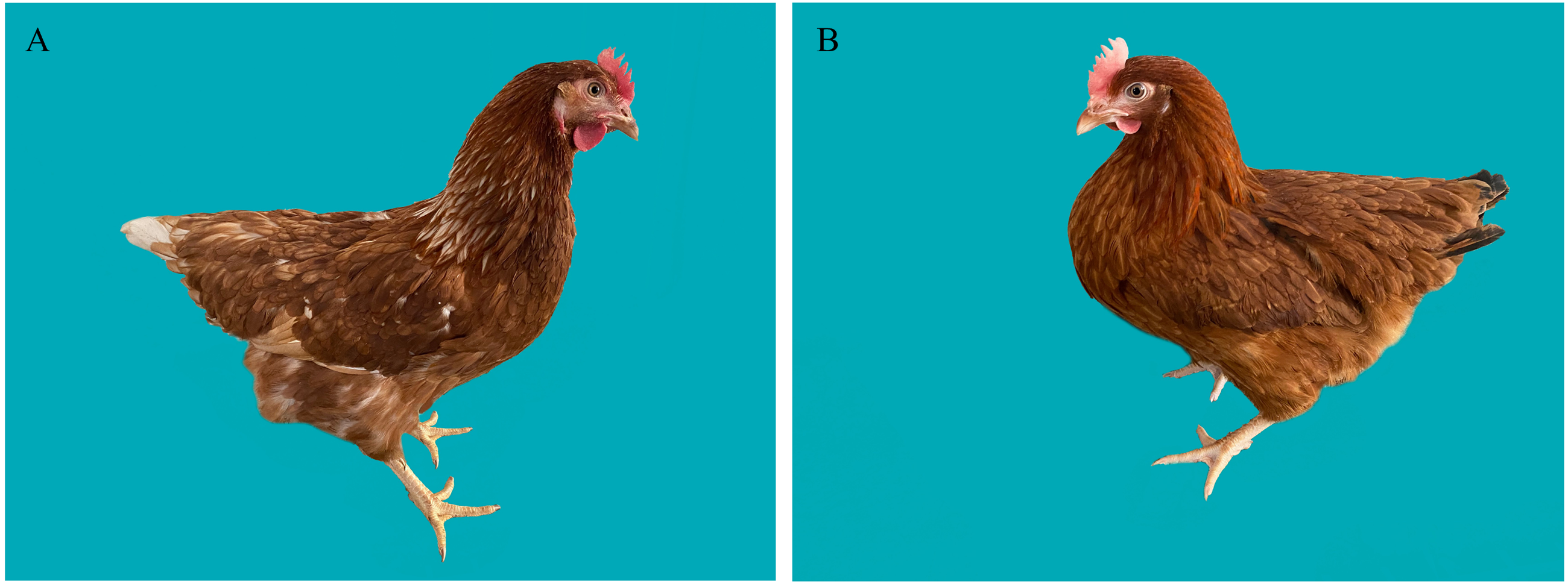
Fig. 1

Babcock B380 black-tailed and white-tailed hens A: White-tailed Hen; B: Black-tailed Hen"

Table 1

10 black-tailed chicken breeds in the NCBI database"

品种 Breed 缩略词 Abbreviation 样本数量 Sample size 登录号 Accession 表型 Phenotype
矮脚鸡 Aijiao chicken AJ 10 PRJNA947391 黑尾Black-tailed
怀乡鸡 Huaixiang chicken HX 10 PRJNA482210 黑尾Black-tailed
和田鸡 Hetian chicken HT 10 PRJNA482210 黑尾Black-tailed
广西黄鸡 Guangxi yellow chicken GXH 10 PRJNA482210 黑尾Black-tailed
江汉鸡 Jianghan chicken JH 10 PRJNA482210 黑尾Black-tailed
彭县黄鸡 Pengxian yellow chicken PX 10 PRJNA656352 黑尾Black-tailed
黔东南小香鸡 Qiandongnan xiaoxiang chicken QDN 10 PRJNA947391 黑尾Black-tailed
威宁鸡 Weining chicken WN 10 PRJNA947391 黑尾Black-tailed
文昌鸡 Wenchang chicken WC 10 PRJNA800119 黑尾Black-tailed
正阳黄鸡 Zhengyang yellow chicken ZY 10 PRJNA482210 黑尾Black-tailed

Table 2

qRT-PCR Primer Sequence Information"

基因
Gene name
描述
Description
F/R 引物序列
Primer sequence (5'-3')
Tm (℃) 产物大小
Production size (bp)
PMEL 前黑素体蛋白
Premelanosome protein
F TTGTCTACGTGTGGTGGACG 60 173
R CTGGTCGGTGATGCTGAACT 59
TYR 酪氨酸酶
Tyrosinase
F CACTCTTAGGTGGCTCCAATGTG 60 168
R CAGTCCCAGTAGGGGATGGTGAA 60
TYRP1 酪氨酸酶相关蛋白1
Tyrosinase related protein 1
F CAGAAGCTCAGTTCCCTCG 59 198
R TGGTTGAAGAAGCGTATGG 60
NPY 神经肽Y
Neuropeptide Y
F GAGGCACTACATCAACCTCATCAC 59 142
R TGTTTTCTGTGCTTTCCCTCAA 58
β-actin β-肌动蛋白
Beta-actin
F TCACCAACTGGGATGATATGGA 60 181
R TTGGCTTTGGGGTTCAGG 59

Fig. 2

H.E staining of tissue sections from B380 black-tailed and white-tailed follicles"

Fig. 3

Electron microscopy of melanosome cells in B380 black-tailed and white-tailed follicles Nucleus (N), basement membrane (BM), mitochondria (M), melanosomes (Ms)"

Table 3

Melanosome area measurement results"

项目 Item 白尾 White-tailed 黑尾 Black-tailed
黑素小体H.E染色面积 H.E-stained area of melanosomes (μm2) 1686.52±111.02** 7384.13±319.67**
黑素小体电镜图像面积 Melanosome area in transmission electron microscopy images (μm2) 0.20±0.012** 1.03±0.032**
褐黑素数量占比 Proportion of pheomelanin-containing melanosomes (%) 57.14±0.67 59.25±1.17
真黑素数量占比 Proportion of eumelanin-containing melanosomes (%) 42.85±0.67 40.75±1.17

Fig. 4

Identification of differentially expressed genes and qRT-PCR validation A: Volcano Plot of DEGs; B: qRT-PCR Validation Results; C: Protein-protein interaction network of differentially expressed genes Data are presented as mean ± standard deviation (SD). Statistical significance was assessed using Welch’s t-test. *** indicates P < 0.001, and **** indicates P < 0.0001"

Fig. 5

WGCNA and protein-protein interaction network analysis A: Cluster dendrogram; B: Module-trait relationship; C: MEmagenta KEGG enrichment plot; D: Correlation between gene significance (GS) and module membership (MM) in the MEmagenta module; E: Hub genes in MEmagenta module plot; F: Protein-protein interaction network analysis plot"

Fig.6

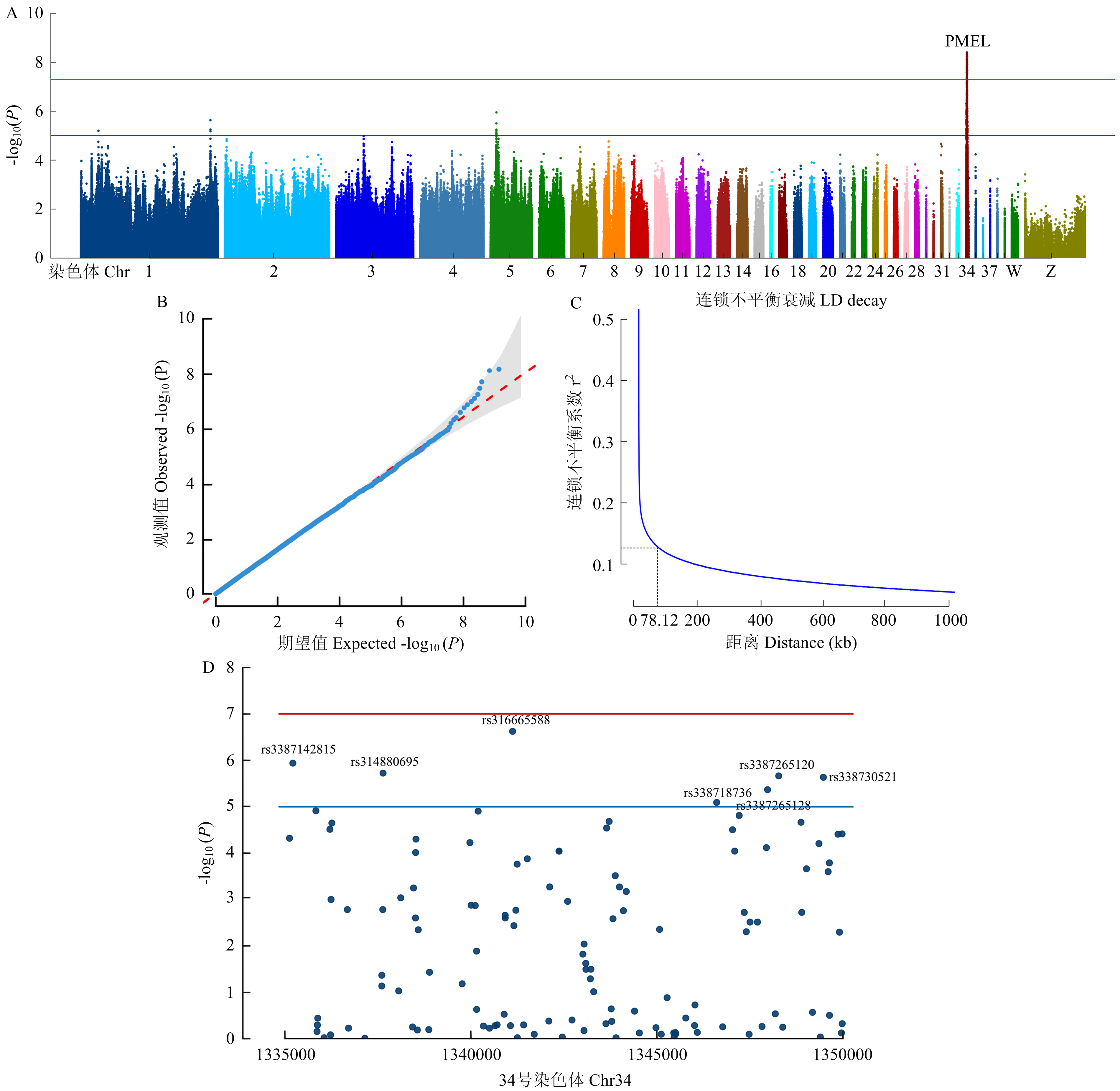
GWAS of black-tailed and white-tailed phenotypes A: Manhattan plot of GWAS for B380 black-tailed and white-tailed phenotypes; B: QQ plot; C: LD plot; D: PMEL SNP Manhattan plot"

Table 4

Genotypic distribution of the PMEL rs316665588 locus"

CC TC 合计 Total
黑尾 Black-tailed 79 1 80
白尾 White-tailed 0 80 80
合计 Total 79 81 160
Fisher检验 Fisher’s exact test 1.76E-45**

Fig. 7

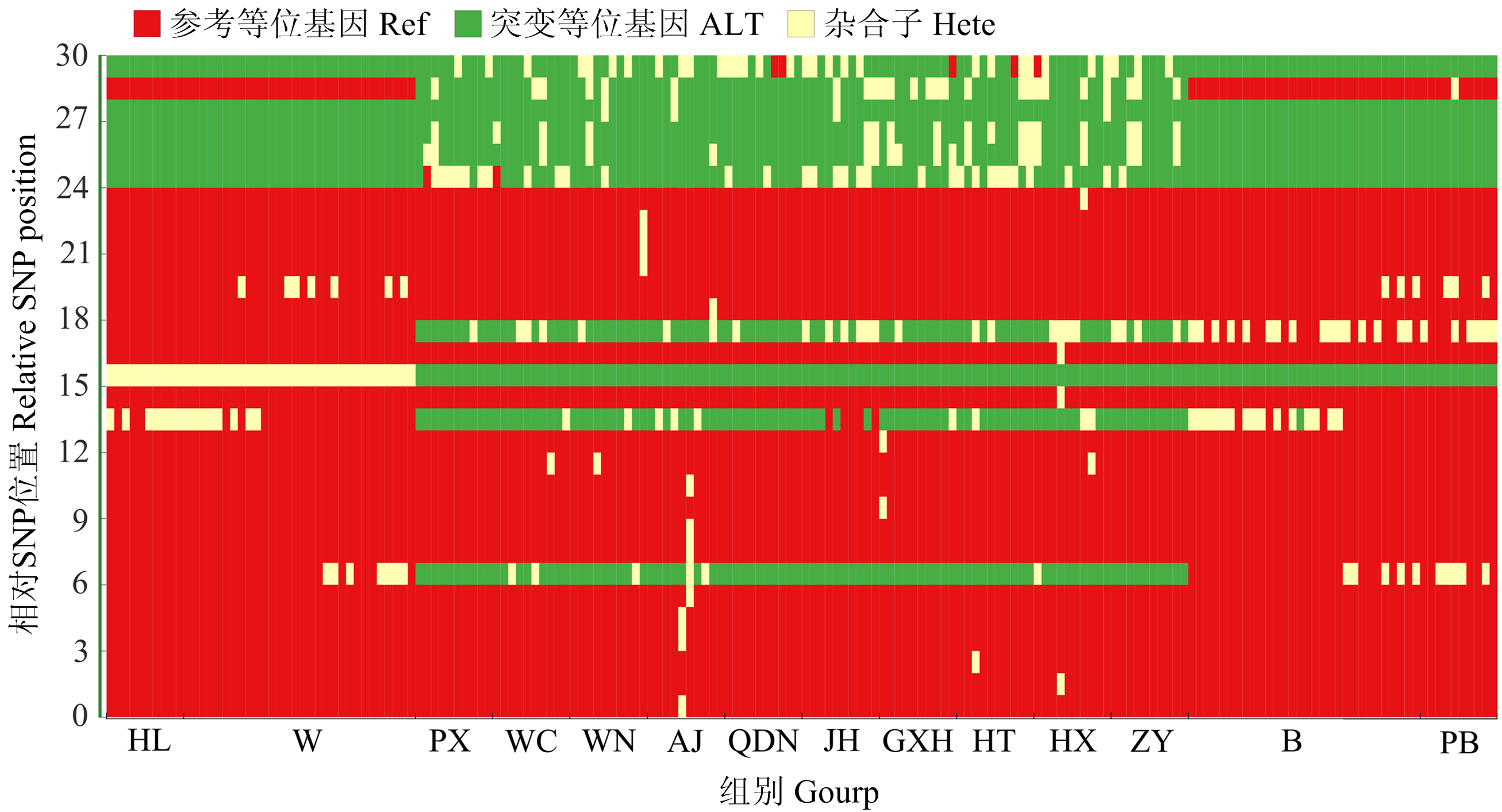
PMEL genotype heatmap"

Table 5

Codon usage analysis of PMEL mRNA sequence"

氨基酸
Amino acid
密码子
Codon
个数
Number
同义密码子相对使用度
Relative synonymous codon usage, RSCU
Cys UGU 1 0.13
Cys UGC 14 1.87
[1]
李东华, 付亚伟, 张晨曦, 曹艳芳, 李文婷, 李转见, 康相涛, 孙桂荣. 淅川乌骨鸡全基因组转座子的鉴定与分析[J]. 中国农业科学, 2020, 53(7): 1491-1500. DOI: 10.3864/j.issn.0578-1752.2020.07.017.
Li D H, Fu Y W, Zhang C X, Cao Y F, Li W T, Li Z J, Kang X T, Sun G R. Genome-wide identification and characterization of transposable elements in Xichuan black-bone chicken[J]. Scientia Agricultura Sinica, 2020, 53(7): 1491-1500. DOI: 10.3864/j.issn.0578-1752.2020.07.017. (in Chinese)
[2]
D’Alba L, Van Hemert C, Spencer K A, Heidinger B J, Gill L, Evans N P, Monaghan P, Handel C M, Shawkey M D. Melanin-based color of plumage: Role of condition and of feathers' microstructure[J]. Integrative and Comparative Biology, 2014, 54(4): 633-644.

doi: 10.1093/icb/icu094 pmid: 24987010
[3]
Ito S, Wakamatsu K. Quantitative analysis of eumelanin and pheomelanin in humans, mice, and other animals: A comparative review[J]. Pigment Cell Research, 2003, 16(5): 523-531.

pmid: 12950732
[4]
Cao W, Zhou X H, McCallum N C, Hu Z Y, Ni Q Z, Kapoor U, Heil C M, Cay K S, Zand T, Mantanona A J, Jayaraman A, Dhinojwala A, Deheyn D D, Shawkey M D, Burkart M D, Rinehart J D, Gianneschi N C. Unraveling the structure and function of melanin through synthesis[J]. Journal of the American Chemical Society, 2021, 143(7): 2622-2637.

doi: 10.1021/jacs.0c12322 pmid: 33560127
[5]
赵兵令, 李亚楠, 陈天直, 刘颖, 常露程, 范瑞文, 薛霖莉, 王海东, 董常生. GPNMB通过调控MITF下游色素相关基因表达影响黑色素细胞色素的生成[J]. 中国农业科学, 2017, 50(7): 1334-1342. DOI: 10.3864/j.issn.0578-1752.2017.07.016.
Zhao B L, Li Y N, Chen T Z, Liu Y, Chang L C, Fan R W, Xue L L, Wang H D, Dong C S. GPNMB affects melanin synthesis in the melanocytes via MITF to regulate the downstream pigmental genes[J]. Scientia Agricultura Sinica, 2017, 50(7): 1334-1342. DOI: 10.3864/j.issn.0578-1752.2017.07.016. (in Chinese)
[6]
Mastrangelo S, Cendron F, Sottile G, Niero G, Portolano B, Biscarini F, Cassandro M. Genome-wide analyses identifies known and new markers responsible of chicken plumage color[J]. Animals, 2020, 10(3): 493.

doi: 10.3390/ani10030493
[7]
Wang X L, Li D H, Song S F, Zhang Y H, Li Y F, Wang X N, Liu D L, Zhang C X, Cao Y F, Fu Y W, Han R L, Li W T, Liu X J, Sun G R, Li G X, Tian Y D, Li Z J, Kang X T. Combined transcriptomics and proteomics forecast analysis for potential genes regulating the Columbian plumage color in chickens[J]. PLoS ONE, 2019, 14(11): e0210850.

doi: 10.1371/journal.pone.0210850
[8]
Zheng X T, Zhang B, Zhang Y W, Zhong H A, Nie R X, Li J Y, Zhang H, Wu C X. Transcriptome analysis of feather follicles reveals candidate genes and pathways associated with pheomelanin pigmentation in chickens[J]. Scientific Reports, 2020, 10: 12088.

doi: 10.1038/s41598-020-68931-1 pmid: 32694523
[9]
Peng S C, Zhang L, Ali S, Lin S D, Liao Z G, Peng Q Q, Xie P P, Zhang Z H. Whole genome resequencing uncovers candidate genes related to plumage color in Yuexi frizzled feather chicken[J]. Poultry Science, 2025, 104(11): 105680.

doi: 10.1016/j.psj.2025.105680
[10]
Yang L J, Zhao W, Chen S Y, Xue L, Tian J L, Xu H R, Zhang H B, Wang H, Gu Y L, Zhang J. Whole genome resequencing reveals genetic markers for plumage colour in Jingyuan Chicken[J]. Poultry Science, 2025, 104(11): 105666.

doi: 10.1016/j.psj.2025.105666
[11]
Nie C S, Qu L, Li X H, Jiang Z H, Wang K H, Li H Y, Wang H E, Qu C Q, Qu L J, Ning Z H. Genomic regions related to white/black tail feather color in dwarf chickens identified using a genome-wide association study[J]. Frontiers in Genetics, 2021, 12: 566047.

doi: 10.3389/fgene.2021.566047
[12]
Zheng X T, Chen J F, Nie R X, Miao H H, Chen Z W, He J H, Xie Y K, Zhang H. Differential expression of ASIP transcripts reveals genetic mechanism underpinning black-tail independence from body plumage in yellow-bodied chickens[J]. Animal Genetics, 2024, 55(2): 249-256.

doi: 10.1111/age.v55.2
[13]
Zhou X, Stephens M. Genome-wide efficient mixed-model analysis for association studies[J]. Nature Genetics, 2012, 44(7): 821-824.

doi: 10.1038/ng.2310 pmid: 22706312
[14]
Otasek D, Morris J H, Bouças J, Pico A R, Demchak B. Cytoscape Automation: Empowering workflow-based network analysis[J]. Genome Biology, 2019, 20(1): 185.

doi: 10.1186/s13059-019-1758-4 pmid: 31477170
[15]
Chen C J, Wu Y, Li J W, Wang X, Zeng Z H, Xu J, Liu Y L, Feng J T, Chen H, He Y H, Xia R. TBtools-II: A “one for all, all for one” bioinformatics platform for biological big-data mining[J]. Molecular Plant, 2023, 16(11): 1733-1742.

doi: 10.1016/j.molp.2023.09.010
[16]
Soliman S A. Morphological and histochemical description of quail feather development[J]. The Anatomical Record, 2020, 303(7): 1865-1883.

doi: 10.1002/ar.v303.7
[17]
Eliason C M, Shawkey M D, Clarke J A. Evolutionary shifts in the melanin-based color system of birds[J]. International Journal of Organic Evolution, 2016, 70(2): 445-455.
[18]
Rubenstein D R, Corvelo A, MacManes M D, Maia R, Narzisi G, Rousaki A, Vandenabeele P, Shawkey M D, Solomon J. Feather gene expression elucidates the developmental basis of plumage iridescence in African starlings[J]. Journal of Heredity, 2021, 112(5): 417-429.

doi: 10.1093/jhered/esab014 pmid: 33885791
[19]
叶宇恒. 固原乌鸡黑色素分布沉积特征及酪氨酸对其组织黑色素含量与黑色素合成相关基因表达量的影响[D]. 银川: 宁夏大学, 2023.
Ye Y H. Distribution and deposition characteristics of melanin in Guyuan black-bone chicken and the effect of tyrosine on melanin content and expression of genes related to melanin synthesis in its tissues[D]. Yinchuan: Ningxia University, 2023. (in Chinese)
[20]
McGraw K J, Safran R J, Wakamatsu K. How feather colour reflects its melanin content[J]. Functional Ecology, 2005, 19(5): 816-821.

doi: 10.1111/fec.2005.19.issue-5
[21]
Nakamura H, Fukuda M. Establishment of a synchronized tyrosinase transport system revealed a role of Tyrp1 in efficient melanogenesis by promoting tyrosinase targeting to melanosomes[J]. Scientific Reports, 2024, 14: 2529.

doi: 10.1038/s41598-024-53072-6 pmid: 38291221
[22]
Wang F F, Ma W J, Fan D J, Hu J, An X H, Wang Z D. The biochemistry of melanogenesis: An insight into the function and mechanism of melanogenesis-related proteins[J]. Frontiers in Molecular Biosciences, 2024, 11: 1440187.

doi: 10.3389/fmolb.2024.1440187
[23]
Liu X H, Zhou R Y, Peng Y D, Zhang C S, Li L H, Lu C X, Li X L. Feather follicles transcriptome profiles in Bashang long-tailed chickens with different plumage colors[J]. Genes & Genomics, 2019, 41(11): 1357-1367.
[24]
Khalil S, Enbody E D, Frankl-Vilches C, Welklin J F, Koch R E, Toomey M B, Sin S Y W, Edwards S V, Gahr M, Schwabl H, Webster M S, Karubian J. Testosterone coordinates gene expression across different tissues to produce carotenoid-based red ornamentation[J]. Molecular Biology and Evolution, 2023, 40(4): msad056.
[25]
Pan R, Hua T, Ding Y F, Bai H, Jiang Y, Wang Z X, Hu M, Chen G H, Wu X S, Chang G B. Study on changing disciplinarian of beak colors in ducks and the regulation network based on transcriptome sequencing[J]. Poultry Science, 2024, 103(2): 103266.

doi: 10.1016/j.psj.2023.103266
[26]
Du J Y, Miller A J, Widlund H R, Horstmann M A, Ramaswamy S, Fisher D E. MLANA/MART1 and SILV/PMEL17/GP100 are transcriptionally regulated by MITF in melanocytes and melanoma[J]. The American Journal of Pathology, 2003, 163(1): 333-343.

doi: 10.1016/S0002-9440(10)63657-7
[27]
Bai R M, Yin P, Xing Z X, Wu S B, Zhang W, Ma X Y, Gan X Y, Liang Y X, Zang Q J, Lei H, Wei Y, Zhang C N, Dai B L, Zheng Y. Investigation of GPR143 as a promising novel marker for the progression of skin cutaneous melanoma through bioinformatic analyses and cell experiments[J]. Apoptosis, 2024, 29(3): 372-392.

doi: 10.1007/s10495-023-01913-6
[28]
骆娜, 安炳星, 魏立民, 文杰, 赵桂苹. 全基因组关联分析筛选文昌鸡体尺性状相关分子标记[J]. 中国农业科学, 2024, 57(10): 2046-2060. DOI: 10.3864/j.issn.0578-1752.2024.10.015.
Luo N, An B X, Wei L M, Wen J, Zhao G P. Identification of molecular markers associated with body size traits through genome-wide association analysis in Wenchang chickens[J]. Scientia Agricultura Sinica, 2024, 57(10): 2046-2060. DOI: 10.3864/j.issn.0578-1752.2024.10.015. (in Chinese)
[29]
Bissig C, Rochin L, van Niel G. PMEL amyloid fibril formation: The bright steps of pigmentation[J]. International Journal of Molecular Sciences, 2016, 17(9): 1438.

doi: 10.3390/ijms17091438
[30]
dos Santos Videira I F, Moura D F L, Magina S. Mechanisms regulating melanogenesis[J]. Anais Brasileiros de Dermatologia, 2013, 88(1): 76-83.

doi: S0365-05962013000100076 pmid: 23539007
[31]
Makarova A V, Mitrofanova O V, Vakhrameev A B, Dementeva N V. Molecular-genetic bases of plumage coloring in chicken[J]. Vavilov Journal of Genetics and Breeding, 2019, 23(3): 343-354.

doi: 10.18699/VJ19.499
[32]
Hua G Y, Chen J F, Wang J K, Li J Y, Deng X M. Genetic basis of chicken plumage color in artificial population of complex epistasis[J]. Animal Genetics, 2021, 52(5): 656-666.

doi: 10.1111/age.13094 pmid: 34224160
[33]
Kerje S, Sharma P, Gunnarsson U, Kim H, Bagchi S, Fredriksson R, Schütz K, Jensen P, von Heijne G, Okimoto R, Andersson L. The dominant white, dun and smoky color variants in chicken are associated with insertion/deletion polymorphisms in the PMEL17 gene[J]. Genetics, 2004, 168(3): 1507-1518.

doi: 10.1534/genetics.104.027995 pmid: 15579702
[34]
Palma C, Lai A, Scholz-Romero K, Chittoory H, Van Haeringen B, Carrion F, Handberg A, Lappas M, Lakhani S R, McCart Reed A E, McIntyre H D, Nair S, Salomon C. Differential response of placental cells to high D-glucose and its impact on extracellular vesicle biogenesis and trafficking via small GTPase Ras-related protein RAB-7A[J]. Journal of Extracellular Biology, 2024, 3(1): e135.

doi: 10.1002/jex2.v3.1
[35]
Massacci G, Perfetto L, Sacco F. The Cyclin-dependent kinase 1: More than a cell cycle regulator[J]. British Journal of Cancer, 2023, 129(11): 1707-1716.

doi: 10.1038/s41416-023-02468-8 pmid: 37898722
[36]
Liu Y, Yang Q, Zhao F Z. Synonymous but not silent: The codon usage code for gene expression and protein folding[J]. Annual Review of Biochemistry, 2021, 90: 375-401.

doi: 10.1146/annurev-biochem-071320-112701 pmid: 33441035
[37]
Bartoszewski R, Króliczewski J, Piotrowski A, Jasiecka A J, Bartoszewska S, Vecchio-Pagan B, Fu L W, Sobolewska A, Matalon S, Cutting G R, Rowe S M, Collawn J F. Codon bias and the folding dynamics of the cystic fibrosis transmembrane conductance regulator[J]. Cellular & Molecular Biology Letters, 2016, 21(1): 23.
[38]
Xin T X, Zhang Z, Zhang Y Y, Li X T, Wang S H, Wang G Q, Li H X, Wang B W, Zhang M Z, Li W J, Tian H J, Zhang Z H, Xiao Y L, Tang W X, He C, Ding Y L, Huang S W, Yang X Y. Recessive epistasis of a synonymous mutation confers cucumber domestication through epitranscriptomic regulation[J]. Cell, 2025, 188(17): 4517-4529.e15.

doi: 10.1016/j.cell.2025.06.007 pmid: 40602402
[1] GUO FuQiang, PENG ZhiXin, LI DeRui, LIN MuSen, XU LiFeng, ZHANG ChengSheng. Biological Activity and Mechanism of 2-Octyl-3-isothiazolinone Against Alternaria alternata Causing Tobacco Brown Spot [J]. Scientia Agricultura Sinica, 2026, 59(13): 2841-2852.
[2] LI Ming, CHENG YuKun, BAI Bin, LEI Bin, GENG HongWei. Genome-Wide Association Study on Spike Architecture Traits and Elite Haplotype Mining in Winter Wheat [J]. Scientia Agricultura Sinica, 2025, 58(18): 3583-3597.
[3] ZHAO ZhenJian, WANG Kai, CHEN Dong, SHEN Qi, YU Yang, CUI ShengDi, WANG JunGe, CHEN ZiYang, YU ShiXin, CHEN JiaMiao, WANG XiangFeng, TANG GuoQing. Integrated Aanalysis of Genome and DNA Methylation for Screening Key Genes Related to Pork Quality Traits [J]. Scientia Agricultura Sinica, 2024, 57(7): 1394-1406.
[4] SHOU XinYue, LIU Zhi, CHEN YueHan, LI ChenHui, SUN BinCheng, SUN RuJian, HAN DeZhi, LU WenCheng, SHEN YongHui, WANG XiaoBo, YAN Long. Genome-Wide Association Analysis of Soybean Nodulation-Related Traits in the Northern Hebei [J]. Scientia Agricultura Sinica, 2024, 57(11): 2102-2113.
[5] ZHANG HaiQing, ZHANG HengTao, GAO QiMing, YAO JiaLong, WANG YaRong, LIU ZhenZhen, MENG XiangPeng, ZHOU Zhe, YAN ZhenLi. Transcriptome Analysis for Screening Key Genes Related to Regulating Branching Ability in Apple [J]. Scientia Agricultura Sinica, 2024, 57(10): 1995-2009.
[6] WANG JianFeng, CHENG JiaXin, SHU WeiXue, ZHANG YanRu, WANG XiaoJie, KANG ZhenSheng, TANG ChunLei. Functional Analysis of Effector Hasp83 in the Pathogenicity of Puccinia striiformis f. sp. tritici [J]. Scientia Agricultura Sinica, 2023, 56(5): 866-878.
[7] KunNeng ZHOU,JiaFa XIA,Peng YUN,YuanLei WANG,TingChen MA,CaiJuan ZHANG,ZeFu LI. Transcriptome Research of Erect and Short Panicle Mutant esp in Rice [J]. Scientia Agricultura Sinica, 2020, 53(6): 1081-1094.
[8] YU AiLi,ZHAO JinFeng,CHENG Kai,WANG ZhenHua,ZHANG Peng,LIU Xin,TIAN Gang,ZHAO TaiCun,WANG YuWen. Screening and Analysis of Key Metabolic Pathways in Foxtail Millet During Different Water Uptake Phases of Germination [J]. Scientia Agricultura Sinica, 2020, 53(15): 3005-3019.
[9] SUN Kai, LI DongXiu, YANG Jing, DONG JiChi, YAN XianCheng, LUO LiXin, LIU YongZhu, XIAO WuMing, WANG Hui, CHEN ZhiQiang, GUO Tao. Genome-Wide Association Analysis for Rice Submergence Seedling Rate [J]. Scientia Agricultura Sinica, 2019, 52(3): 385-398.
[10] LIU XiQiang, ZHANG Han, GONG Pan, GONG WenLong, WANG Zan.  Transcriptome Analysis of Secondary Cell Wall Synthesis Regulation at Different Developmental Stages in Alfalfa (Medicago sativa L.) [J]. Scientia Agricultura Sinica, 2018, 51(11): 2049-2059.
Viewed
Full text


Abstract

Cited

  Shared   
  Discussed   
No Suggested Reading articles found!