Scientia Agricultura Sinica ›› 2026, Vol. 59 ›› Issue (7): 1564-1575.doi: 10.3864/j.issn.0578-1752.2026.07.014

• ANIMAL SCIENCE·VETERINARY SCIENCE • Previous Articles     Next Articles

The miR-362-3p Regulates the Proliferation and Steroid Hormone Synthesis of Mare Follicular Granulosa Cells by Targeting BMPR2

YUE XiaoYu(), ZHAO ShiChen, WANG Qin*()   

  1. College of Animal Science and Technology, China Agricultural University, Beijing 100193
  • Received:2024-11-22 Accepted:2026-02-25 Online:2026-04-08 Published:2026-04-08
  • Contact: WANG Qin

Abstract:

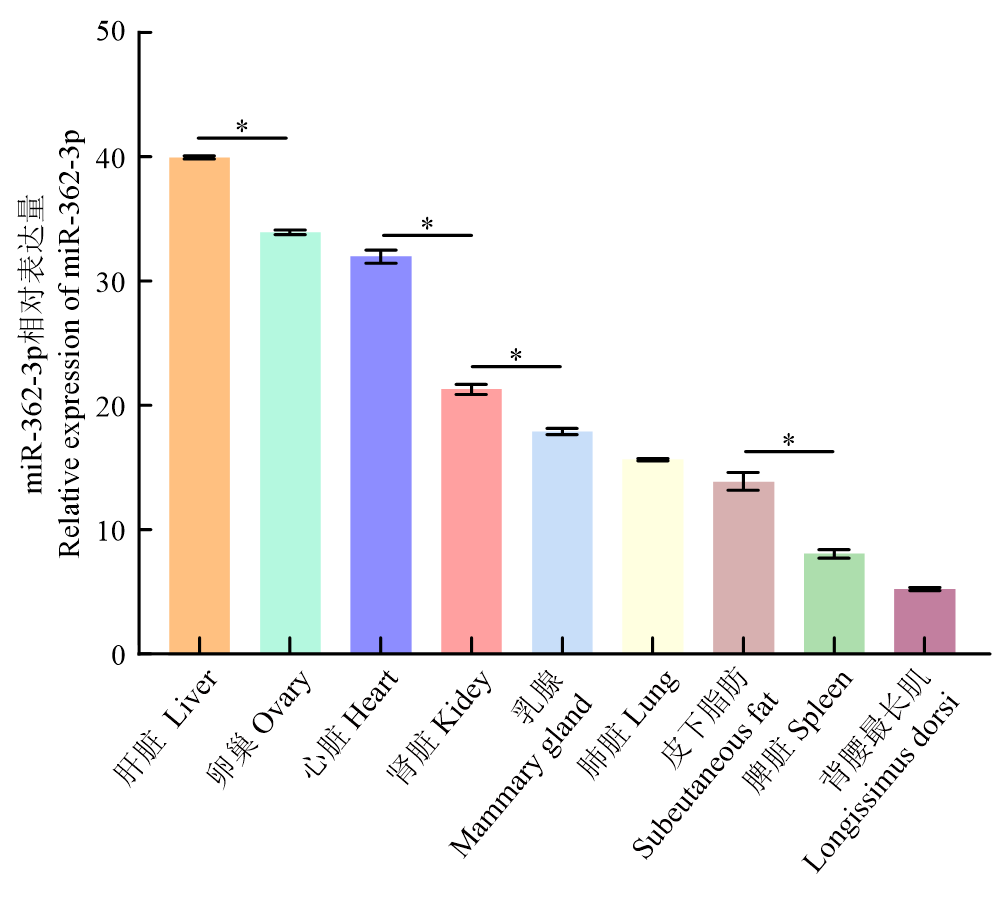
【Background】The proliferation of granulosa cells (GCs) in mare follicles is a key developmental step in the formation of dominant follicles that meet ovulation criteria. MicroRNAs (miRNAs) are considered key regulatory factors that can modulate GC function by affecting downstream gene expression. In a previous study, our team found that the expression of miR-362-3p varied significantly during different estrous cycles in follicles of Mongolian mare, but the regulatory mechanism of miR-362-3p in ovarian development remained unclear.【Objective】The aim of this study was to investigate whether miR-362-3p regulates the proliferation of mare ovarian follicle GCs and steroid hormone synthesis through BMPR2, so as to improve the molecular regulatory network of mare follicle development.【Method】9 tissue samples from Mongolian mare were collected, including heart, liver, spleen, lung, kidney, longissimus dorsi muscle, subcutaneous fat, mammary gland, and ovary. Reverse transcription-quantitative PCR (RT-qPCR) was used to construct a multi-tissue expression profile of miR-362-3p in mare. The effects of miR-362-3p on the proliferation of mare ovarian follicle GCs and steroid hormone synthesis were investigated by using RT-qPCR, Western blot, CCK-8, EdU, and ELISA. The target genes of miR-362-3p were predicted by using TargetScan, miRDB, miRWalk, and ENCORI databases, and combined with our team's previous transcriptome sequencing data to determine the target gene BMPR2. RT-qPCR and Western blot were employed to investigate the effects of overexpression and interference of miR-362-3p on BMPR2 mRNA and protein expression. The wild-type and mutant vectors of BMPR2 were constructed, and a dual luciferase reporter assay was used to verify the targeting relationship between miR-362-3p and BMPR2. 【Result】Compared with tissues such as spleen and muscle, miR-362-3p had the highest expression levels in the liver and ovary tissues of mares. Compared with the control group, after overexpression of miR-362-3p, the expression levels of proliferation marker gene mRNA and protein were significantly lower, cell viability was significantly decreased, and the number of newborn cells was significantly reduced. The results were opposite after interference with miR-362-3p. Importantly, miR-362-3p could significantly influence the expression of steroid hormone synthesis-related genes mRNA, thereby inhibiting the secretion of E2 and promoting the secretion of P4. Bioinformatics prediction results showed that there was a binding site between miR-362-3p and the 3′-UTR region of BMPR2. During cell proliferation, overexpression of miR-362-3p significantly downregulated the mRNA and protein expression levels of BMPR2, while interference with miR-362-3p produced opposite results. The dual luciferase reporter assay confirmed the binding site between miR-362-3p and BMPR2. 【Conclusion】miR-362-3p could inhibit the proliferation of mares ovarian follicle GCs by targeting BMPR2 to reduce its expression level and influence P4 and E2 synthesis, thereby regulating the growth and development of horse follicles. This study provided a theoretical basis for further understanding the molecular regulatory mechanisms of mare follicle development.

Key words: Mongolian mare, granulosa cells, miR-362-3p, BMPR2, proliferation, steroid hormones

Table 1

Primers used in RT-qPCR"

基因 Gene 引物序列Primer sequence(5′→3′)
BMPR2 F: GCAAGCACAAGCTCGAATCC
R: GAGTGAGGCCAGTGGTGTTT
Cyclin D1 F: GATGCCAACCTCCTCAACGA
R: GGAAGCGGTCCAGGTAGTTC
Cyclin B F: CGATACTCCGTCTCCAAGCC
R: AGCCAGTCAATCAGGATGGC
PCNA F: ATCAGCTCAAGTGGCGTGAA
R: TGCCAAGGTGTCCGCATTAT
CDK4 F: AAGTGGTGGGACAGTCAAGC
R: ACCACCACAGGTGTAAGTGC
CYP11A1 F: AGCTGGCATCTCCACAAAGA
R: TAAGCCAGCCATTGTCACCA
CYP19A1 F: AGCATGGTGTCCGAAGTTGT
R: GCTGGGACCTGGTATTGAGG
StAR F: CCCGAGACTTTGTGAGCGTA
R: CGCTCTGATGACACCCTTCT
3β-HSD F: TGCCACAATCTGACCGCATC
R: CTCCACCAACAGGCAGATGA
GAPDH F: GGACTCATGACCACGGTCCAT
R: TCAGATCCACAACCGACACGT
U6 F: CTCGCTTCGGCAGCACA
R: AACGCTTCACGAATTTGCGT

Fig. 1

Tissue expression profile of miR-362-3p"

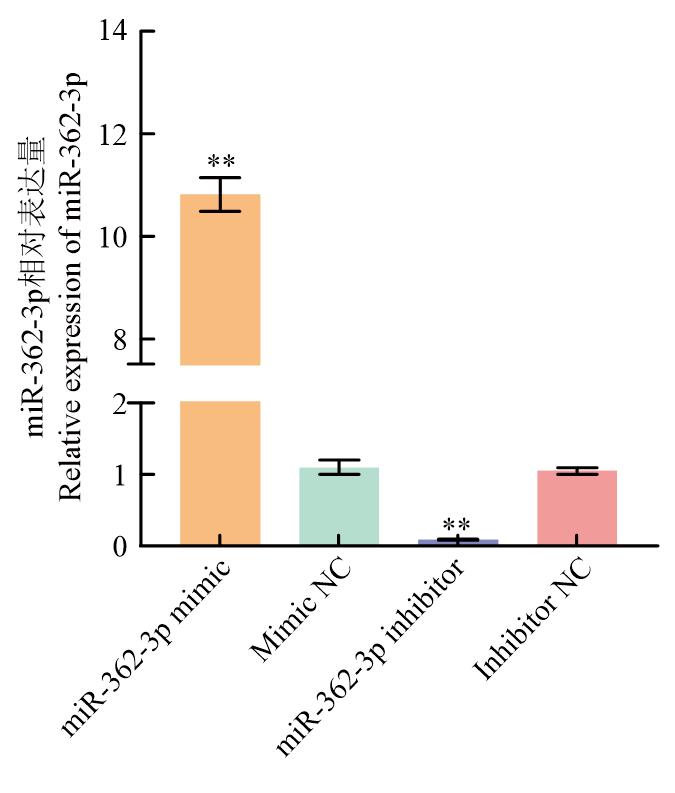
Fig. 2

The relative expression of miR-362-3p in mare follicular GCs"

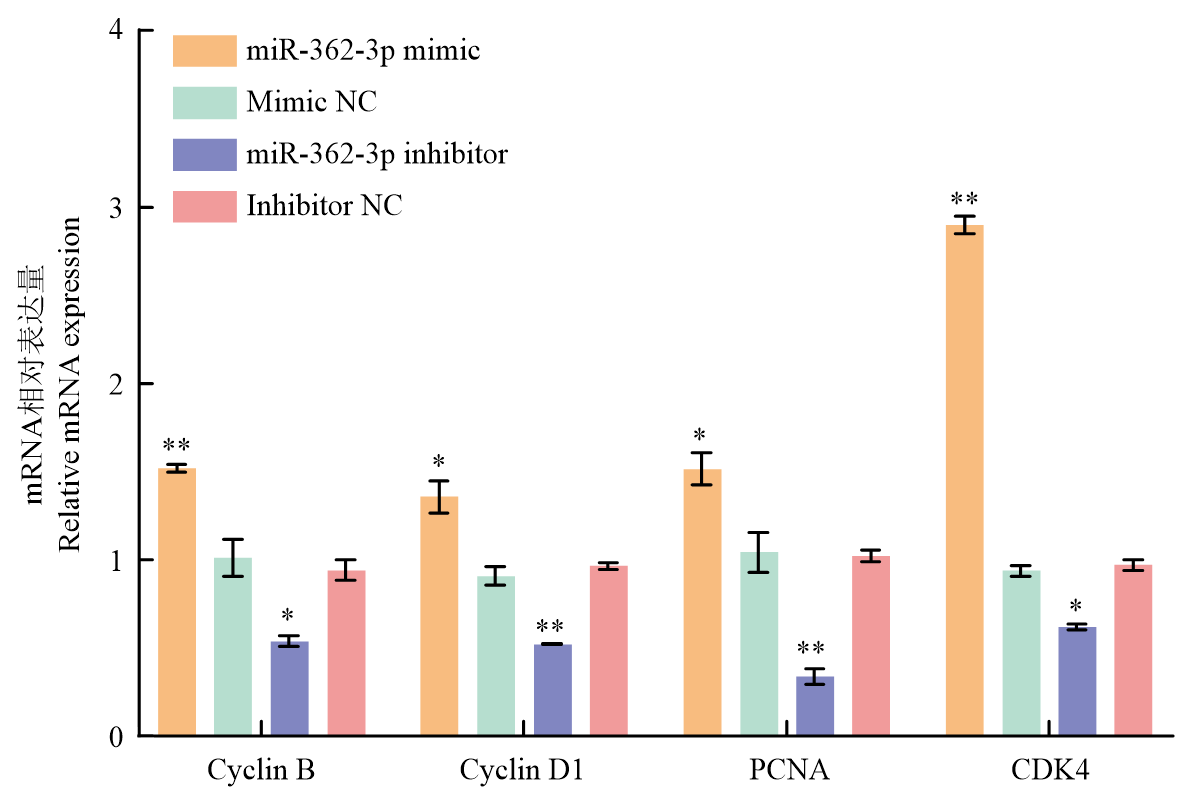
Fig. 3

The effect of miR-362-3p on relative mRNA expression of proliferation marker genes in mare follicular GCs"

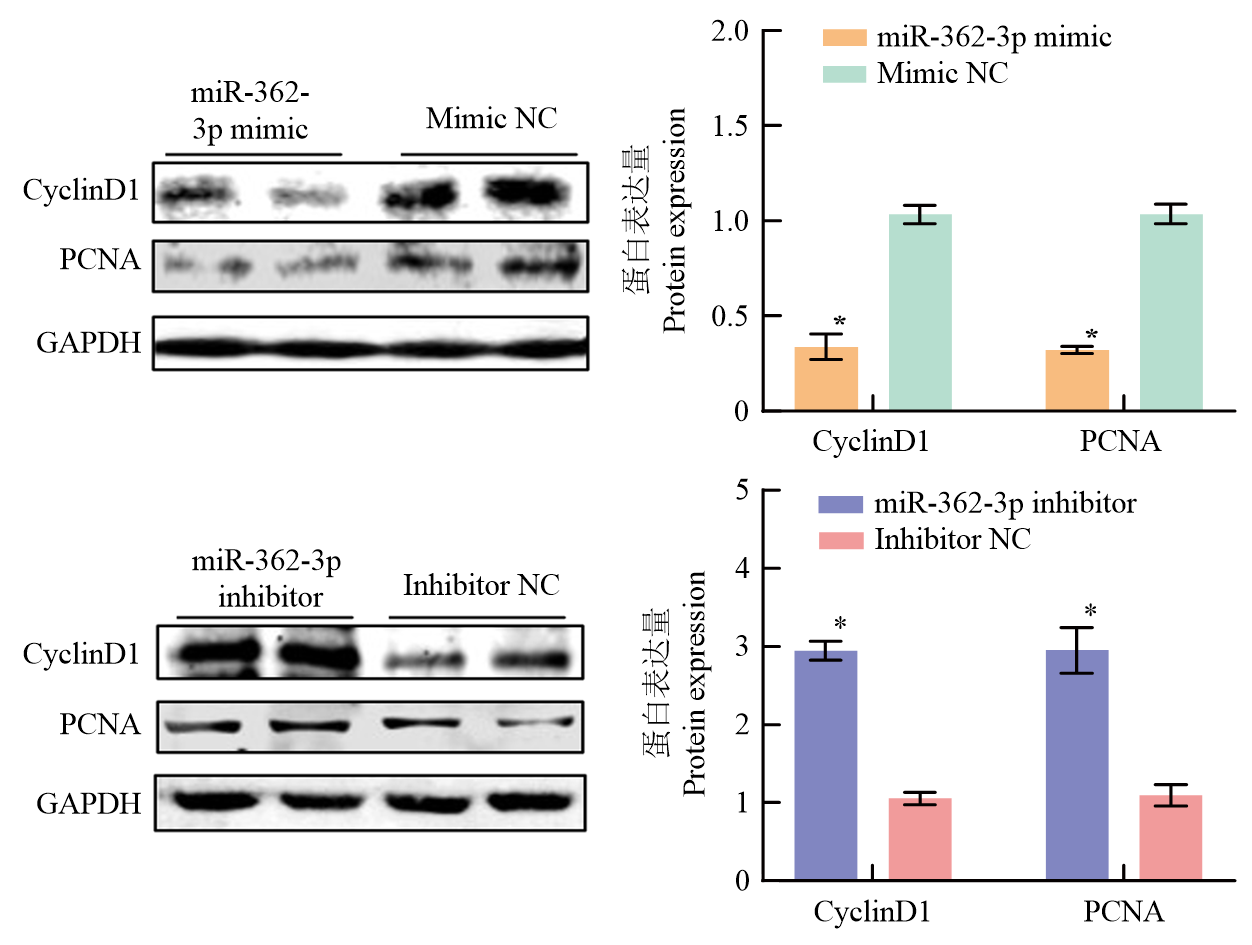
Fig. 4

The effect of miR-362-3p on protein expression of proliferation marker genes in mare follicular GCs"

Fig. 5

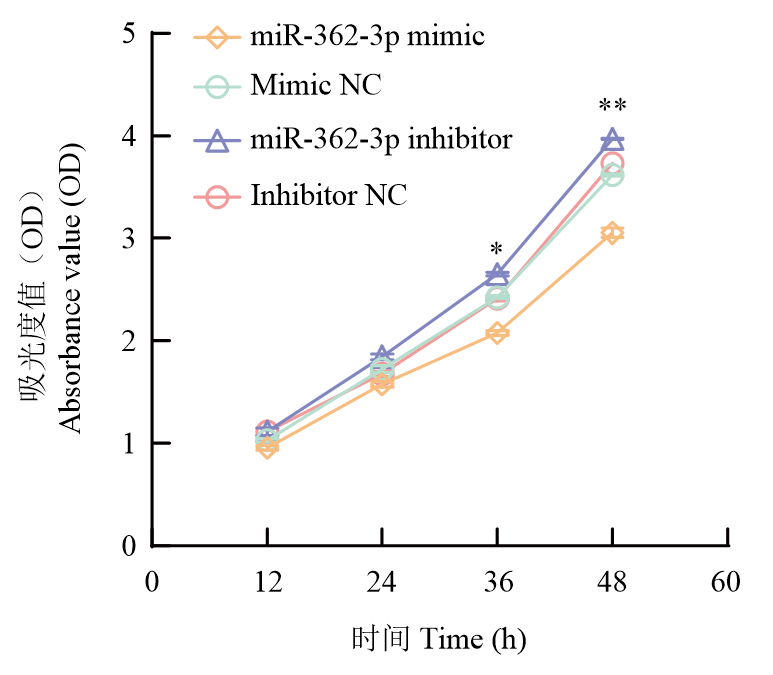
The effect of miR-362-3p on the viability of mare GCs"

Fig. 6

The effect of miR-362-3p on newborn cells of mare GCs A: The proliferation of cells analyzed using Edu assay when miR-362-3p mimic, mimic NC, miR-362-3p inhibitor and inhibitor NC were transfected into mare follicular GCs for 48 h; B: Proportion of EdU-positive cells. DAPI: Nuclear staining; EdU: Labeled newborn cells; Merge: Merging results"

Fig. 7

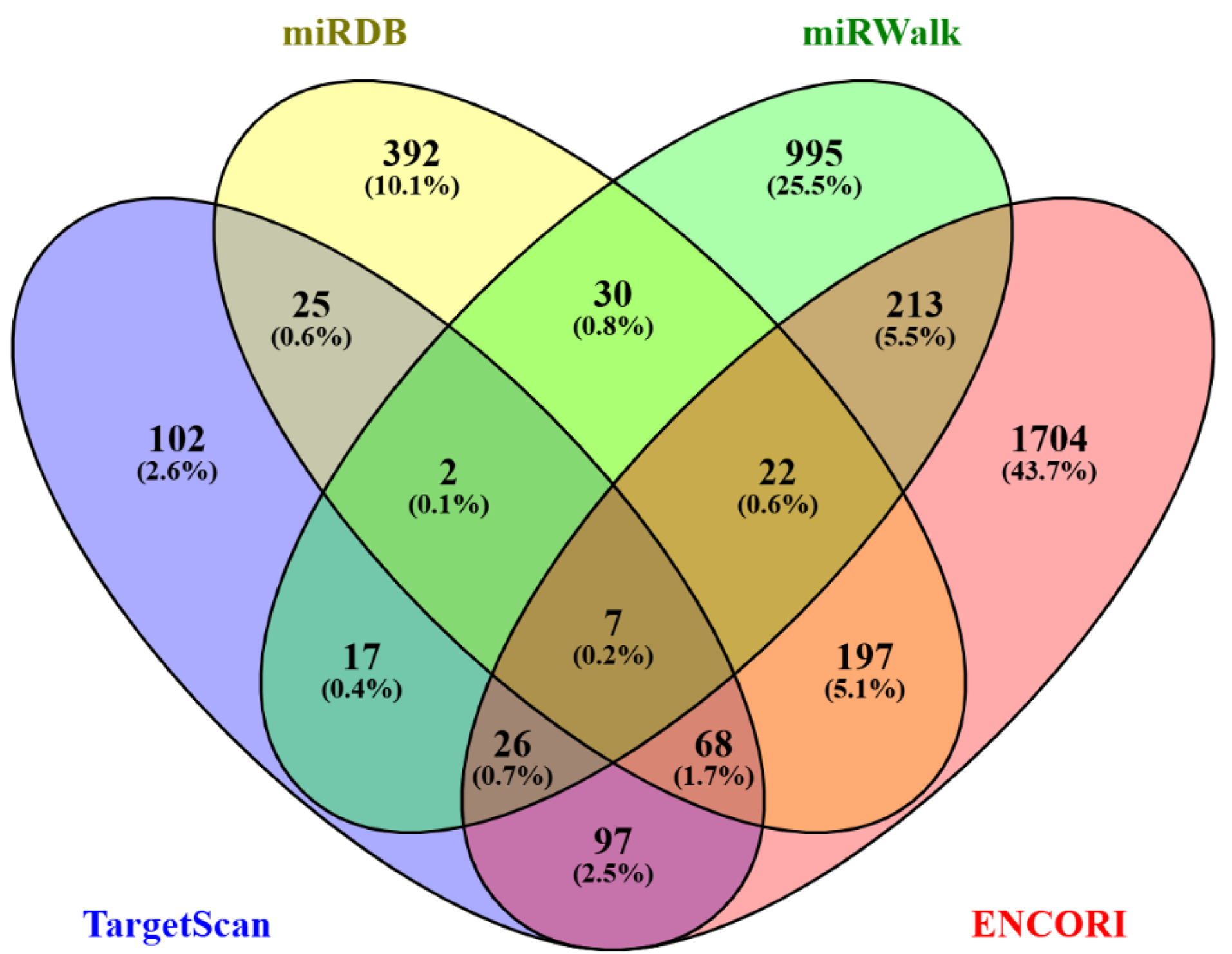
The target genes of miR-362-3p predicted by TargetScan, miRDB, miRWalk and ENCORI"

Fig. 8

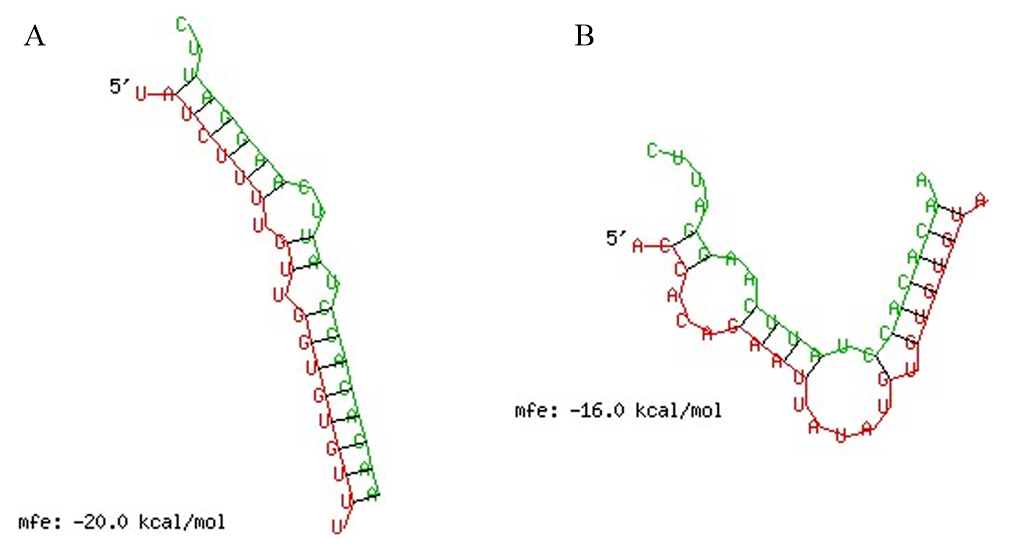
Binding sites between miR-362-3p and BMPR2 mRNA 3′-UTR A: The predicted binding results of miR-362-3p with the 6912th to 6918th bases of the 3′-UTR region of BMPR2; B: The predicted binding results of miR-362-3p with the 264th to 269th bases of the 3′-UTR region of BMPR2"

Fig. 9

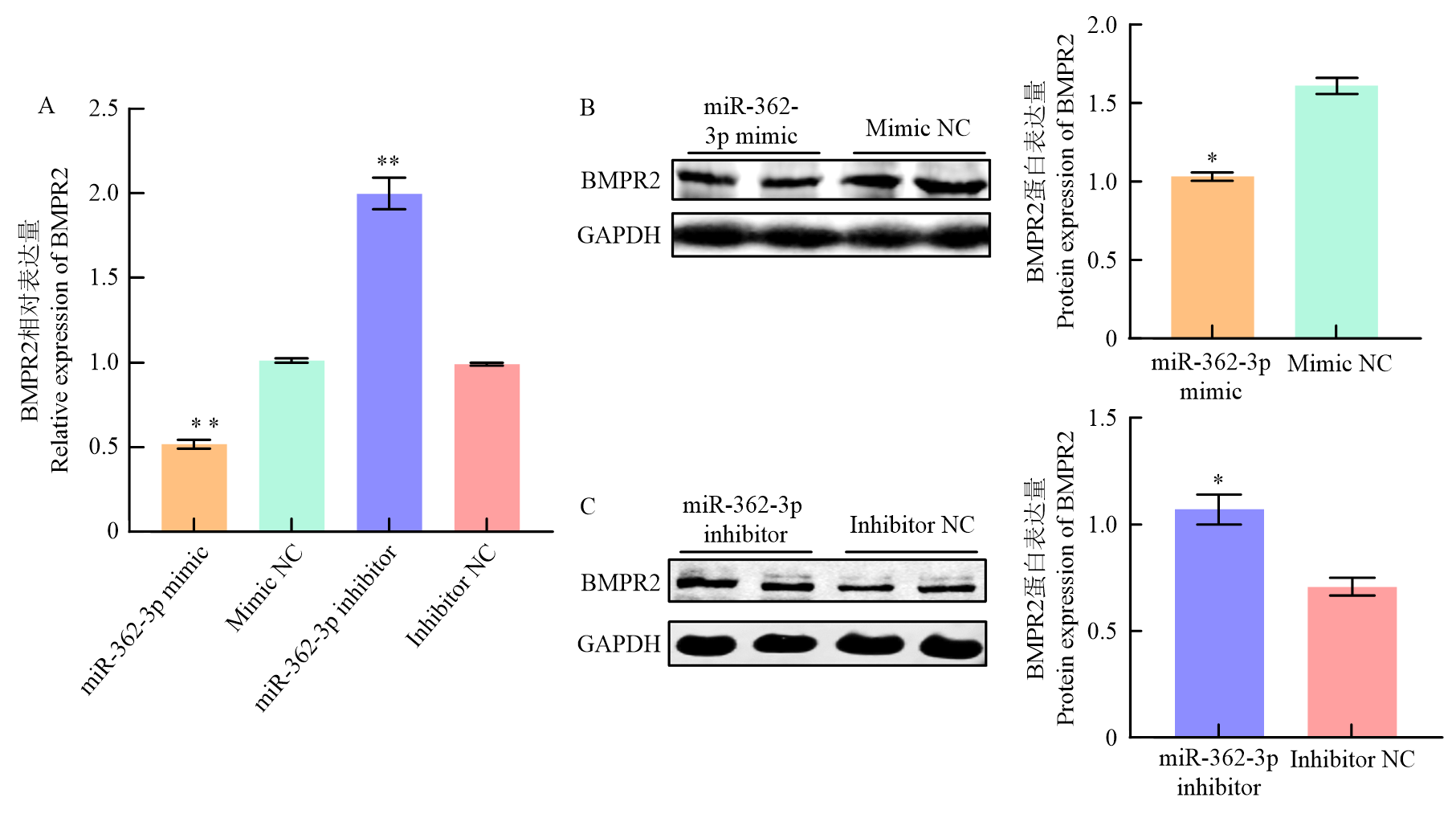
The effect of miR-362-3p on BMPR2 expression A: Relative mRNA expression of BMPR2 after 48h of transfection of miR-362-3p mimic, mimic NC, miR-362-3p inhibitor and inhibitor NC into horse follicle GCs; B and C: Relative protein expression of BMPR2 after 48h of transfection of miR-362-3p mimic and mimic NC, miR-362-3p inhibitor and inhibitor NC into horse follicle GCs"

Fig. 10

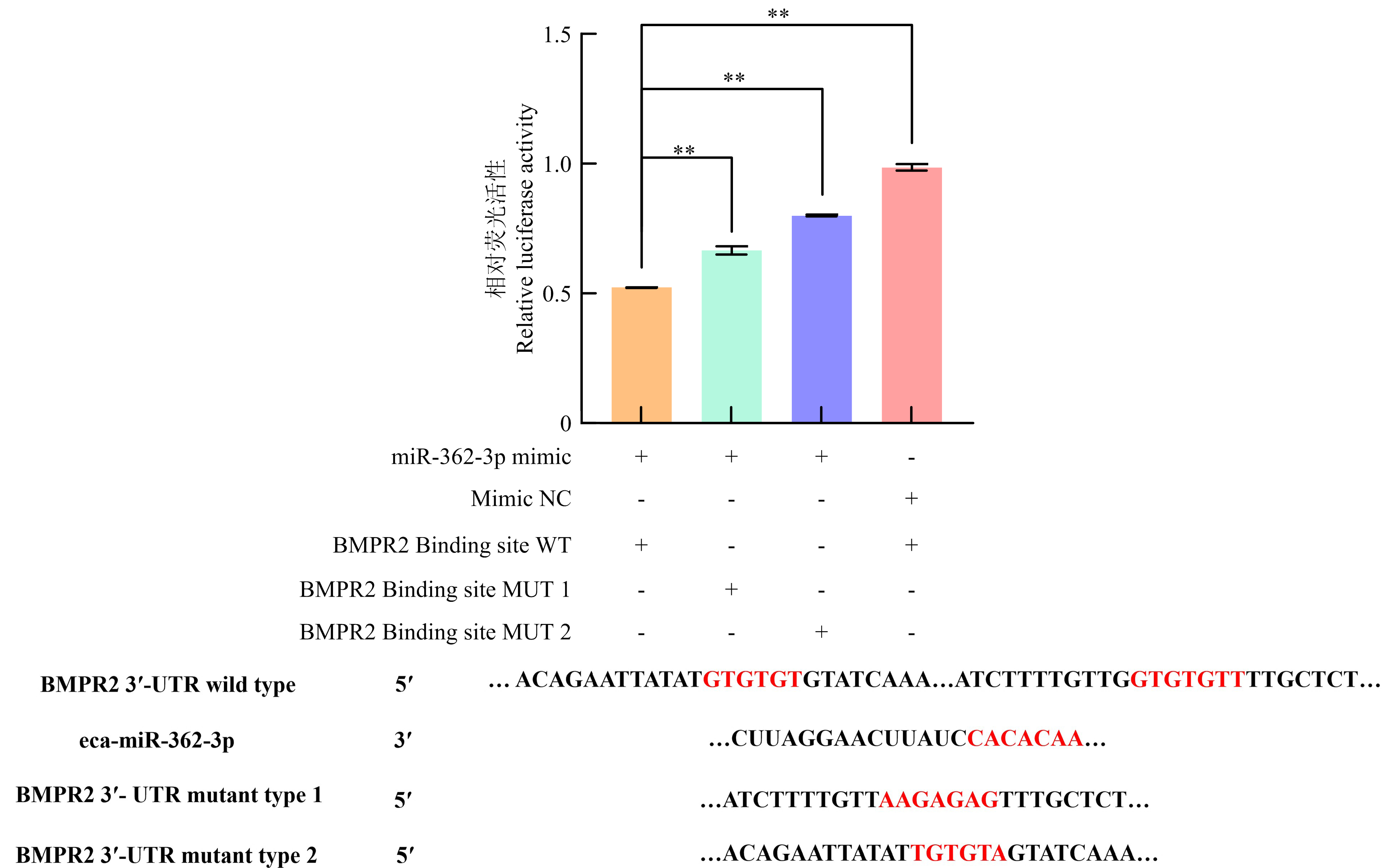
Results of dual luciferase reporter assay"

Fig. 11

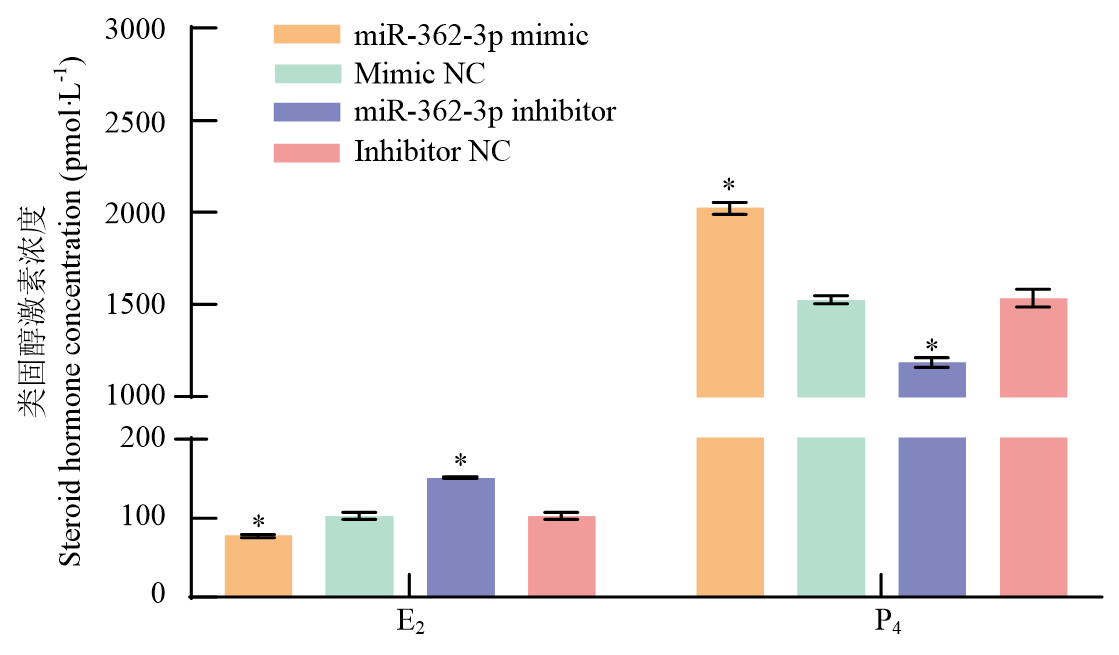
Effect of miR-362-3p on steroid hormone secretion of mare GCs"

Fig. 12

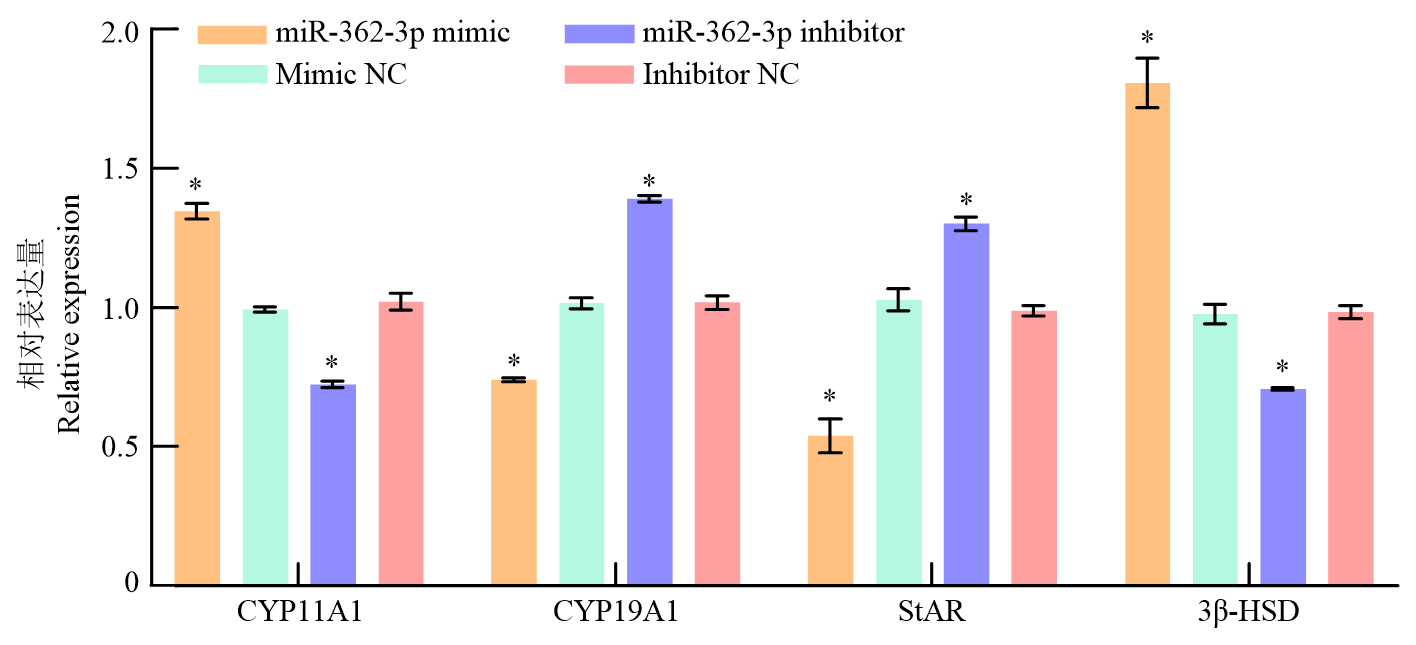
Effect of miR-362-3p on steroid hormone synthesis marker genes in mare GCs"

[1]
GINTHER O J, BEG M A, GASTAL M O, GASTAL E L. Follicle dynamics and selection in mares. Animal Reproduction, 2018, 1(1): 45-63.
[2]
HUGHES F M Jr, GOROSPE W C. Biochemical identification of apoptosis (programmed cell death) in granulosa cells: Evidence for a potential mechanism underlying follicular atresia. Endocrinology, 1991, 129(5): 2415-2422.

doi: 10.1210/endo-129-5-2415 pmid: 1935775
[3]
AERTS J, BOLS P. Ovarian follicular dynamics: A review with emphasis on the bovine species. part I: folliculogenesis and pre-antral follicle development. Reproduction in Domestic Animals, 2010, 45(1): 171-179.

doi: 10.1111/j.1439-0531.2008.01302.x pmid: 19210660
[4]
LU C L, YANG W, HU Z Y, LIU Y X. Granulosa cell proliferation differentiation and its role in follicular development. Chinese Science Bulletin, 2005, 50(23): 2665-2671.

doi: 10.1007/BF02899632
[5]
YAO G D, YIN M M, LIAN J, TIAN H, LIU L, LI X, SUN F. microRNA-224 is involved in transforming growth factor-beta- mediated mouse granulosa cell proliferation and granulosa cell function by targeting Smad4. Molecular Endocrinology, 2010, 24(3): 540-551.

doi: 10.1210/me.2009-0432
[6]
YIN M M, M R, YAO G D, TIAN H, LIAN J, LIU L, LIANG M, WANG Y, SUN F. Transactivation of microRNA-383 by steroidogenic factor-1 promotes estradiol release from mouse ovarian granulosa cells by targeting RBMS1. Molecular Endocrinology, 2012, 26(7): 1129-1143.

doi: 10.1210/me.2011-1341 pmid: 22593182
[7]
GEBREMEDHN S, GAD A, ISHAK G M, MENJIVAR N G, GASTAL M O, FEUGANG J M, PROCHAZKA R, TESFAYE D, GASTAL E L. Dynamics of extracellular vesicle-coupled microRNAs in equine follicular fluid associated with follicle selection and ovulation. Molecular Human Reproduction, 2023, 29(4): gaad009.
[8]
TESFAYE D, DA SILVEIRA J C, RAO VEERAMACHANENI D N, WINGER Q A, CARNEVALE E M, BOUMA G J. Cell-secreted vesicles in equine ovarian follicular fluid contain miRNAs and proteins: A possible new form of cell communication within the ovarian follicle. Biology of Reproduction, 2012, 86(3): 71.

doi: 10.1095/biolreprod.111.093252 pmid: 22116803
[9]
REN W L, WANG J W, ZENG Y Q, WANG T L, MENG J, YAO X K. Differential age-related transcriptomic analysis of ovarian granulosa cells in Kazakh horses. Frontiers in Endocrinology, 2024, 15: 1346260.

doi: 10.3389/fendo.2024.1346260
[10]
REGAN S L P, KNIGHT P G, YOVICH J L, LEUNG Y, ARFUSO F, DHARMARAJAN A. Involvement of bone morphogenetic proteins (BMP) in the regulation of ovarian function. Vitamins and Hormones, 2018, 107: 227-261.

doi: S0083-6729(18)30015-3 pmid: 29544632
[11]
任万路. 不同年龄哈萨克马卵泡颗粒细胞全转录组测序分析及细胞验证[D]. 乌鲁木齐: 新疆农业大学, 2024.
REN W L. Complete transcriptome sequencing and cell verification of follicular granulosa cells of different ages of Kazakh horses[D]. Urumqi: Xinjiang Agricultural University, 2024. (in Chinese)
[12]
ONAGBESAN O M, BRUGGEMAN V, VAN AS P, TONA K, WILLIAMS J, DECUYPERE E. BMPs and BMPRs in chicken ovary and effects of BMP-4 and-7 on granulosa cell proliferation and progesterone production in vitro. American Journal of Physiology Endocrinology and Metabolism, 2003, 285(5): E973-E983.
[13]
LIU C, YUAN B, CHEN H Y, XU M Q, SUN X L, XU J J, GAO Y, CHEN C Z, JIANG H, ZHANG J B. Effects of miR-375-BMPR2 as a key factor downstream of BMP15/GDF9 on the Smad1/5/8 and Smad2/3 signaling pathways. Cellular Physiology and Biochemistry, 2018, 46(1): 213-225.

doi: 10.1159/000488424 pmid: 29587293
[14]
TU J J, YANG Y Z, HOI-HUNG A C, CHEN Z J, WAI-YEE C. Conserved miR-10 family represses proliferation and induces apoptosis in ovarian granulosa cells. Scientific Reports, 2017, 7: 41304.

doi: 10.1038/srep41304 pmid: 28112253
[15]
YUAN X L, DENG X, ZHOU X F, ZHANG A L, XING Y, ZHANG Z, ZHANG H, LI J Q. miR-126-3p promotes the cell proliferation and inhibits the cell apoptosis by targeting TSC1 in the porcine granulosa cells. In Vitro Cellular & Developmental Biology Animal, 2018, 54(10): 715-724.

doi: 10.1007/s11626-018-0292-0
[16]
ZHANG B B, LI X N, LI M X, SUN Y Y, SHI Y X, MA T H. miR-140-3p promotes follicle granulosa cell proliferation and steroid hormone synthesis via targeting AMH in chickens. Theriogenology, 2023, 202: 84-92.

doi: 10.1016/j.theriogenology.2023.03.010
[17]
赵越, 孙媛媛, 佟雪, 岳鹏杰, 富伟能. miR-362-3p在喉癌组织中的表达及其对喉癌Hep-2细胞迁移的影响. 中国医科大学学报, 2019, 48(3): 236-239.
ZHAO Y, SUN Y Y, TONG X, YUE P J, FU W N. miR-362-3p expression in laryngeal cancer tissues and its effect on migration of hep-2 cells. Journal of China Medical University, 2019, 48(3): 236-239. (in Chinese)
[18]
王钰锟, 李碧筠, 张义语, 丁文飞, 王磊, 唐雪, 宋帅飞, 姚慧, 黄德利, 徐德军, 赵中权. miRNA-148a-3p对山羊卵巢颗粒细胞功能的影响. 中国兽医学报, 2023, 43(5): 1035-1043.
WANG Y K, LI B Y, ZHANG Y Y, DING W F, WANG L, TANG X, SONG S F, YAO H, HUANG D L, XU D J, ZHAO Z Q. Effects of miRNA-148a-3p on ovarian granulosa cell function in goats. Chinese Journal of Veterinary Science, 2023, 43(5): 1035-1043. (in Chinese)
[19]
马晓燕, 郭翔宇, 贾凯琪, 成颖, 吕丽华. bta-miR-1343-3p靶向NEDD8调控牛卵泡颗粒细胞增殖与凋亡机制初探. 山西农业科学, 2023, 51(2): 198-205.
MA X Y, GUO X Y, JIA K Q, CHENG Y, L H. Preliminary study on mechanism of bta-miR-1343-3p targeting NEDD8Regulating cell proliferation and apoptosis of bovine granulosa cells. Journal of Shanxi Agricultural Sciences, 2023, 51(2): 198-205. (in Chinese)
[20]
XIE B W, WANG S Y, JIANG N, LI J J. Cyclin B1/CDK1-regulated mitochondrial bioenergetics in cell cycle progression and tumor resistance. Cancer Letters, 2019, 443: 56-66.

doi: S0304-3835(18)30685-2 pmid: 30481564
[21]
STACEY D W. Cyclin D 1 serves as a cell cycle regulatory switch in actively proliferating cells. Current Opinion in Cell Biology, 2003, 15(2): 158-163.

doi: 10.1016/S0955-0674(03)00008-5
[22]
MOLDOVAN G L, PFANDER B, JENTSCH S. PCNA, the maestro of the replication fork. Cell, 2007, 129(4): 665-679.

doi: 10.1016/j.cell.2007.05.003
[23]
KOZAR K, SICINSKI P. Cell cycle progression without cyclin D-CDK4 and cyclin D-CDK6 complexes. Cell Cycle, 2005, 4(3): 388-391.

pmid: 15738651
[24]
SHI M J, MA X R, YANG Q, WANG W J, LI X N, SONG X L, LI Y X, XIE Y T, DANG Y. miR-362-3p targets orosomucoid 1 to promote cell proliferation, restrain cell apoptosis and thereby mitigate hypoxia/reoxygenation-induced cardiomyocytes injury. Cardiovascular Toxicology, 2021, 21(5): 387-398.

doi: 10.1007/s12012-020-09631-0 pmid: 33459949
[25]
ASSIRI A A, MOURAD N, SHAO M H, KIEL P, LIU W Q, SKAAR T C, OVERHOLSER B R. microRNA 362-3p reduces hERG-related current and inhibits breast cancer cells proliferation. Cancer Genomics & Proteomics, 2019, 16(6): 433-442.
[26]
WANG D, WANG H Y, LI Y C, LI Q. miR-362-3p functions as a tumor suppressor through targeting MCM5 in cervical adenocarcinoma. Bioscience Reports, 2018, 38(3): BSR20180668.
[27]
CHEN A Q, YU S D, WANG Z G, XU Z R, YANG Z G. Stage-specific expression of bone morphogenetic protein type I and type II receptor genes: Effects of follicle-stimulating hormone on ovine antral follicles. Animal Reproduction Science, 2009, 111(2/3/4): 391-399.

doi: 10.1016/j.anireprosci.2008.03.011
[28]
JAYAWARDANA B C, SHIMIZU T, NISHIMOTO H, KANEKO E, TETSUKA M, MIYAMOTO A. Hormonal regulation of expression of growth differentiation factor-9 receptor type I and II genes in the bovine ovarian follicle. Reproduction, 2006, 131(3): 545-553.

doi: 10.1530/rep.1.00885
[29]
MATSUDA F, INOUE N, MANABE N, OHKURA S. Follicular growth and atresia in mammalian ovaries: Regulation by survival and death of granulosa cells. The Journal of Reproduction and Development, 2012, 58(1): 44-50.

pmid: 22450284
[30]
邓艳, 解广娟, 胡深强, 李亮, 王继文. miR-148a-3p靶向PPARγ基因抑制鹅颗粒细胞孕酮的合成. 畜牧兽医学报, 2021, 52(6): 1571-1581.

doi: 10.11843/j.issn.0366-6964.2021.06.012
DENG Y, XIE G J, HU S Q, LI L, WANG J W. miR-148a-3p inhibits the production of progesterone by targeting PPARγ in granulosa cells of goose. Acta Veterinaria et Zootechnica Sinica, 2021, 52(6): 1571-1581. (in Chinese)

doi: 10.11843/j.issn.0366-6964.2021.06.012
[31]
ZHANG Z, CHEN C Z, XU M Q, ZHANG L Q, LIU J B, GAO Y, JIANG H, YUAN B, ZHANG J B. miR-31 and miR-143 affect steroid hormone synthesis and inhibit cell apoptosis in bovine granulosa cells through FSHR. Theriogenology, 2019, 123: 45-53.

doi: S0093-691X(18)30310-8 pmid: 30278258
[1] GERIQIMUGE, PUBUZHANDUI, XU Qing, HOU LingLing. Effects of Hypoxia on Proliferation of Bovine Renal Cells and Mitochondrial Autophagy [J]. Scientia Agricultura Sinica, 2026, 59(6): 1333-1347.
[2] CHEN YaRu, WANG Lei, FU Ming, HUANG Tao, ZHANG Hao, LIANG ZhenHua, PI JinSong, WU Yan. Molecular Mechanism of USP18 Facilitating Ferroptosis by Suppressing GPX4 Ubiquitination and Degradation in Duck Granulosa Cells [J]. Scientia Agricultura Sinica, 2026, 59(5): 1128-1140.
[3] WANG Niu, SHI XinRan, ZHANG WeiDong, WANG Xin. Effect of FGF5 and FGF21 on Proliferation of Dermal Papilla Cells in Cashmere Goat [J]. Scientia Agricultura Sinica, 2025, 58(4): 819-830.
[4] XU YuanYuan, HUANG LiQing, LU XingRong, FENG Chao, SHANG JiangHua. Effects of β-mercaptoethanol on Rapamycin Induced Autophagy, Apoptosis and Steroid Hormone Synthesis in Buffalo Granulosa Cells [J]. Scientia Agricultura Sinica, 2025, 58(11): 2265-2274.
[5] ZHANG HuaPeng, ZHANG QingZe, HE Fan, QI MengFan, FU BinBin, LI QingChun, LI MengXun, MA LiPeng, LIU Yi, HUANG Tao. Cloning and Identification of Differentially Expressed lncRNAs in Follicles of Meishan Pigs and Duroc Pigs with Their Correlation Analysis with miRNAs [J]. Scientia Agricultura Sinica, 2024, 57(9): 1807-1819.
[6] JIANG Chao, ZHANG JiuPan, SONG YaPing, SONG XiaoYu, WU Hao, WEI DaWei. Study on the Role of FoxO1 in Regulating the Proliferation, Apoptosis and Differentiation of Bovine Skeletal Muscle Cells [J]. Scientia Agricultura Sinica, 2024, 57(6): 1191-1203.
[7] MENG ZhaoYi, WANG YunLu, YAO YiLong, XI GuangYin, NIU JiaQiang, SOLANGSIZHU, GUO Min, XU YeFen. lncRNA-MSTRG.7889.1 Competitively Binds to bta-miR-146a Targeting Smad4 to Regulate Apoptosis of Yak Granulosa Cells [J]. Scientia Agricultura Sinica, 2024, 57(4): 797-809.
[8] LI KaiLi, WEI YunXiao, CHONG ZhiLi, MENG ZhiGang, WANG Yuan, LIANG ChengZhen, CHEN QuanJia, ZHANG Rui. Red and Blue Light Promotes Cotton Callus Induction and Proliferation [J]. Scientia Agricultura Sinica, 2024, 57(4): 638-649.
[9] ZHANG Peng, WANG MingXiu, JING KeMin, LI YuQian, TIAN Yuan, ZHONG JinCheng, CAI Xin. Cloning of PLZF Gene and Its Effects on the Proliferation of Undifferentiated Spermatogonia in Cattleyak [J]. Scientia Agricultura Sinica, 2024, 57(2): 390-402.
[10] WANG JinPeng, LUORENG ZhuoMa, LI YanXia, FENG Fen, WANG ZhengXing, PAN ChuanYing, LAN XianYong, WANG XingPing. The Function of lncRNA RRAS2-AS1 in LPS Induced Bovine Mammary Epithelial Cells Inflammation [J]. Scientia Agricultura Sinica, 2024, 57(14): 2874-2888.
[11] ZHU BingLin, YU JiaLi, CHEN JiaYue, TIAN Yuan, WAN Yuan, LIU ChenYang, WANG XiaoYu, WANG MiaoLi, CHENG Gong. Cloning, Expression Characterization, and Functional Analysis of the Snail1 in Qinchuan Cattle and Its Impact on Proliferation of Bovine Adipocytes [J]. Scientia Agricultura Sinica, 2024, 57(13): 2674-2686.
[12] GUO YunPeng, TAN HaoYun, GUO Hong, FU MengYun, LI Xin, HU DeBao, ZHANG LinLin, DING XiangBin, GUO YiWen. LNC721 Targeted Regulation MMP9 Affects Bovineskeletal Muscle Satellite Cell Proliferation and Differentiation [J]. Scientia Agricultura Sinica, 2023, 56(24): 4944-4955.
[13] WANG Peng, LIU ZiYi, LIU YuFang, CHU MingXing. miR-535 Targets the GAB2 Gene to Promote Goat Granulosa Cell Proliferation Through Activation of the PI3K/AKT Signaling Pathway [J]. Scientia Agricultura Sinica, 2023, 56(23): 4757-4771.
[14] LIU PeiPei, DING ShiJie, SONG WenJuan, TANG ChangBo, LI HuiXia, TANG Hong. NAC Affects Proliferation and Differentiation of Adipose-Derived Mesenchymal Stem Cells by Regulating Reactive Oxygen Species [J]. Scientia Agricultura Sinica, 2023, 56(21): 4330-4343.
[15] WEI Yao, ZHANG RuiMen, AN Qiang, WANG LeYi, ZHANG YongWang, ZOU ChaoXia, ZHANG ErKang, MO BiYun, SHI DeShun, YANG SuFang, DENG YanFei, WEI YingMing. CircCEP85L Regulates the Proliferation and Myogenic Differentiation of Bovine MuSCs [J]. Scientia Agricultura Sinica, 2023, 56(18): 3670-3681.
Viewed
Full text


Abstract

Cited

  Shared   
  Discussed   
No Suggested Reading articles found!