






中国农业科学 ›› 2026, Vol. 59 ›› Issue (21): 4802-4814.doi: 10.3864/j.issn.0578-1752.2026.21.007
成明鑫1( ), 陈稳产1(), 魏凯巍1, 张赛1, 左愉婕1, 苏前富2, 刘宁1, 曹志艳1(), 董金皋1()
收稿日期:2026-04-25
接受日期:2026-05-16
出版日期:2026-11-01
发布日期:2026-11-06
通信作者:
联系方式:
成明鑫,E-mail:xxqkxmail@163.com。陈稳产,E-mail:chenwenchan@hebau.edu.cn。成明鑫和陈稳产为同等贡献作者。
基金资助:
CHENG MingXin1(), CHEN WenChan1(), WEI KaiWei1, ZHANG Sai1, ZUO YuJie1, SU QianFu2, LIU Ning1, CAO ZhiYan1(), DONG JinGao1()
Received:2026-04-25
Accepted:2026-05-16
Published:2026-11-01
Online:2026-11-06
摘要:
【目的】明确我国玉米主产区籽粒中的病原组成、区域分布特征及其年度演替规律,系统分析玉米籽粒中优势病原的产毒特性,为储藏期玉米毒素污染控制及质量安全保障提供科学依据与数据支撑。【方法】2022—2025年连续4年在我国14个省(自治区)41个地区采集玉米籽粒样品并进行病原分离纯化,采用形态学和分子生物学方法对污染菌进行鉴定,统计病原种类和分离频率,分析其分布特征及动态变化;测定拟轮枝镰孢(Fusarium verticillioides)和禾谷镰孢(Fusarium graminearum)产毒能力,分析比较不同玉米产区拟轮枝镰孢和禾谷镰孢的产毒能力差异。【结果】共分离得到真菌5 885株,主要包括镰孢菌、青霉、黑曲霉(Aspergillus niger)、木霉、黄曲霉(Aspergillus flavus)和其他真菌,分离频率分别为67.82%、17.72%、7.31%、2.97%、2.70%和1.48%,其中镰孢菌分离频率最高,拟轮枝镰孢为优势真菌,4年累计分离获得3 061株,分离频率为52.01%,其次为禾谷镰孢、层出镰孢(Fusarium proliferatum)、尖孢镰孢(Fusarium oxysporum),分离频率分别为11.03%、3.14%、1.58%,黄色镰孢(Fusarium culmorum)仅在2022年检出3株。霉菌中青霉、黑曲霉为主要污染菌,分离频率分别为17.72%和7.31%。对分离获得的拟轮枝镰孢和禾谷镰孢进行产毒能力测定,结果显示,拟轮枝镰孢伏马毒素FB1产量范围在0.07—4 916.92 μg·g-1,FB2产量范围在0.02—5 573.14 μg·g-1,不同产区菌株产毒能力存在明显差异,黄淮海玉米产区菌株产毒能力较高,FB1和FB2最大值分别为4 916.92和5 573.14 μg·g-1;东北玉米产区次之,FB1和FB2最大值分别为2 070.29和468.51 μg·g-1;西北玉米产区整体产毒能力偏低、分布集中,高产毒菌株占比少,FB1和FB2最大值分别为20.91和30.76 μg·g-1;禾谷镰孢脱氧雪腐镰孢菌烯醇(呕吐毒素,DON)产量介于1.24—3.43 μg·g-1,东北、西北、黄淮海三大产区产毒区间分布相近,仅小幅变化,无显著地域性差异。【结论】拟轮枝镰孢是我国玉米籽粒的主要污染菌,区域间和年度间种群存在差异;不同产区间拟轮枝镰孢产伏马毒素能力存在差异,黄淮海与东北产区存在强产毒菌株。
成明鑫, 陈稳产, 魏凯巍, 张赛, 左愉婕, 苏前富, 刘宁, 曹志艳, 董金皋. 我国玉米籽粒的菌群构成及优势镰孢菌产毒能力分析[J]. 中国农业科学, 2026, 59(21): 4802-4814.
CHENG MingXin, CHEN WenChan, WEI KaiWei, ZHANG Sai, ZUO YuJie, SU QianFu, LIU Ning, CAO ZhiYan, DONG JinGao. Analysis of the Fungal Community Composition in Maize Kernels and the Toxigenic Capacity of Dominant Fusarium Species in China[J]. Scientia Agricultura Sinica, 2026, 59(21): 4802-4814.
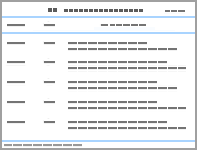
表1
镰孢菌鉴定特异性引物"
| 镰孢菌种Fusarium species | 引物名称Primer name | 序列Sequence (5′-3') |
|---|---|---|
| 禾谷镰孢F. graminearum | Fg16NF | ACAGATGACAAGATTCAGGCACA |
| Fg16NR | TTCTTTGACATCTGTTCAACCCA | |
| 尖孢镰孢F. oxysporum | FoF1 | ACATACCACTTGTTGCCTCG |
| FoR1 | CGCCAATCAATTTGAGGAACG | |
| 拟轮枝镰孢F. verticillioides | VER1 | CTTCCTGCGATGTTTCTCC |
| VER2 | AATTGGCCATTGGTATTATATATCTA | |
| 层出镰孢F. proliferatum | PRO1 | CTTTCCGCCAAGTTTCTTC |
| PRO2 | TGTCAGTAACTCGACGTTGTTG | |
| 亚黏团镰孢F. subglutinans | SUB1 | CTGTCGCTAACCTCTTTATCCA |
| SUB2 | CAGTATGGACGTTGGTATTATATCTAA | |
| 黄色镰孢F. culmorum | FcOlF | ATGGTGAACTCGTCCTGGC |
| FcOlR | CCCTTCTTACGCCAATCTCG |
表2
2022—2025年玉米籽粒中污染的真菌种类及数量"
| 真菌种类Fungi species | 2022 | 2023 | 2024 | 2025 | 总计Total |
|---|---|---|---|---|---|
| 拟轮枝镰孢F. verticillioides | 319 | 763 | 837 | 1142 | 3061 |
| 禾谷镰孢F. graminearum | 89 | 175 | 170 | 215 | 649 |
| 层出镰孢F. proliferatum | 52 | 69 | 51 | 13 | 185 |
| 尖孢镰孢F. oxysporum | 22 | 29 | 21 | 21 | 93 |
| 黄色镰孢F. culmorum | 3 | — | — | — | 3 |
| 青霉Penicillium | 113 | 134 | 573 | 223 | 1043 |
| 黑曲霉A. niger | 94 | 95 | 214 | 27 | 430 |
| 木霉Trichoderma | 38 | 35 | 97 | 5 | 175 |
| 黄曲霉A. flavus | — | — | 129 | 30 | 159 |
| 其他真菌Other fungi | — | — | 70 | 17 | 87 |
| 总计Total | 730 | 1300 | 2162 | 1693 | 5885 |
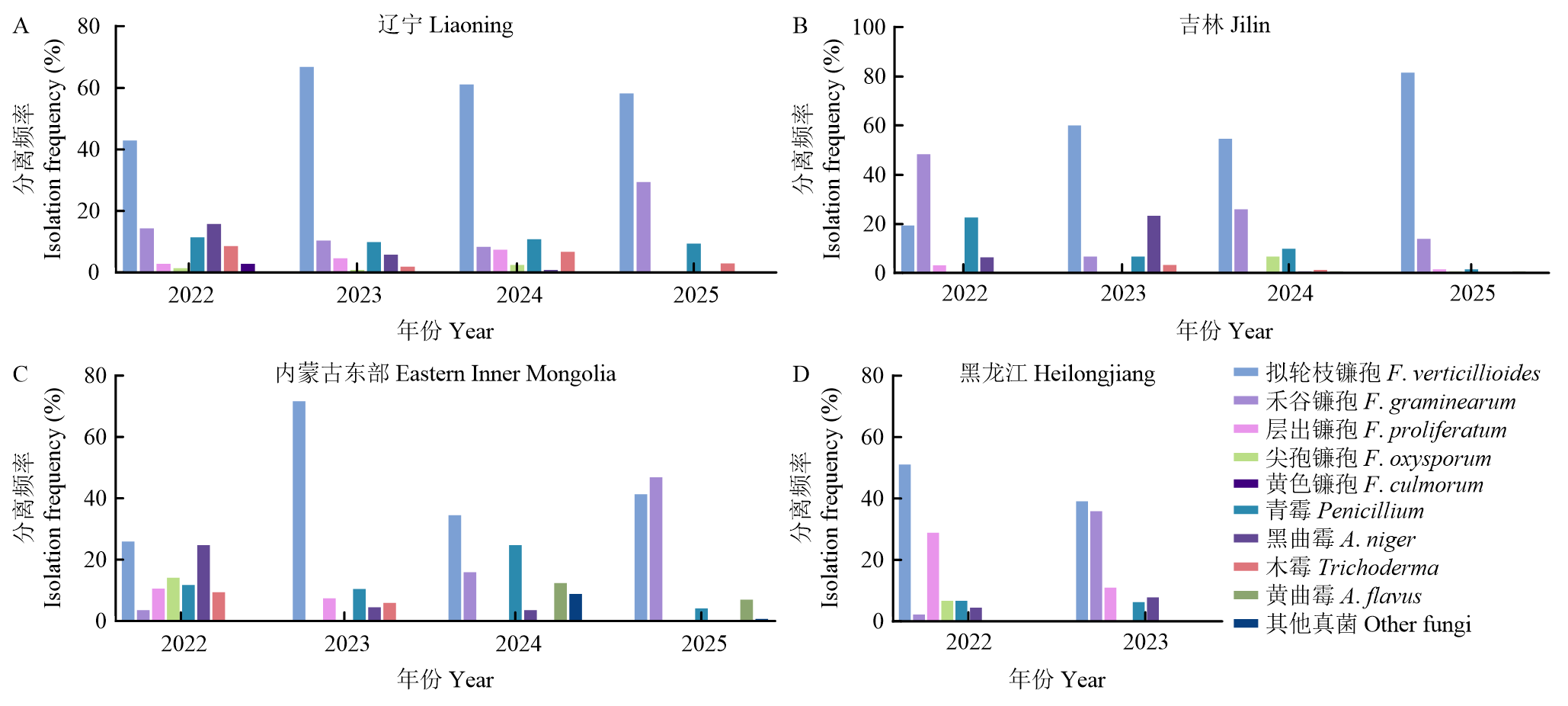
图1
东北玉米产区玉米籽粒污染菌分离频率"
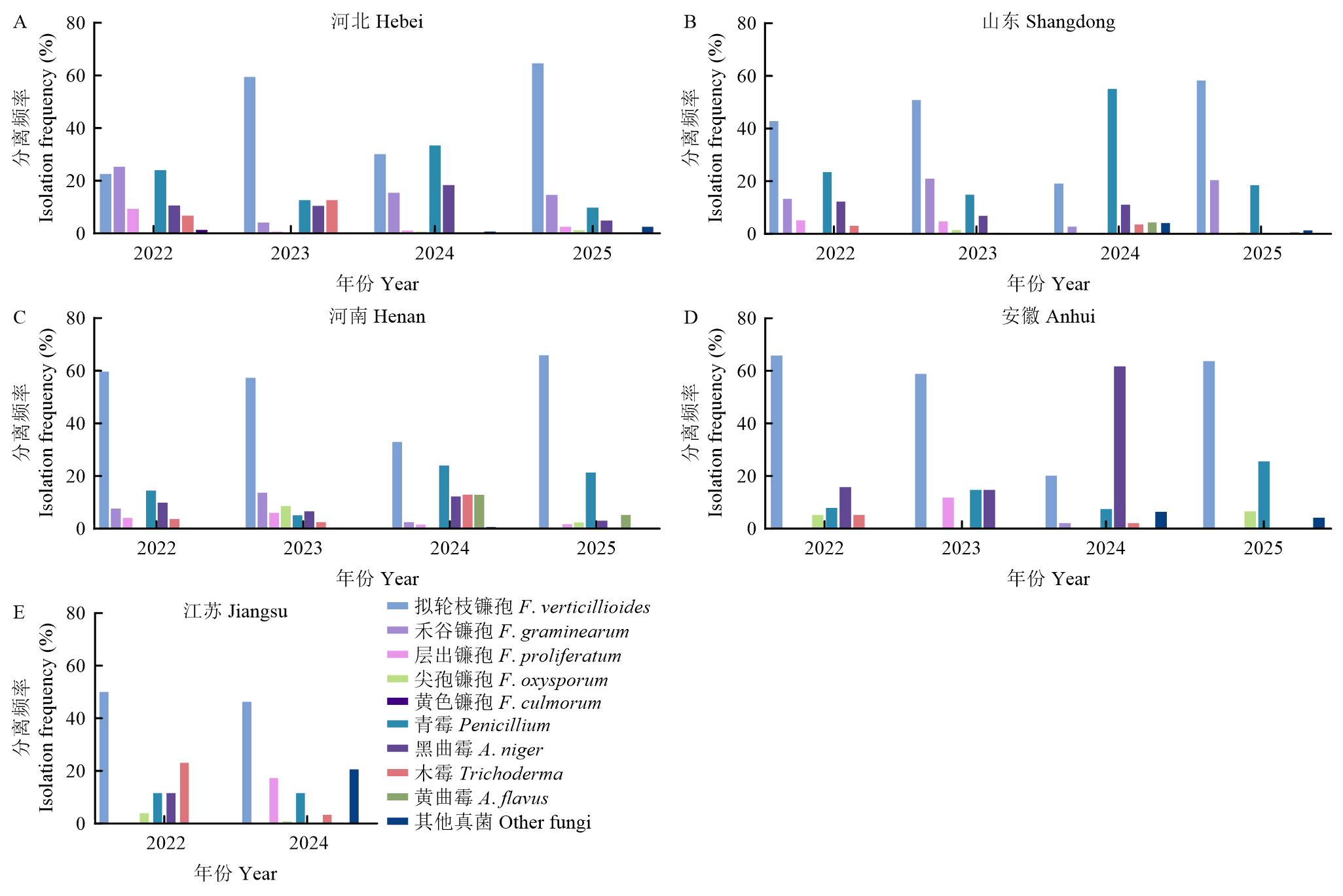
图2
黄淮海玉米产区玉米籽粒污染菌分离频率"
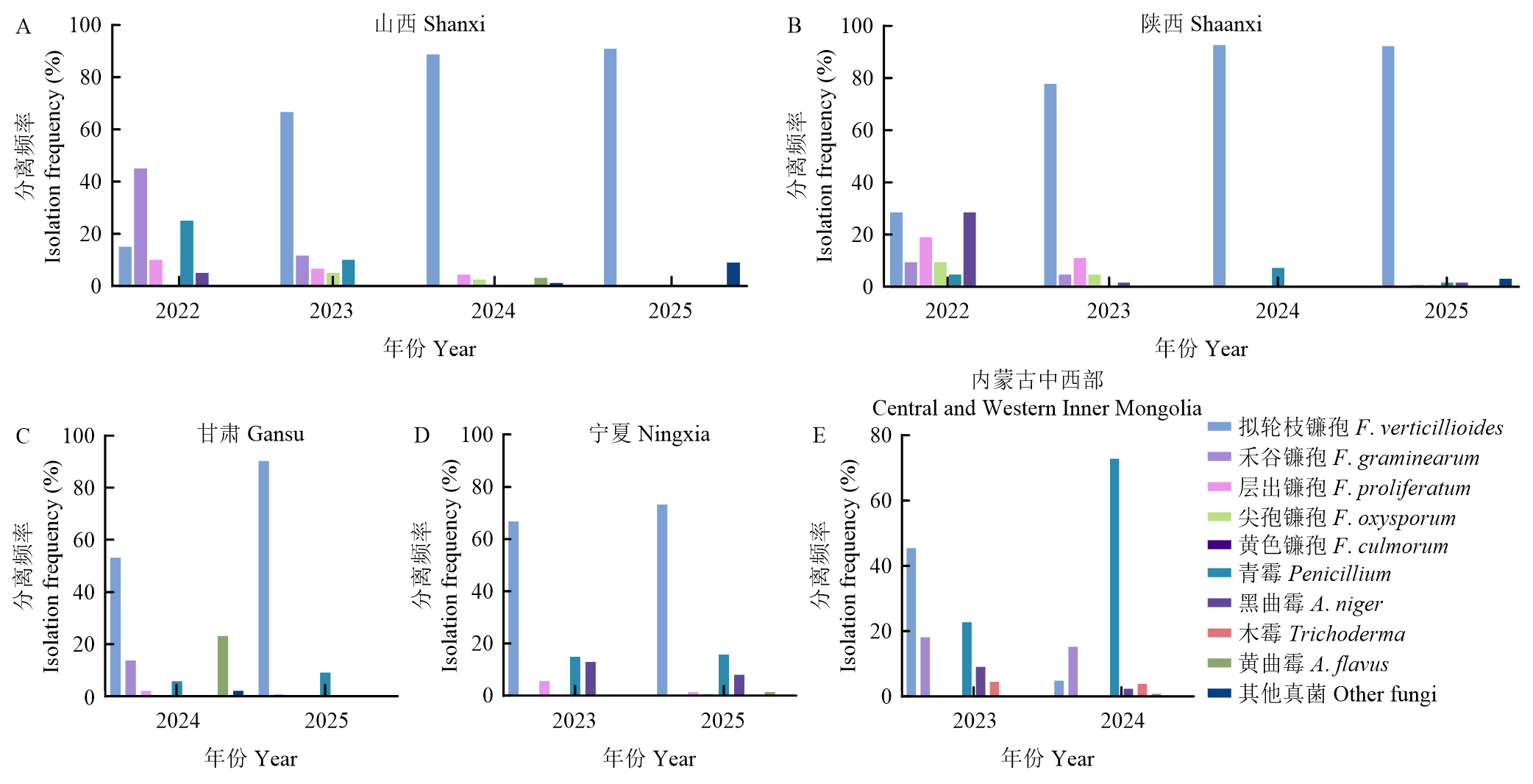
图3
西北玉米产区玉米籽粒污染菌分离频率"
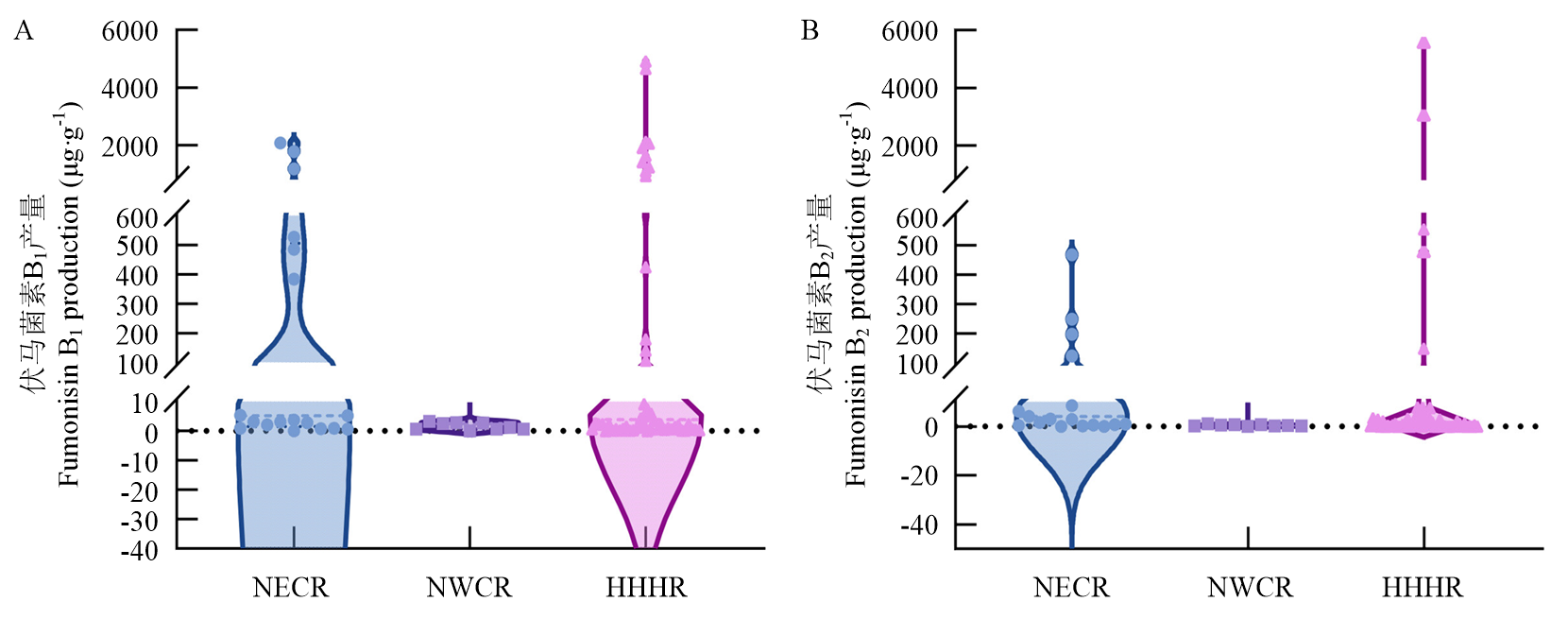
图4
不同玉米产区拟轮枝镰孢产伏马毒素能力 NECR:中国东北地区Northeast China region;NWCR:中国西北地区Northwest China region;HHHR:黄淮海地区Huang-Huai-Hai region。图5同"
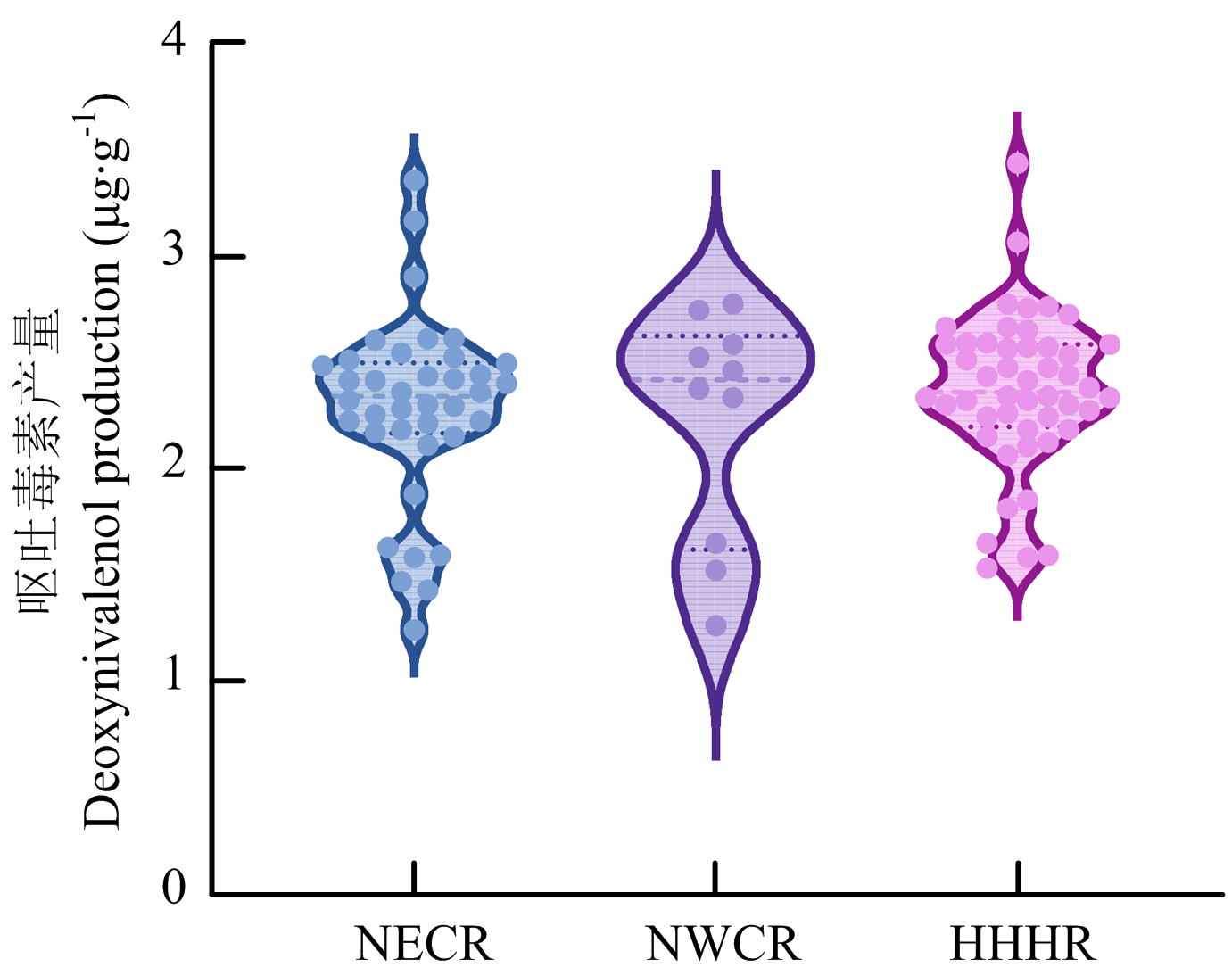
图5
不同玉米产区禾谷镰孢产呕吐毒素能力"
| [1] |
张天宇. 517份玉米种质籽粒容重鉴定及全基因组关联分析(GWAS)[D]. 杭州: 浙江农林大学, 2023.
|
|
|
|
| [2] |
朱利红, 李帅, 段灿星. 玉米种质资源对6种镰孢穗腐病的抗性鉴定与评价[C]// 中国植物病理学会. 中国植物病理学会2023年学术年会论文集. 北京: 中国农业科学技术出版社, 2023: 501.
|
|
|
|
| [3] |
孙华, 张海剑, 马红霞, 石洁, 郭宁, 陈丹, 李坡. 春玉米区穗腐病病原菌组成、分布及禾谷镰孢复合种的鉴定[J]. 植物病理学报, 2018, 48(1): 8-15.
doi: 10.13926/j.cnki.apps.000161 |
|
|
|
| [4] |
席靖豪. 黄淮海夏玉米穗腐病病原多样性分析及玉米新品种抗病性鉴定[D]. 郑州: 河南农业大学, 2018.
|
|
|
|
| [5] |
杜青, 唐照磊, 李石初, 上官玲玲, 李华娇, 段灿星. 广西玉米穗腐病致病镰孢种群构成与毒素化学型分析[J]. 中国农业科学, 2019, 52(11): 1895-1907. DOI: 10.3864/j.issn.0578-1752.2019.11.005.
|
|
|
|
| [6] |
|
| [7] |
doi: 10.3390/toxins16020095 |
| [8] |
|
| [9] |
doi: 10.1002/jsfa.v102.7 |
| [10] |
doi: 10.1007/s10658-022-02548-0 |
| [11] |
doi: 10.1016/j.ijfoodmicro.2023.110493 |
| [12] |
马盼盼, 韩占府, 高岭巍, 郭红甫, 岳振国, 刘晓帆, 姬社林, 张力, 李婧. 播期、 年份及杂交种对玉米籽粒镰刀菌和伏马毒素污染及主要农艺性状的影响[J]. 玉米科学, 2025, 33(2): 88-93.
|
|
|
|
| [13] |
doi: 10.1007/s12550-016-0263-9 pmid: 27866369 |
| [14] |
夏玉生, 郭成, 温胜慧, 孙素丽, 朱振东, 段灿星. 玉米种质抗拟轮枝镰孢与禾谷镰孢穗腐病鉴定及抗性多样性分析[J]. 植物遗传资源学报, 2022, 23(1): 61-71.
doi: 10.13430/j.cnki.jpgr.20210727001 |
|
|
|
| [15] |
|
| [16] |
doi: 10.1016/j.fm.2012.02.002 pmid: 22475938 |
| [17] |
doi: 10.1007/s10658-013-0312-6 |
| [18] |
doi: 10.1007/s10658-011-9787-1 |
| [19] |
doi: 10.1007/s10658-009-9457-8 |
| [20] |
doi: 10.1111/ppa.2014.63.issue-4 |
| [21] |
doi: 10.1186/s12870-014-0372-6 |
| [22] |
|
| [23] |
doi: 10.1016/j.cropro.2017.05.020 |
| [24] |
doi: 10.1094/PDIS-08-11-0695 pmid: 30727350 |
| [25] |
doi: 10.1007/s10658-016-0987-6 |
| [26] |
pmid: 10775401 |
| [27] |
doi: 10.1590/1678-4685-gmb-2022-0073 |
| [28] |
程璐, 陈家斌, 张艺璇, 杨丹丹, 谭静. 两种优势病原菌玉米穗腐病的研究比较[J]. 云南大学学报(自然科学版), 2022, 44(3): 647-654.
|
|
|
|
| [29] |
李晓鸯, 马周杰, 盖晓彤, 汪浩德, 姚远, 孙艳秋, 高增贵. 东北地区玉米穗腐镰孢菌种类鉴定及拟轮枝镰孢菌遗传多样性[J]. 沈阳农业大学学报, 2018, 49(2): 136-142.
|
|
|
|
| [30] |
段灿星, 王晓鸣, 宋凤景, 孙素丽, 周丹妮, 朱振东. 玉米抗穗腐病研究进展[J]. 中国农业科学, 2015, 48(11): 2152-2164. DOI: 10.3864/j.issn.0578-1752.2015.11.007.
|
|
|
|
| [31] |
陈聪. 东北三省谷物类镰孢菌的分离鉴定与ZEN毒素检测[D]. 哈尔滨: 东北农业大学, 2014.
|
|
|
|
| [32] |
郭聪聪, 朱维芳, 付萌, 庞民好, 刘颖超, 董金皋. 甘肃省玉米籽粒中镰孢菌分离频率及伏马毒素含量监测[J]. 植物保护学报, 2015, 42(6): 942-948.
|
|
|
|
| [33] |
李丽娜. 玉米储藏期籽粒污染镰孢菌及毒素原因分析与控制[D]. 保定: 河北农业大学, 2019.
|
|
|
|
| [34] |
张赛. 玉米储藏期真菌组成及玉米品质的变化规律[D]. 保定: 河北农业大学, 2024.
|
|
|
|
| [35] |
程思锐. 温度介导的伏马毒素生物合成调控新基因挖掘与鉴定[D]. 保定: 河北农业大学, 2023.
|
|
|
|
| [36] |
doi: 10.3389/fmicb.2022.1030523 |
| [37] |
doi: 10.3390/agriculture14101793 |
| [38] |
|
| [39] |
doi: 10.1111/ppa.2011.60.issue-1 |
| [40] |
doi: 10.26656/fr.2017.2(5).200 |
| [41] |
doi: 10.1007/s10658-012-0045-y |
| [42] |
doi: 10.1111/j.1364-3703.2007.00436.x pmid: 20507532 |
| [43] |
doi: 10.1016/j.ijfoodmicro.2007.07.060 |
| [44] |
王后苗, 廖伯寿. 农作物收获前黄曲霉毒素污染与控制措施[J]. 作物学报, 2012, 38(1): 1-9.
|
|
doi: 10.3724/SP.J.1006.2012.00001 |
|
| [45] |
doi: 10.1016/j.foodcont.2021.108572 |
| [46] |
doi: 10.1186/s42483-025-00396-4 |
| [47] |
doi: 10.3389/fagro.2024.1386568 |
| [48] |
doi: 10.1016/j.pmpp.2025.102911 |
| [1] | 王晶, 李岗, 蔡晓雅, 庞璐瑶, 黄青滢, 林宝义, 孔海民, 郝跃, 任海英. 杨梅凋萎病生防芽孢杆菌的筛选及其防病机制[J]. 中国农业科学, 2026, 59(7): 1467-1479. |
| [2] | 王仁卓, 李玥颖, 黄绍敏, 姜桂英, 张琦, 刘超麟, 杨锦, 王梦茹, 王贝贝, 刘芳, 郭斗斗, 介晓磊, 宋练, 刘世亮. 长期有机无机肥配施对潮土细菌群落结构、生态网络及关键物种的影响[J]. 中国农业科学, 2026, 59(2): 354-367. |
| [3] | 王峰, 常云妮, 吴志丹, 孙君, 江福英, 陈玉真, 余文权. 长期施氮对茶园土壤真菌多样性、功能类群及群落构建的影响[J]. 中国农业科学, 2026, 59(2): 368-385. |
| [4] | 周胜一, 李超, 于鑫冉, 吴凤芝, 潘凯. 菊芋秸秆生物炭对连作西瓜生长、枯萎病及土壤细菌群落的影响[J]. 中国农业科学, 2026, 59(14): 3132-3146. |
| [5] | 姚轶俊, 陈煜, 鞠兴荣, 王立峰. 基于MKN28/Caco-2串联模型的荞麦多酚差异吸收及其降脂机制[J]. 中国农业科学, 2026, 59(13): 2933-2945. |
| [6] | 杨永建, 刘万茂, 孙颖, 路海东, Adnan Khan, 贾彪, 张世博. 平作双层覆盖对半湿润易旱区玉米籽粒灌浆特性及产量的影响[J]. 中国农业科学, 2026, 59(12): 2576-2590. |
| [7] | 郭慧婷, 孙艳稳, 牛毅恒, 李亚鹏, 李建华, 徐明岗. 施肥显著改变中国北方农田土壤细菌多样性和优势菌群——Meta分析[J]. 中国农业科学, 2026, 59(1): 114-128. |
| [8] | 李学冯, 王慧, 张宁波, 金太花, 张淑二, 郑全胜, 陶家树, 李庆珂, 吕慎金, 李永洙. 饲养密度对琅琊鸡生产性能和短链脂肪酸含量及盲肠微生物差异功能的影响[J]. 中国农业科学, 2025, 58(17): 3544-3560. |
| [9] | 王璐璐, 张名位, 叶佳敏, 张瑞芬, 邓梅. 沙田柚果肉可溶和不溶性膳食纤维对肠道菌群的影响[J]. 中国农业科学, 2024, 57(20): 4119-4129. |
| [10] | 赵文硕, 张金龙, 姚兆然, 宋宇琪, 吕顺, 刘迎雪, 袁聪聪, 孙雨航. 黄曲霉毒素B1对仔猪体内流感病毒复制、器官损伤和肠道菌群的影响[J]. 中国农业科学, 2024, 57(20): 4145-4160. |
| [11] | 柴海燕, 潘艺元, 白雪, 孟玲敏, 张伟, 吴宏斌, 王义生, 高月波, 贾娇, 苏前富. 蚜虫危害与玉米果穗镰孢菌组成及毒素污染关系分析[J]. 中国农业科学, 2024, 57(16): 3171-3181. |
| [12] | 栗海鹏, 杜武焰, 吴涵茜, 张杰, 孟会生, 洪坚平, 徐明岗, 郝鲜俊, 高文俊. 不同有机肥对煤矿复垦区土壤养分及细菌群落结构的影响[J]. 中国农业科学, 2024, 57(16): 3207-3219. |
| [13] | 桂翠林, 马亮, 王银莹, 谢富贵, 赵彩宏, 王文淼, 李鑫, 王青, 高夕全. 玉米镰孢菌复合病原茎腐病抗性种质资源鉴定及抗性基因挖掘[J]. 中国农业科学, 2024, 57(13): 2509-2524. |
| [14] | 朱佐银, 赵含珂, 程海生, 韩梦怡, 裘知, 王杰, 周新丽, 杨俊花. 2021—2022年上海地区大米、玉米、大豆和面粉中多种真菌毒素混合污染特征和交互作用分析[J]. 中国农业科学, 2024, 57(12): 2454-2466. |
| [15] | 于天一, 杨吉顺, 吴正锋, 张智猛, 沈浦, 郑永美, 李尚霞, 吴菊香, 孙棋棋, 吴月. 不同类型地膜对花生生长及根际细菌群落影响的比较分析[J]. 中国农业科学, 2023, 56(24): 4842-4853. |
|
||
