Scientia Agricultura Sinica ›› 2026, Vol. 59 ›› Issue (10): 2109-2122.doi: 10.3864/j.issn.0578-1752.2026.10.004

• TILLAGE & CULTIVATION·PHYSIOLOGY & BIOCHEMISTRY·AGRICULTURE INFORMATION TECHNOLOGY • Previous Articles     Next Articles

Progress and Prospects of Crop Cultivation and Farming System in China

ZENG ZhaoHai1,2(), ZHOU WenBin3, CHAI Qiang4, SUN ZhanXiang5, ZHANG JiWang6   

  1. 1 State Key Laboratory of Maize Bio-Breeding, College of Agronomy and Biotechnology, China Agricultural University, Beijing 100193
    2 Key Laboratory of Farming System, Ministry of Agriculture and Rural Affairs of China, China Agricultural University, Beijing 100193
    3 Institute of Crop Sciences, Chinese Academy of Agricultural Sciences, Beijing 100081
    4 College of Agronomy, Gansu Agricultural University, Lanzhou 730070
    5 Tillage and Cultivation Research Institute, Liaoning Academy of Agricultural Sciences, Shenyang 110161
    6 Agronomy College of Shandong Agricultural University, Taian 271018, Shandong
  • Received:2025-10-10 Accepted:2026-03-31 Online:2026-05-16 Published:2026-05-20

Abstract:

Global population growth and rising incomes are driving sustained increases in food demand, while climate change and resource constraints impose severe challenges on production capacity. As a core discipline of agricultural science, “crop cultivation and farming system” develops theories, technologies, and patterns that not only significantly increase yields, but also improve resource use efficiency, and promote sustainable agriculture, playing a pivotal role in balancing food security with ecological protection. This study synthesizes the system’s conceptual foundations, theoretical framework, and the evolutionary trajectory of its technical structure. It highlights major contributions to securing national food supplies, increasing yield potential, improving product quality and nutrition, stimulating varietal innovation, and promoting sustainable agricultural development. The system’s development is hindered by insufficient long-term institutional support, evaluation regimes that dilute disciplinary influence, acute talent shortages, underexploited distinctive strengths, low visibility of technological advances, and limited integration with frontier technologies. In response to climate change, China has opened unprecedented opportunities for the discipline by expanding grain capacity by more than 50 million metric tons, upgrading agricultural socialized service systems, and catalyzing cross-disciplinary innovation. To capitalize on these opportunities, a “Five-sphere Integrated Plan” development pathway is proposed: (1) Strengthen basic research via long-term, networked field observatories; (2) Integrate theory and technology to enrich disciplinary content; (3) Tackle mission-critical technologies aligned with national strategies; (4) Accelerate translation through productization and scaling to expand impact; (5) Build a sustainable talent-training system. This framework provides strategic guidance for the transformation and advancement of the crop cultivation and farming system.

Key words: crop cultivation and farming system, disciplinary development, food security, eco-efficiency, smart agriculture

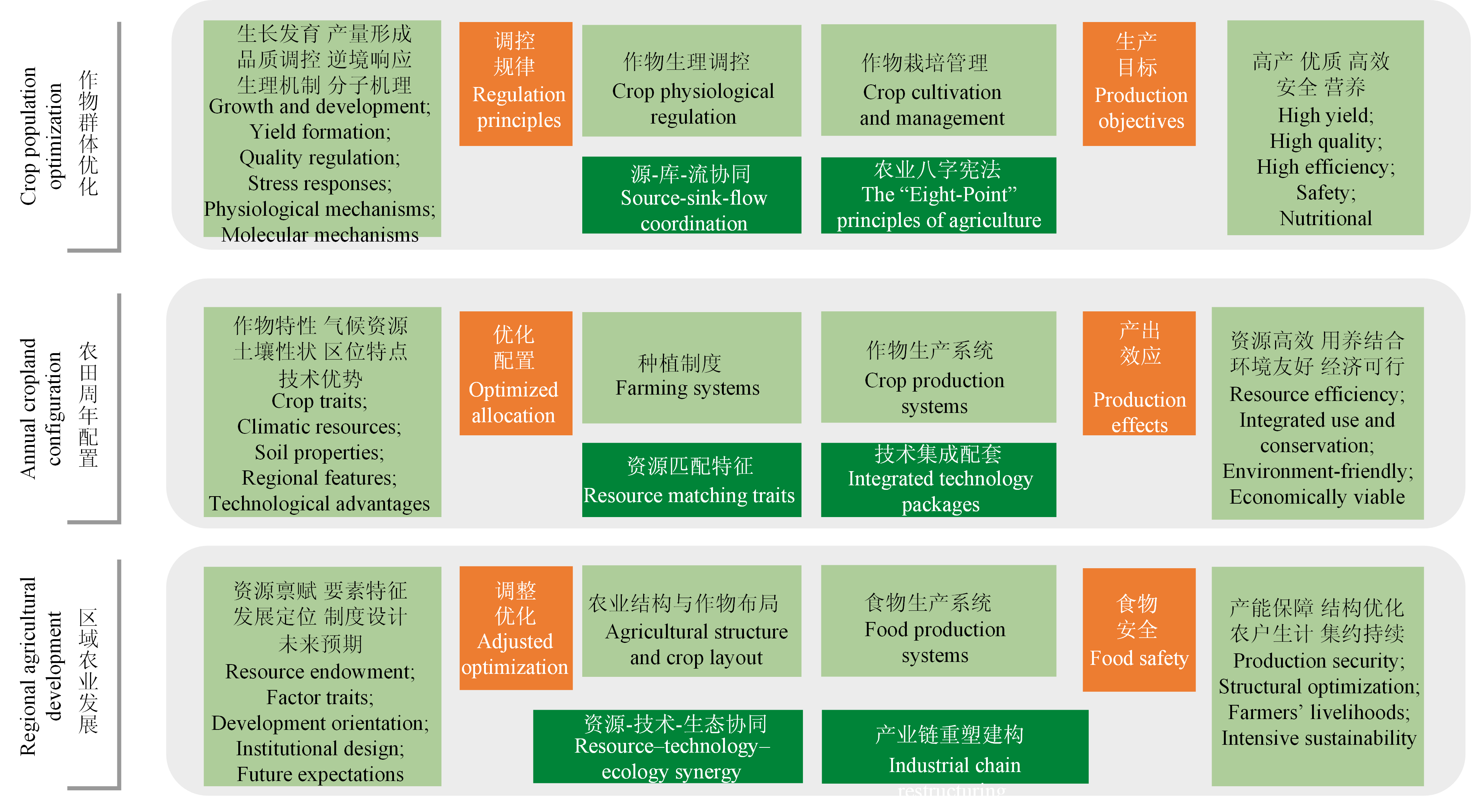
Fig. 1

Framework diagram of core research content in crop cultivation and farming systems discipline"

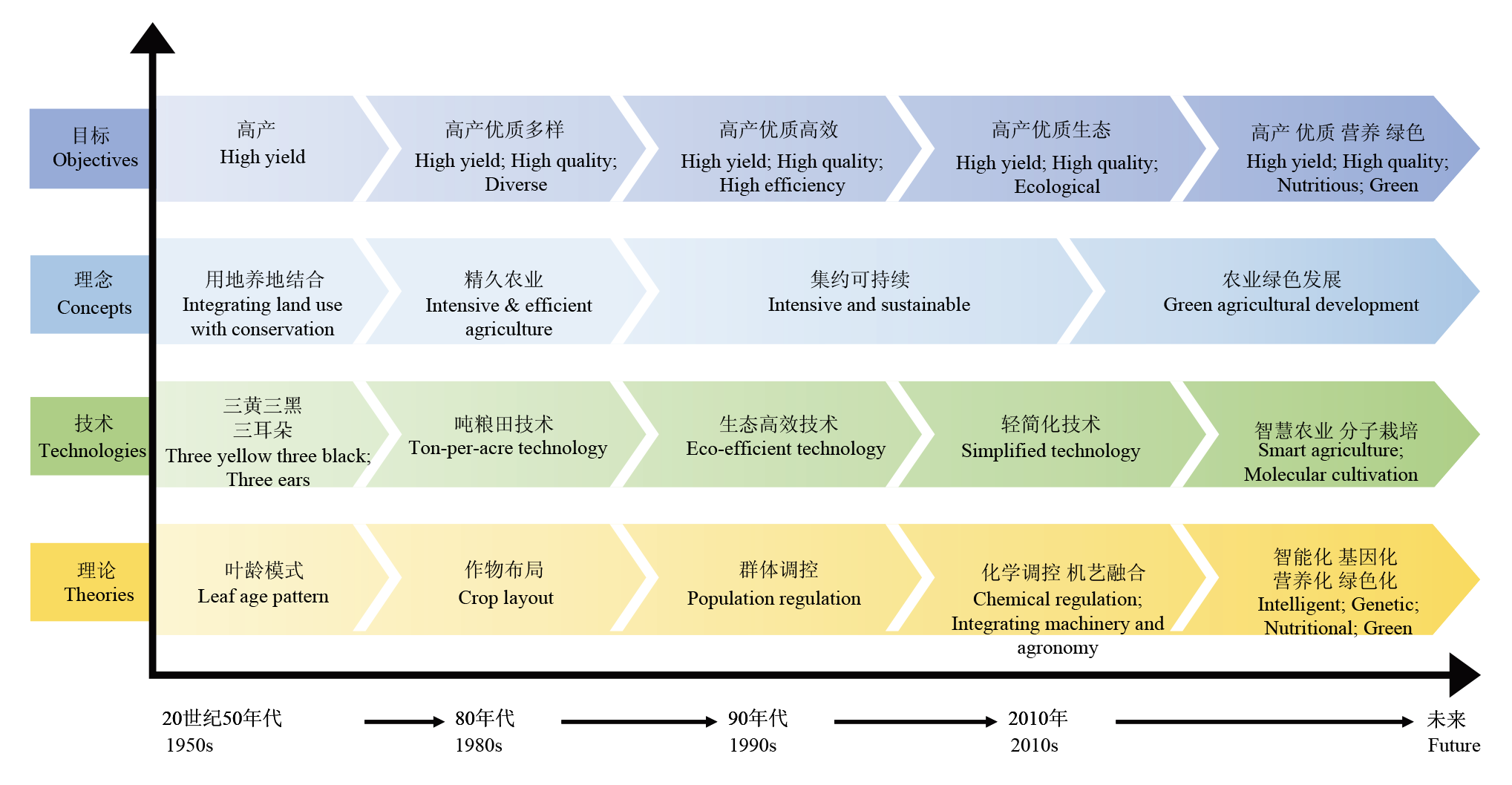
Fig. 2

Technological transition features and trends in crop cultivation and farming systems discipline"

[1]
VAN DIJK M, MORLEY T, RAU M L, SAGHAI Y. A meta-analysis of projected global food demand and population at risk of hunger for the period 2010-2050. Nature Food, 2021, 2(7): 494-501.

doi: 10.1038/s43016-021-00322-9
[2]
REZAEI E E, WEBBER H, ASSENG S, BOOTE K, DURAND J L, EWERT F, MARTRE P, MACCARTHY D S. Climate change impacts on crop yields. Nature Reviews Earth & Environment, 2023, 4(12): 831-846.
[3]
WANG M R, BODIRSKY B L, RIJNEVELD R, BEIER F, BAK M P, BATOOL M, DROPPERS B, POPP A, VAN VLIET M T H, STROKAL M. A triple increase in global river basins with water scarcity due to future pollution. Nature Communications, 2024, 15: 880.

doi: 10.1038/s41467-024-44947-3 pmid: 38321008
[4]
MONTANARELLA L. Agricultural policy: Govern our soils. Nature, 2015, 528(7580): 32-33.

doi: 10.1038/528032a
[5]
WADA Y, VAN BEEK L P H, VAN KEMPEN C M, RECKMAN J W T M, VASAK S, BIERKENS M F P. Global depletion of groundwater resources. Geophysical Research Letters, 2010, 37(20): 2010GL044571.
[6]
VERMEULEN S J, CAMPBELL B M, INGRAM J S I. Climate change and food systems. Annual Review of Environment and Resources, 2012, 37: 195-222.

doi: 10.1146/annurev-environ-020411-130608
[7]
RAY D K, MUELLER N D, WEST P C, FOLEY J A. Yield trends are insufficient to double global crop production by 2050. PLoS ONE, 2013, 8(6): e66428.

doi: 10.1371/journal.pone.0066428
[8]
文姝蓉, 王怡婷, 钟钰, 王榕. 新一轮千亿斤粮食产能提升行动的路径研究. 科技导报, 2025, 43(10): 23-30.

doi: 10.3981/j.issn.1000-7857.2024.11.01614
WEN S R, WANG Y T, ZHONG Y, WANG R. Path study on the new round of 50 millionton grain productivity enhancement program. Science & Technology Review, 2025, 43(10): 23-30. (in Chinese)
[9]
刘巽浩, 胡跃高, 陈阜. 粮食: 中国农业的永恒难题与主题. 农业现代化研究, 2010, 31(4): 385-391.
LIU X H, HU Y G, CHEN F. The problem of cereals: Eternal theme and difficult problem of Chinese agriculture. Research of Agricultural Modernization, 2010, 31(4): 385-391. (in Chinese)
[10]
FOLEY J A, RAMANKUTTY N, BRAUMAN K A, CASSIDY E S, GERBER J S, JOHNSTON M, MUELLER N D, O’CONNELL C, RAY D K, WEST P C, etc. Solutions for a cultivated planet. Nature, 2011, 478(7369): 337-342.

doi: 10.1038/nature10452
[11]
MUELLER N D, GERBER J S, JOHNSTON M, RAY D K, RAMANKUTTY N, FOLEY J A. Closing yield gaps through nutrient and water management. Nature, 2012, 490(7419): 254-257.

doi: 10.1038/nature11420
[12]
王志敏, 方保停. 论作物生产系统产量分析的理论模式及其发展. 中国农业大学学报, 2009, 14(1): 1-7.
WANG Z M, FANG B T. A review on theoretical models and development of yield analysis in crop production system. Journal of China Agricultural University, 2009, 14(1): 1-7. (in Chinese)
[13]
DAVIS K F, RULLI M C, SEVESO A, D’ODORICO P. Increased food production and reduced water use through optimized crop distribution. Nature Geoscience, 2017, 10(12): 919-924.

doi: 10.1038/s41561-017-0004-5
[14]
RAY D K, FOLEY J A. Increasing global crop harvest frequency: Recent trends and future directions. Environmental Research Letters, 2013, 8(4): 044041.

doi: 10.1088/1748-9326/8/4/044041
[15]
OENEMA O, PIETRZAK S. Nutrient management in food production: Achieving agronomic and environmental targets. Ambio, 2002, 31(2): 159-168.

pmid: 12078005
[16]
BYBEE-FINLEY K A, MULLER K, WHITE K E, CAVIGELLI M A, HAN E, SCHOMBERG H H, SNAPP S, VIENS F, CORRENDO A A, DEISS L, et al. Rotational complexity increases cropping system output under poorer growing conditions. One Earth, 2024, 7(9): 1638-1654.

doi: 10.1016/j.oneear.2024.07.008
[17]
陈阜, 赵明. 作物栽培与耕作学科发展. 农学学报, 2018, 8(1): 50-54.
CHEN F, ZHAO M. Developments of the crop cultivation and farming system in China. Journal of Agriculture, 2018, 8(1): 50-54. (in Chinese)
[18]
曹卫星. 作物栽培学总论. 3版. 北京: 科学出版社, 2017.
CAO W X. Crop Cultivation. 3rd ed. Beijing: Science Press, 2017. (in Chinese)
[19]
陈阜, 张海林. 耕作学. 北京: 中国农业出版社, 2021.
CHEN F, ZHANG H L. Farming Science. Beijing: China Agriculture Press, 2021. (in Chinese)
[20]
凌启鸿. 论中国特色作物栽培科学的成就与振兴. 作物杂志, 2003(1): 1-7.
LING Q H. Retrospect and prospect of crop cultivation science in China. Crops, 2003(1): 1-7. (in Chinese)
[21]
杨立炯, 汤玉庚, 王嘉训, 黄祥熙. 陈永康晚粳稻“三黑三黄”高产栽培经验的初步分析. 作物学报, 1964(2): 113-136.
YANG L J, TANG Y G, WANG J X, HUANG X X. Analysis on the high yielding technique of late rice. Acta Agronomica Sinica, 1964(2): 113-136. (in Chinese)
[22]
凌启鸿. 中国特色水稻栽培理论和技术体系的形成与发展: 纪念陈永康诞辰一百周年. 江苏农业学报, 2008, 24(2): 101-113.
LING Q H. Formation and development of theory and technological system of rice cultivation with Chinese characteristics: Report for the 100th anniversary of Chen Yongkang’s birth. Jiangsu Journal of Agricultural Sciences, 2008, 24(2): 101-113. (in Chinese)
[23]
邓建平, 葛自强, 顾万荣. 中国作物栽培科学发展的回顾与展望. 中国农学通报, 2005, 21(12): 179-183.
DENG J P, GE Z Q, GU W R. Review and prospect of development of crop cultivation in China. Chinese Agricultural Science Bulletin, 2005, 21(12): 179-183. (in Chinese)

doi: 10.11924/j.issn.1000-6850.0512179
[24]
余松烈. 冬小麦精播高产栽培. 山东农学院学报, 1980, 11(2): 1-13.
YU S L. Precision sowing and high-yield cultivation of winter wheat. Journal of Shandong Agricultural University (Natural Science Edition), 1980, 11(2): 1-13. (in Chinese)
[25]
凌启鸿, 蔡建中, 苏祖芳. 叶龄余数在稻穗分化进程鉴定中的应用价值. 中国农业科学, 1980, 13(4): 1-11.
LING Q H, CAI J Z, SU Z F. The practical value of using the “leaf index” and “leaf remainder” in determining the stages of panicle- differentiation in rice plant. Scientia Agricultura Sinica, 1980, 13(4): 1-11. (in Chinese)
[26]
刘巽浩. 论我国耕作制度的发展. 耕作与栽培, 1983, 3(5): 7-13.
LIU X H. On the development of farming system in China. Tillage and Cultivation, 1983, 3(5): 7-13. (in Chinese)
[27]
胡恒觉, 高炳生, 李雪屏, 蔺海明. 提高我省旱地农业水资源利用效率的探讨. 甘肃农业科技, 1983, 14(7): 2-7.
HU H J, GAO B S, LI X P, LIN H M. Discussion on improving the utilization efficiency of agricultural water resources in dry land of our province. Gansu Agricultural Science and Technology, 1983, 14(7): 2-7. (in Chinese)
[28]
王树安, 兰林旺. 小麦: 夏玉米平播亩产吨粮的理论与实践: 沧州吨粮田的技术特点. 作物杂志, 1990(4): 17-18.
WANG S A, LAN L W. Theory and practice of wheat-summer corn flat sowing to produce tons of grain per mu: Technical characteristics of tons of grain field in Cangzhou. Crops, 1990(4): 17-18. (in Chinese)
[29]
李丕明, 奚惠达, 何钟佩, 韩碧文. 农作物化控栽培工程技术的发展与中国农业现代化前景. 北京农业大学学报, 1991(S1): 1-5.
LI P M, XI H D, HE Z P, HAN B W. The engineering development of chemically-manipulated crop culture in relation to the prospect of agricultural modernization in China. Journal of China Agricultural University, 1991(S1): 1-5. (in Chinese)
[30]
杨建昌, 杜永, 刘辉. 长江下游稻麦周年超高产栽培途径与技术. 中国农业科学, 2008, 41(6): 1611-1621. doi:10.3864/j.issn.0578-1752.2008.06.006.
YANG J C, DU Y, LIU H. Cultivation approaches and techniques for annual super-high-yielding of rice and wheat in the lower reaches of Yangtze River. Scientia Agricultura Sinica, 2008, 41(6): 1611-1621. doi:10.3864/j.issn.0578-1752.2008.06.006. (in Chinese)
[31]
于振文, 田奇卓, 潘庆民, 岳寿松, 王东, 段藏禄, 段玲玲, 王志军, 牛运生. 黄淮麦区冬小麦超高产栽培的理论与实践. 作物学报, 2002, 28(5): 577-585.
YU Z W, TIAN Q Z, PAN Q M, YUE S S, WANG D, DUAN Z L, DUAN L L, WANG Z J, NIU Y S. Theory and practice on cultivation of super high yield of winter wheat in the wheat fields of Yellow River and Huaihe River districts. Acta Agronomica Sinica, 2002, 28(5): 577-585. (in Chinese)
[32]
张海林, 高旺盛, 陈阜, 朱文珊. 保护性耕作研究现状、发展趋势及对策. 中国农业大学学报, 2005, 10(1): 16-20.
ZHANG H L, GAO W S, CHEN F, ZHU W S. Prospects and present situation of conservation tillage. Journal of China Agricultural University, 2005, 10(1): 16-20. (in Chinese)
[33]
王树安, 兰林旺, 周殿玺, 王志敏, 王璞. 冬小麦节水高产技术体系研究. 中国农业大学学报, 2007, 12(6): 44.
WANG S A, LAN L W, ZHOU D X, WANG Z M, WANG P. Study on water-saving and high-yield technical system of winter wheat. Journal of China Agricultural University, 2007, 12(6): 44. (in Chinese)
[34]
彭少兵. 对转型时期水稻生产的战略思考. 中国科学(生命科学), 2014, 44(8): 845-850.
PENG S B. Reflection on China’s rice production strategies during the transition period. Scientia Sinica (Vitae), 2014, 44(8): 845-850. (in Chinese)
[35]
高旺盛, 陈源泉, 梁龙. 论发展循环农业的基本原理与技术体系. 农业现代化研究, 2007, 28(6): 731-734.
GAO W S, CHEN Y Q, LIANG L. Basic principles and technology supporting for circular agriculture development. Research of Agricultural Modernization, 2007, 28(6): 731-734. (in Chinese)
[36]
刘巽浩, 陈阜, 吴尧. 多熟种植: 中国农业的中流砥柱. 作物杂志, 2015(6): 1-9.
LIU X H, CHEN F, WU Y. Multiple cropping: The principal part of China’s agriculture. Crops, 2015(6): 1-9. (in Chinese)
[37]
彭少兵. 论新时期作物栽培管理在全球水稻增产中的作用. 作物研究, 2008, 22(4): 207-208.
PENG S B. The importance of improved crop management to world rice production. Crop Research, 2008, 22(4): 207-208. (in Chinese)
[38]
GUO S B, ZHANG Z T, ZHANG F L, YANG X G. Optimizing cultivars and agricultural management practices can enhance soybean yield in Northeast China. Science of the Total Environment, 2023, 857: 159456.

doi: 10.1016/j.scitotenv.2022.159456
[39]
DUVICK D N. The contribution of breeding to yield advances in maize (Zea mays L.). Advances in Agronomy Volume 86. Amsterdam: Elsevier, 2005: 83-145.
[40]
RIZZO G, MONZON J P, TENORIO F A, HOWARD R, CASSMAN K G, GRASSINI P. Climate and agronomy, not genetics, underpin recent maize yield gains in favorable environments. Proceedings of the National Academy of Sciences of the United States of America, 2022, 119(4): e2113629119.
[41]
MEDEIROS J C, ZAVALA J, SHAHROKHI M, MINYO R, GEYER A, LINDSEY A, THOMISON P, ORTEZ O. Historical changes and yield in the Ohio corn performance test: A 50-year summary. Agronomy Journal, 2025, 117(1): e21746.

doi: 10.1002/agj2.v117.1
[42]
LUO N, MENG Q F, FENG P Y, QU Z R, YU Y H, LIU D L, MÜLLER C, WANG P. China can be self-sufficient in maize production by 2030 with optimal crop management. Nature Communications, 2023, 14: 2637.

doi: 10.1038/s41467-023-38355-2
[43]
李少昆, 王克如, 杨小霞, 韩冬生, 王玉华, 谢瑞芝, 侯鹏, 明博. 玉米高产纪录田块技术与效益分析. 作物杂志, 2017(6): 1-6.
LI S K, WANG K R, YANG X X, HAN D S, WANG Y H, XIE R Z, HOU P, MING B. Technology and benefit analysis of high yield record field in maize. Crops, 2017(6): 1-6. (in Chinese)
[44]
莫钊文, 潘圣刚, 王在满, 段美洋, 唐湘如. 科技成果转化农学创新综合实验的探索与实践. 实验室研究与探索, 2024, 43(5): 220-224.
MO Z W, PAN S G, WANG Z M, DUAN M Y, TANG X R. Exploration and practice of transforming scientific and technological achievements into agricultural innovation comprehensive experiment. Research and Exploration in Laboratory, 2024, 43(5): 220-224. (in Chinese)
[45]
凌启鸿. 论中国特色作物栽培科学的不可替代性. 中国农学通报, 2003, 19(4): 1-6.
LING Q H. On the irreplaceable characteristics of crop cultivation science in China. Chinese Agricultural Science Bulletin, 2003, 19(4): 1-6. (in Chinese)
[46]
DEFRIES R, FANZO J, REMANS R, PALM C, WOOD S, ANDERMAN T L. Metrics for land-scarce agriculture. Science, 2015, 349(6245): 238-240.

doi: 10.1126/science.aaa5766
[47]
KHUSH G S. Green revolution: the way forward. Nature Reviews Genetics, 2001, 2(10): 815-822.

doi: 10.1038/35093585 pmid: 11584298
[48]
GODFRAY H C J, BEDDINGTON J R, CRUTE I R, HADDAD L, LAWRENCE D, MUIR J F, PRETTY J, ROBINSON S, THOMAS S M, TOULMIN C. Food security: The challenge of feeding 9 billion people. Science, 2010, 327(5967): 812-818.

doi: 10.1126/science.1185383 pmid: 20110467
[49]
LI X, XIE C, CHENG L, TONG H N, BOCK R, QIAN Q, ZHOU W B. The next Green Revolution: Integrating crop architectype and physiotype. Trends in Biotechnology, 2025, 43(10): 2479-2493.

doi: 10.1016/j.tibtech.2025.04.002
[50]
韩美坤, 黄琴, 李金鹏, 王云奇, 徐学欣, 王志敏. 贮墒旱作冬小麦耗水特征与水分利用效率. 中国农业大学学报, 2018, 23(2): 11-19.
HAN M K, HUANG Q, LI J P, WANG Y Q, XU X X, WANG Z M. Water use characteristics of no-irrigating winter wheat under storing available soil water before sowing. Journal of China Agricultural University, 2018, 23(2): 11-19. (in Chinese)
[51]
谢立勇, 许婧, 郭李萍, 徐玉秀, 孙雪, 赵洪亮, 郭飞, 赵迅. 水肥管理对稻田CH4排放及其全球增温潜势影响的评估. 中国生态农业学报, 2017, 25(7): 958-967.
XIE L Y, XU J, GUO L P, XU Y X, SUN X, ZHAO H L, GUO F, ZHAO X. Impact of water/fertilizer management on methane emission in paddy fields and on global warming potential. Chinese Journal of Eco-Agriculture, 2017, 25(7): 958-967. (in Chinese)
[52]
赵凯男, 丁豪, 刘阿康, 姜宗昊, 陈广周, 冯波, 王宗帅, 李华伟, 司纪升, 张宾, 等. 氮肥减量后移改善植株光合特性提高麦-玉周年产量及经济效益. 中国农业科学, 2024, 57(5): 868-884. doi:10.3864/j.issn.0578-1752.2024.05.004.
ZHAO K N, DING H, LIU A K, JIANG Z H, CHEN G Z, FENG B, WANG Z S, LI H W, SI J S, ZHANG B, et al. Nitrogen fertilizer reduction and postponing for improving plant photosynthetic physiological characteristics to increase WheatMaize and annual yield and economic return. Scientia Agricultura Sinica, 2024, 57(5): 868-884. doi:10.3864/j.issn.0578-1752.2024.05.004. (in Chinese)
[53]
REN B Z, GUO Y Q, LIU P, ZHAO B, ZHANG J W. Effects of urea-ammonium nitrate solution on yield, N2O emission, and nitrogen efficiency of summer maize under integration of water and fertilizer. Frontiers in Plant Science, 2021, 12: 700331.

doi: 10.3389/fpls.2021.700331
[54]
江瑜, 朱相成, 钱浩宇, 张楠, 丁艳锋. 水稻丰产与稻田甲烷减排协同的研究展望. 南京农业大学学报, 2022, 45(5): 839-847.
JIANG Y, ZHU X C, QIAN H Y, ZHANG N, DING Y F. Higher rice yields and lower methane emissions can be reconciled for rice cultivation: A review. Journal of Nanjing Agricultural University, 2022, 45(5): 839-847. (in Chinese)
[55]
NORTHRUP D L, BASSO B, WANG M Q, MORGAN C L S, BENFEY P N. Novel technologies for emission reduction complement conservation agriculture to achieve negative emissions from row-crop production. PNAS, 2021, 118(28): e2022666118.
[56]
刘珍环, 陆晓君. 农作物景观生态研究: 概念框架与研究方向. 生态学报, 2021, 41(24): 9953-9962.
LIU Z H, LU X J. The conceptual framework and research direction of cropping landscape ecology. Acta Ecologica Sinica, 2021, 41(24): 9953-9962. (in Chinese)
[57]
王小慧, 陈阜. 华北平原作物面积比例对农田景观异质性特征的影响. 中国农业大学学报, 2022, 27(7): 73-83.
WANG X H, CHEN F. Effects of the proportion of crop area on farmland landscape heterogeneity in North China Plain. Journal of China Agricultural University, 2022, 27(7): 73-83. (in Chinese)
[58]
矫江. 适应科技体制改革促进栽培专业发展. 农业科技管理, 1996, 15(1): 6-7.
JIAO J. Adapting to the reform of science and technology system and promoting the development of cultivation specialty. Management of Agricultural Science and Technology, 1996, 15(1): 6-7. (in Chinese)
[59]
刘正辉, 杨建昌, 王大刚, 杨新泉. 从国家自然科学基金资助情况分析作物栽培学基础研究状况. 中国基础科学, 2015, 17(2): 56-62.
LIU Z H, YANG J C, WANG D G, YANG X Q. Role of national natural science foudation of China in disciplinary advancement of crop cultivation. China Basic Science, 2015, 17(2): 56-62. (in Chinese)
[60]
龚放, 曲铭峰. 南京大学个案: SCI引入评价体系对中国大陆大学基础研究的影响. 高等理科教育, 2010(3): 4-17.
GONG F, QU M F. A case study of Nanjing University: The influence of introducing SCI into assessment system on the quality of basic research in mainland Chinese universities. Higher Education of Sciences, 2010(3): 4-17. (in Chinese)
[61]
王连敏. 关于作物栽培学科面临的危机与发展的思考. 黑龙江农业科学, 2004(5): 23-24.
WANG L M. Pondering on the crisis and development of crop cultivation technology. Heilongjiang Agricultural Sciences, 2004(5): 23-24. (in Chinese)
[62]
黄开红. 关于作物栽培研究之管见. 江苏农业科学, 1999, 27(2): 7-8.
HUANG K H. My humble opinion on crop cultivation research. Jiangsu Agricultural Sciences, 1999, 27(2): 7-8. (in Chinese)
[63]
佟屏亚. 试论耕作栽培学科的发展趋势和研究重点. 耕作与栽培, 1993, 13(4): 1-7.
TONG P Y. On the development trend and research focus of farming and cultivation discipline. Tillage and Cultivation, 1993, 13(4): 1-7. (in Chinese)
[64]
王宏广. 中国农业科技的现状、问题、潜力与对策. 中国农业科技导报, 1999, 1(3): 34-41.
WANG H G. Present situation, problems, potential and countermeasures of agricultural science and technology in China. Review of China Agricultural Science and Technology, 1999, 1(3): 34-41. (in Chinese)
[65]
钟大森, 赵明, 张昭. “粮食丰产增效科技创新”重点专项组织实施进展情况. 作物杂志, 2019(3): 1-9.
ZHONG D S, ZHAO M, ZHANG Z. Organization and implementation progress of national key research and development program “science and technology innovation for high yield and efficiency of crop”. Crops, 2019(3): 1-9. (in Chinese)
[66]
赵明. 三大粮食主产区作物丰产增效“三适三调”技术体系创建与应用, 2021.
ZHAO M. Establishment and application of the "Three Appropriates and Three Adjustments" technology system for high-yield and high-efficiency crop production in three major grain-producing regions, 2021. (in Chinese)
[67]
张国强, 李少昆, 谢瑞芝, 王克如. 玉米密植精准调控高产技术的原理、应用与思考. 中国农民合作社, 2025(5): 17-20.
ZHANG G Q, LI S K, XIE R Z, WANG K R. Principle, application and thinking of precision regulation and high yield technology of maize close planting. China Farmers’ Cooperatives, 2025(5): 17-20. (in Chinese)
[68]
GATTO A, CHEPELIEV M. Global food loss and waste estimates show increasing nutritional and environmental pressures. Nature Food, 2024, 5(2): 136-147.

doi: 10.1038/s43016-023-00915-6
[69]
HIRT H, AL-BABILI S, ALMEIDA-TRAPP M, MARTIN A, ARANDA M, BARTELS D, BENNETT M, BLILOU I, BOER D, BOULOUIS A, et al. PlantACT!-How to tackle the climate crisis. Trends in Plant Science, 2023, 28(5): 537-543.

doi: 10.1016/j.tplants.2023.01.005
[70]
ZHAO C, LIU B, PIAO S L, WANG X H, LOBELL D B, HUANG Y, HUANG M T, YAO Y T, BASSU S, CIAIS P, et al. Temperature increase reduces global yields of major crops in four independent estimates. PNAS, 2017, 114(35): 9326-9331.

doi: 10.1073/pnas.1701762114 pmid: 28811375
[71]
CHRISTIDIS N, JONES G S, STOTT P A. Dramatically increasing chance of extremely hot summers since the 2003 European heatwave. Nature Climate Change, 2015, 5(1): 46-50.

doi: 10.1038/nclimate2468
[72]
BRÁS T A, SEIXAS J, CARVALHAIS N, JÄGERMEYR J. Severity of drought and heatwave crop losses tripled over the last five decades in Europe. Environmental Research Letters, 2021, 16(6): 065012.

doi: 10.1088/1748-9326/abf004
[73]
李腾飞, 曾伟. 农业强国背景下新一轮粮食产能提升潜力与实施路径研究. 经济纵横, 2023(9): 48-55.
LI T F, ZENG W. Potential and paths of a new round of grain production capacity improvement in the context of building up China’s strength in agriculture. Economic Review, 2023(9): 48-55. (in Chinese)
[74]
黎莉莉, 胡晓群, 陈松柏. 新世纪中国粮食生产特征及粮食安全政策取向. 宏观经济研究, 2023(1): 70-83.
LI L L, HU X Q, CHEN S B. Characteristics of China’s grain production and grain security policy orientation in the new century. Macroeconomics, 2023(1): 70-83. (in Chinese)
[75]
郑风田, 普蓂喆. 量质兼顾下新一轮千亿斤粮食产能提升: 思路与举措. 中州学刊, 2023(4): 46-53.
ZHENG F T, PU M Z. A new round of 50-million-ton grain production capacity increase with a balance between quantity and quality: Ideas and measures. Academic Journal of Zhongzhou, 2023(4): 46-53. (in Chinese)
[76]
陈锡文. 当前农业农村的若干重要问题. 中国农村经济, 2023(8): 2-17.
CHEN X W. Several important issues in current agriculture and rural areas. Chinese Rural Economy, 2023(8): 2-17. (in Chinese)
[77]
崔永福, 王树强. 保障粮食安全: 全球挑战与中国路径. 改革与战略, 2025, 41(3): 74-81.
CUI Y F, WANG S Q. Ensuring food security: Global challenges and China path. Reformation & Strategy, 2025, 41(3): 74-81. (in Chinese)
[78]
张玉成, 张晓博, 高树琴, 郑聪聪, 张景尧, 文亚, 李禄军, 王卓, 李铁, 赵洪龙. “伏羲农场”: 智慧农业技术集成创新的实践探索与思考. 中国科学院院刊, 2025, 40(2): 301-309.
ZHANG Y C, ZHANG X B, GAO S Q, ZHENG C C, ZHANG J Y, WEN Y, LI L J, WANG Z, LI T, ZHAO H L. The Fuxi Farm: Practice and reflection on integrated innovation of smart agriculture technology. Bulletin of Chinese Academy of Sciences, 2025, 40(2): 301-309. (in Chinese)
[79]
TIAN J G, WANG C L, CHEN F Y, QIN W C, YANG H, ZHAO S H, XIA J L, DU X, ZHU Y F, WU L S, et al. Maize smart-canopy architecture enhances yield at high densities. Nature, 2024, 632(8025): 576-584.

doi: 10.1038/s41586-024-07669-6
[80]
TIAN Z X, NEPOMUCENO A L, SONG Q X, STUPAR R M, LIU B, KONG F J, MA J X, LEE S H, JACKSON S A. Soybean2035: A decadal vision for soybean functional genomics and breeding. Molecular Plant, 2025, 18(2): 245-271.

doi: 10.1016/j.molp.2025.01.004
[81]
YAO Y Y, GUO W L, GOU J Y, HU Z R, LIU J, MA J, ZONG Y, XIN M M, CHEN W, LI Q, et al. Wheat2035: Integrating pan-omics and advanced biotechnology for future wheat design. Molecular Plant, 2025, 18(2): 272-297.

doi: 10.1016/j.molp.2025.01.005
[82]
LIU H J, LIU J, ZHAI Z W, DAI M Q, TIAN F, WU Y R, TANG J H, LU Y L, WANG H Y, JACKSON D, et al. Maize2035: A decadal vision for intelligent maize breeding. Molecular Plant, 2025, 18(2): 313-332.

doi: 10.1016/j.molp.2025.01.012
[83]
WANG X Y, HUANG H W, JIANG S J, KANG J M, LI D W, WANG K L, XIE S, TONG C, LIU C F, HU G H, et al. A single-cell multi-omics atlas of rice. Nature, 2025, 644(8077): 722-730.

doi: 10.1038/s41586-025-09251-0
[84]
MACDONALD A J, POULTON P R, GLENDINING M J, POWLSON D S. Long-term agricultural research at Rothamsted. In: Bhullar G S, Riar A (eds.) Long-Term Farming Systems Research. London, UK: Academic Press, 2020: 15-36.
[85]
RICHTER D D, HOFMOCKEL M, CALLAHAM M A, POWLSON D S, SMITH P. Long-term soil experiments: Keys to managing earth’s rapidly changing ecosystems. Soil Science Society of America Journal, 2007, 71(2): 266-279.

doi: 10.2136/sssaj2006.0181
[86]
BOWLES T M, MOOSHAMMER M, SOCOLAR Y, CALDERÓN F, CAVIGELLI M A, CULMAN S W, DEEN W, DRURY C F, GARCIA Y GARCIA A, GAUDIN A C M, et al. Long-term evidence shows that crop-rotation diversification increases agricultural resilience to adverse growing conditions in North America. One Earth, 2020, 2(3): 284-293.

doi: 10.1016/j.oneear.2020.02.007
[87]
MACHOLDT J, PIEPHO H P, HONERMEIER B, PERRYMAN S, MACDONALD A, POULTON P. The effects of cropping sequence, fertilization and straw management on the yield stability of winter wheat (1986-2017) in the Broadbalk Wheat Experiment, Rothamsted, UK. The Journal of Agricultural Science, 2020, 158(1/2): 65-79.

doi: 10.1017/S0021859620000301
[88]
SMITH M E, VICO G, COSTA A, BOWLES T, HALLIN S, WATSON C A, ALARCÒN R, BERTI A, BLECHARCZYK A, et al. Increasing crop rotational diversity can enhance cereal yields. Communications Earth & Environment, 2023, 4: 89.
[89]
李少昆, 赵久然, 董树亭, 赵明, 李潮海, 崔彦宏, 刘永红, 高聚林, 薛吉全, 王立春, 等. 中国玉米栽培研究进展与展望. 中国农业科学, 2017, 50(11): 1941-1959. doi:10.3864/j.issn.0578-1752.2017.11.001.
LI S K, ZHAO J R, DONG S T, ZHAO M, LI C H, CUI Y H, LIU Y H, GAO J L, XUE J Q, WANG L C, et al. Advances and prospects of maize cultivation in China. Scientia Agricultura Sinica, 2017, 50(11): 1941-1959. doi:10.3864/j.issn.0578-1752.2017.11.001. (in Chinese)
[90]
DENG N Y, GRASSINI P, YANG H S, HUANG J L, CASSMAN K G, PENG S B. Closing yield gaps for rice self-sufficiency in China. Nature Communications, 2019, 10: 1725.

doi: 10.1038/s41467-019-09447-9 pmid: 30979872
[91]
周上游, 邹应斌. 作物栽培产品研究的展望. 作物杂志, 1999(4): 4-7.
ZHOU S Y, ZOU Y B. Prospect of crop cultivation products research. Crops, 1999(4): 4-7. (in Chinese)
[92]
唐启源, 周上游, 邹应斌. 作物栽培科学的新发展: 从作物化控到物化栽培工程. 中国农业科技导报, 2002, 4(4): 27-32.
TANG Q Y, ZHOU S Y, ZOU Y B. New development of crop cultivation science-from chemical control of crop growth to substance cultivation engineering. Review of China Agricultural Science and Technology, 2002, 4(4): 27-32. (in Chinese)
[1] HUANG GuoQin. The Strategic Path of Enhancing Grain Production Capacity in Southern China [J]. Scientia Agricultura Sinica, 2026, 59(9): 2029-2041.
[2] LIAO Ping, WENG WenAn, GAO Hui, ZHANG HongCheng. Application Status and Development Suggestion of Direct-Seeding Rice Cultivation in China [J]. Scientia Agricultura Sinica, 2024, 57(24): 4854-4870.
[3] ZHANG WeiJian, SHANG ZiYin, ZHANG Jun, YAN ShengJi, DENG AiXing, ZHANG Xin, ZHENG ChengYan, SONG ZhenWei. Standardized Establishment and Improvement of Accounting System of Agriculture Greenhouse Gas Emission [J]. Scientia Agricultura Sinica, 2023, 56(22): 4467-4477.
[4] YANG ShiQi. Thought of Pollution Comprehensive Prevention and Control System of Non-Point Sources Based on National Food Security [J]. Scientia Agricultura Sinica, 2022, 55(17): 3380-3394.
[5] CHEN Kevin,BI JieYing,NIE FengYing,FANG XiangMing,FAN ShengGen. New Vision and Policy Recommendations for Nutrition-Oriented Food Security in China [J]. Scientia Agricultura Sinica, 2019, 52(18): 3097-3107.
[6] CHEN Yin-jun, YI Xiao-yan, FANG Lin-na, YANG Rui-zhen. Analysis of Cultivated Land and Grain Production Potential in China [J]. Scientia Agricultura Sinica, 2016, 49(6): 1117-1131.
[7] LI Bao-guo, HUANG Feng. Defining the Baselines for China Agricultural Water Use in Green and Blue Water Approach [J]. Scientia Agricultura Sinica, 2015, 48(17): 3493-3503.
[8] SHI Wen-Jiao, TAO Fu-Lu. Climate Change and Agricultural Production in Africa: A Review of Impacts and Adaptations [J]. Scientia Agricultura Sinica, 2014, 47(16): 3157-3166.
[9] CHEN Wen-Fu, ZHANG Wei-Ming, MENG Jun. Advances and Prospects in Research of Biochar Utilization in Agriculture [J]. Scientia Agricultura Sinica, 2013, 46(16): 3324-3333.
[10] ZHANG Wei-Jian, CHEN Jin, XU Zhi-Yu, CHEN Chang-Qing, DENG Ai-Xing, QIAN Chun-Rong, DONG Wen-Jun. Actual Responses and Adaptations of Rice Cropping System to Global Warming in Northeast China [J]. Scientia Agricultura Sinica, 2012, 45(7): 1265-1273.
[11] TANG Hua-Jun, LI Zhe-Min. Study on Per Capita Grain Demand Based on Chinese Reasonable Dietary Pattern [J]. Scientia Agricultura Sinica, 2012, 45(11): 2315-2327.
[12] LI Chen,YAN Xiao-hong,YANG Jie,YANG Qing,WEI Wen-hui
. Plant Artificial Chromosome: The Vector for the Next Generation of Genetic Engineering [J]. Scientia Agricultura Sinica, 2011, 44(4): 657-663 .
[13] YU Qiang-Yi, WU Wen-Bin, TANG Hua-Jun, CHEN You-Qi, YANG Peng. A Food Security Assessment in APEC Based on Grain Productivity [J]. Scientia Agricultura Sinica, 2011, 44(13): 2838-2848 .
[14]

TIAN Yun-lu,ZHENG Jian-chu,ZHANG Bin,CHEN Jin,DONG Wen-jun,YANG Fei,ZHANG Wei-jian

.

Design of Free Air Temperature Increasing (FATI) System for Upland with Three Diurnal Warming Scenarios and Their Effects

[J]. Scientia Agricultura Sinica, 2010, 43(18): 3724-3731 .
[15] . Developing the agro-grassland system to insure food security of China [J]. Scientia Agricultura Sinica, 2007, 40(3): 614-621 .
Viewed
Full text


Abstract

Cited

  Shared   
  Discussed   
No Suggested Reading articles found!