Scientia Agricultura Sinica ›› 2026, Vol. 59 ›› Issue (2): 292-304.doi: 10.3864/j.issn.0578-1752.2026.02.006

• TILLAGE & CULTIVATION·PHYSIOLOGY & BIOCHEMISTRY·AGRICULTURE INFORMATION TECHNOLOGY • Previous Articles     Next Articles

Effects of Leaf-Cutting at Seedling Stage on Photosynthetic Characteristics, Pod Distribution and Yield Formation in Soybean in the Huang-Huai-Hai Region

CAI TingYang, ZHU YuPeng, LI RuiDong, WU ZongSheng, XU YiFan, SONG WenWen, XU CaiLong(), WU CunXiang()   

  1. Institute of Crop Science, Chinese Academy of Agricultural Sciences/National Soybean Industrial Technology Research and Development Center/Key Laboratory of Crop Physiology and Ecology, Ministry of Agriculture and Rural Affairs, Beijing 100081
  • Received:2025-06-22 Accepted:2025-12-18 Online:2026-01-16 Published:2026-01-22
  • Contact: XU CaiLong, WU CunXiang

Abstract:

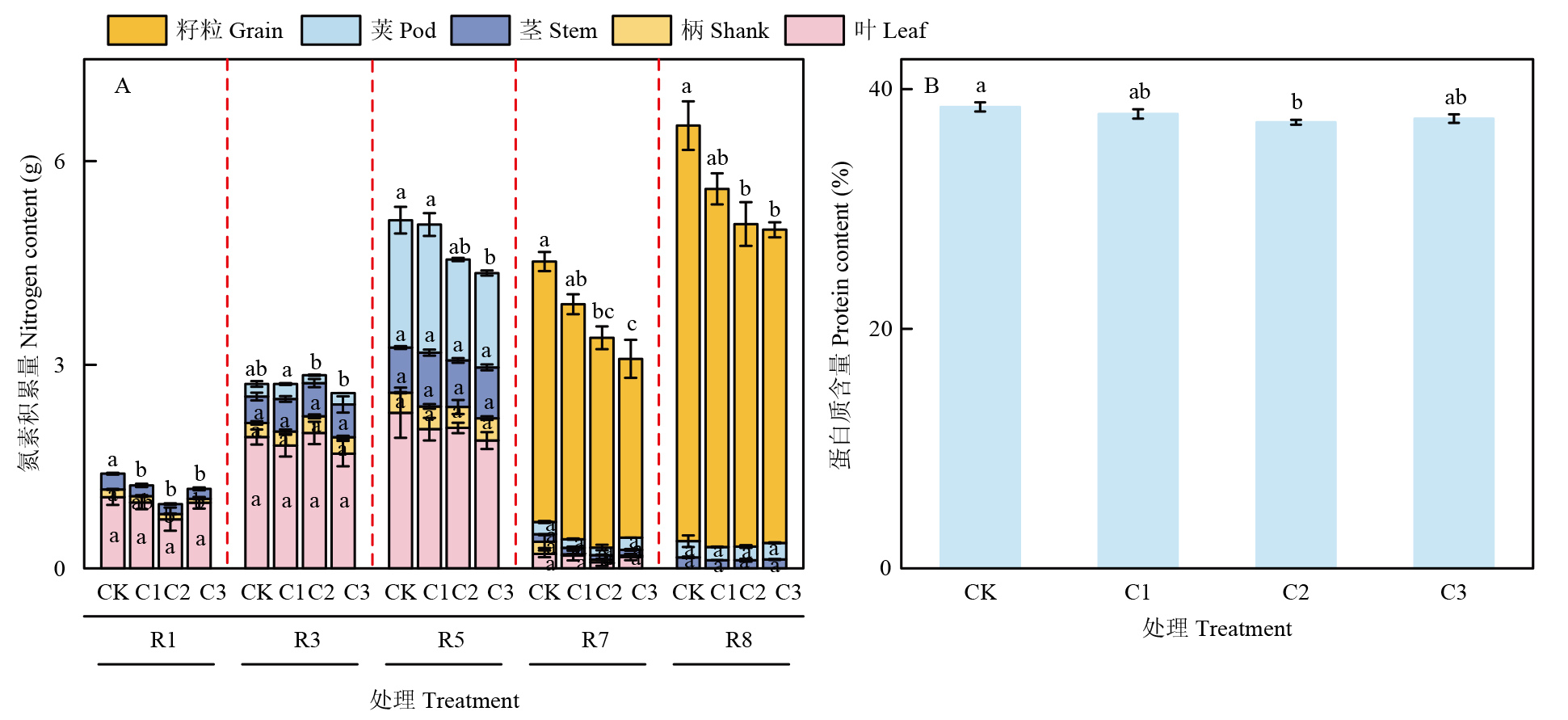
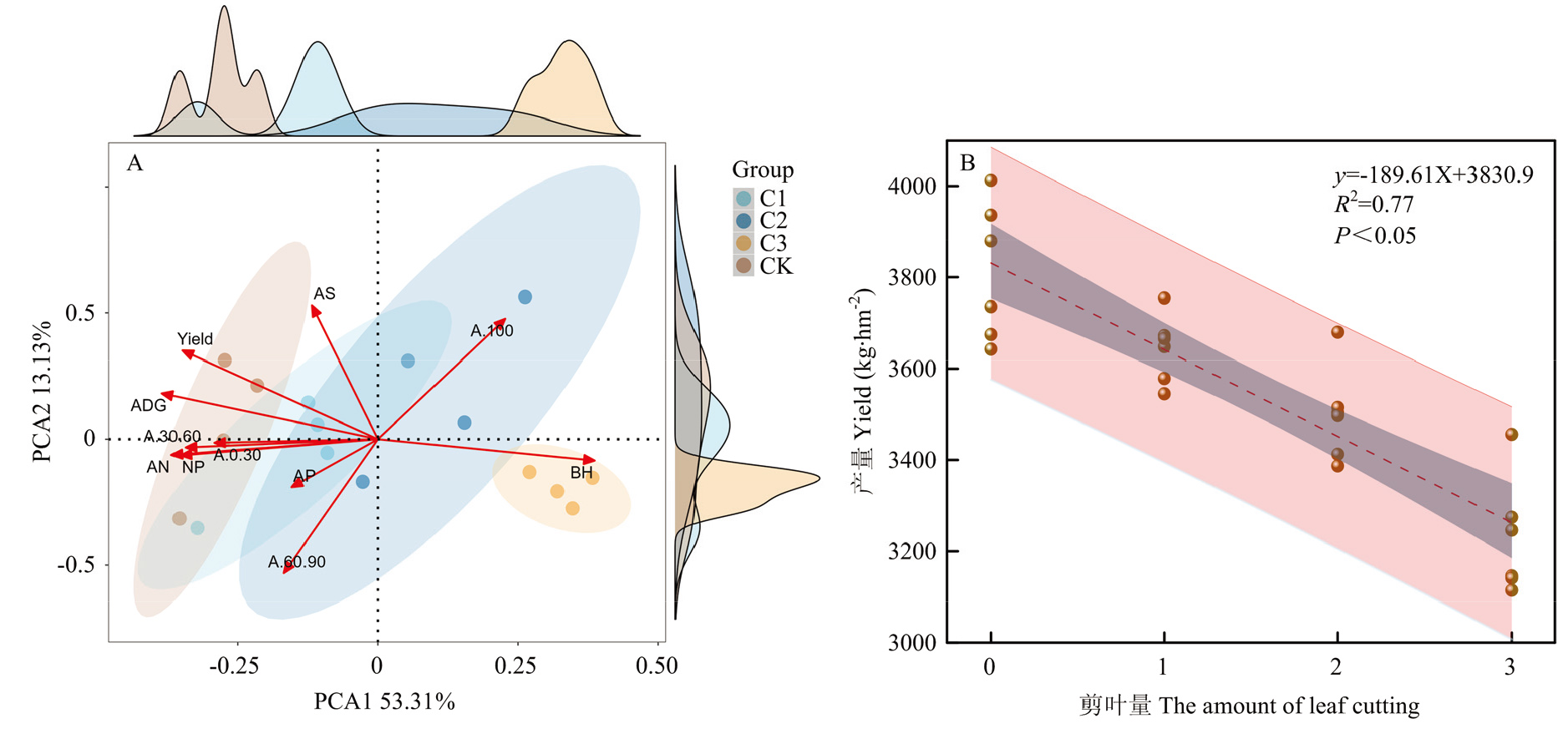
【Objective】 The Huang-Huai-Hai region is a major production area for summer soybeans (Glycine max L.) in China. In this region, frequent wind, rain, and hail during the summer often cause damage to leave at the seedling stage, resulting in a reduction in leaf area. By using artificial defoliation, this study investigated the changes in photosynthetic characteristics, pod distribution, and yield formation of soybeans following leaf removal at the seedling stage, so as to provide support for the integrated application of stress-resistant and high-yield soybean cultivation techniques. 【Method】 Using 'Zhonghuang 301' as the experimental material, a two-year field experiment was conducted. Different defoliation treatments were established at the soybean V3 stage: CK (no defoliation), C1 (removal of 1 trifoliolate leaf), C2 (removal of 2 trifoliolate leaves), and C3 (removal of 3 trifoliolate leaves). These treatments simulated the reduction in leaf area caused by adverse weather conditions in seedlings to systematically analyze the effects of seedling defoliation on soybean yield and physiological characteristics. 【Result】 Defoliation at the seedling stage reduced soybean yield, and the degree of yield loss was positively correlated with defoliation intensity. The C1, C2, and C3 treatments resulted in average yield reductions of 5.4%, 10.2%, and 19.3% over two years, respectively. This was primarily attributed to an increase in the height of the lowest pod (which increased by 7.09%, 24.5%, and 42% compared with CK, respectively) and a decrease in the number of pods in the lower layer (0-30 cm) of the plant (which decreased by 13.6%, 33.8%, and 59.6%, respectively). The Leaf Area Index (LAI) decreased with increasing defoliation, leading to reduced aboveground dry matter accumulation; compared with CK, the accumulation under C1, C2, and C3 treatments at the R1 and R3 stages decreased by an average of 8.5%, 16.5%, and 37.1%, respectively. At the R8 stage, the grain dry weight for C1, C2, and C3 decreased by 12.1%, 24.3%, and 32.7% compared with CK, respectively. The photosynthetic characteristics analysis showed that there were no significant differences in photosynthetic indices between the C1/C2 treatments and the CK treatment at any growth stage. However, the C3 treatment significantly inhibited the net photosynthetic rate, relative chlorophyll content, and Photosystem II activity at the R1 stage, although its photosynthetic capacity recovered by the R3 stage. Nitrogen metabolism studies indicated that defoliation treatments reduced total aboveground nitrogen accumulation. Although the proportion of grain nitrogen reached 93.6% in the late reproductive stage, insufficient nitrogen supply from source organs limited sink capacity. At maturity stage, the difference in protein content between the treatment with the highest and the lowest values was only 1.27%. Principal Component Analysis (PCA) indicated that yield was positively correlated with LAI, photosynthetic rate, nitrogen accumulation, and lower-layer pod number, but negatively correlated with the height of the lowest pod. 【Conclusion】 Defoliation at the seedling stage exerts a significant negative impact on summer soybean yield, with the magnitude of yield loss increasing with defoliation intensity. Comprehensive analysis indicates that leaf area index (LAI), photosynthetic performance, nitrogen accumulation, and basal pod number serve as key sensitive indicators characterizing the degree of leaf injury. Elucidating the response patterns of these parameters offers a scientific basis for developing stress-resilient cultivation strategies for soybean.

Key words: seedling-stage defoliation, yield formation, photosynthetic performance, source-sink balance, nitrogen metabolism, soybean

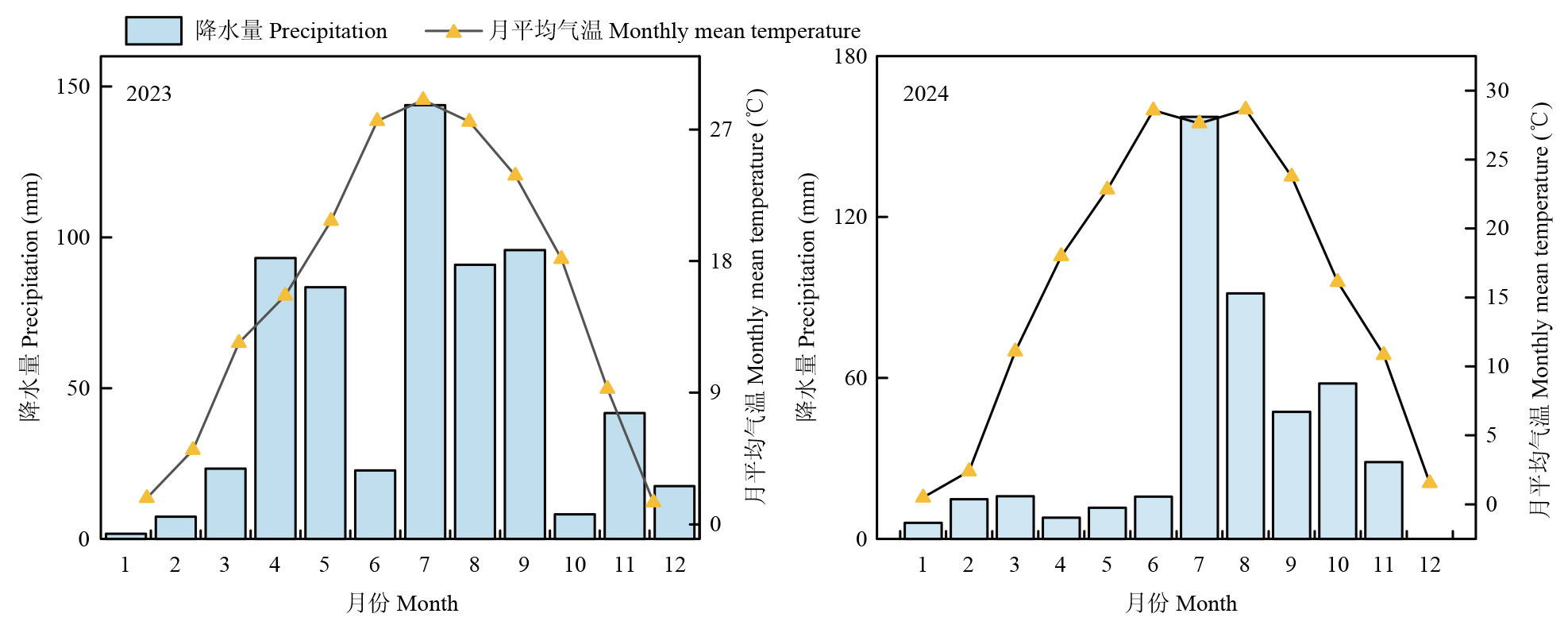
Fig. 1

Air temperature and precipitation at the experimental site during 2023-2024"

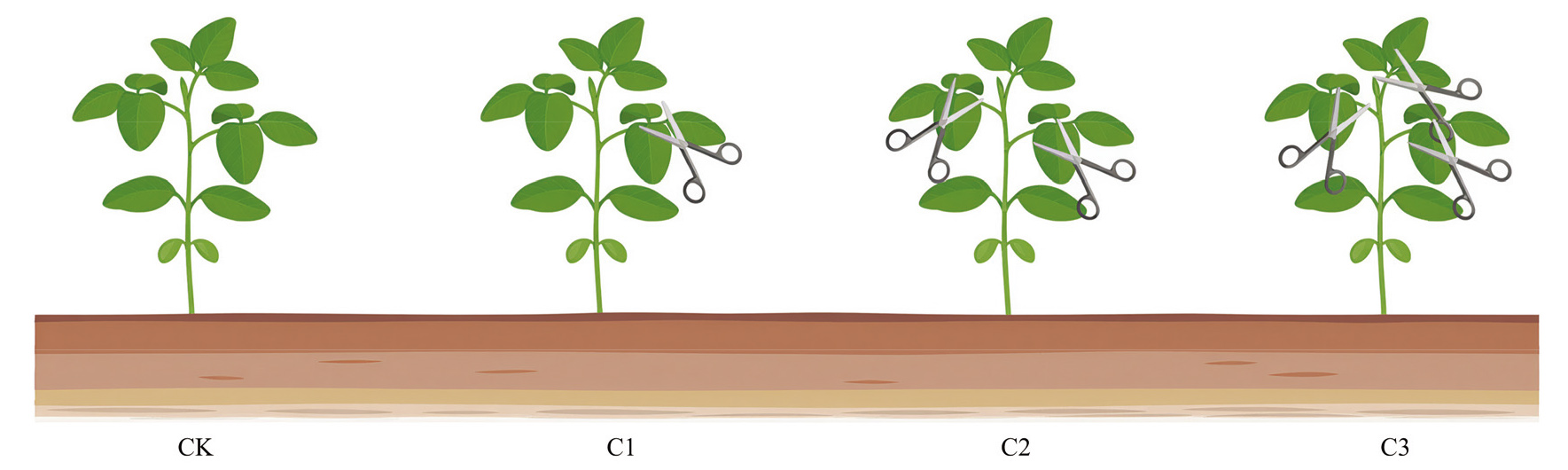
Fig. 2

Defoliation methods of soybean at the V3 stage"

Fig. 3

Soybean leaf area index and dry matter accumulation in aboveground organs under different treatments during 2023-2024"

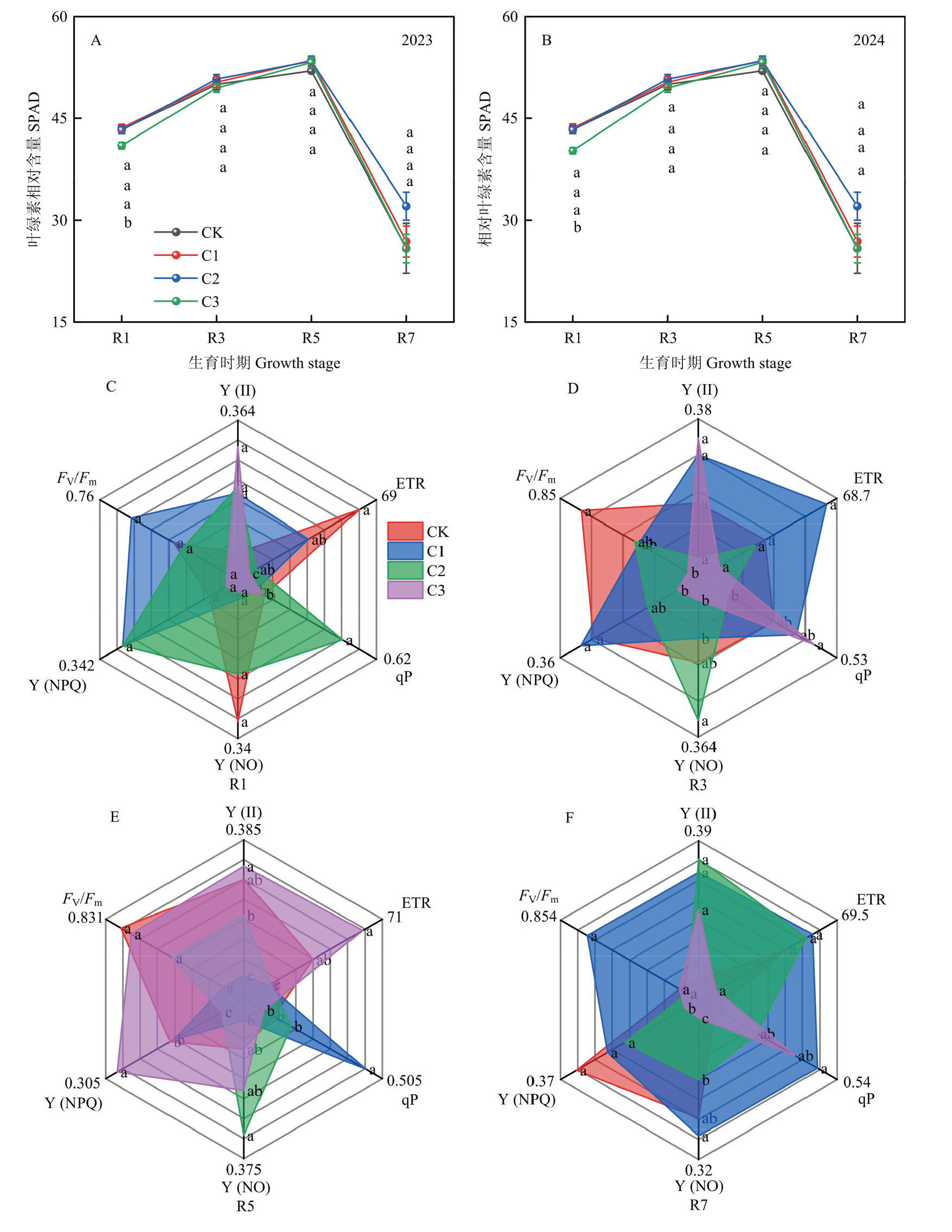
Fig. 4

Soybean SPAD values under different treatments during 2023-2024 and chlorophyll fluorescence parameters from R1 to R7 in 2024"

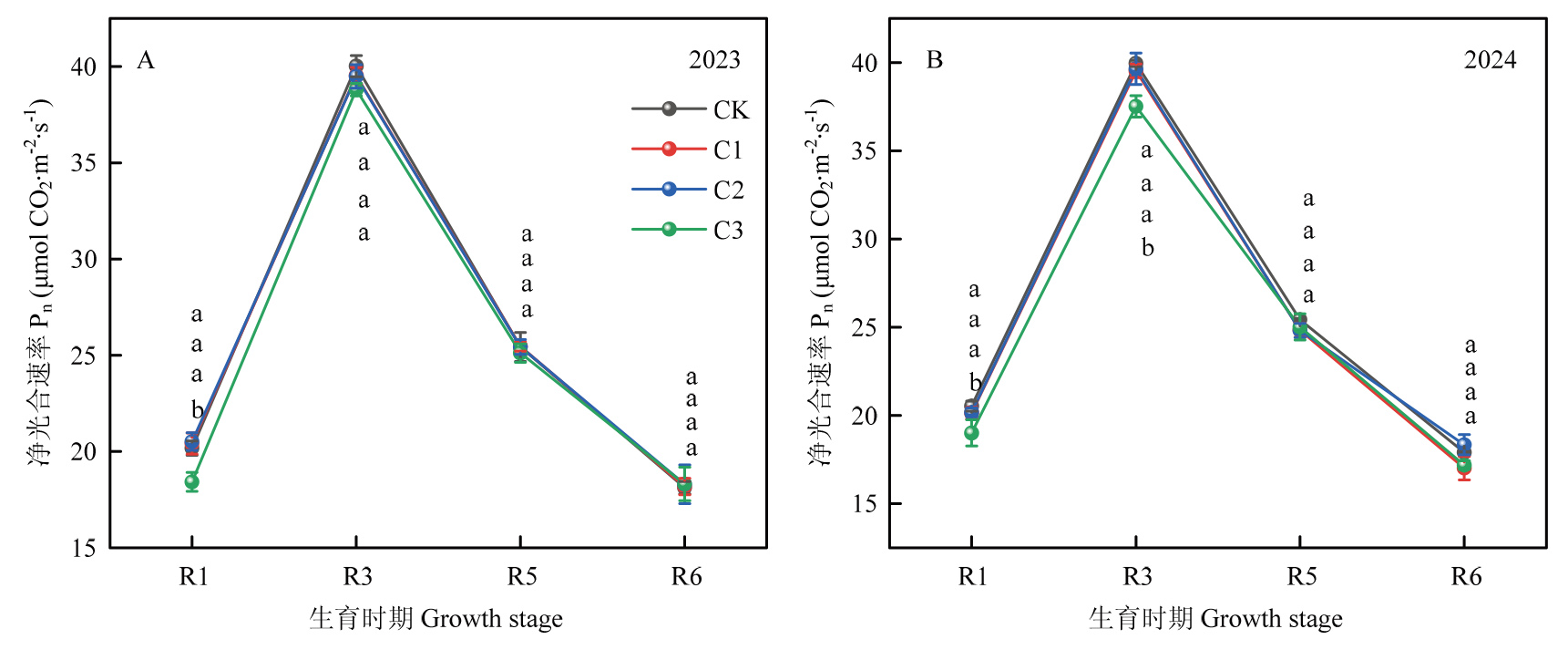
Fig. 5

Soybean net photosynthetic rate under different treatments during 2023-2024"

Fig. 6

Nitrogen accumulation under various treatments in soybeans in 2024 and seed protein content"

Fig. 7

Correlation between various physiological traits of soybeans and seed yield"

Table 1

Effects of different treatments on soybean yield and yield components from 2023 to 2024"

年份
Year
处理Treatment 单株粒数
Seeds number per plant
百粒重Hundred-grain weight (g) 0—30 cm荚数
0-30 cm number of pods
30—60cm荚数
30-60 cm number of pods
60—90cm荚数
60-90 cm number of pods
单株荚数
Pods number per plant
底荚高度
Lowest pods height (cm)
产量
Yield
(kg·hm-2)
2023 CK 144.0a 14.36a 61.2a 17.12c 3936.13a
C1 133.4ab 14.57a 55.6ab 18.50bc 3671.90ab
C2 125.0bc 14.70a 51.8bc 22.56ab 3504.43bc
C3 109.8c 14.65a 47.0c 24.14a 3273.93c
2024 CK 137.3a 14.29a 8.3a 44.0a 5.0a 57.3a 17.06c 3750.65a
C1 135.4ab 14.32a 7.3ab 42.3a 5.3a 56.0a 18.29c 3615.55ab
C2 122.8ab 14.55a 6.2bc 42.0a 4.5a 52.3b 22.70b 3466.50b
C3 109.4b 14.59a 5.2c 37.6b 4.6a 47.6b 24.34a 3167.97c
年份 Year (Y) ns ns ns ns ns
处理Treatment (T) ** ns ** ns ns ** ** **
年份*处理 Y*T ns ns ns ns ns

Fig. 8

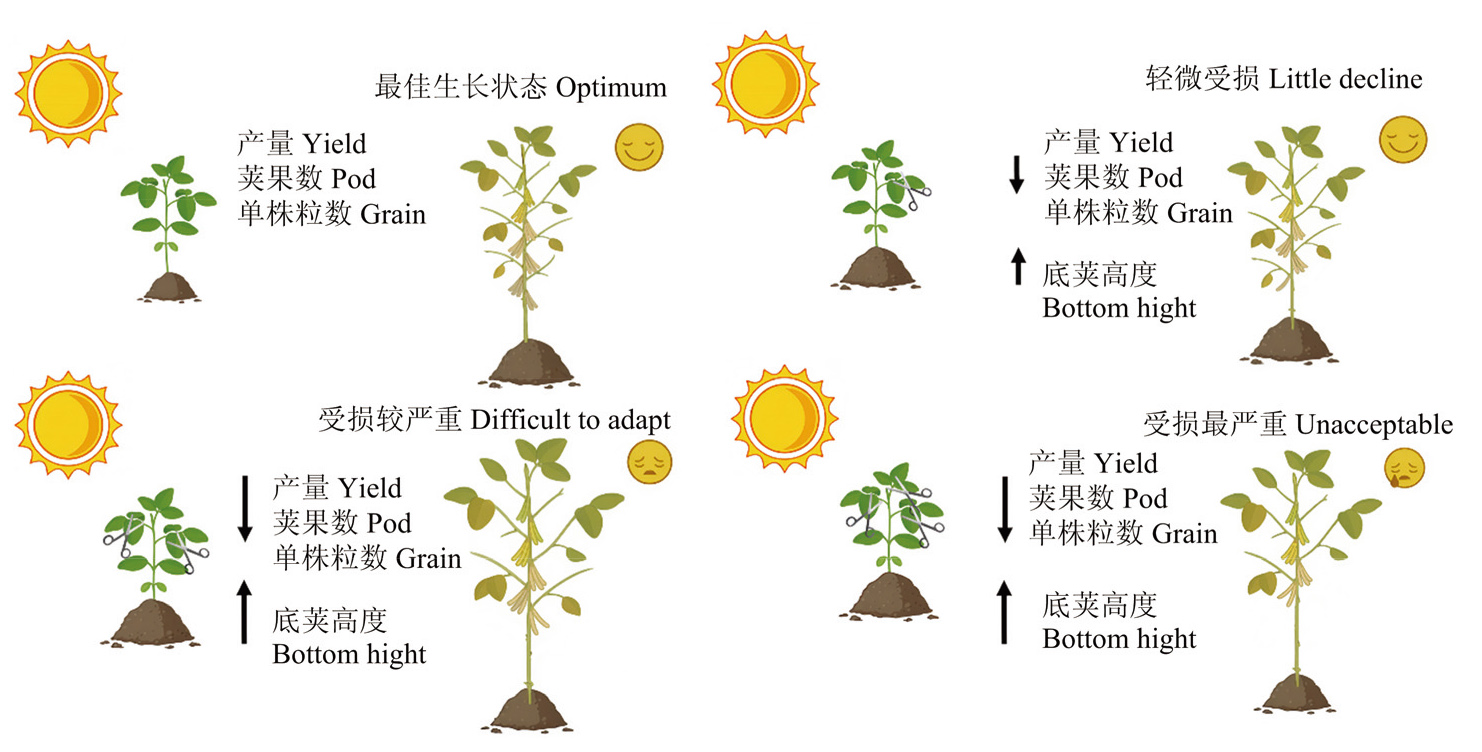
Overall condition of the soybean experiment"

[1]
PAGANO M C, MIRANSARI M. The importance of soybean production worldwide[M]// Abiotic and biotic stresses in soybean production. AcademicPress, 2016: 1-26.
[2]
KONG W S, WEI M, KHAN N, LIANG J, HAN D Q, ZHANG H J. Assessing sustainable future of import-independent domestic soybean production in China: Policy implications and projections for 2030. Frontiers in Sustainable Food Systems, 2024, 8: 1387609.
[3]
WANG Y C, LING X X, MA C M, LIU C Y, ZHANG W, HUANG J L, PENG S B, DENG N Y. Can China get out of soy dilemma? A yield gap analysis of soybean in China. Agronomy for Sustainable Development, 2023, 43(4): 47.

doi: 10.1007/s13593-023-00897-6
[4]
王亚君, 于寒松, 舒坤良. 中国大豆产业发展特点、趋势及对策. 社会科学战线, 2024(4): 253-258.
WANG Y J, YU H S, SHU K L. Characteristics, trends and countermeasures of soybean industry development in China. Social Science Front, 2024(4): 253-258. (in Chinese)
[5]
ZHOU Z X, STRUIK P C, GU J F, WANG Z Q, YIN X Y, YANG J C. VAN DER PUTTEN P E L, Leaf-colour modification affects canopy photosynthesis, dry-matter accumulation and yield traits in rice. Field Crops Research, 2023, 290: 108746.

doi: 10.1016/j.fcr.2022.108746
[6]
HARRIS M, SMITH D L, MACKENDER R O. Growth analysis of soybean seedlings during the lifespan of the cotyledons. Annals of Botany, 1986, 57(1): 69-79.

doi: 10.1093/oxfordjournals.aob.a087095
[7]
DU X B, ZHANG X Y, CHEN X F, JIN W J, HUANG Z P, KONG L C. Drought stress reduces the photosynthetic source of subtending leaves and the transit sink function of podshells, leading to reduced seed weight in soybean plants. Frontiers in Plant Science, 2024, 15: 1337544.

doi: 10.3389/fpls.2024.1337544
[8]
AXELSSON E P, HJÄLTÉN J. Tolerance and growth responses of Populus hybrids and their genetically modified varieties to simulated leaf damage and harvest. Forest Ecology and Management, 2012, 276: 217-223.

doi: 10.1016/j.foreco.2012.04.012
[9]
THOMSON V P, CUNNINGHAM S A, BALL M C, NICOTRA A B. Compensation for herbivory by Cucumis sativus through increased photosynthetic capacity and efficiency. Oecologia, 2003, 134(2): 167-175.

doi: 10.1007/s00442-002-1102-6
[10]
HAO S X, CAO H X, WANG H B, PAN X Y. The physiological responses of tomato to water stress and re-water in different growth periods. Scientia Horticulturae, 2019, 249: 143-154.

doi: 10.1016/j.scienta.2019.01.045
[11]
GASPERINI D, CHÉTELAT A, ACOSTA I F, GOOSSENS J, PAUWELS L, GOOSSENS A, DREOS R, ALFONSO E, FARMER E E. Multilayered organization of jasmonate signalling in the regulation of root growth. PLoS Genetics, 2015, 11(6): e1005300.

doi: 10.1371/journal.pgen.1005300
[12]
HUOT B, YAO J, MONTGOMERY B L, HE S Y. Growth-defense tradeoffs in plants: A balancing act to optimize fitness. Molecular Plant, 2014, 7(8): 1267-1287.

doi: S1674-2052(14)60932-1 pmid: 24777989
[13]
QUIJANO-MEDINA T, COVELO F, MOREIRA X, ABDALA- ROBERTS L. Compensation to simulated insect leaf herbivory in wild cotton (Gossypium hirsutum): Responses to multiple levels of damage and associated traits. Plant Biology, 2019, 21(5): 805-812.

doi: 10.1111/plb.v21.5
[14]
LU B Q, DOWNES S, WILSON L, GREGG P, KNIGHT K, KAUTER G, MCCORKELL B. Yield, development and quality response of dual-toxin Bt-cotton to manual simulation of damage by Helicoverpa spp. in Australia. Crop Protection, 2012, 41: 24-29.

doi: 10.1016/j.cropro.2012.05.017
[15]
QUIJANO A, MORANDI E N. Post-flowering leaflet removals increase pod initiation in soybean canopies. Field Crops Research, 2011, 120(1): 151-160.

doi: 10.1016/j.fcr.2010.09.009
[16]
QUIJANO A, MORANDI E N. Leaf area reduction during the pod set period changes the photomorphogenic light balance and increases the pod number and yield in soybean canopies. Field Crops Research, 2023, 303: 109148.

doi: 10.1016/j.fcr.2023.109148
[17]
JONES D B. Factors for converting percentages of nitrogen in foods and feeds into percentages of proteins[M]. Washington, DC: US Department of Agriculture, 1941.
[18]
DUNGAN G H. Losses to the corn crop caused by leaf injury. Plant Physiology, 1934, 9(4): 749-766.

doi: 10.1104/pp.9.4.749 pmid: 16652915
[19]
RAJCAN I, TOLLENAAR M. Source: Sink ratio and leaf senescence in maize: I. Dry matter accumulation and partitioning during grain filling. Field Crops Research, 1999, 60(3): 245-253.

doi: 10.1016/S0378-4290(98)00142-7
[20]
ALI RAZA M, GUL H, YANG F, AHMED M, YANG W Y. Growth rate, dry matter accumulation, and partitioning in soybean (Glycine max L.) in response to defoliation under high-rainfall conditions. Plants, 2021, 10(8): 1497.

doi: 10.3390/plants10081497
[21]
崔向东, 李向军. 不同生长型大豆品种营养生长期失叶后的补偿生长研究. 安徽农业科学, 2010, 38(16): 8361-8364.
CUI X D, LI X J. Study on compensatory growth of different growth forms of soybean varieties after leaf loss in vegetable growth stage. Journal of Anhui Agricultural Sciences, 2010, 38(16): 8361-8364. (in Chinese)
[22]
李瑞东, 徐彩龙, 尹阳阳, 宋雯雯, 孙石, 韩天富, 吴存祥, 胡水秀. 增密对少分枝大豆品种光合特性和产量形成的影响. 大豆科学, 2021, 40(5): 633-642.
LI R D, XU C L, YIN Y Y, SONG W W, SUN S, HAN T F, WU C X, HU S X. Effects of close planting on photosynthetic characteristics and yield of less branched soybean varieties. Soybean Science, 2021, 40(5): 633-642. (in Chinese)
[23]
李启富. 播期与密度对大豆皖黄506农艺性状及产量的影响. 安徽农学通报, 2024, 30(10): 11-14.
LI Q F. Influence of sowing time and density on the agronomic traits and yield of soybean Wanhuang 506. Anhui Agricultural Science Bulletin, 2024, 30(10): 11-14. (in Chinese)
[24]
王新兵, 侯海鹏, 马玮, 赵明. 不同生态区种植密度对大豆产量及产量构成的影响. 作物杂志, 2013(5): 114-120.
WANG X B, HOU H P, MA W, ZHAO M. Effects of population structure on soybean yield and yield components in different ecological regions. Crops, 2013(5): 114-120. (in Chinese)
[25]
WU Z S, XU C L, LI R D, XU Y F, HUA J X, SUN S, HAN T F, SONG W W, WU C X. Full-field straw mulching and fertilizer application improved the soybean seed yield through optimization of the root and canopy structure: A study case in Huang-Huai-Hai region. European Journal of Agronomy, 2024, 159: 127280.

doi: 10.1016/j.eja.2024.127280
[26]
WU Z S, ZHU Y P, LI Q R, LI R D, WILLCOCK S, VONA V, DUNN R, VÉR A, XU Y F, HUA J X, XU C L, SONG W W, WU C X. Straw mulching optimized the root and canopy structure of soybean by reducing the topsoil temperature before blooming period. Field Crops Research, 2025, 333: 110067.

doi: 10.1016/j.fcr.2025.110067
[27]
WANG J H, LIN X, LI X Y. The role of plant density and nutrient management in soybean yield optimization. Legume Genomics and Genetics, 2024: 15(6): 280-290.
[28]
MOREIRA A, MORAES L A C, SCHROTH G, BECKER F J, MANDARINO J M G. Soybean yield and nutritional status response to nitrogen sources and rates of foliar fertilization. Agronomy Journal, 2017, 109(2): 629-635.

doi: 10.2134/agronj2016.04.0199
[29]
徐一帆, 徐彩龙, 李瑞东, 吴宗声, 华建鑫, 杨琳, 宋雯雯, 吴存祥. 侧深施肥通过优化叶片功能与氮素积累来提高大豆产量. 作物学报, 2024, 50(9): 2335-2346.

doi: 10.3724/SP.J.1006.2024.44015
XU Y F, XU C L, LI R D, WU Z S, HUA J X, YANG L, SONG W W, WU C X. Deep side fertilization improved soybean yield by optimizing leaf function and nitrogen accumulation. Acta Agronomica Sinica, 2024, 50(9): 2335-2346. (in Chinese)

doi: 10.3724/SP.J.1006.2024.44015
[30]
IQBAL N, MASOOD A, KHAN N A. Analyzing the significance of defoliation in growth, photosynthetic compensation and source-sink relations. Photosynthetica, 2012, 50(2): 161-170.

doi: 10.1007/s11099-012-0029-3
[31]
QIAO M Y, HONG C H, JIAO Y J, HOU S J, GAO H B. Impacts of drought on photosynthesis in major food crops and the related mechanisms of plant responses to drought. Plants, 2024, 13(13): 1808.

doi: 10.3390/plants13131808
[32]
AMBAVARAM M M R, BASU S, KRISHNAN A, RAMEGOWDA V, BATLANG U, RAHMAN L, BAISAKH N, PEREIRA A. Coordinated regulation of photosynthesis in rice increases yield and tolerance to environmental stress. Nature Communications, 2014, 5: 5302.

doi: 10.1038/ncomms6302 pmid: 25358745
[33]
KIRDA C. Deficit irrigation scheduling based on plant growth stages showing water stress tolerance. Food and Agricultural Organization of the United Nations, Deficit Irrigation Practices, Water Reports, 2002, 22(102): 3-10.
[34]
LAWLOR D W. Carbon and nitrogen assimilation in relation to yield: Mechanisms are the key to understanding production systems. Journal of Experimental Botany, 2002, 53(370): 773-787.

pmid: 11912221
[35]
KONG L G, XIE Y, HU L, FENG B, LI S D. Remobilization of vegetative nitrogen to developing grain in wheat (Triticum aestivum L.). Field Crops Research, 2016, 196: 134-144.

doi: 10.1016/j.fcr.2016.06.015
[36]
RU C, HU X T, WANG W E, YAN H. Impact of nitrogen on photosynthesis, remobilization, yield, and efficiency in winter wheat under heat and drought stress. Agricultural Water Management, 2024, 302: 109013.

doi: 10.1016/j.agwat.2024.109013
[37]
TEGEDER M, MASCLAUX-DAUBRESSE C. Source and sink mechanisms of nitrogen transport and use. The New Phytologist, 2018, 217(1): 35-53.

doi: 10.1111/nph.2018.217.issue-1
[38]
MASTRODOMENICO A T, PURCELL L C, ANDY KING C. The response and recovery of nitrogen fixation activity in soybean to water deficit at different reproductive developmental stages. Environmental and Experimental Botany, 2013, 85: 16-21.

doi: 10.1016/j.envexpbot.2012.07.006
[1] WU Qiong, XIE XiangTing, WANG Lei, MOU Yong, LI JinWei. Development and Validation of Event-Specific PCR Method for the Quantification of Genetically Modified Soybean DBN8205 [J]. Scientia Agricultura Sinica, 2026, 59(1): 29-40.
[2] LIU LuPing, HU XueJie, QI Jin, CHEN Qiang, LIU Zhi, ZHAO TianTian, SHI XiaoLei, LIU BingQiang, MENG QingMin, ZHANG MengChen, HAN TianFu, YANG ChunYan. Cloning of the Promoters and Analysis of Expression Patterns of Maturity Genes E1 and E2 in Soybean [J]. Scientia Agricultura Sinica, 2025, 58(5): 840-850.
[3] ZHENG Yu, CHEN Yi, TI JinSong, SHI LongFei, XU XiaoBo, LI YuLin, GUO Rui. Evaluation of Carbon Footprint and Economic Benefit of Different Tobacco Rotation Patterns [J]. Scientia Agricultura Sinica, 2025, 58(4): 733-747.
[4] ZHANG Qi, XUE FuZhen, YANG XiuJie, JIANG SuYang, HUANG XueJuan, MA JiaYi, ZHANG ZheWen, XU JieFei. Study on the Function of Soybean Nicotinamide Enzyme GmNIC1 Gene Under Saline Alkali Stress [J]. Scientia Agricultura Sinica, 2025, 58(24): 5128-5142.
[5] MA HeXiao, GE GuoLong, ZHANG XiangQian, LU ZhanYuan, WANG ManXiu, RONG MeiRen, SHI JingJing, ZHANG DeJian, SUN XuePing. Effects of Different Crop Rotation Systems on Soil Readily Oxidized Organic Carbon and Carbon Pool Activity Differences [J]. Scientia Agricultura Sinica, 2025, 58(24): 5201-5215.
[6] GAO ChunHua, ZHAO HaiJun, ZHAO FengTao, KONG WeiLin, JU FeiYan, LI ZongXin, SHI DeYang, LIU Ping. Effect of Growth Regulators on the Stem Characteristics and Yield of Summer Maize in Maize-Soybean Strip Intercropping [J]. Scientia Agricultura Sinica, 2025, 58(23): 4920-4935.
[7] YANG ShuQi, ZHAO YingXing, QIAN Xin, ZHANG XuePeng, MENG WeiWei, SUI Peng, LI ZongXin, CHEN YuanQuan. Comprehensive Evaluation of the Maize-Soybean Intercropping Pattern in the Huang-Huai Region [J]. Scientia Agricultura Sinica, 2025, 58(23): 4936-4951.
[8] FANG Jian, QIN ZhaoJi, YU YuanYuan, YU NingNing, ZHAO Bin, LIU Peng, REN BaiZhao, ZHANG JiWang. Impacts of Varying Row Ratio Arrangements on Plant Performance, Stand Yield, and Comprehensive Benefits in Soybean-Maize Strip intercropping [J]. Scientia Agricultura Sinica, 2025, 58(23): 4841-4857.
[9] SONG XuHui, ZHAO XueYing, ZHAO Bin, REN BaiZhao, ZHANG JiWang, LIU Peng, REN Hao. Effects of Row Ratio Allocation on Light Distribution and Photosynthetic Production Capacity of Maize-Soybean Strip Intercropping [J]. Scientia Agricultura Sinica, 2025, 58(23): 4858-4871.
[10] SHI DeYang, GAO ChunHua, LI YanHong, ZHAO HaiJun, XIA DeJun. Effects of Row Spacing Configuration on the Canopy Characteristics and Grain Yield of the Intercropping Maize [J]. Scientia Agricultura Sinica, 2025, 58(23): 4872-4885.
[11] ZHANG MengYu, HE ZaiJu, WANG XingXing, REN Hao, REN BaiZhao, LIU Peng, ZHANG JiWang, ZHAO Bin. The Influences of Different Plant Height Combinations of Maize Varieties on Light Distribution in the Canopy and the Photosynthetic Characteristics of Maize Under Maize-Soybean Strip Intercropping Pattern [J]. Scientia Agricultura Sinica, 2025, 58(23): 4886-4904.
[12] KONG WeiLin, GAO ChunHua, ZHAO FengTao, JU FeiYan, LI ZongXin, ZHAO HaiJun, LIU Ping. Effects of Nitrogen Application Rate Combined with Drip Irrigation Amount After Sowing on Yield, Economic Benefit, Water Use Characteristics of Maize-Soybean Strip Intercropping Planting System [J]. Scientia Agricultura Sinica, 2025, 58(23): 4905-4919.
[13] YU Zhe, ZHOU FangXue, LIU RunFa, TIAN YaQi, JIHAO MuHa, WANG YongXiang, FENG WenMi, MOU KeXin, JING Yan, LI HaiYan. Screening for Soybean Host Factors that Interact with Soybean Mosaic Virus Nuclear Inclusion Proteins Using the Yeast Two-Hybrid System [J]. Scientia Agricultura Sinica, 2025, 58(19): 3799-3813.
[14] LI ShuaiBing, LI ChenXin, REN Li, YU XiaoNa, GENG SaiNan, SHENG Kai, ZHANG YinJie, WANG YiLun. Effects of Soybean Planting on Phosphorus Absorption of Wheat and Phosphorus Transformation in Soil [J]. Scientia Agricultura Sinica, 2025, 58(19): 3932-3945.
[15] QI MengNan, ZHAO DingLing, ZHANG XueYan, ZHANG YuJie, WANG RongNa, LIU BingQiang, YAN Long, ZHANG Jie, WANG DongMei. Identification of GmSZFP-Interacting Proteins and Functional Analysis of GmERF7 in Soybean Resistance to SMV Infection [J]. Scientia Agricultura Sinica, 2025, 58(14): 2739-2750.
Viewed
Full text


Abstract

Cited

  Shared   
  Discussed   
No Suggested Reading articles found!